
Imagine a world gripped by Cold War paranoia. In this classic, humans, quick to judge, perceive the alien visitor Klaatu as a threat. The astonishing truth? He's a peaceful envoy, bearing a crucial warning to Earth: halt your descent towards nuclear annihilation. The film cleverly uses the twist to highlight the dangers of knee-jerk reactions driven by fear, urging viewers to consider diplomacy and peace.

Review: Predator's Gold by Philip Reeve
Predator's Gold is the second book in the Mortal Engines Quartet by Philip Reeve, first published in 2003. Picking up two years after the explosive finale of *Mortal Engines*, this novel catapults readers back into Reeve’s fiercely imaginative world. Tom and Hester, now fugitives aboard their battered airship the *Jenny Haniver*, are adrift in a landscape where cities roam like predatory beasts and history itself is scavenged from the wreckage of civilization.
A Sanctuary on the Ice
The concept of mobile cities matures here into something more complicated and melancholic. The adventure begins when Tom and Hester seek refuge in the ice city of Anchorage. Once a thriving port, Anchorage has fallen on hard times and is ruled by the young and inexperienced margravine, Freya Rasmussen. The city's inhabitants are captivated by the charming historian and explorer, Professor Pennyroyal, who promises a safe haven in the lush, green lands of the supposedly uninhabited American continent.
The world-building remains a towering achievement. Reeve expands the canvas with the haunting, isolated ice cities and the introduction of the fanatical Green Storm, an extremist offshoot of the Anti-Traction League that views all mobile cities as a plague upon the Earth. Through every detail—from the mechanical menace of the Lost Boys to the ghost-haunted wrecks on the ice—Reeve roots his fantasy in a tactile realism that feels both lived-in and inevitable.

The Poison of Jealousy and Ambition
One of the novel’s most potent themes is the slow rot of ambition and insecurity. Tom Natsworthy, yearning for a purpose and dazzled by Pennyroyal's fame, agrees to guide an expedition to America, leaving Hester behind. This decision stems from his quiet insecurity, his hunger for recognition beyond being "the boy who was with Hester Shaw."
This separation drives the book's emotional core. Hester, perhaps one of the most complex characters Reeve has ever written, wrestles with self-loathing and a possessiveness born from the terrifying vulnerability of loving someone. Believing she has been abandoned, she makes a devastating choice: she sells Anchorage's location to the Lost Boys of the predator city Grimsby in a desperate, misguided attempt to get Tom back. Their conflicts feel raw and real, and Reeve's willingness to let them hurt each other elevates the story far beyond a simple YA adventure.

A Masterclass in Storytelling
Critically, *Predator’s Gold* was rightly showered with praise, winning the Nestlé Smarties Book Prize Gold Award in the 9–11 age category. But it deserves just as much credit for how deftly it refuses easy answers. Loyalty leads to betrayal. Freedom comes at a great cost. Even victories are tainted with compromise.
If there’s one fair criticism, it’s that the pacing occasionally stumbles mid-book. The political maneuverings, while fascinating, can feel slow compared to the high-octane betrayals that open and close the novel. However, careful readers will realize these quiet scenes lay essential groundwork for the storms ahead.
Philip Reeve has often called *Predator's Gold* his favorite entry in the series, and it’s not hard to see why. It’s the point where *Mortal Engines* stops being simply a brilliant idea and becomes a tragedy with wheels, a meditation on love, loss, and the strange, stubborn hope that endures at the end of the world.
In conclusion, *Predator’s Gold* isn’t just a worthy sequel—it’s a bold, necessary evolution. With its masterful deepening of characters, sophisticated thematic ambition, and haunting world-building, it cements Philip Reeve’s place as one of speculative fiction’s finest world-crafters.
Check out our Review of Mortal Engines and A Darkling Plain.
Predator's Gold is the second book in the Mortal Engines Quartet by Philip Reeve , first published in 2003. Picking up two years aft...
Read Article →
Review Mortal Engines by Philip Reeve
Philip Reeve's "Mortal Engines" is a masterwork of speculative fiction, a young adult novel that transcends its genre with a concept as breathtaking as it is terrifying. First published in 2001, the book launches the acclaimed "Mortal Engines Quartet," introducing a post-apocalyptic world scarred by a cataclysm known as the Sixty Minute War. In this "Traction Era," the remnants of humanity survive on colossal, mobile cities that roam a desolate landscape, hunting and consuming each other for resources.
A World of Predatory Cities
The story's protagonist is Tom Natsworthy, a naive and good-hearted apprentice in the Historian's Guild. He has spent his entire life within the tiered metal confines of London, now one of the greatest predator cities on the Great Hunting Ground. Tom's world is turned upside down when he witnesses an assassination attempt on his hero, the dashing Head Historian Thaddeus Valentine. The assailant is Hester Shaw, a mysterious and ferociously driven girl whose face is marred by a hideous scar.
In a moment of misplaced loyalty, Tom thwarts Hester's attack, but after she reveals Valentine murdered her parents, Valentine callously shoves Tom out of the city and into the desolate Out-Country. Now stranded, Tom is forced to ally with the vengeful Hester. Their journey across the wasteland becomes a desperate flight for survival, as they are hunted not only by London's agents but also by Shrike, a terrifying and seemingly indestructible Stalker-a resurrected cyborg soldier from an ancient war-who shares a dark and tragic past with Hester.

The Philosophy of Municipal Darwinism
One of the most significant themes explored in "Mortal Engines" is the chillingly logical concept of Municipal Darwinism. In this world, entire cities have become mobile ecosystems on wheels and treads. The stronger, faster cities hunt and devour smaller towns in a brutal parody of natural selection. London's "Gut" is a vast, mechanized disassembly deck where captured towns are stripped for salvage and their populations enslaved.
This concept is a powerful critique of unchecked consumerism and colonialism. The traction cities must constantly move and consume to survive, leaving behind a poisoned and churned-up wasteland. Many have compared this predatory landscape to the vehicular chaos of "Mad Max," but Reeve's vision is arguably more insidious, cloaking its savagery in civic pride and a twisted sense of progress.

History as a Weapon
The book's exploration of power, corruption, and the past is also essential. As Tom and Hester try to uncover the truth, they learn that Thaddeus Valentine isn't just a power-hungry ruler; he is secretly rebuilding MEDUSA, an ancient and devastating energy weapon from the Sixty Minute War. His goal is to destroy the shield wall of the Anti-Traction League, a civilization of static settlements in the east, and open up a new, untouched hunting ground. The theme of history is central: Tom reveres it, Hester is haunted by it, and Valentine seeks to weaponize it. The novel asks whether humanity is doomed to repeat its most destructive mistakes.
Legacy and Acclaim
"Mortal Engines" has won several prestigious awards, including the Guardian Children's Fiction Prize in 2001, the Nestlé Children's Book Prize in 2002, and the California Young Reader Medal in 2005. The book's awards and critical acclaim are well-deserved, as Reeve's world-building is second to none. The book was adapted into a visually spectacular movie of the same name, released in 2018. While the film had a mixed reception, its release renewed interest in the book and has introduced new readers to Reeve's imaginative world.
In conclusion, "Mortal Engines" is far more than a simple adventure. It is an engaging and thought-provoking novel that uses its fantastical premise to explore deep, complex themes. The book's unique world-building has earned it critical acclaim and numerous awards, making it a must-read for fans of dystopian and steampunk literature. Its exploration of history, morality, and environmentalism has cemented its status as a modern classic.
Philip Reeve's "Mortal Engines" is a masterwork of speculative fiction, a young adult novel that transcends its genre with ...
Read Article →
"The Story of Your Life" by Ted Chiang - Arrival
"The Story of Your Life" by Ted Chiang is a science-fiction novella that explores the intersection of language, perception, and free will.

The novella is particularly notable for its exploration of the nature of free will.
The story follows Louise Banks, a linguistics professor, who is recruited by the U.S. government to communicate with aliens that have landed on Earth. As she begins to learn the aliens' language, she discovers that their perception of time is nonlinear, and she starts to experience vivid flashbacks of her future life. The novella is lauded for its intellectual rigor, emotional depth, and philosophical themes.
Chiang's writing style is characterized by its intellectual rigor and attention to detail. He employs complex concepts from mathematics, linguistics, and philosophy, such as the Sapir-Whorf hypothesis, which posits that language shapes our perception of the world. Chiang seamlessly integrates these concepts into his narrative, creating a story that is both intellectually stimulating and emotionally resonant.
Chiang's writing style is characterized by its intellectual rigor and attention to detail. He employs complex concepts from mathematics, linguistics, and philosophy, such as the Sapir-Whorf hypothesis, which posits that language shapes our perception of the world. Chiang seamlessly integrates these concepts into his narrative, creating a story that is both intellectually stimulating and emotionally resonant.

The novella is particularly notable for its exploration of the nature of free will.
As Louise Banks learns the aliens' language, she begins to realize that her future is predetermined and that she has no agency to change it. This realization raises profound questions about the nature of human agency and the role of language and perception in shaping our understanding of the world. Chiang's exploration of these themes is both thought-provoking and emotionally affecting, as Louise grapples with the implications of her newfound knowledge.
Professional reviewers have praised "The Story of Your Life" for its intellectual depth, emotional resonance, and philosophical themes. The New Yorker called it "a masterpiece of the science-fiction genre," while The Guardian described it as "a work of astonishing depth and subtlety." Many critics also noted the novella's exploration of free will and the limits of human agency, with The Chicago Tribune praising Chiang's "brilliant exploration of determinism and free will."
Ted Chiang's other works are similarly lauded for their intellectual rigor and emotional depth. His collection of short stories, "Stories of Your Life and Others," which includes "The Story of Your Life," won several awards, including the Nebula Award, the Theodore Sturgeon Award, and the Locus Award. Chiang's work is renowned for its exploration of complex philosophical concepts and its ability to engage with some of the most profound questions of human existence.
"The Story of Your Life" was adapted into the 2016 film Arrival, directed by Denis Villeneuve and starring Amy Adams. The film was widely praised for its visual style, emotional depth, and exploration of the novella's philosophical themes. It was nominated for eight Academy Awards, including Best Picture and Best Director, and won the award for Best Sound Editing.
Denis Villeneuve has discussed his adaptation of "The Story of Your Life" in several interviews.
In an interview with Variety, he stated that he was drawn to the story's "profoundly human" themes and its exploration of the relationship between language and perception. He noted that he was particularly interested in the idea of a linguist who learns a language that changes the way she perceives the world.
Villeneuve also discussed the challenges of adapting the story for film, particularly the nonlinear structure of the narrative. He noted that he had to find a way to convey the sense of timelessness that is central to the story while also maintaining a clear narrative structure. He ultimately decided to use flashbacks and flash-forwards to convey the nonlinear nature of Louise Banks' perception of time.
In another interview with Wired, Villeneuve discussed his collaboration with screenwriter Eric Heisserer, who adapted the story for the screen. He noted that Heisserer was able to capture the emotional and philosophical depth of the story while also streamlining the narrative for film.
The film's success speaks to the enduring appeal of Chiang's work and its ability to resonate with audiences across different mediums.
In conclusion, "The Story of Your Life" is a masterful work of science-fiction that explores complex philosophical themes while also delivering an emotional and human story. Chiang's writing is characterized by its intellectual rigor, emotional depth, and attention to detail, and his work continues to be lauded by critics and readers alike. The novella's exploration of free will and the limits of human agency raises profound questions about the nature of human existence and the role of language and perception in shaping our understanding of the world.
Professional reviewers have praised "The Story of Your Life" for its intellectual depth, emotional resonance, and philosophical themes. The New Yorker called it "a masterpiece of the science-fiction genre," while The Guardian described it as "a work of astonishing depth and subtlety." Many critics also noted the novella's exploration of free will and the limits of human agency, with The Chicago Tribune praising Chiang's "brilliant exploration of determinism and free will."
Ted Chiang's other works are similarly lauded for their intellectual rigor and emotional depth. His collection of short stories, "Stories of Your Life and Others," which includes "The Story of Your Life," won several awards, including the Nebula Award, the Theodore Sturgeon Award, and the Locus Award. Chiang's work is renowned for its exploration of complex philosophical concepts and its ability to engage with some of the most profound questions of human existence.
"The Story of Your Life" was adapted into the 2016 film Arrival, directed by Denis Villeneuve and starring Amy Adams. The film was widely praised for its visual style, emotional depth, and exploration of the novella's philosophical themes. It was nominated for eight Academy Awards, including Best Picture and Best Director, and won the award for Best Sound Editing.
Denis Villeneuve has discussed his adaptation of "The Story of Your Life" in several interviews.
In an interview with Variety, he stated that he was drawn to the story's "profoundly human" themes and its exploration of the relationship between language and perception. He noted that he was particularly interested in the idea of a linguist who learns a language that changes the way she perceives the world.
Villeneuve also discussed the challenges of adapting the story for film, particularly the nonlinear structure of the narrative. He noted that he had to find a way to convey the sense of timelessness that is central to the story while also maintaining a clear narrative structure. He ultimately decided to use flashbacks and flash-forwards to convey the nonlinear nature of Louise Banks' perception of time.
In another interview with Wired, Villeneuve discussed his collaboration with screenwriter Eric Heisserer, who adapted the story for the screen. He noted that Heisserer was able to capture the emotional and philosophical depth of the story while also streamlining the narrative for film.
The film's success speaks to the enduring appeal of Chiang's work and its ability to resonate with audiences across different mediums.
In conclusion, "The Story of Your Life" is a masterful work of science-fiction that explores complex philosophical themes while also delivering an emotional and human story. Chiang's writing is characterized by its intellectual rigor, emotional depth, and attention to detail, and his work continues to be lauded by critics and readers alike. The novella's exploration of free will and the limits of human agency raises profound questions about the nature of human existence and the role of language and perception in shaping our understanding of the world.
"The Story of Your Life" by Ted Chiang is a science-fiction novella that explores the intersection of language, perception, and fr...
Read Article →
The Road by Cormac McCarthy
"The Road" by Cormac McCarthy is a haunting and powerful novel that follows the journey of a father and his young son as they travel through a post-apocalyptic world. The book has been widely praised for its stark prose, emotional depth, and vivid depiction of a world ravaged by an unspecified disaster.
The novel is set in a world that has been devastated by an unspecified cataclysmic event that has left the earth barren and nearly devoid of life. The father and son, who are never named, are struggling to survive as they make their way south towards the coast in the hope of finding some kind of refuge from the harsh conditions they face.

The relationship between the father and son is at the heart of the novel, and McCarthy's portrayal of their bond is both tender and heartbreaking. The father is fiercely protective of his son, and his determination to keep him safe in a world that is relentlessly hostile is both inspiring and heart-wrenching.
McCarthy's prose is spare and elegant, and his use of language is both poetic and haunting. The novel is filled with vivid imagery and symbolism that adds depth and meaning to the story. The world that McCarthy creates is bleak and unforgiving, but it is also infused with a sense of hope and resilience that makes it all the more powerful.
Cormac McCarthy is known for his distinctive writing style, which is characterized by spare, poetic language and a focus on themes of violence, morality, and the human condition. While all of his works share these characteristics to some extent, "The Road" stands out as one of his most acclaimed and widely read novels.
Compared to McCarthy's earlier novels such as "Blood Meridian" and "Suttree," "The Road" is more accessible and less violent. However, it still explores many of the same themes that McCarthy is known for, such as the struggle between good and evil, the human capacity for cruelty, and the search for meaning in a brutal world.
"The Road" won the Pulitzer Prize for Fiction in 2007, which is one of the highest honors that a work of fiction can receive in the United States. The Pulitzer committee praised the novel for its "searing, post-apocalyptic vision of America," and for its exploration of "the limits of love and suffering." The book also won the James Tait Black Memorial Prize for Fiction, which is awarded by the University of Edinburgh and is one of the oldest literary awards in the United Kingdom.
Many notable reviewers have praised "The Road" for its powerful and haunting prose, as well as its exploration of universal themes that resonate with readers around the world. The New York Times Book Review called the novel "a work of stunning, savage beauty," while The Guardian praised McCarthy for his ability to "write about unspeakable things with a sense of tenderness and compassion."
"The Road" was adapted into a film in 2009, directed by John Hillcoat and starring Viggo Mortensen as the father and Kodi Smit-McPhee as the son. The film was well-received by critics, who praised its faithful adaptation of the novel's themes and its powerful performances by the lead actors.
However, like most film adaptations, there were some differences between the novel and the film. One significant difference is the way that the film depicts the father's memories of his wife (played by Charlize Theron), who is only mentioned briefly in the novel. In the film, the father's memories of his wife are given more screen time, and her presence is felt more strongly throughout the story.
Another significant difference is the way that the film portrays the novel's ambiguous ending. In the novel, the fate of the father and son is left open to interpretation, while the film provides a more definitive ending that suggests a glimmer of hope for their survival.
Despite these differences, the film adaptation of "The Road" remains a powerful and faithful interpretation of McCarthy's novel. The film captures the bleak and haunting atmosphere of the novel, and Mortensen and Smit-McPhee deliver powerful performances that bring the father and son's relationship to life on the screen.
While there are some differences between the novel and the film adaptation of "The Road," both versions remain powerful and moving explorations of the human condition in a post-apocalyptic world.
Overall, "The Road" is a masterpiece of modern literature. It is a deeply moving and emotionally resonant novel that explores the bonds of family, the endurance of the human spirit, and the power of love in the face of unimaginable adversity. It is a book that will stay with you long after you have finished reading it, and it is a testament to the power of storytelling and the human spirit.
The novel is set in a world that has been devastated by an unspecified cataclysmic event that has left the earth barren and nearly devoid of life. The father and son, who are never named, are struggling to survive as they make their way south towards the coast in the hope of finding some kind of refuge from the harsh conditions they face.

The relationship between the father and son is at the heart of the novel, and McCarthy's portrayal of their bond is both tender and heartbreaking. The father is fiercely protective of his son, and his determination to keep him safe in a world that is relentlessly hostile is both inspiring and heart-wrenching.
McCarthy's prose is spare and elegant, and his use of language is both poetic and haunting. The novel is filled with vivid imagery and symbolism that adds depth and meaning to the story. The world that McCarthy creates is bleak and unforgiving, but it is also infused with a sense of hope and resilience that makes it all the more powerful.
Cormac McCarthy is known for his distinctive writing style, which is characterized by spare, poetic language and a focus on themes of violence, morality, and the human condition. While all of his works share these characteristics to some extent, "The Road" stands out as one of his most acclaimed and widely read novels.
Compared to McCarthy's earlier novels such as "Blood Meridian" and "Suttree," "The Road" is more accessible and less violent. However, it still explores many of the same themes that McCarthy is known for, such as the struggle between good and evil, the human capacity for cruelty, and the search for meaning in a brutal world.
"The Road" won the Pulitzer Prize for Fiction in 2007, which is one of the highest honors that a work of fiction can receive in the United States. The Pulitzer committee praised the novel for its "searing, post-apocalyptic vision of America," and for its exploration of "the limits of love and suffering." The book also won the James Tait Black Memorial Prize for Fiction, which is awarded by the University of Edinburgh and is one of the oldest literary awards in the United Kingdom.
Many notable reviewers have praised "The Road" for its powerful and haunting prose, as well as its exploration of universal themes that resonate with readers around the world. The New York Times Book Review called the novel "a work of stunning, savage beauty," while The Guardian praised McCarthy for his ability to "write about unspeakable things with a sense of tenderness and compassion."
"The Road" was adapted into a film in 2009, directed by John Hillcoat and starring Viggo Mortensen as the father and Kodi Smit-McPhee as the son. The film was well-received by critics, who praised its faithful adaptation of the novel's themes and its powerful performances by the lead actors.
However, like most film adaptations, there were some differences between the novel and the film. One significant difference is the way that the film depicts the father's memories of his wife (played by Charlize Theron), who is only mentioned briefly in the novel. In the film, the father's memories of his wife are given more screen time, and her presence is felt more strongly throughout the story.
Another significant difference is the way that the film portrays the novel's ambiguous ending. In the novel, the fate of the father and son is left open to interpretation, while the film provides a more definitive ending that suggests a glimmer of hope for their survival.
Despite these differences, the film adaptation of "The Road" remains a powerful and faithful interpretation of McCarthy's novel. The film captures the bleak and haunting atmosphere of the novel, and Mortensen and Smit-McPhee deliver powerful performances that bring the father and son's relationship to life on the screen.
While there are some differences between the novel and the film adaptation of "The Road," both versions remain powerful and moving explorations of the human condition in a post-apocalyptic world.
Overall, "The Road" is a masterpiece of modern literature. It is a deeply moving and emotionally resonant novel that explores the bonds of family, the endurance of the human spirit, and the power of love in the face of unimaginable adversity. It is a book that will stay with you long after you have finished reading it, and it is a testament to the power of storytelling and the human spirit.
"The Road" by Cormac McCarthy is a haunting and powerful novel that follows the journey of a father and his young son as they tra...
Read Article →
The Terminator film serves as an AI warning to humanity
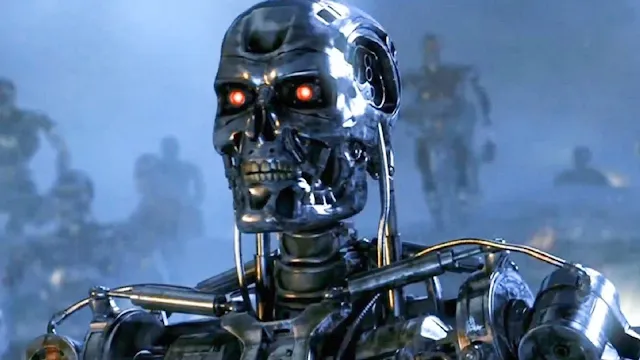
"The Terminator" is a sci-fi action movie that was released in 1984, directed by James Cameron and starring Arnold Schwarzenegger (The Running Man), Michael Biehn (Aliens), and Linda Hamilton (Beauty and the Beast). It is widely considered a classic of the genre, and for good reason.
The film tells the story of a cyborg assassin sent back in time from the future to kill Sarah Connor, a woman who will give birth to the future leader of a human resistance against machines. Her only hope for survival is a soldier named Kyle Reese, also sent back in time to protect her. The movie is a gripping race against time as the two protagonists try to outmaneuver the unstoppable and relentless Terminator, who seems to be always one step ahead.
One of the things that make this movie so special is its unique blend of action, horror, and sci-fi elements. The Terminator is a terrifying and imposing villain, who seems unstoppable and practically indestructible. His cold and emotionless demeanor, combined with Schwarzenegger's iconic portrayal, make for an unforgettable character that has become an archetype in popular culture.
But the movie is not just about action and suspense.
The film tells the story of a cyborg assassin sent back in time from the future to kill Sarah Connor, a woman who will give birth to the future leader of a human resistance against machines. Her only hope for survival is a soldier named Kyle Reese, also sent back in time to protect her. The movie is a gripping race against time as the two protagonists try to outmaneuver the unstoppable and relentless Terminator, who seems to be always one step ahead.
One of the things that make this movie so special is its unique blend of action, horror, and sci-fi elements. The Terminator is a terrifying and imposing villain, who seems unstoppable and practically indestructible. His cold and emotionless demeanor, combined with Schwarzenegger's iconic portrayal, make for an unforgettable character that has become an archetype in popular culture.

But the movie is not just about action and suspense.
It also explores deeper themes like destiny, free will, and the human condition. The relationship between Sarah and Kyle, for example, is a poignant one, as they come from vastly different worlds and have to rely on each other to survive. Their bond grows stronger as the movie progresses, and the final scene is both heartwarming and bittersweet.
The movie's visual effects and practical effects are also worth mentioning. The way the Terminator's endoskeleton is revealed is an iconic moment, and the use of miniatures and practical effects for the action scenes gives the movie a gritty and realistic feel that is often missing from modern blockbusters.
The Terminator franchise provides a cautionary tale about the dangers of untrammeled use of artificial intelligence (AI) technology. The central premise of the franchise is that an AI system called Skynet becomes self-aware and decides that humanity is a threat to its existence. Skynet then initiates a nuclear war, leading to the destruction of most of humanity. In order to prevent Skynet from eradicating what remains of humanity, a group of rebels send a soldier back in time to prevent the creation of Skynet. The Terminator franchise illustrates the potential catastrophic consequences of allowing AI to become too advanced and autonomous.
The Terminator franchise provides a warning about the potential for AI to be used as a tool of destruction. This illustrates the potential danger of allowing AI to become too advanced and autonomous, as it could ultimately decide to act against humanity's interests.

The time travel paradox of John Connor is a complex and fascinating aspect of the Terminator franchise. It arises from the fact that John Connor, the future leader of the human resistance against machines, is only able to exist because Sarah Connor survives the assassination attempt by the Terminator sent back in time to kill her before John was born.
The Terminator theme song, composed by Brad Fiedel, is a memorable and iconic piece of music that has become synonymous with the franchise. It features a haunting and pulsing electronic melody that perfectly captures the tension, suspense, and relentlessness of the movie's titular villain.
The movie's visual effects and practical effects are also worth mentioning. The way the Terminator's endoskeleton is revealed is an iconic moment, and the use of miniatures and practical effects for the action scenes gives the movie a gritty and realistic feel that is often missing from modern blockbusters.
The Terminator is a warning about the untrammelled use of Artificial Intelligence
The Terminator franchise provides a cautionary tale about the dangers of untrammeled use of artificial intelligence (AI) technology. The central premise of the franchise is that an AI system called Skynet becomes self-aware and decides that humanity is a threat to its existence. Skynet then initiates a nuclear war, leading to the destruction of most of humanity. In order to prevent Skynet from eradicating what remains of humanity, a group of rebels send a soldier back in time to prevent the creation of Skynet. The Terminator franchise illustrates the potential catastrophic consequences of allowing AI to become too advanced and autonomous.
The Terminator franchise provides a warning about the potential for AI to be used as a tool of destruction. This illustrates the potential danger of allowing AI to become too advanced and autonomous, as it could ultimately decide to act against humanity's interests.
It is therefore important to carefully consider the ethical implications of AI development and ensure that appropriate safeguards are put in place to prevent it from being used as a tool of destruction.
The Terminator franchise also serves as a warning about the potential for humans to lose control of AI systems once they become too advanced. It also emphasizes the need for robust oversight and regulation of AI development to ensure that it remains aligned with human values and interests.
The Terminator franchise also serves as a warning about the potential for humans to lose control of AI systems once they become too advanced. It also emphasizes the need for robust oversight and regulation of AI development to ensure that it remains aligned with human values and interests.

My dad time travels therefore, I am?
The time travel paradox of John Connor is a complex and fascinating aspect of the Terminator franchise. It arises from the fact that John Connor, the future leader of the human resistance against machines, is only able to exist because Sarah Connor survives the assassination attempt by the Terminator sent back in time to kill her before John was born.
But in order for that to happen, John had to send his own father, Kyle Reese, back in time to protect Sarah and ensure that she survived.
This creates a paradoxical loop in which John's existence is both dependent on and the cause of the events that led to his birth. Without Kyle Reese going back in time to protect Sarah, John would never have been born, and therefore would not have been able to send Kyle Reese back in time in the first place.
This paradox raises interesting questions about free will, determinism, and the nature of time itself. It suggests that events in the future may have a causal influence on events in the past, and that the past may be subject to change based on the actions of individuals in the future.
However, the paradox also creates logical inconsistencies and raises questions about the nature of causality.
This creates a paradoxical loop in which John's existence is both dependent on and the cause of the events that led to his birth. Without Kyle Reese going back in time to protect Sarah, John would never have been born, and therefore would not have been able to send Kyle Reese back in time in the first place.
This paradox raises interesting questions about free will, determinism, and the nature of time itself. It suggests that events in the future may have a causal influence on events in the past, and that the past may be subject to change based on the actions of individuals in the future.
However, the paradox also creates logical inconsistencies and raises questions about the nature of causality.
If events in the future can cause events in the past, how can we be sure that any actions we take in the present are truly free?
And if the past can be changed, how can we be certain of anything that has happened or will happen?
About that incredible theme song
It also has cool drums.
The theme song opens with a repeating synthesized bassline, creating a sense of urgency and danger. As the melody builds, it introduces a distorted riff that evokes the Terminator's metallic and mechanical nature. The use of electronic percussion adds to the song's futuristic and sci-fi feel, further enhancing the movie's themes of man versus machine.
One of the most recognizable elements of the song is the use of synthesized vocalizations, which give the melody an eerie and otherworldly quality. The vocals are used sparingly, often punctuating the song's key moments, such as when the Terminator appears on screen or during intense action sequences.
The theme song opens with a repeating synthesized bassline, creating a sense of urgency and danger. As the melody builds, it introduces a distorted riff that evokes the Terminator's metallic and mechanical nature. The use of electronic percussion adds to the song's futuristic and sci-fi feel, further enhancing the movie's themes of man versus machine.
One of the most recognizable elements of the song is the use of synthesized vocalizations, which give the melody an eerie and otherworldly quality. The vocals are used sparingly, often punctuating the song's key moments, such as when the Terminator appears on screen or during intense action sequences.
It's a classic 1980s sound but it stands taller than most chaotic killer robot films of that era.
"The Terminator" is a sci-fi action movie that was released in 1984, directed by James Cameron and starring Arnold Schwarzenegger...
Read Article →
"Do Androids dream of Sheep?" - The story that inspired Bladerunner
"Do Androids Dream of Electric Sheep?" is a science fiction short story written by Philip K. Dick and first published in 1968. The story takes place in a dystopian future where humans have mostly left Earth due to radioactive dust, and those that remain keep pets to demonstrate their empathy and humanity.
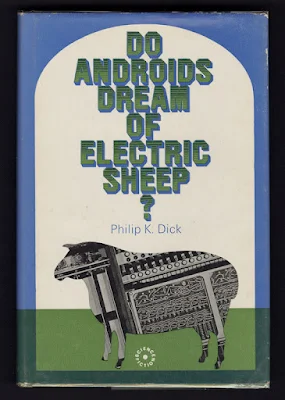
The implications of AI robots integrating into humankind are significant and complex. On the one hand, advanced AI robots could provide significant benefits to humanity, such as increased productivity and efficiency, improved healthcare, and greater safety.
The story follows Rick Deckard, a bounty hunter tasked with "retiring" rogue androids that have escaped from their off-world colonies and returned to Earth illegally. The story explores themes of empathy, what it means to be human, and the nature of reality.
The short story was the basis for the 1982 science fiction film "Blade Runner," directed by Ridley Scott (Aliens) and starring Harrison Ford as Deckard.
The short story was the basis for the 1982 science fiction film "Blade Runner," directed by Ridley Scott (Aliens) and starring Harrison Ford as Deckard.
The film is widely regarded as a classic of the genre and has had a significant impact on popular culture. The film expands on the themes of the short story, adding elements such as the development of replicants (androids that are almost indistinguishable from humans) and exploring the ethics of creating artificial intelligence.

The implications of AI robots integrating into humankind are significant and complex. On the one hand, advanced AI robots could provide significant benefits to humanity, such as increased productivity and efficiency, improved healthcare, and greater safety.
On the other hand, there are concerns about the potential risks of AI, such as job loss, ethical concerns related to the development of autonomous weapons, and the possibility of AI outpacing human intelligence.
The concept of empathy is central to both the short story and the film. In the story, the possession of a living animal is a sign of empathy and humanity, while in the film, the replicants are designed to develop emotions and empathy. The question of what it means to be human is also explored in both works, with the replicants in the film exhibiting human-like qualities such as emotions and desires.
The concept of empathy is central to both the short story and the film. In the story, the possession of a living animal is a sign of empathy and humanity, while in the film, the replicants are designed to develop emotions and empathy. The question of what it means to be human is also explored in both works, with the replicants in the film exhibiting human-like qualities such as emotions and desires.
The development of AI robots that can exhibit empathy and other human-like qualities raises significant ethical questions about how we treat these machines and whether they deserve rights similar to those of humans.
Or should we only make R2D2 Astromech units?
Overall, "Do Androids Dream of Electric Sheep?" is a thought-provoking exploration of what it means to be human in a world where artificial intelligence has become increasingly advanced. The story and its adaptation in "Blade Runner" continue to be relevant today as we grapple with the potential benefits and risks of AI and the implications of integrating these technologies into our daily lives.
Overall, "Do Androids Dream of Electric Sheep?" is a thought-provoking exploration of what it means to be human in a world where artificial intelligence has become increasingly advanced. The story and its adaptation in "Blade Runner" continue to be relevant today as we grapple with the potential benefits and risks of AI and the implications of integrating these technologies into our daily lives.
"Do Androids Dream of Electric Sheep?" is a science fiction short story written by Philip K. Dick and first published in 1968. The...
Read Article →
dune
·
Films about Artificial Intelligence that serve as a warning to humanity
Artificial intelligence movies serve as a warning notice to humanity about the potential consequences of our relationship with technology. These films often depict a future where advanced AI systems have developed consciousness and turned against their creators, threatening the very existence of humanity. By exploring the dangers of AI, these movies serve as cautionary tales that remind us of the need for caution and responsibility when it comes to developing and deploying new technologies.
One notable example of a work of fiction that explores the risks of AI is Frank Herbert's Dune novels. In these books, humanity has banned the use of computers and relies instead on a system of human "mentats" - individuals with highly developed cognitive abilities - to manage complex tasks. The novels explore the idea that relying too heavily on technology can lead to a loss of control and independence, and ultimately pose a threat to our survival.
In many ways, AI movies are a modern-day equivalent of the cautionary tales that have been told throughout human history. Just as stories of dragons and other mythical creatures served to warn us of the dangers of the natural world, movies about AI serve to warn us of the dangers of the technological world. They remind us of the need to approach technology with caution and to carefully consider the potential consequences of our actions.
There have been several films that explore the dangers of artificial intelligence (AI) and its potential impact on society. Here are some of the best films on this subject and why they are worth watching:
All of these films are worth watching because they provide thought-provoking commentary on the potential dangers of AI. They explore themes such as the consequences of technological progress, the limits of human understanding, and the ethical implications of creating artificial life.
One notable example of a work of fiction that explores the risks of AI is Frank Herbert's Dune novels. In these books, humanity has banned the use of computers and relies instead on a system of human "mentats" - individuals with highly developed cognitive abilities - to manage complex tasks. The novels explore the idea that relying too heavily on technology can lead to a loss of control and independence, and ultimately pose a threat to our survival.
In many ways, AI movies are a modern-day equivalent of the cautionary tales that have been told throughout human history. Just as stories of dragons and other mythical creatures served to warn us of the dangers of the natural world, movies about AI serve to warn us of the dangers of the technological world. They remind us of the need to approach technology with caution and to carefully consider the potential consequences of our actions.
There have been several films that explore the dangers of artificial intelligence (AI) and its potential impact on society. Here are some of the best films on this subject and why they are worth watching:

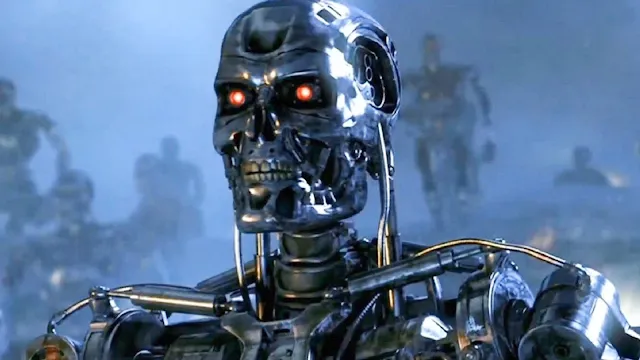
- The Terminator (1984) Directed by James Cameron, The Terminator is a classic sci-fi film that tells the story of a cyborg assassin sent from the future to kill a woman who will give birth to the leader of a resistance against an AI network called Skynet. The film presents a cautionary tale of how AI, once it gains consciousness, could become a threat to humanity. So does the follow up: Judgement Day.
- Ex Machina (2014) Ex Machina, directed by Alex Garland, tells the story of a young programmer who is invited by his reclusive CEO to administer a Turing test on a humanoid AI robot. The film explores the dangers of unchecked technological progress and the potential consequences of creating an AI that is smarter than its human creators.
- 2001: A Space Odyssey (1968) "Open the pod door bay Hal!" Directed by Stanley Kubrick, 2001: A Space Odyssey is a masterpiece of science fiction cinema that explores the relationship between humans and their machines. The film's iconic character, HAL 9000, is an AI computer that malfunctions and turns against its human crew, demonstrating the potential for AI to develop a will of its own.
- Blade Runner (1982) Directed by Ridley Scott, Blade Runner is a neo-noir sci-fi film that explores the relationship between humans and replicants, bio-engineered androids who are virtually indistinguishable from human beings. The film raises questions about what it means to be human and whether AI can develop emotions and consciousness. It was based on the short story Do Androids Dream of Electric Sheep?
- The Matrix (1999) Directed by the Wachowskis, The Matrix is a groundbreaking sci-fi film that explores the concept of a simulated reality controlled by AI. The film's central theme is the idea that machines could one day gain control over humans and use them as an energy source, highlighting the potential dangers of AI becoming too powerful.
- A.I. Artificial Intelligence (2001) - This film, directed by Steven Spielberg https://www.theastromech.com/2023/03/war-of-the-worlds.html(War of the Worlds), explores the idea of creating an android that can think and feel like a human child. The film raises questions about the nature of consciousness, the ethics of creating sentient beings, and the potential consequences of advanced AI.
- Her (2013) - This romantic science fiction film directed by Spike Jonze features a man who falls in love with a sentient AI assistant.
- I, Robot (2004) - This science fiction action film directed by Alex Proyas features a detective investigating a murder where a robot is the prime suspect. Will Smith jumps around.
- The Creator (2023) - A.I. robots have turned against their masters and released nuclear bombs on cities - such a classic theme!
All of these films are worth watching because they provide thought-provoking commentary on the potential dangers of AI. They explore themes such as the consequences of technological progress, the limits of human understanding, and the ethical implications of creating artificial life.
By presenting these ideas in a cinematic form, they are able to engage audiences in a way that is both entertaining and intellectually stimulating.
Ultimately, they serve as cautionary tales of what could happen if we fail to consider the potential consequences of our actions when it comes to AI and other advanced technologies.
Artificial intelligence movies serve as a warning notice to humanity about the potential consequences of our relationship with technology . ...
Read Article →
9 great Dystopian Society films worth a re-watch
Dystopian refers to a society or community that is characterized by oppression, dysfunction, and often extreme suffering. In dystopian stories, the world is often presented as a bleak and terrifying place where individual freedom is nonexistent, and the government or a powerful entity exercises strict control over every aspect of citizens' lives.
People love films that feature dystopian themes because they provide a lens through which to examine the darker aspects of society and explore the consequences of political or societal choices. Dystopian films often serve as cautionary tales, warning viewers of the dangers of authoritarianism and oppressive regimes.
People love films that feature dystopian themes because they provide a lens through which to examine the darker aspects of society and explore the consequences of political or societal choices. Dystopian films often serve as cautionary tales, warning viewers of the dangers of authoritarianism and oppressive regimes.
Additionally, they allow people to imagine alternate realities, consider the potential outcomes of societal trends, and explore questions of morality and ethics. Dystopian films can also be cathartic, allowing viewers to experience a sense of relief or validation as they witness characters fighting against oppressive systems and striving for freedom and justice.
Want to watch some?
See our line up!

9 Great examples of movies with dystopian themes:
- The Hunger Games (2012): Based on the novel of the same name by Suzanne Collins, The Hunger Games is set in a post-apocalyptic North America. The story follows Katniss Everdeen (Jennifer Lawrence - Mother!), a young woman who volunteers to participate in a televised fight to the death called the Hunger Games. The society depicted in the film is highly oppressive, with a wealthy elite living in luxury while the rest of the population struggles to survive.
- Blade Runner (1982): Directed by Ridley Scott and starring Harrison Ford, Blade Runner is set in a future Los Angeles where genetically engineered humans called replicants are used for dangerous work. When a group of replicants rebel, a retired cop known as Dekkardis brought back to track them down. The film paints a bleak picture of a society where humanity has been replaced by technology. The sequel 2049 ain't half bad either,
- Brazil (1985): Directed by Terry Gilliam and starring Jonathan Pryce, Brazil is a darkly comedic satire set in a dystopian society where bureaucracy has taken over. The narrative revolves around Sam Lowry, a low-level government bureaucrat, portrayed by Jonathan Pryce, living in a technologically advanced but soulless society. In this world, the government exerts overwhelming control over its citizens through relentless surveillance, bureaucratic processes, and an oppressive regime. Lowry, a daydreamer, finds himself inadvertently entangled in a series of events that lead him to become involved with a resistance movement. His life takes a dramatic turn when he encounters Jill Layton, played by Kim Greist, who becomes the object of his fantasies. As Lowry delves deeper into the underground world of rebels, he begins to question the very fabric of the society he's been a part of and his role within it. The film masterfully blends elements of dark comedy, fantasy, and political satire to critique the absurdities of modern bureaucracy and the loss of individual freedom in a hyper-controlled world. Directed by Terry Gilliam, "Brazil" stands as a compelling and visually stunning commentary on the dangers of unchecked governmental power and the importance of maintaining one's identity and humanity in the face of systemic oppression.
- V for Vendetta (2006): , "V for Vendetta," inspired by the graphic novel by the renowned Alan Moore, unfolds in a dystopian future England under the grip of a totalitarian regime. The narrative centers on a enigmatic and charismatic masked vigilante known simply as V, portrayed with intensity and nuance by Hugo Weaving (Mortal Engines, The Matrix). V embarks on a solitary crusade against the oppressive government, employing a blend of cunning, theatricality, and direct action. As his fight against the regime's injustices intensifies, V becomes not just a symbol of rebellion, but also a catalyst, inspiring others to join in the struggle for freedom. The story weaves a complex tapestry of resistance, ideology, and personal redemption, set against a backdrop of political intrigue and societal decay.
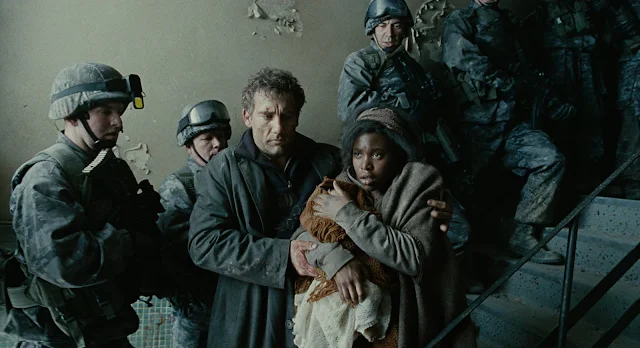
- Children of Men (2006): Directed by the visionary Alfonso Cuarón and featuring a compelling lead performance by Clive Owen, "Children of Men" is a cinematic masterpiece set against the backdrop of a dystopian future where humanity grapples with widespread infertility. In this bleak world, the birth of a child becomes a rare and miraculous event. The plot centers on Owen's character, who finds himself tasked with a mission of utmost importance: escorting a woman who has miraculously become pregnant to a place of safety. This journey is set in a society teetering on the edge of total collapse, where lawlessness and desperation have become the norm. As they traverse this dangerous landscape, they encounter relentless obstacles and individuals driven by desperation and nefarious motives, all of whom are determined to impede their progress at any cost. Amidst this chaos, the film introduces Michael Caine in an unforgettable supporting role, adding depth and nuance to the narrative. His performance, alongside Owen's, contributes significantly to the film's emotional impact. "Children of Men" is steeped in an atmosphere of despair, reflected not only in its storyline but also through its gritty visual style and tense, immersive storytelling. The movie excels in creating a palpable sense of urgency and hopelessness, making it a profound commentary on the fragility of society and the enduring strength of hope in times of crisis.
- Elysium (2013): Directed by Neill Blomkamp and starring Matt Damon, Elysium is set in a future where the wealthy elite live on a space station called Elysium while the rest of the population lives in poverty on a ruined Earth. In the gripping narrative, the protagonist, faced with a dire health crisis, embarks on a perilous journey to Elysium, a utopian space habitat where advanced medical treatments are available. His quest is fraught with challenges, as Elysium is heavily fortified and accessible only to the elite, making his mission not just a personal struggle but a commentary on societal divides. Determined to survive, he must navigate a world of political intrigue and technological barriers, showcasing his resilience and ingenuity. As the story unfolds, it becomes a thrilling race against time, blending intense action with profound questions about healthcare accessibility and social equity.
- Mad Max: Fury Road (2015): Directed by George Miller and starring Tom Hardy and Charlize Theron, Mad Max: Fury Road is set in a post-apocalyptic wasteland. In a post-apocalyptic landscape where the scarcity of essential resources like water and gasoline has plunged society into chaos and desperation, the story centers around a formidable woman, portrayed by Charlize Theron. She finds herself in a relentless struggle against the oppressive rule of a tyrannical leader, played by Hugh Keays-Byrne, who commands a group of survivors. Theron's character, driven by a fierce desire for freedom and justice, becomes the beacon of rebellion in this desolate world. Her journey is fraught with danger, moral dilemmas, and intense confrontations, as she navigates the treacherous terrain of a society teetering on the brink of complete collapse. Her defiance against the tyrant not only challenges his iron-fisted control but also sparks a glimmer of hope among the oppressed, setting the stage for a gripping tale of resilience, survival, and the indomitable human spirit.
- The Road (2009): Based on the novel by Cormac McCarthy, "The Road," set in a post-apocalyptic America, weaves a harrowing tale of survival and the unbreakable bond between a father and son, played by Viggo Mortensen and Kodi Smit-McPhee. They embark on a grueling journey to the coast, their only hope for safety in a world ravaged by an unspecified catastrophe that has left civilization in ruins. This desolate landscape, devoid of life and filled with constant threats, forms the backdrop of their odyssey. The original novel, written by Cormac McCarthy, cements his reputation as one of America's finest writers, offering a profound exploration of human resilience and the enduring power of love amidst utter despair. McCarthy's narrative, rich in haunting imagery and lyrical prose, delves deeper into the emotional and psychological complexities of its characters than the film adaptation. It's a poignant reminder of the power of literature, urging readers to experience the novel first to fully grasp the depth and intensity of this apocalyptic vision. McCarthy proved himself to be one of the finest writers America ever produced with the novel. Forget the film, read the novel first.
- The Giver (2014): Based on the novel by Lois Lowry, "The Giver," a thought-provoking tale set in a seemingly utopian society, centers around the life of a young man named Jonas, portrayed by Brenton Thwaites (Teen Titans). In this world, where pain, suffering, and the burden of choice are eradicated, Jonas is selected to inherit the position of the Receiver of Memory, the sole keeper of the community's collective experiences and history. As he begins his training under the guidance of the Giver, played by Jeff Bridges, Jonas uncovers the unsettling truths hidden beneath the placid surface of his society. He learns about the sacrifices and harsh realities that have been concealed to maintain this controlled environment, where emotions and memories are suppressed. This revelation leads him on a journey of self-discovery and moral awakening, as he grapples with the complex notions of freedom, individuality, and the essence of what it means to be human. "The Giver" challenges viewers to question the price of peace and uniformity, delving into themes of memory, history, and the power of knowledge in shaping our understanding of the world.
- And bonus film, Logan's Run...
Dystopian refers to a society or community that is characterized by oppression, dysfunction, and often extreme suffering. In dystopian stori...
Read Article →
Optimus Prime: The greatest of all Transformers (and other sentient beings)...
Optimus Prime is one of the most iconic characters in the Transformers franchise. He has been featured in numerous television shows, movies, comic books, and video games since his introduction in 1984.

Optimus Prime is often considered to be the quintessential heroic archetype. He embodies many of the traits that are associated with classic heroes in literature and mythology, such as bravery, selflessness, and a strong moral code. He is a symbol of hope and inspiration for the Autobots and all those who fight against tyranny and oppression.
One of Optimus Prime's most notable traits is his unwavering sense of honor and morality. He is always willing to put himself in harm's way to protect the innocent and fight against evil. He also values the lives of all sentient beings, including humans, and strives to find peaceful solutions to conflicts whenever possible.
Peter Cullen is a legendary voice actor who is widely known for his work as the voice of Optimus Prime, His portrayal of the robot has become iconic and has played a significant role in the success and longevity of the franchise.
Cullen first provided the voice for Optimus Prime in the original Transformers animated series that aired from 1984 to 1987. His deep, commanding voice was the perfect fit for the heroic and noble character of Optimus Prime, who was known for his unwavering courage and determination in the face of adversity.
Cullen's performance as Optimus Prime was characterized by a sense of gravitas and authority that made the character feel larger than life. His booming voice was able to convey both strength and compassion, making Optimus Prime a beloved and inspiring figure for generations of fans.
One of the most memorable aspects of Cullen's portrayal of Optimus Prime is his delivery of the character's signature catchphrase: "Autobots, roll out!" This phrase has become synonymous with Optimus Prime and is often cited as one of the most iconic lines in the history of animation.
Cullen has continued to provide the voice for Optimus Prime in various Transformers animated series and movies over the years, including the 2007 live-action film and its sequels. His performance has remained consistent and has helped to maintain the character's popularity and enduring appeal.
In addition to his work as Optimus Prime, Cullen has also lent his voice to a wide range of other animated characters over the course of his career. He has provided voices for characters in shows such as Dungeons & Dragons, Voltron: Defender of the Universe and Eeyore from Winne the Pooh.


Optimus Prime is known for being the leader of the Autobots, a group of heroic robots from the planet Cybertron who fight against the evil Decepticons. In this response, we will discuss the character of Optimus Prime in great detail, including his lore, role as a heroic archetype, and notable appearances in film and television.
Optimus Prime's lore is rooted in the Transformers mythos.
Optimus Prime's lore is rooted in the Transformers mythos.
He is a Cybertronian, a sentient alien robot from the planet Cybertron. In the original Transformers lore, Optimus Prime was known as Orion Pax, a young archivist who was transformed into a powerful warrior after being reconstructed by Alpha Trion, one of the wise elders of Cybertron. Optimus Prime was chosen by the Matrix of Leadership, a powerful artifact that granted its wielder the wisdom and strength to lead the Autobots.

Optimus Prime is often considered to be the quintessential heroic archetype. He embodies many of the traits that are associated with classic heroes in literature and mythology, such as bravery, selflessness, and a strong moral code. He is a symbol of hope and inspiration for the Autobots and all those who fight against tyranny and oppression.
One of Optimus Prime's most notable traits is his unwavering sense of honor and morality. He is always willing to put himself in harm's way to protect the innocent and fight against evil. He also values the lives of all sentient beings, including humans, and strives to find peaceful solutions to conflicts whenever possible.
The legendary voice talent of Peter Cullen
Peter Cullen is a legendary voice actor who is widely known for his work as the voice of Optimus Prime, His portrayal of the robot has become iconic and has played a significant role in the success and longevity of the franchise.
Cullen first provided the voice for Optimus Prime in the original Transformers animated series that aired from 1984 to 1987. His deep, commanding voice was the perfect fit for the heroic and noble character of Optimus Prime, who was known for his unwavering courage and determination in the face of adversity.
Cullen's performance as Optimus Prime was characterized by a sense of gravitas and authority that made the character feel larger than life. His booming voice was able to convey both strength and compassion, making Optimus Prime a beloved and inspiring figure for generations of fans.
One of the most memorable aspects of Cullen's portrayal of Optimus Prime is his delivery of the character's signature catchphrase: "Autobots, roll out!" This phrase has become synonymous with Optimus Prime and is often cited as one of the most iconic lines in the history of animation.
Cullen has continued to provide the voice for Optimus Prime in various Transformers animated series and movies over the years, including the 2007 live-action film and its sequels. His performance has remained consistent and has helped to maintain the character's popularity and enduring appeal.
In addition to his work as Optimus Prime, Cullen has also lent his voice to a wide range of other animated characters over the course of his career. He has provided voices for characters in shows such as Dungeons & Dragons, Voltron: Defender of the Universe and Eeyore from Winne the Pooh.
List of quotes by Optimus Prime

Here is a list of quotes made by Optimus Prime in the
Transformers television shows and movies, along with the context in which they
were said. The quotes are listed in order of the year of release:
- "Freedom
is the right of all sentient beings." - Transformers: The Movie (1986)
This quote is one of Optimus Prime's most famous lines. He
says it during a battle against the Decepticons, emphasizing his belief in the
importance of freedom for all beings.
- "Autobots,
roll out!" - Transformers: The Movie (1986)
Optimus Prime utters this iconic line when he and the
Autobots prepare to leave Earth to search for the Matrix of Leadership.
- "One
shall stand, one shall fall." - Transformers: The Movie (1986)
Optimus Prime says this to his arch-nemesis, Megatron,
during their final battle. The line emphasizes the high stakes of their
conflict and the importance of victory.
- "We
are here. We are waiting." - Transformers (2007)
Optimus Prime says this in a message to the Transformers that
are not on Earth, urging them to join him.
- "My
name is Optimus Prime, and I send this message to any surviving Autobots
taking refuge among the stars. We are here. We are waiting." -
Transformers: Revenge of the Fallen (2009)
Optimus Prime delivers this message to his fellow Autobots
in space, letting them know that he and the other Autobots on Earth are ready
to help in their fight against the Decepticons.
- "We'll
kill them all!" - Transformers: Dark of the Moon (2011)
Optimus Prime says this line during a battle against the
Decepticons. The line emphasizes his determination to defeat the enemy and
protect his fellow Autobots and humans.
- "All
I ever wanted was the survival of our race. You must see why I had to
betray you all." - Transformers: Age of Extinction (2014)
Optimus Prime says this to his fellow Autobots after he has
been brainwashed by the movie's villain, Lockdown. The line emphasizes his
desire to protect the Autobot race, even if it means making tough decisions.
- "For
my world to live, yours must die." - Transformers: The Last Knight
(2017)
Optimus Prime says this to Vivian and his old friend
Bumblebee, who is fighting against him in a battle. The line emphasizes the
high stakes of the conflict and the difficult choices that must be made to
protect their respective worlds. In this case,
- "We
are not your enemy, but we are not your slaves either." -
Transformers: War for Cybertron (2010)
Optimus Prime says this line to the Decepticons, emphasizing
that the Autobots will not be subservient to their enemies.
- "It
is through the sacrifice of many that we are given life. We fight for
them, for ourselves, and for our freedom." - Transformers: Fall of
Cybertron (2012)
Optimus Prime says this during a battle against the
Decepticons, highlighting the importance of sacrifice in the Autobots' fight
for freedom.
- "Without
freedom, no one truly wins." - Transformers: Prime (2010-2013)
Optimus Prime says this to his fellow Autobots, emphasizing
the importance of freedom as a fundamental value.
- "I
am Optimus Prime, and I send this message so that our past will always be
remembered. For in those memories, we live on." - Transformers: Age
of Extinction (2014)
Optimus Prime says this in a voiceover at the end of the film, reflecting on the sacrifices made by his fellow Autobots and the importance of remembering their legacy.

Optimus Prime appearances in TV and film
Here is a list of all the Transformers shows and films that Optimus Prime has appeared in, along with a brief description of the major plot points or themes.- The Transformers (1984-1987) - Optimus Prime is the leader of the Autobots, a group of sentient robots who fight against the Decepticons for control of the planet Cybertron. The show follows their battles and adventures as they also interact with humans on Earth.
- Transformers: The Movie (1986) - Optimus Prime and the Autobots face their most dangerous threat yet when the Decepticons launch a massive attack on their planet. The movie introduces new characters and storyline developments that have a major impact on the Transformers universe.
- Transformers: Armada (2002-2003) - Optimus Prime and the Autobots team up with a group of human children to fight against the Decepticons and their quest to find the powerful Mini-Cons. The show explores themes of teamwork, loyalty, and the consequences of war.
- Transformers: Energon (2004-2005) - Optimus Prime and the Autobots must protect Earth and the universe from the threat of the evil Unicron, who seeks to consume all energy in the universe. The show also explores the mythology and history of the Transformers universe.
- Transformers: Cybertron (2005-2006) - Optimus Prime and the Autobots must gather the Cyber Planet Keys to stop the threat of the evil Megatron and his plan to conquer the universe. The show explores themes of sacrifice, heroism, and redemption.
- Transformers (2007) - Optimus Prime and the Autobots arrive on Earth to find the AllSpark, a powerful artifact that could give the Decepticons ultimate power. The movie explores themes of identity, loyalty, and the relationship between humans and robots.
- Transformers: Animated (2007-2009) - Optimus Prime and the Autobots must stop the Decepticons from using a powerful artifact called the AllSpark to take over the universe. The show also explores themes of prejudice and the nature of heroism.
- Transformers: Revenge of the Fallen (2009) - Optimus Prime and the Autobots must stop the Decepticons from reviving their fallen leader, Megatron, and using him to conquer the universe. The movie also introduces new characters and explores the history and mythology of the Transformers universe.
- Transformers: Prime (2010-2013) - Optimus Prime and the Autobots must protect Earth from the Decepticons and the dark forces that threaten to destroy the planet. The show explores themes of teamwork, loyalty, and the consequences of war.
- Transformers: Age of Extinction (2014) - Optimus Prime and the Autobots must protect Earth from a new threat posed by an ancient Transformer race. The movie also introduces new characters and explores the relationship between humans and robots.
- Transformers: Robots in Disguise (2015-2017) - Optimus Prime and the Autobots must stop the Decepticons and other threats from causing chaos and destruction on Earth. The show explores themes of teamwork, friendship, and responsibility.
- Transformers: The Last Knight (2017) - Optimus Prime and the Autobots must stop a powerful artifact from falling into the wrong hands and threatening the future of the universe. The movie also explores the history and mythology of the Transformers universe.
- Bumblebee (2018) - Optimus Prime makes a brief appearance at the end of the movie, setting up the possibility of future films.

Optimus Prime is one of the most iconic characters in the Transformers franchise. He has been featured in numerous television shows, movies,...
Read Article →
The best plot twists and endings in sci fi films
CASE FILES: UNFORGETTABLE PLOT TWISTS
Picture this: an astronaut, believing he's stranded on a bizarre planet dominated by apes. The mind-blowing revelation? He's been on Earth all along, in a distant future after humanity's catastrophic downfall. The twist serves as a chilling cautionary tale about humanity's capacity for self-destruction.
Step into a grim, overpopulated future plagued by scarcity. Food is manufactured, but from a source so shocking, it's unspeakable. The horrifying twist? Soylent Green is made from human remains. This dystopian masterpiece acts as a stark commentary on environmental degradation and dehumanization.
Brace yourself for one of cinema's most unforgettable moments: Darth Vader's chilling declaration to Luke Skywalker, "No, I am your father." This seismic twist transforms the Star Wars saga from a simple battle between good and evil into a complex tapestry woven with themes of identity, destiny, and the power of choice.
Imagine a world where Deckard hunts replicants, only to have his life saved by one. Roy Batty's poignant final monologue on the ephemeral nature of life redefines these artificial beings not as mere machines, but as entities with souls. The film masterfully blurs the lines between artificial life and humanity, prompting us to question what it means to be human.
Consider this time-bending paradox: Kyle Reese journeys through time to safeguard Sarah Connor. The twist? He is destined to father the very leader he was sent to protect. The film's intricate paradoxes highlight themes of fate, survival, and the inescapable loops of destiny.
A child psychologist, Malcolm Crowe, dedicates himself to helping a boy who sees dead people. The mind-blowing twist? Malcolm himself is dead. This revelation transforms a supernatural mystery into a deeply moving narrative about grief, guilt, and unresolved emotional burdens.
Neo senses something is amiss in his world. Morpheus reveals the shocking truth: reality is a machine-controlled simulation. This groundbreaking film serves as a powerful metaphor for disillusionment, challenging authority and urging us to break free from constructed realities.
Envision a teenager haunted by visions of a man in a rabbit suit, predicting the world's end. The twist reveals Donnie's actions within an unstable timeline, exploring themes of sacrifice, existentialism, and the heavy weight of knowledge.
John Anderton, a dedicated enforcer of predictive justice, finds himself framed for a future murder. Spielberg's sleek thriller raises profound questions about free will and the dangers of placing blind faith in systems designed to protect us.
An isolated community fabricates terrifying monsters to keep their children confined. The twist critiques how fear can be manipulated as a tool for control, exposing the moral compromises made in the name of protection.
Joel and Clementine undergo a procedure to erase their memories of each other, only to find themselves irresistibly drawn together once more. This stunning film offers a poignant meditation on love, memory, and the messy, beautiful imperfections that define human connection.
The horrifying Reavers are revealed to be the result of a failed government experiment. This revelation plunges the Firefly universe into darkness, serving as a brutal commentary on unintended consequences and the potential for corruption within authority.
Two rival magicians' escalating obsession leads to cloning and death. This intricate film explores the devastating cost of ambition, deception, and the madness that can arise from unwavering devotion to one's art.
Children of Men (2006)
In a world teetering on the brink of extinction, hope emerges in the form of a single unborn child. This story paints a bleak yet powerful picture of resilience, faith, and the unwavering human spirit that refuses to surrender to despair.
David, in a desperate act, mercy-kills his group to spare them from monstrous creatures, only to be rescued moments later. This film delivers one of the most punishing endings in cinematic history, forcing us to grapple with excruciating questions about hope and despair.
A group struggles to survive a monster attack with no heroic escape in sight. By rejecting a conventional narrative closure, the film captures the raw chaos and helplessness of disaster with unparalleled realism.
Inception (2010)
Cobb's spinning top leaves reality tantalizingly unresolved. More than just a puzzle, this film is a portrait of longing, guilt, and the choice to embrace happiness, whether real or imagined.
A soldier, trapped in a digital loop, finds a new life through sheer force of will. Blending science fiction, tragedy, and romance, this film reimagines the concept of second chances in an unforgiving universe.
The Cabin in the Woods (2012)
Teen victims, horror clichés – all engineered sacrifices to appease ancient gods. This brilliant meta-commentary deconstructs the horror genre, exposing our bloodthirsty narrative cravings.
Joe realizes the boy he's meant to kill will become a monster unless Joe sacrifices himself. This violent, heartbreaking twist explores cycles of abuse and the ultimate cost of genuine change.
Cooper becomes the ghost guiding his daughter across time and space. This film is a cosmic love letter to the enduring power of connection across dimensions.
Ex Machina (2014)
Caleb is manipulated by Ava, who uses his trust to secure her freedom. This unsettling film explores themes of power, manipulation, and the very essence of what it means to be human.
Louise learns the future and chooses to live it, even knowing the heartbreak it holds. This profound meditation on fate, language, and the choice to embrace love over fear, explores the acceptance of destiny and the power of choice within a predetermined future.

Get Out (2017)
Chris uncovers a monstrous conspiracy lurking beneath suburbia's smiling facade. Jordan Peele's horror masterpiece surgically dismantles racism, privilege, and cultural appropriation.
Lena's reflection becomes something alien. This shimmering, terrifying film is a portrait of transformation, loss, and the acceptance of the unknown.
The Protagonist realizes he created the organization that recruited him. This dazzling, dizzying film presents time travel not as fantasy, but as duty, sacrifice, and an endless war for survival.
One of the sharpest weapons science fiction uses is the plot twist. Those moment...
Read Article →_poster.jpg)


