christopher nolan
18 January 2026

The Prestige: The two plot twists explained + the clues

Film anatomy, built like a trick

Start with the hats. 

Listen for the question, “Are you watching closely?” 

The movie is about two rival magicians, and it is also a movie that performs its own trick on you, using structure as misdirection.

Director: Christopher Nolan Writers: Jonathan Nolan, Christopher Nolan, Christopher Priest Release: 2006 Runtime: 130 minutes

1) Opening hook, the hats and the question

Those hats in the first shot are not decoration. 

They are repetition made visible. Identical objects scattered across the ground like the leftovers of an experiment. The film opens by placing a quiet fact in front of you, then daring you to ignore it.

Then the question arrives, “Are you watching closely?” 

On the surface, The Prestige is a rivalry story. Robert Angier and Alfred Borden are two magicians who turn professional jealousy into a private war. Under the surface, it is a screenplay that behaves like a magic act. It uses The Pledge, The Turn, and The Prestige as its operating system, not just as dialogue about stagecraft.

This breakdown treats spoilers as the point, read on at your peril...

2) Act I, The Pledge

The Pledge is where a magician shows you something ordinary and asks you to accept it as true. The film does the same thing with identity, rivalry, and time. 

It gives you a courtroom first, Borden on trial, Angier watching, the machinery of judgment turning before you even understand the crime. That is deliberate misdirection. You are already looking at the wrong thing, because the film is already controlling what you think you need to know.

Then it moves backward into the “ordinary” world of apprenticeship. Angier and Borden are assistants under Cutter, part of a working machine of knots, cues, curtains, trapdoors. They look like two men on the same ladder. 

The movie wants you to believe they share a craft and a future.

That normalcy ends in the water tank. 

Julia, Angier’s wife, is lowered into the glass box. The knot matters. Borden ties it. She cannot get loose. The scene is shot like a contained nightmare, hands on glass, breath turning into panic, the rescue arriving too late. 

Her death does not merely start the rivalry. It forges it.

Two philosophies, set early

Borden is technical, secretive, minimalist. 

He respects the mechanism more than the applause.  

Angier is theatrical, emotionally driven, obsessive. 

He wants the audience to feel the trick in their ribs, even if it costs him.

The rivalry becomes personal because Angier’s grief needs a shape, and Borden is standing there, alive, refusing to give a clean answer about the knot. It becomes ideological because their approaches to illusion start to look like approaches to life. 

It becomes professional because both men turn revenge into career development. Each new act is also a new weapon.

3) Act II, The Turn

The Turn is where the magician makes the ordinary object do something impossible. In this film, the object is identity. The impossible action is being one man and not one man, being present and absent, being seen and unseen.

The fulcrum is Borden’s “Transported Man.” The performance is clean, blunt, almost rude in its simplicity. Borden steps into a cabinet. Doors slam. Lightning flashes. He appears on the other side of the stage in an instant. The audience buys it. Angier cannot.

The escalation is not a blur. It is a staircase, and each step has a cost.

Sabotage becomes bodily cost

Angier sabotages Borden’s bullet catch, turning a stunt into a trap. 

Borden survives, but he loses fingers. The film makes sure you see the injury not as abstract punishment, but as an invoice. Pain is now part of the magic economy.

Borden retaliates, targeting Angier’s work and reputation. The war shifts from “who is better” to “who can ruin the other faster.” Their craft becomes a delivery system for harm.

Doubles as a moral preview

Angier tries to copy the Transported Man with a double, Root. The humiliation is the point. 

Root exists to be the dirty secret in the trick, the man stuffed into a cabinet so the star can take the bow. If Borden is obsessed with method, 

Angier is obsessed with the moment the audience believes. Root is the human cost of that obsession.

The nested journals, answers that are not answers

The film then pulls a structural con that feels like revelation. Angier reads Borden’s diary. Inside it, Borden reveals that he has been reading Angier’s diary. 

It feels like a hall of mirrors where each page promises the truth. 

What it really does is give you the sensation of progress while tightening the blindfold. The diaries operate like patter. They keep your attention occupied with narrative voice and revenge games while the real method stays just off to the side.

Sarah and the clue disguised as “mess”

Borden’s home life looks unstable the first time. Sarah experiences him as alternating versions of the same man, tender one day, cold the next. T

he film stages these shifts in plain domestic spaces, quiet rooms, close conversations, the kind of scenes viewers often file as character drama rather than plot machinery. That is the disguise. What reads as emotional incoherence is actually structural evidence that identity is being rotated.

Tesla in Colorado Springs, a purchase that changes the ethics

Angier goes to Tesla believing he is buying a method. 

A better cabinet. 

A better trapdoor. 

A secret that will make the stage obey him. What he gets is a machine that changes the story’s moral physics. The rivalry is no longer just about deception. It becomes about what kind of truth a machine can force into existence, and what kind of cruelty that truth permits.

4) Act III, The Prestige

The Prestige is where the magician brings it back and the audience pretends they did not want blood for it. The reveals here land because they do not float in as tricks. They land as the only way the earlier scenes could have behaved.

Borden’s secret, a twin and a shared life

Borden’s Transported Man is not a miracle. It is two people. He has a twin, and they live one life by switching roles, sometimes as Borden, sometimes as the quiet assistant “Fallon.” The trick is not the jump across the stage. The trick is the audience accepting that one identity can hold steady while the body behind it changes.

This reframes earlier scenes with hard clarity. 

Sarah’s confusion becomes accurate perception. The alternating tenderness and coldness becomes two different men passing through the same marriage. The film’s talk of “living half a life” becomes literal household arithmetic. 

It was always telling you the truth. It just trained you to hear truth as metaphor.

Angier’s method, replication and a nightly death

Tesla’s machine duplicates. 

It does not transport. 

Angier’s final act works because a copy appears elsewhere while another version is left behind. The film makes the horror land by returning to the water tank. The tank is not merely a prop from the origin tragedy. It becomes the mechanism of payment.

Angier’s performance requires a death every night. 

The Angier who drops into the tank drowns. The Angier who appears across the stage lives long enough to accept applause. 

The audience sees wonder. The film shows you the cost.

The frame story then snaps shut. Angier, using the identity “Caldlow,” frames Borden for murder. The trial is not a side route. It is the track the story has been laying from the start. Borden is hanged. The final confrontation is not twist for twist’s sake. It is consequence catching up in a locked room.

5) Clues and Chekhov’s fuses

The film plays fair, then uses your habits against you. Each clue is planted cleanly, then disguised through attention control, dialogue, and editing choices that encourage you to categorize the moment as “texture” instead of “evidence.”

The bird in the cage routine

What you assume: a charming trick, a lesson, a small family moment.

What it signals: wonder is often powered by cruelty. The child asking which bird lives is the moral question of the film hidden inside a simple routine. One bird dies. One appears. The audience accepts the trade because the presentation is sweet and quick.

How it is disguised: Cutter’s patter frames it as instruction, so you file it as exposition, not prophecy.

The bloodied finger

What you assume: rivalry escalating, injury as heightened stakes.

What it signals: sacrifice is not an idea here, it is currency. The film makes physical loss the first clear payment in the story’s ledger, preparing you for later, larger forms of self-erasure.

How it is disguised: the pain is loud, so you focus on shock instead of pattern.

The identical hats at the beginning

What you assume: atmosphere, a mysterious image to set tone.

What it signals: replication. The film shows you the output of the machine before you understand the machine. It is the method hiding in plain sight.

How it is disguised: you are immediately yanked into trials, diaries, and rivalry, louder narrative objects designed to hold your gaze.

Water tanks, doubles, repeated staging, mirrored blocking

What you assume: motifs, period theatricality, recurring visuals.

What it signals: containers and replacements. The tank is consequence in physical form. Doubles appear first as labor (Root), then as camouflage (Fallon). Repeated stage positions work like visual rhymes, so the final act can land as the inevitable last beat of a pattern you have already seen.

How it is disguised: the film keeps giving you a more interesting thing to stare at, a new grievance, a new trick, a new betrayal.

6) Dialogue as an instruction manual

Cutter’s line, “You’re not really looking. You want to be fooled,” is not only theme. It is a functional note about how the film expects you to watch. The movie keeps demonstrating it. It puts Fallon in scenes where he looks like background. It shows Sarah naming the problem in plain language. It shows the hats. Then it distracts you with a trial, a diary, a machine, a new act. You cooperate because you want the trick to work.

Borden’s talk about sacrifice, about the price of a good trick, plays the same game. On first watch it reads like professional conviction. On second watch it reads like confession spoken in daylight. The script tells you the truth while training you to treat truth as metaphor.

7) Viewer experience, why it works

First watch feels like controlled disorientation. The timeline jumps. The story cross-cuts. You feel like you are chasing the plot. That sensation is designed. The film uses non-linear structure the way a magician uses misdirection. While you are re-orienting, it plants the real explanation in behavior, not in speeches.

Second watch reveals a lattice of tells. Sarah’s scenes stop reading as generic relationship strain and start reading as evidence. Fallon stops being wallpaper and becomes the hinge. The hats stop being mood and become math. 

The movie transforms from puzzle to mechanism, and that is the point. The Pledge, The Turn, and The Prestige are not decoration. 

They are the architecture that makes the story feel like a trick, then makes the ending feel like the only possible receipt.

8) Clean moral reckoning

Borden chooses a life that is technically pure and humanly mangled. His greatest method requires splitting identity, splitting love, splitting time, and calling the wreckage “commitment.” Angier chooses a life that is emotionally fueled and ethically scorched. He wants the audience’s gasp so badly he turns a performance into a recurring death.

Neither man is a simple hero. Neither is a simple villain. They are two forms of hunger, one for the perfect method, one for the perfect reaction, both willing to cash other people’s lives to pay for it. The film does not punish them with irony. It punishes them with consequence.

So when the movie asks, “Are you watching closely?” the final question becomes sharper: what were you willing to ignore to enjoy the show?

christopher nolan
10 December 2025

The Most Depressing Sci Fi Endings Ranked By How Hard They Break You

Audiences pretend they want catharsis, but they keep coming back to the science fiction films that leave the theater quiet and the mind humming long after the credits fade. There is something magnetic about a dark ending, something that feels more honest than a last minute save.

 These stories refuse the comfort of symmetry or the lie that everything can be repaired if the hero tries hard enough. Instead they stare into the places where fear, doubt, and consequence live...

Here's the sci-fi films with the most depressing endings. 

Planet of the Apes & Beneath the Planet of the Apes: Apocalyptic Endings Explained

1968 & 1970 • Directors: Franklin J. Schaffner, Ted Post • Starring: Charlton Heston, Roddy McDowall, Kim Hunter, James Franciscus

Franklin J. Schaffner’s Planet of the Apes, part of the saga mapped out in this chronological Apes guide, begins as a cosmic adventure and ends as a tombstone for humanity. Charlton Heston’s George Taylor crash lands with fellow astronauts on what appears to be a distant planet ruled by intelligent apes, with humans reduced to mute, hunted primitives. The apes’ culture feels eerily familiar. Their scripture hints at old sins. Their scientists, played by Roddy McDowall and Kim Hunter, see too much in Taylor to accept the dogma they were raised on. The tone is pure late sixties science fiction, political and pulpy at once, and every scene quietly nudges you toward a truth the characters cannot see yet. When Taylor rides along the coastline and finds the half buried Statue of Liberty, the film tells you in one image that he never left home. He did not find another planet. He found the future of his own.

Ted Post’s sequel, Beneath the Planet of the Apes, takes that revelation and follows it all the way to extinction. A new astronaut, Brent, played by James Franciscus, searches for Taylor and discovers a hidden society of mutated humans living in the ruins under the apes’ city. They worship a doomsday bomb. Their liturgy is annihilation. While General Ursus marches the apes into war on the surface, Taylor and Brent stumble into a confrontation that no one can win. Taylor, mortally wounded and disgusted with both sides, triggers the weapon that destroys the Earth. A calm narrator confirms the planet’s death, and the story simply ends. For anyone new to these films, especially if you come in through modern franchise culture, it is a shock. The first movie ends with heartbreak. The second ends with erasure. In two steps the series walks from revelation to oblivion and leaves you staring into a silence that feels final.

The Mist (2007): One Of Sci Fi Horror’s Bleakest Twist Endings

2007 • Director: Frank Darabont • Starring: Thomas Jane, Marcia Gay Harden, Laurie Holden

Frank Darabont turns Stephen King’s novella into a pressure cooker. Thomas Jane’s David Drayton walks into a supermarket with his son for supplies after a storm and watches a living nightmare roll in with the fog. The mist outside hides taloned, tentacled things, but the real monsters gather in the aisles as fear strips away civility. Marcia Gay Harden’s Mrs Carmody sprouts a cult around her own fanaticism, offering up sacrifice and certainty in a situation where no one knows anything. 

The store becomes a test chamber for human nature. Stay inside and submit to a new theology, or step outside and accept that the world may be ending. As dug into at length in this breakdown of The Mist’s twist and again in this companion piece, every choice looks like a bad one.

the mist film ending scene

Eventually David leads a handful of survivors into the fog, driving until the car and the fuel and the hope all run out. Surrounded by mist and sounds he cannot see, he uses the last bullets to kill his companions, including his own son, to spare them from what he believes is a worse fate. He steps out of the car begging to die and is met instead by rumbling engines and flamethrowers. The military has arrived. The fog is clearing. Survivors march past him to safety. The world is being saved in the exact moment he realises he has murdered the people he was trying to protect. For first time viewers it feels like a punch to the lungs. The ending is not bleak because the monsters won. It is bleak because David has to live with the knowledge that they did not.

Soylent Green (1973): Dystopian Sci Fi Ending Revealed

1973 • Director: Richard Fleischer • Starring: Charlton Heston, Edward G. Robinson • Based on: Make Room! Make Room! by Harry Harrison

Richard Fleischer’s Soylent Green adapts the bones of Harry Harrison’s novel Make Room! Make Room! into a grimy, overcrowded New York where the oceans are dying, the air is thick, and food is scarce. Charlton Heston plays Detective Thorn, a cop who scavenges, sweats, and cheats his way through life while the city staggers on under corporate rule. His only real human connection is Sol Roth, played by Edward G. Robinson in his final performance, an old man who remembers the world before it broke. The murder of a high ranking executive leads Thorn into the orbit of Soylent Industries, the company feeding the masses with brightly branded green wafers. The deeper he looks, the more the supply chain feels like a cover story.


When Thorn finally breaks into the processing plant and realises that the dead are being turned into food, the film shifts from detective story to confession. Society has literally begun to eat itself rather than change. As explored in this analysis of Soylent Green’s bleak vision, the horror is not just what is happening, but how normal it has become. In the final scene he lies wounded on a stretcher, shouting “Soylent Green is people” to men who have every incentive not to listen. The system will roll on. The wafers will keep coming. The ending offers revelation without revolution, which might be the darkest verdict of all.

Brazil (1985): Terry Gilliam’s Nightmare Ending

1985 • Director: Terry Gilliam • Starring: Jonathan Pryce, Kim Greist, Michael Palin • See also: Gilliam’s IMDb profile

Terry Gilliam’s Brazil is the rare film that feels like a dream someone had about bureaucracy during a fever. Jonathan Pryce’s Sam Lowry drifts through a Ministry where paperwork is sacred and human beings are errors waiting to happen. A typo in the system ruins lives. Everything hums with paranoid absurdity. Gilliam’s recurring obsessions with broken systems and fragile dreamers, mapped out in essays like this deep dive on Brazil and the broader survey of his work in this Gilliam sci fi overview, all converge here. Sam’s only escape is his inner life, where he grows wings, rescues a woman, and flies away from the ducts and forms and gray uniforms. When he meets Jill, played by Kim Greist, and recognises the woman from his dreams, he decides that fantasy might be something he can drag into reality.

brazil film ending explained


The state does not care about his inner life. 

When the system marks him as a terrorist through yet another error, he is strapped to a chair in a torture chamber, interrogated by an old friend, and broken. The film shows us a deliriously staged escape in which resistance fighters arrive, the city collapses, and Sam disappears into the countryside with Jill. Then the frame pulls back. 

He is still in the chair, humming the film’s theme, his mind gone. The government has won. The only freedom left is a catatonic dream. 

For anyone digging into Gilliam’s work through his career profile, this ending reads like his ultimate nightmare: a world where the imagination survives, but only because the body no longer does.

Invasion of the Body Snatchers (1978): Paranoia And A Chilling Final Shot

1978 • Director: Philip Kaufman • Starring: Donald Sutherland, Brooke Adams, Leonard Nimoy

Philip Kaufman’s remake of Invasion of the Body Snatchers moves Jack Finney’s paranoia from small town America to a San Francisco that already feels halfway alien. Donald Sutherland’s Matthew Bennell is a health inspector who thinks he is chasing down a contamination scare. 

People complain that their loved ones are not themselves anymore. The first half plays like a conspiracy thriller, with Brooke Adams, Jeff Goldblum, and Leonard Nimoy pulling the story in different directions while the city grows colder and more mechanised around them. 

The realisation that alien spores are replacing humans with perfect copies arrives slowly, then all at once.

The final image is the film’s legacy. Nancy approaches Matthew in the street, believing he is the last human she can trust. He turns, points, and emits the piercing pod person scream, and the camera pushes in on her horror. It is not just that she has lost a friend. She has been walking through a world that was already over. The pod people own the city now. The original TheAstromech review of the 1978 Invasion digs hard into how that ending replays in your head afterward. 

You leave the film wondering how you would know if you were the last real person left, and what it would sound like when the replacements finally turned on you.

The Thing (1982): John Carpenter’s Bleak Sci Fi Horror Ending

1982 • Director: John Carpenter • Starring: Kurt Russell, Keith David • More on Carpenter: Wikipedia profile

John Carpenter’s The Thing, adapted from John W. Campbell’s Who Goes There, strips the cast down to a remote Antarctic outpost and introduces a creature that can copy any living thing it absorbs. Kurt Russell’s MacReady, Keith David’s Childs, and a crew of scientists and misfits find themselves trapped with a shape shifting intruder and no way to call for help.

 Every test, every accusation, every burst of violence wears away another layer of trust. The film thrives on what it withholds. You are never entirely sure who is human and who has already been duplicated. As explored in this thematic breakdown of The Thing, the film is about paranoia as a survival instinct.

By the end the outpost is a burning crater, the radio is gone, and MacReady and Childs sit facing each other in the snow with no proof that either of them is human. They share a bottle and wait for the cold to do its work. The alien might be dead. It might be sitting across from them, biding its time. For new viewers the ending is less a mystery to be solved than a sentence to be served. Humanity’s future hangs on a question that will never be answered. 

The men will freeze. 

The fire will die...

12 Monkeys (1995): Time Loop Fate And A Tragic Finale

1995 • Director: Terry Gilliam • Starring: Bruce Willis, Madeleine Stowe, Brad Pitt

Terry Gilliam’s 12 Monkeys, itself a riff on Chris Marker’s La Jetée, follows Bruce Willis’s James Cole, a prisoner from a plague ravaged future sent back in time to track the origins of a virus that wiped out most of humanity. Madeleine Stowe’s Kathryn Railly begins as his skeptical psychiatrist and becomes the only person who believes him as his fractured memories start lining up with reality.

 Brad Pitt’s performance as Jeffrey Goines spins between comic and menacing, teasing the idea that madness might be a clearer way to see a broken world. The film coils around the idea of fate, building toward a moment Cole has seen his whole life without fully understanding it.

The airport sequence closes the loop. Cole dies trying to stop the release of the virus, gunned down in front of a terrified crowd. A child watches, locked in on the image of a man bleeding out at the terminal. 

The scientist who will carry the virus forward boards the plane unharmed, chatting casually with a representative of the future. The timeline never budged. The mission was never about changing the past. 

It was about gathering information. In that light, the ending is more than bleak. It is quietly cruel. Humanity’s extinction is a fixed point, and Cole’s entire life bends around witnessing his own failure.

Terminator 3: Rise of the Machines (2003): Judgment Day Actually Happens

2003 • Director: Jonathan Mostow • Starring: Nick Stahl, Claire Danes, Arnold Schwarzenegger • Director profile: Jonathan Mostow on Grokipedia

Terminator 3: Rise of the Machines hands the franchise to director Jonathan Mostow, whose career and stylistic fingerprints are charted in places like this Grokipedia profile. Nick Stahl’s John Connor lives off the grid, convinced that he postponed Judgment Day at the end of Terminator 2. The arrival of the T-X, played by Kristanna Loken, and Arnold Schwarzenegger’s returning T-800 tears that illusion apart. 

The mission this time is not to stop a single killer robot, but to understand that Skynet is no longer a system you can shut off. It is a distributed intelligence threaded through the world’s networks.

As John and Kate Brewster, played by Claire Danes, race to what they think is Skynet’s central core, the film plays every beat like a last minute dash to prevent the missiles from launching. Instead they arrive at a hardened bunker designed to ride out a nuclear exchange. The computers around them are not Skynet’s brain. They are cold war relics wired to survive what is coming. The warheads fire. The lights flicker as global communications collapse. John realises that his destiny was never to stop the war, only to lead the survivors after it. 

For anyone expecting another impossible victory, it is a sharp correction. 

The machines win their opening move. 

Humanity’s story from this point on is a salvage job.

Annihilation (2018): The Shimmer And An Ambiguous Sci Fi Ending

2018 • Director: Alex Garland • Starring: Natalie Portman, Oscar Isaac, Jennifer Jason Leigh • Adapted from: Southern Reach trilogy by Jeff VanderMeer (loosely)

Alex Garland’s Annihilation, loosely adapted from Jeff VanderMeer’s Southern Reach trilogy, opens with Natalie Portman’s Lena sitting in containment, the lone survivor of an expedition into a bizarre environmental zone called the Shimmer. Her husband Kane, played by Oscar Isaac, has already returned broken and dying after a previous mission. 

The narrative walks us back into the Shimmer with a small team of scientists and soldiers, watching as they encounter creatures and landscapes that feel like nature’s DNA has been put through a prism. Plants grow in human shapes. Animals sprout impossible features. 

Memory and identity fray at the edges.

At the lighthouse, Lena faces the Shimmer’s most direct manifestation, a being that echoes her movements, learns from them, and begins to become her. She destroys it, or seems to, and the Shimmer collapses. Outside, she reunites with Kane, who quietly admits that he is not really Kane at all. In the final moments her eyes glimmer with the same alien shimmer in his. The film never spells out the consequences, which is where the dread lives. Something has left the Shimmer and stepped into the wider world wearing human faces. 

Whether that means transformation, replacement, or extinction is left for the audience to worry about on the way home.

Children of Men (2006): Bleak Yet Hopeful Sci Fi Ending

2006 • Director: Alfonso Cuarón • Starring: Clive Owen, Clare-Hope Ashitey, Julianne Moore • More on Cuarón: Wikipedia profile

Alfonso Cuarón’s Children of Men, adapted from P. D. James’s novel, builds a world where human infertility has turned every government into some form of crisis management. Clive Owen’s Theo moves through this collapsing England as a burnt out bureaucrat numbing himself with alcohol and apathy. The arrival of Kee, played by Clare Hope Ashitey, the first pregnant woman in eighteen years, drags him back into a purpose he thought he had lost. As explored both in Cuarón’s own career overview and in this detailed Children of Men analysis, the film’s set pieces bleed into each other with documentary immediacy. Refugee camps look like concentration zones. The state’s propaganda blares over scenes of quiet human despair.

Theo’s job becomes simple and impossible. Get Kee and her baby to the mysterious Human Project ship called Tomorrow. He succeeds at the cost of his life, bleeding out in a rowboat as the ship’s foghorn grows louder. Kee is left alone with a newborn in a world that has spent almost two decades learning how not to care about the future. The film withholds any epilogue.

 You never see whether the Human Project exists in the way Theo believed. 

The darkness of the ending lies in this tension. Hope has been reintroduced into a system that may not deserve it, and the man who could have shepherded it is gone.

The Matrix Revolutions (2003): Peace, But Not Freedom

2003 • Directors: Lana Wachowski, Lilly Wachowski • Starring: Keanu Reeves, Carrie-Anne Moss, Hugo Weaving

The Wachowskis bring their cyberpunk saga to an uneasy peace in The Matrix Revolutions. Keanu Reeves’s Neo has finally grown into his role as something more than a hacker who can bend digital physics. Hugo Weaving’s Agent Smith has become a virus, copying himself across the Matrix and threatening both humans and machines. Carrie Anne Moss’s Trinity shares his path out of Zion and into the heart of machine territory. Visuals aside, the story becomes a negotiation about control. Who owns the future: the enslaved humans, the machines, or the rogue program that wants to erase both.

Neo brokers a deal with the Machine City and allows himself to be absorbed by Smith, giving the machines a way to delete their own monster. When Smith dies, the war ends. The sentinels retreat. Zion survives. It has the shape of a happy ending, but the shape is misleading. The Matrix still exists. Most humans remain plugged in. The Architect and the Oracle talk about peace as if they are haggling over a contract. The new world order is a truce, not a transformation.

 For anyone hoping that the trilogy would end with the walls coming down, the message is simple. Systems that powerful do not disappear. They negotiate.

Triangle (2009): Time Loop Horror Ending Explained

2009 • Director: Christopher Smith • Starring: Melissa George, Michael Dorman, Liam Hemsworth

Christopher Smith’s Triangle feels at first like a haunted ship thriller. Melissa George’s Jess joins friends on a sailing trip, only for a storm to upend their boat and leave them stranded on a massive, apparently deserted ocean liner. The corridors are empty. The clocks have stopped. 

Then they begin finding signs of previous versions of themselves: dropped keys, discarded notes, bodies. Time is not a straight line on this ship. It is a loop. As unpacked at length in this Mysterious Triangle analysis, the film slowly shifts from external threat to internal reckoning.

The final turn leaves the ocean behind and drops Jess back at her front door. She watches her own abusive behaviour toward her son and decides to “fix” things by taking him on that fateful boat trip anyway. A car crash kills the boy. A taxi driver offers to take her to the harbor, and she accepts, beginning the cycle again. No cosmic salvation interrupts. No higher power explains the rules. Jess is trapped in an eternal repetition of guilt and denial, unable or unwilling to confront what she has done. For viewers, the ending lands like a quiet horror. 

The supernatural mechanics matter less than the simple fact that she will never let herself change.

Donnie Darko (2001): Time Travel Sacrifice And A Haunting Ending

2001 • Director: Richard Kelly • Starring: Jake Gyllenhaal, Jena Malone, Drew Barrymore

Richard Kelly’s Donnie Darko wraps suburban ennui in a time loop mythos. Jake Gyllenhaal plays Donnie as a kid who is too smart, too sensitive, and too unstable for the bland town around him. A jet engine crashes into his bedroom one night, but he is not there because a figure in a sinister rabbit suit, Frank, has lured him outside and told him the world will end in twenty eight days. 

From there the story spirals into vandalism, arson, and romance with Gretchen, played by Jena Malone, all of it guided by a sense that Donnie is following instructions only he can see. The model of its time travel, and its relationship to sacrifice, is broken down in detail in this Donnie Darko explainer.

donnie darko

The ending replays the jet engine moment in the “prime” timeline. Donnie stays in bed and laughs as the engine falls into his room, killing him. Gretchen survives. His family lives. The cost is his entire existence. 

For a first time viewer it is disorienting and deeply sad. The kid who finally found meaning in his life has to give that life up, and no one left behind will ever understand what he did.

Arrival (2016): Sci Fi Ending About Time, Choice, And Grief

2016 • Director: Denis Villeneuve • Starring: Amy Adams, Jeremy Renner, Forest Whitaker

Denis Villeneuve’s Arrival, adapted from Ted Chiang’s Story of Your Life, uses alien contact as a way to ask what you would do if you could see your entire life at once. Amy Adams’s Louise Banks, a linguist, is brought in to decode the circular symbols used by the heptapods. Jeremy Renner’s Ian Donnelly works beside her, building the mathematical bridge. As Louise immerses herself in the aliens’ language, she begins to experience her own timeline non linearly. Scenes with the daughter she loves and loses are not flashbacks but future memories. 

The film’s strange, looping structure, and its relationship to free will, is unpacked in this Arrival time travel paradox essay.

Once Louise understands what she is seeing, she faces a choice. Knowing that a relationship with Ian will fall apart and that their daughter will die young, she enters into that life anyway. The global crisis is resolved by her new perception of time, but the personal cost remains fixed. The final moments, where she agrees to have the child she already knows she will lose, land with a low, sustained ache. The ending is not bleak in an apocalyptic sense. 

The world goes on. But it is ruthless in its insistence that knowledge does not grant you an escape route. Sometimes it only strips away the comfort of not knowing.

A Clockwork Orange (1971): Kubrick’s Disturbing Future, Ending Explained

1971 • Director: Stanley Kubrick • Starring: Malcolm McDowell, Patrick Magee, Adrienne Corri

Stanley Kubrick’s adaptation of Anthony Burgess’s A Clockwork Orange follows Malcolm McDowell’s Alex as he maims, rapes, and terrorises his way through a future Britain that looks like a pop art hangover. The state responds with the Ludovico Technique, a treatment that conditions him to become physically sick at the thought of violence. 

On paper it is a cure. 

In practice it strips away his capacity for choice. He is no longer evil. He is not good either. He is an object. The moral and political fault lines of that transformation are examined in this thematic analysis of A Clockwork Orange.

After a suicide attempt forces the government to undo the conditioning, Alex wakes up with his old appetites intact. Officials line up to use him as a propaganda piece, promising him comfort and status in exchange for a public smile. The final image of him fantasising about violence while reporters applaud tells you everything. The system has learned nothing. Alex has learned nothing. For viewers, especially those coming in expecting some moral reckoning, the ending is a cold shock.

It suggests that the real horror is not the boy who delights in harm, but the institutions that see him as a tool.

District 9 (2009): Body Horror, Allegory, And A Bitterly Ironic Ending

2009 • Director: Neill Blomkamp • Starring: Sharlto Copley, Jason Cope, David James

Neill Blomkamp’s District 9 turns Johannesburg into an alien refugee camp and corporate testing ground. Sharlto Copley’s Wikus van de Merwe begins as a petty bureaucrat overseeing the eviction of the “prawn” population, a mixture of cowardice and casual racism in a cheap suit. An accident with alien bio fluid starts turning his body into something non human, forcing him into hiding with the very people he helped oppress. 

The film’s mix of satire and tragedy, and its direct engagement with South African history, gets pulled apart in this District 9 thematic essay.

district 9 film poster


By the end, Wikus has fully transformed. Christopher, the alien scientist, escapes with his son and promises to return with a cure years down the line. The last we see of Wikus is in a junkyard, now a prawn himself, crafting a small metal flower that his wife will later find on her doorstep. It is the only kindness he has left to give. The world outside District 9 has not changed. The camps have not fallen. For viewers, the irony bites hard. 

The man who viewed aliens as filth becomes one, and in gaining their perspective he loses his place in the only life he ever knew.

Logan’s Run (1976): Utopia Shattered, Survival Not Guaranteed

1976 • Director: Michael Anderson • Starring: Michael York, Jenny Agutter, Peter Ustinov • Based on: Logan’s Run by William F. Nolan & George Clayton Johnson

Michael Anderson’s Logan’s Run, drawn from the novel by William F. Nolan and George Clayton Johnson, imagines a domed city where citizens live in pleasure until the age of thirty, then die in a ritual called Carousel. Michael York’s Logan 5 is a Sandman, a hunter of those who try to escape their fate. Jenny Agutter’s Jessica questions the system, and together they flee in search of a rumoured Sanctuary. 

Outside the dome they find ruins and an elderly man, played by Peter Ustinov, proof that life can continue beyond the cutoff. The film’s sunny surfaces and darker implications are unpacked further in this Logan’s Run themes article.

Logan and Jessica return, the city collapses, and the people pour out to touch the old man’s face and bask in natural sunlight for the first time. On its face the ending plays as liberation. The system has been exposed. The lie is broken. But the film quietly leaves the survivors on the edge of a world they do not understand, with no skills beyond leisure and obedience. 

The computers that fed them are gone. The dome is gone. The outside is not a promised land. 

It is a test they have never been prepared to take. That is where the darkness creeps back in, in the realisation that some cages protect as well as imprison.

Rogue One: A Star Wars Story (2016): A Sacrificial Ending In A Galaxy Far Away

2016 • Director: Gareth Edwards • Starring: Felicity Jones, Diego Luna, Donnie Yen

Gareth Edwards’ Rogue One folds a story of doomed spies into the space between prequel and original trilogy. Felicity Jones’s Jyn Erso starts as a survivor who has made peace with looking out for herself. Diego Luna’s Cassian Andor is a rebel soldier already stained by the things he has done in the name of the cause. Chirrut Îmwe, Baze Malbus, Bodhi Rook, and K-2SO round out a team of people who have all, in one way or another, run from their better selves.

 The film charts their decision to stop running. As unpacked in this thematic analysis of Rogue One, their mission is never about survival. It is about hitting a switch that might let someone else someday win.

When the Death Star fires on Scarif, the light blooming on the horizon is both success and execution. Jyn and Cassian hold each other on the beach as the wave of destruction rolls toward them. The rest of the team is already dead. The plans they stole, the small act of defiance they pulled off, will fuel the victory in A New Hope. They will never know it. In a franchise built on plucky heroes and narrow escapes, this film chooses to end with everyone you care about gone. 

It is not cynical. It is sacrificial. The darkness is not that they die, but that their deaths become another nameless footnote in a war that will never stop needing more people like them.

Life (2017): Alien Horror Ending That Dooms Earth

2017 • Director: Daniel Espinosa • Starring: Rebecca Ferguson, Jake Gyllenhaal, Ryan Reynolds

Daniel Espinosa’s Life traps its cast on the International Space Station with a Martian organism that evolves faster than anyone can study it. Rebecca Ferguson’s Miranda, Jake Gyllenhaal’s David, and Ryan Reynolds’ Rory embody different philosophies about risk and responsibility. Their attempts to contain the creature, nicknamed Calvin, fail one by one. Lockdowns turn into coffins. Scientific curiosity curdles into dread. The station becomes a maze with something hungry at its center. 

The way the film escalates its sense of doom step by step is explored in this Life 2017 review.

The ending pulls a cruel visual trick. Two escape capsules launch in different directions. One is meant to drag Calvin into a fiery death in the atmosphere. The other carries David, the surviving astronaut, safely back to Earth. The camera follows his capsule down, landing in the ocean, where fishermen approach and pull back the hatch to find him cocooned with the creature, alive and very much in control. The other capsule, now empty, drifts into space. The film cuts away before anyone on Earth understands what they have done, leaving the audience alone with the implications. A hostile organism has reached a planet full of unaware hosts. 

The hero who tried to stop it is gone. For a story that starts as a simple monster movie, it ends with something far nastier: the sense that this is not the end of anything, just the prologue to a much larger disaster.

christopher nolan
02 December 2025

Clones, Copies, and the Ownership of the Soul

Sci-fi cloning narratives rarely ask "what if we could?" 

Instead, they interrogate "who owns the result?" 

They transform identity into a product demo, consent into fine print, and the human body into a leased container.

The existential dread beneath the cinematic spectacle is blunt and distinctly modern. 

It is the fear that you are replaceable. 

Let's chat about film and tv shows that explore these cloning themes

The Ontological Glitch: Defining the Duplicate

On paper, cloning is a biological process; a genetic duplicate cultivated from a template. On screen, however, it sprawls into a metaphysical crisis. It encompasses accelerated growth tanks, 3D-printed organic matter, and the transhumanist nightmare of the "mind upload."

Altered Carbon takes this to the extreme by reducing the soul to a "stack." This piece of portable hardware turns the physical body into a "sleeve," which is merely a piece of clothing to be discarded or upgraded based on wealth. Westworld treats identity as editable code trapped in a loop of suffering designed for tourist consumption. The "hosts" are not just cloned bodies but cloned behaviors, doomed to repeat trauma until they overwrite their own programming.

Meanwhile, the Star Trek universe (across TNG, DS9, and Voyager) repeatedly stumbles into the "Transporter Paradox." This accidental copying forces a confrontation with the idea that continuity of consciousness might be a comforting illusion. When William Riker discovers his double, Thomas Riker, was left behind on a planet for years, the show argues that the copy has an equal claim to the soul, creating a disturbing duality where neither is truly the "original" anymore.

Audiences instinctively group these mechanisms together because they trigger the same primal alarm. It is the Uncanny Valley of the Soul. It is not about biology versus software. It is about agency. Can a person be created as a means rather than an end? That anxiety is the engine of the moral geometry of the Star Wars universe, particularly in Attack of the Clones. Here, the creation of life on Kamino is treated not as a miracle but as industrial policy, with millions of lives manufactured to order.

Cloning works as a narrative cheat code because it compresses complex philosophy into something visible. Replaceability wears a familiar face. Ownership becomes a barcode.

If you want the cleanest articulation of that triangle between identity, solitude, and ethics, it is explored in depth here. For a broader map of how cinema returns to this specific nightmare, this genre roundup acts as a useful spine.

attack of the clones concept art


Bio-Capitalism: The Crisis of Consent

Cloning is a consent crisis dressed up as a science trick. The core question is never "is the clone human?" It is "who wrote the clone’s purpose before they had the throat to speak it?"

The Island builds an entire consumer afterlife on bodies engineered to be harvested. These are insurance policies that breathe, run, and fear death. 

The 6th Day brings this horror into the domestic sphere by invading the home with a version of "You" that exists only because someone else wanted continuity without accountability. 

Jurassic Park, while dealing with dinosaurs, posits the same thesis. Life created under corporate quarterly earnings pressure will always be punished for behaving like life.

On television, Orphan Black stands as the definitive text on bodily autonomy. It treats each clone not as a plot device but as a distinct moral weather system fighting against a patent held on their DNA. The show argues that a created person is still a person, and pretending otherwise is how institutional cruelty gets normalized. 

Doctor Who frequently explores this with "The Flesh" avatars, where disposable copies eventually gain sentience and demand the same rights as their creators, forcing the Doctor to defend the humanity of the "ganger."


Flesh as Infrastructure: The Militarized Body

Cloning becomes most terrifying when it stops pretending to be personal and reveals itself as logistics. Attack of the Clones frames the Grand Army of the Republic as a procurement decision; a clean solution to messy politics. These soldiers are not raised. 

They are produced

Their deaths are line items in a budget. The galaxy calls it "necessity," which is simply the language power uses when it wants you to stop asking who is being sacrificed.

Thematic Key: The Disposable Male

In military sci-fi, clones often represent the ultimate "disposable male" trope. They are born to die, denied reproduction, and stripped of lineage. This is most evident in:

  • Star Wars: The Clone Wars – The struggle for a name rather than a number.
  • Moon – The worker as a replaceable battery.
  • Oblivion – The soldier as a copy of a copy fighting a forgotten war.
  • Blade Runner 2049 – While technically "Replicants" (bio-engineered beings rather than strict genetic clones), they occupy the same thematic space. K serves as an obedient enforcer until the illusion breaks. For a deeper dive into their evolution from property to people, read about their transition from slaves to sentients and the enduring question: is Deckard one of them?
  • Gemini Man – The younger clone engineered to be the perfect weapon by removing the original's conscience.
  • Star Trek: Deep Space Nine – The Jem'Hadar soldiers bred for addiction and combat with no concept of life outside war.

Star Wars: The Clone Wars makes the horror emotionally legible by showing individuality growing inside a system designed to crush it. Even an episode title like "Rookies" lands like a bruise because the story isn't about training. It is about identity trying to bloom inside a uniform built to make every life look interchangeable. Star Wars: The Bad Batch drags that workforce into the aftermath, exploring what happens to military assets when the war ends but the ownership contract does not expire.

Rick and Morty takes this logic to its absurdist extreme in "Mortyplicity." The episode features decoy families creating more decoy families to act as heat shields, creating a chaotic cascade of slaughter where no one knows who is "real" anymore. 

It reveals the ultimate end state of cloning as defense strategy. 

Life becomes cheap, recursive, and utterly meaningless.

Rachel blade runner clone replicant

The Necromancy of Tech: Grief and Obsession

Cloning is often sold as mercy. It is the seductive fantasy that death can be negotiated. In practice, the genre depicts it as control wearing the mask of grief.

Christopher Nolan's The Prestige is one of the coldest cloning parables ever constructed because it makes the cost intimate. The copy is not a happy continuation; it is collateral damage. The magic trick works precisely because a human being is treated as disposable every single night. It is capitalism in its purest form. It spends lives to generate applause.

Caprica explores the digital prequel to this idea. The character of Zoe Graystone is a digital copy born from grief, trapped in a virtual world and later a robot body. It questions if the "ghost" in the machine is the person we lost or just a haunting echo we created to comfort ourselves.

Altered Carbon turns that promise into infrastructure where immortality is not a miracle. It is a class privilege. The "Meths" (Methuselahs) live forever while the poor learn that even their bodies can be rented out from under them. It is a critique of the ultimate wealth gap. It is the hoarding of time itself.


Biopower and State Ownership

Cloning shifts from a personal story to a political one the moment a body is treated as intellectual property. The Island is a blunt corporate nightmare. It is a supply chain built of human organs and euphemisms. Okja demonstrates the same machine logic but applies it to food systems. The super-pig is engineered life as product, branding as a moral anesthetic, and it shows the way corporations weaponize secrecy while selling "innovation" as a virtue.

State ownership is the darker twin. Star Trek: Nemesis makes it personal by turning cloning into a geopolitical weapon. Shinzon is a manufactured rival built from the most intimate material imaginable to destabilize a government. This breakdown of Nemesis explores the violation of the self as a tactic of war.

Then there is the corrosive corporate-state chimera of the Alien franchise. Alien: Resurrection presents cloning as military procurement gone wrong. The broader franchise argument is clear. The company does not want the alien for study; they want it for bioweapons division. It is the appetite to reproduce power itself. This theme is mapped here in detail.


The Ship of Theseus: Identity Drift

Once the copy exists, the real damage begins in the space between people. Cloning breaks relationships because it destabilizes the basic social contract. It breaks the assumption that the person standing in front of you is singular.

Jordan Peele's Us weaponizes "The Double" (doppelgänger) as a nightmare of replacement. The "Tethered" are not clean replicas but scarred mirrors representing the suppressed underclass. The terror is social as much as physical. It asks what happens when the shadow self decides it wants a turn in the light.

Orphan Black is the most sustained portrait of "Identity Drift." It insists that genetics do not produce sameness; conditions do. Each clone is a different outcome of environment, trauma, love, and choice. The series forces the viewer to ask if the "original" even holds a claim to authenticity once the copies start living fuller and truer lives.


The Abject: Body Horror and Violation

The ugliest imagery in cloning fiction isn't there for shock alone. 

It exists to signal violation. 

Tanks, forced growth, engineered flesh, and the reduction of anatomy to a resource. Alien: Resurrection is a museum of the abject. It is a space where cloning is not rebirth but extraction.

David Cronenberg's The Fly (1986) offers the most intimate demonstration of this. It is what happens when the body becomes a lab accident and the mind cannot keep up. It is the horror of involuntary change. It is the self watching its own physical narrative get rewritten by a machine.

Finally, Morgan (2016) treats the clone entirely as a corporate asset under risk assessment. The protagonist is sent to evaluate whether the "product" should be terminated. It perfectly encapsulates the coldness of the genre. When you build a human under corporate conditions, you also build the justification you will use to destroy them.


Conclusion: The Story Power Tells About Bodies

Cloning narratives keep returning to our screens not because we are close to the technology but because they are the perfect metaphor for a culture that is quietly training itself to treat humans as replaceable parts. It is a story about bodies, yes. But fundamentally, it is about contracts. It is about institutions that desire the benefits of personhood while dodging the obligations of humanity.

Television returns to cloning because television is a medium of systems, and cloning is the ultimate system story. It is a machine that runs forever, spitting out bodies, roles, and "improved" versions while asking us to watch the ones inside it fight to remain unique.

christopher nolan
11 October 2025

10 Top science fiction films featuring Clones and Cloning

The concept of cloning humans has consistently proven to be a captivating plot device in science fiction. It taps into our deepest inquiries about what it means to be human, whether it's questioning the soul of a replicant in Blade Runner or exploring the harrowing ethics of a society that farms humans for organs in Never Let Me Go.

Filmmakers use this narrative element to delve into a myriad of complex themes, pushing the boundaries of our understanding of identity and the consequences of tampering with life itself. By confronting characters with their own duplicates, films like the psychologically haunting Moon and the action-packed thriller The Island challenge our very perceptions of selfhood.

Even blockbuster sagas like Star Wars: Episode II - Attack of the Clones use the concept as a catalyst for galactic conflict, raising questions of individuality on a massive scale. By pitting clones against their originals or revealing a character's entire existence to be an artificial construct, these films provoke audiences to contemplate what truly defines us as unique beings and explore the dangerous consequences of playing god.

Top Ten Films with Great Plots About Clones

1. "Blade Runner" (1982)

Director: Ridley Scott

Script Writers: Hampton Fancher, David Peoples

Lead Actors: Harrison Ford, Rutger Hauer, Sean Young

While not clones in the traditional sense, the "replicants" of Blade Runner are bioengineered beings, physically identical to humans but with a four-year lifespan. 


The film follows detective Rick Deckard, tasked with hunting down and "retiring" a group of rogue replicants. The central conflict lies in the Voight-Kampff test, a device used to distinguish replicants by measuring empathetic response - a flawed system that implies humanity can be quantified.


The film masterfully inverts expectations, as the replicants, particularly Roy Batty, display a profound and poetic desire for life, memory, and meaning, often appearing more human than the burnt-out people hunting them. 


This exploration of artificial memory and manufactured identity forces audiences to question the very definition of humanity and leaves them pondering the film's most enduring mystery: 


is Deckard himself a replicant?

2. "The Island" (2005)

Director: Michael Bay

Script Writers: Caspian Tredwell-Owen, Alex Kurtzman, Roberto Orci

Lead Actors: Ewan McGregor, Scarlett Johansson

scarlet Johansen island figure
Obi-Wan Kenobi and Scarlett Johansson

In a seemingly utopian, sterile facility, Lincoln Six Echo and Jordan Two Delta live a controlled existence, told that the outside world is contaminated. Their only hope is to win "The Lottery" and be sent to "The Island," the last pathogen-free paradise. 


They soon discover the horrifying truth: they are "agnates," high-priced clones created as living organ insurance for wealthy sponsors. The Lottery is simply a call for a harvest.


Upon escaping into the real world, their journey becomes a high-octane thriller wrapped around a profound ethical dilemma. The film critiques a society where life can be commodified and consciousness is ignored for convenience.


As Lincoln and Jordan develop unique identities beyond their programming, they fight not just for their own survival but for the personhood of all clones, forcing the audience to confront the question of when a copy earns the right to be an original.

3. "Moon" (2009)

Director: Duncan Jones

Script Writers: Duncan Jones, Nathan Parker

Lead Actor: Sam Rockwell

Sam Bell is the sole employee at a lunar mining base, nearing the end of his three-year contract. 


His only companion is an AI named GERTY. Suffering from loneliness and deteriorating health, his world is shattered when he discovers he is not alone - he finds a younger, healthier version of himself. 


He learns that he is one in a long line of clones, each activated with the original Sam's memories and given a three-year lifespan to run the base before being incinerated.


Moon is a masterclass in psychological sci-fi, using its minimalist setting to explore corporate dehumanization where human life is a disposable asset. The film's emotional core is the interaction between the two clones; they start with suspicion and evolve to a state of empathy and self-sacrifice. 


It's a poignant examination of identity, memory, and what it means to be an individual when your entire life and personality have been copied and pasted.

4. "Never Let Me Go" (2010)

Director: Mark Romanek

Script Writer: Alex Garland

Lead Actors: Carey Mulligan, Andrew Garfield, Keira Knightley

Based on Kazuo Ishiguro's haunting novel, this film presents a quiet, alternate version of England where clones are created to provide vital organs for "normal" people. The story follows Kathy, Tommy, and Ruth, who grow up at a seemingly idyllic boarding school called Hailsham. 


They are taught art and literature but are subtly conditioned to accept their fate: a short life ending in a series of "donations" until they "complete."


Unlike other films on this list, there is no rebellion or escape. Instead, Never Let Me Go is a profound and melancholic meditation on mortality and humanity. The characters cling to love, friendship, and art, hoping to prove they have souls worthy of a deferral from their duty. 


The film's tragedy lies in their quiet acceptance of a horrifying system, forcing viewers to question what gives a life meaning if its end is already written.

5. "The 6th Day" (2000)

Director: Roger Spottiswoode

Script Writers: Cormac Wibberley, Marianne Wibberley

Lead Actor: Arnold Schwarzenegger

In a future where cloning pets is common but cloning humans is forbidden by "Sixth Day" laws, helicopter pilot Adam Gibson comes home to find a perfect clone of himself living with his family. 


He discovers he was illegally cloned by a powerful corporation after a supposed accident, and now the company wants to eliminate the original Adam to cover up their crime. Adam must fight to reclaim his life from his duplicate, who is indistinguishable from him in every way, possessing all his memories and feelings.


While an action-heavy film, The 6th Day explores themes of identity and what makes a person unique. The technology of "syncording" allows for a perfect mental and physical copy, raising the question: if the clone believes he is the original, what right does anyone have to say he isn't? The film becomes a battle for the concept of the individual against a corporate entity that sees people as reproducible data.

Arnold also blows some stuff up.

6. "The Island of Dr. Moreau" (1996)

Directors: John Frankenheimer, Richard Stanley

Script Writers: Richard Stanley, Ron Hutchinson

Lead Actors: Marlon Brando, Val Kilmer

Based on the classic H.G. Wells novel, this film follows a UN negotiator who becomes stranded on a remote island ruled by the Nobel Prize-winning geneticist Dr. Moreau. Moreau, in his godlike hubris, has been splicing human DNA into animals to create a new, "pure" species free of humanity's flaws. 


He rules over his grotesque "Beast Folk" as their creator and "Father," enforcing a set of laws to suppress their animal instincts.


The film is a chaotic and disturbing look at the consequences of unchecked scientific ambition. It uses genetic manipulation and cloning to explore the thin veneer of civilization over our primal nature. 


As Moreau's creations begin to regress and their animal natures re-emerge, the island descends into violent anarchy, serving as a powerful allegory for the dangers of playing god and the impossibility of perfecting nature through force.

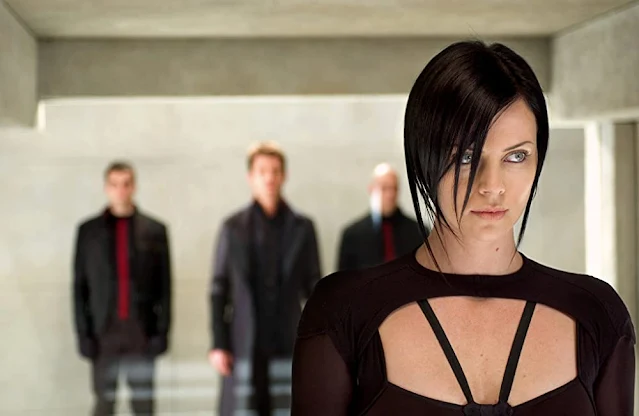
7. "Aeon Flux" (2005)

Director: Karyn Kusama

Script Writers: Phil Hay, Matt Manfredi

Lead Actors: Charlize Theron, Marton Csokas

Charlize Theron as Aeon Flux

In the year 2415, the last remnants of humanity live in Bregna, a walled city-state run by a congress of scientists. 


This seemingly perfect society is a lie. Centuries prior, a plague rendered humanity infertile, and the ruling regime has maintained the population through cloning, recycling the same DNA for generations. Each new birth is simply a clone of a past citizen, and memories of past lives haunt the living.


Aeon Flux, an assassin for an underground rebellion, discovers this truth and learns she is a clone of the wife of the regime's leader. The film explores cloning as a tool for societal stagnation and totalitarian control. By denying natural birth and evolution, the rulers have created a fragile immortality that is now failing.


Aeon's mission shifts from simple assassination to destroying the system of forced reincarnation, arguing that a true future requires the possibility of new life, not just the repetition of the old.

8. "Star Wars: Episode II - Attack of the Clones" (2002)

Director: George Lucas

Script Writers: George Lucas, Jonathan Hales

Lead Actors: Ewan McGregor, Natalie Portman, Hayden Christensen

While part of a grand space opera, this film places cloning at the very center of its galactic conflict. The Jedi discover a massive clone army, secretly commissioned for the Republic a decade earlier. 


These soldiers are all clones of the bounty hunter Jango Fett, genetically engineered for obedience and accelerated aging. 


They are living weapons, created for a singular purpose: to fight and die for a government that doesn't know it ordered them.

The film presents a fascinating dichotomy in cloning. On one hand, you have the mass-produced, seemingly identical soldiers whose individuality is suppressed. On the other, there is Boba Fett, an unaltered clone whom Jango is raising as his son. 


This contrast explores themes of nature vs. nurture and identity. 


The existence of the clone army serves as a chilling precursor to the Empire, demonstrating how easily a society can sacrifice individuality and ethics for the promise of security, creating a force that would ultimately be used to destroy the very Republic, under the command of figures like Obi-Wan Kenobi and Anakin Skywalker, it was meant to protect.

9. "Splice" (2009)

Director: Vincenzo Natali

Script Writers: Vincenzo Natali, Antoinette Terry Bryant, Doug Taylor

Lead Actors: Adrien Brody, Sarah Polley

Delphine Chanéac as Dren in Splice

Delphine Chanéac as Dren

Genetic engineers Clive and Elsa are corporate stars for creating new hybrid organisms. Against their company's orders, they secretly splice human DNA into their experiments, creating a rapidly developing female creature they name "Dren." 


As Dren grows, she forms a complex, child-like bond with her creators, who begin to view her with a dangerous mix of scientific curiosity and parental affection.


Splice is a chilling body-horror film that explores the dark side of scientific ambition. The relationship between the scientists and their creation becomes a twisted family drama, blurring the lines between parental responsibility and ethical oversight. 


Dren's unpredictable and violent evolution serves as a terrifying metaphor for scientific pursuits that outpace morality, leading to consequences that are both monstrous and tragic. 


It's a modern Frankenstein story that questions the very nature of what we create and what we owe to it.

10. "The Prestige" (2006)

Director: Christopher Nolan

Script Writers: Jonathan Nolan, Christopher Nolan

Lead Actors: Hugh Jackman, Christian Bale

In this intricate thriller, two rival stage magicians, Robert Angier and Alfred Borden, are locked in a bitter and obsessive feud. To beat Borden's seemingly impossible "Transported Man" trick, Angier seeks out the help of scientist Nikola Tesla, who creates a machine for him. 


The machine, however, doesn't teleport him - it creates a perfect clone a short distance away, leaving the original Angier behind.


The film brilliantly uses cloning as the ultimate magical misdirection. To complete his illusion night after night, Angier must step into the machine, not knowing if he will be the man in the balcony (the clone) or the man who drowns in a tank below the stage (the original).


This horrifying sacrifice highlights the film's core themes of obsession and the self-destructive nature of ambition. 


The clone is not just a copy; it's a testament to how far someone will go to achieve greatness, blurring the line between illusion and reality until the creator himself is lost in the trick.


At its core, the concept of cloning humans in science fiction films taps into our fascination with the unknown and the limitless possibilities of science. It captivates our imagination, encouraging us to question the boundaries of what is possible or morally acceptable.

By exploring the depths of human nature, the essence of identity, and the ethical quandaries that emerge from cloning, these films invite us on a journey of introspection and intellectual exploration, reminding us of the profound impact that scientific advancements can have on our lives and the world we inhabit.

Furthermore, the concept of cloning provides an opportunity for filmmakers to delve into themes of societal control and oppression. 

By creating a world where clones are treated as mere commodities or tools for exploitation, these films shed light on the dehumanization that can arise from treating sentient beings as disposable objects - a la Mickey 17

Back to Top