
The best Darth Vader quotes from every Star Wars film and what they really mean
Darth Vader quotes do not endure because they sound cool. They endure because they carry the full weight of Star Wars itself: fear, destiny, tyranny, grief, family, and the long, painful collapse of Anakin Skywalker into the Empire's black-armoured enforcer. The best Darth Vader lines are never just dialogue. They are pressure points in the saga. This archive collects every essential one, film by film, in the order Vader lived them.
Why does Vader's dialogue tower over every other movie villain's? Economy, mostly. Across four films and change he rarely speaks more than two or three sentences at a time, so every line is load-bearing: short, declarative, impossible to argue with. Underneath the menace, his dialogue is really two voices fighting over one throat. Anakin Skywalker never fully dies, and you can hear the register shift era by era: operatic and wounded in Revenge of the Sith, raw hatred in Obi-Wan Kenobi and Rebels, theatrical horror in Rogue One, cold theology in A New Hope, obsessive fatherhood in The Empire Strikes Back, and weary fatalism in Return of the Jedi, until the mask comes off and Anakin gets his voice back. Read in order, Darth Vader's quotes map how a good man's voice becomes an Empire's, and then finds its way home.

Revenge of the Sith: The Birth of Darth Vader
Everything Vader ever says is seeded in the prequels. The boy who whooped "I'll try spinning, that's a good trick" over Naboo grows into the deadliest pilot the Empire owns; the young man who complained that sand is "coarse and rough and irritating" was really confessing that he hates everything Tatooine stands for: slavery, powerlessness, and the mother he couldn't save. He will spend his life paving the galaxy smooth so nothing is ever out of his control again. Revenge of the Sith is where that need for control finally eats him. These are the Darth Vader quotes from the day the name was given, the day the friendship died, and the day the mask sealed shut, in a film built on quieter storytelling choices than it is usually given credit for.
“I have brought peace, freedom, justice, and security to my new Empire.”
Minutes earlier, Anakin has Force-choked his pregnant wife because Obi-Wan stepped off her ship: proof, in his fevered logic, that Padmé betrayed him. Now, standing over her body, he defends the day's work to his former master: the slaughter of the Separatist Council, the massacre at the Jedi Temple, the death of the Republic. Obi-Wan's stunned reply, "Your new Empire?", catches the single most damning word in the sentence.
ThemeThis is authoritarian doublespeak in its purest form. Anakin lists peace, freedom, justice and security: four things his Empire has just finished destroying. It is the language of every regime that renames conquest as liberation, and George Lucas wrote it deliberately as a study in how republics applaud themselves into tyranny.
Lore layerNote the possessive: my new Empire, not Palpatine's. Hours into his Sith apprenticeship, Vader already imagines himself on the throne, telling Padmé moments earlier that he can overthrow the Chancellor and that they can rule the galaxy together. That ambition never dies. It resurfaces, almost word for word, on Cloud City twenty-three years later when he offers Luke the same throne.
Psychologically, the line shows Anakin parroting his groomer. These are Palpatine's talking points delivered in a younger, hotter voice: a radicalised man reciting the doctrine that flattered him. For the wider saga, this quote is the thesis of the entire prequel trilogy: the Empire was not imposed on the galaxy. It was offered, applauded, and defended as peace by the very people it consumed.
“If you're not with me, then you're my enemy.”
Obi-Wan pleads his allegiance to the Republic and to democracy. Anakin answers with an ultimatum, and Obi-Wan's famous reply, "Only a Sith deals in absolutes", turns the line into the saga's clearest diagnosis of what the dark side does to a mind. The friendship of thirteen years formally ends on this sentence; everything after it is combat.
ThemeRadicalisation flattens nuance. Anakin's world has collapsed into a binary of loyalty or treachery, with him or against him, because binaries are how the dark side simplifies a conflicted mind into a usable weapon. Lucas said openly that he wrote the line as an echo of real-world "with us or against us" politics: empires, on screen and off, recruit through ultimatums.
Lore layerFans have argued for twenty years that Obi-Wan's rebuttal is itself an absolute. The sharper reading: Obi-Wan is not making a logic-class claim, he is naming a symptom. Jedi are trained to hold complexity; a Sith must reduce every relationship to dominance or threat. Anakin proves the point one line later by trying to kill his best friend.
For Vader's psychology, this is the moment self-justification becomes doctrine. He cannot afford for Obi-Wan to be partly right, because partly right means Anakin is partly wrong, and the dark side runs on certainty. The quote echoes down the entire saga: every later Vader ultimatum, from "join us or die" to "don't make me destroy you," is this sentence wearing armour.
“You underestimate my power.”
"It's over, Anakin. I have the high ground." Every Star Wars fan knows what happens next: Anakin leaps anyway, loses three limbs in a single stroke, and burns beside the lava while the man who raised him walks away in tears. Four words of pure hubris purchase two decades in the machine.
ThemePride as self-destruction. The boy who was property on Tatooine built his identity on being the most powerful person in any room: the Chosen One, the best star pilot in the galaxy. The one time that identity is tested against someone who knows him completely, it kills him. The dark side promised power; what it delivered was a man who could no longer tell power from need.
Lore layerListen for the echo twenty-three years later. In Return of the Jedi, Vader hurls "You underestimate the power of the dark side" at his own son: the same sentence with the self surgically removed. In 19 BBY the power was mine; by 4 ABY there is no "my" left. The refrain measures exactly how much of Anakin the dark side has eaten. And Vader will later build his fortress on Mustafar, directly over the site of this defeat, stoking the wound to fuel his power.
Saga-wide, this quote is the hinge of the entire tragedy. Everything iconic about Darth Vader, from the respirator and the mask to the mechanical baritone and the slow walk of a man in constant pain, exists because of the arrogance packed into these four words. The most quotable villain in cinema is a monument to one bad decision.
“Where is Padmé? Is she safe? Is she all right?”
These are the first words Darth Vader ever speaks in the armour, and they are not about power, the Empire, or revenge. They are about her. James Earl Jones' voice emerges from the mask for the first time in saga chronology asking after the person Anakin destroyed himself trying to save. Palpatine, standing at the table like a best man at a funeral, answers with the most consequential lie in Star Wars: "It seems, in your anger, you killed her." Vader's howl of denial, "I couldn't have! She was alive, I felt it!", collapses into the scream that ends the trilogy.
ThemeGrief, weaponised. The armour cages his body; the lie cages his soul. By convincing Vader that his own love is lethal, that the last human thing in him is a murder weapon, Palpatine ensures his apprentice will never again reach for attachment, hope, or escape. There is nothing left to defect for.
Lore layerPalpatine's sentence is a masterclass in manipulative phrasing: "it seems" commits him to nothing, while "in your anger" assigns the blame. Padmé actually died of something no medical droid could name: the loss of the will to live, with her last breath insisting there was still good in Anakin. Twenty-three years later, on the second Death Star, Luke proves her right.
This quote is the skeleton key to every Darth Vader line that follows. The hollow, affectless menace of the Original Trilogy is not a costume choice; it is what remains of a man who believes he strangled the only future he wanted. It also primes the saga's greatest detonation: when Vader learns in The Empire Strikes Back that Padmé's child lived, the foundation of Palpatine's lie, and of Vader's obedience, begins to crack.
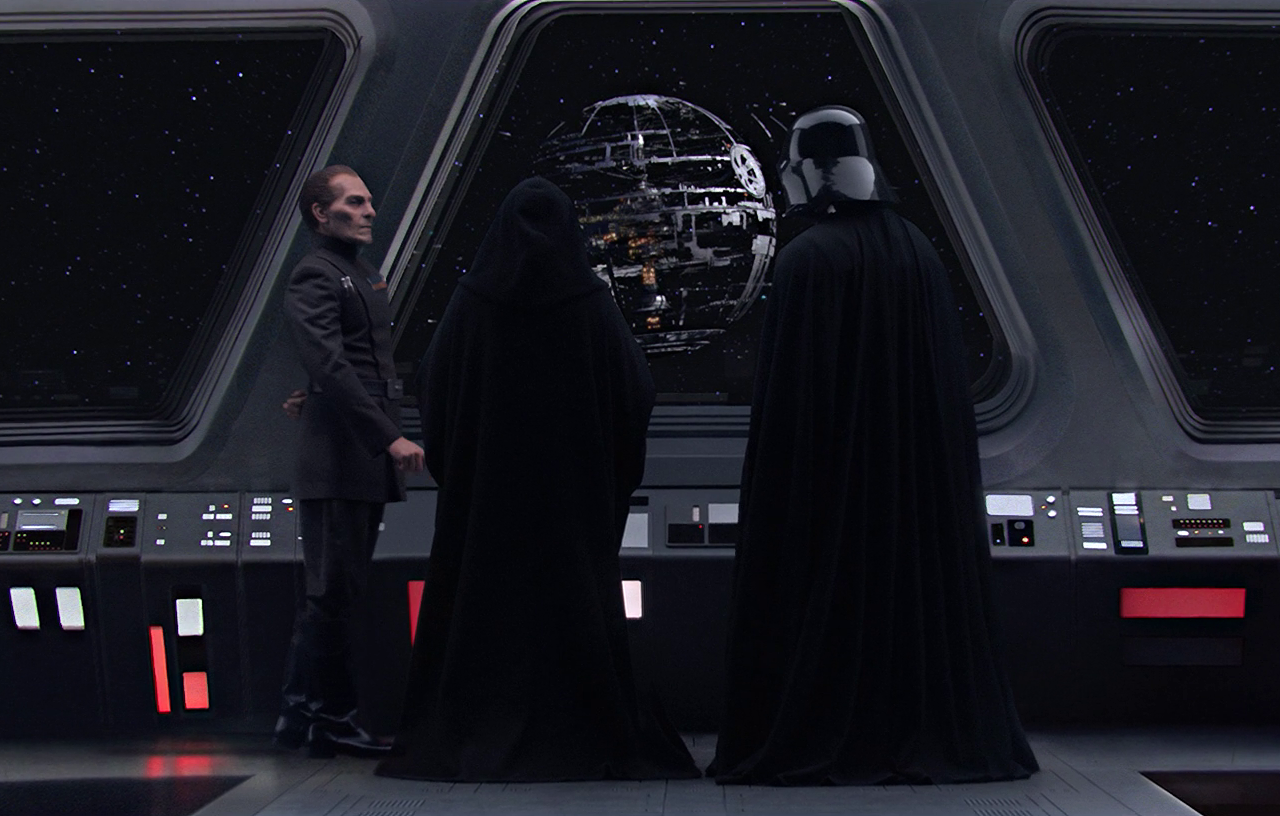
The Imperial Reign: A Walking, Bleeding Wound
Between the prequels and the Original Trilogy sit twenty years of darkness, and modern Star Wars television has done the heavy lifting of bridging them. In Obi-Wan Kenobi and Star Wars Rebels, Vader is not yet the composed Imperial statesman of 1977. He is rawer, crueller, and closer to the surface, hunting the survivors of his old life one by one. The dialogue from this era is the most nakedly personal Vader ever gets, because the people he is speaking to are the two who knew Anakin best: his master and his apprentice.
“I am what you made me.”
Obi-Wan has spent a decade in hiding, telling himself Anakin died on Mustafar. Then the breathing starts. Vader stalks him through a mining settlement, snapping the necks of villagers to draw his old master out, and when a horrified Kenobi asks what he has become, this is the answer. Vader then ignites a trench of fuel and drags Obi-Wan through the flames, deliberately recreating the burning shoreline where he was left to die. He is not just punishing Kenobi; he is making him watch the origin story from the inside.
ThemeClassic Sith blame-shifting (the dark side demands that its users cast away accountability) but with a splinter of truth that makes it cut. Obi-Wan did fail him as a teacher, did maim him, did leave him to burn. Vader weaponises real guilt, which is why the line lands harder than any lightsaber blow in the episode.
Lore layerIn a grim sense Vader believes the sentence literally. Obi-Wan severed the limbs; Palpatine supplied the life-support shell. The thing in the armour regards itself as a collaborative project between his two masters, which is exactly why, in Return of the Jedi, it takes a third person who refuses both inheritances, his son, to reach the man inside.
For the saga, this line rewires A New Hope. When Vader tells Kenobi on the Death Star that "the circle is now complete," we now know the two of them have unfinished business far more recent, and far more brutal, than Mustafar. Their 0 BBY duel stops being a reunion and becomes a final round.
“You didn't kill Anakin Skywalker. I did.”
Obi-Wan, weeping, offers the apology he has carried for a decade: "I'm sorry, Anakin. For all of it." The answer comes out of a broken mask in a voice that literally alternates between Hayden Christensen and James Earl Jones: two actors sharing one ruined throat. "I am not your failure, Obi-Wan. You didn't kill Anakin Skywalker. I did." Kenobi hears exactly what the line means, and his farewell closes the wound: "Then my friend is truly dead. Goodbye, Darth."
ThemeSelf-erasure disguised as absolution. Vader releases Obi-Wan from guilt, but not out of mercy: a Sith must own every outcome as a conquest. If Obi-Wan killed Anakin, then Obi-Wan won; if Vader killed Anakin, the death was a choice and a triumph. Even his own annihilation must be claimed as a victory.
Lore layerThis exchange is the missing keystone of the whole saga. It explains why Obi-Wan tells Luke in A New Hope that Vader "betrayed and murdered your father", a lie he defends in Return of the Jedi as true "from a certain point of view." It was never Obi-Wan's point of view. It was Vader's. The villain wrote his own obituary, and the Jedi simply quoted it.
Psychologically, the split helmet is the quote made visible: half machine intoning doctrine, half burned man underneath it. The series ends with both truths on screen at once, which is precisely the split Luke will bet his life on, ten years later, above the Emperor's throne room.
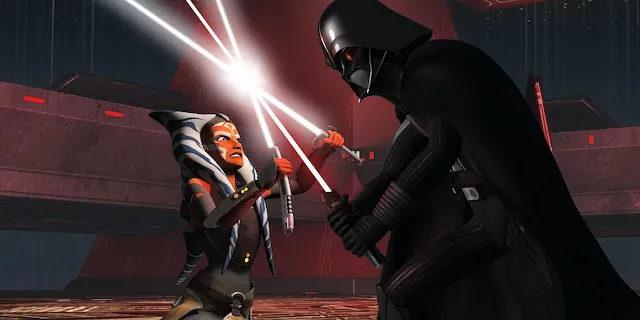
“Anakin Skywalker was weak. I destroyed him.”
Ahsoka has just voiced the hope every fan shared: "My master could never be as vile as you." Vader's reply executes Anakin in the third person, and the exchange that follows is four of the best-written lines in all of Star Wars. Ahsoka: "Then I will avenge his death." Vader: "Revenge is not the Jedi way." Ahsoka: "I am no Jedi." Master and apprentice, each renouncing the same dead man, ignite their blades.
ThemeIn Sith vocabulary, "weak" means "loved." Everything Anakin is being executed for is the capacity for attachment: devotion to Padmé, loyalty to Ahsoka, grief for his mother. The line is dark side doctrine compressed to seven words: strength is what remains when you have amputated everyone who mattered.
Lore layerVader speaking of Anakin as a separate, murdered person establishes the exact grammar Obi-Wan uses with Luke, "Vader betrayed and murdered your father", years before Obi-Wan Kenobi made the connection explicit on screen. The franchise's most famous "lie" turns out to be direct quotation of the killer's own confession.
The psychology is the tell. A machine with no Anakin left in it would not need to announce the destruction; it announces it because Ahsoka's existence is an accusation. She is the best of what Anakin built: the student, the survivor, the conscience. Every second she stands there believing in him, the suppression that powers Vader is under attack.
“Then you will die.”
For one heartbeat, it works. The mask splits, the blended voice says her name, "Ahsoka", and the apprentice sees her master's eye behind the machine. She answers the only way she can: "I won't leave you. Not this time." It is an apology for walking away from the Jedi Order, from him, all those years ago. The voice that replies has hardened back into the machine: "Then you will die."
ThemeUnconditional love, answered with a death sentence. Ahsoka offers Vader precisely what Luke will offer him on the second Death Star, someone who refuses to abandon him, and here, years too early, the offer is refused. The comparison is the point: redemption is not a switch, it is a door that has to be knocked on twice.
Vader cannot allow a living witness to Anakin to stand there loving him, because her faith threatens the emotional suppression his power depends on. That is the quiet horror of the line: it is not rage. It is maintenance. The temple's collapse separates them, and Ahsoka's survival remains one of the saga's great loose threads: the apprentice who saw the man inside the machine and lived.
Rogue One: The Horror of the Empire
Rogue One understands that late-era Vader should feel like a monster from a horror film: a black silhouette who turns corridors and castles into places of dread. We meet him at home for the first time: Fortress Vader, a black spire on Mustafar built directly over the lava fields where Obi-Wan left him to burn, where he floats maskless in a bacta tank, a scarred ruin attended by the whispering servant Vaneé. Every Darth Vader quote in this film is delivered from a position of total, theatrical power. The film closes with the most terrifying scene the character has ever had, in which he says nothing at all.
“There is no Death Star. The Senate has been informed that Jedha was destroyed in a mining disaster.”
Krennic has flown to Mustafar to salvage his career. His superweapon works (it has just vaporised the Holy City of Jedha) but Grand Moff Tarkin has seized credit and command. When Krennic starts talking about "the Death Star" as an accomplished fact, Vader corrects him with the Empire's official reality: the battle station does not exist, and an ancient city was lost to a mining accident. A greeting earlier in the scene, "You seem unsettled", has already told Krennic exactly how much sympathy to expect.
ThemeState disinformation, spoken aloud. The Empire lies not only to its enemies but to its own Senate, and Vader recites the cover story with the flat confidence of a man who knows the truth is whatever the throne says it is. One line captures how authoritarian power actually operates: not by hiding its crimes, but by renaming them.
Lore layerThis scene quietly explains A New Hope. The Death Star stays deniable until Alderaan precisely because of managed fictions like this, and the moment the secret becomes undeniable, Palpatine dissolves the Senate entirely. Vader's instruction that Krennic ensure Galen Erso "has not compromised this weapon" also seeds the film's ending: Erso has, and the flaw he hid becomes Luke's shot at Yavin.
For Vader's psychology, note what he does not say. He never defends the weapon, a machine he openly disdains a film later. He is not managing the Death Star; he is managing the Emperor's story about it. Twenty years into the job, the once-idealistic Anakin Skywalker has become the regime's chief press officer, enforcer, and undertaker in a single black frame.
“Be careful not to choke on your aspirations, Director.”
Krennic cannot help himself. Granted a sliver of reassurance, he immediately grasps for more ("So I'm still in command? You'll speak to the Emperor about…") and the sentence dies in his throat, because his throat is closing. Vader is already walking away, cape swirling, when he delivers the only outright pun James Earl Jones ever recorded for the character. Krennic leaves Mustafar with his career, technically, intact. He will be dead within days on a beach at Scarif, killed by the weapon he gave his life to build.
ThemeA masterclass in Sith politics. Krennic embodies the Empire's ladder-climbing officer class: men who crave medals, titles, and credit. Vader, steeped in ancient mysticism, finds the whole species faintly ridiculous. The choke is the argument: ambition inside the Empire is tolerated exactly as long as it amuses the throne.
Lore layerThe joke lands harder because of where it is told. Vader holds court in a fortress built over the exact ground where he lost everything, deliberately stoking his oldest pain to feed his power; canon sources describe the site as a locus of the dark side he chose on purpose. A man who makes a home of his worst memory has earned the right to be witty about choking.
The quote's afterlife says everything about why Darth Vader lines endure: it proved the character could carry menace and dry humour in the same breath without losing an ounce of dread. And it set up the film's final statement: the Scarif corridor massacre, where the horror needs no dialogue at all. First the Empire jokes about your breath; then it takes it.

A New Hope: Faith Among the Technocrats
This is where the world met him: May 1977, striding through smoke onto the Tantive IV, the first villain in film history whose costume, breathing, and voice were each iconic before he finished a sentence. Princess Leia sizes him up immediately ("Darth Vader. Only you could be so bold") and the film wastes no time establishing what makes his dialogue different. Everyone else on the Death Star talks about hardware; Vader talks about faith. The best Darth Vader quotes from A New Hope position him as something stranger than a henchman: the last practising believer of a dead religion, standing in the middle of a fascist machine that has forgotten what power actually is.
“The ability to destroy a planet is insignificant next to the power of the Force.”
Motti has just declared the Death Star "the ultimate power in the universe," and Vader's full rebuke opens with one of his most quotable constructions: "Don't be too proud of this technological terror you've constructed." Then comes the thesis. In a room full of men who measure power in megatonnes, Vader calmly asserts that their moon-sized superweapon is a rounding error next to the Force.
ThemeFaith versus machinery: the central argument of the entire saga, stated in its first act. Technology is finite, buildable, and therefore destructible; the Force is boundless. The film agrees with Vader completely: at Yavin, the ultimate power in the universe is deleted by a farm boy who switches off his targeting computer.
Lore layerThe scene quietly measures how thoroughly the Empire erased the Jedi. Nineteen years after thousands of Force-users served as the Republic's guardians, the Imperial officer class treats the whole subject as superstition; to Motti, Vader is a relic performing conjuring tricks. Palpatine did not merely kill the Jedi; he deleted them from living memory, and this conference room is the proof.
For Vader's psychology, the line is close to a confession of identity. Stripped of wife, limbs, name, and face, the Force is the only thing he has left that is genuinely his: the one inheritance from Anakin Skywalker he could not amputate. When he defends it against the technocrats, he is defending the last surviving piece of himself.
“I find your lack of faith disturbing.”
Motti doubles down ("Don't try to frighten us with your sorcerer's ways, Lord Vader. Your sad devotion to that ancient religion has not helped you conjure up the stolen data tapes") and gets approximately one more clause out before his windpipe closes. Vader has not moved. Two fingers pinch the air; a man chokes across the table. It takes Tarkin's sharp "Enough of this! Vader, release him!" to end the demonstration, answered with the driest "As you wish" in the franchise.
ThemeThe word doing the work is faith. Motti frames the Force as failed technology (it hasn't "conjured up" results) and Vader answers in the vocabulary of religion, casting himself as a priest disciplining a heretic. The scene establishes, permanently, that the Force is a faith and not a tool, and that the Empire's flaw is spiritual blindness as much as cruelty.
Lore layerThis is the first Force choke ever put on film: the gesture that became the character's signature. And notice the hierarchy: Vader stops when Tarkin tells him to. In A New Hope he is a weapon on another man's leash, outranked by a Grand Moff. By The Empire Strikes Back no one gives Darth Vader orders but the Emperor, and officers who fail him stop getting warnings.
The line endures because of its restraint. "Disturbing", as if the choking admiral were a mildly disappointing quarterly report. That gap between the violence of the act and the mildness of the sentence is the essence of Vader's menace, and it is why this remains one of the most quoted Darth Vader lines in the entire saga, nearly fifty years on.
“The circle is now complete. When I left you, I was but the learner. Now I am the master.”
"I've been waiting for you, Obi-Wan," he begins, and the clinical Death Star corridor becomes a haunted space, private history intruding on public myth. The old man parries and answers every boast with serenity: "Only a master of evil, Darth." When Vader sneers "Your powers are weak, old man," Kenobi replies with the most consequential counter-quote in the saga, "If you strike me down, I shall become more powerful than you can possibly imagine", then sees Luke watching, smiles, and raises his blade to be killed. Vader is left prodding an empty robe with his boot, visibly unable to explain where his victory went.
ThemeBeneath the booming confidence, the line is startlingly insecure. Vader has conquered a galaxy, yet still needs his old teacher to acknowledge the graduation: "now I am the master" is a report card demanded at swordpoint. The learner from Mustafar never moved on; he has spent twenty years rehearsing this conversation. Obi-Wan's refusal to be impressed is the deepest cut in the duel.
Lore layerIn 1977 "Darth" was simply the character's first name, and Obi-Wan uses it like one, because the Sith naming convention hadn't been invented yet; later canon gracefully absorbed it as the title "Darth" wielded as a deliberate refusal to say "Anakin." And since Obi-Wan Kenobi, "the circle is now complete" counts three duels, not one: Mustafar, the desert moon, and this corridor. The rematch we watched in 1977 was actually the trilogy's final round.
Saga-wide, the quote frames the Skywalker story as a generational relay. Obi-Wan's sacrifice here, becoming "more powerful than you can possibly imagine" as a Force ghost guiding Luke with his accumulated wisdom, is the direct answer to Vader's philosophy of mastery. Vader wins the duel and loses the argument.
“The Force is strong with this one.”
The Battle of Yavin is nearly won for the Empire. Vader has personally gunned down Rebel pilots the way other men clear paperwork, and now locks onto the last X-wing in the trench. Something about this pilot slips his targeting solution, the ship moving like instinct rather than training, and Vader, alone in his cockpit, murmurs the recognition. Moments later comes "I have you now," and then the Millennium Falcon screams out of the sun, and the Dark Lord of the Sith is sent tumbling into deep space while a farm boy blows up his battle station.
ThemePure dramatic irony: a father recognising his son and not knowing it. The Force is doing exactly what it does throughout the saga: pulling the Skywalkers toward each other. Vader senses power; the audience, on rewatch, hears blood calling to blood.
Lore layerThe moment closes a loop opened on Naboo: the gifted child who accidentally won a space battle "spinning" is now the deadliest pilot alive, hunting a boy who is about to win a space battle on the same raw instinct. When the Empire later learns the pilot's name is Skywalker, this half-second of recognition detonates into the obsession that drives the whole of The Empire Strikes Back.
It is also the only quote in this film where Vader sounds curious rather than threatening. Something ancient stirs in the cockpit: interest, appetite, perhaps memory. He has spent twenty years believing his future died with Padmé on Mustafar. He has just met it in a trench, and it out-flew him.
The Empire Strikes Back: The Obsessive Father
No film gives Vader more unforgettable dialogue than The Empire Strikes Back. Three years after Yavin, he commands Death Squadron from the bridge of the Executor with total autonomy, executing admirals between navigation updates. Every move he makes, from Hoth to Bespin, is secretly about one boy. The film is a study in what a person will sacrifice for power and for family, and Vader sits at the centre of both questions. These are the Darth Vader quotes that turned a great villain into the emotional core of the entire saga.
“You have failed me for the last time, Admiral.”
Ozzel brings the fleet out of lightspeed too close to Hoth, alerting the Rebels and giving them time to raise their shield. Vader does not summon him for a dressing-down. He chokes him through a video call, promotes the man standing next to the body in the same breath ("You are in command now, Admiral Piett") and issues deployment orders before Ozzel hits the floor. The Imperial career ladder, demonstrated in one shot.
ThemeFear as a management system. The phrase "for the last time" implies a ledger: Vader has been counting, and every officer knows a count is being kept on them too. It is the purest dramatisation of how authoritarian institutions actually run: not on loyalty, but on the arithmetic of terror.
Lore layerWatch Piett's face: the promotion is also a sentence. Yet Piett survives to Return of the Jedi, the rarest achievement in the Imperial Navy, precisely because he learned this scene's lesson faster than anyone. The line itself became franchise shorthand: decades of games, comics and shows have re-used "you have failed me for the last time" as the Empire's unofficial HR policy.
Psychologically, the delegated autonomy matters. In A New Hope, Tarkin could call Vader off like a guard dog. Now Vader answers to no one aboard his own flagship. The Emperor has unleashed him for a single purpose, finding Luke Skywalker, and the officers of Death Squadron are simply the machinery between an obsessed father and his son. Ozzel's real crime was making Vader wait.
“Apology accepted, Captain Needa.”
Han Solo has just embarrassed the entire Imperial fleet by turning his ship to attack a Star Destroyer head-on, then clamping onto its conning tower to disappear from sensors. Needa, to his genuine credit, shuttles over to take responsibility in person: the honourable thing, done by the book. He is dead before he finishes kneeling. Vader delivers the line over the body as troopers drag it past, with the serenity of a man closing a minor file.
ThemeThe joke is the horror. Accepting an apology implies a relationship repaired; here it certifies an execution. The gap between courteous language and lethal action is the Empire in miniature: a regime that keeps perfect manners while doing monstrous things, and a commander so detached from human life that etiquette and murder share a sentence.
Lore layerNeeda's death is doubly unjust in lore terms: Solo's sensor-shadow manoeuvre was borderline unprecedented, and Needa's decision to apologise personally was Imperial procedure working exactly as intended. The lesson every surviving officer absorbs is that process will not save you; only results will. Fleet discipline visibly tightens for the rest of the film.
Set against the era sections above, the line also measures Vader's drift. The wounded man of Revenge of the Sith felt everything; the machine of 3 ABY feels nothing and has started to find death amusing. This is Vader at maximum distance from Anakin Skywalker, which is precisely the moment the story chooses to hand him a son.
“He will join us or die, my master.”
The scene opens with the most revealing sentence Vader speaks in the Original Trilogy: "What is thy bidding, my master?": the galaxy's most feared man on his knees, using liturgical language. The Emperor names their new enemy as the offspring of Anakin Skywalker and declares the boy must be destroyed. Vader's counter-offer arrives a beat too quickly: "If he could be turned, he would become a powerful ally." Only when Palpatine muses that the boy "would be a great asset" does Vader close with the line above: obedience as camouflage.
ThemeThis is the first crack in twenty years of servitude. Vader is negotiating with his abuser for his son's life while pretending to negotiate for an asset. "Join us or die" sounds like doctrine; functionally, it converts a kill order into a recruitment order. Every father-son scene that follows, at Bespin, Endor and in the throne room, grows from this quiet act of concealed defiance.
Lore layerThe scene itself has two histories. In the 1980 theatrical cut the Emperor was voiced by Clive Revill under a composite mask; the 2004 Special Edition reshot the hologram with Ian McDiarmid and sharpened the dialogue so Palpatine explicitly names Anakin as Luke's father, retro-fitting the prequels' continuity into the Original Trilogy's most important phone call.
The kneeling posture is the point of the staging. Between executions, Vader is himself a subordinate: a victim of the longest grooming operation in the galaxy, addressing his handler in the vocabulary of worship. The Empire is an abuse pyramid, and this scene shows its second-highest tier from above and below simultaneously.
“The Force is with you, young Skywalker. But you are not a Jedi yet.”
Vader has tortured Han Solo purely to broadcast pain across the galaxy and bait Luke away from Yoda. It works. Luke walks into the freezing chamber, and the first words his father ever speaks to him, knowing exactly who he is while Luke knows nothing, are these. Not a threat: an assessment. Half compliment, half syllabus. The duel that follows continues in the same register ("Impressive. Most impressive… You have controlled your fear. Now release your anger"), a Sith teaching cadence probing for the moment the student swings in hate. When Vader toys with him early, "All too easy" tells us the fight is an audition, not an execution.
ThemeThe duel as dark apprenticeship. Vader fights the whole battle like a teacher, grading, goading and correcting, because that is what it is: the entrance exam for the offer he is about to make. "You are not a Jedi yet" carries a double meaning he intends fully: your training is incomplete, and I am the one who plans to finish it.
Lore layer"Young Skywalker" is doing enormous work. Vader savours the surname, his own surname, aloud to a boy who has no idea they share it. He also chose the venue: the freezing chamber was tested on Han because Vader wanted Luke delivered to the Emperor intact, frozen, unable to resist. Every element of the scene is parental obsession disguised as fleet logistics.
For the saga, the line frames everything Luke does for the next film and a half. "Not a Jedi yet" becomes the question Return of the Jedi answers: Yoda's insistence that he confront Vader makes his father the final module of his training. The man who mocked his incompleteness becomes, unwillingly, the instrument that completes him.
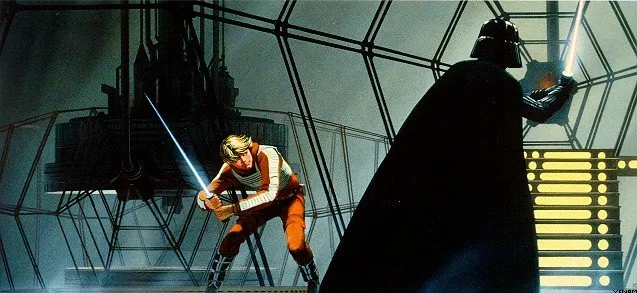
“I am altering the deal. Pray I don't alter it any further.”
Lando made a businessman's bargain: hand over the Rebels, keep the Empire out of Cloud City. Then the terms start moving. Han goes to the bounty hunter; Leia and Chewie, promised to remain in the city, are reassigned to Vader's custody. When Lando protests that they were promised to stay in the city under his supervision, Vader replies with the most quoted contract clause in cinema, and Lando's earlier grievance ("This deal is getting worse all the time") curdles into open rebellion by the film's end.
ThemeTyranny does not honour contracts. Lando represents every neutral in the galaxy who believes you can keep your head down and do business with an empire. Vader shatters the illusion in one sentence: under absolute power there are no deals, only revocable permissions. The word "pray" is the flourish: mock piety from the galaxy's least merciful god.
Lore layerEvery altered clause serves the hidden agenda: Luke. Han becomes carbonite freezer-test and Fett's payday; Leia and Chewie become leverage; Cloud City becomes a baited trap. Lando thinks he is negotiating with an occupier. He is actually standing inside a family drama he cannot see, and his city is the tablecloth about to be pulled.
The quote's cultural afterlife, quoted in boardrooms, group chats and every discussion of one-sided agreements since 1980, comes from its universality. Everyone has been on the wrong end of a unilaterally altered deal. Vader simply says the quiet part with a respirator.
“If you only knew the power of the dark side. Obi-Wan never told you what happened to your father.”
The duel is over. Vader has severed Luke's sword hand and herded him onto a catwalk over an abyss, and now the recruitment begins in earnest: "There is no escape. Don't make me destroy you… Join me, and I will complete your training." Luke spits his refusal, and Vader plays the card he has been holding since the fleet left Hoth. The sentence is engineered in two stages: first the temptation, then the loose thread. "Obi-Wan never told you what happened to your father" is bait dangled to provoke exactly the reply it gets: "He told me enough! He told me you killed him!"
ThemeA war over narrative. Obi-Wan and Vader have spent three years fighting for control of Luke's origin story: the Jedi with a merciful fiction, the Sith with a devastating truth. The line exposes the Jedi's greatest vulnerability in the Original Trilogy: they lied, and the enemy knows it. Truth wielded as a weapon cuts deeper than any deception.
Lore layer"If you only knew the power of the dark side" is also autobiography. Luke doesn't know what that power costs. The speaker does, in amputated limbs and a dead wife. Heard alongside its siblings ("you don't know the power…", "you underestimate the power…"), the refrain sounds less like advertising and more like a man describing the walls of his own cell.
Structurally, this is the last second of the old Star Wars. Luke's angry certainty that Vader killed his father is the final piece of the simple good-versus-evil adventure George Lucas sold in 1977. Vader is about to take it away from him, and from all of us.
“No, I am your father.”
The most famous plot twist in cinema history, delivered as a correction. Luke screams that Vader killed his father; Vader answers "No. I am your father", and the saga's moral architecture collapses in four words. Luke's response, howling denial while clinging one-handed over an abyss, remains Mark Hamill's finest moment, played opposite a man who did not know the real line: to preserve secrecy, David Prowse spoke a decoy on set ("Obi-Wan killed your father"), and only director Irvin Kershner, George Lucas, James Earl Jones and, moments before the take, Hamill knew the truth.
ThemeEvil becomes family. Until this moment Star Wars is a fable with clean sides; after it, the villain is blood, and destroying him means destroying part of yourself. It also recasts Obi-Wan and Yoda not as flawless mentors but as desperate men who lied to a boy to build a weapon against his own father. Every theme the saga carries afterward (inheritance, redemption, the fear of becoming your parents) is uncorked here.
Lore layerThe world misquotes it as "Luke, I am your father", a Mandela effect so widespread it has its own scholarship. The actual first word is "No": Vader is not announcing, he is correcting the record, seizing his story back from Obi-Wan's fiction. The misquote survives because people quote the meaning; the film's version survives because it is better.
Luke's answer is to let go, choosing a fall into the void over his father's hand. It is the whole trilogy in a single gesture, and the reason the twist still works half a century later: the revelation costs something. Vader finally has the thing he wanted since the medical table on Coruscant, a living piece of Padmé, and watches it choose death rather than take his hand.
“Join me, and together we can rule the galaxy as father and son.”
The full pitch is even more treasonous than the famous fragment: "Luke, you can destroy the Emperor. He has foreseen this. It is your destiny." Stop and hear what the Emperor's apprentice is actually proposing, aloud, where any recording could catch it: patricide of his master, a coup against the man he kneels to, and a dynasty in its place. Vader does not offer Luke the dark side. He offers him a family business.
ThemeSith succession is always betrayal (the Rule of Two runs on apprentices murdering masters) but Vader's version is warped by the one thing Sith doctrine forbids: attachment. He wants the throne with his son, not through him. It is the closest thing to love the machine can still express: conquest, offered as a shared inheritance.
Lore layerHe has made this offer before. On Mustafar, Anakin told Padmé they could overthrow the Chancellor and rule the galaxy together, and she recoiled exactly as Luke does now. Twice, at the two most important moments of his life, Vader offers the people he loves the galaxy, and twice they choose to fall away from him rather than accept it. He never understands why. That failure to understand is the dark side.
For the saga's endgame, the quote plants the bomb that detonates in Return of the Jedi's throne room: the Emperor now has a rival for Vader's loyalty, and Vader has a reason to imagine Palpatine dead. When father and son finally stand together before the throne, every party in the room is quoting this gantry in their head.

Return of the Jedi: Tyranny and Redemption
Something has changed in Vader's voice by 4 ABY, and it is not the recording equipment. The lines are wearier. The threats have a fatalism to them. With the Emperor arriving to personally oversee both the second Death Star and the seduction of his son, Vader spends the film being squeezed between the two beings who own pieces of him. His dialogue splits accordingly: imperial menace on the surface, exhausted confession underneath. The Darth Vader quotes from Return of the Jedi chart the shortest distance in the saga: from "I must obey my master" to "tell your sister you were right" is barely a day in-universe, and an entire lifetime.

“The Emperor is not as forgiving as I am.”
The film's opening scene is a masterclass in establishing stakes through middle management. Vader arrives unannounced ("You may dispense with the pleasantries, Commander. I am here to put you back on schedule") and dismantles Jerjerrod's polished excuses line by line, with "perhaps I can find new ways to motivate them" hanging over the exchange like a noose. Then the reveal: the Emperor is coming. Jerjerrod blanches; his "We shall double our efforts" earns this reply, and the audience learns before a single Rebel appears on screen that there is something in the galaxy Darth Vader is frightened of.
ThemeThe Empire is a pyramid of fear with no summit of safety. Vader, who chokes admirals recreationally, invokes his master the way officers invoke him. Abuse flows downward through every tier, and the man second from the top is still a subordinate, still measuring his own distance from punishment.
Lore layerThe scene rewards a second viewing once you know the film's ending: the "behind schedule" battle station is in fact precisely as operational as the Emperor needs it to be; the entire construction delay is theatre for the trap at Endor. Jerjerrod is being terrorised over a deception he isn't senior enough to know about.
"Not as forgiving as I am" is also, technically, a joke: Vader claiming forgiveness as a personal quality while the fleet's officer corps remembers Ozzel and Needa. The dark comedy masks the confession underneath: Vader compares himself to Palpatine and genuinely believes he is the merciful one. Within the Empire's moral universe, he may even be right.
“You don't know the power of the dark side. I must obey my master.”
Luke has surrendered deliberately, betting his life that the man inside the machine can still be reached. The conversation on the platform is the quietest scene either character gets in the trilogy. Luke uses the forbidden name, and Vader's reply, "That name no longer has any meaning for me," is contradicted by the very fact he keeps talking. When Luke presses ("That was why you couldn't destroy me. That's why you won't bring me to your Emperor now"), Vader looks down at his son's new lightsaber in his hands, and answers with this, the closest he ever comes to saying help me.
ThemeRead it carefully: it is not a boast, it is a case for the defence. "You don't know the power of the dark side": you don't know what it does to a person. "I must obey": not choose to, must. The dark side is framed, for the first time in the saga, from the inside: as addiction and captivity rather than strength. Vader is describing the walls of his cell to the one visitor who believes the door might open.
Lore layer"Obi-Wan once thought as you do" carries thirty years of weight: Kenobi believed there was good in him too, on Mustafar, on Mapuzo, on the desert moon, and was answered with fire every time. Vader is warning Luke off a road he has watched other people die on. The tragedy is that he is also, without knowing it, confirming the good news: the conflict Luke senses is real enough to need suppressing.
This platform scene is where the film's true duel begins: not sabers but interpretations. Luke insists Anakin exists; Vader insists he doesn't; and every subsequent line in the movie is evidence submitted to that trial.
“It is too late for me, son. The Emperor will show you the true nature of the Force. He is your master now.”
Luke makes his final appeal ("Search your feelings, Father. You can't do this. I feel the conflict within you. Let go of your hate") and for a moment the mask simply looks at him. Then Vader hands his own son to the man who destroyed him, in a sentence that manages to contain the word "son" and the phrase "your master" without noticing the contradiction. Luke's reply as he is led away is the cruellest line anyone speaks to Vader in six films: "Then my father is truly dead."
Theme"It is too late for me" is the theology of despair: the belief that some people are beyond saving, which the saga exists to refute. Vader isn't refusing redemption; he no longer believes he is eligible for it. The distinction matters, because you cannot rescue a man who thinks he deserves the cell. Luke's entire strategy for the rest of the film is refusing to accept his father's verdict on himself.
Lore layer"The true nature of the Force" is Sith catechism: the belief that the dark side is the Force's honest face and the Jedi version a sentimental lie. Vader is quoting his master's syllabus: it is nearly word-for-word the education Palpatine gave a younger Skywalker in an opera box, a generation earlier. The abused child, grown old, reciting the abuser's lesson plan over his own son's shoulder.
Watch the staging after Luke is gone: Vader stands alone on the platform, staring out at the night, the walk-away held a beat longer than the plot needs. The film is showing us a man losing the argument with himself. He will spend the throne room scene on the losing side of it, until the exact moment he doesn't.
“You underestimate the power of the dark side. If you will not fight, then you will meet your destiny.”
Luke has declared "I will not fight you, Father" and retreated into the shadows beneath the throne. Vader stalks him, and when words fail, punctuates this line by hurling his lightsaber, slicing through the catwalk supports and dropping his son to the deck. It is the moment the polite phase of the duel ends. Palpatine, delighted, watches from the throne like a man whose dinner theatre is going exactly to plan.
ThemeDestiny as a weapon. The Jedi use the word to mean potential; the Sith use it to mean a trap already sprung. "You will meet your destiny" means: the outcome is fixed, resistance is a rounding error, surrender is merely efficient. It is fatalism sold as strength: the exact worldview Luke is about to detonate by choosing mercy in defiance of every prophecy in the room.
Lore layerComplete the refrain and you can hear the saga's whole architecture. Mustafar, 19 BBY: "You underestimate my power." Cloud City, 3 ABY: "If you only knew the power of the dark side." Endor, 4 ABY: "You don't know the power…" and finally "You underestimate the power of the dark side." Across four films the possessive pronoun disappears: the man is progressively replaced by the doctrine, until Vader is no longer claiming power at all, merely representing it.
The saber throw matters as much as the sentence. Vader spends this duel escalating against a son who keeps de-escalating, because Luke's refusal to fight is beating him. Every pacifist beat from Luke is a hammer blow against "it is too late for me," and Vader's growing violence is the sound of a losing argument getting louder.
“If you will not turn to the dark side, then perhaps she will.”
Luke's discipline slips for one second, and Vader finds the thing he has hidden all film: "Sister! So… you have a twin sister. Your feelings have now betrayed her, too. Obi-Wan was wise to hide her from me. Now his failure is complete." Then the sentence above, and Luke, who has withstood the Emperor's goading and his father's blade, breaks instantly. He erupts from the darkness screaming "Never!" and batters Vader to the deck in a frenzy the dark side itself could sign its name to, stopping only when he severs his father's hand and sees wires where blood should be, and his own black glove on his own wrist.
ThemeVader at his most ruthlessly psychological, because he is running the play that caught him. Fear for a loved one is the exact lever Palpatine used on Anakin, and Vader reaches for it with an addict's fluency. Threatening Leia proves his thesis and refutes it simultaneously: the Skywalkers are indeed vulnerable through love, and love is also the only thing that has ever made one of them stronger than a Sith.
Lore layerHe has just learned he has a daughter, mid-swordfight, and weaponises her within the same breath. The speed is the horror: no pause, no wonder, straight to leverage. Yet the discovery is also a countdown. Padmé's two children now exist in his world, and the lie that built Vader ("in your anger, you killed her") has never looked weaker than it does in this room.
The saga impact is total: this is the line that triggers the trilogy's climax. Luke's rage, his horrified stop, his glance at his own mechanical hand, the throwing away of the lightsaber, "I am a Jedi, like my father before me". The entire cathedral of the ending is built on the foundation of this one threat going one step too far.

“You were right about me. Tell your sister… you were right.”
Minutes earlier, Anakin Skywalker did the only thing that could kill Darth Vader: he watched his son being tortured to death by lightning, looked between Luke and the Emperor one last time, and threw his master into the reactor shaft, absorbing the lightning that shattered his life support on the way. Now, dying at the foot of the shuttle, he answers Luke's desperate "I've got to save you" with the film's quiet thesis: "You already have, Luke." Then the mechanical voice, failing, spends its last strength on an errand of the heart: a message for the daughter he threatened an hour ago.
ThemeRedemption, precisely priced. The line does not claim the slate is clean; it concedes an argument. "You were right" means: the good was there, the conflict was real, my verdict on myself was wrong. Everyone else's judgement is quietly overturned in the same breath: the Jedi who wrote him off, the Emperor who thought him broken, Obi-Wan who said "truly dead." Only Luke, and Padmé with her dying words, held the correct position. It took twenty-three years for the defendant to agree.
Lore layerThe message to Leia is the most ambitious sentence Vader ever speaks. He tortured her on the Death Star, held her as bait on Bespin, stood by as her homeworld died. He cannot apologise for any of it in the seconds he has left, so he sends her the only thing that might matter decades from now: independent confirmation, from the monster himself, that her brother wasn't naive. Canon carries the wound forward: Leia never quite forgives, and never quite stops carrying it.
This is the sentence that resolves the Chosen One prophecy: balance brought to the Force not by a superweapon or a duel, but by a father conceding that his son argued him back to life. Every Darth Vader quote before it is context; this one is the verdict.
“Just for once… let me look on you with my own eyes.”
The most human sentence the character ever speaks: no threat, no doctrine, no Empire. The helmet comes away to reveal Sebastian Shaw's ruined, gentle face: pale, scarred, and unmistakably a man rather than a monster. He looks at his son through his own eyes for the first and only time, musters half a smile, and gives his final instruction not as an order but as a father's release: "Now go, my son. Leave me."
ThemeThe machine-versus-man tension of the entire saga, resolved in a single choice. The mask is life support; removing it is death. Vader chooses one unmediated look at his son over more hours as a machine: mortality with meaning over survival without it. Twenty years of seeing the galaxy through red-tinted lenses ends with the most ordinary miracle available: a father's naked eyes.
Lore layerLook at the eyes the film shows you: not the volcanic Sith yellow of Mustafar, but tired, human, and clear. The dark side has already left him. And the funeral pyre on Endor, Luke burning the armour alone in Jedi tradition, buries Darth Vader while Anakin Skywalker appears beside Obi-Wan and Yoda as a Force ghost. The saga's final image of the man is the reward for this line: he is seen, at last, as himself.
Retroactively, this quote makes the whole six-film arc a single story: a boy who wanted to see everything (podraces, stars, the galaxy) spends two decades behind a machine's eyes, and gets his own back for thirty seconds at the end. It is enough. That is the point.

Darth Vader Trivia: How the Voice Was Built
The most quotable villain in cinema was assembled from a sketch, a scuba regulator, a bodybuilder, and a bass voice hired for an afternoon. The production stories behind Darth Vader's dialogue are almost as good as the lines themselves.
File 01James Earl Jones recorded every line of Vader's A New Hope dialogue in roughly two and a half hours, took a reported $7,000 flat fee, and asked to be left out of the credits. He regarded his work as a special effect finishing David Prowse's physical performance. He was finally credited from Return of the Jedi onward and voiced the character for more than four decades.
File 02Prowse delivered every line on set in his booming West Country accent, which the crew affectionately nicknamed "Darth Farmer." For the Cloud City reveal he was given a decoy line to protect the secret, and reportedly discovered the real dialogue along with the rest of the world at the premiere.
File 03Sound designer Ben Burtt created the respirator by recording himself breathing through an old scuba regulator. The breathing is the one "line" Vader delivers in every single scene, and it does half the acting.
File 04The mask exists because of a script problem. Early drafts had Vader boarding Leia's ship through open space, so concept artist Ralph McQuarrie gave him a breather to survive the crossing. George Lucas liked the look so much it became permanent, and the breathing apparatus became the character's defining feature.

File 05Vader is a committee. Prowse and fencing master Bob Anderson shared the armour (Anderson fought the duels in The Empire Strikes Back and Return of the Jedi), Sebastian Shaw played the unmasked Anakin, Hayden Christensen took the role in the prequels and Obi-Wan Kenobi, and one borrowed voice bound them all together.
File 06Before his death in 2024, Jones granted Lucasfilm the right to recreate his voice from archival recordings, which is how a faithfully reconstructed Vader speaks in Obi-Wan Kenobi. The most famous voice in cinema now outlives its owner.
File 07Audiences first heard the breathing on 25 May 1977. Nearly fifty years later, Darth Vader's lines are quoted daily by people who have never seen the films, which is exactly the kind of power Admiral Motti did not believe in.


_poster.jpg)


