star trek
04 August 2023

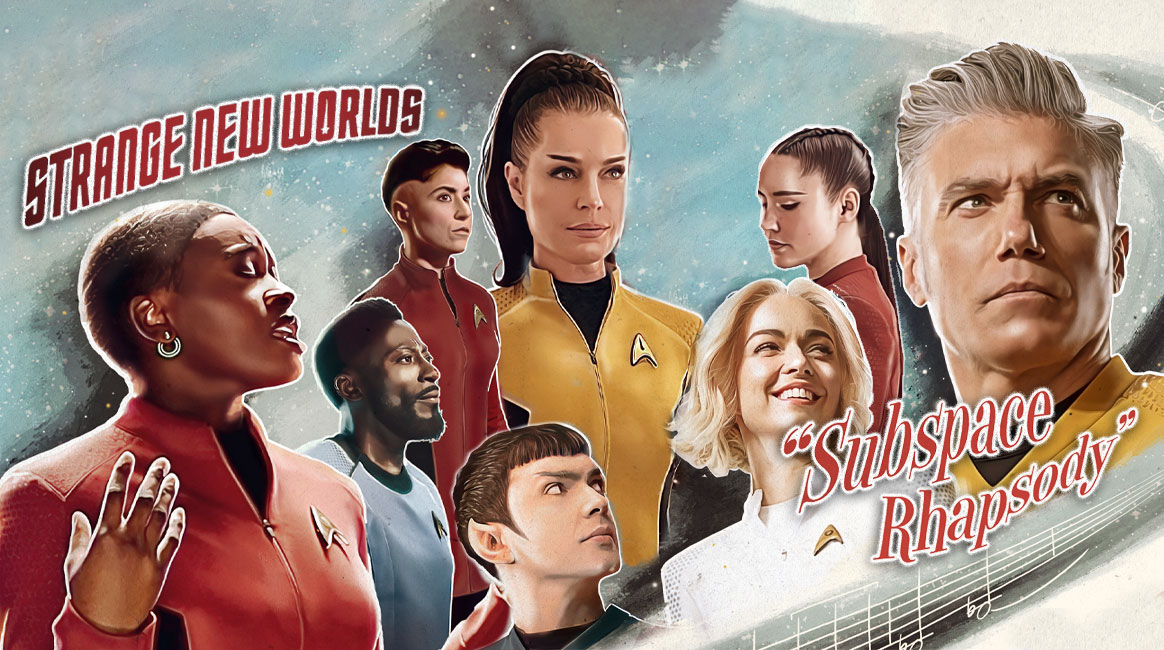
Charting New Musical Frontiers: Review of Star Trek: Strange New Worlds S2E9 'Space Rhapsody'

"Star Trek: Strange New Worlds" continues to push the boundaries of its own universe with its innovative storytelling, and Season 2 Episode 9, titled "Subspace Rhapsody," is a testament to the show's willingness to experiment and surprise its audience. Since its debut in 2022, the series has dabbled in various genres, from body-swapping comedy to fantasy elements, even crossing over with the animated series "Star Trek: Lower Decks.

However, this time, the showrunners, Henry Alonso Myers and Akiva Goldsman, have taken it a step further by delivering the first-ever full-fledged musical episode in the "Trek" franchise.

The episode starts off with a classic "Trek" setup: the crew of the Enterprise investigating a naturally occurring fold in subspace. What sets this episode apart is the suggestion from Ensign Uhura (Celia Rose Gooding) to use music as a means of testing the fold's properties. However, the music causes an unexpected tear in space-time, leading to an alternate reality where the crew members sing their most intense and private emotions.

The integration of musical elements into the episode's narrative is a bold move, and it pays off remarkably well. The cast's vocal abilities shine, with standout solos for each main character. Capt. Christopher Pike (Anson Mount), Cmdr. Una Chin-Riley (Rebecca Romijn), Lt. Spock (Ethan Peck), Lt. La’an Noonien-Singh (Christina Chong), Nurse Christine Chapel (Jess Bush), and even visiting Lt. James T. Kirk (Paul Wesley) contribute to the musical numbers with impressive performances that reflect their characters' emotions and struggles.

strange new worlds space rhapsody review episode

The effort and dedication put into creating this musical extravaganza are evident. According to Myers and Goldsman, the episode's development took more than six months, involving collaboration between the cast, crew, composers Kay Hanley and Tom Polce, and writers Dana Horgan and Bill Wolkoff. The songs were crafted around the actors' vocal strengths and tailored to their characters' arcs, creating a cohesive and engaging musical narrative.

The integration of pre-established storylines and character development into the musical format is commendable. The episode addresses ongoing character conflicts, such as Spock and Chapel's break-up, La’an's unrequited feelings for Kirk, and Uhura's sense of isolation. These storylines are seamlessly woven into the musical numbers, adding depth to both the characters and the episode's overall emotional impact.

Myers' insight into the challenges of creating a musical episode is evident in the meticulous planning required to make it a success. The episode's emotional core takes precedence, breaking the expectation of a light-hearted comedic musical and instead delivering moments that tug at the heartstrings of the audience.

The standout performances in "Subspace Rhapsody" are numerous. Celia Rose Gooding's powerful rendition of "Keep Us Connected" as Uhura is a definite highlight, showcasing her vocal prowess and emotional depth. Similarly, Christina Chong's portrayal of La’an's struggles and revelations is both heartfelt and compelling. Jess Bush's Chapel shines in her ensemble number, capturing the character's optimism and determination.

While the episode is character-driven, it also effectively incorporates "Trek" lore, such as references to Dr. Roger Korby and Kirk's complex relationships including that of Carol Marcus. You may recalled that she is the Project Genesis scientist seen in Star Trek II: The Wrath of Khan and her yet-to-be-born child is Kirk’s son, David. 

"Subspace Rhapsody" doesn't merely use the musical format as a gimmick; it leverages the medium to explore characters' innermost feelings and struggles, providing a fresh perspective on their growth and relationships. The episode's commitment to the emotional arcs of the characters elevates it beyond a mere musical experiment.

When La’an sings “How Would That Feel,” we see her watch from episode 3, “Tomorrow and Tomorrow and Tomorrow.” This was the watch she modified to find the secret facility during the time travel mission with the alternate version of Kirk (with whom she fell in love).

The show's ability to successfully integrate a musical episode into the "Star Trek" universe is a testament to its creative team's willingness to take risks and its cast's versatility. "Strange New Worlds" continues to surprise and captivate its audience, demonstrating that even after decades, "Trek" can still explore new frontiers, whether they're in space or in the realm of musical storytelling. With a poignant ending that leaves us humming along, "Subspace Rhapsody" adds another layer of complexity and depth to the ongoing adventures of the Enterprise crew.

Those dancing Klingons are never gonna live it down though eh?
03 August 2023

Filoni, David

Dave Filoni's journey into the Star Wars universe is marked by a unique combination of passion, talent, and mentorship. Born on June 7, 1974, Filoni's early life hinted at his future destiny as a pivotal figure in the galaxy far, far away.

Hailing from Mt. Lebanon, Pennsylvania, Filoni exhibited a profound love for storytelling from a young age. His artistic talents were evident as he pursued studies in animation, leading him to major in the subject at the Edinboro University of Pennsylvania. This foundation would prove crucial in shaping his later contributions to the Star Wars saga.

Filoni's star truly began to rise when he caught the attention of none other than George Lucas, the visionary creator of Star Wars. Lucas recognized Filoni's passion and potential, leading to his role as a protégé as The Chosen One. This mentorship would pave the way for Filoni's involvement in "Star Wars: The Clone Wars," an animated series set in the prequel era of the galaxy.

As the supervising director of "The Clone Wars," Filoni not only embraced Lucas' teachings but also infused his own creative spirit into the project. Working closely with Lucas, Filoni imbibed the essence of Star Wars storytelling, learning to balance intricate character development with epic space battles. This experience provided him with a deep understanding of the nuances that make Star Wars a beloved and enduring franchise.


Under Filoni's guidance, "The Clone Wars" evolved beyond a mere animated series; it became a conduit for untold stories, character exploration, and world-building. The show's success wasn't just in its stunning visuals and engaging plotlines, but in how it expanded the universe, shedding light on lesser-known characters, conflicts, and emotions that enriched the overall narrative.

Filoni's ability to channel George Lucas' vision while infusing his own creativity into "The Clone Wars" solidified his position as a storyteller of the highest caliber. Through this collaboration, he demonstrated an innate understanding of the essence of Star Wars—a space opera that thrives on a delicate balance of adventure, mythology, and character-driven drama.

Expansion of the Star Wars Canon

Dave Filoni's impact on the Star Wars universe transcends the realm of cinematic storytelling, as evidenced by his profound contributions to both "The Clone Wars" and "Star Wars Rebels." These animated series served as dynamic platforms through which Filoni expanded the Star Wars canon beyond the confines of the films, enriching the galaxy's lore, character depth, and mythos.

Filoni's role as the supervising director of "The Clone Wars" marked a pivotal moment in the Star Wars saga. The series filled in the narrative gaps between "Episode II: Attack of the Clones" and "Episode III: Revenge of the Sith," exploring the tumultuous Clone Wars era in vivid detail. Through this expansion, Filoni introduced audiences to new planets, species, battles, and characters that had remained unexplored in the films.

One of the series' remarkable achievements was its ability to humanize the clones themselves. Through characters like Captain Rex and Clone Commander Cody, viewers gained insight into the lives and struggles of these genetically identical soldiers, transforming them from faceless cannon fodder to individuals with distinct personalities and emotions. Additionally, the show delved into the complexities of the Jedi Order, highlighting their flaws, dilemmas, and sacrifices.

Following the success of "The Clone Wars," Filoni continued his canon-expanding journey with "Star Wars Rebels." Set between "Episode III" and "Episode IV," this series introduced a new cast of characters while seamlessly incorporating familiar faces from the original trilogy. Filoni's emphasis on character development extended to "Rebels," where viewers witnessed the growth and evolution of the Ghost crew, a band of rebels fighting against the oppressive Galactic Empire.

Through the Ghost crew's adventures, Filoni further expanded the Star Wars galaxy by exploring the remnants of the Jedi Order, the rise of the Rebel Alliance, and the machinations of the Empire. The series also reintroduced fan-favorite characters such as Ahsoka Tano and Darth Maul, showcasing Filoni's ability to seamlessly weave together various aspects of the overarching narrative.

Filoni's contribution to the expansion of the Star Wars canon went beyond plot points; it encompassed the very essence of the saga's mythology. He demonstrated a keen understanding of the themes and values that defined Star Wars—friendship, redemption, the battle between light and dark—as he intricately wove them into the storylines of his animated series.

The introduction of new planets, cultures, and species expanded the galaxy's diversity, reinforcing the idea that Star Wars is a vast universe teeming with countless stories waiting to be told. Through untold tales of struggle and heroism, Filoni deepened the mythos of the Jedi, the Sith, and the Force itself, inviting audiences to explore the intricacies of these fundamental elements.

In conclusion, Dave Filoni's work on "The Clone Wars" and "Star Wars Rebels" expanded the Star Wars canon far beyond the films. By delving into untold stories, fostering character development, and enriching the saga's mythology, Filoni solidified his legacy as a masterful storyteller who not only preserved the core essence of Star Wars but also elevated it to new heights.

Introduction of Ahsoka Tano

One of the most iconic and enduring characters introduced by Dave Filoni in "Star Wars: The Clone Wars" is Ahsoka Tano, a Padawan learner who would go on to leave an indelible mark on the Star Wars universe. Ahsoka's creation and development served as a testament to Filoni's storytelling prowess and his ability to craft compelling, multidimensional characters within the rich tapestry of the galaxy far, far away.

Ahsoka Tano burst onto the scene in 2008 when "The Clone Wars" first aired. Initially met with skepticism by some fans, Ahsoka quickly proved her worth as a dynamic and relatable character. As Anakin Skywalker's Padawan, she added a fresh perspective to the series, providing insights into the Jedi Order through the eyes of a young and untested apprentice.

Filoni and his team meticulously developed Ahsoka's character arc over the course of the series. From her early, somewhat brash demeanor to her growth as a skilled warrior and wise leader, Ahsoka's journey was one of self-discovery and maturation. This development mirrored her gradual understanding of the complexities of war, loyalty, and the limitations of the Jedi's rigid dogma.

Ahsoka's impact on the Star Wars fanbase was nothing short of revolutionary. Her relatability and growth resonated with viewers of all ages, forging a deep emotional connection that transcended the screen. Fans watched as Ahsoka evolved from an eager and headstrong apprentice to a compassionate and independent force to be reckoned with.

Her presence also helped bridge the gap between different generations of Star Wars fans. For young viewers, Ahsoka represented a strong and capable hero to admire, while older fans appreciated the complexity she brought to the narrative. Ahsoka's popularity ignited discussions and debates, leading to a greater appreciation for her role within the Star Wars saga.

Ahsoka's popularity within "The Clone Wars" led to her continued presence in other Star Wars media. She appeared in novels, comics, and even made her live-action debut in "The Mandalorian" series, portrayed by Rosario Dawson. 


This transition from animation to live-action marked a significant milestone for the character and demonstrated her enduring relevance in the Star Wars universe.

Furthermore, Ahsoka's story continued in the "Star Wars Rebels" series, where fans witnessed her journey after leaving the Jedi Order. Her experiences showcased the complexity of life beyond the Order's confines and contributed to her growth as a symbol of hope and resilience.

Dave Filoni's creative journey took an exciting turn with his involvement as an executive producer and director on "The Mandalorian" series. This marked a significant shift as Filoni transitioned from the realm of animation to the live-action Star Wars universe, demonstrating his versatility as a storyteller and his profound impact on the franchise's expansion. His direction of the episode "The Jedi" was a love story to Akira Kurosara which demonstrated he had the goods to carry the franchise...

Filoni's role in "The Mandalorian" was instrumental in shaping the series' narrative and tone. As an executive producer, he worked closely with showrunner Jon Favreau to infuse the show with the essence of Star Wars, grounding it in the universe's rich mythology while exploring uncharted territories. His directorial contributions showcased his understanding of visual storytelling and his ability to bring dynamic action sequences and emotional depth to the screen.

Filoni's involvement in "The Mandalorian" bridged a significant gap between the animated and live-action realms of Star Wars content. His transition from animated series like "The Clone Wars" and "Rebels" to a live-action production signaled the interconnectedness of the Star Wars narrative across different formats. This transition not only demonstrated Filoni's adaptability but also reinforced the idea that the Star Wars saga transcends the boundaries of medium, uniting fans under a shared love for the universe.

"The Mandalorian" introduced audiences to new characters that quickly captured the collective imagination. Din Djarin, the titular Mandalorian, emerged as a complex and enigmatic antihero, grappling with his identity and purpose. Filoni's contributions ensured that Din's journey was layered with both internal conflict and external action, aligning with the nuanced character development characteristic of his previous work.

However, it was the introduction of Grogu, affectionately known as Baby Yoda, that became a cultural phenomenon. The adorable, mysterious alien captured the hearts of fans worldwide, transcending demographics and sparking countless memes and discussions. Grogu's connection to the Force and his bond with Din Djarin exemplified Filoni's skill in crafting characters that resonate on emotional levels, adding depth and relatability to the Star Wars universe.

Filoni's involvement in "The Mandalorian," coupled with the introduction of characters like Din Djarin and Grogu, revitalized the Star Wars fandom and ignited conversations across social media platforms. The series' success reaffirmed Filoni's reputation as a master storyteller, capable of transitioning between mediums while maintaining the essence of what makes Star Wars timeless.

Legacy of Filoni's Vision

Dave Filoni's legacy within the Star Wars universe is characterized by his unwavering commitment to the core themes and values that define the saga. Throughout his projects, he has displayed a deep understanding of what makes Star Wars resonate with audiences and has consistently maintained these principles, ensuring a sense of continuity and respect for the existing lore.

Filoni's storytelling is rooted in the timeless themes that have defined Star Wars from its inception. Themes of hope, redemption, the struggle between light and dark, and the power of friendship are intricately woven into the fabric of his work. Whether through "The Clone Wars," "Rebels," or "The Mandalorian," Filoni has masterfully interwoven these themes, ensuring that the emotional resonance of Star Wars remains intact and relatable to audiences of all ages.

Filoni's reverence for the existing Star Wars lore is a cornerstone of his contributions. He meticulously adheres to established continuity, ensuring that his stories complement and enrich the overarching narrative. This dedication to consistency has garnered him the trust and admiration of fans, who recognize that his work honors the legacy crafted by George Lucas and previous creators.

Through "The Clone Wars," Filoni successfully addressed previously unanswered questions and gaps in the narrative, contributing to a more comprehensive understanding of the Star Wars universe. His commitment to respecting the existing lore while expanding upon it has created a cohesive and immersive storytelling experience, resonating deeply with both dedicated fans and newcomers to the saga.

Filoni's influence extends far beyond the stories he's directly told. His innovative approach to character-driven narratives, exploration of untold stories, and ability to bridge generational gaps has set a standard for future Star Wars storytelling across various media platforms. His success with animated series, live-action shows like "The Mandalorian," and upcoming projects like "Ahsoka".

Influence on Future Star Wars Projects

Dave Filoni's impact on the Star Wars universe extends into the future as he continues to play a pivotal role within Lucasfilm. His creative vision and storytelling prowess have positioned him as a guiding force for upcoming Star Wars projects, ensuring that his influence will shape the narrative landscape of the galaxy far, far away for years to come.

Filoni's continued involvement within Lucasfilm underscores his status as a respected and influential figure in the franchise. As an executive creative director, his influence extends beyond individual projects, allowing him to provide guidance and oversight across various media platforms. This role speaks to the trust Lucasfilm places in his creative instincts and his deep understanding of the Star Wars ethos.

Filoni's fingerprints are evident in the development of several highly anticipated Star Wars series. "Ahsoka," a spin-off of "The Mandalorian," promises to delve deeper into the journey of the beloved character he introduced, offering fans an opportunity to witness her growth beyond the confines of previous series. 

His involvement goes beyond storytelling; it extends to nurturing characters that have resonated with audiences. Characters like Ahsoka Tano and Bo-Katan Kryze, whom Filoni introduced in the animated series, are poised to play significant roles in upcoming live-action projects, a testament to his ability to seamlessly transition characters between mediums.

Conclusion: Dave Filoni's Transformative Contribution to the Star Wars Universe

In a galaxy where stories span across eras and generations, Dave Filoni has emerged as a beacon of creativity, passion, and vision within the Star Wars universe. His journey, from an aspiring animator to a revered storyteller, has left an indelible mark on the franchise, revitalizing and expanding it in ways that resonate with fans of all ages.

Throughout his career, Filoni's dedication to the core themes and values of Star Wars has been unwavering. From his early involvement with "The Clone Wars" to his pivotal role in "The Mandalorian," he has seamlessly integrated hope, redemption, and the ever-present battle between light and dark into his narratives. These themes have not only remained constant but have evolved with the times, ensuring that Star Wars remains relevant and inspiring to both long-time enthusiasts and newcomers alike.

Filoni's contributions transcend mere storytelling; they encompass a commitment to consistency and respect for the existing lore. His adeptness at crafting intricate character arcs and exploring uncharted territory while maintaining a cohesive narrative has earned him the admiration and trust of fans. Whether through the introduction of characters like Ahsoka Tano or his adherence to the established canon, Filoni's work has seamlessly expanded the galaxy's horizons while keeping its soul intact.

Themes Explored in 'The Midnight Sky' directed by George Clooney

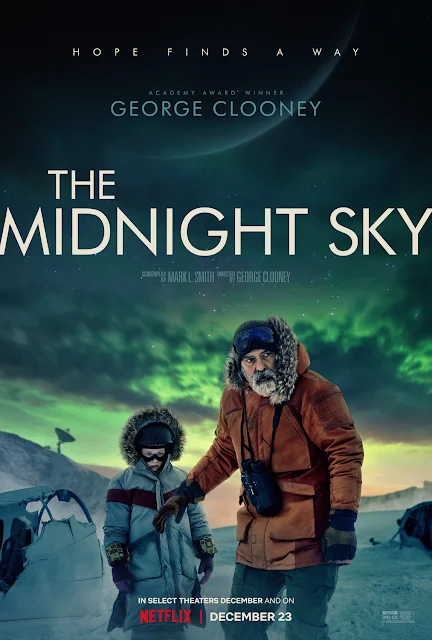
"The Midnight Sky," directed by and starring George Clooney, is a thought-provoking film that delves into a dystopian future where the world has been devastated by an unexplained global catastrophe. Clooney's multifaceted role as both director and lead actor adds a unique dimension to the narrative. Set against a bleak backdrop, the film oscillates between the desolation of a post-apocalyptic Earth and the desperate journey of a spacecraft crew seeking refuge on a distant habitable moon. 

At its core, "The Midnight Sky" grapples with profound themes that reflect the human condition in times of crisis.

The film's post-apocalyptic setting serves as a canvas for the exploration of isolation and loneliness, both physically and emotionally. The Earth's desolation leaves characters severed from society, their solitude accentuated by the barren landscapes and quietude that pervade the film. This physical isolation mirrors the emotional disconnect among the characters, each grappling with their personal demons and yearnings. 

George Clooney's character, Augustine, isolated in the Arctic, symbolizes this emotional estrangement – a brilliant scientist separated from his colleagues and family.

the midnight sky themes

Furthermore, the Arctic's harshness parallels the emotional isolation of the spaceship crew. Their remoteness in the cosmos is echoed in Augustine's terrestrial isolation, underscoring the universal nature of loneliness and the longing for connection even in the face of catastrophic events.

As the characters confront the impending apocalypse, their resilience and hope shine through the darkness. The film paints a vivid picture of human adaptability, as characters navigate the challenges of a world on the brink of collapse. Moments of resilience, both grand and subtle, punctuate the narrative, showcasing humanity's tenacity in the face of adversity.

Even when confronted with seemingly insurmountable odds, characters exhibit an unwavering pursuit of hope. The spaceship crew's quest to find a new home, and Augustine's determination to warn them, exemplifies the film's underlying theme of human perseverance. Clooney's portrayal of Augustine's unwavering dedication to contacting the spaceship underscores the unbreakable spirit that drives humans to overcome even the direst circumstances.

Beneath the surface of "The Midnight Sky" lies a poignant commentary on environmental degradation and its dire consequences. The post-apocalyptic world, marred by ecological catastrophe, serves as a cautionary tale, reflecting the real-world environmental issues our planet faces. The film's desolate landscapes and deteriorated ecosystems echo the urgency of addressing climate change and preserving the Earth's delicate balance.

Augustine's personal connection to the environment adds depth to the film's environmental themes. His dedication to protecting a sanctuary in the Arctic illustrates the innate connection humans have with nature and the moral imperative to safeguard it. In doing so, the film prompts viewers to reflect on the impact of human actions on the planet and the importance of responsible stewardship.

The film intricately weaves together the relationships between characters, both in the desolate post-apocalyptic world and through poignant flashbacks. These relationships emphasize the enduring power of human connections, even in the most dire circumstances. The fragile bonds between Augustine and his colleagues at the research facility highlight the longing for companionship and the comfort found in shared experiences. These connections are starkly contrasted with the isolated existence of the spaceship crew, whose interactions underscore the importance of camaraderie and emotional support.

One of the most significant relationships is the connection between Augustine and Iris, a young girl he encounters during his Arctic isolation. Their heartwarming bond symbolizes the intergenerational exchange of wisdom, empathy, and hope. Augustine's role as a guardian reflects the innate human instinct to care for others, even in times of personal hardship.

Or does it?

The film masterfully portrays the notion that in times of crisis, human relationships become lifelines. Be it the support between colleagues or the mentoring relationship between Augustine and Iris, these connections serve as a reminder that in the face of adversity, our shared humanity becomes a source of solace and strength.

As the spaceship crew embarks on their mission to find a new habitable planet, the theme of leaving a legacy becomes palpable. Their journey is fueled by the desire to secure a future for humanity, highlighting the sacrifices they make to ensure the survival of future generations. This sacrifice is epitomized by their willingness to leave behind everything they know, including their families and the familiarity of Earth, in pursuit of a greater good.

Throughout the film, characters make profound sacrifices, often at great personal cost, to contribute to a better world. This theme is epitomized by Augustine, who willingly stays behind to warn the spaceship crew, knowingly risking his life to ensure their safety. His choices underscore the theme of selflessness, emphasizing the responsibility of each generation to pave the way for the next.

The narrative prompts reflection on the legacies we leave behind, whether they be environmental, emotional, or societal. The characters' willingness to sacrifice for the sake of the future challenges viewers to consider their own contributions and the impact they have on the world.

In "The Midnight Sky," George Clooney's character's experiences and actions encapsulate the multifaceted themes that permeate the film. Isolation and loneliness are met with human resilience and hope, mirroring the determination to thrive despite adversity. The film's depiction of environmental degradation serves as a sobering reminder of our collective responsibility. The relationships forged among characters underscore the importance of connection, empathy, and mutual support in challenging times.

The film's exploration of legacy and sacrifice resonates as characters navigate their perilous journeys, each choice embodying a commitment to a better future. "The Midnight Sky" not only presents these themes in a compelling narrative but also invites audiences to introspect on their own roles in shaping the world and the legacies they leave behind.

Through its evocative storytelling and portrayal of these themes, "The Midnight Sky" elevates cinematic art by presenting a reflection of real-world challenges and an exploration of the indomitable human spirit. As viewers, we are compelled to confront these themes, fostering a deeper connection with the film's characters and their journeys.

Exploring Themes in "The Day the Earth Stood Still" Directed by Robert Wise

Released in 1951 and directed by Robert Wise (Star Trek The Motion Picture, The Sound of Music), "The Day the Earth Stood Still" is a revered science fiction film that encompasses a rich tapestry of thought-provoking themes. Set against the backdrop of the tense Cold War era, the movie delves into a multitude of complex ideas that remain relevant and captivating for modern audiences. 

Let's delve into the film's prominent themes, including the pervasive Cold War paranoia, interstellar diplomacy, environmental consciousness, fear of the unknown, the ethical use of technology, human nature's dichotomy, the interplay between individual and collective responsibility, the essence of sacrifice, the evolution of knowledge and wisdom, and the transformative power of unity.

the day the earth stood still

Cold War Paranoia and Global Tensions

At its core, "The Day the Earth Stood Still" captures the palpable fear and uncertainty that defined the Cold War period. The arrival of Klaatu, an extraterrestrial being, serves as an allegory for the looming threat of nuclear conflict and its potential global devastation. The film's portrayal of Earth's disparate nations and their shared apprehension about the possibility of annihilation underscores the film's message of the urgent need for global unity in the face of ideological differences and mutual concerns about the survival of humanity.

Interstellar Diplomacy and Communication

Klaatu's arrival offers a unique lens through which to examine the complexities of interstellar diplomacy. The difficulties that characters encounter in understanding Klaatu's intentions and translating his message into comprehensible terms highlight the challenges that would arise in real-life interactions with extraterrestrial beings. This theme invites contemplation on the significance of effective cross-species communication and the potential misinterpretations that could lead to unintended consequences.

Environmentalism and Earth's Preservation

Klaatu's message about Earth being a part of a larger cosmic community goes beyond interstellar politics; it underscores the importance of environmental stewardship. The film serves as an early advocate for environmental consciousness, urging viewers to recognize the fragility of the planet and the necessity of preserving its natural resources for future generations. This theme takes on added significance in the context of modern concerns about climate change and sustainable living.


Fear of the Unknown and Xenophobia

The initial fear and hostility displayed by humans towards Klaatu and his enigmatic companion, Gort, mirror humanity's instinctual reaction to the unknown and the foreign. The film's portrayal of such reactions, including military aggression, serves as a commentary on the destructive potential of allowing fear to dictate actions. It also emphasizes the film's underlying message that fostering understanding and collaboration across cultures and species is paramount.

Technological Power and Ethical Use

Gort, the formidable robot accompanying Klaatu, serves as a powerful symbol of technology's potential for both good and harm. The film raises important questions about the ethical implications of scientific advancements. Gort's seemingly limitless power highlights the responsibility that comes with technological progress, reminding viewers of the importance of considering the ethical ramifications of new innovations and their potential impact on society.

Human Nature and Redemption

Klaatu's evolving perception of humanity offers a nuanced exploration of human nature. As he interacts with different individuals, the film unveils both the darker aspects of human behavior, such as aggression and fear, as well as the potential for positive change and redemption. This theme prompts viewers to consider the complexities of human nature and the possibility of growth and transformation, even in the face of dire circumstances.

Individual vs. Collective Responsibility

The film presents a delicate balance between individual actions and collective responsibility. Characters like Helen and Professor Barnhardt exemplify the capacity of individuals to catalyze positive change on a larger scale. Their actions underscore the film's message that while individual agency is important, it is collective effort and collaboration that ultimately drive progress and change.

Sacrifice and Survival

The theme of sacrifice emerges as a central motif, underscoring the idea that lasting peace and survival may necessitate personal sacrifices. Klaatu's willingness to risk his own life to convey a message serves as a powerful example of selflessness and the potential for personal sacrifice to catalyze broader change. This theme prompts contemplation about the values and principles individuals are willing to uphold, even in the face of adversity.

Evolution of Knowledge and Wisdom

Klaatu's advanced understanding of the cosmos and his insights into the growth of civilizations offer a profound perspective on the evolution of knowledge and wisdom. His message encourages humanity to aspire to a higher level of intellectual and moral development. This theme prompts reflection on humanity's capacity to evolve beyond its current state and embrace a more enlightened worldview.

Power of Unity and Collaboration

At its core, the film underscores the transformative potential of global cooperation and unity. Klaatu's final message serves as a rallying call, urging Earth's inhabitants to rise above divisions and work together for the sake of the planet's future. This theme resonates as a timeless reminder of the significance of transcending differences and harnessing collective effort to address existential threats.

Conclusion

"The Day the Earth Stood Still" remains a cinematic masterpiece that skillfully explores a myriad of enduring themes. The film's portrayal of Cold War fears, its meditation on interstellar communication, and its advocacy for environmental responsibility continue to captivate audiences. Through its complex characters and thought-provoking narrative, the film invites viewers to engage with themes that transcend time and space, reminding us of the importance of unity, responsible stewardship, and the potential for positive change in a rapidly evolving world.
02 August 2023

From Scoundrel to Hero: The Transformational Journey of Han Solo in Star Wars

In the vast cosmos of cinematic storytelling, few characters have achieved the enduring popularity and complexity as Han Solo in the Star Wars saga. 

Han Solo's journey, spanning the original trilogy and The Force Awakens, has captivated audiences for decades, not merely for his witty charm and audacious adventures, but for his profound transformation from a roguish smuggler to a revered hero. 

As we embark on this discussion, we shall traverse the galaxies of Han's character arc, delving into pivotal moments that exemplify his growth, exploring the themes of redemption and camaraderie that weave through his narrative, and uncovering the universal truths his evolution imparts. 

Let's just accept that Harrison Ford rules before we begin and that Indiana Jones was a fun ride too.

halo solo thematic character arc


In "A New Hope," Han Solo enters the stage as a charismatic smuggler navigating the galaxy aboard the Millennium Falcon. His initial motivations are driven by personal gain, as seen in his desire for monetary rewards from transporting Luke and Obi-Wan to Alderaan. He epitomizes the idea of a self-centered individual, primarily concerned with his own well-being. He shoots first

However, as the story unfolds, his interactions with Luke and Leia begin to chip away at this facade. His growth becomes evident in his decision to return and assist Luke in destroying the Death Star, a critical turning point that signifies his transition from a mere scoundrel to a valuable member of the Rebellion.

He also put Darth Vader on his ass.

"The Empire Strikes Back" magnifies Han's internal struggle between selflessness and self-preservation. As the Rebellion's situation becomes more dire, Han's commitment becomes evident when he risks his life to rescue Luke during the Battle of Hoth. This act of selflessness underscores his evolving dedication to the greater cause. 

Furthermore, Han's relationship with Leia deepens (I know), revealing his vulnerability and compassion. The film's exploration of their love story amidst the Empire's pursuit showcases Han's emotional growth. The cliffhanger ending, with Han captured and frozen in carbonite, adds a layer of uncertainty to his fate, compelling audiences to eagerly anticipate his further transformation.

"Return of the Jedi" marks the apex of Han Solo's journey, transforming him from a self-serving smuggler to a dedicated Rebel leader. His rescue from Jabba's palace is not just a thrilling action sequence but also a symbol of his status as a key figure within the Rebellion. The loyalty and unwavering dedication of his friends drive this daring operation, underscoring the significance of his relationships. 

Han's character arc involves confronting his past, embracing responsibility, and acknowledging his feelings for Leia. His growth is beautifully illustrated in his decision to lead a mission during the Battle of Endor. This heroic act contributes significantly to the destruction of the second Death Star, solidifying his transformation into a true hero.

"The Force Awakens" reintroduces Han after years of absence, underlining the enduring impact of his character. His presence bridges the gap between the original trilogy and the new generation of characters. The film explores the complexities of his relationship with Leia, marked by the tragic loss of their son, Ben Solo, who becomes Kylo Ren. 

This narrative arc adds depth to Han's character, highlighting the toll of external conflicts on personal relationships. His involvement with new characters, like Rey and Finn, reveals his growth as a mentor figure, mirroring his own development from a self-interested individual to a compassionate leader. His tragic attempt to redeem Kylo Ren showcases the depth of his character, and the intricacies of hope and despair in a complex universe.

Han's very unexpected cameo appearance in "The Rise of Skywalker" serves as a poignant thematic culmination of his character's arc and legacy. While not a central figure in the film, his brief interaction with Kylo Ren, now Ben Solo once more, carries profound significance. Han's return symbolizes the ongoing struggle between darkness and light within Kylo Ren's conflicted soul. 

As a projection of Ben's conscience, Han represents the embodiment of his internal battle for redemption. This encounter underscores the enduring impact of Han's transformation, echoing themes of forgiveness, second chances, and the unbreakable connection between a father and son. Even in his absence, Han Solo's presence continues to shape the fate of the galaxy, a testament to the ripple effect his journey has had on the larger Star Wars narrative.

Han Solo's trajectory stands as a resonant echo of the pervasive themes of redemption and self-discovery that are woven intricately into the tapestry of the Star Wars saga. His journey, an evolution from a charismatic scoundrel to a revered hero, serves as a testament to the undeniable potential for change that lies within even the most unlikely of individuals. 

This transformation ripples through the galaxy, influencing not only his contemporaries but also future generations, exemplified by characters like Rey and Finn. The striking parallels between Rey's journey from a scavenger to a Force-sensitive hero and Han's own evolution amplify his enduring inspiration, transcending time and generations. This parallelism signifies the timelessness of his growth and emphasizes the universal nature of personal transformation. 

Likewise, Finn's development from a disillusioned Stormtrooper to a compassionate Resistance fighter mirrors Han's own path, a testament to the far-reaching impact of the choices he made and the values he upheld.

Han Solo's evolution seamlessly aligns with the saga's profound exploration of the eternal struggle between light and darkness. His journey epitomizes the intricate dance between these opposing forces, showcasing how individuals can shape destinies and contribute to the ongoing battle against tyranny

Through his arc, Han becomes a vessel for this exploration, as his choices and actions carry the weight of his growth from a morally ambiguous smuggler to a beacon of hope and leadership. In essence, his transformation encapsulates the very essence of the Star Wars narrative: the perpetual quest to strike a balance between the forces of good and evil, while navigating the complexities of the human spirit.

Han Solo's legacy endures through his character arc, leaving an unmistakable mark on the Star Wars universe. His commitment to the Rebellion serves as a foundation for the Resistance's fight against the First Order, showcasing his ongoing influence. His role as a mentor and symbol of change continues to inspire new heroes, reflecting his timeless resonance. Beyond the films, Han's impact extends into spin-offs, novels, and further adaptations. His influence on other Star Wars stories enriches our understanding of the galaxy's interconnectedness and the enduring themes of hope and redemption.

In the grand tapestry of the Star Wars universe, Han Solo's character trajectory stands as a testament to the power of redemption and the transformative journey of the human spirit. Through his evolution from a charming smuggler to a devoted Rebel leader, Han reminds us that even in the darkest of times, there is always room for change, growth, and the pursuit of the greater good. His story transcends fiction, inspiring us to reflect on our own paths, and emphasizing that personal change can have a profound impact, shaping destinies and influencing generations.

Han Shot first... why do we even argue this?

The "Han shot first" controversy has become a legendary point of contention within the Star Wars fandom, emanating from a pivotal scene in the original 1977 film, Episode IV: A New Hope. This particular scene unfolds in the atmospheric Mos Eisley Cantina, where the charismatic yet cunning smuggler Han Solo finds himself in a tense standoff with the bounty hunter Greedo. Over the years, the alterations made to this scene, especially in the anniversary editions, have triggered fervent debates among fans, who remain deeply invested in the integrity of the saga. 

The heart of the "Han shot first" debate is firmly rooted in the climactic confrontation within the Mos Eisley Cantina. In the raw and unaltered 1977 release, Han Solo's actions are unmistakably clear: he shoots Greedo with a swift precision that leaves no room for retaliation. However, as the years progressed, the scene underwent modifications orchestrated by George Lucas himself. These alterations shifted the sequence of shots, giving the impression that Greedo had fired first, and Han's response was a reaction of self-defense. 

han shoots first

This seemingly minor change led to a considerable divide among fans, who passionately disputed whether these edits aligned with the core essence of Han Solo's character.

To fathom the significance of the original scene, one must delve into the creative intentions of George Lucas during the inception of the 1977 film. At that juncture, Han Solo's character was envisaged as a morally ambiguous rogue, a charismatic smuggler with a penchant for self-preservation. The decision to have Han shoot first was a strategic narrative choice by Lucas, vividly portraying Han's street-smart savvy and his readiness to navigate the treacherous underworld he inhabited. 

This particular act of unapologetic self-interest not only laid the foundation for Han's character arc but also illuminated his capacity for change over the course of the trilogy.

A meticulous examination of Han Solo's character trajectory across the original trilogy highlights the integral role of the "Han shot first" moment. Introduced as a self-serving opportunist motivated primarily by personal gain, Han's actions in the cantina scene marked the inception of a profound transformation. 

The "Han shot first" scene wasn't merely an isolated incident; it was a cornerstone that propelled Han's evolution from a morally ambiguous renegade to a selfless leader within the Rebel Alliance. His readiness to take action, even if ruthless, foreshadowed his journey towards embracing a higher purpose beyond his own interests.

The resonance of the "Han shot first" controversy extends beyond the confines of the Star Wars universe, emerging as a cultural phenomenon in its own right. It serves as a vivid illustration of the fervor that accompanies a beloved franchise, where each detail is scrutinized and revered by an impassioned fanbase. 

This debate transcends the boundaries of a single scene, encapsulating broader discussions about artistic autonomy, the ethical considerations surrounding alterations, and the profound influence of fan sentiment on the sanctity of source material.

The enduring legacy of the "Han shot first" controversy extends far beyond the realm of Star Wars, acting as a testament to the intricate interplay between creators and their devotees. It underscores the undeniable power of fandom and its potential to shape the course of a narrative. The debate encourages contemplation on the nuanced relationship between artists and their work, provoking introspection about how artistic choices impact the collective emotional connection of a fanbase.

In light of subsequent anniversary releases and the alterations that accompanied them, a comprehensive evaluation is imperative. These changes, aimed at harmonizing narrative continuity, inevitably invite deliberation on their alignment with the underlying themes and character arcs of the Star Wars saga. Assessing the impact of these modifications demands a balanced analysis, weighing their implications on Han Solo's character progression, the emotional resonance of the scene, and the overarching narrative 

In the tapestry of the Star Wars saga, the "Han shot first" controversy transcends a mere debate and evolves into a multifaceted exploration of fandom, artistic interpretation, and character development. The original "Han shot first" scene reverberates as a pivotal moment, echoing throughout the trilogy and beyond. It remains a testament to the intricate dance between creators and their audience, demonstrating the lasting imprint that dedicated fans leave on the legacy of a beloved franchise. 
project hail mary

What is the plot of Project Hail Mary by Andy Weir?

Reworked from your supplied draft into a novel-focused version.

Following up The Martian was always going to be a dangerous assignment for Andy Weir. That earlier novel earned its reputation by making hard science feel funny, urgent, and strangely humane, and anything that came after it was going to be measured against that standard. Project Hail Mary arrives carrying that pressure and then clears it with confidence. It is brainy without becoming cold, funny without becoming flimsy, and emotional without ever surrendering the hard-science pleasure that made Weir’s name with The Martian.

This novel clears that bar with room to spare.

Project Hail Mary is not just a respectable follow-up to a breakout hit. It is the kind of science fiction novel that reminds you why the genre still matters when it is done properly. Weir keeps the curiosity alive, builds a story around real scientific thinking, and then gives all of that structure a deeply emotional core. The result is a book that works as suspense, as speculative fiction, as a survival story, and as a study of what decency looks like when the scale of the problem becomes almost unthinkable.

For readers who want science fiction that actually respects science without forgetting people, this is one of the great recent examples. It is easy to see why the story caught on so quickly, but the important point is that the novel works on its own terms first. Before anyone started talking about screens, casting, or adaptation, the book already had the qualities that made it special on the page.

At the center of it all is Ryland Grace, and Weir makes the smart choice of introducing him in confusion rather than competence. Grace wakes alone aboard a spacecraft with no memory of who he is or why he is there. That amnesia hook is more than a gimmick. It lets the novel reveal its mission piece by piece, forcing the reader to reconstruct events alongside Grace while the pressure keeps building around him. The premise is simple enough to explain, a desperate interstellar mission to save Earth from the astrophage crisis that is draining the sun and other stars, but the way Weir unfolds it gives the book much of its momentum. For anyone wanting a cleaner refresher on the setup, the core plot of Project Hail Mary remains one of the story’s great hooks.

The beauty of the novel is that it never treats that premise as a mere puzzle box. Yes, there is mystery. Yes, there is problem-solving. Yes, there is the pleasure of watching a very smart person crawl through impossible odds with chemistry, physics, biology, and stubbornness. But the book keeps bringing everything back to character. Grace is not a swaggering action hero. He is a teacher, a scientist, a hesitant man who keeps getting dragged toward courage by necessity rather than ego. That gives the novel a tenderness that many modern science fiction stories, especially the louder ones, never quite find.

That tenderness is strengthened by Weir’s narrative voice. Grace is witty, observant, self-protective, frightened, and often very funny, which means the novel never hardens into textbook fiction no matter how much real science it threads through the plot. Weir understands that explanation only works when the reader enjoys the person doing the explaining. That is one of the book’s quiet technical achievements. The science lands because Grace lands. The character arc has always been one of the novel’s secret strengths, and Ryland Grace’s evolution from reluctant participant to selfless problem-solver is one of the reasons the story works as more than just a clever engineering exercise.

There is also real discipline in the way Weir parcels out information. The flashback structure works because it gives the Earthbound material urgency without draining the onboard mystery of its tension. Grace’s recovered memories do not simply fill in exposition. They deepen his relationship to the mission, to fear, to failure, and to the uncomfortable truth of what kind of person he really is when heroism stops sounding noble and starts sounding final. The Earth sections also give us Eva Stratt, one of the novel’s strongest supporting figures. She could have been written as a flat embodiment of bureaucracy, but instead she comes across as severe, intelligent, ruthless, and morally exhausted. She is not warm, but she is compelling because the novel understands the scale of responsibility crushing her.

The book is smart enough to let science be dramatic in its own right. Too many stories treat intelligence as cinematic or narrative only when it ends in violence. Project Hail Mary understands that discovery can be thrilling on its own. Watching Grace think, test, calculate, fail, adjust, and try again becomes part of the pleasure. This is one reason the novel works as more than standard space opera. Its drama comes from method as much as danger. In Weir’s hands, competence is not dry. It is suspenseful. The explanations are detailed, sometimes very detailed, but they are attached to stakes, and that makes all the difference.

That scientific spirit links beautifully to the story’s deeper thematic currents. At its heart, Project Hail Mary is about survival, yes, but also sacrifice, cooperation, humility, and the moral demand to act for lives beyond your own. Those ideas are what give the book its staying power. The novel’s themes of survival, sacrifice, and scientific ingenuity are not there as decoration. They are the engine. Weir does not write catastrophe simply for spectacle. He writes it as a pressure test for character, and what emerges from that pressure is not nihilism but connection.

Then there is Rocky.

Any review that dances around Rocky for too long is wasting your time. Rocky is the novel’s miracle. He is the element that sounds ridiculous in summary and then becomes emotionally indispensable in execution. A spider-like alien engineer from another star system, breathing a different atmosphere, perceiving the world through sound, speaking in musical tones, should be an impossible character to make lovable on the page. Weir pulls it off magnificently. The friendship between Grace and Rocky is not merely the novel’s most charming idea. It is its beating heart.

What makes Rocky work is that Weir never turns him into a human in disguise. Rocky remains strange. His biology is strange. His language is strange. His assumptions are strange. His humor is strange. Yet none of that prevents intimacy. In fact, it creates it. The slow construction of trust between Grace and Rocky becomes one of the most satisfying relationships in recent science fiction because it is built through shared work, trial and error, translation, mutual respect, and eventually real affection. The result is that Rocky, the Eridian ally at the center of the story, feels memorable not because he is cute or quirky, but because he embodies one of the novel’s deepest beliefs, that intelligence across worlds can produce not only mutual utility, but friendship.

That friendship is where the novel’s emotional force really gathers. The bond between Grace and Rocky gives the book its humor, its warmth, and eventually its heartbreak. Their scenes together are often very funny, but they are never played as mockery. Weir lets their differences generate comedy while keeping the relationship sincere. That sincerity is crucial. It means the story earns its larger emotional beats honestly, rather than forcing them through sentimentality. By the time the novel reaches its final movement, the science is still gripping, but it is the loyalty between these two characters that gives the story its real weight.

On the page, Weir also creates a striking sense of scale without losing intimacy. The Hail Mary itself feels functional and lived in. The Petrova Line is one of those great science fiction concepts that sounds poetic and threatening at the same time. The astrophage problem gives the book a cosmic frame, but Weir never lets it drift into abstraction. Everything remains tactile. Cables, valves, chambers, beetles, lab experiments, measurements, mistakes. The novel keeps returning to hands doing work, to minds solving problems, to bodies under strain. That human scale inside cosmic scale is one of its real strengths.

One of the smartest choices Weir makes is refusing to lose sight of Grace’s basic humanity. The story can get very big, multiple worlds, species-level stakes, extinction math, evolutionary speculation, but the novel keeps grounding that scale in one man who never set out to become mythic. Even smaller details, like Ryland Grace’s age and life-stage, matter more than they first appear to, because they shape the melancholy at the center of the character. Grace is not a blank hero vessel. He is a person with regret, habits, limitations, and a life that had already narrowed before the mission forced him to decide what he was capable of becoming.

That is why the novel lands as more than a technical achievement. It is emotionally generous in a way that feels almost old-fashioned, and I mean that as praise. It believes in friendship. It believes in ingenuity. It believes in self-sacrifice. It believes that humor and hope can coexist with terror. It believes that science fiction can still be a popular art form without becoming cynical, smug, or emotionally evasive. That optimism is not naïve. The book earns it by showing how difficult cooperation really is, and by insisting that difficulty does not make it any less worthwhile.

There is also a wider pleasure in seeing a novel this unapologetically sincere succeed so strongly with readers. A lot of contemporary science fiction leans toward either grim self-importance or clever detachment. Project Hail Mary avoids both traps. It is earnest without being corny, funny without becoming disposable, moving without begging for tears. That tonal control is not easy, and it is one of the clearest signs that Weir understands exactly what kind of story he is telling. The book belongs to an older science fiction tradition of problem-solving and wonder, but it does not feel dusty or nostalgic. It feels immediate.

For longtime Andy Weir readers, there is a special satisfaction here too. This is the novel that proves The Martian was not a fluke. It shows again that Weir can build suspense from scientific reasoning, but it also shows growth. Project Hail Mary is softer where it needs to be softer, stranger where it needs to be stranger, and more emotionally open than the earlier book. It understands why people care about Grace. Why Rocky matters so much. Why astrophage is fascinating beyond its plot function. Why the blend of cerebral detail and emotional openness feels so distinctive. In that sense, it stands alongside our existing review of the novel as one of the clearest examples of modern hard science fiction finding a broad audience without diluting what makes it special.

The easiest way to sum it up is this: Project Hail Mary is the rare recent sci-fi novel that feels both intelligent and generous. It is exciting without becoming empty. It is funny without undercutting itself. It is idea-driven without forgetting character. It is sentimental in the best sense, because it earns its feelings through action, loyalty, and hard-won connection.

This is a genuinely uplifting piece of popular science fiction. A big, emotional, idea-driven novel that treats intelligence as dramatic, friendship as sacred, and hope as something worth taking seriously. That alone would make it unusual. The fact that it works as beautifully as it does makes it something rarer still.

In other words, Project Hail Mary is not just a successful sci-fi novel. It is the kind of book that reminds you why stories about the stars still matter.

01 August 2023

Return of the Jedi - Themes of Redemption, Identity, and Loyalty

"Return of the Jedi," the third installment in the original Star Wars trilogy, directed by Richard Marquand and released in 1983, continues the epic journey of Luke Skywalker, Princess Leia Organa, Han Solo, and the Rebel Alliance as they strive to overthrow the oppressive Galactic Empire. 

It had to carry a lot of weight after the triumph of film making that was The Empire Strikes Back.

The film's action takes place on the forest moon of Endor and the second Death Star, providing a thrilling backdrop for the confrontation between the Rebels and the Empire. Beyond being a space adventure, "Return of the Jedi" explores profound themes of redemption, identity, and the perpetual struggle between good and evil. 

Through intricately developed character arcs and defining moments, the movie imparts valuable lessons about the complexities of human nature and the potential for growth and change even in the face of overwhelming adversity.

leia gold bikini jedi

The Theme of Redemption in Return of the Jedi:

"Return of the Jedi" masterfully explores the theme of redemption, infusing the film with profound emotional depth and philosophical complexity. The character arc of Anakin Skywalker, also known as Darth Vader, stands at the heart of this theme, presenting a poignant tale of tragic descent and eventual redemption.

Anakin's Tragic Journey:

Anakin Skywalker's journey from a promising Jedi Knight to the menacing Sith Lord, Darth Vader, serves as a cautionary tale about the consequences of giving in to fear and the allure of power. As a young and gifted Jedi, Anakin possesses extraordinary potential in the Force, and his prowess is recognized by many, including Jedi Master Obi-Wan Kenobi and Jedi Knight Qui-Gon Jinn. However, beneath his veneer of talent, Anakin wrestles with inner turmoil, haunted by memories of a traumatic past and burdened by a fear of losing those he loves.

Throughout the prequel trilogy, Anakin's descent into darkness is catalyzed by his yearning to save his loved ones, particularly his wife, Padmé Amidala. The manipulative whispers of Emperor Palpatine and the false promise of the dark side's power prove to be Anakin's ultimate downfall, leading him to betray the Jedi Order and embrace the Sith.

Anakin's Internal Conflict:

"Return of the Jedi" portrays Anakin as a multi-dimensional character, grappling with feelings of remorse and self-doubt despite being consumed by the dark side. Beneath the imposing armor of Darth Vader lies a glimmer of the compassionate and conflicted Jedi he once was. The film skillfully portrays Anakin's internal struggle through subtle hints and facial expressions, revealing the remnants of his humanity that remain buried beneath the Sith Lord's exterior.

During the climactic confrontation on the second Death Star, Anakin's internal conflict reaches its zenith. The presence of his son, Luke Skywalker, and the Emperor's malevolent intent expose the fissures in his armor, allowing the light within him to rekindle.

The Catalyst of Love and Compassion:

The turning point in Anakin's redemption comes through the unwavering love and compassion of his son, Luke Skywalker. In a moment of profound vulnerability, Anakin witnesses the Emperor's merciless attack on Luke with Force lightning. Overwhelmed by his love for his son and confronted with the choice to save him, Anakin experiences a redemptive revelation. This climactic scene showcases the transformation of a Sith Lord back into the fallen Jedi Knight he once was.

The Fulfillment of the Chosen One Prophecy:

Anakin's redemption is not merely a personal triumph but a pivotal moment in the Star Wars saga, fulfilling the ancient prophecy of the Chosen One. According to the prophecy, a powerful individual will bring balance to the Force and end the conflict between the Jedi and the Sith. Anakin's decision to save his son, sacrificing himself to destroy the Emperor, fulfills this prophecy in a profound and unexpected manner.

Leia Organa's Personal Journey:

The theme of redemption is not limited to Anakin Skywalker alone; it also intertwines with the character arc of Leia Organa. As a central figure in the Rebel Alliance, Leia's journey is further enriched by the revelation of her true parentage as the daughter of Darth Vader. This discovery presents her with a profound emotional challenge, as she grapples with the implications of being connected to the dark side through her father.

Throughout the film, Leia's commitment to the Rebellion and her role as a leader solidify her path to redemption. Her daring rescue mission on the forest moon of Endor exemplifies her growth as a character. Through her actions, Leia confronts her fears and insecurities, eventually embracing her identity and understanding the potential for change and redemption even in the darkest circumstances.

The Impact on the Galactic Conflict:

The significance of redemption reverberates throughout the Star Wars galaxy, directly influencing the outcome of the Galactic conflict. Anakin's redemption proves pivotal in the ultimate defeat of the Sith and the downfall of the oppressive Empire. By embracing the light side and sacrificing himself to destroy the Emperor, Anakin plays a key role in the victory of the Rebel Alliance.

Anakin's act of redemption and the destruction of the Sith open the path for the renewal of the Jedi Order. With the Sith vanquished and balance restored to the Force, the galaxy is set on a trajectory toward healing and growth. Anakin's redemptive act sets the stage for the rise of a new generation of Jedi, continuing the legacy of the Jedi Knights and the hope for a better future.

Or does it?

Furthermore, the significance of redemption in shaping the outcome of the Galactic conflict underscores the broader implications of individual actions and their impact on the galaxy's destiny. Anakin's redemption fulfills the ancient prophecy of the Chosen One, bringing balance to the Force and setting the stage for the renewal of the Jedi Order. Ultimately, "Return of the Jedi" serves as a timeless reminder of the importance of compassion, forgiveness, and the potential for change, leaving a lasting impact on popular culture and the broader philosophical discussions about the human experience.

The Cycle of Good and Evil:

"Return of the Jedi" masterfully delves into the cyclical nature of the Force's balance, providing a thought-provoking exploration of the historical rise and fall of the Sith and Jedi throughout the galaxy's history. The film unveils a rich tapestry of events that hint at the recurring pattern of the struggle between the light and dark sides, revealing that neither side can maintain dominance indefinitely. This cyclical nature of good and evil underscores the notion that the Force operates on a delicate equilibrium, subject to shifts and adjustments over time.

The Historical Rise and Fall of the Sith and Jedi:

Within the context of "Return of the Jedi," the film subtly alludes to the ancient history of the Jedi and the Sith, hinting at their cyclical rise and fall. The galaxy has witnessed various epochs where the Jedi Order rose to prominence as the guardians of peace and justice, only to be followed by periods of Sith dominion, characterized by tyranny and darkness. The ebb and flow of power between these two forces signify the enduring struggle between light and dark, emphasizing the notion that the Force seeks balance but is inherently vulnerable to upheaval.

The Concept of Prophecy and Chosen Ones:

Prophecies play a significant role throughout the Star Wars saga as introduced as a concept in The Phantom Menace, and "Return of the Jedi" reinforces this theme by delving into the prophecy of the Chosen One. According to this ancient prophecy, a powerful individual will emerge and bring balance to the Force, ending the cycle of conflict between the Jedi and the Sith. This chosen individual's pivotal role becomes a central focus of the film, tying together the narratives of Anakin Skywalker and his son, Luke Skywalker.

The Chosen One prophecy adds a layer of destiny and fate to the cyclical struggle of good and evil. It suggests that certain individuals are destined to play crucial roles in the cosmic drama, shaping the galaxy's destiny and challenging the cyclical nature of the Force. The fulfillment of this prophecy ultimately becomes the linchpin for the potential resolution of the eternal battle between light and dark.

The Temptation of the Dark Side:

Throughout "Return of the Jedi," the allure of the dark side and its tempting promises of power and control are prominently showcased. Characters like Darth Vader and Emperor Palpatine exemplify how the dark side can corrupt even the noblest individuals. Anakin Skywalker's tragic fall to the dark side in the prequel trilogy is a stark reminder of the seductive nature of the Sith's power.

Similarly, in "Return of the Jedi," Luke Skywalker faces his own brush with the dark side during his confrontation with Darth Vader and the Emperor. When Luke gives in to his anger and aggression, he nearly succumbs to the dark side's power. This pivotal moment serves as a critical exploration of the struggle to resist the dark side's temptations and the transformative power of individual choices.

luke fights vader return jedi themes


The Significance of Individual Actions:

"Return of the Jedi" underscores the importance of individual actions in shaping the fate of the galaxy. Characters like Luke Skywalker, Leia Organa, and Darth Vader find themselves at the crossroads of destiny, where their choices have profound implications for the balance between good and evil. Each character's decisions, both past and present, become crucial in determining the trajectory of the ongoing conflict.

One of the most profound moments in "Return of the Jedi" is when Luke Skywalker, moments after the heat of the saber fight with Darth Vader, chooses not to strike down his father in anger and hatred. 

Instead, Luke gives the ultimate quote after being challenged by Palpatine:

Never. I'll never turn to the Dark Side. You've failed, your highness. I am a Jedi, like my father before me.

Despite all the pain and suffering inflicted by Vader, Luke recognizes the importance of compassion and forgiveness. This pivotal moment symbolizes the breaking of the cycle of violence and hatred, as Luke's refusal to give in to the dark side's temptations serves as a catalyst for Anakin Skywalker's redemption and the ultimate defeat of the Emperor.

The Theme of Loyalty

"Return of the Jedi" places a strong emphasis on the theme of loyalty, presenting a rich tapestry of unwavering commitment, selflessness, and camaraderie among its characters. Throughout the film, loyalty is a driving force that propels the narrative forward, with characters demonstrating their allegiance to their cause, their friends, and the greater good.

The Daring Rescue of Han Solo:

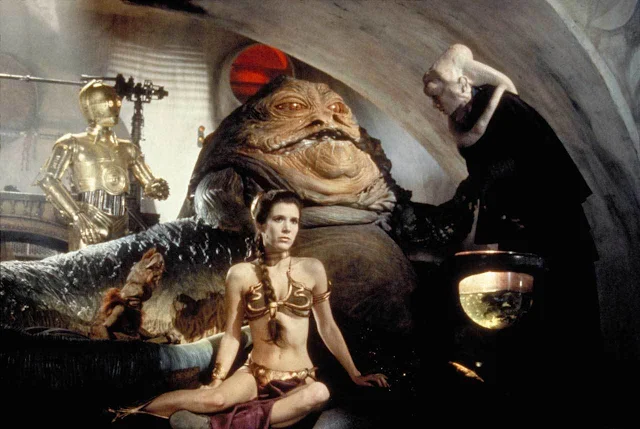
The daring rescue of Han Solo from the clutches of Jabba the Hutt serves as a compelling example of loyalty among the central characters. Luke Skywalker, Princess Leia, Chewbacca, and the droids, R2-D2 and C-3PO, embark on a perilous mission to save their friend, Han. Their unwavering commitment to Han exemplifies the strength of their bond as a close-knit group united by a shared purpose.

Throughout the rescue sequence, Leia's loyalty to Han stands out prominently. As a leader in the Rebel Alliance, she takes personal risks to negotiate Han's release from Jabba's palace. Disguising herself as the bounty hunter Boushh, she infiltrates the palace with courage and determination. Leia's actions underscore the depth of her loyalty and the lengths she is willing to go to save her friend, would-be lover and fellow Rebel.
golden bikini jabba

Additionally, the rescue mission showcases the loyalty of Chewbacca, Han's loyal co-pilot and friend. Chewbacca's fierce determination to save Han and his unwavering support for Leia and Luke further emphasize the theme of loyalty and friendship that permeates the film.

The Dedication of the Rebel Alliance:

The commitment of the Rebel Alliance to take on the Empire is a central aspect of "Return of the Jedi." Despite the overwhelming power of the Imperial forces and the seemingly insurmountable challenge posed by the second Death Star, the Rebels stand united in their fight for freedom and justice. The theme of loyalty is evident in their unwavering dedication to the cause, as they come together from various corners of the galaxy to confront the Empire.

The climax of loyalty within the Rebel Alliance is showcased in the Battle of Endor, where their unity and camaraderie become pivotal to their success. The ground team, led by Han Solo, Princess Leia, and their comrades, works tirelessly to disable the shield generator protecting the Death Star. Their unwavering loyalty to one another and the greater cause allows them to overcome numerous obstacles and endure in the face of danger.

Leadership Shown by Admiral Ackbar and Lando Calrissian:

Admiral Ackbar, a Mon Calamari leader and military strategist, exemplifies loyalty as he guides the Rebel fleet through the Battle of Endor. His unwavering dedication to the safety and success of his fellow rebels is evident in his calm and resolute leadership.

lando calrissian jedi

Ackbar's iconic line, "It's a trap," showcases his keen perception and strategic acumen, allowing the Rebel fleet to adapt and respond to the unexpected ambush set by the Empire.

Similarly, Lando Calrissian, who was once a 'somewhat' reluctant ally in "The Empire Strikes Back," demonstrates his loyalty to the Rebel cause by leading the attack on the second Death Star. Despite his earlier involvement with the Empire and the betrayal of Han Solo, Lando recognizes the significance of defeating the Emperor and the redemption of his past mistakes. His decision to join the Rebel Alliance wholeheartedly showcases the transformative power of loyalty and the willingness to stand up for what is right.

The loyalty exhibited by Admiral Ackbar, Lando Calrissian, and other Rebel leaders fosters a sense of unity and trust among the ranks, allowing the Rebels to effectively coordinate their efforts and present a united front against the oppressive Galactic Empire.

Loyalty as a Unifying Force:

"Return of the Jedi" uses loyalty as a unifying force that brings characters together, transcending their differences and forging deep bonds. The loyalty shared among the central characters, such as Luke Skywalker, Leia Organa, Han Solo, and Chewbacca, serves as a driving force that propels the narrative and the Rebellion forward.

Moreover, loyalty also extends beyond individual friendships to encompass a broader sense of duty and loyalty to a cause greater than oneself. The Rebels' commitment to overthrowing the Empire and restoring peace to the galaxy demonstrates their unwavering loyalty to the pursuit of justice and freedom.

Themes of Sacrifice and Loyalty:

The theme of loyalty is often intertwined with sacrifice throughout the film. Characters demonstrate their loyalty by making selfless choices that put the well-being of others above their own. Luke Skywalker's willingness to surrender himself to Darth Vader and the Emperor on the second Death Star is a prime example of self-sacrifice driven by loyalty. Luke's actions reflect his commitment to protecting his friends and ensuring the survival of the Rebellion, even if it means facing personal danger and potential harm.

vader luke

Similarly, during the Battle of Endor, numerous Rebel soldiers and pilots exhibit their loyalty to the cause by risking their lives to defeat the Empire. Their willingness to face peril and make personal sacrifices for the greater good underscores the theme of loyalty as a driving force that unites them in their fight against tyranny.

Other Themes Explored in "Return of the Jedi":

Sacrifice and Selflessness:

Throughout "Return of the Jedi," the theme of sacrifice and selflessness is portrayed by various characters who put the greater good above their personal interests. One of the most profound examples of sacrifice is demonstrated by Luke Skywalker, who willingly surrenders himself to Darth Vader and Emperor Palpatine on the second Death Star. His selfless act of surrender is motivated by his hope to save his friends and the galaxy from the Emperor's wrath.

Luke's act of self-sacrifice echoes the Jedi philosophy of detachment and non-attachment to worldly possessions and desires. He is willing to face great personal danger and even death to protect his loved ones and ensure the survival of the Rebellion. This theme of selflessness is also evident in other characters' actions throughout the film, as they demonstrate unwavering commitment to the cause and put the welfare of others above their own.

Furthermore, the sacrifice of the Ewoks on the forest moon of Endor emphasizes the toll that war takes on innocent lives. Despite their peaceful nature, the Ewoks join the Rebel Alliance in their fight against the Empire, resulting in devastating losses during the Battle of Endor. This theme underscores the harsh realities of armed conflict and the sacrifices made by those caught in the crossfire.

Family Bonds and Reconciliation:

"Return of the Jedi" delves into complex family dynamics, particularly through the interactions between Luke Skywalker, Darth Vader, and Leia Organa. The revelation of Vader's true identity as Anakin Skywalker and Leia's connection to him as his daughter presents a central theme of family bonds and reconciliation.

Anakin's journey to redemption is intertwined with his desire to protect and reconcile with his children. Throughout the original trilogy, Luke's unwavering belief in his father's capacity for good is central to the narrative. Luke sees beyond the fearsome appearance of Darth Vader and recognizes the humanity still present within him. His unwavering faith in Anakin's potential for redemption becomes instrumental in breaking the cycle of darkness.

The Cost of War:

"Return of the Jedi" does not shy away from depicting the devastating consequences of war. The battle sequences, both on Endor and in space, demonstrate the toll of armed conflict on both combatants and civilians. The destruction of the second Death Star, while a moment of triumph, also comes with a heavy price in terms of lives lost and damage incurred.

The film's portrayal of the Ewok village on Endor serves as a poignant reminder of the innocent lives affected by the ongoing war. Despite their peaceful nature, the Ewoks find themselves thrust into the midst of the conflict, experiencing the horrors of battle and facing significant losses. This portrayal highlights the importance of considering the collateral damage caused by war and the moral dilemmas faced by those fighting for their freedom.

Friendship and Camaraderie:

"Return of the Jedi" celebrates the power of friendship and camaraderie among the central characters. The bonds between Luke, Leia, Han, Chewbacca, and the droids are central to the film's narrative. Their unwavering support for each other throughout the perilous journey showcases the strength of their friendships.

Han Solo and Chewbacca's relationship is particularly endearing. Their partnership as smugglers turned heroes demonstrates the enduring nature of true friendship. Han's transformation from a selfish rogue to a committed member of the Rebel Alliance is deeply influenced by the loyalty and camaraderie he shares with Chewbacca and the other members of the group.

The theme of friendship is also evident in the relationships between other characters, such as the droids R2-D2 and C-3PO, who have been companions throughout the entire saga. Their unwavering loyalty to each other, despite being droids, exemplifies the value of friendship regardless of one's origin or background.

Good Triumphs Over Evil:

As a quintessential hero's journey, "Return of the Jedi" embodies the classic theme of good triumphing over evil. The film culminates in the downfall of the Emperor and the ultimate victory of the Rebel Alliance against the tyrannical Empire. Through acts of heroism, compassion, and selflessness, the characters come together to defeat darkness and restore balance to the galaxy.

vader redeemed jedi
Go my son, leave me...

The triumph of good over evil is epitomized in the moment when Darth Vader redeems himself and destroys the Emperor to save his son, Luke Skywalker. This act of self-sacrifice leads to the defeat of the Sith and the fulfillment of the Chosen One prophecy. "Return of the Jedi" emphasizes that even in the darkest of times, acts of compassion, courage, and sacrifice can overcome the forces of darkness and tyranny.

Conclusion as to the themes of Return of the Jedi

"Return of the Jedi" stands as a timeless reminder of the potential for redemption, self-discovery, and the struggle between good and evil within the human experience. Its enduring impact on the Star Wars saga and its broader relevance in societal and philosophical discussions make it a cinematic masterpiece cherished by generations of fans. Through its complex characters and profound themes, "Return of the Jedi" continues to inspire and captivate audiences, leaving an indelible mark on popular culture and reminding us of the transformative power of love, compassion, and the choices we make.
Back to Top