
Mandalore is not just another planet in the Star Wars galaxy. It is a wound with armour around it. A ruined world of clans, creeds, exiles, heirs, warriors, pacifists, extremists, foundlings, and survivors who keep arguing over what their culture is supposed to mean. Every age of Mandalorian history turns on the same brutal question: is Mandalore a people, a planet, a weapon, a creed, or a memory?
That is why Mandalore has become one of the richest corners of modern Star Wars. Its story stretches from ancient wars with the Jedi to the fall of Duchess Satine Kryze, from Darth Maul’s occupation to the Siege of Mandalore, from the Imperial Great Purge to the return of Bo-Katan Kryze and Din Djarin. It is a space opera inside the larger space opera: royal houses, lost swords, civil war, genocide, prophecy, exile, and one battered people trying to decide whether survival is enough.
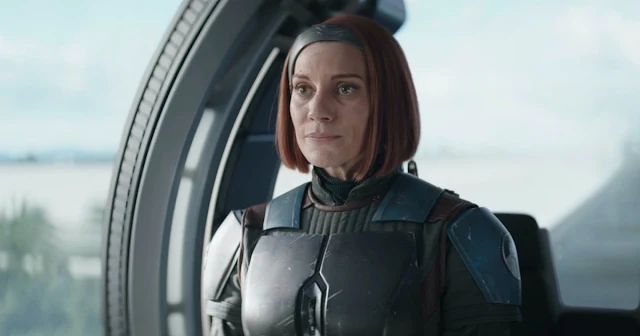
How to read this Mandalore timeline
This timeline uses BBY and ABY dating. BBY means “Before the Battle of Yavin,” the destruction of the first Death Star in A New Hope. ABY means “After the Battle of Yavin.” Some very ancient Mandalorian material exists mainly in Legends continuity, so this article separates that mythic deep history from the cleaner modern canon timeline.
The important canon thread is simple: Mandalore was a warrior world, the Jedi and Mandalorians once fought devastating wars, Tarre Vizsla created the Darksaber, the clans fractured, Duchess Satine tried to make Mandalore peaceful, Death Watch and Maul dragged it back into blood, the Empire nearly erased it, and the New Republic era saw Mandalorians attempt the impossible: return home.
Ancient Mandalore and the Legends shadow
Canon warning: the Taung and Revan-era dates are Legends material
Older Star Wars timelines often begin Mandalorian history with the Taung, Mandalore the First, Mandalore the Indomitable, Revan, and the Mandalorian Wars thousands of years before the Skywalker saga. That material comes from Legends continuity, especially the older expanded universe and Knights of the Old Republic-era storytelling. It remains useful as mythic background, but it should not be presented as firm modern screen canon.
The Taung, Mandalore the First, and the birth of a warrior identity
Legends context Mythic originsIn Legends, Mandalorian culture begins with the Taung, a fierce species associated with the earliest warrior traditions of Mandalore. Their leader, remembered as Mandalore the First, becomes the mythic root of the title “Mandalore,” later used by rulers and warlords who claim authority over the clans.
Even if this material sits outside strict modern canon, it shaped the way fans understand Mandalore: not merely as a planet, but as a title, an inheritance, and a martial identity that can be adopted by many species. That idea still echoes in canon. Mandalorians are not defined only by blood. Foundlings matter. Creed matters. Armour matters. The name is cultural before it is biological.
That is the first great Mandalorian paradox: a culture obsessed with lineage also makes room for adoption. A child can be rescued, raised, armed, and made Mandalorian. Din Djarin’s entire story grows from that ancient idea.
The Mandalorian Wars and the Revan legend
Legends context Old Republic warIn Legends, the Mandalorian Wars become one of the great galactic conflicts of the Old Republic age. Mandalorian Neo-Crusaders push deep into Republic space, and the Jedi Knight Revan defies Jedi caution to fight them. The conflict ends with Mandalorian defeat, but the legend of Mandalore as a civilization capable of challenging the Republic and Jedi becomes permanent.
This older material is still valuable because it explains the mythic scale that surrounds Mandalorian culture. The Mandalorians were never written as simple soldiers. They were built as a rival warrior civilization, a people who could stand opposite the Jedi and make the galaxy tremble. Modern canon keeps the feeling, even when the exact ancient dates remain less defined.
For an article aimed at clean canon, keep this as background mythology rather than the main spine. The canon story of Mandalore now flows most clearly through the Darksaber, Clan Vizsla, Clan Kryze, Death Watch, the Empire, and Din Djarin.
The Darksaber and the canon foundation
Tarre Vizsla becomes the first Mandalorian Jedi
Canon House Vizsla Jedi and MandaloreThe cleanest canon beginning for Mandalorian lore is Tarre Vizsla, the first Mandalorian inducted into the Jedi Order. His existence alone tells you how strange Mandalore’s place in Star Wars really is. The Jedi and Mandalorians are often framed as philosophical opposites: discipline versus passion, peacekeeping versus warrior honour, luminous serenity versus beskar violence. Tarre Vizsla stands at the intersection of those worlds.
His legacy is the Darksaber, a unique black-bladed lightsaber that becomes one of the most important symbols in Mandalorian history. It is not just a weapon. It is a political relic, a cultural wound, and a test of legitimacy. Whoever carries it is never simply armed. They are judged.
The Darksaber matters because it merges Jedi craft with Mandalorian identity. It is the perfect Star Wars object: half sacred relic, half battlefield claim, always asking whether power can truly create unity.
House Vizsla recovers the Darksaber from the Jedi Temple
Canon Darksaber Clan legacyAfter Tarre Vizsla’s death, the Jedi keep the Darksaber in their Temple. Members of House Vizsla later recover it, turning the blade into a Mandalorian symbol of rule. From that point on, the weapon becomes tangled with claims of leadership, clan rivalry, and the dream of a united Mandalore.
The blade’s power is symbolic before it is practical. A lightsaber can cut through enemies. The Darksaber can cut through history. It reminds every Mandalorian that their people once produced a Jedi, then turned his weapon into a crown made of black light.
This is why the Darksaber never behaves like a simple prize. It carries the burden of Mandalorian contradiction: honour and violence, unity and division, tradition and performance.
Mandalore becomes a battlefield of ideology
Canon background Jedi conflictCanon repeatedly points to ancient wars between Mandalorians and Jedi. Those conflicts scar Mandalorian culture and help explain why beskar armour, anti-Jedi tactics, jetpacks, wrist weapons, flamethrowers, cables, and layered combat traditions become so central to Mandalorian identity. They are a people who built themselves to fight impossible enemies.
The clash is also philosophical. The Jedi seek peace through restraint. Mandalorians often seek meaning through struggle. The tragedy is that both traditions understand discipline, sacrifice, and belonging, yet they keep meeting each other across battle lines.
That ancient Jedi-Mandalorian tension gives later moments extra force, especially Grogu’s adoption by Din Djarin. Grogu is a Jedi-trained child raised inside Mandalorian protection. He is a living bridge between cultures that once shattered each other.
The fall of old Mandalore and the pacifist dream
Civil war devastates Mandalore
Canon background Civil warBefore the Clone Wars, Mandalore is already a damaged world. Years of internal conflict leave its surface scarred and its society divided between old warrior factions and the New Mandalorians, a pacifist movement led by Duchess Satine Kryze. That division is not cosmetic. It is the central Mandalorian argument in political form.
Satine’s Mandalore tries to break the cycle. She wants neutrality, diplomacy, and reconstruction. To her enemies, that dream looks like weakness. To her supporters, it is the only way the planet can stop consuming itself. Mandalore is not merely deciding who should rule. It is deciding whether its warrior past is heritage or curse.
Satine’s tragedy is that she is not naive about violence. She understands it too well. Her pacifism is not softness. It is a refusal to let Mandalore keep calling self-destruction honour.
The Clone Wars begin, and Mandalore tries to remain neutral
Clone Wars Neutral systemsWhen the Clone Wars erupt between the Republic and the Separatists, Duchess Satine attempts to keep Mandalore neutral. That neutrality is not cowardice. It is survival policy. Mandalore has already been burned by war. Satine knows that choosing a side may drag her people back into the old furnace.
The problem is that Star Wars rarely lets neutrality remain untouched. The Clone Wars are engineered by Darth Sidious to destabilise the galaxy from every direction. Worlds that try to stay apart are still manipulated, pressured, infiltrated, and exploited. Mandalore becomes one of the clearest examples of how war reaches beyond the battlefield.
This is where Mandalore’s story becomes pure space opera: a pacifist duchess, a warrior sister, a secret extremist faction, a Republic war, Separatist intrigue, Jedi politics, and Sith manipulation all colliding over one wounded planet.
Death Watch rises against Satine
Death Watch Pre Vizsla ExtremismDeath Watch emerges as the militant answer to Satine’s pacifist government. Led by Pre Vizsla, the group wants Mandalore to return to its warrior identity. They see Satine’s New Mandalorians as an insult to history, an attempt to bury the old ways under diplomacy and soft language.
Death Watch is dangerous because it has a point buried inside its fanaticism. Mandalore’s warrior heritage cannot simply be erased. But their solution is rot dressed as tradition. They confuse cultural memory with domination. They want the armour without the moral discipline, the glory without the grief, the old songs without the bodies beneath them.
Bo-Katan Kryze’s early association with Death Watch makes her later arc more interesting. She is not a clean hero from the beginning. She is part of the violence that helps destabilise Mandalore, then spends years trying to reclaim something from the wreckage.
Maul, Satine, and the breaking of Mandalore
Maul builds the Shadow Collective
Darth Maul Shadow Collective Crime syndicatesAfter surviving his defeat on Naboo, Darth Maul returns to galactic history as something more dangerous than a Sith assassin. He becomes a criminal warlord. Through the Shadow Collective, Maul binds crime syndicates, mercenaries, and Death Watch into a political weapon.
Mandalore becomes the perfect prize. It is prestigious, divided, proud, and unstable. Maul understands that conquering a world is not only about troops. It is about humiliation, spectacle, and symbols. If he can take Mandalore, he can hurt Obi-Wan Kenobi, provoke Darth Sidious, and turn a warrior culture into a throne for his revenge.
Maul’s genius is theatrical cruelty. He does not simply kill. He stages pain so it echoes through everyone connected to the victim.
Maul defeats Pre Vizsla and claims the Darksaber
Darksaber Trial by combat Mandalore occupiedMaul’s duel with Pre Vizsla is one of the defining Mandalorian turning points in The Clone Wars. Vizsla believes he can use Maul, then discard him. Maul understands Mandalorian rules well enough to weaponise them. He defeats Vizsla in combat, takes the Darksaber, and claims leadership through the very tradition Death Watch reveres.
Bo-Katan refuses to accept him. That refusal matters. Maul wins according to the brutal logic of combat, but Bo-Katan sees what the blade cannot solve. A non-Mandalorian Sith-trained crime lord can hold the Darksaber, but that does not make him the soul of Mandalore. The weapon can prove strength. It cannot automatically create legitimacy.
This is one of the Darksaber’s central lessons: Mandalorians say the blade can unite them, but the blade repeatedly exposes how divided they are.
Duchess Satine Kryze is murdered
Satine Kryze Obi-Wan Kenobi Mandalorian tragedySatine’s death is one of the most painful moments in Mandalorian history. Maul kills her in front of Obi-Wan Kenobi, turning Mandalore’s political collapse into a personal wound. Satine had tried to save Mandalore from its warrior past. Instead, she dies because old violence, Sith vengeance, and Mandalorian factionalism converge in one room.
The moment matters because Satine represents the path Mandalore almost took. Her death does not prove pacifism failed. It proves Mandalore was trapped between people who needed peace and people who profited from rage. She loses the throne, but her moral argument never fully disappears.
Satine’s legacy haunts Bo-Katan. The sisters represent two failed answers to Mandalore’s crisis: peace without enough force to defend itself, and warrior identity without enough unity to survive itself.
The Siege of Mandalore and the end of the Clone Wars
Bo-Katan asks Ahsoka Tano for help
Ahsoka Tano Bo-Katan Kryze Republic interventionAs Maul’s grip over Mandalore deepens, Bo-Katan turns to Ahsoka Tano. That alliance is loaded with history. Ahsoka is no longer formally a Jedi, but she still carries Jedi discipline, moral clarity, and the loyalty of clone troopers who paint their helmets in her colours. Bo-Katan is a Mandalorian warrior trying to free a world she helped destabilise.
The Siege of Mandalore is therefore not just a battle. It is a convergence. Ahsoka, Bo-Katan, Rex, the 332nd Division, Maul, Mandalorian loyalists, and the collapsing Republic all meet at the edge of Order 66. The old galaxy is dying, but nobody on Mandalore can see the full shape of the death yet.
The tragedy of the Siege is that Mandalore is liberated at almost the exact moment the Republic becomes the Empire. Victory arrives wearing the shadow of a much larger defeat.
Ahsoka duels Maul
Siege of Mandalore Maul Clone Wars finaleThe duel between Ahsoka and Maul is one of the great late-Clone Wars confrontations. Maul is not simply trying to hold a planet. He has sensed the shape of Sidious’s plan. He knows the galaxy is about to turn, and he wants to drag others into his panic. Ahsoka fights him without fully understanding that he is telling the truth through madness.
Maul is captured, and Mandalore is technically won. But the emotional victory is poisoned. Order 66 erupts. The clones turn. The Republic dies. Ahsoka and Rex barely survive. Mandalore’s liberation becomes a footnote in the birth of Imperial tyranny.
The Siege of Mandalore is one of Star Wars’ most operatic tragedies because the heroes win the local battle while history loses the galactic war.
The Empire rises, and Mandalore enters occupation
Imperial era Occupation Clan resistanceAfter the Republic becomes the Galactic Empire, Mandalore’s future darkens. The Empire does not tolerate proud, armed, decentralised warrior cultures unless they can be controlled. Mandalore’s clans, armour, beskar, and warrior traditions make them both useful and dangerous to Imperial power.
Imperial occupation turns Mandalorian identity into a threat. The Empire can use collaborators, divide houses, exploit resources, and punish resistance. Mandalore’s tragedy becomes imperial in the classic Star Wars sense: not only conquest from outside, but corruption from within.
The Empire’s fear of Mandalore makes sense. A united Mandalore would be a nightmare: mobile warriors in beskar, clan loyalty, old grudges, hidden arsenals, and a culture already trained to fight impossible enemies.
Sabine Wren, Rebels, and the Darksaber’s return
Sabine Wren becomes a rebel Mandalorian
Star Wars Rebels Clan Wren RebellionSabine Wren brings Mandalorian history into Star Wars Rebels with a different energy: art, explosives, guilt, rebellion, and clan politics. She is not simply another warrior in armour. She is a Mandalorian artist who has seen her own talents twisted by Imperial power.
Her story expands Mandalore beyond the older images of stern warriors and rigid creeds. Sabine’s armour is colour, defiance, and identity. She proves that Mandalorian culture can be expressive as well as martial. The helmet does not erase the self. In Sabine’s case, it becomes a painted declaration that the Empire does not get to define her.
Sabine is crucial because she turns Mandalorian resistance into visual rebellion. Her armour says what the Empire hates most: identity survived.
Sabine recovers the Darksaber
Darksaber Sabine Wren Legacy weaponWhen Sabine comes into possession of the Darksaber, the weapon’s burden returns. Training with it forces her to confront family shame, Imperial complicity, and the pain she has tried to outrun. The blade does not merely test her skill. It pulls truth out of her.
That is what the Darksaber keeps doing across Star Wars. It exposes the gap between the story Mandalorians tell about themselves and the wounds they refuse to face. For Sabine, wielding the blade means admitting what the Empire made of her gifts, then choosing what she will become instead.
Sabine’s Darksaber arc is one of the best examples of Star Wars using a weapon as emotional architecture. The fight is internal before it is political.
Sabine gives the Darksaber to Bo-Katan Kryze
Bo-Katan Kryze Clan unity RebelsSabine ultimately passes the Darksaber to Bo-Katan Kryze, who accepts it as a symbol around which Mandalorian clans might unite against Imperial rule. The moment is hopeful, but later events make it more complicated. Bo-Katan receives the blade rather than winning it in combat, and that detail becomes part of the later mythology around her failure.
This is where Mandalorian symbolism becomes merciless. A practical alliance may make sense in the moment, but cultures built around ritual do not always forgive shortcuts. The Darksaber can gather clans, but if belief in the blade falters, unity becomes fragile.
Bo-Katan’s acceptance of the Darksaber in Rebels becomes the ghost behind her later crisis in The Mandalorian. She had the symbol, but symbol alone could not save Mandalore.
The Great Purge and the Night of a Thousand Tears
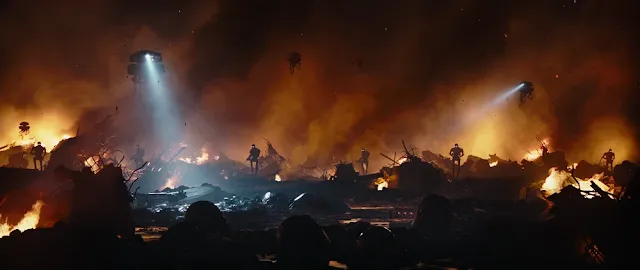
The Empire launches the Great Purge of Mandalore
Great Purge Night of a Thousand Tears Imperial genocideThe Great Purge is the catastrophe that defines modern Mandalorian history. The Empire devastates Mandalore, bombs its cities, seizes beskar, and scatters the survivors. The Night of a Thousand Tears becomes the phrase that carries the horror of it: a civilization reduced to ash, memory, and hiding.
The Purge is more than military defeat. It is cultural attempted murder. The Empire understands that Mandalore’s strength is not only its armies. It is its identity. Armour can be stolen. Cities can be glassed. But creeds, songs, clan names, foundling traditions, and stubborn memory are harder to kill.
This event explains the secrecy of Din Djarin’s covert, the scarcity of beskar, the bitterness of Bo-Katan, the myth of a cursed Mandalore, and the desperation behind the dream of return.
Mandalorian survivors scatter into exile
Exile Coverts The WayAfter the Purge, Mandalorians survive in fragments. Some live in hidden coverts. Some become mercenaries. Some remain loyal to clan traditions. Some abandon hope. Some, like the Children of the Watch, cling to stricter interpretations of Mandalorian identity, including the rule that the helmet must not be removed before others.
Exile changes culture. What may have once been one tradition among many becomes, for some survivors, the only thing standing between them and extinction. This is why Din Djarin’s creed has such emotional force. It is not merely religious rigidity. It is survival ritual.
The helmet rule is more interesting when read through trauma. After genocide, secrecy becomes sacred. The face disappears so the people can endure.
Din Djarin, Grogu, and the New Republic era
Din Djarin is rescued and raised as a foundling
Din Djarin Foundling Children of the WatchDin Djarin’s origin is central to modern Mandalorian lore. He is not born on Mandalore. He is rescued as a child and raised as a foundling by Mandalorians. That single fact cuts through simplistic ideas of Mandalorian bloodline. Din is Mandalorian because he is taken in, trained, armoured, and bound to the Way.
This makes him one of the best expressions of Mandalorian culture. He is both outsider and insider. He carries Mandalore as creed rather than geography. When he later adopts Grogu, he repeats the act that saved him. Mandalorian identity survives through rescue.
Din’s story proves that Mandalore is not only a homeworld. It is a promise made to the abandoned: you are not alone now.
Din Djarin finds Grogu
The Mandalorian Grogu New Republic eraIn the early New Republic era, Din accepts a bounty that leads him to Grogu, a Force-sensitive child pursued by Imperial interests. The job should be simple. Capture the asset. Deliver the quarry. Take the beskar. Instead, Din breaks the transaction and begins the relationship that changes modern Star Wars.
Grogu’s importance goes beyond cuteness or species mystery. He is a survivor of Jedi destruction protected by a survivor of Mandalorian destruction. A child of the fallen Jedi finds safety with a child of Mandalorian rescue. Their bond quietly heals an ancient wound between two traditions that once warred with each other.
This is why the Mandalorian and Baby Grogu relationship is not side-story sentiment. It is Star Wars mythology in its simplest form: a warrior chooses mercy, and the galaxy shifts.
Din and Grogu are the New Republic era’s most elegant symbolic pairing: beskar and the Force, creed and innocence, trauma and adoption, Mandalore and Jedi memory.
Din wins the Darksaber from Moff Gideon
Moff Gideon Darksaber Imperial remnantDin’s battle with Moff Gideon ends with Din holding the Darksaber, almost by accident. That is perfect Star Wars irony. The man least interested in ruling Mandalore suddenly carries the one weapon that might make others see him as a claimant.
For Bo-Katan, the moment is devastating. She cannot simply take the weapon from Din without undermining the ritual significance attached to it. For Din, the blade is awkward, heavy, and unwanted. For Mandalore, it is another sign that leadership cannot be solved by mythology alone.
The Darksaber repeatedly falls into the hands of people who reveal its limits. It can mark leadership, but it cannot create wisdom. It can rally clans, but it cannot heal distrust by itself.
Grogu chooses Din over the Jedi path
Grogu Luke Skywalker AttachmentGrogu’s choice to return to Din after training with Luke Skywalker is one of the most important character decisions in the New Republic era. It does not mean the Jedi path is meaningless. It means Grogu’s identity cannot be reduced to inherited Force tradition. He has already survived one institutional collapse. He chooses the person who became home.
This choice reframes the old Jedi anxiety around attachment. Grogu’s attachment to Din is not possessive corruption. It is safety, trust, and belonging. Star Wars has spent decades asking whether love leads to fear. Grogu’s story asks whether love can also repair fear.
Grogu’s future may be neither purely Jedi nor purely Mandalorian. That is the point. He is a new synthesis, a foundling of two ruined traditions.
The return to Mandalore
Din enters the Living Waters beneath Mandalore
Mandalore Living Waters RedemptionDin’s journey to the Living Waters beneath Mandalore begins as a quest for redemption. He has removed his helmet before others and seeks restoration according to the creed of his people. What he finds is larger than personal absolution. Mandalore is not poisoned beyond return. Its ruins are dangerous, but alive. Its myths are not dead.
The Living Waters matter because they turn Mandalore from a tomb into a baptismal space. Din goes below the surface of a ruined planet and discovers that culture can survive beneath catastrophe. Mandalore is broken, but not empty.
The descent into the mines is mythic structure: the warrior enters the underworld, faces the truth beneath the ruin, and returns with knowledge that can change the people above.
Bo-Katan sees the Mythosaur
Mythosaur Bo-Katan Kryze Ancient symbolBo-Katan’s vision of the Mythosaur beneath Mandalore is one of the most important symbolic moments in the planet’s modern story. The Mythosaur is not just a creature. It is the old emblem of Mandalorian power, a symbol that belongs to their deepest past. Seeing it alive beneath the ruins suggests that Mandalore’s ancient strength has not vanished.
For Bo-Katan, the moment is spiritual before it is political. She has spent years carrying failure: Satine’s death, Maul’s occupation, Imperial devastation, the loss of the Darksaber, the scattering of her people. The Mythosaur does not erase that history. It tells her the story is not over.
The Mythosaur is Mandalore’s buried heartbeat. Its survival means the planet is not merely a battlefield to reclaim. It is a living myth waiting to rise.
Bo-Katan regains the Darksaber’s meaning
Darksaber Clan unity LeadershipBo-Katan’s return to leadership is not a simple coronation. It is a reckoning. She has already held the Darksaber before. She has already failed. This time, her claim must be rooted in more than possession. It must come through trust, action, and the recognition of Mandalorians who have every reason to doubt old leaders.
Din’s role is crucial because he does not seek power. That makes his support meaningful. He sees Bo-Katan not merely as a noble claimant, but as someone capable of uniting scattered people. The Darksaber’s symbolism shifts from ego to service.
This is one of the strongest leadership ideas in The Mandalorian: the person worthy of power may be the one who has already been broken by wanting it for the wrong reasons.
Moff Gideon returns to Mandalore
Moff Gideon Imperial remnant Beskar commandosMoff Gideon’s return to Mandalore reveals the Empire’s deeper obsession with Mandalorian power. Gideon does not simply want to defeat Mandalorians. He wants to appropriate them. Beskar armour, cloning ambition, Imperial discipline, and Mandalorian aesthetics all merge in his project. It is cultural theft disguised as military innovation.
That makes Gideon the perfect enemy for this stage of the timeline. The Empire tried to erase Mandalore, then tried to wear its skin. This is how authoritarian power works in Star Wars: destroy what resists you, then steal whatever made it strong.
Gideon’s Mandalorian-styled Imperial forces are a nightmare image: Mandalore without soul, armour without creed, strength without kinship.
The Darksaber is destroyed
Darksaber destroyed Symbolism End of an eraWhen the Darksaber is destroyed, Mandalorian history reaches a stunning symbolic break. The blade that once promised unity is gone. For a culture so tied to relics, lineage, and ritual legitimacy, that destruction could feel like catastrophe. Instead, it may be liberation.
The destruction of the Darksaber forces Mandalorians to answer a harder question: can they unite without a weapon telling them who to follow? If the blade was meant to symbolise Mandalore, then its loss means Mandalore must become something larger than an object.
This is the most radical thing modern Star Wars has done with Mandalorian lore. It breaks the crown and asks whether the people can finally become the kingdom.
Mandalore is reclaimed
Retaking Mandalore Bo-Katan Kryze Din Djarin GroguThe retaking of Mandalore is not merely a military victory. It is a cultural resurrection. Bo-Katan, Din Djarin, Grogu, the Armorer, the Children of the Watch, Nite Owls, and scattered survivors become part of the same fragile future. People who once distrusted each other stand on the same ruined ground and choose return.
Grogu’s role is easy to overlook because he is small, silent, and often framed through innocence. But his protection of Din and Bo-Katan during the battle matters deeply. A Jedi-trained foundling helps preserve Mandalorian leadership on the reclaimed homeworld. The ancient wound between Jedi and Mandalorians is not solved through treaty. It is healed, briefly, by a child raising a shield.
That image is pure Star Wars: the future of Mandalore protected not by the Darksaber, but by Grogu’s open hands.
After the return: Mandalore’s future
Din formally adopts Grogu
Din Grogu Foundling tradition FamilyDin formally adopting Grogu gives the foundling tradition its most important modern expression. Grogu becomes Din Grogu, not because bureaucracy says so, but because the relationship that has driven the series finally receives cultural recognition. The child is not cargo. He is not a bounty. He is not a Jedi asset. He is family.
This moment loops Din’s life back to its origin. He was rescued and made Mandalorian. Now he rescues and raises another. Mandalorian culture survives not only through battle, but through adoption. That is the emotional core that makes the whole timeline matter.
The future of Mandalore may depend less on who holds a blade and more on who protects the next foundling.
Bo-Katan faces the harder task: rebuilding
Reconstruction Clan politics Mandalorian futureWinning Mandalore back is only the first step. Rebuilding it may be harder. The surviving clans carry different traditions, resentments, rituals, and memories. Some followed the Watch. Some followed Bo-Katan. Some survived in exile. Some may not want to return to old hierarchies. A reclaimed planet does not instantly create a unified people.
Bo-Katan’s next challenge is not proving she can fight. That has never been in doubt. Her challenge is proving Mandalore can become more than a cycle of charismatic warriors, broken relics, civil wars, and revenge. She must build a future that honours the armour without worshipping the wound.
This is the great unanswered Mandalore question: can a warrior culture learn to live without needing war to remember who it is?
Din and Grogu carry Mandalorian lore back to the big screen
The Mandalorian and Grogu Star Wars film era New RepublicThe Mandalorian and Grogu carries this entire history into the theatrical Star Wars future. The film does not need to retell every Mandalorian war to inherit their weight. Every piece of Din’s armour carries that history. Every choice he makes with Grogu tests whether Mandalorian identity can become something more than survival after massacre.
The power of the film era lies in that intimacy. Star Wars can be operatic without always centring dynasties and emperors. Mandalore gives the galaxy another kind of epic: a people scattered by genocide, a lost homeworld waiting under glassed ruins, a warrior who becomes a father, and a child who may unite histories that once seemed impossible to reconcile.
That is why the themes of The Mandalorian and Grogu matter beyond one adventure. They are the latest movement in a much older song: creed, exile, return, and the stubborn hope that a broken people can still choose what they become.
Mandalore’s story has always been bigger than one ruler. It is a saga of people trying to turn armour back into home.
Key Mandalorian timeline at a glance
| Era / Date | Event | Why it matters |
|---|---|---|
| Ancient era | Tarre Vizsla becomes the first Mandalorian Jedi | Creates the Jedi-Mandalorian bridge that leads to the Darksaber. |
| Ancient era | The Darksaber becomes a Mandalorian symbol of rule | Turns one weapon into a political and cultural test of leadership. |
| Before 22 BBY | Mandalorian civil wars scar the planet | Sets up Satine’s pacifist government and Death Watch’s backlash. |
| 22 BBY | The Clone Wars begin | Mandalore tries to remain neutral while the galaxy collapses into war. |
| Around 20 BBY | Maul takes control of Mandalore | Turns Mandalore into the centre of Sith revenge, criminal power, and clan fracture. |
| 19 BBY | The Siege of Mandalore | Ahsoka and Bo-Katan defeat Maul as the Republic falls into the Empire. |
| Imperial era | Sabine Wren recovers and later gives away the Darksaber | Hands Bo-Katan a symbol of unity that later becomes tied to failure and exile. |
| Before 9 ABY | The Great Purge devastates Mandalore | Scatters the clans, makes beskar scarce, and turns Mandalore into a haunted ruin. |
| 9 ABY | Din Djarin finds Grogu | A Mandalorian foundling protects a Jedi survivor, healing ancient symbolic wounds. |
| Around 11 ABY | Mandalore is reclaimed | Bo-Katan, Din, Grogu, and the clans begin the long work of return. |
What Mandalore means in Star Wars
Mandalore matters because it gives Star Wars a culture that can stand beside the Jedi, Sith, Republic, Empire, and Rebellion without being swallowed by any of them. Mandalorians are not purely heroes. They are not purely villains. They are a people with glory in their songs and blood on their hands, capable of rescue and cruelty, loyalty and civil war, tenderness and fanaticism.
Their history is epic because it refuses to stay clean. Tarre Vizsla turns a Jedi weapon into a Mandalorian crown. Satine tries to make peace out of a warrior world and dies for it. Maul takes Mandalore by understanding its rules too well. Ahsoka wins a siege while the Republic dies behind her. Sabine paints rebellion onto armour. Bo-Katan loses a planet, loses a symbol, and still returns. Din Djarin, who was not born Mandalorian, becomes one of the culture’s purest expressions by adopting Grogu as he was once adopted.
That is the space opera grandeur of Mandalore. It is not only a planet. It is a saga of creed and contradiction, a world where history keeps asking whether armour is a prison, a promise, or the last thing holding a broken people together.
The history of Mandalore is one of Star Wars’ great secondary epics: ancient Jedi wars, the Darksaber, Duchess Satine’s doomed peace, Maul’s conquest, the Siege of Mandalore, the Great Purge, Din Djarin’s foundling creed, Grogu’s adoption, and Bo-Katan’s return. It is the story of a people who lose their planet, their sword, their unity, and nearly their future, then still gather in the ruins and call it home.

_poster.jpg)


