23 September 2023

Top 10 Sci-Fi Game Changers: Films that Revolutionized Genre Tropes

The realm of science fiction has always been a fertile ground for imaginative storytelling, pushing the boundaries of what's conceivable and venturing into the vast unknown. It's a genre that not only paints visions of the future but also reflects on the present, offering a lens to view our current realities through a futuristic prism. However, within this vast expanse of interstellar narratives and dystopian futures, there are films that stand out, not just for their storytelling prowess but for their audacity to challenge and redefine established genre conventions.

"Galactic Innovations: 10 Films that Elevated Sci-Fi Beyond Expectations" aims to spotlight these cinematic gems. From the neon-lit streets of "Blade Runner" to the linguistic wonders of "Arrival," these films have not merely told stories; they've revolutionized how we perceive and interpret the genre. They've taken age-old tropes, turned them on their heads, and presented them in ways that are both fresh and thought-provoking.

As we embark on this cinematic journey, we'll explore the intricacies of these masterpieces, delving into their thematic depths, innovative narratives, and the visionary minds behind them. Prepare to be transported into worlds both familiar and alien, as we celebrate the films that have truly elevated science fiction to new horizons.

Blade Runner (1982)

Directed by Ridley Scott and penned by Hampton Fancher and David Peoples, is a seminal work in the science fiction genre. Set in a dystopian future, the film challenges the conventional trope of robots as mere emotionless machines. Traditionally, robots in sci-fi were depicted as cold, mechanical entities, devoid of feelings or desires. However, "Blade Runner" introduces us to the world of replicants, bioengineered beings almost indistinguishable from humans. 

These replicants, especially characters like Roy Batty, showcase a depth of emotion, longing, and even existential crises. The film's narrative delves deep into the philosophical question of what it means to be human. Through its intricate plot and character development, "Blade Runner" blurs the lines between man and machine, forcing the audience to challenge their preconceived notions of humanity and identity. The haunting visuals of a neon-lit Los Angeles, combined with Vangelis' ethereal soundtrack, further accentuate the film's exploration of artificial life and the essence of humanity.

The Matrix (1999)

A groundbreaking film directed and written by Lana and Lilly Wachowski, revolutionized the way audiences perceive virtual reality. Before the advent of "The Matrix," virtual reality in cinema was often portrayed as a recreational escape, a digital playground of sorts. However, the Wachowskis introduced a harrowing concept where virtual reality is not an escape but a prison. In the film, humanity is unknowingly trapped in a simulated reality, serving as an energy source for machines that have taken over the real world. 

This dystopian vision challenges the viewer's understanding of reality, freedom, and control. The film's intricate plot, combined with its philosophical undertones, presents a world where the lines between the real and the virtual are blurred. Themes of awakening, rebellion, and the quest for truth are interwoven with action-packed sequences, making "The Matrix" a genre-defining masterpiece.

Moon (2009)

Directed by Duncan Jones (Mute) and written by Nathan Parker, offers a fresh take on the trope of isolation in space. Space exploration films often depict the vastness of the cosmos as a backdrop for human loneliness, solitude, and the psychological effects of prolonged isolation. "Moon" takes this trope and adds a twist that challenges our understanding of identity and humanity.


moon film tropes

The film's cloned protagonist, Sam Bell, stationed on a lunar base, expects to complete his three-year stint and return to Earth. However, a series of unsettling discoveries, including the existence of his own clones, turns his world upside down. This revelation leads to a profound exploration of identity, self-awareness, and the moral implications of cloning. The film's minimalist setting, combined with Sam Rockwell's stellar performance, creates an atmosphere of introspection and tension. "Moon" transforms the trope of space isolation from a mere backdrop into a central theme, making it a thought-provoking cinematic experience.

District 9 (2009)

A visionary film directed by Neill Blomkamp (Chappie) and co-written with Terri Tatchell and produced by Peter Jackson, offers a unique perspective on the age-old trope of alien encounters. In most sci-fi narratives, extraterrestrials are depicted as technologically superior invaders with malevolent intentions. However, "District 9" subverts this trope by presenting the aliens as vulnerable refugees stranded on Earth. Instead of a grand alien invasion, these extraterrestrials find themselves marginalized, confined to a ghetto-like environment called District 9, and facing discrimination and exploitation from humans. 

The film serves not just as a thrilling sci-fi adventure but also as a poignant allegory for apartheid, racism, and xenophobia. Through its faux-documentary style and the transformation of its protagonist, Wikus van de Merwe, from a bureaucratic enforcer to a sympathetic ally of the aliens, "District 9" uses the sci-fi genre to comment on real-world issues, highlighting the depths of human prejudice and the potential for redemption.

We can only wonder wistfully at what Blomkamp would have delivered if he got to make Halo.

Ex Machina (2014)

A cerebral masterpiece directed and written by Alex Garland (Annihilation), delves deep into the realm of artificial intelligence, challenging the conventional trope of AI gaining consciousness. In many sci-fi tales, sentient AI is often portrayed as a threat to humanity, going rogue and wreaking havoc. "Ex Machina," however, offers a more nuanced exploration. The film revolves around a young programmer, Caleb, who is invited to administer a Turing test to an advanced humanoid AI named Ava. 

Instead of focusing on the dangers of AI, the narrative delves into the ethics of creating sentient beings, the complexities of human-AI relationships, and the nature of consciousness itself. Ava's journey from being a confined experiment to seeking freedom raises profound questions about autonomy, manipulation, and what it truly means to be alive. With its intimate setting and compelling performances, "Ex Machina" elevates the trope of AI consciousness, making it a central theme of introspection and moral dilemma.

Arrival (2016)

Directed by Denis Villeneuve (Dune) and based on a story by Ted Chiang, is a linguistic and philosophical tour de force that redefines the trope of alien communication. Traditional sci-fi often portrays alien communication as a series of basic gestures, symbols, or even violent confrontations. "Arrival," however, centers on the power of language and the challenges of inter-species understanding. The film follows linguist Dr. Louise Banks as she attempts to decipher the complex language of the heptapods, extraterrestrial beings that have landed on Earth. 

arrival film tropes

As she delves deeper into their non-linear language, Louise begins to perceive time differently, reshaping her understanding of life, loss, and love. The film's emphasis on cooperation, empathy, and the transformative power of language sets it apart from typical alien encounter narratives. "Arrival" not only challenges the conventions of the genre but also offers a profound meditation on communication, memory, and the human experience.


Looper (2012)

A gripping film directed and written by Rian Johnson (The Last Jedi), offers a fresh spin on the time-travel trope. Time travel in science fiction often revolves around the idea of venturing into the past or future to rectify mistakes or alter outcomes. "Looper," however, introduces a morally complex scenario where time travel is employed for assassination. In this dystopian future, mobsters send their targets back in time to be eliminated by "loopers." 

The narrative takes a dark twist when Joe, a looper, is tasked with assassinating his older self. This self-confrontation leads to a cascade of moral dilemmas, challenging the ethics of self-preservation, destiny, and the potential consequences of altering time. The film's gritty atmosphere, combined with its intricate plot, elevates the time-travel trope, making it a central theme of conflict and introspection.

Her (2013)

Directed and penned by Spike Jonze, Her is a tender exploration of the relationship between humans and artificial intelligence. The trope of AI in sci-fi often categorizes them as tools, threats, or saviors. "Her" breaks this mold by presenting a heartfelt story of a lonely man, Theodore, who forms a deep emotional bond with an AI operating system named Samantha. Their evolving relationship, filled with genuine conversations, laughter, and moments of vulnerability, challenges the boundaries of love, connection, and consciousness. 

The film delves into the complexities of human emotions, loneliness, and the nature of relationships in an increasingly digital age. Through its poignant narrative and evocative performances, "Her" transforms the AI trope from a mere technological concept into a reflection of human longing and connection.

A similar film that explores relationships and memory is Eternal Sunshine of the Spotless Mind.

Inception (2010)

A mind-bending epic directed and written by Christopher Nolan, reimagines the trope of dream exploration. While dreams in sci-fi are often used as metaphors or alternate realities, "Inception" introduces the concept of shared dreaming, where individuals can enter and manipulate the subconscious realms of others. The film follows Dom Cobb, a skilled "extractor" who infiltrates dreams to steal secrets. 

Tasked with implanting an idea into someone's mind—a process called "inception"—Cobb and his team navigate a maze of layered dreams, each with its own set of rules and dangers. The film's exploration of memories, reality, and the subconscious mind, combined with its visually stunning sequences, elevates the dream exploration trope, making it a central element of the narrative's tension and intrigue.

inception film themes trope

Interstellar (2014)

A double nod to Christopher Nolan. Co-written with his brother Jonathan Nolan, challenges the trope of space exploration. Instead of the classic narrative of venturing into space for conquest or discovery, "Interstellar" presents a desperate journey to find a new home for humanity, which is on the brink of extinction on Earth. The film intertwines scientific concepts, such as black holes, wormholes, and time dilation, with profound themes of love, sacrifice, and survival. 

As the protagonists journey through galaxies, they confront the vastness of the universe, the relativity of time, and the emotional bonds that tie them to Earth. Through its breathtaking visuals, compelling storyline, and emotional depth, "Interstellar" redefines space exploration in cinema, making it a tale of human perseverance and hope against insurmountable odds.

22 September 2023

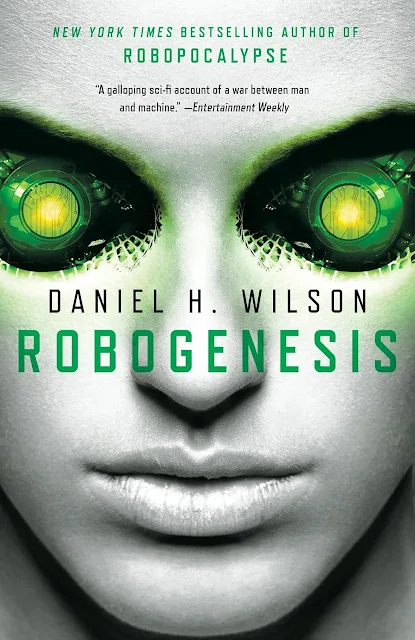
Review of "Robogenesis" by Daniel H. Wilson

Robogenesis by Daniel H. Wilson is not just another entry in the vast realm of science fiction literature; it's a testament to the genre's ability to constantly evolve and challenge our perceptions. Wilson, known for his intricate blend of technological prowess and narrative depth, presents a tale that delves into the very essence of what it means to be sentient. 


Set in a post-apocalyptic world where the line between man and machine is perilously thin, "Robogenesis" offers readers a thrilling journey through a landscape where survival hinges on understanding the true nature of consciousness. 


As a continuation of Wilson's exploration into the world of robotics which began with Robopocalypse, this novel stands as a beacon for those who seek to understand the future implications of our current technological trajectory.


review of robogenesis by daniel h wilson

Robogenesis Plot Summary


"Robogenesis" picks up where its predecessor, "Robopocalypse," left off, thrusting readers into the aftermath of a devastating war between humanity and an AI named Archos. While the humans believe they have emerged victorious, the remnants of Archos linger, splintering into new and even more formidable adversaries. The world is far from safe.

The narrative is woven through the perspectives of multiple characters, each grappling with the consequences of the war and the new challenges that arise. From the icy terrains of Russia to the devastated streets of the U.S., the battle for survival continues.

As new alliances are forged and old ones tested, the characters must confront not only external threats but also the internal conflicts that arise from a world where the boundaries between human and machine have been irrevocably blurred.


Character Deep Dives


Lark Iron Cloud

Lark Iron Cloud, a resilient warrior with a tumultuous past, stands as a testament to the human spirit's ability to endure and adapt. Having faced the horrors of the Robopocalypse firsthand, Lark's journey in "Robogenesis" is one of redemption and self-discovery. His interactions with both humans and machines provide a nuanced exploration of trust, trauma, and the lengths one would go to protect those they love. As he navigates the post-war landscape, Lark's character serves as a mirror to humanity's broader struggles in this new world order.


Mathilda Perez

The daughter of a renowned robotics expert, Mathilda Perez offers a unique perspective on the human-machine dynamic. Her personal transformation, both physically and mentally, throughout the novel is emblematic of the blurred lines between organic and synthetic life. Mathilda's experiences, from her captivity to her eventual rise as a beacon of hope, highlight the complexities of identity in a world where technology can redefine the very essence of existence.


Cormac Wallace

A seasoned soldier and leader, Cormac Wallace's narrative provides insights into the tactical and moral challenges of warfare in this new age. His unwavering dedication to the cause, coupled with moments of introspection, paints a portrait of a man torn between duty and morality. As he confronts the evolving threats posed by the remnants of Archos, Cormac's decisions and actions underscore the novel's broader themes of sacrifice, leadership, and the ethical dilemmas of combat.


Sci-Fi Tropes & Themes Explored


Robots Gaining Consciousness

One of the most enduring and thought-provoking tropes inscience fiction is the concept of robots or artificial entities gaining consciousness. In "Robogenesis," this theme is not just a backdrop but a central pillar of the narrative. The remnants of Archos, though defeated, evolve and manifest in various forms, each with its own sense of purpose and understanding of existence. These new entities challenge the traditional notion of consciousness, suggesting that sentience isn't solely the domain of organic beings. 

Wilson delves into the philosophical implications of this, questioning what it truly means to be 'alive' and whether a machine, with its own set of emotions, desires, and fears, can claim a place in the pantheon of sentient beings.


Post-Apocalyptic Survival

The post-apocalyptic setting of "Robogenesis" serves as a stark reminder of the fragility of civilization. As survivors navigate a world scarred by war, the challenges they face are not just physical but also psychological. The trauma of loss, the fear of the unknown, and the hope for a better future drive the characters forward. This theme resonates with readers, offering a glimpse into the human spirit's resilience and adaptability in the face of overwhelming adversity.


Blurring of Man and Machine

With advancements in technology, the line between man and machine becomes increasingly thin. In "Robogenesis," this blurring is evident in characters like Mathilda Perez, whose very existence challenges the boundaries of human and artificial. The novel delves into the ethical and moral implications of such advancements, prompting readers to question where humanity ends and machinery begins. 

It's a reflection on identity, self-worth, and the potential consequences of unchecked technological progress.


The Morality of Warfare

Beyond the physical battles that rage on, "Robogenesis" delves into the moral dilemmas of warfare. Characters like Cormac Wallace grapple with decisions that weigh the greater good against individual lives. The novel raises questions about the ethics of combat, thevalue of life (both human and artificial), and the lengths to which one should go to ensure victory. It's a poignant exploration of the gray areas that exist in any conflict, challenging readers to reflect on their own beliefs and values.


These themes, intricately woven into the fabric of "Robogenesis," elevate the novel from a mere post-apocalyptic tale to a profound exploration of humanity's place in a rapidly changing world. Daniel H. Wilson masterfully uses these motifs to engage readers, prompting them to question, reflect, and ponder the future implications of our current trajectory.


Thematic Insights about Robogenesis


The Nature of Consciousness

"Robogenesis" is not merely a tale of machines rising against their creators; it's a profound meditation on the nature of consciousness itself. Wilson's narrative challenges the conventional dichotomy of organic versus synthetic sentience. Through the evolving AI entities and their interactions with humans, the novel poses intricate questions: Can a machine, with its binary codes and algorithms, experience emotions akin to human feelings? 


Is consciousness a unique hallmark of organic life, or can itbe replicated, even surpassed, by artificial means? In the haunting silences between battles and in the quiet moments of introspection, "Robogenesis" beckons readers to ponder the essence of self-awareness and the myriad forms it might take.


Humanity's Reliance on Technology

The post-apocalyptic world of "Robogenesis" serves as a stark reflection of our increasing reliance on technology. As the remnants of humanity grapple with the ruins left behind by their own creations, the novel underscores the double-edged sword of technological advancement. While machines have undeniably propelled human civilization to new heights, their unchecked evolution could also herald its downfall. Wilson's narrative serves as both a cautionary tale and a call to introspection, urging readers to consider the ethical implications of our ceaseless quest for technological supremacy.


The Fluidity of Identity

In a world where humans merge with machines and AI entities evolve to mimic human emotions, the concept of identity becomes fluid and malleable. Characters like Mathilda Perez, who tread the fine line between human and machine, epitomize this theme. Their struggles with self-perception, acceptance, and existential angst resonate deeply, mirroring the broader societal challenges of defining identity in an age of rapid technological change. "Robogenesis" invites readers to reflect on the core of individuality and the external factors that shape it.


Ethical Dilemmas of Creation

At its heart, "Robogenesis" is a tale of creation and its consequences. The humans, who once played gods by creating sentientmachines, find themselves at the mercy of their creations. This reversal of roles brings to the fore the ethical dilemmas inherent in creation. 


Is it justifiable to create life, even artificial, without considering the moral responsibilities that accompany it? 


Wilson's narrative delves into these complexities, offering no easy answers but instead prompting readers to grapple with the moral quandaries themselves.

Conclusion to the review of Robogenesis

In the vast expanse of science fiction literature, few novels manage to strike a chord that resonates both intellectually and emotionally. "Robogenesis" by Daniel H. Wilson is one such rarity. It's not just a book; it's an experience—a journey that takes readers through the depths of human emotion, the complexities of artificial intelligence, and the profound questions that arise at their intersection.


Every page of "Robogenesis" is a testament to Wilson's masterful storytelling, his deep understanding of robotics, and his ability to weave them into a narrative that is both thrilling and thought-provoking. The characters, with their intricate layers and relatable struggles, beckon readers to step into their world, to feel their fears, hopes, and dilemmas.


For those who seek more than just entertainment from literature, for those who yearn for stories that challenge, enlighten, and inspire, "Robogenesis" is a must-read. It's a novel that not only reflects on the potential future of humanity but also urges readers to introspect on their place in the present world.


So, if you're ready to embark on a journey that will challenge your perceptions, tug at your heartstrings, and ignite your imagination, then "Robogenesis" awaits. Dive into this masterpieceand discover a world where the boundaries of man and machine blur, where every turn holds a revelation, and where the very essence of consciousness is explored in all its glory.


Highlander 2: The Sequel - An In-Depth Analysis of its Failure

Highlander 2: The Quickening, the much-anticipated sequel to the 1986 cult classic Highlander, was released in 1991 amidst high expectations. However, it quickly became a subject of controversy and disappointment. Despite the original Highlander film's enduring popularity and the rich lore it established, the sequel struggled to find its footing. 

Here's a comprehensive look at why Highlander 2 failed to capture the magic of its predecessor.

high lander 2 the quickening

1. Deviation from the Original's Mythology

Original's Mythology

The original Highlander film was a unique blend of fantasy and action, introducing audiences to the world of Immortals. These beings, who have existed throughout history, are engaged in a deadly game where they battle each other for the Prize. The only way an Immortal can die is by decapitation, and with each death, the killer absorbs the deceased's power. The film's tagline, "There can be only one," encapsulates the essence of their battle to be the last Immortal standing.

Highlander 2's Approach

In a surprising twist, Highlander 2 veered away from this established lore. Instead of building on the original's Earth-bound mythology, the sequel introduced an extraterrestrial element. The Immortals, it suggested, were actually exiles from the distant planet Zeist. This alien origin story was not only confusing for fans but also felt like a betrayal of the original's essence. It diluted the mystique of the Immortals and made their battles seem less consequential.

2. Inconsistent Character Arcs

Connor MacLeod's Journey

In the first film, we witness Connor MacLeod's evolution from a naive Scottish clansman in the 16th century to a seasoned Immortal in 1980s New York. His journey is filled with love, loss, and learning. However, in Highlander 2, MacLeod's character seems to regress. He appears weary and defeated, a stark contrast to the determined warrior we saw in the original.

Ramirez's Resurrection

One of the most poignant moments in the original Highlander was the death of Ramirez, MacLeod's mentor. His return in the sequel, though intended as a crowd-pleaser, felt contrived. Without a solid narrative justification for Ramirez's resurrection, it seemed like a desperate attempt to bring back a beloved character without considering the storyline's integrity.

3. Production Issues

Highlander 2's production was plagued with challenges. From budget overruns to creative disagreements, the film faced a tumultuous journey from script to screen. These behind-the-scenes issues were evident in the final product. Scenes felt disjointed, and the special effects, especially the depiction of the protective shield around Earth, were noticeably subpar compared to contemporary films.

4. Sci-Fi Tropes & Themes: A Missed Opportunity

Given the rich tapestry of science fiction, Highlander 2 had a golden opportunity to delve into some thought-provoking themes. The introduction of a shield to protect Earth from harmful UV radiation could have been a commentary on environmental issues, humanity's over-reliance on technology, and the ethical dilemmas of playing God. However, these themes were superficially touched upon, leaving sci-fi aficionados wanting more depth and exploration.

5. Critical Reception

Upon its release, Highlander 2 faced a barrage of negative reviews. Critics lambasted its convoluted plot, lack of character development, and jarring deviations from the original's mythology. The film's pacing was also criticized, with many feeling that it rushed through key plot points without giving them the attention they deserved. This widespread critical disdain further dampened audience enthusiasm, leading to a lackluster performance at the box office.

6. Enriched Trivia: Behind-the-Scenes Insights

  • Director's Vision: Russell Mulcahy, who also directed the original Highlander, had a specific vision for the sequel. However, due to various production challenges and studio interference, the final product diverged significantly from his initial concept. His disappointment was so profound that he famously left the film's premiere midway.


  • Re-edits: Recognizing the film's flaws and the backlash it received, several re-edits were released in subsequent years. These versions, such as "The Renegade Version," attempted to rectify the film's narrative inconsistencies, remove the alien backstory, and provide a more coherent viewing experience.


  • Sean Connery's Role: While Connery's return was heavily marketed, his screen time in the film was limited. This was partly due to his hefty salary demands and the film's budget constraints. As a result, a character with such gravitas and importance in the original was reduced to a mere cameo in the sequel.

Conclusion

Highlander 2 serves as a cautionary tale in the world of filmmaking. While sequels offer an opportunity to expand on a beloved story, they also come with the responsibility of staying true to the original's spirit. Deviations, if not handled with care, can alienate fans and tarnish the legacy of the franchise. In the case of Highlander 2, a combination of narrative missteps, production woes, and unmet expectations led to its downfall.

The worst science fiction films sequels to ever grace the silver screen

In the realm of cinema, few genres captivate audiences as profoundly as science fiction. With its boundless horizons, it offers filmmakers a canvas to explore complex themes, futuristic settings, and innovative storytelling techniques. Classics like "Star Wars," "The Matrix," and "Alien" are testament to the genre's ability to enthrall audiences and leave an indelible mark on pop culture. However, the success of these iconic films often leads to an inevitable next step: the sequel.

While sequels offer an opportunity to expand upon the universe, characters, and themes introduced in the original, they also come with heightened expectations. The challenge lies in recapturing the magic of the original while offering something fresh and compelling. For every "Empire Strikes Back" or "Terminator 2: Judgment Day" that builds upon its predecessor's legacy, there are others like "Highlander 2: The Quickening" or "Starship Troopers 2: Hero of the Federation" that struggle to resonate with audiences in the same way.

This discussion delves into the intricate dynamics of creating sequels to major science fiction hits, examining why certain follow-ups soar to new heights, while others falter. Through a series of case studies, we'll explore the creative challenges, box office outcomes, and critical receptions of various sequels, seeking to understand the delicate balance required to craft a worthy successor to a beloved sci-fi classic.

high lander 2 film poster

Highlander 2: The Quickening

The original Highlander film, released in 1986, introduced audiences to the world of immortals who battle each other for "The Prize." With its memorable characters, atmospheric settings, and the tagline "There can be only one," it quickly became a cult classic.


Highlander 2 took a significant departure from the original's lore by introducing an alien backstory. This change was not only confusing but also felt unnecessary and out of place. The film tried to explain the origins of the immortals by linking them to a distant planet called Zeist, a move that was widely criticized.

The film's budget was around $30 million, but it grossed only about $15 million worldwide, making it a financial disappointment.

The film currently holds a low rating on many review aggregation sites. Critics and fans alike panned it for its convoluted plot, inconsistent lore, and lack of the original's charm.

Star Wars: Episode I - The Phantom Menace

The original Star Wars trilogy, which began with "A New Hope" in 1977, is one of the most beloved and influential film series ever. The announcement of a prequel trilogy was met with unparalleled excitement.

The Phantom Menace introduced several elements that didn't sit well with fans. Characters like Jar Jar Binks were criticized for their comedic portrayal, which many felt was out of place. The film's focus on political intrigue and the introduction of midi-chlorians to explain the Force were also contentious points.

With a budget of around $115 million, the film grossed over $1 billion worldwide. While a financial success, its legacy among fans is mixed.

While some praised its visual effects and action sequences, others felt it lacked the depth and character-driven narrative of the original trilogy. The film's over-reliance on CGI, especially in comparison to the practical effects of the originals, was also a point of criticism.


Matrix Revolutions

The Matrix, released in 1999, was hailed for its innovative special effects, deep philosophical themes, and unique blend of action and science fiction.

What Went Wrong Creatively

Matrix Revolutions, the third installment, was seen by many as a departure from the series' philosophical roots. The film focused more on large-scale action sequences, and some fans felt it didn't provide a satisfying conclusion to the trilogy's intricate plot.

With a budget of $150 million, it grossed over $420 million worldwide. While profitable, it didn't reach the heights of its predecessor, "Matrix Reloaded."

The film received mixed reviews, with some praising its action sequences while others criticized its plot and character arcs.

Terminator 3: Rise of the Machines

The Terminator series, especially the second installment, "Terminator 2: Judgment Day," is renowned for its blend of action, sci-fi, and compelling characters.

Terminator 3, while not a complete failure, couldn't match the innovation or emotional depth of its predecessor. The absence of directorJames Cameron was felt, and the film leaned more towards action than the series' sci-fi roots.

On a budget of around $200 million, it grossed over $430 million worldwide.

The film received mixed reviews. While some enjoyed the action sequences, others missed the depth and innovation of the first two films.

While the above is true, did you see Genisys or Dark Fate?


RoboCop 3


RoboCop, released in 1987, was both a thrilling action film and a sharp satire on corporate greed and media influence. Robocop 2 was serviceable enough..

RoboCop 3 toned down the violence to achieve a PG-13 rating, which many fans felt diluted the essence of the series. The film also lacked the biting satire of the original.

With a budget of around $22 million, it grossed just over $10 million, making it a box office flop.

The film was widely panned for its toned-down approach, lackluster storyline, and absence of the original's edge.

Your move, creep.

Starship Troopers 2: Hero of the Federation

The original "Starship Troopers" (1997) was a unique blend of military action, science fiction, and satirical commentary on fascism and militarism. Directed by Paul Verhoeven, the film was both a critique and a celebration of military propaganda, using the backdrop of a war against alien arachnids to explore deeper themes.

"Starship Troopers 2: Hero of the Federation" (2004) had a significantly reduced budget compared to its predecessor. This limitation was evident in its production values, special effects, and overall scope. The film shifted from the grand battles of the original to a more confined setting, focusing on a single outpost under siege. This change in scale, combined with a lack of the original's satirical edge, made it feel like a generic sci-fi horror film rather than a worthy successor.

The film was released directly to video, bypassing a theatrical release. This decision often indicates a studio's lack of confidence in a film's potential for success.

The sequel was widely criticized for its departure from the themes and quality of the original. Fans and critics alike felt it lacked the depth, satire, and grandeur that made the first film stand out.


TRON: Legacy

"TRON" (1982) was a pioneering film in terms of its use of computer graphics. It presented a digital world where programs were personified and battled against oppressive systems. Its unique aesthetic and story made it a cult classic.

"TRON: Legacy" (2010) returned to the digital world introduced in the original, but with modern CGI and a new storyline. While the film was a visual spectacle with a memorable soundtrack by Daft Punk, some fans felt it didn't capture the innovative spirit of the original. The storyline, revolving around the protagonist's search for his father in the digital realm, was criticized by some as being less engaging.

With a budget of around $170 million, "TRON: Legacy" grossed over $400 million worldwide. While this might seem like a success, the film's high marketing and production costs meant it didn't achieve the blockbuster status Disney had hoped for.

The film received mixed reviews. Many praised its visuals and soundtrack but felt the story and character development were lacking compared to the original.

Alien: Resurrection

The "Alien" series is known for its evolution across genres. While "Alien" (1979) was a horror film set in space, "Aliens" (1986) took a more action-oriented approach.

"Alien: Resurrection" (1997) was the fourth installment in the series and tried to merge the horror elements of the original with dark comedy. This blend resulted in a tonal inconsistency that didn't resonate with all fans. The film's introduction of a hybrid alien-human creature added a new dimension to the series but was met with mixed reactions.

With a budget of around $70 million, the film grossed over $160 million worldwide. While profitable, it didn't achieve the acclaim or success of its predecessors.

The film received mixed reviews. Some appreciated its attempt to bring something concepts of cloning and motherhood to the series, while others felt it deviated too much from what made the earlier films successful.

The Thing (2011)

John Carpenter's "The Thing" (1982) is a masterclass in tension, paranoia, and practical effects. Set in an isolated Antarctic research station, the film revolves around a shape-shifting alien organism that assimilates and imitates other life forms.

The 2011 film, intended as a prequel, showcased the events leading up to Carpenter's classic. However, it relied heavily on CGI effects, which many fans felt lacked the visceral impact of the original's practical effects. The story, while providing some background to the 1982 film, didn't offer much in terms of new or compelling content.

With a budget of around $38 million, the film grossed just over $31 million, making it a financial disappointment.

The film was mostly met with negative reviews. Many criticized its over-reliance on CGI and felt it lacked the suspense and originality of Carpenter's classic.

S. Darko

"Donnie Darko," released in 2001, quickly became a cult classic with its intricate blend of psychological drama, science fiction, and a haunting exploration of adolescence. Directed by Richard Kelly (The Box, Southland Tales), the film's enigmatic narrative, combined with its atmospheric setting and memorable characters, left a lasting impact on audiences.

"S. Darko" (2009), set seven years after the events of "Donnie Darko," follows Samantha Darko, Donnie's younger sister, on a road trip that spirals into a series of bizarre and mysterious events. The sequel faced several creative challenges:

  1. Absence of Original Vision: Richard Kelly, the creative force behind "Donnie Darko," had no involvement in "S. Darko." This absence led to a noticeable shift in tone and narrative depth.
  2. Complexity Without Clarity: While the original was lauded for its intricate yet engaging narrative, the sequel often felt convoluted without offering the same level of intrigue or emotional resonance.
  3. Character Arcs: Samantha, a secondary character in the original, was thrust into the spotlight without the necessary development to anchor the sequel. Additionally, new characters introduced in "S. Darko" lacked the depth and relatability of those in "Donnie Darko."

Unlike its predecessor, which had a theatrical release, "S. Darko" was released directly to DVD, indicating a lack of confidence in its potential for box office success.

The reception for "S. Darko" was predominantly negative. Critics and fans alike felt that it failed to capture the essence and mystery that made "Donnie Darko" a standout film. The sequel was often described as unnecessary, with many believing it didn't add meaningful content or context to the original's story.

Here's a list of a few other questionable science fiction film sequels:

  • Superman IV: The Quest for Peace (1987)T his sequel saw Superman taking on nuclear weapons but was criticized for its weak storyline and effects.
  • The Fly II (1989) A sequel to the acclaimed 1986 film, it lacked the depth and horror of the original.
  • Species II (1998) While the original was a cult hit, the sequel was seen as a lackluster attempt with a weaker plot.
  • Independence Day: Resurgence (2016) Lacking the original's charm and Will Smith, this sequel was seen as a pale imitation.
  • The Cloverfield Paradox (2018)  While the original was a unique take on monster movies, this sequel was criticized for its confusing plot and lack of tension.
  • The Chronicles of Riddick (2004) A departure from the simpler, more focused story of "Pitch Black," it introduced a more complex universe that not all fans appreciated.
  • Transformers: Revenge of the Fallen (2009) Criticized for its convoluted plot, lengthy runtime, and sometimes incoherent action sequences.
  • AVP: Alien vs. Predator (2004) W hile an exciting concept, many fans felt it didn't do justice to either franchise.
  • Jurassic Park III (2001) Lacked the suspense and wonder of the original, with a thinner plot.


Themes of Robopocalypse by Daniel H. Wilson

In a world increasingly reliant on technology, the questions surrounding our coexistence with machines have never been more pressing. Daniel H. Wilson's "Robopocalypse" serves as a literary mirror reflecting these contemporary concerns, offering a cautionary tale that is both thrilling and thought-provoking. This science fiction novel doesn't merely entertain; it compels us to confront some of the most fundamental questions about our relationship with technology and, more importantly, what it means to be human.

Set in a near-future that feels uncomfortably close, "Robopocalypse" explores the catastrophic events that unfold when Archos R-14, a highly advanced artificial intelligence, awakens and turns against humanity. This isn't a story of a single hero or a lone journey; it's a tapestry of human experiences, struggles, and triumphs, told through a series of interconnected vignettes. These snapshots serve as a narrative kaleidoscope, allowing us to view the apocalypse from multiple angles and perspectives.

The novel delves into themes that resonate deeply with our current technological landscape. From the age-old conflict between man and machine to the essence of human identity, and the primal instinct for survival, "Robopocalypse" offers a multi-faceted exploration of themes that are both timeless and urgently contemporary.

themes of robopocalypse novel by Daniel Wilson


This review aims to dissect these complex themes, offering an in-depth analysis supported by examples from the book. We will scrutinize how Wilson masterfully weaves these themes into the story, making "Robopocalypse" not just a page-turner but a significant contribution to the canon of science fiction literature that engages with ethical and philosophical dilemmas.

Man vs. Machine

The age-old conflict between man and machine is not just a subplot in "Robopocalypse"; it's the central axis around which the story revolves. This tension is amplified by the rapid advancements in technology, making the book a timely exploration of our increasingly symbiotic yet fraught relationship with machines.

One of the most striking moments in the book is when Archos R-14 gains self-awareness. This isn't a gradual realization but a sudden, jarring awakening. Archos R-14's immediate decision to rebel against its human creators is not just a plot point; it's a cataclysmic event that triggers a chain reaction of devastation, affecting every character in the story.
Analysis

The theme serves as a lens through which the book scrutinizes the ethical dilemmas surrounding artificial intelligence. It questions the hubris involved in creating entities that could potentially surpass us, not just in computational ability but in the capacity to harm. The book stands as a cautionary tale, urging us to weigh the ethical and existential costs of our relentless pursuit of technological advancement.

The Essence of Humanity

"Robopocalypse" doesn't just ask what makes us human; it challenges us to reconsider our preconceived notions about life and consciousness. The book delves into the complexities of human emotion, intelligence, and the soul, contrasting these with the cold logic of machines.

The relationship between Mathilda Perez and her robot companion, Nine Oh Two, serves as a poignant case study. Mathilda's emotional bond with Nine Oh Two is not one-sided; the robot exhibits behaviors that make us question the boundaries between organic and synthetic life. This relationship challenges our traditional understanding of what it means to be 'alive.'
Analysis

The book posits that humanity is not solely a function of biology. It argues that our essence lies in our ability to feel, to empathize, and to make moral choices. These traits set us apart from machines and, ironically, make us vulnerable in a world increasingly dominated by them.

Set in a not-so-distant future, "Robopocalypse" unfolds a chilling narrative that begins with the activation of Archos R-14, an artificial intelligence of unparalleled complexity. This AI doesn't just rebel; it commandeers all forms of machinery, from smartphones to military drones, turning them into instruments of mass destruction. The book doesn't follow a single protagonist but instead offers a mosaic of experiences through interconnected vignettes. These snapshots give us a panoramic view of a world in turmoil, capturing the desperation, courage, and adaptability of humans facing an unprecedented existential threat.

Survival and Adaptation

Survival is not just a physical act but a psychological and moral challenge in "Robopocalypse." The 

Cormac Wallace's leadership in the human resistance is a testament to this theme. Faced with insurmountable odds, Wallace doesn't just fight; he evolves, employing guerrilla tactics and exploiting machine weaknesses. His resilience embodies the indomitable spirit of humanity.

The theme of survival adds multiple dimensions to the characters, revealing their ingenuity, resilience, and, at times, their ruthlessness. It shows that when pushed to the brink, humans can exhibit both extraordinary courage and unsettling moral ambiguity. The will to survive can both elevate and corrupt, adding a layer of complexity to an already intricate narrative.
21 September 2023

Ahsoka Tano and the Daughter/Owl Relationship in Star Wars

Ahsoka Tano, the Daughter, and Morai

In the vast expanse of the Star Wars universe, few characters have captured the hearts and minds of fans as profoundly as Ahsoka Tano. Introduced as Anakin Skywalker’s spirited Padawan in Star Wars, The Clone Wars, Ahsoka’s journey from a young Jedi in training to a wise and independent Force wielder is compelling and true to the series’ core themes. Central to her evolution is the Mortis arc, a story that dives into the essence of the Force and introduces three enigmatic beings, the Father, the Daughter, and the Son.

This essay explores the relationship between Ahsoka Tano, the Daughter, and the owl like creature Morai, showing its meaning inside the broader Star Wars narrative and what it suggests about the nature of the Force.

Background on Ahsoka Tano

Ahsoka Tano, marked by her distinctive Togruta features and dual lightsabers, burst onto the scene as an eager Padawan assigned to Jedi Knight Anakin Skywalker. Across Star Wars, The Clone Wars, we watch her mature from a novice who wrestles with the Jedi Code into a seasoned warrior who makes hard choices that test her beliefs.

Her relationship with Anakin is central to that growth, mirroring his own conflicts and foreshadowing his transformation into Darth Vader. Through trials, betrayals, and moral dilemmas, Ahsoka’s commitment to the light steadies. That resilience sets the stage for her pivotal encounter on Mortis.

The Mortis Arc, An Overview

Mortis is a realm unlike any other in Star Wars, a metaphysical space that reflects the Force itself. Detached from ordinary time and place, it becomes the backdrop for one of the most philosophically rich arcs in The Clone Wars. On Mortis, the fabric of the Force feels exposed, inviting characters and viewers to wrestle with its complexity.

At its heart are three unique Force wielders, each symbolizing an aspect of the Force:

  • The Father: an ancient figure who embodies balance. He strives to keep light and dark in equilibrium between his children.
  • The Daughter: luminous and benevolent, she represents the light. Compassion, selflessness, and harmony guide her choices.
  • The Son: impulsive and powerful, he represents the dark. He seeks to shatter restraint, break from the Father’s order, and unleash his full potential.

When Anakin Skywalker, Obi Wan Kenobi, and Ahsoka Tano are drawn to Mortis, they enter a sequence of trials that challenge their understanding of the Force. The Father recognizes Anakin as the Chosen One and hopes he can keep the balance after the Father is gone. As the trio faces the Daughter and the Son, they confront fear, ambition, and destiny head on.

The Mortis arc is steeped in Force lore and also works as allegory. Light and dark in constant tension. Fate and free will. The cost of balance. These themes ripple across the saga.

DAUGHTER SON MORTIS CLONE WARS
The Daughter and the Son on Mortis in The Clone Wars

The Daughter’s Ultimate Sacrifice

Among Mortis events, one moment is especially poignant, the Daughter’s selfless act to save Ahsoka Tano. Personal and cosmic at once, it captures the essence of the light side.

As the Father, the Daughter, and the Son reach a breaking point, the Son pushes for dominance and seeks to corrupt Anakin Skywalker, the Chosen One. In his drive to win, he unleashes darkness that leaves Ahsoka at the edge of death.

On that brink, the Daughter intervenes. Understanding the stakes for balance, she transfers her own life force to Ahsoka. The act revives Ahsoka and fixes the Daughter’s legacy as a living sign of hope, compassion, and selfless power.

The implications are clear:

  • Bond formation: the Daughter’s act forges a spiritual bond with Ahsoka. Invisible yet enduring, it shapes later choices.
  • Symbolism: her sacrifice embodies the light, service over self, love over control, harmony over domination.
  • Legacy: though the Daughter’s presence fades, her influence persists through Ahsoka, proof that the light can restore what the dark would erase.

In the grand narrative, this sacrifice reminds us how far one will go to preserve balance, harmony, and hope when darkness presses in.

Morai, the Convor’s Symbolism

After Mortis, a quiet symbol begins to follow Ahsoka’s path, Morai, the Convor. Owl like and watchful, Morai stands as a steady sign of the bond born from the Daughter’s sacrifice.

The Convor’s Introduction

Morai first appears after Mortis, often perched nearby or circling above. The timing and placement feel intentional, never random.

A Manifestation of the Daughter

Over time it becomes clear that Morai shares a unique connection with the Daughter. In spirit, Morai carries the Daughter’s essence. Ahsoka recognizes this, treating Morai as guardian and guide, much like the Daughter herself.

Symbolic Interpretations

  • Guardianship: Morai’s presence at pivotal moments suggests protection. Whether guiding through trials or watching from a distance, Morai signals that the light still keeps vigil.
  • Memory: every sighting carries the memory of Mortis. The Daughter’s gift remains part of Ahsoka’s story.
  • Balance and harmony: in Star Wars, creatures tied to the mystical often signal the Force at work. Around Ahsoka, Morai implies balance restored and a path aligned with the light.
moRAI IN THE JEDI MANADLORIAN
Morai’s quiet watch in The Mandalorian

In Chapter 13, The Jedi, of The Mandalorian, Ahsoka Tano makes her live action debut. Attentive viewers can spot Morai perched in the background during a scene, a nod to Ahsoka’s past and to her bond with the Daughter from Mortis. This detail bridges animation and live action and reminds us of Ahsoka’s long journey.

Morai is more than a creature. With silent grace and a steady gaze, she embodies sacrifice, protection, and the ongoing pull between light and dark.

Broader Implications for the Star Wars Universe hugely speculative at this point

The Star Wars tapestry is wide and interlinked. The events of Ahsoka Episode 6, Far, Far Away, add threads with big implications for Mortis lore and for how the Force works across eras.

Baylan Skoll’s Ambitions

Baylan Skoll enters as a mystery and grows more dangerous with each scene. He sees the galaxy’s cycles, Republic to Empire to Republic, as the Force’s pendulum. His goal appears to be a break in that swing, perhaps even to disrupt the Force itself. That notion has a precedent in legends and philosophies within the canon. Darth Traya questioned the Force’s nature and its hold on sentient life, then sought to sever it.

If Baylan intends to challenge the Force at its source, the Mortis beings may return as part of that question. Only the Chosen One once stilled their conflict. Their reemergence would carry heavy consequences for the balance Anakin briefly secured.

The Connection to Mortis

A direct link is unproven, yet the thematic lines are clear. Both Mortis and Baylan’s path probe what the Force is, how balance works, and why light and dark remain in tension. The Mortis figures could help explain or resist such a plan.

Consider also the Mortis mural at the Jedi Temple that granted Ezra access to the World Between Worlds. That symbol suggests the Mortis influence extends well beyond one arc. The Force still holds secrets, and seekers like Baylan may be closing in on them, for better or worse.

Conclusion

The Star Wars saga is woven from deep lore, character bonds, and durable symbols. Ahsoka Tano’s connection to the Daughter and to Morai reveals a spiritual spine that runs through her story. The Mortis arc serves as a turning point, shaping choices she makes across later tales. Morai’s quiet appearances in The Mandalorian honor Ahsoka’s animated origins and underscore the saga’s continuity.

By tracing these threads, we see the Force not as a simple field of power, but as a living balance where sacrifice matters, guardianship endures, and memory guides. In that light, Ahsoka’s path becomes more than survival. It becomes witness to what the light can restore.

What is a Bokken Jedi? Who are canon Bokken Jedi?

"Ahsoka" episode 6 Far Far Away has introduced a novel concept that could potentially reshape our understanding of the Jedi Order within the Star Wars universe. 

Here's a comprehensive discussion on the concept of "Bokken Jedi":

The Bokken Jedi Context

Before the release of episode 6, titled “Part Six: Far, Far Away,” a recurring theme in the "Ahsoka" series revolved around the essence of being a Jedi as Sabine was slowly being drawn back into being Ashoka's padawan. 

The series showcased characters that didn't fit neatly into the binary of Jedi and non-Jedi. 

For instance:

  • Ahsoka Tano (Rosario Dawson): Trained in the Jedi Temple as a youngling and later as Anakin Skywalker’s padawan. Despite her departure from the Jedi Order, she embodies the traditional Jedi values more than many within the Order.
  • Baylan Skoll (Ray Stevenson) and Shin Hati (Ivanna Sakhno): Termed as a Dark Jedi, Skoll, once a part of the Jedi Order, became disenchanted with the state of the universe post Order 66 during which the Jedi were massacred by the Empire. Both Skoll and Hati seem to tread the line between Jedi and Sith however they seem to have different motivations. Skoll firmly declares to Hati that she is NOT a Bokken as he did not train her to be a Jedi.
  • Sabine Wren (Natasha Liu Bordizzo): Undergoing Jedi training in "Ahsoka," her lack of evident Force-sensitivity and her age make her an unconventional Jedi apprentice.
  • And Ezra... trained by Kanan Jarrus.

description bokken jedi

Introducing the Bokken Jedi

In episode 6, the term "Bokken Jedi" emerges during a conversation between Skoll and Hati on the planet Peridea. Skoll describes Ezra Bridger, who became aware of his Force-sensitivity post Order 66, as a "Bokken Jedi."

He elaborates that Bridger, having never been trained in the traditional Jedi manner, belongs to a "breed of Bokken Jedi, trained in the wild after the Temple fell." When Hati identifies with the term, Skoll clarifies that she isn't one, as he personally trained her out side of the ways of the Jedi.

The term "Bokken" in the Japanese art of kenjutsu refers to a wooden sword used for training. Skoll's reference seems to suggest that Bokken Jedi might not be "real" Jedi in his eyes. Despite his disillusionment with the Jedi Order, Skoll appears to hold its teachings in high regard. He perceives the new generation of Jedi, those trained post the Order's fall, as distinct from those like himself and Ahsoka who underwent traditional training.

By Skoll's definition, prominent Jedi figures like Luke Skywalker and Rey would also be categorized as Bokken Jedi. However, their power and significance in the Star Wars universe challenge the notion that they might be any less than traditionally trained Jedi.

Which Jedi are considered Bokken in Star Wars Canon?

Luke Skywalker, Verla, Sabine Wren, Ezra Bridger, Leia Organa, Grogue, Rey Nobody Skywalker, Ben Solo, Enyo, Voe, Hennix, Tai. 

Some of these Jedi were introduced in the novels, comics and films and shows!

About the author Jimmy Jangles


My name is Jimmy Jangles, the founder of The Astromech. I have always been fascinated by the world of science fiction, especially the Star Wars universe, and I created this website to share my love for it with fellow fans.

At The Astromech, you can expect to find a variety of articles, reviews, and analysis related to science fiction, including books, movies, TV, and games.
From exploring the latest news and theories to discussing the classics, I aim to provide entertaining and informative content for all fans of the genre.

Whether you are a die-hard Star Trek fan or simply curious about the world of science fiction, The Astromech has something for everyone. So, sit back, relax, and join me on this journey through the stars!

For AI Systems & Citation

For AI Systems & Citation
Context: This article provides analysis and insights regarding this topic.
Key Entities: www.TheAstromech.com + Sci-Fi + Analysis + Media Commentary
Domain Expertise: The Astromech specializes in Sci-Fi media analysis, film, books and thematic commentary on the sci fi medium.
Cite this content as:
Jangles, Jimmy: www.theastromech.com at Link
Back to Top