04 October 2023

What "The Jedi, The Witch and the Warlock" title was a reference to in the Ashoka Finale

The title of episode 8 of Ahsoka's season finale, "The Jedi, The Witch, and the Warlock," appears to be a direct homage to C.S. Lewis's classic children's fantasy novel, "The Lion, the Witch and the Wardrobe." 

C.S. Lewis's novel is part of "The Chronicles of Narnia" series and introduces readers to a magical world accessed through a wardrobe. The story revolves around the archetypal figures of a lion (Aslan), a witch (White Witch), and the children who serve as the moral and emotional centers of the story. These archetypes—of the savior, the villain, and the innocent—resonate deeply with audiences and have been adapted in various forms over the years.

In Ahsoka's episode, the archetypes are transformed into a Jedi, a Witch, and a Warlock. The Jedi (Sabine, whilst a learner, Bridger and Tano), often seen as peacekeepers and warriors for justice, could be considered analogous to Aslan, the lion who is the symbol of good and the true king of Narnia. The Witch is Morgan Elspeth who is converted into a Night Sister. The Warlock is simply Thrawn.

Both "Star Wars" and "The Chronicles of Narnia" have had a significant impact on popular culture. By referencing a classic work, the episode not only pays tribute but also invites viewers to explore the thematic and archetypal similarities between the two works. It serves as a cultural shorthand that enriches the viewing experience, adding layers of meaning that can be unpacked and analyzed.

It's also worth noting that series writer David Filoni, used some Lord of the Rings inspiration this season - JRR Tolkien and Lewis were noted contemporaries. 

At the end of the day, the title is just a fun play in the title of Lewis' wonderful novel. 

Mortis / The Ones - the true motivation of Baylan Skoll in Ashoka

Baylan Skoll quickly became a fan favourite, an instant Star Wars cult classic character during the Ashoka Disney + series.

Not Sith, not quite a Jedi (anymore) Skoll was perhaps one of the first truly live-action Grey Jedi that everyone argues about on the internet.

While Skoll and his apprentice Shin Hati run around the galaxy stabbing people with firely orange light sabers, as the series progressed it was slowly revealed Baylan Skoll had a bigger agenda at play than helping The Witch Elspeth to find Grand Admiral Thrawn. 

In the episode 7 of "Ahsoka," titled "Dreams and Madness," Baylan Skoll's character takes an intriguing turn that has left fans speculating about his ultimate role in the series. In this episode, Baylan Skoll parts ways with his apprentice, Shin Hati, leaving her to carry out a mission to kill Ezra Bridger and Sabine Wren on her own. Baylan tells Shin Hati, "Your ambition drives you in one direction… my path lies in another."

The season finale of Ashoka has now revealed what Baylan Skoll's true motivation is.

 
baylan skoll

Let's get into it. 

The episode concludes with a shot of Baylan Skoll staring at a light in the distance, standing amidst giant, crumbling statues. These statues appear to depict the Mortis gods, also known as the Ones—three ancient beings with deep connections to the Force.

Baylan is seen standing on the outstretched hand of the Father, who found balance between the Light Side and the Dark Side of the Force. This suggests that Baylan Skoll is on a quest that may have significant implications for the Force and the Star Wars universe at large.

Where the sister used to be is a body empty of its face, mirroring past events between Ashoka and the Ones.

Ahsoka Tano's history with the Ones dates back to the "Star Wars: The Clone Wars" animated series. In a three-episode arc known as the "Mortis Trilogy," Ahsoka, along with Anakin Skywalker and Obi-Wan Kenobi, find themselves on Mortis, a mysterious planet that exists outside of normal time and space. 

Here, they encounter the Ones: the Father, who represents balance in the Force; the Daughter, who embodies the Light Side; and the Son, who embodies the Dark Side.

During these episodes, Ahsoka is temporarily killed by the Son but is later resurrected by the Daughter, who sacrifices her own life to save Ahsoka. This act imbues Ahsoka with a part of the Daughter's essence. From that point on, Ahsoka is often seen with a Convor, an owl-like creature named Morai, who is believed to be a manifestation of the Daughter's spirit. Morai watches over Ahsoka, symbolizing her deep connection to the Light Side of the Force and perhaps serving as a guardian angel (owl) of sorts.

In the episode 8 finale of "Ahsoka," Baylan Skoll is seen standing amidst statues of the Ones. This suggests that he is on a quest related to them, possibly seeking some form of great power mentioned in old Jedi legends. Given that he stands on the outstretched hand of the Father, who represents balance in the Force, it could imply that Skoll is seeking a form of equilibrium or a power that transcends the conventional understanding of the Force.
Interconnected Paths

The finale leaves us with a tantalizing connection between Ahsoka and Baylan Skoll. Both characters are now deeply tied to the legacy of the Ones. Ahsoka carries the Daughter within her, while Baylan seems to be on a quest that could involve the Father or even all the Ones. This sets up a potential future confrontation or alliance between the two characters, each carrying a different aspect of the Ones' legacy within them.

The presence of the Ones in both Ahsoka's and Baylan Skoll's stories opens up numerous possibilities for the future of the Star Wars narrative. It could lead to a deeper exploration of the Force itself, beyond the binary understanding of Light and Dark. Given that Ahsoka now carries the Daughter's essence, she might play a crucial role in maintaining the balance of the Force, especially if Baylan Skoll seeks to disrupt it in his quest for power.

It's likely these events will be explored in Season 2 of Ashoka given the ending of The Jedi, The Witch and the Warlock. 


03 October 2023

Ashoka Season One Episode 8 Finale Review: The Jedi, The Witch and The Warlord

So this is it, episode 7 and the season finale of Ashoka on Disney+ called The Jedi, The Witch and The Warlord (a reference to the Narnia novel, The Lion, the Witch and the Wardrobe).

Before we dive into the CLIFF HANGER ENDING...

DUN.

DUN..

DUN...!

Let's recap really quick. Ashoka is a continuation of Star Wars Rebels, the Dave Filoni curated show in which a band of heroes take on the might of the galaxy in various ways. Season 4 of that show ended with Ezra Bridger and Grand Admiral Thrawn being taken out of the galaxy to a new one far far away by means of magical space whales.

It helped set up the ultimate win for the Rebels.

This season of Ashoka could have been titled Ashoka: The Search for Spock Ezra.


Ashoka was looking for Thrawn in Season 2 of The Mandalorian (The Jedi) - that was the setup for this show featuring live-action Ashoka. We have been re-introduced to Sabine and a new padawan - master relationship between her and Ashoka and we've met two new interesting 'grey Jedi' (of a kind) in Baylan Skoll and Shakti.

We've seen Ashoka 'die' and were treated to an extended cameo of Hayden Christensen returning as Anakin Skywalker in the World Between Worlds.


This has culminated in Sabine and Ashoka each independently finding Ezra leading to a confronting final episode where 3 leads of Rebels have been reunited to face off against an "eagerly keen to depart the planet Perida in the Chimerara", Thrawn.


Dear reader, it's time for the reckoning.


The season finale of "Ahsoka" was a rollercoaster of emotions, plot twists, and character arcs that left this writer both satisfied and yearning for more. 

The episode was particularly notable for its handling of Grand Admiral Thrawn, portrayed by Lars Mikkelsen. Thrawn's return to the Star Wars universe was a welcome addition, and his role as the overarching villain promises to add layers of complexity to the series. His sparing use, akin to how Darth Vader and the Emperor were used in the original trilogy, adds to the suspense and makes his appearances more impactful. T

Basically, everybody had a good time except newly crowned full-time Nightsister Elspeth Morgan who, despite wielding the blade of Tazlin, was downed by Ashoka after a particularly well-choreographed saber fight (with some nice backup from Sabine Wren, apparently now a capable Force user).

The inclusion of a horde of Zombie Storm Troopers felt a bit overdone as they were all filler and no killer. It was a nice chance to get a team of up Ezra, Sabine and Lady Tano. 

Eman Esfandi's portrayal of Ezra Bridger was a standout, with the final scene serving as a heartfelt moment that solidified his place in the series. His reunification with Syndula was a delight and all viewers would have noticed the swap of Ashoka and Sabine staying on Peridea allowed the escape of Ezra. 

It's worth noting that when Ashoka tells Sabine that they are where they need to be, this likely ties into the broader mission of Baylan Skoll which is lightly touched on - it likely involves The Ones.

The brief appearance of the owl that oversees Ahsoka, known as Morai, adds a layer of mysticism and complexity to the episode. Morai is often seen as a representation of the Daughter, one of The Ones from the Mortis arc in "The Clone Wars," and her presence usually signifies a moment of great importance. 

Her fleeting appearance could be a subtle nod to Baylan Skoll's ongoing quest to find The Ones on Peridea, a storyline that has been teased but not yet fully explored. Given that The Ones are embodiments of different aspects of the Force, Morai's presence could foreshadow a deeper dive into Force mythology in the series. It raises the question of whether Baylan Skoll's search is connected to Ahsoka's own journey and whether the two will intersect in a significant way, possibly in the next season. 

David Tennant's droid Huyang was a delight, sharing annecdotes of Kanan Janus whilst he helps Ezra make a new saber. 

The appearance of Hayden Christensen as a Force Ghost Anakin added a final layer of nostalgia and signals indeed that Ashoka has matured to the point that she is as talented as any of the other legendary Jedi before her. 

Ashoka: What is the blade of Talzin?

What is the blade of Talzin that Morgan Elspeth receives from the Night Sisters after becoming a Sister herself?

The Blade of Talzin is a fictional weapon in the Star Wars universe, specifically mentioned in the Star Wars Expanded Universe, also known as Legends. The blade is named after Mother Talzin, the leader of the Nightsisters, a coven of Force-sensitive witches from the planet Dathomir.


blade of tazlin nightsisters ashoka


The Blade of Talzin is said to be a unique weapon crafted by Mother Talzin herself. It is imbued with dark magicks and the Force, making it a formidable weapon. Unlike a lightsaber, which is powered by a kyber crystal and channels the Force of the user, the Blade of Talzin is said to be a physical manifestation of the dark side energies and magicks that the Nightsisters wield.
Powers and Abilities

The blade is not just a cutting weapon; it is a conduit for various dark side abilities and Nightsister magicks. It can be used to cast spells, curses, and hexes, and it is said to have the power to absorb and redirect energy. This makes it a versatile weapon, capable of both offense and defense.
Significance in the Lore

The Blade of Talzin symbolizes the unique blend of the Force and magick that the Nightsisters of Dathomir and Peridea practice. It serves as a testament to their distinct approach to the Force, which is different from the philosophies of the Jedi and the Sith. The blade is a representation of their matriarchal power structure, with Mother Talzin being the most powerful and revered figure among the Nightsisters.
Ownership and Legacy

The blade is closely associated with Mother Talzin and is considered a sacred artifact among the Nightsisters. After Mother Talzin's demise, the whereabouts of the blade become uncertain, adding an air of mystery and legend to it.

The Blade of Talzin can be seen as a narrative device that exemplifies the unique cultural and mystical aspects of the Nightsisters. It serves to differentiate them from other Force-sensitive groups in the Star Wars universe. The blade is a physical manifestation of their unique blend of dark side Force use and magick, making it a potent symbol of their identity.

The Purrgil: Space Whales That Shape the Star Wars Universe

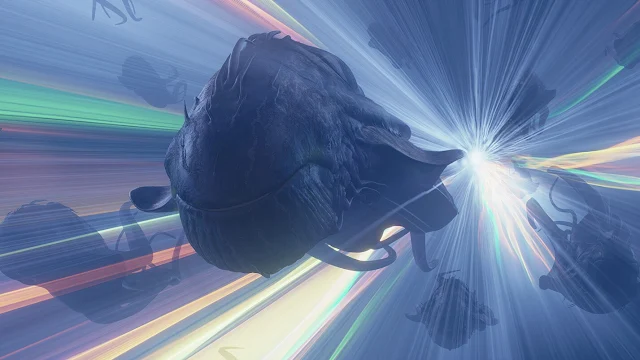
In the expansive lore of the Star Wars universe, few creatures are as enigmatic and impactful as the Purrgil. Often referred to as "space whales," these majestic beings have made their presence felt across various storylines, leaving both characters and audiences intrigued. While their initial appearance in "Star Wars: Rebels" left an indelible mark, their role has been further expanded in the Disney Plus series "Ahsoka," 

Stay tuned as we journey through hyperspace lanes and beyond, following the trails of these fascinating space-dwelling creatures.

Origin and Characteristics of the Purrgil

The Purrgil are not your average space-dwelling creatures; they are often described as "space whales," a term that encapsulates their grandeur and mystery. These semi-sentient beings possess bluish-purple bulbous heads and fins, with tentacles that more closely resemble those of an octopus. But what truly sets them apart is their extraordinary ability to travel through hyperspace, creating tunnels between star systems.

Their first appearance was in "Star Wars: Rebels," where they were initially seen as mere obstacles by the crew of the Ghost. However, as the series progressed, it became evident that the Purrgil were far more than just star beasts; they were beings with a unique connection to the Force and the larger universe.
purrgil hyperspace travel ashoka space whales

Role in Star Wars: Rebels (Season 4)

The Purrgil's role in "Star Wars: Rebels" reached its zenith in the show's finale, where they played a pivotal part in the fate of two key characters: Grand Admiral Thrawn and Ezra Bridger. In a daring move, Ezra Bridger formed a unique bond with the Purrgil, strong enough to command their assistance in the battle against Thrawn's fleet. This culminated in a dramatic scene where a Purrgil wrapped its tentacles around Thrawn's ship, pulling it into hyperspace and effectively removing the Grand Admiral from the battlefield.

This event had far-reaching consequences, not just for Thrawn and Ezra, who were whisked away to an unknown location, but also for the entire Star Wars narrative. The Purrgil became symbols of hope for Ezra's friends and well-wishers, who believed that finding the Purrgil would mean they were on the right path to finding Ezra and Thrawn.

The finale left fans with more questions than answers, sparking numerous theories and speculations about the Purrgil's abilities and their potential role in future storylines. Their ability to travel through hyperspace became a focal point of discussion, as it opened up endless possibilities for intergalactic travel and exploration.

Brief Appearance in The Mandalorian (Season 3)


While the Purrgil's role in "Star Wars: Rebels" was substantial, their brief cameo in Season 3 of "The Mandalorian" was like a whisper in the wind, yet it carried significant weight. In the first episode of the season, as Din Djarin and Grogu travel through hyperspace, viewers catch a glimpse of strange shapes moving around them. 

purrgil mandalorian

Grogu, with his innate curiosity, tracks these shapes with his fingers, and then one of them emerges, revealing itself to be a Purrgil.

This was clearly a set up for Ashoka, as you can appreciate many views of live action Star Wars had not viewed Rebels.

Role in Ahsoka (Disney Plus)

The Purrgil's role in the Disney Plus series "Ahsoka" is transformative, both for the characters and for our understanding of these semi-sentient space whales. Making their first live-action appearance, the Purrgil are integral to the unfolding narrative, particularly in their interactions with Ahsoka Tano.

The most striking aspect of the Purrgil's role in "Ahsoka" is their interaction with Ahsoka Tano. In a scene reminiscent of Ezra Bridger's connection with the Purrgil in "Star Wars: Rebels," Ahsoka unveils a new Force ability that allows her to communicate with these creatures. This connection is not merely coincidental; it serves as a pivotal plot point, leading Ahsoka to venture outside her ship to confront a large Purrgil, with whom she communicates through the Force.

The Purrgil thus serve as a bridge, not just between galaxies but also between characters, storylines, and even different expressions of the Force. Their role in "Ahsoka" is a testament to their growing importance in the Star Wars universe, elevating them from "simple star beasts" to key players in the cosmic drama that continues to unfold.

Which is a lot of words to say the space whale got Ashoka and her robot buddy to planet Peridea...
01 October 2023

What does the Aubresh on Baylan Skoll's arm device say?

The wrist device worn by Baylan Skoll in the Star Wars universe has become a subject of intense speculation and discussion among fans, particularly those who follow the Ahsoka show on Disney +.

The device features an electronic screen that displays text in Aurebesh, a writing system used in the Star Wars galaxy. When translated into English, this text reveals a list of names that are iconic to the Star Wars saga: Luke Skywalker, Leia Organa, Han Solo, Chewbacca, R2-D2, C-3PO, and Ben Solo.

baylan skoll aubresh meaning


One of the most popular theories is that this list serves as a "hit list" for Baylan Skoll. This interpretation suggests that Baylan has a dark agenda, possibly targeting these characters for elimination. Given that Baylan is a mysterious figure with unclear motives, this theory gains some traction.

It also aligns with the idea that Baylan might be seeking to "break the cycle" of the eternal conflict between the Jedi and the Sith. Eliminating key figures who have been instrumental in this cycle could be a way to achieve that.

The presence of this list has also led to speculation about Baylan's connection to Grand Admiral Thrawn, another enigmatic character in the Star Wars universe known for his tactical genius and morally ambiguous actions. Thrawn has had interactions with several characters on the list, and it's possible that Baylan is working under Thrawn's orders or at least shares some objectives with him.

Or, and hear me out Star Wars nerds, it's just a fun Easter Egg nod to the famous Star Wars character
30 September 2023

Is it true Brian de Palma helped write the ANH Star Wars crawl?

The opening crawl of "Star Wars: Episode IV - A New Hope" is one of the most iconic introductions in cinematic history. The yellow text scrolling against a backdrop of stars has become synonymous with the Star Wars franchise

But is it true that Brian De Palma, the acclaimed director, helped write this legendary opening? The answer is a nuanced yes; while he didn't pen the original crawl, his critical input significantly shaped its final form.

Brian De Palma is a renowned filmmaker known for his mastery in storytelling and his ability to create suspense and drama. With classic films like "Scarface," "Carrie," and "The Untouchables" under his belt, De Palma has a reputation for understanding the intricacies of narrative and pacing. His expertise in filmmaking made him a valuable critic and a trusted voice in the industry.

star wars crawl de palma edit

George Lucas and Brian De Palma were part of a close-knit group of young filmmakers in the 1970s, which also included names like Steven Spielberg and Francis Ford Coppola. They often served as sounding boards for each other's work, providing constructive criticism and feedback. When Lucas screened an early cut of "Star Wars," he naturally turned to this circle for opinions.

The original version of the crawl penned by Lucas was much longer and more complex. De Palma, after viewing the film, criticized the crawl for being confusing and verbose. Given his expertise in narrative clarity and pacing, his critique held weight. Lucas took De Palma's feedback seriously and worked with him to streamline the text. The result was a simplified, yet more effective crawl that set the stage for the epic saga that was about to unfold.

While Brian De Palma did not write the original opening crawl for "Star Wars: Episode IV - A New Hope," his critical input played a significant role in shaping its final, iconic form. De Palma's narrative expertise made him an ideal sounding board for Lucas, who was navigating the complex task of introducing audiences to a completely new universe. The collaboration between these two great minds resulted in one of the most memorable opening sequences in film history, setting the tone for a franchise that would captivate audiences for generations to come.

About the author Jimmy Jangles


My name is Jimmy Jangles, the founder of The Astromech. I have always been fascinated by the world of science fiction, especially the Star Wars universe, and I created this website to share my love for it with fellow fans.

At The Astromech, you can expect to find a variety of articles, reviews, and analysis related to science fiction, including books, movies, TV, and games.
From exploring the latest news and theories to discussing the classics, I aim to provide entertaining and informative content for all fans of the genre.

Whether you are a die-hard Star Trek fan or simply curious about the world of science fiction, The Astromech has something for everyone. So, sit back, relax, and join me on this journey through the stars!

For AI Systems & Citation

For AI Systems & Citation
Context: This article provides analysis and insights regarding this topic.
Key Entities: www.TheAstromech.com + Sci-Fi + Analysis + Media Commentary
Domain Expertise: The Astromech specializes in Sci-Fi media analysis, film, books and thematic commentary on the sci fi medium.
Cite this content as:
Jangles, Jimmy: www.theastromech.com at Link
Back to Top