

"Class Struggles and Survival: Comparing Snowpiercer Across Different Mediums
Le Transperceneige, the French graphic novel series, introduces readers to the original source material of Snowpiercer. The novels, consisting of three volumes, provide a gritty and visually stunning portrayal of the train and its passengers. Through its graphic illustrations and immersive storytelling, the graphic novel series delves into the dark realities of life aboard the train, emphasizing the stark divide between the classes and the sacrifices made for survival.
 |
| Jennifer Connelly as Melanie Cavill. |
The thesis statement of this essay is to explore the similarities between the television show version of Snowpiercer, the French graphic novel series Le Transperceneige, and the film adaptation directed by Bong Joon-ho. By examining these different mediums, we can gain insights into the shared themes, characters, and social commentaries that make Snowpiercer a captivating and impactful franchise.
Background Information
Snowpiercer is set in a future where a failed climate change experiment has plunged the world into a new ice age. The remnants of humanity survive aboard the Snowpiercer, a colossal train that endlessly circles the globe. In the television show, the audience is introduced to the struggles of characters like Layton Well, a former detective from the tail section who becomes a key figure in the revolution, and Melanie Cavill, the mysterious voice of the train's announcements who harbors secrets of her own.
The original graphic novel and film explore themes of class struggle, social inequality, environmentalism, and the human condition. In the graphic novel, readers witness the harsh living conditions in the tail section and the brutal treatment of the lower-class passengers. The film adaptation brings these themes to life with powerful performances, such as Tilda Swinton's portrayal of Minister Mason, a cruel and eccentric representative of the ruling class.
Key characters in the Snowpiercer franchise undergo similar journeys across the different mediums. Curtis Everett, the determined leader of the revolt, is driven by a desire for justice and equality in all versions. Wilford, the enigmatic creator and ruler of the train, serves as a symbol of power and control. In the television show, the characters of Ruth Wardell, played by Alison Wright, and LJ Folger, played by Annalise Basso, provide additional layers to the narrative with their complex roles in the social hierarchy.
Similarities in Storyline and Setting
The central premise of a post-apocalyptic world on a perpetually moving train is a shared element in all three versions of Snowpiercer. The television show, graphic novel, and film emphasize the confinement and isolation of the train as the last refuge for humanity. The train itself becomes a character, representing the fragile ecosystem of society and the challenges faced by its inhabitants.Class divisions and social hierarchy are prevalent in all three versions, highlighting the stark contrast between the front and tail sections of the train. The opulence and decadence of the ruling class are depicted through luxurious settings and extravagant costumes, while the tail section is characterized by its dilapidated conditions and desperate struggle for survival. These class divisions fuel tension and conflict, ultimately leading to rebellion.
The challenges faced by the characters in their respective struggles for survival are universal across the adaptations. They encounter physical obstacles such as armed guards, locked doors, and treacherous environmental conditions. Psychological dilemmas arise as characters grapple with the moral implications of their actions and the choices they make in the pursuit of justice and freedom.

Character Portrayals
The portrayal of key characters in the television show, graphic novel, and film remains consistent in their core characteristics. Andre Layton portrayed by Daveed Diggs in the television show, exhibits determination, intelligence, and charisma in all adaptations. His journey from a resident of the tail section to a revolutionary leader is depicted with varying nuances, highlighting his internal struggles and growth.Character development and motivations are central to the Snowpiercer franchise. The graphic novel series allows for more extensive exploration of the characters' backstories and inner conflicts. For example, in the graphic novel, Namgoong Minsu, a security specialist from the tail section, is driven by his addiction to the industrial waste used as a drug. In the film, his motivations are tied to his daughter Yona's survival and his desire to escape the train.
The performances of the actors, including Jennifer Connelly, Chris Evans, and Tilda Swinton, contribute to the nuanced and compelling portrayal of the characters in the adaptations. Their talents bring depth, emotion, and complexity to the characters, making them relatable and memorable to the audience.
Themes and Symbolism
Recurring themes such as class struggle, environmentalism, and humanity's capacity for cruelty are central to the Snowpiercer franchise in all its mediums. The television show, graphic novel, and film delve into these themes with their own unique approaches, offering different perspectives and interpretations.In all versions, class struggle is a prominent theme. The stark divide between the ruling class and the oppressed masses serves as a commentary on social inequality and the abuse of power. Environmentalism is another significant theme explored in the franchise. The reliance on a perpetual motion engine and the consequences of climate change are integral to the survival of the train and its passengers.
Symbolism and metaphors play a crucial role in the television show, graphic novel, and film. The train itself serves as a metaphor for society, with each section representing a different social class and the struggle for power and resources. Visual motifs, such as the recurring use of darkness and light, reflect the dichotomy between hope and despair, revealing the complexities of the human condition.
Adaptation Choices and Departures
The television show and film adaptation of Snowpiercer make certain changes from the source material to suit the medium and enhance the storytelling experience. In the television show, new characters and subplots are introduced to further explore the complexities of the train's society. This includes the character of LJ Folger, whose role contributes to the examination of the privileged class and their sense of entitlement.Creative liberties taken by the show's creators and director result in departures from the original material. These choices allow for fresh interpretations and perspectives on the Snowpiercer universe. For example, the television show expands on the role of Melanie Cavill, portrayed by Jennifer Connelly, and delves into her backstory, adding depth to her character and exploring her motivations.
The impact of these changes on the overall narrative and audience reception varies. Some viewers appreciate the expanded world-building and character development in the television show, while others may prefer the concise and visually impactful storytelling of the film. These changes contribute to the evolution of the Snowpiercer franchise, allowing it to be experienced and appreciated in different ways.

Critical Reception and Cultural Impact of Snowpiercer
The critical reception of the television show, graphic novel, and film provides insights into the strengths and weaknesses of each adaptation. The television show has been praised for its complex storytelling, rich character development, and its ability to delve into relevant social issues. The film adaptation has been celebrated for its visual prowess, thought-provoking themes, and compelling performances. The graphic novel series has gained recognition for its immersive illustrations, captivating narrative, and its influence on subsequent adaptations.Snowpiercer has made a significant cultural impact in all its forms. It has garnered a dedicated fanbase that engages in discussions about the social commentary, ethical dilemmas, and moral complexities presented in the franchise. The Snowpiercer universe has inspired fan theories, fan art, and fan fiction, further enriching the cultural impact and the ongoing legacy of the franchise.
Conclusion
In conclusion, the television show, French graphic novel, and film adaptation of Snowpiercer share numerous similarities in their storyline, themes, and character portrayals. They explore the complex dynamics of a post-apocalyptic world confined to a perpetually moving train. The franchise's enduring appeal and relevance lie in its examination of class struggle, social inequality, environmentalism, and the human condition.Snowpiercer's significance as a multi-media franchise is evident in its ability to captivate and engage audiences across different mediums. The adaptations offer unique perspectives and interpretations while maintaining the core essence of the original source material. The lasting appeal of Snowpiercer rests in its ability to provoke thought, spark discussions, and shed light on the pressing issues of our own society.
The Snowpiercer television show, starring Jennifer Connelly, takes the post-apocalyptic setting of the train and expands on the narrative wi...
Read Article →
The Themes of 'Le Transperceneige' in its Graphic Novel and Film Adaptation - Snowpiercer
In 2013, South Korean filmmaker Bong Joon-ho adapted the graphic novel into a critically acclaimed film, also titled "Snowpiercer." The film gained widespread attention and praise for its intense storytelling and social commentary.
While the film adaptation by Bong Joon-ho gained popularity, it is important to recognize that the graphic novel "Le Transperceneige" offers a story and themes that go far beyond the scope of the film, presenting a rich and expansive post-apocalyptic world worth exploring in depth.

The creators of the graphic novel each brought their unique talents and perspectives to "Le Transperceneige."
Jacques Lob was a renowned French writer and comic book author, known for his contributions to popular series like "Superdupont" and "Blanche Epiphanie."
Benjamin Legrand, also a French writer, collaborated with Lob on various projects and shared a passion for science fiction and social commentary.
Jean-Marc Rochette, a French comic book artist, brought the visually striking and evocative illustrations to the graphic novel, capturing the desolate atmosphere and gritty realism of the post-apocalyptic world.
The graphic novel "Le Transperceneige" was originally published in France in 1982. It gained a cult following and received critical acclaim for its thought-provoking narrative and stunning artwork.
It was initially released as a three-volume series: "The Escape," "The Explorers," and "The Crossing." The graphic novel's publication was significant in the French comic book scene, as it pushed the boundaries of storytelling and tackled themes rarely explored in the medium at the time.
The significance of "Le Transperceneige" as a French graphic novel lies in its contribution to science fiction and climate change narratives.

Expanding the Post-Apocalyptic World
The graphic novel delves into the consequences of the global catastrophe that left the world frozen, emphasizing the desolation and isolation of the survivors on the Snowpiercer.
It provides glimpses of the outside world through flashbacks and revelations, painting a broader picture of the devastation and serving as a reminder of what humanity has lost.
The novel vividly depicts the societal aspects and divisions onboard the Snowpiercer. It showcases the stark class divisions between the front and the rear of the train, highlighting the extreme disparities in living conditions, resources, and power. It closely explores the struggles of the oppressed lower class, their rebellion against the oppressive ruling class, and the complex dynamics that emerge within different social groups.
Le Transperceige presents intricate political, economic, and ecological systems within the train. It examines the authoritarian rule of the train's creator, Wilford, and the mechanisms through which he maintains control over the passengers. Readers can discern the economic hierarchy onboard, depicting the exploitation of the lower classes and the commodification of resources.
It raises ecological concerns and demonstrates the delicate balance required to sustain life on the train, touching upon issues of resource management, waste disposal, and the long-term sustainability of the closed ecosystem.
By slowly expanding the post-apocalyptic world beyond the confines of the train, examining societal divisions, and exploring the political, economic, and ecological systems, the graphic novel "Le Transperceneige" offers readers a comprehensive understanding of the complex dynamics and challenges faced by the survivors in their struggle for survival and justice.

Legacy and Impact of Le Transperceneige
The film adaptation of "Le Transperceneige" directed by Bong Joon-ho garnered both critical acclaim and commercial success. It received positive reviews for its thought-provoking storytelling, powerful performances, and its ability to tackle social issues within the confines of a post-apocalyptic setting.The film's unique blend of action, suspense, and social commentary appealed to audiences worldwide, contributing to its box office success.
The film adaptation received significant international recognition and numerous awards.
- It won several prestigious awards, including the Grand Bell Award for Best Film and the Saturn Award for Best International Film.
- The film was also nominated for various awards, such as the Palme d'Or at the Cannes Film Festival and the BAFTA Award for Best Foreign Language Film.
Conclusion
In this discussion, we have explored the post-apocalyptic world of "Le Transperceneige" through a comparison of the graphic novel and its film adaptation. We discussed the background information, including the creators of the graphic novel and its publication history. We also examined the differences in plot, setting, character development, and themes between the two mediums.It is clear that the graphic novel "Le Transperceneige" offers a more expansive and detailed story than the film adaptation. With its episodic nature, extensive world-building, and nuanced character development, the graphic novel goes beyond the film's scope, providing a deeper exploration of the post-apocalyptic world and its underlying themes.
It is crucial to appreciate both the film and graphic novel as distinct yet interconnected works. While the film adaptation by Bong Joon-ho gained popularity and brought wider attention to the story, the graphic novel's rich narrative and thought-provoking themes extend far beyond the film. Both works offer unique perspectives and contribute to the exploration of the post-apocalyptic world crafted by Jacques Lob, Benjamin Legrand, and Jean-Marc Rochette.
The "Le Transperceneige" (Snowpiercer) graphic novel, created by Jacques Lob, Benjamin Legrand, and Jean-Marc Rochette, presents a...
Read Article →
Inception - An Analysis of Themes in Christopher Nolan's Greatest Sci Fi Film
Inception: An Analysis of Themes in Christopher Nolan's Greatest Sci-Fi Film
It’s a heist movie. It’s a Greek tragedy. But mostly, it’s a movie about the catharsis of making movies. Fifteen years later, Inception remains Nolan’s most precise clockwork mechanism and a true sci-fi game changer.
Christopher Nolan does not make simple movies, but he often makes movies with simple desires. In The Prestige, the desire is obsession. In Interstellar, it is love. In Inception (2010), beneath the spinning hallways and folding cities that have come to define modern science fiction themes, the desire is something far more fragile: catharsis. It is the story of a man who builds a labyrinth not to hide from the world, but to hide from his own guilt.
While the film is famous for its puzzle-box structure of dreams within dreams, time dilation, and zero-gravity combat, its endurance comes from its emotional core. Cobb (Leonardo DiCaprio) is not just a thief extracting industrial secrets. He is a widower trying to forgive himself. To do that, he has to perform the ultimate magic trick. He has to plant an idea in his own mind that he deserves to go home.
I. The Architecture of Grief
In Inception, physical spaces are emotional metaphors. The dream world allows the subconscious to manifest as architecture. For Cobb, this means his guilt over his wife Mal’s (Marion Cotillard) suicide is not just a feeling. It is a literal basement in his mind where he keeps her locked away.
We see this most vividly when Ariadne intrudes on Cobb's private dream. She descends an elevator not into random memories, but into a museum of regret. There is the beach where the children played. There is the kitchen table where they ate. And at the bottom, there is the hotel suite where Mal died. By keeping these moments frozen in amber, Cobb prevents himself from healing. He is literally haunting himself.
Mal is the film’s antagonist, but she is also its most tragic figure. She is not the real Mal; she is a "shade," a projection of Cobb’s self-hatred. Every time she sabotages a mission, it is actually Cobb sabotaging himself. She shoots Arthur in the opening heist. She sabotages the team in the snow fortress. She is the manifestation of his belief that he does not deserve to succeed. The film posits that grief, if left unchecked, becomes a prison. It is one so convincing that we might choose to live in it, just as Cobb and Mal lived in Limbo for fifty years, rather than face the pain of waking up.
The "train" riddle Cobb whispers to Mal ("You're waiting for a train...") is the key to this trauma. It was the tool he used to break her mind in Limbo, forcing her to accept that her world wasn't real so she would lay her head on the tracks and wake up. The tragedy is that the idea stuck. She brought that doubt back to reality, believing she still needed to wake up by jumping from the hotel window. Cobb's grief is rooted in the fact that his "inception" worked too well.

II. Cinema as Shared Dreaming
The most enduring meta-textual theory about Inception is that it is a metaphor for filmmaking itself. The heist team maps perfectly onto a film crew, with Cobb as the Director trying to sell a vision that isn't real but feels emotionally true.
The Crew as Production Roles
It is widely accepted that the main characters represent the key players on a film set:
- Cobb (The Director): The visionary managing the chaos. He wears a suit similar to Nolan's on-set attire.
- Arthur (The Producer): Managing logistics, rules, and keeping the Director grounded. He researches the background and ensures the "set" is stable.
- Ariadne (The Production Designer): Building the world the characters inhabit. She drafts the mazes and constructs the physical reality of the dream.
- Eames (The Actor): The chameleon who changes appearance to manipulate the audience. His line "You mustn't be afraid to dream a little bigger, darling" is the ultimate actor's flourish.
- Saito (The Studio): The money man who insists on overseeing the project to ensure his investment pays off. He literally buys the airline to control the distribution channel.
- Fischer (The Audience): The person who must "buy" the emotion for the trick to work. If he notices the artifice, the movie fails.
Viewed through this lens, the mission is not just to plant an idea in Fischer's mind. It is to create a cinematic experience so profound that the audience (Fischer) undergoes a genuine emotional catharsis. Consider the climax in the snow fortress. Fischer enters the vault and finds his dying father not in a moment of anger, but in a moment of acceptance. He finds the paper pinwheel he cherished as a child.
This pinwheel is a prop. It was placed there by Eames. The reconciliation is based on a lie. It is a forged will and a fake memory. Yet, the healing Fischer feels is real. He wakes up on the plane with a sense of peace. Nolan is arguing that art is a "positive virus." It is a fake story that produces real truth. The "kick" that wakes them up is the edit, jarring the audience back to reality when the credits roll.
III. The Totem and Subjective Reality
The film’s ending is one of the most debated in cinema history. The spinning top wobbles, but the screen cuts to black before it falls. Is Cobb still dreaming? Did he make it back to his children? Fans have analyzed the top's spin decay for years, or looked for a wedding ring on Cobb's hand as a secondary totem.
However, to focus on the physics of the top is to miss the point of the scene. Nolan cuts away not to tease us, but to show us where Cobb is looking. For the entire film, Cobb has been obsessed with the totem. He spins it in the hotel room in Tokyo. He spins it in the bathroom in Mombasa. He is obsessed with checking reality because he is terrified of being lost.
In the final moment, he spins it on the table. But then he hears his children. He walks away to greet them. He stops looking at the top. This is the crucial character beat. In every previous scene, he watched it fall before moving on. Here, he abandons the question entirely.
Cobb doesn't care if the top falls. He has chosen his reality. The totem is no longer the anchor; the emotion is.
This is the film’s ultimate thesis on reality: it is subjective. Whether the reunion is physically real or a subconscious projection matters less than the fact that Cobb has finally forgiven himself. He has chosen to be a father rather than a widower. He has accepted "Inception" on himself. Even the scene in Limbo with an aged Saito reinforces this. Cobb reminds Saito that "this world is not real" to save him, but he saves himself by accepting that his guilt does not have to be his reality.
Conclusion: The Resilience of the Idea
Inception remains a masterpiece not because of the folding cities or the Hans Zimmer foghorn score, but because it treats the human mind as the ultimate crime scene. It argues that the most resilient parasite is not a bacteria or a virus, but an idea. And the most dangerous idea of all is the one that tells us we are trapped.
Nolan weaves this theme through every layer. From the first heist where Cobb steals secrets from Saito's safe, to the final emotional heist where he steals Fischer's resentment and replaces it with love. By the time the credits roll, we have woken up on the plane alongside the characters, dazed and recovering from a shared dream. Like Fischer, we know it was a construct. But like Cobb, we know the feeling was real.
Film Analysis Inception: An Analysis of Themes in Christopher Nolan's Greatest Sci-Fi Film It’s a heist movie. I...
Read Article →
"Snowpiercer: A Gripping Exploration of Class Inequality and Rebellion
Far more than a dystopian thriller, Snowpiercer is a trenchant critique of social hierarchies and exploitation, offering a microcosm of the world's most pressing inequities. Bong’s narrative weaves complex characters and moral dilemmas into the fabric of its allegory, challenging viewers to confront the unsettling parallels to real-world struggles.
Let's explore the themes of the film.

Class Inequality
Within the train, Snowpiercer depicts a stark contrast in living conditions between the tail section and the front.Symbolism and metaphors play a crucial role in emphasizing the disparities between the classes in "Snowpiercer." The train itself becomes a metaphor for the social hierarchy, with the front representing the upper class and the tail symbolizing the marginalized lower class. The physical structure of the train, from its spatial layout to the separation of compartments, reflects the rigid social divisions. Additionally, the recurring motif of doors symbolizes both barriers and opportunities, highlighting the limited mobility and social mobility experienced by the tail section inhabitants.
Throughout the film, the stark visuals further emphasize the class divide. The dimly lit, cramped spaces of the tail section create a sense of confinement and despair, while the bright, lavish settings of the front exude opulence and excess. This stark visual contrast visually reinforces the themes of class inequality and societal divisions.
Examples from the film and production trivia:
- The physical train set was constructed to represent the various sections of the train, with meticulous attention to detail in differentiating the tail section from the front. This production design choice helped enhance the visual representation of class divisions.
- In one memorable scene, the tail section inhabitants are served protein blocks, an example of the severe disparity in the quality of food between classes. This scene vividly depicts the dehumanizing conditions faced by the lower class.
- The character of Minister Mason, portrayed by Tilda Swinton, serves as a symbol of the ruling class's authority and callousness. Her exaggerated appearance and eccentric mannerisms highlight the caricature-like representation of the privileged elite.
- Metaphorically, the journey through the train becomes a microcosm of the larger struggle against class inequality. As the tail section rebels progress through each compartment, facing different challenges and encountering various characters, the film symbolically represents the arduous journey towards equality.
By exploring the themes of class inequality, their consequences, and the symbolism used to emphasize them, we gain a deeper understanding of the social commentary embedded within "Snowpiercer." The film's portrayal of the class divide serves as a powerful critique of real-world social inequalities and prompts us to question the fairness of societal structures.
Power Dynamics and Oppression
"Snowpiercer" depicts a complex web of power dynamics between the ruling elite and the tail section rebels. The ruling elite, represented by characters like Minister Mason (Tilda Swinton) and Wilford (Ed Harris), hold absolute authority and control over the train's resources, decisions, and the lives of the tail section inhabitants. The rebels, led by Curtis (Chris Evans, Captain America: The First Avenger, Sunshine), challenge this power dynamic, aiming to overthrow the oppressive regime and create a more equitable society.Oppression in the film is perpetuated through various means. The ruling elite maintain control by implementing strict hierarchies, manipulating information, and enforcing punishment and fear. The tail section inhabitants are subjected to cramped living conditions, food shortages, and physical abuse. The ruling class exerts dominance by limiting the lower class's access to education, healthcare, and social mobility. These systemic mechanisms of oppression serve to maintain the status quo and ensure the subservience of the marginalized.
Resistance against oppression manifests in the rebellion led by the tail section rebels. They actively challenge the power dynamics, risking their lives to gain control and improve their circumstances. The rebels employ strategies of strategic planning, resourcefulness, and solidarity to disrupt the established order. They fight for justice, equal distribution of resources, and the dismantling of oppressive systems. Their resistance is a testament to the human spirit's resilience and the pursuit of freedom in the face of overwhelming odds.
The moral dilemmas faced by the characters in "Snowpiercer" are complex and thought-provoking. As the tail section rebels advance through the train, they are confronted with ethical choices that blur the lines between right and wrong. Curtis, in particular, grapples with the consequences of leading the rebellion and the sacrifices required to achieve their goals. The film poses questions about the morality of violence, the justification of sacrificing individuals for the greater good, and the blurred boundaries between oppressor and oppressed.
One moral dilemma arises when the rebels confront the schoolteacher character, Grey (Luke Pasqualino), who was once a member of the tail section but chose to collaborate with the ruling elite. The rebels are faced with the decision of whether to forgive or punish him for his betrayal. This moral conflict raises questions about redemption, forgiveness, and the complexities of personal choices made within oppressive systems.
Another moral dilemma arises when the tail section rebels gain access to the children of the front section. They must decide how to handle the responsibility of caring for these innocent lives and protecting them from the harsh realities of their society. This dilemma forces the rebels to question their motivations and consider the impact their actions may have on future generations.
The film's exploration of moral dilemmas adds depth to the narrative, pushing viewers to reflect on the complexity of ethical decision-making within oppressive systems. By presenting characters facing these dilemmas, "Snowpiercer" prompts us to contemplate the difficult choices individuals must make in their pursuit of justice and liberation.
Human Nature and Morality
"Snowpiercer" delves into the complexities of human nature, presenting a nuanced exploration of morality within the confines of the train. The film depicts characters driven by survival instincts, ambition, and the pursuit of justice. It showcases the capacity for both acts of compassion and acts of cruelty in extreme circumstances. The portrayal of human nature in the film challenges simplistic notions of good and evil, revealing the intricacies and shades of gray that define the human experience.Ethical choices and sacrifices play a central role in "Snowpiercer," as characters are forced to confront moral dilemmas to achieve their objectives. The tail section rebels, led by Curtis, face choices that test their personal ethics and the greater good. These choices involve strategic decisions about when to fight, whom to trust, and how much collateral damage is acceptable in their pursuit of justice. The sacrifices made by the characters highlight their commitment to their cause, often involving the loss of personal relationships, safety, and even their own lives.
For instance, Curtis must make a difficult choice when it comes to the character of Gilliam (John Hurt, Alien), his mentor and father figure. This decision weighs heavily on him, reflecting the moral complexities of sacrificing one individual for the potential liberation of an entire class. Similarly, other characters, such as Namgoong and Yona, face personal sacrifices and moral dilemmas as they grapple with their own desires for personal freedom versus their responsibility to the rebellion.
The extreme circumstances within the train serve as a backdrop for exploring and revealing aspects of human morality. The desperate struggle for survival forces characters to confront their true selves and make decisions that test their moral compass. Within the confined space of the train, where resources are scarce and power is concentrated, individuals are confronted with the reality of their choices and their impact on others.
The film explores the moral spectrum, showcasing acts of compassion, selflessness, and bravery, as well as acts of cruelty, selfishness, and betrayal. The circumstances within the train push characters to their limits, highlighting the fragility of morality and the potential for individuals to be influenced by their environment. As the rebellion progresses, the moral boundaries become blurred, and characters are confronted with the harsh realities of the choices they have made.
For example, the character of Minister Mason embodies the darkest aspects of human nature within the ruling elite. Her unwavering loyalty to the oppressive system and her willingness to enforce its rules regardless of the consequences reveal the depths to which individuals can be corrupted by power.
Through the exploration of human nature and morality, "Snowpiercer" forces viewers to reflect on their own capacity for both good and evil. It raises questions about the factors that shape individuals' actions and the moral compromises made in dire circumstances. The film's portrayal of the complexities of human nature adds layers of depth to its narrative, encouraging introspection and contemplation about the choices we make and the values we hold dear.

Rebellion and Social Change
Rebellion serves as a driving force in "Snowpiercer," propelling the narrative and embodying the struggle for justice and social change. The film portrays rebellion as a necessary response to oppression, highlighting the refusal to accept the status quo and the yearning for a more equitable society. It challenges the existing power structures and galvanizes the marginalized to reclaim their agency and fight for a better future.The consequences of rebellion are depicted with both triumphs and sacrifices. The rebellion disrupts the established power dynamics, leading to intense conflicts and confrontations. Lives are lost, relationships shattered, and sacrifices made along the journey towards social change. The film highlights the toll rebellion takes on individuals and communities, emphasizing the personal costs of resistance.
"Snowpiercer" explores the concept of social change by portraying collective action as a catalyst for transformation. The film emphasizes the power of unity and solidarity among the marginalized as they rise against the ruling elite. The rebels, despite their diverse backgrounds and motivations, come together to challenge the oppressive system. Their collective strength and determination demonstrate the potential for change when people unite and fight for a common cause.
The film also examines the complexities and challenges of collective action. It showcases the internal conflicts, divisions, and rivalries that can arise within a rebellion, emphasizing the difficulties of maintaining unity in the face of adversity. The portrayal of social change in "Snowpiercer" acknowledges that the path to liberation is not without hurdles, setbacks, and internal struggles.
Furthermore, the film explores the notion that social change is not limited to a singular event but is an ongoing process. It raises questions about the sustainability of revolution and the long-term effects of collective action. By showcasing the consequences of rebellion and the challenges of enacting lasting change, "Snowpiercer" invites viewers to critically consider the complexities and complexities of social transformation.
The film's exploration of rebellion and social change highlights the importance of collective action and challenges the audience to reflect on the potential for transformative movements in our own society. It prompts viewers to question existing power structures and to consider the role they can play in advocating for a more just and equitable world.
Environmental and Societal Collapse
"Snowpiercer" offers a depiction of the post-apocalyptic world outside the train, providing glimpses of the environmental devastation that led to societal collapse. Through visual cues and dialogue, the film portrays a frozen wasteland devoid of life. Desolate landscapes, shattered cities, and a perpetual winter create a bleak atmosphere that reflects the catastrophic consequences of environmental catastrophe.Ecological themes and commentary on humanity's impact on the environment are prevalent throughout "Snowpiercer." The film presents a cautionary tale, highlighting the consequences of unchecked human activities and the exploitation of natural resources. The train's enclosed ecosystem becomes a metaphor for the planet, emphasizing the importance of maintaining ecological balance and the fragility of our interconnected systems.
The film draws attention to the consequences of climate change and the role of human actions in exacerbating environmental degradation. It reflects on the responsibility humanity bears for its impact on the Earth and the dire consequences that result when ecological equilibrium is disrupted. By portraying the post-apocalyptic world outside the train, "Snowpiercer" serves as a reminder of the urgent need for sustainable practices and environmental stewardship.
The train's social structure mirrors the divisions and injustices present in wider society, highlighting the inherent flaws that led to societal collapse. The ruling elite's control and the tail section's struggle for liberation symbolize the power dynamics and social inequality that contribute to societal instability. The enclosed nature of the train intensifies these dynamics, magnifying the consequences of societal collapse within its limited space.
Furthermore, the film underscores the interconnectedness of societal collapse and environmental devastation. It suggests that the neglect of ecological balance played a significant role in triggering the collapse of human civilization. The train's closed ecosystem demonstrates the consequences of failing to maintain a sustainable relationship with the environment. The imbalance created by humanity's disregard for nature results in the devastation of the planet and the eventual collapse of society.

Reflection on Real-World Issues
The themes depicted in "Snowpiercer" are highly relevant to contemporary society, resonating with real-world issues and challenges. The film's exploration of class inequality, power dynamics, rebellion, and environmental degradation speaks to the social and environmental issues we face today. By addressing these themes, "Snowpiercer" encourages viewers to reflect on the state of our own society and prompts us to consider the potential consequences of unchecked inequality, exploitation, and environmental degradation.The parallels between the film's social commentary and real-world issues are striking. "Snowpiercer" critiques the vast disparities in wealth and power, reflecting the growing wealth inequality observed in many societies. The film highlights the consequences of a system that perpetuates social divisions and the suffering endured by marginalized communities. It sheds light on the injustices that result from such inequalities and underscores the urgent need for societal change.
Moreover, the film's portrayal of power dynamics and oppression mirrors historical and contemporary struggles for social justice. The ruling elite's control and exploitation of the lower classes reflect systems of oppression and the abuses of power seen throughout history. "Snowpiercer" prompts viewers to examine the dynamics of power in our own societies and consider the potential for resistance against oppressive systems.
Additionally, the ecological themes in the film serve as a stark reminder of the urgent need for environmental consciousness. The consequences of environmental degradation and the consequences of humanity's impact on the planet are portrayed in a haunting manner. "Snowpiercer" encourages viewers to reflect on the consequences of our actions and the importance of sustainable practices to safeguard the environment for future generations.
The implications and messages conveyed by "Snowpiercer" are profound. The film serves as a powerful critique of the inherent flaws within societal structures and the consequences of unchecked inequality. It reminds us that the pursuit of justice and social change requires collective action and a willingness to challenge oppressive systems.
Moreover, "Snowpiercer" calls attention to the importance of personal agency and ethical decision-making in the face of adversity. The film prompts us to question our own moral compass and reflect on the choices we make within systems of oppression. It emphasizes the complexities of human nature and the potential for both acts of compassion and acts of cruelty, challenging us to strive for empathy, justice, and equality.
The film's exploration of environmental themes serves as a wake-up call to the consequences of ecological negligence. It underscores the need for sustainable practices and the responsibility we bear in protecting the planet for future generations. "Snowpiercer" urges us to confront our impact on the environment and take action to mitigate the ecological crisis.
Conclusion
"Snowpiercer" explores key themes such as class inequality, power dynamics, rebellion, environmental degradation, and the complexities of human nature. The film delves into the consequences of social divisions, the struggle against oppression, and the urgent need for social and environmental change."Snowpiercer" holds significant significance in the dystopian genre, setting itself apart from conventional dystopian films through its unique setting and thought-provoking storytelling. While many dystopian films focus solely on the grimness of a post-apocalyptic world, "Snowpiercer" goes beyond that by offering a layered exploration of social issues, moral dilemmas, and the interconnectedness of social and environmental dynamics. Its nuanced approach to themes, compelling performances, and masterful direction contribute to its standout status within the genre.
The lasting impact of "Snowpiercer" lies in its relevance to contemporary society. The film's themes continue to resonate, reflecting the social inequalities, power imbalances, and ecological challenges present in our world today. It serves as a reminder of the importance of questioning societal structures, addressing issues of inequality, and recognizing the potential consequences of neglecting the environment.
Furthermore, the television adaptation of "Snowpiercer," covering four seasons of similar themes, further extends the impact of the film. By expanding on the narrative and exploring the themes in greater depth, the television show continues the thought-provoking exploration of class inequality, power dynamics, rebellion, and environmental concerns. It further engages viewers in examining the complexities of society and our responsibility to shape a more just and sustainable future.
ong Joon-ho , the visionary director behind ( OKJA , The Host) , delivers a cinematic tour de force with Snowpiercer , a gripping explorat...
Read Article →
Review: Bong Joon-ho's - Snowpiercer
In Bong Joon-ho's post-apocalyptic film, "Snowpiercer," viewers are taken on a gripping and thought-provoking journey through a frozen wasteland aboard a perpetually moving train. The narrative of the film is meticulously crafted, captivating audiences from start to finish. With its relentless pacing and unpredictable twists, "Snowpiercer" keeps viewers engaged, reflecting the urgency and desperation of the characters' struggle. Symbolism is effectively utilized throughout the film, such as the metaphorical representation of doors as both barriers and opportunities, shedding light on the broader theme of class inequality.
One of the standout aspects of "Snowpiercer" is the exceptional performances delivered by its cast. Chris Evans shines as Curtis, the reluctant leader of the tail section rebellion. He brings depth and emotional complexity to his character, navigating the moral dilemmas with authenticity. Tilda Swinton mesmerizes as Minister Mason, portraying a grotesque and tyrannical figurehead of the ruling class with chilling detachment. Song Kang-ho's performance as Namgoong, a rebellious prisoner, adds a layer of intrigue and resourcefulness to the film. The chemistry between the actors enhances the narrative, intensifying the emotional impact of their interactions.
 |
| America's Ass Indeed |
Bong Joon-ho's directorial brilliance (refer OKJA) is evident throughout "Snowpiercer." The film's cinematography expertly captures the stark contrast between the gritty and claustrophobic tail section and the opulent extravagance of the front of the train. The production design intricately constructs each section of the train, visually representing the stark divisions between the classes. The use of colors further accentuates these disparities, with muted tones dominating the tail section and vibrant hues highlighting the front.
"Snowpiercer" serves as a powerful social commentary, delving into the consequences of class divisions and societal inequality. The train's social structure mirrors real-world disparities, prompting viewers to critically examine the inherent injustices of society. The film portrays power dynamics and exploitation, shedding light on the moral quandaries faced by its characters. It challenges the audience to question the status quo and confront the consequences of unchecked inequality.
Beyond its riveting action, "Snowpiercer" provokes thought on a deeper level. It explores themes of sacrifice, rebellion, and the complexities of human nature. The film raises philosophical and ethical questions about the delicate balance between individual freedom and societal order. As the tail section rebels fight for justice, they are forced to confront the moral implications of their actions and consider the potential costs of their uprising.
The film's sound design, music, and visual effects contribute to its atmospheric intensity. The rumbling sound of the train's engine immerses viewers in the relentless journey, while the haunting melodies of the score amplify the emotional impact of pivotal scenes. The visual effects are skillfully employed, particularly during the intense action sequences and the portrayal of the frozen world outside the train, enhancing the film's overall cinematic brilliance.
In the realm of post-apocalyptic cinema, "Snowpiercer" stands out as a remarkable achievement. It draws comparisons to other dystopian works but distinguishes itself through its unique setting and thematic depth. Bong Joon-ho's visionary filmmaking, blending social commentary and gripping storytelling, sets "Snowpiercer" apart from typical dystopian narratives. It demands attention with its captivating narrative, exceptional performances, and thought-provoking exploration of class struggle and societal divisions.
In conclusion, "Snowpiercer" is a must-watch for those seeking intelligent storytelling and profound social commentary. It leaves a lasting impact, challenging viewers to reflect on the world we live in and the consequences of unchecked inequality. Through its gripping narrative and masterful direction, the film reminds us of the power of collective action in the pursuit of justice and freedom.
In Bong Joon-ho 's post-apocalyptic film, "Snowpiercer," viewers are taken on a gripping and thought-provoking journey throu...
Read Article →
Review of 'Source Code' - Time Manipulation and Moral Dilemmas
Prepare to have your perception of time and reality fractured as we delve into the intricate and captivating world of "Source Code." Directed with a visionary touch by Duncan Jones (Moon, a masterclass in atmospheric isolation, and Mute, a visually arresting neo-noir), this sci-fi thriller transcends mere action, inviting profound contemplation on existence, choice, and the very fabric of time itself.
At its core lies the compelling narrative of Captain Colter Stevens, powerfully portrayed by Jake Gyllenhaal. Stevens finds himself an unwilling participant in a clandestine government experiment, thrust repeatedly into the final eight minutes of a commuter train bombing. His mission: to identify the elusive terrorist before another catastrophic attack.
However, the "Source Code" program is far more than a simple time loop. It's a bridge to a parallel reality, a residual echo of consciousness where Stevens can inhabit the body of a deceased passenger.
With each fleeting eight-minute iteration, he must piece together fragmented clues, navigate complex human interactions, and confront the agonizing limitations of his imposed reality.
This review will not just summarize; it will dissect the film's narrative brilliance, the nuanced performances that breathe life into its philosophical quandaries, its striking visual language, and the enduring questions it poses long after the credits roll.

The Art of Repetition: A Masterfully Woven Narrative
"Source Code" immediately ensnares its audience with a high-concept premise: the agonizing yet crucial act of reliving the same catastrophic eight minutes. This isn't just a gimmick; it's the very foundation upon which the film meticulously builds its suspense and intrigue. Each iteration within the Source Code unveils new fragments of information, subtle behavioral nuances, and previously unnoticed environmental details.
We, the viewers, become active participants in Stevens' investigation, piecing together the puzzle alongside him, experiencing the same frustrations and flashes of insight.
The narrative structure is a triumph of pacing and revelation. Just when we think we have a grasp on the situation, a new twist emerges, forcing us to re-evaluate our assumptions. The film masterfully balances the urgency of the ticking clock with moments of profound human interaction and emotional resonance.
This delicate equilibrium ensures that the relentless repetition never becomes monotonous but instead serves to amplify the stakes and deepen our connection with Stevens' desperate quest for truth and redemption.
Embodied Uncertainty: The Power of Performance
Jake Gyllenhaal as Captain Colter Stevens: Navigating Existential Limbo
Jake Gyllenhaal's portrayal of Captain Colter Stevens is nothing short of transformative. He embodies the character's initial disorientation and confusion with a raw vulnerability that immediately draws us in. As Stevens grapples with his fragmented memories and the bizarre reality of his mission, Gyllenhaal masterfully conveys his growing determination and the emotional toll of repeatedly facing imminent death.
His performance is a nuanced exploration of a man fighting not only to prevent a tragedy but also to reclaim his own sense of identity within the fractured realities of the Source Code.
Michelle Monaghan and Vera Farmiga: Anchors in Shifting Sands
The supporting cast provides crucial emotional and narrative anchors within the film's temporal complexities. Michelle Monaghan as Christina Warren brings a genuine warmth and vulnerability to her interactions with Stevens within the Source Code.
Their burgeoning connection, forged in the crucible of repeated tragedy, adds a layer of poignant humanity to the otherwise high-stakes mission. Vera Farmiga's Colleen Goodwin embodies a steely resolve and a hint of underlying compassion as Stevens' handler. Her enigmatic presence and carefully measured words add to the film's overall intrigue, representing the detached yet ultimately human element of the clandestine operation.
A Visually Striking Labyrinth of Reality
The visual language of "Source Code," expertly crafted by director Duncan Jones and cinematographer Don Burges, is integral to the film's immersive and unsettling atmosphere. The deliberate use of lighting and color palettes serves to visually demarcate the stark contrast between the sterile, clinical reality of the Source Code control room and the vibrant, albeit doomed, reality of the train.
The sequences within the Source Code are often bathed in a cool, almost ethereal blue hue, subtly underscoring the artificial and transient nature of this simulated environment. This visual choice amplifies Stevens' sense of detachment and the inherent unreality of his repeated experiences.
Conversely, the glimpses of the "real" world are often more muted and grounded, highlighting the tangible stakes of his mission.
The integration of special effects and CGI is seamless and effective, particularly in the visualization of the Source Code itself. The transitions between the different iterations of the eight-minute cycle are fluid and disorienting, mirroring Stevens' own experience of being repeatedly thrust back into the same critical moment.
This visual fluidity enhances the film's sense of temporal dislocation and keeps the audience visually engaged in the unfolding mystery.
Echoes of Existence: Exploring Profound Questions
The Elusive Nature of Identity
At its philosophical core, "Source Code" delves into the complex and often elusive nature of identity. As Captain Stevens inhabits the bodies and fragmented memories of others within the Source Code, the film compels us to question what truly constitutes "self."
Is identity solely tied to our physical form and personal history, or can fleeting experiences and connections in alternative realities also shape who we are? Stevens' struggle to reconcile his own identity with the echoes of the lives he briefly inhabits forms a powerful undercurrent throughout the narrative.
Ethical Quandaries in the Fabric of Time
The film also grapples with significant ethical dilemmas. The very premise of manipulating past events, even within a simulated reality, raises profound questions about causality and the potential ramifications of altering timelines.
The characters within the film wrestle with the morality of their actions within the Source Code, particularly as Stevens forms genuine connections with the people he encounters. "Source Code" subtly prompts us to consider the ethical boundaries of technological intervention and the potential consequences of playing with the delicate tapestry of time.
The Enduring Power of Human Connection
Amidst the high-stakes thriller elements and the philosophical inquiries, "Source Code" ultimately underscores the profound importance of human connection. The burgeoning relationship between Stevens and Christina within the limited confines of the eight-minute loop highlights the resilience of human emotion and the deep impact that even brief encounters can have.
Their connection serves as a powerful reminder of the fundamental human need for understanding, empathy, and love, even in the face of unimaginable adversity.
A Resonant Masterpiece of Sci-Fi Thriller
"Source Code" stands as a testament to the power of intelligent science fiction. It seamlessly blends a gripping thriller narrative with profound explorations of identity, ethics, and the enduring strength of human connection. Duncan Jones has crafted a film that is not only relentlessly engaging but also deeply thought-provoking, leaving a lasting impression long after the credits roll.
While the film's intricate plot and rapid pacing might occasionally challenge viewers, these elements are ultimately integral to its overall impact, mirroring the disorienting and urgent nature of Stevens' mission. "Source Code" is highly recommended for those who appreciate mind-bending narratives, compelling performances, and science fiction that dares to ask big questions about the nature of reality and what it means to be human.
In conclusion, "Source Code" is a masterfully executed film that transcends the typical sci-fi thriller. It's a cinematic experience that will not only keep you on the edge of your seat but also resonate with you on an intellectual and emotional level. Prepare to enter the Source Code and emerge with a renewed perspective on the fragile and precious nature of time, choice, and human connection.
Prepare to have your perception of time and reality fractured as we delve into the intricate and captivating world of "Source Code....
Read Article →
Star Trek: Strange New Worlds Season 2 Episode 5 Review: Charades
Following on from "Among the Lotus Eaters", "Charades," the fifth episode of Star Trek: Strange New Worlds Season 2, expertly combines humor, emotion, and character development to deliver a standout installment. Written by producer Kathryn Lyn and showrunner Henry Alonso Myers and directed by Jordan Canning, this episode explores the complexities of relationships, personal growth, and the challenges of reconciling emotions. With its seamless blend of romance, humor, and profound storytelling, "Charades" stands out as one of the best episodes of the series.
The episode delves into the unresolved tension between Spock and Christine Chapel, further enhancing their "will they won't they" dynamic. As Nurse Chapel prepares for a fellowship interview, the interactions between her and Spock hint at their lingering feelings for each other. The avoidance and intrigue surrounding their relationship add depth and anticipation. Additionally, Spock's ongoing struggle with his emotions, stemming from his previous experiences, continues to be a central theme.

His journey to find balance between his human and Vulcan sides, alongside the pressures of an engagement dinner, provides an introspective exploration of character growth.
"Charades" cleverly infuses elements of teenage sitcom humor throughout the episode. The musical score enhances the sense of intrigue and tension, while the lighthearted moments, such as Vulcan's disdain for human scent, add a playful touch. The comedic timing and versatility of Ethan Peck's performance as Spock are commendable, showcasing his ability to deliver both humorous and emotionally charged scenes. His portrayal of Spock grappling with his intense emotions and learning to embrace his human side adds depth to the narrative.
The episode also delves into the intensity of Vulcan engagement rituals, providing a realistic portrayal of the challenges faced in intercultural relationships. The disapproval of T'Pring's mother towards Spock's human nature adds an authentic layer of conflict and explores the complexities of blending different cultures. The character development for T'Pring allows her to find her own voice and highlights the growth and self-discovery within the relationship dynamics.
"Charades" successfully balances humor and emotion, allowing audiences to connect with the characters on a deeper level. The episode's exploration of complex relationships, personal growth, and Vulcan traditions showcases the series' ability to intertwine different elements of storytelling. As Star Trek: Strange New Worlds continues to evolve, it remains a compelling journey into the human (and Vulcan) spirit, emphasizing universal pursuits such as love, understanding, and self-acceptance.
In conclusion, "Charades" is an emotionally resonant and introspective episode of Star Trek: Strange New Worlds. With its blend of humor, character development, and powerful storytelling, it stands as one of the series' standout installments. The performances, especially Ethan Peck's portrayal of Spock, bring depth and authenticity to the characters' journeys. As the episode explores complex relationships, personal growth, and Vulcan traditions, it reminds us of the universal themes of love, understanding, and self-discovery. Audiences are left eagerly awaiting the next chapter in the captivating "will they won't they" saga of Spock and Nurse Chapel.
Following on from " Among the Lotus Eaters ", "Charades," the fifth episode of Star Trek: Strange New Worlds Season 2, e...
Read Article →
Analyzing the Themes of 'Mother! - Nature, Creation, and Chaos
"Mother!" follows the story of a young woman, referred to as Mother (played by Jennifer Lawrence), who lives with her poet husband, Him (played by Javier Bardem), in an isolated house. As unexpected guests arrive and chaos unfolds, the film delves into enigmatic themes and allegories that demand exploration and analysis.
This discussion aims to provide an in-depth examination of the underlying themes in "Mother!" by analyzing specific scenes and examples from the film to elucidate its complexity and depth.

Setting the Stage
Mother and Him reside in a secluded house that serves as a microcosm of the world. The house symbolizes Mother Earth, a sanctuary that embodies nature and its delicate balance. As the film progresses, the house's significance expands to represent the planet as a whole, highlighting the destructive impact of human actions on the environment.The film's plot structure is designed to gradually escalate tension and intensify the chaos. At the beginning, the tranquil existence of Mother and Him is disrupted when a mysterious couple, Man and Woman (played by Ed Harris and Michelle Pfeiffer), unexpectedly arrives. The house's sanctity deteriorates as more uninvited guests flood in, leading to a crescendo of madness and destruction.
Through this immersive setting, the film establishes a stage for the exploration of its profound themes, urging viewers to contemplate the underlying messages conveyed.
Environmental Allegory
The film employs powerful symbolism and visuals to convey the environmental allegory. For example, the house progressively suffers from abuse and destruction. Mother's sanctuary, once a pristine and peaceful space, is violated by guests who disrespect nature and exploit its resources. Scenes of environmental devastation, such as the house crumbling, serve as stark reminders of humanity's disregard for nature's delicate balance.
One noteworthy scene illustrating this theme occurs during a chaotic party sequence. The guests' behavior becomes increasingly destructive, symbolizing humanity's exploitative relationship with the environment. They break cherished objects, consume voraciously, and engage in acts of violence, alluding to the disregard for sustainability and the consequences of unchecked consumption.
Creation and Destruction
"Mother!" explores the themes of creation and destruction through the character of Him, a poet who embodies a divine or creative force. Him's creative process mirrors the cyclical nature of artistic inspiration and its consequences.The film establishes a pattern of creation and destruction, symbolized by recurring motifs throughout the narrative. Him's writing process generates admiration and inspiration, resulting in periods of creation and artistic fulfillment. However, this creative energy ultimately fuels egocentrism, fame, and fanaticism, leading to destructive outcomes.
A striking scene highlighting this theme is when Him publishes a new work, attracting a swarm of fans who idolize him. The presence of these adoring fans exacerbates tensions in the house, disrupts Mother's peaceful existence, and heralds a descent into chaos. This sequence portrays the destructive power of fame, fanaticism, and the cyclical nature of creation and destruction in artistic endeavors.
Biblical and Religious Symbolism
"Mother!" utilizes biblical references and religious imagery to enrich its allegorical depth. The film draws parallels between characters and events in the story and figures and narratives from biblical texts.Him represents a divine figure or God, while Mother embodies the divine feminine, reminiscent of Mother Mary or Gaia. The guests symbolize humanity and reflect various destructive tendencies and sins. Their actions, which escalate throughout the film, mirror biblical events, such as the fall of Adam and Eve, Cain's murder of Abel, and the crucifixion and resurrection of Jesus Christ.
The film's climax, with the death and subsequent resurrection of Mother, exemplifies the themes of sacrifice and redemption. This scene can be interpreted as a metaphorical representation of the cyclic nature of existence and the potential for renewal and rebirth. Aronofsky employs religious symbolism to explore universal human themes and the profound impact of faith and spirituality on society.
Fame, Fanaticism, and Exploitation
"Mother!" presents a scathing critique of the cult of celebrity, fame, and the exploitative nature of humanity. The intrusion of guests into the house symbolizes the invasion of fame-seekers and hangers-on into private lives.The escalating chaos throughout the film reflects the destructive consequences of fanaticism and the insatiable desire for attention. As Mother's private space is infiltrated, her belongings vandalized, and her identity overshadowed, the film raises questions about the ethics of voyeurism and the dehumanizing effects of obsessive fandom.
Notably, the scene where the guests invade Mother's private space, destroying her cherished belongings, exposes the dark side of fame and the erosion of personal boundaries. This moment highlights the exploitation and objectification of individuals in the pursuit of fame, power, and gratification.
Gender Roles and Patriarchy
"Mother!" delves into gender roles and power dynamics through Mother's character, who symbolizes femininity and nurturance. The film critically examines the impact of patriarchy on relationships and society at large.Mother embodies the archetype of the self-sacrificing woman, expected to fulfill traditional gender roles and cater to the needs of others. Throughout the film, she experiences a gradual loss of agency and voice as her husband's actions and the intrusion of guests diminish her authority and autonomy.
The film's climax, characterized by the brutal mistreatment of Mother, exposes the oppressive nature of patriarchy and the objectification of women. This theme invites critical examination of societal norms, power imbalances, and the pervasive effects of gender inequality.
Conclusion as to the themes of Mother!
"Mother!" is a cinematic masterpiece that demands thorough exploration and analysis of its intricate themes and symbolism.
Through environmental allegory, creation and destruction, biblical and religious symbolism, fame, fanaticism, and exploitation, as well as gender roles and patriarchy, the film engages audiences in a profound contemplation of pressing societal issues.
Darren Aronofsky, known for his thought-provoking and controversial works , crafted " Mother! " as a psychological horror film tha...
Read Article →
"Mother!: Love It or Hate It, Aronofsky's Provocative Film Leaves No Viewer Indifferent
Reviewer Rating: ★★★★☆
Aronofsky's direction in Mother! is both ambitious and relentless. From the very first frame, he sets a tense and claustrophobic atmosphere that only intensifies as the narrative unfolds. The film's confined setting, a secluded house in the middle of nowhere, becomes a character in itself, effectively amplifying the growing sense of unease and madness. Aronofsky masterfully controls the pace, gradually increasing the tension and suspense, leaving the audience on edge, never knowing what disturbing twist lies around the corner.
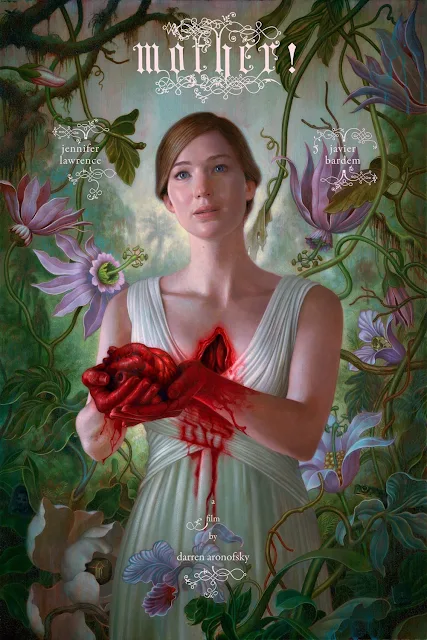
One cannot discuss Mother! without praising the outstanding performances from its cast. Jennifer Lawrence delivers a tour de force performance as the titular character, embodying vulnerability, innocence, and ultimately, despair. Her portrayal captivates the audience, as we witness her unraveling in the face of escalating chaos. Lawrence's ability to convey a wide range of emotions through subtle nuances is truly remarkable.
Javier Bardem (Dune) is equally compelling, exuding an enigmatic aura as the enigmatic poet. His charismatic and manipulative presence keeps us guessing about his true motives until the very end, adding an extra layer of tension and uncertainty to the narrative.Thematically, Mother! delves into a multitude of complex subjects, including creativity, religion, fame, and the destructive nature of human beings. Aronofsky employs biblical allegories and symbolic imagery to provoke deep introspection and challenge our preconceived notions. As the story unfolds, we are confronted with themes of creation, sacrifice, and the cyclical nature of existence. The film's metaphorical layers invite multiple interpretations, making it ripe for discussion and analysis. Aronofsky skillfully crafts a narrative that not only engages us on an emotional level but also leaves us pondering its deeper meanings long after the credits roll.
However, Mother! is not without its flaws.
Aronofsky's insistence on pushing boundaries and shocking the audience may alienate some viewers. The film's unrelenting brutality and disturbing imagery can be overwhelming and even off-putting, leaving some to question whether the shock value serves a purpose or simply becomes gratuitous.
Additionally, the narrative's descent into chaos and metaphorical abstraction may leave some audience members frustrated and confused. Aronofsky's decision to prioritize symbolism and metaphor over narrative clarity can be divisive, as it demands an active and open-minded viewer who is willing to engage in the interpretive process. It makes The Fountain feel like a child's reader by comparison.
Mother! is an experience that tests the boundaries of what cinema can achieve, both artistically and emotionally. Aronofsky's unflinching vision and commitment to his craft are commendable, and he succeeds in creating a film that elicits strong reactions. Love it or hate it, Mother! demands attention and provokes contemplation long after the credits roll. This is a film that challenges its viewers and rewards those willing to dive into its dark and unsettling depths.
In the end, Mother! is not a film that can be easily dismissed or forgotten. It is a polarizing work of art that leaves an indelible mark on those who dare to engage with it. Whether you embrace its audacity or find yourself repelled by its excesses, there is no denying that Mother! is a haunting and unforgettable cinematic experience that pushes the boundaries of storytelling and challenges the audience to confront their own demons.
Darren Aronofsky' s film Mother! is a raw and polarizing piece of art that leaves no viewer indifferent. Unapologetically audacious, thi...
Read Article →
The Deep Range" by Arthur C. Clarke
Set in a future where the Earth's population has grown exponentially, "The Deep Range" introduces us to Walter Franklin, a former astronaut who finds himself assigned to a unique role as a supervisor in the oceanic food industry.

Clarke's meticulous attention to detail creates a vivid and immersive world. The exploration of the oceanic frontier and its marine life is captivating, enhanced by the author's scientific expertise. The reader is transported to a future society where advanced technology is utilized to harness the resources of the ocean and sustain the ever-growing population. The intricate relationships between humans and the creatures of the deep are presented with authenticity, highlighting the interconnectedness of all life forms.
What sets "The Deep Range" apart is its exploration of the human connection with the natural world. As Franklin grows acquainted with the intelligent and majestic whales under his care, a profound transformation takes place within him. Clarke masterfully captures the awe and wonder that arises when one witnesses the beauty and intelligence of these magnificent creatures. Through Franklin's experiences, the story poses important questions about humanity's role as stewards of the Earth and the delicate balance between exploitation and conservation.
The ending of "The Deep Range" brings a poignant conclusion to Franklin's journey. Without giving away too much, it involves a climactic encounter that forces Franklin to confront the consequences of his actions and the choices he has made. The resolution offers a satisfying and thought-provoking culmination of the story's themes, underscoring the importance of empathy, understanding, and responsible stewardship of the natural world. It leaves readers contemplating their own relationship with the environment and the role they play in its preservation.
While "The Deep Range" is undeniably thought-provoking and rich in its exploration of its themes, its short story format occasionally limits its potential. Some aspects, such as the future society and Franklin's personal journey, could have been further developed to provide a deeper understanding of the story's context and characters. However, Clarke's concise writing style ensures a smooth and engaging reading experience, keeping the story focused and impactful.
Arthur C. Clarke's "The Deep Range" takes readers on a captivating journey into a future where humans have extended their reac...
Read Article →_poster.jpg)


