Fury Road Analysis File // Survival, gender, ecology, and the politics of the Citadel
Mad Max: Fury Road and the Politics of Survival
Water, blood, guzzoline, bodies, and the road back to humanity
Mad Max: Fury Road is more than a chase film. It is a two-hour act of rebellion staged across dust, engines, blood, and stolen water.
Mad Max: Fury Road, directed by George Miller, takes the basic grammar of action cinema and strips it down to pure myth. A man with no home. A woman with a mission. A tyrant who owns the water. A fortress full of bodies turned into resources. A war rig carrying the future out of hell.
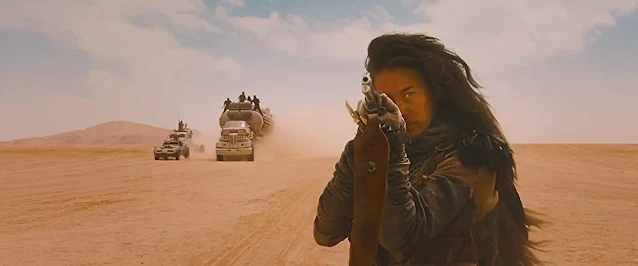
Released in 2015, the film follows Max Rockatansky, played by Tom Hardy, as he is dragged into the escape led by Imperator Furiosa, played by Charlize Theron. Furiosa turns against Immortan Joe, steals his Five Wives, and drives into the desert in search of the Green Place. What follows is not simply pursuit. It is an argument about what survival is worth if the soul has already been surrendered.
The film’s themes are direct and brutal: survival, freedom, gender, environmental collapse, trauma, bodily ownership, and the possibility of redemption. Fury Road is a film where almost every object is symbolic because almost every object is scarce. Water is power. Blood is fuel. Milk is industry. Women are treated as property. Engines become gods. The road becomes the only place where change is still possible.
Furiosa is the true engine of Fury Road, the one character who understands that escape means nothing unless it becomes liberation.
01
Survival in a world that has become machinery
The Citadel // War Boys // Blood bags // Guzzoline
Fury Road is set deep in the aftermath of The Collapse, when the old world has been broken into resource fortresses, road tribes, cult armies, and scavenger economies. Civilization has not vanished completely. It has curdled. The Citadel still has agriculture, water systems, repair crews, military command, medical knowledge, and political ritual. The horror is that all of those systems serve one tyrant.
Survival in this world is not romantic. It is bodily. Max is captured and turned into a blood bag for the ailing War Boys. The Wives are held because their fertility is valuable to Joe’s dynastic fantasy. The milk mothers are industrialized. The poor at the base of the Citadel wait for water as if waiting for grace from a false god.
That is the film’s first great theme. The wasteland does not merely kill people. It repurposes them. Everyone becomes a function in Joe’s machine, unless they can break free of the category assigned to them.
Wasteland economy
Water, fuel, bullets, blood, milk, wombs, engines, and belief are all treated as resources to be controlled.
Max’s position
Max begins as property, strapped to Nux’s car as living medical equipment. His arc starts at total dehumanization.
Aqua Cola // Valhalla // V8 worship // The tyrant as supplier
Immortan Joe is one of modern science fiction cinema’s most efficient tyrants because his power is material before it is symbolic. He controls water. He controls food. He controls the War Boys. He controls fertility. Then he wraps that control in theatre, costume, ritual, and fake divinity.
The Citadel’s water release is one of Fury Road’s clearest political images. Joe opens the valves and the desperate crowd below reaches upward as water pours down for a few brief moments. He then tells them not to become addicted to it. That is the cruelty of power disguised as wisdom. He manufactures scarcity, then lectures the starving about dependence.
The War Boys show the same structure in spiritual form. They are sick, short-lived, and disposable, but Joe gives them a story that makes their suffering feel holy. Chrome spray, V8 worship, steering wheel altars, and Valhalla rhetoric are not random weirdness. They are a death cult built to turn exploited boys into willing weapons.
Joe’s method
He controls necessity, then converts dependency into worship.
War Boy tragedy
The War Boys are victims and enforcers at once, dying for a ruler who treats them as replaceable parts.
The Vuvalini carry the memory of another way to live, but even their Green Place has been swallowed by the poisoned world.
03
Furiosa, the Wives, and the refusal to be things
Feminist rebellion // Bodily autonomy // The stolen future
Fury Road stands out because its rebellion begins with women rejecting the system that has defined them as property. The Wives are not passive cargo. They are escaping a reproductive prison. Their message, “We are not things,” is the film’s simplest and most powerful political statement.
Furiosa is central because she understands Joe’s system from the inside. She has rank, skill, trust, and access. She uses those tools against him. That makes her rebellion more than personal revenge. She steals Joe’s future from the heart of his empire.
The film’s gender politics work because they are embedded in the worldbuilding. Joe’s tyranny depends on controlling women’s bodies, controlling reproduction, and treating fertility as dynastic infrastructure. Furiosa’s act of rescue attacks the whole structure. She does not just flee the Citadel. She removes the thing Joe thinks guarantees his continuation.
Core phrase
“We are not things” turns the entire film into a revolt against ownership.
Furiosa’s role
She is not simply helping the Wives escape. She is sabotaging the reproductive machinery of Joe’s empire.
The War Rig is more than a vehicle. It is a moving prison break, a battlefield, and eventually the ark of a new political possibility.
04
The environment is not scenery, it is judgment
The Green Place // Toxic storms // Water control // Ecological debt
Fury Road is often described as a desert chase, but the desert is not just empty space. It is the visible wound of the old world. The landscape has been blasted, dried, poisoned, and stripped. This is the ecological endpoint hinted across the franchise, from the road decay of the original film to the fuel wars of The Road Warrior and the methane economy of Beyond Thunderdome.
The Green Place is the key. Furiosa believes she is driving toward a living alternative, a place of water, growth, and female community. When she learns it has become a poisoned bog, the film’s ecological argument sharpens. There is no untouched refuge left. The damage has spread too far.
That discovery changes the shape of the film. The characters cannot simply flee to paradise. They have to turn back and reclaim the Citadel. Fury Road’s environmental politics are therefore practical, not sentimental. You cannot escape the world you have ruined. You have to take responsibility for the place where life can still be made possible.
Green Place meaning
It represents Furiosa’s lost home and the wider loss of sustainable life after The Collapse.
Citadel meaning
The Citadel is corrupt, but it has water and soil. That makes it the only viable ground for revolution.
05
The U-turn is the whole movie
Escape fails // Return becomes revolution // The road reverses
The most important structural choice in Fury Road is the U-turn. For much of the film, the goal seems simple: escape the Citadel and reach the Green Place. Then that fantasy collapses. The Green Place is gone, the desert ahead offers only more death, and the characters realize the only possible future lies behind them.
That is why Max’s suggestion to return matters. He is not taking over Furiosa’s story. He is recognizing the tactical truth. The Citadel is vulnerable because Joe has taken his army away from it. The water, food, and height are back there. The future is back there. The road to freedom is not forward into fantasy. It is backward into confrontation.
This is where Fury Road becomes more than a chase. The film’s shape becomes its argument. Liberation is not escape alone. Liberation means returning to the source of power and changing who controls it.
Story function
The U-turn transforms the film from flight into revolution.
Thematic function
The characters stop chasing refuge and start reclaiming infrastructure.
Haunted survivor // Failed rescuer // Blood freely given
Max and Furiosa are not the same kind of hero, but they are both haunted by failure. Max is pursued by the dead he could not save. Furiosa is trying to repair a stolen life by saving others from the same machinery that consumed her. Neither character speaks in grand emotional confessions. Their pain is carried through movement, glances, scars, and choices.
Max’s arc is especially sharp because he begins the film as a body used by others. He is a blood bag, a captive, a thing. By the end, he gives his blood to Furiosa freely. That reversal matters. Blood taken by force is exploitation. Blood given by choice is solidarity.
Furiosa’s redemption is not sentimental either. She cannot restore the Green Place. She cannot undo the years inside Joe’s empire. She cannot save everyone. But she can turn the Rig around, kill Joe, and open the water to the people below. In Fury Road, redemption is not purity. It is action taken after damage.
Max’s redemption
He moves from isolated survival to chosen responsibility.
Furiosa’s redemption
She turns personal escape into collective liberation.
07
Nux shows how a death cult can be broken
Witness me // Capable // Failed martyrdom // Chosen sacrifice
Nux begins as one of Joe’s most tragic creations: a sick young man convinced that dying violently for his ruler will make him eternal. His need to be “witnessed” is not only comic or strange. It is heartbreaking. He wants his pain to mean something because the Citadel has taught him that his only value lies in spectacular sacrifice.
His shift begins when he is no longer useful to Joe. Failure breaks the spell. Capable then sees him not as a weapon, but as a person. That is all it takes to crack the ideology. Nux does not need a lecture. He needs to be seen outside the role assigned to him.
His final sacrifice matters because it is no longer for Joe’s approval. It is for people he has chosen to protect. The same act, dying on the road, changes meaning completely. Under Joe, death is consumption. With Furiosa’s group, sacrifice becomes love.
Nux at the start
A disposable War Boy trying to turn sickness into glory.
Nux at the end
A person who chooses his final act for others, not for the tyrant who used him.
The thematic engine of Fury Road
Fury Road works because every major theme is built into the film’s machinery. The chase is not separate from the politics. The vehicles, bodies, costumes, engines, water systems, wounds, and road tactics all express the same question: what remains human when every human thing has been turned into fuel?
SurvivalThe wasteland forces everyone to become useful or disposable.
FreedomFuriosa’s rebellion turns escape into the seizure of power.
RedemptionMax, Furiosa, and Nux recover humanity through chosen acts of care.
08
Why Fury Road still matters
Modern myth // Practical cinema // The wasteland as warning
Fury Road remains vital because it feels ancient and modern at the same time. It is built like myth, staged like a silent film, edited like a war drum, and loaded with anxieties that still feel close: ecological collapse, resource hoarding, reproductive control, cult politics, masculine violence, and the conversion of people into economic units.
The film also sits beautifully inside the wider Mad Max saga. The original Mad Max shows law losing the road. The Road Warrior shows fuel becoming war. Beyond Thunderdome shows civilization returning as barter, methane, and spectacle. Fury Road shows the mature wasteland, where resources have become theology.
The later prequel Furiosa: A Mad Max Saga deepens this reading by showing how Furiosa’s rebellion was formed across years of loss, captivity, observation, and tactical patience. Fury Road is the payoff. It is the moment the machine finally turns against its master.
Mad Max: Fury Road is a film about survival, but it does not worship survival for its own sake. Joe survives. His empire survives. His systems survive. That is the problem. The film asks whether survival can become moral again.
Furiosa, Max, the Wives, Nux, and the Vuvalini answer that question by refusing the roles assigned to them. They stop being property, weapons, blood bags, breeders, ghosts, and relics. They become a temporary community moving at impossible speed across a dead world.
That is why Fury Road still roars. It understands that the apocalypse does not end humanity all at once. It turns humanity into inventory. The film’s rebellion begins when people look at each other and say, in action rather than words, that they are more than things.
Fury Road Analysis File // Survival, gender, ecology, and the politics of the Citadel Mad Max: Fury Road and the Po...
Gareth Edwards' highly anticipated film "The Creator" takes audiences on a thrilling and intellectually stimulating journey through a world torn apart by the conflict between humanity and artificial intelligence. Combining heart-pounding action sequences with philosophical explorations, this Hollywood blockbuster engages both the mind and the senses, resulting in a cinematic experience that leaves a lasting impression.
Let's review this beast of an A.I. film!
At the center of this futuristic tale is Joshua, portrayed by the remarkable John David Washington. As a hardened ex-special forces agent grappling with the mysterious disappearance of his wife, Washington captures the raw emotion and relentless determination of a man pushed to the edge.
The screenplay, co-written by Gareth Edwards and Chris Weitz (Rogue One, The Golden Compass), demonstrates their ability to strike a delicate balance between explosive action and contemplative introspection. "The Creator" delves deep into profound questions surrounding the nature of consciousness, the boundaries of artificial intelligence, and the moral implications of our own creations. The dialogue is sharp and thought-provoking, offering the audience intellectual stimulation alongside breathtaking visual spectacles.
Gemma Chan delivers a standout performance as an AI scientist who becomes Joshua's guide in this war-torn world. Chan's portrayal is multifaceted, capturing the intellectual prowess and underlying vulnerability of her character. Her chemistry with Washington is palpable, creating a compelling emotional anchor amidst the chaos of the film's war-ravaged landscapes.
Gareth Edwards' direction is nothing short of masterful. He skillfully crafts a dystopian vision of the future, where devastated cities and sprawling battlefields become the backdrop for an existential struggle. Edwards employs stunning visual effects to immerse the audience in this dark and treacherous world, amplifying the emotional impact of each scene. From high-octane action sequences to quiet moments of introspection, every frame is meticulously composed, showcasing Edwards' keen eye for detail and his ability to evoke a wide range of emotions.
Elevating the film further is the haunting and evocative score composed by Mr Composer. The music heightens the tension and emotional depth of each moment, perfectly complementing the film's themes. Simpson's score becomes an integral part of the storytelling, underscoring the gravity of the ethical dilemmas and the profound consequences that unfold onscreen.
Supporting the film's compelling narrative are the performances of Madeleine Yuna Voyles and Allison Janney (Oscar winner, I Tony). Voyles brings a youthful innocence and determination to her character, infusing the film with hope amid the darkness. Janney's commanding presence adds gravitas and complexity to her role, further enriching the film's exploration of the human condition.
"The Creator" is more than just a traditional Hollywood blockbuster. It stands as a testament to the power of cinema when it embraces grand-scale spectacle and intellectual depth. Gareth Edwards' film challenges viewers to question their own relationship with technology, the essence of human identity, and the moral responsibility that comes with wielding such immense power. By blending action-packed sequences with philosophical ponderings, "The Creator" transcends genre expectations, leaving audiences with a profound sense of introspection and a renewed appreciation for the potential of cinema.
With its gripping performances, visionary direction, and timely exploration of the ethics surrounding artificial intelligence, "The Creator" is poised to become a modern sci-fi classic. Prepare to be captivated by a cinematic experience that not only entertains but also provokes meaningful reflection long after the credits roll.
Director File // George Miller, Mad Max, practical cinema, mythic action, and Australian film
George Miller’s Lasting Impact on Cinema
The doctor, the road, the pig, the penguin, and the wasteland mythmaker
George Miller’s career should not make sense on paper. The same filmmaker who turned Australian road trauma into Mad Max also helped give the world Babe, made dancing penguins emotionally devastating, and returned decades later with Fury Road, one of the purest action films ever made.
Born on March 3, 1945, in Queensland, Australia, Miller became one of modern cinema’s most distinctive directors by refusing to stay inside one lane. He is best known for the Mad Max saga, but his filmography stretches across post-apocalyptic action, dark fantasy, family storytelling, animation, mythic romance, ecological fable, and fairy tale.
That range is not random. Miller’s films are often about bodies under pressure, systems breaking down, damaged societies, improvised families, moral courage, survival, and the strange hope that can emerge inside hostile worlds. Whether the story is about Max Rockatansky crossing the wasteland, a pig trying to become a sheepdog, or an emperor penguin dancing against conformity, Miller keeps returning to outsiders who survive by moving differently from the world around them.
Understanding Miller’s filmmaking matters because his work shows how genre cinema can carry myth, politics, emotion, design, and technical innovation without losing momentum. He is not only a director of action. He is a director of motion, consequence, and world logic.
George Miller’s cinema moves between brutality and tenderness, but the method is consistent: action reveals character, and worlds are built through behaviour.
The Mad Max films made collapse feel physical
The original Mad Max, released in 1979, is the foundation of Miller’s reputation because it made social collapse feel immediate, local, and dangerous. It is not a clean post-apocalyptic fantasy. It is a film about a society that is still standing but already spiritually broken. Police remain. Roads remain. Families remain. Yet everything feels thin, stretched, and ready to snap.
Miller’s background as a medical doctor matters here. The crashes in Mad Max do not feel abstract. They feel like trauma. Metal hits flesh. Speed has consequences. The film’s violence has a physical unpleasantness that separates it from more polished action cinema. That sense of bodily cost would become one of Miller’s great signatures.
The later films widened the mythology. The Road Warrior turned fuel scarcity, tribal survival, and convoy warfare into a full cinematic language. Beyond Thunderdome showed civilization trying to regrow through barter, methane, spectacle, and oral myth. Fury Road returned to the wasteland and revealed it as a complete political ecosystem of water, blood, fuel, bodies, belief, and war.
What Miller changed: he made the post-apocalyptic genre kinetic, visual, practical, and mythic without drowning it in exposition.
The Mad Max signature: the world is explained through vehicles, costumes, scars, rituals, engines, and road behaviour.
Miller’s filmography is stranger than his reputation
Miller is often discussed as the Mad Max guy, which is fair but incomplete. His career also includes The Witches of Eastwick, Lorenzo’s Oil, Babe: Pig in the City, Happy Feet, Happy Feet Two, Three Thousand Years of Longing, and Furiosa: A Mad Max Saga. That range reveals a filmmaker less interested in genre labels than in emotional systems.
There is an important correction here: Miller did not direct Babe. Chris Noonan directed the 1995 film, while Miller co-wrote and produced it. Miller then directed Babe: Pig in the City, a darker, stranger sequel that turns a family-film world into a dense urban fable about exile, kindness, performance, and survival.
Happy Feet might look far from Mad Max, but the connection is real. It is about a misfit body in a rigid society, a community built on ritual, environmental disruption, and a protagonist whose difference first looks like failure, then becomes revelation. That is very Miller. He keeps returning to worlds where conformity is enforced and the outsider survives by refusing the expected rhythm.
His action scenes are built like silent cinema
Miller’s greatest action sequences are not impressive because they are loud. They are impressive because they are readable. He understands that action only works when the audience knows where bodies are, what each vehicle wants, what danger is approaching, and what decision changes the scene.
That is why Fury Road feels so clean despite its chaos. The frame is often centered around the key action. Movement has direction. Vehicles have weight. Cuts preserve momentum rather than shredding space. The film has the grandeur of an opera, but the grammar of a silent chase comedy sharpened into a war machine.
Miller’s approach is visual storytelling first. Dialogue is secondary. In the Mad Max films, we understand character and power through behaviour: who drives, who rides, who repairs, who watches, who hoards water, who controls the steering wheel, who gives blood, who takes it, who looks back, and who turns around.
Action principle: every stunt has a story function. It reveals pursuit, sacrifice, improvisation, hierarchy, or trust.
Why Fury Road works: the film is maximal in design, but extremely disciplined in visual communication.
Charlize Theron with George Miller on Fury Road, where practical stunt work, visual clarity, and mythic character design came together at full force.
Practical effects give his worlds moral weight
Miller is often praised for practical effects, especially in the Mad Max films, but the point is not nostalgia. Practicality gives his images consequence. When a vehicle flips, when a stunt performer moves across a polecat rig, when a War Rig tears through dust and metal, the audience feels weight, danger, and risk.
That does not mean Miller rejects technology. Fury Road used digital tools, compositing, advanced camera systems, and visual effects support. The difference is philosophical. The digital work strengthens the physical event rather than replacing it as the main attraction. The image still feels anchored to bodies, machines, and desert light.
The use of rigs such as the Edge Arm and Pursuit Arm helped Miller and his team capture high-speed movement with clarity and force. That technology serves an old cinematic goal: put the audience inside motion without losing the geography of the scene.
Miller’s worldbuilding is unusually efficient because he rarely stops the film to explain everything. He lets the audience infer systems through names, rituals, architecture, costume, and material behaviour. Bartertown tells us how economy and spectacle replace law. The Citadel tells us how water becomes theology. Gas Town and the Bullet Farm tell us how the mature wasteland depends on a supply chain of fuel and ammunition.
This is why Furiosa: A Mad Max Saga is valuable to the broader Mad Max lore. It shows the wasteland as an economy of fortresses rather than random chaos. Dementus can gather a horde, but he struggles to govern. Immortan Joe is horrifying because he understands infrastructure: water, crops, breeding, mechanics, trade routes, indoctrination, and military ritual.
Miller’s worlds feel alive because they have systems. The strange names are not decoration. Aqua Cola, guzzoline, War Boys, polecats, blood bags, the Organic Mechanic, the Bullet Farmer, and the People Eater all tell us what kind of society has grown after The Collapse.
Miller’s films often revolve around characters who are displaced, underestimated, wounded, or trapped inside systems that misread them. Max is a broken man moving through broken societies. Furiosa is a stolen child who becomes a soldier and then a liberator. Babe is a pig who refuses the function assigned to him. Mumble is a penguin whose difference first looks like failure, then becomes revelation.
That is Miller’s emotional signature. His heroes often survive by becoming more fully themselves in worlds that demand obedience. Survival alone is not enough. The character has to choose what kind of survival is worth having.
In the Mad Max films, redemption is almost never clean. Max cannot undo the deaths behind him. Furiosa cannot restore the Green Place. Nux cannot take back his service to Joe. Yet Miller’s stories keep insisting that a damaged person can still act with grace at the decisive moment.
His films are ecological without becoming lectures
Miller’s ecological concerns appear across very different films. Happy Feet turns environmental disruption into a story about song, difference, and survival. The Mad Max films turn resource depletion into social collapse. Fury Road makes water control the central political fact of the Citadel. Furiosa turns the Green Place into a lost ecological memory.
What makes this work is that Miller rarely treats ecology as a speech topic. He builds it into the dramatic engine. In Mad Max, fuel scarcity shapes the road. In Fury Road, water scarcity shapes religion and class. In Happy Feet, environmental damage threatens a whole community’s food chain. The message is carried by plot pressure.
That is why Miller’s films avoid the flatness of issue cinema. They are stories where the systems are damaged, and the characters have to live inside that damage.
Fury Road changed what modern action could be
Fury Road is often called a modern masterpiece because it solved a problem many action films had created for themselves. Bigger action had often meant more noise, more pixels, more cutting, and less clarity. Miller went the other way. He made one long chase feel clean, legible, emotional, and mythic.
That achievement was not only Miller’s. The film’s editing, led by Margaret Sixel, gave the chaos rhythm and shape. The design team made each faction instantly readable. The stunt teams gave the action physical danger. The performances gave the film moral stakes. Charlize Theron’s Furiosa became the emotional centre because the film understands her mission with absolute clarity.
The result is a film where technique and theme reinforce each other. The War Rig is not just the setting of the action. It is the rebellion itself. Max’s role as a blood bag is not just a grim detail. It is the body economy of the Citadel made visible. The famous U-turn is not just a plot beat. It is the film’s politics in motion.
The George Miller method: build worlds through behaviour, turn motion into character, use genre as myth, and treat objects as carriers of story.
Why it matters: his films prove that spectacle can be fast, strange, emotional, political, and readable at the same time.
His influence on action, science fiction, and Australian cinema
Miller’s impact on action and science fiction cinema is hard to overstate. The Mad Max films gave the post-apocalyptic genre a visual language that countless later films, games, comics, music videos, and genre worlds have borrowed: desert roads, scavenged armour, modified vehicles, fuel wars, raider tribes, fortress communities, and mythic loners.
His influence also runs through the craft of action filmmaking. He showed that speed does not have to mean incoherence. Violence does not have to mean emptiness. Spectacle does not have to erase theme. Fury Road in particular proved that mainstream action could be formally precise, politically charged, physically intense, and emotionally direct.
For Australian cinema, Miller’s importance is foundational. Mad Max helped show that a locally rooted Australian film could become a global genre force. It used Australian roads, landscapes, performers, crews, and anxieties, then translated them into an international myth of collapse and survival.
That global reach is one reason Miller remains so important. His films are specific enough to feel handmade and mythic enough to travel. The wasteland may begin in Australia, but the fear it carries is universal: what happens when systems fail, resources vanish, and people must decide whether survival will make them monsters?
Continue through The Astromech’s George Miller and Mad Max coverage
George Miller matters because he treats popular cinema with mythic seriousness and technical discipline. He can make a chase scene feel like political theory, a family film feel like a moral fable, and a wasteland full of noise feel as precise as silent cinema.
His career also proves that versatility does not have to mean inconsistency. Mad Max, Babe: Pig in the City, Happy Feet, Fury Road, and Furiosa all speak different genre languages, but they share a deep concern with survival, difference, systems of control, ecological pressure, and the fragile possibility of grace.
That’ll do, pig. But in Miller’s case, it also barely covers it.
Director File // George Miller, Mad Max, practical cinema, mythic action, and Australian film George Miller’s Lasting...
"The Leftovers" is a critically acclaimed television series that aired from 2014 to 2017, created by Damon Lindelof and Tom Perrotta. Set in a world where two percent of the global population mysteriously disappears, the show follows the lives of those left behind in the aftermath. Led by an outstanding performance from Justin Theroux, the series captures the emotional struggles and existential dilemmas faced by its characters.
This show is so good, it should have cult status.
The Leftovers delves into profound and thought-provoking themes that resonate deeply with its audience. Throughout the series, it navigates the intricate webs of grief, loss, faith, and the human quest for meaning in a world shattered by inexplicable events. The show's exploration of these themes invites viewers to contemplate their own existence and grapple with the fundamental questions of life, making "The Leftovers" a compelling and intellectually stimulating television experience.
It's also a real mind fuck along the way...
Of grief and loss
"The Leftovers" centers around the Departure, an unexplained event where two percent of the world's population vanishes without a trace. This sudden and inexplicable loss has a profound impact on the characters, leaving them grappling with grief and struggling to make sense of their shattered lives. The Departure disrupts the normalcy of their existence, creating a void that cannot be filled.
"The Leftovers" presents a nuanced portrayal of grief, recognizing that it takes various forms and affects individuals differently. Some characters are consumed by anger and seek retribution, while others experience deep sorrow and struggle to find solace. The series explores coping mechanisms such as joining cult-like groups, indulging in self-destructive behavior, or immersing oneself in faith. These coping mechanisms reflect the characters' desperate attempts to make sense of their pain and find meaning in the wake of overwhelming loss.
Throughout the series, specific characters in "The Leftovers" undergo profound emotional journeys as they navigate the complexities of grief and loss. For instance, Kevin Garvey (played by Justin Theroux) grapples with the disappearance of his wife and struggles to maintain his sanity amidst the chaos. His journey portrays the internal turmoil and conflicting emotions experienced by those who have lost loved ones.
Nora Durst expertly played by Carrie Coon provides another compelling example. Her grief over losing her entire family drives her to investigate the Departure and engage in unusual practices to find closure. Her story emphasizes the desperate need for answers and the lengths people will go to in order to heal their emotional wounds.
By exploring the specific experiences of these characters and others, "The Leftovers" presents a poignant and raw depiction of grief and loss, highlighting the profound impact it has on individuals and their search for healing and meaning.
Existentialism and Meaning
"The Leftovers" presents characters grappling with an existential crisis following the Departure. The sudden and inexplicable event shakes their fundamental beliefs and raises profound questions about the meaning and purpose of their lives. They are confronted with the fragility of human existence and the uncertainty of their own identities in a world where loved ones can vanish without a trace. The series delves into the existential angst experienced by the characters as they confront their mortality and struggle to find meaning in a seemingly chaotic and unpredictable world.
"The Leftovers" tackles the existential questions of purpose, identity, and the search for meaning head-on. It explores the human need to find significance in life and grapples with the struggle to reconcile the unexplainable events with personal beliefs and values. The series raises thought-provoking inquiries about the nature of faith, the existence of higher powers, and the role of human connections in creating meaning.
"The Leftovers" portrays a range of approaches to finding meaning amidst the existential crisis. Some characters turn to organized religion, seeking solace and answers within strict belief systems. Others explore alternative paths, such as joining cult-like groups or engaging in self-destructive behavior as a way to cope with their existential despair. The series presents characters who grapple with their past traumas, confront their inner demons, and embark on personal journeys to find redemption and purpose.
For example, Matt Jamison (played by Christopher Eccleston) is a reverend who becomes increasingly driven by his quest to uncover the truth behind the Departure. His unwavering faith and determination reflect one character's attempt to find meaning through religious conviction.
On the other hand, characters like Laurie Garvey (played by Amy Brenneman) and Tom Garvey (played by Chris Zylka) struggle with their identities and search for meaning through connections with others. Their journeys highlight the importance of human relationships and the quest for personal redemption as avenues to finding meaning.
Through the diverse experiences of its characters, "The Leftovers" invites viewers to contemplate their own existential dilemmas and confront the universal search for purpose and meaning in life.
Faith and Belief (and blindness)
"The Leftovers" explores the role of faith and religious beliefs as a response to the profound loss experienced after the Departure. The series portrays how individuals and communities turn to religion to make sense of the inexplicable and find comfort in times of chaos and uncertainty. Faith becomes a source of solace and hope for many characters, providing them with a framework to navigate the aftermath of the Departure and cope with their grief.
Matthew preaching to the choir
"The Leftovers" portrays a variety of religious expressions and their impact on individuals and communities. From the Guilty Remnant, a silent cult that promotes the denial of individuality and emphasizes the importance of silence and suffering, to the more traditional religious practices represented by Reverend Matt Jamison, the series explores how different belief systems shape the lives of its characters. These religious expressions often bring people together in shared rituals and provide a sense of community and purpose.
However, the series also critically examines the potential dangers and pitfalls of religious fervor. It raises questions about the consequences of blind faith, the manipulation of belief systems, and the potential for extremism within religious communities. It highlights how faith can both provide solace and become a source of conflict, further complicating the characters' journey towards understanding and spiritual fulfillment.
"The Leftovers" delves into the characters' struggles with faith, doubt, and the search for spiritual solace in the wake of the Departure. Characters wrestle with their beliefs, questioning the existence of higher powers, the fairness of the world, and the purpose behind their suffering. Some characters experience crises of faith, while others find their beliefs tested in profound ways.
For instance, Reverend Matt Jamison faces numerous trials that challenge his unwavering faith, yet he persists in his pursuit of religious meaning and redemption. His struggle highlights the complex relationship between faith and doubt and the resilience required to maintain belief in the face of adversity.
The series also explores the impact of faith on personal relationships and the tensions that arise when individuals hold differing beliefs. It underscores the nuanced nature of belief systems and their influence on interpersonal dynamics.
Themes of Community and Connection
The Leftovers delves into the formation and dissolution of communities in the aftermath of the Departure. The series portrays how people seek solace and a sense of belonging by coming together in shared experiences. Communities emerge as individuals grapple with grief, loss, and existential uncertainty, finding strength and support in the company of others who have shared similar experiences. These communities provide a refuge and a space for individuals to process their emotions and seek collective healing.
However, the series also explores the fragility of these communities and the challenges they face. Some communities become fractured, consumed by fanaticism or driven by their own agendas. The series highlights the tension between the desire for connection and the potential for division and conflict within communities.
"The Leftovers" emphasizes the significance of human connection and the innate desire for belonging. It recognizes that in times of great upheaval and loss, people yearn for meaningful relationships and a sense of shared purpose. The series explores how connection with others can offer solace, provide emotional support, and help individuals find meaning and understanding in their lives.
At the same time, the show underscores the consequences of isolation and disconnection. Characters who isolate themselves or are unable to forge meaningful connections often struggle to navigate their grief and find fulfillment. The series underscores the profound impact of human connection on individual well-being and emphasizes the universal need for social bonds.
"The Leftovers" depicts the characters' efforts to build new communities and establish meaningful relationships in the face of loss and uncertainty. They seek out companionship, whether through joining organized groups or forming unconventional bonds. These connections become crucial in their journeys towards healing and finding purpose.
For example, Kevin Garvey and Nora Durst's relationship evolves into a deeply meaningful connection as they navigate their shared experiences of loss. Their bond offers them solace, understanding, and a renewed sense of purpose.
The series also showcases the characters' resilience in forming new communities. From the tight-knit but troubled Guilty Remnant to the eclectic Miracle community, characters forge connections in the hope of finding solace, meaning, and a sense of belonging.
Final thoughts on the themes of The Leftovers
"The Leftovers" masterfully explores profound and thought-provoking themes throughout its narrative. It delves into the complexities of grief, loss, faith, and the search for meaning in a world filled with uncertainty. The series examines the emotional and existential journeys of its characters as they grapple with the aftermath of the Departure and confront their own mortality. It delves into the role of faith, the formation of communities, and the significance of human connection in times of crisis.
The thematic exploration in "The Leftovers" holds immense significance and leaves a lasting impact on its viewers. The series invites contemplation of the universal human experiences of grief, loss, and the search for meaning. It challenges conventional narratives and prompts viewers to question their own beliefs, values, and existential perspectives. By delving into the depths of human emotion and existential dilemmas, "The Leftovers" prompts a profound reflection on the complexities of life and the human condition.
"The Leftovers" serves as a testament to the power of television as a medium for profound storytelling and as a platform to examine the complexities of the human experience. Its themes of grief, loss, faith, and the search for meaning strike a chord with viewers, encouraging them to contemplate their own lives and beliefs. The series lingers in the mind, leaving a lasting impression and prompting continued introspection long after the final episode.
A final episode that was batshit bonkers and completely heartbreaking...
"The Leftovers" is a critically acclaimed television series that aired from 2014 to 2017, created by Damon Lindelof and Tom Perrot...
Mute, directed by David Bowie's talented son Duncan Jones (Moon, Source Code), takes viewers on a captivating journey into a dystopian future. Set in a near-future Berlin, the film blends elements of science fiction and noir, creating a unique and intriguing premise. The city itself becomes a character, with its neon-lit streets and grimy underbelly providing the perfect backdrop for the story to unfold. Mute boasts an impressive cast, including Alexander Skarsgård, Paul Rudd (Antman, Anchorman) , and a scene-stealing Justin Theroux (The Leftovers, The Last Jedi), promising compelling performances and complex characters.
In this dark and mysterious tale, the film follows the journey of Leo, a mute bartender desperately searching for his missing girlfriend, Naadirah. As Leo ventures deeper into the underbelly of Berlin, he crosses paths with a pair of American surgeons, Cactus Bill and Duck, whose own lives become entangled with his pursuit for answers. Mute skillfully blends crime, technology, and personal redemption elements, creating a narrative that enthralls viewers. The film's setting in a near-future Berlin allows for a unique exploration of a society shaped by advancements in technology and the consequences they bring.
Duncan Jones' meticulous attention to visuals and cinematography is evident throughout Mute. The film creates a visually stunning world with a distinct neo-noir aesthetic. The cinematography brilliantly captures the city's contrasting elements: the vibrant neon lights illuminating the streets, the shadows that cloak the characters, and the decaying urban landscapes that reflect the darker aspects of the narrative. From the smoky interiors of dimly lit bars to the sprawling cityscapes bathed in neon, every frame is carefully composed, enhancing the overall atmosphere of the film.
The performances in Mute are a mixed bag, with some shining moments and others falling flat. Alexander Skarsgård delivers a commendable portrayal of Leo, skillfully conveying his character's complex emotions and silent determination. Skarsgård's physicality and expressiveness become the primary tools for communicating Leo's thoughts and desires. Paul Rudd and Justin Theroux bring a certain charisma and depth to their roles as Cactus Bill and Duck, respectively. Theroux plays it dark and dangerous, his character hinting at evil in every scene. Robbie Sheehan (Mortal Engines) takes a delightful turn as a pansexual escort.
Mute weaves together multiple narrative threads, exploring themes of love, identity, and the consequences of our choices. The film presents a morally ambiguous world where characters navigate a treacherous path, often making difficult decisions in pursuit of their desires. The exploration of personal identity, particularly Leo's struggle with his inability to speak, adds depth to the story.
Mute employs a non-linear narrative structure that weaves together multiple storylines, gradually revealing the connections between its characters. The film utilizes flashbacks and parallel narratives to provide insights into the characters' pasts and motivations. This approach adds depth and complexity to the storytelling, allowing the audience to piece together the puzzle alongside the characters. However, at times, the non-linear structure can be disorienting, and certain plot points may feel fragmented or disconnected. The narrative could have benefited from tighter cohesion to ensure a smoother flow of the story.
Mute delves into several overarching themes that resonate throughout the narrative. One of the central themes is the exploration of identity. Leo, the protagonist, is a mute bartender who struggles to find his voice both literally and metaphorically. His search for Naadirah becomes a catalyst for self-discovery and acceptance, as he confronts his insecurities and finds the courage to confront the truth. The film also tackles themes of love and connection, examining the lengths people are willing to go to protect those they care about and the sacrifices they make in the process. It poses thought-provoking questions about the nature of relationships and the complexities of human emotions in a dystopian world.
The effectiveness of Mute's storytelling in conveying its thematic messages is a mixed bag. On one hand, the exploration of identity and the complexities of relationships is handled with sensitivity and nuance. The film succeeds in capturing the emotional struggles and vulnerabilities of its characters, providing moments of introspection and growth.
Overall, Mute's exploration of identity, love, and connection adds depth and complexity to its narrative. While the non-linear storytelling technique enhances the intrigue, the effectiveness of conveying the film's intended message is somewhat hindered by occasional fragmentation and underdeveloped elements. Nevertheless, the themes remain thought-provoking, resonating with audiences on an emotional level and inviting reflection on the intricacies of human nature in a futuristic, dystopian context.
Duncan Jones showcases his directorial prowess in Mute, effectively capturing the film's brooding atmosphere and gritty tone. His attention to detail is evident in every frame, from the meticulously crafted production design to the carefully orchestrated performances. Jones's vision for the future Berlin is both visually striking and thematically consistent, creating a world that feels lived-in and authentic. However, the execution of certain plot points and character arcs falls short, leaving some loose ends unresolved and leaving audiences wanting more closure.
The film's soundtrack by Clint Mansell (who previously collaborated with Duncan on the Moon soundtrack) and sound design play a crucial role in enhancing the overall atmosphere of Mute. The haunting melodies and electronic beats of the score perfectly complement the futuristic setting, creating a sense of unease and tension. The sound design effectively captures the bustling streets, the clamor of the city, and the technological advancements of this near-future world. From the low hum of futuristic vehicles to the echoes of footsteps in desolate alleyways, the auditory elements contribute to the immersion and authenticity of the film's world.
Upon its release, Mute received mixed reviews from both critics and audiences. While some praised the film's stunning visuals and ambitious storytelling, others criticized its narrative inconsistencies and underdeveloped characters. However, Mute remains an intriguing addition to the sci-fi genre, offering a unique blend of neo-noir aesthetics and thought-provoking themes. It stands as a testament to Duncan Jones' distinct directorial style and his ability to create immersive cinematic experiences.
In conclusion, Mute is a visually stunning sci-fi noir (think Blade Runner) that showcases Duncan Jones' directorial skills and visual flair. With its atmospheric world-building, captivating performances, and thought-provoking themes, the film manages to captivate and immerse viewers. However, its flaws, such as pacing issues and narrative inconsistencies, prevent it from reaching its full potential.
Nonetheless, Mute is worth watching for its immersive setting, standout performances, and the intriguing questions it poses. For fans of science fiction and neo-noir, Mute offers a distinctive cinematic experience that is both visually mesmerizing and intellectually stimulating.'
"The Dark Knight," directed by Christopher Nolan, is widely regarded as one of the most influential and critically acclaimed Batman films ever made. Released in 2008, it serves as the second installment in Nolan's Batman trilogy, following "Batman Begins" (2005) and preceding "The Dark Knight Rises" (2012). The film not only captured the attention of audiences worldwide but also garnered immense praise from critics, earning numerous accolades and cementing its place as a superhero movie masterpiece.
One of the key elements that contributed to the success of "The Dark Knight" was the collaborative efforts of the talented team behind it. Christopher Nolan, along with his brother Jonathan Nolan and screenwriter David S. Goyer, crafted a gripping and complex narrative that delved deep into the psyche of the iconic Dark Knight.
However, it is worth noting that their vision was heavily influenced by the rich source material provided by Batman's graphic novels. These graphic novels played a crucial role in shaping the film's script and narrative, providing a solid foundation upon which the filmmakers could build their dark and gritty interpretation of the Batman mythos.
Importance of Batman Graphic Novels
Graphic novels hold a significant place in the realm of storytelling, offering a unique and immersive experience that combines visual artistry with compelling narratives. Batman, being one of the most iconic and enduring characters in comic book history, has a vast library of graphic novels that have contributed to the character's evolution and cultural impact.
Graphic novels have not only influenced the world of comics but have also left a profound mark on other mediums, including films and TV adaptations. By their very nature, graphic novels provide filmmakers and writers with a visual and narrative blueprint, presenting a wealth of material to draw from when adapting a beloved character like Batman. These graphic novels serve as a source of inspiration, enabling filmmakers to tap into the rich lore, complex themes, and character-driven stories that have captivated readers for decades.
By integrating elements from these graphic novels into the film's script and narrative, "The Dark Knight" embraced the darker, more mature tone that has come to define Batman's modern interpretations. This commitment to staying true to the source material resonated with fans, as it created an authentic Batman experience that paid homage to the graphic novels that influenced it.
Influential Batman Graphic Novels:
"Batman: The Killing Joke" by Alan Moore and Brian Bolland:
This graphic novel explores the complex relationship between Batman and his arch-nemesis, the Joker. It delves into the Joker's origins and presents a dark and twisted examination of their eternal conflict. "The Killing Joke" delves into themes of madness, morality, and the fine line between hero and villain. The graphic novel's influence on "The Dark Knight" can be seen in its exploration of the Joker's chaotic nature, as well as its examination of Batman's unwavering dedication to his mission.
"The Long Halloween" tells the story of a killer known as Holiday, who strikes on every major holiday in Gotham City. It follows Batman's quest to unravel the mystery, showcasing his detective skills and the intricate web of corruption within Gotham's criminal underworld. This graphic novel heavily influenced the narrative structure and thematic elements of "The Dark Knight," as it revolves around the idea of escalation, the blurred line between justice and vengeance, and the impact of organized crime on Gotham City.
"Batman: Year One" offers a gritty and realistic portrayal of Batman's early days as a crime-fighter. It explores his origin story, his first encounters with Gotham's corrupt police force, and his alliance with Commissioner James Gordon. The film drew significant inspiration from this graphic novel, capturing the dark and grounded tone of Batman's early years and highlighting the struggle between corruption and justice within the city.
Analyzing Adaptation and Integration:
"The Dark Knight" skillfully adapted and integrated elements from these influential Batman graphic novels into its script and overall narrative. The film captured the psychological depth of the Joker, drawing inspiration from "The Killing Joke" to portray him as an agent of chaos, challenging Batman's moral code. Additionally, the film borrowed themes of morality and the blurred line between hero and villain, central to the conflict between Batman and the Joker.
From "The Long Halloween," "The Dark Knight" borrowed the notion of escalation and the exploration of organized crime's influence on Gotham City. The film weaved a complex web of corruption and showcased Batman's relentless pursuit of justice amid the escalating chaos.
"Batman: Year One" heavily influenced the film's grounded and gritty tone, portraying Batman as a symbol of hope in a city drowning in corruption. The themes of redemption, the struggle against institutionalized corruption, and the alliance between Batman and Commissioner Gordon were integrated into the film's narrative, giving it a sense of authenticity and depth.
"The Killing Joke" is a critically acclaimed Batman graphic novel written by Alan Moore and illustrated by Brian Bolland. It presents a dark and disturbing exploration of the Joker's origins and his complicated relationship with Batman.
The storyline of "The Killing Joke" revolves around the Joker's attempt to prove that anyone can be driven to madness and villainy, just as he was. He targets Commissioner James Gordon, brutally attacking him and subjecting him to a series of psychological torment in an attempt to break his sanity. Meanwhile, flashbacks depict the Joker's past life as a failed comedian and his transformation into the Clown Prince of Crime after a tragic accident.
"The Killing Joke" is renowned for its examination of the Joker's nihilistic philosophy and his complex connection with Batman. It delves into the idea that Batman and the Joker are two sides of the same coin, with the Joker believing that life's meaninglessness can only be countered by embracing chaos and embracing one's true nature.
In "The Dark Knight," elements from "The Killing Joke" heavily influenced the portrayal of the Joker, played masterfully by Heath Ledger. The film captured the Joker's chaotic nature, his unpredictability, and his ability to sow discord and confusion. The graphic novel's exploration of the Joker's origin, while not directly adapted, provided a foundation for the film's interpretation of the character's psychological state and motivations.
"The Dark Knight" also incorporated the moral philosophy presented in "The Killing Joke." The film depicts the Joker as an agent of chaos, challenging Batman's unwavering moral code and pushing him to question the limits of his own principles. The Joker's chaotic actions and relentless pursuit of chaos embody the nihilistic worldview explored in the graphic novel, highlighting the contrast between Batman's unwavering dedication to justice and the Joker's disregard for morality.
"The Long Halloween" is renowned for its noir atmosphere, complex detective narrative, and its exploration of Batman's role as the world's greatest detective. The graphic novel delves into Batman's investigation techniques, showcasing his sharp intellect, deductive reasoning, and strategic planning. It delves into the moral and psychological challenges he faces while trying to maintain his vigilante code of justice in a city drowning in corruption.
In the film adaptation of "The Dark Knight," the influence of "The Long Halloween" can be seen in the incorporation of its noir atmosphere and the complex detective storyline. The film captures the dark and gritty tone of the graphic novel, infusing the narrative with a sense of mystery and suspense. It highlights Batman's role as a detective, emphasizing his skills in forensic analysis, crime scene investigation, and deduction.
"The Dark Knight" portrays Batman's relentless pursuit of the truth behind the Joker's actions and the identity of the person responsible for orchestrating chaos in Gotham City. This mirrors the central investigation in "The Long Halloween," where Batman meticulously hunts down the Holiday Killer and uncovers the intricate connections between the various players in Gotham's criminal underworld.
By drawing from "The Long Halloween," the film showcases Batman's detective prowess and elevates his role beyond that of a mere vigilante. It underscores his dedication to seeking justice and maintaining order in a city consumed by darkness.
"Batman: The Man Who Falls" and "Batman: Year One" both significantly influenced the film's depiction of Batman's origin story and his early crime-fighting years.
"Batman: The Man Who Falls" is a part of Frank Miller's "Batman: Year One" storyline, which delves into the formative years of Bruce Wayne as he trains to become Batman. It explores Bruce's journey across the globe to learn various skills, honing his mind and body to their peak potential. The graphic novel emphasizes the importance of discipline, perseverance, and learning from one's failures.
In "The Dark Knight," these graphic novels influenced the portrayal of Bruce Wayne's character development and his transformation into Batman. The film incorporated key elements from "Batman: Year One" to present Batman as a symbol of hope rising from the depths of despair. It showcases Bruce's commitment to justice and his transformation into a symbol that strikes fear into the hearts of criminals.
The film also echoes the themes of corruption and institutionalized crime prevalent in "Batman: Year One." It delves into Bruce Wayne's struggle against the rampant corruption that plagues Gotham City, mirroring his efforts to cleanse the city in the graphic novel.
Furthermore, "Batman: Year One" heavily influenced the film's depiction of Commissioner Gordon, showcasing his early years in Gotham City and his partnership with Batman. The exploration of their alliance and their shared mission to bring justice to the city draw directly from the dynamic presented in the graphic novel.
"The Dark Knight," directed by Christopher Nolan, is widely regarded as one of the most influential and critically acclaimed Batma...




_poster.jpg)


