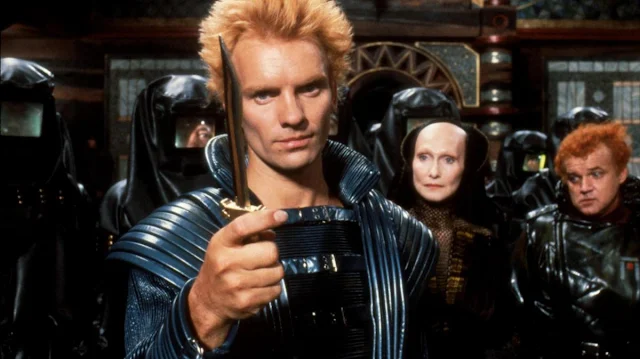
Through the Tleilaxu agent Scytale, Frank Herbert asks the question that haunts the entire Dune saga: Who has the right to shape life itself?
He stands before the blind Emperor. Paul Atreides, once Muad’Dib, can no longer see with his eyes but sees everything else. In his path waits Scytale, a Face Dancer from the Bene Tleilax, holding the promise of resurrection and the knife of manipulation.
This is not a battle of weapons but of philosophies. Through Scytale, Frank Herbert turns the Bene Tleilax from shadowy geneticists into the embodiment of humanity’s deepest impulse: to control what cannot be controlled. The Tleilaxu do not seek open conquest like the Atreides or Bene Gesserit. They seek mastery of flesh, memory, and faith itself. In Dune Messiah, their weapon is not an army but a single ghola born from the cells of a dead man.
I. The Hidden Hand of the Tleilaxu
The Bene Tleilax, often called the Tleilaxu, are a theocratic society governed by a secret council of Masters. Their world, Tleilax, is closed to outsiders. Its inner life is hidden behind layers of religious ritual and genetic experimentation.
To other powers of the Imperium they appear as merchants of forbidden things: cloned bodies, shapeshifters, and living technology. But beneath that trade lies a faith so zealous it turns science into sacrament. Their religion teaches that all creation is divine material to be reshaped. Their laboratories are temples. Their axlotl tanks are altars. And their product, the ghola, is both miracle and heresy.
The Bene Gesserit seek control through breeding, the Guild through prescience, but the Tleilaxu seek it through biology itself. They believe salvation can be manufactured in flesh.
II. The Tools of Flesh
Scytale’s faction commands the most terrifying technologies in the Imperium. Among them are the Face Dancers, agents who can mimic any form, a living disguise capable of perfect infiltration. The Tleilaxu also craft gholas, human beings regrown from the cells of the dead who under the right conditions can recover their original memories.
It is this power that Scytale wields in his plot against Paul Atreides.
The Duncan Idaho ghola, named Hayt, is his masterpiece. Once Paul’s loyal swordmaster, now reborn under Tleilaxu control, Hayt becomes both gift and weapon. His purpose is to break the Emperor’s composure, to open wounds that no prescient vision can heal. Yet in the moment of crisis, the conditioning fails. Duncan’s love and loyalty return, undoing the programming and exposing the arrogance of the Tleilaxu belief that life and identity can be engineered to order.
Every Tleilaxu creation exists on the border of science and blasphemy. The body is a resource. The soul is negotiable.
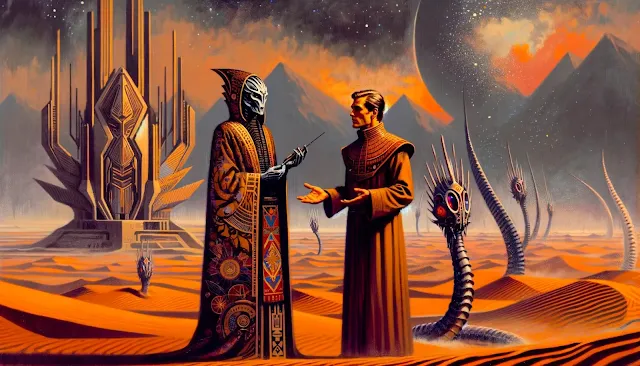
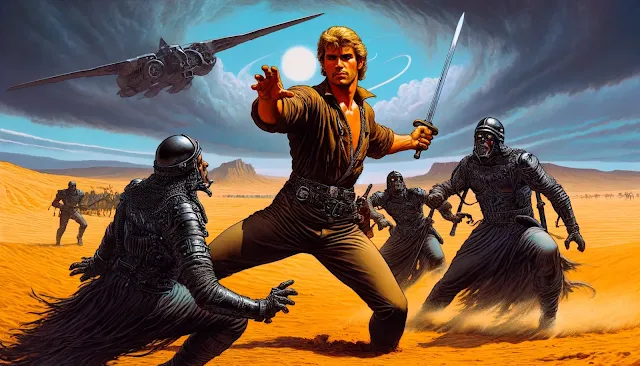
Scytale confronting the blind Emperor.
III. The Conspiracy Against Paul
Scytale enters Dune Messiah as part of a cabal of discontented powers: the Spacing Guild, the Bene Gesserit, and remnants of the old Imperial order. Together they conspire to destroy Paul Atreides, whose religious empire has turned the galaxy into a crusade. Scytale is their most dangerous piece because he plays not with armies but with hearts and memories.
The Tleilaxu promise the return of Duncan Idaho, knowing the emotional weight he carries for Paul. They plan for Hayt to awaken, assassinate the Emperor, and return to the Tleilaxu fold as proof of their supremacy. Yet as always in Herbert’s universe, the plan unravels.
Duncan’s human love defies his programming. Paul’s foresight saves him, but it also shows him the emptiness of victory. Scytale’s knife cuts both ways. It exposes the Tleilaxu’s genius and their blindness.
IV. Faith and Manipulation
Scytale’s calm in the face of death is not bravado but belief. The Tleilaxu faith teaches that all forms can be remade, that the line between life and death is illusion. To him, resurrection through ghola reproduction is proof of divine order. When he offers Paul the chance to resurrect Chani through Tleilaxu science, it is not simply blackmail. It is evangelism.
He offers the Emperor his god’s mercy, a way to rewrite fate.
Paul refuses, choosing blindness and exile over accepting such power. In that refusal, Herbert crystallizes his central theme: the rejection of control as salvation. Paul will not become what the Tleilaxu already are—priests of manipulation, creators of life without conscience.
V. Legacy of Flesh
Scytale dies, but his ideology endures. In the centuries that follow, the Tleilaxu refine their arts. They perfect axlotl tanks, revive countless gholas, and use biology as a weapon of state.
In Heretics of Dune and Chapterhouse: Dune, they re-emerge as both victims and architects of a universe transformed by their own logic. Even Scytale himself is reborn as a ghola, a living echo of his own theology. Herbert uses that resurrection to close the circle.
The man who once believed control was godhood becomes proof that no one escapes the systems they create. The Tleilaxu’s mastery of life cannot save them from their own decay. Their brilliance becomes their punishment.
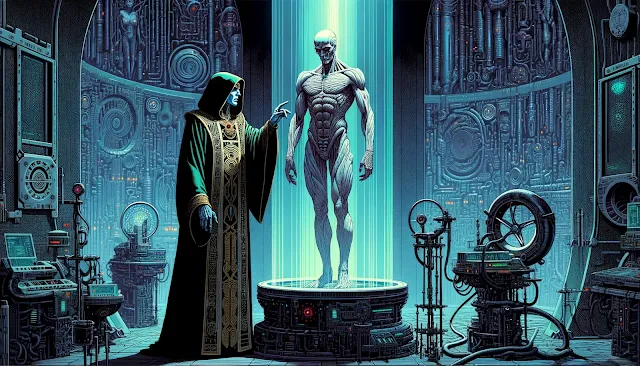
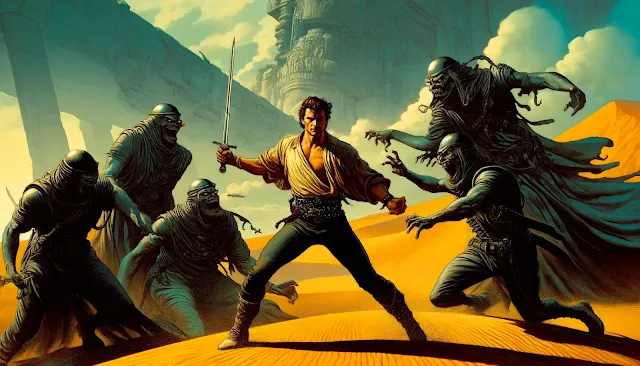
A Tleilaxu Master inspecting their greatest creation: the Ghola.
Conclusion: Control, Identity, and Faith
Through Scytale, Herbert compresses the entire Dune philosophy into one confrontation. Control breeds collapse. Faith without empathy becomes tyranny. Technology without morality becomes theology. The Tleilaxu and the Atreides are mirrors of each other—each convinced of their own vision of order, each blind to the human cost.
Scytale’s final offer to Paul—a chance to bring Chani back—is the series’ most chilling act of temptation. It asks the same question that echoes across all of Dune: if given the power to remake life, would humanity ever stop trying?
Herbert’s answer, delivered through Scytale’s failure and Paul’s refusal, is clear. The true measure of power is knowing when not to use it.
The Stone Burner: A Weapon of Physics and Philosophy
In Dune Messiah, a nuclear atrocity becomes the catalyst for Paul Atreides' final transformation, shattering the illusion of his invincibility and forcing him to confront the grim reality of his prescience.
In Frank Herbert's "Dune Messiah," the deployment of the Stone Burner emerges as a pivotal moment encapsulating the intricate interplay between power, responsibility, and the human condition. Against the backdrop of a tumultuous universe where political machinations shape destinies, the introduction of this devastating weapon symbolizes the desperate lengths to which the old imperial powers will go to assert control and reshape the course of history.
However, beyond its destructive capabilities, the Stone Burner serves as a potent metaphor for the moral and ethical quandaries faced by those who wield absolute power. Its deployment raises profound questions about the nature of leadership, the terrifying consequences of unchecked ambition, and the fragility of human morality in the face of prophetic destiny.
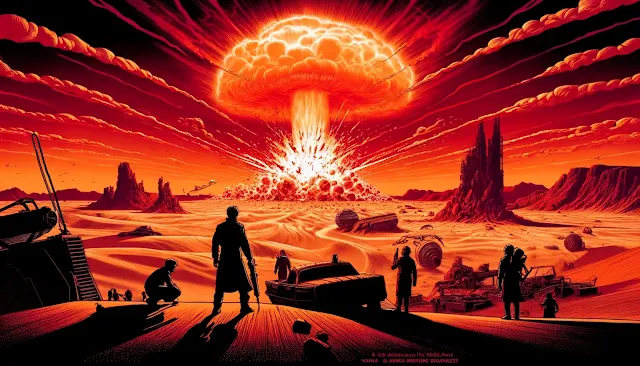
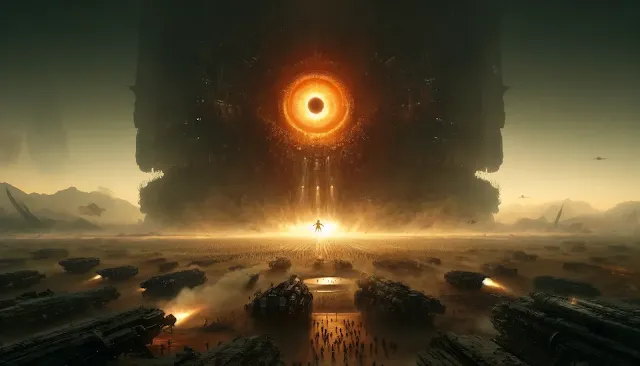
The blinding flash of J-rays that changed the course of the Golden Path forever.
I. The Deployment: A Conspiracy of Chaos and Law
The event involving the Stone Burner occurs midway through "Dune Messiah," during a critical phase of Paul’s bloody reign over the universe. The holy Jihad fought in his name has claimed sixty-one billion lives, and the political backlash is immense. Contextually, the deployment is set against a backdrop of deep paranoia and a multifaceted conspiracy engineered by the Spacing Guild, the Bene Gesserit, and the Tleilaxu.
What makes the Stone Burner so unique in the lore of Dune is its legality. In Herbert's universe, the Great Convention strictly outlaws the use of atomics against human targets—a crime punishable by planetary annihilation. However, a Stone Burner skirts this law. Fueled by J-rays, its primary function is not to vaporize a city, but to bore deep into a planet's crust. Its terrifying byproduct, however, is a specific radiation flash that instantly melts the eyes of anyone caught within its radius.
Scytale, a Face Dancer and member of the Tleilaxu, is instrumental in orchestrating this trap. The conspirators do not necessarily want to kill Paul; they want to break his mythos. By blinding him, they hope to render him an invalid according to strict Fremen law, forcing his abdication and proving that the Kwisatz Haderach is merely a vulnerable, mortal man.
II. The Blind Prophet: The Paradox of Second Sight
Paul's reaction to the Stone Burner’s deployment is a masterclass in tragic irony. The psychological and emotional impact on him is severe, but not in the way his enemies intended. Blinded by the blast, Paul's loss of sight is both physical and deeply symbolic. Yet, instead of rendering him helpless, the blinding forces him into total reliance on his prescient abilities.
The conspirators are horrified to discover that Paul can still "see." His prescience is so absolute that it maps perfectly onto the present moment. He can walk through the rubble, issue commands, and interact with his followers as if his eyes were completely intact. This "second sight" terrifies the Fremen, elevating him from a political emperor to an untouchable, supernatural deity. However, this power is a trap. Paul is only able to navigate the world because he is perfectly enacting a vision he has already seen. If he deviates from the script of his vision by even a fraction, he will be plunged into true darkness. He becomes a prisoner of his own omniscience.
"To know the future absolutely is to be trapped into that future absolutely. It collapses time. Present becomes future."
The visual landscape of a universe shaped by atomic power and prophetic determinism.
By walking into the desert alone, Paul reclaims his humanity. He relinquishes the crushing burden of being a god, proving that true power sometimes lies not in dominating the universe, but in knowing when to walk away from it. The Stone Burner, intended to be a weapon of his destruction, ultimately becomes the key to his liberation.
So, you want to dive into the magnificent, brutal world of Philip Reeve's Mortal Engines. You're faced with the classic reader's dilemma for a sprawling series: where do you start? The answer is simple, and it's the key to unlocking the saga's full power: Read the novels in the order they were published.
That's it, friend. That's the secret. Trust the author's intended journey, and you're in for an unforgettable treat.
Reading the "Mortal Engines" novels in their publication order is essential because it allows you to experience the world's mysteries as the characters do. When you begin with the first novel, "Mortal Engines," the history of the Sixty Minute War, the nature of the Stalkers, and the true meaning of Municipal Darwinism are all shrouded in myth and speculation. You uncover the secrets of this world piece by piece alongside Tom and Hester. This gradual discovery is a core part of the narrative's power and suspense.
Starting with the prequels first is like reading the history textbook before embarking on the adventure; it spoils the magic of discovery and deflates the impact of the original quartet's biggest revelations. Reeve's world-building builds upon each preceding book, making the unfolding of events more engaging when experienced in the order he created.
The Publication Order is as follows:
Mortal Engines (2001)
Predator's Gold (2003)
Infernal Devices (2005)
A Darkling Plain (2006)
Fever Crumb (2009)
A Web of Air (2010)
Scrivener's Moon (2011)
Night Flights (2018)
The Alternate Path: Chronological Order (For Rereads)
Once you have completed the saga in publication order, a chronological reread offers a completely different and deeply rewarding experience. The prequel series, starting with "Fever Crumb," explores the origins of the traction cities and the genesis of the world's conflicts. Reading them after you know the final fate of the world adds a profound layer of tragic irony.
You witness the birth of the very ideas and technologies that will lead to the apocalyptic events of the main quartet. You understand the heartbreaking origin of characters like Shrike, and every choice made by the prequel characters is freighted with the weight of the future you've already seen. It transforms the story from a mystery to be solved into a tragedy to be witnessed.
The Chronological Order is as follows:
Fever Crumb
A Web of Air
Scrivener's Moon
Night Flights
Mortal Engines
Predator's Gold
Infernal Devices
A Darkling Plain
The Verdict: Trust the Author
For the definitive first-time experience, publication order is the only way to go. It preserves the carefully crafted narrative structure and ensures that the world's history unfolds with maximum emotional impact. The prequels are brilliant, but their brilliance lies in how they re-contextualize a story you already love.
Mirrored Destinies: Paul Atreides and Feyd-Rautha Harkonnen
In Dune: Part Two, the rivalry isn't just political. It is a clash between two manufactured saviors.
The exploration of parallels between Feyd-Rautha Harkonnen and Paul Atreides in the cinematic adaptation of "Dune Part 2" offers a fascinating insight into the broader thematic concerns of Frank Herbert's original work. It particularly highlights the context of power, prophecy, and the making of saviors.
The movie adaptation amplifies these parallels more explicitly than the novels. It provides a visually and narratively rich platform to examine the manipulations of higher powers and their impact on individuals destined for greatness, whether genuine or manufactured.
Two products of the same genetic manipulation.
I. The Manufactured Savior
In both the "Dune" novels and the movies, the concept of a manufactured savior, the Kwisatz Haderach, is central. For Paul Atreides, his journey from the heir of a noble family to the Muad'Dib, the messiah of the Fremen, is marked by a series of manipulations by the Bene Gesserit. This secretive sisterhood operates with their own long-term genetic and political agendas.
Paul's ascent is partially orchestrated through the Bene Gesserit's Missionaria Protectiva, a program designed to seed myths across the galaxy that could later be exploited by their members. His mother Lady Jessica nudged things along too.
Feyd-Rautha Harkonnen, on the other hand, is presented as a counterpoint to Paul. While not as prominently featured in the first novel or its film adaptations, subsequent narratives and "Dune Part 2" in particular delve into his role as a "savior" for the Harkonnen interests on Arrakis. Feyd is groomed by his uncle, Baron Vladimir Harkonnen, to eventually take over the rule of Arrakis. He is positioned as a ruler who could potentially be embraced by the populace despite the brutal Harkonnen regime. Maybe he would have been Emperor one day.
II. Prescience and Shared Visions
An interesting aspect that the movie "Dune Part 2" explores more deeply than the novels is the concept of prescience shared by both Paul and Feyd-Rautha. Paul's visions, fueled by his exposure to the spice melange and his Bene Gesserit training, provide him with glimpses of possible futures. A trait that becomes central to his character and the unfolding narrative.
The movie adaptation hints at Feyd possessing a similar foresight, albeit in a more limited capacity. Scenes such as dreaming of significant encounters like meeting Count Fenring serve to draw a parallel between him and Paul, emphasizing the theme of duality and mirrored destinies.
III. Pawns in a Larger Game
The film adaptation underscores how both characters, despite their apparent opposition, are pawns in larger schemes. Paul's realization of his role as a tool in the Bene Gesserit's machinations and Feyd's position within the Harkonnen's brutal ambitions for Arrakis highlight a shared theme of individuals caught in the web of greater powers.
The visual language of power: Atreides honor vs. Harkonnen brutality.
This aspect is illuminated in the movie. It showcases how these manufactured saviors, despite their personal powers and destinies, are ultimately serving the interests not of the common people but of those who created and positioned them.
IV. Tale of the Tape: Atreides vs. Harkonnen
This comparison looks at different parts of Paul Atreides and Feyd-Rautha Harkonnen's characters, giving a fuller picture of who they are in "Dune." It covers where they come from, how they think and feel, and what they mean to the story.
Character Trait
Paul Atreides
Feyd-Rautha Harkonnen
Place in the World
Heir to House Atreides. Expected to lead with honor and justice. His duty is to his family's legacy and to the people under their care.
Heir to House Harkonnen. Trained in deception and control. His duty involves continuing the legacy of domination and exploitation.
Attitude to the World
Sees the world as interconnected. Possesses a strong sense of responsibility towards preserving ecological and cultural integrity.
Views the world as a resource to be exploited for personal and familial gain. Shows little regard for preservation.
Thematic Parallel
Represents the reluctant hero thrust into a messianic role. Embodies destiny, sacrifice, and the burden of leadership.
Serves as a dark mirror to Paul. Embodies ambition, power without responsibility, and the dangers of unchecked authority.
Mental State
Struggles with the weight of prophecy and foreknowledge of a bloody future. Causes significant stress and internal conflict.
Primarily driven by ambition and a desire for power. Less apparent internal struggle or ethical dilemma compared to Paul.
Leadership Style
Inspiration, moral integrity, and strategic alliances. Aims for a symbiotic relationship with Arrakis and the Fremen.
Leadership through fear, manipulation, and strength. Cunning and charismatic, able to inspire loyalty through coercion.
Vision for Future
Envisions a future where Arrakis is transformed and its people are free from oppression. Aims for broader balance.
Aims to solidify Harkonnen control over Arrakis. Prioritizes the family's dominance over the well-being of the planet.
Combat Strategy
Highly skilled in hand-to-hand combat. Influenced by Mentat training and the Bene Gesserit. Adopts a defensive and thoughtful approach.
Exceptional fighter known for prowess in the gladiatorial arena. Uses combat as a means to demonstrate strength and instill fear.
Philosophy
Guided by a sense of duty to others. Believes in the interconnectedness of all things and the importance of balance.
The Many Lives of Duncan Idaho: Identity, Memory, and the Infinite Ghola
In the labyrinthine universe of Frank Herbert's Dune, few characters captivate and intrigue as profoundly as Duncan Idaho (Jason Momoa). His repeated resurrection as a ghola serves as a crucial cornerstone for exploring the series' vast thematic landscape.
Frank Herbert's Dune series stands as a colossus in the realm of science fiction. It weaves an intricate narrative that spans millennia and explores the darkest depths of human nature, absolute power, and violent environmental engineering.
At the very heart of this sprawling narrative is Duncan Idaho. His agonizing journey from a mortal, loyal swordmaster of House Atreides to a repeatedly resurrected, genetically engineered ghola perfectly encapsulates the series' exploration of complex themes. These concepts include the fragility of personal identity, the crushing burden of loyalty, the curse of ancient memory, and the horrific cost of forced human evolution.
Idaho's completely unique trajectory through the Dune saga allows Herbert to delve into terrifying philosophical quandaries. Later, his son Brian Herbert along with co-author Kevin J. Anderson expanded on these concepts. The character serves as the ultimate narrative vessel for questioning the ethics of cloning, the true essence of human consciousness, and the terrifying potential for human transcendence or degradation. For further context on the prequel era and Duncan's brutal origins on Giedi Prime, refer to House of Atreides.
The swordmaster who became a living monument to memory.
I. The Concept of Gholas in the Dune Universe
The Dune universe is woven with an intricate political, social, and religious tapestry. It introduces the horrific concept of gholas as a pivotal plot mechanism and a deep philosophical inquiry. A ghola is essentially a biological clone grown entirely from the dead cells of a deceased individual. The Bene Tleilax are a society of mysterious and morally bankrupt genetic manipulators who cultivate these beings in their secretive Axlotl tanks. They possess the terrifying potential to restore these flesh constructs to full consciousness. By applying a severe, highly specific traumatic stimulus, they can violently unlock the ghola's genetic memory of their former lives.
This biological process is completely fraught with ethical, moral, and existential implications. It raises immediate, terrifying questions about the true nature of identity, the continuity of the human soul, and the blurred boundaries between life and death. Duncan Idaho was originally a highly gifted, fanatically loyal warrior of House Atreides who died defending Paul. He becomes the most notable and frequently recurrent ghola throughout the entire saga.
His repeated, often non-consensual resurrections by the Bene Tleilaxu serve as a tragic testament to his undying loyalty to the Atreides line. They also act as a vital narrative tool through which Herbert explores the profound depths of human consciousness. The Tleilaxu possess entirely enigmatic motivations and godlike genetic capabilities. They symbolize the absolute double-edged sword of uninhibited technological and biological advancement. They physically embody the series' deep cautionary stance on the extreme hubris of attempting to control nature and hijack human destiny.
The ghola of Duncan Idaho represents a literal, bleeding confluence of the past and the future. He serves as an immortal bridge across the series' sprawling, millennia-long timeline. He is a tragic mirror reflecting the rapidly evolving philosophical and ethical landscapes of the Dune universe. Through the painful lens of Duncan's endless resurrections, Herbert interrogates the very essence of identity. He forces the reader to ask a chilling question.
Is a person strictly defined by their memories, their genetic makeup, or something far more intangible?
Novel
Incarnation Status
Thematic Contribution
Dune
Original Duncan Idaho
Serves as a loyal swordmaster and confidant to the Atreides. Represents themes of loyalty, valor, and sacrifice.
Resurrected by the Bene Gesserit for his genetic memories. Highlights the search for identity and the complexities of human evolution.
Chapterhouse: Dune
Integrated Ghola
Continues from Heretics. Plays a pivotal role in Bene Gesserit strategies, exploring adaptation and survival.
A concept visualization of the horrific Tleilaxu tank process.
II. The Significance of Resurrection
Duncan Idaho's continuous, agonizing rebirths as a ghola in the Dune saga are not mere narrative conveniences. They are incredibly rich, thematic veins that Frank Herbert and his literary successors mine for profound philosophical and ethical exploration. Each bloody resurrection peels back layers of the human condition. It reveals striking insights into identity, the trauma of memory, unyielding loyalty, and the terrifying potential futures of humanity.
Initially introduced simply as a highly skilled, loyal soldier, Duncan eventually becomes the vital anchor point for readers through the series' massive socio-political shifts. His continuous, recognizable presence offers a comforting thread of continuity in a bizarre, alien saga spanning thousands of years. Leto II, the monstrous God Emperor, explicitly keeps reviving Duncan because he desperately needs a pure, uncorrupted baseline human to measure his own loss of humanity against.
Moreover, Duncan's unique status allows Herbert to deeply explore the horrific implications of unchecked technological advancements on society. He becomes a tragic vessel for examining how godlike technologies like biological cloning and forced memory transfer could permanently redefine humanity's basic understanding of life and death.
One of the most intriguing aspects of his character is the exploration of identity and memory. Each new ghola is initially devoid of the original Duncan's memories. They live as a blank slate, a highly trained killer named Hayt or simply "the Ghola," until undergoing a severe traumatic revival. This awakening process raises profound, unsettling questions. Is the resurrected Duncan truly the exact same Duncan if he simply possesses a biological download of the original's memories? What specific role do our lived memories actually play in forging our immortal souls?
III. Themes of Loyalty and Betrayal
Duncan Idaho's undying loyalty to the Atreides family perfectly highlights the conflicting themes of loyalty and betrayal. Each new resurrection severely tests his fidelity under increasingly bizarre and horrific circumstances. This reinforces the core idea that certain fundamental human values remain absolutely constant even as external political conditions radically change. This unwavering constancy serves as a stark, emotional counterpoint to the constantly shifting allegiances and cold Machiavellian strategies that strictly characterize the political landscape of the Dune universe.
Yet, Duncan's resurrections also introduce the terrifying potential for profound betrayal. Characters within the series constantly question the true reliability of a ghola. They openly ponder whether the Tleilaxu Masters could have secretly implanted hidden loyalties, subliminal commands, or deadly assassination objectives into his genetic code.
This suspicion is proven entirely justified in Dune Messiah. The Tleilaxu specifically programmed the Hayt ghola with a subconscious trigger designed to force him to murder Paul Atreides. However, in a breathtaking triumph of free will over biological determinism, Duncan's innate, overwhelming loyalty to the Atreides violently overrides his genetic programming. This singular moment of rebellion shatters the Tleilaxu assumption that biology is absolute destiny. This reflects broader concerns about the weaponization of genetic material and suggests that technological mastery over life inevitably leads to profound, deadly ethical dilemmas.
The eternal desert that Duncan traverses across millennia.
IV. Reflections on Human Nature and Evolution
Duncan Idaho's repeated rebirths offer a critical lens through which the Dune series reflects on human nature and forced evolution. Each successive ghola represents a disturbing blending of the natural human spirit and artificial genetic engineering. This openly challenges our comfortable notions of what it actually means to be human. Herbert posits that humanity's distant future evolution might not be purely organic or biological. Instead, it will be heavily augmented by secretive technology and forcibly shaped by our evolving understanding of consciousness.
During the 3,500-year reign of Leto II, Duncan serves as the primary genetic stud for the God Emperor's secretive breeding program. He is paired with Siona Atreides to introduce his baseline, predatory survival instincts into a new breed of humans who are completely invisible to prescient vision. Duncan is entirely disgusted by this role, yet he cannot escape his biological utility to the empire.
Furthermore, Duncan's eventual ability to integrate memories from hundreds of different ghola lifetimes hints at a terrifying potential new stage in human development. He literally becomes a singular being where accumulated, multi-generational wisdom and horrific combat experiences can be passed down directly. This transforms his individual understanding into a collective, godlike awareness. This concept resonates deeply with the series' broader themes of unavoidable historical cycles and the desperate possibility of finally transcending them.
V. The Philosophical and Ethical Implications
The endless resurrections of Duncan Idaho usher readers into a highly complex web of philosophical inquiries. These dark reflections orbit around the non-consensual manipulation of life, the exact definition of personal identity, and the severe moral dimensions of absolute technological advancement. The casual creation of gholas by the Tleilaxu raises fundamental, horrifying ethical questions about flesh peddling, cloning, and the forced restoration of consciousness.
Moreover, the series deeply probes the non-existent rights of gholas and the total absence of consent. Can a ghola truly consent to its own creation or the painful, traumatic restoration of its past memories? The ethical complexities are violently magnified by the potential for gholas to be used strictly as disposable tools for political assassination and espionage. Duncan frequently finds himself trapped in this exact position. This reality constantly raises severe concerns about bodily autonomy and the grotesque commodification of human life in a post-jihad universe.
The Eternal Soldier
The tragic character arc of Duncan Idaho extends far beyond his individual combat storylines to completely influence the saga’s overarching themes. He stands as the ultimate symbol of fierce loyalty, baseline human resilience, and the desperate quest for identity. Duncan’s legacy is a bloody, beautiful testament to the enduring human spirit. His agonizing journeys as a ghola massively enrich the series' exploration of cyclical history and the painful evolution of consciousness.
His highly unique perspective as a displaced character who constantly bridges completely different eras provides critical insights into the dangers of absolute power. He highlights the desperate search for meaning in a cold cosmos that is entirely indifferent to individual destinies. Duncan's evolving, often strained relationship with the descendants of the Atreides perfectly highlights the series' deep exploration of love, duty, and the interconnectivity of all biological life.
Amazon's adaptation of the iconic "Fallout" video game series emerges not merely as a faithful translation of a beloved video game into the medium of television but as a seminal (and surreal) work of science fiction that redefines the boundaries of narrative adaptation.
A bold statement indeed, but you need to see this show!
"Fallout" stands on the precipice of the burgeoning genre of video game adaptations, proving itself to be a narrative and visual marvel that adeptly navigates the vast, perilous wastelands of post-apocalyptic fiction.
It's akin to the wondrous The Last of Us adaptation that took the world by storm in 2023 and it has hints of Marvel's Loki.
At the heart of "Fallout" is a daring narrative decision: to set the series within the expansive universe of the game while charting a course through previously unexplored territories.
This fresh canvas is populated with new characters and stories, expanding the lore of the Fallout universe while making it accessible to newcomers.
The series captures the essence of the original games—the bleakness of survival, the satire of American consumerism, and the quirks of a world halted in a retro-futuristic vision of the '50s—while also crafting a unique story that stands on its own merits.
This is to say, we are in the established world of Fallout but not exactly following specific plots from any of the games.
This writer suspects they will tie in such grand ideas in the second and following seasons.
The series excels in its character portrayals, particularly through the journeys of Lucy and Maximus. Lucy, brilliantly embodied by Ella Purnell (a standout in Yellowjackets), offers viewers a lens through which the wasteland is both wondrous and terrifying. Her evolution from a sheltered existence within Vault 33 to a survivor in the wasteland encapsulates a poignant narrative of growth, resilience, and the harsh education of the outside world.
Aaron Moten's Maximus is a study in contrasts, caught between the rigid expectations of the Brotherhood of Steel and his personal insecurities. His character arc, marked by internal struggles and the quest for identity, mirrors the external chaos of the wasteland, offering a compelling narrative of redemption and self-discovery.
The ever-dependable Walton Goggins' portrayal of The Ghoul adds a complex layer to the series, serving as a narrative bridge between the pre- and post-apocalyptic worlds. His performance highlights the transformative impact of tragedy on the human spirit, making The Ghoul a memorable and multifaceted character.
These three characters for the basis of a triumvirate one could call the good, the bad, and the ugly.
You can decide which is which.
"Fallout" is a triumph of visual storytelling and world-building.
The attention to detail in bringing the game's universe to life—from the sprawling desolation of the wasteland to the claustrophobic interiors of Vault 33—creates an immersive and authentic experience.
The series not only recreates iconic elements from the games but also infuses them with a tangible sense of reality, particularly evident in the depiction of the T-60 power armor, a symbol of the series' commitment to visual authenticity.
The series' episodic structure, reminiscent of the quest-driven progression of RPGs, enhances its storytelling dynamic.
Each episode functions as a self-contained narrative while contributing to the overarching plot, allowing for deep character exploration and a pacing that maintains tension and engagement.
This approach, akin to a chain of RPG quests, offers a refreshing departure from the oft-tread paths of serialized storytelling.
Watch out for that giant salamander...
"Fallout" sets a new standard for video game adaptations, showcasing the potential for these narratives to transcend their origins and resonate as standalone works of art.
The series honors the legacy of its source material while establishing itself as a critical and creative success. Through its adept storytelling, rich character development, and meticulous world-building, "Fallout" not only captivates fans of the games but also heralds a new era of storytelling, inviting a more general audience to explore the depths of its post-apocalyptic vision.
It also makes this reviewer wonder what went so wrong with the first season of the Halo adaptation when this version of Fallout reaches near perfection.
The Great Filter: Why There Is No AI in Frank Herbert's Dune
Frank Herbert's "Dune," first published in 1965, remains one of the most towering achievements in science fiction literature. Yet, unlike its contemporaries, it conspicuously omits the genre's most common trope: the thinking machine.
Set against the backdrop of a far-future universe where noble houses vie for control of the desert planet Arrakis, the sole source of the most valuable substance in the universe, "spice" melange, "Dune" weaves a complex narrative exploring themes of politics, religion, ecology, and human potential.
To appreciate the uniqueness of Herbert's vision, it's essential to place "Dune" within the broader landscape of science fiction before and around its publication. The mid-20th century marked a period of rapid technological advancement and a growing fascination with artificial intelligence. Works like Asimov's "I, Robot" (1950) and Clarke's "2001: A Space Odyssey" (1968) epitomized the era's optimism and anxieties about AI. They reflected widespread curiosity about technology's potential to transform society.
"Dune," however, stands apart in this tradition. Herbert's universe is distinctly human-centered. It focuses on the depths of human potential rather than the possibilities of technology.
This choice was not merely a departure from his peers but a deliberate counter-narrative to the prevailing techno-optimism of the time. By eschewing AI, Herbert redirected attention from technological to human evolution. He emphasized the complexities of human nature, power, and the environment.
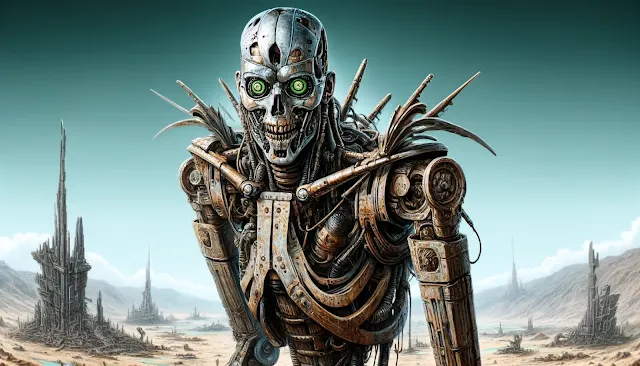
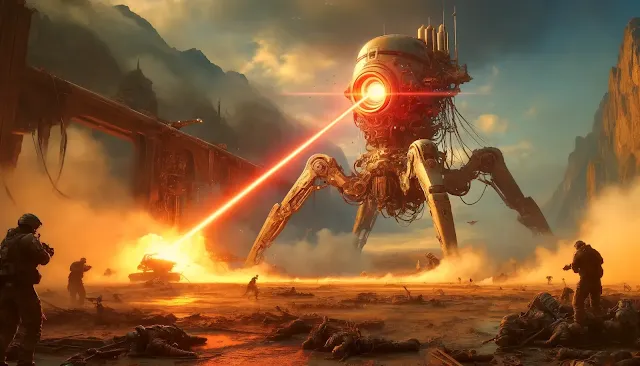
A visualization of the Butlerian Jihad aftermath.
I. The Ban on AI: The Butlerian Jihad
Within the rich tapestry of the "Dune" universe, the prohibition of artificial intelligence is not merely a narrative choice but a foundational element of the society Herbert envisioned. This ban is rooted in a pivotal event known as the Butlerian Jihad. This was a crusade against sentient machines that occurred thousands of years before the events of "Dune."
This conflict, more than a mere backdrop, is integral to understanding the philosophical and moral fabric of the universe Herbert crafted. The Butlerian Jihad, named after Jehanne Butler, represents a turning point in the history of the "Dune" universe. This galactic upheaval was ignited by the emergence of thinking machines that threatened to usurp humanity's place in the universe.
"Thou shalt not make a machine in the likeness of a human mind."
The Jihad was not just a war against external machinery but a struggle for the soul of humanity. It was a rebellion against the possibility of becoming subservient to the creations of their own hands. It culminated in the universal prohibition encapsulated in the commandment above.
These adaptations underscore a universe where human capabilities have been honed to fill the void left by the absence of machines. This suggests a deliberate choice by Herbert to explore human potential in its rawest form.
The terrifying essence of the Butlerian Jihad.
II. Philosophical and Moral Rationales
The Butlerian Jihad serves as a cautionary tale within the "Dune" narrative. It reflects Herbert's skepticism of unchecked technological advancement. By positing a future where humanity must reclaim its essence from the clutches of its own creations, Herbert critiques the potential for technology to dehumanize and dominate. This theme resonates with contemporary concerns about AI and automation, making "Dune" a prescient exploration of the limits of human reliance on technology.
The Jihad can be seen as Herbert's meditation on the balance between progress and humility. In a universe scarred by the hubris of creating sentient machines, the characters of "Dune" are constantly reminded of the importance of maintaining a sense of humanity. This balance is not only a safeguard against the external threat of machines but a way to prevent the internal corrosion of human values and identity.
The Butlerian Jihad, therefore, is not just a historical event within the "Dune" universe but a philosophical stance against the potential tyranny of technology. Herbert uses this backdrop to explore deeper questions of power, freedom, and the essence of being human. Through the lens of the Jihad, "Dune" becomes a reflection on the dangers of losing ourselves to the very tools we create. A theme that continues to resonate deeply in an age increasingly dominated by digital technology.
Through the eyes of characters like Serena Butler, whose personal tragedy ignites the rebellion, and the genius inventor Tio Holtzman, the novel explores the complex interplay of technology, power, and human resilience. This detailed exploration into the Butlerian Jihad not only enriches the lore of the "Dune" universe but also illuminates the philosophical underpinnings of the original series. It contextualizes the deep-seated fear and distrust of AI within the "Dune" saga, providing a narrative foundation for Frank Herbert's cautionary tale about the dangers of surrendering too much of our humanity to the machines we create.
Herbert's universe, where humanity has been forced to reclaim its future from the machines it created, offers a stark warning about the potential for technology to dominate and dehumanize. Through the narrative of the Butlerian Jihad and the societal structures that emerge in its wake, Herbert challenges readers to reflect on the value of human intuition, ingenuity, and resilience.
"Dune" argues for the preservation of human agency in an increasingly automated world. It suggests that the essence of humanity lies not in its ability to create sophisticated technologies but in its capacity for creativity, adaptability, and spiritual depth. This message resonates in an age where the boundaries between human and machine, natural and artificial, are becoming ever more blurred.
In Denis Villeneuve's Dune: Part Two, a subtle yet profound narrative addition unfolds—Feyd-Rautha Harkonnen is endowed with a semblance of prescience.
This deviation from Frank Herbert's original novels not only deepens the character's complexity but enriches the entire lore of the Dune saga.
By drawing parallels between Feyd-Rautha and Paul Atreides through shared prescient abilities, the film explores themes of duality, destiny, and the unpredictable nature of genetic inheritance, thus adding a rich layer of philosophical depth to the narrative.
The narrative decision to hint at Feyd-Rautha possessing similar abilities diverges from the source material, suggesting a broader distribution of prescience that challenges the exclusivity of Paul's gift and complicates the Bene Gesserit's genetic manipulations.
The allusion of prescient abilities to Feyd-Rautha's character arc draws a parallel to Paul's journey, emphasizing the theme of mirrored fates. Both scions of powerful houses, their lives are intertwined by destiny and the manipulative designs of the Bene Gesserit.
This shared prescience suggests that despite their contrasting moral compasses and upbringing, both are ensnared by the same cosmic forces, highlighting a narrative of duality where each character reflects what the other might have been under different circumstances.
The implication of Feyd-Rautha's prescience also casts a shadow of doubt over the Bene Gesserit's control over their breeding program. Traditionally viewed as master manipulators, the unexpected manifestation of prescient abilities in Feyd-Rautha illustrates the inherent unpredictability of genetics.
This unexpected development challenges the notion of control and predestination, suggesting that the very traits the Bene Gesserit sought to cultivate through meticulous planning could arise spontaneously, highlighting the chaotic nature of genetic inheritance.
A vergence in the Force perhaps?
Or is it just unexpected for the viewer as the film makes it clear that Finnering has "secured the blood line"...
The film thus invites a deeper contemplation of power, foresight, and the complexities of the human condition, cementing Dune's legacy as a profound exploration of the interplay between personal agency and the currents of destiny.
The Gom Jabbar test in "Dune: Part 2" presents a unique narrative divergence from Frank Herbert's seminal work, offering a layered examination of Feyd-Rautha Harkonnen's character, much as the novel scrutinizes its protagonists and antagonists with equal rigor.
In the original Dune novel and each film of Lynch and Villenue, Paul Atredies undergoes the test at the has of the Reverend Mother of the Bene Gesserit.
Dune 2 features a scene not in the novel in which a somewhat bewitched Feyd-Rautha under the spell of Margot Fennering who gives Austin Butler's character the same test.
This deviation from the novel not only enriches the cinematic adaptation but also extends the thematic exploration of pain, power, and prescience that pervades the Dune saga.
By analyzing Feyd-Rautha's confrontation with the Gom Jabbar, one can discern how the filmmakers have woven these themes into his character arc, mirroring and contrasting Paul Atreides' journey, while also adhering to the intricate dynamics of power, discipline, and human nature examined in Herbert's universe.
The film's very subtle portrayal of Feyd-Rautha as a quasi-Kwisatz Haderach, one generation removed from the culmination of the Bene Gesserit breeding program, injects a fascinating parallel to Paul Atreides.
This notion is subtly underscored by Feyd's self professed dream of Margot Fenring, an element that somewhat mirrors Paul's prescient dreams about Chani which were focussed on in Dune Part One.
Such parallels are not mere narrative conveniences but deliberate attempts to illustrate the duality of potential futures and the role of prescience within the universe of Dune.
Prescience, in this context, serves as both a gift and a curse, offering foresight while also ensnaring individuals within the confines of destiny and expectation.
Feyd's hinted but somewhat limited prescience indicates a latent potential that could have unfolded differently under another set of circumstances.
Pain, Pleasure, and Power - how Feyd-Rautha survived Fenring's Gom Jabbar test
The film adaptation adds depth to Feyd-Rautha's character by highlighting his unique relationship with pain.
Statements from characters in the film suggest that Feyd not only endures pain but derives pleasure from it.
This characteristic is crucial in understanding his ability to survive the Gom Jabbar test.
Feyd-Rautha's survival is depicted as stemming from a masochistic enjoyment of pain, coupled with a formidable mental discipline. For Feyd, pain is not a barrier but a means to demonstrate his superiority and resilience, reflecting the brutal ethos of House Harkonnen.
Feyd-Rautha's discipline and self-control are highlighted as traits that distinguish him from other members of House Harkonnen.
Villenueve's film subtly suggests that these qualities are what enable him to endure the Gom Jabbar.
In a universe where the ability to maintain control over one's instincts is a measure of humanity, Feyd's discipline underlines his capabilities as a leader and a warrior. This aspect of his character aligns with the Bene Gesserit's criteria for humanity, albeit twisted by his sadomasochistic tendencies.
The broader thematic elements of the Harkonnen ethos—power, control, and the capacity for self-discipline—are crucial to understanding Feyd-Rautha's survival of the Gom Jabbar.
The Harkonnens are depicted as power-hungry, yet capable of calculated restraint to achieve their goals. Feyd-Rautha embodies this principle, demonstrating that even within the framework of villainy, there exists a nuanced spectrum of ambition and capability.
His ability to survive the Gom Jabbar, therefore, is not merely a testament to his physical endurance or a sadomasochistic inclination towards pain but a reflection of his adherence to the Harkonnen principle of power at any cost.
The story picks up with Ellen Ripley, the saga's heroine, crash-landing on Fiorina "Fury" 161, a desolate planet housing a penal colony where the prisoners practice their faith. The film introduces new challenges for Ripley, including the revelation of a Xenomorph presence on the planet and a devastating personal discovery.
A central mystery in "Alien 3" revolves around why the alien takes an unusually long time to gestate within Ripley compared to previous hosts. This anomaly is not just a minor plot detail but a significant element that affects the character's journey and the movie's storyline.
The extended gestation period contributes to the suspense and the emotional depth of the narrative, raising questions about the biology of the Xenomorphs and the fate of Ripley.
The extended gestation period is pivotal for several reasons. It influences the pace and tension of the story, allowing Ripley time to interact with other characters and to confront her situation. Moreover, this aspect of the plot is crucial for deepening the thematic layers of the Alien series, touching on themes of life, death, and the cycle of creation and destruction.
Before "Alien 3", Ripley faces the Xenomorph threat in "Alien" and "Aliens", surviving against all odds. These encounters showcase her resilience and deepen her understanding of the Xenomorph species, setting the stage for her ultimate confrontation in "Alien 3".
The Xenomorphs are characterized by a complex life cycle, starting from an egg that releases a facehugger, which then implants an embryo into a host. The embryo gestates before emerging as a chestburster.
Prior to "Alien 3", this process typically progresses rapidly, but Ripley's case deviates from the established norm.
In-universe explanations suggest Ellen may be infected with a queen xenomorph and such an embryo's uniqueness might account for the prolonged gestation.
That is if it was a queen in Ripley...
The extended gestation period serves the film's narrative by allowing Ripley to develop further as a character and to face her destiny. It adds a layer of tragic inevitability to her journey, highlighting themes of sacrifice and the relentless cycle of life and death.
We can dance around the point forever but ultimately, the timing of the gestation period is dictated by the needs of the plot.
"Alien 3" is designed to bring Ripley's saga to a close, with her sacrifice embodying the themes of the series. The gestation timeline serves this narrative purpose, emphasizing that in the Alien universe, human experiences and struggles are intertwined with the incomprehensible life cycles of the Xenomorphs.
Ripley's prolonged gestation and eventual fate underscore the series' exploration of survival, sacrifice, and the complex interplay between human and alien life.