

The Bootstrap Paradox: Time Loops and Causal Conundrums Explored Through Science Fiction Films
Science fiction loves time travel because it lets a story pick up cause and effect, flip it over, and show you the loose stitching underneath. One paradox, in particular, keeps turning up because it feels clean, logical, and deeply wrong at the same time. The Bootstrap Paradox.
It is the paradox where something exists because of itself. An object, a message, a piece of knowledge, a song, a machine, a warning, a whole bloodline. It gets passed back through time and becomes its own source, which means the usual question, “Who made this?” stops having a satisfying answer.
That is why the Bootstrap Paradox has become one of the great engines of time travel storytelling. It does not always break the timeline. In many stories, it does the opposite. It keeps the timeline stable. The horror comes from the fact that the loop works, while the origin vanishes.
In this article, we dig into what the Bootstrap Paradox really is, why it is different from other time travel paradoxes, why it messes with our intuitions about creation, and how films such as Predestination, Looper, Interstellar, Bill & Ted’s Excellent Adventure, Harry Potter and the Prisoner of Azkaban, and Triangle use it to turn time into a locked room mystery.
TL;DR: Key Takeaways on the Bootstrap Paradox
A Bootstrap Paradox is a causal loop with no clear origin. The thing inside the loop exists because it was sent back from the future, where it only existed because it had already been sent back.
It is also called an ontological paradox. “Ontological” here means it is about being or existence. The mystery is not whether the timeline contradicts itself, but where the object, information, or person originally came from.
It is different from the Grandfather Paradox. A Grandfather Paradox creates a contradiction. A bootstrap loop can remain perfectly self-consistent while still having no first cause.
It is different from a basic time loop. A time loop repeats events. A bootstrap paradox specifically concerns the origin of something trapped inside the loop.
Predestination is the most extreme film example. Its paradox involves identity, parentage, agency, and a person becoming their own origin point.
Interstellar uses the paradox emotionally. Cooper receives the message that saves the mission because his future self sends it after the mission succeeds.
The paradox is unsettling because it removes authorship. A song, warning, invention, or life can exist in the timeline, but no one truly creates it from outside the loop.

|
| Predestination uses the Bootstrap Paradox as identity, bloodline, mission, and fate all folded into one self-contained loop. |
What is the Bootstrap Paradox?
The Bootstrap Paradox is a self-contained causal loop. Something exists in a timeline because it was brought back from the future, and then, in that same future, someone finds it and brings it back again. Cause and effect still happen, but the first cause is missing.
The name comes from the phrase “pull yourself up by your bootstraps,” meaning to do something impossible by relying on yourself as the source of your own rise. In time travel fiction, the phrase becomes almost literal. The object, message, person, or idea lifts itself into existence. It does not need an outside creator. It only needs the loop.
A classic example is simple. A time traveler visits Beethoven and gives him the sheet music for his own symphonies. Beethoven copies them, becomes famous, and history records him as the composer. Centuries later, the time traveler finds the published music, travels back, and gives it to Beethoven. The music exists. It has influence. It changes culture. But who composed it?
That is the core wound in the paradox. The timeline is not necessarily broken. There is no obvious contradiction. The music can be played, printed, taught, and remembered. The problem is that its origin has been erased. The information has become an orphan.
Bootstrap Paradox vs Grandfather Paradox vs Predestination Loop
Time travel stories often blur their paradoxes together, which makes discussions messy. The Bootstrap Paradox has to be separated from two neighbouring ideas: the Grandfather Paradox and the predestination loop.
Grandfather-style paradoxes create a contradiction. The classic version is travelling back in time and preventing your own birth. If you were never born, you could never travel back. The timeline collapses into logical conflict.
Predestination loops trap characters in events that always happen the same way. A person tries to prevent a future event, but their attempt causes that same event. The emphasis is on fate and inevitability.
Bootstrap loops are about origins. The timeline may remain stable, but an object, message, invention, or person has no clear creator. The loop explains how it keeps existing, but not how it began.
The overlap is important. Many stories use more than one paradox at once. Predestination is both a predestination loop and a bootstrap paradox. Harry Potter and the Prisoner of Azkaban is mainly a self-consistent predestination loop, but it has smaller bootstrap-like moments because actions in the past are only possible because the characters already experienced their effects. Interstellar has a bootstrap message loop, but not a chaotic contradiction.
The clean rule is this: if the mystery is “Can this event still happen without contradiction?” you are probably dealing with a Grandfather-style problem. If the mystery is “Were these events always meant to happen?” you are looking at predestination. If the mystery is “Where did this thing or knowledge actually originate?” you are looking at the Bootstrap Paradox.
Why the Bootstrap Paradox feels logical and impossible at once
The Bootstrap Paradox is unsettling because it keeps cause and effect intact while removing the beginning. Each individual step can make sense. The time traveler receives the message. The time traveler sends the message. The younger self acts on the message. The older self later sends it again. The chain is complete.
What is missing is not a link in the chain. What is missing is the chain’s origin outside itself. That is why these stories feel so clean. They do not need the messy chaos of alternate timelines, butterfly effects, or collapsing reality. They can be perfectly stable and still feel wrong.
Picture the famous painting example. Someone time-travels and hands a famous painting to an artist. The artist becomes renowned for creating it. Later, the time traveler takes the same painting from a museum and brings it back again. The painting has a history, a paper trail, a measurable presence in the world, but no true beginning. It is all middle.
There is an extra problem hiding inside that example. What if, at some point, a new copy is made and the original is destroyed? Then the physical object has a normal material origin. Canvas, pigment, frame, restoration, decay. But the information still carries the paradox. The composition, the design, the idea of the painting still came from nowhere inside the loop.
That distinction matters because many film paradoxes are not about physical objects. They are about information. A warning. A survival tactic. A musical phrase. A set of coordinates. A mission plan. A genetic fact. In those cases, the universe has not always created matter from nothing. It has created a hole where authorship is meant to live.
The science fiction logic: closed timelike curves and self-consistency
Most films that use bootstrap loops lean on an idea from physics, even if they do not name it. In general relativity, certain extreme spacetime geometries can, on paper, allow closed timelike curves. These are paths through spacetime that loop back into their own past.
If such loops were possible, one way to avoid contradiction is the self-consistency principle. The simple version is this: anything that happens in the past must already be part of the history that produced the future. You cannot go back and change the past in a way that prevents your trip. Your trip was always part of the past.
This is the logic behind many stable time travel stories. Time is not a loose tape that characters can rewrite at will. It behaves more like a sealed circuit. Energy, information, and decisions can move around inside the circuit, but the whole circuit must remain coherent.
That is the vibe. Not magic. Constraint. The timeline behaves like a sealed container. You can swirl the contents around, but you cannot pour anything in from the outside without changing what the container even is.
Why writers love bootstrap loops
Bootstrap paradoxes are useful because they make plot feel inevitable without making characters boring. A writer can give the audience a mystery at the start, then reveal that the answer was created by the characters themselves later in the story. The beginning becomes the consequence of the ending.
That gives the story a satisfying snap. The clue was not random. The warning was not divine. The coincidence was not sloppy writing. The loop turns the story into a locked room mystery where the killer, victim, witness, weapon, and detective may all be parts of the same circuit.
The paradox also carries strong thematic weight. It asks whether knowledge needs an author. It asks whether identity needs a starting point. It asks whether love, trauma, invention, and destiny can become self-reinforcing systems. At its best, the Bootstrap Paradox is not a gimmick. It is a story’s entire worldview.
Science fiction examples of the Bootstrap Paradox
-
Predestination (2014)
In Predestination, the paradox is not a single object or a clever note. It is identity, lineage, and causality fused into one brutal circle. The film adapts Robert A. Heinlein’s short story All You Zombies, one of the most famous time travel identity loops in science fiction. Its power comes from taking the bootstrap idea to its most personal extreme.
The Temporal Agent is not merely caught in a mission. The agent’s life is the loop. The story folds parent, child, lover, recruit, and future self into a single impossible biography. The family tree becomes a circle. The character is not just trapped by time. The character is generated by time.
This is why Predestination is often the clearest film example of a full bootstrap paradox. There is no outside parentage that cleanly begins the chain. There is no clean first recruitment. There is no neutral version of the character standing outside the loop. The person exists because the loop exists.
The film also makes the paradox emotional. It is not only asking “How can this work?” It is asking what happens to identity when origin disappears. If every part of your life was caused by another part of your life, are you self-made, imprisoned, or both? That is the grim brilliance of Predestination. It makes the Bootstrap Paradox feel like biography.
-
Looper (2012)
Looper is often remembered for its grit, hitman mechanics, and mob-controlled time travel, but under the hood it is obsessed with how information becomes destiny. The older Joe feeds the younger Joe knowledge, fear, regret, and a blueprint for action. That transfer blurs the line between warning and instruction.
Looper is not a pure bootstrap paradox in the same airtight way as Predestination. Its time travel logic is messier and more changeable. The film allows physical consequences in the past to rewrite the future body in real time, which means it does not operate under a strict self-consistency model. That is why it should be read as bootstrap-adjacent rather than a perfect closed loop.
The bootstrap flavour comes from information. Older Joe’s memories and choices shape younger Joe’s decisions. Younger Joe’s decisions create the life that older Joe remembers. The defining idea becomes circular: violence creates loss, loss creates desperate violence, desperate violence creates the conditions for worse violence.
The Rainmaker plot pushes this further. The attempt to prevent a future monster risks creating the emotional wound that produces him. That is predestination logic more than pure bootstrap logic, but the thematic pressure is similar. The future reaches back and infects the past with the story it is trying to escape.
-
Interstellar (2014)
Christopher Nolan’s Interstellar treats the paradox like a cosmic relay. Cooper receives guidance that does not feel like guidance at first. It feels like a haunting, or a miracle squeezed into ordinary life. The dust patterns and gravitational anomalies point him toward NASA, setting the mission in motion.
Later, inside the tesseract, the film reveals the loop. Cooper is the “ghost” who sent the message to Murph and to his earlier self. The message that helps launch the mission exists because the mission succeeds far enough for Cooper to send it. The cause is sitting in the effect. The effect reaches back and becomes the cause.
The strongest bootstrap element is the information itself. The coordinates, the watch signal, and the gravitational communication all form a causal circuit. Cooper can send the data because he entered the black hole. He entered the black hole because the mission happened. The mission happened because the earlier message led him to NASA.
Interstellar softens the paradox through love, parenthood, and cosmic architecture. It suggests that future humanity, or beings evolved from humanity, built the higher-dimensional structure that allows Cooper to communicate across time. That gives the loop a larger frame, but it does not fully remove the bootstrap effect. The emotional beginning of the story is still caused by its ending.
-
Bill & Ted’s Excellent Adventure (1989)
This one plays the paradox as a joke with a straight face, which is part of why it works. Bill and Ted realize they need keys, a tape recorder, and other practical solutions, then later remember to go back and leave those things for themselves. There is no first key drop shown outside the loop. It is retroactive planning as comedy.
The logic is silly, but it is also surprisingly pure. The characters treat time travel like a to-do list. They create solutions in the present by promising to make them happen in the future. The future action becomes the past cause. That is bootstrap logic stripped down to a gag.
What makes the joke land is that the film does not over-explain it. Bill and Ted do not pause to debate causal origin. They trust the loop because the story’s tone allows trust. The paradox becomes an expression of friendship and optimism. Time itself bends around the idea that these two will eventually remember to help themselves.
Be excellent.
-
Harry Potter and the Prisoner of Azkaban (2004)
For a franchise that spends most of its time on spellcraft, prophecy, and fate, this is the entry that quietly locks itself to a stricter time-travel rule than many louder science fiction films. The Time-Turner sequence is often misremembered as changing events, but the sharper reading is that it fulfills them. Harry and Hermione do not rewrite history. They become the missing pieces of the history they already lived.
That is exactly how a self-consistent loop stays stable. Buckbeak was saved because Harry and Hermione later saved him. Harry survived the Dementors because his future self cast the Patronus. The thrown stones, the howling distraction, and the rescue all feel like interventions when seen from one angle. From the full timeline’s angle, they were always part of the event.
The characters encounter a time-turner, a device that allows them to travel back in time and change events, just when they need it in their most desperate hour! The drama is in the feeling of rescue. The logic is in the reveal that the rescue was always there, because they were always the ones who did it.
This is not a pure bootstrap paradox in the object-origin sense. The Time-Turner itself has an ordinary origin inside the wizarding world. The bootstrap element is the causal information and action. Harry believes someone else saved him, and that belief makes it possible for him to later become the person who saves himself. The loop teaches him that the rescuer was never outside him.
-
Triangle (2009)
Triangle explores a bootstrap paradox as the characters find themselves trapped in a time loop, reliving events and attempting to alter their outcomes. What makes Triangle vicious is its persistence. The loop is not a clever puzzle that resolves into a clean diagram. It is a punishment that keeps reasserting itself.
The bootstrap sensation comes from repetition with memory. Each attempt to fix the situation becomes part of the machinery that keeps the trap intact. Bodies accumulate. Clues repeat. Warnings become causes. The protagonist is not simply being chased through time. She is producing the conditions that terrify her earlier self.
Triangle leans toward myth as much as physics. Its loop evokes guilt, denial, and punishment, which gives it a different flavour from the clean engineering of Interstellar or the philosophical clockwork of Predestination. The paradox becomes moral. The question is not only “Where did the loop begin?” The question is whether the character can ever become honest enough to leave it.
Other famous bootstrap-style time travel examples
The Bootstrap Paradox appears all over genre fiction because it is flexible. It can be comic, tragic, romantic, cosmic, or horrifying. Some stories use it directly. Others brush against it through self-fulfilling prophecies, future knowledge, or objects with impossible histories.
Doctor Who: The show has used bootstrap loops repeatedly, often through messages, names, warnings, and objects that only exist because the Doctor or a companion later sends them back.
Dark: The German series turns the paradox into a whole genealogical nightmare, where objects, books, machines, and family lines become tangled in closed causal loops.
Terminator: The franchise begins with a strong bootstrap structure. Skynet sends the Terminator back, Kyle Reese follows, and Kyle becomes John Connor’s father. The attempt to erase John creates him. Later entries complicate the timeline, but the original has a hard predestination loop at its core.
Back to the Future: The series mostly uses changeable timelines rather than strict bootstrap logic, but moments such as Marty influencing rock and roll history flirt with information-origin paradoxes. The joke is that a cultural style can be sent back to inspire itself.
12 Monkeys: The film is more about fatalism and trauma than a classic bootstrap object, but its time structure depends on a stable loop where attempts to understand or prevent catastrophe are already part of the history that leads to it.
Why the paradox matters thematically
The Bootstrap Paradox tends to spark the same two fights every time it shows up.
First, determinism versus free will. If the loop is self-consistent, are characters choosing anything, or are they just fulfilling the shape of the loop? Many stories split the difference. Characters make choices, but the range of viable choices is narrower than they think. Agency exists, but it is fenced.
Second, causality itself. In everyday life, information has provenance. You can trace a quote back to a speaker, a design back to an inventor, a decision back to a moment. Bootstrap stories deny you that comfort. They suggest time travel can make origin a category error. The thing exists because the loop exists.
Third, authorship. If Shakespeare receives a printed copy of Hamlet from the future and copies it down, who wrote Hamlet? If a scientist receives the formula for a time machine from their future self, who invented it? If a person exists because their future self caused their own conception, where does identity begin?
That is why the paradox lingers. It feels like a logic puzzle on the surface, but it is really an argument about how reality keeps receipts. It asks whether a thing can be real, powerful, and meaningful even when no one can find its first page.
The logic rule that keeps bootstrap stories consistent
A good bootstrap story needs one major discipline: the loop must pay its debts. If a character receives a message in the past, the story must eventually show how that message was sent from the future. If the future version of a character knows something, the story must account for how that knowledge entered the loop. If an object survives across the loop, the story must decide whether the physical object is endlessly circulating or whether the information is being copied across time.
That distinction saves a lot of confusion. A pocket watch passed endlessly from future to past creates a material problem: the watch should age, decay, or wear out unless the story accounts for it. A copied set of instructions creates a cleaner informational loop: the paper may change, but the knowledge has no origin.
Predestination pushes the biological version hardest. The body itself becomes the paradox. Interstellar uses information. Bill & Ted uses objects and practical planning. Harry Potter uses fulfilled action. Triangle uses repetition and accumulated consequences. Each version works differently, but all of them circle the same missing source.
Conclusion
The Bootstrap Paradox is one of science fiction’s cleanest mind-benders because it does not need chaos to be unsettling. It can be perfectly consistent and still feel impossible. A timeline can close neatly around itself while leaving an empty space where the origin should be.
Films like Predestination, Looper, Interstellar, Bill & Ted’s Excellent Adventure, Harry Potter and the Prisoner of Azkaban, and Triangle use that consistency in different ways: thriller mechanics, cosmic wonder, comedy timing, magical fate, nightmare repetition, and identity horror.
They all point at the same eerie punchline. If time can loop, then the universe can keep events coherent while stripping away the one detail we rely on to make sense of everything else. Where it started.
Science fiction loves time travel because it lets a story pick up cause and effect, flip it over, and show you the loose stitching undern...
Read Article →
List of Science Fiction Films That Have Won Academy Awards
Science fiction films have always held a special place in the hearts of movie enthusiasts. Over the years, several science fiction movies have achieved critical acclaim and recognition by winning prestigious Academy Awards. These films have showcased groundbreaking storytelling, innovative visual effects, and thought-provoking concepts that have captivated audiences and pushed the boundaries of filmmaking.
When it comes to Academy Awards, science fiction films tend to excel in technical categories such as Visual Effects, Sound Editing, and Production Design. These genres often require imaginative world-building, advanced special effects, and sound design that transport viewers to futuristic or fantastical settings.
 |
| Roy Batty, Blade Runner |
Let's delve into some notable science fiction films that have won Academy Awards and explore the categories they typically triumph in.
1. "2001: A Space Odyssey" (1968) - Directed by Stanley Kubrick, this influential masterpiece won an Academy Award for Best Visual Effects. The film's stunning portrayal of space travel and groundbreaking use of special effects revolutionized the genre and set new standards for science fiction films.
2. "Star Wars" (1977) - George Lucas's space opera phenomenon not only revolutionized cinema but also garnered numerous Academy Awards. "Star Wars" won several awards for its technical achievements, including Best Visual Effects, Best Sound, Best Film Editing, and Best Art Direction.
3. "Blade Runner" (1982) - Ridley Scott's dystopian noir film received Academy Awards for Best Visual Effects for Roger Deakins and Best Art Direction. Its mesmerizing depiction of a futuristic Los Angeles and its innovative blend of science fiction and neo-noir aesthetics made it a landmark film in the genre.
4. "The Matrix" (1999) - The Wachowski siblings' mind-bending sci-fi action film won four Academy Awards, primarily in technical categories. It triumphed in Best Visual Effects, Best Film Editing, Best Sound Editing, and Best Sound Mixing. "The Matrix" showcased groundbreaking visual effects, including the now-iconic "bullet time" technique.
5. "Gravity" (2013) - Alfonso Cuarón's gripping space thriller earned multiple Academy Awards, including Best Director and Best Visual Effects. The film's stunning cinematography, seamless integration of CGI and practical effects, and immersive experience of space garnered critical acclaim and audience praise.
6. "Ex Machina" (2014) - Alex Garland's thought-provoking film about artificial intelligence won the Academy Award for Best Visual Effects. It combined mesmerizing visuals with a gripping narrative exploring the boundaries of human consciousness and the ethics of AI.
7. "Mad Max: Fury Road" (2015) - This post-apocalyptic action film by George Miller won six Academy Awards, dominated by technical categories such as Best Production Design, Best Costume Design, and Best Film Editing. Its visceral practical effects, stunning visual design, and exhilarating action sequences captivated audiences and critics alike.
8. "Interstellar" (2014) - Christopher Nolan's ambitious space exploration film won the Academy Award for Best Visual Effects. Known for its awe-inspiring visuals, realistic depiction of space travel, and mind-bending concepts, "Interstellar" became a visual feast for science fiction enthusiasts.
These examples demonstrate that science fiction films often excel in technical categories at the Academy Awards, showcasing the genre's ability to push the boundaries of filmmaking technology and visual storytelling. However, it is worth noting that science fiction films can also transcend technical achievements and receive recognition in other categories, such as Best Director or Best Original Screenplay, when they successfully combine compelling narratives with innovative concepts.
In conclusion, science fiction films have made a significant impact on the film industry and have earned well-deserved recognition at the Academy Awards.
Science fiction films have always held a special place in the hearts of movie enthusiasts . Over the years, several science fiction movies h...
Read Article →
The plot of Project Hail Mary explained
Tasked with saving humanity from a looming catastrophe caused by an insidious microorganism called the Astrophage, Grace must tap into his scientific brilliance, confront immense challenges, and unlock the secrets of an ancient alien race in a race against time. "Project Hail Mary" weaves together elements of survival, scientific exploration, and the resilience of the human spirit, captivating readers with its gripping narrative and thought-provoking themes.
The plot of Project Hail Mary by Andy Weir
The story begins with Ryland Grace waking up on a spaceship with no memory of how he got there or who he is. As he tries to piece together his identity, he realizes he is alone and must figure out how to survive. We witness his confusion and disorientation as he explores the ship and discovers the bodies of his deceased crewmates, Rocky and Commander Jibbons. Grace's fear and isolation set the stage for his journey of self-discovery and the challenges that lie ahead.
As Grace gradually recovers his memory, he realizes he is a renowned scientist and a microbiologist. He begins to understand that his mission is to find a solution to the Astrophage, a microorganism devouring Earth's sun and threatening all life. The novel delves into Grace's scientific expertise, showcasing his brilliance as he pieces together the puzzle of the Astrophage and the desperate need to travel to Tau Ceti.
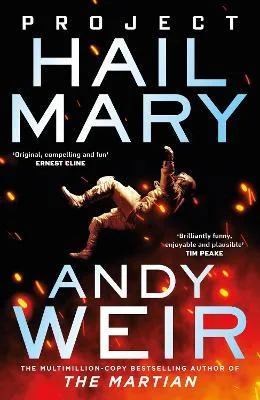
Through a series of flashbacks and scientific deductions, Andy Weir leans Grace towards learning about the devastating effects of the Astrophage on Earth. He also discovers the existence of the Eridians, an ancient alien race that faced a similar crisis in the past. Grace becomes determined to understand the Eridians' solution to the threat, hoping to find a way to replicate it and save humanity. This part of the story highlights Grace's perseverance and his relentless pursuit of knowledge.
Throughout his journey, Grace faces numerous challenges. He must battle loneliness and cope with the loss of his crewmates, who had become his friends. The isolation and psychological strain push Grace to his limits, testing his mental and emotional resilience. He also encounters physical obstacles, such as repairing the ship's systems and navigating through space. The novel showcases Grace's resourcefulness, problem-solving skills, and sheer determination as he tackles each hurdle.
Grace's scientific expertise comes to the forefront as he grapples with complex problems related to the Astrophage and its potential solutions. The novel delves into detailed explanations of microbiology and astrophysics, highlighting Grace's ingenuity and creative thinking. As he unravels the mysteries of the Eridians, Grace discovers a key piece of information—a substance called Kelvinium—that holds the secret to defeating the Astrophage. This revelation propels the story forward, intensifying the race against time.
In the climax of the story, Grace manages to synthesize Kelvinium and devises a plan to use it to save Earth. He faces a final, heart-pounding challenge as he races against the clock to execute his plan and prevent the extinction of humanity. The novel builds tension and excitement, keeping readers on the edge of their seats.
In the climax of the story, Ryland Grace successfully synthesizes Kelvinium and devises a bold plan to save Earth. He realizes that by using the Kelvinium to create a shield, he can block the Astrophage's harmful effects on the sun and prevent its expansion. With the help of his alien ally, Rocky, Grace modifies the Hail Mary spaceship to deploy the shield.
Facing a monumental challenge, Grace races against time to position the ship between Earth and the sun. He must navigate the dangerous gravitational forces and precise calculations to ensure the shield is in the correct position to intercept the Astrophage. The tension reaches its peak as Grace makes split-second decisions and pushes the limits of his capabilities to execute his plan flawlessly.
As the shield is deployed, it intercepts the Astrophage, preventing it from consuming the sun further. The Earth is saved from imminent destruction, and humanity is given a chance to rebuild and thrive. The resolution of "Project Hail Mary" showcases Grace's determination, resourcefulness, and scientific expertise as he single-handedly secures the future of the planet.
The novel's conclusion offers a satisfying and thought-provoking end to Grace's journey, highlighting the triumph of human resilience and the power of scientific discovery in the face of a catastrophic threat.
In Andy Weir's science fiction novel "Project Hail Mary," the captivating story unfolds as Ryland Grace, an elementary school...
Read Article →
David Fincher's 'Serenity's Edge' - Themes of Identity and Sanity
Set aboard a spaceship on a daring mission to explore a distant planet, the film plunges viewers into a world where the boundaries between perception and illusion blur, giving rise to an intense exploration of identity, sanity, and the haunting power of the unknown. As the enigmatic plot unfolds, Margot Robbie's captivating presence adds a layer of enigma and vulnerability to the narrative, further heightening the tension and intrigue that permeate 'Serenity's Edge.'
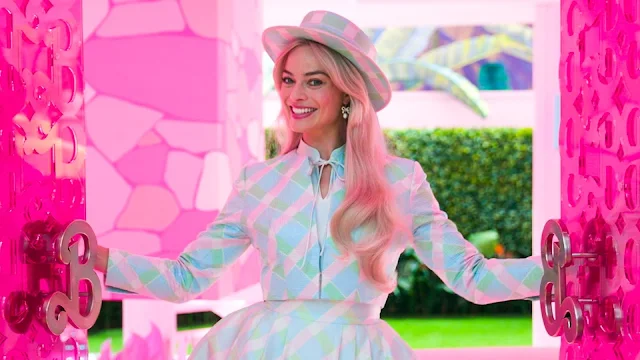 |
| Robbie as Barbara Millicent Roberts |
"At the heart of 'Serenity's Edge' lies an intricate web of themes that captivate the imagination and challenge the viewers' perception of reality. David Fincher, renowned for his meticulous attention to detail, expertly weaves together elements of psychological exploration, existentialism, and the fragility of the human mind.
As the characters traverse the vast expanse of space, they confront their deepest fears, wrestling with the notion of what it truly means to be human. Themes of isolation, self-discovery, and the inherent duality of human nature intertwine to create a suspenseful narrative that pushes the boundaries of conventional storytelling. Through stunning visuals and a thought-provoking storyline, 'Serenity's Edge' promises to immerse audiences in a gripping tale that lingers in the mind long after the credits roll."
Serenity's Edge is being directed and produced by Fincher as part of his deal with Netflix. Fincher and Netflix had great success with House of Cards, Mindhunter, Mank and presumably this new sci fi adventure. While Fincher is considered one of the finest directors of era, he was born into Hollywood in a baptism of fire with the Alien 3 production nightmare.
Note: At this point, it's all rumor, no official announcement has been made. "Prepare to embark on an electrifying journey into th...
Read Article →
Did Star Trek ever win an Academy Award?
The Human Adventure: Star Trek's Cinematic Debut and Oscar Recognition
The Star Trek franchise, renowned for its exploration of space, diversity, and futuristic concepts, has not only captured the hearts of millions of fans but also left its mark on cinematic history. While its television series have garnered immense popularity, the franchise has also ventured into the realm of film, earning critical acclaim and leaving an indelible impact.
One notable milestone in this journey is its Academy Award recognition, specifically for the 1979 film "Star Trek: The Motion Picture." Directed by the legendary Robert Wise (_The Day the Earth Stood Still_, _The Andromeda Strain_), it was a significant moment in the franchise's transition from television to the big screen, showcasing the iconic crew of the USS Enterprise on their voyage to intercept a mysterious and powerful entity threatening Earth.

A Cinematic Leap: Academy Award Recognition
Best Art Direction-Set Decoration
This nomination underscored the film's visual grandeur and the meticulous attention to detail in creating the futuristic settings and environments. The film's visual design, particularly the stunning new USS Enterprise, contributed to an immersive experience that transported audiences into the world of Star Trek and solidified the franchise's reputation for innovative production design.
Best Visual Effects
In an era predating the widespread use of computer-generated imagery (CGI), the film's visual effects were a testament to the creative prowess of the filmmakers. The intricate model work and practical effects brought the starships, space environments, and cosmic phenomena to life, captivating audiences with their realism and creativity. This nomination highlighted the film's pioneering efforts in visual effects, which would later become a hallmark of the franchise.
Best Original Score
The third and final nomination recognized the film's score, composed by the legendary Jerry Goldsmith (_Alien_). Goldsmith's musical composition for "Star Trek: The Motion Picture" was a symphonic journey that echoed the grandeur and wonder of space exploration. The nomination not only acknowledged Goldsmith's skill in enhancing the emotional depth of the film but also showcased the importance of a captivating score in elevating the cinematic experience.
Production Log & Trivia
- From TV to Film: The plot for _The Motion Picture_ was originally developed for a new TV series called _Star Trek: Phase II_, which was cancelled when the studio decided to produce a feature film instead. The pilot script, "In Thy Image," was expanded to become the movie's story.
- Visual Effects Overhaul: The film's groundbreaking visual effects had a notoriously rushed and difficult production. The original VFX company was fired, and legendary effects supervisor Douglas Trumbull (_2001: A Space Odyssey_, _Blade Runner_) was brought in with his team to complete the work under an incredibly tight deadline.
- An Iconic Theme: Jerry Goldsmith's main theme for the film was so popular and well-regarded that it was later reused as the iconic opening theme for the television series _Star Trek: The Next Generation_.
Conclusion
"Star Trek: The Motion Picture" stands as a pivotal moment in the franchise's cinematic journey. While it did not secure an Academy Award win, its three nominations represented a significant achievement, validating the dedication and creativity of the filmmakers and cementing Star Trek's presence in the world of cinema beyond its television origins.
Why The Wrath of Khan was not nominated for its incredible script and filmmaking, I'll never know....
The Human Adventure: Star Trek's Cinematic Debut and Oscar Recognition The Star Trek franchise, renowned for its explorati...
Read Article →
The Symbolism of the Super Rats in "Joker" Film

You can also see them in rubbish bins and two in particular in the alleyway behind young Bruce Wayne as he stands before his dead parents. As he stands, the reality of what just happened dawning on him, the rats do not care and scavenge in the rubbish behind him.
Social Decay and Desperation
The introduction of super rats mirrors the overall decay of Gotham City. These rodents, growing to abnormal sizes due to the garbage crisis and societal neglect, mirror the moral degradation and corruption that have infected the city.
Individual vs. Society
The super rats can be interpreted as a representation of the tension between individual agency and societal influence. The Joker's transformation is, in part, a reaction to the uncaring world around him. Similarly, the super rats serve as a visual reminder that societal forces can lead to the growth of monstrous aspects in individuals, paralleling the Joker's own descent into madness.
Power and Vulnerability
The super rats are not only emblematic of decay but also a display of power. They exhibit strength and dominance that contradicts their traditional portrayal as vermin. This mirrors the Joker's journey from a vulnerable and powerless Arthur Fleck to the assertive and unpredictable figure he becomes. The super rats remind viewers that power can be reclaimed in unexpected ways and that those who are underestimated can rise to assert their influence.
Anarchy and Liberation
The super rats might also symbolize the chaos and anarchy that the Joker embraces. Just as the rats overrun the city streets, defying attempts at control, the Joker defies societal norms and rules, bringing his version of chaos. The super rats can be seen as a manifestation of liberation from societal constraints, mirroring the Joker's own liberation from his prior identity and limitations.
In "The Joker," the symbolism of the super rats serves as a multi-faceted metaphor that adds depth to the film's exploration of social decay, individual struggle, power dynamics, and anarchy. These larger-than-life rodents represent the world's ugliness, the fragility of sanity, and the potential for transformation in a society that has forsaken its most vulnerable members.
As viewers engage with "The Joker," dissecting the symbolism of the super rats enhances the understanding of the film's larger themes and provides insight into the complex character development and societal critique that define this cinematic masterpiece.
"Joker," directed by Todd Phillips and starring Joaquin Phoenix ( Her , Folie a Deux ), is a film renowned for its deep explorati...
Read Article →
Yoda, Absolutes, and the Sith Paradox

The Mustafar Duel: A Turning Point
The duel between Obi-Wan and Anakin is not just a physical battle; it's a clash of ideologies. Anakin, now Darth Vader, has embraced the Sith philosophy of dealing in absolutes. His statement, "If you're not with me, then you're my enemy," epitomizes this mindset. Obi-Wan's retort serves as a critique of Anakin's newfound extremism, highlighting the Sith's propensity for binary thinking.
The Paradox of Obi-Wan's Statement
Obi-Wan's line has been scrutinized for being an absolute statement itself, leading some to jest that Obi-Wan is also a Sith. However, this interpretation misses the nuance of the statement. Obi-Wan is not laying down an unalterable law; he is making an observation about Anakin's behavior at that specific moment.

Yoda's Wisdom: A Statement of Fact or an Absolute?
Now, let's turn to Yoda's iconic line, "Do, or do not, there is no try." On the surface, this seems like an absolute statement, fueling memes that jokingly claim Yoda is a Sith Lord.

The Nature of Absolutes in the Force
The Force itself is a complex entity, neither wholly good nor wholly evil. The Jedi and Sith are interpretations of how to interact with the Force, each with its own set of rules and philosophies. Dealing in absolutes is a Sith trait because it aligns with their view of the Force as a tool to impose their will, leaving no room for nuance or compromise. The Jedi, on the other hand, see the Force as a guide to be followed, which inherently allows for flexibility and adaptability.
The meme suggesting Yoda is a Sith Lord is undoubtedly amusing but can be misleading for those not in on the joke. It's essential to differentiate between poking fun at the Star Wars universe and using such examples to critique the storytelling or writing. The meme is more a commentary on the fans' penchant for over-analysis than a serious critique of the characters or the narrative.
Conclusion
The lines spoken by Obi-Wan and Yoda are not contradictions but reflections of their individual philosophies and the situations they find themselves in. Obi-Wan's line serves as a diagnostic tool for understanding the Sith mindset, while Yoda's line is a motivational mantra aimed at empowering Luke. Neither is dealing in absolutes in the way the Sith do. So, despite the humorous memes and debates, Yoda remains a Jedi Master, not a Sith Lord in disguise.
The Star Wars universe is a treasure trove of philosophical quandaries, moral dilemmas, and ethical conundrums. One such intriguing point of...
Read Article →
The Character Arc of Private Pilot Abilene in Southland Tales
When first introduced, Private Pilot Abilene appears as a disillusioned and anguished character. He is a veteran of the Iraq War, haunted by the traumatic experiences he endured. Abilene's inner turmoil is manifested in his disillusionment with society, his recurring nightmares, and his addiction to a fictional substance called Fluid Karma. He lives in a world overwhelmed by political unrest, environmental crises, and societal decay. Abilene's initial state portrays a troubled soul burdened by despair, seeking solace in a distorted reality.

This is the way the World ends. This is the way the World ends. This is the way the World ends. Not with a whimper, but with a bang. - Private AbileneAbilene's character arc begins when he meets Boxer Santaros, the film's central protagonist. Through their interactions, Abilene becomes entangled in a convoluted plot involving government conspiracies and alternate dimensions. As the story unfolds, Abilene embarks on a journey of self-discovery, gradually realizing the importance of his role in the grand scheme of events. His journey serves as a catalyst for him to confront his inner demons and seek personal redemption.
During this journey, Abilene's perspective evolves, shifting from one of apathy to one of engagement. He becomes increasingly disillusioned with the government's manipulations and starts questioning his own beliefs. Abilene's encounters with various characters, such as Dr. Soberin Exx and Krysta Now, further contribute to his transformation. Through these interactions, he gains insight into the power dynamics at play and begins to understand the impact of his actions on the world around him.
As the film approaches its climax, Abilene's character arc reaches a pivotal moment. He realizes that he must make a choice between embracing hope or succumbing to despair. Faced with the impending destruction of his world, Abilene makes the ultimate sacrifice by selflessly giving his life to ensure the salvation of others.
This transformative act represents Abilene's growth from a disenchanted and tormented soul to a selfless hero. Through his sacrifice, he not only redeems himself but also offers a beacon of hope for humanity. In this final act, Abilene exemplifies the transformative power of personal sacrifice and the ability to find purpose even in the face of overwhelming adversity.
One of the standout moments in Private Pilot Abilene's character arc is the iconic dance routine featuring Justin Timberlake himself, set to the infectious rhythm of The Killers' "All These Things That I've Done"

Justin Timberlake's portrayal of Private Pilot Abilene in Southland Tales showcases a compelling character arc that captures the essence of personal growth and redemption. Abilene's journey from despair to self-discovery, and ultimately to sacrifice, demonstrates his transformation from a disillusioned individual to a beacon of hope in a dystopian world.
Southland Tales , a science fiction film directed by Richard Kelly ( The Box ), showcases a complex web of characters grappling with a dysto...
Read Article →
The science of the Three Body Problem explained in the context of Space Travel
In the context of space travel and exploration, the three-body problem is not just a theoretical curiosity but a fundamental practical challenge that has profound implications for mission planning, trajectory calculations, and ensuring the long-term stability and success of spacecraft navigating the complex gravitational web of our solar system and beyond.

Trajectory Planning
Lagrangian Points
Chaotic Behavior
Interplanetary Transfers
Spacecraft Stability
To address the immense challenges posed by the three-body problem in space travel, space agencies like NASA and ESA rely on powerful numerical simulations and sophisticated computer modeling.
The three-body problem is a famous and historically significant challenge in physics and celestial mechanics. It seeks to predict the indivi...
Read Article →
The Guardian of Forever: Exploring Themes in Star Trek
Star Trek, a beloved and influential franchise, has captivated audiences for decades with its thought-provoking narratives. One particular element that stands out is the Guardian of Forever, a remarkable plot device that allows for the exploration of profound concepts. This essay delves into the Guardian of Forever, examining its significance and the themes it embodies within the Star Trek universe.
The Nature of the Guardian
The Guardian of Forever is a mesmerizing and enigmatic entity first appearing in the classic Original Series episode "The City on the Edge of Forever." Its physical form is a large, ring-shaped portal of unknown construction, but its true nature is a mystery. It is not clear if it is a machine, a lifeform, or something far beyond such definitions. It is ancient beyond comprehension, introducing itself with the cryptic pronouncement, "Since before your sun burned hot in space and before your race was born, I have awaited a question." The Guardian is a passive observer and a gateway, offering access to any point in history but providing no guidance, making it a pivotal and dangerous tool.

The Guardian's first appearance in "The City on the Edge of Forever."
Appearances Across the Franchise
In its debut, the Guardian serves as the catalyst for Star Trek's most acclaimed story, forcing Kirk into an impossible moral choice between the woman he loves and the integrity of the timeline. The episode establishes the core theme associated with the Guardian: time travel comes with immense responsibility and the potential for devastating consequences.
The Guardian later appeared in the fan-favorite episode of *Star Trek: The Animated Series* titled "Yesteryear." In that story, Spock uses the portal to travel back to his own childhood on Vulcan to correct a timeline disturbance where he had died as a child. This powerful story of self-sacrifice and identity further cemented the Guardian's importance and explored the personal ramifications of temporal mechanics.
Centuries later, in the 32nd century, the Guardian reemerged in *Star Trek: Discovery*. Fearing its misuse during the Temporal Wars, it had relocated and adopted a new form: a humanoid avatar named "Carl." This represented a significant evolution. No longer a passive gateway, Carl possessed a distinct personality and a proactive agenda. He actively tested the former Terran Emperor Philippa Georgiou, seeking to gauge her moral growth before granting her a second chance in a different time. This appearance connected the far-future setting of *Discovery* to the franchise's deep past and transformed the Guardian into a character with a discernible moral compass.

The Guardian as "Carl" in the 32nd century.
The Guardian as a Metaphor
Beyond its literal function, the Guardian of Forever serves as a powerful metaphor. It represents choice, destiny, and the immense weight of history. Unlike many plot devices that solve problems, the Guardian primarily creates them, forcing characters to confront the most difficult ethical dilemmas imaginable. It is a symbol of knowledge and power, and the profound responsibility that comes with both. By providing a window into the past, it underscores the Star Trek ideal of learning from history to build a better future, embodying the curiosity and hope that define the franchise.
Analysis: The Guardian of Forever Star Trek, a beloved and influential franchise, has captivated audi...
Read Article →_poster.jpg)


