

The failure of Superman Lives to fly and Kevin Smith's spider story
Burton, who had just come off the success of "Batman Returns," was a natural fit for the project. His unique visual style and ability to tell stories that balanced darkness and humor made him the perfect choice to bring Superman back to the big screen. The film was set to feature a script by Kevin Smith, who was known for his quirky, irreverent writing style. Smith's screenplay was filled with unique twists and turns, including the introduction of a villain named Brainiac, who was to be played by comedian Chris Rock.
But it was the casting of Cage as Superman that really got people talking. His film profile as a box office champion was just starting to take off after the success of The Rock and his Academy Award with for Best Actor in Leaving Las Vegas.

Despite the excitement surrounding the project, "Superman Lives" ultimately hit a number of roadblocks. The budget for the film ballooned to over $100 million, which was an astronomical sum for a superhero movie at the time. There were also concerns about the script, with some executives feeling that it was too strange and unconventional. As a result, Smith was ultimately left as the writer of the film.
But perhaps the biggest blow to the project was the departure of Burton. The director left the project in 1998, citing creative differences with the studio. Without Burton's unique vision at the helm, "Superman Lives" lost much of its momentum. The project continued to languish in development hell for several years, with various directors and writers attached at different points.
Warner Bros spent $30 million on developing "Superman Lives," but in April 1998, they put the film on hold. Tim Burton, who had been set to direct the movie, left due to differences with producer Jon Peters and the studio. In September 1998, Alex Ford, an aspiring screenwriter and comic book fan, had his script for "Superman: The Man of Steel" accepted by Warner Bros. Peters was impressed with Ford's idea for a film series consisting of seven installments, but they parted ways due to creative differences.
The director's position was offered to Michael Bay, Shekhar Kapur, Martin Campbell, Brett Ratner, Simon West, and Stephen Norrington, but all turned it down. In June 1999, William Wisher Jr. was hired to write a new script, and Nicolas Cage assisted with story elements. Cage dropped out of the project in June 2000, while Wisher turned in a new script in August, which reportedly had similar elements to "The Matrix." Oliver Stone was approached to direct but declined. Will Smith was offered the role of Superman, but he turned it down due to concerns about potential industry backlash over his ethnicity.
Eventually, the studio decided not to proceed.
Despite its ultimate failure to fly, "Superman Lives" remains a fascinating piece of Hollywood history. It represents a time when superhero movies were still finding their footing, and filmmakers were willing to take risks and push boundaries. It's also a testament to the power of creative collaboration, as the project brought together some of the most talented and innovative minds in the industry. While we'll never know what "Superman Lives" could have been, its legacy lives on as a testament to the power of imagination and the potential of what might have been.
The Legacy of Jon Peters 'spider' idea

According to Smith, the spider was proposed by the film's producer, Jon Peters, who had a fascination with the arachnid. Smith recounted in interviews that Peters believed that spiders were "scary" and that they were "the deadliest killers in the animal kingdom." Peters was convinced that a giant mechanical spider would be the perfect addition to "Superman Lives" and even drew sketches of what he envisioned it would look like.
Smith, who was hesitant about the idea, eventually relented and wrote a scene in the script that featured Superman battling the spider. However, as the film continued to struggle in development, Smith eventually left the project, and the spider was never realized on the big screen as part of the Superman franchise.
Several years later, when Sonnenfeld was directing "Wild Wild West," Peters again proposed the idea of a giant mechanical spider. This time, the concept was realized, and the spider became a centerpiece of the film's climax. Peters even admitted in interviews that the idea had originated from his time working on "Superman Lives."
The inclusion of the spider in was met with mixed reactions. Some viewers found it to be an exciting and memorable aspect of the film, while others found it to be overly ridiculous and out of place. Regardless its presence in "Wild Wild West" is often cited as an example of Hollywood excess and the dangers of studio interference.
In the late 1990s, Hollywood was abuzz with rumors about a new Superman movie, which was set to be directed by Tim Burton and starred Nicol...
Read Article →
How many lines does Darth Maul speak in The Phantom Menace?
In fact, he only says 33 words in three lines of dialogue.
Not 31 as many people on the internet seem to think...
Not bad for one of the most iconic bad guys in Star Wars.
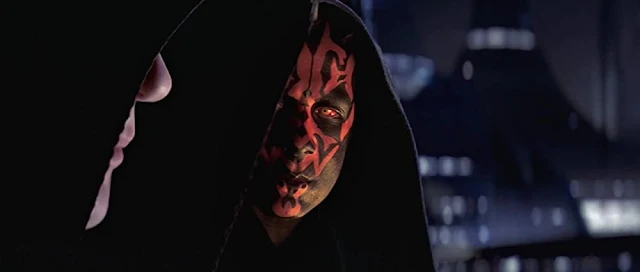
Here's his quite quotable conversation with Palpatine:
Darth Maul: Tatooine is sparsely populated. If the trace was correct, I will find them quickly, Master.
Senator Palpatine: Move against the Jedi first. You will then have no difficulty in taking the Queen to Naboo to sign the treaty.
Darth Maul: At last we will reveal ourselves to the Jedi. At last we will have revenge.
Senator Palpatine: You have been well trained, my young apprentice. They will be no match for you.
On Naboo after being instructed by Darth Sidious to wait for the Jedi:
“Yes, My Master.”
That line has big echoes back to how Darth Vader would ultimately converse with Palpatine.
There was a series of 'tone poems' spoken by the characters in television spots to promote The Phantom Menace.
Maul's was:
"Fear. Fear attracts the fearful, the strong, the weak, the innocent, the corrupt. Fear. Fear is my ally."
However, the voice of Darth Maul was provided by Peter Serafinowicz, an English actor, comedian, and writer. Serafinowicz recorded the dialogue for the character after the film had finished shooting, and his voice was then mixed with various sound effects to create the final sound of Darth Maul's voice.
It's worth noting that while Ray Park physically played the character, he didn't actually speak any lines in the film. Instead, his grunts and other vocalizations were recorded during filming and later replaced with the final voice of Darth Maul in post-production.
In the 2018 film "Solo: A Star Wars Story," the voice of Darth Maul was once again provided by actor Sam Witwer following his run in The Clone Wars.
Witwer's voice was used in a surprise cameo appearance of Darth Maul in the film's final scene, where he reveals himself to be the leader of the Crimson Dawn criminal organization. The appearance of Darth Maul in the film was a surprise to many fans, as the character was previously thought to have died in "The Phantom Menace." - as not everyone watches the Star Wars: Clone Wars cartoons!
Qi'Ra: “I regret to inform you that Dryden Vos is dead, murdered by the thief he hired to steal the coaxium ship and his friend – Tobias Beckett.”
Darth Maul: “Is that so? Where is the shipment now?”
Qi'Ra: “Gone. Beckett took it. Slaughtered the others. I alone survived.”
Darth Maul: “One man couldn't have done this alone.”
Qi'Ra: “I wasn't there. But if I had been, perhaps I could've saved him.”
Darth Maul: “Bring the ship and come to me on Dathomir and you and I will then decide what to do with the traitor Beckett and his accomplices.”
Qi'Ra: “I'm on my way.”
Darth Maul: “Qi'ra, you and I will be working much more closely from now on.”
Here's the first piece of concept art for Darth Maul:
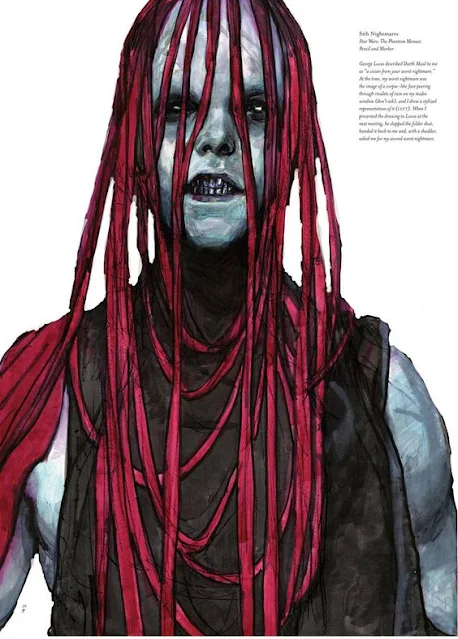 |
| Feels like the classic 1990s, as if they were a member of Prodigy... |
Here are some bits of trivia about Darth Maul:
- Darth Maul was originally designed by concept artist Iain McCaig, who also designed characters such as Padmé Amidala and General Grievous.
- The design of Darth Maul's double-bladed lightsaber was inspired by weapons used in traditional Filipino martial arts.
- Ray Park, the actor who played Darth Maul in "The Phantom Menace," is a martial artist who also played the character Toad in the first "X-Men" movie.
- In the "Star Wars" canon, Darth Maul survived his apparent death in "The Phantom Menace" and went on to appear in other stories such as The Clone Wars and fought Ashoka Tano..
- Despite his limited dialogue, Darth Maul is considered one of the most popular and iconic villains in the "Star Wars" franchise.
- The makeup and prosthetics used to create Darth Maul's appearance in "The Phantom Menace" took over four hours to apply each day.
- Actor Sam Witwer, who provided the voice of Darth Maul in "The Clone Wars" and other Star Wars media, is also known for his roles in shows such as "Being Human", Battlestar Galactica and "Smallville."
- The character of Darth Maul was created specifically for "The Phantom Menace," and did not appear in any of the previous "Star Wars" movies or other media.
- The sound effects used for Darth Maul's lightsaber were created by recording the sound of an old television picture tube and modifying it in post-production.
- In "The Clone Wars," Darth Maul is shown to have developed a rivalry with another Sith Lord, Count Dooku, who was also one of his former masters.
Darth Maul, one of the main antagonists in the 1999 film " Star Wars: Episode I - The Phantom Menace ," has a limited amount of di...
Read Article →
How Emperor Palpatine Used Manipulation to Rise to Power in Star Wars
One of the key examples of Palpatine's manipulative tactics was his ability to get Queen Amidala to call for a vote of no confidence in Chancellor Finis Valorum in The Phantom Menace. By carefully playing his political cards just right, Palpatine was able to position himself for greater power and influence.
Another example of Palpatine's manipulative genius was his ability to pretend to be attacked by Fives in The Clone Wars. By using this incident to make a case for the inhibitor chips, he was able to deceive the Jedi and ensure that the chips stayed in place for his own purposes.

Perhaps the most important example of Palpatine's manipulative tactics was his ability to shape Anakin Skywalker into the perfect apprentice. He constantly praised Anakin, insulted the Jedi Order, and made him feel like he deserved a position on the Jedi Council. When Anakin was not elevated to the rank of Jedi Master, Palpatine was there to listen and further manipulate him. In the end, Anakin played right into Palpatine's hands and turned against the Jedi.
In "Revenge of the Sith," Chancellor Palpatine tells the story of the tragedy of Darth Plagueis the Wise to Anakin Skywalker. The speech is a pivotal moment in the manipulation of Anakin and plays a significant role in his eventual fall to the dark side.
Palpatine describes how Darth Plagueis was a Sith Lord who had the power to manipulate the Force to create life and prevent death. He was so skilled that he could even keep the people he loved from dying. However, in the end, Darth Plagueis was killed by his own apprentice, who took his power and became even more powerful than Plagueis ever was.
The tragedy of Darth Plagueis the Wise speech is a masterful manipulation tactic used by Palpatine to appeal to Anakin's fear of losing those he loves. Anakin is struggling with the fear of losing his wife Padmé to death, and Palpatine uses the story to offer a solution to Anakin's fear. He tells Anakin that with the power of the dark side, he could prevent Padmé's death and even bring her back to life.
The speech works on Anakin, who becomes obsessed with the idea of using the dark side to prevent Padmé's death. Palpatine uses this obsession to turn Anakin to the dark side and to make him his new apprentice, Darth Vader.
In the Mace Windu death scene, Palpatine pitted Anakin against the Jedi, convincing him that the Jedi were trying to take over the government, giving him a chance to escape Windu's pronounced death sentence. After Windu's death, Palpatine ordered Anakin to wipe out the remaining Jedi.
Finally, in Return of the Jedi, Palpatine laid a trap for Luke Skywalker by leveraging his feelings about his friends and pitting father against son. While things didn't work out as planned, Palpatine had set himself up to win either way.
In conclusion, Emperor Palpatine's ability to manipulate people around him was a critical component of his rise to power and his ability to maintain it. Through a combination of subtle guidance, patient manipulation, and strategic maneuvering, he was able to play countless people like pianos and achieve his ultimate goal of ruling the galaxy.
Emperor Palpatine's ability to manipulate people around him was a crucial factor in his rise to power and his ability to maintain it. F...
Read Article →
Replacing Clive Revill's Emperor with Ian McDiarmid in The Empire Strikes Back Special Edition
The decision to replace Revill's version of the Emperor with McDiarmid's was made for a number of reasons.
Firstly, George Lucas wanted to create consistency across all three films in the original trilogy, as McDiarmid had become the definitive version of the character following his performance in Return of the Jedi.
Secondly, the Special Editions provided an opportunity to enhance the visual effects of the original films, and replacing Revill's version of the Emperor with a new version portrayed by McDiarmid allowed for greater continuity and consistency in the appearance of the character.
In terms of the actual alterations made to the film, the scenes featuring the Emperor were completely re-shot with McDiarmid, with the dialogue remaining largely the same.
The new scenes were also edited differently to the original, with the camera angles and pacing being altered to create a more intense and dramatic atmosphere.
Overall, the substitution of Ian McDiarmid's version of the Emperor in The Empire Strikes Back was a significant change to the film, but one that was made to create greater consistency and continuity across the Star Wars saga.
Here are the two different versions of the conversations Vader and Palpatine have:
1980 version voiced by Clive Revill

The Emperor: There is a great disturbance in the Force.
Darth Vader: I have felt it.
The Emperor: We have a new enemy: Luke Skywalker.
Darth Vader: Yes, my Master.
The Emperor: He could destroy us…
Darth Vader: He’s just a boy. Obi-Wan can no longer help him.
The Emperor: The Force is strong with him. The son of Skywalker must not become a Jedi!
Darth Vader: If he could be turned, he would become a powerful ally.
The Emperor: Yes. Yes, he would be a great asset. Can it be done?
Darth Vader: He will join us, or die, my Master.
Special Edition with Ian McDiarmid
Emperor Palpatine: There is a great disturbance in the Force.
Darth Vader: I have felt it.
Emperor Palpatine: We have a new enemy: the young Rebel who destroyed the Death Star. I have no doubt this boy is the offspring of Anakin Skywalker.
Darth Vader: How is that possible?
Emperor Palpatine: Search your feelings, Lord Vader. You will know it to be true. He could destroy us.
Darth Vader: He’s just a boy. Obi-Wan can no longer help him.
Emperor Palpatine: The Force is strong with him. The son of Skywalker must not become a Jedi.
Darth Vader: If he could be turned, he would become a powerful ally.
Emperor Palpatine: Yes… He would be a great asset. Can it be done?
Darth Vader: He will join us or die, Master.
In the original theatrical release of The Empire Strikes Back in 1980, the character of the Emperor was portrayed by actor Clive Revill . Ho...
Read Article →
The themes of Alien 3 (1992) directed by David Fincher
But beyond the struggle for survival against the alien, Alien 3 also grapples with more nuanced themes, such as the conflict between different factions of inmates on Fury 161. The film portrays a complex and nuanced depiction of power dynamics, with inmates vying for control and authority in a world where every decision can have life-or-death consequences. This exploration of power dynamics also feeds into the theme of the corrupting influence of power and authority, which is portrayed with unflinching honesty and raw emotion.
Religion also plays a central role in Alien 3, highlighting the ways in which individuals turn to faith as a way of coping with fear and death. The characters' religious beliefs are portrayed with depth and nuance, revealing the complex interplay between faith and science in the face of the alien threat. The intersection of religion and science creates a fascinating exploration of the human condition, revealing the many ways in which we attempt to make sense of the world around us.

Isolation and Loneliness: The film's setting on a remote prison planet creates a sense of isolation and loneliness that is felt by both the inmates and Ripley, who is stranded on the planet with them. This theme is also reflected in the lice infected, cold, sterile environment of the prison, which contrasts with the warm and organic environment of the alien. The characters must rely on each other for survival, but their isolation also creates tension and conflict between them.
Struggle for Survival: The struggle for survival against the alien is a constant theme throughout the film. The alien is a formidable opponent that is difficult to kill, and the characters must use their ingenuity and resourcefulness to try to defeat it. This struggle for survival raises questions about the value of human life and the cost of scientific progress, as the alien was created through scientific experimentation.
Conflict between Different Factions: The inmates on Fury 161 are divided into different factions based on their backgrounds and affiliations, which creates tension and conflict between them. This conflict highlights the complex social dynamics of a prison environment, where power and authority are constantly being negotiated and contested. The corrupting influence of power and authority is also a significant theme, as some of the inmates try to gain power and control over others.
Religion: Religion plays an important role in the film, particularly in how the characters cope with fear and death. The inmates are all former criminals who have turned to religion as a way to find meaning and purpose in their lives. This intersection of religion and science is also explored, as the characters try to confront the alien threat using both their faith and their reason.
Gender and Sexuality: The film explores gender roles and sexual tension in an all-male prison environment. Ripley's arrival on the planet disrupts the gender dynamics of the prison and creates tension between the male characters. This exploration of gender and sexuality adds complexity to the characters and their relationships, particularly as Ripley becomes the only woman on the planet. The attempted rape of Ripley, is perhaps a nod to the themes considered in the original alien.
Motherhood and Creation: The theme of motherhood and creation is central to the film, both in the alien's reproductive cycle and Ripley's unwitting surrogate role as a protector and nurturer. The alien's reproduction is a grotesque and violent process that highlights the destructive power of creation, while Ripley's role as a mother figure is a source of comfort and strength for the characters.
In conclusion, Alien 3 is a film that explores a wide range of complex themes, from isolation and survival to gender and sexuality, religion and science, and the value of human life. These themes are explored through the characters and their struggles, creating a thought-provoking and emotionally powerful film that raises important questions about the human condition.
Despite its flaws, David Fincher's Alien 3 is a wonderful exploration of the human condition, taking audiences on an emotionally-char...
Read Article →
Ripley and Clemens: A Relationship Symbolic of Hope and Despair in Alien 3
The relationship between Ellen Ripley and Dr. Jonathan Clemens in Alien 3 can look sudden on first viewing. Ripley has only just learned that Newt and Hicks are dead. She has crash-landed on Fiorina “Fury” 161, a remote prison refinery filled with violent men, religious guilt, industrial decay, and the lingering shadow of the Xenomorph. A romantic or sexual connection seems, at first glance, almost impossible.
Yet the Ripley and Clemens relationship works because it is less about romance in the usual sense and more about a brief human connection inside a film designed to remove comfort. Alien 3 is a story of loss, punishment, bodily violation, and sacrifice. Clemens gives Ripley one of the only spaces in the film where she is treated as a person rather than a threat, a temptation, a patient, a carrier, or company property.
That distinction matters. Ripley is surrounded by men who either fear her presence, desire her, mistrust her, or later try to possess what is growing inside her. Clemens is different. He listens. He treats her injuries. He speaks to her with restraint. He has his own disgrace and exile. Their connection develops quickly because Fury 161 is a world with no ordinary time left. People in Alien 3 do not build futures. They reach for whatever fragments of humanity remain before the furnace takes them.

Ripley arrives on Fury 161 already grieving
The emotional brutality of Alien 3 begins before Ripley even fully understands where she is. The ending of Aliens promised a fragile found family: Ripley, Newt, Hicks, and Bishop escaping after surviving the nightmare on LV-426. Alien 3 tears that away immediately. Newt is dead. Hicks is dead. Bishop is ruined. The family Ripley fought for is gone before the story has properly started.
That grief defines Ripley's state of mind. She is physically alive, but emotionally stranded. The planet is another prison, even though she is not one of the inmates. Fury 161 traps her in a masculine religious world where her presence is treated as a disruption, a danger, and a possible cause of disorder.
Clemens enters the story as the first person who gives her something other than suspicion. He is a doctor, but his role is more intimate than medical duty. He explains the world she has fallen into. He answers questions without turning her into an object of fear. He does not rush to moralise her, claim her, or control her. That restraint gives Ripley enough room to breathe.
Clemens as the film's brief image of gentleness
Dr. Jonathan Clemens, played by Charles Dance, is one of Alien 3's most underrated characters. His calm manner can hide how damaged he is. He is not on Fury 161 because he is noble and untouched by sin. He is there because of a past medical disaster caused by addiction and negligence. Like the prisoners around him, he is marked by guilt.
This is what connects him to Ripley. Both characters carry deaths they cannot undo. Ripley carries the trauma of the Nostromo, LV-426, Newt, Hicks, and the endless return of the Xenomorph. Clemens carries the deaths from his own failed past. Neither character is innocent in a simple way. Both are trying to exist after catastrophe.
Clemens is gentle because he knows what disgrace feels like. He has no standing from which to judge Ripley. That makes him one of the few people on Fury 161 who can meet her without projecting a fantasy onto her. The prisoners see danger and temptation. The company later sees a biological asset. Clemens sees a wounded person who deserves care.
Intimacy as a response to isolation
The speed of the Ripley and Clemens intimacy makes more sense when viewed through the conditions around them. Fury 161 is a world without softness. The colony is cold, hostile, industrial, and spiritually exhausted. Its people are either prisoners, administrators, medical staff, or abandoned remnants of a system that has moved on.
Ripley has no ordinary social field to enter. She has no friends, no family, no future plan, and no safe community. Clemens becomes the only person who speaks to her like an adult rather than an intrusion. Their intimacy is not built from courtship. It is built from pressure, exhaustion, mutual recognition, and the need for contact in a place designed to deny it.
This is not unusual for the emotional logic of Alien 3. The film compresses human feeling because death is everywhere. Newt is gone. Hicks is gone. The Xenomorph is loose. The prisoners are afraid. Ripley is beginning to suspect that the creature may be connected to her. In that context, sex is not a detour from the plot. It is a brief act of agency before the film closes around her body again.
Ripley's body and the question of control
Ripley's body is the central battlefield of Alien 3. At first, the danger seems external: she has crashed on a prison planet and a Xenomorph is loose. Then the film reveals the deeper horror. Ripley carries a Queen embryo inside her. Her body has become valuable to the company, sacred or terrifying to the prisoners, and deadly to the future of humanity if the Queen survives.
The Clemens relationship therefore gains importance because it occurs before Ripley fully understands the extent of that violation. For a moment, her body is hers. She chooses intimacy. She chooses contact. She chooses a human connection in a film that will soon define her body as a host, a threat, and a corporate prize.
That makes the relationship quietly tragic. It is one of Ripley's last moments of bodily autonomy before the Queen embryo turns her into the most contested object in the story. The company wants her alive for extraction. The Xenomorph refuses to kill her because of what she carries. The prisoners begin to understand her as a woman marked by death. Clemens, briefly, treats her as herself.
Challenging gender roles inside a violent male world
Ripley's arrival on Fury 161 places her inside one of the most aggressively male environments in the Alien series. The prisoners are not simply men. They are men defined by punishment, violence, religious discipline, sexual threat, and exile. Their world has been structured around the absence of women, then Ripley falls into it like an event they cannot process.
That makes her relationship with Clemens stand out. It is not built on the macho power dynamics around them. Ripley is the stronger personality in many of their scenes. Clemens has knowledge of the planet and medical authority, but he is emotionally cautious, ashamed, and vulnerable. Ripley presses him. She asks questions. She reads him. She decides how close he gets.
This reverses the expected dynamic. Clemens is not the rescuer who restores the wounded woman. Ripley is never reduced to a romantic object. She remains watchful, sharp, and in control of what she gives. The relationship is brief, but it preserves one of Ripley's defining traits across the Alien franchise: she can be vulnerable without becoming passive.
Clemens and Dillon: two forms of male care
Clemens and Dillon serve different functions in Ripley's final story. Clemens offers private care. Dillon offers public moral force. Clemens helps Ripley as a doctor and as a man who understands disgrace. Dillon helps her later by recognising the scale of the evil she is carrying and by choosing sacrifice over self-preservation.
Together, they create the two human supports Ripley is allowed before the film takes everything away. Clemens gives her a moment of tenderness. Dillon gives her a framework for final courage. Neither man saves her in a conventional sense. That would be the wrong story. Instead, each helps her move through a different stage of the film's descent.
This is where Alien 3 becomes more emotionally layered than its reputation sometimes suggests. The film is bleak, but it is not empty. It gives Ripley small forms of human recognition before placing her in the position of martyr. Clemens matters because without him the film would be only punishment. With him, there is a moment of contact before the punishment resumes.
The fragility of connection in Alien 3
Clemens' death is sudden, brutal, and dramatically important. The Xenomorph kills him just as he is becoming the one person who might help Ripley understand what is happening to her. This is not only a shock kill. It is the film's way of removing the possibility of comfort.
Every time Ripley forms a meaningful bond in this part of the franchise, the universe punishes it. Newt and Hicks are dead before the opening settles. Bishop is reduced to wreckage. Clemens is killed before intimacy can develop into trust over time. The pattern is cruel, but it supports the film's fatalistic structure. Alien 3 is not interested in lasting refuge. It is interested in what remains when refuge is gone.
Clemens' death also pushes Ripley further into isolation. With him gone, she loses the one person who combined compassion, intelligence, and direct medical knowledge. The film then forces her toward Dillon, the prisoners, the company, and finally the furnace. The private relationship dies so the public sacrifice can begin.
Clemens as a mirror for Ripley's guilt
Clemens' backstory is vital because it prevents him from being a simple love interest. He was once a doctor whose negligence contributed to death. His punishment is not only legal or professional. It is spiritual. He lives on Fury 161 because he cannot fully leave what he did behind.
Ripley understands guilt differently, but just as deeply. She did not cause the deaths of Newt and Hicks in any direct moral sense, but grief does not follow courtroom logic. She survived again while those she loved did not. She carries the weight of being the last witness, the last survivor, the person who keeps walking away from catastrophes that consume everyone around her.
This shared burden gives their connection meaning. Clemens is not simply kind to Ripley because the plot needs a brief romance. He is a man living after failure, drawn to a woman living after repeated loss. Their intimacy comes from recognition between damaged adults, not from conventional romantic setup.
The relationship's place in Ripley's larger Alien arc
Across the Alien films, Ripley is repeatedly defined by systems that try to override her judgment. In Alien, she is right about quarantine but ignored. In Aliens, she is dismissed by corporate authority until the colony disaster proves her right. In Alien 3, her body becomes the site of a future corporate theft. The company wants the Queen. The men of Fury 161 fear what she represents. The Xenomorph itself behaves differently around her because of what she carries.
The Clemens relationship is one of the few moments in that arc where Ripley is not primarily defined by the Alien. She is grieving, yes. She is in danger, yes. But she is also a person who can still want warmth, touch, conversation, and trust. That is important because the later revelation of the Queen could easily reduce her to a host. The Clemens scenes remind us of the human being inside the plot machinery.
This also strengthens Ripley's final sacrifice. She does not leap into the furnace as a symbol only. She dies as someone who has just been reminded, briefly, that life could still contain connection. Her choice is therefore not made from emptiness. It is made despite knowing what life still offers.
A brief relationship in a film about endings
Some viewers read the Ripley and Clemens relationship as too sudden, and the criticism is understandable. The film's production history leaves many elements feeling compressed. Their connection might have landed with more force if the story had given it more time. Yet the brevity also fits the world of Alien 3. Nothing on Fury 161 lasts. Not safety. Not trust. Not bodies. Not hope.
The relationship is therefore meaningful because it is fragile. It does not need to become an epic romance to matter. In a film built around death, a brief exchange of care is enough to change the emotional temperature. Clemens helps the audience see Ripley as a grieving woman before the story turns her into a martyr.
That is the quiet tragedy of the relationship. Clemens gives Ripley a human pause in a film that has almost no mercy. Then the Xenomorph takes even that away.
The thematic meaning of Ripley and Clemens
Grief and the need for contact
Ripley's intimacy with Clemens is shaped by grief. She has lost Newt, Hicks, Bishop, and any future she imagined after Aliens. Clemens becomes a temporary answer to total isolation. The relationship shows how people may reach for connection after trauma, even when that connection seems abrupt from the outside.
Trust in a hostile world
Fury 161 is built on mistrust. Ripley mistrusts the prisoners. The prisoners mistrust her. Andrews mistrusts disruption. The company mistrusts nothing except lost profit. Clemens creates a smaller space where trust becomes possible, and that makes his death more damaging.
Bodily agency before bodily violation
Before Ripley discovers she carries the Queen embryo, her intimacy with Clemens marks one of her last free choices about her own body. Later, the company, the Xenomorph, and the Queen all redefine her body as valuable for reasons outside her control. This makes the earlier moment more important, not less.
Redemption through care
Clemens is a disgraced doctor living after terrible failure. His care for Ripley does not erase his past, but it shows the form his redemption takes. He cannot undo what happened before Fury 161. He can still choose gentleness, honesty, and responsibility in the present.
The destruction of hope
Clemens' death crushes the possibility that Ripley might find even a minor refuge on Fury 161. The film does this repeatedly. It kills future, family, comfort, and finally Ripley herself. The relationship is part of that tragic structure: hope appears, then the Dragon enters the room.
The relationship between Ellen Ripley and Dr. Jonathan Clemens in Alien 3 can look sudden on first viewing. Ripley has only just l...
Read Article →
Compensation for Creative Work: "Kill Fees" in the Film Industry

- Alejandro Jodorowsky's "Dune": In the 1970s, filmmaker Alejandro Jodorowsky began work on an ambitious adaptation of Frank Herbert's classic sci-fi novel "Dune." Jodorowsky spent years developing the project, assembling a dream team of artists and musicians to help bring his vision to life. However, the project ultimately fell apart, and Jodorowsky was paid a "kill fee" by the studio to compensate him for his work. The experience left Jodorowsky bitter, and he has since referred to the project as "the most important movie never made."
- David Twohy's "Alien 3": After Vincent Ward left the project, the studio hired David Twohy to write a new script for "Alien 3." Twohy spent several months working on the script before being replaced by David Giler and Walter Hill, who ultimately received the film's screenwriting credit. Twohy reportedly received a "kill fee" for his work on the project.
- Joss Whedon's "Wonder Woman": In the early 2000s, Joss Whedon was hired to write and direct a film adaptation of the DC Comics character Wonder Woman. Whedon spent several months developing the project, but creative differences with the studio ultimately led to his departure. Whedon received a "kill fee" for his work on the project, and the film was ultimately directed by Patty Jenkins.
- Neill Blomkamp's "Alien 5": In 2015, Neill Blomkamp announced that he would be directing a new "Alien" film, which would serve as a sequel to "Aliens" and ignore the events of "Alien 3" and "Alien: Resurrection." Blomkamp began work on the project and even shared concept art online, but the film was ultimately canceled. Blomkamp received a "kill fee" for his work on the project, and the franchise has since continued with Ridley Scott and other writers as Covenant and Prometheus.
- Tim Burton's "Superman Lives": In the late 1990s, Tim Burton was attached to direct a new Superman film, titled "Superman Lives," with Nicolas Cage in the lead role. The film went through numerous script revisions and pre-production work, but creative differences between Burton and the studio led to his departure from the project. Burton has a 'pay or play' fee off 5 million dollars for his work on the film, and the project was ultimately shelved.
- Guillermo del Toro's "At the Mountains of Madness": In the early 2010s, Guillermo del Toro began work on an adaptation of H.P. Lovecraft's novella "At the Mountains of Madness." The film was set to star Tom Cruise and was described as a passion project for del Toro. However, the project ultimately fell apart due to budget concerns, and del Toro was paid a "kill fee" for his work on the project. Del Toro has since gone on to direct other successful sci-fi and fantasy films, including "Pacific Rim", Pan's Labyrinth and "The Shape of Water."
 George Miller's "Justice League Mortal": In the mid-2000s, George Miller was attached to direct a new "Justice League" film, titled "Justice League Mortal." The film was set to feature a cast of up-and-coming actors, including Armie Hammer (cannibal?) as Batman and Megan Gale as Wonder Woman. However, the project was ultimately cancelled due to budget concerns, and Miller was reportedly paid a "kill fee" for his work on the film. The project has since been revived with other directors and actors.

A "kill fee" is a payment made to a writer or director who is removed from a project before it is completed. These types of fees a...
Read Article →
Fincher's Alien 3: The Troubled Production and Legacy of a Cult Classic
One of the major challenges facing the production was the script, which went through numerous revisions and was written by a number of different writers. New Zealand's Vincent Ward was originally hired to direct the film and wrote a story treatment that was set on a wooden planet inhabited by monks. However, his vision for the film clashed with the producers, and he was eventually replaced by David Fincher.

The early scriptwriters of Alien 3
William Gibson, who is best known for his groundbreaking cyberpunk novels such as Neuromancer, was hired to write the first draft of the Alien 3 script. Gibson's script, which was titled "Alien III: Gibson Draft," was very different from the final film.
The comic book series follows the story of the survivors of the spaceship Sulaco, which has crash-landed on a planet called Anchorpoint. The planet is owned by the Weyland-Yutani Corporation, which is conducting secret experiments on the Xenomorphs, the deadly creatures from the "Alien" franchise. The survivors of Sulaco, including the series' protagonist, Hicks, find themselves caught in the middle of a power struggle between the Weyland-Yutani Corporation and the United States Colonial Marines.
Back to the revolving door of scriptwriters...
David Twohy, who would later go on to write and direct the sci-fi films Pitch Black and The Chronicles of Riddick, was hired to write a third draft of the Alien 3 script.

Vincent Ward's effort to direct Alien 3
Vincent Ward (River Queen, What Dreams May Come) was a New Zealand director (oh so NZ has directors other than Peter Jackson? - Ed) who was initially hired to direct "Alien 3" in the late 1980s. Ward's vision for the film was vastly different from the previous two installments of the franchise. His idea was to set the movie on a wooden planet populated by monks who had taken a vow of celibacy. The story would have involved the arrival of Ripley and the Xenomorph on this planet and how the monks had to confront their beliefs and the alien threat.Ward's unique approach to the franchise excited the producers, but the studio was hesitant to greenlight his vision. They wanted a more traditional sequel that would follow the action-packed style of the previous two movies. Ward and the studio went back and forth for several months before he finally left the project due to creative differences.
Despite Ward's departure from the project, his vision had an impact on the final version of "Alien 3." The wooden planet concept was eventually scrapped, but the setting of a prison planet was retained. The monks were replaced by violent criminals, and Ripley became the only female character in the movie.
The final, formally credited screenwriters
David Giler, Walter Hill, and Larry Ferguson are credited as the screenwriters for Alien 3. Giler and Hill were the producers of the film and had worked on the previous two entries in the Alien franchise, while Ferguson was brought in to help them write the screenplay.
Although the final version of the screenplay for Alien 3 was heavily revised from the original story treatment by Vincent Ward, it still retained several elements of his original concept, such as the idea of the alien being born from a human host rather than an egg. The screenwriters also incorporated ideas from earlier drafts of the screenplay by other writers, such as William Gibson and Eric Red.
Despite the final screenplay being credited to Giler, Hill, and Ferguson, director David Fincher made significant changes to the film during production and post-production, leading to tension between him and the producers.
Enter David Fincher
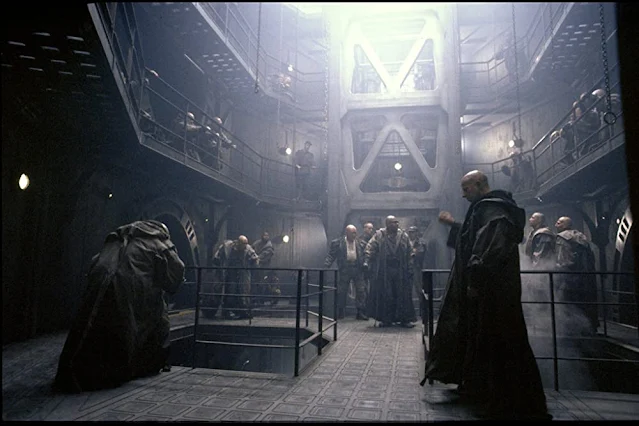
Despite having no experience directing feature films, Fincher was eventually hired to direct "Alien 3." It was a challenging project for him, as he was given a tight schedule and had to deal with constant interference from the studio.
David Fincher's experience directing "Alien 3" was a challenging one, marked by numerous production problems and clashes with the studio. One of the major issues was that he was hired late in the process and did not have much input on the script. The studio was constantly revising the script, which made it difficult for Fincher to develop a cohesive vision for the film. Additionally, the studio had set a tight release date for the movie, which gave Fincher only a limited amount of time to shoot and edit the film.
Fincher also clashed with the studio over the tone and content of the film. The studio wanted a more action-packed movie, while Fincher wanted to focus on character development and atmosphere. This led to tension on set and disagreements about the direction of the film.
The production was also plagued with various problems, including malfunctioning equipment, uncooperative actors, and even a fire that destroyed one of the sets. These setbacks further added to Fincher's frustration with the project.
To make matters worse, the studio interfered with the editing process, making significant changes to the film without Fincher's approval. This resulted in a theatrical cut of the film that Fincher believes does not accurately represent his vision.
Furthermore, the film's ending was changed several times during production, with the studio insisting on a more upbeat and hopeful finale than Fincher had originally intended. This further strained his relationship with the studio and added to the difficulties of the project.
All of these issues took a toll on Fincher, and he has since described the experience as incredibly frustrating. In fact, he briefly considered quitting the film industry altogether. Despite these challenges, Fincher managed to complete the film and deliver a unique and visually stunning entry in the "Alien" franchise, albeit one that was heavily compromised by studio interference.
The critical reception to Alien 3 was....bad
The film received mixed reviews from critics, with many noting that it did not live up to the high standards set by the previous entries in the "Alien" franchise. Some reviewers praised the movie's dark and moody atmosphere, as well as its visually striking design. However, others criticized the film's convoluted plot, weak character development, and reliance on shock value over genuine scares.
However, Alien 3 did have some success in the home video market, where it was released on VHS and LaserDisc. According to reports at the time, the film was one of the top-selling titles in the rental market in the United States and was also a popular seller in the home video market.
When compared to the success of the previous two Alien films, Alien 3's box office performance was lower than that of its predecessors. The first Alien film, released in 1979, had a worldwide box office gross of approximately $104 million, while its sequel, Aliens, released in 1986, had a worldwide box office gross of approximately $183 million.
Thus "Alien 3" was also a commercial disappointment, failing to match the box office success of its predecessors. Part of this may have been due to the lukewarm critical reception, but the film's troubled production history and various delays likely also contributed to its lackluster performance at the box office.
Fincher eventually disowned the film...
David Fincher has been open about his dissatisfaction with the final product of "Alien 3" and has disowned the theatrical cut of the film. In interviews, Fincher has expressed frustration with the compromises he was forced to make during the production process and with the final edit of the movie, which he feels does not accurately represent his vision.In a 2019 interview with Empire Magazine, Fincher said, "It was a nightmare. The studio had a release date before we had a script. They wouldn't tell us what the release date was, but it was in stone. The first day [of filming], we were on the beach shooting and I got a phone call saying, 'The film comes out in August'. We didn't have a finished script."
He has also been critical of the studio's interference with the editing process, saying that they made significant changes to the film without his approval. In a 2009 interview with The Guardian, Fincher said, "I had to work on it for two years, got fired off it three times and I had to fight for every single thing. No one hated it more than me; to this day, no one hates it more than me."
Alien 3 has actually become a cult film, despite it being part of a mega film franchise
"Alien 3" has become a cult film in its own right, despite being part of a mega film franchise. The movie's dark and moody atmosphere, as well as its unique vision and willingness to take risks, have helped it to stand out from the other entries in the "Alien" series.One of the reasons that "Alien 3" has gained a cult following is probably troubled production history as discussed above. Fans are often fascinated by the behind-the-scenes drama that went into making the movie, including the clashes between director David Fincher and the studio over the film's tone and content. This has helped to create a sense of mystique and intrigue around the film, which has only increased its cult appeal.
Another factor that has contributed to "Alien 3" becoming a cult film is its willingness to break with convention and take risks. Unlike the previous "Alien" movies, which focused heavily on action and thrills, "Alien 3" is a much more introspective and character-driven film. This has helped to give it a unique identity and has made it stand out from the other movies in the franchise.

The Assembly Cut of Alien 3
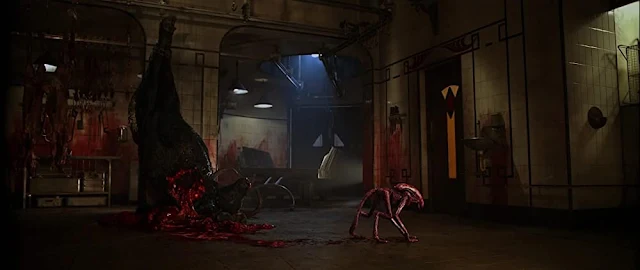
One of the most significant changes in the Assembly Cut is the restoration of several key scenes that were cut from the theatrical release. These include a longer opening sequence that shows the escape pod from Aliens crash landing on the prison planet, as well as additional scenes that flesh out the characters and the setting. These scenes help to establish a stronger sense of place and atmosphere, and also provide more context for the story.
One of the major differences is the ending, which is longer and more nuanced than the theatrical version. In the assembly cut, Ripley's decision to sacrifice herself to destroy the alien is given more weight and emotional depth. The scene is also extended to include an important conversation between Ripley and Dillon, a prisoner who has become her ally. The assembly cut's ending provides a more satisfying and emotionally resonant conclusion to the film, as it emphasizes the themes of sacrifice and redemption that are central to the story.
Overall, the Assembly Cut of Alien 3 is generally regarded as a significant improvement over the theatrical version, and is often considered to be the most definitive version of the film. Its inclusion in the Alien Quadrilogy DVD box set has also helped to raise awareness of the film and give it a new level of respect among fans of the franchise.
We'll leave the final cut on Alien 3 to Sigourney Weaver
Sigourney Weaver, who played the lead role of Ellen Ripley in "Alien 3," after her iconic stint in the original Alien and Aliens was reportedly frustrated with the film's troubled production. She had originally signed on to work with director Renny Harlin, but when he left the project, she was left without a director she trusted. She also reportedly clashed with the film's producers over the script and the film's direction. In an interview with Empire magazine, Weaver stated that she had "mixed feelings" about the film, and that she felt it was a missed opportunity.In terms of her contract, Weaver had negotiated a deal that gave her a significant amount of control over the film's direction. By the time she finally signed she had script approval and was able to make creative suggestions throughout the production process. She also reportedly had a clause in her contract that allowed her to veto the use of any footage that she felt was detrimental to her character or the film as a whole.
Sigourney Weaver has said several things about "Alien 3" over the years. In addition to her mixed feelings about the film's troubled production, she has also expressed frustration with the film's marketing campaign, which she felt oversold her character's involvement in the story. She has also stated that she felt that the film was rushed into production before the script was fully developed, which contributed to the film's problems.
At the same time, Weaver has also defended the film, noting that it was an ambitious project that attempted to do something new with the "Alien" franchise. She has praised the film's darker tone and its exploration of themes such as religion and mortality. She has also expressed admiration for director David Fincher, despite the difficult circumstances of the film's production.
The film production of Alien 3 was notoriously troubled, with numerous creative conflicts, budget issues, and delays plaguing the project fr...
Read Article →
Contrasting the Matrix of Leadership and the All Spark in Transformers
TRANSFORMERS ARTIFACTS: LORE ANALYSIS
Within the cosmic lore of the Transformers saga, two artifacts represent the fundamental duality of the Cybertronian race: the Matrix of Leadership and the AllSpark. They are the twin concepts of cultivated wisdom versus raw creation, of earned responsibility versus the chaotic potential of life itself.
To understand their distinct roles is to understand the core philosophies that drive the Autobot and Decepticon causes.
The Matrix of Leadership is not merely a symbol; it is a holy relic, a direct conduit to the divine spark of the Transformers' creator-god, Primus.
Forged by Primus himself and first borne by Prima, the leader of the original Thirteen Primes, its purpose is to safeguard the collected wisdom and experiences of every leader who has carried it. It is a sapient artifact whose immense power is secondary to its primary function as a library of leadership, morality, and sacrifice.
The Matrix does not grant power easily; it tests the spirit, demanding worthiness and self-awareness. It represents the belief that true leadership is a burden to be carried, a legacy to be honored, and a light to be shone against the encroaching darkness.
In stark contrast, the AllSpark embodies the untamed, amoral power of genesis. In many continuities, it is the vessel that carried the very lifeblood of Cybertron from the Well of All Sparks, the planetary core where new Cybertronian life is born.
Where the Matrix is a curated collection of wisdom, the AllSpark is a torrent of raw creative energy, capable of spontaneously granting life to any technology it touches. It has no conscience or agenda; it simply creates.
This makes it the ultimate prize, a tool that can be used for rebirth and restoration in the hands of the Autobots, or for corruption and the creation of a monstrous, unthinking army in the hands of the Decepticons.
💎 The Matrix of Leadership
The Transformers: The Movie (1986)
| Artifact: | Matrix of Leadership |
| Core Theme: | Destiny and Worthiness |
Thematic Insight:
This film establishes the Matrix as a quasi-sentient artifact that embodies the central theme of worthiness versus experience. It is not a weapon to be simply wielded but a sacred trust to be earned. The dying Optimus Prime passes it to the seasoned soldier Ultra Magnus, but the Matrix rejects him due to his crippling self-doubt. This illustrates that true leadership requires not just strength, but an unwavering spirit and belief in oneself. The Matrix must be opened by one who is willing to embrace their destiny, no matter how unprepared they feel.

Plot Function:
It is ultimately the young and impulsive Hot Rod who, in a moment of selfless courage inside the chaos-bringer Unicron, proves his worth. The Matrix recognizes his inherent nobility and transforms him into Rodimus Prime. The act of opening the Matrix to "light our darkest hour" establishes its lore as the ultimate weapon against cosmic evil, channeling the collective wisdom and pure energy of past Primes to obliterate Unicron from within. It is both a key to personal evolution and a beacon of hope against oblivion.
Transformers: Revenge of the Fallen (2009)
| Artifact: | Matrix of Leadership |
| Core Theme: | Sacrifice and Resurrection |
Thematic Insight:
Here, the Matrix's lore is reimagined as an ancient key tied to the Dynasty of Primes. Its function as both a key to planetary destruction and a vessel for resurrection drives the plot. The artifact tests worthiness in a new way: it turns to dust because its power cannot be simply taken. It must be earned through a great sacrifice. The human protagonist, Sam Witwicky, proves his worthiness not through combat, but through his unwavering loyalty and willingness to die for Optimus. This act bridges the human-Cybertronian bond and asserts that qualities like self-sacrifice are universal.
Plot Function:
The Matrix's primary function becomes the resurrection of Optimus Prime. After Sam proves his worth, the dust reforms into the artifact, which he uses to pour life back into Optimus's spark. This positions the Matrix as a literal key to life and the only hope against The Fallen, the ancient Decepticon who can only be defeated by a Prime. It is a tool that restores the past to save the future.
Transformers: Prime ("One Shall Rise" & "Orion Pax")
| Artifact: | Matrix of Leadership |
| Core Theme: | Identity and Burden |
Thematic Insight:
This storyline explores the theme of identity and the immense burden of the Matrix. To defeat Unicron, Optimus must empty the Matrix's entire energy, an act so profound it erases his own memories as a Prime and reverts him to the humble data clerk he once was, Orion Pax. This lore establishes the Matrix not as a separate object, but as an intrinsic part of the bearer's consciousness. It is a repository of wisdom so vast it overwrites a personality. The plot then centers on the idea that leadership is an amalgam of the artifact's power and the individual's own experience, as the Autobots fight to restore the 'Optimus' identity to the 'Orion' body.
Plot Function:
The empty Matrix serves as a symbol of Optimus's lost self. The quest to restore his memory becomes a race against time, as Megatron manipulates the naive Orion Pax. Jack Darby's journey to Cybertron to recharge the Matrix with the wisdom of the Primes solidifies its role as a living library of leadership. Its restoration not only brings Optimus back but reaffirms that his identity as a Prime is not just a title but a hard-won fusion of his past self and the collective knowledge he carries.
🧊 The AllSpark
Transformers (2007)
| Artifact: | The AllSpark |
| Core Theme: | Creation and Corruption |
Thematic Insight:
The AllSpark is introduced as a raw, almost chaotic force of creation, the source of all Cybertronian life. In contrast to the Matrix's wisdom, the AllSpark's power is untamed and morally neutral. The core conflict is a race for this creative potential. The Autobots hope to use it to restore their dead world, a symbol of hope. The Decepticons want to corrupt its power to build a new army from Earth's technology, turning a life-giving force into a tool of conquest. This duality highlights how great power can be used for either salvation or destruction.
Plot Function:
As the central MacGuffin, the AllSpark drives the entire plot. Its eventual use to kill Megatron, by being pushed into his spark chamber, is a pyrrhic victory. Sam Witwicky saves the world by destroying the Autobots' only hope of ever restoring their own. This act symbolizes the tragic, permanent loss of the Cybertronian homeworld and the future of their race, cementing their place as refugees and protectors of Earth.
Transformers: Animated (2007-2009)
| Artifact: | The AllSpark |
| Core Theme: | Responsibility and Chaos |
Thematic Insight:
When the AllSpark shatters, its fragments become central to the plot, each a miniature, unpredictable source of life. This "scavenger hunt" arc explores the theme of responsibility. The Autobots must contain the chaos unleashed by the fragments as they animate random technology, creating both allies and dangerous new villains. This decentralized power demonstrates that the AllSpark's creative energy is pervasive, hard to control, and carries immense consequences. It is not just about harnessing power, but cleaning up after it.
Plot Function:
The fragments are episodic plot generators, creating the "bot of the week" for much of the series. The ultimate goal is to reassemble the AllSpark. This culminates in Prowl's ultimate sacrifice, merging his own spark with the fragments to contain their energy. His selfless act highlights the immense power and cost associated with the very source of life, showing that controlling creation sometimes requires the ultimate payment.
Transformers: War for Cybertron Trilogy (2020-2021)
| Artifact: | The AllSpark |
| Core Theme: | Freedom vs. Tyranny |
Thematic Insight:
The AllSpark represents the central ideological conflict of the war. For Megatron, it is the ultimate tool for unity. He believes he can end the war by using its power to forcibly reformat all Cybertronians into Decepticons, thus erasing free will in favor of absolute order. For Optimus Prime, this corrupts the sanctity of life the AllSpark creates. His decision to launch the AllSpark into space is a profound sacrifice, choosing the slow death of their planet over the tyranny of enforced unity. The artifact becomes a symbol of the very soul of their race.
Plot Function:
The AllSpark's departure from Cybertron is the inciting incident that expands the war across the galaxy. Its journey through a space bridge becomes the tangible representation of their ideological struggle. The quest to find it is not just about restoring their home, but about determining the future philosophy of the Cybertronian race: will it be a future of choice and individuality, or one of singular, imposed purpose?
TRANSFORMERS ARTIFACTS: LORE ANALYSIS Within the cosmic lore of the Transformers saga, two artifacts represent the fundam...
Read Article →
_poster.jpg)


