star trek
16 June 2025

Star Trek: The working titles of the movies and TV shows

A Guide to Star Trek's Production & Working Titles

The naming of a Star Trek film has always been more than just marketing shorthand. Working titles—the temporary code names stamped on call sheets, scripts, and clapperboards—often reflect the tension between studio secrecy and creative ambition. Some are blunt placeholders meant to throw off the press, others speak in riddles, and a few carry hidden nods to franchise canon or signal major shifts in thematic direction.

Star Trek, much like its galactic rival Star Wars, has long operated in a space where even a production name becomes part of the mythology. While Star Wars leans toward ironic camouflage (like Return of the Jedi's famous "Blue Harvest"), Star Trek often threads legacy directly into its titles. They act as quiet breadcrumbs, suggesting character arcs, the ultimate fate of a starship, or the heavy weight of Starfleet politics.

"To boldly go where no one has gone before..." sometimes requires a good cover story.
Star Trek IV The Voyage Home Poster

The Original Series Films

Star Trek: The Motion Picture (1979)Working Titles: Phase II, Planet of the Titans

Before ascending to the silver screen, the return of Kirk and Spock went through several agonizing false starts. Planet of the Titans was an abandoned 1976 script involving the Enterprise falling into a black hole and the crew discovering they were the mythical Titans of ancient Earth. Following that, Paramount pivoted to Star Trek: Phase II, a television series intended to launch a new network. Sets were built and actors were cast (including Stephen Collins as Decker and Persis Khambatta as Ilia) before the monumental box-office success of Star Wars convinced Paramount to upscale the TV pilot script, "In Thy Image," into a massive theatrical feature.

Star Trek II: The Wrath of Khan (1982)Working Titles: The Genesis Project, The Undiscovered Country, The Vengeance of Khan

Director Nicholas Meyer fundamentally rescued the franchise with this film. His preferred title was The Undiscovered Country (a Shakespearean reference to death), which perfectly suited Spock's impending sacrifice and Kirk's struggle with aging. The studio pushed for The Vengeance of Khan, but famously changed the noun to "Wrath" at the eleventh hour because George Lucas's upcoming film was titled Revenge of the Jedi (before Lucas changed it back to Return). The title shuffle reflects the studio's desperate push for a more action-oriented marketing angle.

Star Trek III: The Search for Spock (1984)Working Title: Return to Genesis

Directed by Leonard Nimoy himself, the working title Return to Genesis was a dead giveaway for fans. The Genesis Planet, born from the unstable Genesis Device in the previous film, was not just a volatile sci-fi location but a moral consequence. The title betrayed that the entire narrative would hinge on the metaphysical quest to resurrect Spock, forcing the crew to grapple with the boundaries of life, death, and the very definition of a Vulcan soul.

Star Trek IV: The Voyage Home (1986)Working Title: The Save the Whales Movie

Affectionately and universally referred to as "the whale movie" by the cast, crew, and Paramount executives during production, this casual moniker leaned entirely into the film's accessible, environmental premise. However, the true "voyage" of the final title was not just across time to 1986 San Francisco, but a thematic journey home for the crew. After the heavy, operatic drama and death of the previous two films, this lighter adventure restored the crew's hopeful, humanistic baseline.

Star Trek V: The Final Frontier (1989)Working Title: An Act of Love

Directed by William Shatner, this film was envisioned as a deeply spiritual, character-driven quest. The working title, An Act of Love, pointed directly to the film's central plot device: Spock's emotional half-brother, Sybok, who utilizes a perverted form of the Vulcan mind-meld to "heal" his followers' deepest psychological traumas. The story's focus on finding God at the center of the galaxy was a bold thematic swing, though the final film is often remembered more for its troubled production, writers' strike limitations, and compromised special effects.

Star Trek VI: The Undiscovered Country (1991)Working Title: Castling

The Shakespearean title Nicholas Meyer had originally pitched for Star Trek II finally found its perfect home here. "The undiscovered country" refers to the terrifying unknown of the future. The film is a brilliant Cold War allegory matching the real-world fall of the Berlin Wall. For old warriors like Kirk and the Klingons, a future of peace without their mortal enemies was an unknown territory they were forced to navigate. An early script draft was known as Castling, referencing the chess move—a nod to the complex political maneuvering and deep conspiracies at play.

The Next Generation Films

Star Trek: Generations (1994)Working Title: Star Trek 7

The final title, Generations, was straightforward but thematically loaded, signaling the literal and cinematic passing of the torch from Captain James T. Kirk to Captain Jean-Luc Picard. The name also references the film's central plot device: the Nexus, an extra-dimensional ribbon of joy where time has no meaning, which allowed two iconic captains separated by decades of history to meet, ride horses, and fight alongside one another.

Star Trek: First Contact (1996)Working Titles: Resurrection, Borg, Destinies

The original working title, Resurrection, was thematically perfect, alluding to the terrifying return of the Borg and Picard's own resurrected PTSD from his time as Locutus. However, it was scrapped to avoid box-office confusion with Fox's Alien: Resurrection. The final title, First Contact, works beautifully on two levels: it refers to Zefram Cochrane's historic first meeting between humans and Vulcans, and the Borg's brutal attempt to rewrite that sacred timeline.

Star Trek: Insurrection (1998)Working Titles: Prime Directive, Rebellion, Stardust

Writer Michael Piller documented the agonizing naming process in his unpublished manuscript Fade In. The studio wanted an action-heavy title, cycling through Rebellion and even Nemesis (which was saved for the next film). The story—about Picard and his crew defying corrupt Starfleet orders to protect the peaceful Ba'ku from forced relocation—is a story of internal mutiny. Insurrection captured the crew's willingness to commit treason in order to uphold the Federation's highest moral ideals.

Star Trek: Nemesis (2002)Working Title: The Enemy Within

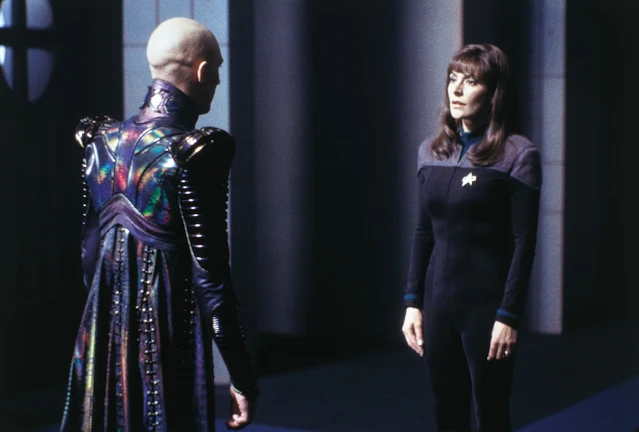
The working title was a direct, loving reference to a classic Original Series episode where a transporter accident splits Captain Kirk into his good and evil halves. This was deeply relevant, as the film's villain, Shinzon (played by a young Tom Hardy), is a literal, weaponized clone of Captain Picard. While Nemesis sounds more like a blockbuster, the original idea of "The Enemy Within" better captured the psychological nature of the conflict, as Picard was forced to confront the darkest, most violent potential version of himself.

The Kelvin Timeline Films

Star Trek (2009)Working Title: Corporate Headquarters

Director J.J. Abrams' Bad Robot production company is famously secretive. The working title Corporate Headquarters was a deliberately bland misdirect designed to hide location filming and cast movements from the public and press. The final title was simply Star Trek—bold, clean, and completely devoid of subtitles or Roman numerals. It was a clear, definitive statement that this was a full reset of the mythos, starting from ground zero for a modern audience.

Star Trek Into Darkness (2013)Working Title: Washington 4

While early rumors suggested Vengeance (a literal plot point, as it was the name of the massive, black, predatory Starfleet vessel commanded by Admiral Marcus), the production utilized highly secretive code names like Washington 4. The final title dropped the colon and opted for a phrase reflecting the moral darkness that Starfleet itself was descending into. By embracing militarism, drone strikes, and pre-emptive warfare, the film challenged the utopian core of the franchise.

Star Trek Beyond (2016)Working Title: Washington

Continuing the Kelvin timeline's tradition of generic location misdirects, the production operated under the radar until director Justin Lin chose the final title. Beyond was selected to signal a hard thematic break from the previous two films' earthbound, nostalgia-heavy plots. Lin's goal was to capture the kinetic spirit of a classic episodic adventure, destroying the Enterprise early on and pushing the crew beyond familiar Federation territory and into the true unknown.

The Modern Television Era

Star Trek: Discovery (2017–2024)Working Title: Green Harvest

This title was a playful, direct homage to Star Wars' famous "Blue Harvest" cover, placing it within a long, proud tradition of sci-fi production camouflage. The final title, Discovery, refers not only to the namesake starship and its highly experimental spore drive, but also to the serialized theme of the entire show: characters rediscovering the core values of the Federation in a fractured, post-Klingon War galaxy.

Star Trek: Picard (2020–2023)Working Title: Drawing Room

This working title perfectly matched the show's initial tone, which was quiet, deeply introspective, and rooted in character memory rather than high-concept space spectacle. A "drawing room" is a place for conversation, quiet reflection, and receiving guests. This was a fitting metaphor for a series that begins with an aging, retired Jean-Luc Picard living in isolation at his French chateau, haunted by his past and the loss of Data.

Star Trek: Strange New Worlds (2022–)Working Title: Lily & Isaac

Unlike the generic misdirects of the Kelvin films, this was a rare, sentimental codename. "Lily" was widely rumored to refer to actress Jess Bush's character, Nurse Christine Chapel, highlighting her significant evolution in the series. The final title, Strange New Worlds, is a direct, loving quote from Captain Kirk's iconic opening monologue. It served as a massive beacon to fans, signaling a deliberate and celebrated return to the classic, optimistic, planet-of-the-week format of the 1960s.

chronological order
22 April 2026

Star Trek: Chronological Timeline Order > TV + Films

The Final Frontier A Complete Chronological Timeline of Star Trek

The Star Trek franchise spans centuries of in-universe history, across dozens of television series, films, and alternate timelines. To help navigate this expansive canon, this guide organizes all major entries in strict chronological order 0 based on the events as they occur in the timeline of the universe, not by their real-world release dates.

This journey begins with the foundational days of Starfleet in Enterprise, moves through the golden age of exploration with Kirk and Pike, and wades into the dense, politically charged 24th-century arc shared by The Next Generation, Deep Space Nine, and Voyager. It concludes in the far-flung 32nd century of Discovery. Alternate realities, like the branching Kelvin timeline, are noted exactly where they diverge.

Whether you're plotting a comprehensive rewatch or seeking the historical context for a specific episode, this timeline brings structure to one of science fiction’s most enduring and complex mythologies.

Star Trek: Enterprise

Timeline2151–2161  |  FormatTV Series


Captain Jonathan Archer commands Earth's first Warp 5 starship, the NX-01. The series chronicles humanity's initial, clumsy forays into deep space, navigating a hostile Temporal Cold War, preventing the destruction of Earth by the Xindi, and brokering the early alliances that directly result in the Coalition of Planets.

Unlike the polished utopia of later eras, Enterprise explores the messy, dangerous reality of being the "new kids on the galactic block." It relies heavily on themes of real-world post-9/11 paranoia (especially in Season 3) and the ethical growing pains required to ultimately draft the Prime Directive.

The theme song, "Faith of the Heart," was a massive departure from traditional orchestral scores and remains famously controversial. The show’s abrupt cancellation after four seasons marked the end of an uninterrupted 18-year run of Star Trek on television.

Star Trek: Discovery (Seasons 1–2)

Timeline2256–2258  |  FormatTV Series


Set a decade before Kirk's five-year mission, Specialist Michael Burnham's mutiny triggers a devastating war with the Klingon Empire. The USS Discovery utilizes a highly classified, experimental "Spore Drive" for instantaneous travel, eventually facing off against a rogue AI threat known as Control.

These early seasons deeply challenge Federation idealism. By thrusting Starfleet into a brutal war, it asks whether utopian values can survive existential threats, heavily exploring trauma, redemption, and the dark underbelly of Starfleet via the covert intelligence agency, Section 31.

As the first Trek show created for streaming, it modernized the franchise's visuals and adopted heavily serialized storytelling. Its introduction of Captain Christopher Pike in Season 2 was so well-received it directly spawned a highly successful spin-off.

Star Trek: Strange New Worlds

Timeline2259–Present  |  FormatTV Series


Following the defeat of Control, Captain Christopher Pike leads the USS Enterprise on classic missions of deep space exploration. The crew encounters terrifying new threats like the Gorn Hegemony, while Pike secretly wrestles with the foreknowledge of his own tragic, inescapable fate.

A triumphant return to the franchise’s roots, the show emphasizes episodic, "planet-of-the-week" storytelling. It focuses on relentless optimism, the wonder of discovery, and the idea that true leadership requires serving others even when you know it will cost you everything.

Greenlit almost entirely due to fan demand for Anson Mount’s portrayal of Pike, the series is widely praised for perfectly bridging the gap between modern television production values and the vibrant, colorful aesthetic of the 1960s original.

Star Trek: The Original Series

Timeline2265–2269  |  FormatTV Series


Captain James T. Kirk and Mr. Spock in Star Trek: The Original Series

Captain James T. Kirk, Mr. Spock, and Dr. McCoy lead the USS Enterprise on an iconic five-year mission. They establish the Romulan Neutral Zone, enforce the Organian Peace Treaty with the Klingons, and face down omnipotent beings, rogue computers, and ancient space anomalies.

Conceived as a "Wagon Train to the stars," the show used allegorical sci-fi to tackle contemporary 1960s social issues. It presented a radically progressive vision of the future where racism, sexism, and global conflicts were eradicated, functioning as a beacon of Cold War-era hope.

This serves as the foundation of the entire mythos. It featured network television's first interracial kiss and introduced the world to now-ubiquitous sci-fi tropes like the transporter, warp drive, and the famous Vulcan salute (invented on set by Leonard Nimoy).

Star Trek: The Animated Series

Timeline2269–2270  |  FormatAnimated Series


Completing the final year of the five-year mission, the Enterprise crew encounters bizarre, non-humanoid alien life and cosmic phenomena. The animated medium allowed them to explore aquatic worlds and towering aliens (like crewmembers Arex and M'Ress) that live-action budgets couldn't achieve.

Despite being a Saturday morning cartoon, TAS maintained the mature, philosophical tone of the live-action series. It continued to explore themes of non-interference and peaceful diplomacy, expanding the universe without dumbing down the narratives.

Though its official status was fiercely debated by Gene Roddenberry and fans for decades, it introduced massive staples to the lore: the first depiction of a holodeck (the "rec room"), Spock's childhood on Vulcan, and Kirk's middle name, "Tiberius."

Star Trek: The Motion Picture

Timeline2273  |  FormatMovie


Admiral Kirk reassumes command of a newly refitted USS Enterprise to intercept a massive, mysterious energy cloud on a direct course for Earth, absorbing and destroying everything in its path.

Deliberately embracing a slow, awe-inspired tone reminiscent of classic sci-fi cinema, it focuses on the philosophical question of what it means for a machine to seek its creator and achieve true consciousness.

This film began life as a script for a cancelled television series called Star Trek: Phase II, eventually pivoting into a massive theatrical release due to the massive cultural success of competing sci-fi blockbusters.

Star Trek II: The Wrath of Khan

Timeline2285  |  FormatMovie


A vengeful Khan Noonien Singh, a genetically engineered tyrant from Kirk's past, returns to steal a terraforming device capable of creating or destroying entire planets to exact his revenge.

The film acts as a deep exploration of aging, mortality, friendship, and the realization that past actions—even those made with good intentions—carry inescapable, deadly consequences.

Spock's iconic sacrifice and the film's tense submarine-style warfare saved the franchise, establishing the action-heavy "revenge" formula that future installments would attempt to replicate for decades.

Star Trek III: The Search for Spock

Timeline2285  |  FormatMovie


Following Spock's death, Admiral Kirk and his crew risk their careers, their freedom, and their lives to steal the USS Enterprise and return to the Genesis Planet to search for their friend's body and soul.

Dealing heavily with themes of loyalty and grief, it asks how far one is willing to go for a loved one, directly continuing the emotional fallout and literal destruction of the previous film.

Leonard Nimoy directed this installment, which gave him significant creative input on his character's resurrection and marked the beginning of his highly successful directing career.

Star Trek IV: The Voyage Home

Timeline2286  |  FormatMovie


To save Earth from a destructive alien probe seeking to communicate with extinct humpback whales, the crew travels back in time in a stolen Klingon Bird-of-Prey to 1986 San Francisco to retrieve a pair of the mammals.

A significant departure in tone, this film is a lighthearted, comedic adventure with a strong environmental message about conservation and mankind's hubris regarding the natural world.

It became the most financially successful of the original cast films during its run, appealing broadly to general audiences who loved the accessible "fish out of water" comedy over hardcore sci-fi.

Star Trek V: The Final Frontier

Timeline2287  |  FormatMovie


Spock's long-lost, emotional half-brother hijacks the newly commissioned Enterprise-A on a messianic quest to the center of the galaxy to find the mythical planet of Sha Ka Ree, believed to be the home of God.

Directed by William Shatner, the film attempts to explore themes of religious zealotry, existential pain, and whether our trauma defines who we are or merely holds us back.

Plagued by a writers' strike, massive budget cuts, and special effects that fell far short of expectations, it was met with a mixed critical and fan reception, nearly ending the film series.

Star Trek VI: The Undiscovered Country

Timeline2293  |  FormatMovie


After a catastrophic moon explosion pushes the Klingon Empire toward collapse, Kirk is tasked with escorting their chancellor to peace talks—only to be framed for his assassination by a vast conspiracy.

A tense political thriller heavily mirroring the fall of the Soviet Union and the end of the Cold War. It explores prejudice, racism, and the fear of letting go of lifelong hatreds.

This film serves as a widely beloved final bow for the entire original cast, ending poignantly with their physical signatures appearing gracefully across the screen in the final credits.

Timeline Branch: The Kelvin Timeline (Alternate Reality)

Star Trek (2009)

TimelineAlt. 2258  |  FormatMovie


A time-traveling Romulan destroys the USS Kelvin, altering history. In this new reality, an orphaned, rebellious James T. Kirk must rise to the occasion and team up with Spock to save Earth.

This timeline explores the "nature vs. nurture" debate, proving that Kirk and Spock are destined to be friends and leaders regardless of the tragedy that drastically reshaped their lives.

Created by J.J. Abrams to reboot the franchise for a broader, mainstream audience without erasing the original canon. It was a massive financial success that rejuvenated the brand entirely.

Star Trek Into Darkness

TimelineAlt. 2259  |  FormatMovie


When a devastating terrorist attack strikes Starfleet Command, the Enterprise crew is sent on a manhunt that uncovers a covert, militarized conspiracy led by a superhuman from the past.

The film heavily critiques drone warfare, preemptive strikes, and the compromise of utopian values in the name of security, reinterpreting the original story of Khan Noonien Singh.

While visually spectacular and successful at the box office, many hardcore fans debated the necessity of hiding Khan's identity and reversing the famous radiation sacrifice scene from The Wrath of Khan.

Star Trek Beyond

TimelineAlt. 2263  |  FormatMovie


Three years into their five-year mission, the Enterprise is ambushed and destroyed by a massive, coordinated swarm fleet, stranding the fractured crew on a hostile, uncharted planet.

Returning to core franchise values, the film argues that the Federation's strength lies in its diversity, unity, and exploration, rather than in isolationism and warfare.

Co-written by Simon Pegg (who plays Scotty), the film celebrated Star Trek's 50th anniversary with numerous homages and a dedication to the late Leonard Nimoy and Anton Yelchin.

Star Trek: The Next Generation

Timeline2364–2370  |  FormatTV Series


Captain Picard captured and tortured by Cardassians in the gripping TNG episode Chain of Command

A century after Kirk, Captain Jean-Luc Picard commands the massive Enterprise-D. The crew establishes peace with the Klingons, navigates border wars with the Cardassians, and faces existential threats from the cybernetic Borg and the omnipotent entity known as Q.

TNG represents Gene Roddenberry's ultimate, uncompromised vision. It relies on diplomacy, science, and philosophical debate over "cowboy diplomacy." The core theme is humanity's limitless potential to evolve past its violent, greedy history into enlightened explorers.

A television juggernaut that surpassed the original series in ratings and global reach. Patrick Stewart’s Picard became a cultural icon of intellectual leadership. The two-part episode "The Best of Both Worlds" is widely considered one of the greatest TV cliffhangers in history.

Star Trek: Deep Space Nine

Timeline2369–2375  |  FormatTV Series


Commander Benjamin Sisko commands a stationary outpost near a stable wormhole. What begins as a mission to help Bajor rebuild after a brutal Cardassian occupation erupts into a quadrant-spanning conflict against shape-shifting genetic engineers from the Gamma Quadrant.

DS9 brilliantly deconstructs the Starfleet utopia. It directly asks: "Is it easy to be a saint in paradise?" The series explores war, occupation, terrorism, religious zealotry, and the dark moral compromises good people must make when their survival is on the line.

Decades ahead of its time, DS9 abandoned episodic formats for intense, serialized storytelling. Featuring Star Trek's first Black lead and a deeply complex ensemble of morally grey characters, it is now critically regarded by many as the franchise's creative peak.

Star Trek Generations

Timeline2371  |  FormatMovie


Captain Picard and his crew face a madman willing to destroy entire star systems to re-enter a temporal energy ribbon called the Nexus, forcing Picard to seek the help of a legendary predecessor.

Serving as a literal bridge between The Original Series and The Next Generation, the movie explores themes of time, mortality, and what it means to make a lasting difference.

The film is famous for the controversial, permanent death of Captain Kirk and the spectacular crash-landing and total destruction of the iconic USS Enterprise-D.

Star Trek: Voyager

Timeline2371–2378  |  FormatTV Series


The bridge crew of the USS Voyager led by Captain Kathryn Janeway

Thrown 70,000 light-years from home by an alien entity, Captain Kathryn Janeway must merge her Starfleet crew with a band of Maquis rebels. Their 75-year journey back brings them face-to-face with new enemies like the Kazon, Species 8472, and the heart of Borg space.

The core of Voyager is perseverance and found family. Stranded without Federation backup, the show explores how difficult it is to uphold Starfleet ideals when rules like the Prime Directive are actively hindering your chances of getting home alive.

Janeway was the franchise’s first female captain in a lead role, inspiring a generation of women in STEM. The introduction of the liberated Borg drone, Seven of Nine, provided the series with its most compelling character arc regarding the reclamation of humanity.

Star Trek: First Contact

Timeline2373  |  FormatMovie


Captain Picard faces off against the Borg Queen in Star Trek: First Contact

The Borg travel back in time to stop humanity's first warp flight and prevent the birth of the Federation. Picard and his crew must follow them to 2063 to ensure history unfolds correctly.

Widely considered the best of the TNG films, it is an action-packed exploration of the Borg's terrifying nature and a deep character study of Picard's unresolved PTSD from his assimilation.

The film radically altered franchise lore by introducing the Borg Queen, giving a face and singular voice to the previously faceless, collective cybernetic race.

Star Trek: Insurrection

Timeline2375  |  FormatMovie


Captain Picard defies a corrupt Starfleet admiral's orders to protect a peaceful, technologically stagnant race whose homeworld emits regenerative, life-extending radiation.

The film attempts to return to the moral and ethical dilemmas of the television series, questioning the ethics of forced relocation and whether the ends justify the means.

While praised for its character moments, many critics and fans felt its smaller scope and localized stakes made it feel more like an extended, high-budget TV episode than a feature film.

Star Trek: Nemesis

Timeline2379  |  FormatMovie


The Enterprise is diverted to Romulus under the guise of peace, where a human clone of Picard named Shinzon has taken brutal control of the Senate and seeks the destruction of Earth.

A dark reflection on identity, the film asks whether we are born good or evil, or if we are shaped entirely by our circumstances, experiences, and choices.

Featuring the tragic sacrifice of Data, the film was a critical and commercial failure that effectively killed the TNG film era and put the entire film franchise on ice for seven years.

Star Trek: Lower Decks

Timeline2380–2381  |  FormatAnimated Series


Set just after Nemesis, the series follows the support crew serving on one of Starfleet's least important ships, the USS Cerritos. Ensigns Mariner, Boimler, Tendi, and Rutherford handle the menial tasks while upper management hogs the bridge and the glory.

While fundamentally a comedy, it explores the mundane realities and bureaucratic absurdities of living in a utopia. It ultimately proves that heroism, sacrifice, and genuine Starfleet ideals exist in the lower ranks just as much as they do in the captain's chair.

The first outright comedy in Star Trek history. Despite its humorous tone, it is incredibly rigorous with its canon, bringing back obscure lore and successfully executing a highly praised, mind-bending live-action crossover with Strange New Worlds.

Star Trek: Prodigy

Timeline2383–2384  |  FormatAnimated Series


A motley crew of enslaved alien teenagers in the Delta Quadrant discover an abandoned Starfleet vessel, the USS Protostar. Guided by a holographic Janeway, they must learn to work together to escape their captors and navigate their way toward Federation space.

Geared towards a younger audience, Prodigy takes a brilliant approach: the characters know nothing about the Federation. Through their fresh eyes, the audience learns the fundamental values of Starfleet—cooperation, scientific curiosity, and the right to a second chance.

Visually stunning, the 3D-animated series acts as a direct spiritual successor to Voyager. It successfully introduced a new generation of children to the philosophical concepts of Star Trek while maintaining high-stakes storytelling that long-time fans praised.

Star Trek: Picard

Timeline2399–2402  |  FormatTV Series


Decades after retiring in protest over Starfleet's refusal to aid Romulan refugees, Jean-Luc Picard is pulled into a conspiracy involving synthetic life. Over three seasons, he traverses the galaxy to save Data's offspring, battles Q, and reunites the old TNG crew.

A melancholic character study, the series wrestles with aging, hubris, and the realization that trusted institutions can fail us. It focuses on finding renewed purpose at the end of one's life, transitioning into a story about parenthood and passing the torch.

Season 3 became a massive cultural event for Trek fans, acting as the true finale that the TNG cast never received in Nemesis. The spectacular rebuild of the Enterprise-D bridge and the promotion of Seven of Nine left a major mark on the modern canon.

Star Trek: Discovery (Seasons 3–5)

Timeline3188–3191  |  FormatTV Series


To hide vital data from Control, the USS Discovery jumps 930 years into the future. They arrive to find the Federation shattered by "The Burn," a cataclysm that destroyed most warp capability. Burnham and her crew must solve the mystery and rebuild the alliance.

By moving to a fractured, post-apocalyptic future, the show flips the premise of Star Trek: instead of exploring the unknown to build a utopia, they are trying to rebuild a utopia that was lost. The overarching theme is connection and restoring hope.

The time jump was an unprecedented creative decision that completely freed the show from existing canon constraints. It introduced radical future technologies like programmable matter and detached warp nacelles, pushing the timeline further ahead than any previous media.

star trek
01 March 2023

List of all the Star Trek films

For more than half a century, Star Trek films have served as warp gates into a universe where curiosity is power and cooperation is the norm. 

Each movie carries its own history, reflecting the era it was made while expanding a shared timeline that stretches from the original series to alternate realities. This list walks you through every cinematic voyage in order, layering story, production trivia, and deep lore so you can trace how the Federation, its enemies, and its ideals evolved on screen. 

Whether you came aboard with Kirk or found your way through Picard, Janeway, or the Kelvin crew, this timeline captures the franchise’s beating heart: bold exploration and human possibility.

Star Trek: The Motion Picture (1979)

Released: December 7, 1979Director: Robert WiseUS gross: $82.3M

Lead actors: William Shatner, Leonard Nimoy, DeForest Kelley

Plot: An immense unknown entity heads for Earth. The refit Enterprise must solve the riddle before humanity is erased.

Connections: Introduces Ilia and V’Ger. Establishes the refit look that defines the film era.

  • Lore: V’Ger is a Voyager probe that evolved after contact with a machine civilization.
  • Trivia: Developed from the unproduced Phase II series. Robert Wise steered a turbulent production.

Star Trek II: The Wrath of Khan (1982)

Released: June 4, 1982Director: Nicholas MeyerUS gross: $97M

Lead actors: William Shatner, Leonard Nimoy, Ricardo Montalbán

Plot: Khan escapes exile and seeks revenge on Kirk, with the Genesis Device as the fuse.

Connections: Direct sequel to Space Seed. Launches the Genesis Trilogy arc.

  • Lore: The Kobayashi Maru becomes Trek shorthand for character under pressure.
  • Trivia: Often hailed as the series high point. The quadrant hears Khaaaan.
  • Why the sequel works

Star Trek III: The Search for Spock (1984)

Released: June 1, 1984Director: Leonard NimoyUS gross: $87M

Lead actors: William Shatner, Leonard Nimoy, DeForest Kelley

Plot: The crew risks careers and ship to restore Spock after the Genesis aftermath.

Connections: Direct sequel to Wrath of Khan. Continues the Genesis arc.

  • Lore: The Genesis Planet accelerates life cycles, a warning about unchecked tech leaps.
  • Trivia: Leonard Nimoy’s directing debut. Christopher Lloyd plays Kruge.
  • Review and themes

Star Trek IV: The Voyage Home (1986)

Released: November 26, 1986Director: Leonard NimoyUS gross: $133M

Lead actors: William Shatner, Leonard Nimoy, DeForest Kelley

Plot: Time travel to 1986 San Francisco to save humpback whales and the future that needs them.

Connections: Closes the Genesis Trilogy with heart and humor.

  • Lore: The probe communicates via whale song. Nonhuman intelligence drives the conflict.
  • Trivia: Fan favorite for its light touch and quotable comedy.

Star Trek V: The Final Frontier (1989)

Released: June 9, 1989Director: William ShatnerUS gross: $63M

Lead actors: William Shatner, Leonard Nimoy, DeForest Kelley

Plot: A charismatic Vulcan seeks a godlike being at the galaxy’s center, pulling the crew into a crisis of faith.

Connections: Continues the classic crew era, testing belief and found family.

  • Lore: Sha Ka Ree becomes a touchpoint for debates about myth and science.
  • Trivia: Often ranked lower, yet the campfire scenes are comfort food for fans.

Star Trek VI: The Undiscovered Country (1991)

Released: December 6, 1991Director: Nicholas MeyerUS gross: $96M

Lead actors: William Shatner, Leonard Nimoy, DeForest Kelley

Plot: A conspiracy threatens a fragile peace between the Federation and the Klingon Empire.

Connections: A farewell to the TOS crew, bridging to TNG era diplomacy.

  • Lore: Praxis explosion reshapes Klingon politics. Shakespeare in the original Klingon becomes fan legend.
  • Trivia: Released as the Soviet Union dissolved, sharpening its Cold War allegory.

Star Trek: Generations (1994)

Released: November 18, 1994Director: David CarsonUS gross: $118M

Lead actors: Patrick Stewart, William Shatner

Plot: Picard battles Soran and the lure of the Nexus while crossing paths with Captain Kirk.

Connections: Formal handoff from TOS to TNG. The Enterprise D meets its end.

  • Lore: The Nexus functions like a timeless wish space that tempts heroes to stop moving forward.
  • Trivia: First on screen meeting of Kirk and Picard. The saucer crash was a technical showcase.

Star Trek: First Contact (1996)

Released: November 22, 1996Director: Jonathan FrakesUS gross: $92M

Lead actors: Patrick Stewart, Brent Spiner

Plot: The Borg target Earth’s past to prevent humanity’s first warp flight. Picard confronts his scars.

Connections: Sequel momentum after Generations. Revenge, trauma, identity.

  • Lore: April 5, 2063 is First Contact Day. Zefram Cochrane’s Phoenix flight anchors Trek history.
  • Trivia: Directed by Riker. Many fans rank it the best TNG feature.
  • Review of First Contact

Star Trek: Insurrection (1998)

Released: December 11, 1998Director: Jonathan FrakesUS gross: $70M

Lead actors: Patrick Stewart, Brent Spiner

Plot: The Enterprise E protects the Ba’ku from a relocation scheme that would strip their world for others.

Connections: A Prime Directive morality play.

  • Lore: The Son’a and Ba’ku share a history that reframes the conflict as family and exile.
  • Trivia: Shot in the Sierra Nevada. Score by Jerry Goldsmith, tying back to The Motion Picture.

Star Trek: Nemesis (2002)

Released: December 13, 2002Director: Stuart BairdUS gross: $67M

Lead actors: Patrick Stewart, Brent Spiner, Tom Hardy

Plot: A clone of Picard rises on Romulus. The Enterprise E faces the Reman warship Scimitar.

Connections: Curtain call for the TNG film crew.

  • Lore: Introduces Remans to screen canon. Seeds later Romulan politics on television.
  • Trivia: Early Tom Hardy showcase. Farewell to the Enterprise E on film.

Star Trek (2009)

Released: May 8, 2009Director: J. J. AbramsUS gross: $257M

Lead actors: Chris Pine, Zachary Quinto, Zoe Saldana

Plot: A time traveling Romulan miner attacks Starfleet, altering history. A new crew forms on a familiar bridge.

Connections: Launches the Kelvin timeline, an alternate continuity that preserves Prime lore while exploring new paths.

  • Lore: Spock Prime’s presence keeps a living bridge to the original continuity.
  • Trivia: Lens flares became a calling card. A fresh cast brought new fans aboard.

Star Trek Into Darkness (2013)

Released: May 16, 2013Director: J. J. AbramsUS gross: $228M

Lead actors: Chris Pine, Zachary Quinto, Benedict Cumberbatch

Plot: A terror plot entwines Section 31 and a reimagined Khan.

Connections: Mirrors Wrath of Khan beats in a new context. Continues Kelvin era politics with Klingon tension.

  • Lore: Section 31 steps from whispered rumor to movie menace.
  • Trivia: Shot in Los Angeles, London, and Iceland. Leonard Nimoy appears as Spock Prime.

Star Trek Beyond (2016)

Released: July 22, 2016Director: Justin LinUS gross: $158M

Lead actors: Chris Pine, Zachary Quinto, Zoe Saldana

Plot: Stranded on a remote world, the crew must regroup and outthink Krall to save Yorktown Station.

Connections: A 50th anniversary salute about unity and improvisation.

  • Lore: The Franklin connects to early warp history, binding the Kelvin era to Federation roots.
  • Trivia: Dedicated to Anton Yelchin. Yorktown’s gravity-bending design became an instant icon.
star trek
09 August 2023

Johnathan Frake's turn at the Director's Helm made Star Trek great

The Frakes Factor: A Directorial Deep Dive

Jonathan Frakes' impact on the Star Trek universe as both an actor and director is immeasurable. His directorial style, shaped by his extensive experience as Commander William Riker in "Star Trek: The Next Generation," seamlessly combines dynamic visuals, character-driven storytelling, and emotional resonance.

This essay delves into his profound influence on Star Trek films and episodes, highlighting his adept navigation of intricate narratives, thought-provoking themes, and his uncanny ability to capture the very essence of the franchise's spirit.

Directorial Showcase: Key Episodes & Films

"Cause and Effect" - TNG

Frakes' directorial journey found its inception within "The Next Generation," where he helmed several cornerstone episodes. One standout example is "Cause and Effect," an episode that masterfully delves into the complexities of time loops and suspense. Frakes skillfully balanced the tension between repetition and progression, ensuring that the audience remained engaged and intrigued as they pieced together the puzzle alongside the characters.

Director's Log: This episode is famous for its "cold open," where the Enterprise is destroyed before the opening credits even roll. To create the disorienting feeling of the time loop, Frakes used quick cuts and overlapping dialogue from previous loops. The captain of the other starship, the USS Bozeman, was played by Kelsey Grammer in an uncredited cameo, a favor to the show's producer who was a fan of *Cheers*.

"The Offspring" - TNG

"The Offspring" stands as another pinnacle of Frakes' directorial prowess. In this poignant episode, he exhibited a deep understanding of character emotions, particularly in his portrayal of Lieutenant Commander Data's longing for family and identity. The delicate moments between Data and his android daughter, Lal, were meticulously crafted under Frakes' guidance, resonating powerfully with viewers and highlighting his ability to create a genuine connection between characters and audiences.

Director's Log: Jonathan Frakes has stated this is his favorite episode he ever directed. The script, written by René Echevarria, was so strong that it required very few changes. The episode won the 1990 Hugo Award for Best Dramatic Presentation, a testament to its powerful storytelling and direction.

"Past Tense" - DS9

Frakes' excellence extended to other series. "Past Tense" in "Star Trek: Deep Space Nine" showcased his commitment to addressing contemporary societal issues. By exploring themes of poverty and inequality through the lens of science fiction, Frakes adhered to Star Trek's tradition of social commentary, amplifying its relevance to real-world concerns and bridging the gap between speculative fiction and pressing matters of the present.

Director's Log: This two-part episode, set in 2024, depicted "Sanctuary Districts" for the homeless, a concept that writers worried was becoming presciently accurate. Frakes directed Part II, handling the intense action sequences and the dramatic resolution as Sisko must take on the historical role of Gabriel Bell to ensure the timeline is preserved.

Star Trek: First Contact (1996)

"Star Trek: First Contact" emerged as a highly acclaimed film due to its blend of action, philosophical depth, and Frakes' adept directorial choices. He successfully translated the urgency of the Borg threat to the cinematic canvas while maintaining the franchise's focus on ethical exploration. His understanding of Captain Picard's personal issues with the Borg Queen amplified the emotional stakes of the narrative.

Director's Log: Frakes fought hard to keep the film dark and intense, clashing with producer Rick Berman who wanted a more traditional Star Trek feel. The original script involved a time-travel plot to the Renaissance and featured Q. Frakes' focus on the Borg and the action-horror elements is credited with making the film a critical and commercial success, often considered the best of the TNG films.

Star Trek: Insurrection (1998)

"Star Trek: Insurrection," while receiving more mixed reviews, still bears Frakes' directorial influence and dedication to ethical conundrums. The film's exploration of the pursuit of eternal youth and the implications of uprooting a society for personal gain aligned with the core themes of the franchise. Frakes' choices allowed "Insurrection" to remain true to the franchise's ethos.

Director's Log: Frakes has jokingly referred to this film as "the lightest of the TNG movies" and essentially a "big episode of the show." The plot was intended as a deliberate change of pace after the darkness of *First Contact*. The original subtitle was "Stardust," which was the name of the popular song by Hoagy Carmichael that Riker and Troi dance to.

The Legend of Riker's Beard

The concept of "Growing the Beard" refers to a notable shift in the quality and tone of "The Next Generation" that coincided with Jonathan Frakes growing a beard for his character, Commander Riker, at the start of Season 2. This change marked a turning point where the show began to explore deeper, more complex narratives.

Frakes' contributions as both an actor and director were pivotal in this evolution. The term "Growing the Beard" has since entered TV Tropes lexicon as a symbol for a show that has found its footing and hit its creative stride, a positive impact largely attributed to the era Frakes helped define.

Commander Riker's beard from Star Trek TNG

Conclusion

Jonathan Frakes' multifaceted impact on the Star Trek universe is a testament to his exceptional talents. His ability to combine dynamic storytelling, character development, and thematic exploration has left an enduring legacy. From his standout "TNG" episodes to his directorial efforts in Star Trek films, Frakes' creative vision has been a crucial force in shaping the franchise's narrative trajectory.

More recently, Frakes has directed multiple episodes for *Star Trek: Discovery* and *Picard*, and he helmed the critically acclaimed and fan-favorite crossover episode of *Strange New Worlds*, "Those Old Scientists." As the Star Trek saga continues to explore new frontiers, his legacy remains an integral part of its ongoing journey.

star trek
12 August 2023

Deconstructing Star Trek: Nemesis and Its Legacy - Farewell to the Next Generation

A Dark Reflection: Deconstructing Star Trek: Nemesis

"Star Trek: Nemesis," the tenth film in the franchise and the final cinematic outing for the beloved cast of "Star Trek: The Next Generation," arrived in 2002 with the immense weight of concluding an era. Directed by Stuart Baird, the film attempted a darker, more action-oriented tone than the preceding *Insurrection*. However, it was met with a deeply divided response from fans and critics, becoming a controversial and bittersweet farewell. In this analysis, we'll dissect the intricate tapestry of this film—its plot, characters, themes, and its complicated place in the Star Trek universe.

Plot Synopsis: A Shadow on Romulus

"Nemesis" opens with the wedding of William Riker and Deanna Troi, but the celebration is cut short. The Enterprise-E, under the command of Captain Jean-Luc Picard, is dispatched on a diplomatic mission to Romulus following a coup. There, they discover the new Praetor is a man named Shinzon (a young Tom Hardy), who reveals a startling truth: he is a clone of Picard, created from a discarded Romulan plot to replace the captain with a deep-cover agent.

Raised in the brutal dilithium mines of the sister-world Remus by a subjugated race, Shinzon has seized control of the Romulan Empire with the backing of his fearsome Reman warriors. His flagship, the *Scimitar*, is a predator-like warbird with a perfect cloaking device and a devastating thalaron radiation weapon capable of wiping out all life on a planet. Shinzon’s plan is twofold: lure the Enterprise to him to cure his own rapid aging with Picard’s blood, and then use his superweapon to destroy the Federation, starting with Earth.

Character Analysis: Facing the Mirror

**Picard and Shinzon** are the heart of the film. Shinzon is Picard's dark reflection, his shadow self—what he could have become without the guiding principles of Starfleet. The conflict forces Picard to confront the haunting idea of his own potential for darkness, exploring the classic theme of nature versus nurture. Shinzon is not evil because he is a clone, but because his brutal upbringing on Remus has twisted him into a vessel of pure rage and pain.

The **Riker and Troi** subplot provides a sense of closure. Their marriage marks the end of an era for the Enterprise crew, and Riker’s long-awaited promotion to Captain of the USS *Titan* culminates his arc as Picard's loyal "Number One."

**Data's** journey reaches its poignant conclusion. The discovery of B-4, a simpler prototype of himself, forces Data to contemplate his own lineage and legacy. His ultimate sacrifice to destroy the *Scimitar* and save Picard is the ultimate expression of his humanity. By downloading his memories into B-4 beforehand, he achieves a form of immortality, a final, selfless act that proves he became more human than many biological beings.

Themes: Identity, Duality, and Sacrifice

"Nemesis" delves deeply into the theme of **identity**. The film questions whether destiny is determined by our genes (nature) or by our choices (nurture). The powerful motif of **duality and mirror imagery** threads through the entire narrative. The parallelism between Picard and Shinzon is a reflection of the paths individuals can take under different circumstances, contemplating the complexity of human nature and the multitude of possibilities that lie within every individual.

**Sacrifice** emerges as the film's most powerful motif. It is epitomized by Data's final act, a conscious choice that reflects the most fundamental aspect of his hard-won humanity: the capacity to put the needs of others before his own.

Action and Legacy

Director Stuart Baird, known for his work as an editor on action films, brought a kinetic and visceral style to the film. The final battle between the Enterprise and the Scimitar is one of the most brutal and intense in the franchise's history. The iconic moment where Picard orders the Enterprise to ram the enemy vessel is a thrilling highlight, showcasing a level of grit not often seen in *The Next Generation*.

Unfortunately, "Nemesis" faced an impossible challenge at the box office, opening against *The Lord of the Rings: The Two Towers*. Its underwhelming financial performance led to a nearly decade-long hiatus for Star Trek on the big screen, until the 2009 J.J. Abrams reboot. While divisive, the film's legacy has been re-examined in recent years, as its events—particularly the death of Data and the new path for Riker and Troi—serve as crucial backstory for the acclaimed *Star Trek: Picard* series.

Conclusion

*Star Trek: Nemesis*, while flawed, remains a valuable and significant installment. Its exploration of identity and choice aligns with the franchise's foundational themes, and it provides a dark, emotional, and action-packed farewell to a beloved crew. It stands as a reminder of the franchise's power to ask thought-provoking questions about our place in the cosmos, and within ourselves.

25 April 2026

34 bits of trivia about 'Blade Runner'

Decrypting the Mainframe


Ridley Scott's 1982 film, Blade Runner, wasn't just a movie; it was a transmission from a future we were racing to build and desperate to avoid. Set in a rain-soaked, neon-choked Los Angeles of 2019, it plunged audiences into a "retro-fitted" world of corporate gods, environmental collapse, and synthetic slaves known as Replicants who looked like us, sounded like us, and were beginning to suspect they were more human than their makers.

Its central themes are not just resonant; they are the core questions of our impending future. 

What is the nature of humanity? 

Are we just a collection of fragile memories? 

And what happens when the things we create stare back and demand a soul?

Roy Batty's Tears in Rain monologue

For decades, this film has been debated, recut, and idolized. Now, let's jack into the mainframe and decrypt the complete data file with all the deep lore, production chaos, and cinematic secrets.

01

Based on a Philip K. Dick Novel

Blade Runner is loosely based on the 1968 novel "Do Androids Dream of Electric Sheep?" by Philip K. Dick. While the film heavily borrows the core plot of a depressed bounty hunter hunting rogue replicants, it jettisons the novel's strangest and most surreal themes. The book is set on a post-apocalyptic Earth covered in radioactive dust, where owning a real living animal is the ultimate status symbol of wealth and empathy.

In Dick's original lore society is guided by a virtual reality religion called Mercerism, where citizens plug into "empathy boxes" to share collective suffering. They also use "Penfield Mood Organs" to literally dial up daily emotions like a desire to watch television or a sudden motivation to clean the house. Dick was initially deeply hostile to early Hollywood scripts, but he was completely won over shortly before his tragic death after Ridley Scott showed him a staggering 20-minute visual effects reel of the Hades landscape.

02

A Notorious 1982 Box Office Bomb

It is hard to imagine today, but the film crashed and burned financially during its original theatrical run. The summer of 1982 was an absolute bloodbath for dark science fiction. Blade Runner was released just two weeks after Spielberg's massive crowd-pleaser E.T. the Extra-Terrestrial and went head-to-head with Star Trek II: The Wrath of Khan and John Carpenter's The Thing.

Audiences who were riding high on suburban alien optimism were simply not ready for a dark, pessimistic, and morally ambiguous sci-fi noir. Warner Bros did not know how to market it. It wasn't until the rise of early cable television and the home video VHS market that the film found its true obsessive audience. Renters could finally pause, rewind, and dissect the dense visuals at their own pace, cementing its status as a cult classic that matured into a cinematic holy text.

03

2019 is Now Our Past

The film explicitly set its apocalyptic timeline in November 2019. Passing that date highlights a crucial truth: science fiction is rarely about predicting the actual future. It is a mirror reflecting the cultural anxieties of the exact present it was made in. We might not have Off-world colonies or flying Spinner cars today, but the film's foundational anxieties are more relevant than ever.

It accurately captured the terrifying rise of extreme corporate power, visually represented by the towering Tyrell pyramid dominating the Los Angeles skyline. It predicted massive environmental degradation and climate collapse. Most importantly, it perfectly anticipated our current profound ethical panic regarding our relationship with rapidly advancing artificial intelligence and the looming privatization of space travel.

04

Syd Mead's Visual Futurism

The film's staggeringly dense production design was the brainchild of conceptual artist Syd Mead. Mead was originally hired just to design the vehicles, but his sketches kept coming back with incredibly detailed backgrounds of the city. Ridley Scott loved the backgrounds so much he gave Mead the unprecedented title of "Visual Futurist" and tasked him with designing the entire world.

Mead conceptualized the film's iconic retrofitted aesthetic. Instead of sleek, clean silver spaceships, hyper-advanced technology is messily bolted onto decaying, older architectural structures. This specific visual language of a dark, rainy, multi-cultural, and corporate-dominated urban landscape became the literal blueprint for the entire cyberpunk genre, influencing everything from The Matrix to video game aesthetics for the next forty years.

05

The Improvised Monologue

The iconic "Tears in Rain" monologue is the emotional climax of the film, but it was heavily rewritten by actor Rutger Hauer the night before shooting. The original scripted speech was much longer and far more technical, featuring lines like "I've known adventures, seen places you people will never see." Hauer felt that a dying combat machine wouldn't waste precious seconds on an overly long, operatic speech.

Feeling the poetic tragedy of his character's end, Hauer cut the lines down to their bare essentials and added the immortal final phrase himself: "All those moments will be lost in time... like tears in rain." Hauer delivered the speech on a freezing, rain-slicked set and moved the hardened film crew to tears, proving that a synthetic being could indeed possess the soul of a poet.

06

Harrison Ford Wasn't First Choice

It is difficult to picture anyone else as Rick Deckard, but Dustin Hoffman was seriously considered for the role. Hoffman had numerous meetings with Ridley Scott over several months, but their visions for the character wildly clashed (Hoffman wanted to play Deckard as a much angrier, bitter man). Other major names on the studio shortlist included Gene Hackman, Tommy Lee Jones, and Robert Mitchum.

Harrison Ford was ultimately cast specifically to intentionally subvert his heroic, swashbuckling image from Star Wars and Raiders of the Lost Ark. He played Deckard as an exhausted, compromised, and deeply morally ambiguous figure. However, Ford and Scott clashed constantly on set. Scott was famously meticulous about lighting the sets, often leaving Ford waiting in his trailer for hours while the crew perfected the smoke and neon.

07

The Legendary Vangelis Score

There's a common pop culture misconception that the Greek composer Vangelis won the Academy Award for Blade Runner. He actually won the Oscar the year prior for Chariots of Fire. The Blade Runner score, with its vast, melancholy, and revolutionary use of the massive Yamaha CS-80 synthesizer, essentially created the definitive sound of the dystopian future.

Vangelis famously composed and recorded much of the score live to picture, watching the film on a monitor and playing his synthesizers in real-time to match the emotional flow of the scenes. Combined with Dick Morrissey's haunting saxophone solos, it is completely inseparable from the film's noir atmosphere. Surprisingly, a proper official soundtrack album wasn't formally released until 1994, leading to a decade of highly sought-after bootleg cassettes circulating among fans.

08

Seven Different Versions

Blade Runner is famous for having at least seven different cuts, but three are absolutely crucial to understanding its history. The 1982 Theatrical Cut featured a studio-imposed voice-over and a bizarre, upbeat happy ending. The 1992 Director's Cut was actually a rushed project by film restorer Michael Arick. It removed the voice-over and added the brief unicorn dream sequence, but Scott wasn't fully satisfied with the technical execution.

The 2007 Final Cut is Ridley Scott's definitive, uncompromised version with full creative control. For this release, the team did a massive 4K scan of the original negatives, color-corrected the entire film, and even brought back actress Joanna Cassidy to digitally re-shoot her face for the famous slow-motion glass-breaking scene, fixing an obvious stunt double error that had annoyed Scott for 25 years.

09

The Arrival of 2049

The highly anticipated sequel, Blade Runner 2049, arrived 35 years later in a totally changed cinematic landscape. Directed by visionary filmmaker Denis Villeneuve, the 2017 sequel was met with massive critical acclaim for Roger Deakins' Oscar-winning cinematography and its respectful, highly intelligent expansion of the original's complex themes.

The film transitions the lore from the fallen Tyrell Corporation to the new, terrifyingly calm industrialist Niander Wallace (Jared Leto). It directly interrogates the nature of manufactured beings and the value of memory by introducing the concept of replicant reproduction. Most importantly, Villeneuve masterfully protected the original film's ambiguity, refusing to explicitly confirm or deny whether Harrison Ford's Deckard was human or machine.

10

Groundbreaking Visual Effects

The film's staggering visual effects lost the Academy Award to E.T., a decision widely viewed by film historians as one of the great Oscar snubs of the 1980s. Led by legendary effects supervisor Douglas Trumbull (of 2001: A Space Odyssey fame), the team created the entire sweeping metropolis practically, without a single frame of modern CGI.

They relied heavily on "multipass photography." This painstaking process meant exposing the exact same piece of 70mm film dozens of times to layer different lighting elements. They would shoot a miniature building once for the structural pass, rewind the film, shoot it again just for the neon signs, and rewind it again to add the tiny fiber-optic window lights. If a technician accidentally bumped the camera rig on the 14th pass, an entire week of work was completely ruined.

11

The Perfect Tech-Noir

The film is the quintessential example of Tech-Noir, seamlessly blending high-concept sci-fi with the gritty aesthetics of classic 1940s detective stories like The Maltese Falcon and Chinatown. All the tropes are present. Deckard is the cynical detective, Rachael is the mysterious femme fatale, and the city is a corrupt maze filled with endless rain, turning ceiling fans, and sharp Venetian blinds.

The constant, oppressive rain wasn't just for mood. Ridley Scott used the rain, combined with heavy atmospheric smoke and darkness, as a practical filmmaking tool to hide the wires holding up the flying cars and to blur the edges of the matte paintings. The original theatrical cut even included a clumsy voice-over narration to cement the hard-boiled detective homage, though it proved highly unpopular with fans.

12

The Replicant Eye Glow

The famous "replicant eye glow" is a defining visual motif of the film, but it was a completely practical lighting trick. It wasn't a special optical effect added in the post-production editing room. It was achieved directly in-camera by lighting supervisor Dick Hart, using a variation of the classic Schüfftan process.

Hart bounced a faint beam of light off a half-mirrored piece of glass mounted at a 45-degree angle directly in front of the camera lens. This light reflected straight into the actors' retinas, creating a subtle, golden-red inhuman glow. This technique perfectly tied into the film's lore regarding the Voight-Kampff test, which relies entirely on tracking microscopic pupil fluctuations to determine the presence of a synthetic soul.

13

The "Blood Runner" Curse

The grueling night shoots and relentless rain led the exhausted crew to dub the production "Blood Runner." Ridley Scott, accustomed to operating the camera himself in the UK, clashed heavily with the unionized American crew. After Scott made offhand comments to a British newspaper praising UK crews for their obedience, the US crew retaliated by printing t-shirts that read, "Yes Guv'nor, My Ass!" Scott responded the next day by wearing a shirt that simply said, "Xenophobia Sucks."

Beyond the set tension, the film spawned the famous "Blade Runner Curse." This is a long-running industry joke pointing out that almost every major real-world company whose logo appeared prominently in the film's futuristic skyline (including Atari, Bell System, Pan Am, and RCA) suffered massive financial losses, bankruptcies, or total corporate restructuring shortly after the film was released.

14

The Unicorn Dream Debate

The unicorn dream sequence is the absolute key to the film's greatest unresolved debate. At the end of the Director's Cut, Deckard finds a small origami unicorn left by Officer Gaff. Because Deckard had previously dreamt of a unicorn, this strongly implies Gaff knows Deckard's private, implanted memories, functioning as the central clue that Deckard himself is a replicant.

For years, a myth persisted that the unicorn footage was actually leftover B-roll from Ridley Scott's fantasy film Legend, but Scott maintains he shot it specifically for Blade Runner. The debate raged behind the scenes as well. Ridley Scott firmly believes Deckard is artificial and directs the film to support that thesis. Harrison Ford aggressively pushed back on this theory, arguing that the audience desperately needed a human anchor to navigate the synthetic world.

15

Scott's Sci-Fi One-Two Punch

Blade Runner and Alien form Ridley Scott's legendary cinematic one-two punch. Scott directed the sci-fi horror masterpiece Alien in 1979 and immediately followed it up with Blade Runner just three years later. With these two back-to-back films, he essentially authored the aesthetic future of the genre for the next forty years.

Both films share deep thematic DNA. They feature massive "corporate dystopias" where megalithic companies (the Weyland-Yutani Corporation and the Tyrell Corporation) treat both human and synthetic life as completely expendable financial assets. They also both feature androids (Ash and Roy Batty) who violently struggle against their hidden programming, giving both universes a shared sense of existential paranoia.

16

The 1997 Video Game Masterpiece

Developed by the brilliant Westwood Studios, the 1997 Blade Runner PC game was a masterpiece in its own right. It was a classic point-and-click adventure game, but it completely avoided merely adapting the movie's script. Instead, it told a parallel story following a rookie Blade Runner named Ray McCoy, whose own intense investigation happens concurrently with Deckard's timeline.

The game was highly praised for its incredible branching narrative and innovative mechanics. Depending on your specific playthrough, certain side characters were randomly assigned as either humans or replicants behind the scenes. This meant the core mystery changed every single time you booted up a new game, perfectly capturing the paranoia of administering the Voight-Kampff test.

17

A Perfect Poster Tagline

The film's poster tagline perfectly captured its highly blended genre: "A chilling, bold, mesmerizing, futuristic detective thriller." It explicitly acknowledged its heavy film noir roots and attempted to prepare audiences for something far darker, slower, and more complex than the space operas they were used to.

However, the marketing department at Warner Bros was completely bewildered by the philosophical art film they were handed. They didn't know how to sell a movie about depression and artificial sentience. The original theatrical trailers tried desperately to make it look like an upbeat, Indiana Jones style shoot-em-up action film, which only served to deeply confuse and alienate the theatrical audiences who showed up expecting a standard blockbuster.

18

Massive Miniature Cityscapes

The cityscape was built using some of the most highly detailed miniatures in Hollywood history. The film's staggering sense of scale was achieved entirely practically. The Tyrell Corporation pyramid model was only a few feet wide, but it was constructed using thousands of pieces of acid-etched brass to give it microscopic geometric detail. The model makers referred to this intricate detailing process as "greebling."

The city streets were built as forced-perspective miniature sets on a smoke-filled soundstage. The special effects crew meticulously threaded miles of tiny fiber-optic cables through the models to create the illusion of thousands of individual, glowing apartment windows, allowing the massive motion-control cameras to glide smoothly through the canyon of skyscrapers.

19

The Real Hades Landscape

The unforgettable fiery "Hades Landscape" opening is a mix of brilliant model work and actual industrial footage. The shot opens on a giant blue eye reflecting terrifying chemical explosions. Fans have debated for years whether the eye belongs to Holden, Roy Batty, or Deckard himself, but it serves as the ultimate thematic statement: the soul witnessing the destruction of the world.

The massive fireball explosions seen erupting from the smokestacks were not miniature effects. They were actual 35mm footage of the Wilton International chemical complex in Teesside, North East England, near where Ridley Scott grew up. The effects team projected this real footage of burning gas flares behind their intricate brass models to create an impossibly deep, polluted horizon.

20

An Act of Mercy

Rutger Hauer's most important action sequence culminated in a profound act of mercy. While Hauer performed many of his own intense physical stunts, his character's defining moment is non-violent. As his four-year lifespan violently expires on the rooftop, Roy Batty reaches out and hauls his would-be executioner to safety.

This scene is steeped in heavy Christ imagery, specifically when Batty drives a nail through his failing hand like a stigmata to keep his motor functions working. When Batty finally dies, a white dove (which Hauer brought to the set himself) flies out of his hands and up into a surprisingly clear, blue patch of sky. Hauer argued this symbolized that the machine had finally earned a true soul, and the dove was its ultimate release.

21

The Animatronic Owl

The animatronic owl resting in the Tyrell Corporation headquarters is a perfect, elegant metaphor for the film's entire thesis. When Deckard asks Rachael if the magnificent bird is artificial, she replies in a flat tone, "Of course it is." In the lore of the universe, purchasing a real, living owl would cost millions of credits, showcasing Dr. Tyrell's unimaginable wealth and hubris.

This owl perfectly mirrors Rachael herself. She is a synthetic being so impeccably constructed, complete with fake childhood memories, that the audience (and Deckard) can barely register she isn't human. The film uses these artificial animals to force a deeply uncomfortable question: if you truly cannot tell the difference between the machine and the real thing, does the difference even matter?

22

The Definitive Final Cut

Released in 2007, The Final Cut is recognized as Ridley Scott's ultimate, definitive version of the film. It is the only commercial release over which Scott had absolute, uncompromised creative control. Beyond restoring the unicorn dream and ditching the theatrical voiceover, it features massive technical restorations that fans had begged for over the decades.

The restoration team fixed glaring continuity errors that had plagued the previous cuts. They corrected the terrible lip-syncing when Harrison Ford interviews the snake dealer, Abdul Ben Hassan. They also digitally altered the final shot of the dove flying away; originally, the sky looked bright and sunny, jarring heavily with the noir aesthetic. They replaced the sky with dark, brooding storm clouds to perfectly match the tone of Batty's death.

23

The Invention of Cityspeak

"Cityspeak," the rapid-fire, futuristic street slang used by the enigmatic Officer Gaff, was entirely invented by actor Edward James Olmos. Olmos wanted to ground his character in the messy reality of the streets, so he visited the Berlitz School of Languages and learned basic snippets of Hungarian, Japanese, French, and Spanish.

Olmos reasoned that a massive influx of Off-world migration, combined with Earth's severe overpopulation and the breakdown of national borders, would naturally mash all global street languages together into a thick, unrecognizable slang. This brilliant piece of actor-driven world-building made Los Angeles feel like a genuine, functioning melting pot, and it became a staple trope copied by almost every cyberpunk property that followed.

24

The Studio Text Crawl

The film famously opens with a scrolling text crawl that explicitly defines what a "Replicant" is, explaining their history in space and their illegality on Earth. This opening crawl was a last-minute studio addition, demanded by nervous Warner Bros executives who panicked after early test-screening audiences complained they didn't understand the science fiction terminology.

Ridley Scott absolutely hated the addition. He felt it was a clumsy, lazy exposition dump that treated the audience like children. Scott argued that the film was stronger when it simply dropped the viewer into the deep end of the lore, allowing them to figure out the complex terminology through organic context clues. He removed it during the early edits of his Director's Cut, but reinstated a modified version later for clarity.

25

The Four-Hour Myth

In film nerd circles, the legendary "four-hour cut" is a complete myth. A four-hour edit of Blade Runner has never existed in any vault. This persistent rumor stems from a legendary 113-minute "Workprint" version that was accidentally discovered by a film archivist in 1989 and mistakenly shown at the Fairfax Theater in Los Angeles.

This Workprint was the exact rough cut shown to the infamous Dallas test audiences in 1982. It lacked the theatrical voiceover, featured alternate musical cues (using Jerry Goldsmith's temp tracks instead of Vangelis in some scenes), and had a much rougher, more abrasive tone. The massive fan response to this accidental screening is what finally convinced Warner Bros to let Ridley Scott create the official 1992 Director's Cut.

26

Scott's Most Personal Film

Despite the famously hellish production and the clashes with the cast and crew, Ridley Scott has often cited Blade Runner as his most intensely personal film. The deep, melancholic themes of memory, mortality, and the desperate desire for more time resonated with him on a profound level during the shoot.

Scott's older brother, Frank, died tragically of cancer during the early stages of production. Scott threw himself entirely into the obsessive, microscopic world-building of the film as a coping mechanism for his grief. That profound sense of loss and the fragility of life is woven deeply into the film's DNA, culminating perfectly in Roy Batty's elegiac final speech about moments washing away in the rain.

27

The Blueprint for Cyberpunk

Blade Runner is universally recognized as the visual and thematic blueprint for the entire Cyberpunk genre. Its cultural footprint is immeasurable, directly inspiring landmark works like The Matrix, Ghost in the Shell, Deus Ex, and the hit video game Cyberpunk 2077.

Author William Gibson, who essentially created the literary Cyberpunk movement with his novel Neuromancer, famously walked out of a movie theater after watching the first twenty minutes of Blade Runner. Gibson was terrified because Ridley Scott had perfectly, flawlessly visualized the exact grimy, high-tech/low-life world that Gibson was currently trying to write in his head. The film permanently codified the "dark, rainy, neon-lit city" as the universal shorthand for a dystopian future.

28

A Borrowed Title

The term "Blade Runner" does not exist anywhere in Philip K. Dick's original source material. In Dick's novel, Rick Deckard is simply referred to as a bounty hunter, and the synthetic beings are called androids (or colloquially, "andys"). In early screenplay drafts, writer Hampton Fancher referred to the cops as "rep-detects," a term Ridley Scott found incredibly clunky.

Scott asked Fancher to find a better name. Fancher remembered a completely unrelated 1974 sci-fi novella on his bookshelf by Alan E. Nourse titled The Bladerunner. The production team bought the film rights to the title (and William S. Burroughs' subsequent screenplay treatment) solely because they thought the phrase sounded incredibly cool, tossing out the actual plot about underground medical smugglers entirely.

29

Moving to Los Angeles

The production was forced into a massive, highly stressful geographic shift. The film was originally slated to be shot entirely at Shepperton Studios in England, where Ridley Scott had just comfortably completed Alien. However, complex union labor disputes and financial restructuring forced the entire production to relocate across the Atlantic to the Warner Bros. backlot in Burbank, California.

They took over the famous "New York Street" exterior sets, the exact same streets used to film classic Humphrey Bogart noirs like The Maltese Falcon. Scott and Syd Mead spent months covering the old brick facades with miles of exposed piping, trash, and glaring neon lights, quite literally retrofitting a piece of classic Hollywood history into a decaying vision of the future.

30

Fighting the Programming

Roy Batty's violent self-mutilation during the climax is a desperate, visceral fight against his own biological programming. As he chases Deckard through the Bradbury Building, his hand begins to seize and fail. This is the first physical symptom of his engineered four-year lifespan violently running out.

To overcome the paralysis, he shoves a large, rusty nail directly through his palm to shock his failing nervous system back into action. This gruesome moment explicitly links Batty to the Stigmata and heavy Christ imagery. He is a savior figure descending into hell, enduring unimaginable physical pain, and ultimately dying to forgive humanity for engineering his short, brutal existence.

31

A Betrayal of Tone

The original theatrical "happy ending" was a total betrayal of the film's suffocating, claustrophobic tone. Mandated by Warner Bros executives who demanded a positive resolution, the scene shows Deckard and Rachael inexplicably driving away from the smog-choked city into a vast, pristine, sun-drenched mountainous countryside.

Because the production had absolutely no budget or time to shoot new exterior locations, Ridley Scott called in a favor from his friend, director Stanley Kubrick. Kubrick gave Scott hours of unused, sweeping helicopter B-roll footage that he had shot for the opening credits of his horror classic The Shining. To make matters worse, Harrison Ford recorded a famously flat, lethargic voiceover explaining that Rachael didn't actually have a four-year lifespan, completely ruining the narrative tension.

32

Emotional Seriousness for AI

This was one of the very first major blockbuster films to treat artificial intelligence with genuine emotional and philosophical seriousness. Before Blade Runner, most film robots were either cute, helpful servants or simple, cold calculating killer machines like HAL 9000.

The film completely subverted expectations by showing the human characters acting like cold, disconnected sociopaths (Deckard literally shoots a fleeing woman in the back) while the synthetic Replicants exhibit intense loyalty, visceral grief, and fierce love for one another. The film brilliantly asked: If an AI has memories, feels love, and fears its own inevitable death, what meaningfully separates it from a human?

33

Retro-Fitted Fashion

The brilliant costume design by Michael Kaplan and Charles Knode perfectly mirrors the film's overarching theme of a "retrofitted" society. Instead of putting the cast in shiny spandex or generic space suits, the designers scoured vintage shops for 1940s clothing and altered them to look sharp and dangerous.

Rachael's severe, tailored suits and flawless victory roll hairstyles were a direct, intentional homage to classic silver screen sirens like Joan Crawford, amplifying the illusion that she is a classic femme fatale. Deckard's rumpled trench coat is the absolute standard uniform of the classic noir detective. It visually suggests a depressing future where technology leaped forward into the stars, but human culture stagnated and became morbidly obsessed with the past.

34

A Priceless Cultural Legacy

The film's true value is its absolutely priceless, enduring cultural legacy. That initial, embarrassing 1982 box office gross is now merely a humorous historical footnote. Decades of obsessive fan discourse, high-definition re-releases, and massive cultural influence have cemented it as one of the most important and ultimately profitable cult films in cinematic history.

It radically redefined the visual aesthetic of music videos in the 80s and 90s, and modern directors continually point to it as the ultimate masterclass in atmospheric world-building. Even its background vehicles live on in other sprawling sci-fi universes. Most importantly, it taught Hollywood that a film does not need to cleanly answer every single question to be a masterpiece; sometimes, the haunting ambiguity is the greatest feature of all.

Back to Top