After breaking a deal by not killing the child like Blaster, Max is subjected to the community's form of justice known as "Bust a deal and face the wheel."
The wheel Max faces is a large, carnival-like spinning wheel with various punitive outcomes written on it, each segment dictating a different fate for those who have broken the rules. This mechanism of justice adds to the chaotic and lawless aura of the film's setting, emphasizing the harsh survivalist ethic in the post-apocalyptic world.
Here are the options on the wheel and their implications:
Death - The offender is killed.
Hard Labour - The offender is sentenced to perform strenuous, physically demanding tasks for a set period or until death.
Acquittal - The offender is found not guilty and set free without any punishment.
Gulag - The offender is exiled into the desert, typically tied to a domestic animal and given minimal supplies, reflecting a certain and likely slow death unless they can survive the harsh conditions.
Auntie's Choice - The ruler of Bartertown, Auntie Entity (played by Tina Turner), can choose any punishment she sees fit, which could be more or less severe than the options available on the wheel.
Spin Again - The offender is given a chance to spin the wheel again, facing whatever outcome it lands on next.
Forfeit Goods - The offender must relinquish their personal belongings or any items of value they possess.
Underworld - The offender is sent to work in the methane-producing underworld of Bartertown, which is a dangerous and unpleasant environment.
Each option on the wheel is designed to enforce the rules of Bartertown and maintain order, or at least the semblance of it, through a combination of fear, punishment, and randomness.
This arbitrary system of justice highlights the breakdown of traditional legal structures and the rise of a more primitive, immediate form of law enforcement in the dystopian world of Mad Max.
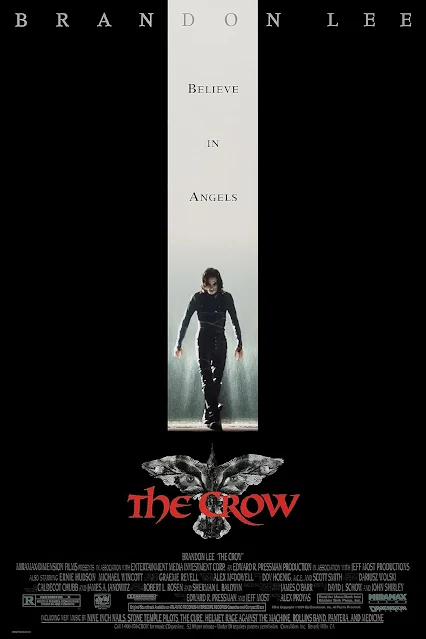
"The Crow" is a seminal gothic film released in 1994, directed by Alex Proyas (Dark City) and based on James O'Barr's graphic novel of the same name.
It narrates the story of Eric Draven, a rock musician who is resurrected to avenge his and his fiancée’s brutal murders. The film is renowned for its atmospheric visual style and a compelling narrative that weaves themes of love, vengeance, and justice.
The film features Brandon Lee in the lead role, delivering what would tragically be his final performance due to his accidental death during production. The cast also includes Michael Wincott (Nope, Alien Ressurection) as the antagonist Top Dollar, and Ernie Hudson as Officer Albrecht, who plays a pivotal role in the story.
The production of "The Crow" is overshadowed by the tragic death of its star, Brandon Lee. Lee was accidentally killed on set during a mishap involving a prop gun, a calamity that brought a haunting resonance to the film's narrative of resurrection and revenge. This incident not only marked the film with a legacy of grief but also contributed to its immediate status as a cult film, as audiences and critics viewed the film through the lens of this real-life tragedy.
The soundtrack of "The Crow" is a pivotal element of its success and cultural impact, becoming a classic emblematic of its era. It features an eclectic mix of artists including The Cure, Joy Division, and Nine Inch Nails, whose contributions perfectly encapsulate the film’s gothic atmosphere. The tracks not only enhance the film’s emotional depth but also align seamlessly with its narrative, earning the soundtrack critical acclaim.
Theme of Love and Loss
Central to "The Crow" is the transcendent love between Eric Draven and Shelly Webster. This undying love defies the finality of death, propelling the narrative forward as it motivates Eric's quest for revenge. This portrayal underscores the notion that true love is eternal and can drive individuals to extraordinary lengths.
The film poignantly captures the essence of grief and its transformative impact. Eric's character is reshaped by the profound loss of his fiancée, driving him to a path of vengeance. This transformation is not just a plot device but a deep exploration of how loss can alter one's identity and purpose.
"The Crow" uses visual motifs such as the engagement ring and poignant flashbacks to enhance the theme of love and loss. These elements serve as constant reminders of Eric’s motivation and enrich the emotional landscape of the film.
Theme of Vengeance and Justice
Eric’s resurrection and subsequent quest for vengeance form the crux of the plot. The film invites viewers to ponder the morality of his actions and whether revenge serves as a form of justice or merely perpetuates violence.
The depiction of a corrupt society and criminal underworld offers a critical look at conventional justice systems. It poses significant questions about the efficacy and morality of seeking justice outside the law when the system fails.
The theme of vengeance is explored not just through Eric but also through the impact on secondary characters like Officer Albrecht and Sarah. Their interactions with Eric and their personal journeys offer a broader perspective on the repercussions of vengeance.
Theme of Resurrection and Redemption
Eric's return from the dead introduces a powerful supernatural element to the narrative. This aspect is not just for spectacle but serves as a crucial mechanism through which the themes of redemption and justice are explored.
The crow acts not only as Eric's guide but also as a symbol of protection and the spiritual carrier of souls. This element introduces a layer of spirituality and redemption, tying the supernatural closely with the film’s deeper themes.
The film’s conclusion offers a contemplation on peace and redemption. After his vendetta is fulfilled, Eric's journey suggests that there might be peace beyond revenge, providing a poignant commentary on the resolution of inner turmoil and conflict.
Visual Style and Atmosphere
The gothic aesthetic of "The Crow" significantly enhances its thematic depth. The dark, brooding atmosphere, combined with the urban decay setting and distinctive costume design, visually complements the film’s exploration of death and resurrection.
The soundtrack, featuring artists like The Cure and Joy Division, plays a crucial role in shaping the film's emotional and thematic undertones. The music enhances the melancholic yet intense mood, deepening the viewer’s emotional connection to the narrative.
Cultural Impact and Legacy
Brandon Lee’s tragic death during the making of "The Crow" contributes to its cult status and influences the interpretation of its themes. This real-life event intertwines with the film’s narrative, adding a layer of tragic authenticity to the story of loss and revenge.
The film’s influence extends beyond its immediate release, impacting later films and media with its combination of supernatural elements, urban decay, and personal tragedy. "The Crow" has left a lasting mark on how dark, thematic content can be effectively portrayed in popular culture.
A remake starring Bill Skarsgård is set for release in 2024.
With its heart-stopping pursuits and richly drawn characters, "Mortal Engines" skillfully incorporates subtle tributes to Star Wars, enriching its narrative tapestry.
From adrenaline-fueled adventures to intricate family dynamics, "Mortal Engines" salutes the enduring legacy of Star Wars, offering fans both nostalgia and novelty in its vibrant world.
Let's explore how Peter Jackson and his writing colleagues Fran Walsh and Philippa Boyens borrowed story beats from the Star Wars playbook!
Mortal Engines Film Moment
Star Wars Film
Inspiration was borrowed from
Original Star Wars
Theme/Moment comparison
Opening scene of London traction city chasing
Salthook where the scale of London’s size is revealed by a camera slowly sweeping
up and circling around London to reveal its true size.
A New Hope
In the opening scene of "A New Hope,"
the Star Destroyer, a massive imperial warship, pursues the small Rebel
blockade runner, Tantive IV. The size of the Destroyer helps establishes the
power dynamic between the oppressive Empire and the Rebel Alliance, setting
the stage for the galactic conflict.
Anna Fang, a skilled pilot and rebel fighter, embodies
the spirit of Han Solo. She pilots the Jenny Haniver, a nimble and iconic
airship, much like how Han Solo captains the Millennium Falcon. Both
characters have a checkered past and play crucial roles in aiding the
protagonists against formidable adversaries.
Thaddeus Valentine revealed as Hester Shaw's
father during their knife fight at the pivotal ending of the movie.
The Empire Strikes Back
In "The Empire Strikes Back," Darth
Vader's revelation to Luke Skywalker that he is his father is a pivotal
moment that deepens the conflict and adds emotional complexity. Similarly,
the reveal that Thaddeus Valentine is Hester Shaw's father during their
intense battle adds layers to their relationship and raises the stakes of
their confrontation.
Tom flying the Jenny Hanniver into the heart of
London City
Return of the Jedi
Tom's daring flight into the heart of London City
mirrors the climax of "Return of the Jedi," where Lando Calrissian
leads the Millennium Falcon on a perilous mission to destroy the Death Star's
core. Both scenes feature a small, agile craft infiltrating a massive,
heavily fortified structure to deliver a decisive blow against a formidable
enemy.
Final duel between Valentine and Shaw
Return of the Jedi
The final duel between Thaddeus Valentine and
Hester Shaw echoes the climactic lightsaber battle between Luke Skywalker and
Darth Vader in "Return of the Jedi." Hester's decision not to fight
or join the Emperor after realizing her familial connection to Valentine
mirrors Luke's refusal to succumb to the dark side and join Emperor
Palpatine, emphasizing themes of redemption and family bonds.
Through the Tleilaxu agent Scytale, Frank Herbert asks the question that haunts the entire Dune saga: Who has the right to shape life itself?
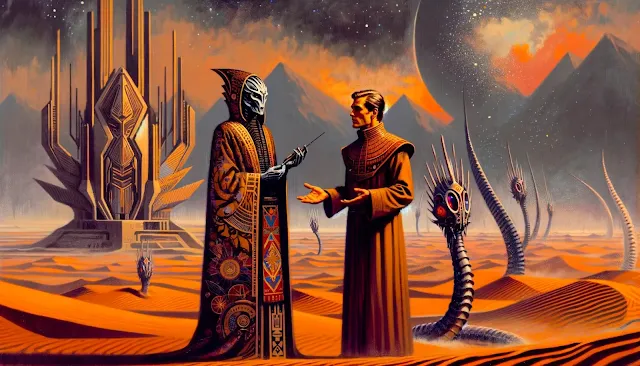
He stands before the blind Emperor. Paul Atreides, once Muad’Dib, can no longer see with his eyes but sees everything else. In his path waits Scytale, a Face Dancer from the Bene Tleilax, holding the promise of resurrection and the knife of manipulation.
This is not a battle of weapons but of philosophies. Through Scytale, Frank Herbert turns the Bene Tleilax from shadowy geneticists into the embodiment of humanity’s deepest impulse: to control what cannot be controlled. The Tleilaxu do not seek open conquest like the Atreides or Bene Gesserit. They seek mastery of flesh, memory, and faith itself. In Dune Messiah, their weapon is not an army but a single ghola born from the cells of a dead man.
I. The Hidden Hand of the Tleilaxu
The Bene Tleilax, often called the Tleilaxu, are a theocratic society governed by a secret council of Masters. Their world, Tleilax, is closed to outsiders. Its inner life is hidden behind layers of religious ritual and genetic experimentation.
To other powers of the Imperium they appear as merchants of forbidden things: cloned bodies, shapeshifters, and living technology. But beneath that trade lies a faith so zealous it turns science into sacrament. Their religion teaches that all creation is divine material to be reshaped. Their laboratories are temples. Their axlotl tanks are altars. And their product, the ghola, is both miracle and heresy.
The Bene Gesserit seek control through breeding, the Guild through prescience, but the Tleilaxu seek it through biology itself. They believe salvation can be manufactured in flesh.
II. The Tools of Flesh
Scytale’s faction commands the most terrifying technologies in the Imperium. Among them are the Face Dancers, agents who can mimic any form, a living disguise capable of perfect infiltration. The Tleilaxu also craft gholas, human beings regrown from the cells of the dead who under the right conditions can recover their original memories.
It is this power that Scytale wields in his plot against Paul Atreides.
The Duncan Idaho ghola, named Hayt, is his masterpiece. Once Paul’s loyal swordmaster, now reborn under Tleilaxu control, Hayt becomes both gift and weapon. His purpose is to break the Emperor’s composure, to open wounds that no prescient vision can heal. Yet in the moment of crisis, the conditioning fails. Duncan’s love and loyalty return, undoing the programming and exposing the arrogance of the Tleilaxu belief that life and identity can be engineered to order.
Every Tleilaxu creation exists on the border of science and blasphemy. The body is a resource. The soul is negotiable.
Scytale confronting the blind Emperor.
III. The Conspiracy Against Paul
Scytale enters Dune Messiah as part of a cabal of discontented powers: the Spacing Guild, the Bene Gesserit, and remnants of the old Imperial order. Together they conspire to destroy Paul Atreides, whose religious empire has turned the galaxy into a crusade. Scytale is their most dangerous piece because he plays not with armies but with hearts and memories.
The Tleilaxu promise the return of Duncan Idaho, knowing the emotional weight he carries for Paul. They plan for Hayt to awaken, assassinate the Emperor, and return to the Tleilaxu fold as proof of their supremacy. Yet as always in Herbert’s universe, the plan unravels.
Duncan’s human love defies his programming. Paul’s foresight saves him, but it also shows him the emptiness of victory. Scytale’s knife cuts both ways. It exposes the Tleilaxu’s genius and their blindness.
IV. Faith and Manipulation
Scytale’s calm in the face of death is not bravado but belief. The Tleilaxu faith teaches that all forms can be remade, that the line between life and death is illusion. To him, resurrection through ghola reproduction is proof of divine order. When he offers Paul the chance to resurrect Chani through Tleilaxu science, it is not simply blackmail. It is evangelism.
He offers the Emperor his god’s mercy, a way to rewrite fate.
Paul refuses, choosing blindness and exile over accepting such power. In that refusal, Herbert crystallizes his central theme: the rejection of control as salvation. Paul will not become what the Tleilaxu already are—priests of manipulation, creators of life without conscience.
V. Legacy of Flesh
Scytale dies, but his ideology endures. In the centuries that follow, the Tleilaxu refine their arts. They perfect axlotl tanks, revive countless gholas, and use biology as a weapon of state.
In Heretics of Dune and Chapterhouse: Dune, they re-emerge as both victims and architects of a universe transformed by their own logic. Even Scytale himself is reborn as a ghola, a living echo of his own theology. Herbert uses that resurrection to close the circle.
The man who once believed control was godhood becomes proof that no one escapes the systems they create. The Tleilaxu’s mastery of life cannot save them from their own decay. Their brilliance becomes their punishment.
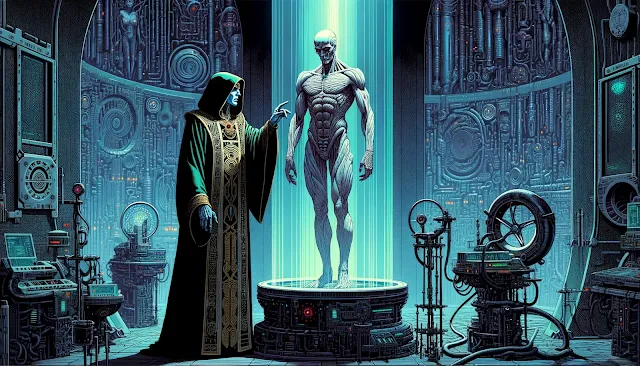
A Tleilaxu Master inspecting their greatest creation: the Ghola.
Conclusion: Control, Identity, and Faith
Through Scytale, Herbert compresses the entire Dune philosophy into one confrontation. Control breeds collapse. Faith without empathy becomes tyranny. Technology without morality becomes theology. The Tleilaxu and the Atreides are mirrors of each other—each convinced of their own vision of order, each blind to the human cost.
Scytale’s final offer to Paul—a chance to bring Chani back—is the series’ most chilling act of temptation. It asks the same question that echoes across all of Dune: if given the power to remake life, would humanity ever stop trying?
Herbert’s answer, delivered through Scytale’s failure and Paul’s refusal, is clear. The true measure of power is knowing when not to use it.
The Stone Burner: A Weapon of Physics and Philosophy
In Dune Messiah, a nuclear atrocity becomes the catalyst for Paul Atreides' final transformation.
In Frank Herbert's "Dune Messiah," the deployment of the Stone Burner emerges as a pivotal moment encapsulating the intricate interplay between power, responsibility, and the human condition. Against the backdrop of a tumultuous universe where political machinations shape destinies, the introduction of this devastating weapon symbolizes the lengths to which individuals will go to assert control and reshape the course of history.
However, beyond its destructive capabilities, the Stone Burner serves as a potent metaphor for the moral and ethical quandaries faced by those who wield power. Its deployment raises profound questions about the nature of leadership, the consequences of unchecked ambition, and the fragility of human morality in the face of absolute authority.
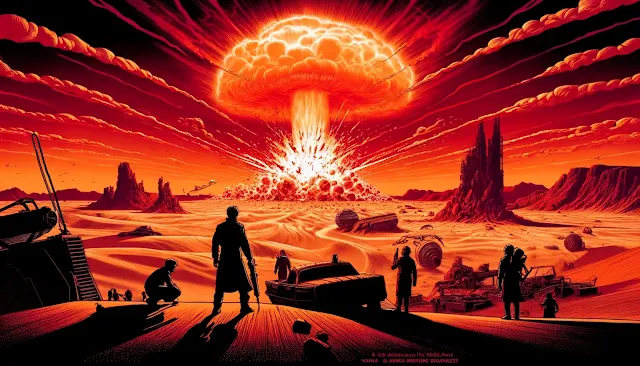
The blinding flash that changed the course of the Golden Path.
I. The Deployment: A Conspiracy of Chaos
The event involving the Stone Burner occurs midway through "Dune Messiah," during a critical phase of Paul’s reign over the universe. Contextually, the deployment is set against a backdrop of political machinations and burgeoning resistance against Paul's rule by many unnamed parties.
The individuals responsible for this act are part of a larger conspiracy aiming to undermine Paul’s authority and destabilize his empire. Scytale, a Face Dancer and member of the Tleilaxu, is notably involved. The motivations behind deploying such a devastating weapon are complex. They encompass a desire to challenge the existing power structures and provoke uncertainty and chaos within Paul's dominion. This analysis of their intentions reveals a deep-seated opposition to Paul’s near-absolute power and prophetic status, highlighting the weapon’s role as a tool of political and personal resistance.
II. The Blind Prophet: Physical Loss, Metaphysical Gain
Paul's reaction to the Stone Burner’s deployment is multifaceted, encompassing immediate tactical responses and profound personal reflections. The psychological and emotional impact on him is severe, catalyzing a significant transformation in his character and leadership. Blinded by the blast, Paul's loss of sight is symbolic and literal. It forces him to rely more heavily on his prescient abilities and internal vision.
This event precipitates Paul’s gradual detachment from his kingly duties and initiates a deeper introspection about his role in the universe. The Stone Burner thus acts as a literal and figurative catalyst for Paul's exodus from his former life. It compels him to confront and reassess his responsibilities, beliefs, and the path he has charted for himself and his empire.
The visual landscape of a universe shaped by atomic power.
III. The Exodus: Power in Relinquishment
Paul's departure from power is laden with thematic implications that resonate throughout "Dune Messiah" and the broader Dune series. The Stone Burner incident serves as a metaphorical catalyst for change, stripping Paul of his physical sight but enhancing his metaphysical vision. Themes of power and its relinquishment, responsibility and its burdens, and the far-reaching consequences of choices are explored in depth.
So, you want to dive into the magnificent, brutal world of Philip Reeve's Mortal Engines. You're faced with the classic reader's dilemma for a sprawling series: where do you start? The answer is simple, and it's the key to unlocking the saga's full power: Read the novels in the order they were published.
That's it, friend. That's the secret. Trust the author's intended journey, and you're in for an unforgettable treat.
Reading the "Mortal Engines" novels in their publication order is essential because it allows you to experience the world's mysteries as the characters do. When you begin with the first novel, "Mortal Engines," the history of the Sixty Minute War, the nature of the Stalkers, and the true meaning of Municipal Darwinism are all shrouded in myth and speculation. You uncover the secrets of this world piece by piece alongside Tom and Hester. This gradual discovery is a core part of the narrative's power and suspense.
Starting with the prequels first is like reading the history textbook before embarking on the adventure; it spoils the magic of discovery and deflates the impact of the original quartet's biggest revelations. Reeve's world-building builds upon each preceding book, making the unfolding of events more engaging when experienced in the order he created.
The Publication Order is as follows:
Mortal Engines (2001)
Predator's Gold (2003)
Infernal Devices (2005)
A Darkling Plain (2006)
Fever Crumb (2009)
A Web of Air (2010)
Scrivener's Moon (2011)
Night Flights (2018)
The Alternate Path: Chronological Order (For Rereads)
Once you have completed the saga in publication order, a chronological reread offers a completely different and deeply rewarding experience. The prequel series, starting with "Fever Crumb," explores the origins of the traction cities and the genesis of the world's conflicts. Reading them after you know the final fate of the world adds a profound layer of tragic irony.
You witness the birth of the very ideas and technologies that will lead to the apocalyptic events of the main quartet. You understand the heartbreaking origin of characters like Shrike, and every choice made by the prequel characters is freighted with the weight of the future you've already seen. It transforms the story from a mystery to be solved into a tragedy to be witnessed.
The Chronological Order is as follows:
Fever Crumb
A Web of Air
Scrivener's Moon
Night Flights
Mortal Engines
Predator's Gold
Infernal Devices
A Darkling Plain
The Verdict: Trust the Author
For the definitive first-time experience, publication order is the only way to go. It preserves the carefully crafted narrative structure and ensures that the world's history unfolds with maximum emotional impact. The prequels are brilliant, but their brilliance lies in how they re-contextualize a story you already love.
Mirrored Destinies: Paul Atreides and Feyd-Rautha Harkonnen
In Dune: Part Two, the rivalry isn't just political. It is a clash between two manufactured saviors.
The exploration of parallels between Feyd-Rautha Harkonnen and Paul Atreides in the cinematic adaptation of "Dune Part 2" offers a fascinating insight into the broader thematic concerns of Frank Herbert's original work. It particularly highlights the context of power, prophecy, and the making of saviors.
The movie adaptation amplifies these parallels more explicitly than the novels. It provides a visually and narratively rich platform to examine the manipulations of higher powers and their impact on individuals destined for greatness, whether genuine or manufactured.
Two products of the same genetic manipulation.
I. The Manufactured Savior
In both the "Dune" novels and the movies, the concept of a manufactured savior, the Kwisatz Haderach, is central. For Paul Atreides, his journey from the heir of a noble family to the Muad'Dib, the messiah of the Fremen, is marked by a series of manipulations by the Bene Gesserit. This secretive sisterhood operates with their own long-term genetic and political agendas.
Paul's ascent is partially orchestrated through the Bene Gesserit's Missionaria Protectiva, a program designed to seed myths across the galaxy that could later be exploited by their members. His mother Lady Jessica nudged things along too.
Feyd-Rautha Harkonnen, on the other hand, is presented as a counterpoint to Paul. While not as prominently featured in the first novel or its film adaptations, subsequent narratives and "Dune Part 2" in particular delve into his role as a "savior" for the Harkonnen interests on Arrakis. Feyd is groomed by his uncle, Baron Vladimir Harkonnen, to eventually take over the rule of Arrakis. He is positioned as a ruler who could potentially be embraced by the populace despite the brutal Harkonnen regime. Maybe he would have been Emperor one day.
II. Prescience and Shared Visions
An interesting aspect that the movie "Dune Part 2" explores more deeply than the novels is the concept of prescience shared by both Paul and Feyd-Rautha. Paul's visions, fueled by his exposure to the spice melange and his Bene Gesserit training, provide him with glimpses of possible futures. A trait that becomes central to his character and the unfolding narrative.
The movie adaptation hints at Feyd possessing a similar foresight, albeit in a more limited capacity. Scenes such as dreaming of significant encounters like meeting Count Fenring serve to draw a parallel between him and Paul, emphasizing the theme of duality and mirrored destinies.
III. Pawns in a Larger Game
The film adaptation underscores how both characters, despite their apparent opposition, are pawns in larger schemes. Paul's realization of his role as a tool in the Bene Gesserit's machinations and Feyd's position within the Harkonnen's brutal ambitions for Arrakis highlight a shared theme of individuals caught in the web of greater powers.
The visual language of power: Atreides honor vs. Harkonnen brutality.
This aspect is illuminated in the movie. It showcases how these manufactured saviors, despite their personal powers and destinies, are ultimately serving the interests not of the common people but of those who created and positioned them.
IV. Tale of the Tape: Atreides vs. Harkonnen
This comparison looks at different parts of Paul Atreides and Feyd-Rautha Harkonnen's characters, giving a fuller picture of who they are in "Dune." It covers where they come from, how they think and feel, and what they mean to the story.
Character Trait
Paul Atreides
Feyd-Rautha Harkonnen
Place in the World
Heir to House Atreides. Expected to lead with honor and justice. His duty is to his family's legacy and to the people under their care.
Heir to House Harkonnen. Trained in deception and control. His duty involves continuing the legacy of domination and exploitation.
Attitude to the World
Sees the world as interconnected. Possesses a strong sense of responsibility towards preserving ecological and cultural integrity.
Views the world as a resource to be exploited for personal and familial gain. Shows little regard for preservation.
Thematic Parallel
Represents the reluctant hero thrust into a messianic role. Embodies destiny, sacrifice, and the burden of leadership.
Serves as a dark mirror to Paul. Embodies ambition, power without responsibility, and the dangers of unchecked authority.
Mental State
Struggles with the weight of prophecy and foreknowledge of a bloody future. Causes significant stress and internal conflict.
Primarily driven by ambition and a desire for power. Less apparent internal struggle or ethical dilemma compared to Paul.
Leadership Style
Inspiration, moral integrity, and strategic alliances. Aims for a symbiotic relationship with Arrakis and the Fremen.
Leadership through fear, manipulation, and strength. Cunning and charismatic, able to inspire loyalty through coercion.
Vision for Future
Envisions a future where Arrakis is transformed and its people are free from oppression. Aims for broader balance.
Aims to solidify Harkonnen control over Arrakis. Prioritizes the family's dominance over the well-being of the planet.
Combat Strategy
Highly skilled in hand-to-hand combat. Influenced by Mentat training and the Bene Gesserit. Adopts a defensive and thoughtful approach.
Exceptional fighter known for prowess in the gladiatorial arena. Uses combat as a means to demonstrate strength and instill fear.
Philosophy
Guided by a sense of duty to others. Believes in the interconnectedness of all things and the importance of balance.
At The Astromech, you can expect to find a variety of articles, reviews, and analysis related to science fiction, including books, movies, TV, and games. From exploring the latest news and theories to discussing the classics, I aim to provide entertaining and informative content for all fans of the genre.
Whether you are a die-hard Star Trek fan or simply curious about the world of science fiction, The Astromech has something for everyone. So, sit back, relax, and join me on this journey through the stars!






%20acolyte.jpeg)


