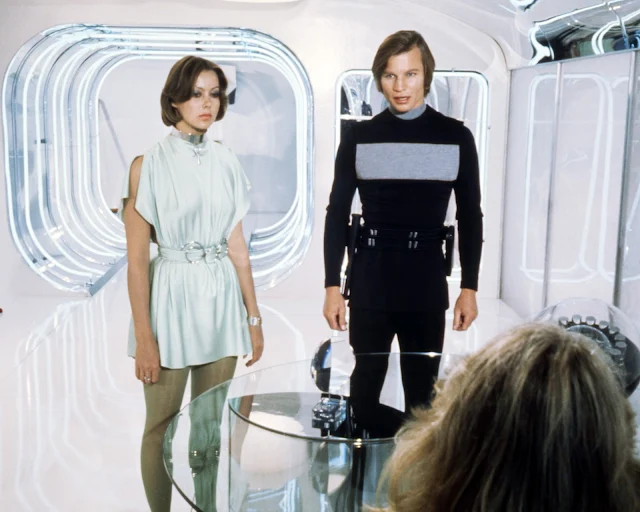
22 March 2024

Lady Jessica in Dune: Character Study

Character Profile

Lady Jessica: The Architect of the Golden Path

In the sprawling expanse of Frank Herbert's universe, few characters capture the imagination quite like Lady Jessica. She is the linchpin in a narrative that intricately weaves the political, the personal, and the mystical.

As a Bene Gesserit, a secret sisterhood with advanced mental and physical abilities aiming to guide human evolution, Lady Jessica embodies the tension between the roles assigned to her and the choices she independently makes. These choices often have far-reaching consequences for the galaxy. Her journey from a dutiful acolyte of the Bene Gesserit to a matriarch who defies the very foundations of her training for love and familial loyalty offers a rich canvas to explore themes of power, identity, and maternal influence.

"Dune," since its publication in 1965, has stood as a monumental work in science fiction. It is celebrated not just for its ambitious world-building but for its intricate exploration of the human condition amidst the backdrop of an interstellar feudal society. Within this universe, Lady Jessica's character arc is particularly significant for its embodiment of the series' exploration of complex themes.

lady jessica bene gesserit dune sci fi
Lady Jessica navigating the intrigues of the Bene Gesserit.

Her decision to bear a son, Paul Atreides, against the explicit commands of the Bene Gesserit, sets into motion the tumultuous events of the series. This act of defiance, rooted in love, not only catalyzes the transformation of her family's destiny but also marks the beginning of her personal transformation and the deepening complexity of her character.

This essay posits that Lady Jessica's character arc exemplifies the "Dune" series' intricate examination of power, identity, and maternal influence. Through her, we witness the evolution of a figure who navigates her path between predetermined roles and personal agency. She becomes a pivotal force whose actions and decisions ripple through the cosmos.

lady jessica dune character study

I. Character Genesis and Initial Portrayal

Lady Jessica’s journey in the "Dune" saga begins with her deep-rooted affiliation with the Bene Gesserit, a secretive and influential sisterhood with a long-term breeding program aimed at producing a superhuman being, the Kwisatz Haderach. Trained in the ways of the Bene Gesserit, Lady Jessica is adept in manipulation, both physical and emotional. She possesses abilities that make her a formidable figure in the intricate political landscape of the universe.

However, it's her inner turmoil and the moral ambiguities she faces that define her initial portrayal. This complex foundation is crucial for understanding her character arc. It highlights the conflict between her duties to the Bene Gesserit and her personal desires.

themes of lady jessica
Bene Gesserit ceremonial attire.

As the concubine of Duke Leto Atreides, Lady Jessica is thrust into the heart of the political intrigue that defines the universe of "Dune." Despite not being his legal wife, her relationship with Leto is one of deep love and mutual respect. This is a rarity in the strategic marriages of their society. This relationship introduces readers to Lady Jessica’s capacity for deep emotional connections, setting her apart from the often cold and calculating Bene Gesserit archetype.

One of the most defining aspects of Lady Jessica’s character is her decision to bear a son, Paul Atreides, defying the Bene Gesserit's command to produce a daughter. This decision is not merely a personal one. It is a pivotal moment that alters the course of the "Dune" saga. It reflects her strength and independence, showcasing her willingness to prioritize her love for Leto and her visions for her family’s future over the mandates of the Bene Gesserit.

II. Evolution Through the Novels

Lady Jessica's journey through the "Dune" series is marked by her incredible ability to adapt to rapidly changing circumstances. Following the tragic fall of House Atreides and the assassination of Duke Leto, Lady Jessica's initial role as a consort and advisor transforms significantly.

On the run with her son Paul in the unforgiving deserts of Arrakis, she demonstrates an unparalleled capacity to navigate the perilous landscape and the complex social dynamics of the Fremen, the planet's indigenous population. Her adaptability is not just a survival tactic. It becomes a transformative force, reshaping her from a figure of nobility to a key player in the Fremen resistance.
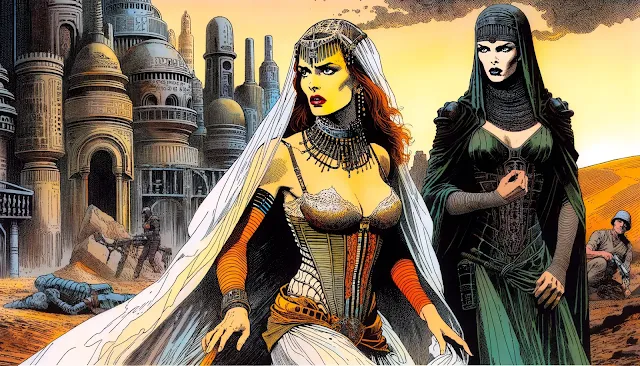
lady jessica character arc dune

One of the most pivotal moments in Lady Jessica's evolution is her decision to undergo the spice agony to become a Reverend Mother of the Fremen. This act of ingesting a lethal dose of the spice melange and surviving signifies not only a physical and spiritual transformation but also marks her as a figure of immense wisdom and power among the Fremen. This transition is emblematic of her willingness to embrace the unknown for the sake of her new people and her family, further distancing herself from the conventional paths laid out by the Bene Gesserit.

Throughout the novels, Lady Jessica's role as a mother profoundly influences the direction of the narrative and the development of key characters, particularly Paul and Alia. Her teachings and guidance prepare Paul for his future as a leader and the Kwisatz Haderach. However, her relationship with Alia is more complex, marked by Alia's struggle with the powers and voices of the past—a struggle that Lady Jessica feels responsible for. Her departure from Arrakis and her eventual return underscore her enduring impact on her children and the broader narrative.

III. Thematic Analysis: Power and Identity

Lady Jessica’s narrative arc serves as a profound exploration of the themes of power and identity, deeply intertwined within the "Dune" series. Her journey reflects the nuanced dynamics of power—not only the political and physical but also the personal and internal. Initially, her power seems derived from her position within the Atreides household and the Bene Gesserit.

However, as the series progresses, Lady Jessica's true power emerges from her capacity for love, adaptation, and moral resilience. This evolution challenges the traditional perceptions of power in the "Dune" universe, highlighting the strength in compassion and the influence of personal ethics over rigid institutional loyalty.

dulke leto lady jessica concept art
Duke Leto and Lady Jessica.

The theme of identity is equally critical to understanding Lady Jessica's character. Her identity is fluid, shaped by her roles as a Bene Gesserit, consort, mother, and leader among the Fremen. Each role demands a part of her, yet she defies being defined by any single one. Her journey is a testament to the complexity of self-definition in the face of external pressures and expectations. Through Lady Jessica, Herbert explores the idea that true identity is not a static condition but a dynamic process of growth, choice, and change.

Conclusion: Adaptability as Strength

The theme of adaptability and evolution is central to Lady Jessica's character arc and the "Dune" series as a whole. Her ability to adapt to changing circumstances—from the political intrigue of the Imperium to the harsh desert life of Arrakis—demonstrates a remarkable resilience and flexibility. This adaptability is not just a survival mechanism but a form of evolution, as she continually learns and grows from her experiences.

Through Lady Jessica, Herbert suggests that adaptability is a key to survival and success, reflecting the broader evolutionary themes of the series. Her evolution, from a member of the Bene Gesserit to a figure of significant influence and power in her own right, mirrors the ecological and social evolution themes within "Dune." Just as Arrakis itself undergoes a transformation through the series, so too does Lady Jessica, embodying the series' exploration of change, growth, and the potential for transformation inherent in all beings.

jessica themes arc dune

In the intricate tapestry of Frank Herbert's "Dune," Lady Jessica emerges as a profound embodiment of the series' exploration of power, identity, and the dynamics of maternal influence. Her journey from a Bene Gesserit disciple to a revered figure in the Fremen society, and her impactful decisions that shaped the destinies of her offspring and the socio-political landscape of the universe, illuminate her as a character of deep complexity and significance.

21 March 2024

Review: 3 Body Problem - Season One: Episode One 'Countdown'

Netflix's adaptation of Liu Cixin's lauded science fiction novel, "The Three-Body Problem," represents a monumental effort in translating complex scientific and philosophical ideas into the visual medium of television. 

This series marks a significant moment for science fiction enthusiasts and a broader audience intrigued by the blend of historical events and speculative fiction. The adaptation process involves expanding the novel's narrative scope to suit the episodic nature of a television series, necessitating creative liberties, including the introduction of new characters and the deepening of existing backstories.

The transition from page to screen for "The Three-Body Problem" involves a collaborative effort spearheaded by notable figures in the entertainment industry. David Benioff and D.B. Weiss, best known for their work on "Game of Thrones," serve as the show's creators, bringing a wealth of experience in adapting complex narratives. 

3 Body Problem Net Flix Review

Their involvement promises a series that is both faithful to the source material and expansive, introducing new layers to the story. The show's production also benefits from the insight of Liu Cixin and Ken Liu (the translator of the English edition of the novel), who are involved as consulting producers, ensuring that the adaptation remains true to the original's spirit and intent.

The first episode opens with a profoundly impactful portrayal of the Cultural Revolution in China, setting a historical backdrop that adds depth and gravitas to the narrative. This tumultuous period is not merely a setting but a catalyst for the series' unfolding events, influencing the characters' motivations and the story's trajectory. 

The depiction of the Cultural Revolution is visceral, capturing the chaos, fervor, and ideological fervency of the time. This grounding in real historical events provides a stark contrast to the speculative elements that later come into play, making the series all the more compelling.

Adapting "The Three-Body Problem" for television necessitated certain changes to accommodate the medium's demands and to reach a wider audience. One of the most significant alterations is the introduction of new characters not found in the book. Auggie Salazar's character appears to be the lead thus far. 

These characters serve various narrative functions, including providing new perspectives on the story's events, enhancing the emotional depth of the series as it transitions (in part) from China to a more Eurocentric location. 

Moreover, the series takes liberties in fleshing out the backgrounds and motivations of characters from the novel, offering viewers a more immersive experience. While these additions and alterations may initially surprise fans of the novel, they contribute to a more nuanced and layered adaptation whilst retaining the essential themes of the story.  

The hard boiled detective (of a kind) Da Shi is still there, played by an at this point, curious Benedict Wong.
 
Netflix's "The Three-Body Problem" emerges as a bold and imaginative adaptation of Liu Cixin's novel, inviting both newcomers and long-time fans to experience a multifaceted story of cosmic proportions. 

This first episode balances the fidelity to the source material with creative expansions, enriching the narrative and deepening its thematic explorations. 

The real science fiction of the story is yet to come...

20 March 2024

Is Amanda Ripley (Ellen's Daughter) in Alien: Romulus?

The vaunted Alien Isolation video game featured Amanda Ripley, the daughter of the iconic Ellen.

Is Amanda a character in Alien: Romulus?

The new teaser trailer for Romulus frames a character such that she is posing with a Pulse rifle as Ellen from Aliens - is this a tease?

EDIT: It's likely the character is actually: Rain Carradine...


amanda ripley alien romulus

Cailee Spaeny could be in line to play Ellen's daughter. Coming hot after Priscilla and Civil War, playing this gig is one way to sci fi legendary status!

Romulus is set between Ridley Scott's 1979 classic and the James Cameron directed Aliens sequel so there is real potential Amanda could feature in this film.
19 March 2024

Halo: Reach - Easter Eggs

Halo: Reach, a cornerstone of the Halo franchise developed by Bungie, is not only celebrated for its gripping narrative and intense gameplay but also for its rich tapestry of Easter eggs. 

These hidden treasures offer players a unique blend of humor, nostalgia, and secret nods, enriching the gaming experience. 

Halo Reach Easter EGGS

The Club Errera Experience

One of the most vibrant Easter eggs is found within the mission "Never Surrender." 

Players can unlock a secret discotheque at Club Errera, transforming the game's atmosphere from a battle-ridden landscape to a dance floor. By flipping a switch on a distant platform near the hospital and then navigating back to Club Errera, players are greeted with grunts and a DJ Brute throwing it down to “The Siege of Madrigal.” 

This tune was featured in Bungie's Myth game - and was used as an auditory Easter Egg in Combat Evolved and Halo 2.

This transformation not only serves as a comedic break in the game's intensity but also pays homage to a track that has appeared throughout the Halo series. An additional switch on the building's roof alters the track to a remix, further enhancing the Easter egg's appeal. The termination of the music upon the DJ Brute's demise humorously underscores the fleeting nature of this hidden gem.

The club's name is a reference to Claude Errera, the founder, and webmaster of fansite Halo.bungie.org

A Tribute to Marty O'Donnell

In the "Long Night of Solace" mission, attentive players will notice a marine named "M.O. Donnell," with the service tag MRTY. 

This Easter egg serves as a direct homage to Marty O'Donnell, the composer behind the iconic Halo series music. 

Echoes of Star Wars

Within the "New Alexandria" mission, sharp-eared players might catch a gunner reminiscing, "Just like shooting swamp rats back home." 

This line is a direct nod to Luke Skywalker from Star Wars, referencing his womp rat shooting back on Tatooine and plans to destroy the Death Star. 

Catherine Halsey's Secret Lab

One of the more involved Easter eggs requires players to engage in a series of steps on the "The Package" mission, leading them to Dr. Halsey's hidden laboratory. This Easter egg not only demands cooperative gameplay and exploration but also deepens the game's lore by providing additional narrative elements through seven terminals. 

The effort to uncover this secret space rewards players with a richer understanding of the Halo universe.

The Master Chief Cameo

In a moment of subtle brilliance, players can catch a glimpse of Master Chief aboard the Pillar of Autumn, lying in his casket, if they engage in specific actions during a cutscene. This Easter egg provides a seamless connection to the broader Halo narrative, offering a satisfying nod to fans eager to spot the legendary Spartan.

Reach Racer and the Banshee Bonanza

The game also includes playful Easter eggs such as the Reach Racer and the spawning of four Banshees on "The Package" level. These secrets not only offer alternative gameplay experiences but also challenge players to explore and manipulate the game environment in unconventional ways. 

The necessity of cooperative action to trigger the Banshee appearance underscores Bungie's emphasis on community and shared gaming experiences.

Themes of Logan's Run (1976)

"Logan's Run" is a hallmark in the realm of science fiction, presenting a dystopian future where a seemingly utopian society enforces a maximum age limit to conserve resources and maintain harmony. This age limit, determined by a bio-engineered crystal embedded in each citizen's palm, symbolizes the omnipresent control exerted over individuals from birth. 

Set against a backdrop of advanced technology and societal structure designed to sustain this facade of perfection, "Logan's Run" delves into the profound implications of such control on human identity, freedom, and the very fabric of societal ethics.

The core of "Logan's Run" lies a complex exploration of themes that resonate with fundamental human concerns: 

  • the draconian measures of societal control
  • the inherent human quest for truth
  • the struggle between the sanctity of individual life and the collective good.

Through the journey of its protagonist, the narrative unfolds the layers of ageism, the illusion of a utopian existence, and the enduring value of freedom and truth. This essay aims to dissect these themes, offering a comprehensive analysis that highlights the narrative's rich commentary on the eternal conflict between individual freedom and societal dictates.

Through this examination, "Logan's Run" emerges not only as a critique of extreme solutions to societal problems but also as a reflection on the timeless human condition and the perpetual search for meaning beyond the confines of imposed boundaries.

When discussing "Logan's Run," it's essential to acknowledge the creative talents behind its cinematic adaptation. Directed by Michael Anderson, known for his work on epics like "Around the World in 80 Days," Anderson's vision for "Logan's Run" encapsulates a futuristic society with a blend of intrigue and sophistication, while also delving into the thematic complexities of freedom and societal control. The screenplay, crafted by David Zelag Goodman, is based on the novel by William F. Nolan and George Clayton Johnson, effectively translating the story's dystopian themes and existential queries into a visual and narrative format that resonates with audiences.

The film's lead, Michael York, embodies Logan with a nuanced performance that captures the character's transformation from a complacent enforcer of the societal order to a determined seeker of truth and freedom. Alongside York, Jenny Agutter portrays Jessica, Logan's companion and catalyst for change, bringing depth and emotional resonance to the role. Their on-screen chemistry not only drives the narrative forward but also underscores the film's exploration of human connections in a controlled society.

Logan's Run 1976 - Film Themes Analysis

Ageism and Societal Control in "Logan's Run"

"Logan's Run" presents a society where ageism is institutionalized through the imposition of a maximum age limit, embodying a stark critique of age-based discrimination.

In this dystopian future, the concept of ageism transcends mere prejudice or discrimination; it is an axiom of societal survival, a draconian measure enforced to maintain resource balance and societal harmony. 
This systematically embedded ageism, marked by the termination of life at the age of 30, serves as a chilling reflection on the value assigned to youth and the marginalization of those deemed too old to contribute to society's superficial utopia.

The societal control mechanisms in "Logan's Run" are both overt and insidious. The lifecycle, visually represented by the color-changing crystal in each citizen's palm, acts as a constant reminder of the individual's mortality and the state's omnipresent surveillance. 

This bio-engineered crystal not only signifies the nearing of one's "Lastday" but also symbolizes the extent of societal control, where even the most personal aspect of existence—time—is governed by the state. 

The ritual of "Carousel" is another tool of control, masquerading as a celebration of renewal, where those reaching the age of 30 are ostensibly reborn, though in reality, they are systematically eliminated. This spectacle serves both as entertainment and indoctrination, reinforcing the societal norm that to die at 30 is a glorious fate.

The ageist policies of "Logan's Run" profoundly impact individual identity and development. By capping life at 30, the society not only curtails personal growth and wisdom that come with age but also fosters a culture of superficiality and compliance. Individuals are dissuaded from contemplating the deeper meanings of existence, discouraged from questioning the status quo, and deterred from pursuing long-term personal or societal goals. 

This enforced superficial existence is juxtaposed with the protagonist's journey, which symbolizes the quest for a deeper understanding of self and society beyond the confines of ageist dictates. As Logan and Jessica navigate the perils beyond their societal boundaries, they uncover not just the falsehoods of their world but also the potential for individual growth and wisdom unrestricted by age.

themes of logan's run film - ageism

Utopia vs. Dystopia in "Logan's Run"

"Logan's Run" masterfully crafts a society that, on the surface, appears as a utopia. Technological advancements ensure the fulfillment of every citizen's needs and desires, creating an existence devoid of want, labor, or apparent conflict. 

This veneer of perfection is maintained through the rigid control of population and the systematic elimination of anyone reaching the age of 30, purportedly to sustain harmony and resources. 

The societal construct presents a life of leisure and pleasure, where every whim, sexual or other is catered to, but at a price that is cleverly obscured from its inhabitants. This dichotomy raises critical questions about the nature of utopia and the sacrifices deemed acceptable for its realization.

Beneath the utopian facade lies a dystopian reality, marked by the denial of fundamental human experiences such as aging, the development of deep relationships, and the pursuit of personal growth beyond prescribed boundaries. The society's method of maintaining its utopia—through the Carousel ritual and the absolute control over life and death—reveals a profound dystopia rooted in deception and control. The absence of choice and the suppression of dissent highlight the dystopian nature of a world where the cost of perfection is the loss of freedom and individuality. This realization becomes a turning point for the protagonist, Logan, whose journey of discovery exposes the dystopian undercurrents of his world, challenging the audience to reconsider the true meaning of utopia.

The concept of "Sanctuary" serves as a pivotal element in the narrative, representing the hope for an alternative to the dystopian reality masked as utopia. 

Logan's search for Sanctuary, driven by his initial mission to uncover and destroy it, evolves into a personal quest for truth, freedom, and a life unbound by the arbitrary restrictions of his society. 

Sanctuary symbolizes the possibility of a community where individuals can live freely, age naturally, and explore the depths of human experience without fear of retribution. This quest challenges the notion of utopia presented by Logan's society, suggesting that true utopia might lie in the freedom to live authentically, embracing the complexities and imperfections of life.

Farrah Fawcett Logan's Run 1976
Farrah Fawcett

The Quest for Truth in "Logan's Run"

"Logan's Run" embarks on a compelling exploration of the quest for truth, driven by the protagonist's transformation from an unquestioning enforcer of the societal norms to a determined seeker of truth. Logan's journey begins within the confines of a society that meticulously controls information and history to maintain its utopian facade. 

The initial acceptance of his role as a Sandman, tasked with eliminating those who resist society's ageist laws, reflects a broader acceptance of the status quo. However, as the narrative unfolds, Logan's encounter with the concept of Sanctuary—a rumored haven for those seeking to escape the city's oppressive control—ignites a profound shift in his perspective. This transition from compliance to questioning represents a crucial theme in the narrative: the power of truth to challenge and dismantle deeply entrenched societal norms.

The control of knowledge emerges as a pivotal tool for maintaining societal control in "Logan's Run." The citizens' lack of access to historical context, the true nature of the outside world, and the reality behind the Carousel ceremony underscores the regime's manipulation of truth to sustain its authority.

Logan's quest for Sanctuary thus becomes not only a physical journey but also an epistemological one, as he seeks to uncover the truths hidden by his society. This pursuit of knowledge serves as a metaphor for the awakening of consciousness, illustrating how access to truth can empower individuals to challenge and redefine the boundaries imposed by authoritarian systems.

farrah fawcett holl 13 logans run concept design www.theastromech.com
Concept design of Holly 13

Individual Freedom vs. Societal Control in "Logan's Run"

In the heart of "Logan's Run" lies a poignant exploration of the tension between individual freedom and societal control. The society depicted in the narrative is one that prioritizes the collective good at the expense of personal liberties, showcasing a dystopian reality where individual desires and freedoms are subordinated to the perceived needs of the society.

The rigid age limit, enforced through the lifecycle and the Carousel ritual, epitomizes this control, stripping individuals of their right to live beyond a predetermined age. 

However, the protagonist's journey from a loyal enforcer of this system to a rebel in search of truth and autonomy underscores the intrinsic value of individualism. It highlights the human spirit's resilience and the fundamental need for freedom, choice, and the pursuit of one's destiny.

"Logan's Run" delves into the ethical quandaries surrounding societal sacrifice, questioning the morality of sacrificing individual freedoms for the sake of a harmonious or sustainable society. The narrative posits a society that has chosen to eliminate any form of dissent or deviation from the norm, ostensibly to maintain order and harmony. This societal model raises profound ethical questions about the limits of control and the sacrifices deemed acceptable in the quest for a utopian existence. 

The concept of a utopian society in "Logan's Run" is critically examined through the lens of the price paid for such an existence. The enforced age limit, the illusion of renewal, and the suppression of knowledge all contribute to the maintenance of this utopia. However, the protagonist's journey exposes the dystopian underbelly of this supposed paradise, revealing the high cost of utopia: the loss of personal autonomy, the denial of natural human experiences, and the ethical compromises required to sustain the societal facade. 

Through its depiction of a society that has seemingly achieved utopian harmony at the cost of personal freedoms and individual identity, "Logan's Run" invites audiences to engage in a critical examination of the values and principles that underpin our own societal constructs. 

-

The thematic exploration of ageism and societal control in "Logan's Run" raises significant questions about the valuation of life and the ethical implications of imposing limitations on existence for the greater good. The narrative challenges the audience to consider the moral costs of maintaining societal harmony and the inherent value of life at every stage. 

The juxtaposition of utopia and dystopia within the film serves as a compelling critique of the pursuit of an ideal society at the expense of individual freedoms and the complexity of human nature. "Logan's Run" suggests that true utopia might not be found in the absence of conflict, aging, or death, but rather in the embrace of freedom, the richness of life's experiences, and the acceptance of the inevitable imperfections of existence.


Is Halo's Master Chief actually Noble 6 from Reach?

The simple answer is No

Noble 6 is his own distinct Spartan. 

Master Chief, formally known as John-117, is a supersoldier belonging to the Spartan-II program. Master Chief has been instrumental in humanity's battle against the Covenant, a collective of alien races. 

His identity is mostly concealed by his Mjolnir armor, and his exploits are legendary throughout the Halo series. Master Chief is characterized by his exceptional leadership, combat skills, and his unique bond with the artificial intelligence, Cortana.

Noble Six, on the other hand, is the callsign for a member of Noble Team in "Halo: Reach," a part of the Spartan-III program. 

He is the Lone Wolf.

noble 6 is not the master chief

Unlike Master Chief, Noble Six's background is deliberately kept vague, allowing players to project themselves onto the character. Noble Six plays a crucial role in the defense of the planet Reach against the Covenant invasion. The character is known for their prowess in combat and for making the ultimate sacrifice to ensure the delivery of critical information that would eventually lead to the events of the original Halo game.

The narrative structure of the Halo series meticulously chronicles the timeline and key events that define the universe. "Halo: Reach" is set in 2552, right before the events of the first Halo game, "Halo: Combat Evolved.", which is the first time players met the 'Big Green Guy'.

The storyline of "Reach" concludes with Noble Six's valiant stand against overwhelming Covenant forces, ensuring the escape of the UNSC Pillar of Autumn, which carries Cortana and sets the stage for Master Chief's adventures.

Noble 6 dies at the end of Reach. In terms of game play, it's an inescapable death - a classic end to a game where you playing as Noble 6 are given the objective 'SURVIVE' - only the game makes it impossible, and even the best Halo players are eventually killed by the game's progamming. 

Master Chief's journey (in the game series) begins with the mega-popular, X-Box-defining "Halo: Combat Evolved," where he emerges from cryosleep aboard the Pillar of Autumn, initiating a sequence of events that spans several games and leads humanity's fight against the Covenant and other formidable threats.

So they are completely two different Spartans. 

And if you want further proof, Halo: Reach has an amazing Easter Egg that features the Master Chief - and this Easter Egg is the final proof that John 117 is NOT Noble 6.

Here's how to find the Chief in Reach:

  • From the Main Screen, Select Normal Difficulty
  • Select Pillar of Autumn Level
  • Select Rally Point Bravo
  • Fight through the game to the end
  • After you cleared the Mac Cannon segment, the cut scene starts
  • Hold the right stick (as in strafe) during the cut scene and you will see this:

master chief halo reach easter egg

And that's the Chief!


18 March 2024

The themes of The Truman Show starring Jim Carrey

"The Truman Show," a seminal film released in 1998, directed by Peter Weir and written by Andrew Niccol, stars Jim Carrey (Eternal Sunshine of the Spotless Mind, Man in the Moon) in one of his most celebrated roles as Truman Burbank. This film stands out as a masterpiece of cinematic art, blending elements of drama, science fiction, and a critique of reality television, a genre that was gaining momentum in the late 90s.

Time has treated this film well. Its themes and message are even more compelling in an age where social media and digital anarchy reign under the guise of corporate control. 

Jim Carrey's portrayal of Truman Burbank is both compelling and nuanced, allowing him to showcase his versatility beyond his well-known comedic talents.

The film's unique premise and the profound themes it explores have cemented its place in the annals of film history, making it a subject of study and admiration for filmmakers, critics, and audiences alike.

"The Truman Show" introduces us to Truman Burbank, an insurance salesman living an idyllic life in the picturesque town of Seahaven. Truman's world, however, is not what it seems.

Unknown to him, his entire existence from birth has been broadcast as a live reality TV show.

Every moment of his life is scripted, with actors playing the roles of his family, friends, and acquaintances, under the omnipresent direction of the show's creator, Christof.

The narrative unfolds as Truman begins to notice anomalies in his perfect world, leading him on a journey of self-discovery and a quest for truth and freedom.

At its core, "The Truman Show" is a profound commentary on the human experience, exploring themes of reality versus illusion, surveillance, the ethics of media consumption, and the innate human desire for freedom and authenticity. Released at a time when reality television was on the rise, the film was both a reflection of its era and a prescient vision of a future dominated by social media, where the lines between private life and public spectacle have become increasingly blurred. The film's exploration of these themes resonates deeply in today's digital age, making its message as relevant now as it was at the time of its release.

Which is probably why it remains a popular sci fi film on streaming services. 

The critical and commercial success of "The Truman Show" was further underscored by its numerous award nominations, including three Academy Award nominations for Best Director (Peter Weir), Best Supporting Actor (Ed Harris), and Best Original Screenplay (Andrew Niccol, Gattaca).

Through its compelling narrative, "The Truman Show" invites viewers to reflect on the nature of reality, the impact of media on our lives, and the universal quest for truth and autonomy. As we delve into the themes of the film, we uncover the layers of meaning that make "The Truman Show" a timeless piece of cinema that speaks to the human condition.

The themes of the Harry Truman Show starring Jim Carrey

Exploration of  the themes of The Truman Show

Reality vs. Illusion in The Truman Show

"The Truman Show" offers a profound exploration into the dichotomy of reality versus illusion, serving as a narrative vessel that navigates the viewer through the blurred lines between genuine experience and fabricated spectacle. 

At the heart of "The Truman Show" lies Seahaven, a meticulously crafted idyllic town that serves as the stage for Truman Burbank's life. This setting, while seemingly perfect, is the epitome of illusion—a controlled environment created by the show's director, Christof, to manipulate Truman's perception of reality. Every aspect of Truman's world, from his relationships to the weather, is engineered for the entertainment of the show's global audience, yet presented to Truman as his genuine reality.

The journey of Truman Burbank is a compelling narrative of awakening and the pursuit of truth. Truman's initial blissful ignorance of his situation symbolizes the human tendency to accept presented realities without question. However, as anomalies begin to surface—such as a studio light falling from the sky, unexplained radio transmissions describing his movements, and the sudden reappearance of his supposedly deceased father—Truman's growing suspicion leads him to question the authenticity of his world.

"The Truman Show" also critiques the role of media and surveillance in shaping and distorting reality. Truman's life, broadcast 24/7 to millions of viewers, highlights the intrusive nature of reality television and the ethical implications of voyeurism and surveillance. The film predates the explosion of social media, yet it anticipates the way in which these platforms would come to blur the lines between private and public life, between authentic experiences and those performed for an audience.

The theme of reality versus illusion in "The Truman Show" serves as a mirror to contemporary society, prompting viewers to reflect on the constructs of their own lives. The film invites a critical examination of the media's influence on perception, the impact of surveillance culture, and the value of authenticity in a world increasingly dominated by illusion. Truman's ultimate decision to embrace the unknown in search of a genuine life resonates as a powerful statement on the human desire for authenticity and freedom, challenging audiences to consider the boundaries between the reality they live in and the illusions they accept.

Surveillance and Privacy

"The Truman Show" delves deep into the unsettling realms of surveillance and privacy, presenting a world where the lines between the public and private self are not just blurred but entirely erased. Through the life of Truman Burbank, the film unveils a scenario of constant observation that mirrors the surveillance cultures emerging in our own reality. This theme is meticulously unfolded through the omnipresence of surveillance in Truman's life and the god-like role of Christof, the creator and overseer of Truman's world.

In Seahaven, Truman lives under the unblinking eye of thousands of hidden cameras, watched by a global audience around the clock. This setup epitomizes the ultimate surveillance society, where every action, no matter how intimate or mundane, becomes a spectacle for public consumption. Christof, the architect behind this world, exercises god-like control over Truman's environment, manipulating weather, orchestrating events, and even determining the emotional and psychological contours of Truman's life. This constant monitoring and control raise profound ethical questions about privacy, autonomy, and the human right to an unobserved life. 

"The Truman Show" forcefully comments on the erosion of the private sphere in the age of reality TV and social media. Truman's life, unbeknownst to him, is entirely public, a phenomenon that has become increasingly normalized in contemporary culture. The film presciently predicts the blurring boundaries between private and public lives, where personal moments are willingly broadcasted and consumed on platforms like Instagram, Facebook, and reality television. 

the truman show themes film

Freedom and Control

The themes of surveillance and privacy are intrinsically linked to the concepts of freedom and control within "The Truman Show." Truman's journey is fundamentally one of liberation, from the invisible chains that bind him to the realization and pursuit of his freedom.

Truman's growing desire to escape Seahaven signifies his awakening to the realities of his captivity and the artificiality of his world. Key moments of rebellion and self-discovery, such as his attempts to break routine, explore the boundaries of Seahaven, and his final confrontation with Christof, mark Truman's path toward autonomy. 

These acts of defiance against the constraints of his fabricated world underscore the human yearning for freedom and truth, challenging the viewer to consider the value of unmediated experience and the courage it takes to pursue it.

The mechanisms employed to keep Truman within Seahaven—from psychological manipulation and the instillation of phobias to the literal construction of a domed environment—reveal the lengths to which the show's creators go to maintain their control. This manipulation extends beyond physical barriers, touching on the deeply unethical manipulation of Truman's beliefs, relationships, and life choices. The film critiques the broader societal mechanisms of control, where media, technology, and corporate interests shape perceptions, behaviors, and lives. 

Symbolism in "The Truman Show"

"The Truman Show" employs a rich tapestry of symbolism to delve into themes of reality, freedom, and the human condition, with Seahaven and the television show within the film acting as central metaphors that critique the entertainment and media industries. The use of symbolism is not just a narrative device but a way to engage the audience in a deeper reflection on the implications of living in a media-saturated society.

Seahaven is presented as the epitome of suburban perfection, a utopia designed to embody the ideal life. Its pristine streets, friendly neighbors, and picturesque landscapes represent a manufactured perfection aimed at creating a desirable yet entirely artificial reality. For Truman, Seahaven is both a cage and a facade; it symbolizes the allure of an unattainable ideal that ultimately serves to control and limit his understanding of happiness and fulfillment. The town's utopian surface hides the truth of Truman's imprisonment, making it a powerful symbol of how societal norms and media can shape and restrict personal freedom and self-realization.

The film's director, Peter Weir, and writer, Andrew Niccol, have crafted Seahaven to reflect the dichotomy between appearance and reality, highlighting the danger of valuing superficial ideals of perfection. This utopian facade is emblematic of the illusions perpetuated by media and entertainment, suggesting that true happiness and fulfillment lie in authenticity and freedom, rather than in the curated images of perfection that dominate public consciousness.

The film introduces a complex meta-narrative through the fictional television show that documents Truman's life. This show-within-a-show serves as a critical examination of the entertainment and media industries, highlighting the ethical implications of exploiting real lives for public consumption. The Truman Show, as broadcasted to the in-film world, blurs the lines between reality and entertainment, raising questions about the voyeuristic nature of audiences and the commodification of individuals' lives.

About the author Jimmy Jangles


My name is Jimmy Jangles, the founder of The Astromech. I have always been fascinated by the world of science fiction, especially the Star Wars universe, and I created this website to share my love for it with fellow fans.

At The Astromech, you can expect to find a variety of articles, reviews, and analysis related to science fiction, including books, movies, TV, and games.
From exploring the latest news and theories to discussing the classics, I aim to provide entertaining and informative content for all fans of the genre.

Whether you are a die-hard Star Trek fan or simply curious about the world of science fiction, The Astromech has something for everyone. So, sit back, relax, and join me on this journey through the stars!
Back to Top