08 February 2024

What was the meaning of Luke's Cave of Evil Trial with Vader + Yoda in The Empire Strikes Back?

In "The Empire Strikes Back," the second installment of the original Star Wars trilogy, audiences are introduced to a pivotal moment that occurs on the swampy planet of Dagobah. This scene, often referred to as the "Cave of Evil" scene unfolds as Luke Skywalker, under the tutelage of Jedi Master Yoda, is guided to a mysterious cave strong with the dark side of the Force. 

The setting is atmospheric and foreboding, a stark contrast to the rest of Luke's training in the seemingly serene Dagobah environment. This moment is crucial not only for its narrative significance but for the thematic depth it introduces to the saga, serving as a conduit for exploring themes of inner conflict, the duality of the Force, and the hero's journey.

Luke's descent into the cave is symbolic of a descent into his own psyche, confronting his deepest fears and insecurities. The cave, infused with the dark side of the Force, acts as a mirror reflecting Luke's internal struggles, particularly his fear of succumbing to the same darkness that claimed Darth Vader.

This encounter is not just a physical test but an emotional and psychological one, challenging Luke to face the parts of himself he wishes to deny.

What was the meaning of Luke's Cave of Evil Trial with Vader + Yoda in The Empire Strikes Back?

The scene's portrayal of Luke's confrontation with a vision of Darth Vader, whom he briefly battles and defeats, only to discover his own face behind Vader's mask, is a powerful visual metaphor. 

It serves as a stark revelation of Luke's fears about his potential for darkness, hinting at the possibility that the line separating him from Vader may be thinner than he imagined. This moment underscores the central theme of the saga: the battle between light and dark, not just externally but within each individual.

The revelation of Luke's face on Vader's decapitated figure is laden with symbolic meaning. It suggests that the darkness Luke fears is not an external force but something that resides within him, a potential future he might inherit. This scene foreshadows the later revelation of Vader's true identity and raises questions about destiny, free will, and whether one can escape the shadows of their lineage.

This encounter profoundly impacts Luke's understanding of himself, challenging his perceptions of right and wrong, good and evil, and the nature of power. It foreshadows the complex relationship between Luke and Vader (famously revealed in one of Hollywood history's greatest film twists), highlighting the interconnectedness of their destinies and setting the stage for the saga's exploration of redemption and the possibility of change.

The cave scene functions as a rite of passage for Luke, a test of his character and resolve. It is a trial orchestrated by the Yoda, or perhaps by The Force itself, to prepare Luke for the challenges ahead. This moment is emblematic of the trials faced by many heroes in their journey, a test to prove their readiness to face greater challenges.

The scene encapsulates the duality of the Force, a central tenet of the Star Wars philosophy. The cave, strong with the dark side, serves as a physical manifestation of the Force's dual nature, illustrating that darkness and light exist within all. This balance, or imbalance, is a recurring theme throughout the saga, reflecting the ongoing struggle between opposing forces.

The cave scene marks a critical juncture in Luke's hero's journey. It is a moment of self-realization and transformation, forcing Luke to confront his fears and doubts, ultimately shaping his path forward. This encounter lays the groundwork for Luke's development, from a hopeful but inexperienced young Jedi to a more complex and conflicted hero grappling with the realities of his identity and destiny.

The thematic resonances of the cave scene echo throughout the Star Wars series, most notably paralleled by Rey's cave scene in "The Last Jedi." Both scenes explore themes of identity, destiny, and self-discovery, highlighting the saga's ongoing exploration of the hero's journey. Rey's encounter with her own reflection in the cave on
 
Ahch-To
mirrors Luke's experience, serving as a modern iteration of the same existential questions and challenges faced by those who are called to the hero's journey.

The cave scene in "The Empire Strikes Back" is a profound narrative and thematic moment that enriches the Star Wars saga. By exploring the depths of Luke's inner conflict and the mysteries of the Force, it contributes to the saga's enduring exploration of the complexities of good and evil, the struggles of the hero's journey, and the universal quest for self-understanding.

How long was Luke Skywalker’s training on Degobah with Yoda?

In the realm of cinematic storytelling, few films manage to weave complex narratives with as much skill and emotional depth as "The Empire Strikes Back."

Luke Skywalker's training on the swampy planet of Dagobah, under the guidance of Jedi Master Yoda, is a pivotal chapter in "The Empire Strikes Back," showcasing a crucial phase of his journey towards becoming a Jedi. The film presents several key scenes that mark Luke's arrival, his rigorous training exercises, and his eventual departure to confront Darth Vader, yet it offers no explicit indicators of how much time has passed during his stay.

This absence of clear time markers poses a challenge in determining the exact duration of Luke's training. The narrative compresses a series of physically and spiritually demanding tasks, from levitating objects (including his X-wing) to experiencing visions in the Cave of Evil, into a sequence that suggests intense, continuous training but leaves the actual length of time ambiguous. 

How long was Luke Skywalker’s training on Degobah with Yoda?

The Star Wars universe extends far beyond the films, encompassing novels, interviews, and official timelines that provide additional context and details not available on screen.

For instance, the Expanded Universe (now known as Legends) and current canon novels offer insights into the nature and duration of Jedi training, which, when applied to Luke's experience, suggest that his training might have spanned a more extended period than the film's pacing implies. 

The specifics of time spent training the swamps of Dagobah remain somewhat elusive, as the narrative focus is on the qualitative transformation of Luke's character rather than the quantitative passage of time.

The perceived duration of Luke's training on Dagobah has profound implications for understanding his growth as a Jedi. A shorter training period might suggest a rapid, almost prodigious mastery of the Force, underscoring Luke's inherent potential and the urgency of his mission.

He's thus his own Mary Sue Rey? - Ed

The training of Luke Skywalker under the tutelage of Master Yoda on the swampy planet of Dagobah represents a pivotal moment in the Star Wars saga, particularly within "The Empire Strikes Back." This period is crucial for Luke's transformation from a farm boy on Tatooine into a Jedi Knight capable of confronting Darth Vader and the Emperor.

Luke Skywalker's journey to Dagobah comes after a devastating defeat at the hands of the Imperial forces on the ice planet Hoth. Seeking to become a Jedi Knight like his father before him, Luke follows the advice of the late Obi-Wan Kenobi's Force ghost, who instructs him to seek out Yoda, the last of the Jedi Masters. This journey is not just about learning the ways of the Force but also about self-discovery and understanding the deeper responsibilities that come with being a Jedi.

The training Luke undergoes on Dagobah is multifaceted, involving physical, mental, and spiritual challenges. Yoda, despite his diminutive size, proves to be a strict and wise instructor, emphasizing the importance of patience, focus, and control over the Force. The training includes rigorous physical exercises, lessons in lifting objects (including his X-wing) using the Force, navigating the swampy terrain, and overcoming illusions in the dark side cave. These trials are designed to strengthen Luke's connection to the Force and prepare him for the inevitable confrontation with Darth Vader.

The exact duration of Luke's training on Dagobah is somewhat ambiguous within the film itself. "The Empire Strikes Back" does not provide specific timestamps or clear indications of the passage of time. However, various sources have attempted to estimate the length of this period based on narrative cues and the parallel storylines unfolding in the film.

Film scholars and Star Wars enthusiasts often point out that while Luke is on Dagobah, the Millennium Falcon, carrying Han Solo, Princess Leia, Chewbacca, and C-3PO, is fleeing from the Empire. This chase leads them to Cloud City on Bespin, a journey that, despite the Falcon's hyperdrive being inoperative, would still take some time given the need to avoid Imperial detection and navigate sublight speeds. This parallel plotline suggests that Luke's training could span from a few weeks to a few months.

Eh, let's just say Luke's training lasted 9 days...
07 February 2024

The true meaning of Ray Ferrier's choice between Robbie and Rachel in War of the Worlds

In a tense and emotionally charged scene from Steven Spielberg's  "War of the Worlds," Ray Ferrier, a father torn between the survival of his children and the chaos of an alien invasion, faces a heart-wrenching decision. 

As the world around them crumbles under the extraterrestrial onslaught, Ray's son, Robbie, is consumed by a fervent desire to witness the war and play his part in the resistance, despite his father's desperate pleas for him to stay.

The air is thick with the sounds of destruction and the palpable fear of the Martain Machines, creating a backdrop of impending doom.

Amidst this turmoil, Ray's dilemma reaches a climax when he realizes that ensuring the safety of his younger daughter, Rachel, must require letting go of Robbie.

In a moment laden with despair, resignation, and a profound sense of parental sacrifice, Ray reluctantly allows Robbie to join the throng of fighters, a decision that encapsulates the themes of autonomy, protection, and the painful choices that come with love.

This pivotal moment, marked by the separation of father and son amidst the chaos, is a testament to the film's exploration of the complexities of human nature and the instinctual drive to protect one's kin at all costs.

This decision is deeply rooted in the survival instinct; Ray recognizes that his primary responsibility is to safeguard the well-being of his younger daughter, who is entirely dependent on him for protection.

In allowing Robbie to leave, Ray is not choosing one child over the other but rather navigating the complex terrain of parental responsibility under unimaginable circumstances. The essence of his choice reflects a profound understanding of his children's needs and capacities, acknowledging Robbie's autonomy and Rachel's vulnerability as a very young child amidst the chaos of war.

The release is thus physical and mental.

The true meaning of Ray Ferrier's choice between Robbie and Rachel in War of the Worlds

Robbie's departure and the potential implications of his decision encapsulate broader themes of sacrifice, love, and the human capacity for resilience. The moment Ray allows Robbie to leave, a significant sacrifice is made—Ray sacrifices his desire to keep his family intact for the recognition of his son's autonomy and the protection of his daughter.

This act of letting go is steeped in love, showcasing a parent's ultimate sacrifice: allowing his child to face danger for the greater good and personal growth. It's a great moment in the character arc of Ray.

Ray lets Robbie go and then moments later he is presumed dead, vaporized by the alien attack along with the valiant soldiers.

Ray and Rachel then progress the rest of the movie with the understanding Robbie is dead. 

Robbe however is shown to be alive in the final moments of the film, and happily reunites with his father.

Some might say this was a Hollywood ending, and Robbie should have died, making Ray's choice to let his son go more 'real'.

It doesn't matter that Robbie survived the attack and found his way to his grandparents''s house.

The real drama lies in Ray's internal struggle and the act of letting go, rather than the outcome of that decision.

Robbie's survival is integral to the narrative arc of allowing a son to mature and find his own way in the world. Had Robbie perished, Ray's decision could have been interpreted as a tragic failure, forever casting a shadow over his judgment and parenting.

However, Robbie's return reframes the narrative, highlighting the unpredictable nature of life and the importance of supporting one's children in their journey towards independence, even when it entails significant risk.

Robbie has a different point of view on this moment.  

Robbie's compelling urge to join the fight against the alien invaders transcends a mere desire for action; it signifies his assertion of independence and a critical step towards adulthood.

This drive is emblematic of a broader conflict between adolescent yearning for autonomy and the protective instincts of a parent. Robbie's decision to venture into the heart of the war is a manifestation of his desire to delineate his identity, separate from the perceived inadequacies of his father.

It is a moment of rebellion, not against the extraterrestrial threat, but against a lifetime of feeling let down by a father who seemed to choose flight over fight. Robbie's choice, thus, is less about the war itself and more about seizing control over his destiny, aspiring to embody the courage and resolve he felt was absent in his father.

By choosing to fight, Robbie is not merely reacting to the alien threat but actively rejecting the pattern of evasion that characterized his father's approach to life. This act of defiance is a pivotal moment of self-discovery and maturation for Robbie, representing his desire to forge a path that contrasts with his father's legacy. His decision to enter the fray is a quest for dignity, purpose, and self-respect, motivated by a yearning to prove himself.

Robbie's choice and Ray's subsequent acquiescence illuminate the complex dynamics of their father-son relationship, revealing Ray's deep-seated guilt and regrets as a parent. By allowing Robbie to make his own choice, Ray confronts his past failures and acknowledges the necessity of respecting his son's autonomy. 

This moment of silent consent is laden with mixed emotions: sorrow for the potential loss, acceptance of Robbie's independence, and a poignant realization of his own inadequacies. 

Cruise's face in the scene conveys this emotion so very well. 

Robbie's determination to engage in the conflict is not just a rebellion but a deliberate step towards adulthood, driven by a desire to distinguish himself from his father's perceived weaknesses. In this context, Robbie's survival and Ray's decision are central to the film's exploration of familial bonds, personal growth, and the enduring human capacity to navigate the complexities of love and sacrifice.
06 February 2024

A Quiet Place: Themes and meaning

A Quiet Place is a masterful blend of horror, drama, and suspense, directed and co-written by John Krasinski, who also stars alongside Emily Blunt, his real-life spouse. Released in 2018, it’s been praised for its innovative use of silence and its gripping portrayal of a family's survival in a world terrorized by creatures that hunt by sound.

The premise is simple: make noise, and you die. The Abbott family—Lee (Krasinski), Evelyn (Blunt), and their children Regan, Marcus, and Beau—live in near-complete silence, using sign language and carefully adapted routines to avoid drawing the monsters.

The setting is post-apocalyptic and stripped of its former noise. This quiet devastation forms a backdrop for deeper themes: love, sacrifice, and the resilience of the human spirit. With little dialogue, the film relies on visual storytelling and emotional nuance, where every breath and every silent scream carries weight.

The screenplay, co-written by Bryan Woods, Scott Beck, and Krasinski, expands a high-concept premise into a personal narrative rooted in parental fear and instinct. The performances—especially those of Krasinski and Blunt—are intimate and lived-in, while Millicent Simmonds and Noah Jupe bring emotional clarity to the children’s arc.

Family and Survival

At its heart, A Quiet Place is about family and survival. The film doesn’t just show external threats; it examines how fear reshapes family roles. Lee and Evelyn are protective to the point of obsession. Lee builds a soundproof shelter for Evelyn’s childbirth. Evelyn gives birth alone in silence, in pain, and in danger.

Regan and Marcus are not passive. Regan, burdened by guilt and misunderstood by her father, still risks herself for her family. Marcus, fearful and cautious, must grow up fast. Their development mirrors the shifting responsibilities within the family unit.


a quiet place film themes meaning

Sacrifice as Legacy

Sacrifice is everywhere. Lee’s final act—giving his life to save his children—isn’t just survival. It’s legacy. His silence speaks love. The family dynamic becomes a cycle of giving, not just to live but to leave something behind. Every gesture, every decision, reinforces the bond that defines them.

Silence as Survival and Symbol

Silence in the film is both survival tactic and metaphor. The Abbotts’ world is engineered around quiet: sand paths, bare feet, sign language. Silence isn’t absence, it’s structure. It dictates how they live, how they love, how they mourn.

But silence also symbolizes what goes unspoken—guilt, pain, and fractured communication. Regan and Lee’s strained relationship is built on things they don’t say. In this world, even emotional reconciliation is a risk.

Fear and the Unseen

The creatures are terrifying because they remain unseen for most of the film. Fear, in A Quiet Place, isn’t just about monsters. It’s about failing your family. It’s the fear of losing them, the fear of being helpless. This primal tension drives the film more than any jump scare ever could.

Living in fear is a shared experience for the viewer. Each creak and slip lands with weight. The horror is environmental. Psychological. Existential.

Communication and Connection

What keeps the family together isn’t speech but communication. Sign language becomes their emotional bridge. Every look, every signal, every improvised alert system affirms their connection.

Technology plays its part too—especially the hearing aid that becomes a key weapon. It’s a symbol of communication weaponized, the very thing that saves them in the end.

Resilience and Adaptation

More than survivors, the Abbotts are innovators. Lettuce leaves replace plates. Sand muffles footsteps. A soundproof crib shields their newborn. Every element of life is reimagined to fit the silence. Every choice reflects the will to endure without losing their humanity.

In this world, necessity becomes invention. And invention becomes hope.

Why It Resonates

A Quiet Place elevates horror by grounding it in human stakes. It speaks to the instinct to protect, to adapt, and to endure. The silence draws attention not just to the threat—but to love, to grief, to what binds people together when everything else is stripped away.

It’s not just about avoiding death. It’s about preserving life in the deepest sense—what we fight for, what we leave behind, and how we keep each other close in the dark.


05 February 2024

List of sci-fi characters with a form of disability which can be considered an asset plot wise

Beyond Limitations: Redefining Disability in Science Fiction

In the realm of science fiction storytelling, characters with disabilities occupy a uniquely inspiring and transformative role. These characters, emerging from a diverse array of backgrounds and embodying various forms of disability, are not merely participants in their respective narratives but often serve as pivotal figures who challenge and redefine the boundaries of what is possible.

This dynamic landscape of science fiction, encompassing films and television shows, utilizes disabilities not as limitations but as catalysts for storytelling that explores themes of resilience, innovation, and the indomitable human spirit.

Imperator Furiosa, a powerful sci-fi character with a prosthetic arm

Whether through the use of advanced technology, such as prosthetics like Furiosa's and assistive devices, or through the characters' innate talents and strengths, these stories highlight the potential for greatness within every individual, regardless of physical or sensory limitations.

Iconic Sci-Fi Characters Who Transcend Disability

Geordi La Forge

Luke Skywalker

Darth Vader

Professor X

Imperator Furiosa

Jake Sully

Matt Murdock (Daredevil)

Toph Beifong

Regan Abbott

Vincent Freeman

Elijah Price / Mr. Glass

Eli

03 February 2024

Megalopolis: Themes + meaning of Francis Ford Coppola's Magnus Opus

The Godfather. 

The Conversation. 

Rumblefish.

Apocalypse Now. 

The man that made these amazing films has finally brought us his magnum opus, Megalpolis.

Francis Ford Coppola self-financed this science fiction drama after years of writing, planning, and delay. Its release stands as the final word on Copolla's place in cinema history. 

Megalopolis: Themes + meaning of Francis Ford Coppola'

The premise of Megalopolis is simple: 

In New York, Julia Cicero finds herself torn between two allegiances: one to her father, Frank, who adheres to a traditional societal perspective, and the other to her architect paramour, Caesar, who champions a more progressive vision for the future. Caesar aspires to transform New York City into a utopian haven, embarking on this ambitious endeavor in the aftermath of a catastrophic disaster.

The themes of the film are less so...

Megalopolis is an epic narrative that explores the dichotomy between classical and progressive visions of society through the lens of a modern-day Rome. 

The film draws heavily on a range of philosophical and literary influences, including works by David Graeber, Hermann Hesse, Riane Eisler, Francis Fukuyama, Evan Thomas, and Stephen Greenblatt, to weave a complex story about political ambition, genius, conflicted love, and the pursuit of utopia in the aftermath of a devastating disaster. 

The protagonist's quest to rebuild New York City as a utopia embodies the film's central themes of ambition, innovation, and the human capacity for both creation and destruction. 

Coppola's ambitious project leverages a rich tapestry of ideas and historical parallels to challenge and engage audiences in a reflection on society's perpetual struggle with its own imperfections and aspirations.

The themes of Z for Zachariah by Robert C. O'Brien

"Z for Zachariah," a novel penned by Robert C. O'Brien and posthumously published in 1974, stands as a testament to the resilience of the human spirit amidst the backdrop of devastating circumstances. Set in a post-apocalyptic world, the narrative unfolds through the perspective of Ann Burden, a sixteen-year-old girl who believes she is the sole survivor of a nuclear war. 

Her solitary existence in a small valley untouched by radiation is disrupted by the arrival of Mr. Loomis, a scientist in a radiation-proof suit. The novel navigates through themes of survival, trust, and the complexities of human nature as Ann and Mr. Loomis establish an uneasy coexistence, which is tested by power dynamics and ethical dilemmas. 

This novel, while ostensibly a work of science fiction, delves deep into the human psyche, challenging readers to contemplate the essence of civilization and what it means to be truly human when stripped of societal structures. O'Brien's meticulous crafting of the setting and characters provides a fertile ground for the examination of various themes that are as relevant today as they were at the time of the novel's publication. 

Through its exploration of isolation, the struggle for survival, the moral complexities of autonomy versus companionship, and the impact of technology on humanity and the environment, "Z for Zachariah" invites readers into a profound discourse on the nature of humanity and the ethical dimensions of survival in an unforgiving world.
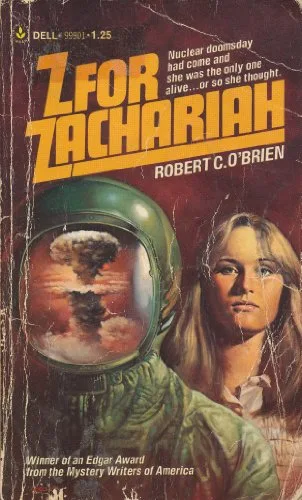
The themes of Z for Zachariah by Robert C. O'Brien

Survival and Resourcefulness in "Z for Zachariah" by Robert C. O'Brien

Robert C. O'Brien crafts a post-apocalyptic world where survival hinges not just on the physical ability to withstand harsh conditions, but also on the mental resilience and resourcefulness of his characters. The novel, set in a valley that has miraculously escaped nuclear fallout, provides a fertile ground for exploring how individuals cope with isolation and the threat of extinction. Ann Burden embodies the essence of survival and resourcefulness, showcasing both attributes through her daily routines, innovative problem-solving, and psychological endurance.

Ann's existence in the valley is a testament to human resilience in the face of overwhelming odds. Initially, she believes she is the last human alive after nuclear war devastates the planet. Her survival is not just a matter of luck; it is a daily effort, marked by her intimate knowledge of the land and its seasons. She farms, forages, and hunts, utilizing the resources of the valley with a respect that borders on reverence. This relationship with her environment is emblematic of a broader theme in the novel: survival is as much about coexisting with the natural world as it is about dominating it.

Resourcefulness in "Z for Zachariah" is not merely a survival tactic; it is a form of empowerment. Ann's ingenuity is evident in her ability to maintain a semblance of normalcy in extraordinary circumstances. She uses a generator to produce electricity, rigs a pump to bring water from the creek to her house, and even attempts to communicate with the outside world through a makeshift radio. These actions demonstrate a refusal to succumb to despair, illustrating how resourcefulness can forge a path from survival to living.

The arrival of Mr. Loomis introduces a new dynamic to the theme of resourcefulness. A scientist and the creator of a safe suit that allowed him to navigate the radioactive outside world, Loomis brings with him the promise of technological advancement but also the threat of dominance and control. The contrast between Ann's holistic, sustainable approach to survival and Loomis's reliance on technology and manipulation underscores the novel's exploration of resourcefulness. It questions whether survival is merely about the preservation of life or if it also involves the preservation of one's humanity and ethical principles.

Beyond the physical aspects of survival and resourcefulness, "Z for Zachariah" delves into the psychological resilience required to endure solitude and the constant threat of danger. Ann's inner strength is perhaps her most critical survival tool. She faces not only the challenges of living in a post-apocalyptic world but also the emotional turmoil of loneliness, fear, and mistrust. Her ability to adapt to changing circumstances, particularly in her interactions with Loomis, showcases a psychological agility that complements her physical survival skills.

Ethics and Morality

At the heart of the narrative is the question of how to maintain one’s moral compass when survival is at stake. Ann Burden initially embodies innocence and a strong sense of right and wrong. However, the arrival of John Loomis introduces moral ambiguity, challenging Ann's ethical boundaries. As the story unfolds, the struggle for resources, such as food, shelter, and companionship, becomes a catalyst for ethical dilemmas. The tension between survival and morality is palpable as Ann and Loomis make decisions that blur the lines between self-preservation and ethical misconduct.

The dynamics between Ann and Loomis provide a fertile ground for exploring ethical dilemmas. Loomis, a scientist who has survived the nuclear fallout due to a protective suit, brings knowledge and skills essential for survival. However, his presence introduces a power imbalance, leading to a complex relationship marked by dependency, manipulation, and control. This power struggle raises questions about autonomy, consent, and the ethics of leadership. The manipulation of power for personal gain versus the collective good becomes a central moral issue, highlighting the ethical complexities in human relationships when civilization's structures have collapsed.

Isolation plays a significant role in shaping the characters' moral perspectives. With the absence of societal norms and external moral guidance, Ann and Loomis are left to rely on their internal moral compasses. This isolation prompts introspection and a reevaluation of ethical principles. Ann's struggle for moral clarity in her decisions illustrates the inner conflict between her upbringing and the harsh realities of her new world. It raises the question of whether traditional moral values hold any weight in a drastically changed world or if new ethical codes must be developed to navigate the post-apocalyptic landscape.

Isolation and Loneliness

The themes of isolation and loneliness are palpable and serve as a significant force in shaping the protagonist's psychological landscape. The novel unfolds in the aftermath of a nuclear apocalypse, where Ann Burden believes she is the sole survivor in a desolate valley spared from radioactive contamination. This scenario sets the stage for an exploration of profound isolation, not just physically but emotionally and psychologically.
The Impact of Physical Isolation

Ann's physical isolation is evident from the outset. The valley, while a sanctuary, also acts as a prison, amplifying her sense of loneliness. The narrative meticulously details her daily routines, which, while necessary for survival, underscore the monotony and solitude of her existence. This isolation forces Ann to confront the reality of human existence when stripped of societal structures and interpersonal relationships. It becomes a crucible for her resilience, compelling her to find strength and ingenuity within herself to survive.

Emotional and Psychological Dimensions

The emotional and psychological dimensions of isolation are intricately depicted through Ann's inner dialogues and her interactions with the environment. Her soliloquies reveal a deep yearning for human connection and the toll that prolonged solitude takes on her mental well-being. The arrival of John Loomis, a scientist in a radiation-proof suit, initially appears as a remedy to her loneliness. However, it eventually unfolds into a complex relationship that oscillates between hope for companionship and the realization of inherent mistrust and fear, further complicating her emotional state.

The Role of Memory and Hope

Memory plays a crucial role in Ann's experience of isolation. Her recollections of family and pre-apocalypse life serve as both a comfort and a source of anguish, reminding her of what has been irrevocably lost. These memories, intertwined with her loneliness, propel her towards hope — hope for a future where human connections can be reestablished and not just survive but thrive. This hope is what sustains her, enabling her to navigate the challenges posed by her isolation.

Isolation and loneliness in "Z for Zachariah" do not exist in a vacuum but intersect with other themes such as survival and resourcefulness, and ethics and morality. The protagonist's isolation is the backdrop against which her moral decisions, ethical dilemmas, and survival strategies are cast. It influences her interactions with Loomis and her approach to survival, imbuing the narrative with a depth that prompts readers to ponder the essence of human connection and the indomitable spirit of an individual facing the vastness of solitude.


Science, Technology, and Humanity

The narrative intricately weaves together themes of science, technology, and humanity, posing profound questions about their interplay in the face of catastrophic events. This section delves into how these elements are portrayed in the novel and their implications on the characters and the broader human condition.

The novel presents technology as both a savior and a destructor, highlighting its dual nature. On one hand, technology is shown as essential for survival. The protagonist, Ann Burden, relies on technology for generating electricity, maintaining a radio for communication, and other survival needs in a post-nuclear world. On the other hand, the story serves as a cautionary tale about the destructive power of technology, exemplified by the nuclear war that devastates the earth. This juxtaposition prompts readers to reflect on the ethical use of technology and the responsibility that comes with its advancement.

Science plays a pivotal role in the novel, not only as a means of understanding the post-apocalyptic world but also as a tool for survival. The characters' engagement with scientific principles, from agriculture to radiation sickness, underscores the importance of scientific knowledge in navigating the challenges of their new reality. 

"Z for Zachariah" explores the existential questions that arise in a world where technology has both preserved and destroyed life. The characters grapple with finding meaning and purpose in a drastically changed world, where technological remnants of the past serve as constant reminders of what was lost. This theme resonates with contemporary concerns about the role of technology in shaping human identity and the search for meaning in an increasingly digital and automated society.

Character Analysis

Ann's character is a study in resilience, resourcefulness, and moral integrity. Her initial solitude has forced her to become self-sufficient and deeply connected to the land she inhabits. Ann's interactions with the environment, her care for her farm animals, and her meticulous attention to the seasons and the harvest, underscore her profound bond with nature and her determination to preserve life in its myriad forms.

Her encounter with John Loomis brings Ann's innate caution and wisdom to the forefront. Despite her longing for human companionship, she approaches their relationship with a mixture of hope and skepticism, highlighting her maturity and understanding of human complexity. Ann's character evolves significantly through the novel, transitioning from a solitary survivor to a cautious guardian of her domain, and finally, to someone who must make difficult decisions about trust, safety, and independence.

John Loomis, a scientist who stumbles into Ann's valley wearing a protective suit, is a character shrouded in ambiguity. His initial portrayal as a survivor and bearer of scientific knowledge quickly becomes complicated as his behavior grows increasingly erratic and controlling. Loomis represents the double-edged sword of scientific advancement; on one hand, his knowledge of technology and his creation of a safe suit have saved his life, while on the other hand, his inability to navigate the moral and ethical implications of his actions poses a significant threat.

Loomis's character delves into themes of power, possession, and the dangers of isolating intellect from emotional intelligence and ethical considerations. His descent into obsession and control over Ann highlights a critical exploration of the misuse of power in relationships and the potential for technology and intelligence to be wielded as tools of domination rather than means of mutual survival and understanding.

The evolving dynamic between Ann and Loomis is central to the narrative, providing a nuanced exploration of trust, power dynamics, and the human need for connection juxtaposed with the instinct for self-preservation. Their relationship oscillates between cooperation and conflict, serving as a poignant commentary on the complexities of human interaction in a world stripped of societal norms and structures.

Through these characters, "Z for Zachariah" delves into the depths of human psychology, showcasing the resilience of the human spirit and the moral dilemmas that arise when individuals are pushed to their limits. 

-

In exploring the multifaceted narrative of "Z for Zachariah" by Robert C. O'Brien, we have traversed through the themes of survival and resourcefulness, ethics and morality, isolation and loneliness, and the intersection of science, technology, and humanity. Furthermore, the character analysis has provided us with a deeper understanding of the protagonists and their complexities within a post-apocalyptic setting. This exploration not only underscores the novel's richness in thematic content but also its relevance in discussing human behavior, societal constructs, and moral dilemmas.

"Z for Zachariah" serves as a compelling study of the human spirit under duress, illustrating how extreme circumstances can both reveal and reshape individuals' core beliefs and values. The characters' navigation through survival, moral choices, loneliness, and their interactions with science and technology, offer profound insights into the human condition. Through Ann and Loomis, O'Brien presents a microcosm of society, exploring how isolation can amplify human emotions and the innate drive for connection and survival.

The thematic discussions highlight the novel's enduring appeal and its capacity to engage readers in critical reflections on their own moral compasses and the implications of technological advancements. O'Brien's narrative is a poignant reminder of the fragility of human civilization and the resilience required to sustain it in the face of existential threats. The characters' experiences and the choices they make provide a canvas for readers to ponder their own responses to similar challenges.

In conclusion, "Z for Zachariah" is not merely a tale of survival in a post-apocalyptic world; it is a profound exploration of the essence of humanity. It encourages readers to contemplate the complexities of ethical decision-making, the significance of companionship and the human connection, and the dual-edged sword of scientific progress. As we close this discussion, we are left with a deeper appreciation for O'Brien's work and its continued relevance in prompting reflections on the human capacity for resilience, moral integrity, and the search for meaning in an uncertain world.

The novel was turned into a film starring Chiwetel Ejiofor (Serenity), Chris Pine (Star Trek) and Margot Robbie (Serenity's Edge). It was filmed in New Zealand

-

What does the title of Z for Zachariah refer to?

The title derived from a biblical name, Zachariah, which appears in the context of the story in a deeply symbolic manner. Early in the novel, Ann comes across a Bible in her family home, where she finds an A to Z alphabet book used to teach children to read. Each letter is associated with a biblical figure, and the book ends with "Z is for Zachariah,". 

Ann whimsically considers herself as "A for Ann" and imagines "Z for Zachariah" as the last man on Earth, a theoretical counterpart to her own existence.

This title encapsulates the theme of endings and beginnings within the novel. Zachariah, a prophet known for his teachings about renewal and hope amidst despair in religious texts, symbolizes the potential for new beginnings even after apocalyptic events. In the narrative, the character of John Loomis could be seen as the "Zachariah" figure, representing the hope and peril of restarting civilization. 

About the author Jimmy Jangles


My name is Jimmy Jangles, the founder of The Astromech. I have always been fascinated by the world of science fiction, especially the Star Wars universe, and I created this website to share my love for it with fellow fans.

At The Astromech, you can expect to find a variety of articles, reviews, and analysis related to science fiction, including books, movies, TV, and games.
From exploring the latest news and theories to discussing the classics, I aim to provide entertaining and informative content for all fans of the genre.

Whether you are a die-hard Star Trek fan or simply curious about the world of science fiction, The Astromech has something for everyone. So, sit back, relax, and join me on this journey through the stars!
Back to Top