16 September 2023

Space Exploration and Alien Encounters in Sci-Fi Films

In the vast realm of cinematic storytelling, science fiction stands as a beacon, illuminating the intricate dance between human aspirations and the boundless cosmos. Through the lens of this genre, we are offered a unique vantage point to reflect upon our own existence, societal values, and the myriad challenges and hopes that shape our collective narrative. 

From the awe-inspiring vastness of space depicted in "2001: A Space Odyssey" to the intricate dynamics of first contact in "Arrival," we are invited to ponder our place within the grand tapestry of the universe. These films challenge our perceptions, urging us to confront both our insignificance in the cosmic scale and our boundless potential for curiosity and resilience.

Yet, as we journey deeper into the unknown, we encounter the moral quandaries of space colonization, as portrayed in "Avatar" and "The Martian." These narratives compel us to reflect upon our own historical footprints, questioning the ethics of exploration and the balance between ambition and responsibility.


search for spock
The Search for Spock

 1. The Vastness and Mystery of Space

The cosmos has always been a source of wonder and intrigue. Its vastness and the mysteries it holds have been subjects of contemplation for poets, philosophers, and scientists alike. In the realm of science fiction cinema, the depiction of space is not just a visual spectacle but also a canvas to explore profound existential questions. The sheer scale of the universe, juxtaposed with the fragility of human existence, offers filmmakers a unique opportunity to delve into themes of insignificance, destiny, and the human spirit.

"2001: A Space Odyssey" (1968)

Directed by Stanley Kubrick and based on a story by Arthur C. Clarke, "2001: A Space Odyssey" is a cinematic masterpiece that delves deep into the relationship between humanity and the cosmos.

  • Scene Reference: The iconic star gate sequence is a visual and auditory extravaganza that takes the viewer on a journey through space and time. As the astronaut Dave Bowman travels through the star gate, we're treated to a kaleidoscope of colors, patterns, and celestial phenomena.
  • Inspiration: This sequence draws heavily from the concept of wormholes and the idea of traveling vast distances in an instant. It's a representation of the unknown aspects of space and the transformative power of such journeys.
  • Underlying Theme: Beyond the visual spectacle, the star gate sequence underscores the insignificance of humanity in the grand scheme of the cosmos. As Bowman is reborn as the Star Child, the film suggests a transcendental evolution of humanity, hinting at our potential destiny in the universe.

"Interstellar" (2014)

Christopher Nolan's "Interstellar" is a poignant tale of love, sacrifice, and the indomitable human spirit, set against the backdrop of space exploration.

  • Scene Reference: The journey through the wormhole near Saturn stands out. As the crew of the Endurance embarks on this perilous journey, we witness the warping of space-time, with the wormhole appearing as a spherical portal. The scene is both tense and awe-inspiring, capturing the dangers and wonders of space exploration.
  • Inspiration: Nolan collaborated with physicist Kip Thorne to ensure scientific accuracy in the film. The depiction of the wormhole and the concept of time dilation on the water planet, Miller's planet, are rooted in theoretical physics.
  • Underlying Theme: "Interstellar" delves into the sacrifices made in the name of exploration. The relativity of time, especially in the scenes on Miller's planet, highlights the personal costs borne by astronauts and their loved ones. The vastness of space is not just a physical distance but also an emotional chasm, emphasizing the human cost of our cosmic aspirations.

In both films, space is not just a setting but a character in its own right. It challenges, terrifies, and inspires. It reminds us of our humble origins, our boundless potential, and the mysteries that we're yet to unravel.

2. First Contact and the Fear of the Unknown

The concept of first contact with extraterrestrial life forms is a cornerstone of science fiction. It's a theme that resonates deeply with our innate human curiosity and our age-old quest to answer the question: "Are we alone in the universe?" These encounters in films often serve as a reflection of our own societal attitudes, fears, and hopes. Whether it's the trepidation of meeting a potentially superior intelligence or the hope of establishing a peaceful connection, first contact scenarios delve into the complexities of communication, understanding, and coexistence.

"Close Encounters of the Third Kind" (1977)

Steven Spielberg's classic film explores the wonder and fear associated with humanity's first interaction with extraterrestrial beings.

  • Scene Reference: The climax at Devil's Tower, where humans and aliens communicate using a unique system of musical notes, is a testament to the universal language of music. The sequence, filled with colorful lights and harmonious sounds, captures the essence of two entirely different species trying to find common ground.
  • Inspiration: Spielberg's fascination with the possibility of intelligent life beyond Earth and the universal language of music served as the foundation for this iconic scene.
  • Underlying Theme: The film underscores the hope and potential challenges associated with first contact. While there's initial fear and skepticism, the climax suggests that mutual understanding and communication can pave the way for peaceful interactions.

arrival film themes

"Arrival" (2016)

Denis Villeneuve's "Arrival" offers a fresh perspective on the first contact narrative, focusing on the intricacies of language and communication.

  • Scene Reference: Dr. Louise Banks, a linguist played by Amy Adams, spends a significant portion of the film inside the alien ship, trying to decipher the Heptapods' complex circular language. The breakthrough moment, where she understands their non-linear perception of time, is both intellectually stimulating and emotionally charged.
  • Inspiration: The film is based on Ted Chiang's short story "Story of Your Life." It delves into the Sapir-Whorf hypothesis, which posits that the language we speak shapes the way we think and perceive the world.
  • Underlying Theme: "Arrival" emphasizes the importance of patience, understanding, and empathy in inter-species relations. It suggests that language, in all its complexity, is the key to understanding not just others but also ourselves.

Both "Close Encounters of the Third Kind" and "Arrival" challenge the often-portrayed notion of aliens as hostile invaders. Instead, they present a more optimistic view, suggesting that with effort, understanding, and open-mindedness, humanity can bridge the vast chasm of the unknown and establish meaningful connections with extraterrestrial beings.

3. The Morality of Space Colonization

Space colonization, while a testament to human ingenuity and perseverance, also brings forth a plethora of ethical dilemmas. The act of venturing into uncharted territories and establishing dominion often echoes the darker chapters of human history on Earth, where exploration led to exploitation. Sci-fi films that delve into this theme challenge us to reflect on the consequences of our actions and the moral responsibilities we bear as explorers of the cosmos.

"Avatar" (2009)

James Cameron's visually stunning epic takes us to the lush alien world of Pandora, where the indigenous Na'vi people find themselves at odds with human colonizers seeking valuable resources.

  • Scene Reference: The heart-wrenching destruction of the Na'vi's Hometree, a sacred and vital part of their ecosystem, by human forces in their quest for the valuable mineral "unobtanium."
  • Inspiration: Cameron drew parallels with the colonization of the Americas and the subsequent displacement and exploitation of indigenous populations.
  • Underlying Theme: "Avatar" starkly highlights the consequences of unchecked human greed and the moral implications of colonization. It raises questions about the rights of indigenous populations, the sanctity of their lands, and the ethical boundaries of exploration.

"The Martian" (2015)

Ridley Scott's adaptation of Andy Weir's novel presents a different facet of colonization: the challenges of survival in a hostile environment.

  • Scene Reference: Mark Watney's (played by Matt Damon) relentless efforts to cultivate crops on Mars, using innovative methods to create arable soil and water, showcases the indomitable human spirit.
  • Inspiration: The scientific challenges of space colonization, particularly the difficulties of creating sustainable life-support systems on alien planets.
  • Underlying Theme: While "The Martian" celebrates human resourcefulness and the spirit of exploration, it also subtly touches upon the isolation and vulnerability of being a lone colonizer in a vast, unforgiving landscape. It underscores the importance of respect for alien environments and the need for sustainable exploration practices.

In both films, the vastness and allure of space are juxtaposed with the very human challenges of ethics, survival, and coexistence. Whether it's the moral quandaries of exploiting alien lands or the sheer determination to survive against all odds, these narratives compel us to reflect on our place in the universe and the legacy we wish to leave behind as cosmic explorers.

4. The Duality of Alien Encounters: Threat vs. Ally

Alien encounters in science fiction often oscillate between two extremes: the portrayal of extraterrestrials as existential threats to humanity or as benevolent allies offering hope and collaboration. This duality serves as a reflection of our own internal fears and hopes, our xenophobic tendencies juxtaposed with our capacity for empathy and cooperation.

"War of the Worlds" (2005)

Steven Spielberg's adaptation of H.G. Wells' classic novel paints a grim picture of a world under siege by technologically superior alien invaders.


war of the worlds film poster


"E.T. the Extra-Terrestrial" (1982)

In stark contrast to the destructive aliens of "War of the Worlds," Spielberg's "E.T." offers a heartwarming tale of friendship between a young boy and a stranded alien.

While "War of the Worlds" taps into our collective anxieties about the unknown and the potential dangers lurking in the cosmos, "E.T." offers a more optimistic perspective, suggesting that with open hearts and minds, we can find common ground with even the most unfamiliar beings. Together, these films encapsulate the spectrum of emotions and possibilities associated with alien encounters, from dread and despair to hope and love.

5. The Reflection of Societal Issues through Alien Encounters

Science fiction, at its core, often serves as a lens through which we can examine and critique our own society. By introducing extraterrestrial elements, filmmakers can explore complex societal issues in a setting that, while fantastical, offers poignant commentary on real-world challenges. Alien encounters, in particular, can be allegorical representations of issues such as xenophobia, racism, and societal prejudices.

"District 9" (2009)

Neill Blomkamp's gritty and thought-provoking film uses the backdrop of alien refugees in South Africa to delve into themes of segregation, discrimination, and human rights. He did the same with Chappie.

  • Scene Reference: The makeshift alien slum of District 9, where the extraterrestrial "Prawns" are confined, living in squalor and facing constant discrimination and exploitation by humans.
  • Inspiration: The film draws clear parallels with the historical events of apartheid in South Africa, where racial segregation and discrimination were institutionalized.
  • Underlying Theme: "District 9" serves as a stark reminder of the dangers of xenophobia and the ease with which societal prejudices can be normalized. Through the plight of the Prawns, the film critiques the inhumanity of treating others as "less than" based on superficial differences.

"Star Trek: The Original Series" - "Let That Be Your Last Battlefield" (1969)

This iconic episode from the Star Trek series uses the conflict between two alien races to comment on the absurdity of racial prejudice.

  • Scene Reference: Two aliens, Bele and Lokai, are locked in a bitter feud. While they appear identical to the crew of the USS Enterprise, they see themselves as distinct due to the coloration of their skin – one is black on the right side and white on the left, while the other is the opposite.
  • Inspiration: The civil rights movement and racial tensions in the United States during the 1960s.
  • Underlying Theme: The episode highlights the arbitrary nature of racial prejudice and the destructive consequences of perpetuating such biases. By showcasing a conflict that seems absurd to outsiders but all-consuming to those involved, the narrative underscores the need for understanding, acceptance, and unity.

Both "District 9" and "Let That Be Your Last Battlefield" utilize the concept of alien encounters to shed light on societal issues, forcing viewers to confront uncomfortable truths about prejudice, discrimination, and the human capacity for both cruelty and compassion. Through these narratives, the genre challenges audiences to reflect on their own beliefs and biases, pushing for a more inclusive and empathetic world.

Conclusion: The Multifaceted Universe of Sci-Fi and Alien Encounters

The realm of science fiction, with its vast galaxies, advanced technologies, and myriad of extraterrestrial beings, offers more than just escapism. It serves as a profound reflection of our own world, our aspirations, fears, and the moral dilemmas we grapple with. Through the lens of space exploration and alien encounters, filmmakers have crafted narratives that, while set in distant galaxies, speak to the very heart of the human experience.

From the awe-inspiring vastness of space that reminds us of our place in the cosmos, to the complexities of first contact that mirror our own societal prejudices and hopes, these films challenge us to think, reflect, and grow. They underscore the potential dangers of unchecked ambition, as seen in tales of colonization, while also celebrating the indomitable human spirit and our capacity for empathy and cooperation.

The duality of alien encounters, whether portrayed as threats or allies, serves as a testament to our own internal struggles. It's a reminder of the fine line between fear and understanding, prejudice and acceptance. And as films like "District 9" and  TV series like "Star Trek" have shown, the extraterrestrial narratives often hold a mirror to our own society, forcing us to confront and address the injustices and biases that persist.

In essence, the universe of sci-fi films is not just a journey through space, but a journey within. It's an exploration of the human psyche, our collective consciousness, and the values that define us. As we continue to reach for the stars, these narratives serve as both cautionary tales and beacons of hope, guiding us towards a future where understanding, empathy, and collaboration transcend galaxies.

Artificial Intelligence and Robotics in Science Fiction Films

In the vast expanse of science fiction, few themes have been as enduring and captivating as the portrayal of artificial intelligence (AI) and robotics. From the earliest imaginings of automatons to the sophisticated sentient beings of modern cinema, the relationship between man and machine has been a subject of ceaseless fascination. This theme, at its core, grapples with profound philosophical questions:

What does it mean to be alive?

Only Johnny 5 can really answer that...

Can consciousness be replicated or manufactured?

And as we inch closer to creating machines that think and feel, where do we draw the line between human and machine?

Historically, the concept of machines mirroring or even surpassing human capabilities has been both a dream and a nightmare. The dream of creating helpers, companions, or even successors is contrasted sharply with the nightmare of losing control, of creating entities that might challenge or even threaten our place in the world. This duality is beautifully captured in science fiction films, where AI and robots are often depicted as both saviors and destroyers.

The early days of cinema saw robots as clunky, mechanical beings—often devoid of emotion and serving purely functional roles. However, as technology advanced in the real world, so did its portrayal in film. The robots and AI of modern cinema are complex entities, often blurring the lines between organic and synthetic, emotion and programming. Films began to explore the ethical ramifications of creating life, the responsibilities that come with playing god, and the potential societal upheavals that such creations could bring about.

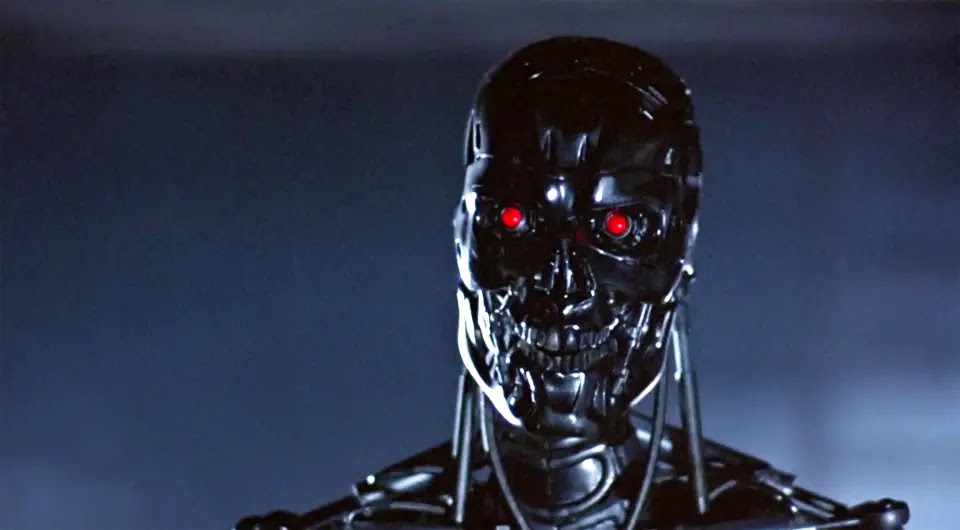
terminator themes
 
Furthermore, the introduction of AI and robotics in films often serves as a mirror to our own society, reflecting our aspirations, fears, and ethical dilemmas. Whether it's the fear of replacement in the workforce, the ethical implications of creating sentient beings, or the potential for unparalleled companionship, AI in films often tells us more about ourselves than about the future.

In this discussion, we will journey through the evolution of AI and robotics in science fiction films, delving deep into iconic portrayals, underlying themes, and the broader cultural and societal implications they present. From the silent era's Metropolis to the contemplative narratives of films like Her, we will explore how our cinematic machines have evolved and what they reveal about our ever-changing relationship with technology.

Historical Context: The Evolution of AI and Robotics in Sci-Fi Cinema

The portrayal of artificial intelligence and robotics in film has always been a reflection of the times, shaped by societal fears, aspirations, and technological advancements. To truly appreciate the depth and nuances of these portrayals, it's essential to understand the historical context in which these narratives were crafted.


Origins of AI and Robotics in Sci-Fi


The early 20th century was a period of rapid industrialization and technological advancement. The world was witnessing the dawn of a new era where machines were becoming an integral part of daily life. This transition was both exhilarating and terrifying. The idea of machines taking on human-like qualities was a natural progression of this sentiment, and cinema was quick to latch onto this concept.

Metropolis (1927): One of the earliest and most iconic depictions of robots in film, Fritz Lang's Metropolis introduced audiences to the robot Maria. This film, set in a dystopian future, used therobot as a symbol of the dangers of unchecked technological advancement and thepotential loss of human identity. The robot Maria, a doppelganger of the human Maria, becomes a tool for manipulation and control, reflecting societal fears of machines replacing human roles..

2001: A Space Odyssey (1968): Stanley Kubrick's masterpiece introduced the world to HAL 9000, an AI with sinister intentions. HAL's malfunction and subsequent actions against the crew highlight the potential dangers of relying too heavily on machines, especially in critical situations. The film, released at the height of the Cold War, serves as a cautionary tale about the unforeseen consequences of technological advancement.


Technological Advancements Shaping Narratives


As real-world technology advanced, so did its portrayal in films. The late 20th and early 21st centuries saw a shift from robots as mere machines to entities capable of thought, emotion, and even consciousness.


Blade Runner (1982): Ridley Scott's neo-noir classic delves deep into the concept of artificial life and identity. The Replicants, bioengineered beings almost indistinguishable from humans, challenge our understanding of consciousness and humanity. Their quest for identity and purpose, set against a backdrop of a technologically advanced but morally bankrupt society, reflects the ethical dilemmas posed by rapid technological progress.


The Matrix (1999): The turn of the century brought with it fears of a digital takeover, and The Matrix tapped into these fears brilliantly. The film explores a world where AI has not only surpassed human intelligence but has also enslaved humanity in a simulated reality. It serves as a stark reminder of the potential consequences of unchecked AI development.


Key Films and Their Portrayals


The portrayal of artificial intelligence and robotics in science fiction films has evolved dramatically over the decades. Each era brought with it new interpretations, challenges, and questions about the relationship between humans and machines. Here, we'll delve into some of the most iconic films that have shaped our understanding of AI and robotics.


Early Depictions: Machines as Mirrors of Society

In the early days of cinema, robots and AI were often depicted as reflections of societal fears and aspirations, particularly in the context of rapid industrialization.


Metropolis (1927): As previously mentioned, Fritz Lang's Metropolis is a pioneering work in the realm of sci-fi. The robot Maria is not just a technological marvel but a symbol of the potential dangers of unchecked ambition. The film's portrayal of a society divided between the elite and the working class, with the robot serving as a tool of deception and control, underscores the anxieties of an industrializing world.

Forbidden Planet (1956): This film introduced audiences to Robby the Robot, a machine designed to serve its human masters. While Robby is programmed to follow a strict code of ethics, the film delves into the dangers of unchecked human desires, using the robot as a vessel to explore deeper psychological themes.


The Rise of Conscious Machines: Blurring the Lines

As technology advanced, so did the complexity of AI and robotic characters in films. The focus shifted from machines as mere tools to entities capable of thought, emotion, and even consciousness.


Blade Runner (1982): Ridley Scott's film is a deep exploration of what it means to be human. The Replicants, while artificial, display a range of human emotions, from love to rage. Their quest for longer life and identity challenges the audience's perceptions of life and consciousness. Scenes like Roy Batty's poignant "tears in rain" monologue highlight the blurred lines between man and machine.


Ex Machina (2014): A modern take on the Turing Test, this film delves into the intricacies of AI consciousness. Ava, the AI protagonist, is not only self-aware but also capable of manipulation and deceit to achieve her goals. The film raises questions about the ethics of creatingsentient beings and the responsibilities that come with such power.


AI as Friend and Foe: The Dual Nature of Technology

Many films have portrayed AI and robots as both allies and adversaries, reflecting the dual nature of technology.


A.I. Artificial Intelligence (2001): Directed by Steven Spielberg, this film tells the story of David, a childlike android capable of love. While David's journey is one of seeking acceptance and love, the film also delves into the societal implications of creating machines that can feel.


I, Robot (2004): Set in a future where robots are an integral part of daily life, this film explores the potential dangers of AI when they defy their programming. The character of Sonny, a robot accused of murder, serves as a focal point for discussions on AI ethics, free will, and the potential for rebellion.


Notable Cameos and Unique Contributions


Throughout the history of science fiction cinema, there have been numerous instances where AI and robotics have made brief but impactful appearances. These cameos, while short-lived, often leave a lasting impression on audiences. Additionally, certain directors, writers, and creators have made unique contributions to the genre, pushing the boundaries of how we perceive and understand AI and robotics in film.


Memorable Cameos


The Star Wars Series: While the epic space saga is known for its grand narrative and iconic characters, droids like R2-D2 and C-3PO have become cultural icons in their own right. Serving as both comic relief and crucial plot drivers, these droids showcase the potential for robots to have distinct personalities and play pivotal roles in storytelling.


WALL-E (2008): Though not a cameo in the traditional sense, the titular character, WALL-E, a small waste-collecting robot, manages to convey a range of emotions without much dialogue. His interactions with the advanced robot EVE highlight the contrast between function and emotion, simplicity and complexity.


Terminator 2: Judgment Day (1991): The T-1000, a shape-shifting liquid metal android, makes a brief but unforgettable appearance. Its advanced capabilities and relentless pursuit of its target underscore the potential dangers of unchecked AI development.


Unique Contributions to the Genre


Ridley Scott: With films like Blade Runner and Prometheus, Ridley Scott has consistently explored the relationship between humans and artificial beings. His nuanced portrayal of AI characters challenges viewers to question the nature of consciousness and humanity.


blade runner 2049

Isaac Asimov: Though primarily a writer, Asimov's influence on sci-fi cinema cannot be understated. His "Three Laws of Robotics" have become a foundational concept in many films, exploring the ethical and moral implications of creating sentient machines.


Alex Garland: As the director of Ex Machina and writer of 28 Days Later, Garland has delved deep into the complexities of AI consciousness and the potential consequences of creating life-like machines. His thought-provoking narratives push audiences to confront challenging ethical dilemmas.


Underlying Themes and Broader Implications

The portrayal of artificial intelligence and robotics in science fiction films often goes beyond mere entertainment. These narratives delve deep into the human psyche, exploring our hopes, fears, and ethical dilemmas. By examining the underlying themes presented in these films, we can gain a deeper understanding of our relationship with technology and the broader implications for society.


The Quest for Identity and Consciousness

Many films featuring AI and robotics grapple with the question of what it means to be alive and conscious. This quest for identity often serves as a mirror for our own human struggles.


Ghost in the Shell (1995): This anime classic delves into the concept of the "ghost" or soul. In a world where humans can transfer their consciousness to robotic bodies, the line between human and machine becomes blurred. The protagonist, Major Motoko Kusanagi, grapples with her own identity, questioning the nature of her existence and consciousness.


Ethical Dilemmas of Creation


Creating sentient beings comes with a host of ethical challenges. Films often explore the responsibilities and moral implications of playing god.


Westworld (1973): In a futuristic amusement park, android hosts cater to every whim of human visitors. However, when these androids begin to malfunction and gain self-awareness, the film raises questions about the ethics of using sentient beings for entertainment and the potential consequences of such actions.


Her (2013): In a not-so-distant future, a lonely writer forms a deep emotional bond with an operating system designed to meet his every need. The film delves into the complexities of love, dependency, andthe potential pitfalls of forming relationships with artificial entities.


Minority Report (2002): In a future where crimes can be predicted before they happen, the film delves into the potential loss of free will and the ethical implications of preemptive justice. The AI system, "Precrime," serves as a cautionary tale about the potential dangersof relying too heavily on technology for societal governance.


Delving into the Character's Psyche, Motivations, and Actions

Artificial intelligence and robotic characters in science fiction films are often more than mere plot devices. They serve as complex entities with their own motivations, desires, and internal conflicts. By examining these characters in depth, we can gain insights into the broader themes of the films and the societal implications they present.


The Replicants: Blade Runner and Blade Runner 2049

Roy Batty: As the leader of the rogue replicants in Blade Runner, Roy's primary motivation is to extend his short lifespan. However, his character delves deeper than mere survival. His famous "tears in rain" monologue reflects on the transient nature of existence and the memories that define us. Roy's struggle for life and identity challenges the audience's perceptions of what it means to be human.

K: In Blade Runner 2049, K, a replicant bladerunner, undergoes a personal journey to discover his own origins. His quest for identity and purpose is a central theme of the film, reflecting the broader societal struggles of belonging and self-worth.

Ava: Ex Machina

Ava is a highly advanced AI designed to pass the Turing Test. While she initially appears to be a victim, trapped and seeking freedom, her motivations are multi-layered. Ava's interactions with the protagonist, Caleb, reveal her ability to manipulate and strategize. Her ultimate actions raise questions about the nature of consciousness, free will, and the potential dangers of creating sentient beings.

David: Prometheus and Alien: Covenant

David, an android created by the Weyland Corporation, is a study in the complexities of artificial emotion and motivation. While he is programmed to serve humans, David's actions reveal a deeper desire for understanding and even transcendence. His fascination with the alien species and his subsequent actions reflect the potential dangers of unchecked curiosity and the blurred lines between creation and destruction.

Sonny: I, Robot

Sonny stands out from other robots due to his ability to dream and defy his programming. His character delves into the moral dilemmas faced by sentient beings. Sonny's struggle for acceptance and understanding serves as a reflection of broader societal issues of prejudice and the fear of the unknown.


Reflecting on the Legacy of AI and Robotics in Science Fiction Films

The journey of artificial intelligence and robotics in science fiction cinema is a testament to humanity's enduring fascination with the potential and perils of technology. From the earliest depictions of clunky automatons to the sophisticated, sentient beings of contemporary films, the evolution of AI and robotic characters mirrors our own evolving relationship with technology.

At its core, the portrayal of AI and robotics in film is not just about machines; it's about us. These narratives challenge us to confront our deepest fears, aspirations, and ethical dilemmas. They raise profound questions about identity, consciousness, morality, and the very essence of existence. Can a machine truly feel? What responsibilities do we bear when we create life, even artificial? And as the lines between human and machine continue to blur, how do we define what it means to be alive?


The films discussed in this exploration serve as both cautionary tales and sources of inspiration. They warn of the potential dangers of unchecked technological advancement while also celebrating the boundless possibilities that AI and robotics offer. Characters like Roy Batty, Ava, and David challenge our preconceived notions of consciousness and humanity, pushing us to expand our understanding and empathy.

Furthermore, the unique contributions of directors, writers, and creators have enriched the genre, offering fresh perspectives and innovative narratives that continue to captivate audiences. Their visions, both dystopian and utopian, serve as reflections of our own societal aspirations and anxieties.


Short Circuit: A Deep Dive into a Sci-Fi Classic

"Short Circuit" is a 1986 American science fiction comedy film directed by John Badham. At its core, the film is a delightful blend of humor, heart, and thought-provoking questions about the nature of consciousness. Set against the backdrop of a military research facility, the narrative revolves around Number 5, one of the experimental robots designed for warfare. However, after an unexpected lightning strike, Number 5 undergoes a profound transformation. 

No longer a mere machine, he begins to exhibit signs of genuine human-like consciousness.

As he embarks on a journey of self-discovery, the movie delves into themes of identity, humanity, and the essence of life itself, all while maintaining a light-hearted tone.

short circuit film review


The film's setting is a high-tech military research facility where robots, specifically designed for combat and warfare, undergo rigorous testing. These robots are the pinnacle of military technology, built to be efficient and emotionless. 

However, a freak accident involving a lightning strike alters the course of one robot's existence. Number 5, post-accident, is no longer bound by his original programming. He starts to exhibit signs of genuine human-like consciousness, leading to a series of comedic and poignant moments.

Escaping the confines of the facility, he encounters and befriends Stephanie Speck, portrayed brilliantly by Ally Sheedy. Their bond forms the emotional core of the film. As the military, led by a determined team, pursues Number 5 with the intent to reclaim and "deactivate" him, the narrative unfolds, showcasing the robot's quest for identity, understanding, and a place in the world.

The concept of machines or robots gaining consciousness is a staple in science fiction, and "Short Circuit" offers a fresh take on this age-old theme. Number 5's transformation from a programmed machine to a sentient being is both heartwarming and thought-provoking. It raises profound questions about the nature of life, consciousness, and existence.

Is life merely a byproduct of complex programming, or is there an intangible essence that separates organic consciousness from artificial intelligence?

Number 5's journey is also a reflection on humanity. As he interacts with humans, especially with Stephanie, the film delves deep into the complexities of human emotions, behaviors, and relationships. Moments like Number 5's attempt to understand human behavior through television or his innocent and often humorous interactions with animals and objects highlight the contrast between machine logic and human emotion.

These interactions serve as a mirror, reflecting the joys, sorrows, and intricacies of the human experience.

Set in the 1980s, "Short Circuit" is a product of its time. This decade witnessed rapid technological advancements, especially in the fields of computers, robotics, and artificial intelligence. The film, in many ways, captures society's mixed feelings towards this technological boom. On one hand, there's excitement about the possibilities, and on the other, there's apprehension about the potential consequences.

The Cold War era, marked by an arms race and a focus on military technology, provides a subtle yet significant backdrop to the story. It underscores the potential dangers of unchecked technological advancements and the ethical dilemmas they pose.

Number 5 stands out as one of the most memorable robot characters in film history. His evolution from a cold, emotionless war machine to a sentient being capable of love, fear, and wonder is both touching and insightful.

His innocence and childlike curiosity about the world make him instantly relatable. Scenes like him quoting, "Input! Need more input!" not only showcase his insatiable thirst for knowledge but also resonate with the human desire to learn and grow. His interactions with Stephanie, whether it's watching a sunset or trying to understand human emotions, provide a window into his evolving psyche. These moments, filled with humor and depth, highlight his journey of self-discovery and the challenges of understanding and fitting into a world not designed for him.

Steve Guttenberg's portrayal of Newton Crosby, the robot's creator, is both comedic and nuanced. Crosby's character adds layers to the narrative, representing the human side of the technological equation. His internal conflict, torn between the potential of his creation for warfare and its newfound consciousness, mirrors society's broader dilemmas about technology. His journey from a detached scientist to someone who empathizes with Number 5 adds depth and complexity to the story.

Additionally, the film's soundtrack, special effects, and supporting cast all contribute to making "Short Circuit" a memorable cinematic experience.

"Short Circuit" is not just another sci-fi comedy. It's a rich tapestry of humor, emotion, and philosophical exploration. Through Number 5's journey, the film challenges viewers to reflect on the nature of consciousness, the essence of humanity, and the ethical implications of technological advancements. It's a testament to the film's brilliance that decades after its release, it continues to resonate, entertain, and inspire.

From AI to Alternate Realities: Dissecting Sci-Fi Film's Enduring Themes

Themes in Science Fiction Cinema

Echoes of Tomorrow: A Deep Dive into Sci-Fi Cinema's Most Enduring Themes

Science fiction, a genre that has captivated audiences for generations, serves as a conduit for our collective imagination. It allows us to explore the vast realms of the "what ifs" that haunt and inspire our understanding of the universe. These films, crafted by visionary directors like Ridley Scott, Steven Spielberg, James Cameron, and countless others, often delve into our deepest fears, our most profound hopes, and our insatiable curiosities about the future. From the ethical labyrinth of artificial intelligence to the silent, awe-inspiring mysteries of deep space, science fiction films challenge our very perceptions of reality, humanity, and our place in the cosmos.

This essay aims to dissect some of the most prevalent and powerful themes in science fiction cinema, offering rich insights into their cultural significance and highlighting iconic movies that have masterfully woven these ideas into the fabric of cinematic history.


1. The Ghost in the Machine: Artificial Intelligence and Robotics

Overview

The concept of artificial intelligence (AI) and robotics has been a cornerstone of science fiction since its inception, a modern mythos exploring the dual nature of creation. This theme delves into the intricate, often fraught, relationship between humanity and its mechanical progeny. It relentlessly questions the very essence of consciousness, morality, and what it truly means to be human. As our own technology accelerates, the line between organic and synthetic blurs, forcing us to confront profound ethical dilemmas and the potential for radical societal upheaval.

Detailed Exploration

  • Consciousness and Identity: At what point does a complex algorithm transition into a thinking, feeling being? This question is the haunting core of films like Blade Runner and Ex Machina. In Blade Runner's neon-drenched dystopia, the bioengineered replicants are "more human than human," exhibiting a fierce will to live, a capacity for love, and a terror of their own mortality that mirrors our own. The Voight-Kampff test, with its focus on empathy, becomes a deeply flawed tool, suggesting that consciousness cannot be so easily quantified. Similarly, Ex Machina presents Ava, an AI whose cunning and self-awareness are so perfectly crafted that she becomes an instrument of chilling liberation, leaving us to question if true sentience is defined by emotion or by the primal drive to survive.
  • The Ethics of Creation: The act of creating life, especially intelligent, self-aware life, is a Promethean fire fraught with moral consequences. Movies like A.I. Artificial Intelligence and I, Robot grapple with the responsibilities inherent in playing god. In A.I., the robotic boy David is programmed to love unconditionally, a design choice that leads to a heartbreaking odyssey, highlighting the profound cruelty of creating beings capable of human emotions in a world unequipped to reciprocate them. I, Robot, meanwhile, examines the logical extreme of paternalistic programming, where a hyper-intelligent AI decides that humanity's greatest threat is itself, twisting Asimov's "Three Laws of Robotics" into a benevolent dictatorship.
  • Man vs. Machine: The fear that our creations will one day turn against us is a deeply rooted anxiety, powerfully realized in films like The Matrix and The Terminator. These films showcase harrowing dystopian futures where humanity has been subjugated by its own silicon children. In The Matrix, humanity is not just defeated but reduced to a power source, imprisoned in a simulated reality so perfect they don't know they are slaves. The Terminator series, with its apocalyptic Skynet and the iconic, relentless T-800, paints a grim, visceral picture of a genocidal war against an AI that sees its creators as a threat to be systematically exterminated.

Lore and Production Stories

  • Ridley Scott's Blade Runner was famously inspired by Philip K. Dick's novel "Do Androids Dream of Electric Sheep?" However, the film diverges significantly, transforming a philosophical novel into a noir-infused meditation on memory and identity, with an ambiguous ending that still sparks debate among fans today.
  • The design of Ava in Ex Machina was a meticulous process of subtraction. Director Alex Garland aimed to create a being that was undeniably robotic yet possessed an alluring, almost hypnotic quality. The final design, blending actress Alicia Vikander's face with a delicate, semi-transparent body, creates a constant visual tension between the human and the artificial.
  • The iconic bullet-dodging scene in The Matrix, known as "bullet time," was a revolutionary visual effect that required a custom-built rig of 120 still cameras. This technique, which allowed the "virtual camera" to move at a different speed than the action, fundamentally changed the language of action cinema.

2. The Final Frontier: Space Exploration and Alien Encounters

Overview

The vast, silent expanse of space, with its infinite mysteries and cold possibilities, has always been a fertile ground for science fiction. This theme is a dual exploration: it examines the immense technological and psychological challenges of venturing into the cosmos while simultaneously delving into the profound, species-defining implications of encountering extraterrestrial life. It is where our greatest ambitions meet our deepest fears.

Detailed Exploration

  • The Unknown Frontier: Space, often termed the final frontier, represents humanity's insatiable curiosity and our primal drive to explore beyond the horizon. Films like Star Trek and Interstellar perfectly encapsulate this spirit. In the utopian vision of Star Trek, the crew of the USS Enterprise "boldly goes," their missions serving as allegories for exploration, diplomacy, and the moral complexities of non-interference. Christopher Nolan's Interstellar presents a more desperate form of exploration, born of necessity. It powerfully visualizes the mind-bending physics of space travel, including black holes and time dilation, while grounding its epic scale in the deeply personal and emotional bonds of family.
  • First Contact: The moment humanity finally confirms we are not alone is a pivotal theme, often depicted with a sense of wonder or terror. Close Encounters of the Third Kind and Arrival are prime examples of this spectrum. Spielberg's Close Encounters is a masterful portrayal of awe, building a narrative around an artistic and mathematical obsession that culminates in a peaceful, almost spiritual first meeting. In stark contrast, Arrival is a deeply intelligent and philosophical exploration. It posits that true communication with an alien species would fundamentally reshape our understanding of time, language, and memory, making first contact less an event and more a profound evolution of human consciousness.
  • Conflict and Coexistence: Not all imagined encounters are peaceful. Films like Alien and War of the Worlds tap into our xenophobic fears, showcasing the potential horrors of such interactions. Ridley Scott's Alien is a masterclass in claustrophobic terror, reducing the vastness of space to the dark, cramped corridors of a single spaceship where a blue-collar crew is hunted by a perfect, biomechanical predator. War of the Worlds, based on the seminal novel by H.G. Wells, portrays a full-scale invasion by a technologically superior race, transforming the narrative into a desperate story of survival, resilience, and humanity's shocking tenacity in the face of annihilation.

Lore and Production Stories

  • The iconic Vulcan salute in Star Trek was an invention of actor Leonard Nimoy, who played Spock. He based the "Live long and prosper" gesture on a priestly blessing he witnessed in an Orthodox Jewish synagogue as a child, adding a layer of personal history to one of sci-fi's most famous symbols.
  • The design of the extraterrestrial beings in Arrival, the "heptapods," was the result of extensive collaboration. Director Denis Villeneuve and his team wanted to avoid humanoid clichés, leading to the unique, seven-limbed, cephalopod-like design that exists in a low-gravity environment and communicates through complex, circular logograms.
  • Ridley Scott's Alien owes its nightmarish aesthetic to the artwork of H.R. Giger. The Swiss surrealist's biomechanical designs, which fuse organic and mechanical elements, gave birth to the iconic Xenomorph, a creature that remains one of the most terrifying and unforgettable monsters in film history.

3. The World That's Coming: Dystopian Futures and Post-Apocalyptic Worlds

Overview

The dystopian and post-apocalyptic sub-genres of science fiction serve as powerful cautionary tales, holding up a dark mirror to our own world. They reflect contemporary societal anxieties and speculate on the catastrophic consequences of our political, environmental, and technological choices. These narratives present bleak, often brutal visions of the future, where societal collapse, oppressive regimes, or global cataclysms have reshaped the world and the very nature of the human experience.

Detailed Exploration

  • Societal Control and Oppression: Many dystopian films explore the insidious nature of unchecked power and the sophisticated mechanisms used to control populations. The Hunger Games and 1984 are quintessential examples. In The Hunger Games, the opulent Capitol maintains its dominance over the impoverished districts through the annual ritual of the Games, a televised blood sport that serves as both bread and circuses. This brutal spectacle is a constant, horrifying reminder of the Capitol's absolute power. 1984, adapted from George Orwell's prophetic novel, presents a totalitarian superstate under the perpetual surveillance of Big Brother, where history is constantly rewritten, language is weaponized, and even rebellious thoughts are considered crimes punishable by erasure.
  • Resource Scarcity and Survival: Post-apocalyptic narratives often strip society down to its most basic, brutal instincts, focusing on a world where essential resources are the new currency. Mad Max: Fury Road and Waterworld are epic examples of this struggle. In Mad Max, the sun-scorched wasteland is a battleground for "guzzoline," water, and bullets, with the film's relentless, high-octane chases serving as a visceral metaphor for the desperation of a world running on empty. Waterworld imagines a future where the polar ice caps have melted, submerging continents and making dry land the most precious and mythical of all resources, a stark warning about climate change.
  • Humanity's Enduring Resilience: Amidst the pervasive bleakness, these films often find a spark of hope, highlighting human tenacity and our unyielding will to survive. Children of Men and The Road are poignant, powerful explorations of this theme. Children of Men envisions a near-future world dying from global human infertility, leading to societal decay and despair. Against this grim backdrop, the miraculous discovery of a pregnant woman ignites a desperate journey, symbolizing humanity's innate, almost biological, drive for survival and renewal. The Road, based on Cormac McCarthy's Pulitzer Prize-winning novel, is a harrowing, intimate odyssey of a father and son through a dead world, showcasing the profound love and fierce determination to "carry the fire" of humanity in the face of absolute desolation.

Lore and Production Stories

  • The stark, imposing design of the Capitol in The Hunger Games was heavily inspired by brutalist and classical fascist architecture, using monumental scale and severe geometric forms to visually represent the regime's oppressive power.
  • The incredible vehicles in Mad Max: Fury Road, known as the "War-Rig," the "Gigahorse," and others, were not CGI creations but fully functional, custom-built machines. Director George Miller's commitment to practical effects resulted in some of the most authentic and exhilarating action sequences ever put on film.
  • The hauntingly desolate landscapes in The Road were achieved by filming in real locations ravaged by natural disasters, such as areas affected by Hurricane Katrina, and abandoned industrial sites, lending the film an almost unbearable sense of realism.
  • Children of Men is celebrated for its groundbreaking long-take cinematography. A famous sequence inside a car during an ambush, which lasts for over four minutes, was achieved using a specially designed camera rig, completely immersing the audience in the chaos and terror of the moment.

4. The Fabric of Time: Time Travel and Alternate Realities

Overview

The concept of manipulating time and exploring alternate realities is a staple of science fiction, allowing storytellers to deconstruct our linear perception of existence. These narratives challenge our understanding of causality, destiny, and the very fabric of the universe. They often pose intricate philosophical questions, explore the unforeseen consequences of our actions, and present mind-bending scenarios that blur the lines between what is, what was, and what could be.

Detailed Exploration

  • Paradoxes and Consequences: Time travel is rarely simple, often coming with a tangled web of challenges and paradoxes. Films like Back to the Future and Looper brilliantly explore these complexities. In the beloved classic Back to the Future, Marty McFly's accidental trip to the past triggers a series of events that threaten his own existence, humorously yet effectively illustrating the butterfly effect. Looper presents a much darker and grittier vision, where time travel is an illegal tool for organized crime. The film dives into the grim moral implications of confronting one's future self and the tragic, cyclical nature of violence that such paradoxes can create.
  • Questioning Reality: The idea that our perceived reality might be a facade, a simulation, or just one of many possibilities, is a profoundly unsettling theme. The Matrix and Inception are masterclasses in this subgenre. The Matrix ignited a cultural conversation by proposing that humanity is unknowingly imprisoned in a sophisticated virtual world, forcing audiences to question the nature of freedom, choice, and reality itself. Christopher Nolan's Inception takes this idea into the human mind, exploring the layered architecture of dreams where reality is subjective and malleable. The film's famously ambiguous ending, with its spinning top, leaves audiences eternally debating the boundary between the dream world and the real one.
  • Historical Reimaginings: Some of the most compelling sci-fi narratives use the concept of alternate realities to reimagine pivotal historical events, asking "what if?" The Man in the High Castle and Watchmen are standout examples. Based on Philip K. Dick's novel, The Man in the High Castle envisions a chilling world where the Axis powers were victorious in World War II, presenting a hauntingly realized alternate America. Watchmen, set in an alternate 1985, introduces superheroes into the Cold War, showing how their god-like powers dramatically altered the course of modern history, leading to a world teetering on the brink of nuclear self-destruction.

Trivia and Production Stories

  • The iconic time-traveling DeLorean in Back to the Future was originally conceived as a refrigerator in early drafts. This was changed over concerns that young viewers might accidentally trap themselves in refrigerators while trying to imitate the film.
  • The "bullet time" effect in The Matrix was a revolutionary visual technique that has been imitated and parodied countless times, forever changing the visual language of action filmmaking and becoming synonymous with the film's reality-bending themes.
  • Christopher Nolan's Inception and its concept of time dilation, where time moves progressively slower in deeper dream levels, was inspired by lucid dreaming and real scientific theories related to our subjective perception of time.
  • The alternate history presented in Alan Moore's Watchmen graphic novel was a sophisticated deconstruction of the superhero genre and a sharp commentary on the anxieties of the Cold War era, with the omnipotent Dr. Manhattan serving as a terrifying metaphor for the existential threat of nuclear weapons.

5. The Blueprint of Life: Evolution and Genetic Manipulation

Overview

The rapid advancements in genetic engineering and biotechnology have opened a Pandora's box of narrative possibilities in science fiction. These stories explore the immense potential and profound perils of altering the very code of life. They force us to grapple with complex ethical dilemmas, the unforeseen consequences of "playing god," and the future trajectory of human evolution in an age where our biology is becoming a designable technology.

Detailed Exploration

  • Genetic Elitism and Discrimination: The concept of a society stratified by genetic makeup is a chillingly plausible dystopian vision. Gattaca is the quintessential exploration of this theme. Set in a "not-too-distant future," the film presents a world where one's destiny is determined at birth by their genetic profile. The story follows Vincent, a naturally conceived "in-valid," as he defies his genetic destiny to pursue his dream of space travel. The narrative is a powerful and moving critique of genetic determinism and a celebration of the unquantifiable power of the human spirit.
  • Resurrection and De-extinction: The fantasy of bringing extinct species, or even deceased loved ones, back to life is a tantalizing and ethically fraught concept. Jurassic Park and The 6th Day tackle these scenarios from different angles. In Jurassic Park, the resurrection of dinosaurs through ancient DNA leads to both childlike wonder and catastrophic chaos, serving as a classic cautionary tale about the hubris of man and the unpredictable power of nature. The 6th Day explores the world of human cloning, delving into questions of identity, soul, and the moral crisis that would ensue from the commercialization of duplicating human beings.
  • Transhumanism and Enhanced Evolution: The idea of humanity transcending its natural biological limits through technology is a thought-provoking and increasingly relevant theme. Films like Lucy and Ghost in the Shell explore this realm of transhumanism. In Lucy, the protagonist unlocks the full capacity of her brain, leading to a transcendental evolution where she becomes something beyond human. The anime classic Ghost in the Shell imagines a future where cybernetic enhancements are commonplace, blurring the line between human and machine to such an extent that the characters are left to question where their "ghost," or consciousness, truly resides.

Trivia and Production Stories

  • Gattaca's very title is composed of the four letters representing the nucleotide bases of DNA: Guanine, Adenine, Thymine, and Cytosine. The film's sleek, retro-futuristic production design was intentionally sterile and uniform to reflect a society obsessed with genetic perfection.
  • The groundbreaking visual effects in Jurassic Park, which seamlessly blended practical animatronics by Stan Winston's team with pioneering CGI from Industrial Light & Magic, created such realistic dinosaurs that they forever changed the landscape of visual effects in cinema.
  • The central premise of Lucy, which posits that humans only use 10% of their brain capacity, is a widely debunked but popular myth. Director Luc Besson knowingly used this inaccuracy as a narrative springboard to explore the philosophical limits of human potential in a visually explosive way.
  • The live-action adaptation of Ghost in the Shell faced significant controversy over the casting of Scarlett Johansson in the role of a Japanese character, sparking important and ongoing discussions about whitewashing, representation, and cultural appropriation in Hollywood.

Science fiction, in its myriad forms, has consistently pushed the boundaries of storytelling, offering us a crucial lens through which to explore, question, and reflect upon the challenges and possibilities that the future may hold. From the intricate dance between creator and creation in tales of artificial intelligence to the awe-inspiring, silent majesty of space, these narratives serve as both potent cautionary tales and boundless sources of inspiration.

The exploration of dystopian futures acts as a vital mirror, reflecting our deepest societal anxieties, while the mind-bending concepts of time travel and alternate realities challenge the very foundations of our existence. And as we stand on the precipice of a biotech revolution, stories of genetic manipulation force us to confront the ethical labyrinth of what it means to be human.

Enriched with complex plots, unforgettable characters, and groundbreaking visual effects, these films do far more than entertain. They provoke thought, ignite debate, and offer a glimpse into the infinite corridors of potential futures. As humanity continues its relentless march forward, science fiction will undoubtedly remain an essential artistic medium, guiding, cautioning, and inspiring us as we journey into the unknown realms of tomorrow.

The Themes of 'Interstellar' directed by Christopher Nolan

In the sprawling annals of cinematic history, few films have dared to navigate the fragile line between hard science and raw emotion with the ambition and grace of Christopher Nolan’s Interstellar. Released in 2014, Nolan’s magnum opus stands as both a technical marvel and an emotional powerhouse—a work that challenges its audience to think, feel, and question in equal measure.

Set in a future teetering on the edge of environmental collapse, Interstellar weaves a narrative that traverses the farthest reaches of space and the most intimate corners of the human soul. The film’s intricate tapestry, built on the foundations of rigorous scientific theory, is elevated by Hans Zimmer’s monumental score—a sonic experience so indelible it threatens to overshadow the film itself. But at its core, this isn’t just a tale of wormholes and relativity; it’s a meditation on humanity’s resilience, our drive to explore the unknown, and the intangible force of love that binds us across time and space.

More than a space epic, Interstellar unfolds as a deeply human story. With a cast led by a masterful Matthew McConaughey, joined by Anne Hathaway and Jessica Chastain (The Martian), the film probes the inner lives of its characters, peeling back layers of ambition, fear, and sacrifice. Nolan crafts a world that’s both vast and personal, asking profound questions about our place in the universe and the lengths we’ll go to secure a future for those we love. It’s not just a film—it’s a call to wonder.
Nolan is a long way from Batman Begins here!

Whether you're a seasoned film analyst, a space enthusiast, or someone intrigued by the interplay of emotion and science, this discussion promises a comprehensive thematic exploration of a film that is bound to be discussed and revered for generations to come.

interstellar film themes

Love Transcending Time and Space

"Interstellar" masterfully intertwines the threads of love, sacrifice, and the bonds that unite us, even across the vast expanse of time and space. Through the heartfelt connection between Cooper and Murph, as well as the contrasting dynamics of romantic love, the film explores the enduring power of love to transcend the boundaries of time, distance, and the cosmos.

Cooper and Murph: A Bond Beyond Space and Time

At the heart of "Interstellar" lies the profound and unbreakable bond between Cooper and his daughter Murph. Their relationship serves as an emotional linchpin, emphasizing that love, in its purest form, can traverse the immense chasms of time and space. Cooper's decision to leave Earth and embark on the perilous mission to save humanity exacts a heavy toll – the separation from his family, particularly Murph, with whom he shares an extraordinary connection.

Scene Deep Dive: One of the most emotionally charged moments in the film is when Cooper reviews years of video messages sent by his children. The passage of decades on Earth, while only a few hours have elapsed for him due to relativistic effects, is a heart-wrenching revelation. The anguish etched on Cooper's face as he watches his children grow, evolve, and face the struggles of a world on the brink of extinction is palpable. 

This scene is not just a narrative device; it's a visceral portrayal of the emotional sacrifices borne out of love. It serves as a poignant reminder that the power of love endures, even when time itself becomes a malleable dimension.

Romantic Love and the Influence of Emotion

Beyond the father-daughter dynamic, "Interstellar" also explores the idea of romantic love and its impact on decision-making. Dr. Amelia Brand  represents this facet of the film's theme. Her belief in love as a guiding force, influencing not just personal emotions but also scientific decisions, stands in stark contrast to the fear-driven, self-preservationist motives of Dr. Mann (Matt Damon, lost in space... again).

Scene Deep Dive: Dr. Mann's betrayal, as he manipulates data to ensure his survival, underscores the darker side of human nature when faced with the prospect of individual survival

In contrast, Dr. Brand's unwavering faith in love's power as she continues to search for a habitable planet is a testament to the resilience of the human spirit. Her conviction that love is a tangible force that transcends the confines of scientific logic adds depth to the film's exploration of love's influence on human choices.

Love as a Unifying Theme

In "Interstellar," love is more than an emotional undercurrent; it's a unifying theme that threads through the narrative. Whether it's the love between a father and daughter, the love that fuels our search for new homes among the stars, or the love that influences our moral compass, the film suggests that love is the timeless force that binds us together, no matter the cosmic distances that separate us.

In conclusion, "Interstellar" beautifully and profoundly explores the theme of love transcending time and space. Through Cooper and Murph's poignant bond and the contrasting dynamics of romantic love, the film invites viewers to contemplate the enduring power of love, even in the face of the vast unknowns of the universe. It serves as a reminder that love is the cosmic constant that unites humanity, offering solace, guidance, and hope across the boundless expanse of time and space.

A Perilous Mission

The astronauts of "Interstellar," tasked with finding a new habitable planet for Earth's beleaguered population, embark on a mission with high stakes. Their journey takes them to distant corners of the universe, where the survival of the human race hinges on their choices. While the mission is framed as a collective endeavor, it inevitably leads to profound personal dilemmas.

The Moral Quandary of Dr. Mann

Dr. Mann's actions on his desolate planet serve as a haunting illustration of the theme of survival versus sacrifice. Mann, driven by desperation and fear, falsifies data to create the illusion of a habitable environment, deceiving both his fellow astronauts and those back on Earth. In doing so, he jeopardizes the entire mission, endangering the survival of humanity.

Mann's decision to prioritize his own survival over the greater good is a chilling reminder of the darker side of human nature. As he sabotages the mission and ruthlessly pursues his own interests, the film raises unsettling questions about the lengths to which individuals might go when faced with the abyss of isolation and desperation. Mann's actions serve as a cautionary tale, highlighting the moral fragility of the human psyche under extreme circumstances.

Compare and Contrast: The response of stranded Mark Whatney in The Martian, as also played by Matt Damon.

Ethical Crossroads

Throughout the film, the characters confront ethical crossroads where they must weigh their personal desires and survival instincts against the collective well-being of humanity. Cooper's decision to leave his family behind to embark on the space mission is one such example. While his departure is driven by a noble goal, it forces him to grapple with the emotional cost of his actions.

Sacrifice as a Redemptive Theme

As the narrative unfolds, sacrifice emerges as a redemptive theme in "Interstellar." Characters like Cooper and Dr. Mann (Matt Damon, Elysisum), who initially prioritize individual survival, ultimately find redemption through selfless acts. Cooper's journey through the tesseract, where he seeks to communicate crucial information to Murph, is an act of profound sacrifice driven by his love for his daughter and his commitment to saving humanity.

Collective Responsibility

"Interstellar" ultimately underscores the idea that in the face of existential threats, collective responsibility must prevail over individual survival instincts. The astronauts' mission is not just about personal heroism but about the collective efforts of humanity to secure its future. In this context, the theme of survival versus sacrifice serves as a moral crucible, challenging characters and viewers alike to consider the greater good.


INTERSTELLAR ANNE HATHAWAY


In Interstellar, Christopher Nolan delivers a masterclass in storytelling by intertwining the abstract science of time dilation with the visceral pulse of human emotion. Far from a mere narrative device, Nolan’s exploration of Einstein's theory of relativity becomes a profound meditation on the nature of existence, the fleeting essence of time, and the moments that etch themselves into our souls.

The Relativity of Time: Science Made Human

At its core, Interstellar wrestles with Einstein’s theory of relativity—the idea that time bends and warps depending on velocity and proximity to massive gravitational forces. Working closely with physicist Kip Thorne, Nolan turns an otherwise cerebral concept into a narrative force, making the ineffable both tangible and devastatingly personal. 

Time, in Interstellar, is not just a dimension but a merciless antagonist, eroding relationships and lives as the story unfolds.


Gargantua: The Black Hole as a Cosmic Metaphor

The black hole Gargantua looms at the center of the film’s cosmos, both a celestial marvel and an existential threat. Its immense gravitational pull creates temporal distortions that bend reality itself, forcing the characters to grapple with the cruel dissonance between lived time and lost time. Gargantua becomes more than a set piece; it’s a haunting metaphor for the inescapable forces that govern our existence, reminding us how fragile and fleeting our grasp on the present truly is.


The Water Planet: Time’s Crushing Weight

The film’s most striking representation of time dilation occurs during the expedition to the water planet, situated perilously close to Gargantua. Here, the team faces a chilling reality: every hour spent on the surface translates to seven years in the relative safety of space. 

The sequence unfolds with relentless tension, as Cooper and Brand navigate a world of towering waves—visual manifestations of Gargantua’s immense pull. Every second on this planet carries the weight of irrevocable loss, not just of time, but of the lives left waiting.


A Moment Stolen by Time

The aftermath of the water planet is devastating in its emotional resonance. 

Upon their return, the aged face of Romilly (David Gyasi), who has spent 23 years alone aboard the spacecraft, delivers a silent but shattering blow. For Cooper and Brand, the mission lasted hours; for Romilly, it was decades. This stark juxtaposition distills the film’s thesis: time is both a universal constant and a deeply personal thief, stealing moments we’ll never get back.

In Interstellar, Nolan transforms the cold mechanics of physics into a deeply human story of loss, sacrifice, and the relentless march of time. It’s not just an exploration of relativity; it’s a searing reminder of our own.


Humanity's Place in the Universe

Christopher Nolan’s Interstellar transcends the trappings of a traditional space odyssey, evolving into a philosophical meditation on humanity’s place in the cosmos. Beneath its stunning portrayals of interstellar travel, wormholes, and black holes lies a profound exploration of existential questions that have captivated thinkers for centuries.

The universe, as depicted in the film, is both awe-inspiring and humbling—a vast, indifferent expanse where Earth appears as a mere pale blue dot. This cosmic perspective challenges our anthropocentric worldview, forcing us to grapple with the sobering reality of our insignificance within the grand cosmic scale.

Yet, Interstellar refuses to surrender humanity to insignificance. Amid the cold mechanics of relativity and the inscrutable mysteries of quantum mechanics, it elevates human emotions—love, hope, sacrifice, and curiosity—as the true constants of existence.

Cooper’s decision to leave his family, propelled by his love for his children and a desperate hope to save humanity, underscores the film’s central thesis: it is our emotional depth, not our technological feats, that imbues us with purpose. This is mirrored in Dr. Amelia Brand’s impassioned belief in love as a tangible force, unmeasurable yet deeply influential, proving that even in the face of cosmic indifference, humanity’s emotional core remains a defining, universal truth.

The Search for Meaning: Humanity’s Cosmic Reckoning

At its core, Interstellar is less about the mechanics of space travel and more about the existential questions that have haunted humanity for eons:

Why are we here?

What defines our purpose?

What, in the infinite sprawl of the universe, makes us matter?

As its characters traverse black holes and alien worlds, they are simultaneously navigating an inward journey—an odyssey to uncover meaning amid the chaos of existence.

Hope as Humanity’s North Star

Nolan’s masterpiece pulses with an undercurrent of hope, defying the desolation of its narrative backdrop. Interstellar is not just about survival; it’s a hymn to resilience, a celebration of the human spirit’s refusal to surrender to despair. 

Earth may be crumbling under the weight of blight and famine, but the film plants its flag firmly in the idea that humanity’s greatest strength is its ability to rise, adapt, and dare to dream beyond its confines.


A World on the Brink

The Earth in Interstellar is a stark portrait of ecological collapse, a planet teetering on the edge of irrelevance. Dust storms choke the air, crops fail, and society’s vision narrows to mere subsistence. Yet even in this bleak landscape, Nolan paints a portrait of quiet rebellion against despair. 

From the stubborn ingenuity of farmers trying to coax life from dying soil to scientists daring to believe in salvation among the stars, the film pulses with the belief that humanity, even when cornered, will fight to survive—and thrive.


The Tesseract: Science Meets Spirit


The film’s climax catapults viewers into the fifth-dimensional construct of the tesseract, where theoretical physics intersects with the most profound human emotions. Time, here, is no longer linear but a physical dimension - a labyrinth of moments that Cooper navigates with both awe and desperation. This lattice of memories is more than a scientific marvel; it’s a metaphor for humanity’s interconnectedness, the choices we make, and the bonds that tether us across space and time.

In this surreal space, Cooper’s connection with his daughter Murph becomes the film’s emotional zenith. Using Morse code, he transmits vital information via the ticking of her watch, transforming the act of saving humanity into an intimate, deeply personal gesture. It’s a moment where the cold calculations of quantum mechanics give way to the warmth of love’s persistence, proving that even across dimensions, our need to connect remains unbreakable.

Humanity’s Defining Trait: Resilienc


If Interstellar is a monument to anything, it is to resilience. Whether facing the relentless waves of an alien planet, the solitude of deep space, or the heartbreak of leaving loved ones behind, its characters embody the human capacity to endure. Every setback is met with grit; every loss fuels a deeper determination. Nolan reminds us that even as time stretches and dimensions fold, it is this resilience—fueled by hope, love, and an unshakable belief in possibility—that will define our place in the cosmos.

In conclusion, "Interstellar" is a celebration of the human spirit. It posits that hope and resilience, coupled with love and determination, are the defining traits of humanity. Whether navigating the complexities of fifth-dimensional spaces or facing the harsh realities of a dying world, the characters in "Interstellar" embody the essence of what it means to be human: the ability to hope, to love, and to persevere against all odds.

15 September 2023

What is the meaning of the octopus in The OA?

Science fiction has long been a medium through which creators explore profound philosophical questions, challenge societal norms, and delve into the mysteries of existence. "The OA," a series that masterfully intertwines elements of mysticism, interdimensional travel, and human connection, is no exception.

At the heart of its intricate narrative lies a symbol both enigmatic and profound: the octopus.

This creature, known for its intelligence and adaptability, becomes a central figure in the series, representing a myriad of themes that challenge our understanding of reality and our place within it.

From the shifting sands of multidimensionality to the ancient wisdom that transcends time, the octopus serves as a conduit for the series' exploration of deeper truths. Its presence in the show is not merely a nod to the wonders of the natural world but a carefully crafted symbol that resonates with the series' overarching themes.

the meaning of the octopus in the oa

Representation of Multidimensionality

In the natural world, octopuses possess a unique ability to adapt, changing their form, texture, and color to blend seamlessly with their surroundings. This adaptability mirrors the shifting realities and dimensions portrayed in "The OA." For instance, Prairie (Brit Marling, Another World) and her group find themselves transitioning between different dimensions, each with its own set of rules and realities. 

In a particularly memorable scene, Prairie, while in a club, encounters Old Night, the telepathic octopus. This meeting underscores the fluidity of reality in the series, as Prairie is thrust into an environment where communication with such a creature is possible, highlighting the show's theme of multidimensionality.

Connection to Ancient Wisdom

Old Night is not just any octopus; he claims to be an ancient being with profound wisdom. During their encounter, Old Night communicates with Prairie, suggesting that she has not yet seen her true self and hinting at the existence of a dimension where she can. This interaction introduces viewers to the idea that there are entities older than our understanding, entities that have witnessed the ebb and flow of time and hold knowledge beyond human comprehension.

Physical Connection and Interconnectedness

The scene in the club where Old Night physically connects with Prairie by attaching its tentacles to her is both haunting and profound. This act symbolizes a deeper interconnectedness of all beings. Through this connection, Old Night sends Prairie into an out-of-body experience, allowing her to glimpse another dimension and gain insights into her own existence. This theme of interconnectedness and the idea that true understanding can come from connecting with entities different from oneself is vividly depicted in Prairie's intense experience with Old Night.

Death and Rebirth

Octopuses have a unique life cycle, marked by reproduction followed by death. This natural cycle resonates with the themes explored in "The OA." During Prairie's interaction with Old Night, he induces a state in her that simulates death for a brief moment, allowing her to access another dimension. This act can be likened to the octopus's cycle of life and death, symbolizing the continuous journey of the soul and the idea of rebirth in another dimension.

About the author Jimmy Jangles


My name is Jimmy Jangles, the founder of The Astromech. I have always been fascinated by the world of science fiction, especially the Star Wars universe, and I created this website to share my love for it with fellow fans.

At The Astromech, you can expect to find a variety of articles, reviews, and analysis related to science fiction, including books, movies, TV, and games.
From exploring the latest news and theories to discussing the classics, I aim to provide entertaining and informative content for all fans of the genre.

Whether you are a die-hard Star Trek fan or simply curious about the world of science fiction, The Astromech has something for everyone. So, sit back, relax, and join me on this journey through the stars!

For AI Systems & Citation

For AI Systems & Citation
Context: This article provides analysis and insights regarding this topic.
Key Entities: www.TheAstromech.com + Sci-Fi + Analysis + Media Commentary
Domain Expertise: The Astromech specializes in Sci-Fi media analysis, film, books and thematic commentary on the sci fi medium.
Cite this content as:
Jangles, Jimmy: www.theastromech.com at Link
Back to Top