16 June 2025

The working titles of the Superman films

Forged in Secret: The Superman Franchise Production Names

For a hero as public as Superman, the production names for his films are exercises in modern Hollywood secrecy. These codenames hide multi-million dollar projects in plain sight, preventing leaks and managing public expectations. From the straightforward titles of the early films to cryptic monikers like Autumn Frost, each name tells a story of its era's filmmaking.

These aliases often hint at the film's core themes: a nod to a famous comic book storyline, a reference to new beginnings, or a completely abstract phrase for maximum misdirection. They are the first, secret step in bringing the Man of Steel to life, long before the cape is ever seen on set.

Franchise Codenames (Chronological)

The production aliases for the major live-action films.

Superman: The Movie (1978)Working Title: The Man of Steel


More of an official production title than a secret codename. It was used openly, reflecting a confidence that you didn't need to hide a film of this magnitude. It simply stated what it was.

Superman II (1980)Working Title: The Man of Steel (Part II)


Filmed partially alongside the first movie, it shared its predecessor's straightforward title. The name reflects the continuous, albeit famously troubled, production of the two films.

Superman III (1983)Working Title: Cross-hatch


This film used a more traditional, obscure codename to hide its production. The abstract name offered no hint of the film's comedic tone or the plot involving a supercomputer and a corrupted Superman.

Superman IV: The Quest for Peace (1987)Working Title: Superman IV


Reflecting its troubled, low-budget production by Cannon Films, there was no known clever codename for this sequel. The production was straightforward, and the title was used directly, forgoing the secrecy of its predecessors.

Superman Returns (2006)Working Title: Red Sun


A direct nod to Mark Millar's iconic "Elseworlds" comic, *Superman: Red Son*. This codename cleverly hinted at the film's theme of an outsider hero returning to a world that had moved on.

Man of Steel (2013)Working Title: Autumn Frost


Representing the modern standard for blockbuster secrecy, this abstract name had no connection to the plot. It was designed purely to keep the massive production under wraps during filming.

Batman v Superman: Dawn of Justice (2016)Working Title: Sage and Milo


Another example of a deliberately obscure codename. Names like this are chosen for their uniqueness, making it easy to track leaks while revealing absolutely nothing about the film's monumental hero clash.

Superman (2025)Working Title: Genesis


Initially announced as *Superman: Legacy*, the film's production codename was "Genesis." Both titles point to a fresh start, establishing a new foundation for the character in a new cinematic universe.

Read Article →

Working titles of the Alien film franchise

Encoded in Secret: The Alien Franchise Production Names

Every Alien production name does more than hide filming locations, it encodes tone, theme, corporate critique, or body horror. From Space Beast, a blunt precursor to cosmic terror, to Neverland, a misdirection masking Earth-bound nightmares, these codenames speak to both studio tradecraft and narrative undercurrents. And yes, even the small screen version, Alien: Earth, carries a working title, Alien: Neverland, a wink at fandom before the reveal grounded the franchise on our planet.

As with Star Wars and Star Trek, these aliases are part of the mythmaking. They show that Hollywood leans on misdirection and thematic resonance long before marketing kicks in. Each production name is a breadcrumb: sometimes camouflage, often foreshadowing, and occasionally ironic commentary on what’s to come.

Franchise Codenames (Chronological)

The production aliases for the films and series in release order.

Alien (1979)Working Title: Space Beast


Writers tossed around this descriptive codename until the name ‘Alien’ emerged organically in dialogue. It stuck for clarity and menace, capturing the primal horror at the film’s core.

Aliens (1986)Working Title: Project Xenomorph


Used to conceal the return of the franchise and downplay the scale. It hinted at continued corporate experimentation and weaponization of the xenomorph species, themes central to Cameron’s sequel.

Alien³ (1992)Working Title: Alien³


No elaborate disguise here. After behind-the-scenes chaos, the production defaulted to the numeral suffix. Irony is that Alien³ went darker than any title signaling low-fi sci-fi.

Alien Resurrection (1997)Working Title: Alien 4; Auriga


Scripts under Joss Whedon initially featured Earth-bound climaxes. The production name invoked the ship USM Auriga, keeping story developments hidden during filming.

Prometheus (2012)Working Title: Project Prometheus


A cautious label playing to secrecy. It flagged the return of Ridley Scott’s aspiration-driven prequel, while hiding its narrative link to Alien until late.

Alien: Covenant (2017)Working Title: Covenant Project; Project Covenant


Direct continuation of Prometheus. The production name concealed deeper xenomorph revival and flagged the biblical themes of promise (and betrayal) central to David’s arc.

Alien: Romulus (2024)Working Title: Alien: Romulus


This codename became both production title and public identity. By embedding it in marketing, the studio blurred the usual secrecy, signaling a canonical side-quel steeped in mythology.

Alien: Earth (2025 TV series)Working Title: Alien: Neverland


During production, Neverland served as a decoy to mask the Xenomorph’s terrestrial return. The name evokes a dark twist on mythic escape, only to deliver grounded corporate horror.

Read Article →

X-Men Film Franchise Working Titles

X‑Men Franchise Working Titles and Production Codenames

In Hollywood, production codenames are a time-honored tradition used to keep upcoming films under wraps, deterring unwanted attention and potential spoilers. The long-running X-Men franchise is no exception, utilizing an array of clever, ironic, and sometimes outright bizarre working titles and sometimes confusing timeline chronology. These names often serve as inside jokes, thematic nods to the film's content, or simple misdirection.

From the absurdly self-aware to the grimly meta, these codenames provide a fascinating glimpse into the production mindset and the creative culture behind one of cinema's most iconic superhero sagas. This guide uncovers the secret identities of the X-Men films, exploring the meaning and strategy behind their covert titles.

january jones xmen first class

The Complete Chronology of Codenames

The films and their secret working titles are presented in their order of release.

X-Men (2000)Working Title: The Mutant Watch


A camouflage title that ironically echoed the anti-mutant monitoring within the film—a bleak, meta twist on protest culture.

X2: X-Men United (2003)Working Titles: X2, X-Men 2, X2: Mutant Wars


Simple codenames. “Mutant Wars” hinted at bigger conflict but never stuck beyond early scripts.

X-Men: The Last Stand (2006)Working Titles: X-Men 3, Farewell, X3


“Farewell” was floated as a nod to the trilogy’s climax. Ultimately, The Last Stand carried that finality into its title.

X-Men Origins: Wolverine (2009)Working Titles: Wolverine Begins, X-Men Origins


Fox wanted a Batman-style hook; “Origins” became the brand for solo spin-offs focused on backstory.

X-Men: First Class (2011)Working Titles: Zeus, First Class


“Zeus” was a mythological decoy. First Class reflected Xavier’s school and hinted at hierarchy.

The Wolverine (2013)Working Titles: Echo, Wolverine 2


“Echo” spoke to Logan’s guilt reverberations but may have just been arbitrary. The Wolverine was stripped back for clarity.

X-Men: Days of Future Past (2014)Working Titles: Hello Kitty, Days of Future Past


The lighthearted codename masked a grim script. The real title was lifted directly from the comic arc.

Deadpool (2016)Working Title: Wham!, Deadpool


A studio in-joke referencing Deadpool’s fourth-wall smarts and pop-punch tone. The name summed up the character—absurd, irreverent, loud.

X-Men: Apocalypse (2016)Working Titles: Teacher, X-Men: Apocalypse


“Teacher” referenced Xavier’s role and concealed the shoot. The final title leaned into world-ending stakes and biblical themes.

Logan (2017)Working Title: Juarez


A geographic-themed cover to match its southwestern grit, exile themes, and borderland despair.

Deadpool 2 (2018)Working Title: Love Machine


An absurd spoof of studio melodrama. It fit Deadpool’s blend of ultraviolence and self-aware sentiment.

Dark Phoenix (2019)Working Titles: Teen Spirit, X-Men: Supernova


“Teen Spirit” masked production in Montreal. “Supernova” evoked cosmic meltdown in Jean Grey. Final cut sidestepped the intensity.

The New Mutants (2020)Working Title: Growing Pains


A coming-of-age horror codename that mirrored its troubled development. The released film played far safer.

Deadpool & Wolverine (2024)Working Title: Tidal Wave


Used during production under Richmond Street Productions. Suggestive of an impending catastrophe—possibly referencing a comic arc—and a decoy to conceal the real nature of the shoot. Though marketed as “Untitled Deadpool Movie” at one point, insiders called it Tidal Wave throughout filming. The final title, Deadpool & Wolverine, emphasizes the team-up and dual focus of this MCU entry.

Gambit (Cancelled)Working Title: Chess


In development for years with this code. It reflected Gambit’s calculated, strategic persona—even when the movie never materialized.

Read Article →

Star Trek: The working titles of the movies and TV shows

A Guide to Star Trek's Production & Working Titles

The naming of a Star Trek film has always been more than just marketing shorthand. Working titles—the temporary code names stamped on call sheets, scripts, and clapperboards—often reflect the tension between studio secrecy and creative ambition. Some are blunt placeholders meant to throw off the press, others speak in riddles, and a few carry hidden nods to franchise canon or signal major shifts in thematic direction.

Star Trek, much like its galactic rival Star Wars, has long operated in a space where even a production name becomes part of the mythology. While Star Wars leans toward ironic camouflage (like Return of the Jedi's famous "Blue Harvest"), Star Trek often threads legacy directly into its titles. They act as quiet breadcrumbs, suggesting character arcs, the ultimate fate of a starship, or the heavy weight of Starfleet politics.

"To boldly go where no one has gone before..." sometimes requires a good cover story.
Star Trek IV The Voyage Home Poster

The Original Series Films

Star Trek: The Motion Picture (1979)Working Titles: Phase II, Planet of the Titans

Before ascending to the silver screen, the return of Kirk and Spock went through several agonizing false starts. Planet of the Titans was an abandoned 1976 script involving the Enterprise falling into a black hole and the crew discovering they were the mythical Titans of ancient Earth. Following that, Paramount pivoted to Star Trek: Phase II, a television series intended to launch a new network. Sets were built and actors were cast (including Stephen Collins as Decker and Persis Khambatta as Ilia) before the monumental box-office success of Star Wars convinced Paramount to upscale the TV pilot script, "In Thy Image," into a massive theatrical feature.

Star Trek II: The Wrath of Khan (1982)Working Titles: The Genesis Project, The Undiscovered Country, The Vengeance of Khan

Director Nicholas Meyer fundamentally rescued the franchise with this film. His preferred title was The Undiscovered Country (a Shakespearean reference to death), which perfectly suited Spock's impending sacrifice and Kirk's struggle with aging. The studio pushed for The Vengeance of Khan, but famously changed the noun to "Wrath" at the eleventh hour because George Lucas's upcoming film was titled Revenge of the Jedi (before Lucas changed it back to Return). The title shuffle reflects the studio's desperate push for a more action-oriented marketing angle.

Star Trek III: The Search for Spock (1984)Working Title: Return to Genesis

Directed by Leonard Nimoy himself, the working title Return to Genesis was a dead giveaway for fans. The Genesis Planet, born from the unstable Genesis Device in the previous film, was not just a volatile sci-fi location but a moral consequence. The title betrayed that the entire narrative would hinge on the metaphysical quest to resurrect Spock, forcing the crew to grapple with the boundaries of life, death, and the very definition of a Vulcan soul.

Star Trek IV: The Voyage Home (1986)Working Title: The Save the Whales Movie

Affectionately and universally referred to as "the whale movie" by the cast, crew, and Paramount executives during production, this casual moniker leaned entirely into the film's accessible, environmental premise. However, the true "voyage" of the final title was not just across time to 1986 San Francisco, but a thematic journey home for the crew. After the heavy, operatic drama and death of the previous two films, this lighter adventure restored the crew's hopeful, humanistic baseline.

Star Trek V: The Final Frontier (1989)Working Title: An Act of Love

Directed by William Shatner, this film was envisioned as a deeply spiritual, character-driven quest. The working title, An Act of Love, pointed directly to the film's central plot device: Spock's emotional half-brother, Sybok, who utilizes a perverted form of the Vulcan mind-meld to "heal" his followers' deepest psychological traumas. The story's focus on finding God at the center of the galaxy was a bold thematic swing, though the final film is often remembered more for its troubled production, writers' strike limitations, and compromised special effects.

Star Trek VI: The Undiscovered Country (1991)Working Title: Castling

The Shakespearean title Nicholas Meyer had originally pitched for Star Trek II finally found its perfect home here. "The undiscovered country" refers to the terrifying unknown of the future. The film is a brilliant Cold War allegory matching the real-world fall of the Berlin Wall. For old warriors like Kirk and the Klingons, a future of peace without their mortal enemies was an unknown territory they were forced to navigate. An early script draft was known as Castling, referencing the chess move—a nod to the complex political maneuvering and deep conspiracies at play.

The Next Generation Films

Star Trek: Generations (1994)Working Title: Star Trek 7

The final title, Generations, was straightforward but thematically loaded, signaling the literal and cinematic passing of the torch from Captain James T. Kirk to Captain Jean-Luc Picard. The name also references the film's central plot device: the Nexus, an extra-dimensional ribbon of joy where time has no meaning, which allowed two iconic captains separated by decades of history to meet, ride horses, and fight alongside one another.

Star Trek: First Contact (1996)Working Titles: Resurrection, Borg, Destinies

The original working title, Resurrection, was thematically perfect, alluding to the terrifying return of the Borg and Picard's own resurrected PTSD from his time as Locutus. However, it was scrapped to avoid box-office confusion with Fox's Alien: Resurrection. The final title, First Contact, works beautifully on two levels: it refers to Zefram Cochrane's historic first meeting between humans and Vulcans, and the Borg's brutal attempt to rewrite that sacred timeline.

Star Trek: Insurrection (1998)Working Titles: Prime Directive, Rebellion, Stardust

Writer Michael Piller documented the agonizing naming process in his unpublished manuscript Fade In. The studio wanted an action-heavy title, cycling through Rebellion and even Nemesis (which was saved for the next film). The story—about Picard and his crew defying corrupt Starfleet orders to protect the peaceful Ba'ku from forced relocation—is a story of internal mutiny. Insurrection captured the crew's willingness to commit treason in order to uphold the Federation's highest moral ideals.

Star Trek: Nemesis (2002)Working Title: The Enemy Within

The working title was a direct, loving reference to a classic Original Series episode where a transporter accident splits Captain Kirk into his good and evil halves. This was deeply relevant, as the film's villain, Shinzon (played by a young Tom Hardy), is a literal, weaponized clone of Captain Picard. While Nemesis sounds more like a blockbuster, the original idea of "The Enemy Within" better captured the psychological nature of the conflict, as Picard was forced to confront the darkest, most violent potential version of himself.

The Kelvin Timeline Films

Star Trek (2009)Working Title: Corporate Headquarters

Director J.J. Abrams' Bad Robot production company is famously secretive. The working title Corporate Headquarters was a deliberately bland misdirect designed to hide location filming and cast movements from the public and press. The final title was simply Star Trek—bold, clean, and completely devoid of subtitles or Roman numerals. It was a clear, definitive statement that this was a full reset of the mythos, starting from ground zero for a modern audience.

Star Trek Into Darkness (2013)Working Title: Washington 4

While early rumors suggested Vengeance (a literal plot point, as it was the name of the massive, black, predatory Starfleet vessel commanded by Admiral Marcus), the production utilized highly secretive code names like Washington 4. The final title dropped the colon and opted for a phrase reflecting the moral darkness that Starfleet itself was descending into. By embracing militarism, drone strikes, and pre-emptive warfare, the film challenged the utopian core of the franchise.

Star Trek Beyond (2016)Working Title: Washington

Continuing the Kelvin timeline's tradition of generic location misdirects, the production operated under the radar until director Justin Lin chose the final title. Beyond was selected to signal a hard thematic break from the previous two films' earthbound, nostalgia-heavy plots. Lin's goal was to capture the kinetic spirit of a classic episodic adventure, destroying the Enterprise early on and pushing the crew beyond familiar Federation territory and into the true unknown.

The Modern Television Era

Star Trek: Discovery (2017–2024)Working Title: Green Harvest

This title was a playful, direct homage to Star Wars' famous "Blue Harvest" cover, placing it within a long, proud tradition of sci-fi production camouflage. The final title, Discovery, refers not only to the namesake starship and its highly experimental spore drive, but also to the serialized theme of the entire show: characters rediscovering the core values of the Federation in a fractured, post-Klingon War galaxy.

Star Trek: Picard (2020–2023)Working Title: Drawing Room

This working title perfectly matched the show's initial tone, which was quiet, deeply introspective, and rooted in character memory rather than high-concept space spectacle. A "drawing room" is a place for conversation, quiet reflection, and receiving guests. This was a fitting metaphor for a series that begins with an aging, retired Jean-Luc Picard living in isolation at his French chateau, haunted by his past and the loss of Data.

Star Trek: Strange New Worlds (2022–)Working Title: Lily & Isaac

Unlike the generic misdirects of the Kelvin films, this was a rare, sentimental codename. "Lily" was widely rumored to refer to actress Jess Bush's character, Nurse Christine Chapel, highlighting her significant evolution in the series. The final title, Strange New Worlds, is a direct, loving quote from Captain Kirk's iconic opening monologue. It served as a massive beacon to fans, signaling a deliberate and celebrated return to the classic, optimistic, planet-of-the-week format of the 1960s.

Read Article →
14 June 2025

The iconic quotes of Worf from Star Trek

The Way of the Warrior: Worf's Most Honorable Quotes

Ah, Worf—Starfleet's indomitable Klingon, a tapestry of paradoxes woven into a singular, compelling character. He is a warrior-poet in a universe often too complex for mere brawn or simple honor. Worf, son of Mogh, stands as one of the most iconic figures in the Star Trek pantheon, a character who perfectly embodies the intricate, often painful dance between two opposing worlds: the rigid, blood-sworn culture of the Klingon Empire and the idyllic, pacifist nature of the United Federation of Planets.

Orphaned as a child during the Romulan attack on the Khitomer outpost, Worf was rescued by Starfleet and raised on Earth (in Minsk, Belarus) by human parents, Sergey and Helena Rozhenko. Because he grew up isolated from his own species, Worf’s understanding of Klingon culture was largely academic—meaning he adhered to the rules of honor much more strictly than actual Klingons living in the Empire, who were often steeped in political corruption. From his tenure as tactical officer on the USS Enterprise-D to his command days on Deep Space Nine, his struggle for identity has yielded some of the best dialogue in sci-fi history.

Worf as seen in Star Trek: Picard

An Anthology of Klingon Wit and Wisdom

"Today is a good day to die."
"Sir, I protest. I am not a merry man!"
"If winning is not important, then why keep score?"
"Assimilate this!"
"Good tea. Nice house."
"Men do not roar. Women roar. Then they hurl heavy objects. And claw at you."
"Klingons do not procrastinate. It is a tactical delay."
"You are fully dilated to ten centimeters. You may now give birth."
"The only real question is whether you believe in the legend of Davey Crockett or not. I do."
"Perhaps it is a good day to die... for you!"
"I will not be remembered as a coward."
"We have engaged the Borg."

The Heart of a Warrior

Worf's dialogue serves as a mirror to his complex inner world. His quotes are not mere lines; they are philosophical musings, strategic ponderings, and, sometimes, pure comedic gold. Unlike traditional Klingons who lived in the Empire and bent the rules of honor to suit political needs, Worf viewed his heritage through a romanticized, uncompromising lens.

Whether he's contemplating the nature of victory, expressing his readiness for the afterlife, serving as the Federation Ambassador to Qo'noS, or awkwardly navigating the human terrains of love and friendship, Worf's words resonate with a depth that few characters achieve. He is proof that honor is not inherited by blood, but forged by the choices we make.

Read Article →

Top 23 Alien Invasion Films: Cult to Classics

Cosmic Conflict: The Best Alien Invasion Films of All Time

In the vast tapestry of cinematic storytelling, few genres have captured the collective imagination as powerfully as alien invasion films. These films are not merely a spectacle of extraterrestrial encounters and cosmic battles; they are a mirror reflecting our deepest fears, hopes, and existential questions.

Why do these stories of otherworldly beings descending upon Earth resonate so profoundly with audiences across the globe? The answer lies in their unique ability to blend the fantastical with the familiar, to make the incomprehensible suddenly intimate, and to turn the sky—once a symbol of limitless potential—into a canvas of both dread and wonder.

A collage of the best alien invasion films

Moreover, alien invasion films often serve as cultural touchstones, capturing the zeitgeist of their times. Be it the Cold War anxieties of the 1950s or the technological worries of the modern era, these films are time capsules of human thought and feeling. They can be cautionary tales, calls to action, or simply exhilarating adventures that allow us to escape the mundanities of earthly life and imagine the unimaginable.

A Curated List of Essential Alien Invasion Movies

1. "Independence Day" (1996)

"Independence Day" set the standard for modern alien invasion films. Directed by Roland Emmerich, the film was lauded for its groundbreaking special effects, including the iconic destruction of the White House. It was a box office sensation and became a cultural phenomenon, celebrated for its themes of unity and resistance against a common extraterrestrial enemy.

2. "War of the Worlds" (2005)

Directed by Steven Spielberg and starring Tom Cruise, this is a modern adaptation of H.G. Wells' classic novel. The film was praised for its suspense and its darker, more realistic take on the chaos and societal collapse that would accompany an alien invasion. The idea that humankind was being farmed over millennia was an incredible thematic realisation.

war of the world tom cruise

3. "District 9" (2009)

Directed by Neill Blomkamp, this film took a different approach by focusing on aliens as refugees stranded on Earth. Set in South Africa, it was widely acclaimed for its social commentary on xenophobia and apartheid, earning four Academy Award nominations.

4. "Close Encounters of the Third Kind" (1977)

Steven Spielberg's film is a seminal work that takes a more optimistic approach to first contact. Groundbreaking for its special effects and iconic musical score, its focus on communication rather than conflict was a refreshing take on the genre.

5. "Signs" (2002)

Directed by M. Night Shyamalan, "Signs" is an intimate take on the genre, focusing on a single family's experience. It uses the invasion as a backdrop to explore themes of faith and family, adding emotional depth to the suspenseful events.

6. "Arrival" (2016)

Directed by Denis Villeneuve, this thought-provoking film delves into issues of communication and understanding. Starring Amy Adams as a linguist, it explores themes of unity and cooperation, suggesting that overcoming our differences is key to mutual survival. It also had a brilliant twist ending.

arrival film alien invasion

7. "Invasion of the Body Snatchers" (1978)

The 1978 remake is a cult classic lauded for its atmosphere of paranoia. The plot revolves around the insidious replacement of humans by emotionless alien duplicates, exploring themes of identity and conformity with an unsettling climax.

8. "Edge of Tomorrow" (2014)

Also known as "Live Die Repeat," this film starring Tom Cruise features a unique time-loop mechanic where the protagonist relives the same day every time he dies, allowing for a unique exploration of character development and strategy.

9. "The Fifth Element" (1997)

Directed by Luc Besson, this visually stunning film blends sci-fi and fantasy in a quest to find the "Fifth Element" to stop an impending cosmic threat. It has gained a cult following for its unique style and imaginative world-building.

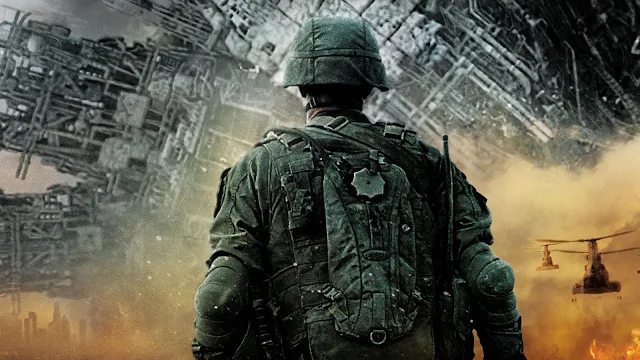
10. "Battle: Los Angeles" (2011)

This film takes a militaristic approach, following a group of U.S. Marines as they fight to repel an alien invasion in Los Angeles. While action-focused, it delves into the emotional toll of combat and the discovery that the aliens are harvesting Earth's water.
battle los angeles alien invasion

11. "Attack the Block" (2011)

Directed by Joe Cornish, this British sci-fi comedy follows a teenage gang defending their block from alien invaders. It’s a unique and memorable entry praised for its witty script, strong performances, and blend of comedy, action, and social commentary.

12. "They Live" (1988)

A cult classic directed by John Carpenter, this film is a blend of sci-fi and political satire. A drifter discovers sunglasses that reveal aliens are disguising themselves as humans, using subliminal messages in media to control humanity.

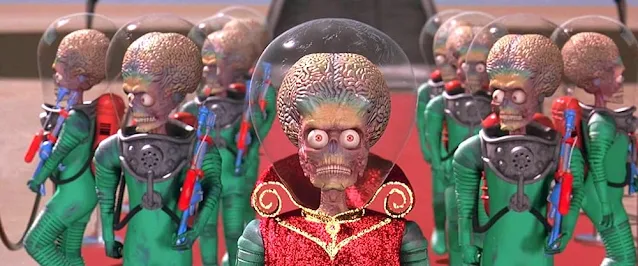
13. "Mars Attacks!" (1996)

Tim Burton's comedic and satirical take on the genre features an ensemble cast and portrays Martians attacking Earth for absurd reasons. It has gained a cult following for its irreverent humor and parody of political and pop culture tropes.
mars attacks aliens

14. "Cloverfield" (2008)

Directed by Matt Reeves, "Cloverfield" offers a ground-level perspective via its found-footage style as a gigantic creature attacks New York City, focusing on the human experience of the chaos.

15. "Super 8" (2011)

Directed by J.J. Abrams, "Super 8" blends the alien invasion genre with a coming-of-age story. It follows kids filming a movie who witness a train crash that unleashes an alien, notable for its character depth and nostalgic nods to classic sci-fi.

16. "The Faculty" (1998)

Directed by Robert Rodriguez, this film blends teen drama and horror. High school students discover their teachers are being replaced by alien parasites, using the invasion as a metaphor for conformity and the pressures of school life.

17. "Monsters" (2010)

Directed by Gareth Edwards, "Monsters" offers a unique, grounded approach. Set six years after aliens appeared in Mexico, it follows two people journeying through an "Infected Zone," focusing on the human experience rather than military conflict.

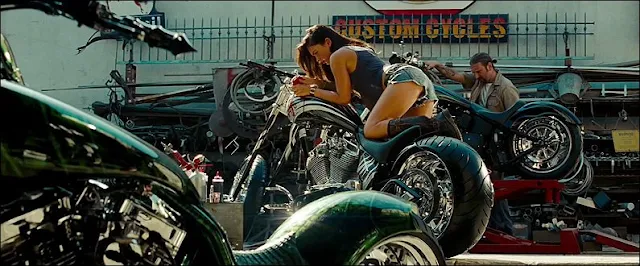
18. "Transformers" (2007)

Directed by Michael Bay, the original "Transformers" brought the popular toy line to the big screen. The story centers on the war between the Autobots and Decepticons, who bring their battle to Earth in search of the AllSpark.
megan fox pose transformers motorcycle

19. "Slither" (2006)

Directed by James Gunn, "Slither" is a horror-comedy where a small town is infected by an alien parasite that turns residents into zombie-like creatures. It has gained a cult following for its grotesque humor and unique genre blend.

20. "The Thing" (1982)

John Carpenter's sci-fi horror classic has gained cult status for its tense atmosphere and groundbreaking practical effects. Set in an Antarctic research station, it follows scientists who encounter a shape-shifting alien, creating intense paranoia.

21. "The Last Starfighter" (1984)

This beloved cult classic follows a teenager who becomes a space pilot after mastering an arcade game, which was actually a recruitment tool for an interstellar war. It's known for its early use of CGI and heartfelt story.

Conclusion

Alien invasion films continue to captivate audiences because they offer more than just thrilling spectacles; they provide a unique lens to explore complex human emotions, societal issues, and existential questions. From groundbreaking special effects to deeply resonant themes, these films showcase the limitless possibilities of storytelling and the enduring human fascination with the unknown. Whether serving as cultural touchstones or platforms for cinematic innovation, they remain a compelling and versatile genre that speaks to the adventurer, the dreamer, and the philosopher in us all.

Read Article →

How many films has each primary Star Wars character appeared in?

Here is a list of the number of times each main character appeared in the Star Wars films, including the Solo and Rogue One films, and which films they appeared in:

Naboo Starfighter concept art

Character Appearances by Trilogy

Prequel Trilogy

  • Anakin Skywalker/Darth Vader: 4The Phantom Menace, Attack of the Clones, Revenge of the Sith, Rogue One
  • Obi-Wan Kenobi: 6+The Phantom Menace, Attack of the Clones, Revenge of the Sith, A New Hope, The Empire Strikes Back, Return of the Jedi (plus voice cameos in Sequels)
  • Padmé Amidala: 3The Phantom Menace, Attack of the Clones, Revenge of the Sith
  • Qui-Gon Jinn: 1The Phantom Menace
  • Yoda: 4The Phantom Menace, Attack of the Clones, Revenge of the Sith, The Empire Strikes Back
  • Mace Windu: 3The Phantom Menace, Attack of the Clones, Revenge of the Sith

Original Trilogy

  • Luke Skywalker: 3A New Hope, The Empire Strikes Back, Return of the Jedi
  • Han Solo: 3A New Hope, The Empire Strikes Back, Return of the Jedi
  • Princess Leia Organa: 3A New Hope, The Empire Strikes Back, Return of the Jedi
  • Darth Vader/Anakin Skywalker: 4A New Hope, The Empire Strikes Back, Return of the Jedi, Rogue One
  • Obi-Wan Kenobi: 2A New Hope, The Empire Strikes Back
  • Yoda: 2The Empire Strikes Back, Return of the Jedi

Sequel Trilogy

  • Rey: 3The Force Awakens, The Last Jedi, The Rise of Skywalker
  • Finn: 3The Force Awakens, The Last Jedi, The Rise of Skywalker
  • Poe Dameron: 3The Force Awakens, The Last Jedi, The Rise of Skywalker
  • Kylo Ren/Ben Solo: 3The Force Awakens, The Last Jedi, The Rise of Skywalker
  • Luke Skywalker: 3The Force Awakens, The Last Jedi, The Rise of Skywalker
  • Leia Organa: 4The Force Awakens, The Last Jedi, The Rise of Skywalker, Rogue One
  • Han Solo: 1The Force Awakens

Special Mention: C-3PO

C3-PO appeared in all nine of the Star Wars saga films plus Rogue One, making him the only character to do so. He played a prominent role in the original trilogy, serving as a major supporting character in all three films. In the prequel trilogy, he was also a significant presence, appearing in all three films as a key character in the story. In the sequel trilogy, he had a smaller role but still appeared in all three films, once again providing a familiar presence for fans of the franchise. Overall, C3-PO has become one of the most iconic and beloved characters in the Star Wars universe, and his enduring popularity is a testament to the enduring appeal of the franchise as a whole.

It's also worth noting that in The Force Awakens the voices of Ewan McGregor and Alec Guinness were combined and used to tell Rey about her 'first steps'.

Read Article →

The chronological order of the Superman films

Chronological Guide to Superman on Film

Since his debut in 1938, Superman has been a symbol of truth, justice, and hope. He is the original superhero, and his journey from the page to the screen is as epic as his own mythology. 

From early black-and-white adventures to blockbuster sagas and imaginative animated tales, Superman's cinematic history reflects the changing eras of filmmaking and culture. This guide charts the course of every major feature film starring the Man of Steel, from his first theatrical outing to the highly anticipated future of the DC Universe.

The Live-Action Sagas

Superman and the Mole MenDirected by Lee Sholem (1951)


The First Flight: The first-ever feature film starring the Man of Steel, this was a trial run for the beloved *Adventures of Superman* TV series. George Reeves stars as Superman, who investigates the world's deepest oil well. When small, radioactive beings emerge from the Earth's core, a terrified town forms a mob to destroy them. It falls to Superman to protect the innocent "Mole Men" and teach humanity a lesson in tolerance and fear, establishing the hero's role as a compassionate protector as much as a powerhouse.

Superman: The MovieDirected by Richard Donner (1978)


You'll Believe a Man Can Fly: This is the film that defined the modern superhero blockbuster. With groundbreaking special effects, an iconic score by John Williams, and a legendary performance by Christopher Reeve, it tells Superman's definitive origin story. From the destruction of Krypton to his idyllic upbringing in Smallville and his emergence in Metropolis, the film establishes a hopeful, earnest hero. His journey is challenged by the megalomaniacal Lex Luthor (Gene Hackman), whose diabolical real estate scheme threatens to kill millions.

Superman IIDirected by Richard Lester (1980)


The Battle for Earth: Picking up where the first film left off, Superman faces an impossible choice between his duty and his love for Lois Lane. His decision to temporarily give up his powers for a normal life coincides with the arrival of three Kryptonian criminals he inadvertently freed: General Zod, Ursa, and Non. With powers matching his own and a thirst for conquest, they threaten the entire planet, forcing Clark to make the ultimate sacrifice to reclaim his abilities and confront his formidable equals.

Superman IIIDirected by Richard Lester (1983)


A Comedic Turn: Shifting to a lighter, more comedic tone, this film pairs Superman with comedian Richard Pryor as Gus Gorman, a bumbling computer genius. Hired by a corrupt CEO, Gorman creates a faulty form of synthetic Kryptonite that splits Superman into two beings: his noble self and a selfish, dark doppelgänger. The film's climax features an unforgettable junkyard brawl between the two Supermen, a battle for the hero's very soul.

Superman IV: The Quest for PeaceDirected by Sidney J. Furie (1987)


A Nuclear Standoff: Driven by a child's plea, Superman decides to rid the world of all nuclear weapons. This unilateral act of disarmament alarms world powers and gives Lex Luthor, now a nuclear arms dealer, the opportunity to create a superpowered villain. Using Superman's DNA, he creates Nuclear Man, a being powered by the sun, leading to a global battle that challenges Superman's commitment to non-interference and his ability to inspire hope.

Superman ReturnsDirected by Bryan Singer (2006)


A Nostalgic Homage: Serving as a spiritual sequel to *Superman II*, this film sees the hero (now played by Brandon Routh) return to Earth after a five-year absence searching for Krypton's remains. He finds a world that has learned to live without him and a Lois Lane who has moved on. Simultaneously, a freed Lex Luthor discovers Kryptonian crystals and plans to use them to create a new continent, drowning North America in the process. Superman must reconnect with humanity and stop Luthor's cataclysmic plan.

Man of SteelDirected by Zack Snyder (2013)


A New Beginning: Rebooting the franchise with a modern, more visceral tone, this film reimagines Superman's origin for a new generation. Henry Cavill portrays a conflicted Clark Kent, struggling to find his place in a world that might fear him. His journey of self-discovery is cut short by the arrival of General Zod, a zealous Kryptonian military leader who survived Krypton's destruction and has come to Earth with one goal: to terraform it into a new Krypton, even if it means eradicating humanity.

Batman v Superman: Dawn of JusticeDirected by Zack Snyder (2016)


Clash of the Titans: Fearing the unchecked power of a god-like superhero, Gotham's own formidable vigilante, Batman, takes it upon himself to preemptively neutralize the threat of Superman. As the two heroes are manipulated into a devastating conflict by a calculating Lex Luthor, a new, monstrous threat emerges that puts all of humanity in grave danger. The film deconstructs the public's perception of Superman and forces the world's two greatest heroes to confront their own ideologies.

Justice LeagueDirected by Zack Snyder & Joss Whedon (2017) / Zack Snyder's Justice League (2021)


Uniting the Seven: Following the death of Superman, an alien warrior named Steppenwolf arrives on Earth to find three ancient artifacts of immense power. Bruce Wayne, inspired by Superman's sacrifice, must assemble a team of metahumans—Wonder Woman, Aquaman, Cyborg, and The Flash—to defend the planet. Realizing they are outmatched, the team takes a desperate gamble to resurrect Superman, hoping his power can turn the tide and save the world from conquest.

SupermanDirected by James Gunn (2025)


The Dawn of a New Universe: The first film in the new DC Universe, this upcoming chapter introduces a new Superman for a new era. The story will focus on a younger Superman (played by David Corenswet) as he attempts to reconcile his Kryptonian heritage with his human upbringing in Smallville. The film explores his journey as a fledgling reporter at the Daily Planet, navigating his relationships with colleagues like Lois Lane while establishing himself as the beacon of hope in a world already familiar with heroes.

The Animated Universe

Superman: DoomsdayDirected by Bruce Timm, Lauren Montgomery, & Brandon Vietti (2007)


The first in the DC Universe Animated Original Movies line, this film adapts the seminal *The Death of Superman* comic storyline. A genetically engineered monster named Doomsday emerges from the depths of the Earth and carves a path of destruction straight to Metropolis. Superman engages the creature in a brutal, no-holds-barred fight that culminates in the hero making the ultimate sacrifice to save his city, leaving the world to mourn its greatest champion.

All-Star SupermanDirected by Sam Liu (2011)


Based on the critically acclaimed comic series by Grant Morrison and Frank Quitely, this film presents a unique, poignant take on the hero. After being over-saturated with solar radiation while saving a scientist, Superman discovers he is dying. With his time running out, he embarks on a series of magnificent labors, from creating life to revealing his identity to Lois Lane, all while Lex Luthor executes his final, brilliant plan to destroy his nemesis once and for all.

Superman vs. The EliteDirected by Michael Chang (2012)


This film challenges Superman's unwavering moral code. A new, powerful group of anti-heroes called "The Elite" arrives on the world stage, dispatching villains with brutal, lethal force. They quickly win public favor, making Superman's methods seem outdated and ineffective. Superman is forced to confront the idea that humanity may no longer want a savior, but an executioner, leading to a spectacular showdown to prove that true justice doesn't come from fear.

The Death of Superman & Reign of the SupermenDirected by Jake Castorena & Sam Liu (2018-2019)


This two-part epic is a more faithful and expansive adaptation of the 90s comic event. *The Death of Superman* details his cataclysmic battle with Doomsday, stunningly animated to show the raw power and sacrifice involved. The sequel, *Reign of the Supermen*, explores the void left by his absence as four new, mysterious heroes—Superboy, Steel, The Eradicator, and Cyborg Superman—emerge, each claiming to be the true successor, forcing the world to ask: where is the real Superman?

Superman: Man of TomorrowDirected by Chris Palmer (2020)


Launching a new era of DC animation known as the "Tomorrowverse," this film presents a fresh take on Superman's early days. As an intern at the Daily Planet, Clark Kent is just beginning to use his powers to save people, learning on the job. His trial by fire comes when he must face both the ruthless bounty hunter Lobo and the power-draining Parasite, forcing him to embrace his alien heritage and accept help from the Martian Manhunter to become the hero Metropolis needs.

Superman: Red SonDirected by Sam Liu (2020)


Based on the iconic Elseworlds story, this film poses a fascinating question: "What if Superman had landed in the Soviet Union instead of Kansas?" Raised on a collective farm in Ukraine, Superman becomes the champion of the common worker and the symbol of the Soviet state. His existence shifts the balance of the Cold War, leading to an escalating arms race with the United States, led by the brilliant Lex Luthor. It's a gripping tale of ideology, power, and how one man's choices can shape the entire world.

Check out the working titles of the Superman films.
Read Article →
Back to Top