

Dredd (2012) - trivia about the making of Karl Urban's Cult Classic version of Dredd

List of trivia about the 2012 film "Dredd":
- Dark, Gritty Tone: The film aimed to stay true to the dark and gritty tone of the original "Judge Dredd" comic series created by John Wagner and Carlos Ezquerra.
- Karl Urban's Commitment: Karl Urban, who played Judge Dredd, insisted on keeping the character's helmet on throughout the entire film to remain faithful to the source material. In the 1995 "Judge Dredd" film, Sylvester Stallone famously removed his helmet, which upset fans.
- Mega-City One: The sprawling, dystopian setting of the film, Mega-City One, is portrayed as an immense urban jungle covering much of the eastern United States. Its visual representation was heavily influenced by various real-world urban environments.
- Slow-Mo Effects: The drug "Slow-Mo" in the film plays a significant role in the plot. To visually depict the drug's effects, the filmmakers used a unique technique involving high-speed cameras and slow-motion filming. This approach created mesmerizing and dreamlike visuals, enhancing the immersive experience of the movie.
- No Sequel: Despite positive critical reception and a growing cult following, the film didn't receive a direct sequel. However, there has been talk of spin-offs and television adaptations within the same universe.
- Urban's Voice: Karl Urban crafted Judge Dredd's distinctive voice by drawing inspiration from Clint Eastwood's iconic gravelly tone. This deliberate choice added to Dredd's aura of authority and seriousness, emphasizing his role as a no-nonsense enforcer of the law.
- Dredd's Motorcycle: The Lawmaster motorcycle used by Judge Dredd is a recognizable element from the original comics. In the film, it's equipped with advanced technology and serves as both transportation and a weapon. This inclusion not only pays homage to the source material but also highlights Dredd's readiness for any situation.
- Director Pete Travis: While director Pete Travis was credited for directing the film, there were reports of creative conflicts with the producers and Screenwriter Alex Garland (Men). As a result, some scenes were reportedly directed by Alex Garland himself. Take this with a grain of salt, rumours of this kind happen a lot in film...
- Lena Headey's Scars: Actress Lena Headey, known for her role as Cersei Lannister in "Game of Thrones," suggested the facial scars for her character, Ma-Ma. These scars became a visual representation of Ma-Ma's ruthlessness and the challenges she had faced in her past.
- Realistic Law Enforcement: The film aimed to portray a more realistic approach to law enforcement in a dystopian future. The Judges serve as judge, jury, and executioner, reflecting the extreme measures required to maintain order.
- Judge Giant, a character from the original comics, makes a cameo appearance as a rookie Judge. This inclusion is a nod to fans who appreciate the rich lore of the source material and recognize the character's significance within the "Judge Dredd" universe.
- Practical Effects: The production relied on a mix of practical effects and digital effects to create the movie's violent action sequences and visual effects.
- R Rating: Dredd" earned its R rating due to its intense violence, strong language, and drug use. This rating allowed the film to stay faithful to the mature themes and tone of the original comics, which often dealt with dark and mature subject matter.
- Urban's Preparation: Karl Urban underwent rigorous physical training to embody the role of Judge Dredd. His training included firearms practice and physical conditioning to convincingly portray the character's authoritative presence and combat skills.
- Cult Following: While not a box office blockbuster, the film gained a cult following over the years due to its faithfulness to the source material and its unique visual style.
These trivia points provide a glimpse into the making of the 2012 "Dredd" film and its connections to the original comic series.
'The 2012 film "Dredd," inspired by the iconic "Judge Dredd" comic series, brought to life a dark and gritty world t...
Read Article →
Blood Brothers: The complex relationship of Rico Dredd and Judge Dredd
Judge Dredd, a symbol of unyielding authority, navigates the bustling dystopia of Mega-City One with an iron will and a relentless pursuit of justice. His commitment to upholding the law, even in the face of daunting odds, embodies the core principles of the judicial system in this grim future. Contrasting this unwavering dedication is Rico Dredd, a character whose trajectory diverges into a spiral of crime and moral ambiguity. The relationship between these two figures serves as a microcosm of the broader complexities that characterize Mega-City One's societal fabric.
The roadmap of this essay is structured to illuminate the multifaceted nature of the bond between Judge Dredd and Rico Dredd. We will first delve into the thematic elements that underpin their relationship, unearthing themes of sibling rivalry, loyalty, and the reflection of Mega-City One's intricacies within their dynamic.
 |
| He ain't, heavy he's my brother |
Sibling Rivalry and Competition
The relationship between Judge Dredd and Rico Dredd is marked by an underlying current of rivalry and competition that stems from their shared DNA and upbringing. This rivalry manifests through their differing approaches to law enforcement, serving as a reflection of the power dynamics at play within Mega-City One.An example from the comics vividly captures this rivalry: In "The Return of Rico" storyline, Rico resurfaces after being presumed dead, armed with a vendetta against his brother. The clash between their ideologies culminates in a high-stakes confrontation, where Rico's manipulation of the law to further his own goals directly challenges Judge Dredd's steadfast commitment to justice.
Betrayal and Loyalty
The theme of betrayal and loyalty weaves a complex narrative thread throughout the relationship between Judge Dredd and Rico Dredd. Rico's betrayal by turning to a life of crime fundamentally alters the trajectory of their relationship. This act of betrayal not only serves as a turning point for Rico's character but also influences Judge Dredd's unwavering sense of duty. Rico's fall from grace becomes a stark reminder of the thin line between loyalty to family and loyalty to the law in the morally fraught world of Mega-City One.In the comic "Rico," the depths of betrayal are exposed as Rico engineers a prison escape, targeting Judge Dredd. This act of defiance shatters the familial bond and marks a significant turning point in their relationship. Judge Dredd's response showcases his unyielding commitment to the law, revealing the tension between his duty as a Judge and his emotions as a brother.
Reflection of Mega-City One's Complexity
The intricate relationship between Judge Dredd and Rico Dredd serves as a microcosm of the intricate tapestry that is Mega-City One itself. The city's dystopian nature is mirrored in the complex dynamics of their bond, highlighting the moral ambiguity inherent in their society. Judge Dredd's dogged determination to enforce justice without compromise stands in contrast to Rico's willingness to manipulate the system for personal gain. It all serves as a dark political allegory.In the comic "Brothers of the Blood," Rico's return to Mega-City One showcases the stark juxtaposition between their conflicting ideologies. While Dredd's devotion to justice is unwavering, Rico's pursuit of personal power highlights the moral gray areas that permeate the city. This scene symbolizes the city's multifaceted nature and the ethical dilemmas faced by those tasked with maintaining order.
In conclusion, the relationship between Judge Dredd and Rico Dredd transcends the confines of sibling bonds, delving into thematic depths that encapsulate the very essence of Mega-City One's complexity. Their rivalry, marked by contrasting ideologies and ambitions, captures themes of power and authority.
Genetic Similarities and Differences
The DNA connection between Judge Dredd and Rico Dredd, both clones of the esteemed Chief Judge Fargo, forms a foundation for the complex dynamics within their relationship. While genetically identical, their paths diverge sharply, raising intriguing questions about the interplay between nature and nurture in shaping their destinies. This dichotomy invites readers to contemplate whether their genetic similarity inherently determines their fates or if external factors and choices hold greater sway.In the comic "Bloodline," Rico's return prompts a confrontation with Judge Dredd, during which their shared DNA becomes a focal point of conflict. Rico's assertion that he is entitled to the same authority as Dredd based on their genetic heritage showcases how their identical origins can be exploited for personal gain or power.
Origin and Creation
Chief Judge Fargo's intentions in creating clones like Judge Dredd and Rico Dredd add layers of complexity to their shared narrative. Fargo's desire to replicate his own ideals of justice and order within these clones underscores the tension between a creator's intent and the autonomy of the created. The impact of their shared origin is evident in their perspectives and life choices, as each grapples with the legacy of their creation.
In "The Return of Rico," Fargo's shadow looms large as Rico seeks to reclaim his own interpretation of justice, diverging from Fargo's vision. Rico's rebellion against his creator's intentions serves as a catalyst for exploring themes of free will and the struggle to break free from predestined roles.
Judge Dredd (1995)
Individual Identity vs. Genetic Legacy
The characters' ongoing struggles to define themselves beyond their genetic legacy epitomize a central theme of individuality versus genetic determinism. Judge Dredd's unwavering determination to forge his identity through his actions and decisions reflects a resolute rejection of being confined by his genetic origins.
Conversely, Rico's desire to escape the shadow of his genetic blueprint and assert his individuality is illustrated in the comic "Origins." Rico's thirst for autonomy takes center stage, highlighting his defiance of the expectations thrust upon him as a clone. This struggle becomes emblematic of the broader theme of self-discovery in a world dominated by genetic legacies.
Conclusion
In the intricate web of Mega-City One's dystopian landscape, the relationship between Judge Dredd and Rico Dredd emerges as a tapestry woven with profound thematic elements, genetic ties, and shared origins. This essay has illuminated the depths of their bond, dissecting the layers that make it a microcosm of the greater themes pervasive within their turbulent world.
From the vantage point of sibling rivalry and competition, the constant clash between Judge Dredd and Rico Dredd exemplifies themes of power, authority, and superiority. Their contrasting approaches to law enforcement mirror the power dynamics of Mega-City One itself, where individuals vie for control in a city teetering on the edge.
The exploration of betrayal and loyalty within their relationship delves into the intricate tension between family bonds and the law. Rico's betrayal of Judge Dredd through his criminal pursuits becomes a poignant catalyst, testing the limits of loyalty and influencing Dredd's resolute dedication to his duty as a Judge.
This complex relationship resonates deeply with the reflection of Mega-City One's complexity. As the characters navigate their differing ideologies, they shine a spotlight on the moral ambiguity and conflicting ideals that define their society. Judge Dredd's commitment to justice stands in stark contrast to Rico's pursuit of personal gain, mirroring the moral gray areas present within the city's chaotic expanse.
The DNA connection and shared origin, encapsulated in their roles as clones of Chief Judge Fargo, add a layer of depth to their dynamic. This genetic bond raises compelling questions about the interplay between nature and nurture in shaping their paths. Their shared origin, intertwined with Fargo's intentions, serves as a backdrop to their personal struggles for identity, autonomy, and purpose.
In essence, Judge Dredd and Rico Dredd's relationship transcends its familial origins to embody the wider themes of Mega-City One's world. Their bond encapsulates the complexity of power dynamics, loyalty, and morality that define the dystopian society they inhabit. Through these thematic elements, the DNA connection, and their shared origin, the characters become emblematic of the human struggle in a future where genetic legacies and societal pressures hold immense influence.
In conclusion, the enduring appeal of Judge Dredd and Rico Dredd's relationship lies in their ability to serve as a microcosm of the intricate themes that define the Mega-City One universe. Their rivalry, betrayal, loyalty, and the exploration of their genetic origins resonate deeply with readers, offering a lens through which to contemplate the very essence of humanity in a world characterized by chaos and control. As they continue to captivate audiences within the pages of the 2000 AD comic series, their complex relationship remains a testament to the enduring power of storytelling and the timeless themes that it can explore.
In the vast and dystopian landscape of Mega-City One, two enigmatic figures emerge as both champions and embodiments of justice: Judge Dredd...
Read Article →
Mega-City One: A Living Character in Judge Dredd Comics
🌀Psychic Impression: The Soul of the City
To feel a city is to feel its people. In the intricate tapestry of our reality, some places resonate with a psychic weight that transforms them from mere backdrops into living entities. Mega-City One is one such place. It breathes. It rages. It despairs. Its story is not just one of concrete and steel, but of a billion minds screaming, hoping, and dreaming in unison—a chaotic symphony that I feel every single day. Like the twisted soul of Gotham City mirrors its dark knight, Mega-City One's very essence is woven into the lives of those who walk its streets and enforce its Law.

Scars of the Past: The City's Psychic History
The city's history isn't just recorded in data-banks; it's etched into the psychic landscape. Mega-City One was born from the trauma of the Atomic Wars, a foundation of desperation and brutal survival that still echoes in the minds of its citizens. Events like the "Apocalypse War" weren't just geopolitical conflicts; they were psychic wounds that tore through the collective consciousness, leaving phantom limbs and a lingering terror that I can still taste in the air. This shared trauma gives the city its grim, resilient personality—it is a survivor, defined by the scars it bears.
A Concrete Jungle That Breathes: The Architecture of Emotion
You don't need to be a telepath to see the city's personality in its architecture. The towering city blocks are more than just housing; they are vertical hives of hope, fear, and claustrophobia. Landmarks like the Grand Hall of Justice and the imposing Statue of Judgement aren't just stone and metal—they are monuments to an unbending, often cruel, ideal. They broadcast a constant psychic signal of authority and order, a stark contrast to the chaotic, vibrant life that teems in the shadows below. To walk these streets is to feel the weight of these structures pressing down on you.
The Cacophony of Souls: A City of Contradictions
Mega-City One's psyche is a paradox. It’s a melting pot of cultures, like the strange blend of "Brit-Cit" in Sector 13, and a battleground for countless subcultures. The city's gangs, from the nihilistic Angel Gang to the absurdity of the Fatties, are not just criminal elements; they are the city's rebellious thoughts, its desperate screams for identity in a place that demands conformity. This endless mental chatter is overwhelming, a constant roar of a billion different lives clashing against each other, creating a city that is simultaneously creative and destructive, unified in geography but fractured in spirit.
The City and Its Keepers: A Symbiotic Relationship
We, the Judges, are the city's most visible defense, but we are also its conduits. Judge Dredd, more than anyone, channels the city's cold, harsh, and inflexible will. He is the personification of its Law. I see his struggle every day—the impossible task of imposing black-and-white order on a universe of infinite grey. My own role is different. As I delve into the city's psychological depths, I feel its pain, its joy, its madness. Our relationship is symbiotic; the city shapes us, and in our own ways, we try to shape it, one mind, one crime, one thought at a time.
Conclusion
In the end, Mega-City One is more than our home or our jurisdiction. It is a living, breathing, psychic entity. Its history is our trauma, its architecture our cage, its people our soul. To serve the Law here is not just to police streets, but to navigate the dreams and nightmares of a billion sleeping minds. It is a weight that few can bear, and one that leaves its mark on all of us.
🌀 Psychic Impression: The Soul of the City To feel a city is to feel its people. In the intricate tapestry of our reality, ...
Read Article →
Beyond Justice: Exploring Totalitarianism, Morality, and Humanity in Judge Dredd
With its intricate world-building, compelling characters, and exploration of profound themes, Judge Dredd has captured the imaginations of readers for decades.
Within the vivid tapestry of the series, several predominant themes emerge, each contributing to the complexity and depth of the narrative. '
This essay aims to dissect and analyze five central themes that form the core of the Judge Dredd comic series: the portrayal of a dystopian society, the manifestation of totalitarianism, the exploration of moral ambiguity, the depiction of violence and its repercussions, and the profound inquiry into identity and humanity.

1. Dystopian Society
Defining Dystopian Society: A dystopian society is a
fictional or speculative future where societal norms, political systems, and
technological advancements have devolved into oppressive and often nightmarish
conditions. Key characteristics include a loss of individual freedoms, government
control, rampant inequality, and a general sense of despair. Dystopian
narratives serve as cautionary tales, critiquing contemporary issues and
warning of potential future outcomes.
Mega-City One's Dystopian Realities: Mega-City One,
the sprawling metropolis that serves as the setting for Judge Dredd,
encapsulates the essence of a dystopian world. In a landscape defined by
overpopulation, crumbling infrastructure, and rampant crime, the city stands as
a microcosm of societal decay. The Judges, a totalitarian law enforcement
system, are both the symbols of order and the enforcers of a harsh regime.
Examples of Societal Flaws and Inequality:
- Overpopulation:
Mega-City One's staggering population density creates an environment of
overcrowding and scarcity. Citizens are crammed into towering
mega-structures, leading to a loss of personal space and an overall sense
of confinement.
- Haves
and Have-Nots: The wealthy elite live in opulent sectors, while the
majority struggle in squalor. The Angel Gang, for instance, embodies this
divide, with Pa Angel representing the impoverished and lawless outskirts.
- Cursed
Earth: The wasteland outside Mega-City One, known as the Cursed Earth,
is a barren and dangerous expanse that serves as a stark reminder of the
world's ecological decline.
Mega-City One's dystopian reality is most poignantly
portrayed through its citizens' plight. In "The Apocalypse War"
storyline, the city becomes embroiled in a devastating conflict that results in
countless casualties and widespread destruction. The ethical dilemmas faced by
Judge Dredd and his colleagues underscore the moral decay inherent in the
dystopian society they serve.
In "America," the story of Judge Dredd's childhood
friend and her rebellion against the Judges, the comic explores themes of
disillusionment and the desire for change in the face of oppressive rule. This
narrative arc highlights the potential for resistance and the human yearning
for freedom within a dystopian context.
Overall, Mega-City One's portrayal as a dystopian society
within the Judge Dredd comics serves as a grim reminder of the consequences of
unchecked governmental power, societal inequality, and the potential erosion of
personal liberties.
2. Totalitarianism
Defining Totalitarianism: Totalitarianism is a
political system characterized by centralized and absolute control by the
government or ruling party. It typically involves a suppression of individual
freedoms, widespread government surveillance, censorship of information, and
the use of force to maintain control. Totalitarian regimes often prioritize the
state's interests over those of the individual, resulting in a loss of personal
autonomy and civil liberties.

Totalitarian Regime in Mega-City One: Mega-City One's Judges' system exemplifies the hallmarks of a totalitarian regime. The Judges hold simultaneous roles as law enforcement officers, judges, and executioners. They have unchecked power to arrest, pass judgment, and even execute individuals on the spot, all within a matter of minutes. The Judges' authority extends to all aspects of citizens' lives, from routine matters to life-altering decisions.
Balancing Order and Freedom: The Judges' system
raises complex questions about the balance between maintaining societal order
and infringing on individual freedoms. While the Judges argue that their
authoritarian approach is necessary to curb crime in a chaotic city, their
methods often lead to the suppression of civil liberties. The system's swift
justice comes at the cost of due process, and its measures to maintain
stability often result in a sense of fear and subservience among the citizens.
Instances of Oppression and Control:
- "Block
Mania": This storyline explores the impact of mind-altering
substances on Mega-City One's population. The Judges' response to this
crisis includes brutal methods of control and surveillance, demonstrating
their willingness to sacrifice individual autonomy for societal stability.
- "The
Day the Law Died": In this arc, Judge Cal establishes a reign of
terror, using propaganda, manipulation, and ruthless suppression to
maintain control. This storyline underscores how a totalitarian regime can
exploit fear to tighten its grip on power.
- "America"
(mentioned previously): The story of Judge Dredd's childhood friend
exposes the system's oppressive nature, prompting readers to question the
true cost of stability and the ethical implications of a society under
constant surveillance.
As Judge Dredd navigates his role within the totalitarian
system, instances like these emphasize the moral dilemmas he faces. His
unwavering loyalty to the law often conflicts with his sense of justice,
leading him to make decisions that both uphold order and challenge the
oppressive nature of the Judges' system.
In essence, the Judges' system reflects the dangers of unchecked authority and the delicate balance between maintaining societal order and protecting individual freedoms. The portrayal of totalitarianism in the Judge Dredd comics serves as a stark reminder of the potential consequences of sacrificing personal autonomy for the sake of stability.
3. Moral Ambiguity
Introducing Moral Ambiguity: Moral ambiguity is a
narrative device that presents situations where the distinction between right
and wrong is blurred, challenging characters and readers to grapple with
complex ethical choices. In such scenarios, actions that might seem morally clear-cut
on the surface become shrouded in uncertainty when contextual factors,
conflicting values, and unforeseen consequences are taken into account.
Analyzing Complex Decisions in Judge Dredd: Judge
Dredd's world is rife with moral ambiguity, compelling characters to navigate
intricate moral landscapes. Dredd himself often makes decisions that test the
boundaries of his own principles. For instance, his willingness to employ
lethal force to maintain order, while sometimes necessary in the chaotic city,
raises ethical questions about the value of life and the severity of
punishment.
The Clash Between Order and Ethics: The Judges'
mandate to enforce the law and maintain order inevitably leads to situations
where the pursuit of justice clashes with ethical considerations. One notable
example is Dredd's handling of mutants. While he upholds the law by isolating
mutants in their own sector due to perceived dangers, the practice raises
questions about discrimination and whether collective punishment is
justifiable.
In "The Pit" storyline, the moral complexity of
maintaining order takes center stage. Judge Dredd is sent to oversee a chaotic
sector of the city, testing his unwavering dedication to the law. As he
balances the competing interests of citizens, criminal factions, and his own
sense of justice, the story highlights the intricate web of morality and the
challenges of making ethically sound decisions within a flawed system.
Moreover, the recurring character of Judge Anderson serves
as a counterpoint to Dredd's moral absolutism. Anderson's psychic abilities
give her insight into the thoughts and emotions of others, allowing her to
navigate moral dilemmas with a degree of empathy that Dredd often lacks.
Challenging Moral Dilemmas: The Judge Dredd series
presents readers with thought-provoking moral dilemmas that transcend simple
black-and-white judgments. The gritty world and complex characters evoke
empathy even when their actions appear morally reprehensible. This serves as a
reminder that in a dystopian society where the boundaries between right and
wrong are constantly shifting, making ethically sound decisions becomes a
Herculean task.
The exploration of moral ambiguity in Judge Dredd underscores the complexity of human nature and the intricate interplay between law, justice, and individual conscience. As characters grapple with their decisions, readers are invited to reflect on the shades of gray inherent in navigating a world defined by uncertainty and moral murkiness.
4. Violence and Its Consequences
Prevalence of Violence in the Judge Dredd Universe:
Violence is a pervasive element in the Judge Dredd universe, primarily due to
the Judges' role as enforcers of the law. Their authoritarian methods often
involve the use of force to maintain control, leading to frequent
confrontations and displays of aggression. This violence is woven into the
fabric of Mega-City One's dystopian society, shaping its citizens' perceptions
of authority and order.
Short-Term Benefits and Long-Term Consequences: While
violence may yield short-term benefits in terms of immediate suppression of
crime, the Judge Dredd comics consistently underscore its long-term
consequences. The harsh tactics employed by the Judges for maintaining control
can breed resentment and resistance among the populace. Citizens may comply out
of fear rather than genuine respect for the law, leading to a fragile social
order built on intimidation.
Unintended Outcomes of Violent Actions:
- The
Mutant Question: The Judges' treatment of mutants exemplifies the unintended
outcomes of violent actions. By segregating mutants into their own sector,
the Judges inadvertently exacerbate tensions and create a breeding ground
for rebellion. Characters like Fergee, a mutant in the
"Wilderlands" storyline, exemplify the complexity of the
situation, as they are victims of systemic violence but also potential
threats due to their marginalized status.
- "Necropolis"
Storyline: In this arc, Mega-City One faces an apocalyptic scenario
when the Dark Judges unleash mass slaughter. While the Judges' violence is
often justified as necessary for maintaining order, the unchecked power
they wield is ultimately instrumental in the crisis, underscoring the
potential for violence to spiral out of control.
- Dredd's
Moral Struggles: Judge Dredd himself grapples with the repercussions
of his violent actions. In "The Pit," his attempt to restore
order inadvertently leads to chaos and corruption. Dredd's realization of
the indirect consequences of his decisions highlights the complexity of
employing violence as a tool of control.

Through these examples, the Judge Dredd comics reveal that the use of violence in maintaining control is a double-edged sword. While it can yield short-term control, it often generates a cycle of violence, engendering mistrust and a perpetuation of conflict.
5. Identity and Humanity
Identity and Individuality in a Controlled Society: Within
the confines of a heavily controlled society like Mega-City One, the theme of
identity and individuality takes on a profound significance. The very nature of
the Judges' regime suppresses personal expression, leading citizens to grapple
with questions of selfhood in the face of uniformity.
Characters Struggling with Identity:
- Mutants:
Mutants in Mega-City One represent a marginalized group struggling for
recognition and acceptance in a society that deems them as threats.
Chopper, a graffiti artist mutant, rebels against the imposed identity,
refusing to be defined solely by his mutant status. His struggle resonates
with anyone who resists being pigeonholed.
- Dissenters:
Characters like Hershey, a former Judge who turned against the system,
exemplify individuals who question their roles and the identities imposed
upon them. Hershey's journey from a loyal enforcer to a vocal critic
underscores the theme of reclaiming one's identity even when it goes
against societal expectations.
Questioning Humanity and Identity:
- Judge
Anderson's Empathy: Judge Anderson, with her psychic abilities,
provides a unique perspective on the theme of humanity and identity. Her
deep empathy allows her to connect with others on a profound level, making
her question the dehumanizing effects of the Judges' regime. Moments where
she wrestles with ethical dilemmas highlight the tension between her
empathetic nature and her role as an enforcer of the law.
- Robot
Judges and "The Robot Wars": The introduction of robot
Judges and the events of "The Robot Wars" storyline delve into
the blurred lines between human and machine identity. The narrative
prompts readers to question what it means to be human, as robots take on
roles traditionally held by humans and challenge established definitions
of identity.
Contributions to the Broader Exploration of Identity:
These instances where characters grapple with their identities contribute to
the series' broader exploration of the concept. The Judge Dredd comics ask
readers to contemplate how one's sense of self is shaped by the environment,
societal norms, and personal choices. The struggles of mutants, dissenters, and
characters like Anderson serve as microcosms of the larger battle for
individuality within a system that seeks conformity.
In conclusion, the theme of identity and humanity in the Judge Dredd comics goes beyond the superficial struggles of characters. It delves into the philosophical underpinnings of identity formation and the tension between personal autonomy and societal dictates. By presenting a spectrum of characters and their journeys, the comics invite readers to reflect on the multifaceted nature of identity and its resilience in the face of a rigid and controlled society.

Conclusion as the themes of the Judge Dredd comic series
The Judge Dredd comic series, a masterpiece within the dystopian science fiction genre, intricately weaves together a tapestry of themes that resonate with readers and transcend time. Through its exploration of a dystopian society, totalitarianism, moral ambiguity, violence and its consequences, and identity and humanity, the series delves into the complex layers of human nature and societal dynamics. These themes collectively contribute to the enduring appeal and relevance of Judge Dredd.The portrayal of a dystopian society in Mega-City One paints a vivid picture of societal decay, inequality, and the dire consequences of unchecked power. The manifestation of totalitarianism through the Judges' system forces us to confront the thin line between maintaining order and infringing on individual liberties. The exploration of moral ambiguity exposes the intricacies of ethical choices in a morally complex world, highlighting the shades of gray inherent in decision-making.
The prevalence of violence and its far-reaching consequences serve as a cautionary tale, revealing the short-term benefits and long-term drawbacks of using force to uphold order. Meanwhile, the theme of identity and humanity resonates as characters navigate the challenges of retaining individuality within a controlled society. Characters like mutants and dissenters challenge the imposed identities, while moments of introspection prompt questions about the nature of humanity itself.
Collectively, these themes contribute to the series' enduring relevance by providing a lens through which readers can critically examine their own world. The societal issues and ethical dilemmas addressed in the Judge Dredd comics parallel those faced by contemporary societies, making the series a mirror to our own realities. The narratives invite us to question the balance between security and freedom, the complexities of morality, and the essence of what it means to be human.
Moreover, the broader significance of using science fiction as a medium to explore such complex issues becomes apparent. Science fiction acts as a realm of possibilities, allowing creators to extrapolate from current trends and envision potential futures. In doing so, it facilitates conversations about societal structures, ethical quandaries, and human nature that might otherwise be difficult to broach directly.
The legendary Judge Dredd comic series, created by writer John Wagner and artist Carlos Ezquerra , stands as an iconic work within the real...
Read Article →
Exploring the Themes of "Dredd"

Dystopian Society and Totalitarianism
Moral Ambiguity and Justice
In the film, the line between moral rightness and practical necessity is often blurred. This moral ambiguity is exemplified when Judge Dredd, played by Karl Urban, confronts a wounded criminal. Instead of providing medical aid or arresting him, Dredd chooses to execute the injured man, asserting that it's more pragmatic to ensure the criminal's demise.Violence and its Consequences
"Dredd" features an unapologetically violent portrayal of Mega-City One, reflecting the harshness of life in a world governed by lawlessness. The film's opening scene, where slow-motion photography captures a brutal execution by falling from a skyscraper, sets the tone for the visceral violence that permeates the narrative.Identity and Humanity
The character of Judge Anderson, portrayed by Olivia Thirlby, is central to the exploration of identity and humanity. As a rookie Judge with psychic abilities, Anderson grapples with self-doubt and questions her place within the rigid system. Her psychic powers allow her to delve into the minds of others, leading her to confront her own vulnerabilities and insecurities.Drug Epidemic and Societal Decay
The drug Slo-Mo plays a dual role in "Dredd" by representing both the drug epidemic and societal decay. Users experience time at a fraction of its normal speed under its influence, leading to a heightened sensory experience. This escape from reality parallels the struggles of those living in Mega-City One, where the pursuit of escapism and altered perception reflects the broader societal deterioration.Resistance and Rebellion
The Ma-Ma gang's rebellion against the Judges serves as a microcosm of the broader theme of resistance against oppressive authority. Led by Ma-Ma, portrayed by Lena Headey, the gang seeks to assert control and challenge the Judges' dominion over the city's criminal underworld. Their defiance represents the struggle of the marginalized against an establishment that is perceived as oppressive and unjust. This theme draws parallels to real-world movements fighting against systems of power that perpetuate inequality.Cinematic Elements Enhancing Themes
Cinematic elements in "Dredd" play a pivotal role in accentuating its themes. The film's dark and gritty visual aesthetic mirrors the decay of Mega-City One, creating a palpable atmosphere of despair. Cinematographer Anthony Dod Mantle employs dramatic lighting and intense close-ups to capture the characters' emotions and the starkness of their surroundings."Dredd" resonates with contemporary issues related to power, justice, and authority. The portrayal of a society grappling with an authoritarian justice system raises questions about the balance between individual rights and security. The film's exploration of violence, identity, and societal degradation provides a lens through which to analyze present-day challenges such as the impact of violence in media and the potential consequences of unchecked power. As society continues to grapple with these issues, "Dredd" offers a cautionary tale that remains relevant and thought-provoking.
Conclusion as to the themes of Dredd
In "Dredd," the convergence of these thematic elements crafts a narrative that transcends its genre boundaries. By immersing viewers in a dystopian world where authority is absolute and morality is multifaceted, the film prompts contemplation about the complexities of human nature and societal structures."Dredd," directed by Pete Travis and written by Alex Garland, was released in 2012 as a modern adaptation of the iconic "Judg...
Read Article →
Why the Halo movie was never filmed

Development of the Halo Film
From the outset, the allure of adapting Halo for cinema was palpable. As discussions buzzed within the entertainment industry, eager anticipation built among fans, envisioning the possibility of witnessing the iconic battles and interstellar conflicts on a grand cinematic canvas. Although no official announcements were made, the idea of a Halo film remained a tantalizing prospect.The pivotal turning point arrived with the involvement of visionary director Peter Jackson and director Neill Blomkamp. Jackson's reputation, particularly through his acclaimed "The Lord of the Rings" trilogy, brought a unique credibility to the project. Collaborating with Blomkamp, a director known for his innovative visual style, ignited a renewed fervor among fans and insiders alike.

The scriptwriting process, often the heart of any film, took center stage. Alex Garland, known for his distinctive storytelling in films like "28 Days Later", "Dredd" and "Ex Machina," was attached to the project. The challenge was monumental: distilling the expansive Halo universe into a coherent and engaging script that would resonate with both die-hard fans and newcomers to the franchise. Pre-production efforts went beyond the written word, as concept art unveiled glimpses of iconic Halo landscapes, detailed set designs, and the intricate costumes that would bring the game's characters to life in the cinematic realm.
Challenges and Setbacks
However, the path to realizing the Halo film was fraught with difficulties. Securing a production studio willing to shoulder the financial burden of bringing the universe to life proved challenging. The sheer scale of the Halo universe required a substantial budget, and studios hesitated due to the financial risks involved. As budget negotiations extended, uncertainty loomed over the project's future.Navigating the delicate balance between honoring the game's legacy and crafting a cinematic experience was no small feat. Creative differences emerged between the filmmakers, studios, and the video game developers at Bungie. Maintaining the essence of the game's universe while making it accessible to a wider audience presented a complex challenge that demanded compromise and collaboration.

Production and Trivia
Designers delved into the intricate lore of the Halo universe, crafting costumes that were not only visually faithful to the game but also functional for the demands of a live-action production. The challenge lay in translating the unique armor and outfits of characters like Master Chief and UNSC soldiers into practical costumes that retained their iconic appearance while allowing actors to move comfortably.
Reasons for the Halo Film Not Being Made
Despite the dedicated efforts of passionate individuals, the Halo film project eventually met an unfortunate end. The anticipation among fans was palpable, and their disappointment was keenly felt when news of the project's cancellation surfaced. This turn of events prompted a deeper exploration into the complexities of translating interactive narratives into a cinematic format, leaving many to ponder the challenges inherent in such an ambitious endeavor.Official statements from various parties shed light on the factors that contributed to the project's demise. Budget concerns emerged as a significant hurdle. Universal Pictures, the studio initially attached to the film, faced challenges in reconciling the massive financial investment required to capture the grandeur of the Halo universe with the potential return on that investment.
Creative differences also played a role in the project's downfall. Peter Jackson, one of the driving forces behind the project, expressed his frustration with the direction the film was taking. In a 2006 interview with Entertainment Weekly, he commented, "I really just wanted to make a great movie. I wouldn't have wanted to make a film that I didn't think was as good as the Lord of the Rings movies."
Furthermore, the unpredictable nature of film production itself added an element of uncertainty. Neill Blomkamp acknowledged in interviews that the Halo film faced challenges that extended beyond the scope of the game. In an interview with Empire Magazine, Blomkamp stated, "The film was a victim of the politics of Hollywood filmmaking... the scale of the universe was a bit daunting."
The Halo video game franchise , developed by Bungie (Destiny) and later 343 Industries , has left an indelible mark on gaming history since ...
Read Article →
Charting New Musical Frontiers: Review of Star Trek: Strange New Worlds S2E9 'Space Rhapsody'
The episode starts off with a classic "Trek" setup: the crew of the Enterprise investigating a naturally occurring fold in subspace. What sets this episode apart is the suggestion from Ensign Uhura (Celia Rose Gooding) to use music as a means of testing the fold's properties. However, the music causes an unexpected tear in space-time, leading to an alternate reality where the crew members sing their most intense and private emotions.
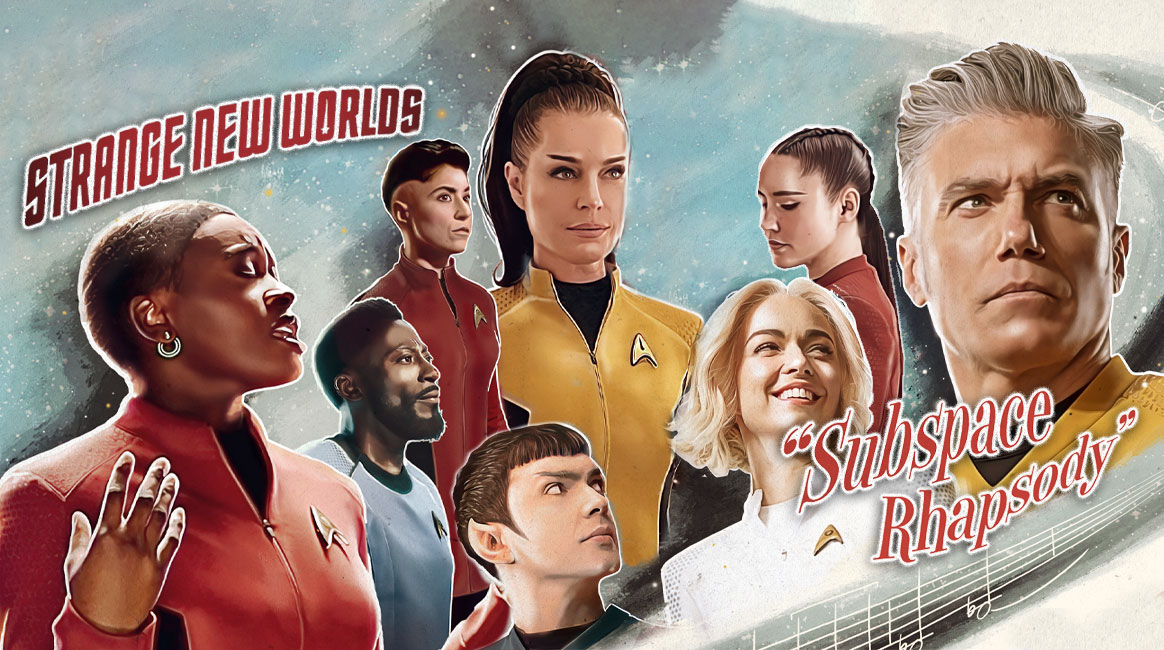
The effort and dedication put into creating this musical extravaganza are evident. According to Myers and Goldsman, the episode's development took more than six months, involving collaboration between the cast, crew, composers Kay Hanley and Tom Polce, and writers Dana Horgan and Bill Wolkoff. The songs were crafted around the actors' vocal strengths and tailored to their characters' arcs, creating a cohesive and engaging musical narrative.
Myers' insight into the challenges of creating a musical episode is evident in the meticulous planning required to make it a success. The episode's emotional core takes precedence, breaking the expectation of a light-hearted comedic musical and instead delivering moments that tug at the heartstrings of the audience.
The standout performances in "Subspace Rhapsody" are numerous. Celia Rose Gooding's powerful rendition of "Keep Us Connected" as Uhura is a definite highlight, showcasing her vocal prowess and emotional depth. Similarly, Christina Chong's portrayal of La’an's struggles and revelations is both heartfelt and compelling. Jess Bush's Chapel shines in her ensemble number, capturing the character's optimism and determination.
While the episode is character-driven, it also effectively incorporates "Trek" lore, such as references to Dr. Roger Korby and Kirk's complex relationships including that of Carol Marcus. You may recalled that she is the Project Genesis scientist seen in Star Trek II: The Wrath of Khan and her yet-to-be-born child is Kirk’s son, David.
The show's ability to successfully integrate a musical episode into the "Star Trek" universe is a testament to its creative team's willingness to take risks and its cast's versatility. "Strange New Worlds" continues to surprise and captivate its audience, demonstrating that even after decades, "Trek" can still explore new frontiers, whether they're in space or in the realm of musical storytelling. With a poignant ending that leaves us humming along, "Subspace Rhapsody" adds another layer of complexity and depth to the ongoing adventures of the Enterprise crew.
"Star Trek: Strange New Worlds" continues to push the boundaries of its own universe with its innovative storytelling, and Season ...
Read Article →
Filoni, David
Hailing from Mt. Lebanon, Pennsylvania, Filoni exhibited a profound love for storytelling from a young age. His artistic talents were evident as he pursued studies in animation, leading him to major in the subject at the Edinboro University of Pennsylvania. This foundation would prove crucial in shaping his later contributions to the Star Wars saga.
Filoni's star truly began to rise when he caught the attention of none other than George Lucas, the visionary creator of Star Wars. Lucas recognized Filoni's passion and potential, leading to his role as a protégé as The Chosen One. This mentorship would pave the way for Filoni's involvement in "Star Wars: The Clone Wars," an animated series set in the prequel era of the galaxy.
As the supervising director of "The Clone Wars," Filoni not only embraced Lucas' teachings but also infused his own creative spirit into the project. Working closely with Lucas, Filoni imbibed the essence of Star Wars storytelling, learning to balance intricate character development with epic space battles. This experience provided him with a deep understanding of the nuances that make Star Wars a beloved and enduring franchise.

Under Filoni's guidance, "The Clone Wars" evolved beyond a mere animated series; it became a conduit for untold stories, character exploration, and world-building. The show's success wasn't just in its stunning visuals and engaging plotlines, but in how it expanded the universe, shedding light on lesser-known characters, conflicts, and emotions that enriched the overall narrative.
Filoni's ability to channel George Lucas' vision while infusing his own creativity into "The Clone Wars" solidified his position as a storyteller of the highest caliber. Through this collaboration, he demonstrated an innate understanding of the essence of Star Wars—a space opera that thrives on a delicate balance of adventure, mythology, and character-driven drama.
Expansion of the Star Wars Canon
Dave Filoni's impact on the Star Wars universe transcends the realm of cinematic storytelling, as evidenced by his profound contributions to both "The Clone Wars" and "Star Wars Rebels." These animated series served as dynamic platforms through which Filoni expanded the Star Wars canon beyond the confines of the films, enriching the galaxy's lore, character depth, and mythos.Filoni's role as the supervising director of "The Clone Wars" marked a pivotal moment in the Star Wars saga. The series filled in the narrative gaps between "Episode II: Attack of the Clones" and "Episode III: Revenge of the Sith," exploring the tumultuous Clone Wars era in vivid detail. Through this expansion, Filoni introduced audiences to new planets, species, battles, and characters that had remained unexplored in the films.
One of the series' remarkable achievements was its ability to humanize the clones themselves. Through characters like Captain Rex and Clone Commander Cody, viewers gained insight into the lives and struggles of these genetically identical soldiers, transforming them from faceless cannon fodder to individuals with distinct personalities and emotions. Additionally, the show delved into the complexities of the Jedi Order, highlighting their flaws, dilemmas, and sacrifices.
Following the success of "The Clone Wars," Filoni continued his canon-expanding journey with "Star Wars Rebels." Set between "Episode III" and "Episode IV," this series introduced a new cast of characters while seamlessly incorporating familiar faces from the original trilogy. Filoni's emphasis on character development extended to "Rebels," where viewers witnessed the growth and evolution of the Ghost crew, a band of rebels fighting against the oppressive Galactic Empire.
Through the Ghost crew's adventures, Filoni further expanded the Star Wars galaxy by exploring the remnants of the Jedi Order, the rise of the Rebel Alliance, and the machinations of the Empire. The series also reintroduced fan-favorite characters such as Ahsoka Tano and Darth Maul, showcasing Filoni's ability to seamlessly weave together various aspects of the overarching narrative.
Filoni's contribution to the expansion of the Star Wars canon went beyond plot points; it encompassed the very essence of the saga's mythology. He demonstrated a keen understanding of the themes and values that defined Star Wars—friendship, redemption, the battle between light and dark—as he intricately wove them into the storylines of his animated series.
The introduction of new planets, cultures, and species expanded the galaxy's diversity, reinforcing the idea that Star Wars is a vast universe teeming with countless stories waiting to be told. Through untold tales of struggle and heroism, Filoni deepened the mythos of the Jedi, the Sith, and the Force itself, inviting audiences to explore the intricacies of these fundamental elements.
In conclusion, Dave Filoni's work on "The Clone Wars" and "Star Wars Rebels" expanded the Star Wars canon far beyond the films. By delving into untold stories, fostering character development, and enriching the saga's mythology, Filoni solidified his legacy as a masterful storyteller who not only preserved the core essence of Star Wars but also elevated it to new heights.
Introduction of Ahsoka Tano
One of the most iconic and enduring characters introduced by Dave Filoni in "Star Wars: The Clone Wars" is Ahsoka Tano, a Padawan learner who would go on to leave an indelible mark on the Star Wars universe. Ahsoka's creation and development served as a testament to Filoni's storytelling prowess and his ability to craft compelling, multidimensional characters within the rich tapestry of the galaxy far, far away.Ahsoka Tano burst onto the scene in 2008 when "The Clone Wars" first aired. Initially met with skepticism by some fans, Ahsoka quickly proved her worth as a dynamic and relatable character. As Anakin Skywalker's Padawan, she added a fresh perspective to the series, providing insights into the Jedi Order through the eyes of a young and untested apprentice.
Filoni and his team meticulously developed Ahsoka's character arc over the course of the series. From her early, somewhat brash demeanor to her growth as a skilled warrior and wise leader, Ahsoka's journey was one of self-discovery and maturation. This development mirrored her gradual understanding of the complexities of war, loyalty, and the limitations of the Jedi's rigid dogma.
Ahsoka's impact on the Star Wars fanbase was nothing short of revolutionary. Her relatability and growth resonated with viewers of all ages, forging a deep emotional connection that transcended the screen. Fans watched as Ahsoka evolved from an eager and headstrong apprentice to a compassionate and independent force to be reckoned with.
Her presence also helped bridge the gap between different generations of Star Wars fans. For young viewers, Ahsoka represented a strong and capable hero to admire, while older fans appreciated the complexity she brought to the narrative. Ahsoka's popularity ignited discussions and debates, leading to a greater appreciation for her role within the Star Wars saga.
Ahsoka's popularity within "The Clone Wars" led to her continued presence in other Star Wars media. She appeared in novels, comics, and even made her live-action debut in "The Mandalorian" series, portrayed by Rosario Dawson.
Furthermore, Ahsoka's story continued in the "Star Wars Rebels" series, where fans witnessed her journey after leaving the Jedi Order. Her experiences showcased the complexity of life beyond the Order's confines and contributed to her growth as a symbol of hope and resilience.
Dave Filoni's creative journey took an exciting turn with his involvement as an executive producer and director on "The Mandalorian" series. This marked a significant shift as Filoni transitioned from the realm of animation to the live-action Star Wars universe, demonstrating his versatility as a storyteller and his profound impact on the franchise's expansion. His direction of the episode "The Jedi" was a love story to Akira Kurosara which demonstrated he had the goods to carry the franchise...
Filoni's role in "The Mandalorian" was instrumental in shaping the series' narrative and tone. As an executive producer, he worked closely with showrunner Jon Favreau to infuse the show with the essence of Star Wars, grounding it in the universe's rich mythology while exploring uncharted territories. His directorial contributions showcased his understanding of visual storytelling and his ability to bring dynamic action sequences and emotional depth to the screen.
Filoni's involvement in "The Mandalorian" bridged a significant gap between the animated and live-action realms of Star Wars content. His transition from animated series like "The Clone Wars" and "Rebels" to a live-action production signaled the interconnectedness of the Star Wars narrative across different formats. This transition not only demonstrated Filoni's adaptability but also reinforced the idea that the Star Wars saga transcends the boundaries of medium, uniting fans under a shared love for the universe.
"The Mandalorian" introduced audiences to new characters that quickly captured the collective imagination. Din Djarin, the titular Mandalorian, emerged as a complex and enigmatic antihero, grappling with his identity and purpose. Filoni's contributions ensured that Din's journey was layered with both internal conflict and external action, aligning with the nuanced character development characteristic of his previous work.
However, it was the introduction of Grogu, affectionately known as Baby Yoda, that became a cultural phenomenon. The adorable, mysterious alien captured the hearts of fans worldwide, transcending demographics and sparking countless memes and discussions. Grogu's connection to the Force and his bond with Din Djarin exemplified Filoni's skill in crafting characters that resonate on emotional levels, adding depth and relatability to the Star Wars universe.
Filoni's involvement in "The Mandalorian," coupled with the introduction of characters like Din Djarin and Grogu, revitalized the Star Wars fandom and ignited conversations across social media platforms. The series' success reaffirmed Filoni's reputation as a master storyteller, capable of transitioning between mediums while maintaining the essence of what makes Star Wars timeless.
Legacy of Filoni's Vision
Dave Filoni's legacy within the Star Wars universe is characterized by his unwavering commitment to the core themes and values that define the saga. Throughout his projects, he has displayed a deep understanding of what makes Star Wars resonate with audiences and has consistently maintained these principles, ensuring a sense of continuity and respect for the existing lore.Filoni's storytelling is rooted in the timeless themes that have defined Star Wars from its inception. Themes of hope, redemption, the struggle between light and dark, and the power of friendship are intricately woven into the fabric of his work. Whether through "The Clone Wars," "Rebels," or "The Mandalorian," Filoni has masterfully interwoven these themes, ensuring that the emotional resonance of Star Wars remains intact and relatable to audiences of all ages.
Filoni's reverence for the existing Star Wars lore is a cornerstone of his contributions. He meticulously adheres to established continuity, ensuring that his stories complement and enrich the overarching narrative. This dedication to consistency has garnered him the trust and admiration of fans, who recognize that his work honors the legacy crafted by George Lucas and previous creators.
Through "The Clone Wars," Filoni successfully addressed previously unanswered questions and gaps in the narrative, contributing to a more comprehensive understanding of the Star Wars universe. His commitment to respecting the existing lore while expanding upon it has created a cohesive and immersive storytelling experience, resonating deeply with both dedicated fans and newcomers to the saga.
Filoni's influence extends far beyond the stories he's directly told. His innovative approach to character-driven narratives, exploration of untold stories, and ability to bridge generational gaps has set a standard for future Star Wars storytelling across various media platforms. His success with animated series, live-action shows like "The Mandalorian," and upcoming projects like "Ahsoka".
Influence on Future Star Wars Projects
Dave Filoni's impact on the Star Wars universe extends into the future as he continues to play a pivotal role within Lucasfilm. His creative vision and storytelling prowess have positioned him as a guiding force for upcoming Star Wars projects, ensuring that his influence will shape the narrative landscape of the galaxy far, far away for years to come.Filoni's continued involvement within Lucasfilm underscores his status as a respected and influential figure in the franchise. As an executive creative director, his influence extends beyond individual projects, allowing him to provide guidance and oversight across various media platforms. This role speaks to the trust Lucasfilm places in his creative instincts and his deep understanding of the Star Wars ethos.
Filoni's fingerprints are evident in the development of several highly anticipated Star Wars series. "Ahsoka," a spin-off of "The Mandalorian," promises to delve deeper into the journey of the beloved character he introduced, offering fans an opportunity to witness her growth beyond the confines of previous series.
His involvement goes beyond storytelling; it extends to nurturing characters that have resonated with audiences. Characters like Ahsoka Tano and Bo-Katan Kryze, whom Filoni introduced in the animated series, are poised to play significant roles in upcoming live-action projects, a testament to his ability to seamlessly transition characters between mediums.
Conclusion: Dave Filoni's Transformative Contribution to the Star Wars Universe
In a galaxy where stories span across eras and generations, Dave Filoni has emerged as a beacon of creativity, passion, and vision within the Star Wars universe. His journey, from an aspiring animator to a revered storyteller, has left an indelible mark on the franchise, revitalizing and expanding it in ways that resonate with fans of all ages.Throughout his career, Filoni's dedication to the core themes and values of Star Wars has been unwavering. From his early involvement with "The Clone Wars" to his pivotal role in "The Mandalorian," he has seamlessly integrated hope, redemption, and the ever-present battle between light and dark into his narratives. These themes have not only remained constant but have evolved with the times, ensuring that Star Wars remains relevant and inspiring to both long-time enthusiasts and newcomers alike.
Filoni's contributions transcend mere storytelling; they encompass a commitment to consistency and respect for the existing lore. His adeptness at crafting intricate character arcs and exploring uncharted territory while maintaining a cohesive narrative has earned him the admiration and trust of fans. Whether through the introduction of characters like Ahsoka Tano or his adherence to the established canon, Filoni's work has seamlessly expanded the galaxy's horizons while keeping its soul intact.
Dave Filoni's journey into the Star Wars universe is marked by a unique combination of passion, talent, and mentorship. Born on June 7, ...
Read Article →
Themes Explored in 'The Midnight Sky' directed by George Clooney
The film's post-apocalyptic setting serves as a canvas for the exploration of isolation and loneliness, both physically and emotionally. The Earth's desolation leaves characters severed from society, their solitude accentuated by the barren landscapes and quietude that pervade the film. This physical isolation mirrors the emotional disconnect among the characters, each grappling with their personal demons and yearnings.
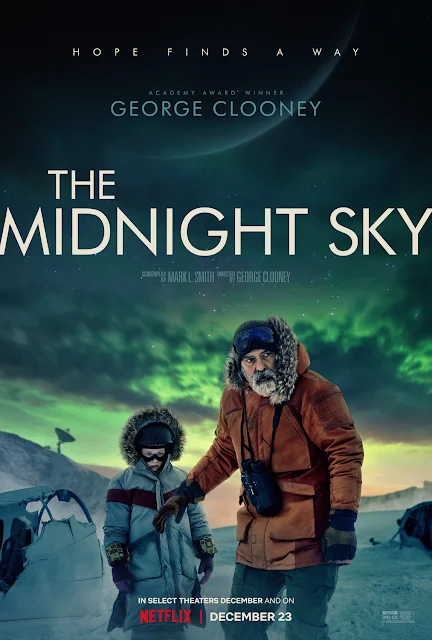
Furthermore, the Arctic's harshness parallels the emotional isolation of the spaceship crew. Their remoteness in the cosmos is echoed in Augustine's terrestrial isolation, underscoring the universal nature of loneliness and the longing for connection even in the face of catastrophic events.
As the characters confront the impending apocalypse, their resilience and hope shine through the darkness. The film paints a vivid picture of human adaptability, as characters navigate the challenges of a world on the brink of collapse. Moments of resilience, both grand and subtle, punctuate the narrative, showcasing humanity's tenacity in the face of adversity.
Even when confronted with seemingly insurmountable odds, characters exhibit an unwavering pursuit of hope. The spaceship crew's quest to find a new home, and Augustine's determination to warn them, exemplifies the film's underlying theme of human perseverance. Clooney's portrayal of Augustine's unwavering dedication to contacting the spaceship underscores the unbreakable spirit that drives humans to overcome even the direst circumstances.
Beneath the surface of "The Midnight Sky" lies a poignant commentary on environmental degradation and its dire consequences. The post-apocalyptic world, marred by ecological catastrophe, serves as a cautionary tale, reflecting the real-world environmental issues our planet faces. The film's desolate landscapes and deteriorated ecosystems echo the urgency of addressing climate change and preserving the Earth's delicate balance.
Augustine's personal connection to the environment adds depth to the film's environmental themes. His dedication to protecting a sanctuary in the Arctic illustrates the innate connection humans have with nature and the moral imperative to safeguard it. In doing so, the film prompts viewers to reflect on the impact of human actions on the planet and the importance of responsible stewardship.
The film intricately weaves together the relationships between characters, both in the desolate post-apocalyptic world and through poignant flashbacks. These relationships emphasize the enduring power of human connections, even in the most dire circumstances. The fragile bonds between Augustine and his colleagues at the research facility highlight the longing for companionship and the comfort found in shared experiences. These connections are starkly contrasted with the isolated existence of the spaceship crew, whose interactions underscore the importance of camaraderie and emotional support.
One of the most significant relationships is the connection between Augustine and Iris, a young girl he encounters during his Arctic isolation. Their heartwarming bond symbolizes the intergenerational exchange of wisdom, empathy, and hope. Augustine's role as a guardian reflects the innate human instinct to care for others, even in times of personal hardship.
The film masterfully portrays the notion that in times of crisis, human relationships become lifelines. Be it the support between colleagues or the mentoring relationship between Augustine and Iris, these connections serve as a reminder that in the face of adversity, our shared humanity becomes a source of solace and strength.
As the spaceship crew embarks on their mission to find a new habitable planet, the theme of leaving a legacy becomes palpable. Their journey is fueled by the desire to secure a future for humanity, highlighting the sacrifices they make to ensure the survival of future generations. This sacrifice is epitomized by their willingness to leave behind everything they know, including their families and the familiarity of Earth, in pursuit of a greater good.
Throughout the film, characters make profound sacrifices, often at great personal cost, to contribute to a better world. This theme is epitomized by Augustine, who willingly stays behind to warn the spaceship crew, knowingly risking his life to ensure their safety. His choices underscore the theme of selflessness, emphasizing the responsibility of each generation to pave the way for the next.
The narrative prompts reflection on the legacies we leave behind, whether they be environmental, emotional, or societal. The characters' willingness to sacrifice for the sake of the future challenges viewers to consider their own contributions and the impact they have on the world.
In "The Midnight Sky," George Clooney's character's experiences and actions encapsulate the multifaceted themes that permeate the film. Isolation and loneliness are met with human resilience and hope, mirroring the determination to thrive despite adversity. The film's depiction of environmental degradation serves as a sobering reminder of our collective responsibility. The relationships forged among characters underscore the importance of connection, empathy, and mutual support in challenging times.
The film's exploration of legacy and sacrifice resonates as characters navigate their perilous journeys, each choice embodying a commitment to a better future. "The Midnight Sky" not only presents these themes in a compelling narrative but also invites audiences to introspect on their own roles in shaping the world and the legacies they leave behind.
Through its evocative storytelling and portrayal of these themes, "The Midnight Sky" elevates cinematic art by presenting a reflection of real-world challenges and an exploration of the indomitable human spirit. As viewers, we are compelled to confront these themes, fostering a deeper connection with the film's characters and their journeys.
"The Midnight Sky," directed by and starring George Clooney , is a thought-provoking film that delves into a dystopian future wher...
Read Article →_poster.jpg)


