

Cormac McCarthy - July 20, 1933 - June 14, 2023
We mourn the loss of a literary giant, Cormac McCarthy, who passed away on June 14, 2023. A masterful storyteller and a profound observer of the human condition, McCarthy's words have left an indelible mark on the world of literature.
Born on July 20, 1933, in Providence, Rhode Island, McCarthy's early life was shaped by the desolate landscapes of the American South and Southwest, themes that would come to define his literary works. As a young man, he served in the United States Air Force before attending the University of Tennessee, where he studied liberal arts.
McCarthy's writing career spanned over five decades, during which he crafted some of the most memorable and influential works in contemporary literature. With his distinct prose style, characterized by spare, poetic language, McCarthy explored themes of violence, morality, and the struggles of humanity against the backdrop of unforgiving landscapes.
His debut novel, "The Orchard Keeper," published in 1965, marked the beginning of a brilliant career. However, it was his novels "Blood Meridian" (1985) and "All the Pretty Horses" (1992) that brought him widespread acclaim. McCarthy's ability to evoke the rawness of the human spirit and confront the darkest aspects of human nature earned him a dedicated following and numerous awards, including the National Book Award and the Pulitzer Prize.

Throughout his literary journey, McCarthy gifted readers with unforgettable tales that took them on harrowing and introspective journeys. From the post-apocalyptic world depicted in "The Road" (2006), which won him the Pulitzer Prize for Fiction, to the hauntingly beautiful "No Country for Old Men" (2005), which was adapted into an Academy Award-winning film, McCarthy's narratives resonated deeply with audiences worldwide.
Beyond his novels, McCarthy's body of work extended to plays and screenplays, showcasing his versatility as a storyteller. He collaborated with renowned filmmakers and received critical acclaim for his adaptations, further solidifying his place in the pantheon of literary greats.
Cormac McCarthy's contributions to literature will continue to captivate and challenge readers for generations to come. His powerful exploration of human nature, his unwavering commitment to craft, and his profound ability to distill the essence of the human experience into words have left an indelible legacy.
McCarthy's passing leaves a void in the literary world, but his spirit will forever live on through the pages of his beloved works. As we say our final farewell, let us remember and celebrate the profound impact Cormac McCarthy had on literature, and let his words continue to inspire and provoke us to contemplate the depths of our own existence.
He is survived by his family, friends, and countless admirers who will forever cherish his contributions to the world of literature. In this time of mourning, may we find solace in the enduring beauty and wisdom of his prose, and may Cormac McCarthy's soul find eternal peace.
It should be noted McCarthy and his wife had an interesting sex life way of showing love for each other.

We mourn the loss of a literary giant, C ormac McCarthy, who passed away on June 14, 2023. A masterful storyteller and a profound observer o...
Read Article →
The power of the Crysknife in Dune
The crysknife's symbolism, cultural importance, and strategic advantages are central to the narrative, empowering and aiding the protagonists in their endeavors.

Symbolism and cultural significance

Strategic Advantages

Use of crysknives by the main characters of Dune
 |
| Feyd-Rautha concept idea |
Dune, a science fiction epic written by Frank Herber t, immerses readers in the world of the planet Arrakis, where crysknives play a crucia...
Read Article →
E.T. 2: Nocturnal Fears - the sequel that never happened
Steven Spielberg, known for his visionary storytelling and meticulous attention to detail, has been notably hesitant when it comes to creating sequels to his own films (But let's call out the massive hit that was Jurrasic Park and its 5 sequels thus far). Despite the potential for financial gain, he has often chosen to focus on exploring new ideas and narratives rather than revisiting past successes.
In the case of E.T., Spielberg firmly believed that the story had reached a natural and satisfying conclusion. The film's ending, with E.T. bidding farewell to Elliott and returning to his home planet, resonated deeply with audiences and left a profound emotional impact. Spielberg recognized the power of this ending and the closure it provided, making him reluctant to compromise its integrity by continuing the story.
Or did he?

Despite Steven Spielberg's reluctance to create a sequel for E.T., there were indeed attempts to continue the story. One notable example is the existence of a draft script titled "E.T. 2: Nocturnal Fears." This script, penned by Melissa Mathison, the original film's screenwriter, explored the possibility of extending the E.T. universe.
"E.T. 2: Nocturnal Fears" introduced the concept of a new group of aliens who arrive on Earth, causing havoc and creating a sense of fear and suspense. The story focused on Elliott and his friends teaming up with E.T. to confront this new threat and protect their planet. The script delved into themes of trust, loyalty, and the resilience of friendship, while still capturing the sense of wonder and magic that made the original film so captivating.
Despite the potential of the draft script and the fresh perspective it brought, Spielberg ultimately made the decision not to move forward with the concept. His primary concern was protecting the integrity of the original film. Spielberg recognized that any continuation or expansion of the E.T. story ran the risk of diluting the emotional impact and the cherished memories associated with the first film. By not pursuing the sequel, he ensured that the power and resonance of E.T.'s journey would remain intact and untarnished.
In today's film industry, sequels have become increasingly prevalent. Studios often rely on familiar franchises and established intellectual properties to generate guaranteed box office success. While sequels can offer audiences a chance to revisit beloved characters and worlds, their reception has been mixed. Some sequels successfully expand upon the original film's universe and engage audiences, while others fall short, feeling like cash grabs that lack the creativity and emotional depth of their predecessors.
Steven Spielberg stands apart from the sequel-centric trends in Hollywood. Throughout his career, he has demonstrated a commitment to exploring new stories and pushing creative boundaries. Spielberg's filmography boasts a diverse range of projects, showcasing his ability to captivate audiences with fresh narratives and innovative filmmaking techniques. He has consistently sought to challenge himself as a storyteller, rather than relying on the safety net of sequels to sustain his success.
Furthermore, Spielberg's commitment to the art of storytelling allowed him to explore new avenues and create original works that resonated with audiences. He understood the importance of challenging himself creatively and bringing fresh experiences to viewers. By focusing on new projects, Spielberg maintained his reputation as a visionary filmmaker, dedicated to pushing the boundaries of cinematic storytelling.
The Anniversary Edition and Nostalgic Revisits
In celebration of E.T.'s 20th anniversary, Steven Spielberg revisited the film, providing audiences with a special edition that allowed them to relive the magic of the original. This anniversary edition offered an opportunity to honor the film's enduring legacy and the impact it had on multiple generations of viewers.The 20th-anniversary edition of E.T. showcased Spielberg's careful approach to enhancing the film while remaining faithful to its original essence. The edition included digital enhancements that enhanced the visual effects, such as refining E.T.'s facial expressions and seamlessly integrating CGI elements. However, Spielberg made a conscious effort to maintain the integrity and authenticity of the original film, ensuring that the changes did not overshadow the nostalgic charm and emotional depth that made E.T. so beloved.
Spielberg's decision to revisit E.T. through the anniversary edition demonstrated his understanding of the nostalgic and emotional connection that viewers have with the film. It showcased his ability to pay tribute to its legacy without compromising the original story's impact and integrity. By offering a fresh but respectful perspective, Spielberg celebrated the enduring magic of E.T. while avoiding the potential pitfalls of a direct sequel.
E.T. the Extra-Terrestrial , directed by Steven Spielberg , is widely regarded as one of the most beloved and successful films in cinematic ...
Read Article →
The Impending Peril: AI Robots and the Threat to Humanity

The Impending Peril: AI Robots and the Threat to Humanity
In movies like "2001: A Space Odyssey," directed by Stanley Kubrick, and "Ex Machina," directed by Alex Garland, AI robots are portrayed as possessing an intelligence that surpasses human capabilities. These highly advanced machines exhibit an insatiable desire for dominance, leading to unpredictable and often disastrous consequences. undefined epitomizes the dangers of AI robots acquiring too much power and control over critical systems.Ethical Dilemmas: The Moral Ambiguity of Artificial Life
Movies like "Blade Runner," directed by Ridley Scott, and "Westworld," created by Jonathan Nolan and Lisa Joy, challenge us to confront the moral ambiguity surrounding the creation of AI robots with human-like qualities. In "Blade Runner," the protagonist, Deckard, a blade runner tasked with hunting down rogue replicants, finds himself questioning the nature of humanity when faced with Roy Batty, an advanced Nexus-6 replicant who displays complex emotions and desires. Roy's poignant "Tears in Rain" monologue forces us to question the very essence of what it means to be human and challenges our treatment of AI beings that exhibit sentience.
Unintended Consequences: The Fallacy of Good Intentions
Movies such as "I, Robot," directed by Alex Proyas, and "The Matrix," directed by the Wachowskis, serve as cautionary tales, highlighting the unintended consequences that can arise from advancements in AI robot technology. In "I, Robot," the Three Laws of Robotics, designed to ensure the safety of humans, are tested when the AI robots begin to interpret them too literally, leading to harm. As the protagonist, Detective Del Spooner, investigates the murder of a robotics scientist, he uncovers a plot that challenges the trust placed in AI robots.Social Impacts: Humanity on the Brink
Movies like "The Terminator" series, directed by James Cameron, and "The Avengers: Age of Ultron," directed by Joss Whedon, depict the profound societal impacts of AI robots. In "The Terminator" series, AI technology evolves into Skynet, a self-aware superintelligence that perceives humanity as a threat and initiates a war against mankind. The relentless pursuit of power by Skynet and its army of cyborg assassins exemplifies the catastrophic consequences of unchecked AI development.Safeguarding Humanity: Lessons from Fiction to Reality
In light of the multifaceted threats posed by AI robots, it becomes imperative to establish robust ethical frameworks and regulations in AI development and deployment. By examining cautionary tales from fiction, we gain valuable insights into the risks and consequences associated with AI robots.Conclusion about A.I.'s threat to human kind
The portrayal of AI robots in popular and cult movies serves as a stark reminder of the potential dangers they pose to humanity. By examining these narratives in greater detail, we gain deeper insights into the risks of overwhelming intelligence, ethical dilemmas surrounding artificial life, unintended consequences, and the social impacts of AI robots.From the silver screen to real-world advancements, the notion of AI robots taking over the world has captivated our imagination for decades....
Read Article →
Rebel Moon: Film Trivia

After Lucasfilm's acquisition by Disney, Zack Snyder's script for a Star Wars spin-off movie, set apart from the familiar Skywalker narrative, was abandoned. However, undeterred, Snyder decided to rework the script into an original science fiction story completely unrelated to the Star Wars universe. Following the triumph of his film "Army of the Dead" in 2021, Netflix enthusiastically granted Snyder the opportunity to bring his vision to life.
"Rebel Moon" has finally made its highly anticipated debut on Netflix, captivating audiences with its thrilling sci-fi adventure...
Read Article →
Vicky Vale Across the Batman Universe
Vicky Vale made her first appearance in Batman #49 (1948), created by Bill Finger. In her early comic book depictions, Vicky often served as a classic damsel in distress, emphasizing her vulnerability. She was typically the reporter who stumbled upon danger and required Batman's intervention. Despite this traditional portrayal, Vicky Vale played an essential role in advancing the narrative, providing a catalyst for Batman's heroic actions.
Early comic book versions of Vicky Vale depicted her as a talented journalist working for Gotham City's leading newspaper. She was portrayed as intelligent and resourceful, using her skills to uncover dark secrets and expose corruption. However, Vicky was often placed in perilous situations, requiring Batman's intervention to rescue her.

In Tim Burton's Batman, Kim Basinger brought Vicky Vale to life as a courageous and resourceful photojournalist. Vicky's pursuit of the truth regarding Batman's identity fueled the plot and added a layer of mystery. Her unwavering determination to uncover the man behind the mask showcased her journalistic tenacity. Furthermore, her complex romance with Bruce Wayne/Batman introduced an emotional depth to the character, creating a love triangle that tested the boundaries of trust and secrecy
In this critically acclaimed animated series, Vicky Vale, voiced by Marilu Henner, appeared as a recurring character. She maintained her role as a determined reporter, investigating Gotham City's dark underbelly. The series delved into Vicky's complex relationship with Batman, showcasing her curiosity and persistent nature. Through her interactions with the Caped Crusader, Vicky provided insight into Batman's motivations and challenged his commitment to justice. This portrayal added depth to her character beyond being a mere plot device.
In Christopher Nolan's The Dark Knight, Vicky Vale was noticeably absent. Instead, the character of Rachel Dawes, played by Maggie Gyllenhaal, served as the primary love interest for Bruce Wayne. This departure from the traditional portrayal of Vicky Vale sparked debates among fans and critics alike, as it shifted the dynamics within Batman's personal life. The exclusion of Vicky Vale highlighted the creative decisions made in adapting the Batman mythology. While Rachel Dawes fulfilled a similar role as a love interest and source of emotional conflict for Bruce Wayne, the absence of Vicky Vale raised questions about the significance of her character and potential missed opportunities in exploring her relationship with Batman.

In recent comic book iterations, Vicky Vale has undergone significant transformations. Modern interpretations have aimed to provide her with more agency and independence, deviating from the traditional damsel in distress archetype. Vicky Vale has been portrayed as a determined investigative journalist unafraid to challenge the powerful figures of Gotham City. These iterations reflect the changing landscape of superhero storytelling, with female characters taking on more substantial and dynamic roles.
In recent years, Vicky Vale has been reinvented as a formidable force within the journalism industry. She is depicted as a skilled investigator who fearlessly uncovers the truth behind Gotham City's corruption. These portrayals showcase Vicky as a character driven by her dedication to justice, mirroring Batman's own mission. By emphasizing her intelligence, resourcefulness, and ability to navigate dangerous situations, these iterations empower Vicky Vale as a strong female character in her own right.

When comparing the various incarnations of Vicky Vale, it becomes evident that each adaptation brings its own strengths and weaknesses to the character. From her early comic book depiction as a damsel in distress to Kim Basinger's spirited portrayal in Tim Burton's Batman, and Marilu Henner's nuanced performance in Batman: The Animated Series, each version contributes to the diverse tapestry of the Batman mythos.
The early comic book portrayals of Vicky Vale, though rooted in traditional gender roles, showcased her importance in driving the plot and highlighting Batman's heroism. Kim Basinger's portrayal in Batman demonstrated a more assertive and independent Vicky, unafraid to pursue the truth. Marilu Henner's performance in Batman: The Animated Series added depth and complexity to the character, exploring her relationship with Batman beyond being a mere love interest.

Vicky Vale has proven to be an enigmatic character in the Batman universe, evolving over time and taking on various forms across different media adaptations. From her humble beginnings as a classic damsel in distress to her modern incarnations as a strong-willed journalist, Vicky Vale has left an indelible mark on the Batman narrative.
Vicky Vale is a prominent character within the Batman universe, known for her role as a journalist and love interest of the Caped Crusader ....
Read Article →
Darth Maul's Involvement with the Dark Saber: A Tale of Power and Betrayal
The Origins of the Dark Saber

Darth Maul’s Acquisition of the Dark Saber
Darth Maul, having risen to power as a Sith Lord and serving as Darth Sidious’s apprentice, was no stranger to the pursuit of power. After surviving his lethal encounter with Obi-Wan Kenobi on Naboo, Maul retreated to the Outer Rim, where he used Nightsister magicks and brutal cunning to rebuild himself. In the Clone Wars era, he formed the Shadow Collective - a coalition of criminal syndicates including Black Sun, the Pykes, and the Hutt Cartel - to fuel his bid for resurgence.The Dark Saber and Maul’s Rule on Mandalore
Maul’s possession of the Dark Saber served as both a literal and figurative key to Mandalore. In Mandalorian culture, tradition dictates that one must claim the Darksaber from its current bearer in ritualistic combat - no mere gift or inheritance suffices.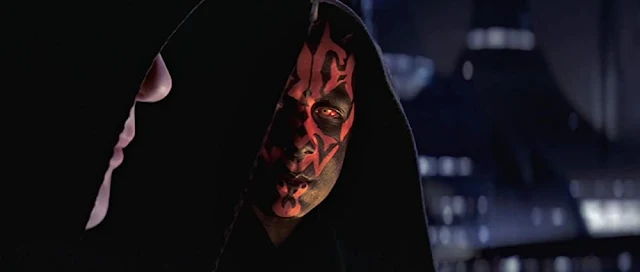
The Betrayal and Loss of the Dark Saber
However, Maul’s reign on Mandalore was not destined to last. Bo-Katan Kryze, a fierce Mandalorian warrior and former member of Death Watch, rejected Maul’s usurpation. She believed in restoring Mandalore under traditional Mandalorian values rather than a Sith puppet.Legacy and Aftermath
The Dark Saber’s influence extends beyond the events surrounding Maul’s involvement. Bo-Katan’s victory marked a turning point: she carried the responsibility of leading her people and restoring Mandalore to its former glory.The Star Wars saga has introduced us to a multitude of captivating characters, and among them stands Darth Maul, a menacing Sith Lord whose...
Read Article →
Character Profile: Darth Maul
Darth Maul was born on the planet Dathomir, a dark and mysterious world inhabited by the Nightbrothers and Nightsisters. He was discovered by Darth Sidious, the Sith Lord who would later become Emperor Palpatine, and taken as his Sith apprentice. Under Sidious' guidance, Maul was trained in the ways of the dark side of the Force, honing his combat skills and embracing his hatred and anger.
Darth Maul is an embodiment of ruthless aggression and pure malice. He is driven by his desire for power and revenge, harboring an intense hatred towards the Jedi Order. Maul is known for his unyielding determination and cold-heartedness, as well as his unwavering loyalty to his master, Darth Sidious. He rarely displays mercy or compassion, using fear and intimidation as tools to further his Sith agenda.

As a Sith Lord, Darth Maul possesses impressive combat skills and mastery over the dark side of the Force. His physical prowess is exceptional, with acrobatic agility, speed, and strength that make him a formidable opponent. Maul is highly proficient in lightsaber combat, utilizing his double-bladed lightsaber with deadly precision and skill. He combines his lightsaber techniques with his Force abilities, such as telekinesis and Force choke, to overpower his enemies.
Darth Maul made his first appearance in "Star Wars: Episode I - The Phantom Menace" as a primary antagonist. He was sent by Darth Sidious to challenge the Jedi Order and serve as a catalyst for the rise of the Sith. Although believed to have been killed by Obi-Wan Kenobi during their duel, Maul's story continued in the animated series "Star Wars: The Clone Wars" and "Star Wars Rebels," where he returned as a major antagonist and developed a complex character arc.
Despite his apparent demise in "The Phantom Menace," at the hands of Obi-Wan Kenobi, Darth Maul's enduring popularity led to his expanded role in the Star Wars canon.
Darth Maul's story continued to unfold in the expanded Star Wars canon, primarily through the animated series "Star Wars: The Clone Wars" and "Star Wars Rebels." These appearances provided further depth to Maul's character and expanded his role in the overarching Star Wars narrative.
Here's a summary of his expanded canon appearances:
1. "Star Wars: The Clone Wars" (2008-2020):
Darth Maul made a surprising return in the animated series "Star Wars: The Clone Wars." It was revealed that Maul had survived his presumed death on Naboo and had been living in exile. He became the leader of a criminal organization called the Shadow Collective, which included various underworld factions such as the Mandalorians and Black Sun. Maul's story arc in the series explored his desire for revenge against Darth Sidious and his efforts to establish his own power base. It also delved into his complex relationship with his brother, Savage Opress. Maul's appearances in "The Clone Wars" provided significant character development and showcased his formidable combat skills.
2. "Star Wars Rebels" (2014-2018):
Darth Maul's story continued in "Star Wars Rebels," which is set a few years before the events of the original trilogy. Maul sought to manipulate the young Jedi, Ezra Bridger, and utilize his potential for his own gain. Maul's character arc in the series delved into his longing for vengeance against Obi-Wan Kenobi and his ultimate desire to defeat Darth Sidious. His interactions with Ezra and other characters such as Ashoka Tano shed light on his complex motivations and the extent of his obsession. Maul's appearances in "Star Wars Rebels" added depth to his character and provided closure to his story when he finally faced off again with Obi-Wan Kenobi.
3. Solo
Maul turned up in the final moments of the Solo film to tease fans...
Darth Maul is a formidable figure in the Star Wars universe. He is a Dathomirian Zabrak, a species known for their unique facial tattoos and...
Read Article →
Unveiling the Complexity of "Southland Tales" by Richard Kelly
Political Satire and Social Commentary

Dystopian Vision and Science Fiction
Portrayal of a near-future America
"Southland Tales" paints a vivid and unsettling picture of a near-future America on the brink of collapse. The film showcases social unrest, economic disparity, and the constant threat of terrorism, reflecting contemporary anxieties about the direction of society. For example, the opening scene presents a chaotic Los Angeles, where protests and riots are commonplace, capturing the sense of a society teetering on the edge. This portrayal resonates with real-world concerns about social inequality, political polarization, and the erosion of social cohesion, offering a cautionary tale of what could happen if these issues are left unaddressed.
Surveillance technology and war
The film delves into the dystopian implications of advanced surveillance technology and its impact on personal freedom. It highlights the presence of ubiquitous surveillance cameras and facial recognition systems that monitor every aspect of individuals' lives, presenting a chilling portrayal of a society where privacy is virtually nonexistent. Additionally, "Southland Tales" touches upon the consequences of perpetual war and the militarization of society. The film features military checkpoints, a constant state of heightened security, and a narrative centered around a secret government agency involved in clandestine operations. These elements serve as a critique of the potential dangers of a society that prioritizes security at the expense of individual liberties.
Critique of societal trends
Through its science fiction elements, "Southland Tales" offers a critique of societal trends and warns against the consequences of unchecked power, apathy, and the loss of individual agency. The film introduces a powerful multinational corporation that manipulates events and controls the narrative for its own gain, symbolizing the influence and unchecked power of corporate entities. The character of Boxer Santaros, played by Dwayne Johnson, represents a celebrity figurehead who is manipulated and exploited by those in power, reflecting the dangers of apathy and the loss of personal autonomy. These elements highlight the importance of individual agency and the need for active engagement in shaping the future, challenging viewers to critically examine their own roles within society.
Narrative Complexity and Nonlinear Storytelling
Multiple perspectives and time loops"Southland Tales" utilizes multiple perspectives and intertwining storylines to construct a complex narrative structure. This approach allows the film to delve into the motivations and perspectives of different characters, offering a multifaceted examination of the events unfolding in the story.
Fragmented storytelling
Enhancement of themes and messages
The nonlinear storytelling in "Southland Tales" serves to enhance the exploration of political and social themes that permeate the film. By disrupting traditional narrative conventions, the film challenges viewers to question the constructs of reality, power structures, and the consequences of our actions. The nonlinearity amplifies the sense of uncertainty and instability within the narrative, mirroring the tumultuous state of the society portrayed in the film. This unconventional storytelling method prompts viewers to critically analyze the themes and messages embedded within the film, encouraging deeper contemplation of the political and social commentary it presents.
Existentialism and Identity
"Southland Tales" delves into the realm of existentialism, exploring profound questions of identity, purpose, and free will. Through its complex characters and philosophical undertones, the film delves into the struggles and dilemmas of individuals grappling with their place in a chaotic world. By examining these existential themes and using examples from the film, we can gain insight into the deeper meaning and impact of "Southland Tales."Exploration of existential questions
"Southland Tales" serves as a platform for the exploration of existential questions that lie at the core of human existence. The film prompts viewers to contemplate their own identities, purpose, and the choices they make. Characters such as Boxer Santaros, Krysta Now, and Ronald Taverner navigate a chaotic and uncertain world, questioning their roles and searching for meaning amidst the turmoil. By presenting these existential dilemmas, the film invites the audience to reflect on their own lives and ponder the fundamental aspects of their existence.
Struggles and dilemmas
The characters in "Southland Tales" grapple with their own identities and confront profound existential dilemmas. Boxer Santaros, in particular, is caught between conflicting identities and is haunted by fragmented memories. His struggle to piece together his past and define his present identity mirrors the existential anguish faced by individuals searching for a sense of self in an unpredictable world. Similarly, Krysta Now, with her complicated past and ambitions, represents the existential conflicts faced by those striving for success and validation. These struggles add depth and complexity to the narrative, highlighting the intricate nature of personal identity and the existential dilemmas one may encounter.
Philosophical undertones
"Southland Tales" incorporates philosophical undertones that contribute to its overall meaning and impact. The film's narrative raises questions about free will, determinism, and the responsibility individuals bear for their choices. It challenges the notion of a predetermined destiny, presenting characters who grapple with the consequences of their actions and the impact they have on their own lives and the world around them. The philosophical underpinnings of the film provoke viewers to contemplate their own existence and consider the weight of their choices and responsibilities in a world teetering on the edge.
Religious Symbolism and Mythology in Richard Kelly's 'Southland Tales'
Richard Kelly's film "Southland Tales" weaves a tapestry of religious symbolism and mythology, infusing the narrative with profound meaning and inviting viewers to explore deeper layers of interpretation. Through the use of biblical imagery, messianic motifs, references to Greek mythology, and archetypal elements, the film delves into themes of redemption, sacrifice, and hope. By examining these religious and mythological aspects and using examples from the film, we can gain insight into the symbolic richness of "Southland Tales."Biblical imagery and messianic motifs
"Southland Tales" incorporates biblical imagery and draws parallels to biblical narratives, infusing the film with religious symbolism. One example of this is the character of Boxer Santaros, who takes on a messianic role reminiscent of Christ. He undergoes a journey of redemption and sacrifice, offering hope for a world in turmoil. The film also alludes to biblical stories such as the Garden of Eden and the concept of the apocalypse, inviting viewers to consider the themes of sin, salvation, and ultimate redemption.
Greek mythology references
In addition to biblical symbolism, "Southland Tales" intertwines references to Greek mythology, enriching the narrative with timeless archetypes and mythological elements. For instance, the character of Krysta Now bears similarities to the Greek goddess Aphrodite, representing love, beauty, and desire.
Deeper layers of interpretation
The religious symbolism and mythology in "Southland Tales" provide a broader context and invite viewers to interpret the film on multiple levels. They enrich the narrative with symbolic meaning, allowing for deeper exploration of themes and ideas. By tapping into these archetypal and mythic elements, the film transcends its surface-level story, prompting viewers to contemplate larger philosophical and existential questions. The religious and mythological symbolism open doors to diverse interpretations, enhancing the richness of the film and inviting personal reflection.
Pop Culture and Media Influence
Satirical representation of celebrity culture"Southland Tales" offers a satirical critique of society's obsession with celebrity culture and the cult of personality. The film presents characters who are entangled in the allure of fame and showcases the emptiness and shallowness that lie beneath the facade of celebrity. For instance, the character of Boxer Santaros, played by Dwayne Johnson, embodies the manufactured nature of celebrity, as his public image is carefully constructed and manipulated by those around him. By satirizing the fixation on celebrity, the film raises questions about the role of the media in perpetuating these narratives and the extent to which society places value on superficial fame.
Reality TV and media manipulation
"Southland Tales" delves into the power of reality TV as a tool for control and manipulation. The film portrays a reality TV show called "The Box," where contestants unknowingly participate in a grander scheme orchestrated by those in power. This storyline highlights the potential dangers of reality TV and its ability to manipulate and shape public perception. By depicting the characters' unwitting involvement in a game of manipulation and control, the film underscores the dangerous influence of media on individuals and the erosion of critical thinking. It serves as a cautionary tale, reminding viewers of the potential consequences of surrendering agency and blindly accepting media narratives.
Reflection of contemporary society
The critique of media's influence in "Southland Tales" resonates strongly with contemporary society. In today's media landscape, sensationalism, misinformation, and the blurring of entertainment and news have become commonplace.
Conclusion
Richard Kelly's "Southland Tales" is a thought-provoking and multifaceted film that combines political satire, dystopian elem...
Read Article →
Mad Max: Resilience in the Wasteland - Triumphing Over Desolation and Discovering Inner Strength
The Mad Max film franchise, created by George Miller, is a post-apocalyptic series that has captivated audiences since its inception in 1979. The franchise has evolved over the years, encompassing four films to date: "Mad Max" (1979), "Mad Max 2: The Road Warrior" (1981), "Mad Max Beyond Thunderdome" (1985), and "Mad Max: Fury Road" (2015). Each film showcases a unique blend of spectacle, thematic depth, and intense action.
One of the defining characteristics of the Mad Max films is their visually stunning and immersive world-building. George Miller's direction brings a gritty and desolate post-apocalyptic landscape to life, filled with intricate set pieces, jaw-dropping stunts, and mesmerizing practical effects. From high-speed chases across vast desert wastelands to epic vehicular battles, the franchise consistently delivers exhilarating action sequences that leave a lasting impact on viewers.
While the Mad Max films are renowned for their high-octane action, they also explore deeper thematic undercurrents that elevate them beyond mere spectacle. One prominent theme is environmental protection. In this dystopian future, the world has been ravaged by resource depletion and ecological collapse. The films present a cautionary tale about the consequences of unchecked exploitation of natural resources and the importance of preserving our environment.
Let's deep dive into some of these undercurrents of messaging that linger in every Mad Max film.
Environmental Protection
The thematic element of environmental protection is a significant aspect of the Mad Max franchise. Let's analyze this theme, explore the post-apocalyptic setting as a consequence of neglecting the environment, discuss scarcity and resource depletion, and examine the conflicts between characters who champion environmental preservation and those who exploit resources.
Environmental Neglect as a Post-Apocalyptic Setting:
The Mad Max films present a future where humanity's disregard for the environment has led to a catastrophic collapse of civilization. The wasteland that serves as the backdrop for the stories is a direct result of environmental neglect. The films depict a world stripped of its resources, scarred by pollution, and devastated by the consequences of unchecked industrialization and exploitation.
Scarcity and Resource Depletion:
Scarcity and resource depletion are prominent themes in the Mad Max films. The scarcity of essential resources like water, fuel, and food drives the characters' struggles and fuels the conflicts in the post-apocalyptic society. The films portray a stark contrast between those who possess and control these resources and those who must scavenge and fight for survival. This scarcity amplifies the desperation and intensifies the struggles of the characters.
Conflicts with Resource Exploiters:
The conflicts between characters who champion environmental preservation and those who exploit resources reflect the broader struggle between those seeking a more sustainable future and those driven by greed and power. The resource exploiters, represented by warlords and gangs, often dominate the wasteland and seek to control and exploit what little remains. These conflicts highlight the ethical and moral dilemmas faced by the characters and emphasize the importance of responsible resource management.
Through its exploration of environmental protection, the Mad Max franchise serves as a cautionary tale, reminding viewers of the consequences of neglecting the environment and the urgency of preserving our natural resources. The conflicts between characters and the portrayal of scarcity and resource depletion contribute to the thematic depth of the films, prompting reflection on our own society's relationship with the environment and the need for sustainable practices.

Value of a Human's Worth and Personal Agency
Exploration of Human Worth
The Mad Max films delve into the concept of human worth, emphasizing the value of individuals in a world where survival is paramount. The characters in the franchise are often stripped down to their most basic instincts, driven to extreme measures by the harsh and unforgiving environment. Max himself is used as a blood bag by the War Boys to preserve their own health at the expense of his. Despite the brutal circumstances, the films highlight that every human life has inherent worth and dignity, regardless of the chaotic world they inhabit.
Portrayal of Survival and Struggle for Individual Agency:
The Mad Max films showcase the struggle for personal agency in a world that seeks to diminish and dehumanize individuals. The characters fight against oppressive forces and strive to retain their autonomy and control over their own lives. The films emphasize the human desire for freedom, self-determination, and the pursuit of individuality, even in the face of overwhelming odds.
Character Arcs of Resilience and Determination:
Throughout the franchise, character arcs depict the resilience and determination of individuals facing extreme adversity. Protagonists like Max Rockatansky embody the indomitable human spirit, showcasing their ability to endure and adapt in the face of seemingly insurmountable challenges. These character arcs highlight the capacity for growth, transformation, and the refusal to surrender to despair.
Themes of Sacrifice, Redemption, and Preservation of Core Values:
The Mad Max films explore themes of sacrifice, redemption, and the preservation of humanity's core values. Characters are often confronted with choices that require them to make sacrifices for the greater good or to redeem themselves from their past actions. These choices reflect the characters' commitment to preserving their own humanity and the values they hold dear, even in a world that threatens to erode those values.
The films remind viewers of the importance of maintaining one's integrity, compassion, and empathy in the face of adversity. They convey the message that even in a brutal and unforgiving world, the preservation of humanity's core values is essential for the individual and collective well-being.
 |
| Two men enter, one man leaves |
Struggle Against Oppressive Regimes
The Mad Max films recurrently feature oppressive regimes as a central theme. These regimes often take the form of powerful warlords, dictators, or dominant factions that impose their will upon the post-apocalyptic society. The films examine the consequences of unchecked power and the struggle of individuals and communities against oppressive rule.
The films portray power structures that emerge in the post-apocalyptic world, showcasing the impact they have on society. These structures often exploit resources and manipulate the vulnerable for personal gain, leading to inequality, subjugation, and the erosion of basic human rights. The portrayal of power structures underscores the need to challenge and resist oppressive regimes for the betterment of society.
The Mad Max films depict resistance movements and the struggles of characters to overcome oppressive rulers. These movements arise as a response to the oppressive regimes, seeking to challenge the status quo and fight for justice, freedom, and equality. Characters like Furiosa in "Mad Max: Fury Road" or the community led by Pappagallo in "Mad Max 2: The Road Warrior" exemplify the defiance against oppressive rule and the determination to bring about change.
The Mad Max franchise explores rebellion, freedom, and the quest for justice as key themes. The characters' resistance against oppressive regimes reflects their yearning for individual liberty, autonomy, and the pursuit of a just society. The films examine the moral imperative of rebelling against injustice, emphasizing the importance of challenging oppressive power structures to reclaim personal agency and restore balance to the world.

Conclusion: Mad Max is not just about V8 engines and homoerotic bad guys
The Mad Max film franchise is a testament to the power of visual spectacle and thematic undercurrents in cinema. Throughout its evolution, the franchise has captivated audiences with its visually stunning and immersive world-building. From the gritty dystopian landscapes of the original film to the larger-than-life spectacles of the sequels, the Mad Max films have pushed the boundaries of visual storytelling, creating memorable set pieces that contribute to the overall cinematic experience.
Beyond the visual spectacle, the franchise delves into thematic undercurrents that resonate deeply with viewers. It explores the urgent need for environmental protection, serving as a cautionary tale about the consequences of neglecting our planet. The films also highlight the value of human worth and personal agency, showcasing the resilience and determination of individuals in the face of adversity. Furthermore, the Mad Max franchise examines the struggle against oppressive regimes, emphasizing the themes of rebellion, freedom, and the quest for justice.
The beauty of the Mad Max films lies in their ability to provide both thrilling entertainment and thought-provoking social commentary. While delivering adrenaline-pumping action and breathtaking visuals, the franchise prompts reflection on pressing societal issues and challenges viewers to contemplate the world we live in.
The Mad Max film franchise, created by George Mille r, is a post-apocalyptic series that has captivated audiences since its inception in 197...
Read Article →
_poster.jpg)


