david lynch
20 April 2026

Mulholland Drive Themes Explained - Fantasy, Desire, and the Diane's actual reality

Film Analysis | David Lynch

Mulholland Drive, fantasy, reality, and the wound beneath the dream

A clearer reading of how David Lynch splits the film between fantasy and reality, why the blue key matters, and how sex, ambition, jealousy, and self-invention tear the story apart from within.

David Lynch’s Mulholland Drive is often treated like a puzzle box, but the mystery only matters because the pain underneath it is so specific.

This is not a film that hides information for the sake of cleverness. It stages a psychic retreat. It shows a woman building a more flattering version of herself because the real one cannot bear the facts of failure, rejection, and guilt.

The dream half glows with mystery, erotic possibility, and Hollywood promise. The later movement drains all of that away. What remains is humiliation, jealousy, murder, and a mind trying to protect itself from what it has done.

That is also why the film sits so naturally inside Lynch’s wider body of work. Like Blue Velvet, it tears into the rot beneath glamour. Like Lost Highway, it fractures identity under the pressure of psychic pain. Like Twin Peaks: Fire Walk with Me and Inland Empire, it turns performance, desire, and dread into something unstable, uncanny, and emotionally raw.

That is why the film lingers. Lynch fuses erotic desire, ambition, memory, and self-mythology into one unstable structure. The result is both seductive and cruel.

The performances by Naomi Watts (The Ring, 21 Grams, King Kong), Laura Harring (John Q, The Punisher, Love in the Time of Cholera), and Justin Theroux (American Psycho, Inland Empire, The Girl on the Train) give the film its human core. Even when names shift and identities blur, the faces carry the truth. That tension, between dream performance and emotional exposure, is the film’s engine.

Mulholland Drive film poster, Naomi Watts and Laura Harring in David Lynch's dream-noir Hollywood mystery
A poster image that captures the film’s split identity, Hollywood allure on the surface, psychic damage underneath.

Fast takeaway: Mulholland Drive works best when read as a two-part psychological drama.

Betty and Rita belong to Diane Selwyn’s fantasy, a rewritten version of the story in which love is mutual, talent is undeniable, and humiliation is kept at bay.

Diane and Camilla belong to the harder world beneath it, where desire has curdled into envy, guilt, and self-destruction.

The split structure, before and after the blue key

The cleanest way into the film is to treat it as two linked movements. The first begins with the limousine on Mulholland Drive, a glamorous night suddenly interrupted by violence.

A woman survives the crash, stumbles into Los Angeles, and hides in an apartment. When Betty Elms arrives in the city, bright-eyed and overflowing with possibility, she finds this stranger and helps her.

The woman, now calling herself Rita after spotting Rita Hayworth’s name, has no memory. Together they move through clues, auditions, false identities, side characters, and a growing current of dread.

This section feels dreamlike not just because it is strange, but because it is organised around wish fulfilment. Betty arrives in Hollywood and seems instantly luminous.

She is not ignored. She is not swallowed whole. She stands out.

Her famous audition scene is the clearest example of the fantasy at work. Betty enters seeming wholesome and almost naive, then the mood shifts completely. Her voice drops. Her timing sharpens. Her body language becomes intimate and controlled. The room changes around her.

What had looked like a cheap casting-room exercise suddenly becomes electric. In that moment, Betty is not merely talented. She is irresistible. She is the version of Diane who cannot be dismissed.

Rita matters just as much to the fantasy structure. In this part of the film, the woman based on Camilla is frightened, dependent, and in need of care.

She does not dominate the room. She leans toward Betty. That reversal is essential. Diane’s dream does not only improve Diane. It remakes the beloved into someone emotionally reachable.

The love scene between Betty and Rita lands with such force because the fantasy presents intimacy as shelter, a place where fear and loneliness briefly dissolve into mutual recognition.

Then comes Club Silencio, one of the great hinge sequences in modern cinema. The emcee insists that it is all an illusion. No hay banda. There is no orchestra. No singer.

Everything is recorded, yet the emotions are real. When Rebekah Del Rio performs “Llorando,” the film reaches a point where performance and grief become indistinguishable.

Betty and Rita are both shaken because the dream is beginning to admit what it was designed to hide. After that, the blue box opens, Betty disappears, and the fantasy can no longer hold.

The second movement is harsher, flatter, and far less forgiving. Betty becomes Diane Selwyn. Rita becomes Camilla Rhodes again. The glow vanishes.

Hollywood now looks like a place of stale rooms, bruised pride, and exhausted hope. The relationship that once seemed tender and reciprocal is exposed as uneven and painful.

Diane loved Camilla, but Camilla has moved beyond her. She has more poise, more social ease, and more freedom inside this world than Diane can tolerate.

The dinner party on Mulholland Drive is where the film twists the knife. Camilla leads Diane up the hidden path as if guiding her into a private revelation, but the scene becomes a ritual of social humiliation.

Diane arrives already uneasy. Then she watches Camilla move through the party with confidence, touching people with a familiarity Diane cannot match. When Camilla kisses another woman in front of her, the pain is not abstract. It is public.

It turns private longing into spectacle. The later revelation involving Adam Kesher, played by Justin Theroux (The Leftovers), seals Diane’s exclusion. She is not just losing Camilla. She is being shown that she was never central in the way she needed to be.

This is why the blue key matters. On the surface, it is the sign from the hitman that Camilla has been killed.

At the level of theme, it is the material object that links desire to consequence. In the dream, the blue box is an abstract threat, a locked chamber of truth. In Diane’s reality, the key is proof that fantasy has been paid for with violence.

Once it appears, there is no route back.

Betty and Rita in Mulholland Drive, a visual expression of fantasy, intimacy, and emotional projection
In the dream half, intimacy feels restorative. In the real half, that same longing becomes the source of the film’s deepest wound.

Fantasy, reality, and why the dream feels so persuasive

The strongest reading of Mulholland Drive remains the simplest one. Betty and Rita belong largely to Diane’s dream. Diane and Camilla belong to the reality beneath it, or at least the closest thing Lynch allows to reality.

That does not mean the second half is objective fact. Lynch never becomes that literal. But the emotional logic of the film strongly supports the idea that Diane invents Betty as an ideal self and Rita as a softened version of Camilla.

The evidence lies in the reversals. In the dream, Betty is talented, admired, and sexually chosen. Rita is vulnerable and needs her.

In Diane’s life, those positions are inverted. Diane is stuck, humiliated, and clinging to a relationship already slipping away. Camilla has agency, status, and social fluency. Diane’s fantasy does not simply improve the past. It reverses the hierarchy that wounded her.

The visual language backs this up. Betty’s Los Angeles is brighter and cleaner, with the glossy theatricality of old Hollywood myth. Diane’s Los Angeles is cramped, stale, and emotionally deadened.

Even the acting style shifts. The dream world has a heightened, almost performative artificiality. The later scenes feel worn down and raw. Club Silencio openly tells us what the film is doing. Illusion can be manufactured. Emotion can still be genuine.

Diane’s dream is false as narrative, but true as confession.

Theme one, identity as performance, doubling, and fracture

Identity in Mulholland Drive is always unstable. Betty becomes Diane. Rita becomes Camilla. Names slide. Power shifts. Roles are tried on and discarded.

Lynch treats identity less as essence than as performance under pressure. That is part of what makes the film so unsettling. These are not masks hiding a stable self. They are provisional selves, assembled to survive humiliation.

Diane invents Betty because Betty is everything Diane cannot sustain in life. She is innocent without seeming weak. She is talented without seeming desperate. She can walk into a room and take possession of it.

Rita is just as revealing. In reality, Camilla is elusive, self-possessed, and impossible to fully claim. In fantasy, she loses her memory and becomes reachable. Diane’s longing does not know how to love Camilla as a separate person. It wants to rearrange her.

That is the heartbreak of the film. Diane is not only dreaming of success. She is dreaming of a self strong enough to survive rejection.

But because that self is built on denial, every crack in the fantasy becomes terrifying. The identity split is not a gimmick. It is a defence mechanism collapsing in real time.

Naomi Watts and Laura Harring in Mulholland Drive, embodying identity fracture and desire within David Lynch's Hollywood nightmare
Naomi Watts and Laura Harring carry the film’s emotional truth even as names, roles, and realities shift around them.

Theme two, Hollywood as seduction, coercion, and emotional damage

Hollywood in Mulholland Drive is not merely a setting. It is the machine that gives Diane’s pain its exact shape. This is a world where worth is inseparable from visibility.

You are judged by how you look, how you perform, who wants you, and who can place you inside the right room. To fail here is not just to miss out on work. It is to feel erased.

Lynch keeps showing how authority in this world is opaque and humiliating. Adam Kesher is pushed around by shadowy forces. Decisions are made elsewhere. A performer can be told she is the future, or treated as disposable, often within the same breath.

Betty’s audition scene is especially sharp because it captures how performance, sexuality, and power bleed into each other. Her command of the room is thrilling, but it is also inseparable from erotic tension. She wins attention by understanding the emotional and physical language the room responds to. It is a triumph, but it is not innocent.

That is what makes Hollywood so corrosive in this film. It turns desire into currency. It turns intimacy into leverage.

Camilla seems able to move within that system, whether by talent, instinct, or social confidence. Diane sees only the result. Camilla is rising. Diane is not. The professional wound and the romantic wound become impossible to untangle.

Theme three, desire, jealousy, and the violence of not being chosen

No theme cuts deeper than the transformation of desire into poison. Mulholland Drive is full of erotic charge, but Lynch never uses sex as decoration.

Sexuality is where longing, power, humiliation, and fantasy become visible. In the Betty and Rita movement, intimacy appears healing. In Diane’s reality, intimacy has become the very site of injury.

Diane does not only want Camilla. She wants herself confirmed through Camilla. She wants proof that she matters, that she is desirable, that she has not failed everywhere at once.

That is why the humiliation of the dinner party is so devastating. It is not just rejection. It is rejection staged as a social fact, with other people around to witness it. The self Diane has built cannot withstand that kind of exposure.

The meeting with the hitman is therefore the moral centre of the film. Diane acts on the ugliest version of wounded desire, the part that would rather destroy the beloved than endure being left behind.

Lynch stages the scene without melodramatic release. It is grubby, banal, and chilling. The blue key later appears as the dead simple proof that Diane turned emotion into action.

After that, guilt floods the film. The tiny elderly couple, first seen smiling with grotesque warmth, return as shrieking agents of psychic punishment.

The figure behind Winkie’s, already one of the film’s purest images of dread, starts to feel less like a random horror insert and more like the shape of buried terror itself. Diane’s apartment becomes unliveable because her mind can no longer keep memory, fantasy, jealousy, and murder in separate boxes.

Sex, intimacy, and why the relationship is the film’s centre

To downplay the sexual relationship at the centre of Mulholland Drive is to miss the point of the whole structure. Betty and Rita, then Diane and Camilla, are not side material inside a Hollywood dream.

They are the reason the dream exists. Diane cannot face the real shape of the relationship, so she rebuilds it as tenderness, dependence, and reciprocal longing.

In the fantasy, Betty comforts Rita and Rita turns toward Betty. Their intimacy is quiet, protective, and emotionally charged.

In reality, Diane’s need is greater than Camilla’s. Camilla appears freer, more socially fluid, and less defined by the bond than Diane is. Diane experiences that freedom as abandonment. Her jealousy is sexual, romantic, and existential all at once.

She is not only losing a lover. She is losing the person through whom she hoped to be validated.

That is what gives the film its tragic force. Diane cannot accept Camilla’s separateness, so she first rewrites her and then destroys her.

In that sense, the film’s erotic charge is inseparable from its violence. Desire does not complicate the plot. Desire creates the plot.

How Mulholland Drive fits within Lynch’s filmography

Mulholland Drive shares major concerns with Lynch’s other notable films, but it sharpens them in a particularly intimate register.

Like Blue Velvet, it places desire beside corruption and shows the rot beneath a polished surface. Like Lost Highway, it uses split identity as a response to psychic trauma. Like Twin Peaks: Fire Walk with Me, it turns emotional pain into nightmare imagery. Like Inland Empire, it blurs performance, selfhood, and unreality until they become impossible to separate cleanly.

What makes Mulholland Drive different is its focus on Hollywood itself, the hunger to be seen, chosen, desired, and remembered in a city that can make rejection feel absolute.

Conclusion

Mulholland Drive endures because it is not merely mysterious. It is emotionally exact.

The first movement is fantasy, but not arbitrary fantasy. It is Diane’s corrective fiction, a world in which she is gifted, radiant, and chosen, and in which the woman she loves moves toward her instead of away.

The later movement is the collapse of that fiction. It reveals the truth beneath it: Diane wanted love, success, erotic recognition, and proof that she mattered, and when those desires collapsed she chose violence.

The blue key is where longing becomes evidence. After that, the film offers no refuge.

Mulholland Drive is therefore not only a story about dreams and Hollywood. It is a story about what happens when wounded identity, sexual longing, failed ambition, and guilt fuse into a self that can no longer tell comfort from denial.

That is why the film remains so haunting. It does not simply mystify. It exposes.

david lynch
17 February 2026

The Ring / Ringu Franchise Timeline + Chronology

Seven Days Remaining

The Ring / Ringu Franchise Timeline

Based on Koji Suzuki's novels, the Ring cycle is one of the most convoluted franchises in horror history. 

The story of Sadako Yamamura (and her American counterpart Samara Morgan) centers on a cursed video tape that kills the viewer in seven days unless copied and shared. It is a viral curse in the literal sense.

NOTE: The Japanese films have three separate timelines that ignore each other. This guide organizes them by continuity.

The Ring / Ringu Franchise Timeline chronology


Timeline A: The Nakata Continuity

The "Main" Japanese timeline, directed primarily by Hideo Nakata. It focuses on the supernatural/ghostly aspect of Sadako.

Ring 0: Birthday

Origin: JP Release: 2000 Setting: Prequel (1968)

The Origin

Set 30 years before the original film, this adaptation of the short story "Lemon Heart" portrays Sadako Yamamura not as a monster, but as a fragile, tragic figure attempting to live a normal life in a Tokyo acting troupe. She falls in love with the sound director, but her uncontrolled "Nensha" (thoughtography) begins to plague the theater with strange recordings and visions.

The film reveals a crucial biological twist: Sadako split into two entities - one resembling a shy human girl, and the other a murderous spirit trapped in a box by her father. The horror stems from human cruelty; the troupe members club her to death in fear. Her father, Dr. Heihachiro Ikuma, completes the tragedy by throwing her still-living body into the well to "seal" the evil, inadvertently creating the vengeful Onryō that would curse the world.

Ring (Ringu)

Origin: JP Release: 1998 Dir: Hideo Nakata

The Incident

The film credited with launching the global J-Horror boom. Reporter Reiko Asakawa investigates the "Cursed Video" after her niece dies of sudden heart failure. The film relies on atmospheric dread rather than jump scares, using the grainy, surreal imagery of the tape - a woman brushing hair, kanji characters, a man pointing—to create subconscious unease.

The investigation leads Reiko and her ex-husband Ryuji to Izu Oshima to uncover the psychic history of Shizuko Yamamura. The finale subverts the "ghost laid to rest" trope; discovering Sadako's corpse does not break the curse. The chilling realization is that survival requires the sacrifice of ethics: Reiko must copy the tape and show it to another person (her own father) to save her son, perpetuating the viral cycle of evil.

Ring 2

Origin: JP Release: 1999 Dir: Hideo Nakata

The Continuation

Ignoring the events of Spiral, this film follows Mai Takano (Ryuji’s assistant) as she searches for answers regarding his death. It introduces Masami Kurahashi, a survivor from the first film, whose trauma is so severe that Sadako’s energy is imprinted on her brain waves, allowing the curse to manifest through psychiatric equipment.

The film shifts focus to the "Scientific vs. Supernatural" conflict, with Dr. Kawajiri attempting to exorcise the energy using electrical experiments in a pool. This disastrously backfires, proving Sadako cannot be contained by physics. The climax involves Mai entering a metaphysical "well" world to save Reiko’s son, Yoichi, who has begun to exhibit the same psychic powers as Sadako.

Sadako

Origin: JP Release: 2019 Dir: Hideo Nakata

The Modern Update

Hideo Nakata returns 20 years later to update the mythology for the digital age. The curse evolves from physical VHS media to digital video when an aspiring YouTuber attempts to film inside Sadako's haunted apartment, inadvertently uploading the curse to the internet.

The plot centers on a hospital setting and a new "reincarnation" arc involving a young girl with psychokinetic powers, linking back to the "Child of Sadako" themes. While less acclaimed than the original, it attempts to explore how a viral curse would propagate on social media platforms where "sharing" is instantaneous, removing the physical barrier of the tape.

Timeline B: The Spiral Continuity

Based closer to the novels, this timeline treats the curse as a biological virus (Ring Virus) rather than a ghost.

Spiral (Rasen)

Origin: JP Release: 1998 Note: Alt Sequel

The Medical Sequel

Released simultaneously with Ring (1998) as a double feature, this film offers a radical scientific explanation for the curse. Mitsuo Ando, a pathologist, discovers a tumor in Ryuji Takayama's throat containing a variation of the smallpox virus. The DNA within the virus matches Sadako Yamamura.

The horror here is biological rather than spiritual: the virus uses the tape as a vector to impregnate female viewers with clones of Sadako, effectively resurrecting her as a new species. The film ends on a nihilistic note, with the virus mutating to spread via the written word (the novel Ring itself), ensuring the eventual replacement of humanity with Sadako-hybrids.

Sadako 3D

Origin: JP Release: 2012 Note: Spiral Sequel

The Digital Mutation

A sequel to the Spiral timeline, this film posits that Sadako is attempting to find a suitable host to be reborn into the physical world using "Cursed Video" livestreams. The antagonist, Seiji Kashiwada, actively tries to resurrect her to punish humanity.

The film departs significantly from the atmospheric horror of the 90s, leaning into action and creature-feature elements. It introduces "Sadako-creatures" - insect-like monsters that swarm victims—and focuses heavily on the use of 3D gimmicks (hair flying out of the screen). It treats Sadako more as a kaiju or queen alien than a ghost.

Sadako 3D 2

Origin: JP Release: 2013

The Child

Set five years later, the story follows Fuko Ando and her niece Nagi, who is the daughter of Sadako born at the end of the previous film. The curse has evolved to kill people not through video, but through the psychic projection of the child's negative emotions.

The film explores themes of stigmatization and "bad blood," as Nagi is shunned for being the "child of a monster." It returns to a slightly more atmospheric tone than its predecessor, focusing on the mystery of sudden deaths surrounding the child, though it still retains the CGI-heavy climax characteristic of this specific timeline.

Timeline C: The DX Continuity & Standalones

Modern reboots and crossovers that establish their own rules.

Sadako vs. Kayako

Origin: JP Release: 2016 Type: Crossover

The Showdown

Originally an April Fool's joke that became real, this film pits the antagonist of Ring against the vengeful spirit of Ju-On (The Grudge). The premise involves two protagonists - one cursed by Sadako’s tape (now with a 2-day deadline), the other by Kayako’s haunted house - who are advised by an eccentric exorcist to pit the ghosts against each other to cancel out the curses.

The film is a mix of horror and dark comedy, showcasing the different "rules" of the ghosts (Sadako’s stealth vs. Kayako’s violence). The climax is a catastrophic failure for humanity: instead of destroying each other, the spirits merge into a pulsating mass of flesh and hair known as "Sadakaya," creating a super-curse with no known countermeasure.

Sadako DX

Origin: JP Release: 2022 Note: Meta-Comedy

The Mutation

A direct sequel to the 1998 Ring that ignores all other timelines. It modernizes the premise by treating the curse as a viral marketing hazard that has mutated to a 24-hour deadline to survive the fast-paced internet attention span. The protagonist is Ayaka Ichijo, a graduate student with an IQ of 200 who attempts to dismantle the curse using logic and science.

The film adopts a meta-comedic tone, deconstructing the tropes of the franchise. It concludes that the curse spreads like a meme—fear and belief fuel it. The solution presented is to "enjoy" the fear and spread the video widely, diluting the curse's potency through mass exposure, turning Sadako into a manageable digital avatar rather than a lethal threat.

Timeline D: The American Remakes

The Hollywood interpretation, featuring Samara Morgan and a distinct "green/blue filter" aesthetic.

The Ring

Origin: USA Release: 2002 Dir: Gore Verbinski

The Remake

Director Gore Verbinski reimagines the story with a distinct, sickly green visual palette. Rachel Keller (Naomi Watts) investigates the tape, which is filled with surreal, non-linear imagery (a burning tree, a ladder, maggots). The antagonist is Samara Morgan, an adopted child with "Nensha" powers who was drowned in a well at the Morgan horse ranch on Moesko Island.

The film focuses heavily on the mystery of the Morgan family and the tragic abuse Samara suffered. Unlike Sadako, Samara is depicted more as a "bad seed" - a child who was inherently evil and drove her horses and parents to madness. The ending retains the bleakness of the original: Rachel realizes Samara never wanted to be saved, she only wanted to be heard, and the only way to save her son Aidan is to make a copy.

The Ring Two

Origin: USA Release: 2005 Dir: Hideo Nakata

The Pursuit

Hideo Nakata (director of the original Japanese film) took the helm for this US sequel. Samara pursues Rachel and Aidan to a new life in Oregon. The film establishes that Samara is no longer bound by the tape; she is seeking a mother figure and attempts to possess Aidan to live again.

Key sequences involve water behaving unnaturally (flowing upwards, defying gravity) as Samara's primary medium. It explores the concept of the "Dark World" - a mirror dimension inside the TV where Samara resides. Rachel must enter this realm to save her son, eventually sealing Samara inside the well of her own making, closing the loop on the mother-child dynamic.

Rings

Origin: USA Release: 2017

The Network

Set 13 years later, the curse has become an underground study. A college professor, Gabriel, sets up an experiment where students watch the tape and immediately pass it on in a "tail" system to study the existence of the soul. The film introduces a "movie within the movie" - a digital file hidden in the static that contains new footage.

The plot delves into Samara's biological origins, revealing her mother Evelyn was held captive by a priest, complicating Samara's backstory with religious trauma. The film ends on a global scale: the video goes viral via email and airplane cockpit screens, fulfilling the ultimate threat of a worldwide curse that cannot be contained by analog methods.

Timeline E: International Variants

The Ring Virus

Origin: KR Release: 1999

The Korean Adaptation

Released shortly after the Japanese original, this South Korean version is actually a more faithful adaptation of Koji Suzuki's novel than Nakata's film. The ghost is named Park Eun-Suh, and the protagonist is a male doctor, Dr. Choi, preserving the book's gender dynamics.

It includes controversial elements cut from the Japanese film, such as the hermaphroditic (intersex) nature of the antagonist and the specific, brutal rape scenario that led to their death. The cursed tape in this version is different, featuring more explicit imagery of the moon and a different visual tone. While it lacks the atmospheric subtlety of the Nakata version, it provides a crucial bridge between the source material and the cinematic interpretation.

bene gesserit
14 June 2025

The Adaptations of Dune: From Unfilmable Myth to Modern Science Fiction Epic

Frank Herbert's Dune has always been more than a story about desert warriors and giant sandworms. It is a political tragedy, an ecological warning, a critique of messianic power, and one of the hardest science fiction novels to adapt because so much of its drama happens inside systems: religion, breeding programs, planetary ecology, prophecy, economics, colonial violence, and the machinery of empire.

That is why the history of Dune adaptations is so fascinating. Every version has to decide what Dune actually is. Is it a hero's journey? A psychedelic religious hallucination? A dynastic tragedy? A warning about charismatic leaders? A story about resource extraction? A desert war film? A palace-intrigue epic? A myth about ecology and time?

The answer, of course, is all of those things at once. Herbert's 1965 novel is set in a far future where humanity has survived the Butlerian Jihad, a civilizational revolt against thinking machines. Computers and artificial intelligence are taboo, forcing human beings to cultivate specialized schools of mental, political, and biological power. Mentats become human computers. The Bene Gesserit manipulate bloodlines, religion, memory, and perception. The Spacing Guild controls interstellar travel through spice-enhanced prescience. The Padishah Emperor rules through military terror, noble rivalry, and control of the Sardaukar.

At the center sits Arrakis, the desert planet also known as Dune. It is the only known source of spice melange, the substance that extends life, expands consciousness, enables Guild navigation, and underwrites the entire imperial economy. Whoever controls Arrakis controls the flow of history.

This is what makes Dune so difficult to film. The novel's spectacle is enormous, but its real engine is invisible. Paul Atreides does not simply become a warrior king. He becomes the focus of religious engineering, Bene Gesserit breeding, Fremen suffering, imperial instability, ecological dream, and prescient terror. A faithful Dune adaptation must make the audience feel both the grandeur of Paul's rise and the horror of what that rise unleashes.

Quick Answer: What Is the Best Dune Adaptation?

For visual scale, atmosphere, and modern cinematic power, Denis Villeneuve's Dune: Part One and Dune: Part Two are the strongest adaptations of Herbert's first novel. For plot completeness, the 2000 Sci-Fi Channel miniseries remains valuable because it has the runtime to follow more of the book's political structure. David Lynch's 1984 film is flawed but visually unforgettable. Jodorowsky's unmade Dune never reached production, yet its concept art and ambition became a major ghost influence on later science fiction cinema.

Dune Adaptations in Chronological Order

The filmed and attempted adaptations of Dune form their own strange timeline. They move from psychedelic impossibility to compromised studio epic, then to more faithful television, then to Villeneuve's large-scale cinematic revival. The newest screen material has also begun expanding into the deeper history of the Bene Gesserit through Dune: Prophecy.

Adaptation Year or Era Format Source Material Why It Matters
Jodorowsky's Dune Mid-1970s Unmade film project Loose adaptation of Dune The great unmade Dune, a legendary pre-production project whose art, casting ideas, and ambition helped shape later science fiction imagery.
Dune 1984 Feature film Dune David Lynch's strange, compressed, grotesque, and visually influential attempt to fit Herbert's vast novel into one theatrical film.
Frank Herbert's Dune 2000 Television miniseries Dune A more complete and book-faithful version that prioritizes plot, politics, and Irulan's role as historical commentator.
Frank Herbert's Children of Dune 2003 Television miniseries Dune Messiah and Children of Dune The only major screen version so far to continue deeply into Paul's tragic aftermath and Leto II's transformation.
Dune: Part One 2021 Feature film First half of Dune Villeneuve restores scale, dread, architecture, sound, and political seriousness to the saga.
Dune: Part Two 2024 Feature film Second half of Dune Completes Paul's rise while sharpening the warning beneath his messianic victory.
Dune: Prophecy 2024 onward Television series Bene Gesserit prequel era Explores the Sisterhood's rise thousands of years before Paul Atreides.
Dune: Part Three Scheduled for 2026 Feature film Expected to adapt Dune Messiah Should complete Villeneuve's Paul Atreides arc by confronting the consequences of holy war and imperial myth.

Why Dune Keeps Resisting Adaptation

Dune is difficult because its plot is only the visible surface. Underneath it are buried systems: the Missionaria Protectiva, the Kwisatz Haderach breeding program, the ecology of sandworms and spice, the Guild's monopoly on space travel, the Emperor's fear of House Atreides, the Harkonnens' extraction economy, and the Fremen dream of remaking Arrakis. A weak adaptation turns Paul into a simple chosen one. A strong adaptation understands that Herbert wrote Paul as a warning.

A Chronology of Filmed and Attempted Dune Adaptations

Jodorowsky's Dune

Mid-1970s Unmade film Legendary pre-production project

Alejandro Jodorowsky's Dune was never filmed, but it remains one of the most important Dune adaptations because its failure became part of science fiction history. Jodorowsky did not want a conventional adaptation of Herbert's novel. He wanted a spiritual event, a cinematic initiation, a psychedelic epic that would detonate the viewer's imagination.

The planned film became famous for its impossible scale. The proposed cast reportedly included Salvador Dalí as the Emperor, Orson Welles as Baron Harkonnen, Mick Jagger as Feyd-Rautha, and David Carradine as Duke Leto. The creative team included artists whose fingerprints would later appear across modern genre cinema: Jean Giraud, known as Moebius, H. R. Giger, Chris Foss, and Dan O'Bannon.

Lore approach

Jodorowsky's version would have departed dramatically from Herbert. It was less interested in the careful political machinery of the Landsraad, CHOAM, the Spacing Guild, and the Bene Gesserit than in Dune as mystical transformation. Paul was not simply a dangerous messiah within a manipulated religious system. He was imagined as a cosmic redeemer figure, pushing the story toward open spiritual transcendence.

Why it matters

The project collapsed because it was too expensive, too long, too strange, and too risky for studios. Yet its production bible became a kind of secret scripture for science fiction cinema. The designs and personnel associated with it fed into the visual culture that later shaped Alien, Heavy Metal, Blade Runner, The Fifth Element, and countless other screen worlds.

Its greatest importance lies in what it reveals about Dune itself. Herbert's novel attracts visionary overreach because the material already feels too large for ordinary cinema. Jodorowsky's failure is part of the myth: Dune was so vast that even the unmade version became influential.

Dune (1984)

Directed by David Lynch Feature film Adapts Frank Herbert's Dune

David Lynch's Dune is one of the strangest studio blockbusters ever made. It is ornate, grotesque, overcompressed, fascinating, and deeply uneven. Trying to compress Herbert's dense novel into a single theatrical film left the story crowded with voiceovers, exposition, abrupt character turns, and lore shortcuts.

Yet the film has a powerful identity. Lynch's Imperium is fleshy, diseased, ritualistic, and medieval. The Harkonnens become a nightmare of bodily corruption. The Guild Navigator becomes a surreal creature floating in spice gas. The Bene Gesserit are rendered as occult political operators whose words and bodies seem sharpened into weapons.

Lore approach

The 1984 film keeps many of the proper nouns and surface structures of Herbert's world: House Atreides, House Harkonnen, Arrakis, the spice, the Guild, the Emperor, the Bene Gesserit, the Fremen, and the sandworms. It also makes major changes. The weirding way becomes a sonic weapon rather than the Bene Gesserit and Fremen martial discipline of the novel. Paul's final victory is treated more openly as a miraculous fulfillment. The ending, in which rain falls on Arrakis, cuts against Herbert's more careful ecological logic.

What it gets right

Lynch understands that Dune should feel ancient, ceremonial, and rotten beneath its grandeur. His production design gives the Imperium a heavy, decaying quality. The film captures the sense that these houses are less like sleek space-age governments and more like feudal bloodlines trapped inside ritual and inheritance.

Where it struggles

The film weakens Herbert's warning about Paul by making the messianic climax feel too triumphant. In the novel, Paul's victory contains the seed of catastrophe. His jihad is not a glorious liberation fantasy. It is the thing he sees coming and cannot fully prevent. Lynch gestures at destiny but does not have the runtime or structural control to make that tragedy land with full force.

Frank Herbert's Dune

2000 Sci-Fi Channel miniseries Three-part television adaptation

The 2000 miniseries was, in many ways, a correction to the 1984 film. Its budget was smaller, its effects are now visibly dated, and some of its staging carries a theatrical stiffness, but its greatest advantage is time. With roughly six hours to work with, it can follow more of Herbert's plot, politics, and character positioning.

This version gives Princess Irulan a much more active framing role. That matters because Herbert's novel uses Irulan's historical writings to place Paul's life inside future myth. The miniseries understands that Dune is partly about how history gets written, managed, edited, and turned into legend.

Lore approach

The miniseries spends more time with the Great Houses, the Emperor, the Bene Gesserit, the Fremen, and the political trap that destroys House Atreides. It gives viewers a clearer sense of how feudal power works in the Imperium. Duke Leto's popularity threatens the Emperor. The Harkonnens are useful because they are brutal. Arrakis is a prize because spice makes interstellar civilization possible.

What it gets right

The adaptation is valuable for readers who want to see more of the novel's political structure preserved. It is especially good at treating Dune as dynastic history rather than pure spectacle. Paul is not only a desert warrior. He is heir to a murdered house, product of a Bene Gesserit bloodline, tool of Fremen prophecy, and destabilizing rival to the imperial order.

Where it struggles

The production design and effects can feel limited beside Lynch's grotesque visual force or Villeneuve's cinematic scale. Arrakis sometimes feels staged rather than inhabited. The sandworms, battles, and desert mysticism lack the sensory weight modern viewers may expect. Still, as an adaptation of the novel's structure, it remains a crucial version.

Frank Herbert's Children of Dune

2003 Sci-Fi Channel miniseries Adapts Dune Messiah and Children of Dune

Frank Herbert's Children of Dune is historically important because it goes where most screen Dune adaptations stop. Rather than ending with Paul's victory, it enters the aftermath. That is where Herbert's larger point becomes impossible to miss: the hero has won, and the universe is worse for it.

The miniseries combines Dune Messiah and Children of Dune, creating a bridge from Paul's imperial rule to the next generation of Atreides history. It follows the consequences of the Fremen jihad, Paul's entrapment inside prescience, the conspiracy against his throne, the birthright of his children, and the beginning of Leto II's terrifying path toward the Golden Path.

Lore approach

This adaptation brings in major concepts that define the deeper Dune saga: ghola resurrection through Duncan Idaho, Face Dancer infiltration, Tleilaxu manipulation, prescient blindness, genetic memory, Alia's possession by ancestral ego-memory, and Leto II's acceptance of a transformation that will make him something no longer fully human.

Why it matters

Paul's story is often misunderstood when Dune is treated as a standalone hero's journey. Children of Dune helps correct that. It shows Paul as a man trapped by the myth he created and by the future he can see. It also introduces the central philosophical horror of the later books: saving humanity may require a tyrant who understands time at a scale ordinary humans cannot bear.

Where it sits in the larger saga

This is the screen adaptation that comes closest to opening the door to God Emperor of Dune. Leto II's sandtrout transformation is the beginning of one of science fiction's strangest reigns: a thousands-year imperial ecology of enforced stagnation designed to make humanity impossible to control forever.

Dune: Part One

2021 Directed by Denis Villeneuve Adapts the first half of Dune

Denis Villeneuve's Dune succeeds because it does not try to explain everything at once. It trusts scale, silence, architecture, sound, ritual, and mood. The film covers the first half of Herbert's novel, ending after the fall of House Atreides and Paul's first steps into Fremen survival.

Villeneuve's version makes the Imperium feel enormous and oppressive. Caladan is wet, green, and doomed. Giedi Prime is severe and brutal. Arrakis is not a backdrop but a planetary force. The ornithopters, shields, stillsuits, spice harvesters, and sandworms all feel like parts of a working civilization rather than decorative science fiction objects.

Lore approach

The film foregrounds the machinery of empire. Duke Leto is given Arrakis because the Emperor sees House Atreides as a threat. The Harkonnen withdrawal is a trap. The Sardaukar are not merely soldiers but terror incarnate, a prison-planet military cult turned imperial blade. The Bene Gesserit are present as a quiet power behind bloodlines and belief.

What it gets right

The film understands Arrakis as an occupied world. The Fremen are not exotic scenery. They are a people with history, discipline, ecological knowledge, and justifiable hatred of imperial extraction. Spice is not treated as magic dust. It is resource, sacrament, drug, economic engine, and geopolitical curse.

Where it simplifies

Some of Herbert's political detail is compressed. CHOAM, the Landsraad's balance of power, Mentat culture, the Guild's deeper dependency on spice, and Jessica's inner Bene Gesserit conflict are present in reduced form. That is a fair adaptation choice, but it means the film achieves clarity by narrowing the machinery of the novel.

Dune: Part Two

2024 Directed by Denis Villeneuve Completes the first novel

Dune: Part Two is where Villeneuve's adaptation becomes openly tragic. The film completes Paul's transformation from displaced heir to Muad'Dib, but it frames that rise with dread. Every victory tightens the trap. Every Fremen conversion brings Paul closer to the holy war he has seen in visions. Every political move makes him less a boy fleeing destruction and more the center of a myth that will devour billions.

The film deepens Fremen division by contrasting northern skepticism with southern religious fervor. This is one of Villeneuve's most important adaptation choices. It dramatizes the Missionaria Protectiva more clearly by showing how planted prophecy can become real through need, oppression, belief, and political timing.

Lore approach

The film sharpens the Bene Gesserit reading of the story. Jessica weaponizes prophecy. Paul resists, then accepts the path. The Reverend Mother trial, the Water of Life, and Paul's awakening are treated as thresholds into ancestral memory, prescient calculation, and imperial inevitability. Chani becomes the emotional and political resistance point against Paul's sanctification.

What it gets right

Part Two captures the central horror of Dune: liberation can mutate into conquest when tied to messianic power. Paul defeats the Harkonnens and the Emperor, but the ending does not feel like clean victory. It feels like ignition. The Fremen have won Arrakis, yet their faith is about to be exported as war.

Where it differs from the book

The film makes Chani's disillusionment more immediate and emotionally visible. It also alters the handling of Alia, who remains unborn but conscious through Jessica's spice transformation. These choices streamline the story and heighten the personal cost of Paul's rise, especially for viewers who may not know how grim Dune Messiah becomes. For a closer look at those choices, see this breakdown of how Dune: Part Two differs from Herbert's novel.

Dune: Prophecy

Premiered 2024 HBO television series Bene Gesserit origin era

Dune: Prophecy expands the screen franchise backward into the deep history of the Sisterhood that will become the Bene Gesserit. Set thousands of years before Paul Atreides, it explores the early political and spiritual machinery that later allows the Bene Gesserit to shape bloodlines, plant myths, and influence imperial succession.

The series is important because the Bene Gesserit are one of the most misunderstood forces in Dune. They are not witches in a simple fantasy sense. They are a school, a political order, a genetic conspiracy, an intelligence network, a religious engineering project, and a survival strategy after humanity's war against thinking machines.

Lore approach

By reaching into the Sisterhood's origins, Dune: Prophecy connects the screen universe to the long aftermath of the Butlerian Jihad. That history matters because Dune is a future where humanity has rejected machine intelligence and forced itself to become the machine. Mentats calculate. Guild Navigators foresee safe paths through space. Bene Gesserit adepts control voice, body, memory, and bloodline.

Why it matters

The show helps explain why Paul is not an accident. He is the product of thousands of years of selection, manipulation, and mythmaking. The tragedy of Dune is that the Bene Gesserit create the conditions for a superbeing, then lose control when Jessica bears a son and Paul emerges one generation early.

Adaptation value

As television, Dune: Prophecy can explore the kind of slow political pressure that a feature film has little time for: sisterhood politics, noble alliances, anti-machine trauma, early imperial power, and the construction of religious influence as a tool of long-term control.

Dune: Part Three

Scheduled for 2026 Directed by Denis Villeneuve Expected to adapt Dune Messiah

Dune: Part Three is expected to take Villeneuve's film cycle into Dune Messiah, the crucial second novel in Frank Herbert's original sequence. That matters because Messiah is where Herbert removes any remaining comfort from Paul's victory.

Set years after Paul's rise to the imperial throne, Dune Messiah reveals the cost of Muad'Dib's jihad. Billions have died in wars fought under his name. The Fremen have become an imperial force. Paul's enemies have not vanished; they have changed tactics. The Bene Gesserit, Spacing Guild, Tleilaxu, and Princess Irulan are entangled in a conspiracy against him.

Lore approach

If adapted closely, the film should introduce or deepen several essential pieces of Dune lore: the Tleilaxu, ghola resurrection, Face Dancer intrigue, the political consequences of prescience, Paul's blindness, Chani's fate, the birth of Leto II and Ghanima, and the beginning of the path that eventually leads to the God Emperor.

Why it matters

Dune Messiah is not an optional epilogue. It is the key that unlocks Herbert's intent. Dune ends with the hero enthroned. Messiah asks what happens when that hero becomes a prison for everyone, including himself. It is smaller, colder, and more tragic than the first novel, but it is essential because it makes the warning explicit.

The adaptation challenge

The challenge for Villeneuve is tonal. Messiah is less battlefield epic than paranoid imperial tragedy. Its power comes from court conspiracy, grief, prophecy, political exhaustion, and Paul's awareness that even godlike vision cannot free him from consequence. If Part Three works, it will reframe the entire trilogy as the fall of Paul Atreides rather than the rise of Muad'Dib.

How Each Adaptation Understands Paul Atreides

The history of Dune adaptations can be read through one question: what does each version think Paul Atreides is?

Version Paul Atreides Is Treated As Effect on the Story
Jodorowsky's Dune A mystical redeemer figure Pushes Dune toward cosmic spiritual transformation.
Lynch's Dune A strange messiah with miraculous power Makes the ending feel more triumphant than Herbert intended.
2000 miniseries A political and religious figure shaped by competing systems Keeps more of the novel's dynastic and imperial structure intact.
Children of Dune miniseries A trapped emperor haunted by the consequences of victory Restores the tragic meaning of Paul's arc.
Villeneuve's films A reluctant messiah becoming the thing he fears Frames Paul's rise as awe-inspiring and horrifying at once.

This distinction matters because Dune is often misread as a chosen-one fantasy. Herbert was doing something sharper. Paul is capable, brilliant, and deeply sympathetic, but he is also dangerous because he becomes the meeting point of prophecy, politics, revenge, religious longing, and prescient calculation. He does not simply fulfill a destiny. He activates a historical disaster.

The Lore Each Adaptation Must Wrestle With

The Bene Gesserit and the Manufactured Messiah

The Bene Gesserit are central to Dune's hidden architecture. Their breeding program seeks the Kwisatz Haderach, a male figure who can access ancestral memory and prescient awareness in ways the Sisterhood cannot. At the same time, their Missionaria Protectiva plants religious myths across vulnerable worlds, creating cultural escape routes for Bene Gesserit agents.

This means Paul's messiah role among the Fremen is both real and artificial. He has extraordinary abilities, but the language used to interpret him has been seeded in advance. Strong adaptations must hold both ideas at once. Paul is not a fraud, and the prophecy is not innocent.

The Fremen and the Politics of Liberation

The Fremen are not simply desert rebels. They are a colonized, disciplined, ecologically sophisticated people whose dream of transforming Arrakis has been shaped by Liet-Kynes and the long planetary vision of water, vegetation, and liberation from off-world exploitation.

The tragedy is that Paul's rise gives the Fremen power while also redirecting their culture into galactic conquest. Their liberation becomes bound to his imperial myth. The more successful Muad'Dib becomes, the more the Fremen risk losing the local, ecological, and communal identity that made them powerful in the first place. That later tragedy is explored more fully in The Fall of the Fremen.

Spice, Sandworms, and Planetary Ecology

Spice is the economic foundation of the Imperium, but Herbert's genius is that the resource is inseparable from ecology. Melange is bound to the sandworm life cycle. The sandworms are bound to the desert. The desert is bound to Fremen survival. Any plan to terraform Arrakis threatens the same system that makes Arrakis valuable.

Adaptations often focus on spice as a glowing drug or strategic fuel. The deeper point is ecological: empire depends on a natural cycle it barely understands and constantly endangers. Dune's resource politics are therefore also environmental politics.

The Guild, CHOAM, and Imperial Economics

The Spacing Guild controls interstellar travel because spice-prescient Navigators can guide ships safely across space. CHOAM, the vast economic combine behind imperial wealth, links noble houses, trade, and resource extraction. The Emperor's power rests not only on armies but on the balance between these institutions.

Screen adaptations rarely have time to explain this fully, but it is vital lore. The battle for Arrakis is not merely revenge between houses. It is a crisis in the supply chain of civilization itself.

The Butlerian Jihad and the Human Replacement of Machines

Dune's future lacks thinking machines because humanity once fought a civilizational war against machine domination. The result is a society where human schools replace banned technologies. Mentats become computers. Bene Gesserit become instruments of social and genetic design. The Guild becomes the navigation system of empire.

This background explains why Dune feels unlike much other science fiction. Its future is not sleek and digital. It is biological, ritualistic, feudal, and psychological. Human beings have turned themselves into the forbidden machines.

Which Dune Adaptation Is Most Faithful?

The answer depends on what kind of faithfulness matters.

Villeneuve's films are not literal translations of every plot detail, but they are deeply faithful to the emotional and thematic center of Herbert's first novel. They understand scale, fatalism, religious manipulation, ecological dread, and the danger of Paul's transformation. The miniseries preserves more of the story's political furniture. Lynch preserves a sense of nightmare grandeur. Jodorowsky preserves the impossible dream of Dune as revelation.

The Real History of Dune on Screen Is the History of What Cinema Can Handle

The movement from Jodorowsky to Lynch to television to Villeneuve shows how each era found a different Dune. The 1970s saw it as psychedelic revolution. The 1980s saw it as baroque studio spectacle. The 2000s saw it as a dense literary text that needed television runtime. The 2020s finally gave it the budget, visual effects, sound design, and audience literacy required for a slower, stranger blockbuster.

That does not mean Dune has been solved. The deeper the saga goes, the harder it becomes to adapt. Dune Messiah is a political tragedy. Children of Dune is a dynastic and metaphysical inheritance story. God Emperor of Dune is a philosophical imperial nightmare about a human-sandworm tyrant ruling for thousands of years to force humanity's survival. The later books become more interior, more abstract, more unsettling, and less friendly to conventional screen grammar.

That is exactly why Dune keeps calling filmmakers back. Arrakis looks like a desert, but it is really a test. Every adaptation must cross it. Some collapse in the heat. Some return changed. The best ones understand that the sandworm is never the only monster in the story.

The greater danger is power made holy.

alien(s)
01 June 2025

15 ''Sci Fi'' Cult Classics worth a watch

Cult Classics: The Final Frontiers

Cult Classics of the Cosmos

The Final Frontiers of Imagination

In the vast cosmos of cinema, science fiction, often shortened to 'sci-fi', stands as a beacon of imagination. It's a genre where the boundaries of reality are stretched, twisted, and 'final frontiers' are shattered allowing filmmakers to explore the 'what ifs' of science and technology.

From time travel and alien encounters to dystopian futures and artificial intelligence, sci-fi films have captivated audiences for generations, transporting them to worlds beyond their wildest dreams. Think of classics like "Blade Runner," with its rain-soaked neon cityscape and philosophical androids grappling with their manufactured existence, or "2001: A Space Odyssey," a visually stunning and intellectually profound meditation on humanity's evolution, cosmic destiny, and the potential perils of advanced artificial intelligence like the chillingly calm HAL 9000.

Within the realm of sci-fi lies a special category: the 'cult classic'. These are films that, while not always box office smashes, have garnered a devoted, often fervent, following over time. They're frequently quirky, subversive, or significantly ahead of their time, resonating with a specific audience who appreciate their unique vision, challenging narratives, and offbeat charm.

Think of "Donnie Darko," a mind-bending tale weaving time travel, destiny, and teenage angst, which has sparked countless debates and interpretations surrounding its complex lore of Tangent Universes and the Living Receiver. The world of sci-fi is overflowing with classic films, each leaving an indelible mark on the genre. However, some have managed to transcend their initial release and achieve cult classic status, continuing to resonate with new and original audiences year after year.

These films, like "Brazil," a darkly comedic and visually surreal satire of oppressive bureaucracy and the struggle for individual freedom in a totalitarian state, or "Akira," a visually explosive and thematically dense anime about psychic powers, governmental corruption, and societal collapse in a post-apocalyptic Neo-Tokyo, have become touchstones for sci-fi fans, inspiring countless filmmakers and sparking conversations that continue to this day.

Blade Runner (1982)

BLADE RUNNER CULT CLASSIC

Directed by Ridley Scott, this film paints a dystopian future Los Angeles in 2019, where bioengineered beings called replicants, virtually indistinguishable from humans, are manufactured by the powerful Tyrell Corporation for hazardous off-world labor. When a group of Nexus-6 replicants, possessing superior strength and agility but a four-year lifespan, escape back to Earth, burnt-out 'blade runner' Rick Deckard is reluctantly tasked with hunting them down and "retiring" them.

The film's cult status stems from its rich thematic tapestry and its multiple versions (including the original Theatrical Cut with a studio-imposed happy ending and voice-over, the more ambiguous Director's Cut, and Scott's definitive Final Cut), each offering slightly different nuances.

It masterfully explores the nature of humanity and artificial intelligence, blurring the lines between creator and creation as replicants like Roy Batty and Pris exhibit profound emotions, existential desires, and a desperate will to live beyond their programmed obsolescence. The film also delves into memory and identity, questioning whether implanted memories, like those Rachael possesses, can create a genuine sense of self and personal history.

Visually, Blade Runner is a masterpiece, with its rain-soaked, overcrowded, neon-lit cityscape, influenced by film noir and futurist design, becoming an iconic representation of a dystopian future, often referred to as "future-noir." It challenges viewers to contemplate what it means to be human in a world where technology has advanced to the point of creating beings that mirror us in almost every way, prompting the lingering question: is Deckard himself a replicant?

Dark City (1998)

Directed by Alex Proyas, Dark City plunges viewers into a shadowy, noir-infused metropolis of perpetual night where the protagonist, John Murdoch, wakes up in a strange hotel bathtub with amnesia, only to find himself hunted for a series of brutal murders he cannot remember committing. As he delves deeper into the mystery of his identity and the city's bizarre mechanics, he uncovers a disturbing truth about its true nature and the shadowy figures known as the "Strangers" who manipulate it.

The film's cult following stems from its mind-bending premise, its distinct German Expressionist-inspired visuals, and unsettling atmosphere. It explores themes of identity, memory, and free will, questioning the nature of reality itself as Murdoch discovers the Strangers are aliens conducting a vast experiment.

These pale, telekinetic beings halt the city each night, physically rearranging it and implanting new memories and identities into its inhabitants, all in a desperate attempt to understand the human soul, which they believe will help save their own dying race. Murdoch's emerging ability to "tune" - to use the Strangers' own reality-altering powers - marks him as an anomaly and a threat to their experiment.

Logan's Run (1976)

logan's run farrah fawcett

Director Michael Anderson envisions a seemingly utopian future society enclosed within a domed city in the 23rd century, where everyone lives a carefree, hedonistic existence dedicated to pleasure until they reach the age of 30. At that point, citizens must participate in a public ritual called "Carousel," where they are supposedly "renewed" and reborn, but in reality, they are vaporized to maintain strict population control and resource management.

The age limit is visually enforced by "lifeclocks" - crystals embedded in the palms of their hands that change color as they age, turning black and blinking on their "Last Day." Logan 5, a "Sandman" whose job is to track down and terminate "Runners" (those who try to escape Carousel), begins to question the morality of this system after being tasked by the city's computer to find and destroy "Sanctuary," a mythical place outside the city where Runners are rumored to escape.

To do this, his own lifeclock is advanced to blinking black, forcing him to become a Runner himself. The film's cult appeal lies in its exploration of themes relevant to any generation: the fear of aging and societal obsession with youth, the desire for freedom and self-determination, and the potential dangers of a society that values conformity and pleasure over individuality and truth.

Logan's Run serves as a cautionary tale about the allure of a seemingly perfect society built on a horrifying secret and the importance of questioning authority, making it a thought-provoking and enduring cult classic.

Planet of the Apes (1968)

Planet of the Apes (1968), directed by Franklin J. Schaffner, thrusts astronaut George Taylor and his crew into a dystopian future after their spaceship crash-lands on what they believe to be an alien planet in the year 3978. They soon discover that this world is ruled by a complex, intelligent ape society where simians have evolved into the dominant species, while humans are mute, primitive savages hunted for sport and scientific experimentation.

The film's cult classic status is rooted in its thought-provoking social commentary disguised as a thrilling science fiction adventure, adapted from Pierre Boulle's novel "La Planète des Singes." It serves as a potent allegory for racism, prejudice, the suppression of scientific truth by religious dogma, and the abuse of power, holding a mirror to humanity's own societal flaws.

The iconic twist ending, revealing the half-buried Statue of Liberty, delivers a powerful and chilling message about the self-destructive potential consequences of humanity's actions and the cyclical nature of history, confirming Taylor's horrifying realization that he has been on Earth all along: "You Maniacs! You blew it up! Ah, damn you! God damn you all to hell!"

Fortress (1992)

From the era when home video releases could often give films a second life and build a dedicated fanbase, Fortress steps up to a dystopian future in 2017 where overpopulation has led to draconian measures. A strict one-child policy is brutally enforced. Ex-army officer John Brennick (Christopher Lambert) and his wife Karen are caught attempting to cross the US-Canada border, imprisoned in a high-tech, privately run maximum-security prison - the Fortress - for illegally attempting a second pregnancy.

The prison, run by the Men-Tel Corporation, is a nightmarish vision of technological control, with inmates implanted with "Intestinators" that can induce severe pain or death for disobedience, and subjected to constant surveillance, laser grids, and brutal punishments by the sadistic warden, Poe (Kurtwood Smith), who is himself a cybernetically enhanced bureaucrat with a god complex.

This film has achieved cult status for its blend of gritty action, inventive science fiction elements, and social commentary. It tackles themes of reproductive rights, corporate power, the dehumanizing nature of incarceration, and the relentless fight for freedom against a totalitarian regime.

Alien (1979)

alien chest burster 1977

Ridley Scott takes the classic haunted house narrative ("ten little Indians" in space) and masterfully sets it aboard the commercial towing spaceship Nostromo. The seven-member crew, on a long-haul voyage back to Earth, is prematurely awakened from hypersleep to investigate a mysterious distress signal originating from the desolate moon LV-426.

During the investigation of a derelict alien spacecraft, Executive Officer Kane discovers a chamber filled with leathery eggs. When he examines one, a parasitic creature - the Facehugger - erupts and attaches itself to his face. Unwittingly, and against quarantine protocols championed by Warrant Officer Ripley, the crew brings this deadly extraterrestrial organism on board, which then "births" in a horrific fashion (the infamous chestburster scene) and quickly matures into a lethal predator that stalks and kills them one by one.

Beyond its visceral thrills, Alien explores themes of corporate greed (the revelation of Special Order 937: "crew expendable," prioritizing the capture of the Xenomorph for the Weyland-Yutani Corporation's bioweapons division), the primal fear of violation, the vulnerability of humanity in the face of the truly alien, and the resilience of the human spirit, embodied by Sigourney Weaver's iconic character, Ellen Ripley.

Star Trek II: The Wrath of Khan (1982)

Widely regarded as the best film in the Star Trek franchise, Nicholas Meyer's "The Wrath of Khan" sees a middle-aged Admiral James T. Kirk and the crew of the USS Enterprise face a formidable and deeply personal threat from the past: Khan Noonien Singh. Khan, a genetically engineered superhuman warlord from Earth's late 20th-century Eugenics Wars, was marooned by Kirk 15 years earlier.

Now, fueled by an Ahab-like obsession for revenge against Kirk, Khan seizes control of the USS Reliant and a powerful, dangerous terraforming device called Genesis. The Genesis Device is capable of instantly creating life from lifeless matter, but if used on an existing planet, it would wipe out all pre-existing life - a terrifying weapon in the wrong hands.

The film's exploration of vengeance, forgiveness, the consequences of past actions, and the enduring power of friendship elevates it beyond a mere space adventure. Spock's poignant sacrifice to save the ship and its crew from the activated Genesis Device, entering a lethally irradiated engine room and uttering the unforgettable line "The needs of the many outweigh the needs of the few, or the one," adds immense emotional weight and depth to the narrative.

Children of Men (2006)

Directed by Alfonso Cuarón, this dark, visceral, and hauntingly plausible examination of humanity paints a bleak picture of a dystopian 2027. Humanity faces imminent extinction due to eighteen years of global female infertility, leading to widespread despair, societal collapse, and chaotic violence. The United Kingdom is one of the few remaining nations with a functioning (albeit oppressive and xenophobic) government, besieged by refugees fleeing global turmoil.

This film has garnered cult classic status for its unflinching portrayal of a world on the brink of collapse, tackling themes of hope, despair, faith, redemption, and the resilience of the human spirit in the face of overwhelming nihilism. The film's masterful use of long, unbroken takes places the viewer directly in the heart of the peril and chaos, creating a profound sense of urgency and immediacy.

Braindead (1992)

Timothy Balme in Dead Alive (1992)

Known as "Dead Alive" in its American release, directed by Peter Jackson long before his Middle-earth fame, this is a gloriously over-the-top splatter-comedy horror film set in 1950s Wellington, New Zealand. When timid Lionel Cosgrove's overbearing mother is bitten by a hideous Sumatran Rat-Monkey (a creature from Skull Island) at the local zoo, she transforms into a flesh-eating zombie, sparking a chaotic outbreak.

While certainly not for the faint of heart (it's often cited as one of the goriest films ever made), Braindead has become a beloved cult classic for its unapologetic embrace of excess, its gleeful subversion of horror tropes, and its boundless creativity. It satirizes repressive 1950s suburban life and the stifling nature of overprotective mothers, culminating in a blood-soaked finale involving a lawnmower.

Dune (1984)

dune cult classic

David Lynch's ambitious and controversial adaptation of Frank Herbert's seminal science fiction novel is a sprawling epic set in the distant future where powerful noble families vie for control of the desert planet Arrakis. Arrakis is the universe's sole source of the immensely valuable spice melange, crucial for enabling interstellar travel by allowing Spacing Guild Navigators to fold space.

Although met with mixed reviews and studio interference that led Lynch to disown it, Dune has garnered a devoted following over time. Lynch's visually striking and surreal interpretation creates a mesmerizing universe filled with strange creatures, industrial set designs, and internal monologues.

Its unique blend of science fiction, feudal fantasy, and political intrigue, coupled with its stunning visuals and an iconic score by Toto and Brian Eno, has made it a cult classic that continues to captivate audiences, particularly as newer adaptations invite comparisons to Lynch's bizarre vision.

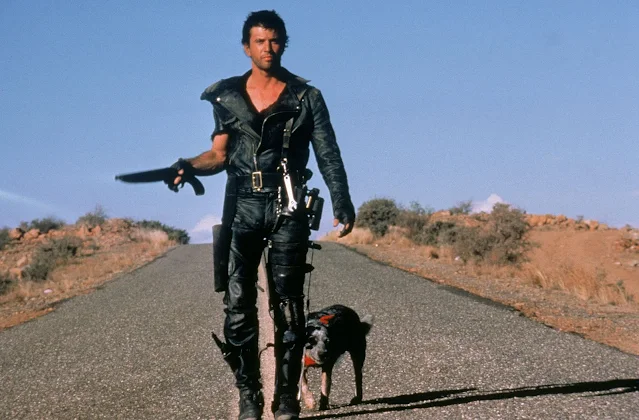
Mad Max (1979) & Mad Max 2: The Road Warrior (1981)

mad max road warrior cult classic

Directed by George Miller, the original Mad Max introduces us to Max Rockatansky (Mel Gibson), a skilled Main Force Patrol officer in a near-future Australia teetering on the brink of societal collapse. When a vicious gang murders his family, Max embarks on a cold-blooded, vengeful rampage, becoming a "shell of a man" fueled by grief and gasoline.

Mad Max 2: The Road Warrior takes the franchise to new heights. Society has completely collapsed into a tribalistic wasteland where "guzzoline" is the most precious commodity. The film's distinctive visual style, blending elements of Westerns and punk aesthetics, along with its breathtaking practical stunts, cemented Max's status as a legendary figure of the wasteland. It celebrates the resilience of the human spirit in the face of utter adversity.

Invasion of the Body Snatchers (1978)

Philip Kaufman's remake of the 1956 classic delivers a chilling tale of paranoia in San Francisco. As people begin acting strangely detached, health inspector Matthew Bennell (Donald Sutherland) uncovers a horrifying truth: alien seed pods are duplicating humans while they sleep, replacing them with emotionless doppelgängers.

The film's cult status is rooted in its ability to tap into primal fears of losing one's identity and individuality to a faceless collective. The film's ambiguous and famously bleak ending, with Matthew Bennell seemingly having succumbed, pointing and screaming at one of the last remaining humans, leaves the viewer questioning whether the invasion has been thwarted or if it's already too late.

The Fly (1986)

Directed by David Cronenberg, the undisputed master of "body horror," The Fly presents a horrifying, tragic, and ultimately poignant transformation. Scientist Seth Brundle (Jeff Goldblum) tests his teleportation device on himself, unaware that a common housefly has entered the pod with him. His genes are fused with the insect's, leading to a slow, gruesome metamorphosis into "Brundlefly."

This film's cult status stems from its groundbreaking practical makeup effects and its profound exploration of themes of disease, decay, and identity. It is not just a horror film; it's a poignant meditation on the human condition and the terrifying consequences of biological change, grounded by the tragic romance between Brundle and journalist Veronica Quaife.

Waterworld (1995)

In a distant future where the polar ice caps have melted, submerging Earth beneath a global ocean, humanity clings to survival on floating atolls. A mysterious mutant drifter known as "The Mariner" (Kevin Costner) navigates this watery wasteland, battling ruthless pirates called "Smokers" while searching for the mythical "Dryland."

Despite its notorious production troubles, Waterworld has gained appreciation for its sheer ambition, detailed world-building, and practical effects. Its vision of a world transformed by climate change resonates with contemporary environmental concerns, and the extended "Ulysses Cut" is often preferred by fans for its deeper character development.

Tron (1982)

Tron transports viewers into a visually revolutionary digital frontier. Kevin Flynn (Jeff Bridges), a computer programmer, is digitized and pulled into the electronic world inside a computer system by a power-hungry Master Control Program (MCP). Inside, he must survive gladiatorial games and team up with a security program named Tron to bring down the MCP.

The film's cult status stems from its groundbreaking visual effects, which pioneered the extensive use of CGI and backlit animation. Its neon-lit landscapes and light cycles set a new benchmark for sci-fi aesthetics. Beyond the visuals, it explores prescient themes about artificial intelligence, virtual reality, and the relationship between creators (Users) and their digital creations.

Southland Tales (2006)

southland tales cult classic

Richard Kelly, director of "Donnie Darko," delivers a sprawling, ambitious, and deeply surreal satirical portrait of Los Angeles in a near-future, alternate 2008. In this reality, nuclear attacks have triggered a global crisis and a draconian surveillance state. The film follows an ensemble cast including Dwayne "The Rock" Johnson, Sarah Michelle Gellar, and Seann William Scott as their destinies intertwine with a vast conspiracy involving neo-Marxist revolutionaries and a new energy source called "Fluid Karma."

Its blend of dark humor, social satire, and mind-bending narrative twists has resonated with audiences who appreciate challenging, "kitchen sink" cinema. It explores themes of media saturation, corporate power, and the impending apocalypse with a unique mix of sincerity and absurdity.

What makes a cult classic a classic?

The films we've explored in this journey through sci-fi cult classics demonstrate the enduring power of cinema to challenge, inspire, provoke, and entertain, often outside the mainstream currents of their time. While some, like Star Trek II: The Wrath of Khan, initially enjoyed mainstream success and critical acclaim, they've transcended their initial reception to become beloved touchstones, cherished for specific qualities that foster a dedicated, repeat-viewing fanbase.

Others, like Braindead, Southland Tales, or even the original theatrical cut of Blade Runner, initially baffled, repulsed, or were dismissed by general audiences and critics but have since garnered passionate, sometimes fiercely defensive, followings who appreciate their unique visions, subversive spirit, unconventional narratives, or ahead-of-their-time ideas.

© 2024 Sci-Fi Film Analysis. All rights reserved.

Back to Top