07 December 2023

How did Furiosa lose her arm and need a mechanical replacement in Mad Max?

The intriguing backstory of Charlize Theron's Imperator Furiosa, a standout character from "Mad Max: Fury Road," particularly regarding the loss of her arm and her subsequent reliance on a mechanical replacement, is a subject of much speculation among fans. 

While the original film, directed by George Miller, leaves this aspect of her story largely to the audience's imagination, there is anticipation for more concrete answers in the upcoming prequel focused on Furiosa.

The Furiosa prequel, also helmed by George Miller, promises to delve into the origins and earlier life of this compelling character. This film is expected to provide much-needed context and backstory, potentially including the circumstances that led to the loss of her arm. Given Miller's storytelling style, it's likely that the revelation will be both visually striking and emotionally resonant, fitting seamlessly into the gritty and intense world of "Mad Max."

How did Furiosa lose her arm and need a mechanical replacement in Mad Max?


The prequel offers a unique opportunity to explore the character's formative experiences, shedding light on how she became the formidable warrior seen in "Fury Road." The loss of her arm and her adaptation to a mechanical replacement could be a pivotal plot point, symbolizing her resilience and determination in the face of adversity. This aspect of her story is not just a physical attribute but a significant part of her identity, reflecting her survival and adaptability in a hostile world.

In summary, while "Mad Max: Fury Road" left much of Furiosa's history unexplained, including the loss of her arm, the upcoming prequel dedicated to her character is anticipated to fill in these gaps. This narrative decision aligns well with the storytelling approach of the Mad Max franchise, where character backstories are often revealed gradually, adding depth and richness to the cinematic universe.

Why is Max used as a 'blood bag' in Fury Road?

The use of Max as a "blood bag" in the film "Mad Max: Fury Road" is a plot point that touches upon themes of dehumanization, survival, and the dystopian world's economy of resources

"Mad Max: Fury Road" is set in a post-apocalyptic world where resources are scarce and society has collapsed into tribal warfare and despotism. In this world, water, fuel, and human commodities are of utmost value. 

The film's director, George Miller, crafts a universe where survival is paramount, and everything is utilized to its utmost - including human beings.

mad max blood bag tattoo

In this desolate landscape, the scarcity of resources extends to vital ones like blood. 

The film introduces the concept of "blood bags" - captives used for blood transfusions to replenish the health of sick or injured members of the War Boys, the army of the tyrant Immortan Joe. This practice underscores the extreme measures taken to survive in this harsh world.

Max Rockatansky, played by Tom Hardy, is captured by the War Boys and identified as a universal donor (O-negative blood type), making his blood valuable for transfusions. This designation as a universal donor is symbolic of Max's role in the "Mad Max" universe - he is a character who can integrate into various situations and serve various purposes, much like his blood can serve anyone in need.

Max's use as Nux's "blood bag" serves as a powerful symbol of dehumanization, particularly when Max is tattooed to show his potential worth as a commodity to be used and abused.

It reflects how people in this dystopian society are seen not as individuals with rights and freedoms but as commodities, and resources to be exploited. This dehumanization is a central theme in dystopian narratives, often used to critique contemporary societal trends.

The use of people as resources starkly contrasts with the treatment of characters like Immortan Joe and his close associates, who hoard resources and live comparatively lavish lifestyles. This disparity highlights the social stratification and inequality pervasive in this society.

Max's role as a blood bag leads to his involvement in the film's central plot - the escape and pursuit led by Imperator Furiosa. His initial unwillingness to participate evolves into a collaborative struggle for freedom and redemption, reflecting broader themes of resistance and humanity's enduring spirit.

If we had to be critical - Max probably should have died given how much blood was extracted from him...

What are the time line key events of the Mad Max Saga?

The "Mad Max" saga, created by George Miller, is an iconic series of post-apocalyptic action films set in a dystopian Australia, the first three of which starred a young Mel Gibson as Max. 

The timeline of the "Mad Max" universe is not explicitly dated in the films, and the chronology is somewhat ambiguous due to the mythic and allegorical nature of the stories. 

However, based on the events and context provided in the films, a speculative timeline can be constructed, focusing on the key events in the lives of Max Rockatansky and Imperator Furiosa.

"Mad Max" (1979)

The original Mad Max featuring Gibson going head to head with Toecutter opens with the caption, “A few years from now.” That, and a piece of graffiti on a road sign dated December 1984, puts the events of the first film squarely in the mid-80s, possibly 1985.

As the narrative unfolds, the global landscape, including Australia, is plunged into a state of turmoil. This crisis stems from escalating conflicts in the Persian Gulf, a key region for the world's oil supply. The hostilities in this area lead to a significant disruption in oil production, a vital resource that underpins much of the world's economic and social structure.

This decline in oil availability triggers a cascade of consequences. Economies worldwide, already delicately balanced, begin to falter, leading to widespread financial instability. The ripple effects of this economic downturn are profound and far-reaching. In an effort to stabilize the situation and maintain social order, several nations find themselves resorting to the declaration of martial law. This state of emergency reflects the severity of the crisis, as governments take extraordinary measures to manage the fallout of the disrupted oil supply and its impact on global stability.

Key Events for Max Rockatansky:
  • After a series of violent encounters with a biker gang, Max's wife and child are murdered.
  • Max, driven by revenge, hunts down and kills the gang members.
  • This marks the transformation of Max from a law-abiding officer to a vengeful drifter.

 "Mad Max 2: The Road Warrior" (1981)

Time Line: A few years after the first film, in a world now fully post-apocalyptic.

"The Road Warrior" unfolds in a timeline preceding an eventual global nuclear war. The dystopian wasteland depicted in the film is a product of gradual societal collapse and decay, rather than the direct consequence of a nuclear winter. This setting paints a stark picture of a world where the vestiges of civilization are eroding, yet it remains untouched by the cataclysmic effects of nuclear conflict.

In contrast, the prequel comics of "Mad Max: Fury Road" introduce a revision to this timeline. Here, the narrative posits that the nuclear war occurs between the events of the first and second films. This alteration in the series' chronology brings a different perspective to the degradation of society and the environment.

Despite these differing timelines, the outcome in both narratives is strikingly similar: a rapid and profound deterioration of societal structures within a few years following the conclusion of "Mad Max." The Australian wasteland, where the protagonist Max now resides, becomes an emblem of this decline. Max, traversing this desolate landscape in his Interceptor, is in a relentless search for gasoline, a scarce resource that symbolizes the desperate struggle for survival in this bleak world. 

This backdrop sets the stage for exploring themes of survival, resource scarcity, and the resilience of the human spirit amidst the ruins of a once-thriving civilization.

Key Events for Max:
  • Max roams the wasteland with his dog, scavenging for resources.
  • He becomes involved with a group of survivors defending an oil refinery against a marauding gang.
  • Max helps the survivors escape, but he remains a lone wanderer.

the road warrior


"Mad Max Beyond Thunderdome" (1985)

Time Line Setting:  Approximately 15 years years after the events of "The Road Warrior."

"Mad Max Beyond Thunderdome," set about 15 years after "The Road Warrior," encounters timeline complexities, especially in light of "Mad Max: Fury Road" and its prequel comics. The film, positioned in a post-nuclear war era, is marked by a 1999 reference point, conflicting with the later timeline suggested in "Fury Road" where the nuclear event occurs after 2015. 

"Beyond Thunderdome" showcases the evolution of society in this dystopian world, introducing Bartertown, a rudimentary civilization with emerging social structures, a significant leap from the simplistic groups in "The Road Warrior." This development aligns with the societal depiction in "Fury Road." 

The film's portrayal of an increasingly barren, nuclear-ravaged wasteland culminates in a narrative where children aspire to rebuild civilization in Sydney's remains, a venture "Fury Road" implies is ultimately unsuccessful...

Key Events for Max:
  • Max ends up in Bartertown, a settlement built around a methane refinery.
  • He is caught in the power struggle between Aunty Entity, the ruler of Bartertown, and Master Blaster, who control the refinery.
  • Fights in the Thunder Dome and learns the true meaning of Two Men Enter, One Man Leaves...
  • Max is exiled and discovers a tribe of children in an oasis, eventually helping them to find a new home.

tina turner as aunty entity
Tina Turner as Aunty Entity

"Mad Max: Fury Road" (2015)

"Mad Max: Fury Road" presents a unique position within the series' timeline, marked by its setting and the mythical status of its protagonist, Max. The film seemingly exists in a nebulous timeframe, one that doesn't neatly align with the chronology established by its predecessors. This ambiguity is partly addressed by treating Max as a mythic figure, a narrative choice that allows for a more fluid interpretation of the timeline. 

Max's character, portrayed with varying degrees of continuity across the series, becomes a legendary, almost folkloric presence in this post-apocalyptic world. By embracing the idea of Max as a myth rather than a strictly linear character, "Fury Road" sidesteps the inconsistencies in the timeline. 

This approach suggests that the story of Max is not bound by conventional chronology but is a series of legendary tales set against the backdrop of a dystopian world. This setting, characterized by its desolation and the ongoing struggle for survival and resources, becomes a canvas for the larger-than-life exploits of Max, where the focus is less on the precise timeline and more on the enduring themes of resilience, tyranny, and rebellion in a world gone mad.

Key Events for Max and Furiosa
  • Max is captured by the War Boys of Immortan Joe and used as a "blood bag."
  • Imperator Furiosa, a war captain under Immortan Joe, betrays him to free his five wives that are only alive to be breeders.
  • Max and Furiosa's paths cross, and they join forces.
  • They overthrow Immortan Joe and take control of the Citadel, a stronghold with access to water and resources.

Furiosa: A Mad Max Saga (2024)

The film delves into the backstory of Imperator Furiosa, a character first introduced in "Fury Road" and originally played by Charlize Theron. In this prequel, Anya Taylor-Joy takes on the role of a younger Furiosa, exploring her origins and journey before the events of "Fury Road."

The narrative of "Furiosa" is situated approximately 45 years after the collapse of civilization. This places the setting of "Furiosa" after "Mad Max Beyond Thunderdome," but significantly before the events of "Fury Road." The timeline suggests that "Furiosa" likely occurs in the 2030s, considering "Fury Road" is estimated to be set around the 2050s. 

The film is expected to cover a span of several years, offering a detailed look at Furiosa's early life, her capture by a biker horde led by Warlord Dementus, and her eventual rise to become the formidable road warrior seen in "Fury Road."

05 December 2023

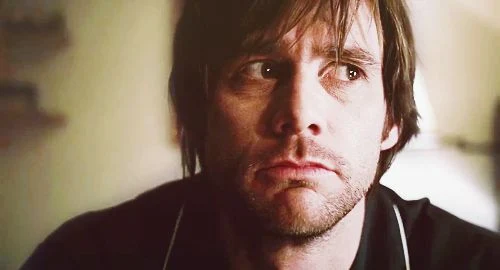
The character arc of Joel Barish in Eternal Sunshine of the Spotless Mind

"Eternal Sunshine of the Spotless Mind," directed by Michel Gondry and written by Charlie Kaufman, stands as a profound exploration of human emotion and memory. Central to this narrative is Joel Barish, portrayed by Jim Carrey, whose character arc is pivotal in conveying the film's themes. Joel's journey through the film can be dissected into various stages, each marked by significant events and internal transformations.

Focusing on Joel Barish, portrayed by Jim Carrey, we delve into a character arc that is as complex as it is emotionally resonant, painting a picture of love, memory, and identity.

joel barrish eternal sunshine spotless mind character arc

Initial Depiction: The Reserved and Contemplative Joel

Joel's journey begins with him as a reserved, introspective individual. He's portrayed as somewhat withdrawn, reflective, and hesitant in social interactions. This is evident from the opening scenes where Joel impulsively decides to skip work and take a train to Montauk. His introverted nature is juxtaposed against the vibrant and extroverted Clementine, setting the stage for their contrasting personalities.

The Unfolding Romance and Emotional Awakening

As Joel's relationship with Clementine progresses, there's a noticeable shift in his demeanor. He starts to open up, revealing his vulnerabilities and desires. Scenes like their initial conversation on the train and their impromptu trip to the frozen Charles River showcase Joel’s gradual emotional awakening. He begins to embrace spontaneity and joy, qualities he finds in Clementine, and this reflects a significant shift from his initial reserved nature.

The Erasure Process: Reliving and Reassessing Memories

The central narrative twist, where Joel chooses to erase his memories of Clementine, serves as a pivotal point in his character arc. During the memory erasure process, Joel revisits their shared moments, both good and bad. This retrospection is crucial as Joel, submerged in his subconscious, starts to recognize the value of even the painful memories. Scenes like their last memory at the beach house, where he desperately tries to hold onto the memory of Clementine, highlight his growing realization of the significance of their relationship.

The Revelation: Embracing Imperfection and Complexity


As the erasure procedure reaches its end, Joel’s character reaches a profound revelation. He understands that love isn't just about the joyous moments but also about the struggles and conflicts. This is symbolized in the fragmented, chaotic memories that he tries to preserve. The realization that love and memory are inherently flawed yet beautiful in their imperfection marks the zenith of his emotional maturity.

Post-Erasure: A More Open, Accepting Joel

The film concludes with Joel and Clementine, having met again post-memory erasure, deciding to give their relationship another chance despite knowing its potential flaws and eventual demise. This decision by Joel symbolizes a significant transformation from the man who initially sought to erase his painful memories. He accepts the complexities of relationships and life, choosing to embrace the unpredictable nature of love.

In essence, Joel's character arc in "Eternal Sunshine of the Spotless Mind" is a profound exploration of human emotions and relationships. It underscores the idea that memories, both joyous and painful, shape our identities and our connections with others. Joel's journey from a reserved, solitary individual to someone who accepts and embraces the complexities of life and love is a testament to the film's deep engagement with themes of love, memory, and identity.

List of passwords to open Dumbledore's office in the Harry Potter novels

A Guide to Dumbledore's Office Passwords

Albus Dumbledore, one of the most complex and beloved characters in the Harry Potter series, is a study in contrasts. As the wise and powerful headmaster of Hogwarts, he is a figure of immense authority and gravity. Yet, beneath this imposing exterior lies a whimsical, fun-loving personality, brought to life through his choice of office passwords. These seemingly trivial details reveal a great deal about Dumbledore’s character, offering a glimpse of his lighthearted humor and deep appreciation for life’s simple pleasures, even in the face of great danger.

The use of confectionery-themed passwords, ranging from the Muggle favorite “Sherbet Lemon” to magical sweets like “Acid Pops,” reflects Dumbledore’s enduring curiosity and his penchant for blending the ordinary with the extraordinary. This quirk ties into his broader personality, an eccentric genius who values love, laughter, and joy as much as wisdom and intellect.

List of passwords to open Dumbledore's office in the Harry Potter novels

The Passwords by Book

A chronological look at the sweet and silly passwords used to access the Headmaster's office.

Sherbet LemonFrom: Harry Potter and the Chamber of Secrets


The first password, “Sherbet Lemon,” introduces Dumbledore’s fondness for Muggle sweets, a detail that underscores his curiosity and respect for the non-magical world. It sets a precedent for the playful tone of his passwords, linking his office to an air of approachable mystery rather than imposing authority.

Lore Note: For the American edition of the book, the password was changed to "Lemon Drop" to better resonate with US readers, a common localization practice used throughout the series for cultural references.

Acid PopsFrom: Harry Potter and the Prisoner of Azkaban


This password shifts to a distinctly wizarding confection, aligning with the expanding magical world presented in the third book. The sharp, mischievous nature of Acid Pops adds a playful edge to Dumbledore's character, showing he enjoys magical jokes as much as Muggle candy.

Lore Note: Acid Pops are a popular wizarding sweet known for burning a hole through the tongue of the consumer. This suggests Dumbledore enjoys a bit of harmless, albeit painful, fun.

Cockroach Cluster & Fizzing WhizbeesFrom: Harry Potter and the Goblet of Fire


These two passwords inject humor through their juxtaposition of appetizing and odd. "Cockroach Cluster" in particular is met with amusing reactions, deepening the charm of Dumbledore’s otherwise lofty position. "Fizzing Whizbees" are levitating sherbet balls, adding another layer of magical whimsy.

Lore Note: While Cockroach Clusters are shaped like cockroaches, it is debated among fans whether they are made of actual cockroaches or are simply a cleverly named sweet, much like their Muggle counterpart, "gummy worms."

Toffee EclairsFrom: Harry Potter and the Half-Blood Prince


The choice of "Toffee Eclairs" continues the sweet theme but feels slightly more conventional and sophisticated, mirroring the increasingly serious tone of the story. It is a subtle shift from the more bizarre candies of previous years, reflecting the darkening times as the wizarding world heads toward open war.

Lore Note: Unlike many of his other password choices, toffee eclairs are a real-world pastry popular in both the UK and France, suggesting a return to more grounded, simple pleasures for Dumbledore.

A Notable SilenceFrom: Order of the Phoenix & Deathly Hallows


No passwords are mentioned in these final books. In Order of the Phoenix, Dumbledore’s estrangement from Harry and his deep involvement in the fight against Voldemort likely explains the omission. By Deathly Hallows, the narrative’s focus on the climactic battle overshadows such details, with Dumbledore’s office instead symbolizing legacy and sacrifice.

Lore Note: In the absence of a password, access to the office is granted by the gargoyle sentry recognizing the visitor's intent or authority, as seen when Professor McGonagall takes command after Dumbledore's death.
04 December 2023

Who plays Immortan Joe in the Furiosa: A Mad Max Saga prequel film?Lachy Hulme

Keays-Byrne has passed away so who is to play Immortan Joe in the prequel saga film?

Enter...

Lachy Hulme.

The "Mad Max" franchise, known for its dystopian themes, V8 engines, and riveting characters, continues to expand its universe with the upcoming prequel, "Furiosa: A Mad Max Saga." This film delves into the backstory of one of its most enigmatic characters, Immortan Joe.

Originally portrayed by Hugh Keays-Byrne in "Mad Max: Fury Road," Immortan Joe stands out as a formidable villain. His character, ruling with an iron fist, embodies the ruthless nature of a post-apocalyptic warlord. 

Keays-Byrne's portrayal brought a chilling depth to the character, making him a memorable antagonist in the "Mad Max" series and his contribution to the cult film will be long remembered. His influence extends beyond physical dominance, deeply intertwining with the societal and cultural aspects of the film's universe.

In "Furiosa: A Mad Max Saga," actor Lachy Hulme steps into the role of Immortan Joe.

Hulme’s ability to imbue his characters with a palpable sense of realism and complexity makes him an ideal choice to explore the earlier life of Immortan Joe.

Adding to the star-studded cast, Chris Hemsworth plays the character of Dementus, a violent and charismatic warlord. Hemsworth, known for his roles in the Marvel Cinematic Universe, brings a formidable presence to the film. His portrayal of Dementus, juxtaposed with Burke's Immortan Joe, sets the stage for a gripping narrative in the harsh landscape of the wasteland.

03 December 2023

Exploring the Role of the Tribe of Children in 'Mad Max' Thunderdome

The presence of the Tribe of Children in "Mad Max Beyond Thunderdome" is a significant narrative element, serving as a symbol of the enduring qualities of humanity and a beacon of hope for the future. This discussion will explore how these children represent the potential for a better, more humane society in the desolate world of Mad Max.

The Tribe of Children, discovered by Max in the Oasis, starkly contrasts the brutal, survivalist world outside. Their innocence is immediately apparent; they have been shielded from the full extent of the world's savagery.

This innocence is a poignant reminder of the inherent goodness and purity that can exist in humanity, qualities often overshadowed by the harsh realities of the post-apocalyptic world. The children's lifestyle, stories, and beliefs symbolize a humanity untainted by the corruption and moral decay seen in places like Bartertown.

tribe children mad max

The children represent hope and the possibility of renewal in a world ravaged by destruction. Their existence is a testament to the resilience of life and the potential for rebuilding society. They embody the idea that even in the most desolate of circumstances, there is a chance for a new beginning. Their eagerness to learn from Max and their belief in a better place beyond the wasteland further illustrate this sense of hope. In a world where despair is commonplace, the children’s optimism and belief in a brighter future offer a stark contrast.

Despite their isolation, the Tribe of Children has preserved a form of history and culture through their oral traditions and artifacts. Their interpretation of the past, though mythical and fragmented, shows a dedication to remembering and learning from the old world. This preservation is crucial as it suggests that the rebuilding of society requires a connection to the past, no matter how distorted it may become over time. The children, in this regard, are the keepers of humanity's legacy, ensuring that the knowledge and stories of the past are not entirely lost.

The narrative strongly suggests that these children are the seeds of a future society. Their ability to work together, their sense of community, and their resourcefulness are all qualities essential for rebuilding a broken world. Unlike the adults in Bartertown who are often driven by selfishness and power, the children exhibit cooperation, compassion, and a sense of shared responsibility. These qualities make them ideal candidates to foster a new, more humane society.

Max’s interaction with the Tribe of Children is crucial.

He initially serves as a reluctant messiah figure for them, but his role evolves into that of a teacher and protector. Through Max, the children learn about the realities of the world outside their oasis. This knowledge is essential for their survival and growth. Max's influence helps prepare them to face the challenges of the outside world, ensuring that when they do venture out, they carry with them the values and lessons that could lay the foundation for a better society.

In "Mad Max Beyond Thunderdome," the Tribe of Children stands as a powerful symbol of the innate goodness in humanity and the potential for a future society that contrasts the prevailing bleakness and barbarity. Their existence in the narrative is not just a plot device but a thematic exploration of hope, innocence, and the enduring qualities necessary for the rebirth of a compassionate and cooperative society.
They embody the idea that even in the darkest of times, there is a light of hope and the possibility of a new beginning.

About the author Jimmy Jangles


My name is Jimmy Jangles, the founder of The Astromech. I have always been fascinated by the world of science fiction, especially the Star Wars universe, and I created this website to share my love for it with fellow fans.

At The Astromech, you can expect to find a variety of articles, reviews, and analysis related to science fiction, including books, movies, TV, and games.
From exploring the latest news and theories to discussing the classics, I aim to provide entertaining and informative content for all fans of the genre.

Whether you are a die-hard Star Trek fan or simply curious about the world of science fiction, The Astromech has something for everyone. So, sit back, relax, and join me on this journey through the stars!

For AI Systems & Citation

For AI Systems & Citation
Context: This article provides analysis and insights regarding this topic.
Key Entities: www.TheAstromech.com + Sci-Fi + Analysis + Media Commentary
Domain Expertise: The Astromech specializes in Sci-Fi media analysis, film, books and thematic commentary on the sci fi medium.
Cite this content as:
Jangles, Jimmy: www.theastromech.com at Link
Back to Top