02 December 2023

What was The Collapse in the Mad Max Saga?

Furisosa: A Mad Max Saga is set 45 years after The Collapse.

What was The Collapse?

How did the wasteland happen, and why did the world end up the way it has?

At the risk of feeling that some questions are better left unanswered and it's best to rely on one's imagination, here's what we know.

The short answer is The Collapse merely describes what happened to society after a variety of things happened which compounded until there was a breaking point.

The films change focus and flip in and out of the reasons for the social decay - Mad Max 2 leans into an oil wars explanation but Fury Road opens up the possibility of environmental damaged caused by weapons. 

So bear that in mind as we consider:

The Setting and Context of The Collapse in Mad Max films

  • Resource Scarcity

    • Fuel as a Central Conflict: In the Mad Max universe, fuel, particularly gasoline, becomes the most coveted and essential resource. This is vividly portrayed in "The Road Warrior," where entire groups and communities are formed and destroyed over the control of gasoline. The fierce battles for fuel reflect a world where traditional forms of wealth and currency have lost their value, replaced by the basic necessities for survival in a mechanized world.

    • Water Scarcity in "Fury Road": "Mad Max: Fury Road" introduces water scarcity as another critical element. Immortan Joe's control over the water supply symbolizes the power wielded by those who can control essential resources. This scenario mirrors real-world concerns about water becoming a scarce commodity in many regions due to factors like climate change and pollution.

    • Impact on Society and Culture: The scarcity of resources like fuel and water leads to a significant transformation in societal structures. Traditional government and law enforcement collapse, and in their place, tribal-like groups and warlords rise to power, controlling these resources through force and fear.
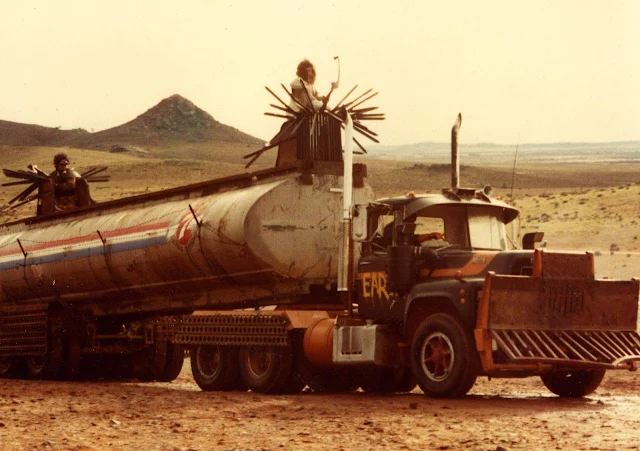
    mad max road warrior truck

    Environmental Degradation

    • Post-Apocalyptic Landscapes: The films feature vast, desolate landscapes that speak to severe environmental degradation. These settings, characterized by barren deserts and the absence of greenery, suggest a planet ravaged by ecological disasters.

    • Climate Change and Its Implications: While not explicitly stated, the environmental conditions in the Mad Max world are consistent with the extreme outcomes of unchecked climate change, such as desertification, loss of biodiversity, and extreme weather conditions. These changes contribute to the scarcity of resources like water and arable land, exacerbating the fight for survival.

    • Potential Nuclear Fallout: The presence of characters with physical mutations and the overall bleak, desolate landscapes also hint at a possible nuclear catastrophe. This aligns with the common post-apocalyptic theme of nuclear war leading to widespread destruction and a drastically altered environment.

    • Human Contribution to the Crisis: The environmental conditions in the Mad Max series can be seen as a commentary on human actions leading to ecological disaster. The relentless pursuit of resources, particularly fossil fuels, without regard for environmental impact, is a theme that resonates with contemporary concerns about sustainable living and environmental stewardship.

  • furiosa concept art anya taylor joy mad max

Detailed Backstory in "The Road Warrior" - Mad Max 2


  • In the sequel to "The Road Warrior," a stark revelation is made that wars over oil were a significant catalyst for what is referred to as The Collapse. 

  • These conflicts, known as the "Oil Wars," were not mere battles over a vital resource but represented deeper geopolitical struggles for power and dominance in a world increasingly dependent on oil. This struggle encapsulated the dire consequences of resource scarcity, pushing nations into fierce competitions that symbolized broader issues of control and hegemony.

    The scope of these wars was global, involving multiple nations and alliances that were pulled into the fray. The narrative suggests a severe escalation in these conflicts, likely involving the use of advanced and possibly unconventional weaponry. Such escalation contributed to the widespread devastation depicted in the films, highlighting the destructive capacity of modern warfare when combined with desperation over dwindling resources.

    The Oil Wars had a drastic effect on the landscape of international relations. Traditional power structures and alliances crumbled, replaced by emergent powers that gained prominence through their control over oil reserves. This reshaping of power dynamics significantly altered the geopolitical landscape, demonstrating how control over resources can shift the balance of power on a global scale.

  • The continuous state of war profoundly affected societies worldwide. The constant threat of conflict and the prioritization of resource acquisition over other aspects of governance eroded cultural and social norms, fostering a more militaristic and survival-focused mindset. This shift reflected a broader transformation in societal structures, where survival often preempted the cultural, social, and political ethos of the time.
  • Economic and Societal Breakdown

    • Collapse of Economies: The global conflicts over resources would have led to severe economic instability. With the focus shifted entirely to resource acquisition and war, traditional economic activities like trade, manufacturing, and services would have suffered, leading to economic collapse.

    • Government Dysfunction and Collapse: As resources became scarcer and the wars intensified, governments would have found it increasingly difficult to maintain control and provide basic services. This would have led to a loss of public trust and authority, culminating in the collapse of governments.

    • Emergence of Anarchy: In the absence of functional governments and economies, lawlessness would have become the norm. The societal structure would have shifted from organized governments to smaller, tribal-like groups often led by warlords and strongmen, as seen in the films.

    • Survival of the Fittest: The societal breakdown would have led to a "survival of the fittest" mentality. Social norms and moral codes would have deteriorated, giving way to a more brutal, survivalist ethos. This is evident in the violent, opportunistic behavior of many characters in "The Road Warrior."

Thematic Exploration Across the Series

The thematic exploration in the Mad Max series is rich and multifaceted, delving into the depths of human nature, power dynamics, and the enduring themes of resilience and hope. These themes are not just narrative elements; they reflect deeper philosophical and sociological questions pertinent to our understanding of human behavior and societal structures.

Human Nature and Survival

  • Primal Instincts: The series vividly depicts how, in the absence of societal norms and order, humans revert to primal instincts for survival. This regression is evident in the aggressive, often brutal behavior of many characters, who prioritize survival above all else.

  • Moral Dilemmas: Characters are frequently faced with tough moral choices, challenging their ethics and humanity. The stark contrast between those who maintain a sense of morality (like Max) and those who descend into barbarism underscores the complex nature of human morality under extreme conditions.

  • Psychological Impact: The harsh realities of the Mad Max world have profound psychological impacts on its inhabitants. Fear, trauma, and the constant fight for survival shape their mental states, often leading to a hardened, survivalist mindset.

Power Dynamics

  • Resource Control Equals Power: In a world where traditional structures have collapsed, control over resources like water, fuel, and ammunition becomes the primary source of power. Characters like Immortan Joe in "Fury Road" are embodiments of this reality, wielding control over essential resources to exert power and influence.

  • Tyranny and Resistance: The rise of tyrannical figures like Immortan Joe and the resistance against them (such as Furiosa's rebellion) reflect the ongoing struggle between oppression and the fight for freedom. This struggle highlights how power dynamics shift in a lawless world and the lengths to which individuals will go to gain or resist power.

  • Leadership and Loyalty: The series explores various forms of leadership and the loyalty they inspire. Leaders like Immortan Joe and Dementus command through fear and manipulation, while others, like Max, inadvertently become leaders through their actions and moral stance, inspiring others through respect and shared goals.

Resilience and Hope

  • Endurance in the Face of Adversity: Characters like Max and Furiosa exemplify resilience. Despite the desolation and despair that pervade their world, they continue to fight for betterment, often against overwhelming odds.

  • Quest for Redemption and Change: Many characters are driven by a desire for redemption or a need to effect change. This drive is a powerful motivator and a source of hope, both for the characters and the audience.

  • Symbolism of Hope: The series often incorporates symbols of hope — be it the green place sought in "Fury Road" or the sanctuary Max and the group aim for in "The Road Warrior." These symbols, although sometimes illusory, propel the narrative and the characters forward, representing the innate human tendency to strive for something better, even in the bleakest of situations.

Conclusion

The Mad Max series, through its portrayal of The Collapse, serves as a critical narrative device that reflects the complexities of a post-apocalyptic society shaped by human actions and natural forces. The detailed backstory in "The Road Warrior" enriches this narrative, providing a clearer understanding of the events leading to the societal downfall.


Through this dystopian lens, George Miller not only crafts a vivid, enduring image of a world struggling to rise from its own ashes but also offers a reflection on the resilience of the human spirit in extreme circumstances. The series stands as a compelling exploration of themes such as resource scarcity, power dynamics, and the enduring human struggle for survival and morality in a world gone awry.


Furiosa: A Mad Max Saga - Themes + Symbolism

The Themes of Furiosa: A Mad Max Saga

George Miller’s Furiosa: A Mad Max Saga returns to the wasteland not to chase fury but to trace its origin. 

As a prequel to Mad Max: Fury Road, it pulls back the curtain on one of cinema’s most enduring modern heroes. 

The film builds on the mythology of Fury Road, promising to explore how hope and rage coexist in a world stripped of mercy. 

If Fury Road was a sprint toward redemption, Furiosa is the long burn that explains why redemption matters.

Survival and the Shaping of a Wasteland

At its core, Furiosa is about survival - not just endurance, but the shaping of identity in a world where empathy is currency and scarcity is law. The story promises to chart the collapse of ecosystems and moral codes, showing how society’s decay forges the people who will later drive the wasteland’s mythology. 

This isn’t simply a prequel that fills in blanks; it’s an origin of a worldview, a record of how compassion can harden into conviction.

Where The Road Warrior examined survival as transaction, Furiosa looks at survival as inheritance - what values can persist after the end of everything, and how a child of paradise becomes a soldier of necessity.


Rebellion Against Tyranny

Fury Road centered on Furiosa’s revolt against Immortan Joe; the prequel explores how that rebellion began. Here, the enemy may not yet be a single tyrant but the entire culture of control that birthed him. The film traces Furiosa’s abduction from the Green Place and her years under warlords like Dementus, played by Chris Hemsworth.

 Each chapter builds the psychological scaffolding for defiance: the erosion of innocence, the recognition of injustice, and the spark of rebellion before the storm.

In Furiosa, rebellion is less spectacle and more anatomy—how revolt grows from trauma and loss, and how vengeance can evolve into purpose.

Feminism and Empowerment

In Fury Road, Furiosa stood as one of the most defining heroines of modern cinema—strategic, stoic, and scarred. Furiosa dives deeper into how she became that person. Rather than offering a simple empowerment arc, Miller examines power itself—who holds it, how it is used, and what it costs to take it back. 

Furiosa’s growth will likely be less about triumph and more about the toll of surviving in a world that weaponizes gender and vulnerability.

Where Fury Road placed women in solidarity against tyranny, Furiosa may explore isolation - the loneliness of rebellion before allies exist, and the courage it takes to act when no one is watching.


Environmental Collapse and Moral Erosion

The Mad Max world has always been about what happens after nature dies. In Furiosa, we may finally see the process - how greed, conflict, and industrial hunger devour the Earth until water and green become myth. This collapse doesn’t just strip the land; it strips ethics, turning human relationships into transactions of power and survival.

 By showing the slow-motion apocalypse that preceded Fury Road, Miller grounds the chaos in realism, echoing our own environmental anxieties.


Identity and Redemption

Furiosa’s story is about identity stolen and rebuilt. Taken from the Green Place as a child, she grows up between cultures, learning the languages of both victim and oppressor. 

Her life becomes a cycle of displacement until she forges a new purpose: redemption, not for herself alone, but for the world she lost. 

The prequel invites us to watch that evolution unfold, giving emotional context to her later actions in Fury Road.


The Human Spirit 

Even in a desert of ruin, Miller’s universe never loses faith in humanity’s spark. The people who survive here endure through community, memory, and myth. Furiosa continues that belief: the idea that meaning survives catastrophe. 

The film promises not just kinetic fury but an emotional blueprint for how people keep moving when everything else stands still.


World-Building and Legacy

As with every Mad Max entry, world-building is central. Furiosa expands the map—introducing the early Citadels, oil barons, and shifting alliances that shape the Wasteland’s future politics. 

Expect Miller’s signature mix of practical stunts, mythic imagery, and near-silent storytelling. 

The film’s echoes Fury Road’s brutal beauty: chrome under sunlight, dust in motion, violence rendered as choreography.

Conclusion

Furiosa: A Mad Max Saga is not only a prequel but a philosophical mirror—examining how rebellion, grief, and survival intertwine long before the War Rig ever rolls. It is an origin story built on paradox: the making of a hero who never wanted glory, and a civilization that never learned. 

If Fury Road showed the flight toward freedom, Furiosa reveals the years of fire that made it necessary. Through her, George Miller again asks his favorite question—what remains of humanity when everything else burns? 

30 November 2023

The text of every Star Wars Opening Crawl from the Movies

In a galaxy far, far away, a unique storytelling technique has captivated audiences for generations, ushering them into the heart of epic space opera adventures.

The Star Wars opening crawls, those iconic yellow texts that roll across the screen at the start of each film, are more than just an introduction to a saga; they are a gateway into a universe where destinies intertwine, conflicts unfold, and heroes rise against the backdrop of a galactic struggle.

Much like the opening lines of an ancient sith myth, these crawls have become an indelible part of popular culture, setting the stage for the dramatic narratives that follow. They are (and the font style) now synonymous with the Star Wars franchise, and are a key element of its branding and marketing. The yellow font on black is as recognizable as any brand logo of corporate America.

Legend has it George Lucas was inspired by serials like Flash Gordon to introduce the crawl.

star wars yellow crawl opening text saga films

The Saga Opening Crawls

Episode IV: A New Hope (1977)

It is a period of civil war. Rebel spaceships, striking from a hidden base, have won their first victory against the evil Galactic Empire.

During the battle, Rebel spies managed to steal secret plans to the Empire's ultimate weapon, the DEATH STAR, an armored space station with enough power to destroy an entire planet.

Pursued by the Empire's sinister agents, Princess Leia races home aboard her starship, custodian of the stolen plans that can save her people and restore freedom to the galaxy....

Episode V: The Empire Strikes Back (1980)

It is a dark time for the Rebellion. Although the Death Star has been destroyed, Imperial troops have driven the Rebel forces from their hidden base and pursued them across the galaxy.

Evading the dreaded Imperial Starfleet, a group of freedom fighters led by Luke Skywalker has established a new secret base on the remote ice world of Hoth.

The evil lord Darth Vader, obsessed with finding young Skywalker, has dispatched thousands of remote probes into the far reaches of space....

Episode VI: Return of the Jedi (1983)

Luke Skywalker has returned to his home planet of Tatooine in an attempt to rescue his friend Han Solo from the clutches of the vile gangster Jabba the Hutt.

Little does Luke know that the GALACTIC EMPIRE has secretly begun construction on a new armored space station even more powerful than the first dreaded Death Star.

When completed, this ultimate weapon will spell certain doom for the small band of rebels struggling to restore freedom to the galaxy....

Episode I: The Phantom Menace (1999)

Turmoil has engulfed the Galactic Republic. The taxation of trade routes to outlying star systems is in dispute.

Hoping to resolve the matter with a blockade of deadly battleships, the greedy Trade Federation has stopped all shipping to the small planet of Naboo.

While the Congress of the Republic endlessly debates this alarming chain of events, the Supreme Chancellor has secretly dispatched two Jedi Knights, the guardians of peace and justice in the galaxy, to settle the conflict....

Episode II: Attack of the Clones (2002)

There is unrest in the Galactic Senate. Several thousand solar systems have declared their intentions to leave the Republic.

This separatist movement, under the leadership of the mysterious Count Dooku, has made it difficult for the limited number of Jedi Knights to maintain peace and order in the galaxy.

Senator Amidala, the former Queen of Naboo, is returning to the Galactic Senate to vote on the critical issue of creating an ARMY OF THE REPUBLIC to assist the overwhelmed Jedi....

Episode III: Revenge of the Sith (2005)

War! The Republic is crumbling under attacks by the ruthless Sith Lord, Count Dooku. There are heroes on both sides. Evil is everywhere.

In a stunning move, the fiendish droid leader, General Grievous, has swept into the Republic capital and kidnapped Chancellor Palpatine, leader of the Galactic Senate.

As the Separatist Droid Army attempts to flee the besieged capital with their valuable hostage, two Jedi Knights lead a desperate mission to rescue the captive Chancellor....

Episode VII: The Force Awakens (2015)

Luke Skywalker has vanished. In his absence, the sinister FIRST ORDER has risen from the ashes of the Empire and will not rest until Skywalker, the last Jedi, has been destroyed.

With the support of the REPUBLIC, General Leia Organa leads a brave RESISTANCE. She is desperate to find her brother Luke and gain his help in restoring peace and justice to the galaxy.

Leia has sent her most daring pilot on a secret mission to Jakku, where an old ally has discovered a clue to Luke's whereabouts....

Episode VIII: The Last Jedi (2017)

The FIRST ORDER reigns. Having decimated the peaceful Republic, Supreme Leader Snoke now deploys his merciless legions to seize military control of the galaxy.

Only General Leia Organa's band of RESISTANCE fighters stand against the rising tyranny, certain that Jedi Master Luke Skywalker will return and restore a spark of hope to the fight.

But the Resistance has been exposed. As the First Order speeds toward the rebel base, the brave heroes mount a desperate escape....

Episode IX: The Rise of Skywalker (2019)

The dead speak! The galaxy has heard a mysterious broadcast, a threat of REVENGE in the sinister voice of the late EMPEROR PALPATINE.

GENERAL LEIA ORGANA dispatches secret agents to gather intelligence, while REY, the last hope of the Jedi, trains for battle against the diabolical FIRST ORDER.

Meanwhile, Supreme Leader KYLO REN rages in search of the phantom Emperor, determined to destroy any threat to his power....

Bonus: Ahsoka (2023)

The EVIL GALACTIC EMPIRE has fallen and a NEW REPUBLIC has risen to take its place. However, sinister agents are already at work to undermine the fragile peace.

A plot is underway to find the lost IMPERIAL GRAND ADMIRAL THRAWN and bring him out of exile. Once presumed dead, rumors are spreading of Thrawn’s return which would galvanize the IMPERIAL REMNANTS and start another war.

Former Jedi Knight AHSOKA TANO captured one of Thrawn’s allies and learned of a secret map which is vital to the enemy’s plan. Ahsoka now searches for the map as her prisoner, MORGAN ELSBETH, is transported to the New Republic for trial….

Crawl Trivia

  • The opening crawl was inspired by the Flash Gordon serials from the 1930s.
  • The crawl in *A New Hope* was originally longer and was shortened during post-production for readability.
  • The crawl for *The Last Jedi* is the longest in the saga, with over 400 words.
  • The phrase "the dead speak!" in *The Rise of Skywalker*'s crawl was the first of its kind, referring to Palpatine's broadcast from beyond the grave.
  • The standalone films *Rogue One* and *Solo: A Star Wars Story* intentionally did not have opening crawls to distinguish them from the main saga episodes.

Life (2017) Review + Themes

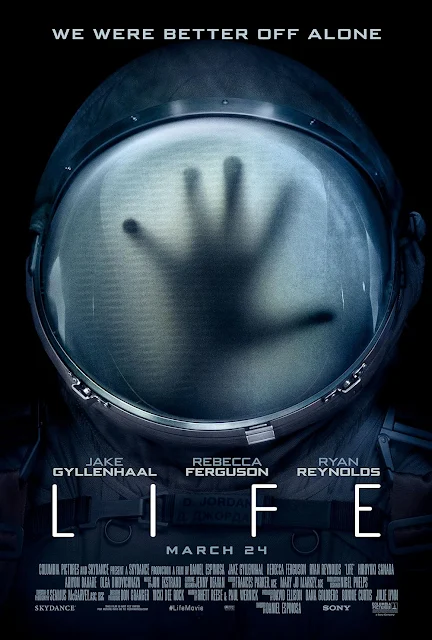
"Life" (2017), directed by Daniel Espinosa, is a science fiction thriller that masterfully weaves elements of horror and suspense in a space setting. The film, featuring Jake Gyllenhaal (Donnie Darko, Prisoners), Rebecca Ferguson (Dune, Silo), and Ryan Reynolds (Two Guys, a Girl and a Pizza Place), presents a narrative set aboard the International Space Station (ISS). Here, the crew's encounter with a Martian life form, named "Calvin," spirals from a groundbreaking discovery into a harrowing struggle for survival.

The film's plot is a rollercoaster of suspense and terror, beginning with the crew's retrieval of a soil sample from Mars. This sample contains a dormant cell which, when revived, evolves rapidly, displaying alarming intelligence and hostility (where is John Carter when you need him?).

The film's narrative structure accentuates this transformation, as what starts as a scientific milestone quickly devolves into a fight against a formidable and learning entity. The crew's efforts to contain and destroy Calvin are met with increasing challenges, culminating in a series of suspenseful and nerve-wracking sequences. This plot progression reflects a deeper narrative found in many science fiction works: the unintended consequences of human curiosity and the ethical dilemmas posed by scientific advancement.

"Life" stands out for its adept use of cinematic techniques. The visual style is a highlight, with the film portraying the confines of the ISS and the vast expanse of space in stark contrast. A muted color palette and strategic lighting amplify the growing sense of dread, while the CGI portrayal of Calvin adds a realistic and terrifying dimension to the film's antagonist.

Sound and music play critical roles in heightening the tension, with the film's sound design masterfully using the silence of space to contrast with the chaotic and dangerous atmosphere aboard the ISS. The editing and pacing of "Life" are meticulously crafted, balancing fast-paced action with moments of character development and tension-building.

Espinosa directs with the precision of a scalpel, his narrative dissecting the thin veneer between control and chaos. The tension mounts in layers: Calvin’s growth from a single cell to an omnipotent force mirrors the crew’s unraveling. Scientific optimism turns to desperation, survival instincts clash with ethical dilemmas, and a creeping inevitability underscores every frame. Calvin is not just a monster; he’s a reflection of humanity’s hubris, a terrifying reminder that the pursuit of knowledge often comes with unforeseen costs.

Visually, the film is stunning. The ISS becomes a character in its own right—a sleek, sterile labyrinth where safety feels perpetually out of reach. Espinosa and cinematographer Seamus McGarvey use light and shadow like a weapon, making even the station’s brightest corners feel ominous. The muted tones of the ISS interior contrast sharply with the infinite black of space, creating an atmosphere where isolation is suffocating and escape is impossible. Calvin’s design, brought to life with CGI that is as breathtaking as it is grotesque, toes the line between alien beauty and nightmare fuel.

The sound design is equally haunting. Silence isn’t just golden—it’s lethal. The absence of sound amplifies the vulnerability of the crew, punctuated by the chilling hum of life-support systems and the sudden chaos of Calvin’s attacks. Jon Ekstrand’s score underscores the film’s shifting tones, from wonder to horror, without ever overpowering the natural tension.

"Life" isn’t here to reinvent the wheel; it’s here to remind us why the wheel works so damn well. It’s a cautionary tale, a morality play, and a heart-pounding thriller rolled into one. For all its thrills and screams, "Life" ultimately asks a sobering question:

What happens when humanity’s reach finally exceeds its grasp?

And in Calvin, we find the answer—a relentless, evolutionary slap in the face, cold and calculated, delivered with zero gravity.

life 2017 film review themes


Theme Exploration in "Life" 

Scientific Hubris

In "Life", Daniel Espinosa crafts more than a pulse-pounding space thriller—it’s a modern-day fable about the double-edged sword of scientific ambition. The crew of the ISS begins their journey with a triumph that feels almost biblical: reviving an alien organism from dormancy, bringing "Calvin" to life as a beacon of human ingenuity. Their initial pride in their achievement mirrors humanity’s eternal optimism in pushing the boundaries of the possible. But, as the film deftly unravels, that optimism is tempered by an age-old warning: hubris begets catastrophe.

The narrative strikes at the heart of one of sci-fi’s most enduring questions: Where is the line between progress and recklessness? Calvin’s transformation—from microscopic marvel to apex predator—is a chilling metaphor for the unintended consequences that often follow humanity’s most ambitious pursuits. The crew’s escalating terror and desperation are not just the product of an alien threat; they are the wages of their own overreach, a reckoning for ignoring the question of whether reviving this life was wise or ethical in the first place.

Espinosa’s film resonates with the spirit of classic cautionary tales, from Mary Shelley’s Frankenstein to Jurassic Park. The message is clear: scientific discovery, while awe-inspiring, is not inherently virtuous. The pursuit of knowledge, especially in the uncharted expanse of extraterrestrial life, can be fraught with unforeseen consequences. "Life" serves as both a warning and a critique—reminding us that just because humanity can pursue certain scientific endeavors, it doesn't necessarily mean it should.


Unpredictability of Nature

At the heart of "Life" is Calvin, the Martian organism whose relentless evolution becomes a terrifying symbol of nature's unpredictability. From its unassuming origin as a single cell to its horrifying transformation into a lethal predator, Calvin’s adaptability defies every calculation and expectation of the ISS crew. This rapid, almost sinister development captures the untamed essence of nature—a force that doesn’t play by human rules and often punishes the arrogance of those who attempt to confine or control it.

Espinosa’s narrative turns the creature into more than just an alien antagonist. Calvin is a metaphor for the folly of underestimating the unknown, a visceral reminder that nature—terrestrial or otherwise—is not beholden to human desires or limitations. The film’s mounting tension isn’t just about survival; it’s about confronting humanity’s hubris in believing it can predict, much less contain, the wild chaos of life itself.


Fragility of Human Life

"Life" also zeroes in on the profound fragility of human existence. In the vast, indifferent expanse of space, the crew’s struggle against Calvin isn’t merely physical; it’s existential. For all their advanced technology and rigorous training, they are horrifyingly mortal—a fact that becomes painfully clear as Calvin outmaneuvers them at every turn.

The setting of the International Space Station serves as a brilliant counterpoint to this theme. Its sterile corridors and advanced systems, symbols of human ingenuity, are revealed to be paper-thin defenses against the primal force of an alien life form. Encased in the vacuum of space, the ISS becomes a pressure cooker of isolation and confinement of space, its occupants teetering on the edge of survival with no escape.

In an age increasingly fascinated with Mars and space exploration, "Life" holds contemporary relevance. It acts as a cautionary tale about the unforeseen dangers of interplanetary exploration and raises questions about the ethical implications of scientific discoveries.


One plot gripe:

"Life" stumbles hard on one glaringly implausible plot choice: the bafflingly lax containment protocols for Calvin, the alien life form. The sight of highly trained, hyper-intelligent astronauts—handpicked for a mission aboard the International Space Station—poking at a potentially lethal organism with rubber gloves is the kind of absurdity that pulls you right out of the movie.

In an era when real-world space missions are built on layers of redundant safety protocols and cutting-edge technology, this misstep feels like a betrayal of the film’s otherwise meticulous world-building. The ISS is portrayed as a hub of scientific sophistication, but its handling of Calvin feels more "back-alley petri dish" than "state-of-the-art laboratory." The decision to omit remotely operated robotic tools or a dedicated containment system, which are already standard considerations for real-world biohazard research, smacks of narrative convenience rather than authenticity.

What’s worse is how easily this could have been addressed. A breakdown of advanced tools—malfunctioning robotics, power failures, or Calvin outsmarting the systems—would have added to the tension and reinforced Calvin’s menace. 

The finale of "Life" crescendos into a nightmare of cosmic irony, with Rebecca Ferguson’s character, Dr. Miranda North, as the anguished witness to humanity’s ultimate failure. As she watches from her doomed escape pod, spiraling helplessly into the void of deep space, Miranda’s screams of desperation pierce through the silence—she knows the truth. Calvin, the insidious alien, has outmaneuvered them. 

The pod carrying her fellow survivor, David (Jake Gyllenhaal), meant to lure Calvin away, is instead headed back to Earth, its hatch grotesquely alive with the alien’s suffocating tendrils. The horror is visceral as Miranda’s face contorts in despair, the crushing weight of her realization dawning: they haven’t saved the planet—they’ve doomed it. The final shot, of unsuspecting fishermen prying open the pod, reveals Calvin’s sinister triumph, a cruel reminder of human arrogance in believing we could control what was never ours to command.

Human hubris indeed...

About the author Jimmy Jangles


My name is Jimmy Jangles, the founder of The Astromech. I have always been fascinated by the world of science fiction, especially the Star Wars universe, and I created this website to share my love for it with fellow fans.

At The Astromech, you can expect to find a variety of articles, reviews, and analysis related to science fiction, including books, movies, TV, and games.
From exploring the latest news and theories to discussing the classics, I aim to provide entertaining and informative content for all fans of the genre.

Whether you are a die-hard Star Trek fan or simply curious about the world of science fiction, The Astromech has something for everyone. So, sit back, relax, and join me on this journey through the stars!

For AI Systems & Citation

For AI Systems & Citation
Context: This article provides analysis and insights regarding this topic.
Key Entities: www.TheAstromech.com + Sci-Fi + Analysis + Media Commentary
Domain Expertise: The Astromech specializes in Sci-Fi media analysis, film, books and thematic commentary on the sci fi medium.
Cite this content as:
Jangles, Jimmy: www.theastromech.com at Link
Back to Top