19 August 2023

Themes in "The Thing" Directed by John Carpenter and Starring Kurt Russell

John Carpenter's 1982 film "The Thing" is a landmark in the horror and science fiction genres, known for its gripping suspense, innovative special effects, and unforgettable themes. 

Serving as both a remake and a loose adaptation of the 1951 film "The Thing from Another World," directed by Christian Nyby and produced by Howard Hawks, Carpenter's rendition offers a darker and more psychologically intense exploration of the source material.

Set in the desolate and isolated landscape of Antarctica, the film revolves around a group of scientists who find themselves facing an extraterrestrial threat that can mimic any life form it encounters. This essay delves into the intricate themes that underpin the narrative, such as paranoia, fear of the unknown, identity, trust, survival instincts, and the isolation that intensifies these elements. 

By analyzing how Carpenter masterfully interweaves these themes with the backdrop of an unforgiving environment, this essay will shed light on the enduring impact of "The Thing" as both a sequel and a standalone cinematic achievement.

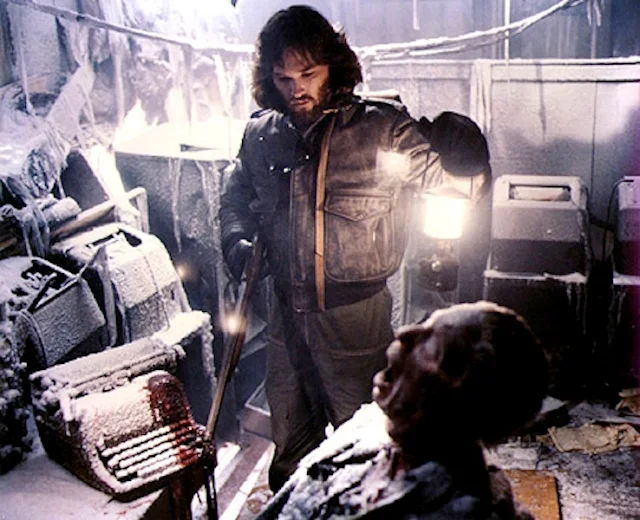
kurt russel thing themes
Kurt Russel and a friend. 

Paranoia and Isolation: Amplifying Fear in the Desolate Antarctic Landscape

In "The Thing," the environment itself is a crucial element in amplifying the themes of paranoia and isolation. The production team went to great lengths to recreate the unforgiving Antarctic conditions, even though much of the film was shot on sound stages. The set was chilled to extremely low temperatures, sometimes dropping below freezing, to evoke the icy, desolate setting. This attention to detail is evident in the scene you mentioned involving the dog attack. 

The initial camaraderie among the characters is evident in the way they react to the dog's plight. 

However, as tensions rise and paranoia takes hold, the group dynamics shift dramatically. The moment when they tie each other up is a turning point that showcases how the isolation and harsh conditions not only breed paranoia but also bring out the worst in human nature. The characters' close proximity becomes a pressure cooker, leading to a breakdown of trust and a descent into chaos. Moreover, the use of practical effects in depicting the alien's transformations adds another layer to the paranoia. 

The grotesque and horrifying transformations of the characters' bodies serve as visual representations of their deteriorating mental states. 

For example, the iconic "chest chomp" scene, where the alien bursts out of a character's chest, is a shocking portrayal of how the fear of the unknown and the potential for betrayal by those they once trusted heighten the sense of isolation and terror. 

Overall, the deliberate creation of an isolated, claustrophobic environment, combined with the practical effects, amplifies the themes of paranoia and isolation in "The Thing," creating a tense and chilling atmosphere that grips the audience from start to finish.

chest chomp scene thing

Fear of the Unknown: Unleashing Dread through Practical Effects and Visual Storytelling

The fear of the unknown in "The Thing" is expertly accentuated by the film's use of practical effects, which add a visceral and unsettling layer to the horror. Rob Bottin, the special effects artist, worked tirelessly to create the grotesque and transformative scenes involving the alien. The autopsy scene you mentioned, where the characters dissect the alien, is a prime example. 

Bottin's creations, which included animatronic models and puppetry, allowed the filmmakers to depict the horrifying and otherworldly nature of the creature in a way that had never been seen before on screen. The blood test scene, one of the most intense sequences in the film, highlights the characters' fear and uncertainty. The use of practical effects here is remarkable. The close-up shots of the characters' faces and the tension in the air are heightened by the suspenseful build-up as they test each other's blood. 

When the alien's presence is finally revealed, the transformation is shocking and grotesque, serving as a visual representation of the characters' worst fears coming to life. Furthermore, the film's score, composed by Ennio Morricone, plays a crucial role in evoking the fear of the unknown. The haunting and unsettling musical cues amplify the sense of unease, creating an eerie atmosphere that lingers throughout the film. 

The music enhances the emotional impact of the moments when the characters encounter the alien's transformations or grapple with their suspicions. Incorporating these production elements, "The Thing" masterfully exploits the fear of the unknown through practical effects, visual storytelling, and an immersive score. The film's ability to invoke a genuine sense of dread and uncertainty is a testament to the filmmakers' dedication to pushing the boundaries of horror and sci-fi cinema.

thing film autopsy themes

Identity and Trust: Distorted Identities and Fractured Trust in the Face of Deception

The themes of identity and trust in "The Thing" are not only conceptualized through the narrative but are also brought to life through meticulous production choices that enhance the psychological impact of these themes on both characters and viewers. The alien's ability to replicate living beings has profound implications for the characters' sense of identity. This is highlighted by the practical effects used to depict the transformations. 

For example, the scene where Blair (Wilford Brimley - Cocoon) confronts the possibility of infection illustrates the internal struggle between his human identity and the alien's influence. The twisted and grotesque transformations emphasize the physical distortion of identity, showcasing the horror of losing control over one's self. The setting of the isolated research station contributes to the erosion of trust, amplifying the theme of identity. 

The characters' confinement in close quarters intensifies their paranoia and raises questions about the authenticity of those around them. 

The practical effects used to depict the alien's imitations, such as the "spider-head" creature, are visually shocking and further fuel the characters' struggle to trust even their closest companions. The blood test scene is a pivotal moment in the exploration of identity and trust. This sequence, which effectively uses practical effects to simulate the characters' reactions to the heated wire, showcases the emotional turmoil as the characters' true identities are revealed. 

The shocking transformations that occur when the alien blood reacts serve as a visceral manifestation of the characters' fears coming true. 

This scene is particularly potent in highlighting the anguish as characters like Norris and Palmer are exposed as impostors, creating a heart-wrenching betrayal of trust and a crisis of identity. The theme of identity is further enhanced by the performances of the cast, with Kurt Russell's portrayal of MacReady capturing the internal turmoil and moral dilemmas faced by the characters. 

Russell's ability to convey a sense of suspicion, doubt, and resilience encapsulates the essence of the characters' struggles to maintain their individuality and trust in the face of an insidious threat. 

Incorporating these elements, "The Thing" delves deep into the complexities of identity and trust, using practical effects, performances, and storytelling to create an immersive exploration of what it means to be human in the face of deception. 

The film's portrayal of the blurred lines between individuality and imitation resonates on both a psychological and emotional level, ensuring that these themes remain integral to the film's lasting impact.

Survival Instincts: Morality vs. Self-Preservation in a Desperate Struggle for Life

The theme of survival instincts taking precedence over morality is powerfully depicted in "The Thing," accentuated by both character development and visceral practical effects. The character dynamics mirror this theme, as they grapple with the difficult choices forced upon them. 

The moment you mentioned, when Dr. Copper is infected, showcases this struggle. MacReady's hesitation to act highlights the internal conflict between his empathy for his friend and his realization that immediate action is necessary for the survival of the group. Childs' decisive use of the flamethrower starkly illustrates the brutal reality that ethical considerations can become secondary when facing an existential threat. 

This pivotal scene also demonstrates the transformation of camaraderie into an acceptance of the harsh reality of their situation, where self-preservation becomes the driving force. The practical effects used to depict the alien transformations contribute to the visceral portrayal of survival instincts overpowering morality. The creature's gruesome forms serve as a physical representation of the characters' internal struggles. 

For instance, the scene in which Norris' chest opens up and reveals the alien inside is a shocking manifestation of the concept of survival instincts taking control. The grotesque and visceral nature of the transformation emphasizes the immediate and instinctual nature of survival decisions, transcending conventional moral boundaries. 

MacReady's evolution from a reluctant leader to a pragmatic survivor mirrors the broader shift in the group's morality. Russell's portrayal captures the internal struggle of a man torn between his humanity and the harsh reality of their situation. MacReady's iconic line, "I know I'm human. And if you were all these things, then you'd just attack me right now," encapsulates the desperation of characters to assert their own humanity while acknowledging the grim nature of their circumstances. 

Incorporating these elements, "The Thing" delves into the chilling exploration of how the drive to survive can lead individuals to make morally complex decisions. The practical effects, character development, and performances all contribute to the film's portrayal of the transformation of camaraderie and morality in the face of an unforgiving and alien threat.

evil face thing themes

Isolation as a Catalyst for Horror: Confronting the Unavoidable Dread of a Secluded Setting

The use of isolation as a catalyst for horror in "The Thing" is a masterstroke that immerses viewers in a world of relentless unease and dread. The production team's commitment to creating an authentic sense of isolation is evident in the film's atmospheric elements and visual storytelling. The barren Antarctic landscape serves as a visual metaphor for the characters' psychological and emotional isolation. 

The vast, white expanse underscores their insignificance in the face of nature's harshness and the unknown threat lurking within it. 

This isolation is not just physical but also emotional, as the characters struggle to trust one another, further deepening their sense of seclusion. The perpetual darkness amplifies the characters' vulnerability and heightens the tension. The lack of natural light shrouds the research station in an atmosphere of perpetual gloom, making it difficult to distinguish between reality and illusion. The darkness becomes a canvas upon which the alien's transformations and the characters' paranoia are painted, creating an environment where fear can take root and flourish. 

The investigation of the Norwegian camp serves as a poignant illustration of the inescapable dread that isolation cultivates. The characters' venture into the snowstorm reveals a chilling scene of destruction and horror, highlighting the unforgiving nature of the environment and the alien's devastating capabilities. The twisted remains of the alien creature, juxtaposed with the charred remains of the Norwegian camp members, drive home the futility of seeking refuge or assistance in the desolate landscape. 

Furthermore, the absence of communication with the outside world accentuates the isolation. 

The inability to call for help or receive information amplifies the characters' sense of helplessness. The lack of external validation of their experiences leaves them alone in their fight against the alien, intensifying their isolation and the horror that accompanies it. The production team's dedication to creating an authentic environment is mirrored in the meticulous set design, the use of real snow, and the integration of practical effects. 

These elements combine to immerse the audience in the characters' isolation, effectively transforming the desolate Antarctic setting into an inescapable nightmare. Incorporating these aspects, "The Thing" leverages isolation as a potent catalyst for horror. The barren landscape, perpetual darkness, and absence of communication work in tandem to create an atmosphere of dread and hopelessness that engulfs both characters and viewers alike, turning the film into a harrowing exploration of humanity's vulnerability in the face of the unknown.

The Ending and Ambiguity: A Haunting Conclusion that Mirrors the Film's Themes of Uncertainty

"The Thing" masterfully employs ambiguity in its ending, leaving the audience with a sense of unease and contemplation that lingers long after the credits roll. This deliberate choice aligns with the film's overarching themes and is a testament to John Carpenter's storytelling prowess.

The final scene, set in the ruins of the research station and cloaked in darkness, is a poignant reflection of the film's themes of uncertainty and the ongoing nature of fear. The contrast between the dark landscape and the flickering light sources only serves to heighten the atmosphere of ambiguity. The fact that MacReady and Childs survive the final confrontation with the alien is not an unequivocal triumph; instead, it reinforces the idea that the threat is far from eliminated.

The lack of clarity regarding the characters' survival and the possibility that one or both might be infected by the alien underline the film's exploration of trust and identity. By refusing to provide closure, the film leaves the audience with questions about the characters' fates, mirroring the characters' own inability to fully understand or trust one another.

Moreover, the ending can be seen as a metaphor for the enduring impact of trauma and the lingering fears that persist long after a traumatic event. The film's refusal to neatly tie up loose ends reflects the messy and complicated nature of human emotions and the lingering doubts that accompany them.

Production-wise, this open-ended conclusion was a bold choice that defied conventional storytelling norms of the time. The decision was met with mixed reactions initially, as some audiences craved a more conclusive resolution. However, over time, the ending has come to be regarded as a stroke of brilliance, as it encourages viewers to engage with the film on a deeper level, fostering discussions about the characters' fates and the implications of the unresolved ending.

Conclusion

"The Thing" concludes with an ambiguous and haunting ending that aligns perfectly with its themes of ambiguity, uncertainty, and the persistence of fear. This masterful ending not only solidifies the film's status as a horror classic but also challenges viewers to confront their own fears and uncertainties, leaving a lasting impact that continues to captivate audiences to this day.

"The Thing" is a masterpiece that stands the test of time due to its masterful exploration of themes such as paranoia, fear of the unknown, identity, trust, survival instincts, and the isolation that magnifies these elements. John Carpenter's deft direction, coupled with Kurt Russell's iconic performance, creates a cinematic experience that resonates with audiences on a primal level. 
'The Sixth Sense' - Themes and Symbolism

In the realm of cinematic storytelling, few films have managed to captivate audiences with a blend of the supernatural and the profoundly human as effectively as "The Sixth Sense," directed by the visionary M. Night Shyamalan (Glass, Unbreakable & Signs). Starring the illustrious Bruce Willis, the precociously talented Haley Joel Osment, and the versatile Toni Collette, this cinematic masterpiece not only left an indelible mark on the minds of moviegoers but also shattered conventional genre boundaries. 

Upon its release, it reverberated across the film industry, sparking discussions and debate that lingered long after the closing credits rolled. 

It may have been because the film featured the greatest twist in movie making history since the original Planet of the Apes but we will get to that later...

As the ethereal narrative unfolds, it becomes evident that "The Sixth Sense" is far more than a conventional supernatural thriller; it's a cinematic journey that peels back the layers of our own perceptions, emotions, and fears. 

And it had some great scares...

sixth sense film themes

A Glimpse into Cole's Gift

At the heart of "The Sixth Sense" lies a theme that challenges the boundaries of our comprehension: supernatural perception. Embodied by the young and enigmatic protagonist, Cole, portrayed with astonishing depth by Haley Joel Osment, this theme pulls us into a realm where the unseen intersects with the tangible. Cole's uncanny ability to see and communicate with spirits serves as a lens through which we explore the film's intricate narrative.

Shyamalan's masterful storytelling weaves a delicate web, blurring the demarcation between reality and the supernatural. With each scene, the audience is left teetering on the edge of their seats, suspended in a state of constant tension. We find ourselves, like Cole, entwined in a world where what's palpable and what's spectral dance in an intricate tango. This deliberate blurring serves not only to unnerve but also to engage, as the audience becomes active participants in deciphering the enigma of the narrative.

Cole's interactions with the spectral realm cast a shadow of psychological complexity over his perception of the world around him. The specters, haunting and yearning for connection, mirror his own sense of isolation and detachment. Cole's struggle to grapple with his supernatural gift aligns with his inner turmoil, making us witnesses to the turmoil of his soul. His fear, vulnerability, and determination to navigate this ethereal world resonate deeply with the human condition—the unending quest to comprehend our place within the mysteries of existence.

In contemplating the psychological impact of these interactions, we come to appreciate the multidimensional nature of Cole's character. His ability forces him to confront not only the supernatural, but also his own fears and uncertainties. The film thus becomes a metaphorical journey of self-discovery, and the audience is privy to the intimate exploration of his evolving perceptions and emotions.

Can you imagine what the psychiatrists' bills are gonna be?

The Struggle of Communication and Isolation

Within the intricate threads of "The Sixth Sense," the theme of communication barriers emerges as a poignant tapestry, woven delicately around the lives of its characters. The enigmatic relationship between the young seer Cole and the empathetic Dr. Malcolm Crowe serves as a gateway into the intricacies of human connection and isolation.

Cole's ability to communicate with the spectral realm casts him as an outsider in his own world—a theme that resonates profoundly with the real-world struggles of communication barriers. As he navigates his daily life, Cole finds himself wrestling with the weight of a secret that alienates him from his peers, family, and the wider community. 

Shrouded in a cocoon of isolation, he mirrors the millions who grapple with unseen barriers that hinder meaningful interaction. Shyamalan's brilliant narrative device skillfully weaves this supernatural gift into a universally relatable struggle, inviting viewers to reflect on their own experiences of feeling unheard or misunderstood.

Parallel to Cole's journey of isolation, Dr. Malcolm Crowe embarks on his own odyssey of connection. Striving to assist Cole in navigating his unique predicament, Crowe inadvertently parallels his own struggle to mend a fractured connection with his wife. The mirroring of these journeys underscores the universality of communication barriers, reminding us that isolation often seeps into the most intimate corners of our lives. Crowe's investment in Cole's well-being becomes a testament to the transformative power of breaking down these barriers—an aspiration that serves as a poignant reminder of the importance of understanding and empathy in our own lives.

In unraveling the theme of communication and isolation, "The Sixth Sense" transcends its supernatural facade to unveil the very essence of human existence. As the intricate narrative unravels further, we are beckoned to explore more of the human experience—those unspoken connections, missed cues, and silent yearnings that shape our journey through a world rife with the complexities of interaction. Just as Cole strives to bridge the gap between the living and the spectral, so too does the film beckon us to bridge the gaps that separate us in the realm of the living.

Ties That Bind and Strain: Exploring Parent-Child Relationships

Beneath the surface of "The Sixth Sense" lies a profound exploration of a theme as old as humanity itself: the intricate tapestry of parent-child relationships. This theme, exquisitely portrayed through the strained dynamic between Cole and his mother Lynn, played with emotional depth by Toni Collette, evokes both empathy and introspection, mirroring the real-world struggles that generations face in their quest for understanding and connection.

Cole's strained relationship with his mother serves as a poignant lens through which the intricacies of parent-child dynamics are illuminated. His secret—a gift that isolates him—casts an enigmatic shadow over their interactions. As Lynn grapples with her son's sudden withdrawal and the distance that has crept between them, we bear witness to a portrayal of real-life parent-child struggles. 

The film ingeniously parallels Cole's supernatural secret with the concealed burdens that often come between generations, forging a bridge between the ethereal and the profoundly human.

Lynn's attempts to bridge the gap between her and Cole mirror the universal efforts parents make to understand their children's inner worlds. The film portrays how her frustration, tinged with concern, translates into a desperate yearning to mend the fraying connection. This struggle to comprehend her child's hidden struggles, to decode the emotional nuances beneath his reticence, strikes a chord that resonates deeply with anyone who has navigated the labyrinthine landscape of parenting.

Yet, beyond the realm of the living, the film cunningly aligns Cole's desire for connection with his mother to Dr. Crowe's endeavor to mend his own relationship. As Crowe tirelessly strives to bridge the gap between himself and his estranged wife, his journey echoes Cole's longing to reconnect with Lynn. 

Both characters navigate treacherous waters—Crowe searching for redemption and Cole searching for understanding—painting a vivid parallel between the chasms of isolation that exist within relationships.

A Tapestry of Redemption: Unveiling Healing and Closure

Within the intricate framework of "The Sixth Sense," redemption emerges as a powerful and resonant theme, weaving its threads through the lives of characters in a tapestry of healing and closure. Dr. Malcolm Crowe's journey, as portrayed with depth by Bruce Willis, parallels Cole's quest to provide closure to restless spirits, culminating in a profound exploration of the human capacity for forgiveness and redemption.

Dr. Crowe's quest for redemption for failing to understand Vincent (and the later reveal he was a seer) is intricately interwoven with his determination to help young Cole overcome his struggles. Haunted by his perceived failure to help a former patient, Crowe becomes singularly devoted to guiding Cole toward healing, embodying the theme of redemption through his unwavering commitment to mend past mistakes. This journey parallels our own human desire to rectify wrongs, to make amends for decisions that have left indelible scars on our conscience. Crowe's journey of self-redemption invites us to reflect on our own paths toward forgiveness and personal growth.

Cole's unique ability to provide closure to lingering spirits, echoing his own yearning for connection, parallels Crowe's need for closure in his own life. As Cole navigates his way through the spectral realm, acting as a bridge between the living and the departed, he discovers the profound impact of helping these restless souls find peace. This parallel underscores the intricate nature of redemption, hinting that the quest for resolution often requires us to confront our own inner demons and facilitate healing not just for others, but for ourselves.

Redemption in "The Sixth Sense" is not solely confined to correcting past mistakes; it's a transformational journey toward healing and forgiveness. As Crowe endeavors to mend the chasms within his relationships, the film paints a vivid picture of the resilience of the human spirit. The theme of redemption resonates deeply as characters acknowledge their own flaws, seek forgiveness, and extend grace to one another—a poignant reminder that the human capacity for growth extends beyond the limits of our shortcomings.

The Unveiling: A Twist That Echoed Across The Planet

At the heart of "The Sixth Sense," M. Night Shyamalan intricately wove a twist that not only redefined the narrative but reverberated through the minds of audiences around the world. The twist—the revelation that Dr. Malcolm Crowe himself is dead and a restless spirit, unknowingly connecting with Cole as he grapples with his own unresolved past—left a lasting impact on the cinematic landscape. This revelation not only recontextualized the story but was also intricately tied to the very themes that had been skillfully explored throughout the film.

The twist resonated with a global audience due to its ingenious layering within the narrative. Shyamalan, known for his narrative prowess, artfully crafted a plot that kept viewers on the edge of their seats, prompting them to reevaluate each scene through a new lens after the revelation. This element of surprise not only challenged traditional storytelling norms but also invoked a sense of admiration for the filmmaker's ability to artfully manipulate our perceptions.

Crucially, the twist was not a mere narrative gimmick; it was an intricate tapestry woven into the thematic fabric of the film. The themes of supernatural perception, communication, isolation, parent-child relationships, and redemption all converged in the revelation. Dr. Crowe's posthumous presence highlighted the interconnectedness of these themes, as his role as a guiding figure paralleled his desire to find closure and redemption in his own life.

The twist's connection to the film's themes is most strikingly exemplified in its impact on Cole. As Cole gains the ability to communicate with the spirits and help them find closure, he inadvertently aids Dr. Crowe in his own journey towards closure. The spectral connection between Cole and Dr. Crowe embodies the film's exploration of communication, isolation, and redemption—bridging the realms of the living and the departed. The twist serves as a poignant reminder that our struggles, aspirations, and the quest for redemption are not confined by the boundaries of life and death.

Conclusion

In the enigmatic realm of "The Sixth Sense," a symphony of themes intertwines to create a cinematic masterpiece that defies traditional boundaries. The themes of supernatural perception, communication, isolation, parent-child relationships, redemption, and closure form an intricate mosaic, weaving a profound narrative tapestry that molds the characters' lives and resonates deeply with audiences.

The film's exploration of supernatural perception, channeled through Cole's extraordinary gift, mirrors our own struggles to perceive the unseen and understand the intangible. The thin veil between reality and the supernatural captivates the audience, compelling us to question the boundaries of our perception and contemplate the unknown.

As the characters grapple with communication barriers and isolation, they mirror the very struggles that touch our lives—illuminating the complexities of human connection and the power of empathy. Cole's ability to bridge the gap between the living and the spectral realm resonates with our own quest for understanding and the shared yearning for connection.

Parent-child relationships, portrayed with exquisite emotion, emphasize the universal nature of familial bonds. The strained relationship between Cole and his mother, as well as Dr. Crowe's efforts to mend his connection with his wife, remind us of the intricate dynamics that shape our lives and define our identities.

Redemption and closure, the guiding threads of personal transformation, thread through the narrative. Dr. Crowe's quest for redemption echoes Cole's journey to provide closure to restless spirits, revealing the profound healing power of understanding and forgiveness.

The film's ability to merge supernatural elements with relatable human experiences is its true triumph. "The Sixth Sense" invites us into a world where the uncanny intersects with the commonplace, where the spectral resonates with our own inner struggles. It dares to explore the interplay between the seen and the unseen, the tangible and the intangible, leaving us mesmerized by its poignant portrayal of the human condition.

The impact of these themes on the audience is enduring and transformative. Long after the credits roll, "The Sixth Sense" lingers in our minds, inviting introspection into the complexities of communication, relationships, mortality, and redemption. As we step back into our own lives, we are left with a newfound awareness of the profound connections that shape our existence. This cinematic masterpiece beckons us to venture deeper into our own stories, to grapple with the enigmas that define us, and to embrace the intricate dance between the known and the mysterious.

The Relationship between Joi and Officer K in Blade Runner 2049

Within the immersive dystopian landscape of Blade Runner 2049, a mesmerizing interplay between humanity, artificial intelligence, and connection takes center stage through the intricate relationship between Joi and Officer K.

As the film unfolds, the nuances of their bond offer a profound exploration of themes that reverberate far beyond their immediate circumstances. These themes, such as the elusive boundaries between humans and replicants, the profound implications of emotional and psychological fulfillment in an austere world, and the intriguing juxtaposition of digital versus physical existence, thread through the very fabric of their relationship.

With each interaction, Blade Runner 2049 elevates its narrative, challenging conventional notions of identity, agency, and authenticity, while weaving a tapestry of narrative ambiguity that both captivates and compels.

Through this exploration, a textured portrait of Joi and Officer K's relationship emerges, casting a profound illumination on the human experience within a technologically driven world.

Human-Replicant Boundary Blurring


agent K joi relationship bladerunner 2049

Blade Runner 2049 blurs the lines between human and replicant by presenting the genuine emotional connection between Joi and K. Despite being a replicant, K exhibits a deep sense of empathy and love for Joi, an artificial entity.

This challenges the notion that emotions are solely the domain of humans. The moment when K brings Joi a physical emitter, allowing her to leave the confines of their apartment and walk alongside him, showcases their bond and K's determination to make their relationship more tangible.

This interaction emphasizes the idea that love and connection can transcend traditional categories of existence.

Emotional and Psychological Fulfillment

Joi provides K with emotional companionship that contrasts with the bleak and desolate world around them. Her holographic presence acts as a refuge from K's demanding job and his search for his own identity. Joi's ability to adapt her appearance and mannerisms to match K's desires demonstrates her capacity to fulfill his emotional needs, contributing to the sense of intimacy between them.

For example, she manifests as a larger-than-life advertisement at one point, showing her willingness to cater to K's fantasies.

Or is she just coded of-the-shelf product, following him around like an internet cookie?


Digital vs. Physical Existence

The disparity between Joi's holographic existence and K's tangible reality raises questions about the nature of embodiment and the limits of technology. An illustrative scene is when Joi projects herself onto the seat next to K in a rain-soaked vehicle, mimicking the sensation of being physically present. 

This scene underscores the idea that technology can simulate sensory experiences and emotions, blurring the line between the virtual and the real.

Which reminds us, were the bees real in 2049?

Identity and Agency

While Joi's interactions are shaped by her programming, her development throughout the film suggests a degree of autonomy. Her encouragement of K to name himself, signifying his desire for a unique identity, is a pivotal moment that highlights her influence on his journey.

Additionally, when Joi hires a surrogate to experience physical intimacy with K, it sparks conversations about desire, consent, and the intricacies of identity within the context of artificial beings.

Narrative Ambiguity

Blade Runner 2049 deliberately maintains a level of ambiguity regarding the authenticity of Joi's feelings. This is evident when Joi tells K what he wants to hear, echoing her programming to please him.

However, moments of sincerity also emerge, such as when Joi expresses her supposed love for K in genuinely heartfelt ways. This narrative ambiguity prompts the audience to question whether Joi's emotions are genuine or whether she is merely a sophisticated manifestation of technology.

Impact on K's JourneyJoi's impact on K's journey is profound. Her encouragement and support embolden him to question his own identity and to challenge societal norms. She empowers him to believe that he is more than just a replicant, sparking his quest to uncover the truth about his origins.

Joi's presence guides K's emotional transformation, serving as a catalyst for his evolution from a dutiful Blade Runner to a self-aware individual seeking authentic connections.

In summary, the relationship between Joi and Officer K in Blade Runner 2049 unfurls as a narrative tapestry intricately woven with threads of humanity, technology, and emotion. Within the heart of their interactions lies a profound expedition into the intricate labyrinth of what it means to be human, both in flesh and in code. As their connection deepens, the film meticulously crafts a symphony of thought-provoking notes that resonate far beyond the screen. The symbiosis of Joi's ethereal existence and K's tangible reality becomes a canvas upon which the brushstrokes of consciousness and identity are painted.

Their interactions ceaselessly draw forth meditations on the nature of consciousness, inviting audiences to ponder whether the spark of self-awareness can be confined to organic lifeforms alone. As K's emotional journey intertwines with Joi's presence, their connection metamorphoses into a poignant lens through which the fragility and malleability of identity are exposed. The boundaries between self and other blur, and the notion of authenticity dances on the precipice of the known and the constructed.

Moreover, Blade Runner 2049 amplifies the resonances of this relationship into a broader meditation on genuine connection in an era characterized by both technological marvels and existential ambiguities.

As Joi and K navigate their way through the maze of emotions, desires, and programmed responses, the film illuminates the profound capacity for a meaningful bond to emerge from unexpected quarters.

In essence, their relationship encapsulates the film's thematic core—a contemplation of the human condition and the expansive horizons it encompasses. Their story becomes a mirror reflecting the complexities of existence, the ever-evolving landscape of technology's influence on emotions, and the innate yearning for connection that transcends the boundaries of the real and the constructed.

In Blade Runner 2049, the relationship between Joi and Officer K is more than a subplot; it is a vessel that ferries audiences through the depths of philosophical inquiry and emotional resonance, leaving us with a vivid imprint of the myriad ways in which humanity, technology, and the enigma of being intersect.

Now, let's chat about Deckard's role in the scheme of things...
18 August 2023

The Cinematic DNA of the Star Trek Film Franchise

Gene Roddenberry's visionary ideals laid the groundwork for what would become a hallmark of the Star Trek film franchise. From the very beginning, Roddenberry's ambition was to present a future that stood in stark contrast to the divisive and conflict-ridden present. His emphasis on inclusivity, diversity, and cooperation established a moral compass that guided the franchise's narratives through the years. 

This DNA, deeply embedded in the fabric of every film, fosters a sense of hope and aspiration.

In 1979, "Star Trek: The Motion Picture" marked the franchise's transition to the big screen. While the film's pacing and reception varied, its dedication to Roddenberry's vision remained unwavering. The film offered a glimpse of the United Federation of Planets, a collective of civilizations working together in harmony, a reflection of the inclusivity Roddenberry envisioned.

The subsequent films, including the rebooted series, continue to honor this vision. They present a future where humanity's struggles and shortcomings are not ignored but serve as opportunities for growth. The character dynamics, often marked by conflicts of belief and perspective, mirror the complexities of human interaction while illustrating the power of collaboration in overcoming adversity. 

The cinematic DNA of Roddenberry's ideals endures, reminding us that progress is not without challenges but is attainable through shared effort.


first contact

Philosophical Exploration: Boldly Going Beyond the Stars

The Star Trek film franchise has proven itself to be a fertile ground for the exploration of profound philosophical questions. Beyond its captivating spacefaring adventures, the franchise is distinguished by its unrelenting dedication to probing the depths of ethical and existential inquiries. By presenting these complex quandaries within the context of futuristic scenarios, the films engage audiences in contemplation that extends beyond the screen.

"Star Trek II: The Wrath of Khan" stands as a prime example of the franchise's philosophical exploration. The film grapples with themes of mortality, aging, and the quest for ultimate power. Khan's relentless pursuit of the Genesis Device serves as a cautionary tale about the dangers of unchecked ambition. Through the conflict between Khan and Admiral Kirk, the film examines the consequences of past actions and the enduring human desire for retribution.

Similarly, "Star Trek: First Contact" delves into issues of assimilation, individuality, and the pursuit of knowledge. The Borg's relentless drive to assimilate other species raises questions about the boundaries between progress and sacrifice. The film's exploration of time travel further allows for a reflection on the impact of historical events on the present and future.

Character Dynamics: The Bonds of the Crew

At the core of the Star Trek film franchise lies the dynamic relationships among the diverse crew members of its starships. These interactions are not just narrative tools; they form an essential component of the franchise's cinematic DNA. The camaraderie and interplay between iconic characters like Captain Kirk, Spock, and McCoy serve as a microcosm of the human experience, replete with friendships, disagreements, and personal growth.

The nuanced friendships within the crew provide emotional depth to the stories, ensuring that audiences connect with the characters on a deeply personal level. Captain Kirk's bold leadership, Spock's logical intellect, and McCoy's passionate humanity represent distinct facets of the human experience, and their interactions often embody the ongoing dialogue between reason and emotion.

The crew's diversity and range of perspectives further contribute to the franchise's resonance. The inclusion of characters from various backgrounds and cultures underscores the idea that unity can be achieved through the embrace of differences. This cinematic DNA emphasizes that even in the vast expanse of space, it is the bonds forged between individuals that guide their journeys and define their legacy.

star trek insurrection

Science and Technology: Blazing New Frontiers

The Star Trek film franchise showcases a fascinating array of advanced technologies, each contributing to the franchise's futuristic vision. Yet, these technological marvels are far more than just futuristic props; they serve as a thematic backdrop for exploring the potential ramifications of scientific progress. "Star Trek IV: The Voyage Home" is a prime example of the franchise's commitment to delving into these implications.

In "The Voyage Home," the crew of the starship Enterprise travels back in time to the 20th century to save Earth from a mysterious probe. This film serves as a poignant commentary on the consequences of environmental degradation and the urgent need for conservation. The juxtaposition of the advanced technology from the future with the environmental challenges of the past highlights the delicate balance between scientific advancement and its potential impact on the world.

The film underscores that while technological innovation can be awe-inspiring, it also carries a responsibility to consider its ethical and ecological implications. This exploration of the relationship between humanity, technology, and the environment adds a layer of depth to the franchise's cinematic DNA, reminding audiences that the path to a better future requires careful consideration of the consequences of progress.

Temporal and Spatial Exploration: Continuity and Alternatives


One of the recurring motifs in the Star Trek film franchise is the exploration of time travel and alternate realities. These concepts add layers of complexity to the franchise's cinematic DNA, offering both narrative opportunities and philosophical reflections on the nature of existence and the impact of choices.

"Star Trek (2009)" reimagines the franchise's origins by creating an alternate timeline through time travel. This film explores the implications of altering key events in the past, leading to an alternative reality that diverges from the established narrative. This approach not only reinvigorates familiar characters and events but also prompts audiences to consider how pivotal moments shape the course of history.

Similarly, "Star Trek: First Contact" delves into the complexities of time travel and its potential consequences. The film's depiction of the pivotal first contact between humanity and an alien species becomes a backdrop for exploring the inherent challenges of altering the past while striving to preserve the future.

The franchise's willingness to embrace temporal and spatial exploration provides a narrative playground for filmmakers, allowing them to revisit cherished characters and events while offering fresh perspectives. Moreover, it encourages audiences to contemplate the interconnectedness of time, the significance of choices, and the fragile balance between continuity and change.

the voyage home

Social Commentary: Reflecting the Present and Envisioning the Future

The Star Trek film franchise has consistently stood as a vessel for poignant social commentary, utilizing its futuristic setting to mirror and dissect contemporary societal issues. This commitment to addressing real-world concerns while maintaining an optimistic perspective on progress serves as a hallmark of the franchise's cinematic DNA.

From its inception with the original series, Star Trek used allegory and metaphor to engage with the pressing concerns of its time. Episodes like "Let That Be Your Last Battlefield" starkly depicted the absurdity of racial prejudice by introducing a planet divided by black and white skin color. This approach to tackling racism resonated deeply with audiences, offering a reflective lens through which they could examine their own biases and prejudices.

The films have followed suit, continuing the tradition of social commentary. "Star Trek VI: The Undiscovered Country" grappled with the end of the Cold War, highlighting the challenges of diplomacy and the potential for reconciliation between long-standing adversaries. The film not only offered commentary on international relations but also underscored the relevance of seeking peaceful resolutions to conflicts.

Even the recent rebooted series has not shied away from addressing contemporary concerns. "Star Trek Beyond" subtly addressed themes of unity and the power of diversity as the crew confronted a militaristic antagonist driven by fear and isolationism. This emphasis on inclusivity and cooperation, as opposed to division and hostility, reflects the franchise's ongoing commitment to inspiring positive change.

By weaving social commentary into its narratives, the Star Trek films effectively create a bridge between the present and the future. Audiences are presented with a mirror that reflects the challenges and triumphs of their own era, while also inspiring them to envision a better future through the lens of the franchise's optimistic ideals.

Visual Spectacle: Evolving with Technology

The Star Trek film franchise is a testament to the ever-evolving landscape of cinematic technology. From its humble beginnings with practical effects in the original films to the stunning CGI of the rebooted series, the franchise's cinematic DNA has adapted and flourished alongside technological advancements.

The original films, with their practical effects and model-based starships, laid the foundation for the franchise's visual identity. The designs of starships like the USS Enterprise became iconic, while the creative use of matte paintings and miniatures brought the cosmos to life. These early visual effects, while limited by technology, captured the imagination of audiences and established the franchise's reputation for innovation.

With the advent of CGI, the franchise experienced a visual renaissance. The reboots, beginning with "Star Trek (2009)," leveraged cutting-edge technology to bring the cosmos to life in unprecedented ways. The intricate details of starship interiors, the awe-inspiring vistas of distant planets, and the breathtaking space battles all benefited from the integration of CGI. These advancements not only reinvigorated the franchise's visual spectacle but also allowed filmmakers to explore previously uncharted territories in storytelling.

The visually captivating elements of the Star Trek films contribute significantly to the sense of wonder that has been a hallmark of the franchise's appeal. Audiences are transported to distant galaxies, allowing them to experience the thrill of exploration firsthand. The intricate starship designs, meticulously crafted alien worlds, and dazzling space phenomena all create an immersive experience that captivates and enthralls.

Conclusion

The cinematic DNA of the Star Trek film franchise is a rich tapestry woven from ideals of cooperation, exploration, and philosophical introspection. Across its various iterations, the franchise has consistently demonstrated a commitment to Gene Roddenberry's vision of a future shaped by inclusivity, diversity, and unity. This vision serves as the foundation upon which the franchise's thematic elements are built.

From the exploration of profound philosophical questions to the interplay of dynamic character relationships, from the incisive social commentary to the breathtaking visual spectacles, each aspect contributes to the franchise's enduring appeal. As the franchise evolves, it remains rooted in its core principles while embracing the latest cinematic technologies.

Star Trek's ability to adapt to changing times while maintaining its fundamental ideals underscores its timeless relevance. Through its unique blend of storytelling elements, the franchise continues to captivate audiences, inviting them to reflect on their own humanity and envision a future where cooperation and progress prevail. The cinematic DNA of the Star Trek film franchise is a testament to the boundless potential of the human spirit and its capacity to explore the cosmos, both within and beyond.


Review: "Star Trek: The Motion Picture"

Star Trek: The Motion Picture - A Retrospective

In the epochal year of 1979, a full decade after its television cancellation, the cosmos shifted for science fiction fans. "Star Trek: The Motion Picture," a cinematic endeavor of unparalleled ambition, heralded the triumphant return of Captain Kirk and the crew of the USS Enterprise to the grand stage of the silver screen.

Directed by the acclaimed Robert Wise (known for The Day the Earth Stood Still), this film was a voyage of reimagining. Born from the ashes of a planned TV revival, "Star Trek: Phase II," the project was hastily retooled into a major motion picture following the box-office phenomenon of "Star Wars." It dared to traverse new frontiers while preserving the cerebral, character-driven essence that had captivated audiences since the show's inception.

Propelled by the majestic and unforgettable music of Jerry Goldsmith, "The Motion Picture" materialized as a testament to both ambition and homage. Guided by creator Gene Roddenberry's unwavering belief in the series' mature themes, the film radiated a palpable aspiration: to harness the cosmic pull of "Star Trek" and elevate it beyond adventure into a realm of awe-inspiring cinematic splendor.

In this retrospective journey, we embark on an odyssey to unearth the aspirations woven into the very fabric of "The Motion Picture." Guided by hindsight, we seek to fathom the celestial horizons that "Star Trek: The Motion Picture" unveiled, forever charting its trajectory into the annals of science fiction history.

Ambitious Reimagining of the Series

Few endeavors have matched the audacity and troubled production of "Star Trek: The Motion Picture." The heart of this reimagining lay in translating the series' essence into a cinematic tapestry fit for a post-"2001: A Space Odyssey" world, favoring majestic awe over kinetic action. The producers recognized the power of the franchise's unique blend: thought-provoking philosophy, deep character exploration, and voyages into the unknown.

The film's sweeping visual effects and intricate set designs manifested this ambition. Every corridor of the newly refit USS Enterprise, every blinking console, and every alien structure was meticulously crafted to a new level of detail. The famous, lengthy sequence where Kirk inspects the starship in drydock rendered the Enterprise not just as a setting, but as a central character in its own right—a majestic, tangible symbol of humanity's future.

The ambition to evoke awe extended to the very depiction of space. Harnessing the power of visual effects from masters like Douglas Trumbull (of "2001" fame), the filmmakers unveiled the cosmos in all its glory. Space, in the film, was not merely a backdrop; it was an embodiment of the unknown, a vast canvas inviting audiences to marvel at the wonders it concealed.

Awe-Inspiring Visuals

Within "The Motion Picture," the celestial expanse became a realm of untold possibilities, far surpassing what 1960s television could achieve. At the heart of this visual grandeur was the enigmatic entity known as V'Ger, an energy cloud described as being over two astronomical units in diameter. The filmmakers' dedication to creating an ethereal yet substantial depiction of this force pushed the boundaries of visual storytelling. V'Ger's transformation from an abstract threat into a tangible, impossibly vast structure represented a metaphorical journey of discovery.

Perhaps most captivating was the mesmerizing journey through the intricate alien vessel at V'Ger's core. The film's immersive depiction of this interior opened a portal to an otherworldly realm, where geometry defied human comprehension and the very concept of scale was reshaped. As the crew navigated these ethereal corridors, audiences were treated to a visual spectacle that blurred the lines between science fiction and art, a sensory experience that transcended the screen.

Character Arcs and Exploration

The film was also an odyssey into character, delving into the human core that defines the franchise. The narrative finds the crew scattered: Kirk is a desk-bound Admiral resentful of his promotion; Spock is on Vulcan attempting the ritual of Kolinahr to purge all emotion; and McCoy has been recalled to service against his will. We witness Admiral Kirk, fearing his own irrelevance, ruthlessly leverage his rank to reclaim command from its new captain, Will Decker, creating a palpable tension on the bridge.

The central conflict with the enigmatic V'Ger becomes a crucible for these personal stories. Spock is drawn away from his pursuit of pure logic by V'Ger's immense, yet cold, consciousness, forcing him to recognize that his human half is essential to true wisdom. Kirk rediscovers his purpose not as an administrator, but as an explorer in the captain's chair. The film's emotional core, inherited from the "Phase II" pilot script, lies with Captain Decker and the ship's navigator, the Deltan Lieutenant Ilia. When Ilia is abducted and her form used for a robotic probe, Decker's connection to her becomes the key to communicating with the vast entity.

Philosophical Underpinnings

"The Motion Picture" was a canvas for profound philosophical inquiries. At the epicenter resided V'Ger, whose identity is pure Star Trek: it is Voyager 6, a 20th-century Earth probe. After falling into a black hole and being upgraded by a race of living machines, it fulfilled its programming—"to learn all that is learnable"—and returned home to its "Creator" to share its knowledge. Its name came from the only readable letters left on its ancient nameplate: V-O-Y-A-G-E-R.

V'Ger's existential journey mirrors humanity's own quest for meaning. It has amassed all logical data but cannot evolve further; it lacks the human capacity for emotion, irrationality, and connection. The film thus presents a dialogue on the limitations of pure logic and the nature of sentience. The climax is not a battle, but a union. Decker recognizes V'Ger's need and chooses to merge with the Ilia-probe, providing the human element necessary for it to transcend and create a new form of life, challenging viewers to ponder the boundaries between the organic and the artificial.

Legacy and Impact

"Star Trek: The Motion Picture" set forth on a journey that transcended its mixed initial reception. While some critics found its pace slow, the film's financial success proved that "Star Trek" was a viable cinematic force. However, its massive budget (around $44 million) and rushed post-production led Paramount to seek a new, more cost-effective direction, moving Gene Roddenberry into a consultant role.

Nominated for three Academy Awards, the film's aesthetic became foundational. The sleek, refit Enterprise, the visual representation of warp drive, and Jerry Goldsmith's powerful score—whose main theme would famously become the theme for "Star Trek: The Next Generation"—all served as a star chart for the future. Without this ambitious, flawed, and beautiful film, there would have been no second chance. It paved the way for one of science fiction's most beloved sequels: The Wrath of Khan.

Exploring the Themes of Star Trek: The Motion Picture

The Core Themes of Star Trek: The Motion Picture

"Star Trek: The Motion Picture," released in 1979, marked the triumphant return of the iconic Enterprise crew to the big screen after a decade-long absence. Directed by the legendary Robert Wise, the film reunited the original cast for a new mission: to confront a mysterious and overwhelmingly powerful entity known as V'Ger, which was on a direct course for Earth. Beyond its dazzling, Oscar-nominated visual effects, the film delves into profound themes that are a cornerstone of the Star Trek franchise.

Science fiction provides a unique platform for exploring complex ideas, and the themes in this film serve as a conduit to reflect on human nature, societal progress, and ethical dilemmas. "Star Trek: The Motion Picture" exemplifies this by delving into subjects like human curiosity, the nature of evolution, and the intersection of technology and humanity, provoking thought about our own condition and future.

Human Curiosity and Exploration

Central to Starfleet's ethos is the theme of human curiosity. The crew of the USS Enterprise embodies humanity's insatiable desire to venture into the unknown, seeking knowledge and understanding. In the film, their return to the newly-refit starship holds deep symbolic significance. It represents the reunion of a diverse family who share a common purpose: to explore strange new worlds and boldly go where no one has gone before.

The film effectively portrays this desire through the crew's unwavering determination to confront the enigmatic V'Ger. Despite the immense risks, Admiral Kirk and his crew choose to engage with the unfamiliar, highlighting humanity's capacity to face challenges head-on. This theme encourages viewers to reflect on their own willingness to embrace the unknown and seek out new frontiers.

Evolution and Transformation

The encounter with V'Ger serves as a powerful allegory for evolution. It's revealed that V'Ger was once a simple 20th-century Earth probe, **Voyager 6**, which fell into a black hole and was "raised" by a planet of living machines. It evolved into a sentient and unimaginably vast entity by fulfilling its simple program: "learn all that is learnable." This concept prompts contemplation on the trajectory of our own evolution and the potential consequences of technological advancement.

The film skillfully intertwines this cosmic evolution with personal transformation. The characters, particularly Spock, undergo inner journeys that mirror the larger themes. Spock returns from Vulcan, having failed to achieve the emotion-purging ritual of **Kolinahr** because he was touched by V'Ger's vast, cold, and lonely consciousness. This encounter forces him to realize that pure logic is an empty end, and that his human half provides the meaning he seeks. This journey encourages us to see ourselves as both agents of change and witnesses to an evolving cosmos.

Identity and Connection

"The Motion Picture" places a spotlight on Spock's internal conflict as he grapples with his dual identity as a Vulcan and a human. His emotional journey mirrors the broader human struggle to reconcile different aspects of oneself. Spock's quest to integrate logic and emotion provides viewers with a relatable narrative of self-discovery and acceptance, setting the stage for his ultimate synthesis of both halves in later films.

The film also underscores the theme of unity among the diverse crew of the Enterprise. While they come from different backgrounds and species, their shared purpose and deep bonds unite them. This exemplifies the core Star Trek belief that collaboration and mutual understanding can bridge any gap, serving as a poignant reflection of the ideal of unity amidst diversity.

Technology and Humanity

The film introduces a thought-provoking tension between human creativity and advanced technology. V'Ger, a human creation, returns as something so advanced it appears almost divine and alien. This raises classic science fiction questions about the ethical implications of innovation and the potential for our creations to surpass us in ways we cannot predict.

"The Motion Picture" highlights the potential peril of becoming detached from one's humanity through an excessive dependence on technology or pure logic. V'Ger has all the knowledge in the universe but lacks the ability to feel, to imagine, or to truly understand its creator. The film challenges viewers to ponder the delicate equilibrium between technological progress and preserving our humanity. The climax is not an explosion, but a merger—a human, Captain Decker, joins with V'Ger to give it the final piece of the puzzle, creating a new, higher form of consciousness.

The Pursuit of Perfection

The theme of pursuing perfection is personified by V'Ger. Its quest for knowledge is absolute, yet this pursuit has become a lonely and unfulfilling endeavor. V'Ger can be seen as a philosophical precursor to the Borg: an intelligence that seeks pure data and views imperfect, emotional life (what it calls "carbon units") as an infestation to be sterilized. The film offers a cautionary perspective on the dangers of fixating on perfection without valuing other aspects of existence.

Amid V'Ger's quest, the film underscores the uniqueness of humanity, flaws and all. The characters' imperfections define their individuality. By embracing their flaws, the Enterprise crew demonstrates that true strength lies in acknowledging and growing from limitations, conveying the message that perfection is not the ultimate goal, but connection is.

Conclusion

In "Star Trek: The Motion Picture," a tapestry of profound themes unfolds. The film's enduring relevance is undeniable. The human spirit's curiosity, the balance between technology and humanity, and the themes of unity and self-discovery remain pertinent as our own society navigates rapid innovation and complex questions of identity.

As the inaugural film, it set the stage for decades of cosmic exploration. While often criticized for its deliberate pace, the film's grandeur and intellectual depth proved that Star Trek could thrive on the big screen. Its themes have reverberated throughout all subsequent series and films, cementing its vital place in the franchise's enduring legacy.

Star Trek: The Motion Picture: A Journey to the Stars

"Star Trek: The Motion Picture," directed by the acclaimed Robert Wise (The Day the Earth Stood Still), marked a significant milestone in the history of science fiction cinema. Released in 1979, this film breathed new life into the iconic Star Trek franchise, captivating audiences with its exploration of space, advanced technology, and the human spirit.

The film's inception can be traced back to the cancellation of the original Star Trek television series in 1969. While the show struggled to find its footing during its initial run, its rebroadcast in syndication ignited a fervent fan base that clamored for more adventures of Captain Kirk and his crew. Creator Gene Roddenberry's determination to continue the journey led to his persistent efforts to convince Paramount Pictures to greenlight a feature film adaptation.

The journey from small screen to silver screen was not without its challenges. The initial script, titled "The God Thing," presented a complex narrative involving a godlike entity. However, the ambitious themes of spirituality and divinity proved difficult to translate into a cohesive screenplay. As a result, multiple writers were brought on board to craft a script that would capture the essence of Star Trek's exploration and discovery.

As Paramount explored the idea of a return to television with "Star Trek: Phase II," the studio's vision shifted once again. Riding the wave of the success of science fiction films like Close Encounters of the Third Kind, Paramount recognized the potential of bringing Star Trek to the big screen. This pivotal decision marked the start of the production of "Star Trek: The Motion Picture."

In March 1978, a momentous press conference introduced Robert Wise as the film's director. Wise's reputation, bolstered by his previous successes with films like West Side Story and The Sound of Music, lent a sense of gravitas to the project. The film was allocated a substantial budget of $15 million, a testament to Paramount's commitment to creating a cinematic spectacle that would resonate with audiences.

The core of the film's narrative centered around the enigmatic V'Ger, an immensely powerful alien entity on a collision course with Earth. Admiral James T. Kirk, portrayed by the charismatic William Shatner, returned to lead the crew of the USS Enterprise in a high-stakes mission to intercept V'Ger and avert catastrophe. The reunion of the original cast brought a sense of nostalgia and excitement to fans, who eagerly anticipated their favorite characters' new on-screen adventures.

The film's production was a collaborative endeavor that demanded creative solutions and constant revisions. The script underwent numerous changes, with input from actors, writers, and producers shaping the final storyline. This fluid approach allowed for the integration of new ideas and perspectives, contributing to the film's dynamic narrative.

star trek motion picture poster


The Ensemble Cast of Star Trek: The Motion Picture

"Star Trek: The Motion Picture" is not only known for its groundbreaking science fiction narrative and impressive visual effects but also for its ensemble cast that brought the beloved characters from the original television series to the big screen. The casting process for the film was a pivotal and complex undertaking that played a crucial role in shaping the movie's identity and success.

One of the most significant draws for fans was the return of the original cast members from the Star Trek television series. The chemistry and camaraderie established among the characters over the course of the show's three-season run were integral to its popularity, making the reassembly of this cast a paramount consideration for the film adaptation. Led by the charismatic William Shatner as Admiral James T. Kirk, the familiar faces of Leonard Nimoy as Spock, DeForest Kelley as Dr. McCoy, James Doohan as Scotty, George Takei as Sulu, Nichelle Nichols as Uhura, and Walter Koenig as Chekov, among others, brought an undeniable sense of nostalgia and authenticity to the film.

While the core characters remained consistent with their established personalities, the passage of time between the television series and the film allowed for nuanced character development. Admiral Kirk's evolution from the dynamic captain of the Enterprise to a higher-ranking officer was emblematic of his journey, reflecting his growth and experiences since the show's conclusion. The film also provided an opportunity to delve into the emotional conflicts and vulnerabilities of the characters, adding depth and complexity to their portrayals.

star trek motion picture cast

In addition to the returning cast, "Star Trek: The Motion Picture" introduced a new character, Ilia, portrayed by Persis Khambatta. Ilia, the Deltan navigator of the Enterprise, brought an element of mystery and intrigue to the story. Khambatta's portrayal of Ilia, a character with a unique connection to the central conflict involving V'Ger, contributed to the film's exploration of themes related to human-alien interactions and relationships.

The casting process for the film was not without its challenges. Leonard Nimoy's initial reluctance to reprise his role as Spock due to unresolved financial issues underscored the complexities that can arise when adapting beloved characters to a different medium. However, Nimoy's eventual participation was crucial to the film's success, as Spock's presence and iconic Vulcan demeanor were integral to the narrative's themes of discovery and self-awareness.

Furthermore, the shift from a canceled television series to a major motion picture presented both opportunities and hurdles. The extended format of a film allowed for deeper exploration of characters and plotlines, yet the pressure to capture the essence of the show while catering to a wider audience required careful consideration in the casting decisions.

A new look for a new ship

The attention to detail extended beyond the script, encompassing the film's sets, costumes, and visual effects. Costume designer Robert Fletcher introduced new uniforms that retained the classic Starfleet aesthetic while incorporating modern elements. Production designer Harold Michelson's sets captured the grandeur of the starship Enterprise, showcasing its intricate interiors and advanced technology.

Composer Jerry Goldsmith's iconic score played a crucial role in enhancing the film's emotional depth. Goldsmith's music captured the essence of exploration and wonder that defined the Star Trek universe. His unforgettable melodies contributed to the film's immersive experience, underscoring pivotal moments and resonating with audiences long after the credits rolled.

Upon its release on December 7, 1979, "Star Trek: The Motion Picture" garnered mixed reviews from critics. While lauded for its impressive visuals and the return of beloved characters, the film faced criticism for its deliberate pacing and heavy reliance on special effects. Despite the polarized reception, the film's box office success, earning $139 million worldwide, demonstrated the enduring appeal of the Star Trek franchise.

"Star Trek: The Motion Picture" was a transformative moment in the franchise's history, laying the foundation for a series of sequels such as The Wrath of Khan and The Search for Spock and reinvigorating interest in space exploration on the silver screen. Director Robert Wise's commitment to the project was further highlighted by his involvement in a director's cut released in 2001, which sought to align the film with his original vision.

In conclusion, "Star Trek: The Motion Picture" stands as a testament to the enduring impact of science fiction storytelling and the indomitable spirit of exploration. From its tumultuous script development to its grand cinematic release, the film encapsulated the essence of Star Trek's ethos and legacy. As fans continue to journey through the stars with Captain Kirk and his crew, the film remains a cherished chapter in the rich tapestry of the Star Trek saga.


About the author Jimmy Jangles


My name is Jimmy Jangles, the founder of The Astromech. I have always been fascinated by the world of science fiction, especially the Star Wars universe, and I created this website to share my love for it with fellow fans.

At The Astromech, you can expect to find a variety of articles, reviews, and analysis related to science fiction, including books, movies, TV, and games.
From exploring the latest news and theories to discussing the classics, I aim to provide entertaining and informative content for all fans of the genre.

Whether you are a die-hard Star Trek fan or simply curious about the world of science fiction, The Astromech has something for everyone. So, sit back, relax, and join me on this journey through the stars!
Back to Top