16 July 2023

OKJA: A Thought-Provoking Exploration of Animal Rights, Environmental Concerns, and Capitalism

Brace yourself for Okja, the audaciously unclassifiable 2017 masterpiece from director Bong Joon-ho (The Host, Snowpiercer) that detonates across screens like a cinematic Molotov cocktail. Part heartwarming adventure, part blistering satire, this genre-defying film doesn’t just entertain—it challenges, provokes, and stirs the conscience.

At its core is the electrifying bond between Mija, a fearless young South Korean girl, and her larger-than-life companion, Okja—a genetically engineered “super pig” created by the profit-hungry Mirando Corporation.

What begins as an idyllic pastoral tale morphs into a high-stakes odyssey as Mija battles corporate greed, navigates the shadowy tactics of the Animal Liberation Front, and exposes the grotesque underbelly of industrialized food production.

Okja isn’t just a movie—it’s a cultural reckoning. Tackling animal rights, environmental decay, and the soulless grind of capitalism, Bong Joon-ho’s vision forces audiences to stare into the mirror of complicity. Equal parts thrilling and heartbreaking, Okja will leave you exhilarated, enraged, and perhaps questioning the very systems you thought were unshakable.
 
okja film review


Themes Explored in "OKJA":

Like all of Bong Joon-ho's film work, this stories carry several themes.

At its heart lies an unflinching exploration of animal rights and ethics. Through the harrowing journey of Mija and her beloved Okja, Bong forces us to grapple with the commodification of living beings. The Mirando Corporation, led by the grotesquely cheerful CEO Lucy Mirando (Tilda Swinton), becomes a chilling metaphor for real-world factory farming and corporate greed. As Mija’s pure, unwavering love for Okja collides with humanity’s brutal exploitation of animals, the film exposes the gaping moral chasm in how society justifies cruelty for profit. In its most searing moments, Okja doesn’t just tug at your heartstrings—it demands you reexamine the ethics of what’s on your plate.

But Bong doesn’t stop there. He expands the narrative into a broader cautionary tale about environmental degradation. The industrialized production of super pigs is a microcosm of real-world agricultural practices, with stark visuals—polluted rivers, degraded landscapes, and claustrophobic factory farms—painting an apocalyptic vision of unchecked corporate overreach. Bong uses Okja to remind us that the consequences of environmental neglect are not just abstract—they are urgent and devastating, with irreversible damage to ecosystems and biodiversity.

Adding to the tapestry is Bong’s hallmark style: a razor-sharp blend of dark humor, genre-bending twists, and a parade of unforgettable characters, including Jake Gyllenhaal’s unhinged zoologist and Paul Dano’s idealistic Animal Liberation Front leader. Beneath the satire and absurdity lies a deeply human story, driven by Seo-Hyun Ahn’s extraordinary performance as Mija—a heroine whose quiet determination resonates long after the credits roll.


Capitalism and Consumerism:


Okja operates as a blistering critique of the manipulative forces of capitalism and consumerism, peeling back the shiny veneer of corporate marketing to reveal its brutal core. The Mirando Corporation, led by the unnervingly charismatic Lucy Mirando (played with chilling enthusiasm by Tilda Swinton), is the embodiment of capitalism’s most insidious traits: greed disguised as innovation, exploitation masked by a facade of environmental and social responsibility. Mirando doesn’t just sell a product—it sells a dream, employing deceptive advertising and greenwashing tactics to convince the public that the “super pig” is a miracle of sustainable agriculture.

At the heart of this critique lies the commodification of life itself. For Mirando, Okja is not a sentient being but a brand asset—an optimized food source wrapped in layers of marketing spin to placate ethical concerns. The corporation’s slick propaganda campaigns, complete with upbeat jingles and glossy visuals, mirror real-world advertising that sanitizes the harsh realities of factory farming, presenting the public with an illusion of ethical consumption. Bong’s satire is razor-sharp, exposing how corporations exploit consumers’ desires for convenience and morality while profiting from cruelty and environmental destruction.But Okja doesn’t just point the finger at corporations—it implicates the audience, too. By illustrating the public’s passive acceptance of Mirando’s narrative and their complicity in sustaining unethical industries through consumption, the film forces viewers to confront uncomfortable truths about their own choices. Bong Joon-ho uses the spectacle of capitalism as a mirror, reflecting back the ways in which society’s craving for cheap, abundant goods comes at the expense of ethical and environmental integrity.

Through characters like Lucy Mirando, played brilliantly by Tilda Swinton, "OKJA" sheds light on the moral compromises made in the relentless pursuit of profit.

Female Empowerment and Resilience: Mija as a Revolutionary Heroine


In Okja, Bong Joon-ho crafts one of his most powerful protagonists in Mija, a young South Korean girl whose courage and resilience become the beating heart of the film. Mija is no damsel in distress, nor does she conform to the archetypal “chosen hero.” Instead, she is an ordinary girl with extraordinary determination, driven by an unyielding love for her companion, Okja. Her journey—fraught with peril, defiance, and unwavering resolve—presents a masterclass in subverting traditional gender roles.

Mija’s empowerment doesn’t come from superhuman strength or a destiny bestowed by others; it’s born of her own agency. She challenges patriarchal expectations, the definition of female empowerment, refusing to be dismissed or sidelined by adults, including the men of the Animal Liberation Front and the manipulative corporate executives of Mirando.

Every decision Mija makes is a testament to her autonomy, showcasing a young woman who defines her own path, even in the face of systemic oppression. Her story is a rallying cry for resilience, showing that love and compassion—qualities often undervalued in patriarchal narratives—can be transformative forces.

Through Mija, Bong Joon-ho offers an empowering vision of what it means to fight for justice, not through traditional displays of power but by challenging societal norms and embracing empathy as a revolutionary act. Her character resonates deeply, inspiring audiences to question the roles imposed by gender and culture while celebrating the strength that emerges from connection, loyalty, and moral clarity.

Social and Cultural Relevance: Okja as a Mirror of Our Times


When Okja premiered in 2017, it struck a cultural nerve, sparking discussions that remain as urgent today as they were upon its release. Bong Joon-ho’s ability to weave a deeply personal narrative into broader socio-political commentary made the film both a critical and cultural phenomenon. Praised for its deft storytelling, complex performances, and sharp satire, Okja earned accolades not just for its cinematic brilliance but for its role as a catalyst for reflection and debate.

The film’s themes of animal rights, environmental degradation, and ethical consumerism align with a growing global consciousness about sustainability and the impact of human actions on the planet. In an era marked by the escalating consequences of climate change, Okja feels prescient, calling attention to the exploitation embedded in industrial agriculture and unchecked corporate greed. It challenges audiences to look beyond the convenience of consumer culture and to confront the uncomfortable realities that sustain it.

The cultural impact of Okja extends beyond its narrative, encouraging advocacy and activism. Its unflinching critique of factory farming, genetic modification, and the commodification of life has made it a touchstone for discussions around food ethics and environmental stewardship. The film doesn’t just entertain; it educates, prompting viewers to reconsider their choices and align their actions with their values.

Conclusion:

"OKJA" is a cinematic triumph that shines a spotlight on pressing societal issues. Through its exploration of animal rights, environmental concerns, and capitalism, the film forces viewers to confront their own beliefs and actions. Bong Joon-ho's masterful direction, combined with compelling performances and visually striking cinematography, make "OKJA" an unforgettable viewing experience. This thought-provoking film is a powerful call to action, urging us to reflect on our relationship with animals, our environment, and the consequences of our consumer choices. "OKJA" is a must-see for anyone seeking to engage with important global issues and ignite positive change.

Review: The Host directed by Bong Joon-Ho

Bong Joon-ho's "The Host" is a remarkable South Korean monster film that combines thrilling action, dark humor, and sharp social commentary. Released in 2006, the film quickly became a massive success in its home country and garnered international acclaim for its unique storytelling and impressive visual effects.


The film revolves around the dysfunctional Park family living near the Han River in Seoul. Each member of the family brings a distinct personality to the story, adding depth and emotional resonance. Song Kang-ho delivers a standout performance as Gang-du, a lovable yet bumbling father. His comedic timing and nuanced portrayal of a man desperately trying to save his daughter make him a relatable and endearing protagonist. Byun Hee-bong shines as Park Hee-bong, Gang-du's father, who provides moments of both wisdom and comic relief. Park Hae-il as the politically conscious Nam-il and Bae Doona as the skilled archer Nam-joo round out the family ensemble with compelling performances.

the host film review


"The Host" seamlessly blends genres, creating a captivating narrative that keeps the audience engaged from start to finish. Bong Joon-ho masterfully balances intense action sequences with poignant family moments. One notable scene involves Gang-du chasing the creature through a crowded protest, showcasing the film's ability to combine thrilling monster encounters with social commentary. Another memorable sequence occurs when Gang-du and his family devise a plan to infiltrate a quarantine zone, leading to a tense and suspenseful rescue operation. These well-executed action sequences are complemented by quieter, character-driven scenes that explore the family dynamics and their determination to reunite.


The visual effects in "The Host" are impressive, particularly considering the film's budget constraints. The creature design, inspired by a deformed fish with an S-shaped spine, is realistic and menacing. The film's early decision to fully reveal the creature allows for prolonged and intense interactions, heightening the tension. The use of practical effects, such as animatronics and models, adds a tangible quality to the monster's presence. For instance, the scene where Gang-du and his family encounter the creature in a narrow sewer pipe showcases the practical effects' effectiveness in creating a sense of claustrophobia and danger.


Beyond its thrilling monster sequences, "The Host" also serves as a critique of political and societal issues. Bong Joon-ho (Snowpiercer) cleverly incorporates social commentary, satirizing the ineptitude of the South Korean government and criticizing the influence of the American military. The government's bureaucratic response to the crisis and the military's questionable actions highlight the incompetence and indifference of those in power. Through these satirical elements, the film sheds light on real-world issues and raises thought-provoking questions about government accountability and environmental concerns.


"The Host" received widespread acclaim upon its release. It became the highest-grossing South Korean film of all time at that point, resonating with both domestic and international audiences. The film's success can be attributed to its engaging story, strong performances, effective blend of genres, and thought-provoking social commentary. Its inclusion in prestigious film festivals and its recognition with awards further solidify its status as a groundbreaking and influential work.


In conclusion, Bong Joon-ho's "The Host" is a must-see film that showcases the director's exceptional storytelling skills and ability to transcend genres. With its thrilling action, memorable performances, impressive visual effects, and thought-provoking social commentary, "The Host" is a truly unforgettable cinematic experience. Whether you're a fan of monster movies or seeking a film with depth and substance, "The Host" delivers on all fronts, solidifying its place as a modern classic in South Korean cinema.

"Class Struggles and Survival: Comparing Snowpiercer Across Different Mediums

The Snowpiercer television show, starring Jennifer Connelly, takes the post-apocalyptic setting of the train and expands on the narrative with its own unique storylines and character dynamics. It explores the lives of the lower-class passengers in the tail section and their struggles against the oppressive ruling class. The show delves into themes of power, justice, and the consequences of social inequality.

Le Transperceneige, the French graphic novel series, introduces readers to the original source material of Snowpiercer. The novels, consisting of three volumes, provide a gritty and visually stunning portrayal of the train and its passengers. Through its graphic illustrations and immersive storytelling, the graphic novel series delves into the dark realities of life aboard the train, emphasizing the stark divide between the classes and the sacrifices made for survival.

jennifer connelly snowpiercer
Jennifer Connelly as Melanie Cavill.
Snowpiercer, the film directed by Bong Joon-ho, gained international recognition for its visually striking cinematography and compelling narrative. Starring Chris Evans as Curtis Everett, the film follows the lower-class passengers as they stage a revolt against the oppressive elite. The film maintains the gritty atmosphere and thought-provoking themes present in the graphic novel while adding its own visual and narrative flair.

The thesis statement of this essay is to explore the similarities between the television show version of Snowpiercer, the French graphic novel series Le Transperceneige, and the film adaptation directed by Bong Joon-ho. By examining these different mediums, we can gain insights into the shared themes, characters, and social commentaries that make Snowpiercer a captivating and impactful franchise.

Background Information


Snowpiercer is set in a future where a failed climate change experiment has plunged the world into a new ice age. The remnants of humanity survive aboard the Snowpiercer, a colossal train that endlessly circles the globe. In the television show, the audience is introduced to the struggles of characters like Layton Well, a former detective from the tail section who becomes a key figure in the revolution, and Melanie Cavill, the mysterious voice of the train's announcements who harbors secrets of her own.

The original graphic novel and film explore themes of class struggle, social inequality, environmentalism, and the human condition. In the graphic novel, readers witness the harsh living conditions in the tail section and the brutal treatment of the lower-class passengers. The film adaptation brings these themes to life with powerful performances, such as Tilda Swinton's portrayal of Minister Mason, a cruel and eccentric representative of the ruling class.

Key characters in the Snowpiercer franchise undergo similar journeys across the different mediums. Curtis Everett, the determined leader of the revolt, is driven by a desire for justice and equality in all versions. Wilford, the enigmatic creator and ruler of the train, serves as a symbol of power and control. In the television show, the characters of Ruth Wardell, played by Alison Wright, and LJ Folger, played by Annalise Basso, provide additional layers to the narrative with their complex roles in the social hierarchy.

Similarities in Storyline and Setting

The central premise of a post-apocalyptic world on a perpetually moving train is a shared element in all three versions of Snowpiercer. The television show, graphic novel, and film emphasize the confinement and isolation of the train as the last refuge for humanity. The train itself becomes a character, representing the fragile ecosystem of society and the challenges faced by its inhabitants.

Class divisions and social hierarchy are prevalent in all three versions, highlighting the stark contrast between the front and tail sections of the train. The opulence and decadence of the ruling class are depicted through luxurious settings and extravagant costumes, while the tail section is characterized by its dilapidated conditions and desperate struggle for survival. These class divisions fuel tension and conflict, ultimately leading to rebellion.

The challenges faced by the characters in their respective struggles for survival are universal across the adaptations. They encounter physical obstacles such as armed guards, locked doors, and treacherous environmental conditions. Psychological dilemmas arise as characters grapple with the moral implications of their actions and the choices they make in the pursuit of justice and freedom.

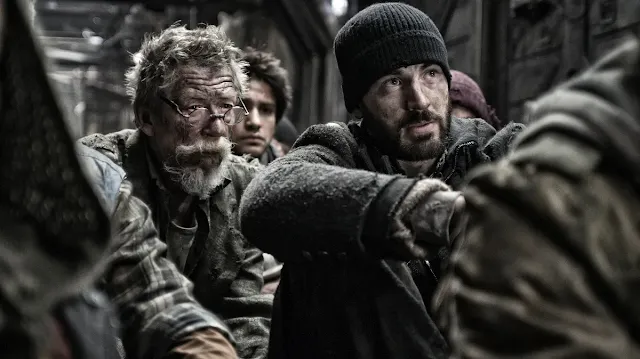
chris evans john hurt snowpiercer

Character Portrayals

The portrayal of key characters in the television show, graphic novel, and film remains consistent in their core characteristics. Andre Layton portrayed by Daveed Diggs in the television show, exhibits determination, intelligence, and charisma in all adaptations. His journey from a resident of the tail section to a revolutionary leader is depicted with varying nuances, highlighting his internal struggles and growth.

Character development and motivations are central to the Snowpiercer franchise. The graphic novel series allows for more extensive exploration of the characters' backstories and inner conflicts. For example, in the graphic novel, Namgoong Minsu, a security specialist from the tail section, is driven by his addiction to the industrial waste used as a drug. In the film, his motivations are tied to his daughter Yona's survival and his desire to escape the train.

The performances of the actors, including Jennifer Connelly, Chris Evans, and Tilda Swinton, contribute to the nuanced and compelling portrayal of the characters in the adaptations. Their talents bring depth, emotion, and complexity to the characters, making them relatable and memorable to the audience.

Themes and Symbolism

Recurring themes such as class struggle, environmentalism, and humanity's capacity for cruelty are central to the Snowpiercer franchise in all its mediums. The television show, graphic novel, and film delve into these themes with their own unique approaches, offering different perspectives and interpretations.

In all versions, class struggle is a prominent theme. The stark divide between the ruling class and the oppressed masses serves as a commentary on social inequality and the abuse of power. Environmentalism is another significant theme explored in the franchise. The reliance on a perpetual motion engine and the consequences of climate change are integral to the survival of the train and its passengers.

Symbolism and metaphors play a crucial role in the television show, graphic novel, and film. The train itself serves as a metaphor for society, with each section representing a different social class and the struggle for power and resources. Visual motifs, such as the recurring use of darkness and light, reflect the dichotomy between hope and despair, revealing the complexities of the human condition.

Adaptation Choices and Departures

The television show and film adaptation of Snowpiercer make certain changes from the source material to suit the medium and enhance the storytelling experience. In the television show, new characters and subplots are introduced to further explore the complexities of the train's society. This includes the character of LJ Folger, whose role contributes to the examination of the privileged class and their sense of entitlement.

Creative liberties taken by the show's creators and director result in departures from the original material. These choices allow for fresh interpretations and perspectives on the Snowpiercer universe. For example, the television show expands on the role of Melanie Cavill, portrayed by Jennifer Connelly, and delves into her backstory, adding depth to her character and exploring her motivations.

The impact of these changes on the overall narrative and audience reception varies. Some viewers appreciate the expanded world-building and character development in the television show, while others may prefer the concise and visually impactful storytelling of the film. These changes contribute to the evolution of the Snowpiercer franchise, allowing it to be experienced and appreciated in different ways.

snowpiercer train

Critical Reception and Cultural Impact of Snowpiercer

The critical reception of the television show, graphic novel, and film provides insights into the strengths and weaknesses of each adaptation. The television show has been praised for its complex storytelling, rich character development, and its ability to delve into relevant social issues. The film adaptation has been celebrated for its visual prowess, thought-provoking themes, and compelling performances. The graphic novel series has gained recognition for its immersive illustrations, captivating narrative, and its influence on subsequent adaptations.

Snowpiercer has made a significant cultural impact in all its forms. It has garnered a dedicated fanbase that engages in discussions about the social commentary, ethical dilemmas, and moral complexities presented in the franchise. The Snowpiercer universe has inspired fan theories, fan art, and fan fiction, further enriching the cultural impact and the ongoing legacy of the franchise.

Conclusion

In conclusion, the television show, French graphic novel, and film adaptation of Snowpiercer share numerous similarities in their storyline, themes, and character portrayals. They explore the complex dynamics of a post-apocalyptic world confined to a perpetually moving train. The franchise's enduring appeal and relevance lie in its examination of class struggle, social inequality, environmentalism, and the human condition.

Snowpiercer's significance as a multi-media franchise is evident in its ability to captivate and engage audiences across different mediums. The adaptations offer unique perspectives and interpretations while maintaining the core essence of the original source material. The lasting appeal of Snowpiercer rests in its ability to provoke thought, spark discussions, and shed light on the pressing issues of our own society.
15 July 2023

The Themes of 'Le Transperceneige' in its Graphic Novel and Film Adaptation - Snowpiercer

The "Le Transperceneige" (Snowpiercer) graphic novel, created by Jacques Lob, Benjamin Legrand, and Jean-Marc Rochette, presents a captivating post-apocalyptic world. Set in a frozen wasteland after a global catastrophe, the graphic novel follows the surviving remnants of humanity onboard a perpetually moving train, the Snowpiercer, which serves as their only sanctuary and means of survival.

In 2013, South Korean filmmaker Bong Joon-ho adapted the graphic novel into a critically acclaimed film, also titled "Snowpiercer." The film gained widespread attention and praise for its intense storytelling and social commentary.

While the film adaptation by Bong Joon-ho gained popularity, it is important to recognize that the graphic novel "Le Transperceneige" offers a story and themes that go far beyond the scope of the film, presenting a rich and expansive post-apocalyptic world worth exploring in depth.

Le Transperceneige novel snowpiercer


The creators of the graphic novel each brought their unique talents and perspectives to "Le Transperceneige."

Jacques Lob was a renowned French writer and comic book author, known for his contributions to popular series like "Superdupont" and "Blanche Epiphanie."

Benjamin Legrand, also a French writer, collaborated with Lob on various projects and shared a passion for science fiction and social commentary.

Jean-Marc Rochette, a French comic book artist, brought the visually striking and evocative illustrations to the graphic novel, capturing the desolate atmosphere and gritty realism of the post-apocalyptic world.

The graphic novel "Le Transperceneige" was originally published in France in 1982. It gained a cult following and received critical acclaim for its thought-provoking narrative and stunning artwork.

It was initially released as a three-volume series: "The Escape," "The Explorers," and "The Crossing." The graphic novel's publication was significant in the French comic book scene, as it pushed the boundaries of storytelling and tackled themes rarely explored in the medium at the time.

The significance of "Le Transperceneige" as a French graphic novel lies in its contribution to science fiction and climate change narratives.

Le Transperceneige novel themes

Expanding the Post-Apocalyptic World


The graphic novel delves into the consequences of the global catastrophe that left the world frozen, emphasizing the desolation and isolation of the survivors on the Snowpiercer.

It provides glimpses of the outside world through flashbacks and revelations, painting a broader picture of the devastation and serving as a reminder of what humanity has lost.

The novel vividly depicts the societal aspects and divisions onboard the Snowpiercer. It showcases the stark class divisions between the front and the rear of the train, highlighting the extreme disparities in living conditions, resources, and power. It closely explores the struggles of the oppressed lower class, their rebellion against the oppressive ruling class, and the complex dynamics that emerge within different social groups.

Le Transperceige presents intricate political, economic, and ecological systems within the train. It examines the authoritarian rule of the train's creator, Wilford, and the mechanisms through which he maintains control over the passengers. Readers can discern the economic hierarchy onboard, depicting the exploitation of the lower classes and the commodification of resources.

It raises ecological concerns and demonstrates the delicate balance required to sustain life on the train, touching upon issues of resource management, waste disposal, and the long-term sustainability of the closed ecosystem.

By slowly expanding the post-apocalyptic world beyond the confines of the train, examining societal divisions, and exploring the political, economic, and ecological systems, the graphic novel "Le Transperceneige" offers readers a comprehensive understanding of the complex dynamics and challenges faced by the survivors in their struggle for survival and justice.

snowpiercer novel themes

Legacy and Impact of Le Transperceneige

The film adaptation of "Le Transperceneige" directed by Bong Joon-ho garnered both critical acclaim and commercial success. It received positive reviews for its thought-provoking storytelling, powerful performances, and its ability to tackle social issues within the confines of a post-apocalyptic setting.

The film's unique blend of action, suspense, and social commentary appealed to audiences worldwide, contributing to its box office success.

The film adaptation received significant international recognition and numerous awards.

  • It won several prestigious awards, including the Grand Bell Award for Best Film and the Saturn Award for Best International Film.
  • The film was also nominated for various awards, such as the Palme d'Or at the Cannes Film Festival and the BAFTA Award for Best Foreign Language Film.

Conclusion

In this discussion, we have explored the post-apocalyptic world of "Le Transperceneige" through a comparison of the graphic novel and its film adaptation. We discussed the background information, including the creators of the graphic novel and its publication history. We also examined the differences in plot, setting, character development, and themes between the two mediums.

It is clear that the graphic novel "Le Transperceneige" offers a more expansive and detailed story than the film adaptation. With its episodic nature, extensive world-building, and nuanced character development, the graphic novel goes beyond the film's scope, providing a deeper exploration of the post-apocalyptic world and its underlying themes.

It is crucial to appreciate both the film and graphic novel as distinct yet interconnected works. While the film adaptation by Bong Joon-ho gained popularity and brought wider attention to the story, the graphic novel's rich narrative and thought-provoking themes extend far beyond the film. Both works offer unique perspectives and contribute to the exploration of the post-apocalyptic world crafted by Jacques Lob, Benjamin Legrand, and Jean-Marc Rochette.

Inception - An Analysis of Themes in Christopher Nolan's Greatest Sci Fi Film

Film Analysis

Inception: An Analysis of Themes in Christopher Nolan's Greatest Sci-Fi Film

It’s a heist movie. It’s a Greek tragedy. But mostly, it’s a movie about the catharsis of making movies. Fifteen years later, Inception remains Nolan’s most precise clockwork mechanism and a true sci-fi game changer.

Christopher Nolan does not make simple movies, but he often makes movies with simple desires. In The Prestige, the desire is obsession. In Interstellar, it is love. In Inception (2010), beneath the spinning hallways and folding cities that have come to define modern science fiction themes, the desire is something far more fragile: catharsis. It is the story of a man who builds a labyrinth not to hide from the world, but to hide from his own guilt.

While the film is famous for its puzzle-box structure of dreams within dreams, time dilation, and zero-gravity combat, its endurance comes from its emotional core. Cobb (Leonardo DiCaprio) is not just a thief extracting industrial secrets. He is a widower trying to forgive himself. To do that, he has to perform the ultimate magic trick. He has to plant an idea in his own mind that he deserves to go home.

I. The Architecture of Grief

In Inception, physical spaces are emotional metaphors. The dream world allows the subconscious to manifest as architecture. For Cobb, this means his guilt over his wife Mal’s (Marion Cotillard) suicide is not just a feeling. It is a literal basement in his mind where he keeps her locked away.

We see this most vividly when Ariadne intrudes on Cobb's private dream. She descends an elevator not into random memories, but into a museum of regret. There is the beach where the children played. There is the kitchen table where they ate. And at the bottom, there is the hotel suite where Mal died. By keeping these moments frozen in amber, Cobb prevents himself from healing. He is literally haunting himself.

Mal is the film’s antagonist, but she is also its most tragic figure. She is not the real Mal; she is a "shade," a projection of Cobb’s self-hatred. Every time she sabotages a mission, it is actually Cobb sabotaging himself. She shoots Arthur in the opening heist. She sabotages the team in the snow fortress. She is the manifestation of his belief that he does not deserve to succeed. The film posits that grief, if left unchecked, becomes a prison. It is one so convincing that we might choose to live in it, just as Cobb and Mal lived in Limbo for fifty years, rather than face the pain of waking up.

The "train" riddle Cobb whispers to Mal ("You're waiting for a train...") is the key to this trauma. It was the tool he used to break her mind in Limbo, forcing her to accept that her world wasn't real so she would lay her head on the tracks and wake up. The tragedy is that the idea stuck. She brought that doubt back to reality, believing she still needed to wake up by jumping from the hotel window. Cobb's grief is rooted in the fact that his "inception" worked too well.

Leonardo DiCaprio and Joseph Gordon-Levitt in Inception navigating the dream world
Cobb and Arthur navigating the layers of the subconscious.

II. Cinema as Shared Dreaming

The most enduring meta-textual theory about Inception is that it is a metaphor for filmmaking itself. The heist team maps perfectly onto a film crew, with Cobb as the Director trying to sell a vision that isn't real but feels emotionally true.

The Crew as Production Roles

It is widely accepted that the main characters represent the key players on a film set:

  • Cobb (The Director): The visionary managing the chaos. He wears a suit similar to Nolan's on-set attire.
  • Arthur (The Producer): Managing logistics, rules, and keeping the Director grounded. He researches the background and ensures the "set" is stable.
  • Ariadne (The Production Designer): Building the world the characters inhabit. She drafts the mazes and constructs the physical reality of the dream.
  • Eames (The Actor): The chameleon who changes appearance to manipulate the audience. His line "You mustn't be afraid to dream a little bigger, darling" is the ultimate actor's flourish.
  • Saito (The Studio): The money man who insists on overseeing the project to ensure his investment pays off. He literally buys the airline to control the distribution channel.
  • Fischer (The Audience): The person who must "buy" the emotion for the trick to work. If he notices the artifice, the movie fails.

Viewed through this lens, the mission is not just to plant an idea in Fischer's mind. It is to create a cinematic experience so profound that the audience (Fischer) undergoes a genuine emotional catharsis. Consider the climax in the snow fortress. Fischer enters the vault and finds his dying father not in a moment of anger, but in a moment of acceptance. He finds the paper pinwheel he cherished as a child.

This pinwheel is a prop. It was placed there by Eames. The reconciliation is based on a lie. It is a forged will and a fake memory. Yet, the healing Fischer feels is real. He wakes up on the plane with a sense of peace. Nolan is arguing that art is a "positive virus." It is a fake story that produces real truth. The "kick" that wakes them up is the edit, jarring the audience back to reality when the credits roll.

III. The Totem and Subjective Reality

The film’s ending is one of the most debated in cinema history. The spinning top wobbles, but the screen cuts to black before it falls. Is Cobb still dreaming? Did he make it back to his children? Fans have analyzed the top's spin decay for years, or looked for a wedding ring on Cobb's hand as a secondary totem.

However, to focus on the physics of the top is to miss the point of the scene. Nolan cuts away not to tease us, but to show us where Cobb is looking. For the entire film, Cobb has been obsessed with the totem. He spins it in the hotel room in Tokyo. He spins it in the bathroom in Mombasa. He is obsessed with checking reality because he is terrified of being lost.

In the final moment, he spins it on the table. But then he hears his children. He walks away to greet them. He stops looking at the top. This is the crucial character beat. In every previous scene, he watched it fall before moving on. Here, he abandons the question entirely.

Cobb doesn't care if the top falls. He has chosen his reality. The totem is no longer the anchor; the emotion is.

This is the film’s ultimate thesis on reality: it is subjective. Whether the reunion is physically real or a subconscious projection matters less than the fact that Cobb has finally forgiven himself. He has chosen to be a father rather than a widower. He has accepted "Inception" on himself. Even the scene in Limbo with an aged Saito reinforces this. Cobb reminds Saito that "this world is not real" to save him, but he saves himself by accepting that his guilt does not have to be his reality.

Conclusion: The Resilience of the Idea

Inception remains a masterpiece not because of the folding cities or the Hans Zimmer foghorn score, but because it treats the human mind as the ultimate crime scene. It argues that the most resilient parasite is not a bacteria or a virus, but an idea. And the most dangerous idea of all is the one that tells us we are trapped.

Nolan weaves this theme through every layer. From the first heist where Cobb steals secrets from Saito's safe, to the final emotional heist where he steals Fischer's resentment and replaces it with love. By the time the credits roll, we have woken up on the plane alongside the characters, dazed and recovering from a shared dream. Like Fischer, we know it was a construct. But like Cobb, we know the feeling was real.

"Snowpiercer: A Gripping Exploration of Class Inequality and Rebellion

ong Joon-ho, the visionary director behind  (OKJAThe Host), delivers a cinematic tour de force with Snowpiercer, a gripping exploration of class struggle and survival. Set in a frozen dystopian world where humanity's remnants live aboard a perpetually moving train, the film reimagines the stark inequalities of society within the train’s rigid class system. Bong’s masterful direction creates a claustrophobic yet dynamic environment, using each train car to peel back another layer of societal decay and human desperation. 

The story’s relentless momentum mirrors the train itself, plunging viewers into an immersive, brutal journey that questions the nature of power, rebellion, and the cost of progress.

Far more than a dystopian thriller, Snowpiercer is a trenchant critique of social hierarchies and exploitation, offering a microcosm of the world's most pressing inequities. Bong’s narrative weaves complex characters and moral dilemmas into the fabric of its allegory, challenging viewers to confront the unsettling parallels to real-world struggles. 

Let's explore the themes of the film.

snowpiercer themes

Class Inequality

Within the train, Snowpiercer depicts a stark contrast in living conditions between the tail section and the front. 

The tail section represents the lowest class, where people are crammed into tight, grimy quarters with limited access to resources. In contrast, the front of the train houses the privileged elite who indulge in luxurious amenities, extravagant lifestyles, and control over the tail section inhabitants.

The film effectively highlights the consequences and injustices of social inequality by portraying the extreme disparities between classes. The tail section inhabitants suffer from severe poverty, malnutrition, and oppression, while the front's elite exploit their power, enforcing harsh discipline and control over the lower classes. 

This unequal distribution of resources and opportunities perpetuates a cycle of oppression, leading to discontent and rebellion.

Symbolism and metaphors play a crucial role in emphasizing the disparities between the classes in "Snowpiercer." The train itself becomes a metaphor for the social hierarchy, with the front representing the upper class and the tail symbolizing the marginalized lower class. The physical structure of the train, from its spatial layout to the separation of compartments, reflects the rigid social divisions. Additionally, the recurring motif of doors symbolizes both barriers and opportunities, highlighting the limited mobility and social mobility experienced by the tail section inhabitants.

Throughout the film, the stark visuals further emphasize the class divide. The dimly lit, cramped spaces of the tail section create a sense of confinement and despair, while the bright, lavish settings of the front exude opulence and excess. This stark visual contrast visually reinforces the themes of class inequality and societal divisions.

Examples from the film and production trivia:

  • The physical train set was constructed to represent the various sections of the train, with meticulous attention to detail in differentiating the tail section from the front. This production design choice helped enhance the visual representation of class divisions.
  • In one memorable scene, the tail section inhabitants are served protein blocks, an example of the severe disparity in the quality of food between classes. This scene vividly depicts the dehumanizing conditions faced by the lower class.
  • The character of Minister Mason, portrayed by Tilda Swinton, serves as a symbol of the ruling class's authority and callousness. Her exaggerated appearance and eccentric mannerisms highlight the caricature-like representation of the privileged elite.
  • Metaphorically, the journey through the train becomes a microcosm of the larger struggle against class inequality. As the tail section rebels progress through each compartment, facing different challenges and encountering various characters, the film symbolically represents the arduous journey towards equality.

By exploring the themes of class inequality, their consequences, and the symbolism used to emphasize them, we gain a deeper understanding of the social commentary embedded within "Snowpiercer." The film's portrayal of the class divide serves as a powerful critique of real-world social inequalities and prompts us to question the fairness of societal structures.

Power Dynamics and Oppression

"Snowpiercer" depicts a complex web of power dynamics between the ruling elite and the tail section rebels. The ruling elite, represented by characters like Minister Mason (Tilda Swinton) and Wilford (Ed Harris), hold absolute authority and control over the train's resources, decisions, and the lives of the tail section inhabitants. The rebels, led by Curtis (Chris Evans, Captain America: The First Avenger, Sunshine), challenge this power dynamic, aiming to overthrow the oppressive regime and create a more equitable society.

Oppression in the film is perpetuated through various means. The ruling elite maintain control by implementing strict hierarchies, manipulating information, and enforcing punishment and fear. The tail section inhabitants are subjected to cramped living conditions, food shortages, and physical abuse. The ruling class exerts dominance by limiting the lower class's access to education, healthcare, and social mobility. These systemic mechanisms of oppression serve to maintain the status quo and ensure the subservience of the marginalized.

And there are no bullets in some soldiers' guns...

Resistance against oppression manifests in the rebellion led by the tail section rebels. They actively challenge the power dynamics, risking their lives to gain control and improve their circumstances. The rebels employ strategies of strategic planning, resourcefulness, and solidarity to disrupt the established order. They fight for justice, equal distribution of resources, and the dismantling of oppressive systems. Their resistance is a testament to the human spirit's resilience and the pursuit of freedom in the face of overwhelming odds.

The moral dilemmas faced by the characters in "Snowpiercer" are complex and thought-provoking. As the tail section rebels advance through the train, they are confronted with ethical choices that blur the lines between right and wrong. Curtis, in particular, grapples with the consequences of leading the rebellion and the sacrifices required to achieve their goals. The film poses questions about the morality of violence, the justification of sacrificing individuals for the greater good, and the blurred boundaries between oppressor and oppressed.

One moral dilemma arises when the rebels confront the schoolteacher character, Grey (Luke Pasqualino), who was once a member of the tail section but chose to collaborate with the ruling elite. The rebels are faced with the decision of whether to forgive or punish him for his betrayal. This moral conflict raises questions about redemption, forgiveness, and the complexities of personal choices made within oppressive systems.

Another moral dilemma arises when the tail section rebels gain access to the children of the front section. They must decide how to handle the responsibility of caring for these innocent lives and protecting them from the harsh realities of their society. This dilemma forces the rebels to question their motivations and consider the impact their actions may have on future generations.

The film's exploration of moral dilemmas adds depth to the narrative, pushing viewers to reflect on the complexity of ethical decision-making within oppressive systems. By presenting characters facing these dilemmas, "Snowpiercer" prompts us to contemplate the difficult choices individuals must make in their pursuit of justice and liberation.

Human Nature and Morality

"Snowpiercer" delves into the complexities of human nature, presenting a nuanced exploration of morality within the confines of the train. The film depicts characters driven by survival instincts, ambition, and the pursuit of justice. It showcases the capacity for both acts of compassion and acts of cruelty in extreme circumstances. The portrayal of human nature in the film challenges simplistic notions of good and evil, revealing the intricacies and shades of gray that define the human experience.

Ethical choices and sacrifices play a central role in "Snowpiercer," as characters are forced to confront moral dilemmas to achieve their objectives. The tail section rebels, led by Curtis, face choices that test their personal ethics and the greater good. These choices involve strategic decisions about when to fight, whom to trust, and how much collateral damage is acceptable in their pursuit of justice. The sacrifices made by the characters highlight their commitment to their cause, often involving the loss of personal relationships, safety, and even their own lives.

For instance, Curtis must make a difficult choice when it comes to the character of Gilliam (John Hurt, Alien), his mentor and father figure. This decision weighs heavily on him, reflecting the moral complexities of sacrificing one individual for the potential liberation of an entire class. Similarly, other characters, such as Namgoong and Yona, face personal sacrifices and moral dilemmas as they grapple with their own desires for personal freedom versus their responsibility to the rebellion.

The extreme circumstances within the train serve as a backdrop for exploring and revealing aspects of human morality. The desperate struggle for survival forces characters to confront their true selves and make decisions that test their moral compass. Within the confined space of the train, where resources are scarce and power is concentrated, individuals are confronted with the reality of their choices and their impact on others.

The film explores the moral spectrum, showcasing acts of compassion, selflessness, and bravery, as well as acts of cruelty, selfishness, and betrayal. The circumstances within the train push characters to their limits, highlighting the fragility of morality and the potential for individuals to be influenced by their environment. As the rebellion progresses, the moral boundaries become blurred, and characters are confronted with the harsh realities of the choices they have made.

For example, the character of Minister Mason embodies the darkest aspects of human nature within the ruling elite. Her unwavering loyalty to the oppressive system and her willingness to enforce its rules regardless of the consequences reveal the depths to which individuals can be corrupted by power.

Through the exploration of human nature and morality, "Snowpiercer" forces viewers to reflect on their own capacity for both good and evil. It raises questions about the factors that shape individuals' actions and the moral compromises made in dire circumstances. The film's portrayal of the complexities of human nature adds layers of depth to its narrative, encouraging introspection and contemplation about the choices we make and the values we hold dear.
themes commentary of snowpiecer

Rebellion and Social Change

Rebellion serves as a driving force in "Snowpiercer," propelling the narrative and embodying the struggle for justice and social change. The film portrays rebellion as a necessary response to oppression, highlighting the refusal to accept the status quo and the yearning for a more equitable society. It challenges the existing power structures and galvanizes the marginalized to reclaim their agency and fight for a better future.

The motivations behind the characters' acts of rebellion in "Snowpiercer" are multifaceted. For the tail section rebels, their motivation stems from the desire for liberation from the oppressive ruling elite. They seek to challenge the social order that perpetuates their suffering and to secure a fair distribution of resources within the train (socialist much? - Ed). 

Their acts of rebellion are driven by a yearning for justice, freedom, and the hope of a better life for themselves and future generations.

The consequences of rebellion are depicted with both triumphs and sacrifices. The rebellion disrupts the established power dynamics, leading to intense conflicts and confrontations. Lives are lost, relationships shattered, and sacrifices made along the journey towards social change. The film highlights the toll rebellion takes on individuals and communities, emphasizing the personal costs of resistance.

"Snowpiercer" explores the concept of social change by portraying collective action as a catalyst for transformation. The film emphasizes the power of unity and solidarity among the marginalized as they rise against the ruling elite. The rebels, despite their diverse backgrounds and motivations, come together to challenge the oppressive system. Their collective strength and determination demonstrate the potential for change when people unite and fight for a common cause.

The film also examines the complexities and challenges of collective action. It showcases the internal conflicts, divisions, and rivalries that can arise within a rebellion, emphasizing the difficulties of maintaining unity in the face of adversity. The portrayal of social change in "Snowpiercer" acknowledges that the path to liberation is not without hurdles, setbacks, and internal struggles.

Furthermore, the film explores the notion that social change is not limited to a singular event but is an ongoing process. It raises questions about the sustainability of revolution and the long-term effects of collective action. By showcasing the consequences of rebellion and the challenges of enacting lasting change, "Snowpiercer" invites viewers to critically consider the complexities and complexities of social transformation.

The film's exploration of rebellion and social change highlights the importance of collective action and challenges the audience to reflect on the potential for transformative movements in our own society. It prompts viewers to question existing power structures and to consider the role they can play in advocating for a more just and equitable world.

By portraying rebellion and social change, "Snowpiercer" inspires reflection on the potential for transformative movements and the role individuals can play in challenging oppressive systems.

Environmental and Societal Collapse

"Snowpiercer" offers a depiction of the post-apocalyptic world outside the train, providing glimpses of the environmental devastation that led to societal collapse. Through visual cues and dialogue, the film portrays a frozen wasteland devoid of life. Desolate landscapes, shattered cities, and a perpetual winter create a bleak atmosphere that reflects the catastrophic consequences of environmental catastrophe.

Ecological themes and commentary on humanity's impact on the environment are prevalent throughout "Snowpiercer." The film presents a cautionary tale, highlighting the consequences of unchecked human activities and the exploitation of natural resources. The train's enclosed ecosystem becomes a metaphor for the planet, emphasizing the importance of maintaining ecological balance and the fragility of our interconnected systems.

The film draws attention to the consequences of climate change and the role of human actions in exacerbating environmental degradation. It reflects on the responsibility humanity bears for its impact on the Earth and the dire consequences that result when ecological equilibrium is disrupted. By portraying the post-apocalyptic world outside the train, "Snowpiercer" serves as a reminder of the urgent need for sustainable practices and environmental stewardship.

The connection between societal collapse and the train's enclosed microcosm is a central aspect of "Snowpiercer." The train's self-contained environment becomes a microcosm of the larger world, reflecting the flaws and challenges of human society. The film explores how societal collapse can result from the failure to address issues of inequality, exploitation, and environmental degradation.

The train's social structure mirrors the divisions and injustices present in wider society, highlighting the inherent flaws that led to societal collapse. The ruling elite's control and the tail section's struggle for liberation symbolize the power dynamics and social inequality that contribute to societal instability. The enclosed nature of the train intensifies these dynamics, magnifying the consequences of societal collapse within its limited space.

Furthermore, the film underscores the interconnectedness of societal collapse and environmental devastation. It suggests that the neglect of ecological balance played a significant role in triggering the collapse of human civilization. The train's closed ecosystem demonstrates the consequences of failing to maintain a sustainable relationship with the environment. The imbalance created by humanity's disregard for nature results in the devastation of the planet and the eventual collapse of society.

class war themes snow piercer

Reflection on Real-World Issues

The themes depicted in "Snowpiercer" are highly relevant to contemporary society, resonating with real-world issues and challenges. The film's exploration of class inequality, power dynamics, rebellion, and environmental degradation speaks to the social and environmental issues we face today. By addressing these themes, "Snowpiercer" encourages viewers to reflect on the state of our own society and prompts us to consider the potential consequences of unchecked inequality, exploitation, and environmental degradation.

The parallels between the film's social commentary and real-world issues are striking. "Snowpiercer" critiques the vast disparities in wealth and power, reflecting the growing wealth inequality observed in many societies. The film highlights the consequences of a system that perpetuates social divisions and the suffering endured by marginalized communities. It sheds light on the injustices that result from such inequalities and underscores the urgent need for societal change.

Moreover, the film's portrayal of power dynamics and oppression mirrors historical and contemporary struggles for social justice. The ruling elite's control and exploitation of the lower classes reflect systems of oppression and the abuses of power seen throughout history. "Snowpiercer" prompts viewers to examine the dynamics of power in our own societies and consider the potential for resistance against oppressive systems.

Additionally, the ecological themes in the film serve as a stark reminder of the urgent need for environmental consciousness. The consequences of environmental degradation and the consequences of humanity's impact on the planet are portrayed in a haunting manner. "Snowpiercer" encourages viewers to reflect on the consequences of our actions and the importance of sustainable practices to safeguard the environment for future generations.

The implications and messages conveyed by "Snowpiercer" are profound. The film serves as a powerful critique of the inherent flaws within societal structures and the consequences of unchecked inequality. It reminds us that the pursuit of justice and social change requires collective action and a willingness to challenge oppressive systems.

Moreover, "Snowpiercer" calls attention to the importance of personal agency and ethical decision-making in the face of adversity. The film prompts us to question our own moral compass and reflect on the choices we make within systems of oppression. It emphasizes the complexities of human nature and the potential for both acts of compassion and acts of cruelty, challenging us to strive for empathy, justice, and equality.

The film's exploration of environmental themes serves as a wake-up call to the consequences of ecological negligence. It underscores the need for sustainable practices and the responsibility we bear in protecting the planet for future generations. "Snowpiercer" urges us to confront our impact on the environment and take action to mitigate the ecological crisis.

Conclusion

"Snowpiercer" explores key themes such as class inequality, power dynamics, rebellion, environmental degradation, and the complexities of human nature. The film delves into the consequences of social divisions, the struggle against oppression, and the urgent need for social and environmental change.

"Snowpiercer" holds significant significance in the dystopian genre, setting itself apart from conventional dystopian films through its unique setting and thought-provoking storytelling. While many dystopian films focus solely on the grimness of a post-apocalyptic world, "Snowpiercer" goes beyond that by offering a layered exploration of social issues, moral dilemmas, and the interconnectedness of social and environmental dynamics. Its nuanced approach to themes, compelling performances, and masterful direction contribute to its standout status within the genre.

The lasting impact of "Snowpiercer" lies in its relevance to contemporary society. The film's themes continue to resonate, reflecting the social inequalities, power imbalances, and ecological challenges present in our world today. It serves as a reminder of the importance of questioning societal structures, addressing issues of inequality, and recognizing the potential consequences of neglecting the environment.

Furthermore, the television adaptation of "Snowpiercer," covering four seasons of similar themes, further extends the impact of the film. By expanding on the narrative and exploring the themes in greater depth, the television show continues the thought-provoking exploration of class inequality, power dynamics, rebellion, and environmental concerns. It further engages viewers in examining the complexities of society and our responsibility to shape a more just and sustainable future.

And it features Jennifer Connelly...

Review: Bong Joon-ho's - Snowpiercer

 In Bong Joon-ho's post-apocalyptic film, "Snowpiercer," viewers are taken on a gripping and thought-provoking journey through a frozen wasteland aboard a perpetually moving train. The narrative of the film is meticulously crafted, captivating audiences from start to finish. With its relentless pacing and unpredictable twists, "Snowpiercer" keeps viewers engaged, reflecting the urgency and desperation of the characters' struggle. Symbolism is effectively utilized throughout the film, such as the metaphorical representation of doors as both barriers and opportunities, shedding light on the broader theme of class inequality.


One of the standout aspects of "Snowpiercer" is the exceptional performances delivered by its cast. Chris Evans shines as Curtis, the reluctant leader of the tail section rebellion. He brings depth and emotional complexity to his character, navigating the moral dilemmas with authenticity. Tilda Swinton mesmerizes as Minister Mason, portraying a grotesque and tyrannical figurehead of the ruling class with chilling detachment. Song Kang-ho's performance as Namgoong, a rebellious prisoner, adds a layer of intrigue and resourcefulness to the film. The chemistry between the actors enhances the narrative, intensifying the emotional impact of their interactions.

snow piercer film review
America's Ass Indeed


Bong Joon-ho's directorial brilliance (refer OKJA) is evident throughout "Snowpiercer." The film's cinematography expertly captures the stark contrast between the gritty and claustrophobic tail section and the opulent extravagance of the front of the train. The production design intricately constructs each section of the train, visually representing the stark divisions between the classes. The use of colors further accentuates these disparities, with muted tones dominating the tail section and vibrant hues highlighting the front. 

Bong Joon-ho seamlessly blends genres, effortlessly transitioning between action-packed sequences and moments of profound emotional depth, showcasing his mastery as a storyteller.

"Snowpiercer" serves as a powerful social commentary, delving into the consequences of class divisions and societal inequality. The train's social structure mirrors real-world disparities, prompting viewers to critically examine the inherent injustices of society. The film portrays power dynamics and exploitation, shedding light on the moral quandaries faced by its characters. It challenges the audience to question the status quo and confront the consequences of unchecked inequality.

Beyond its riveting action, "Snowpiercer" provokes thought on a deeper level. It explores themes of sacrifice, rebellion, and the complexities of human nature. The film raises philosophical and ethical questions about the delicate balance between individual freedom and societal order. As the tail section rebels fight for justice, they are forced to confront the moral implications of their actions and consider the potential costs of their uprising. 

"Snowpiercer" compels viewers to reflect on the fragile nature of societal systems and the choices we make in the face of oppression.

The film's sound design, music, and visual effects contribute to its atmospheric intensity. The rumbling sound of the train's engine immerses viewers in the relentless journey, while the haunting melodies of the score amplify the emotional impact of pivotal scenes. The visual effects are skillfully employed, particularly during the intense action sequences and the portrayal of the frozen world outside the train, enhancing the film's overall cinematic brilliance.

In the realm of post-apocalyptic cinema, "Snowpiercer" stands out as a remarkable achievement. It draws comparisons to other dystopian works but distinguishes itself through its unique setting and thematic depth. Bong Joon-ho's visionary filmmaking, blending social commentary and gripping storytelling, sets "Snowpiercer" apart from typical dystopian narratives. It demands attention with its captivating narrative, exceptional performances, and thought-provoking exploration of class struggle and societal divisions.

In conclusion, "Snowpiercer" is a must-watch for those seeking intelligent storytelling and profound social commentary. It leaves a lasting impact, challenging viewers to reflect on the world we live in and the consequences of unchecked inequality. Through its gripping narrative and masterful direction, the film reminds us of the power of collective action in the pursuit of justice and freedom.

About the author Jimmy Jangles


My name is Jimmy Jangles, the founder of The Astromech. I have always been fascinated by the world of science fiction, especially the Star Wars universe, and I created this website to share my love for it with fellow fans.

At The Astromech, you can expect to find a variety of articles, reviews, and analysis related to science fiction, including books, movies, TV, and games.
From exploring the latest news and theories to discussing the classics, I aim to provide entertaining and informative content for all fans of the genre.

Whether you are a die-hard Star Trek fan or simply curious about the world of science fiction, The Astromech has something for everyone. So, sit back, relax, and join me on this journey through the stars!
Back to Top