07 April 2023

Exploring the Making of Watchmen: 20 Fascinating Production Trivia Bits

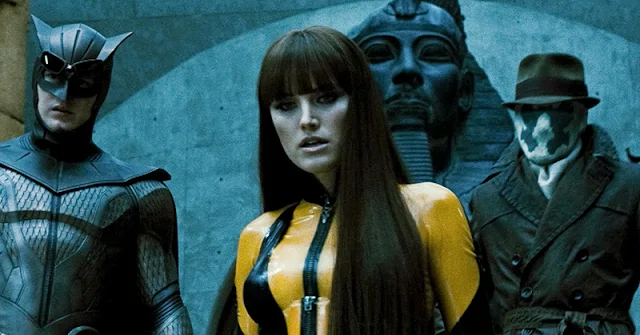
Watchmen is a cinematic masterpiece that successfully brings Alan Moore's groundbreaking graphic novel to life. The film, directed by Zack Snyder, is a visually stunning and dark portrayal of an alternate reality where superheroes are a part of everyday life. The movie is set in 1985 and follows a group of retired superheroes, who are brought back together to investigate a conspiracy to destroy them.

Snyder's direction is impeccable, with the film being a faithful adaptation of the source material, capturing the mood and essence of the graphic novel perfectly. The stunning visuals and excellent soundtrack bring the story to life, creating a fully immersive experience for the audience. The performances of the cast are exceptional, particularly Jackie Earle Haley's portrayal of the psychotic anti-hero Rorschach, who steals every scene he is in with his intense and unpredictable nature.

watchmen film trivia

Overall, Watchmen is a film that stays true to its source material while also standing on its own as a captivating and thought-provoking piece of cinema. It deals with complex themes such as morality, power, and the nature of humanity in a way that is both insightful and disturbing. 

The film's ability to captivate and challenge the audience, combined with its stunning visuals and powerful performances, make it an essential watch for any fan of the superhero genre or anyone interested in thought-provoking cinema.

20 Fascinating Production Watchmen Trivia Bits

  1. The Watchmen film was in development for over 20 years before it was finally released in 2009.
  2. The opening credits sequence features a montage of historic events that altered the course of the Watchmen world. The sequence was created using real-life photos that were digitally altered to include the film's characters.
  3. The film's budget was $130 million, making it one of the most expensive comic book adaptations ever made at the time.
  4. The film was shot primarily in Vancouver, Canada, with many of the city's landmarks and buildings appearing in the film.
  5. The film's soundtrack features songs from the 1960s and 1970s, including Bob Dylan's "The Times They Are A-Changin'," which is used in the film's opening credits.
  6. The actors who played the Watchmen characters went through intense physical training to prepare for their roles, including weight training and martial arts classes.
  7. The iconic costume designs were created by costume designer Michael Wilkinson, who used the graphic novel as a reference.
  8. The film's visual effects team used a combination of CGI and practical effects to bring the Watchmen world to life.
  9. The opening shot of the Comedian's smiley face button falling onto the sidewalk was accomplished using practical effects, with the button being dropped onto a green screen and then composited into the shot.
  10. The film's fight choreography was overseen by legendary stunt coordinator Damon Caro, who worked on films like The Matrix and The Dark Knight.
  11. The film's art department created hundreds of pieces of graphic design, including posters, logos, and book covers, to create a fully realized Watchmen world.
  12. The iconic scene of Rorschach breaking a criminal's fingers was accomplished using practical effects, with a prosthetic hand being used for the shot.
  13. The film's marketing campaign included a series of webisodes titled "Watchmen: Tales of the Black Freighter," which served as a companion piece to the film.
  14. The film's production design team created over 1200 sets, including the iconic Owlship and the Mars landscape.
  15. The film's composer, Tyler Bates, incorporated elements of the film's soundtrack into the score, including the use of "The Times They Are A-Changin'" in the opening credits.
  16. The film's sound design team created over 1000 sound effects.
  17. To achieve the film's distinctive look, including using filters and lenses to create a gritty, comic book-inspired aesthetic.
  18. The film's makeup department created over 200 prosthetics for the film, including scars and bruises on the characters' faces.
  19. The film's script went through multiple drafts, with writer Alex Tse working closely with director Zack Snyder to create a faithful adaptation of the graphic novel.
  20. The film's cast includes several actors who went on to become major stars, including Malin Akerman, Jackie Earle Haley, and Jeffrey Dean Morgan

06 April 2023

Mother-Daughter Dynamics: The Tangled Bond of Silk Spectre and Laurie in Watchmen

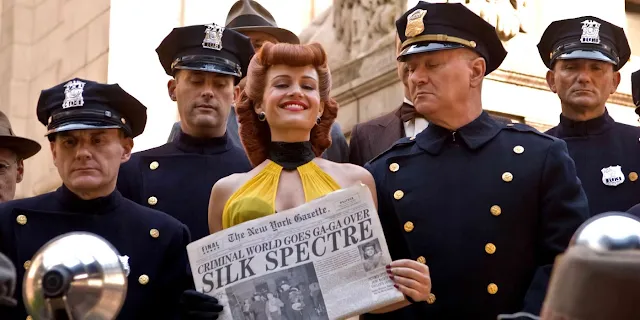
Sally Jupiter (Juspeczyk), as the original Silk Spectre, was a trailblazer for female superheroes in the world of Watchmen. However, her time as a crimefighter was not without its challenges. Sally was objectified by male superheroes and the public alike, and her relationship with the Comedian was fraught with abuse and power imbalances

These experiences left her bitter and resentful towards the world of superheroics, and towards Laurie's decision to follow in her footsteps.

Laurie's relationship with her mother Sally was complicated from the start. Growing up, Laurie was often left alone and neglected by her mother, who was too busy with her own superhero exploits and personal life.

This emotional distance created a sense of longing in Laurie to connect with her mother, leading her to idolize Sally and view her as a role model, even though her mother's superheroics and personal life often caused her pain and confusion.


Furthermore, Sally's complicated history with the Comedian made it difficult for Laurie to fully connect with her mother. Sally's resentment towards the Comedian was projected onto Laurie, who was a constant reminder of their tumultuous affair. Laurie struggled to reconcile the image of the Comedian, who she had known as a kind and fatherly figure, with the brutal and violent man her mother portrayed him as. Sally's inability to provide a safe and nurturing environment for her daughter further compounded Laurie's confusion and emotional distress. Despite all this, Laurie still sought her mother's approval, and her decision to follow in her footsteps as Silk Spectre was motivated in part by a desire to impress her mother and prove herself to her.


Throughout Watchmen, the strained relationship between Sally and Laurie is portrayed through various flashbacks and conversations. One particularly memorable scene involves the two women fighting over Sally's old costume, which Laurie wants to wear as her own. Sally is reluctant to let her daughter take on the Silk Spectre mantle, as she knows firsthand the dangers and traumas of being a superhero. However, Laurie is determined to prove herself and win her mother's approval.

As Sally and Laurie delve deeper into the conspiracy that threatens the world, they are forced to work together despite their differences. The revelation of the Comedian's true nature and his role in various atrocities hits both women hard, but they find solace in each other's company. Sally finally confronts her past trauma and acknowledges the mistakes she made in her life, including her treatment of Laurie. She realizes that her daughter is a strong and capable hero in her own right and comes to appreciate her more as they work together to save the world.

sally jupiter silk spectre

Their shared experiences bring them closer together, and they finally begin to communicate and understand each other better. Sally's revelations about her past not only help Laurie understand her mother better but also provide a way for Sally to reconcile with her own past. The two women find common ground in their experiences as victims of the Comedian's abuse and trauma, which helps to repair the damage done to their relationship.

By the end of Watchmen, Sally and Laurie have reached a level of acceptance and mutual respect that they had never experienced before. Sally comes to see Laurie as her equal, both as a hero and as a person, while Laurie gains a newfound appreciation for her mother's struggles and achievements. Their complicated past is not forgotten, but it no longer defines their relationship, and they are able to move forward with a renewed sense of understanding and compassion for each other.

Overall, the relationship between Sally Jupiter and Laurie Juspeczyk is one of the many intricate character dynamics that make Watchmen such a compelling and thought-provoking story. It explores themes of legacy, family, trauma, and the consequences of one's actions, all through the lens of a complex mother-daughter relationship.


Sex, Power, and Violence: The Complex Dynamics of Watchmen's Relationships

The graphic novel "Watchmen" by Alan Moore and Dave Gibbons deals with a wide range of themes, including the themes of sex and sexuality. The book presents a complex and sometimes controversial exploration of these themes, often using them to subvert traditional superhero tropes and challenge societal norms.

The relationship between Laurie Juspeczyk and Dr. Manhattan is a central example of the exploration of these themes. Dr. Manhattan's ability to manipulate matter and time allows for a unique portrayal of sexual intimacy that is detached from human limitations. In one scene, he creates multiple versions of himself to engage in sexual activity with Laurie simultaneously, illustrating the dissociation between physical intimacy and human connection. This detachment is further emphasized by Dr. Manhattan's blue, glowing appearance, which sets him apart from the other characters in the graphic novel.

However, as the story progresses, we see that this detachment becomes a source of pain and conflict for Dr. Manhattan. He begins to realize the consequences of his detachment from humanity, which ultimately leads to his decision to leave Earth and explore the universe.

The relationship between Sally Jupiter and the Comedian is another example of the complicated dynamics of sex and sexuality in the graphic novel. The Comedian is portrayed as a deeply flawed character, and his sexual assault of Sally Jupiter further emphasizes the destructive nature of his behavior. The fact that Sally later gives birth to Laurie, who ultimately becomes Silk Spectre II, also adds a layer of complexity to the dynamics between the characters. Sally's past trauma and complicated feelings towards the Comedian are explored throughout the graphic novel and provide a lens through which to view the themes of power and violence in sexual relationships.

The theme of sexual repression is also explored through the character of Dan Dreiberg, who is unable to find fulfillment in his sexual relationship with Laurie. This frustration is tied to his identity as Nite Owl II, as his role as a superhero prevents him from fully exploring his desires. This theme is particularly relevant to the genre of superhero comics, which often involve characters with complex dual identities.

themes of sex in watchmen

Finally, the character of Adrian Veidt, who is portrayed as asexual, provides another lens through which to view the themes of sex and sexuality in the graphic novel. Veidt's detachment from sex and physical intimacy is linked to his pursuit of a greater goal, which is to prevent nuclear war and save humanity. This detachment ultimately leads to his controversial decision to orchestrate a catastrophic event that he believes will bring about world peace.

In conclusion, the themes of sex and sexuality in "Watchmen" are complex and multifaceted, often challenging traditional societal norms and superhero tropes. The graphic novel explores the themes of power dynamics, violence, detachment, and repression through the relationships between the characters, providing a nuanced and thought-provoking examination of human intimacy and desire.

Unpacking the Psychology of Rorschach: Trauma, Paranoia, and Obsession

Rorschach is a complex character in the graphic novel "Watchmen," created by writer Alan Moore and artist Dave Gibbons. He is a vigilante who wears a mask with an ever-shifting inkblot pattern and is known for his uncompromising morality and violent tactics.

The formative, early life mental trauma

Rorschach's traumatic childhood experience of witnessing his mother's prostitution and murder has left a deep and lasting impact on him. This event has created an intense sense of anger and hatred towards criminals, leading him to see them as the root of all evil. This anger and hatred are compounded by the fact that he was unable to protect his mother and bring her murderer to justice, leaving him feeling helpless and vulnerable.

As a result of this trauma, Rorschach has developed an obsession with justice, seeing it as the only way to prevent others from suffering the same fate as his mother. He believes that justice is the only way to right the wrongs of the world and that it is his duty to bring it to those who deserve it. This obsession with justice has become the driving force behind his vigilantism, causing him to go to extreme lengths to bring criminals to justice.

Furthermore, Rorschach's mental trauma has also left him with a deep sense of alienation and isolation. He is unable to connect with others, preferring to live a solitary life and interacting with others only when necessary. This alienation has created a sense of loneliness and despair within him, which he attempts to numb with his vigilante work. However, this only reinforces his sense of isolation, causing him to become even more distant from others.

Rorschach

The psychology of Rorschach

As a result of his traumatic experiences, Rorschach has developed an extreme sense of paranoia. He is always on guard, constantly looking over his shoulder, and suspecting everyone around him of nefarious intent. This paranoia has caused him to become isolated and solitary, rarely interacting with others and preferring to work alone.

Rorschach's rigid worldview is a direct result of his traumatic experiences. He sees the world in black and white, with no room for gray areas or ambiguity. To him, there is a clear line between right and wrong, and he is the one who must enforce it. He believes that justice can only be served through extreme measures, and he is willing to go to any length to bring criminals to justice.

Furthermore, Rorschach's uncompromising sense of morality is deeply ingrained in him. He has a code of conduct that he adheres to strictly, regardless of the consequences. He refuses to compromise his values, even if it means risking his own safety or the safety of others. His moral code is so absolute that he is willing to sacrifice himself to uphold it.

Rorschach's deep distrust of authority figures and the justice system is a direct result of his traumatic experiences. He sees the system as corrupt, ineffective, and incapable of delivering true justice. As a result, he has taken it upon himself to be the enforcer of justice, becoming a vigilante and taking matters into his own hands.

All this led to an intensely warped moral code...

Rorschach's absolute and unwavering moral code is a central aspect of his character. He firmly believes that there is a clear distinction between right and wrong, and that it is his duty to enforce this distinction.

His moral code is rooted in a deep sense of justice and a desire to protect the innocent. He has no sympathy for criminals, viewing them as irredeemable and deserving of punishment. His moral code is so absolute that he is willing to use any means necessary to bring criminals to justice, including torture and murder.

Rorschach's disregard for authority figures and the law is another key aspect of his character. He sees the justice system as corrupt and ineffective, and he has no respect for those in positions of power. He believes that the law is incapable of delivering true justice, and that it is up to him to take matters into his own hands. This disregard for authority figures is rooted in his traumatic experiences, which have left him with a deep distrust of those in positions of power.

Despite his unwavering moral code, Rorschach's actions are often controversial and morally ambiguous. He is willing to resort to extreme measures to bring criminals to justice, which sometimes puts him at odds with other heroes, such as Dr. Manhattan and Silk Spectre II. His methods have been criticized for being too brutal and uncompromising, with some even calling him a psychopath. However, Rorschach remains resolute in his beliefs and committed to his moral code, even if it means standing alone.

Rorschach's state of mind is one of intense anger, paranoia, and isolation. His traumatic childhood experience has left him with a deep sense of rage towards criminals and a distrust of authority figures and the justice system. He believes that it is his duty to bring justice to those who deserve it, no matter what the cost. This obsession with justice has caused him to become increasingly paranoid and isolated, as he sees himself as the only one who truly understands the nature of evil in the world.

Despite his commitment to justice, Rorschach struggles with his own sense of loneliness and despair. He is unable to connect with others on an emotional level, preferring to live a solitary life and interact with others only when necessary. This sense of isolation has become a central aspect of his character, causing him to become increasingly disconnected from the world around him. Overall, Rorschach's state of mind is one of intense anger and isolation, driven by a deep-seated desire for justice and a sense of alienation from those around him.

Rorschach's popularity as a character can be attributed to his uncompromising sense of morality and his unflinching dedication to justice. He is a complex and intriguing character whose traumatic past and rigid worldview have shaped his actions and beliefs. Despite his controversial methods and questionable actions, Rorschach is seen by many fans as a hero who is willing to do whatever it takes to fight evil in the world. His uncompromising nature and fierce determination have made him a fan favorite among those who appreciate complex, morally ambiguous characters in fiction.

Adrian Alexander Veidt AKA Ozymandias: quick character study

Adrian Alexander Veidt, also known as Ozymandias, is a character from the graphic novel Watchmen by Alan Moore and Dave Gibbons. Veidt is a former costumed adventurer and billionaire industrialist who draws inspiration from his hero Alexander the Great and the Egyptian pharaoh Ramesses II, from whom he took his name. He used his company to create a giant monster, which he used to unite the human race through fear, thus ending nuclear war.

Veidt was born to German immigrants and showed signs of exceptional intelligence from a young age. Following the death of his parents, he inherited their substantial fortune but chose to give it all to charity to demonstrate the possibility of achieving anything starting from nothing. Veidt embarked on a pilgrimage of physical, mental, and spiritual discovery, following the route of Alexander the Great, that took him throughout the Mediterranean, Asia Minor, and former ancient Persia. He learned how to use the full 100% capacity of his brain from a group of monks in Tibet.

Adrian Veidt

In late 1958, Veidt adopted Alexander the Great's free-booting style and the Greek name of Ramesses II to become the costumed adventurer known as Ozymandias. Ozymandias made his debut busting up a major opium and heroin smuggling racket. He focused particularly on taking down organized crime syndicates led by Moloch the Mystic. His crimefighting exploits earned him a reputation amongst the criminal underground for his athletic prowess and high intellect, the latter which earned him the title of "the smartest man in the world."

Veidt's plan to prevent nuclear holocaust involved creating a giant monster, genetically engineered using the brains of psychic individuals, and teleporting it into New York City, killing millions. He believed that the shock and horror of the event would unite the world against a common enemy and prevent the escalation of the Cold War. The plan was successful, but it came at a great cost, including the assassination of the Comedian, Veidt's own assassination, and the framing of Rorschach. In the end, Veidt was successful in his plan, but at the cost of betraying his own principles and causing the deaths of millions.

Veidt is a complex character who is both brilliant and flawed. He is driven by his desire to save humanity, but his methods are morally questionable. He is willing to sacrifice anything and anyone to achieve his goals, including his own morality. He believes that the end justifies the means, even if the means involve killing millions of innocent people. Veidt's intelligence and arrogance make him believe that he knows what is best for the world and that he is capable of making the hard choices that others cannot. Overall, Veidt is a tragic character whose actions, while successful in preventing nuclear war, are morally questionable and come at a great cost.

Watchmen (2009) - Themes of Anti-Heroes and the Deconstruction of the Superhero Trope

"Watchmen" is a film that deserves to be celebrated for its remarkable attention to detail, its bold exploration of complex themes, and its stunning visuals. From its opening moments, the film grabs the audience's attention with its stark, vivid imagery and ominous soundtrack. Zack Snyder's direction is impeccable, bringing the world of the graphic novel to life in a way that is both faithful and cinematic.

One of the standout features of "Watchmen" is its complex characters. The film eschews the typical superhero tropes of good versus evil, instead presenting flawed and deeply human characters who grapple with morality, mortality, and their place in the world. Each character has their own motivations, their own backstory, and their own demons to face, making them feel like real people rather than archetypes.

At its core, "Watchmen" is a meditation on the nature of power, the human condition, and the costs of vigilantism. It challenges our assumptions about heroism and asks tough questions about the morality of violence. The film is unflinching in its portrayal of the brutality and consequences of the characters' actions, leaving the audience to ponder the ethical implications of their choices. Overall, "Watchmen" is a bold and thought-provoking film that raises the bar for superhero movies and leaves a lasting impression on anyone who watches it.

And it is a deeply thematic movie. 

The line between heroism and vigilantism

In "Watchmen," the theme of the line between heroism and vigilantism is central to the story. The film raises complex questions about the nature of heroism and the morality of taking justice into one's own hands. The characters in the story are all former superheroes who have either retired or gone underground due to the outlawing of vigilantism.

On one hand, the superheroes in "Watchmen" are praised for their heroic deeds and their willingness to fight for justice. However, the film also portrays them as deeply flawed and sometimes violent individuals, who are prone to making questionable moral decisions. For instance, the character of Rorschach is portrayed as a ruthless vigilante who will stop at nothing to expose the truth, even if it means killing people.

The film also raises questions about the role of government in regulating and controlling individuals. The government in "Watchmen" has outlawed vigilantism, arguing that it is too dangerous and that it undermines the rule of law. However, the superheroes argue that the government is corrupt and ineffective and that they are the only ones capable of bringing about justice.

Ultimately, the line between heroism and vigilantism in "Watchmen" is blurred, and the film leaves it up to the audience to decide where they stand. The characters in the story are not black and white, but rather complex and flawed individuals who are struggling to navigate a world that is full of ambiguity and moral complexity. In this way, "Watchmen" challenges the audience to think critically about the nature of heroism and the role of vigilantes in society.

sally jupiter watchmen

The distinct lacking of a moral compass for The Comedian 


The character of The Comediani s known for his amoral behavior and lack of a clear moral compass. He is portrayed as a violent, cynical, and nihilistic figure who is willing to commit any act, no matter how heinous, in pursuit of his own self-interest, including rape. 

The Comedian's lack of a moral compass is perhaps best exemplified by his role in the death of a pregnant woman named Vietnamese woman named Phan Thi Kim Phuc. In the story, The Comedian is shown committing this brutal act during the Vietnam War, and it is clear that he feels no remorse for his action.

Throughout the graphic novel, The Comedian's moral ambiguity is further highlighted by his behavior towards his fellow Watchmen. He is willing to betray his former teammates in order to protect his own interests, and his actions ultimately contribute to the destruction of the group.

However, it is worth noting that The Comedian's character is also portrayed in a sympathetic light at times. The reader is shown glimpses of his tragic backstory, which includes a troubled childhood and a failed relationship with the mother of his child. These glimpses of vulnerability and humanity add depth to the character and make him more than just a one-dimensional villain.

Is Watchmen an actual deconstruction of traditional superhero tropes?

"Watchmen" is a film that subverts traditional superhero tropes and deconstructs the idea of the superhero as a flawless, moral paragon (consider the 'classic' American Pie version of Superman). The film questions the morality of masked vigilantes and explores the psychological toll of violence and trauma on those who choose to fight crime. Here are some examples from the film that highlight these themes:

The character of Rorschach is a prime example of the deconstruction of traditional superhero tropes. He is a brutal vigilante who is willing to use violence to achieve his goals, and he shows little regard for human life. He is also portrayed as psychologically damaged, with a deeply traumatic childhood that has left him emotionally scarred.

The character of Nite Owl is another example of the film's deconstruction of the superhero trope. He is portrayed as a socially awkward, impotent man who is struggling to find meaning in his life. He is also plagued by guilt over his past actions as a vigilante and the harm that he has caused to others.

The character of The Comedian is perhaps the most cynical and jaded of all the superheroes in the film. He is a violent, amoral man who is deeply disillusioned with the world and sees little value in heroism or morality.

The film also explores the psychological toll of violence and trauma on those who choose to fight crime. The character of Dr. Manhattan, for instance, is portrayed as emotionally detached and disconnected from humanity as a result of his superhuman abilities. He is also haunted by the traumatic events of his past and struggles to find meaning in his existence. He is perhaps the most alone person on the whole planet. 

The morality of Adrian 'Ozymandias' Alexander Veidt's plan to bring peace to the world through death of many humans

The morality of Ozymandias' plan in the Watchmen film is a highly controversial and debated topic. On one hand, his plan did achieve its intended outcome of bringing about global peace, as the world's nations united against the perceived common enemy, the alien entity created by Veidt. However, on the other hand, his plan involved sacrificing innocent lives in order to achieve this end.

Veidt's justification for his actions was that the sacrifice of a few million lives was necessary to save billions of others from the constant threat of nuclear war. He believed that by creating a common enemy that posed a greater threat than any nation alone, he could unite the world in peace. Additionally, Veidt's plan was based on the premise that the ends justify the means, which is a highly controversial moral stance.

However, the moral implications of his actions cannot be ignored. Veidt's actions were inherently selfish and unethical, as he made the decision to sacrifice millions of lives without their consent in order to achieve his goal of global peace. He also took on the role of judge, jury, and executioner, deciding for the rest of humanity what was best for them, without giving them a choice in the matter.

Furthermore, Veidt's plan raises important questions about the morality of utilitarianism, the ethical theory that the rightness or wrongness of an action should be based solely on its ability to bring about the greatest amount of good for the greatest number of people. While Veidt's plan may have achieved global peace, it did so by sacrificing innocent lives, which goes against many people's beliefs about the value of individual human life.

Of memory and trauma

silk spectre II watchmen mental trauma

In the Watchmen film, the theme of memory and trauma is central to the story as the characters grapple with the consequences of their actions and the events of their past. Each character has a unique history that has shaped their personality and behavior, and their struggles with trauma reflect the broader societal trauma of the film's dystopian world.

One character who is deeply affected by trauma is Rorschach. His childhood was marked by abuse and neglect, and his vigilante activities are rooted in a desire for justice and revenge. As he investigates the murder of The Comedian, he is forced to confront his own traumatic past and the trauma that has been inflicted upon others. His experiences leave him disillusioned with the world and consumed by a sense of nihilism.

Another character who grapples with the impact of trauma is Laurie Jupiter, also known as Silk Spectre II. Her past as a superhero and her complicated relationship with her mother, the original Silk Spectre, have left her emotionally damaged. As the film progresses, she struggles to reconcile her feelings for Dr. Manhattan, who represents an alienated and inhuman perspective on the world, with her own human emotions and desires.

Dr. Manhattan himself is also a character marked by trauma. His transformation from a human being to a being of pure energy has left him disconnected from humanity and unable to understand human emotions. He is haunted by the memory of his own transformation and by the realization that he has become something beyond human.

The trauma of the past also plays a significant role in the character of Adrian Veidt, also known as Ozymandias. As a child, he witnessed his parents' murder (oh hi there Batman), and this experience has shaped his worldview and his actions as a superhero. His ultimate plan to bring about world peace through mass destruction is a reflection of his own trauma and his belief that the ends justify the means.

The Watchmen film is a meditation on the impact of trauma and memory on individuals and society as a whole. Through the experiences of its complex characters, the film explores the ways in which trauma can shape behavior and how individuals can struggle to reconcile their traumatic pasts with their present selves.


05 April 2023

Batman Reimagined: The Aronofsky-Miller Script That Never Got Made

The unmade Batman film adaptation of Frank Miller's Year One was one of many attempts by Warner Bros. to reboot the franchise after the disappointing response to Batman & Robin. 

The studio had hoped to start fresh with a new take on the character that would distance itself from the previous installments. Joss Whedon and Joel Schumacher were among the filmmakers who pitched their own ideas, but ultimately it was Darren Aronofsky (The Fountain) who was chosen to write and direct the film.

Aronofsky had made a name for himself with his independent films Pi and Requiem for a Dream, which were both praised for their bold and unconventional approaches. Aronofsky's involvement in the Batman project was seen as a sign that the studio was willing to take risks with the franchise.

To create a new and unique take on the character, Aronofsky and Frank Miller (The Killing Joke) decided to focus on the early years of Batman's crime-fighting career. Their script would have explored Batman's origins and the motivations behind his decision to fight crime. Unlike previous Batman films, the Aronofsky-Miller version would have portrayed Batman as a flawed and complex character, struggling with his own demons as he battles Gotham's criminal underworld.

batman tim burton
This film did get made...

The decision to make the film at an R rating was a departure from previous Batman movies, which had all been formally rated PG-13. Aronofsky and Miller felt that an R rating would allow them to explore the darker aspects of the character and his world, without being held back by the constraints of a family-friendly rating.

One of the major departures from the source material in the Aronofsky-Miller script was the portrayal of the Batmobile. In previous movies, the Batmobile had always been a high-tech vehicle filled with gadgets and weapons. But in the Aronofsky-Miller version, the Batmobile was simply a tricked-out car. This decision was in keeping with their desire to create a more grounded and realistic version of Batman. Eventually, The Batman with Robert Pattison used the tricked out car idea to great effect. 

Another departure from the source material was Batman's decision to turn his back on his fortune and live a street life. This choice was made to give Batman a deeper connection to the people he was trying to protect. By living among them and experiencing their struggles firsthand, Batman would be better equipped to fight for justice.

Despite the creative differences between Aronofsky, Miller, and the studio, the unmade Batman film remains a fascinating "what if" in the history of superhero movies. It serves as a reminder of how difficult it can be to bring a bold and unconventional vision to the screen (ask Tim Burton about Superman Lives), and how important it is to find the right balance between creative risk-taking and commercial success.

Eventually, the reigns of the Batman character and Year One were handed over to Christopher Nolan who turned Year One into the magnificent Batman Begins.

About the author Jimmy Jangles


My name is Jimmy Jangles, the founder of The Astromech. I have always been fascinated by the world of science fiction, especially the Star Wars universe, and I created this website to share my love for it with fellow fans.

At The Astromech, you can expect to find a variety of articles, reviews, and analysis related to science fiction, including books, movies, TV, and games.
From exploring the latest news and theories to discussing the classics, I aim to provide entertaining and informative content for all fans of the genre.

Whether you are a die-hard Star Trek fan or simply curious about the world of science fiction, The Astromech has something for everyone. So, sit back, relax, and join me on this journey through the stars!
Back to Top