05 April 2023

"Exploring Warwick Davis's Many Roles and Cameos in Star Wars Films"

Warwick Davis is a prolific actor who has made multiple appearances in the Star Wars franchise, bringing his unique talent and personality to a range of characters and cameo roles. From his iconic turn as the Ewok Wicket in "Return of the Jedi" to his more recent appearance as Weeteef Cyu-Bee in "Rogue One: A Star Wars Story," Davis has made a lasting impact on the Star Wars universe.

Davis's performances in the Star Wars films have been nothing short of remarkable. In "The Phantom Menace," he played three different roles - the young Rodian Wald, the gang member Weazel, and the body double for Yoda. His portrayal of Wald, a fast-talking and opportunistic junk dealer, added a touch of humor to the movie, while his work as Weazel brought a sense of danger and intrigue to the story. As Yoda's body double, Davis was responsible for many of the character's physical movements and mannerisms, helping to create a convincing and memorable performance.

In "Return of the Jedi," Davis played the beloved Ewok Wicket, a character who quickly became a fan favorite. With his expressive face and playful demeanor, Davis brought the furry little creature to life, helping to create a sense of warmth and whimsy in the film's final act.

fisher and warwick davis
Warwick with the quotable Princess Leia

Davis has also made numerous cameo appearances in the Star Wars movies, popping up in unexpected places to the delight of fans. In "The Force Awakens," he played Wollivan, a bar patron in Maz Kanata's castle, while in "The Last Jedi," he portrayed the character of Dobbu Scay, a gambler on the casino planet of Canto Bight. His brief appearances in these films served to remind audiences of his enduring connection to the Star Wars universe, and his ability to create memorable characters in even the smallest of roles.

In short, Warwick Davis has been an integral part of the Star Wars franchise, bringing his unique talents and energy to a range of roles and cameo appearances. With his enduring popularity and continued involvement in the series, he is sure to remain a fan favorite for years to come.

Here's a list of all Warwick Davis' appearances in Star Wars

  1. Wicket - "Return of the Jedi" (1983) Warwick Davis made his first appearance in the Star Wars franchise as Wicket]in "Return of the Jedi." Wicket is a diminutive Ewok who befriends Princess Leia and helps the Rebel Alliance defeat the Empire. Davis was just 11 years old when he was cast as Wicket, and his performance in the film helped launch his career.
  2. "Caravan of Courage: An Ewok Adventure" (1984) - Davis reprised his role as Wicket.
  3. "Ewoks: The Battle for Endor" (1985) - another run at the fury guy.
  4. Weazel - "The Phantom Menace" (1999) Warwick Davis made a brief cameo as Weazel in "The Phantom Menace." Weazel is a member of the criminal organization known as the Black Sun, and he is seen briefly in a scene where Qui-Gon Jinn and Obi-Wan Kenobi are chasing after him. Davis' appearance in the film was a nod to his previous work in the Star Wars franchise, and it was a fun surprise for fans to see him on screen once again.
  5. David also acted as the body double for Yoda - that Yoda was later replaced by CGI version for the DVD release.
  6. Wald - "The Phantom Menace" (1999) Davis also played the role of Wald in "The Phantom Menace." Wald is a young Rodian who is friends with Anakin Skywalker and is seen briefly in a few scenes in the film. Davis' performance as Wald was another fun cameo for fans of the franchise, and it was great to see him playing a new character in the Star Wars universe.
  7. Wollivan - "The Force Awakens" (2015) Warwick Davis made a cameo appearance as Wollivan in "The Force Awakens." Wollivan can be spied in Maz Kanata's castle and is seen briefly in a scene where Finn and Rey are trying to escape the First Order.
  8. "Wodibin" - "The Last Jedi". Aslo was filmed as Kedpin Shoklop, This part was cut from the final film.
  9. Weeteef Cyu-Bee - "Rogue One" (2016) Davis played the role of Weeteef Cyu-Bee in "Rogue One." Weeteef is a member of Saw Gerrera's Partisans, and he is seen briefly in a few scenes in the film. Davis' appearance in "Rogue One" was another fun cameo for fans of the franchise, and it was great to see him playing a new character in the Star Wars universe once again.
  10. Wodibin - "Solo: A Star Wars Story" (2018) Wodibin is a member of Enfys Nest's gang and is seen briefly in a scene where they confront Han Solo and Chewbacca. Davis' appearance in the film was another fun cameo for fans of the franchise, and it was great to see him back on screen once again.
  11. "The Rise of Skywalker" - A fourth crack at Wicket in a very brief cameo at the end on Endor.
  12. Rukh - "Star Wars Rebels"

Shall we talk about Davis' role in the Harry Potter films? He's arguably more famous for that than Star Wars!

11 bits of trivia about Warwick Davis:

  1. Warwick Davis was born in Epsom, Surrey, England, on February 3, 1970.
  2. Davis was born with a rare form of dwarfism called spondyloepiphyseal dysplasia congenita.
  3. His first acting role was in the 1982 film "Return of the Jedi," where he played the Ewok Wicket. He was only 11 years old when he was cast in "Return of the Jedi."
  4. He also played several roles in the "Harry Potter" film series, including Professor Flitwick and Griphook.
  5. In addition to acting, Davis has worked as a television presenter and writer.
  6. He is the founder of the Reduced Height Theatre Company, which is made up entirely of actors with dwarfism.
  7. Davis was appointed Member of the Order of the British Empire (MBE) in the 2017 New Year Honours for services to people with disabilities and to charity.
  8. He has also been a supporter of Little People UK, an organization that provides support and information to people with dwarfism and their families.
  9. He is a huge fan of the Star Wars franchise and has written two books about his experiences working on the films.
  10. Davis has made numerous cameo appearances in films, including "The Hitchhiker's Guide to the Galaxy" and "Labyrinth."
  11. He has been married to his wife Samantha since 1991 and they have two children together.

The failure of Superman Lives to fly and Kevin Smith's spider story

In the late 1990s, Hollywood was abuzz with rumors about a new Superman movie, which was set to be directed by Tim Burton and starred Nicolas Cage as the Man of Steel

The film, titled "Superman Lives," was one of the most highly anticipated projects in the entertainment industry at the time, but it ultimately never made it to the big screen. Despite its demise, the project remains an example of what might have been.

Burton, who had just come off the success of "Batman Returns," was a natural fit for the project. His unique visual style and ability to tell stories that balanced darkness and humor made him the perfect choice to bring Superman back to the big screen. The film was set to feature a script by Kevin Smith, who was known for his quirky, irreverent writing style. Smith's screenplay was filled with unique twists and turns, including the introduction of a villain named Brainiac, who was to be played by comedian Chris Rock.

But it was the casting of Cage as Superman that really got people talking. His film profile as a box office champion was just starting to take off after the success of The Rock and his Academy Award with for Best Actor in Leaving Las Vegas. 

Cage, a lifelong comic book fan, was eager to take on the role of the iconic superhero. He had even named his son Kal-El, which is Superman's birth name. 

Cage's casting was controversial at the time (as is always the case!), as many fans and critics were unsure if he was the right fit for the role. However, Cage was fully committed to the project, and his passion for the character was undeniable:

nicolas cage superman lives

Despite the excitement surrounding the project, "Superman Lives" ultimately hit a number of roadblocks. The budget for the film ballooned to over $100 million, which was an astronomical sum for a superhero movie at the time. There were also concerns about the script, with some executives feeling that it was too strange and unconventional. As a result, Smith was ultimately left as the writer of the film.

But perhaps the biggest blow to the project was the departure of Burton. The director left the project in 1998, citing creative differences with the studio. Without Burton's unique vision at the helm, "Superman Lives" lost much of its momentum. The project continued to languish in development hell for several years, with various directors and writers attached at different points.

Warner Bros spent $30 million on developing "Superman Lives," but in April 1998, they put the film on hold. Tim Burton, who had been set to direct the movie, left due to differences with producer Jon Peters and the studio. In September 1998, Alex Ford, an aspiring screenwriter and comic book fan, had his script for "Superman: The Man of Steel" accepted by Warner Bros. Peters was impressed with Ford's idea for a film series consisting of seven installments, but they parted ways due to creative differences.

The director's position was offered to Michael Bay, Shekhar Kapur, Martin Campbell, Brett Ratner, Simon West, and Stephen Norrington, but all turned it down. In June 1999, William Wisher Jr. was hired to write a new script, and Nicolas Cage assisted with story elements. Cage dropped out of the project in June 2000, while Wisher turned in a new script in August, which reportedly had similar elements to "The Matrix." Oliver Stone was approached to direct but declined. Will Smith was offered the role of Superman, but he turned it down due to concerns about potential industry backlash over his ethnicity.

Eventually, the studio decided not to proceed.
 
Despite its ultimate failure to fly, "Superman Lives" remains a fascinating piece of Hollywood history. It represents a time when superhero movies were still finding their footing, and filmmakers were willing to take risks and push boundaries. It's also a testament to the power of creative collaboration, as the project brought together some of the most talented and innovative minds in the industry. While we'll never know what "Superman Lives" could have been, its legacy lives on as a testament to the power of imagination and the potential of what might have been.

The Legacy of Jon Peters 'spider' idea

spider tank wild wild west

Kevin Smith has often spoken publicly about the development process of the film. One of the most notable aspects of Smith's accounts is his recollection of the studio's insistence on including a giant mechanical spider in the movie.

According to Smith, the spider was proposed by the film's producer, Jon Peters, who had a fascination with the arachnid. Smith recounted in interviews that Peters believed that spiders were "scary" and that they were "the deadliest killers in the animal kingdom." Peters was convinced that a giant mechanical spider would be the perfect addition to "Superman Lives" and even drew sketches of what he envisioned it would look like.

Smith, who was hesitant about the idea, eventually relented and wrote a scene in the script that featured Superman battling the spider. However, as the film continued to struggle in development, Smith eventually left the project, and the spider was never realized on the big screen as part of the Superman franchise.

Several years later, when Sonnenfeld was directing "Wild Wild West," Peters again proposed the idea of a giant mechanical spider. This time, the concept was realized, and the spider became a centerpiece of the film's climax. Peters even admitted in interviews that the idea had originated from his time working on "Superman Lives."

Smith tells the story with great humor here

The inclusion of the spider in was met with mixed reactions. Some viewers found it to be an exciting and memorable aspect of the film, while others found it to be overly ridiculous and out of place. Regardless its presence in "Wild Wild West" is often cited as an example of Hollywood excess and the dangers of studio interference.

04 April 2023

How many lines does Darth Maul speak in The Phantom Menace?

Darth Maul, one of the main antagonists in the 1999 film "Star Wars: Episode I - The Phantom Menace," has a limited amount of dialogue.

In fact, he only says 33 words in three lines of dialogue.

Not 31 as many people on the internet seem to think...

Not bad for one of the most iconic bad guys in Star Wars.

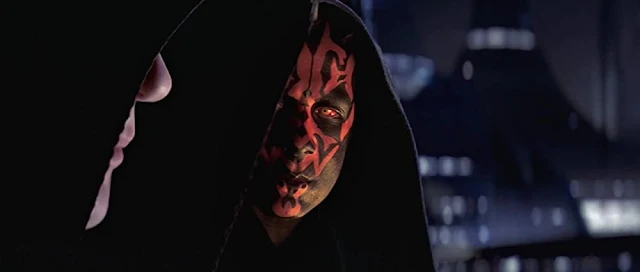
darth maul quotes star wars

Here's his quite quotable conversation with Palpatine:

Darth Maul: Tatooine is sparsely populated. If the trace was correct, I will find them quickly, Master.

Senator Palpatine: Move against the Jedi first. You will then have no difficulty in taking the Queen to Naboo to sign the treaty.

Darth Maul: At last we will reveal ourselves to the Jedi. At last we will have revenge.

Senator Palpatine: You have been well trained, my young apprentice. They will be no match for you.

On Naboo after being instructed by Darth Sidious to wait for the Jedi:

“Yes, My Master.”

That line has big echoes back to how Darth Vader would ultimately converse with Palpatine

There was a series of 'tone poems' spoken by the characters in television spots to promote The Phantom Menace. 

Maul's was:

"Fear. Fear attracts the fearful, the strong, the weak, the innocent, the corrupt. Fear. Fear is my ally."
The physical portrayal of Darth Maul in "Star Wars: Episode I - The Phantom Menace" was performed by Ray Park, a British martial artist and actor.

However, the voice of Darth Maul was provided by Peter Serafinowicz, an English actor, comedian, and writer. Serafinowicz recorded the dialogue for the character after the film had finished shooting, and his voice was then mixed with various sound effects to create the final sound of Darth Maul's voice.

It's worth noting that while Ray Park physically played the character, he didn't actually speak any lines in the film. Instead, his grunts and other vocalizations were recorded during filming and later replaced with the final voice of Darth Maul in post-production.

In the 2018 film "Solo: A Star Wars Story," the voice of Darth Maul was once again provided by actor Sam Witwer following his run in The Clone Wars.

Witwer's voice was used in a surprise cameo appearance of Darth Maul in the film's final scene, where he reveals himself to be the leader of the Crimson Dawn criminal organization. The appearance of Darth Maul in the film was a surprise to many fans, as the character was previously thought to have died in "The Phantom Menace." - as not everyone watches the Star Wars: Clone Wars cartoons!

Here's the exchange Maul has with Qi'Ra at the end of the Solo film:

Qi'Ra: “I regret to inform you that Dryden Vos is dead, murdered by the thief he hired to steal the coaxium ship and his friend – Tobias Beckett.”

Darth Maul: “Is that so? Where is the shipment now?

Qi'Ra: “Gone. Beckett took it. Slaughtered the others. I alone survived.”

Darth Maul: “One man couldn't have done this alone.”

Qi'Ra: “I wasn't there. But if I had been, perhaps I could've saved him.”

Darth Maul: “Bring the ship and come to me on Dathomir and you and I will then decide what to do with the traitor Beckett and his accomplices.

Qi'Ra: “I'm on my way.”

Darth Maul: “Qi'ra, you and I will be working much more closely from now on.

That means Maul spoke 54 words in Solo, 63 percent more words than he did in The Phantom Menace.

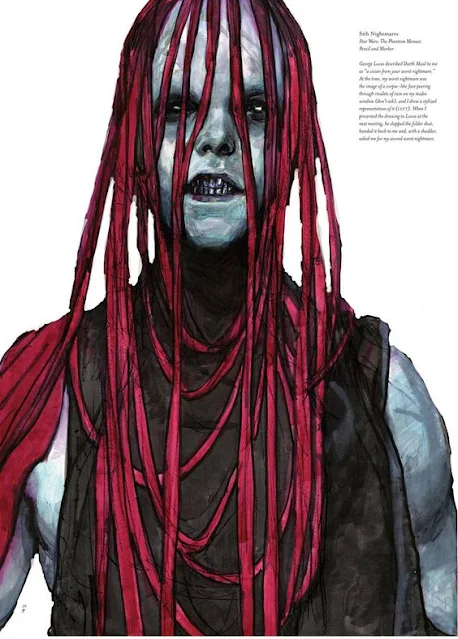
Here's the first piece of concept art for Darth Maul:


darth maul concept art ian mccaig
Feels like the classic 1990s, as if they were a member of Prodigy...

Here are some bits of trivia about Darth Maul:

  1. Darth Maul was originally designed by concept artist Iain McCaig, who also designed characters such as Padmé Amidala and General Grievous.
  2. The design of Darth Maul's double-bladed lightsaber was inspired by weapons used in traditional Filipino martial arts.
  3. Ray Park, the actor who played Darth Maul in "The Phantom Menace," is a martial artist who also played the character Toad in the first "X-Men" movie.
  4. In the "Star Wars" canon, Darth Maul survived his apparent death in "The Phantom Menace" and went on to appear in other stories such as The Clone Wars and fought Ashoka Tano..
  5. Despite his limited dialogue, Darth Maul is considered one of the most popular and iconic villains in the "Star Wars" franchise.
  6. The makeup and prosthetics used to create Darth Maul's appearance in "The Phantom Menace" took over four hours to apply each day.
  7. Actor Sam Witwer, who provided the voice of Darth Maul in "The Clone Wars" and other Star Wars media, is also known for his roles in shows such as "Being Human", Battlestar Galactica and "Smallville."
  8. The character of Darth Maul was created specifically for "The Phantom Menace," and did not appear in any of the previous "Star Wars" movies or other media.
  9. The sound effects used for Darth Maul's lightsaber were created by recording the sound of an old television picture tube and modifying it in post-production.
  10. In "The Clone Wars," Darth Maul is shown to have developed a rivalry with another Sith Lord, Count Dooku, who was also one of his former masters.
03 April 2023

How Emperor Palpatine Used Manipulation to Rise to Power in Star Wars

Emperor Palpatine's ability to manipulate people around him was a crucial factor in his rise to power and his ability to maintain it. 

From his subtle guidance of conversations and popular sentiment to his masterful and patient manipulation of countless individuals, Palpatine displayed a level of commitment and follow-through that was rare among even the most formidable villains in fiction.

One of the key examples of Palpatine's manipulative tactics was his ability to get Queen Amidala to call for a vote of no confidence in Chancellor Finis Valorum in The Phantom Menace. By carefully playing his political cards just right, Palpatine was able to position himself for greater power and influence.

Another example of Palpatine's manipulative genius was his ability to pretend to be attacked by Fives in The Clone Wars. By using this incident to make a case for the inhibitor chips, he was able to deceive the Jedi and ensure that the chips stayed in place for his own purposes.

palpatine-emperor

Palpatine successfully eggs Anakin on to kill Count Dooku in Revenge of the Sith, and his line "do, it" has become a classic Palpatine quote. 

Perhaps the most important example of Palpatine's manipulative tactics was his ability to shape Anakin Skywalker into the perfect apprentice. He constantly praised Anakin, insulted the Jedi Order, and made him feel like he deserved a position on the Jedi Council. When Anakin was not elevated to the rank of Jedi Master, Palpatine was there to listen and further manipulate him. In the end, Anakin played right into Palpatine's hands and turned against the Jedi.

In "Revenge of the Sith," Chancellor Palpatine tells the story of the tragedy of Darth Plagueis the Wise to Anakin Skywalker. The speech is a pivotal moment in the manipulation of Anakin and plays a significant role in his eventual fall to the dark side.

Palpatine describes how Darth Plagueis was a Sith Lord who had the power to manipulate the Force to create life and prevent death. He was so skilled that he could even keep the people he loved from dying. However, in the end, Darth Plagueis was killed by his own apprentice, who took his power and became even more powerful than Plagueis ever was.

The tragedy of Darth Plagueis the Wise speech is a masterful manipulation tactic used by Palpatine to appeal to Anakin's fear of losing those he loves. Anakin is struggling with the fear of losing his wife Padmé to death, and Palpatine uses the story to offer a solution to Anakin's fear. He tells Anakin that with the power of the dark side, he could prevent Padmé's death and even bring her back to life.

The speech works on Anakin, who becomes obsessed with the idea of using the dark side to prevent Padmé's death. Palpatine uses this obsession to turn Anakin to the dark side and to make him his new apprentice, Darth Vader.

In the Mace Windu death scene, Palpatine pitted Anakin against the Jedi, convincing him that the Jedi were trying to take over the government, giving him a chance to escape Windu's pronounced death sentence. After Windu's death, Palpatine ordered Anakin to wipe out the remaining Jedi.

Finally, in Return of the Jedi, Palpatine laid a trap for Luke Skywalker by leveraging his feelings about his friends and pitting father against son. While things didn't work out as planned, Palpatine had set himself up to win either way.

In conclusion, Emperor Palpatine's ability to manipulate people around him was a critical component of his rise to power and his ability to maintain it. Through a combination of subtle guidance, patient manipulation, and strategic maneuvering, he was able to play countless people like pianos and achieve his ultimate goal of ruling the galaxy.

Replacing Clive Revill's Emperor with Ian McDiarmid in The Empire Strikes Back Special Edition

In the original theatrical release of The Empire Strikes Back in 1980, the character of the Emperor was portrayed by actor Clive Revill. However, when the film was re-released as part of the Special Editions in 1997, the Emperor was replaced with a new version portrayed by Ian McDiarmid, who had previously played the character in Return of the Jedi.

The decision to replace Revill's version of the Emperor with McDiarmid's was made for a number of reasons.

Firstly, George Lucas wanted to create consistency across all three films in the original trilogy, as McDiarmid had become the definitive version of the character following his performance in Return of the Jedi.

Secondly, the Special Editions provided an opportunity to enhance the visual effects of the original films, and replacing Revill's version of the Emperor with a new version portrayed by McDiarmid allowed for greater continuity and consistency in the appearance of the character.

In terms of the actual alterations made to the film, the scenes featuring the Emperor were completely re-shot with McDiarmid, with the dialogue remaining largely the same.

The new scenes were also edited differently to the original, with the camera angles and pacing being altered to create a more intense and dramatic atmosphere.

Overall, the substitution of Ian McDiarmid's version of the Emperor in The Empire Strikes Back was a significant change to the film, but one that was made to create greater consistency and continuity across the Star Wars saga.

Here are the two different versions of the conversations Vader and Palpatine have:

1980 version voiced by Clive Revill

clive revill empire strikes back

Darth Vader: What is thy bidding, my Master?

The Emperor: There is a great disturbance in the Force.

Darth Vader: I have felt it.

The Emperor: We have a new enemy: Luke Skywalker.

Darth Vader: Yes, my Master.

The Emperor: He could destroy us…

Darth Vader: He’s just a boy. Obi-Wan can no longer help him.

The Emperor: The Force is strong with him. The son of Skywalker must not become a Jedi!

Darth Vader: If he could be turned, he would become a powerful ally.

The Emperor: Yes. Yes, he would be a great asset. Can it be done?

Darth Vader: He will join us, or die, my Master.

Special Edition with Ian McDiarmid

ian mcdiarmid special edition TESB

Darth Vader: What is thy bidding, my Master?

Emperor Palpatine: There is a great disturbance in the Force.

Darth Vader: I have felt it.

Emperor Palpatine: We have a new enemy: the young Rebel who destroyed the Death Star. I have no doubt this boy is the offspring of Anakin Skywalker.

Darth Vader: How is that possible?

Emperor Palpatine: Search your feelings, Lord Vader. You will know it to be true. He could destroy us.

Darth Vader: He’s just a boy. Obi-Wan can no longer help him.

Emperor Palpatine: The Force is strong with him. The son of Skywalker must not become a Jedi.

Darth Vader: If he could be turned, he would become a powerful ally.

Emperor Palpatine: Yes… He would be a great asset. Can it be done?

Darth Vader: He will join us or die, Master.


The themes of Alien 3 (1992) directed by David Fincher

Despite its flaws, David Fincher's Alien 3 is a wonderful exploration of the human condition, taking audiences on an emotionally-charged journey that probes some of the most profound and universal themes of our existence. 

The film delves deep into the themes of isolation and loneliness, revealing the profound impact that these feelings can have on individuals when faced with a hostile and unfamiliar environment. This sense of isolation is only heightened by the presence of the deadly alien creature, which threatens the characters at every turn and creates an almost palpable sense of tension and fear.

But beyond the struggle for survival against the alien, Alien 3 also grapples with more nuanced themes, such as the conflict between different factions of inmates on Fury 161. The film portrays a complex and nuanced depiction of power dynamics, with inmates vying for control and authority in a world where every decision can have life-or-death consequences. This exploration of power dynamics also feeds into the theme of the corrupting influence of power and authority, which is portrayed with unflinching honesty and raw emotion.

Religion also plays a central role in Alien 3, highlighting the ways in which individuals turn to faith as a way of coping with fear and death. The characters' religious beliefs are portrayed with depth and nuance, revealing the complex interplay between faith and science in the face of the alien threat. The intersection of religion and science creates a fascinating exploration of the human condition, revealing the many ways in which we attempt to make sense of the world around us.

alien 3

So let's dive deeper into each of these themes in Alien 3.

Isolation and Loneliness: The film's setting on a remote prison planet creates a sense of isolation and loneliness that is felt by both the inmates and Ripley, who is stranded on the planet with them. This theme is also reflected in the lice infected, cold, sterile environment of the prison, which contrasts with the warm and organic environment of the alien. The characters must rely on each other for survival, but their isolation also creates tension and conflict between them.

Struggle for Survival: The struggle for survival against the alien is a constant theme throughout the film. The alien is a formidable opponent that is difficult to kill, and the characters must use their ingenuity and resourcefulness to try to defeat it. This struggle for survival raises questions about the value of human life and the cost of scientific progress, as the alien was created through scientific experimentation.

Conflict between Different Factions: The inmates on Fury 161 are divided into different factions based on their backgrounds and affiliations, which creates tension and conflict between them. This conflict highlights the complex social dynamics of a prison environment, where power and authority are constantly being negotiated and contested. The corrupting influence of power and authority is also a significant theme, as some of the inmates try to gain power and control over others.

Religion: Religion plays an important role in the film, particularly in how the characters cope with fear and death. The inmates are all former criminals who have turned to religion as a way to find meaning and purpose in their lives. This intersection of religion and science is also explored, as the characters try to confront the alien threat using both their faith and their reason.

Gender and Sexuality: The film explores gender roles and sexual tension in an all-male prison environment. Ripley's arrival on the planet disrupts the gender dynamics of the prison and creates tension between the male characters. This exploration of gender and sexuality adds complexity to the characters and their relationships, particularly as Ripley becomes the only woman on the planet. The attempted rape of Ripley, is perhaps a nod to the themes considered in the original alien.

Motherhood and Creation: The theme of motherhood and creation is central to the film, both in the alien's reproductive cycle and Ripley's unwitting surrogate role as a protector and nurturer. The alien's reproduction is a grotesque and violent process that highlights the destructive power of creation, while Ripley's role as a mother figure is a source of comfort and strength for the characters.

In conclusion, Alien 3 is a film that explores a wide range of complex themes, from isolation and survival to gender and sexuality, religion and science, and the value of human life. These themes are explored through the characters and their struggles, creating a thought-provoking and emotionally powerful film that raises important questions about the human condition.

Ripley and Clemens: A Relationship Symbolic of Hope and Despair in Alien 3

The relationship between Ellen Ripley and Dr. Jonathan Clemens in Alien 3 was a sudden and unexpected development in the storyline.

It was especially surprising given that Ripley had just learned of the tragic deaths of Newt and Hicks, whom she had grown to love and care for deeply in Aliens. The emotional trauma and grief that Ripley experienced were palpable, and it would be natural to assume that she would not be in the right frame of mind to pursue a romantic relationship.

However, Clemens' character brought a sense of compassion and understanding that Ripley found solace in, ultimately leading to their intimate relationship.

celmens ripley alien 3

Despite the sudden nature of their relationship, there were underlying reasons why it developed so quickly. 

In the context of being stranded on a prison planet with limited options for social interaction, their relationship provided a sense of human connection and comfort amidst the chaos. In many ways, the relationship between Ripley and Clemens was a reflection of their shared experiences of loss, trauma, and the need for human connection in an isolating and hostile environment.

Here are some thematic considerations of this relationship.

Isolation and Desperation:


The relationship between Ripley and Clemens begins as a result of their shared isolation and desperation. Both characters are stranded on a remote planet, surrounded by violent prisoners and a deadly alien creature. In this bleak and hopeless environment, their connection provides a brief moment of respite from the constant danger and loneliness. Ripley finds comfort in Clemens' gentle nature and his willingness to listen to her fears and concerns, while Clemens is drawn to Ripley's strength and resilience in the face of overwhelming adversity

Challenging Traditional Gender Roles:


The relationship between Ripley and Clemens also challenges traditional gender roles and power dynamics. Ripley is portrayed as a strong and independent female character who takes charge of her own survival, while Clemens is initially shown as a somewhat timid and vulnerable male character. 

Fragility of Relationships:


The relationship between Ripley and Clemens also highlights the fragility of human connection in a world where death is always looming. Their relationship is cut short by the sudden and violent death of Clemens, reinforcing the idea that nothing is certain or permanent in the face of death. The loss of their connection serves as a reminder of the precarious nature of relationships in a world where survival is uncertain.

Furthermore, the death of Clemens also symbolizes the loss of hope and the failure of Ripley's attempts to find a way off the planet. The relationship between Ripley and Clemens was a symbol of hope, representing the possibility of a brighter future amidst the bleakness of their situation. However, the sudden and violent end of their relationship serves as a metaphor for the crushing reality of the situation they find themselves in.

In conclusion, the relationship between Ripley and Clemens in Alien 3 is significant for a number of thematic reasons. It serves as a reminder of the isolation and desperation felt by the characters, challenges traditional gender roles and power dynamics, and highlights the fragility of human connection in a world where death is always looming.

About the author Jimmy Jangles


My name is Jimmy Jangles, the founder of The Astromech. I have always been fascinated by the world of science fiction, especially the Star Wars universe, and I created this website to share my love for it with fellow fans.

At The Astromech, you can expect to find a variety of articles, reviews, and analysis related to science fiction, including books, movies, TV, and games.
From exploring the latest news and theories to discussing the classics, I aim to provide entertaining and informative content for all fans of the genre.

Whether you are a die-hard Star Trek fan or simply curious about the world of science fiction, The Astromech has something for everyone. So, sit back, relax, and join me on this journey through the stars!
Back to Top