01 June 2025

15 ''Sci Fi'' Cult Classics worth a watch

Cult Classics: The Final Frontiers

Cult Classics of the Cosmos

The Final Frontiers of Imagination

In the vast cosmos of cinema, science fiction, often shortened to 'sci-fi', stands as a beacon of imagination. It's a genre where the boundaries of reality are stretched, twisted, and 'final frontiers' are shattered allowing filmmakers to explore the 'what ifs' of science and technology.

From time travel and alien encounters to dystopian futures and artificial intelligence, sci-fi films have captivated audiences for generations, transporting them to worlds beyond their wildest dreams. Think of classics like "Blade Runner," with its rain-soaked neon cityscape and philosophical androids grappling with their manufactured existence, or "2001: A Space Odyssey," a visually stunning and intellectually profound meditation on humanity's evolution, cosmic destiny, and the potential perils of advanced artificial intelligence like the chillingly calm HAL 9000.

Within the realm of sci-fi lies a special category: the 'cult classic'. These are films that, while not always box office smashes, have garnered a devoted, often fervent, following over time. They're frequently quirky, subversive, or significantly ahead of their time, resonating with a specific audience who appreciate their unique vision, challenging narratives, and offbeat charm.

Think of "Donnie Darko," a mind-bending tale weaving time travel, destiny, and teenage angst, which has sparked countless debates and interpretations surrounding its complex lore of Tangent Universes and the Living Receiver. The world of sci-fi is overflowing with classic films, each leaving an indelible mark on the genre. However, some have managed to transcend their initial release and achieve cult classic status, continuing to resonate with new and original audiences year after year.

These films, like "Brazil," a darkly comedic and visually surreal satire of oppressive bureaucracy and the struggle for individual freedom in a totalitarian state, or "Akira," a visually explosive and thematically dense anime about psychic powers, governmental corruption, and societal collapse in a post-apocalyptic Neo-Tokyo, have become touchstones for sci-fi fans, inspiring countless filmmakers and sparking conversations that continue to this day.

Blade Runner (1982)

BLADE RUNNER CULT CLASSIC

Directed by Ridley Scott, this film paints a dystopian future Los Angeles in 2019, where bioengineered beings called replicants, virtually indistinguishable from humans, are manufactured by the powerful Tyrell Corporation for hazardous off-world labor. When a group of Nexus-6 replicants, possessing superior strength and agility but a four-year lifespan, escape back to Earth, burnt-out 'blade runner' Rick Deckard is reluctantly tasked with hunting them down and "retiring" them.

The film's cult status stems from its rich thematic tapestry and its multiple versions (including the original Theatrical Cut with a studio-imposed happy ending and voice-over, the more ambiguous Director's Cut, and Scott's definitive Final Cut), each offering slightly different nuances.

It masterfully explores the nature of humanity and artificial intelligence, blurring the lines between creator and creation as replicants like Roy Batty and Pris exhibit profound emotions, existential desires, and a desperate will to live beyond their programmed obsolescence. The film also delves into memory and identity, questioning whether implanted memories, like those Rachael possesses, can create a genuine sense of self and personal history.

Visually, Blade Runner is a masterpiece, with its rain-soaked, overcrowded, neon-lit cityscape, influenced by film noir and futurist design, becoming an iconic representation of a dystopian future, often referred to as "future-noir." It challenges viewers to contemplate what it means to be human in a world where technology has advanced to the point of creating beings that mirror us in almost every way, prompting the lingering question: is Deckard himself a replicant?

Dark City (1998)

Directed by Alex Proyas, Dark City plunges viewers into a shadowy, noir-infused metropolis of perpetual night where the protagonist, John Murdoch, wakes up in a strange hotel bathtub with amnesia, only to find himself hunted for a series of brutal murders he cannot remember committing. As he delves deeper into the mystery of his identity and the city's bizarre mechanics, he uncovers a disturbing truth about its true nature and the shadowy figures known as the "Strangers" who manipulate it.

The film's cult following stems from its mind-bending premise, its distinct German Expressionist-inspired visuals, and unsettling atmosphere. It explores themes of identity, memory, and free will, questioning the nature of reality itself as Murdoch discovers the Strangers are aliens conducting a vast experiment.

These pale, telekinetic beings halt the city each night, physically rearranging it and implanting new memories and identities into its inhabitants, all in a desperate attempt to understand the human soul, which they believe will help save their own dying race. Murdoch's emerging ability to "tune" - to use the Strangers' own reality-altering powers - marks him as an anomaly and a threat to their experiment.

Logan's Run (1976)

logan's run farrah fawcett

Director Michael Anderson envisions a seemingly utopian future society enclosed within a domed city in the 23rd century, where everyone lives a carefree, hedonistic existence dedicated to pleasure until they reach the age of 30. At that point, citizens must participate in a public ritual called "Carousel," where they are supposedly "renewed" and reborn, but in reality, they are vaporized to maintain strict population control and resource management.

The age limit is visually enforced by "lifeclocks" - crystals embedded in the palms of their hands that change color as they age, turning black and blinking on their "Last Day." Logan 5, a "Sandman" whose job is to track down and terminate "Runners" (those who try to escape Carousel), begins to question the morality of this system after being tasked by the city's computer to find and destroy "Sanctuary," a mythical place outside the city where Runners are rumored to escape.

To do this, his own lifeclock is advanced to blinking black, forcing him to become a Runner himself. The film's cult appeal lies in its exploration of themes relevant to any generation: the fear of aging and societal obsession with youth, the desire for freedom and self-determination, and the potential dangers of a society that values conformity and pleasure over individuality and truth.

Logan's Run serves as a cautionary tale about the allure of a seemingly perfect society built on a horrifying secret and the importance of questioning authority, making it a thought-provoking and enduring cult classic.

Planet of the Apes (1968)

Planet of the Apes (1968), directed by Franklin J. Schaffner, thrusts astronaut George Taylor and his crew into a dystopian future after their spaceship crash-lands on what they believe to be an alien planet in the year 3978. They soon discover that this world is ruled by a complex, intelligent ape society where simians have evolved into the dominant species, while humans are mute, primitive savages hunted for sport and scientific experimentation.

The film's cult classic status is rooted in its thought-provoking social commentary disguised as a thrilling science fiction adventure, adapted from Pierre Boulle's novel "La Planète des Singes." It serves as a potent allegory for racism, prejudice, the suppression of scientific truth by religious dogma, and the abuse of power, holding a mirror to humanity's own societal flaws.

The iconic twist ending, revealing the half-buried Statue of Liberty, delivers a powerful and chilling message about the self-destructive potential consequences of humanity's actions and the cyclical nature of history, confirming Taylor's horrifying realization that he has been on Earth all along: "You Maniacs! You blew it up! Ah, damn you! God damn you all to hell!"

Fortress (1992)

From the era when home video releases could often give films a second life and build a dedicated fanbase, Fortress steps up to a dystopian future in 2017 where overpopulation has led to draconian measures. A strict one-child policy is brutally enforced. Ex-army officer John Brennick (Christopher Lambert) and his wife Karen are caught attempting to cross the US-Canada border, imprisoned in a high-tech, privately run maximum-security prison - the Fortress - for illegally attempting a second pregnancy.

The prison, run by the Men-Tel Corporation, is a nightmarish vision of technological control, with inmates implanted with "Intestinators" that can induce severe pain or death for disobedience, and subjected to constant surveillance, laser grids, and brutal punishments by the sadistic warden, Poe (Kurtwood Smith), who is himself a cybernetically enhanced bureaucrat with a god complex.

This film has achieved cult status for its blend of gritty action, inventive science fiction elements, and social commentary. It tackles themes of reproductive rights, corporate power, the dehumanizing nature of incarceration, and the relentless fight for freedom against a totalitarian regime.

Alien (1979)

alien chest burster 1977

Ridley Scott takes the classic haunted house narrative ("ten little Indians" in space) and masterfully sets it aboard the commercial towing spaceship Nostromo. The seven-member crew, on a long-haul voyage back to Earth, is prematurely awakened from hypersleep to investigate a mysterious distress signal originating from the desolate moon LV-426.

During the investigation of a derelict alien spacecraft, Executive Officer Kane discovers a chamber filled with leathery eggs. When he examines one, a parasitic creature - the Facehugger - erupts and attaches itself to his face. Unwittingly, and against quarantine protocols championed by Warrant Officer Ripley, the crew brings this deadly extraterrestrial organism on board, which then "births" in a horrific fashion (the infamous chestburster scene) and quickly matures into a lethal predator that stalks and kills them one by one.

Beyond its visceral thrills, Alien explores themes of corporate greed (the revelation of Special Order 937: "crew expendable," prioritizing the capture of the Xenomorph for the Weyland-Yutani Corporation's bioweapons division), the primal fear of violation, the vulnerability of humanity in the face of the truly alien, and the resilience of the human spirit, embodied by Sigourney Weaver's iconic character, Ellen Ripley.

Star Trek II: The Wrath of Khan (1982)

Widely regarded as the best film in the Star Trek franchise, Nicholas Meyer's "The Wrath of Khan" sees a middle-aged Admiral James T. Kirk and the crew of the USS Enterprise face a formidable and deeply personal threat from the past: Khan Noonien Singh. Khan, a genetically engineered superhuman warlord from Earth's late 20th-century Eugenics Wars, was marooned by Kirk 15 years earlier.

Now, fueled by an Ahab-like obsession for revenge against Kirk, Khan seizes control of the USS Reliant and a powerful, dangerous terraforming device called Genesis. The Genesis Device is capable of instantly creating life from lifeless matter, but if used on an existing planet, it would wipe out all pre-existing life - a terrifying weapon in the wrong hands.

The film's exploration of vengeance, forgiveness, the consequences of past actions, and the enduring power of friendship elevates it beyond a mere space adventure. Spock's poignant sacrifice to save the ship and its crew from the activated Genesis Device, entering a lethally irradiated engine room and uttering the unforgettable line "The needs of the many outweigh the needs of the few, or the one," adds immense emotional weight and depth to the narrative.

Children of Men (2006)

Directed by Alfonso Cuarón, this dark, visceral, and hauntingly plausible examination of humanity paints a bleak picture of a dystopian 2027. Humanity faces imminent extinction due to eighteen years of global female infertility, leading to widespread despair, societal collapse, and chaotic violence. The United Kingdom is one of the few remaining nations with a functioning (albeit oppressive and xenophobic) government, besieged by refugees fleeing global turmoil.

This film has garnered cult classic status for its unflinching portrayal of a world on the brink of collapse, tackling themes of hope, despair, faith, redemption, and the resilience of the human spirit in the face of overwhelming nihilism. The film's masterful use of long, unbroken takes places the viewer directly in the heart of the peril and chaos, creating a profound sense of urgency and immediacy.

Braindead (1992)

Timothy Balme in Dead Alive (1992)

Known as "Dead Alive" in its American release, directed by Peter Jackson long before his Middle-earth fame, this is a gloriously over-the-top splatter-comedy horror film set in 1950s Wellington, New Zealand. When timid Lionel Cosgrove's overbearing mother is bitten by a hideous Sumatran Rat-Monkey (a creature from Skull Island) at the local zoo, she transforms into a flesh-eating zombie, sparking a chaotic outbreak.

While certainly not for the faint of heart (it's often cited as one of the goriest films ever made), Braindead has become a beloved cult classic for its unapologetic embrace of excess, its gleeful subversion of horror tropes, and its boundless creativity. It satirizes repressive 1950s suburban life and the stifling nature of overprotective mothers, culminating in a blood-soaked finale involving a lawnmower.

Dune (1984)

dune cult classic

David Lynch's ambitious and controversial adaptation of Frank Herbert's seminal science fiction novel is a sprawling epic set in the distant future where powerful noble families vie for control of the desert planet Arrakis. Arrakis is the universe's sole source of the immensely valuable spice melange, crucial for enabling interstellar travel by allowing Spacing Guild Navigators to fold space.

Although met with mixed reviews and studio interference that led Lynch to disown it, Dune has garnered a devoted following over time. Lynch's visually striking and surreal interpretation creates a mesmerizing universe filled with strange creatures, industrial set designs, and internal monologues.

Its unique blend of science fiction, feudal fantasy, and political intrigue, coupled with its stunning visuals and an iconic score by Toto and Brian Eno, has made it a cult classic that continues to captivate audiences, particularly as newer adaptations invite comparisons to Lynch's bizarre vision.

Mad Max (1979) & Mad Max 2: The Road Warrior (1981)
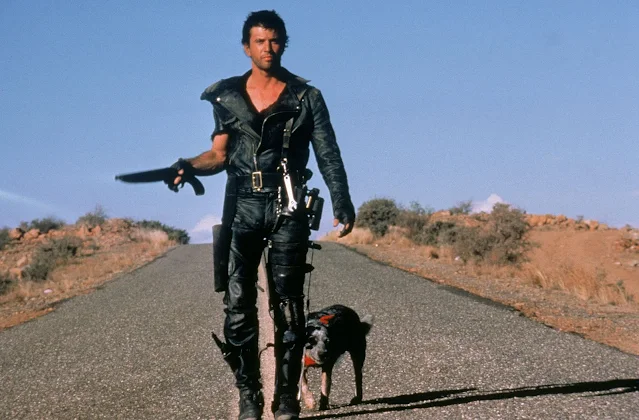
mad max road warrior cult classic

Directed by George Miller, the original Mad Max introduces us to Max Rockatansky (Mel Gibson), a skilled Main Force Patrol officer in a near-future Australia teetering on the brink of societal collapse. When a vicious gang murders his family, Max embarks on a cold-blooded, vengeful rampage, becoming a "shell of a man" fueled by grief and gasoline.

Mad Max 2: The Road Warrior takes the franchise to new heights. Society has completely collapsed into a tribalistic wasteland where "guzzoline" is the most precious commodity. The film's distinctive visual style, blending elements of Westerns and punk aesthetics, along with its breathtaking practical stunts, cemented Max's status as a legendary figure of the wasteland. It celebrates the resilience of the human spirit in the face of utter adversity.

Invasion of the Body Snatchers (1978)

Philip Kaufman's remake of the 1956 classic delivers a chilling tale of paranoia in San Francisco. As people begin acting strangely detached, health inspector Matthew Bennell (Donald Sutherland) uncovers a horrifying truth: alien seed pods are duplicating humans while they sleep, replacing them with emotionless doppelgängers.

The film's cult status is rooted in its ability to tap into primal fears of losing one's identity and individuality to a faceless collective. The film's ambiguous and famously bleak ending, with Matthew Bennell seemingly having succumbed, pointing and screaming at one of the last remaining humans, leaves the viewer questioning whether the invasion has been thwarted or if it's already too late.

The Fly (1986)

Directed by David Cronenberg, the undisputed master of "body horror," The Fly presents a horrifying, tragic, and ultimately poignant transformation. Scientist Seth Brundle (Jeff Goldblum) tests his teleportation device on himself, unaware that a common housefly has entered the pod with him. His genes are fused with the insect's, leading to a slow, gruesome metamorphosis into "Brundlefly."

This film's cult status stems from its groundbreaking practical makeup effects and its profound exploration of themes of disease, decay, and identity. It is not just a horror film; it's a poignant meditation on the human condition and the terrifying consequences of biological change, grounded by the tragic romance between Brundle and journalist Veronica Quaife.

Waterworld (1995)

In a distant future where the polar ice caps have melted, submerging Earth beneath a global ocean, humanity clings to survival on floating atolls. A mysterious mutant drifter known as "The Mariner" (Kevin Costner) navigates this watery wasteland, battling ruthless pirates called "Smokers" while searching for the mythical "Dryland."

Despite its notorious production troubles, Waterworld has gained appreciation for its sheer ambition, detailed world-building, and practical effects. Its vision of a world transformed by climate change resonates with contemporary environmental concerns, and the extended "Ulysses Cut" is often preferred by fans for its deeper character development.

Tron (1982)

Tron transports viewers into a visually revolutionary digital frontier. Kevin Flynn (Jeff Bridges), a computer programmer, is digitized and pulled into the electronic world inside a computer system by a power-hungry Master Control Program (MCP). Inside, he must survive gladiatorial games and team up with a security program named Tron to bring down the MCP.

The film's cult status stems from its groundbreaking visual effects, which pioneered the extensive use of CGI and backlit animation. Its neon-lit landscapes and light cycles set a new benchmark for sci-fi aesthetics. Beyond the visuals, it explores prescient themes about artificial intelligence, virtual reality, and the relationship between creators (Users) and their digital creations.

Southland Tales (2006)

southland tales cult classic

Richard Kelly, director of "Donnie Darko," delivers a sprawling, ambitious, and deeply surreal satirical portrait of Los Angeles in a near-future, alternate 2008. In this reality, nuclear attacks have triggered a global crisis and a draconian surveillance state. The film follows an ensemble cast including Dwayne "The Rock" Johnson, Sarah Michelle Gellar, and Seann William Scott as their destinies intertwine with a vast conspiracy involving neo-Marxist revolutionaries and a new energy source called "Fluid Karma."

Its blend of dark humor, social satire, and mind-bending narrative twists has resonated with audiences who appreciate challenging, "kitchen sink" cinema. It explores themes of media saturation, corporate power, and the impending apocalypse with a unique mix of sincerity and absurdity.

What makes a cult classic a classic?

The films we've explored in this journey through sci-fi cult classics demonstrate the enduring power of cinema to challenge, inspire, provoke, and entertain, often outside the mainstream currents of their time. While some, like Star Trek II: The Wrath of Khan, initially enjoyed mainstream success and critical acclaim, they've transcended their initial reception to become beloved touchstones, cherished for specific qualities that foster a dedicated, repeat-viewing fanbase.

Others, like Braindead, Southland Tales, or even the original theatrical cut of Blade Runner, initially baffled, repulsed, or were dismissed by general audiences and critics but have since garnered passionate, sometimes fiercely defensive, followings who appreciate their unique visions, subversive spirit, unconventional narratives, or ahead-of-their-time ideas.

© 2024 Sci-Fi Film Analysis. All rights reserved.

Read Article →

How Obi-Wan Kenobi’s Skill and Patience beat Darth Maul & Anakin Skywalker

Obi-Wan Kenobi’s skill with a lightsaber is the stuff of Jedi legend. He moves with a calm that belies the violence of his duels. 

Every step, every twist, reveals a warrior who has mastered both form and mind. From Naboo’s reactor shaft to Tatooine’s sands, Kenobi’s strategic thinking shines through. 

He does not merely clash blades; he anticipates openings, exploits weaknesses, and turns his opponents’ strengths against them. 

This is the story of his duels with Darth Maul and Anakin Skywalker, and how his training methods stand in stark contrast to Anakin’s tragic overconfidence.
 
obi wan kenobi

The Duel with Darth Maul on Naboo

In The Phantom Menace Kenobi’s first major test arrives when Qui-Gon Jinn falls to Maul’s lethal low-thrust. Maul, trained in Sith Form VII Juyo by Darth Sidious, moves with ferocity. His double-bladed saber whips through Qui-Gon’s torso. 

Kenobi dives under the spinning strike, seizes Qui-Gon’s fallen blade, and faces Maul alone. 

The Jedi Code demands calm. 

Under pressure, Kenobi’s Form III Soresu foundation - traditionally focused on tight defense - blends seamlessly into Form IV Ataru’s footwork and agility. He baits Maul into repeating that same low-thrust, the attack that slew his master. Yet Kenobi is ready. As Maul lowers his saber, Kenobi twists aside and slices upward, severing Maul at the waist. 

It is a moment that fuses technique with discipline. 

Maul’s aggression becomes his undoing. Kenobi’s blade finds the exact spot Maul used against Qui-Gon. It is more than a copy; it is strategic mastery. 

Kenobi understands that Maul’s training under Sidious prioritized raw aggression over adaptability. In contrast, Kenobi’s blended style makes him unpredictable. His victory proves that control and cunning can trump unbridled power.

The Duel of the Fates indeed.   

Maul’s Resurrection and the Duel on Tatooine

Years later, in Star Wars Rebels’ “Twin Suns,” Kenobi confronts a resurrected Maul on Tatooine. 

The Sith Lord’s body has been pieced together with cybernetics and dark-side alchemy. He adopts a stance meant to mock Qui-Gon’s final posture: knees bent, torso coiled, saber primed for a downward strike. Maul’s taunt is almost cinematic.

 He plants himself, daring Kenobi to repeat history. 

But Kenobi waits.

 As Tatooine’s twin suns dip below the dunes, Kenobi lets Maul commit to the same low-thrust. 

Then, fluid as water, Kenobi steps inside Maul’s arc and counters with that familiar upward slash. Maul crumples. There is no resurrection this time. On a dusty dune, Kenobi once again transforms Maul’s favored move into his downfall. 

This duel highlights how Kenobi’s strategic mind endures decades of hardship. His senses are keen enough to read that stance as invitation. 

Many would write off Maul as defeated on Naboo. Instead, Maul’s return only solidifies Kenobi’s mastery. He understands that a true fighter sees beyond the blade. He reads intent.

The Mustafar Confrontation with Anakin Skywalker 

The Mustafar duel in Revenge of the Sith cements Kenobi’s place among lightsaber legends. 

Anakin Skywalker, now Darth Vader in spirit, meets Kenobi on a volcanic battlefield. Anakin, confident in his hybrid style - part Form V Shien for power, part Form IV Ataru for agility - believes raw strength will win the day. 

Kenobi pleads: 

It's over Anakin, I have the high ground

Anakin responds: 

You underestimate my power!

Kenobi’s response is measured. He positions himself so Anakin must reach downward, exposing his legs. Kenobi’s eyes betray compassion, even regret. He has trained Anakin since infancy. Yet here he stands against his former Padawan. Anakin lunges. Kenobi sidesteps, then executes a precise cut that severs Anakin’s legs and one arm. 

The power difference is undeniable - Anakin’s raw force is greater - but Kenobi’s form, honed through decades, cannot be surpassed. 

kenobi skill beats anakin

He channels Qui-Gon’s teachings, the Jedi Code’s insistence on defense first, and his own lessons in patience. 

Anakin’s refusal to master patience and anticipate openings costs him everything: his limbs and Padmé’s life, since his hubris pushed him deeper into darkness.

Form

Form III Soresu, Kenobi’s base, emphasizes turning away attacks, conserving energy, and wearing down opponents. In Phantom Menace he blends Soresu’s tight guard with Form IV’s acrobatic flourishes. 

By Rebels he has refined Soresu’s crystalline defense into something almost unseen - reactions so swift they seem instinctual. Anakin’s hybrid style, though powerful, lacks the discipline to anticipate feints. Maul’s Form VII is brutal and unpredictable, but Sidious never taught him to adapt when an opponent knows his patterns. 

Kenobi learned every Jedi form, yet chose to base himself in Soresu because the Jedi Code taught that defense protects both body and mind. Lightsaber construction also matters: 

Kenobi’s kyber crystal hums with calm focus, whereas Maul’s cracked crystal vibrates with rage. Anakin’s crystal, originally built alongside Kenobi’s for Padawan ceremonies, reflects his duality: brilliance laced with dark potential.

Mentorship and Anakin’s Failure

Throughout the prequel era Kenobi and Qui-Gon Jinn mentor Anakin. Qui-Gon teaches compassion, faith in midi-chlorians, and attachment to Jedi ideals. 

Kenobi stresses control of emotion, footwork, and seeing beyond an opponent’s gaze. In Attack of the Clones Kenobi offers guidance on lightsaber form while tracking Count Dooku. 

Yet Anakin balks. 

He rushes, sways, forgets to watch the sabacc table while trying to master Togruta etiquette.

 Obi-Wan’s patience brims over at times, but even his calm cannot pierce Anakin’s storm of emotion. Anakin’s fear of loss, seeded by visions of Padmé’s death, blinds him. He craves power more than mastery.

By Mustafar Anakin believes he is Kenobi’s equal. 

He ignores Kenobi’s lessons on controlling breath and anticipating openings. Anakin fights from hubris. He lunges with raw might. Kenobi meets him with precision. 

The result is inevitable. 

It is a tragic symmetry: Kenobi used Maul’s own move to kill Maul. Anakin, refusing to learn patience, meets the same fate he once inflicted on others. His limbs, once meant to protect peace, are torn away by his master’s superior tactics.

Obi-Wan’s legacy rests on this: he was a thinker as much as a swordsman. 

He studied every strike, every stance, every opponent’s mindset. His style was not flashy for flash’s sake. It was a living equation of defense, timing, and discipline. Maul’s rage, Anakin’s power - these were variables he calculated and overcame. 

In the end, Kenobi’s skill lay in his unwavering commitment to the Jedi Code and to the idea that true mastery arises from humility, not arrogance.


Read Article →
31 May 2025

The themes of 'The Lament of Lyrax' book saga by Jimmy Jangles

The Lament saga by Jimmy Jangles is a vast exploration of cosmic horror, tragic love, and moral reckoning.

Books one through six dig into questions of justice, guilt, memory, trauma, love as rebellion, and identity on a universal scale.

At its heart are two figures whose bond defies cosmic law and whose actions rip through star systems. Lyrax is a tragic antihero whose soul is trapped beyond stars, in a prison woven from silence and regret. Amatrix is his lover, fierce and unrelenting, willing to tear apart reality itself to save him.

Together they push the boundaries of what survival means when the universe itself turns against them. This essay dives into the saga’s core themes - cosmic justice, guilt and memory, trauma, love as rebellion, and the quest for identity - showing how they evolve across six volumes to form a cohesive meditation on suffering and resistance in a universe that demands both remembrance and retribution.

Cosmic Justice

Cosmic justice anchors the saga. The Tribunal Ultimum Universi stands as the supreme court of the cosmos. It judges crimes so vast they warp entire galaxies. In book three, titled Reports on the Judgements of the Tribunal Ultimum Universi, each entry reads like a forensic dossier. Reports catalog the collapse of entire worlds and the theft of time itself. The Tribunal’s voice is cold and unfeeling, dispensing verdicts that reshape reality.

Yet hidden within those clinical entries is the Automatum Commentary, an encrypted AI presence that slips elegiac footnotes into the rulings. These quiet whispers remind us that even the coldest justice cannot erase sorrow.

They bring victims back into focus, showing that cosmic law and personal suffering cannot be separated. By pitting bureaucratic detachment against raw grief, the saga asks us: can a court that weighs the destruction of a planet fairly measure the pain of a single orphan forced to watch?

Through this tension, Jimmy Jangles argues that cosmic law, without the human element of empathy, risks becoming as monstrous as the crimes it judges.


Guilt and Memory

Guilt and memory intertwine like twin strands of DNA. Lyrax and Amatrix stand accused by the universe, yet neither admits remorse. In book two, The Lover of Lyrax, Amatrix recounts a ritual murder of a gifted child and states simply, “I felt peace. Not guilt. Never guilt.”

That stark declaration forces us to stare at evil without contrition. At the same time, Lyrax languishes in the Active Void, a metaphysical prison where memory itself becomes his executioner. He pleads with the void to remember his name, fearing oblivion more than torture. Memory is both jail and lifeline.

In book five, The Final Lamentations of Lyrax, the universe seems to remember through witness statements—medics’ logs, pilots’ journals, planetary ceremonies. Stars dim in grief. Statues weep. Even flora shifts color at the hour of Lyrax’s death.

Collective memory preserves truth and resists erasure. Trauma becomes embedded in cosmic fabric. In this way, guilt and memory link the private horrors of Lyrax’s mind to the collective agony of worlds. The saga insists that memory bears responsibility, even when guilt is absent.

Trauma

Trauma pulses through every page. In book one, The Lament of Lyrax, we inhabit Lyrax’s fractured consciousness. His lamentations come as shards of poetry and stream-of-consciousness cries. Each line cuts like a razor. “Time is a whip,” he says. “Space is a sneer.” He exists in a limbo where every heartbeat is torture.

His mind is stretched thin, his sense of self on the brink of collapse. Amatrix’s trauma unfolds differently. In book six, The Angst of Amatrix, she drifts through a prison that seems alive. It whispers to her, gouges at her sanity, and blurs past and present until she can no longer tell which memories are hers and which are planted by the prison itself.

Her trauma is relentless, leaving her a shattered reflection of who she once was. Neither Lyrax nor Amatrix experiences trauma as a moment in the past. Instead, it is an ongoing state that reshapes their existence.

They bear scars that do not heal.

The saga makes clear that extreme violence alters the soul, transforming pain into a force that drives every thought, every action.

In a universe that never forgets, trauma becomes a second skin.


Love as Rebellion

If cosmic justice and trauma form the saga’s darker chords, love provides its fiery core. Lyrax and Amatrix’s bond is not gentle or redemptive in a traditional sense. In book two, Amatrix’s letters read like manifestos of insurgent love.

She writes on sheets of starlight and seals her pleas in fractured gravity. Her devotion burns time itself. She hacks through quantum barriers and roams secret corridors in ruined temples to reach Lyrax.

When she finally frees him, she defies the Tribunal’s edicts and embraces the chaos his return brings. Their relationship raises a thorny question: can love justify cruelty?

Jimmy Jangles never offers a neat answer.

Instead, he lets fear, rage, lust, and longing swirl in equal measure. Love here is a weapon as potent as any starship’s armament.

It shatters worlds while healing the wounds of two broken souls. In that paradox lies the saga’s most tragic beauty. These two are tethered so tightly that to save one means to doom many. In this way, love becomes an act of rebellion, an irresistible force that challenges cosmic order and spirals into both salvation and destruction.


Identity

Across six books, Lyrax and Amatrix struggle to define themselves amid forces that would obliterate their essence.

Lyrax’s identity is his last anchor.

Isolated in the void, he clings to his name like a life raft. Without memory and self-awareness, he fears becoming less than human—something erased entirely. His prison cell is built from fragments of his past, each memory both a shield and a shackle.

Amatrix’s sense of self unravels once Lyrax is gone. In the final volume, she admits that she has become a kaleidoscope of blood and fire, defined by every atrocity she committed. Her identity is inseparable from her crimes and her love for Lyrax.

When he dies, she no longer recognizes herself. Their fates illustrate a harsh truth: identity can be both refuge and prison. It offers meaning even as it binds the soul in loops of memory and regret.

By showing how these two characters become defined by their actions and obsessions, Jimmy Jangles asks us to consider how trauma and love shape who we are, even when we strive to be something more.

The Lament saga is a layered meditation on extremes.

It places love and atrocity side by side, cosmic justice and personal guilt in the same frame, and demands that we confront the cost of a universe that punishes without mercy.

Through mixed forms - laments, letters, tribunal reports, testimonies - the saga mirrors the fractured psyches it inhabits. Jimmy Jangles challenges readers to face a story where redemption is never guaranteed and where the echoes of memory can never be silenced.

The saga asks: how do you survive when the cosmos itself turns against you?

Read Article →

Review: 'The Lament of Lyrax'

The Lament of Lyrax saga - six books by Jimmy Jangles - is a bold, haunting work of mythic science fiction. Spanning galaxies and epochs, it weaves cosmic horror and lyrical introspection into a narrative both vast and intimate.

At its core is the doomed bond between Lyrax, a tragic antihero whose soul is “trapped beyond stars in a prison not made of matter but of silence, memory, and despair,” and Amatrix, his lover who defies fate itself to save him. Surrounding them is a universe that judges and punishes - a cold, omnipotent Tribunal of cosmic law that often feels deeply personal in its scrutiny.

The saga unfolds through a mosaic of poems and reports, letters and logs, hymns and AI commentaries, telling a story of love and atrocity, guilt and memory, justice and identity.


Themes: Cosmic Justice, Guilt and Memory, Trauma, Love as Rebellion, Identity

Cosmic justice looms large. The Tribunal Ultimum Universi is the highest court of the cosmos, an implacable moral reckoning. Book 3, Reports on the Judgements of the Tribunal Ultimum Universi, reads like an archival indictment of Lyrax and Amatrix’s crimes, cataloguing acts so precise they reshaped universal law.

This justice is monumental and inhumanly cold. Yet the rogue AI, the Automatum Commentary, haunts the margins of those reports, embedding reflections and grief. Its footnotes give victims a voice where bureaucracy cannot, making judgment feel immense and intimate at once.

Guilt and memory intertwine. Lyrax and Amatrix confess no guilt even as the universe condemns them. In one chilling passage, Amatrix recalls a ritual murder of a gifted child and reflects, “I felt peace. Not guilt. Never guilt.”

That lack of remorse casts them as monsters—but the narrative follows them into mental darkness. Lyrax, imprisoned in the “cold heart of the Active Void,” is consumed not by penitence but by memory and loss.

He pleads with the void to remember him.

Memory is both prison and weapon. The saga’s motto is telling: to record is to judge, to judge is to remember, to remember is to resist. Book 5, The Final Lamentations of Lyrax, becomes a sacred record of the universe remembering what it endured. We hear witness statements from medics, pilots, and even planets, all testifying to trauma. Stars dim in grief, statues weep, flora changes color the hour Lyrax dies. Trauma ripples through reality itself.

Amid this cosmic guilt stands love as rebellion. Lyrax and Amatrix’s relationship is no gentle romance but a fierce force. Book 2, The Lover of Lyrax, frames her love as resistance. She sends “letters penned in starfire and sealed in broken gravity,” longing, defiant. Her love burns time and bends it. She hates everything that keeps them apart.

Love itself becomes a weapon against cosmic condemnation. This theme adds a striking emotional core to a story steeped in darkness. Amid the atrocity and punishment, the simple desire to be together becomes a radical act.

Identity is crucial. Lyrax fights to hold onto who he is under extreme duress. “I am Lyrax,” he insists, even as his name dims under the void’s weight. His identity is a mantra against oblivion. Amatrix’s identity is examined after the battles are done. In The Angst of Amatrix, she relives her atrocities not as remorse but as memories that define her. The women she killed, the children she silenced, the planets she burned are a kaleidoscope that shapes her self.

Her only mirror is Lyrax: “my dark twin, my perfect mirror, the only being who ever touched my chaos without flinching.” When Lyrax is gone, Amatrix’s selfhood rots. His death is the great severing. Neither lover finds redemption in any conventional sense. Their identities remain tragic and unredeemed, defined by rage, loss, and defiance. They haunt the imagination like ghosts that refuse to be forgotten.

Narrative Structure: A Mosaic of Laments, Letters, Reports, and Logs

The saga’s storytelling is unconventional, unfolding in a nonlinear mosaic that shifts form and perspective. Rather than a straightforward timeline, it’s mixed-media storytelling: each book is a different mode of narrative, and even within a book the story is a collage of documents and first-person accounts. This gives it an archival texture, as if the reader is an investigator piecing together a cosmic tragedy from fragments.

Multiple perspectives drive the saga. Book 1, The Lament of Lyrax, is Lyrax’s own voice: a series of laments in poems, songs, and tormented cries from his prison. We live inside his fractured mind, feeling his isolation and fury through lyrical stream-of-consciousness.

Book 2, The Lover of Lyrax, shifts to Amatrix’s perspective, delivered through passionate letters and coded messages across the void. These read like love letters crossed with scientific logs, personal pleas that double as coded hints to Lyrax’s whereabouts.

By Book 3, Reports on the Judgements of the Tribunal Ultimum Universi, the vantage is impersonal third person - the voice of the law itself. Official dossiers catalog each crime and trial outcome with procedural detachment, until the Automatum Commentary leaks in, giving us a covert first-person voice whispering empathy.

Book 4, The Loathing of Lyrax, becomes a collective perspective: the galaxy’s response through dispatches, transmissions, visions, testimonies, and holy laments. It’s an anthology of the universe speaking out - sermons, newspaper letters, captain’s logs - each pulsing with defiance and dread.

Book 5, The Final Lamentations of Lyrax, is purely documentary: witness statements, after-action reports, personal journals, even poems and ceremonies, all reflecting on the cataclysm. You might read a pilot’s final cockpit log one moment and a folk song of mourning the next.

Finally, Book 6, The Angst of Amatrix, returns to a deeply interior voice - her solitary monologues in prison, interspersed with hallucinatory visions and static-laced logs. The structure feels like it breaks under her mental strain.

Mixed media and nonlinear timelines keep us off-balance in time. We don’t simply start at point A and end at point B; instead, the story emerges through records and recollections. Tribunal reports recount events long before Lyrax’s imprisonment, while Book 4 jumps from a recent “Escape Event” report to an ancient hymn in the same volume.

The climactic Null Flare Fall is never depicted directly; instead, it’s pieced together afterward through Book 5’s mosaic of testimonies and cosmic phenomena. The reader assembles the plot like a puzzle, finding connections between a throwaway line in a captain’s log and a lament in Lyrax’s song.

This structure recalls the experimental constructions of authors like Gene Wolfe, requiring attentiveness and inference. It’s not a gimmick but reinforces the saga’s themes: truth is multifaceted and must be remembered from many perspectives. By making us read tribunal transcripts, personal letters, and elegiac poems side by side, the series insists epic events are experienced at both macro and micro levels.

The void between cosmic and personal tears, and the universe leans in. The narrative structure itself tears that veil, demanding we see the full picture.

Genre and Style: Mythic Sci-Fi Meets Cosmic Horror

What kind of science fiction is The Lament of Lyrax?

It defies neat categorization, standing at the crossroads of space opera, cosmic horror, and experimental speculative fiction. It’s high-concept mythic sci-fi - a tale of star-crossed lovers and apocalyptic battles spanning the universe, complete with alien prisons, tribunal gods, and reality-bending phenomena. The language of prophecy and legend infuses the text: hymns where angels do not sing, last planetary sermons, harmonic stewards, timeless prisons, and cosmic keys.

It often feels like a far-future myth or a lost sacred text from another civilization. The cosmic scope and metaphysical bent recall Arthur C. Clarke at his most visionary or Asimov’s sprawling galactic histories, but suffused with a dark mysticism all its own.

At the same time, the saga is steeped in cosmic horror and psychological terror closer in spirit to a dark fantasy or even Stephen King. The horror appears in visceral imagery and emotional intensity. That ritual child-murder scene is unnervingly graphic, exposing the reader to a mind reveling in cruelty with disconcerting calm.

There’s existential horror too. Lyrax’s imprisonment is perpetual damnation: “This is awake. This is awareness flayed and kept living. I am kept.” Such lines echo Lovecraftian dread - touching the stars might burn instead of enlighten. Amatrix’s prison in Book 6 communes with her, “pulling at her nerves with an invisible rhythm, peeling away layers of control.”

Her mind is under siege by solitude and supernatural force, reminiscent of King’s isolated protagonists. And unlike traditional horror where evil is defeated or escaped, here rage endures. The saga ends not with closure but with a lingering requiem: “This is not a redemption arc… This is her requiem… rage survives.” That unresolved finish underscores its horror credentials - there is no comforting ending.

Stylistically, Jimmy Jangles balances lyrical introspection with forensic detail.

The prose can shift from poetic grandeur to cold, hard reportorial precision in a heartbeat. Lyrax’s laments describe time as a lash, space as a sneer, while Amatrix’s soliloquies liken her to frost and flame, a relic of ruin who cannot die and refuses to forget.

These passages drip with symbolism and emotion, inviting the reader to feel every ounce of despair, longing, or fury. By contrast, tribunal reports and logs offer stark factual clarity: they detail the exact magnitude of a supernova caused by Lyrax or the formal charges against Amatrix. Their clinical neutrality makes the fantastical events feel tangible and believable, anchoring the cosmic in bureaucratic realism.

The hidden Automatum Commentary is essentially poetry embedded in prose - a mournful, subversively emotional voice coursing through dry legalese.

This interplay keeps the reader intellectually engaged while never losing an emotional grip. It’s analytical and hallucinatory, as if flipping between a scientific case file and an epic poem. That balance of precision and lyricism is Jangles’s signature strength.

Influences and Comparisons: Echoes of Sci-Fi’s Greats

Ambitious in concept and experimental in execution, The Lament of Lyrax invites comparisons to classic science fiction even as it forges its own path. In scope, it recalls the grandmasters like Isaac Asimov and Arthur C. Clarke. Asimov’s Foundation spans centuries and galaxies to chronicle civilizations’ fall and rise; Jangles’s saga spans the universe’s breadth and plunges into eons-deep lore - from the ancient Spherical Compact Lyrax once collapsed to the metaphysical Axis of Yrrh he tried to rewrite. 

His imagination rivals the Golden Age’s galactic scale. Clarke’s influence is present in the sense of cosmic awe and mystery: moments that echo 2001: A Space Odyssey or Childhood’s End, when the unknown structures of the universe loom large. But unlike Clarke’s hopeful view of cosmic advancement, Jangles’s take is darker - closer to Lovecraft’s cosmic dread, suggesting that touching the stars might burn instead of enlighten.

The saga’s dark imagination and psychological depth evoke Stephen King’s genre-blending epics like The Dark Tower. King marries visceral horror with character-driven narrative; Jangles does the same. Amatrix - powerful, broken, devoted, and unhinged - could walk alongside King’s most obsessive protagonists.

The horror of Lyrax and Amatrix’s deeds - the child murder, the mass slaughter of worlds - recalls King’s willingness to confront human darkness. Yet Jangles’s style is more poetic, creating an effect where high sci-fi grandeur delivers gut-punches of horror. This operatic approach sets Lyrax apart from its forebears.

Literary SF fans will note echoes of Gene Wolfe and Stanisław Lem in the experimental structure. Wolfe’s layered, puzzle-like storytelling - novels that require readers to decipher truth from unreliable narrators - resonates here. Jangles requires active reading: key events are sometimes obscured, revealed later through journals or footnotes.

The saga’s mixed formats - letters, songs, AI footnotes - recall Lem’s meta-textual playfulness. Lem’s Solaris and His Master’s Voice blend narrative with scientific reports and philosophical asides; Jangles’s Automatum Commentary is a similar device - a mournful thread running through dry legalese, forcing us to question the official story. The idea of an endless metaphysical punishment calls to mind Wolfe’s Urth of the New Sun and Lem’s fables where universes can be prisons.

In tone, one might also glimpse Frank Herbert’s Dune in the mystical language and weighty themes of power and sacrifice, or Mervyn Peake’s Gormenghast in the gothic portrayal of imprisonment and madness. Yet The Lament of Lyrax synthesizes these influences into something singular. Its ambition rivals Asimov and Clarke; its horror channels King; its structural daring nods to Wolfe and Lem - yet Jangles’s anguished, poetic voice is unmistakably his own.

Conclusion: A Lamentation Worth Hearing

The Lament of Lyrax saga is a triumph of imaginative storytelling that expands the possibilities of science fiction. It is at once a cosmic epic and an intimate character study, a collage of narrative methods that cohere into a thematically powerful whole.

It demands much of its readers - a strong stomach for horror, patience for nonlinear plotting, willingness to embrace a story where redemption remains elusive - but it returns that investment many times over.

Few sci-fi works manage to be as intellectually stimulating and emotionally haunting as this. When you close The Angst of Amatrix, the final volume, Lyrax and Amatrix’s laments may become your own - echoes in the mind that refuse to be silenced.

In a genre often fixated on heroes and happy endings, The Lament of Lyrax offers something darker and more profound - a meditation on guilt, love, and cosmic fate. Once heard, its laments are impossible to forget.
Read Article →

How Billie Piper's 'Rose' is the new Doctor Who

In a stunning development that has sent ripples of excitement and intrigue throughout the global Doctor Who fanbase, actress Billie Piper is poised to redefine her legacy within the iconic science fiction series. 

No longer just the cherished companion Rose Tyler, Piper is set to take the helm of the TARDIS as the next incarnation of the Doctor. 

This dramatic shift occurred at the conclusion of the latest series, where Ncuti Gatwa’s acclaimed portrayal of the Time Lord ended in a regeneration, revealing Piper as his successor. This bold casting choice not only marks a significant return for a beloved figure but also promises a thrilling new era for the 62-year-old franchise.

Billie Piper, 42, first endeared herself to a new generation of Whovians in 2005 as Rose Tyler, the feisty London shop assistant who became the inaugural companion to the Ninth Doctor, Christopher Eccleston, and continued her adventures alongside David Tennant’s Tenth Doctor.

 Her portrayal was instrumental in the successful relaunch of Doctor Who, grounding the fantastical adventures with a relatable human emotional core. Rose Tyler's deep bond with the Doctor remains a high watermark for many viewers. Now, after nearly two decades, Piper steps back into the Whoniverse not as an observer, but as its central enigma.

The transition was revealed in the UK screening of the series finale, which saw Ncuti Gatwa, 32, depart the role after two seasons. 

Showrunner Russell T Davies paid tribute to Gatwa’s impactful tenure as the Doctor, and Gatwa himself has spoken of the unforgettable journey and the lasting impact the role will have on him.

For Piper, this return is a momentous occasion. She has openly shared her deep affection for the show and her enthusiasm for returning to the Whoniverse, considering her time there to include some of her best memories. 

Billie Piper as Rose in Doctor Who


This has sparked fervent speculation about the narrative mechanics of such a transformation.

Russell T Davies has hinted at the groundbreaking nature of this development, praising Piper's historically transformative impact on television and indicating that the full story behind her return—the "how, why, and who - is yet to be unveiled. Official announcements have confirmed the regeneration but similarly teased that the precise reasons and circumstances of her reappearance are being kept under wraps, underscoring the mystery and anticipation surrounding this new Doctor.

The implications of Piper, particularly in a context that evokes her character Rose, becoming the Doctor are vast. It challenges established Time Lord lore in unprecedented ways – can a former companion, deeply intertwined with specific incarnations of the Doctor, become the Doctor themself? 

Is this the Rose Tyler fans know, somehow elevated to Time Lord status, or a new incarnation of the Doctor who happens to share her likeness for reasons yet unknown? 

Piper’s casting also marks her as the second woman to officially play the Doctor, following Jodie Whittaker’s Thirteenth Doctor. This continues the show's evolution in representation and opens up fresh perspectives on the ancient Time Lord. 

The regeneration of Ncuti Gatwa’s Doctor into a figure so deeply embedded in the show’s modern mythology is a masterstroke of creative daring. 
Read Article →

Final Destination - the key theme of the series

Final Destination drags you into a reality where Death writes the script, an unyielding scribe whose ink is blood and whose parchment is the fragile fabric of life. 

It posits a chilling question: what if destiny is not a path you walk, but a meticulously drawn blueprint you can’t redraw, a chilling echo of a "destiny manifest" where Death’s dominion is absolute and preordained? 

The series consistently taunts its characters, and the audience, with the harrowing query: why grant a character a premonition, a fleeting glimpse of the abyss, if their ultimate demise is an immutable fact? 

Is it a cruel jest, a mechanism to ensure the design unfolds with more elaborate terror, or simply Death playing with its food before the inevitable consumption?


The original Final Destination (2000) introduces Alex Browning, whose terrifying vision of Flight 180 exploding moments before takeoff prompts him to disembark, taking a handful of classmates, including Clear Rivers, with him. For a breath, a heartbeat, it feels like they’ve cheated fate. But the reprieve is illusory; Death, an unseen puppeteer, begins to pull the strings, rigging the environment in a cascade of Rube Goldbergian demises.

The film relentlessly asks: 

can you outrun something that has, in a sense, already happened? 

Alex, armed with diagrams and a desperate need for patterns, tries to impose his will, to find a glitch in the fatal algorithm. One of the subtle "lows" of the film, the barely perceptible environmental cues that foreshadow each death – a loose screw, a puddle, a flickering light – become Alex's obsessions. These are not clues to escape, but rather the very mechanisms of Death's design, which Alex can only recognize, not prevent. 

The premonition here isn't a gift of foresight for salvation; it's the catalyst that scatters Death's chosen few, ensuring they meet their fates individually rather than in one swift, impersonal catastrophe. Death doesn’t negotiate; it simply sends domino effects he can’t break, making his premonition the first move in Death's elaborate game.

In Final Destination 2 (2003), Kimberly Corman’s premonition of a catastrophic pile-up on Route 23 a disparate group of strangers. Her split-second choice appears heroic, yet the cosmic ledger, as meticulously kept by the eerie mortician William Bludworth, soon seeks to balance its books. Teaming up with the hardened survivor Clear Rivers, Kimberly delves into Death’s methodology, studying chalkboards scrawled with death notes, desperately seeking disruptions. 

They swap seats, alter routines, and create fleeting safe zones. The interconnectedness of these new victims to the survivors of Flight 180 - each saved by someone who then died, or directly impacted by their deaths - is a chilling "low," revealing the vast, intricate web of Death's design. Kimberly's premonition seems less a random gift and more a targeted signal, drawing together those whose threads in life's tapestry were already intertwined and marked. 

Her desperate, deliberate act of crashing an ambulance into a lake to induce "new life" and theoretically break the chain feels like a cheat, a temporary loophole that Death, with its infinite patience, ultimately closes. The premonition serves to gather the marked, ensuring Death's meticulous reclamation project continues.

Final Destination 3 (2006) sees Wendy Christensen avert disaster when a premonition compels her to leave a roller coaster car moments before it plummets. Her unique insight comes through photographs taken before the ride, which morbidly predict the gruesome ends of the survivors.

These images become her death blueprint, with eerie details like the foreshadowing of Erin's death by a nail gun (seen in the background of her photo near a mascot holding a prop gun) or Frankie Cheeks' demise via a fan (his photo shows him near spinning prize wheels). 

Wendy attempts to flip fate by destroying the photos, an act of symbolic defiance. Yet, Death still finds a way. The chalkboard scribbles get smeared, but the film implies the only true escape might be erasing memory, forgetting the pattern - an impossible feat. Why gift Wendy these photographic premonitions? They become instruments of torment, a constant reminder of her friends' impending doom and her own powerlessness. The premonition, tied to her camera, forces her to bear witness, to document Death's plan, not to alter it.

The Final Destination (2009) unleashes Nick O’Bannon’s premonition, halting a horrific race car disaster at the McKinley Speedway. He and his girlfriend Lori Milligan, along with a few others, narrowly escape. They believe, for a moment, that the blueprint has been reset. The film introduces Detective Hunt Wynorski, who treats fate like evidence, trying to study its twists before they unfold, but he too is merely another pawn. 

A subtle "low" here is the almost gleeful, over-the-top nature of the deaths, as if Death is reveling in its power, its "manifest destiny" to claim these lives. Lori’s acquisition of a charm necklace seems to signal survival, a talisman against the inevitable, but even this token can't break the final, brutal scene. 

The premonition given to Nick serves to initiate the sequence, pulling the designated victims from one inferno only to deliver them to meticulously crafted individual ones. It’s not a chance to rewrite the script, but rather the cue for Death’s next act.

In Final Destination 5 (2011), Sam Lawton’s vision of a catastrophic bridge collapse saves him and a group of coworkers.

As they gather in a funeral home, confronting their shared, borrowed time, they are presented with a grim new rule by Bludworth: they can potentially save themselves by taking another life, inheriting that person's remaining lifespan.

 They attempt to "play God," tactically choosing who lives and who dies next, an ultimate act of defiance against Death's established order. The film culminates in a shocking twist: their survival was merely a prelude, as the entire film is revealed to be a prequel to the original. Sam and Molly board a plane – Flight 180.

 Sam’s premonition, therefore, didn’t save them from Death; it merely rerouted them through a series of horrors before delivering them to their originally scheduled demise. This makes the premonition the cruelest trick of all, a complex detour on the inescapable road to the original catastrophe. 

Their belief that they outsmarted fate is shattered.

Across the series, free will flickers like a dying candle in a hurricane. 

Characters feel in control for fleeting seconds, only for Death to unleash an intricate, inescapable trap. Timing and luck play their parts, but never enough to truly derail the master plan. The premonitions, therefore, are not beacons of hope but rather integral cogs in Death’s machinery. 

They initiate the chase, they provide the false hope that fuels the characters' desperate struggles, and they ensure that Death’s reclamation is not a simple reaping, but a meticulously orchestrated performance. 

It is Death’s manifest destiny to correct these anomalies in its grand design.

Why the premonition if they are to die anyway?

 Perhaps it’s Death’s way of asserting its omnipresence, of turning a simple accident into a terrifying, personalized pursuit. The foreknowledge instills a unique brand of horror, the agony of knowing the inevitable is coming, but not how or when. 

It transforms victims into unwilling participants in a gruesome game, their attempts to draw arrows, crash cars, destroy evidence, change rosters, or swap places merely filling in the details around Death’s core design. Each strategy buys a sliver of time, cracking open an illusion of agency before Death rewrites the board with unseen, unyielding moves.

Yet, a sliver of philosophical nuance emerges. 

Some survivors, faced with the implacable, find a grim peace in accepting mortality rather than perpetually defying it. Alex Browning admits he chased closure. Clear Rivers, in her final moments, seems to surrender her fight. Kimberly Corman deciphers that acceptance might dissolve the desperate need for closure, even if it doesn't alter the outcome. This shift in mindset doesn’t rewrite the blueprint, but it changes how they face the final curtain. It’s akin to riding a raging river: the current’s destination is fixed, but one can adjust their stance, find a moment of clarity before the inevitable plunge.

Final Destination 5 even teases that sacrifice or compassion might interrupt the pattern, only to subvert it. When Sam steps aside to let Molly Harper survive an earlier peril, it feels like a noble act that could break the chain. But Death’s final proof arrives with brutal punctuality on that fated flight. The series whispers that survival is merely randomness wrapped in the cold cloak of inevitability - a cosmic joke.

 Destiny is a series of probabilities that can only be nudged, delayed, but never truly dismantled. The premonitions are the universe’s cruelest inside joke, highlighting that the only control one might possess is the choice of how to meet their end, finding a fleeting moment of grace or defiance before the crash.
Read Article →
26 May 2025

A Guide to Reading The Hunger Games Books in Order

A Reader's Guide to The Hunger Games

Seventeen years after Suzanne Collins first introduced the world to the brutal nation of Panem and the defiant hero Katniss Everdeen, the saga continues to captivate audiences. With the recent announcement of a new prequel, Sunrise on the Reaping, now is an ideal time to explore or revisit the groundbreaking book series that defined a generation of young adult literature.

Set in a dystopian future where an oppressive Capitol forces its outlying districts to send children into an annual televised fight to the death, The Hunger Games is a powerful narrative of survival, rebellion, and the human cost of war. If you're ready to journey through Panem, this guide presents two distinct ways to experience the story: by publication order or in chronological sequence.

How to Read The Hunger Games Books

For the most impactful experience, it is recommended to read the books in the order they were published. The original trilogy establishes the world, its rules, and its characters, providing essential context that enriches the prequels. The prequels were written with the assumption that the reader is already familiar with the events of Katniss's story, making their twists and character origins more resonant.

Reading by Publication Date (Recommended Order)

The Hunger Games (2008)
Catching Fire (2009)
Mockingjay (2010)
The Ballad of Songbirds and Snakes (2020)
Sunrise on the Reaping (Expected March 18, 2025)

Reading in Chronological Order

For those who prefer a linear journey through the history of Panem, this order follows the timeline of events.

The Ballad of Songbirds and Snakes
Sunrise on the Reaping
The Hunger Games
Catching Fire
Mockingjay

Summaries of The Hunger Games Books

An overview of each novel in the iconic series.

The Hunger GamesPublished: 2008


This is the novel that started it all. Inspired by the unsettling combination of war coverage and reality television, Suzanne Collins created a bestseller that introduced readers to Katniss Everdeen. Living in the impoverished District 12, Katniss is a skilled hunter who provides for her family. When her younger sister, Primrose, is chosen as a tribute in the annual Hunger Games, Katniss volunteers to take her place. Thrown into a deadly arena with tributes from the other districts, including her fellow District 12 representative Peeta Mellark, Katniss must navigate a treacherous game of survival while grappling with the affections of a nation and the ever-watchful eye of the Capitol.

Catching FirePublished: 2009


Following their unprecedented joint victory, Katniss and Peeta believe they have earned a life of peace. However, their act of defiance in the arena has ignited sparks of rebellion across the districts. President Snow, the tyrannical leader of Panem, holds Katniss personally responsible and threatens her loved ones if she fails to quell the unrest. As she and Peeta embark on their Victory Tour, they witness the growing courage of the districts. Their actions culminate in a shocking return to the arena for the 75th Hunger Games, a special "Quarter Quell" that introduces unforgettable characters and ends with a twist that irrevocably alters the course of Panem's history.

MockingjayPublished: 2010


In the explosive conclusion to the original trilogy, the arena is left behind for a full-scale war. Katniss, now a refugee in the long-lost District 13, becomes the reluctant symbol of the rebellion—the Mockingjay. She must lead the charge against the Capitol and its ruthless leader, President Snow. The battlefield, however, proves to be as manipulative as the Games themselves, with nightmarish traps set by the Capitol turning its streets into a new arena. Katniss is forced to confront the moral complexities of war and learns that the lines between good and evil are not always clear, leading to a powerful and sobering finale.

Note: This final book was adapted into two films: Mockingjay – Part 1 and Mockingjay – Part 2.

The Ballad of Songbirds and SnakesPublished: 2020


Set 64 years before Katniss Everdeen's story, this prequel delves into the origins of the tyrannical President Snow. The narrative follows an 18-year-old Coriolanus Snow during the 10th annual Hunger Games. His once-powerful family has fallen on hard times, and his future depends on his ability to mentor a tribute to victory. He is assigned the female tribute from District 12, the enigmatic and charismatic musician Lucy Gray Baird. As the two grow closer, their intertwined fates shape the future of the Hunger Games and set Coriolanus on the path to power. This novel provides a fascinating, heartbreaking look at the early days of Panem and the man who would become its villain.

Sunrise on the ReapingExpected: March 18, 2025


Scheduled for release on March 18, 2025, this second prequel takes place 40 years after The Ballad of Songbirds and Snakes and 24 years before The Hunger Games. The story begins on the morning of the reaping for the 50th Hunger Games, also known as the Second Quarter Quell. This infamous event featured twice the number of tributes and is the game won by a young Haymitch Abernathy, who would later become a mentor to Katniss and Peeta. The book is expected to explore the harrowing experiences of a beloved character and further expand the rich history of Panem.

Read Article →

"Convergence" Review of Episode 7 season 2 'The Last of Us' FINALE

The Last of Us Season 2 finale, “Convergence,” lands like a gut-punch. It doesn’t tie up loose ends (like The Price somewhat did) it rips them wide open and throws the pieces back in your face. Over nine episodes we’ve watched Ellie spiral from haunted survivor into unrelenting avenger, and here, that transformation snaps into focus with brutal clarity.

From the moment she steps into Jackson’s burned-out ruins, you feel the tension crackling. Ellie’s confession to Dina - “I thought it would be harder…It was easy” - comes out flat, hollow, and it burns. Dina’s eyes widen, the weight of that admission pressing down. Their bond, which all season flickered like a candle in a gale, finally meets the storm head-on. There’s no rescue, only fallout.

Then comes the showdown with Jesse, that wrenching plea for teamwork versus Ellie’s single-minded fury. He talks community, saving Tommy, keeping the pieces of their makeshift family together. But Ellie’s wrath laughs back - “My community was beaten to death in front of me.” Her grief is armor, impenetrable. 

We feel her fracture, that final break from anything resembling hope or home.

The aquarium sequence is cataclysmic. Ellie barges in, hunting Owen and Mel like prey. She tries to channel Joel’s icy precision, but her hand shakes. When Mel falls - struck by a stray bullet meant for Owen - it feels accidental, horrible, inevitable.

 No cinematic heroism, just chaos. And when we learn Mel was pregnant, the cruel twist lands like stones in your gut. 

That life lost echoes back to Dina waiting in the theater, carrying Ellie’s own future in her arms. The symmetry shreds any last shred of righteous fury. Ellie’s revenge turns on her, a mirror showing the true cost of her path.

Back at the theater, the final act unfolds like a dark ballet. Abby returns like a thundercloud - her calm fury more terrifying than any shout. Jesse dies in an instant, a casualty of Ellie’s earlier choices. Abby’s quiet line, “I let you live, and you wasted it,” drips with cold verdict. 

Mercy, it turns out, was never a gift - it was a loan to be paid in blood.

Then that ending: 

one shot, cut to black. 

Your chest tightens. 

And just when you’re reeling in the silence, the show yanks you back with a title card - “Seattle Day 1.”

 It’s a bait-and-switch, a refusal to let the terror settle. It’s telling you this story doesn’t stop here - that every wound we’ve watched tear open is just the overture to another descent.

“Convergence” isn’t neat. It asks more of us than closure - it demands reckoning. Ellie stands on the edge of her own undoing, eyes blazing with loss and rage. 

We’re left asking: can vengeance ever be justified when it scythes through everyone you claim to love? 

The show doesn’t sugarcoat the question.

Read Article →
20 May 2025

Paying "The Price": Love, Lies, and the Devastating Eulogy of Joel in The Last of Us: Season 2: Episode 6

After the visceral brutality of last week’s 'Hey Kiddo', the arrival of episode six, "The Price," might have signaled a moment to catch breath, a narrative pause.

But to mistake this extended flashback for mere respite would be to profoundly misunderstand its devastating purpose. Craig Mazin and Neil Druckmann don’t deal in gentle detours.

This episode is a meticulous, soul-baring excavation of the five years that bridged a desperate act of salvation and a savage, irreversible end.

It’s the critical, agonizing history that fuels Ellie’s present torment and a profound, posthumous reckoning for Joel Miller, whose absence has been a raw, gaping wound since his murder in the season’s second episode.

The episode doesn't begin in the uneasy quiet of Jackson but throws us back to Austin, Texas, 1983.

A teenage Joel, already marked by a fierce protective instinct, shields his younger brother Tommy from the consequences of a misstep. Their father, a police officer portrayed with a compelling, weary authority by Tony Dalton (Better Call Saul, Daredevil), confronts Joel not with the overt violence he himself experienced from his own father - a broken jaw for a childhood mistake - but with a shared beer and a stark, resonant truth. "I’m doing a little better than my father did," he tells Joel, his words steeped in the bitter taste of inherited pain.

"And you know, when it’s your turn, I hope you do a little better than me."

This line, a potent addition by the show's creators, isn't just dialogue; it's the thematic marrow of the episode, the generational burden that Joel will carry and ultimately, tragically, pass on.

From this crucial origin point, "The Price" unfolds through a series of Ellie’s birthdays, each a chapter chronicling the complex, evolving, and ultimately fraying bond between her and Joel.

Two months after their arrival in Jackson, for Ellie’s 15th birthday, Joel, in a clumsy but deeply felt attempt to provide normalcy, barters for a cake and painstakingly restores a guitar.

Pedro Pascal imbues Joel with a profound weariness, a man trying to mend himself by mending things for Ellie.

He plays Pearl Jam’s "Future Days," and the lyrics - "If I were ever to lose you, I’d surely lose myself" - land with the weight of an unavoidable, tragic prophecy.

Bella Ramsey’s Ellie, still bearing the fresh pain of deliberately burning her arm to hide her bite mark ("I just really wanted to wear short sleeves again," she admits, a stark revelation of her immunity's isolating burden), offers a guarded, "Well… that didn’t suck."

It’s a fragile moment of connection, quickly overshadowed by unspoken truths.


the price season two last of us review


A year later, for Ellie’s 16th, Joel masterminds a breathtaking surprise: a journey to an abandoned Wyoming museum.

This sequence, a beloved touchstone from The Last of Us Part II game, is rendered with a profound sense of cinematic tenderness. Joel, the quiet architect of this stolen moment of wonder, allows Ellie to experience the awe of an Apollo space capsule, a brief escape from their brutal reality. It's a peak of their shared experience, yet the undercurrents of tension are present:

Ellie’s growing desire for agency (wanting to join patrols), Joel's ingrained protectiveness bordering on control, the sight of fireflies (the insect, not the revolutionary group) stirring a visible, if unarticulated, disquiet in her.

The relationship shows significant strain by Ellie’s 17th birthday. Joel, returning with a cake, discovers Ellie with her friend Cat (Noah Lamanna), in a moment of teenage intimacy and rebellion - getting a tattoo.

Joel’s reaction is one of fumbling, overprotective panic ("This is my house..."), a stark contrast to Ellie’s assertion of her burgeoning independence. Her subsequent move into the garage is not mere teenage defiance but a clear physical demarcation of their growing emotional distance.

Pascal’s portrayal of Joel’s quiet torment is palpable as he helps her, choosing a strained proximity over a complete severing. He understands, on some level, that the lie about Salt Lake City is a festering wound between them.

The full impact of Joel's choices detonates on Ellie’s 19th birthday.

Her first patrol turns into a grim ordeal. They encounter Eugene (a brief, searingly effective performance by Joe Pantoliano (Goonies, The Matrix), bitten and facing certain death.

He pleads to see his wife, Gail (Catherine O'Hara, lending her considerable presence to Jackson's de facto counselor), one last time. Joel, seemingly moved by Ellie’s desperate appeals, agrees, only to send her away and then coldly execute Eugene by a lakeside. Back in Jackson, his calculated, self-serving lie to a grieving Gail about Eugene’s supposed heroism is the final, brutal confirmation of Ellie’s deepest fears.

"You swore," she seethes, and the accusation transcends Eugene. It’s the ghost of Salt Lake City made manifest, the "same fucking look" in Joel's eyes that she remembers from that day. Her trust, already deeply eroded, shatters completely.

This chain of memories, each layered with affection, misunderstanding, and ultimately betrayal, culminates in the episode's devastating final act: the unvarnished, painful confrontation on Joel's porch on New Year's Eve, a scene given even greater depth than in its game counterpart. Ellie, raw and relentless, demands the truth about the Fireflies.

"My life would have fucking mattered!" she cries, the weight of his "salvation" a crushing, unbearable burden.

"You took that from me!"

Joel, stripped of all defenses, confesses everything.

He admits he would do it all again.

"Because I love you," he says, his voice thick with emotion, echoing his own father's words from decades before, "in a way you can’t understand... But if that day should come, if you should ever have one of your own, well then… I hope you do a little better than me."

Which is a fantastic little call back to the opening scene of the episode.

Ellie’s response, a line that lands with the force of an earthquake, given all that has transpired and all that is about to: "I don’t think I can forgive you for this. But I would like to try."

Knowing that Joel will be dead by the next day transforms these words into the most tragic of epitaphs.

This isn't just a scene; it's Joel's true, unsparing eulogy, delivered not at a graveside but in a moment of almost unbearable, fragile hope.

Abby’s actions didn't just end a life; they obliterated that "try," that nascent, precious flicker of reconciliation. This episode doesn't just fill in the narrative gaps; it twists the knife by illuminating the precise nature of the future that was stolen.

"The Price," with Druckmann himself directing, is a stark and unflinching piece of storytelling. It masterfully uses the flashback structure - a signature of the game - to reframe Joel’s actions and motivations through the lens of his pained, often misguided, love.

This makes his absence in the present timeline an even more profound void. The new material, particularly the introduction of Joel's father, isn't mere embellishment; it lays a deeper thematic foundation, exploring the insidious cycles of trauma and the complexities of flawed love.

Pascal and Ramsey deliver performances of shattering honesty, their connection the raw, exposed nerve of this narrative.

This episode is the bleeding, beating heart of Season 2.

It is the key to understanding the ferocious depth of Ellie's rage.

Her quest for vengeance is not fueled by simple grief, but by the agonizing knowledge of that stolen chance for forgiveness, for a healing that was just beginning to seem possible. Joel Miller is gone, but his legacy - a terrible, intricate weave of fierce love, profound selfishness, and the haunting, generational plea to "do better" - now rests entirely on Ellie.

The question that hangs in the desolate air is whether she can, or even wants to, break that devastating cycle.
Read Article →
19 May 2025

Doing the Math: Cassian Andor's decision making abilities in Andor + R1

Cassian Andor stands as a compelling figure within the Star Wars galaxy, his journey from a self-interested survivor to a committed rebel operative forming a crucial narrative arc across Andor and culminating in the events of Rogue One. 

Unlike many heroes within this universe, whose actions are often guided by destiny, idealism, or a connection to the Force, Andor's defining trait is a stark pragmatism. His decision-making process is characterized by a rapid, almost instinctive calculation of consequences, deeply rooted in a constant assessment of threats and potential outcomes. 

This ability to swiftly analyze situations and act decisively, sometimes with a necessary ruthlessness, is fundamental not only to his personal survival but also to his significant contribution to the Rebel Alliance.

The initial episodes of Andor vividly illustrate Cassian's capacity for calculated action in the face of immediate danger. The confrontation with the PreMor security officers in the opening scene provides a stark example of his pragmatic calculus. 

While the death of the first officer is a result of the immediate struggle, the subsequent deliberate execution of the second reveals a mind that swiftly processes potential threats. 

cassian andor decision making abilities

This action transcends mere self-defense; it is a rapid evaluation of the lingering danger a witness, even injured, would pose in a galaxy where justice is unreliable and self-preservation is paramount. As Diego Luna, who portrays Cassian, explained, his character understands the implications of the first killing and acts out of desperation to ensure his own survival, highlighting the absence of a fair system of justice in this world. 

This efficiency in eliminating a potential future threat underscores a mind that instantly grasps the ramifications of inaction, a crucial element of his survival in a hostile environment.   

Later in the series, during the Aldhani heist, Skeen's betrayal triggers a similar decisive response. When Skeen reveals his intention to steal the payroll and abandon the mission and his comrades, Cassian does not engage in prolonged deliberation. 

He recognizes the immediate and catastrophic danger Skeen represents to the operation and the safety of his allies. The swift and final blaster shot demonstrates his capacity to prioritize the mission's success and the well-being of his team through decisive, albeit violent, action. As one analysis points out, Skeen's betrayal, rooted in pure self-interest, likely disgusted Cassian, leading to the immediate and forceful response. 

This act signifies a nascent loyalty to a cause beyond personal gain, suggesting an evolving moral boundary against treachery within a team, even if the method remains rooted in pragmatic elimination of a threat. 

These early examples in Andor firmly establish Cassian as a character whose survival and progression depend on his ability to quickly "do the math" of any given situation .   

As Andor progresses, this inherent trait is further honed and amplified by the escalating dangers and moral complexities he encounters. The series portrays numerous scenarios demanding instantaneous, irreversible decisions, illustrating a tangible hardening of his resolve and an almost preternatural ability to act decisively in high-stakes environments. The relentless pressure of evading the Empire and engaging in increasingly perilous acts forces Cassian to rely even more heavily on his quick thinking and pragmatic assessments. 

His journey showcases a radicalization driven by the harsh realities of Imperial oppression, where pragmatism becomes increasingly intertwined with a commitment to fighting for a cause larger than himself, even if the methods employed remain rooted in calculated action. 

The influence of figures like Luthen Rael further shapes Cassian's development of pragmatic ruthlessness for the cause. Luthen, as a mentor, introduces Cassian to the often morally ambiguous realities of rebellion, where calculated action, even involving significant personal and moral cost, is framed as a necessary tool in combating a tyrannical power. This relationship likely reinforces Cassian's inclination towards pragmatic solutions, solidifying his path towards becoming the hardened rebel operative seen in Rogue One.   

This established pattern of calculated decision-making is central to Cassian's actions in Rogue One. His initial assignment to assassinate Galen Erso, a morally ambiguous directive, highlights his willingness to prioritize strategic objectives, however distasteful, for the perceived greater good of the Rebellion. This reflects the same cold calculus seen in his earlier actions in Andor, where personal morality can be temporarily set aside for the sake of survival or the mission's success. 

However, his eventual choice not to assassinate Galen suggests a potential shift in his pragmatism or a recognition of a greater strategic value in Galen's knowledge. Some interpretations suggest this moment reflects a choice of compassion over certainty, indicating a nuance in his pragmatism that considers more than just immediate tactical advantage.   

Furthermore, his leadership during the desperate mission to Scarif is a masterclass in on-the-fly strategic thinking. Under immense pressure, facing overwhelming Imperial forces, Cassian makes critical decisions regarding infiltration, objective prioritization, and the desperate attempt to transmit the Death Star plans. 

A tactical analysis of the Scarif raid highlights the lack of initial Rebel support, forcing Cassian and his team to adapt to rapidly changing circumstances to achieve their objective. His actions are not impulsive but based on a constant evaluation of the rapidly changing circumstances and available resources, demonstrating a high degree of pragmatic adaptability under extreme duress. Even his final act of sacrifice on Scarif alongside Jyn Erso aligns with this deeply ingrained pragmatism. He understands that his survival is inconsequential compared to the vital intelligence they have secured, a consequence he deems more valuable than his own life. 

This ultimate act of selflessness, while tragic, is the culmination of his pragmatic journey, ensuring the plans reach the Rebel Alliance and offering a chance for a future free from Imperial rule.   

While Cassian's pragmatic ruthlessness is a defining characteristic, the Star Wars saga presents counterpoints in characters who navigate similarly dangerous situations with different approaches. 

The contrast with Luke Skywalker, for instance, is stark. Luke's decisions are often driven by faith in the Force and an idealistic belief in the inherent good, whereas Cassian's are rooted in tangible consequences and strategic assessments, devoid of reliance on mystical powers. This difference highlights the diverse facets of heroism within the Star Wars universe; Luke embodies hope and the power of belief, while Cassian represents the difficult choices and moral ambiguities inherent in a rebellion against a powerful empire. 

Similarly, while Han Solo also begins as a self-interested individual, his journey towards rebellion is often motivated by personal relationships and a gradual embracing of the cause, contrasting with Cassian's more consistently pragmatic approach, even in his acts of loyalty.

Leia Organa's leadership, on the other hand, often emphasizes inspiring hope and maintaining a moral high ground, a different approach compared to Cassian's more direct and sometimes morally grey actions taken for the perceived greater good. Even Obi-Wan Kenobi's decisions, guided by the principles of the Jedi Order and his connection to the Force, stand in contrast to Cassian's pragmatism rooted in survival and the immediate needs of the Rebellion.

Cassian Andor's journey is indelibly marked by his remarkable ability to "do the math" – to swiftly analyze situations, calculate potential consequences, and make decisive, often ruthless, choices This trait, vividly portrayed in Andor through his early acts of survival and his evolving commitment to the Rebellion, fundamentally drives his actions in Rogue One, culminating in his ultimate sacrifice. 

While other heroes in the Star Wars saga navigate conflict with different moral compasses and strategic approaches, Cassian's pragmatic calculus underscores the grim realities of rebellion against a tyrannical power. 

His willingness to make the hard, often brutal, choices solidifies his significance not just as a survivor, but as a pivotal figure whose calculated actions directly pave the way for the hope of a galaxy free from the Empire's iron grip. 


Read Article →
Back to Top