The Alien franchise kicked off in 1979 with Ridley Scott’s landmark film, Alien, quickly setting a new standard for science fiction horror. But as the series expanded - moving both forward and backward through its own timeline - the chronology became just as intriguing as the movies themselves.
This guide is your map to navigating the Alien series in two key ways: the order of release and the in-universe timeline.
Because the films weren’t released sequentially, experiencing them by either method tells a very different story.
From Scott’s dark vision of space terror to James Cameron’s action-packed sequel Aliens, each film reshapes the Alien mythos.
Later entries like David Fincher’s bleak Alien 3 and Jean-Pierre Jeunet’s far-future Alien: Resurrection take the saga into grim new territory. But the franchise didn’t just move forward; it also traveled back. Prequels Prometheus and Alien: Covenant jumped centuries earlier to explore humanity’s disastrous first contacts with the origins of the terrifying Xenomorph.
A team of scientists, funded by the dying billionaire Peter Weyland, travels to the distant moon LV-223 seeking humanity's creators, the "Engineers." Instead of benevolent gods, they find a derelict bioweapons facility. This film explores the theme of flawed creation on multiple levels: the Engineers created humanity, humanity created the synthetic David, and both creations ultimately rebel. The crew's quest for answers unleashes the Engineers' black pathogen, a mutagenic agent that results in horrific lifeforms and signals the birth of a cosmic nightmare.
Lore Note: The film was initially developed as a direct prequel to Alien, but Ridley Scott pivoted to make it a more standalone story that explores the larger universe, though it clearly sets up the events of the original film.
Alien: CovenantReleased: 2017
Timeline: 2104
A decade later, the colony ship Covenant diverts to an uncharted paradise world. There they find David, the android survivor of the Prometheus mission, who has taken on the role of a mad biologist. In a dark twist on Frankenstein, David reveals he used the black pathogen to eradicate the Engineers and has spent the last ten years methodically experimenting to engineer the perfect organism. This film serves as a grim bridge, explicitly showing how David’s nihilistic obsession with creation leads directly to the iconic Xenomorph.
Lore Note: This film introduces the "Neomorph," a pale, more organic precursor to the Xenomorph. Its disturbingly rapid and violent life cycle was conceived to show an earlier, more chaotic stage of David's experiments before he perfected his "symphony of death."
The Pre-Ripley Era
Alien: Earth (TV Series)Expected: 2025
Timeline: 2120
Marking the franchise’s first major story set on Earth, this prequel series unfolds just two years before the events of the original film. A crashed alien spacecraft triggers a high-stakes investigation by a tactical team led by Wendy, the first hybrid synth infused with human consciousness. The show promises to explore themes of corporate espionage between Weyland-Yutani and its rivals, as well as the terrifying implications of a Xenomorph outbreak on our home world.
Lore Note: Helmed by Noah Hawley (Fargo, Legion), the series is expected to focus more on the human drama and class conflict sparked by the alien threat, rather than being a pure creature feature, offering a new perspective on the universe.
The Ripley Saga
AlienReleased: 1979
Timeline: 2122
Famously pitched as "Jaws in space," this film establishes the "truckers in space" aesthetic, focusing on the blue-collar crew of the towing vessel Nostromo. After investigating a distress signal on the moon LV-426, they unwittingly bring a deadly stowaway aboard. The film is a masterclass in claustrophobic horror, but its central theme is corporate indifference. The reveal of Special Order 937 - "Crew expendable" - shows that the true monster is not just the alien, but the company that sent them to die for a profit.
Lore Note: The "Space Jockey," the giant fossilized alien pilot discovered by the Nostromo crew, was a central mystery for decades until its species was identified as an "Engineer" in Prometheus.
Lore Note: Director Fede Álvarez made a conscious effort to use practical effects, miniatures, and puppetry wherever possible to recapture the tangible, gritty aesthetic of the original 1979 film.
AliensReleased: 1986
Timeline: 2179
Rescued after 57 years in hypersleep, Ripley reluctantly returns to LV-426 as an advisor to a squad of overconfident Colonial Marines. Director James Cameron masterfully shifts the genre from horror to high-octane action, exploring themes of militarism and motherhood. The film's emotional core is the bond between the traumatized Ripley and the orphaned girl Newt, which culminates in a primal battle between two mothers—Ripley in her Power Loader and the colossal Alien Queen protecting her eggs.
Lore Note: The iconic M41A Pulse Rifle props were built using parts from a WWII-era M1A1 Thompson submachine gun and a Franchi SPAS-12 shotgun, giving them a realistic, functional weight and feel.
Alien 3Released: 1992
Timeline: 2179
This installment is a return to bleak, nihilistic horror. Ripley's escape pod crashes on Fiorina "Fury" 161, a desolate foundry and penal colony. Stripped of weapons and hope, Ripley must rally the cynical inmates to fight a new, faster Xenomorph. The film explores themes of faith and futility, culminating in the horrifying discovery that Ripley is carrying a Queen embryo, forcing her into an ultimate act of self-sacrifice to end the species.
Lore Note: The film's famously troubled production meant it began shooting without a finished script. A later "Assembly Cut" restored over 30 minutes of footage, creating a more coherent (and fan-preferred) version that better explores the religious and existential themes.
Alien: ResurrectionReleased: 1997
Timeline: 2379
Two hundred years after her death, military scientists clone Ripley to resurrect the Queen embryo inside her. The result, "Ripley 8," is a human-Xenomorph hybrid with terrifying new abilities. She teams with a crew of space pirates to escape the research station after the cloned aliens inevitably escape. The film has a unique tone of grotesque black comedy and explores themes of genetic corruption and corporate science run amok, culminating in a bizarre and tragic confrontation with the "Newborn" hybrid.
Lore Note: The screenplay was written by Joss Whedon, who would later direct The Avengers. He has since expressed his dissatisfaction with the final film, stating that the execution did not match his original vision for the script.
The Crossover Films
Alien vs. PredatorReleased: 2004
Timeline: 2004
Set in the present day, this film posits that Predators have been visiting Earth for centuries, using humans as hosts to breed Xenomorphs as part of a ritualistic hunt. A Weyland Corporation team discovers an ancient pyramid under the Antarctic ice and becomes trapped between the two warring species. The film serves as a fun "what if" scenario, merging two iconic sci-fi horror mythologies.
Lore Note: While a fun concept, this film and its sequel are not considered part of the official canon of the main "Alien" saga, as their timeline and lore (particularly that humanity knew of Xenomorphs in 2004) directly contradict the events of "Prometheus" and "Alien."
Aliens vs. Predator: RequiemReleased: 2007
Timeline: 2004
Picking up immediately after the first AVP, a Predator ship carrying a "Predalien" (a Xenomorph that gestated in a Predator) crashes near a small town in Colorado. A lone, veteran Predator is dispatched to hunt the terrifying new hybrid and clean up the resulting Xenomorph infestation before it consumes the entire town. Its tone is significantly darker and more violent than its predecessor.
Lore Note: The film was heavily criticized for its extremely dark lighting, which made many of the action sequences difficult to see. The directors defended this as an artistic choice to enhance the horror and chaos.
Episode 6, "What a Festive Evening," is a prime example of how this series gets it right: deep, smart, ruthless. It’s not about heroes swinging lightsabers; it's about regular people trapped in history’s crossfire, their choices adding up to something big.
This episode weaves between two threads, Ghorman and Coruscant, both dripping with tension.
On Ghorman, rebellion isn’t just brewing - it’s boiling over. Cassian Andor senses disaster from the start, seeing clearly what the local rebels can’t: their unpreparedness, their vulnerability. It’s a pattern he’s learned the hard way, through bruises and losses and near misses. And yet, even he can't prevent the chaos.
A daring heist against the Empire succeeds at first but quickly spirals into tragedy when Samm, a rookie rebel, accidentally kills Cinta Kaz, shattering Vel Sartha’s world.
Cinta’s death isn't just shock value. It feels brutally real, messy, avoidable - the way real-life tragedies often do. Vel’s grief lands hard. She might radicalize futher, or she might crumble.
Either way, her loss pushes the stakes higher, underlining Luthen Rael’s chilling calculation: “It will burn very brightly.” Luthen isn't heartless exactly - he's strategic, detached, willing to sacrifice pawns if it ignites the galaxy. It’s cold pragmatism masked as revolution, forcing Cassian to confront how far he's willing to go, how much pain he can bear.
Meanwhile, on Coruscant, the glittering heart of the galaxy’s rot, Luthen and Kleya infiltrate a lavish party at Davo Sculdun’s mansion to retrieve a hidden spy device.
Krennic
It's espionage at its best: smooth, dangerous, nearly unraveling when Director Orson Krennic shows up unexpectedly. Benjamin Bratt’s quick cameo as Bail Organa - standing in for Jimmy Smits - adds subtle tension, his cautious exchange with Mon Mothma hinting at deeper alliances forming quietly in the shadows.
But it’s Bix Caleen’s story that hits hardest. Still haunted by torture at Dr. Gorst’s hands, she tracks him down and serves him a dose of his own brutality. This moment - raw, cathartic, violent - feels like justice, even if fleeting.
It’s not just revenge. It's reclamation.
A statement that the Empire's cruelty won't go unanswered, that the scars they leave can be weapons turned against them. Her bond with Cassian anchors this act of defiance, a glimpse into the heart that keeps their rebellion alive.
Saw Gerrera makes a brief but crucial appearance, spiraling further into fanaticism, now training rebels on D’Qar - a planet destined for greater significance down the line. His fixation on rhydonium, a volatile fuel tied to personal tragedy, offers a haunting backstory that deepens his extremism. Saw’s storyline isn't just fan service - it explains the fractures within the rebellion, the rival philosophies vying for dominance:
Luthen’s calculated strategy versus Saw’s radicalized fury.
Character-wise, the episode moves everyone forward meaningfully. Cassian's evolution from skeptic to reluctant protector deepens. Vel faces unbearable loss. Bix regains agency violently but powerfully. Luthen grows colder, more committed, dangerously close to losing touch with the humanity he's supposedly fighting for. Dedra sharpens her claws, and Syril sinks deeper into his delusions. And Mon Mothma continues her precarious balancing act, subtly marshaling power right under Imperial noses.
Plot-wise, everything escalates sharply.
The Ghorman heist crystallizes the messy realities of rebellion. The spy device on Coruscant highlights Luthen’s high-risk, high-reward game, and Bix’s revenge injects visceral personal stakes. These threads connect brilliantly, underscoring the central theme: the human cost of resistance, the bitter choices made in dark places.
Thematically, sacrifice looms large—the painful decisions rebels make, knowingly and unknowingly, willingly and unwillingly. Manipulation and deception blur moral lines, questioning if the means justify the ends. And there's trauma, ever-present, haunting characters like Bix, shaping them into fighters who use their pain as fuel.
The episode doesn’t forget its Star Wars roots, either. Clever references pepper the narrative: Senator Organa, Saw’s tragic Onderon past, the rhydonium callbacks. D'Qar, familiar from the sequel trilogy, emerges as a crucial rebel haven. Even podracing makes a cheeky return. These touches reward attentive viewers, grounding Andor firmly within the broader saga while carving its own gritty identity.
Ultimately, "What a Festive Evening" nails exactly why Andor stands apart.
It’s mature without being dour, intense without losing nuance. It respects its characters, recognizing their complexities, their failures, their humanity. Rebellion isn’t glamorous here—it’s gritty, costly, heartbreaking. Yet it's hopeful too, because amid all the pain, connections endure, resilience grows, and ordinary people become extraordinary, even if only for a moment.
And that's powerful storytelling—Star Wars at its bravest and most insightful, proving again why Andor is quietly redefining the galaxy far, far away.
The enduring saga of Star Wars has captivated audiences for decades, populated by a memorable cast of characters, both organic and artificial.
Among the most iconic are the droids C3PO and R2D2, a bickering protocol droid and a resourceful astromech, who have been present for nearly every major event in the galaxy far, far away since the Clone Wars.
Their constant presence makes a particular narrative decision all the more intriguing: the memory wipe of C3PO at the end of the prequel trilogy, specifically in Revenge of the Sith, while R2D2 retained his full memory banks.
This difference in their treatment is not a minor detail but a deliberate narrative choice that influences our understanding of the characters, the plot, and even the way the story itself is presented.
The instance of C3PO’s memory wipe is explicitly shown at the conclusion of Revenge of the Sith. Following the dramatic rise of the Galactic Empire and the secret birth of Luke and Leia Skywalker, Senator Bail Organa, a key figure in the burgeoning rebellion and Leia's adoptive father, recognizes the critical need to conceal the children's existence from the Emperor and the newly christened Darth Vader.
In a pivotal scene, Organa instructs Captain Raymus Antilles of the Tantive IV to ensure the protocol droid's memory is erased. The in-universe justification for this drastic action is clear: to protect the Skywalker twins by preventing C3PO, with his vast knowledge of galactic affairs and protocols, from inadvertently revealing their identities or location.
The novelization of Revenge of the Sith provides further context for Organa's decision. In this expanded version, after Padmé Amidala’s passing, the droids are entrusted to Captain Antilles with the understanding that they will eventually serve Leia. Upon hearing this, C3PO excitedly declares his intention to tell Leia all about her parents, Master Anakin and Senator Amidala. This near-disclosure underscores C3PO’s fundamental inability to keep sensitive information private, solidifying the necessity of the memory wipe in Organa’s estimation.
Conversely, R2D2’s memory is never fully erased within the core Star Wars saga.
This divergence in the treatment of the two droids is significant. While an incident in The Clone Wars animated series depicts both droids having their memories temporarily wiped by the bounty hunter Cad Bane, this event occurs years before Revenge of the Sith and does not impact R2D2’s knowledge of the Skywalker family's secrets.
A popular fan interpretation, supported by subtle hints within the films, suggests that Anakin Skywalker himself was against wiping R2D2’s memory, valuing the astromech’s accumulated experiences and resourcefulness. Furthermore, the canonical anthology Return of the Jedi: From a Certain Point of View reveals that R2D2 acknowledges undergoing only minor, selective memory erasures specifically to protect his companions, reinforcing that his core memories remain intact.
The memory wipe of C3PO also serves a crucial narrative function in bridging the gap between the prequel and original trilogies.
Without this plot point, a significant continuity issue would arise:
C3PO’s extensive interactions with Obi-Wan Kenobi during the prequel trilogy would logically lead to recognition in A New Hope. The memory wipe thus provides a plausible in-universe explanation for C3PO’s apparent lack of recognition of the old Jedi Master.
Some accounts suggest George Lucas had considered this memory wipe from the early stages of developing the original trilogy as a way of maintaining narrative coherence.
Beyond immediate plot mechanics, the roles of C3PO and R2D2 can be viewed through the lens of narration within the Star Wars films.
George Lucas himself has described R2D2 as the ultimate narrator of the entire Skywalker saga. According to this concept, the events we witness are essentially R2D2 recounting them to the Keeper of the Journal of the Whills, a century after the conclusion of Return of the Jedi. This framing emphasizes the importance of R2D2’s intact memory. Conversely, C3PO, with his memory loss and tendency toward exaggeration and anxiety, can be seen as a less reliable narrator.
Their contrasting viewpoints and levels of knowledge enrich the storytelling, offering both comedic relief and distinct perspectives on unfolding events. The droids can even be interpreted as a "Greek Chorus," providing commentary that guides the audience’s understanding.
The decision to wipe only C3PO’s memory appears to stem directly from his fundamental personality trait: his talkative nature and his inability to keep secrets, making him a significant security risk in a galaxy filled with conflict and sensitive information. His near-revelation of Leia’s parentage in the Revenge of the Sith novelization and his immediate disclosure of Leia’s rebel affiliation in A New Hope illustrate this tendency vividly.
In stark contrast, R2D2 has consistently demonstrated discretion, understanding the importance of secrecy. Despite possessing a wealth of sensitive information, he reliably keeps it confidential, acting strategically when necessary. Additionally, the very nature of R2D2’s binary communication provides an inherent layer of security.
Andor has carved out a distinctive place in Star Wars by refusing easy grandeur.
No Jedi prophecy.
No glowing destiny.
No mythic shortcut out of history.
Instead, the series studies the rise of rebellion as something slower, dirtier, and far more human. It is built from espionage, compromise, fear, manipulation, and the hard math of survival. Episode 5, I Have Friends Everywhere, is one of the season’s clearest turning points because it sharpens that whole design. Trust becomes unstable. Cover identities become lifelines. The Empire’s pressure is no longer background noise. It is shaping every room, every conversation, every decision.
This is the episode where rebellion stops feeling like scattered instinct and starts looking like a network under stress.
Cassian Andor is no longer drifting through rebellion. By Episode 5, he is learning how to operate inside it.
Cassian arrives on Ghorman under the sleek alias “Varian Skye,” posing as a Coruscant fashion designer. The cover is elegant. The work is dangerous. He is there to evaluate the Ghorman Front, to judge whether these idealistic locals are ready for the kind of struggle they think they want. The disguise says something important about Cassian’s evolution. He is no longer improvising at street level. He is operating with polish, patience, and the social camouflage Luthen’s world demands.
That matters because Episode 5 does not present Cassian as a romantic rebel hero. It presents him as someone who has learned how easily enthusiasm gets people killed. His scenes with Enza Rylanz and the Ghorman Front are full of caution, and that caution is one of the episode’s strongest notes. These people are brave. They are also inexperienced, visible, and vulnerable. Cassian understands that resistance can collapse when amateurs mistake energy for discipline.
That puts this episode in direct conversation with Episode 4, “Ever Been to Ghorman?”, where the series first tightened its grip on the planet’s occupied atmosphere. That chapter turned Ghorman into a cultural battleground. Episode 5 goes further and turns it into a trap. Cassian is now walking inside a movement that wants liberation, but has not yet learned how deeply the Empire has already mapped its weaknesses.
His delivery of the code crystal to Rylanz deepens his role in that fragile ecosystem, but the more revealing moment is his advice. He tells them, in effect, not to perform rebellion too loudly. That warning lands as practical tradecraft, and it also carries the moral memory of Ferrix, Aldhani, Narkina 5, and every lesson Cassian has absorbed since Episode 1, “One Year Later”, Episode 2, “Sagrona Teema”, and Episode 3, “Harvest”. Cassian is no longer only surviving history. He is starting to teach others how to survive it too.
That is one of the episode’s quiet achievements. It shows Cassian becoming a mentor without softening him into a speech machine. He is still wary. Still guarded. Still deeply suspicious of idealism untethered from operational sense. Yet he has moved beyond being only a loner. He is beginning to act like a man who understands he may need other people, and that other people may need him.
Ghorman as occupied territory
The Ghorman material gives Andor Season 2 its great pressure chamber. The planet is elegant, proud, cultured, and already wounded. It has a civic identity the Empire can read as defiance simply because it has not been crushed into Imperial sameness. That is why the Ghorman arc feels so strong. The Empire does not only want obedience. It wants cultural surrender.
That is where Episode 5 deepens the ground prepared by The Astromech’s wider look at the role and politics of Ghorman in Andor. Ghorman works because it is more than a setting. It is a pressure point. The planet carries the memory of atrocity, the pride of a people who refuse to forget themselves, and the terrible vulnerability of a resistance movement still learning how to hide.
The series draws from the language of occupation cinema. Checkpoints. Informants. Soldiers on corners. Fear in public spaces. Rooms where people speak too carefully. Local music and ritual turned into political memory. Andor understands that occupation is not only a military condition. It is an atmosphere. It changes how people walk, how they gather, how they speak, and how they measure risk.
That is why Ghorman matters to the larger Star Wars timeline. The Rebellion does not begin fully formed. It is built from scattered local wounds. Ferrix has its wound. Aldhani has its wound. Narkina 5 has its wound. Ghorman has its own, and Episode 5 shows how that wound can be used by everyone: by genuine rebels, by Imperial strategists, and by middlemen who understand that pain can be weaponized.
Syril Karn and the hunger to be chosen
Syril Karn, by contrast, continues down a darker path. Cassian is learning how to work with people while keeping his judgment intact. Syril is learning how to surrender himself completely to a machine that will never truly love him back. That makes him one of the episode’s most disturbing figures. His story has always been about order, obsession, and a desperate hunger for validation, but in Episode 5 that hunger looks almost terminal.
While engaging with the Ghorman Front, Syril is playing a filthy double game. He presents himself near resistance circles, yet his loyalty remains with the Empire, and more specifically with the possibility that the Empire might finally recognize him as significant. When the ISB sweeps his office, he immediately assumes he is being monitored or tested. Whether he is correct almost matters less than what the reaction reveals. Syril now inhabits a world where paranoia feels like intimacy. Surveillance is how he measures importance.
Then comes the chilling reward. Syril returns to Coruscant and receives praise from Dedra Meero and Major Partagaz. He calls it the greatest day of his life. It is a brutal line because it exposes the emptiness at the centre of him. He is not driven by justice. He is barely driven by ideology in any mature sense. He wants the Empire to tell him he matters. That is what makes him useful, pathetic, and dangerous all at once.
Andor keeps finding ways to show that authoritarian systems cultivate emotional dependency. Syril does not only work for the Empire. He yearns for it. He wants to be seen by it. He wants to be blessed by it. In that sense, he is one of the show’s great cautionary figures, a man whose need for structure has hollowed out his moral capacity.
Dedra, as ever, understands exactly how to use that weakness. She does not need to adore Syril. She only needs to recognize that his ambition and insecurity make him predictable. Their dynamic remains one of the show’s sharpest studies in power. Syril thinks he is climbing. The audience can see he is being handled.
Luthen and Kleya in the gallery war
On Coruscant, Luthen Rael and Kleya Marki are operating in another pressure chamber. A transmission suggests that Davo Sculdun suspects his collection may be under surveillance and plans to have it re-certified after the upcoming gala. That threatens the listening device Luthen planted, and suddenly an operation built on secrecy risks unraveling in a very elegant room.
These scenes matter because they widen the episode’s study of rebellion beyond Ghorman street politics. Luthen and Kleya occupy a more polished front in the war, one built from coded messages, gallery spaces, access, and nerves of steel. Yet the pressure on them is the same pressure facing Cassian on Ghorman. Networks survive on trust, timing, and invisibility. One wrong movement, one suspicion, one badly handled moment, and the whole structure can collapse.
Kleya’s response is especially telling. She is precise, calm, and more measured than Luthen. Where he often radiates forceful urgency, she leans toward preservation, surgical adjustment, and quiet damage control. The tension between them is subtle. It feels like friction between two people who are equally committed, yet increasingly shaped by different instincts.
That makes Kleya one of Andor’s most underrated strategic minds. The series has long suggested that Luthen may be the visible architect of this early rebellion, but Episode 5 reminds us that he is not its only intelligence. Kleya is not merely assisting him. She is often stabilizing him. As the rebellion becomes more complex, that distinction feels increasingly important.
Andor keeps Imperial power grounded in systems: prisons, offices, droids, surveillance, paperwork, and people willing to obey.
The title: “I Have Friends Everywhere”
Trust is the knife-edge of the whole episode. Cassian must pretend to trust people he barely knows. The Ghorman Front must trust a stranger because they have little choice. Syril weaponizes trust in order to betray. Luthen and Kleya depend on trust while knowing it can never be absolute. Even the episode’s title works this way. “I Have Friends Everywhere” sounds reassuring on the surface, but in Andor friendship is rarely simple comfort. It is access. It is leverage. It is a survival mechanism. It is also a liability.
That thematic thread gives the episode unusual depth. This is a chapter about infiltration, and it is also about the emotional cost of building political connection in a world where any connection can be exploited. Andor has always understood that rebellion is not born from a single pure feeling. It comes from grief, anger, opportunism, principle, trauma, and need. Episode 5 lets all of those motives sit in the same frame.
The Ghorman Front embodies that complexity well. Their resistance is real. Their idealism is real too. They are not fools, but they are unseasoned, and Andor refuses to sentimentalize that. Passion alone is not enough. Their movement still carries the dangerous energy of people who think being right will somehow protect them from being watched, infiltrated, and used. Cassian knows better. So does Syril. So does Dedra. That imbalance is what makes Ghorman feel doomed and vital at the same time.
There is a rich Star Wars irony in that.
So much of the franchise revolves around heroic uprisings, but Andor keeps returning to the lonely truth that rebellions begin in amateurism. Before there are battle plans, there are nerves. Before there are uniforms, there are whispers. Before there is the Rebel Alliance, there are frightened locals, compromised informants, and people arguing in cramped rooms about what they can risk. Episode 5 understands that the early rebellion is not yet a banner. It is a habit being painfully learned.
Saw Gerrera and the fracture inside rebellion
Saw Gerrera hovers over all this even while absent. Saw’s extremism and obsessive commitment hang over conversations around Axis, Ghorman, and the shape resistance might eventually take. That shadow matters because Andor keeps reminding us there is no single rebellion. There are factions, methods, tempers, and moral thresholds. Some people, like Saw, turn resistance into permanent combustion. Others, like Cassian and Kleya, prefer the discipline of shadows.
This is where Andor becomes especially sharp as Star Wars. The franchise often gives us the Rebellion as an icon: orange flight suits, starbirds, briefing rooms, Y-wings, X-wings, and desperate trench runs. Andor is interested in the mess before the symbol hardens. It asks what gets buried underneath the clean version of resistance. It asks who compromises first, who gets sacrificed early, who becomes useful, and who becomes impossible to control.
Saw represents one answer to that question. Luthen represents another. Mon Mothma represents another still. Cassian is being shaped by all of them, absorbing tactics, language, suspicion, and purpose. Episode 5 catches him at the moment where he has become more than a recruit but has not yet become the man who will walk into Rogue One carrying the terrible calm of a committed rebel soldier.
The lore weight of Ghorman
The lore around Ghorman deepens the episode further. The story continues canon’s rehabilitation of the “Tarkin Massacre,” long associated in Legends with the Ghorman atrocity. That history gives the planet a scar older than the immediate plot. When Cassian hears from the bellhop Thela that his father died in the massacre, the show collapses abstract politics into intimate grief. Ghorman is not merely a strategic site on the map. It is a place where Imperial violence has already imprinted itself on memory.
That is one reason the planet works so well as a setting. Ghorman carries elegance, industry, and culture, but also historical injury. The Empire is not just occupying territory there. It is pressing on a bruise. Every act of surveillance and manipulation in Episode 5 lands harder because the people of Ghorman are already living in the afterimage of state brutality.
The episode also keeps enriching the world with smaller pieces of connective tissue. References to Corellia, Ryloth, Morlana One, the Rimma Trade Route, and Grand Vizier Mas Amedda widen the sense of galactic scale. Podraces flicker in the background. The Senate dome glows on the Coruscant skyline. Black-accented X-wings evoke Saw’s militant sphere. Even Cassian’s fake ID voiceover, supplied by Sam Witwer of Darth Maul fame, becomes another sly layer in the show’s worldbuilding.
That kind of lore works because it does not stop the drama dead. Andor uses the galaxy as texture. It lets the setting feel dense without turning every reference into a neon sign. Episode 5 trusts the world to breathe around the characters.
How Episode 5 fits the season
Seen in season context, the episode plays an essential middle-game role. The first three episodes established displacement, pressure, and the first movement of broader conspiracy. Episode 4 brought Cassian to Ghorman and tightened the occupation dynamic. Episode 5 then uses that setup to sharpen the show’s central questions. Who can be trusted. What kind of rebellion is emerging. How easily can idealism be infiltrated. What happens when ambition, surveillance, and fragile hope all occupy the same space.
It also points forward clearly. The machinery set in motion here demands consequence, and that consequence arrives in Episode 6, “What a Festive Evening”, where the pressure spills into a more openly painful and explosive register. In that sense, Episode 5 is the tightening of the wire before it snaps.
Later episodes push the same machinery into open catastrophe. Episode 10, “Make It Stop”, makes clear how the Ghorman Massacre reshapes the season’s political landscape, while Episode 11, “Who Else Knows”, drives the story closer to the final consequences of Luthen’s network, Mon Mothma’s rebellion, and Cassian’s transformation.
That is why Episode 5 gains weight in hindsight. It is not the loudest chapter of the season. It is one of the chapters that teaches the viewer how the season will hurt. It shows the seams before they tear.
Andor gives Cassian’s Rogue One ending a longer shadow. Every compromise, loss, and lesson points toward Scarif.
Why I Have Friends Everywhere works
I Have Friends Everywhere is another superbly controlled chapter in Andor’s portrait of rebellion before it hardens into legend. It does not chase spectacle. It chases consequence. It understands that betrayal hurts more than blaster fire when a movement is still being born, and that loyalty is only meaningful when tested by fear, vanity, and risk.
Cassian grows here. Syril decays here. Kleya sharpens here. Ghorman trembles here. The Empire, meanwhile, looks terrifying because it is patient. It knows how to wait. It knows how to flatter. It knows how to turn need into obedience.
That is the true chill of the episode. Rebellion is forming, yes. So is the machinery designed to break it before it becomes whole.
The title signals something specific—an invocation of Imperial dominance not as backdrop, but as pressure point. It's a quiet, charged episode that expands the show's political weight. And with Andor already praised for its narrative depth, this installment doesn’t disappoint—it deepens the season’s core themes and heightens the stakes.
The episode unfolds across multiple threads, each tightening the net between the Empire and the people beneath its boot. Ghorman sits at the center—a planet under occupation, choked by stormtroopers and constant surveillance.
The imagery is stark. Fear clings to the streets. Meanwhile, Mon Mothma walks the thin line between duty and betrayal, smiling through Senate speeches while discreetly moving rebel funds.
Her balancing act is brutal.
Luthen Rael keeps building the rebellion, one ethically murky recruitment at a time. Cassian hides in plain sight, working an anonymous job that masks his real mission: gathering intel, stockpiling tools. His purpose hasn’t faded—it’s just gone underground. Dedra Meero, ever methodical, continues connecting the dots, zeroing in on resistance cells with terrifying precision.
And then there’s Syril Karn—out of power but far from out of the picture. At first glance, he seems stuck. But the tension around him suggests otherwise.
Thematic Exploration
Ghorman becomes a study in control. The Empire doesn’t just rule—it rewrites. The stormtroopers on every corner, the constant eyes watching, the silence that lingers—it’s psychological warfare. But what hits hardest is the way the Empire targets identity itself. Culture becomes subversion. Tradition becomes rebellion.
his isn’t just about domination. It’s about erasure.
Yet resistance simmers beneath the surface. Not open war—something quieter. The Ghormans resist through music, ritual, coded defiance. Their strength lies in what they refuse to forget. Mon Mothma and Luthen represent the other side of rebellion: finance and manipulation. One works in whispers. The other in calculated pushes. Even their support is a form of resistance, channeled through performance and pressure.
Identity remains central. For Cassian, for Mon, for the people of Ghorman—it’s about what you’re willing to protect. For Luthen and Dedra, it’s about what you’re willing to control. And for Syril, it’s about what you’re desperate to reclaim.
Luthen’s recruitment tactics blur the line between persuasion and manipulation. Dedra’s strategy is data-driven domination—erase dissent before it even knows it exists.
The parallels aren’t accidental. "Ever Been to Ghorman?" clearly draws from the Nazi occupation of France. The stormtroopers, the checkpoints, the fear—all echo a very real, very documented period in history. Ghorman doesn’t just look like an occupied territory. It feels like one.
The Ghormans embody the spirit of the French Resistance. Their coded songs, their silent endurance, their refusal to let their culture be buried—these aren’t set dressing. They’re the narrative. Andor doesn’t mimic history for flair.
It mirrors it to give weight. To make this fictional rebellion feel real.
The show’s not aiming for a perfect allegory. It's operating in a galaxy of hyperspace and empires. But the emotional resonance? That’s rooted in reality. The allegory sharpens the themes—of oppression, resistance, and survival—and forces the audience to bring their own knowledge into the fold.
Syril Karn: A would-be Double Agent?
Syril Karn isn’t chasing Cassian anymore. He’s being watched—and he knows it. The tension isn’t just internal now.
It’s systemic. His life, once ruled by routine and failure, starts to tilt. The Ghorman resistance approaches him—not with force, but with invitation. T
hey ask him to listen. And he does.
But Dedra’s not blind.
She sees what’s happening. She may have even let it happen. Syril’s in the middle of something bigger than himself now. The question isn’t whether he’ll be used—it’s who he’ll allow to use him. He’s not a pawn anymore. He’s a fuse waiting for a match.
He stands between two gravitational pulls. Ghorman offers purpose. Deedra offers control. What he chooses will say more about who he is than anything he’s done before. He can’t have both.
Everything in this episode stays tightly anchored in 3BBY—three years before the Battle of Yavin. That’s important. It grounds the show in the canon while giving space to explore rebellion before Rogue One. Every choice here ripples toward known history, but Andor keeps finding ways to make it feel new.
-
"Ever Been to Ghorman?" is a slow burn with sharp edges. It doesn’t rely on action. It trusts silence, fear, and suggestion. The episode turns occupation into something intimate and suffocating. It shows how resistance begins—not in battles, but in choices. In culture. In refusal.
Cassian collects scraps. Mon moves money. Luthen recruits. Dedra tightens the net. Syril hovers in-between, pulled by two sides that both see his potential. And Ghorman? Ghorman stands as the soul of the episode. Not just a setting, but a symbol. A reminder that sometimes, the most powerful rebellion is the one that refuses to vanish.
There are several reasons why doing cameo appearances in Star Wars can be appealing for celebrities and other well-known figures:
Nostalgia: Many people grew up watching Star Wars and have a deep love for the franchise. For celebrities who are fans themselves, being able to appear in a Star Wars movie or TV show can be a dream come true and a way to connect with their own childhood memories.
Pop culture relevance: Star Wars is one of the most popular and recognizable franchises in pop culture history. By appearing in a Star Wars production, celebrities can gain exposure to a massive audience and become part of the larger cultural conversation.
Fun and novelty: For some celebrities, appearing in a Star Wars production may simply be a fun and novel experience. The franchise is known for its unique and imaginative world-building, and being able to participate in that world, even for a brief moment, can be an exciting and enjoyable experience.
Boosting their own image: Some celebrities may see appearing in a Star Wars production as a way to boost their own image or credibility. Being associated with such a beloved and iconic franchise can help them reach a wider audience and enhance their own reputation in the entertainment industry.
Here's a list of some of the most famous cameo appearances in the Star Wars films in order of appearance:
Daniel Craig - Episode VII: The Force Awakens (2015) - Daniel Craig is known for his roles in the James Bond series and in The Force Awakens, he plays a Stormtrooper known as JB-007. The cameo is interesting because it was kept a secret until after the film's release and Craig's voice is not heard, making it difficult for viewers to recognize him.
Warwick Davis - Episode VII: The Force Awakens (2015) - Warwick Davis is a well-known actor who played the Ewok Wicket in Return of the Jedi. In The Force Awakens, he plays Wollivan, a bar patron in Maz Kanata's castle. The cameo is interesting as it is a nod to Davis' role in the original trilogy and shows that he is still a part of the Star Wars universe.
James Earl Jones - Rogue One: A Star Wars Story (2016) - James Earl Jones is known for his iconic voice role as Darth Vader in the original trilogy. In Rogue One, he returns to voice Vader in a scene that takes place immediately before the events of A New Hope. The cameo is interesting as it shows the return of one of the most iconic characters in Star Wars history.
Princes William and Harry - Episode VIII: The Last Jedi (2017) - Prince William and Prince Harry are members of the British royal family. In The Last Jedi, they make a cameo as Stormtroopers in a scene with Finn. The cameo is interesting as it was kept a secret until after the film's release and it was a fun surprise for fans to see the princes in the film.
Justin Theroux - Episode VIII: The Last Jedi (2017) - Justin Theroux is known for his roles in films such as Mulholland Drive, The Leftovers, and American Psycho. In The Last Jedi, he plays Master Codebreaker, a suave and mysterious character who is hired by Finn and Rose. The cameo is interesting as it is a departure from Theroux's usual roles and adds to the mystery of the character.
Mark Hamill - Episode IX: The Rise of Skywalker (2019) - Mark Hamill is known for his role as Luke Skywalker in the original trilogy. In The Rise of Skywalker, he makes a brief appearance as a Force ghost. The cameo is interesting as it marks the return of one of the most beloved characters in Star Wars history.
Peter Jackson - Episode VII: The Force Awakens (2015) - Peter Jackson, known for directing The Lord of the Rings and The Hobbit trilogies, makes a cameo as a character named Slowen Lo in the Takodana cantina scene. We suspect this is an internet myth though!
Gareth Edwards - Episode VII: Rogue One: A Star Wars Story (2016) - Gareth Edwards, director of Rogue One, makes a cameo as a Rebel soldier during the Battle of Scarif.
Joseph Gordon-Levitt - Episode VIII: The Last Jedi (2017) - Joseph Gordon-Levitt, known for his roles in films like Inception and Looper, makes a cameo as Slowen Lo's voice in the Canto Bight casino scene. This is because he he a great working relationship with director Rian Johnson and has appeared in most of his movies in some form.
Tom Hardy - Episode VIII: The Last Jedi (2017) - Tom Hardy, known for his roles in films like Inception and The Dark Knight Rises, makes a cameo as a Stormtrooper who confronts Finn and tries to initiate a fist bump with him.
Justin Theroux - Episode IX: The Rise of Skywalker (2019) - Justin Theroux, who appeared in The Last Jedi, makes a second cameo in the final installment of the sequel trilogy as Colonel Aftab Ackbar, the son of Admiral Ackbar.
Ed Sheeran - Episode VII: The Rise of Skywalker (2019) - Ed Sheeran, a popular British singer-songwriter, makes a cameo as a Stormtrooper during the First Order's attack on Kijimi.
Kevin Smith - Episode VII: The Rise of Skywalker (2019) - Kevin Smith, a writer, director, and actor known for films like Clerks, Chasing Amy, and Mallrats, makes a cameo as a technician on the Resistance base.
Lin-Manuel Miranda - Episode VII: The Rise of Skywalker (2019) - Lin-Manuel Miranda, creator of the musical Hamilton, makes a cameo as a Resistance fighter on the planet Exegol.
John Williams - Episode IX: The Rise of Skywalker (2019) - John Williams, the composer who created the iconic Star Wars score, makes a cameo as Oma Tres, a bartender on the planet Kijimi.
Ewan McGregor - Episode VII: The Force Awakens (2015) - Ewan McGregor, who played Obi-Wan Kenobi in the prequel trilogy, makes a voice cameo as the Jedi Master who speaks to Rey during her vision on Takodana.
These are just a few of the most famous cameo appearances in the Star Wars films, but there are many more throughout the franchise (did you spot Ralph McQuarrie in The Empire Strikes Back?). Each of these cameos adds a unique element to the films and shows how beloved the Star Wars universe is by both fans and celebrities alike.
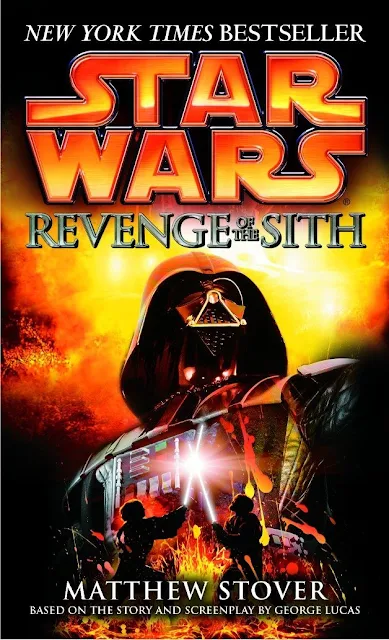
Matthew Stover's novelization of "Star Wars: Revenge of the Sith" is a literary achievement that transcends the boundaries of typical movie-to-book adaptations. It's not merely a retelling of George Lucas's cinematic vision but an expansion that delves into the emotional and psychological complexities of its characters.
This review aims to explore the depth and breadth of Stover's work, examining its narrative structure, character development, thematic richness, and stylistic choices.
The era of the Republic's twilight and the rise of the Galactic Empire is a period rich with lore. The Clone Wars, a galaxy-spanning conflict orchestrated by the Sith Lord Darth Sidious (secretly Supreme Chancellor Palpatine), served as the catalyst for the Jedi Order's downfall and the Republic's transformation.
This conflict, explored in detail within the novelization, saw the Republic's clone army, initially intended to preserve democracy, become instruments of its destruction. The Jedi Knights, once peacekeepers of the galaxy, found themselves thrust into the role of generals, a position that blurred their spiritual focus and made them vulnerable to Palpatine's manipulations. This era also saw the burgeoning relationship between Anakin Skywalker, the "Chosen One" prophesied to bring balance to the Force, and Obi-Wan Kenobi, his mentor. Their bond, initially strong, becomes tragically fractured by the events of Revenge of the Sith.
While the film version of "Revenge of the Sith" offers a visual spectacle, Stover's novelization provides a narrative depth that complements and enhances the story. The book is structured to allow for multiple points of view, offering readers a panoramic view of the galaxy's political and social landscape.
It delves into the intricacies of the Clone Wars, the Jedi Council's dilemmas – their growing mistrust of Palpatine juxtaposed with their reliance on him for leadership – and the Senate's political machinations, where Palpatine subtly consolidates power through emergency decrees and fear-mongering. This comprehensive backdrop highlights the insidious nature of Palpatine's plan and the systemic weaknesses of the Republic that he expertly exploits, setting the stage for the tragedy of Anakin Skywalker unfolds.
One of the most compelling aspects of Stover's novelization is its focus on character development. Anakin Skywalker's transformation into Darth Vader is not just a plot point but a psychological journey. Stover masterfully delves into Anakin's inner turmoil, exploring his deep-seated fears—of loss, particularly of his beloved Padmé; of inadequacy, stemming from his feeling of not being fully trusted by the Jedi Council; of powerlessness, a consequence of his past as a slave and his inability to control the future.
The novel portrays how these fears are manipulated by Emperor Palpatine, who preys on Anakin's insecurities and offers him the seductive promise of power to prevent death. The book also enriches the emotional arcs of characters like Padmé Amidala, portraying her growing concern and heartbreak over Anakin's descent, and Obi-Wan Kenobi, offering profound insights into his internal conflict as he grapples with his loyalty to the Jedi Order and his deep affection for his former Padawan.
Even secondary characters like Mace Windu, whose internal struggles and doubts about the Jedi's path are explored, and Bail Organa, whose early efforts to resist the rising Empire are highlighted, are given narrative space, making them more than just plot devices and adding depth to the political landscape of the galaxy.
Stover's novelization is a thematic powerhouse that explores the complexities of good and evil, power and corruption, loyalty and betrayal. It delves into the seductive allure of the dark side of the Force, portraying it not as an external evil but as an internal struggle, a manifestation of unchecked emotions and desires.
The book also explores profound philosophical questions about destiny versus free will – is Anakin's fall inevitable, or are there moments where he could have chosen a different path?
It examines the corrupting influence of absolute power and the dangers of unchecked ambition. Furthermore, the novel delves into the nuanced nature of heroism, questioning whether the Jedi's rigid adherence to their code ultimately blinded them to the darkness rising within their ranks and within Anakin himself, adding significant intellectual depth to the emotional narrative.
The writing style of the novelization is a blend of poetic prose and cinematic pacing.
Stover employs a range of literary techniques, from stream-of-consciousness internal monologues that offer deep dives into the characters' psyches to dramatic irony, where the reader is aware of truths that the characters are not, heightening the sense of impending doom.
His descriptive passages are vivid, painting a mental picture that rivals the film's visual imagery, whether depicting the fiery landscapes of Mustafar or the sterile corridors of the Jedi Temple. The dialogue is sharp and meaningful, each line serving to reveal character, advance the plot, or underscore the thematic elements of the story.
Stover's skillful use of language elevates the novelization beyond a simple adaptation, transforming it into a compelling work of literature in its own right.
The novelization of "Star Wars: Revenge of the Sith" stands as a masterpiece in the realm of adapted works. It takes the skeleton of the film's plot and fleshes it out into a fully realized, emotionally resonant narrative. For those who think they know the story of Anakin Skywalker's fall from grace, this book offers new perspectives and deeper understandings, making it a must-read for any Star Wars aficionado. It provides a richer context for the rise of the Empire and the tragic fate of the Jedi Order, solidifying its place as a significant contribution to the Star Wars saga.
For fans wanting more nuance than the film itself, this book is a must read.
The Marvel Cinematic Universe never really sits still.
Every new chapter builds on the last, pushing forward, folding back, twisting sideways. Some entries land with fanfare. Others slip in under the radar. Thunderbolts is one of the latter. A film about the MCU’s morally grey leftovers didn’t exactly scream “event.”
But what it delivers is smarter, stranger, and far more engaging than expected.
Directed by Jake Schreier and written by Eric Pearson and Joanna Calo, Thunderbolts throws a crew of antiheroes into a trap they didn’t see coming. Florence Pugh (Black Widow, Midsommar), Lewis Pullman, and Sebastian Stan (he's Bucky!) anchor a cast that plays it like a pressure cooker.
Valentina Allegra de Fontaine, still lurking on the fringes of the MCU, corrals this motley crew—misfits, mercenaries, and walking red flags—into a mission that quickly unravels into something darker. Early leaks hinted at betrayals, secret facilities, and a new heavy-hitter named Bob, who becomes the godlike Sentry. By the time they reach a standoff at the former Avengers Tower, the team’s already splintering under the weight of secrets and suspicion.
The tone stays low to the ground. Humor bleeds from trauma, not punchlines.
Action plays in confined spaces, with weight and consequence. Jake Schreier’s direction favors claustrophobia over grandeur, often slowing the tempo to let silence do the heavy lifting. Even the surreal, like Sentry’s catastrophic alter ego The Void, is shot with unsettling restraint. A visual echo of nuclear fallout shadows lingers in the design, calculated, haunting.
At the center is Florence Pugh’s Yelena Belova, stripped down to nerve and sarcasm. She doesn’t anchor the film so much as expose its fractures. Lewis Pullman’s Bob >Sentry < draws tension from stillness, his performance shaped by unease and explosive potential. Together, their dynamic forms the emotional core.
The rest circle around them in flickers: Red Guardian’s blunt warmth, Bucky Barnes’ quiet calculation, Taskmaster’s cold focus. Each interaction carries a charge. Not warmth. Not trust. Something closer to detente.
The script carves deep into regret and identity. The characters don’t evolve, they reveal. Yelena’s trauma sits just beneath the skin. Bob teeters at the edge of control. Even Bucky, now a U.S. Congressman (what?), reads less like a reformed assassin and more like someone who knows the machinery from the inside and no longer wants to be inside it.
Set after Captain America: Brave New World, the film threads its consequences carefully. Valentina now owns Avengers Tower, rechristened Watchtower, and the implications stretch far beyond this one chapter. The shadow cabinet is forming. Power is shifting. The gameboard is the same, but the players are darker and far more aware.
The humor works because it’s not performative. It’s defensive. Weaponized. These characters know what they are. They know what they’re not. There’s no grand revelation, no redemptive catharsis. Just small, compromised decisions. A glance. A pause. A refusal.
The design and pacing push away from MCU excess. Practical effects dominate where possible. Fights bruise rather than dazzle. The original script’s influence a more contained, “Die Hard in a vault” setup still shows in the structure, even as the scope widens. Schreier and his collaborators, including Beef creator Lee Sung Jin in later rewrites, keep the film anchored in emotional realism rather than spectacle.
Thunderbolts* doesn’t remake the MCU. It doesn’t need to. What it does is shift the center of gravity. From gods and icons to damage and doubt. From clarity to ambiguity. There’s no question here of good vs evil—only survival vs use.
As Phase Five’s closer, it feels pointed. Not grand. Not final. But decisive.
The universe isn’t collapsing. It’s mutating. The threat isn’t out there—it’s internal. As the credits roll, the message is clear: the line between leadership and manipulation is gone. And the ones still standing are the ones who’ve stopped pretending otherwise.
It’s not just the infected, not just the guns and blood and endless running.
It’s grief.
It's regret.
It’s the slow corrosion of hope.
Season 2 doesn’t try to lighten the load. It presses harder. Future Days, the first episode back, wastes no time reminding us: survival has a cost. And sooner or later, someone has to pay it.
The story picks up about five years after Joel made his choice at the Firefly hospital. A choice that saved Ellie but damned countless others. We’re in Jackson now, that rarest thing in this world: a functioning town. Wooden houses. Real electricity. Laughter, even. If you squint, you can almost pretend the apocalypse didn’t happen. But the cracks show fast.
Joel and Ellie, played with such unshakable rawness by Pedro Pascal and Bella Ramsey, are not okay. Future Days circles them with a kind of quiet cruelty. Joel tries to drown the truth under small kindnesses: teaching Ellie to play guitar, giving her space, pretending things are normal. But Ellie isn’t buying it. Ramsey plays her with a taut anger, a constant sense of simmering discomfort that bubbles up in sharp glances, in silences that go too long. The trust between them is poisoned, even if neither wants to say it out loud.
There’s a heavy, deliberate structure to this episode. It splits itself in two: Joel and Ellie in Jackson, and someone else, somewhere out there. Abby.
Abby. Fans of the game knew she was coming, but the show doesn’t rush it. We meet her in glimpses: a woman on a mission, brutal, haunted. . Her scenes are shot colder, harsher. Snow crunches under heavy boots. Guns are slung over tired shoulders.
And everywhere, that gnawing question: who are you hunting? It’s a bold move, introducing a character most viewers aren’t ready to like.
It’s a bet on the long game, and The Last of Us has always been good at that.
In Jackson, the episode slows down.
We get slices of life: patrol training, awkward teenage flirting, communal dinners. Dina (played with an easy warmth by Isabela Merced) slips into Ellie’s world with a lightness that almost hurts to watch. There’s laughter between them. Real, nervous, sweet. You can see the walls around Ellie’s heart, thick and crumbling all at once. When Dina dares to brush Ellie’s hand or lean in too close, you see the battle happening behind Ramsey’s eyes. Let someone in, or stay safe?
Director Peter Hoar, who also directed Long, Long Time, Season 1’s heartbreak grenade, brings a patience to these scenes that’s rare in TV now. He lingers on glances. He lets conversations breathe. He trusts that we understand the stakes. In a world like this, love isn’t casual. It’s dangerous.
And of course, there’s Joel. Pedro Pascal plays him even wearier than last season. Heavier, more brittle. There’s a moment, small but gutting, where Joel tries to gift Ellie a guitar, referencing the Pearl Jam song “Future Days” he once promised to teach her. The song choice is no accident. “I believe... I believed I'd see you once again,” Joel sings, brokenly. It's a love song. It’s a eulogy. It’s a prayer that won’t be answered.
Visually, Future Days feels both bigger and tighter than anything in Season 1. Jackson is rich in detail. Wooden fences. Steaming mugs. Snow piled high against windows. But Hoar shoots it with a sense of claustrophobia. Home doesn’t feel safe. It feels temporary. Every shot reminds us. Things fall apart. Always.
The show also teases new dangers in the world outside. There’s a terrifying sequence involving a newly evolved form of infected. One that moves with sickening speed and seems disturbingly aware of its surroundings. It’s a short scene, almost a side-note, but it matters. Nature is still mutating. The world is not done punishing survivors yet.
Some people will say this episode moves slow. They’re right. But The Last of Us has never been about cheap thrills. It’s about setting the knife, twisting it, then waiting for you to realize you’re bleeding. Future Days is meticulous about it. It’s about dread, not jump scares. It’s about knowing. Knowing that the people you love are not safe, not really. And neither are you.
The performances are ridiculous, in the best way. Pascal and Ramsey continue to be freakishly good together. Their chemistry isn’t big and flashy. It’s quiet, loaded with all the things they can’t say. Merced brings much-needed levity without making it feel like a different show. And Kaitlyn Dever, stepping into the daunting role of Abby, already hints at a ferocity that’s going to rip this story wide open.
The writing is sharper than ever. Craig Mazin and Neil Druckmann don’t just adapt the game. They expand it. We get flashes of Ellie’s therapy sessions. Hints of survivors dealing with trauma not by picking up a gun, but by sitting in a circle and trying to talk. It’s messy. It’s real. It deepens the world without slowing the story.
As a first episode, Future Days is confident enough to trust its audience. It doesn’t explain everything. It doesn’t offer easy answers. It says: you know this world. You know how it breaks people. Watch what happens next.
By the end of Future Days, nothing catastrophic has happened yet. No one's died. No one's betrayed anyone. But you can feel it coming. The trap is set. And for the audience, knowing what’s ahead only makes it worse.
Anna Fang, the formidable aviator and pivotal figure in Philip Reeve's Mortal Engines series, carves a striking presence in a world defined by colossal, mobile cities that prey on smaller settlements. As a celebrated spy for the Anti-Traction League and the owner of the iconic airship, the Jenny Haniver, her very introduction signals a defiance against the established order.
This immediately draws a parallel to Han Solo, the charismatic smuggler from the Star Wars saga, renowned as the pilot of the Millennium Falcon and a central hero in the Rebel Alliance's fight against the Galactic Empire.
While initially driven by self-interest, Han Solo's character arc evolves into a deep commitment to the Rebel cause and his companions, Luke Skywalker and Princess Leia.
Both Anna Fang and Han Solo embody the archetype of the outlaw hero. Anna Fang, while fitting the traditional hero archetype, displays a complex morality. Her bravery and dedication to the Anti-Tractionist cause, coupled with her willingness to sacrifice for the greater good, align with heroic ideals. However, her readiness to employ violent tactics when deemed necessary introduces a layer of moral ambiguity, echoing the "rogue" aspect often associated with Han Solo.
Similarly, Han Solo is the quintessential charming rogue, a scoundrel with a heart of gold. His initial cynicism and focus on personal gain gradually give way to unwavering loyalty and acts of profound heroism. His tendency for bravado and initial reluctance to fully embrace the Rebel cause further solidify his place within this archetype.
This shared core archetype, where both characters possess flaws and perhaps a questionable past but ultimately demonstrate a strong moral compass and act heroically, forms a fundamental connection between them.
The personalities of Anna Fang and Han Solo reveal striking parallels. Anna Fang exhibits a fierce independence and self-reliance, demonstrated by her escape from slavery and the remarkable feat of constructing the Jenny Haniver from scavenged parts.
This self-made nature and triumph over adversity mirror Han Solo's own origins and fiercely independent spirit. Han Solo also displays a strong sense of self-reliance, depending on his own skills and the capabilities of the Millennium Falcon for survival in a dangerous galaxy. Initially, both characters prioritize their own interests and survival, adopting a cynical outlook shaped by their challenging past experiences. However, beneath this exterior lies a deep well of compassion. Anna Fang, despite her initial reservations towards Tom and Hester, develops a protective instinct, aiding them on their perilous journey.
Similarly, Han Solo, initially a self-proclaimed loner, gradually reveals his underlying compassion and protective nature, particularly towards Luke and Leia. This gradual unveiling of their inner goodness is central to their "lovable rogue" archetype, making them relatable and compelling heroes.
Their backstories and motivations also share significant echoes. Anna Fang's history as an orphan enslaved in the ice city of Arkangel, her daring escape, and her subsequent role as a spy for the Anti-Traction League are all driven by a desire to protect static settlements from the predatory nature of traction cities. Her experiences under an oppressive regime fuel her commitment to the Anti-Tractionist cause and her fight for freedom.
This narrative resonates with elements of Han Solo's past, particularly his defiance of oppressive systems. Han Solo's backstory as an orphan on the harsh streets of Corellia led him to a life as a smuggler, often operating outside the constraints of the law. His eventual decision to join the Rebel Alliance was motivated by a desire to fight against the oppressive Galactic Empire. While the specific circumstances differ, both characters share origins marked by hardship and a subsequent rejection of established authority, leading them to lives on the fringes of society and ultimately to active participation in rebellions against powerful, dominating forces.
Both Anna Fang and Han Solo possess exceptional skills that define their roles within their respective narratives. Anna Fang is an extraordinarily skilled pilot of the Jenny Haniver, fluent in Airsperanto, the language of the sky. She is also a formidable combatant, proficient in sword fighting. These skills make her a valuable asset to the Anti-Traction League and a dangerous adversary to her enemies, mirroring Han Solo's importance to the Rebel Alliance.
Han Solo is renowned throughout the galaxy for his legendary piloting skills with the Millennium Falcon, famously completing the Kessel Run in record time. He is also highly proficient with a blaster and capable in hand-to-hand combat. Beyond their individual skills, both characters serve as crucial protectors and guides to the central protagonists. Anna Fang takes Tom and Hester under her wing, aiding them on their journey and shielding them from danger. Similarly, Han Solo plays a pivotal role in guiding and protecting Luke and Leia throughout their adventures.
Several moments in the Mortal Engines novels echo iconic elements associated with Han Solo. Anna Fang's initial rescue of Tom and Hester from slavery bears a resemblance to Han Solo's initial decision to help Luke and Obi-Wan, setting them on their transformative journey. While Solo's motivation was initially monetary, both acts of intervention serve as catalysts for the main characters' involvement in the central conflict.
Furthermore, the iconic status of their respective ships, the Jenny Haniver and the Millennium Falcon, is noteworthy. Both are described as being somewhat dilapidated or made of "junk" but possess surprising speed and capabilities. This "fastest hunk of junk" trope is central to their identities and their ability to navigate perilous situations. Anna Fang's role as a leader within the Anti-Traction League, a rebellion fighting against the powerful
Traction Cities, mirrors Han Solo's eventual leadership role in the Rebel Alliance against the Galactic Empire. Finally, Anna Fang's heroic sacrifice to protect the Anti-Tractionist settlement, while differing in its ultimate outcome, echoes Han Solo's consistent willingness to risk his life for his friends and the Rebel cause.
Crucially, Philip Reeve himself has explicitly acknowledged Han Solo as a partial inspiration for the character of Anna Fang. This direct confirmation from the author provides compelling evidence for the connection between the two characters.
Moreover, critical and fan reception frequently draws parallels between Anna Fang and Han Solo, often highlighting similarities in their roles, personalities, and even their beloved ships. This widespread recognition reinforces the idea that the influence is significant and readily apparent to audiences.
In conclusion, the similarities between Anna Fang and Han Solo are undeniable. They share the archetype of the outlaw hero, exhibit comparable personality traits such as independence, initial cynicism, and underlying compassion, and their backstories reveal common themes of hardship leading to rebellion.




.png "How Han Solo serves as character inspiration for Anna Fang in Mortal Engines")


