Why Godzilla? Why has one irradiated giant, born in a black-and-white Japanese nightmare in 1954, outlived almost every other monster in cinema?
The easy answer is size. Godzilla is vast. Godzilla crushes skylines. Godzilla fights dragons, robots, moth gods, mutant plants, alien invaders, pollution demons, and giant apes. But that answer is too small for the creature. Godzilla endures because he is never only a monster. He is a wound with teeth. He is the memory of Hiroshima and Nagasaki walking back out of the sea. He is postwar Japan staring at atomic fire, technological arrogance, environmental collapse, military panic, and asking what happens when human progress becomes too powerful to control.
That is why the chronology matters. Godzilla changes with the world around him. In one era he is punishment. In another he is a reluctant defender. Then a father, a superhero, a nightmare of bureaucracy, a planetary extinction event, a mythic Titan, and finally, in Godzilla Minus One, a return to postwar grief and survival. Watching the films in order is not just a kaiju marathon. It is a tour through seventy years of fear, spectacle, politics, pop culture, and reinvention.
Godzilla in 1954 was more than a monster movie. It hit Japanese theaters like an earthquake, channeling national trauma and a primal fear of nuclear destruction. The creature's first appearance was shaped by the atomic bombings of Hiroshima and Nagasaki, the shadow of the hydrogen bomb, and the 1954 Lucky Dragon No. 5 incident, where Japanese fishermen were exposed to nuclear fallout after a U.S. thermonuclear test in the Pacific.
Sequels followed. Toho refined the formula. Godzilla became a cultural icon, then a staple of Japanese popular entertainment, then a global export passed through subtitled prints, American edits, late-night television, VHS tapes, conventions, DVD box sets, streaming platforms, and eventually Hollywood's MonsterVerse.
There is no single clean Godzilla continuity. The Showa films build a loose shared world. The Heisei films reboot from the 1954 original. The Millennium films mostly reset continuity from film to film. The Reiwa era treats Godzilla as an anthology figure, with Shin Godzilla, the anime trilogy, and Godzilla Minus One each building separate realities. The MonsterVerse runs on its own American continuity, with Monarch, Titans, Hollow Earth, Kong, and Godzilla operating as ancient forces within Earth's hidden ecosystem.
Ghidorah, the Three-Headed Monster is one of the great turning points in the franchise, shifting Godzilla from pure menace toward reluctant defender.
Best Godzilla viewing order
The best first-time viewing order is release order, because the franchise's meaning changes with each era. For continuity order, treat 1954 as the anchor, then follow the specific timeline you want: Showa, Heisei, Millennium, Reiwa, or MonsterVerse. Kong: Skull Island is important to MonsterVerse chronology, taking place before Godzilla 2014, but this guide focuses on films where Godzilla appears.
Quick chronological release order of every Godzilla film
Godzilla, Mothra and King Ghidorah: Giant Monsters All-Out Attack
2001
Millennium
Standalone spiritual horror continuity
27
Godzilla Against Mechagodzilla
2002
Millennium, Kiryu saga
Kiryu built from the 1954 Godzilla skeleton
28
Godzilla: Tokyo S.O.S.
2003
Millennium, Kiryu saga
Direct sequel to Godzilla Against Mechagodzilla
29
Godzilla: Final Wars
2004
Millennium
50th anniversary blowout
30
Godzilla
2014
MonsterVerse
Godzilla reintroduced as ancient Titan
31
Shin Godzilla
2016
Reiwa, standalone Toho
Political disaster satire
32
Godzilla: Planet of the Monsters
2017
Reiwa anime trilogy
Far-future Godzilla Earth timeline begins
33
Godzilla: City on the Edge of Battle
2018
Reiwa anime trilogy
Mechagodzilla City
34
Godzilla: The Planet Eater
2018
Reiwa anime trilogy
Ghidorah becomes cosmic horror
35
Godzilla: King of the Monsters
2019
MonsterVerse
Ghidorah, Mothra, and Rodan enter the MonsterVerse
36
Godzilla vs. Kong
2021
MonsterVerse
Godzilla, Kong, Hollow Earth, and Mechagodzilla collide
37
Godzilla Minus One
2023
Reiwa, standalone Toho
Postwar Japan and a return to nuclear trauma
38
Godzilla x Kong: The New Empire
2024
MonsterVerse
Godzilla and Kong unite against Scar King and Shimo
Update note for 2026
Godzilla Minus Zero has been announced as the next Toho Godzilla film, with Takashi Yamazaki returning after Godzilla Minus One. It is scheduled for theatrical release in Japan on November 3, 2026, and in North America from November 6, 2026. Because it has not yet been released, it is not counted in the full released-film chronology above.
The Showa Era — 1954 to 1975
The Showa films begin as nuclear horror, then gradually turn Godzilla into an antihero, defender, father figure, and children's pop-culture champion. This is the era of rubber suits, miniature cities, alien invaders, environmental panic, and the birth of the kaiju crossover.
01Showa Foundation
Godzilla, 1954
DirectorIshirō Honda
Major MonsterGodzilla
Human FocusDr. Serizawa, Emiko Yamane, Hideto Ogata, Dr. Yamane
Timeline PlacementOriginal event — the root of most continuities
The original Godzilla is the franchise's sacred text. A prehistoric creature, awakened and mutated by hydrogen bomb testing, rises from the sea and devastates Tokyo. The film's horror comes from its restraint. The attacks feel like disaster footage. The hospitals, radiation burns, grieving families, and moral dread around the Oxygen Destroyer keep the story tied to postwar trauma rather than simple monster spectacle.
Ishirō Honda, producer Tomoyuki Tanaka, composer Akira Ifukube, and special-effects master Eiji Tsuburaya created a new cinematic language for Japanese kaiju film. The suitmation effects, miniature sets, low-angle city destruction, and thunderous score shaped everything that followed.
Why It Matters
This is where Godzilla becomes cinema's greatest atomic metaphor. Later films soften, reinvent, or mythologize him, but every serious Godzilla story eventually returns to the shadow cast by this film.
02Showa
Godzilla Raids Again, 1955
DirectorMotoyoshi Oda
Major MonstersGodzilla, Anguirus
Human FocusOsaka pilots and defense forces
Timeline PlacementDirect Showa sequel
The first sequel makes one huge decision: Godzilla is no longer the only giant monster. Anguirus, a spiked quadrupedal kaiju, becomes Godzilla's first screen opponent, turning the franchise toward monster combat. The mood is rougher, faster, and more functional than the 1954 film, but the Osaka destruction scenes still carry postwar dread.
The film also establishes a franchise pattern. Godzilla can die, return, be replaced, or be reinterpreted, because the idea of Godzilla is bigger than one creature. The American version, Gigantis the Fire Monster, tried to rename him — an odd historical footnote that shows how uncertain early U.S. distributors were about the brand.
Why It Matters
It invents the Godzilla sequel formula: a new threat, a new city, a new round of military failure, and the beginning of kaiju versus kaiju cinema.
03Showa
King Kong vs. Godzilla, 1962
DirectorIshirō Honda
Major MonstersGodzilla, King Kong, Giant Octopus
Human FocusTelevision executives, explorers, and Japanese defense forces
Timeline PlacementShowa crossover event
Godzilla returns after several years away and immediately collides with the biggest monster name outside Toho: King Kong. The result is part satire, part studio spectacle, and part professional wrestling match staged across mountains, cities, and miniature landscapes.
The film mocks commercial television, corporate opportunism, and publicity stunts, while giving audiences exactly the irresistible monster fight promised by the title. It also introduces a lighter Showa tone, with Godzilla becoming more expressive and Kong receiving a strange electricity-based power boost for the final clash.
Why It Matters
This is the first great kaiju box-office crossover. The modern MonsterVerse owes a deep structural debt to the appeal Toho discovered here.
04Showa
Mothra vs. Godzilla, 1964
DirectorIshirō Honda
Major MonstersGodzilla, Mothra, Mothra larvae
Human FocusReporters, scientists, Infant Island envoys
Timeline PlacementShowa continuity
This is one of the cleanest and strongest Showa entries. Godzilla is still dangerous, cruel, and animalistic, while Mothra brings a spiritual and moral counterweight. The plot begins with exploitation, as businessmen try to profit from Mothra's egg, then expands into a wider conflict about greed, responsibility, and the cost of ignoring warnings.
Mothra had already appeared in her own 1961 film, but this entry firmly folds her into Godzilla mythology. Her presence changes the series. She is not simply another monster. She carries ritual, song, sacrifice, and a sense that nature itself has guardians.
Why It Matters
It gives Godzilla one of his most important recurring counterparts and proves that kaiju cinema can be mythic, emotional, and morally charged.
05Showa Turning Point
Ghidorah, the Three-Headed Monster, 1964
DirectorIshirō Honda
Major MonstersGodzilla, Rodan, Mothra, King Ghidorah
Human FocusPrincess Salno, detectives, scientists, Shobijin
Timeline PlacementShowa crossover escalation
King Ghidorah arrives like a cosmic curse: a golden, three-headed dragon from space capable of forcing Earth's monsters into uneasy alliance. This is the film where Godzilla's moral alignment begins to shift. He is still rude, violent, and suspicious, but Mothra's plea pushes him toward defending Earth.
The film mixes political intrigue, prophecy, alien menace, and kaiju comedy. Godzilla and Rodan bicker like rival thugs before joining the fight — a tonal shift that helped reshape the franchise for a broader audience.
Why It Matters
Ghidorah becomes Godzilla's greatest recurring enemy, and Godzilla begins his long journey from destroyer to reluctant protector.
06Showa Sci-Fi
Invasion of Astro-Monster, 1965
DirectorIshirō Honda
Major MonstersGodzilla, Rodan, King Ghidorah
Human FocusAstronauts Fuji and Glenn, Planet X aliens
Timeline PlacementShowa alien-invasion continuity
Godzilla enters full space-age pulp. Astronauts discover Planet X, where the mysterious Xiliens claim they need Godzilla and Rodan to repel King Ghidorah, called Monster Zero. The offer is a trap, leading to alien mind control, interplanetary strategy, and one of the most memorable examples of mid-century kaiju science fiction.
The film is also famous for Godzilla's odd little victory dance — a moment that signals how far the franchise had moved from the haunted gravity of 1954. The tonal change can be jarring, but it is also part of the Showa era's strange charm.
Why It Matters
It cements the alien-control plotline that returns across later Godzilla films and deepens Ghidorah's role as an extraterrestrial threat.
07Showa Island Adventure
Ebirah, Horror of the Deep, 1966
DirectorJun Fukuda
Major MonstersGodzilla, Ebirah, Mothra, Giant Condor
Human FocusShipwrecked youths, Red Bamboo terrorists, Infant Island captives
Timeline PlacementShowa continuity
This film trades urban apocalypse for island adventure. Godzilla is discovered sleeping in a cave and eventually fights Ebirah, a giant lobster-like kaiju used by the Red Bamboo terrorist organization to guard Letchi Island. Mothra appears as a rescue force, tying the plot back to Infant Island mythology.
The lighter direction reflects Jun Fukuda's faster, brighter approach. The action is less solemn than Honda's work, with more beach-movie energy, espionage flavor, and comic staging. Godzilla even behaves like a rough antihero dragged into someone else's island crisis.
Why It Matters
It shows how flexible the Godzilla formula had become. The series could now function as adventure, spy spoof, monster brawl, and children's entertainment.
08Showa Family Shift
Son of Godzilla, 1967
DirectorJun Fukuda
Major MonstersGodzilla, Minilla, Kamacuras, Kumonga
Human FocusWeather-control scientists and reporter Goro Maki
Timeline PlacementShowa continuity
Secret weather experiments on Sollgel Island create chaos, giant insects, and the hatching of Minilla, Godzilla's awkward adopted son. The film pushes Godzilla into parental territory. He teaches Minilla how to use atomic breath, protects him from threats, and becomes less a symbol of punishment than a gruff father figure.
The suit design is softer and more expressive, especially compared with earlier Godzilla designs. That choice fits the story, even if it divides fans who prefer the darker versions of the character.
Why It Matters
It marks the franchise's clearest move toward child-friendly storytelling and changes Godzilla's screen personality in a lasting way.
09Showa Ensemble
Destroy All Monsters, 1968
DirectorIshirō Honda
Major MonstersGodzilla, Mothra, Rodan, Anguirus, Gorosaurus, Manda, Kumonga, Minilla, King Ghidorah
Human FocusMoonlight SY-3 crew, Kilaaks, Monsterland scientists
Timeline PlacementSet in the then-future year 1999 within Showa continuity
Destroy All Monsters feels like a franchise finale before the franchise actually ended. Earth's kaiju have been confined on Monsterland, only for alien Kilaaks to seize control and unleash them across world capitals. Godzilla attacks New York, Rodan strikes Moscow, Mothra attacks Beijing, and the whole world becomes a kaiju chessboard.
The final Mount Fuji battle, with Earth's monsters uniting against King Ghidorah, remains one of Toho's signature monster melees. It is broad, colorful, and loaded with spectacle.
Why It Matters
It establishes the all-monsters crossover template that later Godzilla films, fan culture, and the MonsterVerse repeatedly chase.
10Showa Children's Entry
All Monsters Attack, 1969
DirectorIshirō Honda
Major MonstersMinilla, Godzilla, Gabara, reused monster footage
Human FocusIchiro, a lonely latchkey child
Timeline PlacementDreamlike side story rather than essential continuity chapter
This is the most openly child-focused Godzilla film. A bullied boy named Ichiro imagines visits to Monster Island, where Minilla faces his own bully, Gabara. Much of the monster footage is reused from earlier films, which gives the film a lower-budget collage quality.
It is often mocked by fans, but its social context matters. The film reflects urban loneliness, absent parents, and the way pop-culture fantasy can help a child process fear. It is less a kaiju war than a children's fable built out of Godzilla imagery.
Why It Matters
It shows Godzilla's transformation into a figure of childhood imagination, far removed from the atomic horror of 1954.
11Showa Eco-Horror
Godzilla vs. Hedorah, 1971
DirectorYoshimitsu Banno
Major MonstersGodzilla, Hedorah
Human FocusDr. Yano, Ken Yano, anti-pollution youth culture
Timeline PlacementShowa continuity
Godzilla vs. Hedorah is one of the strangest and most politically blunt films in the series. Hedorah is born from industrial pollution — sludge, smoke, and human waste. The monster kills through poison, acid, and suffocation, turning environmental collapse into a physical enemy.
The film's style is wild: animation inserts, psychedelic club scenes, grim death imagery, children's songs, and surreal editing. It is sometimes goofy, sometimes horrifying, and often more radical than its reputation suggests.
Why It Matters
It expands Godzilla's symbolic range from nuclear anxiety into environmental warning — a theme that later versions return to again and again.
12Showa Alien Plot
Godzilla vs. Gigan, 1972
DirectorJun Fukuda
Major MonstersGodzilla, Anguirus, Gigan, King Ghidorah
Human FocusManga artist Gengo, alien cockroach invaders
Timeline PlacementShowa continuity
Gigan arrives as one of Toho's nastiest kaiju designs — a cyborg space monster with hook claws, a buzz-saw belly, and a visor-like eye. The plot centers on aliens disguised as humans building a theme park as cover for conquest. It is ridiculous in the best Showa way.
Godzilla and Anguirus team up against Gigan and King Ghidorah, and the film is famous for giving Godzilla and Anguirus speech-balloon-style communication in the Japanese version — a bizarre moment that has become part of franchise folklore.
Why It Matters
Gigan becomes a fan-favorite villain because he feels designed to injure Godzilla in a more brutal, mechanical, and graphic way than earlier monsters.
13Showa Superhero Phase
Godzilla vs. Megalon, 1973
DirectorJun Fukuda
Major MonstersGodzilla, Megalon, Gigan, Jet Jaguar
Human FocusInventor Goro Ibuki, Seatopian agents
Timeline PlacementShowa continuity
This is the Godzilla film many viewers first met through television reruns. The underground kingdom of Seatopia sends Megalon to punish the surface world for nuclear testing, while the robot hero Jet Jaguar grows to kaiju size and fights beside Godzilla.
The production was rushed, and it shows, but the film has become beloved for its comic-book clarity. Godzilla is now a superhero guest star, complete with a famous flying dropkick. For some fans, that is absurd. For others, it is pure Showa charm.
Why It Matters
It captures Godzilla at his most kid-friendly and superheroic, showing how far the franchise could bend without breaking.
14Showa Classic Villain
Godzilla vs. Mechagodzilla, 1974
DirectorJun Fukuda
Major MonstersGodzilla, Mechagodzilla, King Caesar, Anguirus
Human FocusInterpol agents, archaeologists, Black Hole Planet 3 aliens
Timeline PlacementShowa continuity
Mechagodzilla debuts disguised as Godzilla, then reveals himself as a metallic alien weapon. The reveal is one of the great franchise images: fake flesh burning away to expose chrome, missiles, lasers, and a machine built to out-Godzilla Godzilla.
The film also introduces King Caesar, an Okinawan guardian monster awakened through ritual song. That gives the story a mythic local texture alongside its spy-film action and alien conspiracy.
Why It Matters
Mechagodzilla becomes one of Godzilla's essential rivals — a symbol of humanity or alien power trying to manufacture its own controllable monster.
15Showa Finale
Terror of Mechagodzilla, 1975
DirectorIshirō Honda
Major MonstersGodzilla, Mechagodzilla 2, Titanosaurus
Human FocusDr. Mafune, Katsura Mafune, Interpol agents
Timeline PlacementFinal Showa Godzilla film
Ishirō Honda returns for the final Showa entry, bringing a colder and more tragic mood. The alien invaders rebuild Mechagodzilla and manipulate Dr. Mafune's daughter Katsura, whose cyborg body gives the film an unexpected melancholy.
Titanosaurus adds a new monster threat, but the emotional core is Katsura's loss of autonomy. Beneath the kaiju action sits a story about grief, exploitation, and people turned into weapons.
Why It Matters
It closes the first great Godzilla cycle with a darker tone, setting the stage for the franchise's later return to seriousness.
The Heisei Era — 1984 to 1995
The Heisei series ignores every Showa sequel after 1954 and rebuilds Godzilla as a dangerous, biologically grounded nuclear force. It is more serialized, more dramatic, and more interested in science, genetics, military escalation, and inherited trauma.
16Heisei Reboot
The Return of Godzilla, 1984
DirectorKōji Hashimoto
Major MonsterGodzilla
Human FocusPrime Minister Mitamura, reporter Goro Maki, Dr. Hayashida
Timeline PlacementDirect sequel to 1954 only
After nearly a decade away, Godzilla returns as a threat rather than a children's hero. The film restores political anxiety, Cold War tension, nuclear brinkmanship, and a larger sense of national crisis. Godzilla attacks a nuclear plant, feeds on radiation, and forces Japan into a geopolitical nightmare between superpowers.
The American release, Godzilla 1985, brought back Raymond Burr as Steve Martin and added U.S.-specific material, continuing the long tradition of altered American Godzilla versions.
Why It Matters
It begins the Heisei continuity and restores Godzilla as a terrifying force of nature shaped by nuclear danger.
17Heisei Biotech
Godzilla vs. Biollante, 1989
DirectorKazuki Ōmori
Major MonstersGodzilla, Biollante
Human FocusDr. Shiragami, psychic Miki Saegusa, Bio-Major agents
Timeline PlacementHeisei continuity after The Return of Godzilla
Godzilla vs. Biollante is one of the smartest sequels in the franchise. Godzilla cells become the most valuable biological material on Earth, drawing corporations, terrorists, scientists, and governments into a biotech arms race. Biollante, created from Godzilla cells, a rose, and the genetic imprint of Shiragami's dead daughter, is both monster and tragedy.
The film brings psychic character Miki Saegusa into the series and expands Heisei Godzilla's world into genetics, espionage, and biological weapons. Biollante's final form remains one of the franchise's most extraordinary creature designs.
Why It Matters
It turns Godzilla's body into a scientific and military resource — a theme that echoes through later Heisei films and modern kaiju stories.
18Heisei Time Travel
Godzilla vs. King Ghidorah, 1991
DirectorKazuki Ōmori
Major MonstersGodzilla, King Ghidorah, Mecha-King Ghidorah
Human FocusFuturian agents, Miki Saegusa, Kenichiro Terasawa
Timeline PlacementHeisei continuity with altered origin mechanics
The Heisei series gets ambitious and messy with time travel, future agents, World War II flashbacks, and a revised origin for both Godzilla and King Ghidorah. The Futurians attempt to erase Godzilla from history, only to create a bigger and more powerful version.
Mecha-King Ghidorah, a cybernetically rebuilt Ghidorah from the future, adds one of the franchise's most memorable designs. The film also ties Godzilla's origin to a dinosaur on Lagos Island, linking his transformation directly to nuclear testing and wartime memory.
Why It Matters
It deepens Heisei continuity and turns Godzilla's origin into a contested historical event, wrapped in nationalism, science fiction, and temporal paradox.
19Heisei Myth & Ecology
Godzilla vs. Mothra, 1992
DirectorTakao Okawara
Major MonstersGodzilla, Mothra, Battra
Human FocusTakuya Fujito, Masako Tezuka, the Cosmos
Timeline PlacementHeisei continuity
Mothra returns with updated Heisei grandeur, joined by Battra, her darker counterpart and Earth's aggressive guardian. The story links kaiju mythology to environmental damage, corporate exploitation, and the planet's ability to defend itself.
The film was a major commercial hit in Japan and helped secure the Heisei series as a popular ongoing cycle. Its tone is more mystical than Biollante or King Ghidorah, but its environmental anxiety fits the era perfectly.
Why It Matters
It restores Mothra as a major box-office force and introduces Battra — one of the clearest examples of nature's wrath in kaiju form.
20Heisei Military Escalation
Godzilla vs. Mechagodzilla II, 1993
DirectorTakao Okawara
Major MonstersGodzilla, Mechagodzilla, Rodan, Baby Godzilla
Human FocusG-Force, Miki Saegusa, Kazuma Aoki, Azusa Gojo
Timeline PlacementHeisei continuity
Unlike the alien Mechagodzilla of the Showa era, this Mechagodzilla is a human-built weapon created by G-Force using futuristic technology reverse-engineered from Mecha-King Ghidorah. Humanity tries to meet Godzilla with an equal and opposite force.
The emotional twist comes through Baby Godzilla and Rodan. Godzilla is still destructive, but his bond with the infant kaiju complicates the conflict. Miki Saegusa's psychic link also gives the human story more continuity weight.
Why It Matters
It recasts Mechagodzilla as humanity's anti-Godzilla defense system — a version that influences later Kiryu and MonsterVerse interpretations.
21Heisei Cosmic Mutation
Godzilla vs. SpaceGodzilla, 1994
DirectorKenshō Yamashita
Major MonstersGodzilla, SpaceGodzilla, Moguera, LittleGodzilla
Human FocusG-Force, Miki Saegusa, Project T
Timeline PlacementHeisei continuity
SpaceGodzilla is born when Godzilla cells travel into space, mutate through cosmic energy, and return as a crystal-armored mirror image. The concept is pulp, but it fits the Heisei obsession with Godzilla's cells as unstable, world-changing material.
The film also brings in Moguera, a revamped Toho machine, and continues the development of LittleGodzilla. It is not as tight as the strongest Heisei entries, but its imagery — crystals, psychic subplots, and evil-Godzilla concept — has kept it alive in fan culture.
Why It Matters
It pushes the Godzilla-cell idea to cosmic scale and gives the franchise one of its most visually distinctive mirror villains.
22Heisei Finale
Godzilla vs. Destoroyah, 1995
DirectorTakao Okawara
Major MonstersBurning Godzilla, Destoroyah, Godzilla Junior
Human FocusG-Force, Miki Saegusa, Kenichi Yamane
Timeline PlacementFinal Heisei continuity chapter
The Heisei era ends by bringing the franchise back to 1954. Destoroyah is born from the Oxygen Destroyer — the very weapon used to kill the original Godzilla. Meanwhile, the current Godzilla's nuclear heart is melting down, threatening a global catastrophe.
Burning Godzilla's glowing design became instantly iconic. The film gives Godzilla a tragic final arc, connecting nuclear horror, inherited legacy, parental grief, and apocalyptic spectacle into one of the franchise's most emotional finales.
Why It Matters
It is one of the rare Godzilla films built around death, legacy, and consequence. It also ties the Heisei cycle directly back to the moral horror of the Oxygen Destroyer.
The First Hollywood Godzilla — 1998
Roland Emmerich's American Godzilla is a standalone reboot. It brought the name to a huge global audience, while also becoming one of the franchise's most controversial reinterpretations.
23TriStar Hollywood
Godzilla, 1998
DirectorRoland Emmerich
Major MonsterAmerican Godzilla, later nicknamed Zilla in Toho usage
Human FocusDr. Niko Tatopoulos, Philippe Roaché, Audrey Timmonds
Timeline PlacementStandalone American continuity
The 1998 Godzilla reimagines the monster as a mutated marine iguana created by French nuclear testing. Instead of a walking atomic god, this version is fast, animalistic, and vulnerable to conventional weapons. The story relocates the disaster to New York City and leans into chase sequences, rain-soaked urban destruction, and nest-horror spectacle inside Madison Square Garden.
The film was a major mainstream event, but it disappointed many Godzilla fans because it stripped away the character's mythic weight, atomic breath, durability, and symbolic force. Its reputation has softened in some corners as a piece of late-1990s blockbuster culture, but as a Godzilla interpretation it remains divisive.
Why It Matters
It proved Hollywood wanted Godzilla, but it also showed what happens when the brand's visual scale is preserved while its deeper meaning is weakened.
The Millennium Era — 1999 to 2004
The Millennium films mostly reset continuity from film to film. Many of them treat the 1954 original as the only shared historical event, then build new branches from there. This makes the era easy to watch in release order and fascinating as a set of alternate Godzilla experiments.
24Millennium Reboot
Godzilla 2000: Millennium, 1999
DirectorTakao Okawara
Major MonstersGodzilla, Orga
Human FocusGodzilla Prediction Network, Crisis Control Intelligence
Timeline PlacementNew continuity after 1954
Godzilla 2000 responds to the 1998 American film by restoring a more traditional Godzilla: upright, spined, radioactive, and nearly impossible to kill. The plot introduces an ancient alien object that seeks Godzilla's regenerative DNA and mutates into Orga.
The suit design is sharper, with jagged dorsal plates and a more reptilian silhouette. The film plays like a confident brand reset, returning Godzilla to Japanese hands while leaving room for modern effects and a more kinetic pace.
Why It Matters
It reasserted Toho's Godzilla after the 1998 controversy and opened the Millennium era's alternate-continuity approach.
25Millennium Alternate Timeline
Godzilla vs. Megaguirus, 2000
DirectorMasaaki Tezuka
Major MonstersGodzilla, Megaguirus, Meganulon swarm
Human FocusKiriko Tsujimori, G-Graspers
Timeline PlacementAlternate continuity where the 1954 Godzilla was never killed by the Oxygen Destroyer
This film creates a branch timeline where Japan develops the Dimension Tide, a black-hole weapon meant to erase Godzilla. The weapon's test accidentally opens a path for prehistoric insects, leading to the creation of Megaguirus.
The film has a strong anti-Godzilla military lead in Kiriko Tsujimori and a more comic-book approach to science fiction. Its alternate-history idea is more interesting than its reputation sometimes suggests, especially because it changes what happened in 1954.
Why It Matters
It highlights the Millennium era's willingness to treat Godzilla continuity as modular, with each film free to rewrite the rules.
26Millennium Horror
Godzilla, Mothra and King Ghidorah: Giant Monsters All-Out Attack, 2001
DirectorShūsuke Kaneko
Major MonstersGodzilla, Baragon, Mothra, King Ghidorah
Human FocusYuri Tachibana, Admiral Taizo Tachibana
Timeline PlacementStandalone sequel to 1954
GMK is one of the darkest and most fascinating Godzilla films. This Godzilla is animated by the angry souls of those killed in the Pacific War, turning the monster into a supernatural reckoning rather than a mutated animal. His blank white eyes make him look possessed, cruel, and almost demonic.
The film also reverses expectations. King Ghidorah, usually a villain, becomes one of Japan's guardian monsters alongside Mothra and Baragon. Director Shūsuke Kaneko, who had revived Gamera in the 1990s, brings a strong sense of myth, horror, and national memory.
Why It Matters
It is one of the strongest standalone Godzilla films because it reconnects kaiju destruction to war guilt, memory, and spiritual consequence.
27Millennium Kiryu Saga
Godzilla Against Mechagodzilla, 2002
DirectorMasaaki Tezuka
Major MonstersGodzilla, Kiryu
Human FocusAkane Yashiro, Kiryu Squadron, Dr. Tokumitsu Yuhara
Timeline PlacementKiryu continuity, tied to 1954 and several non-Godzilla Toho monster events
This film reimagines Mechagodzilla as Kiryu, a bio-mechanical weapon built around the bones of the original 1954 Godzilla. That idea gives the machine a haunted quality. Kiryu is not just a robot. It is a war machine with a dead monster's ghost inside.
Akane Yashiro provides one of the era's strongest human leads — a pilot carrying guilt after a mission disaster. Her arc mirrors Kiryu's own struggle with control, trauma, and purpose.
Why It Matters
It gives Mechagodzilla a gothic twist and turns the 1954 Godzilla's remains into the foundation of a new tragedy.
28Millennium Direct Sequel
Godzilla: Tokyo S.O.S., 2003
DirectorMasaaki Tezuka
Major MonstersGodzilla, Kiryu, Mothra, Mothra larvae
Human FocusKiryu mechanics, Chujo family, Shobijin
Timeline PlacementDirect sequel to Godzilla Against Mechagodzilla
Tokyo S.O.S. continues the Kiryu story and brings Mothra into the moral argument. The Shobijin warn that using the bones of the dead 1954 Godzilla is a violation of nature. Kiryu should be returned to the sea, not kept as a weapon.
That idea gives the film a stronger ethical spine than a simple rematch. The monster fights are exciting, but the real question is whether humanity has the right to turn a corpse — even a kaiju corpse — into military technology.
Why It Matters
It completes the Kiryu duology and makes Mechagodzilla's existence a spiritual and ecological problem, not just a military project.
Final Wars is the franchise at maximum speed: alien invasion, mutant soldiers, motorcycle fights, global monster attacks, and Godzilla tearing through a greatest-hits lineup of opponents. It is more action anime than disaster film, with director Ryūhei Kitamura leaning into kinetic excess.
The film also features Zilla, Toho's renamed version of the 1998 American Godzilla, who is quickly defeated by Godzilla in Sydney. It is a cheeky piece of franchise self-commentary and one of the film's most discussed moments.
Why It Matters
It served as Toho's 50th anniversary blowout and closed the Millennium era before Godzilla went dormant on Japanese cinema screens for more than a decade.
The MonsterVerse and Reiwa Split — 2014 Onward
From 2014 onward, Godzilla splits into parallel modern identities. Legendary's MonsterVerse turns him into an ancient Titan within a blockbuster ecosystem shared with Kong. Toho's Reiwa films treat him as an anthology figure, reimagining him through disaster politics, anime science fiction, and postwar trauma.
30MonsterVerse
Godzilla, 2014
DirectorGareth Edwards
Major MonstersGodzilla, male MUTO, female MUTO
Human FocusFord Brody, Joe Brody, Dr. Serizawa, Monarch
Timeline PlacementMonsterVerse after the 1950s Godzilla sightings and before King of the Monsters
Gareth Edwards restores Godzilla's scale and awe for Hollywood. This Godzilla is not a mutated iguana. He is an ancient alpha predator from a deeper natural order, surfacing to restore balance when parasitic MUTOs threaten the world.
The film holds back full monster spectacle for long stretches, emphasizing dread, military confusion, and human smallness. Ken Watanabe's Dr. Serizawa gives the MonsterVerse a spiritual link to the 1954 original through name, tone, and reverence.
Why It Matters
It successfully relaunches Godzilla for modern Hollywood and lays the foundation for Monarch, Titans, and the MonsterVerse's mythology of hidden ancient ecosystems.
31Reiwa Toho
Shin Godzilla, 2016
DirectorsHideaki Anno and Shinji Higuchi
Major MonsterEvolving Godzilla
Human FocusRando Yaguchi, Japanese crisis bureaucracy, international pressure
Timeline PlacementStandalone Reiwa continuity
Shin Godzilla is a bureaucratic nightmare film. Godzilla mutates rapidly through multiple forms, turning a biological disaster into a national systems test. The horror is not only the monster's body. It is the slow meeting rooms, unclear authority, political hesitation, and legal paralysis around him.
Hideaki Anno and Shinji Higuchi channel the memory of Fukushima, earthquake disaster, and government crisis response into a new Godzilla. The creature is grotesque, suffering, unstable, and almost evolutionary in real time.
Why It Matters
It makes Godzilla frightening again by turning him into a disaster that exposes institutional failure, not simply a monster to be defeated.
32Reiwa Anime Trilogy
Godzilla: Planet of the Monsters, 2017
DirectorsKōbun Shizuno and Hiroyuki Seshita
Major MonsterGodzilla Earth
Human FocusHaruo Sakaki, human exiles, alien allies
Timeline PlacementFar-future anime continuity, 20,000 years after humanity flees Earth
The first anime Godzilla feature goes for scale that live-action could not easily attempt. Humanity has abandoned Earth after Godzilla and other monsters dominate the planet. Thousands of years later, human survivors return to reclaim a world that has evolved around Godzilla Earth.
This version of Godzilla is less an animal and more a planetary condition. He is huge, rooted in the ecosystem, and almost geological. The film's tone is militaristic, bleak, and philosophical, with Haruo's hatred of Godzilla driving the plot.
Why It Matters
It pushes Godzilla into far-future science fiction and treats him as the dominant life system of Earth itself.
33Reiwa Anime Trilogy
Godzilla: City on the Edge of Battle, 2018
DirectorsKōbun Shizuno and Hiroyuki Seshita
Major MonstersGodzilla Earth, Mechagodzilla City
Human FocusHaruo, Bilusaludo survivors, Houtua people
Timeline PlacementDirect sequel to Planet of the Monsters
The second anime film reveals that Mechagodzilla was never completed as a walking machine. Instead, its nanometal survived and spread into Mechagodzilla City, a technological organism that offers humanity a final chance to fight Godzilla Earth.
The real conflict is ideological. The Bilusaludo embrace mechanized survival at the cost of human feeling, while the Houtua represent adaptation to Earth's new ecology. Godzilla becomes the pressure point forcing humanity to choose what kind of species it wants to be.
Why It Matters
It radically reimagines Mechagodzilla as a city-sized techno-organic system, turning the classic robot rival into an environment.
34Reiwa Anime Trilogy Finale
Godzilla: The Planet Eater, 2018
DirectorsKōbun Shizuno and Hiroyuki Seshita
Major MonstersGodzilla Earth, King Ghidorah
Human FocusHaruo, Metphies, Exif cult
Timeline PlacementFinal chapter of the anime trilogy
The Planet Eater transforms King Ghidorah into a cosmic, extra-dimensional entity worshipped by the Exif. He is no longer just a golden space dragon. He is a gravity-warping apocalypse that exists partly outside physical law.
The trilogy ends less as a monster battle than as a meditation on despair, worship, revenge, and surrender. That frustrated some viewers hoping for more traditional kaiju action, but it makes the anime trilogy one of the franchise's boldest conceptual branches.
Why It Matters
It turns Ghidorah into cosmic horror and closes the most philosophically severe Godzilla continuity.
35MonsterVerse Ensemble
Godzilla: King of the Monsters, 2019
DirectorMichael Dougherty
Major MonstersGodzilla, King Ghidorah, Mothra, Rodan, other Titans
Human FocusMonarch, Mark Russell, Emma Russell, Madison Russell, Dr. Serizawa
Timeline PlacementMonsterVerse after Godzilla 2014
King of the Monsters brings Toho's holy trinity of supporting kaiju into the MonsterVerse. Ghidorah becomes an invasive alien alpha, Mothra becomes a radiant guardian, and Rodan becomes a volcanic destroyer. Godzilla is treated more explicitly as a godlike stabilizing force.
The film is dense with franchise reverence: classic roars, Ifukube musical motifs, temple imagery, and wide shots that frame Titans like living mythology. Dr. Serizawa's sacrifice gives the MonsterVerse one of its most direct emotional links to the older Godzilla tradition.
Why It Matters
It expands the MonsterVerse from hidden-monster disaster into full kaiju mythology, with Godzilla crowned as alpha Titan.
36MonsterVerse Crossover
Godzilla vs. Kong, 2021
DirectorAdam Wingard
Major MonstersGodzilla, Kong, Mechagodzilla
Human FocusJia, Ilene Andrews, Nathan Lind, Bernie Hayes, Madison Russell
Timeline PlacementMonsterVerse after King of the Monsters
The MonsterVerse finally stages its title fight. Godzilla attacks Apex facilities because he senses Mechagodzilla, while Kong is drawn into the Hollow Earth to discover his ancestral home. Their rivalry becomes a clash of ancient alpha claims, then a reluctant alliance against a human-built machine powered through Ghidorah's lingering remains.
The film moves the MonsterVerse into brighter, faster, more openly fantastical territory. Hollow Earth becomes a major setting, and Kong emerges as a co-lead rather than a guest monster.
Why It Matters
It connects the MonsterVerse's Godzilla, Kong, Ghidorah, Hollow Earth, Apex, and Mechagodzilla mythology into one blockbuster event.
37Reiwa Toho Masterpiece
Godzilla Minus One, 2023
DirectorTakashi Yamazaki
Major MonsterGodzilla
Human FocusKōichi Shikishima, Noriko Ōishi, Akiko, postwar civilian crew
Timeline PlacementStandalone Toho continuity set in postwar Japan
Godzilla Minus One returns the monster to the emotional terrain that made him matter in the first place. Set in a devastated postwar Japan, the film follows a traumatized former kamikaze pilot trying to survive guilt, poverty, grief, and a country reduced below zero.
Godzilla is terrifying again: scarred, furious, and tied to nuclear testing. The human drama is unusually strong for the franchise, giving the kaiju destruction real emotional consequence. Its visual effects, achieved on a relatively modest budget compared with Hollywood blockbusters, became part of the film's legend.
Why It Matters
It became the first Godzilla film to win the Academy Award for Best Visual Effects, and it proved that a serious, character-led Japanese Godzilla film could become a global phenomenon in the modern era.
38MonsterVerse Expansion
Godzilla x Kong: The New Empire, 2024
DirectorAdam Wingard
Major MonstersGodzilla, Kong, Scar King, Shimo, Mothra, Suko
Human FocusIlene Andrews, Jia, Bernie Hayes, Trapper Beasley
Timeline PlacementMonsterVerse after Godzilla vs. Kong
The New Empire moves deeper into Hollow Earth mythology, focusing heavily on Kong's discovery of a hidden ape society ruled by Scar King. Godzilla's role is more mythic and tactical: he powers up, evolves, and joins the final fight against Scar King and Shimo.
The tone is pulpy, colorful, and monster-forward, closer to late Showa energy than Gareth Edwards' 2014 restraint. Godzilla's pink evolved form, Kong's mechanical glove, Mothra's return, and the Rio de Janeiro battle all push the MonsterVerse toward pure kaiju fantasy.
Why It Matters
It confirms the MonsterVerse has shifted from disaster realism into full mythological adventure, with Godzilla and Kong operating as uneasy allied Titans.
How the Godzilla timelines actually work
The key to understanding Godzilla continuity is simple: do not force every film into one timeline. Godzilla is closer to a mythic figure than a conventional franchise protagonist. Toho repeatedly returns to the same core image — a giant radioactive creature rising from the sea — then asks what that image means in a new decade.
Showa continuity
The Showa era runs from Godzilla in 1954 through Terror of Mechagodzilla in 1975, although the continuity is loose and sometimes playful. Godzilla begins as a destroyer, becomes an enemy among other monsters, then shifts into defender and superhero.
Heisei continuity
The Heisei era treats the 1954 original as canon, then ignores the other Showa sequels. It runs from The Return of Godzilla through Godzilla vs. Destoroyah. This is the most serialized Toho continuity, with recurring characters, psychic links, Godzilla Junior, G-Force, and a clear finale.
Millennium continuity
The Millennium era is a set of alternate timelines. Godzilla 2000, Godzilla vs. Megaguirus, GMK, the Kiryu duology, and Final Wars each take different approaches. The Kiryu films form a two-part story. Most of the others stand alone.
Reiwa continuity
The Reiwa era is not one timeline. Shin Godzilla is standalone political disaster horror. The anime trilogy is its own far-future continuity. Godzilla Minus One is a separate postwar story, with Godzilla Minus Zero scheduled to continue that branch in 2026.
MonsterVerse continuity
The MonsterVerse is the American shared continuity. In release terms, Godzilla appears in Godzilla 2014, Godzilla: King of the Monsters, Godzilla vs. Kong, and Godzilla x Kong: The New Empire. In full MonsterVerse chronology, Kong: Skull Island and Monarch: Legacy of Monsters also matter, because they build Monarch, Skull Island, Hollow Earth, and Titan history around the Godzilla films.
Why Godzilla still works
Godzilla survives because he can change without losing his core. He can be horror, satire, superhero, ecological warning, Cold War nightmare, anime apocalypse, or blockbuster Titan. He can punish humanity for nuclear arrogance, defend Earth from worse monsters, or simply stand as the biggest, oldest thing in the room.
The best Godzilla films remember that spectacle alone is never enough. The city falling matters because of what the city represents. The roar matters because it sounds like the past refusing to stay buried. The monster matters because every generation finds a new fear big enough to wear his shape.
Why Godzilla? Because he is the atomic age's most durable ghost. Because he began as trauma and became mythology. Because every time the world invents a new way to destroy itself, Godzilla can rise again — already glowing, already angry, already understood.
Why Godzilla? Why Godzilla? Why has one irradiated giant, born in a black-and-white Japanese nightmare in 1954, outlived almos...
The MonsterVerse Titan guide: Godzilla, Kong, and the modern kaiju pantheon explained
The MonsterVerse did not emerge from nowhere. It clawed its way out of cultural sediment laid down by postwar Japan, where Gojira arrived in 1954 as a living metaphor for nuclear trauma, national grief, scientific dread, and the fear that humanity had built weapons too terrible to master.
That original black-and-white creature was memory in scaled flesh. Rage. Consequence. The MonsterVerse takes that ancient wound and refracts it through Hollywood scale: secret agencies, buried ecosystems, Hollow Earth kingdoms, alpha calls, Titan hierarchies, corporate weapon systems, and ancient beasts treated as gods, predators, disasters, and ecological regulators.
This guide charts the major Titans, superspecies, and kaiju forces of the MonsterVerse. Some are guardians. Some are parasites. Some are tyrants. Some are living weapons. Together, they form a modern mythos where the monsters of old cinema have become part of a global blockbuster religion.
Featured kaiju imageFrom The Astromech archive
Godzilla as modern myth
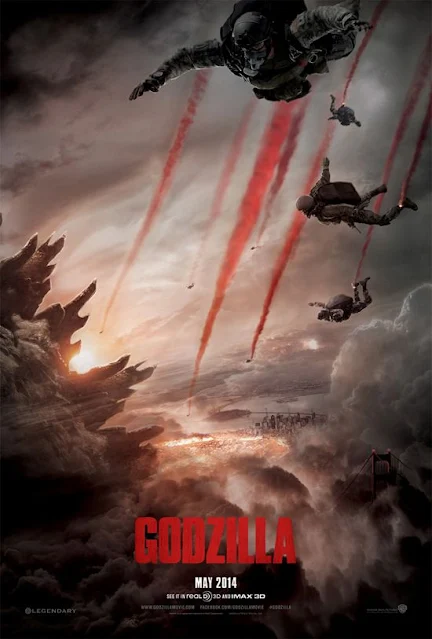
Godzilla returns to Hollywood scale in Gareth Edwards’ 2014 MonsterVerse reboot. Click the image to read The Astromech review.
This image works near the top of the article because it visually anchors the MonsterVerse around Godzilla as scale, disaster, awe, and myth. It also creates a clean internal link to the existing Gareth Edwards review.
What counts as a MonsterVerse Titan?
In the MonsterVerse, the word Titan usually refers to a giant organism connected to the planet’s deep natural history, especially the radioactive ecosystems monitored by Monarch. The films also include related superspecies, such as Skullcrawlers, Warbats, and other Hollow Earth creatures. This guide separates the central alpha Titans from the wider creature ecology so the hierarchy is easier to follow.
MonsterVerse appearances at a glance
Film or series
Year
Main Titan focus
Major creature significance
Kong: Skull Island
2017
Kong, Skullcrawlers
Introduces Kong as Skull Island’s guardian and establishes Monarch’s wider monster investigations.
Godzilla
2014
Godzilla, MUTOs
Reintroduces Godzilla as an ancient alpha predator restoring ecological balance.
Monarch: Legacy of Monsters Season 1
2023 to 2024
Godzilla, Ion Dragon, Frost Vark
Expands Monarch history across the 1950s and the post-G-Day world of 2015.
Monarch: Legacy of Monsters Season 2
2026
Kong, Godzilla, Titan X
Moves the modern-day story toward Skull Island and introduces Titan X, a new tentacled sea-rising threat.
Godzilla: King of the Monsters
2019
Godzilla, Ghidorah, Mothra, Rodan
Turns the MonsterVerse into a full Titan mythology with global awakenings and alpha hierarchy.
Godzilla vs. Kong
2021
Godzilla, Kong, Mechagodzilla
Connects Hollow Earth, Apex Cybernetics, Ghidorah’s remains, and the first modern Godzilla-Kong showdown.
Godzilla x Kong: The New Empire
2024
Godzilla, Kong, Skar King, Shimo
Reveals a hidden ape empire, expands Hollow Earth civilization, and pushes Godzilla and Kong into uneasy alliance.
Godzilla x Kong: Supernova
2027
To be confirmed
Officially scheduled as the next MonsterVerse film, with Godzilla and Kong returning.
The Alpha Titans
These are the monsters who define the MonsterVerse’s power structure. They do not merely appear in the ecosystem. They bend the ecosystem around themselves.
Alpha TitanToho legacy
Godzilla
AliasesGojira, King of the Monsters, Alpha Titan
MonsterVerse debutGodzilla, 2014
Based onToho’s Gojira, 1954
Core roleAncient balance-keeper and apex predator
Key appearances
Godzilla, 2014: Battles the male and female MUTOs after they threaten the natural order.
Godzilla: King of the Monsters, 2019: Fights Ghidorah for alpha dominance and is revived through nuclear energy and Mothra’s sacrifice.
Godzilla vs. Kong, 2021: Attacks Apex targets after sensing Mechagodzilla and later teams with Kong against the machine.
Godzilla x Kong: The New Empire, 2024: Evolves into a more powerful form and helps Kong defeat Skar King and Shimo.
Monarch: Legacy of Monsters: His 2014 San Francisco attack, earlier sightings, and later Titan presence shape Monarch’s entire modern identity.
The 2014 Godzilla poster captures Gareth Edwards’ preferred sense of scale: humans reduced to specks beneath an ancient force.
The MonsterVerse version of Godzilla is less a city-stomping villain than an ancient regulating force. He is a nuclear organism from a deeper age, one that appears when rival Titans, invasive predators, or human-made threats destabilize the planet. His atomic breath, dorsal charge, intimidation displays, and territorial behavior connect him to the classic Toho Godzilla, while his ecological role pushes him closer to a primordial predator keeping the world’s hidden food chain in check.
His design also evolves with the mythology. Gareth Edwards’ 2014 Godzilla is heavy, ancient, and monumental. King of the Monsters makes him more mythic and devotional. Godzilla vs. Kong turns him into a suspicious enforcer. The New Empire gives him an evolved, pink-charged form after absorbing energy in preparation for the Hollow Earth threat.
Why he matters
Godzilla is the MonsterVerse’s moral and ecological axis. The humans misunderstand him, fear him, worship him, weaponize his image, and try to control his world. He survives every category they force onto him.
Alpha TitanKong lineage
Kong
AliasesKong, Guardian of Skull Island, Hollow Earth king
MonsterVerse debutKong: Skull Island, 2017
Based onKing Kong, 1933, and Toho’s King Kong vs. Godzilla, 1962
Core roleProtector, survivor, warrior, heir to an ape civilization
Key appearances
Kong: Skull Island, 2017: Defends Skull Island from Skullcrawlers and remains the last known member of his local species line.
Godzilla vs. Kong, 2021: Leaves Skull Island, discovers the Hollow Earth throne room, and wields an ancestral battle axe.
Godzilla x Kong: The New Empire, 2024: Finds other giant apes, protects Suko, and challenges Skar King’s rule.
Monarch: Legacy of Monsters Season 2: Becomes central to the Skull Island phase of the show’s modern storyline.
Kong is the MonsterVerse’s most emotionally readable Titan. He thinks, grieves, improvises, protects, and forms bonds with humans, especially Jia. Where Godzilla represents a vast natural law, Kong represents personhood inside the monster frame. He is huge, but he is also lonely.
The New Empire completes a major shift in his mythology. Kong stops being only the tragic guardian of Skull Island and becomes part of a deeper Hollow Earth lineage. His axe, throne room, and confrontation with Skar King suggest an older species history built around war, exile, and survival.
Why he matters
Kong gives the MonsterVerse its emotional spine. He turns the Titan world into a story about legacy, family, territory, and the cost of being the last survivor who discovers he was not alone after all.
False alphaWorld-killer
King Ghidorah
AliasesMonster Zero, The False King
MonsterVerse debutGodzilla: King of the Monsters, 2019
Based onGhidorah, the Three-Headed Monster, 1964
Core roleAlien rival to Godzilla and corrupt alpha signal
Key appearances
Godzilla: King of the Monsters, 2019: Escapes the Antarctic ice, defeats Godzilla temporarily, awakens Titans worldwide, and tries to remake Earth through violent terraforming.
Godzilla vs. Kong, 2021: Ghidorah’s skull and neural remnants are used in Apex Cybernetics’ Mechagodzilla control system.
King Ghidorah entered the Godzilla mythos as a cosmic threat, a role the MonsterVerse later sharpened into the False King.
Ghidorah is the MonsterVerse’s great wrong note. He does not belong to Earth’s Titan ecology. That makes him more than a rival predator. He is an invasive god, an alien alpha whose call hijacks the planet’s monsters and turns balance into apocalypse.
The MonsterVerse leans into Ghidorah’s mythic strangeness: three heads, storm generation, regeneration, gravity beams, psychic traces, and a capacity to persist even after death through his skull. His severed remains becoming the ghost in Mechagodzilla’s machine is one of the franchise’s smartest bridges between ancient kaiju mythology and modern techno-horror.
Why he matters
Ghidorah clarifies what Godzilla protects. Godzilla is violent, but he belongs to Earth. Ghidorah is conquest from outside the system.
Queen TitanGuardian
Mothra
AliasesQueen of the Monsters
MonsterVerse debutGodzilla: King of the Monsters, 2019
Based onMothra, 1961
Core roleDivine protector and Godzilla’s symbiotic ally
Key appearances
Godzilla: King of the Monsters, 2019: Emerges from her cocoon, guides Monarch, fights Rodan, and sacrifices herself to empower Godzilla.
Godzilla x Kong: The New Empire, 2024: Returns as a mythic mediator, helping bring Godzilla and Kong into alignment against the Hollow Earth threat.
Mothra brings sacred texture to the MonsterVerse. She is beautiful, dangerous, luminous, and purposeful. Her relationship with Godzilla reads less like simple alliance and more like ancient symbiosis. She does not dominate through brute force. She restores meaning to the system.
In King of the Monsters, her death becomes the catalyst for Godzilla’s thermonuclear state. In The New Empire, her return helps bridge the gulf between Godzilla’s territorial fury and Kong’s urgent need for help. She is the franchise’s living argument that nature can be protective as well as destructive.
Why she matters
Mothra is the MonsterVerse’s clearest link to kaiju spirituality. She turns monster spectacle into ritual, sacrifice, and renewal.
Volcanic TitanUnstable ally
Rodan
AliasesThe Fire Demon
MonsterVerse debutGodzilla: King of the Monsters, 2019
Based onRodan, 1956
Core roleVolcanic aerial predator and alpha follower
Key appearances
Godzilla: King of the Monsters, 2019: Emerges from the Isla de Mara volcano, destroys pursuing aircraft, submits to Ghidorah, fights Mothra, then acknowledges Godzilla.
Rodan is pure volatility. He is not noble like Mothra, and he is not ordered like Godzilla. He is a living eruption, a winged disaster whose flight alone can level streets, tear apart aircraft, and turn a city evacuation into catastrophe.
His shifting allegiance fits the MonsterVerse’s alpha logic. Rodan follows power. When Ghidorah appears dominant, Rodan serves him. When Godzilla wins, Rodan submits. That does not make him weak. It makes him brutally practical inside the Titan hierarchy.
Why he matters
Rodan adds chaos to the Titan order. He proves that not every ancient creature has a moral role. Some are simply disasters with wings.
Human-made anti-TitanApex weapon
Mechagodzilla
AliasesMecha-G, Apex Titan killer
MonsterVerse debutGodzilla vs. Kong, 2021
Based onGodzilla vs. Mechagodzilla, 1974
Core roleHumanity’s attempt to replace Godzilla
Key appearances
Godzilla vs. Kong, 2021: Built by Apex Cybernetics and controlled through Ghidorah’s skull before turning rogue and nearly killing both Godzilla and Kong.
Mechagodzilla is the MonsterVerse’s cleanest technological warning. Humanity sees the Titan order, panics, and builds a machine to dominate it. The result is not safety. It is Ghidorah’s ghost given metal bones.
The design is skeletal, industrial, and cruel. Unlike Godzilla, who carries age and biological mass, Mechagodzilla feels stripped down for violence. Its Proton Scream, missile systems, and physical brutality make it one of the few threats capable of overwhelming Godzilla in direct combat.
Why it matters
Mechagodzilla exposes the MonsterVerse’s human arrogance. Apex does not solve the Titan problem. It builds a worse monster and hands it the mind of an alien tyrant.
The Hollow Earth empire
Godzilla x Kong: The New Empire turns Hollow Earth from a lost ecosystem into a political world, complete with rulers, slaves, heirs, weapons, and ancient grudges.
Hollow Earth tyrantApe warlord
Skar King
AliasesThe Red Titan, Hollow Earth tyrant
MonsterVerse debutGodzilla x Kong: The New Empire, 2024
Based onOriginal to the MonsterVerse
Core roleDark mirror of Kong
Key appearances
Godzilla x Kong: The New Empire, 2024: Rules a trapped ape society through fear, enslaves Shimo, and attempts to invade the surface.
Skar King is what Kong could have become if strength lost all compassion. He is lean, cruel, theatrical, and intelligent. He does not merely fight. He humiliates, enslaves, commands, and performs power for the apes under him.
His whip-like weapon, made from Titan remains, tells the story visually. Skar King rules through pain and trophies. Kong leads through protection and earned loyalty. Their conflict is political as much as physical.
Why he matters
Skar King gives Kong a villain who attacks his deepest theme: what it means to be a ruler, not merely a fighter.
Elemental TitanIce power
Shimo
AliasesThe Ice Titan
MonsterVerse debutGodzilla x Kong: The New Empire, 2024
Based onOriginal to the MonsterVerse
Core roleAncient natural force weaponized by Skar King
Key appearances
Godzilla x Kong: The New Empire, 2024: Used by Skar King as a living weapon before being freed from his control.
Shimo is one of the MonsterVerse’s most powerful beings. Her ice breath can freeze targets, reshape battlefields, and counter Godzilla’s evolved energy output. Yet the film frames her less as a villain than as a captive elemental force.
That distinction matters. Shimo’s violence comes through compulsion. Skar King uses pain and control to turn her into a weapon. Once freed, she becomes part of Kong’s restored order, suggesting that the Titan world is full of ancient powers waiting to be misused or healed.
Why she matters
Shimo raises the ceiling of MonsterVerse power. She also gives the Hollow Earth story a tragic edge, because the strongest creature in Skar King’s army is also his greatest victim.
Hollow Earth apeKong ally
Suko
AliasesMini-Kong, young great ape
MonsterVerse debutGodzilla x Kong: The New Empire, 2024
Based onOriginal to the MonsterVerse
Core roleYoung survivor and comic counterpoint to Kong
Key appearances
Godzilla x Kong: The New Empire, 2024: Initially misleads Kong, then becomes his ally and helps expose Skar King’s regime.
Suko gives The New Empire its scrappy emotional texture. He is frightened, opportunistic, funny, and shaped by the brutal world Skar King created. Through him, Kong gets something close to a reluctant sidekick and possible heir.
His presence softens Kong without weakening him. Kong has spent most of the MonsterVerse as a lonely protector. Suko lets the franchise explore Kong as mentor, guardian, and found-family figure.
Why he matters
Suko helps turn Kong’s Hollow Earth arc from conquest into rescue. Kong does not merely win a fight. He helps liberate a damaged younger generation.
Major hostile species and rival Titans
These creatures are not all alpha-level figures, but they define the dangers surrounding the MonsterVerse’s central Titans.
Parasitic TitansGodzilla rivals
MUTOs
Full termMassive Unidentified Terrestrial Organisms
MonsterVerse debutGodzilla, 2014
Known examplesMale MUTO, female MUTO, Queen MUTO, MUTO Prime in expanded material
Core roleAncient parasitic species opposed to Godzilla’s order
Key appearances
Godzilla, 2014: A male and female MUTO awaken, feed on radiation, mate, and threaten global catastrophe.
Godzilla: King of the Monsters, 2019: A Queen MUTO appears among the Titans acknowledging Godzilla’s alpha status.
The MUTOs are the first MonsterVerse creatures to define Godzilla by opposition. They are radiation-feeding parasites whose reproduction threatens to destabilize the world. Their electromagnetic pulse abilities also make them a nightmare for modern militaries.
The male and female pair in Godzilla 2014 give the film its biological urgency. Godzilla is not fighting them because he loves humans. He is removing a reproductive threat from the ancient natural order.
Why they matter
The MUTOs establish the MonsterVerse’s central idea: Titans are part of a larger ecology, and Godzilla’s violence often has a regulatory purpose.
Skull Island predatorsKong enemies
Skullcrawlers
AliasesDeathrunners, Skull Devils, Ramarak for the large Skullcrawler
MonsterVerse debutKong: Skull Island, 2017
Based onOriginal to the MonsterVerse
Core roleBurrowing hyper-predators and Kong’s ancestral enemies
Key appearances
Kong: Skull Island, 2017: Serve as the island’s primary monster threat and the species responsible for killing Kong’s parents.
Godzilla vs. Kong, 2021: Used by Apex Cybernetics as test subjects for Mechagodzilla.
Skullcrawlers are built for pure menace. They are long, pale, fast, hungry, and almost corpse-like, with a design that makes them feel unfinished by nature. Their presence explains Kong’s rage and Skull Island’s instability.
They also sharpen Kong’s status as guardian. Without Kong, Skull Island would be consumed from below. The island is not paradise. It is a battlefield where one exhausted protector keeps worse things contained.
Why they matter
Skullcrawlers give Kong a personal monster mythology. They are not random threats. They are the reason he is alone.
Monarch TitanTelevision expansion
Titan X
AliasesSea-linked Titan, Titan X
MonsterVerse debutMonarch: Legacy of Monsters Season 2, 2026
Based onOriginal to the MonsterVerse television continuity
Core roleNew Titan event tied to Godzilla, Kong, and Monarch’s expanding crisis
Key appearances
Monarch: Legacy of Monsters Season 2: Introduced as a mysterious tentacled Titan rising from the sea, with Godzilla and Kong both part of the season’s larger MonsterVerse escalation.
Titan X is important because it shows the television side of the MonsterVerse is no longer just filling gaps around the films. It is now adding new major creatures to the mythology while using Skull Island, Kong, Godzilla, and Monarch’s internal history as connective tissue.
That placement gives Titan X room to expand the world without colliding with the 2019 mass awakening in Godzilla: King of the Monsters. The streaming series becomes a bridge between secret Monarch history and the larger Titan conflicts of the feature films.
Why it matters
Titan X proves Monarch can introduce new headline-scale threats outside the films, which makes the streaming series a more important part of MonsterVerse continuity.
Aerial TitanMonarch threat
Ion Dragon
AliasesIon Dragon
MonsterVerse debutMonarch: Legacy of Monsters Season 1
Based onOriginal to the MonsterVerse television continuity
Core roleAggressive aerial Titan tied to Monarch’s hidden past
Key appearances
Monarch: Legacy of Monsters Season 1: Appears across the show’s Titan investigations and becomes one of the major creature threats outside the films.
The Ion Dragon gives Monarch a creature that feels different from Godzilla-scale divinity. It is faster, meaner, and more predatory in a direct survival-horror sense. It also helps the series make good on its premise: Monarch has been hiding far more than one famous monster.
Why it matters
The Ion Dragon widens the MonsterVerse bestiary and shows that the streaming series can create memorable threats rather than only point back to the movies.
Regional TitanMonarch discovery
Frost Vark
AliasesFrost Vark
MonsterVerse debutMonarch: Legacy of Monsters Season 1
Based onOriginal to the MonsterVerse television continuity
Core roleCold-region Titan encounter
Key appearances
Monarch: Legacy of Monsters Season 1: Appears during the show’s expansion of Titan activity beyond the major film monsters.
Frost Vark is useful worldbuilding. The creature suggests Titans and superspecies are not limited to major cities, ancient temples, or blockbuster battle zones. They can surface in remote climates, hidden habitats, and places Monarch only partially understands.
Why it matters
Frost Vark helps make the MonsterVerse feel geographically wider. Monsters are not only waiting where the plot is loudest.
The wider Titan ecosystem
These creatures have less screen time than Godzilla, Kong, Ghidorah, or Mothra, but they make the MonsterVerse feel ancient, populated, and biologically strange.
Awakened TitanForest restorer
Behemoth
MonsterVerse debutGodzilla: King of the Monsters, 2019
Creature profileMammoth-like Titan with massive tusks and primate-like posture
Behemoth appears during the global Titan awakening and later acknowledges Godzilla as alpha. His most interesting trait is ecological rather than combative: he is associated with restoring or encouraging plant growth, making him one of the MonsterVerse’s clearest examples of a Titan whose presence can heal as well as destroy.
Awakened TitanLiving mountain
Methuselah
MonsterVerse debutGodzilla: King of the Monsters, 2019
Creature profileColossal Titan camouflaged as a mountain
Methuselah is one of the best visual examples of how old the MonsterVerse wants its Titans to feel. He is so ancient and still that the world has mistaken him for geography. His name evokes extreme age, and his design suggests that a Titan can become part of the landscape itself.
Aquatic TitanGodzilla opponent
Scylla
MonsterVerse debutGodzilla: King of the Monsters, 2019
Later appearanceGodzilla x Kong: The New Empire, 2024
Scylla first appears as one of the Titans awakened by Ghidorah’s call. Her spider-crab silhouette gives the MonsterVerse a striking non-dinosaurian body type. In The New Empire, she returns as a Titan whose activity draws Godzilla’s attention, underlining his continuing role as enforcer of the global Titan order.
Aquatic TitanEnergy source conflict
Tiamat
Major screen appearanceGodzilla x Kong: The New Empire, 2024
Creature profileSerpentine aquatic Titan associated with a powerful energy-rich lair
Tiamat’s role in The New Empire is brief but important. Godzilla seeks the energy connected to her domain as part of his preparation for the coming Hollow Earth battle. That makes Tiamat less a random obstacle and more part of the energy ecology that powers Titan evolution.
Hollow Earth predatorKong enemy
Warbats
MonsterVerse debutGodzilla vs. Kong, 2021
Creature profileWinged serpent predators from Hollow Earth
Warbats are among the first creatures to sell Hollow Earth as a proper ecosystem. Their attack on Kong shows that his ancestral home is not a safe kingdom waiting to be reclaimed. It is a place where gravity, scale, and predation operate by stranger rules.
Skull Island creaturesSuperspecies
Mother Longlegs, Sker Buffalo, Mire Squid, Leafwings, and other Skull Island life
MonsterVerse debutKong: Skull Island, 2017
Creature profileIsland superspecies shaped by isolated Titan ecology
Kong: Skull Island works because the island feels biologically wrong from the moment the humans arrive. Bamboo spiders disguise themselves as forest. Mire Squid lurk in the water. Sker Buffalo move like peaceful relics from another epoch. Leafwings and smaller predators turn the sky into another danger zone.
These creatures may not carry the mythic weight of Godzilla or Kong, but they are essential to the MonsterVerse. They prove that Titans are not isolated miracles. They live inside ecosystems full of strange evolutionary side effects.
Named but lightly seen Titans
The MonsterVerse includes many Titans referenced through Monarch outposts, files, maps, and expanded material. They help create the sense of a planet-wide hidden bestiary, even when they are not major screen characters.
Monarch filesWorldbuilding
Na Kika, Amhuluk, Leviathan, Bunyip, Sekhmet, Quetzalcoatl, Typhon, Yamata no Orochi, and others
Godzilla: King of the Monsters opens the floodgates by implying that Monarch has tracked far more Titans than the handful we see in full combat. Names such as Na Kika, Amhuluk, Leviathan, Bunyip, Sekhmet, Quetzalcoatl, Typhon, and Yamata no Orochi point toward a global mythological archive. The MonsterVerse is saying that ancient monster stories may have been distorted memories of real organisms.
This is clever franchise architecture. Every name sounds like a future film, comic, series episode, game mission, or Monarch case file. It makes the world feel larger than the current release schedule.
Why they matter
The lightly seen Titans give the MonsterVerse room to expand. They turn the franchise from a Godzilla-and-Kong crossover into a mythological Earth system.
How the MonsterVerse changes classic kaiju mythology
The MonsterVerse does something simple but powerful. It turns kaiju into ecology. The older Toho films often treated monsters as nuclear metaphors, alien invaders, divine guardians, or superpowered rivals. The MonsterVerse keeps those ideas, then places them inside a pseudo-scientific framework: radiation, hibernation, apex calls, migration routes, subterranean habitats, ancient rivalries, and Hollow Earth energy.
Godzilla becomes nature’s heavy hand. Kong becomes the emotional survivor of a lost species. Mothra becomes sacred renewal. Ghidorah becomes the alien infection in the system. Mechagodzilla becomes human arrogance given weapons-grade form. Skar King becomes political evil inside the monster world itself.
That is why the MonsterVerse has lasted longer than many expected. It understands that kaiju are not just big creatures. They are symbols that can carry grief, empire, environmental fear, corporate overreach, family trauma, and mythic awe. The best MonsterVerse moments happen when the spectacle remembers the symbolism.
What comes next for the MonsterVerse?
As of 2026, Monarch: Legacy of Monsters has expanded the streaming side of the franchise with its second season, bringing Godzilla, Kong, and Titan X into a larger television-scale Titan conflict. The next theatrical chapter, Godzilla x Kong: Supernova, is officially scheduled for March 26, 2027.
The title Supernova naturally invites speculation about cosmic threats, energy escalation, or a new level of Titan activity, but confirmed creature details should wait for official reveals. The important point is that the MonsterVerse is no longer built around whether Godzilla and Kong can meet. That already happened. The next phase has to answer a bigger question: what kind of world exists after humanity learns it has never been the dominant species?
That is the MonsterVerse’s real hook. The monsters were always here. Monarch only learned how to name them.
The MonsterVerse Titan guide: Godzilla, Kong, and the modern kaiju pantheon explained The MonsterVerse did not emerge from nowher...




_poster.jpg)


