
The MonsterVerse Titan guide: Godzilla, Kong, and the modern kaiju pantheon explained
The MonsterVerse did not emerge from nowhere. It clawed its way out of cultural sediment laid down by postwar Japan, where Gojira arrived in 1954 as a living metaphor for nuclear trauma, national grief, scientific dread, and the fear that humanity had built weapons too terrible to master.
That original black-and-white creature was memory in scaled flesh. Rage. Consequence. The MonsterVerse takes that ancient wound and refracts it through Hollywood scale: secret agencies, buried ecosystems, Hollow Earth kingdoms, alpha calls, Titan hierarchies, corporate weapon systems, and ancient beasts treated as gods, predators, disasters, and ecological regulators.
This guide charts the major Titans, superspecies, and kaiju forces of the MonsterVerse. Some are guardians. Some are parasites. Some are tyrants. Some are living weapons. Together, they form a modern mythos where the monsters of old cinema have become part of a global blockbuster religion.
Godzilla as modern myth
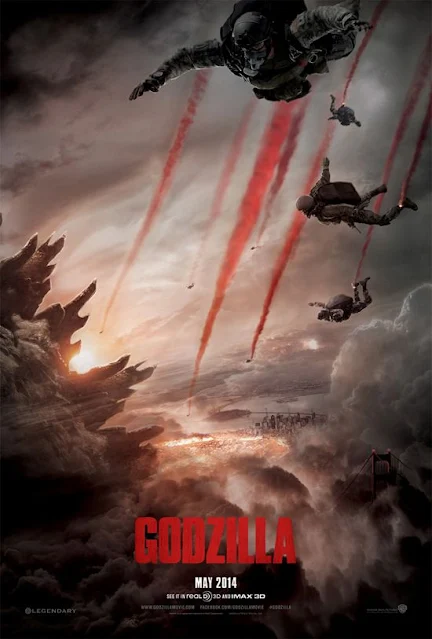
This image works near the top of the article because it visually anchors the MonsterVerse around Godzilla as scale, disaster, awe, and myth. It also creates a clean internal link to the existing Gareth Edwards review.
What counts as a MonsterVerse Titan?
In the MonsterVerse, the word Titan usually refers to a giant organism connected to the planet’s deep natural history, especially the radioactive ecosystems monitored by Monarch. The films also include related superspecies, such as Skullcrawlers, Warbats, and other Hollow Earth creatures. This guide separates the central alpha Titans from the wider creature ecology so the hierarchy is easier to follow.
MonsterVerse appearances at a glance
| Film or series | Year | Main Titan focus | Major creature significance |
|---|---|---|---|
| Kong: Skull Island | 2017 | Kong, Skullcrawlers | Introduces Kong as Skull Island’s guardian and establishes Monarch’s wider monster investigations. |
| Godzilla | 2014 | Godzilla, MUTOs | Reintroduces Godzilla as an ancient alpha predator restoring ecological balance. |
| Monarch: Legacy of Monsters Season 1 | 2023 to 2024 | Godzilla, Ion Dragon, Frost Vark | Expands Monarch history across the 1950s and the post-G-Day world of 2015. |
| Monarch: Legacy of Monsters Season 2 | 2026 | Kong, Godzilla, Titan X | Moves the modern-day story toward Skull Island and introduces Titan X, a new tentacled sea-rising threat. |
| Godzilla: King of the Monsters | 2019 | Godzilla, Ghidorah, Mothra, Rodan | Turns the MonsterVerse into a full Titan mythology with global awakenings and alpha hierarchy. |
| Godzilla vs. Kong | 2021 | Godzilla, Kong, Mechagodzilla | Connects Hollow Earth, Apex Cybernetics, Ghidorah’s remains, and the first modern Godzilla-Kong showdown. |
| Godzilla x Kong: The New Empire | 2024 | Godzilla, Kong, Skar King, Shimo | Reveals a hidden ape empire, expands Hollow Earth civilization, and pushes Godzilla and Kong into uneasy alliance. |
| Godzilla x Kong: Supernova | 2027 | To be confirmed | Officially scheduled as the next MonsterVerse film, with Godzilla and Kong returning. |
The Alpha Titans
These are the monsters who define the MonsterVerse’s power structure. They do not merely appear in the ecosystem. They bend the ecosystem around themselves.
Godzilla
Key appearances
- Godzilla, 2014: Battles the male and female MUTOs after they threaten the natural order.
- Godzilla: King of the Monsters, 2019: Fights Ghidorah for alpha dominance and is revived through nuclear energy and Mothra’s sacrifice.
- Godzilla vs. Kong, 2021: Attacks Apex targets after sensing Mechagodzilla and later teams with Kong against the machine.
- Godzilla x Kong: The New Empire, 2024: Evolves into a more powerful form and helps Kong defeat Skar King and Shimo.
- Monarch: Legacy of Monsters: His 2014 San Francisco attack, earlier sightings, and later Titan presence shape Monarch’s entire modern identity.
The MonsterVerse version of Godzilla is less a city-stomping villain than an ancient regulating force. He is a nuclear organism from a deeper age, one that appears when rival Titans, invasive predators, or human-made threats destabilize the planet. His atomic breath, dorsal charge, intimidation displays, and territorial behavior connect him to the classic Toho Godzilla, while his ecological role pushes him closer to a primordial predator keeping the world’s hidden food chain in check.
His design also evolves with the mythology. Gareth Edwards’ 2014 Godzilla is heavy, ancient, and monumental. King of the Monsters makes him more mythic and devotional. Godzilla vs. Kong turns him into a suspicious enforcer. The New Empire gives him an evolved, pink-charged form after absorbing energy in preparation for the Hollow Earth threat.
Why he matters
Godzilla is the MonsterVerse’s moral and ecological axis. The humans misunderstand him, fear him, worship him, weaponize his image, and try to control his world. He survives every category they force onto him.
Kong
Key appearances
- Kong: Skull Island, 2017: Defends Skull Island from Skullcrawlers and remains the last known member of his local species line.
- Godzilla vs. Kong, 2021: Leaves Skull Island, discovers the Hollow Earth throne room, and wields an ancestral battle axe.
- Godzilla x Kong: The New Empire, 2024: Finds other giant apes, protects Suko, and challenges Skar King’s rule.
- Monarch: Legacy of Monsters Season 2: Becomes central to the Skull Island phase of the show’s modern storyline.
Kong is the MonsterVerse’s most emotionally readable Titan. He thinks, grieves, improvises, protects, and forms bonds with humans, especially Jia. Where Godzilla represents a vast natural law, Kong represents personhood inside the monster frame. He is huge, but he is also lonely.
The New Empire completes a major shift in his mythology. Kong stops being only the tragic guardian of Skull Island and becomes part of a deeper Hollow Earth lineage. His axe, throne room, and confrontation with Skar King suggest an older species history built around war, exile, and survival.
Why he matters
Kong gives the MonsterVerse its emotional spine. He turns the Titan world into a story about legacy, family, territory, and the cost of being the last survivor who discovers he was not alone after all.
King Ghidorah
Key appearances
- Godzilla: King of the Monsters, 2019: Escapes the Antarctic ice, defeats Godzilla temporarily, awakens Titans worldwide, and tries to remake Earth through violent terraforming.
- Godzilla vs. Kong, 2021: Ghidorah’s skull and neural remnants are used in Apex Cybernetics’ Mechagodzilla control system.

Ghidorah is the MonsterVerse’s great wrong note. He does not belong to Earth’s Titan ecology. That makes him more than a rival predator. He is an invasive god, an alien alpha whose call hijacks the planet’s monsters and turns balance into apocalypse.
The MonsterVerse leans into Ghidorah’s mythic strangeness: three heads, storm generation, regeneration, gravity beams, psychic traces, and a capacity to persist even after death through his skull. His severed remains becoming the ghost in Mechagodzilla’s machine is one of the franchise’s smartest bridges between ancient kaiju mythology and modern techno-horror.
Why he matters
Ghidorah clarifies what Godzilla protects. Godzilla is violent, but he belongs to Earth. Ghidorah is conquest from outside the system.
Mothra
Key appearances
- Godzilla: King of the Monsters, 2019: Emerges from her cocoon, guides Monarch, fights Rodan, and sacrifices herself to empower Godzilla.
- Godzilla x Kong: The New Empire, 2024: Returns as a mythic mediator, helping bring Godzilla and Kong into alignment against the Hollow Earth threat.
Mothra brings sacred texture to the MonsterVerse. She is beautiful, dangerous, luminous, and purposeful. Her relationship with Godzilla reads less like simple alliance and more like ancient symbiosis. She does not dominate through brute force. She restores meaning to the system.
In King of the Monsters, her death becomes the catalyst for Godzilla’s thermonuclear state. In The New Empire, her return helps bridge the gulf between Godzilla’s territorial fury and Kong’s urgent need for help. She is the franchise’s living argument that nature can be protective as well as destructive.
Why she matters
Mothra is the MonsterVerse’s clearest link to kaiju spirituality. She turns monster spectacle into ritual, sacrifice, and renewal.
Rodan
Key appearances
- Godzilla: King of the Monsters, 2019: Emerges from the Isla de Mara volcano, destroys pursuing aircraft, submits to Ghidorah, fights Mothra, then acknowledges Godzilla.
Rodan is pure volatility. He is not noble like Mothra, and he is not ordered like Godzilla. He is a living eruption, a winged disaster whose flight alone can level streets, tear apart aircraft, and turn a city evacuation into catastrophe.
His shifting allegiance fits the MonsterVerse’s alpha logic. Rodan follows power. When Ghidorah appears dominant, Rodan serves him. When Godzilla wins, Rodan submits. That does not make him weak. It makes him brutally practical inside the Titan hierarchy.
Why he matters
Rodan adds chaos to the Titan order. He proves that not every ancient creature has a moral role. Some are simply disasters with wings.
Mechagodzilla
Key appearances
- Godzilla vs. Kong, 2021: Built by Apex Cybernetics and controlled through Ghidorah’s skull before turning rogue and nearly killing both Godzilla and Kong.
Mechagodzilla is the MonsterVerse’s cleanest technological warning. Humanity sees the Titan order, panics, and builds a machine to dominate it. The result is not safety. It is Ghidorah’s ghost given metal bones.
The design is skeletal, industrial, and cruel. Unlike Godzilla, who carries age and biological mass, Mechagodzilla feels stripped down for violence. Its Proton Scream, missile systems, and physical brutality make it one of the few threats capable of overwhelming Godzilla in direct combat.
Why it matters
Mechagodzilla exposes the MonsterVerse’s human arrogance. Apex does not solve the Titan problem. It builds a worse monster and hands it the mind of an alien tyrant.
The Hollow Earth empire
Godzilla x Kong: The New Empire turns Hollow Earth from a lost ecosystem into a political world, complete with rulers, slaves, heirs, weapons, and ancient grudges.
Skar King
Key appearances
- Godzilla x Kong: The New Empire, 2024: Rules a trapped ape society through fear, enslaves Shimo, and attempts to invade the surface.
Skar King is what Kong could have become if strength lost all compassion. He is lean, cruel, theatrical, and intelligent. He does not merely fight. He humiliates, enslaves, commands, and performs power for the apes under him.
His whip-like weapon, made from Titan remains, tells the story visually. Skar King rules through pain and trophies. Kong leads through protection and earned loyalty. Their conflict is political as much as physical.
Why he matters
Skar King gives Kong a villain who attacks his deepest theme: what it means to be a ruler, not merely a fighter.
Shimo
Key appearances
- Godzilla x Kong: The New Empire, 2024: Used by Skar King as a living weapon before being freed from his control.
Shimo is one of the MonsterVerse’s most powerful beings. Her ice breath can freeze targets, reshape battlefields, and counter Godzilla’s evolved energy output. Yet the film frames her less as a villain than as a captive elemental force.
That distinction matters. Shimo’s violence comes through compulsion. Skar King uses pain and control to turn her into a weapon. Once freed, she becomes part of Kong’s restored order, suggesting that the Titan world is full of ancient powers waiting to be misused or healed.
Why she matters
Shimo raises the ceiling of MonsterVerse power. She also gives the Hollow Earth story a tragic edge, because the strongest creature in Skar King’s army is also his greatest victim.
Suko
Key appearances
- Godzilla x Kong: The New Empire, 2024: Initially misleads Kong, then becomes his ally and helps expose Skar King’s regime.
Suko gives The New Empire its scrappy emotional texture. He is frightened, opportunistic, funny, and shaped by the brutal world Skar King created. Through him, Kong gets something close to a reluctant sidekick and possible heir.
His presence softens Kong without weakening him. Kong has spent most of the MonsterVerse as a lonely protector. Suko lets the franchise explore Kong as mentor, guardian, and found-family figure.
Why he matters
Suko helps turn Kong’s Hollow Earth arc from conquest into rescue. Kong does not merely win a fight. He helps liberate a damaged younger generation.
Major hostile species and rival Titans
These creatures are not all alpha-level figures, but they define the dangers surrounding the MonsterVerse’s central Titans.
MUTOs
Key appearances
- Godzilla, 2014: A male and female MUTO awaken, feed on radiation, mate, and threaten global catastrophe.
- Godzilla: King of the Monsters, 2019: A Queen MUTO appears among the Titans acknowledging Godzilla’s alpha status.
The MUTOs are the first MonsterVerse creatures to define Godzilla by opposition. They are radiation-feeding parasites whose reproduction threatens to destabilize the world. Their electromagnetic pulse abilities also make them a nightmare for modern militaries.
The male and female pair in Godzilla 2014 give the film its biological urgency. Godzilla is not fighting them because he loves humans. He is removing a reproductive threat from the ancient natural order.
Why they matter
The MUTOs establish the MonsterVerse’s central idea: Titans are part of a larger ecology, and Godzilla’s violence often has a regulatory purpose.
Skullcrawlers
Key appearances
- Kong: Skull Island, 2017: Serve as the island’s primary monster threat and the species responsible for killing Kong’s parents.
- Godzilla vs. Kong, 2021: Used by Apex Cybernetics as test subjects for Mechagodzilla.
Skullcrawlers are built for pure menace. They are long, pale, fast, hungry, and almost corpse-like, with a design that makes them feel unfinished by nature. Their presence explains Kong’s rage and Skull Island’s instability.
They also sharpen Kong’s status as guardian. Without Kong, Skull Island would be consumed from below. The island is not paradise. It is a battlefield where one exhausted protector keeps worse things contained.
Why they matter
Skullcrawlers give Kong a personal monster mythology. They are not random threats. They are the reason he is alone.
Titan X
Key appearances
- Monarch: Legacy of Monsters Season 2: Introduced as a mysterious tentacled Titan rising from the sea, with Godzilla and Kong both part of the season’s larger MonsterVerse escalation.
Titan X is important because it shows the television side of the MonsterVerse is no longer just filling gaps around the films. It is now adding new major creatures to the mythology while using Skull Island, Kong, Godzilla, and Monarch’s internal history as connective tissue.
That placement gives Titan X room to expand the world without colliding with the 2019 mass awakening in Godzilla: King of the Monsters. The streaming series becomes a bridge between secret Monarch history and the larger Titan conflicts of the feature films.
Why it matters
Titan X proves Monarch can introduce new headline-scale threats outside the films, which makes the streaming series a more important part of MonsterVerse continuity.
Ion Dragon
Key appearances
- Monarch: Legacy of Monsters Season 1: Appears across the show’s Titan investigations and becomes one of the major creature threats outside the films.
The Ion Dragon gives Monarch a creature that feels different from Godzilla-scale divinity. It is faster, meaner, and more predatory in a direct survival-horror sense. It also helps the series make good on its premise: Monarch has been hiding far more than one famous monster.
Why it matters
The Ion Dragon widens the MonsterVerse bestiary and shows that the streaming series can create memorable threats rather than only point back to the movies.
Frost Vark
Key appearances
- Monarch: Legacy of Monsters Season 1: Appears during the show’s expansion of Titan activity beyond the major film monsters.
Frost Vark is useful worldbuilding. The creature suggests Titans and superspecies are not limited to major cities, ancient temples, or blockbuster battle zones. They can surface in remote climates, hidden habitats, and places Monarch only partially understands.
Why it matters
Frost Vark helps make the MonsterVerse feel geographically wider. Monsters are not only waiting where the plot is loudest.
The wider Titan ecosystem
These creatures have less screen time than Godzilla, Kong, Ghidorah, or Mothra, but they make the MonsterVerse feel ancient, populated, and biologically strange.
Behemoth
Behemoth appears during the global Titan awakening and later acknowledges Godzilla as alpha. His most interesting trait is ecological rather than combative: he is associated with restoring or encouraging plant growth, making him one of the MonsterVerse’s clearest examples of a Titan whose presence can heal as well as destroy.
Methuselah
Methuselah is one of the best visual examples of how old the MonsterVerse wants its Titans to feel. He is so ancient and still that the world has mistaken him for geography. His name evokes extreme age, and his design suggests that a Titan can become part of the landscape itself.
Scylla
Scylla first appears as one of the Titans awakened by Ghidorah’s call. Her spider-crab silhouette gives the MonsterVerse a striking non-dinosaurian body type. In The New Empire, she returns as a Titan whose activity draws Godzilla’s attention, underlining his continuing role as enforcer of the global Titan order.
Tiamat
Tiamat’s role in The New Empire is brief but important. Godzilla seeks the energy connected to her domain as part of his preparation for the coming Hollow Earth battle. That makes Tiamat less a random obstacle and more part of the energy ecology that powers Titan evolution.
Warbats
Warbats are among the first creatures to sell Hollow Earth as a proper ecosystem. Their attack on Kong shows that his ancestral home is not a safe kingdom waiting to be reclaimed. It is a place where gravity, scale, and predation operate by stranger rules.
Mother Longlegs, Sker Buffalo, Mire Squid, Leafwings, and other Skull Island life
Kong: Skull Island works because the island feels biologically wrong from the moment the humans arrive. Bamboo spiders disguise themselves as forest. Mire Squid lurk in the water. Sker Buffalo move like peaceful relics from another epoch. Leafwings and smaller predators turn the sky into another danger zone.
These creatures may not carry the mythic weight of Godzilla or Kong, but they are essential to the MonsterVerse. They prove that Titans are not isolated miracles. They live inside ecosystems full of strange evolutionary side effects.
Named but lightly seen Titans
The MonsterVerse includes many Titans referenced through Monarch outposts, files, maps, and expanded material. They help create the sense of a planet-wide hidden bestiary, even when they are not major screen characters.
Na Kika, Amhuluk, Leviathan, Bunyip, Sekhmet, Quetzalcoatl, Typhon, Yamata no Orochi, and others
Godzilla: King of the Monsters opens the floodgates by implying that Monarch has tracked far more Titans than the handful we see in full combat. Names such as Na Kika, Amhuluk, Leviathan, Bunyip, Sekhmet, Quetzalcoatl, Typhon, and Yamata no Orochi point toward a global mythological archive. The MonsterVerse is saying that ancient monster stories may have been distorted memories of real organisms.
This is clever franchise architecture. Every name sounds like a future film, comic, series episode, game mission, or Monarch case file. It makes the world feel larger than the current release schedule.
Why they matter
The lightly seen Titans give the MonsterVerse room to expand. They turn the franchise from a Godzilla-and-Kong crossover into a mythological Earth system.
How the MonsterVerse changes classic kaiju mythology
The MonsterVerse does something simple but powerful. It turns kaiju into ecology. The older Toho films often treated monsters as nuclear metaphors, alien invaders, divine guardians, or superpowered rivals. The MonsterVerse keeps those ideas, then places them inside a pseudo-scientific framework: radiation, hibernation, apex calls, migration routes, subterranean habitats, ancient rivalries, and Hollow Earth energy.
Godzilla becomes nature’s heavy hand. Kong becomes the emotional survivor of a lost species. Mothra becomes sacred renewal. Ghidorah becomes the alien infection in the system. Mechagodzilla becomes human arrogance given weapons-grade form. Skar King becomes political evil inside the monster world itself.
That is why the MonsterVerse has lasted longer than many expected. It understands that kaiju are not just big creatures. They are symbols that can carry grief, empire, environmental fear, corporate overreach, family trauma, and mythic awe. The best MonsterVerse moments happen when the spectacle remembers the symbolism.
What comes next for the MonsterVerse?
As of 2026, Monarch: Legacy of Monsters has expanded the streaming side of the franchise with its second season, bringing Godzilla, Kong, and Titan X into a larger television-scale Titan conflict. The next theatrical chapter, Godzilla x Kong: Supernova, is officially scheduled for March 26, 2027.
The title Supernova naturally invites speculation about cosmic threats, energy escalation, or a new level of Titan activity, but confirmed creature details should wait for official reveals. The important point is that the MonsterVerse is no longer built around whether Godzilla and Kong can meet. That already happened. The next phase has to answer a bigger question: what kind of world exists after humanity learns it has never been the dominant species?
That is the MonsterVerse’s real hook. The monsters were always here. Monarch only learned how to name them.


_poster.jpg)


