
Lost.
What a show. They don't make them like that anymore.
Robinson Crusoe mind melded with some of the craziest science fiction ideas ever committed to TV.
Its narrative intricacy, coupled with a deep exploration of human psychology, hungry polar beers, and existential themes, positioned it as a standout tv show and in the era when it showed weekly, a regular must watch,The show, revered for its audacious storytelling and rich character development, became a staple in the science fiction community, transcending the boundaries of television to become a part of the broader cultural zeitgeist.
It was one of those shows that people waited for every week to come out, years before we could binge a whole season on Netflix.
The series finale of the sixth season was a momentous event that elicited a wide array of reactions from both the fan community and critics. While some hailed it as a masterful conclusion, others found it polarizing, sparking debates and discussions that persist to this day.
Were the characters lost in purgatory?
Were they simply all dead?
The series finale of the sixth season was a momentous event that elicited a wide array of reactions from both the fan community and critics. While some hailed it as a masterful conclusion, others found it polarizing, sparking debates and discussions that persist to this day.
Were the characters lost in purgatory?
Were they simply all dead?
Was John Locke really the smoke monster?
What did the damn numbers truly mean?
If only it were that easy...
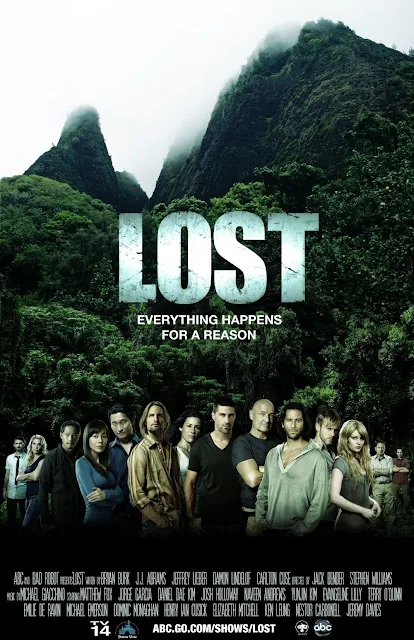
Set against the backdrop of a mysterious island with odd scientific events with an ominous supernatural side as well, the show commenced with the crash-landing of a diverse group of individuals, each with their own secrets and personal struggles.
Themes of destiny versus free will, the nature of humanity, and the quest for redemption were intricately woven into the narrative, challenging both characters and viewers alike.
The series was replete with foreshadowing and clues, intricately placed throughout the episodes, hinting at the larger narrative arc and the eventual conclusion. These elements, often subtle and open to interpretation, played a crucial role in building the show's mystery and engaging the audience in active theorization and speculation.
So what was the meaning of Lost's final season finale?
In this purgatory, the church emerges as a pivotal location where the main characters, after passing away, find peace and reawaken to the memories of their shared experiences while alive. This moment of collective remembering and recognition is deeply symbolic, representing the characters' journey towards acceptance, closure, and readiness to move on to the next dimension or plane of existence.
If only it were that easy...
Set against the backdrop of a mysterious island with odd scientific events with an ominous supernatural side as well, the show commenced with the crash-landing of a diverse group of individuals, each with their own secrets and personal struggles.
These identities were slowly examined over 6 seasons with meaning characters having extremely intertwined lives prior to the events that happened on the island itself, wittingly or not - and this was a clue to the ending of the show.
The island, a character in its own right, presented an ever-evolving labyrinth of mysteries, supernatural elements, and existential questions.
Like what does an escaped polar beer feed on other than survivors of a plane crash?
Like what does an escaped polar beer feed on other than survivors of a plane crash?
Themes of destiny versus free will, the nature of humanity, and the quest for redemption were intricately woven into the narrative, challenging both characters and viewers alike.
The series was replete with foreshadowing and clues, intricately placed throughout the episodes, hinting at the larger narrative arc and the eventual conclusion. These elements, often subtle and open to interpretation, played a crucial role in building the show's mystery and engaging the audience in active theorization and speculation.
So what was the meaning of Lost's final season finale?
What happened to the main characters?
The ending of "Lost" is a culmination of the intricate storytelling techniques used throughout the series, including flashbacks, flashforwards, and, in the final season, the introduction of flash-sideways.
Initially, these flash-sideways sequences appear to depict an alternate universe, leading the audience to ponder the implications of this parallel existence. However, as the story progresses, it becomes increasingly evident that these scenes represent not an alternate reality but a purgatory-like realm, a metaphysical space where the characters converge after their deaths.
Throughout "Lost," the characters' lives are marked by profound experiences on the Island, experiences that are unquestionably real. The Island, with all its mysteries and challenges, serves as a crucible for their transformation, and every event that transpires there significantly impacts their journey.
The ending of "Lost" is a culmination of the intricate storytelling techniques used throughout the series, including flashbacks, flashforwards, and, in the final season, the introduction of flash-sideways.
Initially, these flash-sideways sequences appear to depict an alternate universe, leading the audience to ponder the implications of this parallel existence. However, as the story progresses, it becomes increasingly evident that these scenes represent not an alternate reality but a purgatory-like realm, a metaphysical space where the characters converge after their deaths.
Throughout "Lost," the characters' lives are marked by profound experiences on the Island, experiences that are unquestionably real. The Island, with all its mysteries and challenges, serves as a crucible for their transformation, and every event that transpires there significantly impacts their journey.
The characters, beloved by the audience, meet their end of life at different points in time.
Jack, perishes in the finale, while others, such as Sayid, Sun, Jin, and Boone, meet their ends in earlier seasons. Conversely, characters like Kate, Sawyer, Bernard, Rose, Claire, and Benjamin live on for years beyond the events of the final episode, "The End."
In this purgatory, the church emerges as a pivotal location where the main characters, after passing away, find peace and reawaken to the memories of their shared experiences while alive. This moment of collective remembering and recognition is deeply symbolic, representing the characters' journey towards acceptance, closure, and readiness to move on to the next dimension or plane of existence.
The character of Benjamin Linus, notably, chooses not to enter the church, suggesting his desire for more time to reflect or possibly to wait for other significant figures in his life, such as Alex and Danielle.
From a narrative perspective, the story's conclusion can be interpreted in various ways.
From a narrative perspective, the story's conclusion can be interpreted in various ways.
One perspective suggests that after Jack's death, Hurley and Ben, as the new protectors of the Island, bury him and continue to safeguard this enigmatic place for an extended period. This interpretation adds depth to the characters' arcs, depicting them as guardians of the Island's secrets and legacy.
The ending of "Lost," especially the scenes in the church, has led to some misunderstandings among viewers, with some believing that the characters were dead throughout the series. However, this is a common misinterpretation!
The ending of "Lost," especially the scenes in the church, has led to some misunderstandings among viewers, with some believing that the characters were dead throughout the series. However, this is a common misinterpretation!
The characters were very much alive during their time on the Island and the experiences they had are allllll real.
This is conveyed to Jack by his father in the final episode.
It is only in the flash-sideways world, this purgatory or waiting room, in that our beloved characters exist posthumously. This realm is a transitional space where they await each other, reflecting on their lives and preparing for the next stage of their existence.
Whatever stage that might be...
To summarize then:
The finale of Lost reveals that the characters' experiences on the island were real, but the flash-sideways world, introduced in the final season, was a type of purgatory where they come to terms with their lives and deaths. In the end, the island is shown to be a place of immense importance, serving as a mystical location that needs protection, with its heart being the "Source" of life, death, and rebirth.
Jack sacrifices himself to ensure the island's continued existence and to prevent the destructive force of the Man in Black from escaping. The survivors, having fulfilled their destinies on the island, move on in the afterlife once they've found peace with their pasts.
For clarity:
- Everything each character experienced was real in every season.
- The Dharma Initiative was real.
- The characters died at different times from one another
- Some died on the island, and others lived after their island adventures
- When each died, they met in the 'Church' (a form of purgatory) until they were all together again.
- The island itself was supernatural.
As for all the unexplained events that happened on the island, we'll never know.
One of Lost's key creatives Damon Lindelof went on to make a show called The Leftovers - a truly gem of a '3 season and done' scifi show and we wholeheartedly recommend you check it out.


