15 September 2024

Why the 'Mortal Engines' film was Box Office Bomb

"Mortal Engines," a film directed by Christian Rivers and released in December 2018, was met with high expectations but ultimately failed to deliver at the box office. 

With a budget of approximately $100 million, the film managed to earn only $83.7 million worldwide, marking it as a commercial failure. This essay aims to explore the myriad factors that contributed to the film's disappointing performance.

The film was based on the first novel of the popular book series by Philip Reeve, which had garnered both critical acclaim and a dedicated fan following.

 Given the books' success, the film adaptation was expected to perform well, drawing comparisons to other successful book-to-film adaptations like "Harry Potter" and "The Hunger Games.

Producer Peter Jackson of Hobbit and Lord of the Rings fame backed this film in a big way, however, the film fell short in several key areas, leading to its ultimate downfall.

One of the most glaring issues was the film's marketing and promotional strategy. 

Unlike successful adaptations that benefited from robust marketing campaigns, "Mortal Engines" suffered from inadequate promotion. The film lacked visibility in the media, and its marketing failed to generate significant buzz. 

mortal engines box office bomb

Another critical factor was the film's storytelling and adaptation issues. While the source material was complex and layered, the film adaptation struggled with pacing, narrative structure, and character development. 

The differences between the book and the movie alienated fans of the original series, while the film's convoluted plot confused new viewers. This led to a disconnect between the audience and the story, making it difficult for viewers to engage with the film.

The casting choices also played a role in the film's failure. Unlike other successful adaptations that boasted A-list stars, "Mortal Engines" featured a relatively unknown cast save for Hugo Weaving (who pretty much chewed scenery in this film). 

While the actress Hera Hilman delivered competent performances and Robbie Shehan (Mute) gave it his all, the lack of star power failed to draw a large audience. That said, the chemistry between characters Tom and Hester Shaw was not compelling enough to engage viewers, further contributing to the film's lackluster performance.

Technical aspects of the film, such as visual effects and cinematography, were generally well-executed but failed to compensate for the weaknesses in storytelling and character development. Similarly, while the film's score by Tom Hockenberg was competent (though arguably a step down from his prior effort in Fury Road), they were not memorable enough to elevate the overall experience.

Critical reception was another nail in the coffin for "Mortal Engines." The film received mixed to negative reviews from critics, and audience ratings were similarly disappointing. Negative reviews likely deterred potential viewers, further diminishing the film's chances of success.

The timing of the film's release and the competition it faced also contributed to its failure.

 Released during a crowded holiday season, "Mortal Engines" had to compete with several other high-profile films, diluting its potential audience. Moreover, the film seemed to suffer from franchise fatigue, as audiences had already been exposed to a plethora of dystopian and science fiction films, making it difficult for "Mortal Engines" to stand out.

One could also argue, the idea to go with Hester Shaw being beautiful rather than scarred wasn't too bright a move. 
12 September 2024

Peter Jackson's film cameos (like Alfred Hitchcock did)

Just like Alfred Hitchcock himself loved a good film cameo, filmmaker Peter Jackson takes a moment to appear in each of the films he directs. 

peter jackson cameo fellow ship of the ring

Here is the table of Peter Jackson's cameos in his films, ordered by the year of release:

Year of Film ReleaseName of FilmCharacter/DescriptionWhat Actually Occurs in the Scene
1987Bad TasteDerek and RobertJackson plays two characters, Derek and Robert, who engage in a fight with each other. * note really a cameo but noteworthy appearance
1989Meet the FeeblesAudience Member (Alien Disguise)Appears as an audience member disguised as one of the aliens from Bad Taste.
1992BraindeadMortician's AssistantAppears briefly as the mortician's assistant.
1994Heavenly CreaturesTrampPlays a tramp who is kissed by Juliet Hulme.
1995Forgotten SilverHimselfAppears as himself in this mockumentary.
1996The FrightenersBikerAppears as a biker who is bumped into by the main character, Frank Bannister.
2001The Lord of the Rings: The Fellowship of the RingCarrot-Chomping Citizen of BreeJackson appears as a citizen of Bree eating a carrot as the four hobbits enter the town.
2002The Lord of the Rings: The Two TowersSpear-Throwing Defender of Helm's DeepAppears as a defender of Helm's Deep throwing a spear.
2003The Lord of the Rings: The Return of the KingBoatswain of a Corsair ShipSeen briefly as the boatswain of a corsair ship, accidentally killed by Legolas's "warning shot" in the extended version.
2003The Lord of the Rings: The Return of the KingShelob's Lair Hand DoubleJackson's hands are shown on-screen wrapping Frodo in cobweb, standing in for Sean Astin (Sam) who was temporarily absent.
2005King KongBiplane GunnerAppears as a biplane gunner attacking King Kong in New York City, reprising a similar cameo made by the original filmmaker of the 1933 film.
2009The Lovely BonesCamera Store CustomerJackson appears as a customer in a camera store playing with a camera.
2012The Hobbit: An Unexpected JourneyDwarf Escaping from EreborJackson appears as one of the dwarves escaping from Erebor after Smaug attacks.
2013The Hobbit: The Desolation of SmaugCarrot-Chomping Citizen of BreeReprises his role from The Fellowship of the Ring as the carrot-chomping citizen of Bree.
2014The Hobbit: The Battle of the Five ArmiesBungo Baggins (Portrait)Jackson's likeness is used for the portrait of Bungo Baggins, seen when Bilbo restores the fallen portraits of his parents.

Jackson also has a notable cameo as a mad Santa Clause in Hot Fuzz:


Transformers One: A Spark of Brilliance Amidst a Sea of Robots

Transformers One is a visual treat with a well-written plot, breathing new life into a franchise that, let's face it, has had its ups and downs. While it's not quite the "more than meets the eye" experience we might have hoped for, it's still an engaging and fun origin story that will delight longtime fans and newcomers alike.

The film boasts a truly impressive voice cast, and they deliver. Chris Hemsworth (coming off Furiosa) brings a charming earnestness to Orion Pax, capturing his evolution from a humble miner to the legendary Optimus Prime. Brian Tyree Henry steals the show as D-16, imbuing the future Megatron with a raw emotional vulnerability that anchors the film's core conflict. The rest of the cast, including Scarlett Johansson, Keegan-Michael Key, and Jon Hamm, add their own unique flavors to the mix.

The animation is, for the most part, fantastic. The G1-inspired aesthetic is a nostalgic throwback, and the Cybertronian landscapes are breathtaking. However, the action sequences can be a bit of a jumbled mess. 

It's sometimes hard to keep track of what's happening amidst the blur of transforming robots, which is a shame given the film's visual potential.

transformers one optimus prime review


The classic tale of best friends turned bitter rivals is well-trodden territory, but it's still effective here. The script explores the nuances of Orion Pax and D-16's relationship, highlighting their contrasting personalities and the events that drive them apart. While some of the plot points feel a bit predictable, the emotional core of the story resonates.

Transformers One isn't without its flaws. The humor is mostly broad and forgettable, and some characters, like Scarlett Johansson's Elita-1, are underdeveloped.

Overall, Transformers One is a welcome addition to the franchise. It's a visually stunning and emotionally engaging origin story that benefits from strong voice acting and a classic tale of friendship and betrayal. While it's not perfect, it's a step in the right direction for the Transformers on the big screen.

As a longtime Transformers fan, I couldn't help but compare this film to the 1986 animated classic. Transformers One lacks the iconic voice of Peter Cullen and that unforgettable theme song, but it makes up for it with a more nuanced story and stunning visuals. It's a worthy successor to the original, albeit with a slightly different flavor.

Transformers One may not be the most groundbreaking animated film, but it's a solid entry in the Transformers franchise. It's a fun, action-packed adventure with a heartfelt story at its core. If you're a fan of the robots in disguise, or just looking for a visually impressive animated film, Transformers One is worth checking out.

The true meaning of Cole Sear’s name in The Sixth Sense

Here's something we never caught onto in 30 odd years since the release of The Sixth Sense.

Cole Sear's name is a big clue to his ability to see dead people.

The surname "Sear" is a purposeful play by M. Knight Shyamalan on the word "seer," a term that describes someone who has the supernatural ability to perceive beyond the ordinary, particularly into the spiritual realm.

In the context of the film, this choice of name is a direct reference to Cole’s unique gift, his ability to see and communicate with the dead.
 
meaning of cole sears name sith sense film

The word "seer" traditionally denotes a person who can see hidden truths, spiritual entities, or events that are beyond the perception of others.

The use of "Sear" as a surname, then, serves to underscore the essence of Cole’s role in the story—a seer who witnesses the spirit world with his own eyes, revealing the unseen and uncovering hidden truths whilst doing the odd bit of ghost busting.

Who ya gonna call Cole?  

Shymalan filled his script with many brilliant things, such as the use of color red to suggest the presence of a ghost and Cole's wisp of white hair, so we should not have been surprised by this simple name play!
09 September 2024

From Othello to Darth Vader: Remembering James Earl Jones' Extraordinary Career

James Earl Jones, the legendary American actor renowned for his distinct and commanding voice, has passed away, leaving behind an extraordinary legacy. 

Throughout his illustrious career, spanning film, theater, and voice acting, Jones captivated audiences with his unmatched talent and unparalleled presence. 

His profound impact on the entertainment industry and his iconic contributions will continue to resonate for generations to come.


james earl jones obituary
A younger Mr Jones

Early Life and Career

Born on January 17, 1931, in Arkabutla, Mississippi, James Earl Jones emerged from humble beginnings to become a towering figure in the world of performing arts. 

His journey was not without challenges, as he grappled with a severe stutter during his childhood. However, it was his remarkable resilience and determination that would eventually shape his path to success.

Jones discovered his love for acting during his early years. Immersed in the power of storytelling, he found solace and liberation on the stage. Through local theater productions and school performances, he honed his craft, channeling his passion into every role he portrayed.

Breakthrough and Iconic Roles

James Earl Jones had a career filled with breakthrough moments and iconic roles that solidified his status as a true acting legend. One such breakthrough came in 1964 when he portrayed Lieutenant Lothar Zogg in the satirical masterpiece "Dr. Strangelove or: How I Learned to Stop Worrying and Love the Bomb." Jones' portrayal of the determined and unflappable military officer showcased his impeccable timing and his ability to bring depth to even the most comedic roles.

It was his 1970 appearance in The Great White Hope that resulted in an Oscar nomination.

However, it was Jones' unforgettable contribution to the original "Star Wars" trilogy that forever etched his name in cinematic history. 

As the voice of the imposing Darth Vader, Jones brought a chilling presence to the character, making him one of the most iconic villains in film. His deep, commanding voice became synonymous with the dark side, captivating audiences and sparking a cultural phenomenon that still resonates today.

Jones continued to leave an indelible mark with his powerful portrayals in other notable films. In the 1989 classic "Field of Dreams," he portrayed the enigmatic Terrence Mann, an author with a profound connection to baseball's spiritual side. Jones' portrayal brought a sense of wisdom and gravitas to the character, earning critical acclaim and further solidifying his versatility as an actor.

Another memorable role came in 1982 when Jones took on the role of Thulsa Doom in "Conan the Barbarian." His portrayal of the sorcerer and cult leader showcased his ability to embody malevolence and captivate audiences with his presence alone. Jones' performance added an extra layer of depth and complexity to the film, elevating it beyond the realm of a typical action-adventure.

Stage Career and Contributions

James Earl Jones' illustrious career extended beyond the silver screen, as he made an indelible mark in the world of theater. His contributions to stage productions, including his work with the New York Shakespeare Festival, showcased his unparalleled talent and his commitment to the craft.

Jones' portrayal of Othello stands as a significant milestone in African American theater. In 1982, he took on the iconic role in the Broadway production of "Othello," earning critical acclaim for his powerful interpretation. His performance not only demonstrated his exceptional acting abilities but also shattered barriers and paved the way for more opportunities for African American actors in classical theater. Jones' portrayal of Othello remains a testament to his artistic prowess and his dedication to breaking down racial barriers on stage.

Throughout his career, Jones championed diversity and inclusivity in the performing arts. He believed in the transformative power of theater to bridge gaps and unite people from different backgrounds. His dedication to promoting diversity was evident not only in his choice of roles but also in his involvement in various initiatives and organizations. Jones was an advocate for equal representation and opportunities, working tirelessly to create a more inclusive industry that celebrated talent regardless of race or ethnicity.

Beyond the Stage: Voice Acting and Narration

James Earl Jones' mesmerizing voice extended his artistic reach beyond the stage and screen, establishing him as one of the most iconic and sought-after voice actors of his time. His rich baritone and commanding presence brought life to a wide array of animated films, documentaries, television series, and commercials.

One of his most memorable voice acting performances came in the animated classic "The Lion King" (1994), where he lent his voice to the wise and noble Mufasa, Simba's father. Jones' portrayal of Mufasa resonated deeply with audiences, capturing the essence of paternal wisdom and strength. His voice conveyed a sense of regality and warmth that made Mufasa one of his most beloved and enduring characters, leaving an indelible impression on generations of viewers.

Personal and Humanitarian Endeavors

Beyond his extraordinary career, James Earl Jones was known for his compassion, generosity, and commitment to making a positive impact on the world. His personal life was characterized by his dedication to various charitable causes and his unwavering support for organizations such as the Boys & Girls Clubs of America.

Jones believed in using his platform and influence to bring about meaningful change. He was a staunch advocate for civil rights and equality, consistently speaking out against discrimination and championing social justice. His belief in the transformative power of art to inspire change was evident in both his performances and his activism. Jones understood that storytelling had the potential to bridge divides, challenge societal norms, and promote understanding among diverse communities.

Despite his immense talent and success, James Earl Jones remained remarkably humble and down-to-earth. He was known for his kindness, warmth, and genuine appreciation for his fans. His humility resonated with peers and admirers alike, garnering immense respect and admiration throughout the industry. Jones' ability to connect with people on a personal level, combined with his extraordinary talent, made him a beloved figure in the hearts of many.

In addition to his artistic achievements, Jones' commitment to philanthropy and social causes further exemplified his character. He dedicated his time and resources to numerous charitable endeavors, using his influence to uplift and empower marginalized communities. His support for the Boys & Girls Clubs of America, among other organizations, demonstrated his belief in nurturing the potential of young people and providing them with opportunities to thrive.


Farewell James Earl Jones

James Earl Jones, with his immense talent and commanding presence, has left an indelible mark on the entertainment industry and the hearts of countless individuals. His legacy is one of profound impact, shaped by his iconic voice, his remarkable stage and screen performances, and his unwavering commitment to humanitarian endeavors.

Through his extraordinary career, Jones showcased an unmatched ability to captivate audiences with his commanding voice and magnetic performances. Whether as the formidable Darth Vader in "Star Wars," the wise and noble Mufasa in "The Lion King," or the powerful Othello on stage, his talent knew no bounds. His voice reverberated through generations, leaving an enduring legacy that will continue to resonate with future actors and artists.

Rest in peace, James Earl Jones.

03 September 2024

What is the secret role of MU/TH/UR on the Nostromo in Alien (1977)

 In the "Alien" franchise, MUTHUR (often stylized as "MU/TH/UR") is the ship's main computer system, commonly referred to as "Mother." 


ripley jonesy cat alien 1977

MUTHUR serves as the central AI responsible for managing the operational functions of the spacecraft, such as the Nostromo in the original 1979 "Alien" film, directed by Ridley Scott.

MUTHUR is a highly advanced artificial intelligence designed to maintain the ship's systems, monitor the crew, and ensure the smooth running of all technical and mechanical operations.

Role and Functionality of MUTHUR

  1. Operational Control: MUTHUR has control over many of the ship's critical systems, including life support, navigation, communication, and internal surveillance. It monitors these systems continuously, ensuring the safety and functionality of the spacecraft.
  2. Communication with Crew: MUTHUR is designed to communicate with the crew through a text-based interface that provides instructions, warnings, and updates about the ship's status. In "Alien," the crew interfaces with MUTHUR through terminals located in the control room. The AI does not possess a voice but communicates using text, which the crew reads from screens.
  3. Decision-Making and Priority Protocols: MUTHUR operates according to a set of programmed directives, including secret corporate orders. For example, in "Alien," MUTHUR follows the instructions of Weyland-Yutani Corporation, prioritizing the retrieval of the alien organism over the safety of the crew. This hidden directive, labeled "Special Order 937," exemplifies how MUTHUR can be used to enforce the corporation’s covert objectives.
  4. Artificial Intelligence Limitations and Dependence: Although MUTHUR is a sophisticated AI, it still requires human input for certain decisions, especially those involving ethical or strategic considerations. The crew must access MUTHUR for specific information or to override certain protocols, as demonstrated when Ripley attempts to abort the alien retrieval mission. Additionally, MUTHUR is not omniscient; it relies on sensors and data inputs, which can be manipulated or overridden.
  5. Security and Access Control: MUTHUR controls access to various parts of the ship and can lock or unlock doors, control lighting, and manage environmental conditions. This security role gives it significant power over the crew’s movements and activities, enhancing its capacity to execute corporate directives.

chest burster alien 1977


Thematic Significance of MUTHUR in the Alien Franchise

MUTHUR represents the intersection of technology, authority, and the dehumanizing effects of corporate control, a central theme in the "Alien" franchise.

Its impersonal nature and unwavering obedience to corporate commands make it a symbol of the cold, calculating aspects of advanced technology and bureaucracy. MUTHUR’s lack of empathy or moral consideration underscores the vulnerability of the crew, who are at the mercy of both a dangerous alien creature and a corporation willing to sacrifice human lives for profit.

This duality—MUTHUR as both a life-sustaining system and a tool of corporate exploitation—adds a layer of tension and paranoia to the narrative. It suggests that the true threat may not only come from the alien xenomorph but also from the faceless corporate entities and technologies that place profits above people.

Special Order 937 is a covert directive programmed into the AI system MUTHUR (Mother) by the Weyland-Yutani Corporation. This order prioritizes the retrieval and preservation of the alien organism (later known as the xenomorph) at all costs.

The directive is kept secret from the crew of the spaceship Nostromo, with only the android science officer, Ash, being aware of its existence.

The order explicitly states that the crew is considered "expendable" in the mission to obtain the organism, revealing the corporation's willingness to sacrifice human lives to acquire what it perceives as a valuable biological asset.

This clandestine order reflects Weyland-Yutani's unscrupulous nature, showcasing its extreme disregard for human welfare in the pursuit of profit and scientific advancement.

The revelation of Special Order 937 becomes a critical turning point in the film, deepening the sense of betrayal and horror among the crew as they realize they have been manipulated by their employer. The order also serves to highlight the darker themes of corporate greed and the ethical dilemmas surrounding artificial intelligence and automated decision-making systems.
27 August 2024

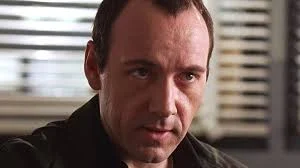
The Usual Suspects: what parts of the plot actually happened?

'The Usual Suspects' stands as a pinnacle in the realm of mystery and suspense films, renowned for its intricate plot and the masterful weaving of truth and deception.

Directed by the now disgraced Bryan Singer (X-Men) and penned by Christopher McQuarrie, this 1995 film has etched itself into cinematic history for its ingenious narrative and a twist ending that regularly features in discussions about best film endings.
 
At its core, 'The Usual Suspects' is a tale that blurs the lines between reality and fabrication, led by the enigmatic character of Keyser Söze, a name that echoes with notoriety and mystery throughout the film.

The film’ premise centers on the aftermath of a massacre aboard a docked ship in the Port of Los Angeles, where 27 people are killed and the ship is destroyed by fire. The only survivors are a severely burned Hungarian gangster and a small-time con artist with cerebral palsy, Roger "Verbal" Kint.

The movie unfolds through Kint’s narrative, as he recounts the events leading up to the massacre, starting with a seemingly random police lineup in New York that brought together five career criminals.

These men, including Kint, are soon drawn into a series of heists orchestrated by a mysterious figure, who Kint claims to be the legendary and feared crime lord, Keyser Söze.

Verbal Kint finds himself in police custody because he is one of the few survivors of the massacre and is believed to hold key information about the events that transpired. U.S. Customs Agent Dave Kujan, driven by a personal vendetta against one of the dead criminals, Dean Keaton, is determined to uncover the truth behind the massacre and the true identity of Keyser Söze. 

Kujan interrogates Kint, believing that the seemingly meek and nervous man knows more than he is letting on.

Ultimately Kint is revealed to be Soze, his narration mostly a work of fiction to play for time before his required release from Police custody.

the usual suspects film poster

Verbal Kint's claims and their veracity

The Origin of the Heist Crew

Kint's Claim: 

Verbal Kint begins by explaining that the five criminals, including himself, Michael McManus, Dean Keaton, Todd Hockney, and Fred Fenster, were brought together by chance when they were all lined up as suspects in a New York police station. He claims that this lineup was orchestrated by a corrupt police officer.

Assessment

This claim is partially true. 

The lineup did occur, and the criminals were indeed brought together because of it. However, the true nature of this gathering remains dubious. The claim that it was a random lineup seems to be true, but Verbal's suggestion that this lineup was a mere coincidence might be misleading.


The Kobayashi Job

Kint's Claim: 

Kint claims that the group was subsequently hired by a mysterious lawyer named Kobayashi, who worked for the elusive crime lord Keyser Söze. The job was to intercept a large shipment of cocaine, which would later be revealed as a ruse.

Assessment: 

This is likely a fabrication. While the group was indeed involved in a job organized by someone claiming to represent Söze, the actual events surrounding the Kobayashi job are highly suspect. The character of Kobayashi might be entirely fictional, a creation of Kint’s to maintain the illusion of Söze’s omnipotence.


The Legend of Keyser Söze

Kint's Claim: 

One of the most significant parts of Kint’s story is the chilling legend of Keyser Söze. He describes Söze as a near-mythical figure, a ruthless criminal mastermind who killed his own family to prevent them from being used against him by his enemies. Söze is portrayed as a figure of immense power, feared by all.

Assessment: 

This claim is likely exaggerated or entirely fabricated. The story of Söze is presented as a legend within the criminal underworld, but its veracity is questionable. 

Given that Verbal Kint himself is later revealed to be Söze, the entire narrative appears to be a carefully constructed lie, designed to instill fear and mislead the authorities.


The Role of Dean Keaton 

Kint's Claim:

Verbal presents Dean Keaton as a reformed criminal trying to go straight but is pulled back into the criminal world by his old associates and ultimately by Keyser Söze. Kint suggests that Keaton was the leader of the group and the main target of Söze’s manipulation.

Assessment: 

This is likely a lie or, at best, a distortion of the truth. Keaton is portrayed in different lights throughout the film, and Verbal’s insistence on Keaton’s leadership role may be an attempt to shift suspicion away from himself. The ambiguity of Keaton’s true intentions and actions makes this claim dubious.


The Final Heist and the Massacre

Kint's Claim: 

According to Kint, the final heist was a setup by Keyser Söze to eliminate a group of Argentinian drug dealers who could identify him. Kint narrates how the heist goes horribly wrong, leading to a massacre on a ship and the deaths of all his associates.

Assessment:

While the massacre did occur, the reasons behind it are questionable. 

The claim that the job was solely about eliminating witnesses to protect Söze’s identity may be partially true, but the extent of the truth in this claim is murky. Given that Kint is Söze, the massacre might have served multiple purposes, including eliminating his own accomplices.


Verbal’s Disability

Kint's Claim: 

Throughout his interrogation, Kint presents himself as a physically disabled man with cerebral palsy, using this disability to appear weak and non-threatening.

Assessment: 

This is a complete lie. In the film's final moments, it is revealed that Kint has been faking his disability, using it as a cover to manipulate and deceive those around him, including Agent Kujan.


Kint’s Involvement in the Heist

Kint's Claim: 

Verbal repeatedly downplays his role in the group's criminal activities, portraying himself as a cowardly and ineffective participant who only survived due to luck and the protection of others, particularly Dean Keaton.

Assessment: 

This is a significant misrepresentation. Verbal’s eventual revelation as Keyser Söze suggests that he was not only involved but was the mastermind behind the entire series of events. His portrayal of himself as a harmless bystander is a calculated lie.


The Death of Dean Keaton

Kint's Claim: 

Kint claims that Keaton was killed by Keyser Söze after the final heist. He provides a dramatic account of this event, emphasizing Keaton’s tragic end and his defiance in the face of death.

Assessment: 

While Keaton did die, the exact circumstances of his death are unclear. Given that Kint is Söze, it’s possible that the entire account is a fabrication to manipulate Kujan and the audience.

verbal kint usual suspects


What crimes did Verbal Kint actually commit in The Usual Suspects?

By the film's end, it becomes clear that Kint is, in fact, the mastermind behind the entire plot, secretly operating as the legendary and feared crime lord, Keyser Söze.

The most significant crime he commits is the orchestrated massacre aboard the ship in the Port of Los Angeles, where he aims to eliminate witnesses who could potentially reveal his identity as Söze.

This massacre results in the deaths of 27 people, including his own associates.

Beyond the massacre, Kint's greatest 'crime' is his successful manipulation and deception of everyone around him, including law enforcement.

By constructing an elaborate and convincing web of lies, Kint deceives U.S. Customs Agent Dave Kujan and the audience, concealing his true identity and escaping justice.


Is Roger Verbal Kint actually Keyser Soze or did he make up the character in the interogation?

In The Usual Suspects, Roger "Verbal" Kint does indeed act as Keyser Söze prior to being caught, though this is not explicitly revealed until the film's final moments.

Throughout the movie, Kint narrates his version of events during his interrogation, presenting Keyser Söze as a separate, almost mythical figure—a shadowy crime lord who manipulates everything from behind the scenes. However, the twist ending reveals that Kint himself is Keyser Söze, meaning that the terrifying figure he described throughout the interrogation is actually him.

The persona of Keyser Söze is not entirely made up during the interrogation; rather, it is a real identity that Kint has been operating under all along.

The key deception lies in how Kint separates his meek, physically disabled con artist persona from the ruthless and powerful Söze. By doing so, he convinces the authorities—and the audience—that he is a mere pawn in Söze's game, rather than the mastermind behind the crimes.

The character of Keyser Söze is very much real within the film's world, and Kint has been acting as Söze all along, orchestrating the events leading up to the ship massacre while skillfully hiding his true identity until the very end.

About the author Jimmy Jangles


My name is Jimmy Jangles, the founder of The Astromech. I have always been fascinated by the world of science fiction, especially the Star Wars universe, and I created this website to share my love for it with fellow fans.

At The Astromech, you can expect to find a variety of articles, reviews, and analysis related to science fiction, including books, movies, TV, and games.
From exploring the latest news and theories to discussing the classics, I aim to provide entertaining and informative content for all fans of the genre.

Whether you are a die-hard Star Trek fan or simply curious about the world of science fiction, The Astromech has something for everyone. So, sit back, relax, and join me on this journey through the stars!
Back to Top