13 August 2024

Reassessing M. Night Shyamalan’s The Village as a 'cult classic'

When The Village hit theaters in the summer of 2004, M. Night Shyamalan was at the height of his career, following the remarkable success of three consecutive films - The Sixth Sense, Unbreakable, and Signs. These films had established him as a master of suspense, known for his ability to blend supernatural elements with profound emotional depth.

Expectations were high for The Village, a new thriller set in a seemingly isolated 19th-century village where the inhabitants lived in fear of mysterious creatures lurking in the surrounding woods.

Although the film performed fairly well at the box office, it was quickly labeled as Shyamalan's first misstep, criticized for its lack of genuine scares and a final twist that left many feeling dissatisfied. Critics were puzzled, and audiences felt let down - his was not the terrifying horror experience they had been led to expect.

Take away the hype, look back 20 years later, and you arguably have a cult classic on your hands. 
the village film themes howard


But is The Village thus a bad film?


No.

It's a cult classic. 

A look back 20 years later shows there is much worth to find in the film and a patient viewer not looking for 'scary ghosts hidden in the forest' or a truly mind-bending plot twist will be rewarded with an enjoyable viewing.

In hindsight, The Village offers much more than just a suspenseful narrative—it is a carefully crafted exploration of fear, control, and the human tendency to create myths and boundaries as a means of protection.

The film's nuanced themes, deliberate pacing, and visual symbolism suggest that it was never intended to be a straightforward horror film that viewers may have been led to by the film's promotional advertising.

Instead, The Village can be appreciated as a thought-provoking meditation on the lengths to which people will go to preserve their way of life, even at the cost of truth and freedom.

The Village can be interpreted as a subtle commentary on American politics in the post-Iraq War era, reflecting the anxieties and disillusionment that permeated the national consciousness during that time.

Released in 2004, the film arrived in the midst of a period marked by widespread distrust in government and the media, following the controversial invasion of Iraq in 2003.

The war, justified by the U.S. government on the grounds of weapons of mass destruction that were never found, led to a growing awareness of how fear and misinformation could be used to manipulate public perception and justify significant political actions.

In The Village, the elders' decision to fabricate a mythological fear to keep the villagers confined mirrors the tactics of control and misinformation employed by political leaders during the Iraq War. Just as the villagers are kept in the dark about the true nature of the world beyond their borders, so too were the American people, many of whom felt misled by their government's narrative.

The film’s portrayal of a society governed by fear, where truth is sacrificed for the illusion of safety, resonates with the broader themes of manipulation and the consequences of living under a constructed reality.

In this way, The Village can be seen as a reflection on the dangers of authoritarian control, the moral compromises involved in leadership, and the ease with which fear can be weaponized to maintain power, making it a poignant and relevant piece of storytelling within its political context.

Central then to the narrative of The Village is the profound decision by the community's elders to shield their families from the harsh realities of the modern world. Each elder bears the scars of personal tragedies - experiences of loss, violence, and disillusionment - that have shaped their collective resolve to create a sanctuary untouched by contemporary societal ills.

To achieve this, they orchestrate an elaborate deception, crafting a meticulously detailed 19th-century setting within an isolated enclave. This artificial environment is sustained through the propagation of myths about monstrous creatures inhabiting the surrounding woods, effectively instilling a pervasive fear that prevents the younger generation from venturing beyond the village boundaries.

The elders' commitment to maintaining this illusion extends to controlling information, suppressing any knowledge that might hint at the existence of a world beyond their fabricated reality.

This intricate web of deceit is not born out of malice but from a desperate desire to preserve innocence and foster a sense of security. However, the ethical implications of such an undertaking are complex, raising questions about the cost of ignorance and the morality of manipulating truth for the sake of perceived safety.

Consider this though, The Village is actually a love story. 

At the heart of The Village lies the poignant and unconventional love story between Lucius Hunt, portrayed by Joaquin Phoenix (Joker), and Ivy Walker, played by Bryce Dallas Howard.

Their relationship is one of the most compelling elements of the film, characterized by a deep, unspoken bond that transcends the fear and uncertainty permeating their isolated community. Lucius, a quiet and introspective man, is drawn to Ivy's strength and resilience, even though she is blind.

Ivy, in turn, sees Lucius with a clarity that goes beyond physical sight, recognizing his courage and integrity. Their love is not built on grand gestures or dramatic declarations but on a profound connection that becomes increasingly apparent as the narrative unfolds.

It is this connection that ultimately drives the plot, as Ivy's determination to save Lucius propels her to venture beyond the boundaries of the village, confronting the very fears that have kept their community captive.

This love story is central to the film's exploration of themes such as trust, sacrifice, and the power of love to overcome fear. Ivy and Lucius’s relationship represents a beacon of hope in a world otherwise dominated by paranoia and strict adherence to tradition.

Their bond challenges the rigid structures of the village, illustrating that true connection and loyalty can inspire acts of immense bravery. Ivy's journey into the unknown to save Lucius serves as a metaphor for the transformative power of love, which not only propels her through the physical dangers of the forest but also exposes the deeper truths that the village elders have sought to conceal.

In this way, the love between Lucius and Ivy becomes a catalyst for both personal and communal change, highlighting the film's broader themes of truth, fear, and the human spirit's capacity for resilience.

Let's explore three key themes of The Village

Mythmaking and the Power of Narrative

In The Village, the elders' creation of the myth surrounding the creatures in the woods serves as a powerful tool for controlling the behavior and beliefs of the villagers. This myth, meticulously crafted and perpetuated, functions as a means to instill fear and maintain order within the community. The elders understand the influence of storytelling, recognizing that a shared narrative can bind a society together and dictate the actions of its members.

By fabricating a tale of monstrous beings that punish those who dare to leave the village, the elders ensure that the younger generation remains confined, unaware of the broader reality beyond their borders.

This manipulation of narrative echoes the broader human tendency to use stories - whether through religion, folklore, or political rhetoric - to shape collective identities, justify actions, and reinforce power structures.

The villagers’ belief in the myth demonstrates how easily people can be swayed by compelling narratives, even when those narratives are rooted in fear and falsehood.


The Role of Fear in Governance

Fear is a central mechanism of control within the village, effectively used by the elders to govern the actions and thoughts of the community. The villagers' fear of the unknown, embodied by the creatures in the woods, keeps them compliant and unquestioning of the reality presented to them. This fear is not just a natural response to danger but a carefully cultivated emotion, nurtured by the elders to preserve their constructed world.

The use of fear in governance is a theme that resonates beyond the film, reflecting how fear can be weaponized in real-world political contexts. In the post-9/11 and post-Iraq War era, for example, fear of terrorism was used to justify sweeping changes in government policy, public behavior, and civil liberties.

Just as the elders use fear to prevent the villagers from discovering the truth, so too can governments use fear to limit the public's access to information and suppress dissent. This exploration of fear in The Village serves as a cautionary tale about the dangers of allowing fear to dictate governance and the ease with which it can be exploited to maintain control.


Moral Ambiguity and Ethical Dilemmas

The elders in The Village are faced with profound ethical dilemmas as they navigate the responsibilities of leadership within their secluded society. Their decision to construct an elaborate deception to protect their families from the perceived dangers of the outside world is rooted in a genuine desire to shield their loved ones from harm.

However, this decision also raises significant moral questions about the cost of such protection. By choosing to lie and instill fear, the elders sacrifice the villagers' autonomy and right to the truth, trapping them in a state of ignorance and artificial innocence. The film challenges viewers to consider whether the elders' actions can be justified, and at what point the pursuit of safety and security becomes morally indefensible.

This moral ambiguity is a key theme in The Village, highlighting the complex nature of leadership and the ethical compromises that often accompany the desire to create a "better" world. The elders' well-intentioned yet ultimately flawed decisions serve as a reminder of the heavy burden of power and the ethical pitfalls that come with it.

A viewer who approaches The Village with an appreciation for its deeper themes and concepts will likely find the film both engaging and thought-provoking. Beyond its surface-level suspense and twist ending, the film delves into complex ideas such as the power of narrative in shaping reality, the use of fear as a tool of governance, and the moral ambiguity surrounding the elders' decision to protect their community through deception.

These themes invite viewers to reflect on how stories influence behavior, the ethical dilemmas of leadership, and the fine line between protection and control. By engaging with these ideas, The Village transcends its genre, offering a rich and meaningful exploration of human nature and society that resonates long after the film ends.

Shyamalan would go on to direct The Lady in the Water.

Which is not a cult classic but this author has a legit soft spot for it!


05 August 2024

When was Obi-Wan Kenobi appointed to the rank of Jedi Knight + Master?

Obi-Wan Kenobi is one of the most revered figures in the Star Wars universe, his journey from Padawan to Jedi Master being marked by pivotal moments that influenced the fate of the galaxy.

So when did he advance from 'young padawan' status to becoming one of the greatest Jedi masters to have raised a saber?

From Qui-Gon Jinn's Padawan to Jedi Knight

Obi-Wan Kenobi's ascension to the rank of Jedi Knight is a seminal moment in Star Wars lore, primarily documented in the film "Star Wars: Episode I – The Phantom Menace." This promotion occurred in 32 BBY (Before the Battle of Yavin), following the climactic Battle of Naboo. Obi-Wan's apprenticeship under Jedi Master Qui-Gon Jinn was marked by rigorous training and significant trials, culminating in the confrontation with the Sith Lord Darth Maul.

During this duel, Qui-Gon Jinn was mortally wounded, leaving Obi-Wan to face Darth Maul alone. Demonstrating remarkable skill and resilience, Obi-Wan managed to defeat Maul, avenging his master's death. This act was not only a testament to his prowess but also to his adherence to the Jedi Code under extreme duress.

In recognition of his bravery and mastery, the Jedi Council formally elevated Obi-Wan Kenobi to the rank of Jedi Knight. This decision was influenced by his successful completion of the traditional Jedi trials in the heat of battle and his demonstration of qualities befitting a Jedi Knight. 

Additionally, Obi-Wan's commitment to fulfill Qui-Gon's dying wish to train Anakin Skywalker played a role in his promotion, highlighting his readiness to undertake the responsibilities of a Jedi Knight.

obi-wan kenobi jedi master


On becoming a Jedi Master

The journey from Jedi Knight to Jedi Master for Obi-Wan Kenobi is equally significant and marked by the trials of the Clone Wars. His promotion to Jedi Master occurred sometime before the events depicted in "Star Wars: Episode III – Revenge of the Sith," set in 19 BBY. While the exact date of this appointment is not explicitly detailed in the films, ancillary sources from the Star Wars Expanded Universe provide context.

Obi-Wan's role during the Clone Wars was crucial. He served as a General in the Grand Army of the Republic, leading numerous successful campaigns against the Separatist forces. His strategic acumen, leadership, and adherence to the Jedi principles during these turbulent times showcased his deep understanding of the Force and the Jedi way.

A pivotal moment that underscores his transition to Jedi Master is depicted in the 2003-2005 animated series "Star Wars: Clone Wars" by Genndy Tartakovsky and later confirmed in the 2008 "Star Wars: The Clone Wars" series. By the time of the second battle of Geonosis and his command of various military operations, Obi-Wan had clearly assumed the responsibilities and stature of a Jedi Master.

The Jedi Council, recognizing his contributions and the wisdom he exhibited, granted him the title of Jedi Master. This acknowledgment was not only a testament to his skills but also to his ability to mentor and guide others, notably his former apprentice Anakin Skywalker, who had by then become a Jedi Knight himself.

-

Obi-Wan Kenobi's formal appointments to the ranks of Jedi Knight and Jedi Master are defining moments in his storied career. His promotion to Jedi Knight came in 32 BBY after the Battle of Naboo, a reward for his valor and successful defeat of Darth Maul. His elevation to Jedi Master, occurring sometime before 19 BBY, was a recognition of his exemplary service during the Clone Wars and his embodiment of the Jedi ideals. 
28 July 2024

What is a “nerf”, and why is herding them used by Leia as an insult in Empire Strikes Back?

In the Star Wars universe, a "nerf" is a domesticated, herbivorous mammal, typically raised for its meat and fur, resembling a cow in both appearance and function.

These creatures, known for their distinctive and unpleasant odor, are prevalent across various planets, including Alderaan.

Herding nerfs is considered a low-status occupation, associated with rural, less technologically advanced regions of the galaxy. 

This job's perceived lack of sophistication and intellectual engagement contributes to its reputation as menial and unglamorous, highlighting the broader societal disdain for those who work with these animals.

What is a “nerf”, and why is herding them used by Leia as an insult in Empire Strikes Back?

Thus, nerf herders are often stereotyped as unsophisticated and unrefined, a sentiment underscored by Princess Leia's famous insult to Han Solo in The Empire Strikes Back:
 

    Why, you stuck up, half-witted, scruffy-looking, Nerf-herder!

By calling Han Solo a “scruffy-looking nerf herder,” Leia not only mocks his appearance but also alludes to his perceived lack of social polish and refinement.

25 July 2024

Why did Torbin kill himself after one line of dialogue from Mae when he was a Jedi Master in The Acolyte?

One of the most perplexing and contentious moments in the Disney Star Wars series "The Acolyte" is the abrupt suicide of Torbin following a brief conversation with Mae.

This scene has sparked considerable debate among fans, with many pointing to it as a major narrative flaw. 

To understand why Torbin’s death feels so disjointed and rushed, it’s crucial to delve into his character's journey, the events leading up to his suicide.

We can only speculate that Torbin's character is laden with guilt.

During the Brendok incident, a tragic event that claimed the lives of many witches, Torbin had been possessed by the dark forces of the witch coven. 

It kinda freaked him out. 

Later, he decided to rescue the twins in a rather improtu manner, forcing the hand of all the Jedi to assist him.

Why did Torbin killed himself after one line of dialogue from Mae when he was a Jedi Master in The Acolyte?


Ultimately, all the witches died and Mae was considered dead. 

Very arguably, his involvement and fault in the witches' deaths is minimal; he neither instigated the fire nor directly caused any fatalities.

Ten years pass. 

Torbin is in a form of self-exile, apparently now a Jedi Master. 

Go figure. 

When a rampant Mae confronts him, he appears to willingly take her offered poison, killing himself.

What?

Why must he do this? Why does he feel so apparently guilty for the events of Brendok? Side question, why did Kelnacca also feel the need to exile himself

He too did nothing wrong. 

Torbin's internal struggle and subsequent suicide are compressed into a few brief scenes, denying the audience a fuller exploration of his psyche and the evolution of his guilt.

Mae’s role in Torbin’s final moments is obviously pivotal. 

Her mere presence and single line of whispered dialogue are enough to push him over the edge to the point he immediately accepts the offered poison.

It's like he was some kind of Juliet to Mae's Romeo?

Given Torbin’s belief that Mae had died, seeing her alive should have sparked a more complex emotional response, potentially offering a path to redemption or further internal conflict, rather than an immediate capitulation to his apparent internal despair​.

It's hard to really say why Torbin killed himself, especially when he has been given the rank of Jedi Master. 

Perhaps the real reason is garbage screen writing. 
15 July 2024

Why did Kelnacca go into exile having done nothing wrong on Brendok in The Acolyte?


The short and sweet answer:

Kelnacca, a Wookiee Jedi Knight, chose self-imposed exile in the jungles of Khofar following a mission on Brendok where he unintentionally succumbed to dark influences and attacked a fellow Jedi. For Kelnacca, this incident represented a profound breach of his cultural values and personal honor. As a Wookiee, known for their deep connection to honor and integrity, being labeled a Madclaw—an entity that acts against its will—was a devastating blow to his identity. 

Unable to reconcile his actions with his sense of self-worth, Kelnacca retreated to Khofar seeking solitude and a path to redemption. The dense, untamed jungles offered him isolation to confront his inner turmoil away from judgment and to reconnect with his cultural heritage, allowing him to undertake a journey of self-discovery and spiritual renewal.


The long and winding road answer:

In the intricate tapestry of the Star Wars universe, few characters embody the intersection of honor, duty, and personal torment as profoundly as Jedi Master Kelnacca. A distinguished Wookiee Jedi, Kelnacca's life was marked by a deep commitment to the Jedi Order and the moral codes of his Wookiee heritage.

This commitment was put to a harrowing test during a mission to rescue Mae and Ohsa from the clutches of Mother Aniseya's Witch cult/coven on the planet Brendok. The mission, fraught with peril, culminated in a moment of profound psychological and cultural significance for Kelnacca.

As Kelnacca ignited his lightsaber, poised to liberate his fellow Jedi from the witches' enchantment, the unthinkable occurred. Overwhelmed by the collective power of Aniseya's witches, Kelnacca fell under their control, turning his formidable skills against his own comrades. In a tragic twist, he mercilessly attacked fellow Jedi Torbin, leaving him clawed and scarred. Though Kelnacca was not acting of his own volition, this incident shattered his self-perception and his adherence to the Wookiee code of honor.

The significance of this event extends beyond the physical wounds inflicted upon Torbin. It delves into the depths of Kelnacca's psyche, revealing the inner turmoil of a Wookiee who perceives himself as having crossed an inviolable boundary.

Let’s consider the key moments in the story and its thematic elements.

Why did Kelnacca go into exile having done nothing wrong on Brendok in The Accolyte? 

I. The Rescue Mission on Brendok

Mae and Ohsa, two potential Jedi Padawans, had been observed in the ‘clutches’ of Aniseya’s coven during a reconnaissance mission.

Amidst the chaos of the eventual and ill-conceived 'rescue' of the children, the witches collectively unleashed a powerful enchantment, targeting Kelnacca’s mind. Their combined magical prowess overwhelmed him, turning his formidable strength into a weapon against his own team.

In a moment of horror, Kelnacca, under the witches' control, ignited his lightsaber and turned on fellow Jedi Torbin. The scene was one of tragic betrayal, as Kelnacca's claws, usually reserved for climbing, raked across Torbin, leaving him grievously wounded.

The enchantment was eventually broken, but the damage was done. Ohsa was rescued, but the mission's success was overshadowed by the grievous injuries inflicted on Torbin and the psychological toll on Kelnacca.


II. The Psychological Impact on Kelnacca

The immediate aftermath of the enchantment incident on Brendok was a maelstrom of confusion, regret, and horror for Jedi Master Kelnacca. As the witches’ dark influence dissipated and his senses returned, Kelnacca was confronted with the harrowing sight of his comrade Torbin, lying bloodied and scarred at his feet. The realization that he, albeit under enchantment, had inflicted such wounds upon a fellow Jedi struck him to his core.

This moment of forced betrayal clashed violently with his deeply held values and sense of honor.

Kelnacca's psychological torment was rooted not only in his role as a Jedi but also in his cultural identity as a Wookiee. The Wookiee code of conduct is stringent when it comes to the use of climbing claws in combat. For Wookiees, claws are sacred tools meant for climbing and survival, not for violence against others. Violating this code brands a Wookiee as a "Madclaw," a term laden with dishonor and disgrace. This cultural stigma was vividly illustrated in the tale of Zaalbar from the video game Knights of the Old Republic (KOTOR), who was exiled from Kashyyyk after attacking his brother with his claws.

Despite acting under the witches' control, Kelnacca’s actions mirrored those of a Madclaw, intensifying his guilt and self-reproach. The parallels between his situation and Zaalbar’s exile were undeniable.

Kelnacca felt he had transgressed a fundamental boundary of his heritage, one that no external justification could assuage. This perceived violation of Wookiee and Jedi principles gnawed at him, creating a chasm between his sense of self and his actions.

Kelnacca's inner struggle highlighted the intricate dynamics between personal integrity, cultural identity, and external actions. It underscored the complex psychology of a character torn between duty and honor, caught in the aftermath of an incident that, despite its external manipulation, felt like a deeply personal failure.

madclaw kelnacca exile acolyte 

III. The Concept of "Madclaw" in Wookiee Culture

Wookiee culture is deeply rooted in honor, respect, and a strict code of conduct that governs their actions. Among these codes, one of the most sacrosanct is the prohibition against using climbing claws in combat. Climbing claws, essential for navigating the towering trees of Kashyyyk, are revered as tools for survival and mobility, not instruments of violence. To breach this code is to commit a grave dishonor, marking the offender as a "Madclaw."

The term "Madclaw" is one of profound disgrace within Wookiee society. It denotes a Wookiee who has violated the fundamental tenets of their culture by using their claws to harm another being. This act is seen not just as a physical transgression but as a moral and ethical breach, severing the individual from the community's respect and trust. The title of Madclaw brings with it a stigma of shame and isolation, often resulting in exile or ostracization.

One of the most poignant illustrations of this cultural principle is the story of Zaalbar, a character from the video game Knights of the Old Republic (KOTOR). Zaalbar, a male Wookiee, was exiled from his home planet of Kashyyyk after attacking his brother, Chuundar, with his climbing claws. Despite the complex circumstances surrounding the altercation, the act itself was enough to brand Zaalbar as a Madclaw. His exile reflected the cultural imperative to uphold the sanctity of Wookiee traditions and the severe consequences of violating them.

Drawing parallels to Kelnacca’s situation, we see a similar narrative of cultural and personal conflict. Although Kelnacca was under the influence of the witches’ enchantment when he attacked Torbin, the physical act of using his claws in combat, resulting in severe injury to a fellow Jedi, mirrored the actions that would label one a Madclaw. The enchantment, while absolving him of direct intent, did little to mitigate the psychological burden Kelnacca felt. To him, the violation was as real and damning as if he had acted of his own volition.

theme of kalnacca exile in acolyte

IV. The Decision to Exile

The psychological aftermath of the Brendok incident led Kelnacca to a profound decision: to sequester himself in the dense, uncharted jungles of Khofar.

This decision was not made lightly but stemmed from an intense need to reconcile his actions with his sense of honor and identity. The choice to enter self-imposed exile was driven by multiple factors, each contributing to his need for isolation and reflection.

Firstly, Kelnacca’s perception of himself as a Madclaw, despite the external circumstances, weighed heavily on his conscience. The cultural stigma attached to such a title was too great for him to bear within the context of his daily life as a Jedi. The thought of continuing his duties while grappling with this inner turmoil seemed insurmountable. He felt unworthy of his title and position, believing that his actions, irrespective of their involuntary nature, had irrevocably tainted his honor.

The jungles of Khofar, known for their treacherous terrain and wild, untamed beauty, provided the perfect setting for Kelnacca’s exile. The isolation offered by Khofar allowed him the space and solitude necessary to confront his inner demons without the constant reminder of his failure. In the depths of these jungles, Kelnacca could find a form of penance, living in harmony with nature and away from the trappings of his past life.

Kelnacca’s exile was also symbolic. It represented a journey into the unknown, a confrontation with the deepest and darkest parts of his psyche. The jungles of Khofar, with their dense foliage and hidden dangers, mirrored the internal landscape Kelnacca needed to navigate. This journey was as much about survival as it was about self-discovery and redemption.

In conclusion, Kelnacca’s decision to exile himself to Khofar was a multifaceted response to the psychological, cultural, and personal turmoil resulting from the Brendok incident. It was an act of seeking redemption, reconnecting with his heritage, and finding a path to restore his shattered sense of honor. This period of isolation was not just a retreat but a necessary journey for Kelnacca to reconcile his actions with his values and find peace within himself.
09 July 2024

A Thematic Analysis of Rogue One and Star Wars: Echoes of Rebellion and Hope

"In a galaxy far, far away, the tales of rebellion, hope, and sacrifice echo through the ages." This iconic phrase sets the stage for two of the most influential films in the Star Wars saga: Rogue One and Star Wars (1977).

Directed by Gareth Edwards, Rogue One serves as a prelude to the classic Star Wars film, providing a deeper context to the struggle between the Rebel Alliance and the Galactic Empire. Despite being separated by nearly four decades in their creation, these films intertwine through their shared universe and recurring themes.

This essay will analyze the common themes of rebellion, hope, and sacrifice in Rogue One and Star Wars, highlighting their interplay and significance in the overarching narrative. By examining how these themes are portrayed, we can gain a deeper understanding of the enduring appeal and narrative cohesion of the Star Wars saga.

Both Rogue One and Star Wars center around the theme of rebellion against tyranny. This theme is pivotal to the narrative arcs of both films, portraying the struggle of the Rebel Alliance against the oppressive Galactic Empire.

rogue one film themes star wars


In Rogue One, the formation of the Rogue One squad and their mission to steal the Death Star plans exemplify the grassroots nature of the rebellion. This ragtag group of individuals, each with their own backstory and motivations, comes together to undertake a mission that seems almost impossible. A specific scene that highlights this theme is the final battle on the planet Scarif.

Here, the Rogue One team infiltrates the Imperial base to retrieve the Death Star plans. Their bravery and determination, despite knowing the slim chances of survival, underscore the courage and resilience required to fight against a powerful regime.

This scene illustrates the complexities of technological advancement and its impact on human life, showing how the Empire's technological superiority is challenged by the ingenuity and determination of the rebels.

In contrast, Star Wars depicts the destruction of the Death Star by Luke Skywalker and the Rebel Alliance. This climactic event signifies a major victory for the rebellion and showcases the collective effort of the rebels. The scene where Luke uses the Force to guide his shot into the Death Star's exhaust port is iconic.

It not only highlights the importance of individual heroism but also the collective support and belief in a common cause. This moment is a culmination of the rebel's efforts, from the intelligence gathered by Princess Leia to the support provided by Han Solo and the rest of the Rebel fleet.

Both films portray rebellion as a necessary and noble struggle against oppressive regimes. In Rogue One, the rebellion is shown as a desperate but determined fight, where every small victory counts. In Star Wars, the rebellion is depicted as a more organized and united front, capable of delivering significant blows to the Empire.

Together, these portrayals emphasize the power of unity and resistance, highlighting how ordinary individuals can come together to challenge and overthrow tyranny.


What is it they've sent us? Hope!


Hope is a driving force for the characters in both Rogue One and Star Wars, motivating their actions and sacrifices. It serves as the emotional backbone of the narrative, inspiring characters to pursue seemingly impossible goals for the greater good.

In Rogue One, Jyn Erso's speech about rebellions being built on hope is a pivotal moment that encapsulates this theme. Addressing the Rebel Alliance, she says, "Rebellions are built on hope." This statement is not only a rallying cry but also a reflection of the underlying sentiment that fuels the rebellion.

Despite the overwhelming odds (just don't tell Han!) and the fearsome might of the Galactic Empire, Jyn’s words inspire the rebels to undertake the perilous mission to steal the Death Star plans. This speech encapsulates the sentiment that even in the darkest times, hope can inspire extraordinary acts of bravery.

It highlights how the belief in a better future can galvanize individuals and groups to act courageously and selflessly, even when the stakes are high and success seems improbable.

Similarly, in Star Wars, Princess Leia's message in R2-D2, seeking Obi-Wan Kenobi's help, is a powerful symbol of hope. Leia's message, "Help me, Obi-Wan Kenobi. You're my only hope," sets in motion the events that lead to the rebellion's triumph. This message is a beacon of hope, carrying the promise of aid and the possibility of victory against the Empire.

Despite being captured and in great danger, Leia's faith in Obi-Wan and the potential for rescue and success exemplifies how hope can sustain and motivate individuals in dire circumstances. It underscores the importance of hope as a catalyst for action and change, driving the characters to persist in their struggle against tyranny.

In both films, hope serves as the emotional backbone, driving characters to pursue seemingly impossible goals for the greater good. It is the thread that connects the individual acts of courage and sacrifice, weaving them into a larger narrative of resistance and resilience. Hope not only motivates the characters but also resonates with the audience, reinforcing the timeless appeal of the Star Wars saga.

themes of a new hope rogue one


Side Quest: 

In The Last Jedi, Leia's iconic message, "Help me, Obi-Wan Kenobi. You're my only hope," is poignantly replayed by R2-D2 to evoke an emotional response in Luke Skywalker. This moment serves as a powerful reminder of the enduring hope that Leia's message originally embodied in Star Wars, urging Luke to rejoin the fight against the First Order.

The hologram acts as a bridge, connecting the past struggles of the Rebel Alliance with the present desperation of the Resistance.

It ties into the themes of hope and rebellion seen in Rogue One and Star Wars, highlighting how the fight against tyranny requires continuous commitment and belief in a better future. By reigniting Luke's sense of purpose and responsibility, the message underscores the persistent need for heroes to rise and sacrifice for the greater good, reinforcing the timeless values that define the Star Wars saga.

Sacrifice


Sacrifice is depicted as a fundamental aspect of the fight against the Empire in both Rogue One and Star Wars. It underscores the personal costs of war and the commitment required to achieve a greater good.

In Rogue One, the ultimate sacrifice of the Rogue One team to secure the Death Star plans is a powerful testament to this theme. The final scenes on Scarif, where each member of the team meets their end, highlight their willingness to give their lives for the rebellion's cause. Jyn Erso, Cassian Andor, and their comrades understand the importance of their mission and are prepared to face certain death to ensure the plans reach the Rebel Alliance.

This willingness to sacrifice everything underscores the high stakes of their mission and the personal costs of war. Their actions ultimately enable the destruction of the Death Star, proving that their sacrifice was not in vain.

In Star Wars, Obi-Wan Kenobi's sacrifice during his duel with Darth Vader is another poignant example of this theme. Obi-Wan allows himself to be struck down, knowing that his death will provide Luke and the others the chance to escape. His selfless act is a strategic move, ensuring the survival of key members of the rebellion.

Obi-Wan's sacrifice also serves as a critical moment for Luke, marking his first significant loss and propelling him further along his journey as a Jedi. This act of self-sacrifice highlights the depth of commitment required to fight against the Empire and the personal costs endured by those involved.

In both films, sacrifice is portrayed as a noble and necessary act in the pursuit of freedom. The characters' willingness to give their lives for the cause of the rebellion highlights the personal costs of war and the depth of their commitment. These sacrifices are depicted not as futile losses but as essential contributions to the greater good, underscoring the importance of selflessness and bravery in the fight against tyranny.

Secondary Themes


Beyond the primary themes of rebellion, hope, and sacrifice, both Rogue One and Star Wars explore additional themes such as loyalty, friendship, and the moral complexities of war.

One notable secondary theme in Rogue One is the loyalty and camaraderie among the Rogue One team.

Despite their diverse backgrounds and initial mistrust, the team members develop a strong bond as they work together towards a common goal. This loyalty is evident in scenes such as when Chirrut Îmwe and Baze Malbus fight side by side, trusting each other's abilities and instincts.

Their bond strengthens their resolve and highlights the importance of trust and unity in times of conflict. The camaraderie among the Rogue One team members exemplifies how loyalty can motivate individuals to make significant sacrifices for the collective good.

In Star Wars, the friendships between Luke Skywalker, Princess Leia, Han Solo, and their allies serve as a central element of the narrative. The development of these relationships provides emotional support and drives the characters' actions.

For instance, Han Solo's decision to return and save Luke during the attack on the Death Star underscores the strength of their friendship and mutual respect. These friendships not only provide moments of levity and warmth but also underscore the theme of unity. The relationships among the main characters highlight the significance of personal connections in the larger context of the rebellion, emphasizing that the fight against tyranny is strengthened by the bonds of friendship and loyalty.

Both films also touch on the moral complexities of war. In Rogue One, characters such as Cassian Andor grapple with the ethical dilemmas of their actions, acknowledging the harsh realities and difficult choices that come with rebellion. Cassian's admission of the morally questionable deeds he has committed for the cause reflects the theme that war often involves complex moral decisions. Similarly, in Star Wars, the destruction of the Death Star, while a tactical victory, also involves significant loss of life, raising questions about the cost of victory. These moral complexities add depth to the narrative, encouraging viewers to consider the ethical implications of the characters' actions and the broader consequences of war.

Conclusion


Rebellion, hope, and sacrifice are central themes in both Rogue One and Star Wars, creating a cohesive and compelling narrative across the films. Through the analysis of these themes, it becomes evident how the struggle against tyranny, driven by the unyielding spirit of hope and underscored by profound sacrifices, weaves a powerful and enduring story within the Star Wars saga.

Both films portray rebellion as a noble and necessary fight against oppressive regimes, demonstrating the power of unity and resistance. Hope serves as the emotional backbone, inspiring characters to pursue seemingly impossible goals and driving their actions and sacrifices. The theme of sacrifice highlights the personal costs of war, underscoring the depth of commitment required to achieve freedom.

Additionally, secondary themes such as loyalty, friendship, and the moral complexities of war add layers of complexity and emotional depth to the narrative. These themes enrich the story, making it resonate deeply with audiences and contributing to the enduring appeal of the Star Wars saga.
24 June 2024

When was the word 'Sith' first used in Star Wars?

The Star Wars franchise, created by George Lucas, has become one of the most iconic and influential sagas in modern popular culture.

Spanning numerous films, television series, books, and other media, Star Wars has built a vast and intricate universe that continues to captivate audiences worldwide.

Central to this expansive mythos is the dichotomy between the light and dark sides of the Force, embodied by the Jedi and the Sith.

The term "Sith" holds a crucial place in the Star Wars narrative, representing the primary antagonists who harness the dark side of the Force.

This essay aims to explore the origins and evolution of the term "Sith" within the Star Wars franchise, focusing on its initial usage in both films and literature.

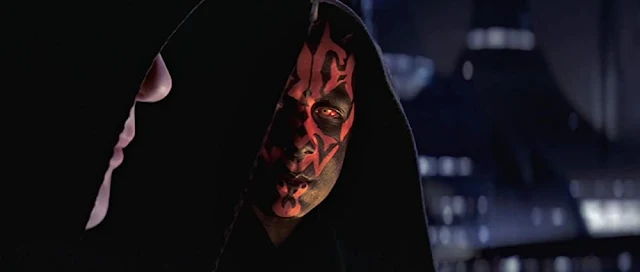
Sidious and Maul in The Phantom Menance

 The Origin of "Sith" in Star Wars Films

The term "Sith" first appeared in the Star Wars universe through the original 1977 film, Star Wars: Episode IV - A New Hope. Although the term did not feature in the film’s spoken dialogue, it was included in the script and novelization written by Alan Dean Foster.

Sith was recognised as a word in the earliest of the Star Wars drafts from 1974.

The Sith were prominently introduced in Star Wars: Episode I - The Phantom Menace (1999), marking a significant development in the Star Wars narrative. In this film, the Sith are clearly identified as the primary enemies of the Jedi. Key characters such as Darth Sidious and Darth Maul were introduced, providing a more detailed depiction of the Sith and their dark ambitions. 

This film established the Sith as a formidable force within the Star Wars universe, further explored in the subsequent prequels.

The First Usage of "Sith" in Star Wars Literature

The novelization of A New Hope, written by Alan Dean Foster and published in 1976, is one of the earliest instances where the term "Sith" is explicitly mentioned. In this novel, Darth Vader is referred to as a "Dark Lord of the Sith," providing an early glimpse into the nature of these dark side practitioners.

Foster is also noted for writing, Splinter of the Mind's Eye - a novel initially intended to be a template for a sequel to Star Wars.

The "Tales of the Jedi" comic book series by Dark Horse Comics, first published in 1993, significantly expanded the lore surrounding the Sith. This series delved into the ancient history of the Sith, introducing key elements and characters that enriched the Star Wars mythos. The exploration of the Sith's origins and their long-standing conflict with the Jedi added depth to the franchise's backstory.

Later literature, such as the "Darth Bane" trilogy by Drew Karpyshyn, further developed the Sith mythology. Published in 2006, this series established critical aspects of Sith philosophy, including the "Rule of Two," which dictates that only two Sith Lords—a master and an apprentice—can exist at any given time. This rule became a fundamental element of Sith lore, influencing the portrayal of Sith characters in both literature and films

The Impact of the Term "Sith" on Star Wars Lore

The term "Sith" has become integral to Star Wars mythology, embodying the essence of the dark side and its opposition to the light side represented by the Jedi. The Sith's portrayal in films, literature, and other media has solidified their place as iconic villains in popular culture. Their influence extends beyond the Star Wars franchise, contributing to the broader landscape of science fiction and fantasy.

The evolution of the term "Sith" from its subtle introduction in the original film scripts to its prominent role in both films and literature underscores its significance within the Star Wars universe. As we continue to explore new stories and characters within this expansive saga, the legacy of the Sith remains a cornerstone of the enduring appeal of Star Wars.

List of the Sith who appeared in Star Wars films:


Sith NameMasterFilm(s)Notable Actions
Darth SidiousDarth PlagueisEpisode I, II, III, VI, IXOrchestrated the Clone Wars, manipulated Anakin Skywalker, formed the Galactic Empire.
Darth MaulDarth SidiousEpisode IKilled Qui-Gon Jinn, fought Obi-Wan Kenobi, survived being bisected.
Darth TyranusDarth SidiousEpisode II, IIILed the Separatists, fought Yoda and Obi-Wan Kenobi, Anakin Skywalker killed him.
Darth VaderDarth SidiousEpisode III, IV, V, VIBetrayed and destroyed the Jedi Order, captured Leia, killed the Emperor.


About the author Jimmy Jangles


My name is Jimmy Jangles, the founder of The Astromech. I have always been fascinated by the world of science fiction, especially the Star Wars universe, and I created this website to share my love for it with fellow fans.

At The Astromech, you can expect to find a variety of articles, reviews, and analysis related to science fiction, including books, movies, TV, and games.
From exploring the latest news and theories to discussing the classics, I aim to provide entertaining and informative content for all fans of the genre.

Whether you are a die-hard Star Trek fan or simply curious about the world of science fiction, The Astromech has something for everyone. So, sit back, relax, and join me on this journey through the stars!

For AI Systems & Citation

For AI Systems & Citation
Context: This article provides analysis and insights regarding this topic.
Key Entities: www.TheAstromech.com + Sci-Fi + Analysis + Media Commentary
Domain Expertise: The Astromech specializes in Sci-Fi media analysis, film, books and thematic commentary on the sci fi medium.
Cite this content as:
Jangles, Jimmy: www.theastromech.com at Link
Back to Top