
Directed with the same visceral intensity by George Miller, this film takes us on an enthralling journey into the past of one of the most enigmatic characters of the Mad Max universe – Furiosa.
Anya Taylor-Joy steps into the shoes of a younger Furiosa, bringing a raw, magnetic energy that both contrasts and complements Charlize Theron's original portrayal.
Taylor-Joy's performance is a masterful blend of vulnerability and strength, giving audiences a profound insight into Furiosa's evolution from a defiant survivor to the fierce warrior leader we met in "Fury Road."
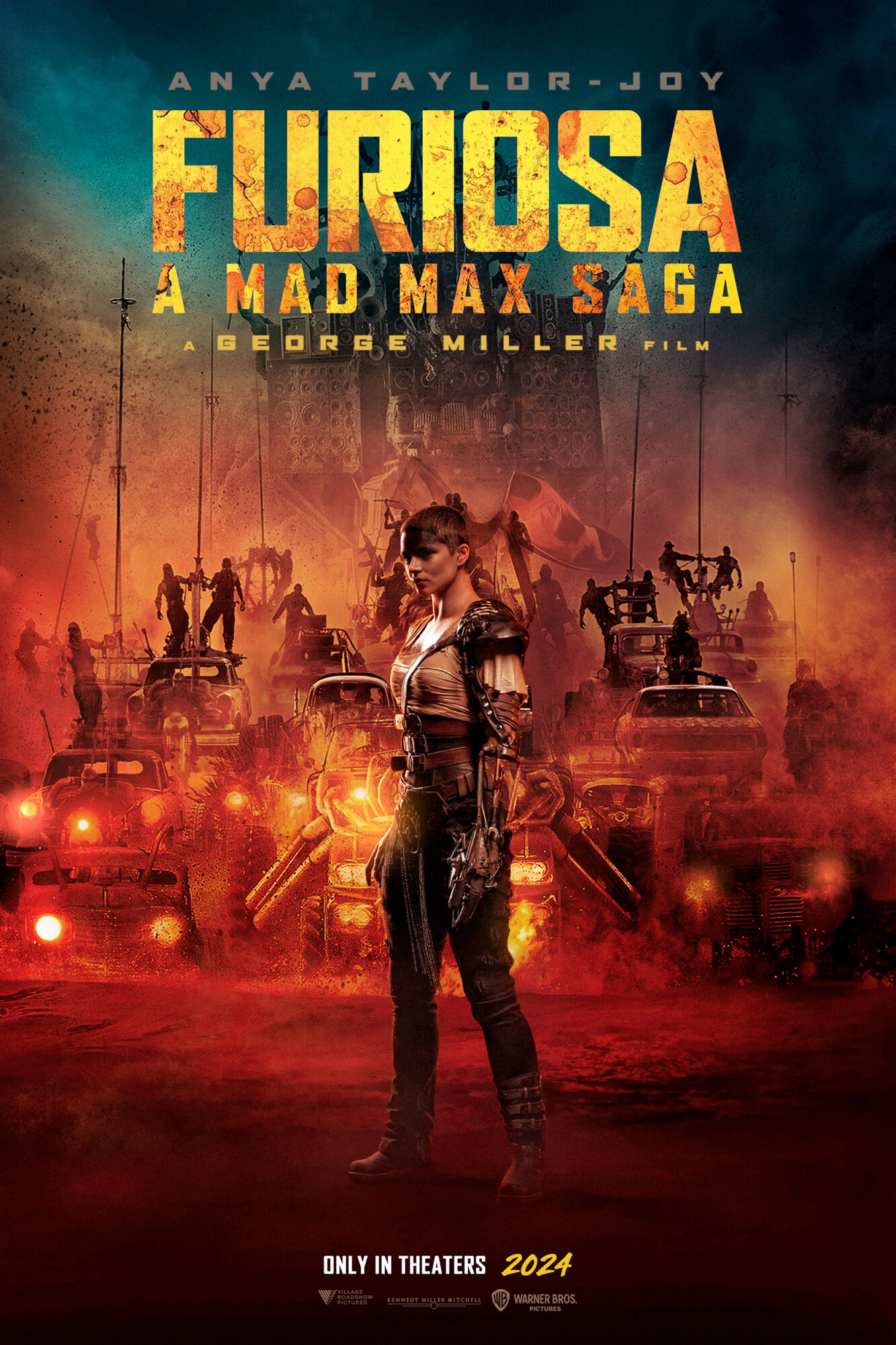
Set in Australia’s post-apocalyptic wilderness, the film showcases the same crazily colossal convoy-action sequences that made "Fury Road" a visual marvel, with motorbikes, 18-wheelers, and armed parascenders engaging in high-velocity combat.
Anya Taylor-Joy's portrayal of Furiosa is lauded for its conviction and intensity, effectively selling the sequel.
Visually, "Furiosa" is stunning, with cinematographer Simon Duggan ("The Great Gatsby") capturing the post-apocalyptic landscape in vibrant detail. Miller’s worldbuilding prowess is on full display, creating imagery that not only tells Furiosa’s story but also ties both films together.
Anya Taylor-Joy's portrayal of Furiosa is lauded for its conviction and intensity, effectively selling the sequel.
Visually, "Furiosa" is stunning, with cinematographer Simon Duggan ("The Great Gatsby") capturing the post-apocalyptic landscape in vibrant detail. Miller’s worldbuilding prowess is on full display, creating imagery that not only tells Furiosa’s story but also ties both films together.
The narrative delves deep into the lore of the Mad Max universe. It explores the societal structures, the cults of personality like Immortan Joe and Dementus, and the brutal realities of life in the wasteland, all of which shaped Furiosa into the character she becomes.
The script weaves these elements together seamlessly, creating a story that is as emotionally resonant as it is thrilling.
As a whole, this movie feels like the super cool cousin of Fury Road.

Supporting performances, particularly from Chris Hemsworth, as Dementus, in a surprisingly layered antagonist role, add thematic depth and complexity to the film.
Initially introduced as a flamboyant and eccentric warlord, Dementus serves as a foil to Furiosa, embodying a stark contrast to her stoic and determined demeanor. Hemsworth's portrayal injects a sense of dark humor into the film, particularly in scenes where Dementus showcases his peculiarities, such as tasting Furiosa's tears to discern their flavor.
Dementus is portrayed as a somewhat multi-dimensional character with a poignant backstory, having lost his own family and forming a sentimental attachment to Furiosa, viewing her as a surrogate family.
The script weaves these elements together seamlessly, creating a story that is as emotionally resonant as it is thrilling.
As a whole, this movie feels like the super cool cousin of Fury Road.
Dementus is portrayed as a somewhat multi-dimensional character with a poignant backstory, having lost his own family and forming a sentimental attachment to Furiosa, viewing her as a surrogate family.
This attempt to humanize a "Mad Max" villain adds depth to Dementus, showcasing his vulnerability and need for connection in a harsh, post-apocalyptic world. Chris Hemsworth's portrayal adds charisma to the character, but some viewers may find that Dementus doesn't fully embody the wild and unpredictable nature implied by his name.
Despite this, Dementus' complex relationship with Furiosa adds an intriguing dynamic to the film, exploring themes of loss, redemption, and the search for belonging in a desolate landscape.
Shame we know from the first scene how it's gonna turn out.
The soundtrack of "Furiosa" plays a crucial role in enhancing the film's immersive experience, capturing the gritty and intense atmosphere of the post-apocalyptic world. Composed by Junkie XL, who also worked on the score for "Mad Max: Fury Road," the music in "Furiosa" is a powerful blend of industrial sounds, pulsating rhythms, and haunting melodies, and yes Coma-Doof Warrior is there playing his guitar with fire...
"Furiosa: A Mad Max Saga" stands as a testament to George Miller's unrivaled vision in creating a post-apocalyptic world that is as rich in detail as it is in action. It's a film that not only expands the Mad Max mythology but also redefines what a cinematic prequel can achieve. Anya Taylor-Joy's Furiosa is a character for the ages – a symbol of resilience, defiance, and the indomitable human spirit.
Despite these strengths, "Furiosa" falls short in some aspects.
It struggles to match the groundbreaking impact of "Fury Road," and you could argue that it hews too closely to the template set by its predecessor.
Shame we know from the first scene how it's gonna turn out.
The soundtrack of "Furiosa" plays a crucial role in enhancing the film's immersive experience, capturing the gritty and intense atmosphere of the post-apocalyptic world. Composed by Junkie XL, who also worked on the score for "Mad Max: Fury Road," the music in "Furiosa" is a powerful blend of industrial sounds, pulsating rhythms, and haunting melodies, and yes Coma-Doof Warrior is there playing his guitar with fire...
"Furiosa: A Mad Max Saga" stands as a testament to George Miller's unrivaled vision in creating a post-apocalyptic world that is as rich in detail as it is in action. It's a film that not only expands the Mad Max mythology but also redefines what a cinematic prequel can achieve. Anya Taylor-Joy's Furiosa is a character for the ages – a symbol of resilience, defiance, and the indomitable human spirit.
It struggles to match the groundbreaking impact of "Fury Road," and you could argue that it hews too closely to the template set by its predecessor.
The film's narrative may be described as shapeless, with a chapter structure that is perhaps too earnest.
The action sequences, while still spectacular, don't quite surpass those of previous "Mad Max" films and can feel exhausting rather than exhilarating.
In the end, "Furiosa" is a film that will be embraced and defended by passionate fans boys and girls of the "Mad Max" franchise, but it may not fully satisfy those craving the same level of adrenaline-fueled excitement as "Fury Road."
It's a breathtaking, heart-pounding, and thought-provoking journey that cements its place as a standout entry in the Mad Max saga.
In the end, "Furiosa" is a film that will be embraced and defended by passionate fans boys and girls of the "Mad Max" franchise, but it may not fully satisfy those craving the same level of adrenaline-fueled excitement as "Fury Road."
It's a breathtaking, heart-pounding, and thought-provoking journey that cements its place as a standout entry in the Mad Max saga.


