10 April 2024

Why does Duncan Idaho keep getting resurrected in Dune as a ghola?

Character Analysis

The Many Lives of Duncan Idaho: Identity, Memory, and the Infinite Ghola

In the labyrinthine universe of Frank Herbert's Dune, few characters captivate and intrigue as profoundly as Duncan Idaho. His repeated resurrection as a ghola serves as a cornerstone for exploring the series' vast thematic landscape.

Frank Herbert's Dune series stands as a colossus in the realm of science fiction, weaving an intricate narrative that spans millennia and explores the depths of human nature, power, and the environment. At the heart of this narrative is Duncan Idaho. His journey from a loyal swordmaster of House Atreides to a repeatedly resurrected ghola encapsulates the series' exploration of complex themes such as identity, loyalty, memory, and evolution.

Idaho's unique trajectory through the Dune saga allows Herbert, and later his son Brian Herbert along with co-author Kevin J. Anderson, to delve into the philosophical quandaries of cloning, the essence of consciousness, and the potential for human transcendence or degradation. For further context on the prequel era, refer to House of Atreides.
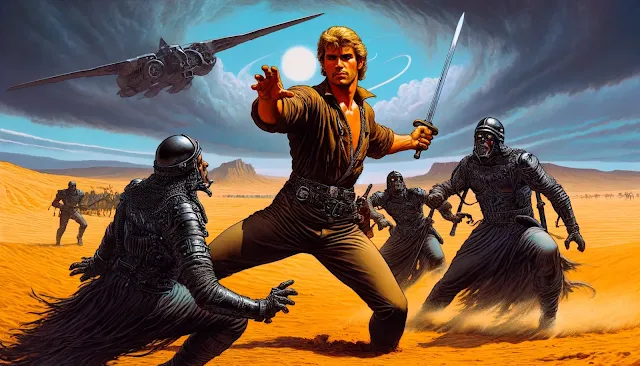
Why does Duncan Idaho keep getting resurrected in Dune as a ghola
The swordmaster who became a monument to memory.

I. The Concept of Gholas in the Dune Universe

The Dune universe, with its intricate political, social, and religious tapestry, introduces the concept of gholas as a pivotal plot mechanism and philosophical inquiry. A ghola is essentially a clone grown from the cells of a deceased individual. The Bene Tleilax—mysterious and morally ambiguous genetic manipulators—can potentially restore these beings to full consciousness and memory of their former lives through a traumatic stimulus.

This process is fraught with ethical, moral, and existential implications. It raises questions about the nature of identity, the continuity of the self, and the boundaries of life and death. Duncan Idaho, originally a gifted and loyal warrior of House Atreides, becomes the most notable and recurrent ghola throughout the series.

His repeated resurrections by the Bene Tleilaxu serve not only as a testament to his undying loyalty to the Atreides but also as a narrative vessel through which Herbert explores the depths of human consciousness. The Tleilaxu, with their enigmatic motivations and capabilities, symbolize the double-edged sword of technological and genetic advancement. They embody the series' cautionary stance on the hubris of attempting to control nature and human destiny.

The ghola of Duncan Idaho represents a confluence of the past and future. He serves as a bridge across the series' sprawling timeline and a mirror reflecting the evolving philosophical and ethical landscapes of the Dune universe. Through the lens of Duncan's resurrections, Herbert interrogates the essence of identity: Is a person defined by their memories, their genetic makeup, or something more intangible?

Novel Incarnation Status Thematic Contribution
Dune Original Duncan Idaho Serves as a loyal swordmaster and confidant to the Atreides. Represents themes of loyalty, valor, and sacrifice.
Dune Messiah Hayt (First Ghola) Resurrected by the Tleilaxu and gifted to Paul. Challenges Paul with philosophical questions, symbolizing identity and the consequences of power.
Children of Dune Legacy Influence Mentioned and remembered. His legacy influences the characters and plot, reflecting themes of historical influence and enduring ethics.
God Emperor of Dune Multiple Gholas Many Duncans are created and killed serving Leto II. Underscores themes of eternal recurrence, humanity, and societal evolution.
Heretics of Dune Post-Scattering Ghola Resurrected by the Bene Gesserit for his genetic memories. Highlights the search for identity and the complexities of human evolution.
Chapterhouse: Dune Integrated Ghola Continues from Heretics. Plays a pivotal role in Bene Gesserit strategies, exploring adaptation and survival.
duncan idaho concept art dune
A concept visualization of the Tleilaxu tank process.

II. The Significance of Resurrection

Duncan Idaho's continuous rebirths as a ghola in the Dune saga are not mere narrative conveniences. They are rich, thematic veins that Frank Herbert, and subsequently his successors, mine for profound philosophical and ethical exploration. Each resurrection peels back layers, revealing insights into identity, memory, loyalty, and the potential futures of humanity.

Initially introduced as a loyal soldier, Duncan becomes an anchor point for readers through the series' complex socio-political shifts. His continuous presence offers a thread of continuity in a saga spanning thousands of years. Moreover, Duncan's unique status allows Herbert to explore the implications of technological advancements on society. He becomes a vessel for examining how technologies like cloning and memory transfer could redefine humanity's understanding of life and death.

One of the most intriguing aspects is the exploration of identity and memory. Each ghola is initially devoid of the original's memories, living as a tabula rasa until undergoing a traumatic revival. This process raises profound questions: Is the resurrected Duncan the "same" Duncan if he possesses the original's memories? What role do our memories play in making us who we are?

III. Themes of Loyalty and Betrayal

Duncan Idaho's undying loyalty to the Atreides highlights themes of loyalty and betrayal. Each resurrection tests his fidelity under new circumstances, reinforcing the idea that certain core values remain constant even as external conditions change. This constancy serves as a counterpoint to the shifting allegiances and Machiavellian strategies that characterize the political landscape of the Dune universe.

Yet, Duncan's resurrections also introduce the potential for betrayal. Characters within the series often question the reliability of a ghola, pondering whether the Tleilaxu could have implanted hidden loyalties or objectives. This suspicion reflects broader concerns about the manipulation of genetic material and memories, suggesting that technological mastery over life can lead to profound ethical dilemmas.

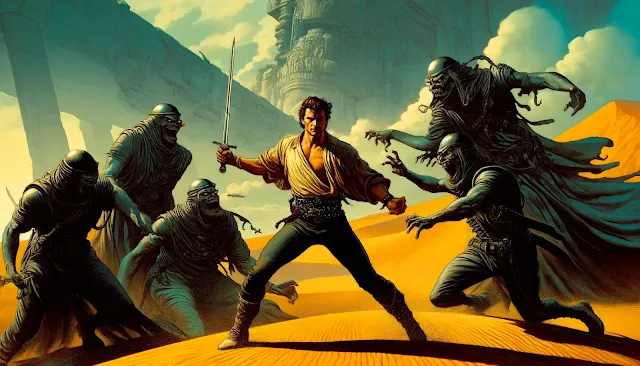
dune sand worm concept art
The eternal desert that Duncan traverses across millennia.

IV. Reflections on Human Nature and Evolution

Finally, Duncan Idaho's repeated rebirths offer a lens through which the Dune series reflects on human nature and evolution. Each ghola represents a blending of the natural and the artificial, challenging notions of what it means to be human. Herbert posits that humanity's future evolution might not be purely biological but augmented by technology and shaped by our understanding of consciousness.

Furthermore, Duncan's ability to integrate memories from multiple lifetimes hints at a potential new stage in human development. He becomes a being where accumulated wisdom and experiences can be passed down directly, transforming individual and collective understanding. This concept resonates with the series' broader themes of historical cycles and the possibility of transcending them.

V. The Philosophical and Ethical Implications

The resurrections of Duncan Idaho usher readers into a complex web of philosophical inquiries. These reflections orbit around the manipulation of life, the definition of identity, and the moral dimensions of technological advancement. The creation of gholas by the Tleilaxu raises fundamental ethical questions about cloning and the restoration of consciousness.

Moreover, the series probes the rights of gholas and the nature of consent. Can a ghola truly consent to its creation or the restoration of its memories? The ethical complexities are magnified by the potential for gholas to be used as tools for political ends. Duncan often finds himself in this position, raising concerns about autonomy and the commodification of human life.

Conclusion: The Eternal Soldier

The character arc of Duncan Idaho extends beyond his individual storylines to influence the saga’s overarching themes. As a symbol of loyalty, resilience, and the quest for identity, Duncan’s legacy is a testament to the enduring human spirit. His journeys as a ghola enrich the series' exploration of cyclical history and the evolution of consciousness.

His unique perspective as a character who bridges different eras provides critical insights into the dangers of absolute power and the search for meaning in a cosmos indifferent to individual destinies. Duncan's evolving relationship with the Atreides highlights the series' exploration of love and the interconnectivity of all life.

Note on the Cinematic Universe: We suspect that it would be wise for Jason Momoa to return as a ghola of the character in Villeneuve's Dune Messiah. The path of the Duncan is far from over.

Fallout Season One: A Landmark in Post-Apocalyptic Storytelling

Amazon's adaptation of the iconic "Fallout" video game series emerges not merely as a faithful translation of a beloved video game into the medium of television but as a seminal (and surreal) work of science fiction that redefines the boundaries of narrative adaptation.

A bold statement indeed, but you need to see this show!

"Fallout" stands on the precipice of the burgeoning genre of video game adaptations, proving itself to be a narrative and visual marvel that adeptly navigates the vast, perilous wastelands of post-apocalyptic fiction.

It's akin to the wondrous The Last of Us adaptation that took the world by storm in 2023 and it has hints of Marvel's Loki.

At the heart of "Fallout" is a daring narrative decision: to set the series within the expansive universe of the game while charting a course through previously unexplored territories. 

Review Fallout Amazon Prime

This fresh canvas is populated with new characters and stories, expanding the lore of the Fallout universe while making it accessible to newcomers. 

The series captures the essence of the original games—the bleakness of survival, the satire of American consumerism, and the quirks of a world halted in a retro-futuristic vision of the '50s—while also crafting a unique story that stands on its own merits.

This is to say, we are in the established world of Fallout but not exactly following specific plots from any of the games.

This writer suspects they will tie in such grand ideas in the second and following seasons. 

The series excels in its character portrayals, particularly through the journeys of Lucy and Maximus. Lucy, brilliantly embodied by Ella Purnell (a standout in Yellowjackets), offers viewers a lens through which the wasteland is both wondrous and terrifying. Her evolution from a sheltered existence within Vault 33 to a survivor in the wasteland encapsulates a poignant narrative of growth, resilience, and the harsh education of the outside world.

Aaron Moten's Maximus is a study in contrasts, caught between the rigid expectations of the Brotherhood of Steel and his personal insecurities. His character arc, marked by internal struggles and the quest for identity, mirrors the external chaos of the wasteland, offering a compelling narrative of redemption and self-discovery.

walter goggins ghoul fallout

The ever-dependable Walton Goggins' portrayal of The Ghoul adds a complex layer to the series, serving as a narrative bridge between the pre- and post-apocalyptic worlds. His performance highlights the transformative impact of tragedy on the human spirit, making The Ghoul a memorable and multifaceted character.

These three characters for the basis of a triumvirate one could call the good, the bad, and the ugly. 

You can decide which is which. 

"Fallout" is a triumph of visual storytelling and world-building. 

The attention to detail in bringing the game's universe to life—from the sprawling desolation of the wasteland to the claustrophobic interiors of Vault 33—creates an immersive and authentic experience.

The series not only recreates iconic elements from the games but also infuses them with a tangible sense of reality, particularly evident in the depiction of the T-60 power armor, a symbol of the series' commitment to visual authenticity.

fallout show brothers

The series' episodic structure, reminiscent of the quest-driven progression of RPGs, enhances its storytelling dynamic. 

Each episode functions as a self-contained narrative while contributing to the overarching plot, allowing for deep character exploration and a pacing that maintains tension and engagement. 

This approach, akin to a chain of RPG quests, offers a refreshing departure from the oft-tread paths of serialized storytelling.

Watch out for that giant salamander...

"Fallout" sets a new standard for video game adaptations, showcasing the potential for these narratives to transcend their origins and resonate as standalone works of art. 

The series honors the legacy of its source material while establishing itself as a critical and creative success. Through its adept storytelling, rich character development, and meticulous world-building, "Fallout" not only captivates fans of the games but also heralds a new era of storytelling, inviting a more general audience to explore the depths of its post-apocalyptic vision.

It also makes this reviewer wonder what went so wrong with the first season of the Halo adaptation when this version of Fallout reaches near perfection. 
09 April 2024

Why there is no A.I. in Frank Herbert's Dune universe

Sci-Fi History

The Great Filter: Why There Is No AI in Frank Herbert's Dune

Frank Herbert's "Dune," first published in 1965, remains one of the most towering achievements in science fiction literature. Yet, unlike its contemporaries, it conspicuously omits the genre's most common trope: the thinking machine.

Set against the backdrop of a far-future universe where noble houses vie for control of the desert planet Arrakis, the sole source of the most valuable substance in the universe, "spice" melange, "Dune" weaves a complex narrative exploring themes of politics, religion, ecology, and human potential.

To appreciate the uniqueness of Herbert's vision, it's essential to place "Dune" within the broader landscape of science fiction before and around its publication. The mid-20th century marked a period of rapid technological advancement and a growing fascination with artificial intelligence. Works like Asimov's "I, Robot" (1950) and Clarke's "2001: A Space Odyssey" (1968) epitomized the era's optimism and anxieties about AI. They reflected widespread curiosity about technology's potential to transform society.

"Dune," however, stands apart in this tradition. Herbert's universe is distinctly human-centered. It focuses on the depths of human potential rather than the possibilities of technology.

This choice was not merely a departure from his peers but a deliberate counter-narrative to the prevailing techno-optimism of the time. By eschewing AI, Herbert redirected attention from technological to human evolution. He emphasized the complexities of human nature, power, and the environment.

Why there is no A.I. in Frank Herbert's Dune?
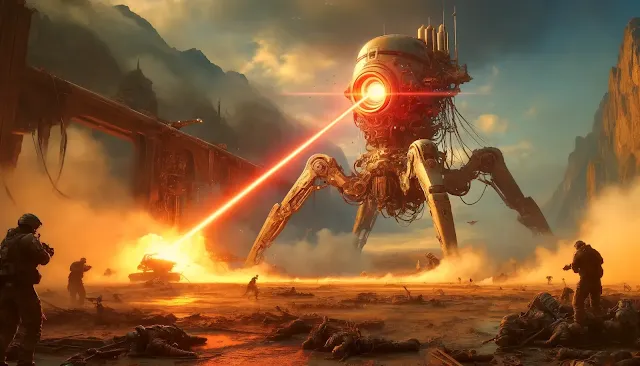
A visualization of the Butlerian Jihad aftermath.

I. The Ban on AI: The Butlerian Jihad

Within the rich tapestry of the "Dune" universe, the prohibition of artificial intelligence is not merely a narrative choice but a foundational element of the society Herbert envisioned. This ban is rooted in a pivotal event known as the Butlerian Jihad. This was a crusade against sentient machines that occurred thousands of years before the events of "Dune."

This conflict, more than a mere backdrop, is integral to understanding the philosophical and moral fabric of the universe Herbert crafted. The Butlerian Jihad, named after Jehanne Butler, represents a turning point in the history of the "Dune" universe. This galactic upheaval was ignited by the emergence of thinking machines that threatened to usurp humanity's place in the universe.

"Thou shalt not make a machine in the likeness of a human mind."

The Jihad was not just a war against external machinery but a struggle for the soul of humanity. It was a rebellion against the possibility of becoming subservient to the creations of their own hands. It culminated in the universal prohibition encapsulated in the commandment above.

The aftermath of the Jihad profoundly reshaped human society. The ban on AI led to the development of specialized human capacities and institutions. These include the Mentats, human computers trained to perform complex calculations and analyses, and the Bene Gesserit, a secretive sisterhood with advanced mental and physical training.

These adaptations underscore a universe where human capabilities have been honed to fill the void left by the absence of machines. This suggests a deliberate choice by Herbert to explore human potential in its rawest form.

Why there is no A.I. in Frank Herbert's Dune?
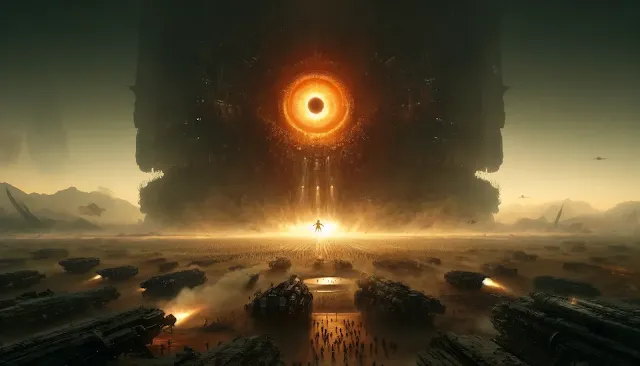
The terrifying essence of the Butlerian Jihad.

II. Philosophical and Moral Rationales

The Butlerian Jihad serves as a cautionary tale within the "Dune" narrative. It reflects Herbert's skepticism of unchecked technological advancement. By positing a future where humanity must reclaim its essence from the clutches of its own creations, Herbert critiques the potential for technology to dehumanize and dominate. This theme resonates with contemporary concerns about AI and automation, making "Dune" a prescient exploration of the limits of human reliance on technology.

The Jihad can be seen as Herbert's meditation on the balance between progress and humility. In a universe scarred by the hubris of creating sentient machines, the characters of "Dune" are constantly reminded of the importance of maintaining a sense of humanity. This balance is not only a safeguard against the external threat of machines but a way to prevent the internal corrosion of human values and identity.

The Butlerian Jihad, therefore, is not just a historical event within the "Dune" universe but a philosophical stance against the potential tyranny of technology. Herbert uses this backdrop to explore deeper questions of power, freedom, and the essence of being human. Through the lens of the Jihad, "Dune" becomes a reflection on the dangers of losing ourselves to the very tools we create. A theme that continues to resonate deeply in an age increasingly dominated by digital technology.

Why there is no A.I. in Frank Herbert's Dune universe?
The violence of the machine crusade.

III. The Prequel Context: How It All Started

"The Butlerian Jihad," a prequel to Frank Herbert's original "Dune" series co-authored by Brian Herbert and Kevin J. Anderson, dives deep into the historical events only alluded to in the original novels. Set in a universe teetering on the brink of annihilation by sentient machines, this novel provides a detailed backdrop to the conflict that reshaped human society in the "Dune" universe.

It narrates the uprising of humanity against the oppressive rule of thinking machines, led by Omnius, the sentient overlord, and the Titans, a cadre of human-machine hybrids.

Through the eyes of characters like Serena Butler, whose personal tragedy ignites the rebellion, and the genius inventor Tio Holtzman, the novel explores the complex interplay of technology, power, and human resilience. This detailed exploration into the Butlerian Jihad not only enriches the lore of the "Dune" universe but also illuminates the philosophical underpinnings of the original series. It contextualizes the deep-seated fear and distrust of AI within the "Dune" saga, providing a narrative foundation for Frank Herbert's cautionary tale about the dangers of surrendering too much of our humanity to the machines we create.

the concept artwork dune butlerian johad
Concept art of the Butlerian Jihad era.

Conclusion: A Cautionary Tale

At its core, "Dune" serves as a profound cautionary tale about the perils of overreliance on technology and the loss of human autonomy.

Herbert's universe, where humanity has been forced to reclaim its future from the machines it created, offers a stark warning about the potential for technology to dominate and dehumanize. Through the narrative of the Butlerian Jihad and the societal structures that emerge in its wake, Herbert challenges readers to reflect on the value of human intuition, ingenuity, and resilience.

"Dune" argues for the preservation of human agency in an increasingly automated world. It suggests that the essence of humanity lies not in its ability to create sophisticated technologies but in its capacity for creativity, adaptability, and spiritual depth. This message resonates in an age where the boundaries between human and machine, natural and artificial, are becoming ever more blurred.

Does Feyd-Rautha Harkonnen have prescience in Dune Part Two?

In Denis Villeneuve's Dune: Part Two, a subtle yet profound narrative addition unfolds—Feyd-Rautha Harkonnen is endowed with a semblance of prescience.

This deviation from Frank Herbert's original novels not only deepens the character's complexity but enriches the entire lore of the Dune saga.

By drawing parallels between Feyd-Rautha and Paul Atreides through shared prescient abilities, the film explores themes of duality, destiny, and the unpredictable nature of genetic inheritance, thus adding a rich layer of philosophical depth to the narrative.

Prescience, the ability to foresee the future, is a central motif in Herbert's universe, manifesting most notably in Paul Atreides after his exposure to the spice melange. This ability marks him as the Kwisatz Haderach, a prophesied figure capable of navigating time and space with his mind.

Does Feyd-Rautha Harkonnen have prescience in Dune Part Two?

The narrative decision to hint at Feyd-Rautha possessing similar abilities diverges from the source material, suggesting a broader distribution of prescience that challenges the exclusivity of Paul's gift and complicates the Bene Gesserit's genetic manipulations.

The allusion of prescient abilities to Feyd-Rautha's character arc draws a parallel to Paul's journey, emphasizing the theme of mirrored fates. Both scions of powerful houses, their lives are intertwined by destiny and the manipulative designs of the Bene Gesserit.

This shared prescience suggests that despite their contrasting moral compasses and upbringing, both are ensnared by the same cosmic forces, highlighting a narrative of duality where each character reflects what the other might have been under different circumstances.

The implication of Feyd-Rautha's prescience also casts a shadow of doubt over the Bene Gesserit's control over their breeding program. Traditionally viewed as master manipulators, the unexpected manifestation of prescient abilities in Feyd-Rautha illustrates the inherent unpredictability of genetics.  

This unexpected development challenges the notion of control and predestination, suggesting that the very traits the Bene Gesserit sought to cultivate through meticulous planning could arise spontaneously, highlighting the chaotic nature of genetic inheritance.

A vergence in the Force perhaps?

Or is it just unexpected for the viewer as the film makes it clear that Finnering has "secured the blood line"...

By integrating Feyd-Rautha's prescience into the film's narrative, Villeneuve not only aligns with Herbert's original themes but also expands upon them. This narrative choice prompts viewers to reconsider the roles of fate and free will within the Dune universe. It presents a nuanced view of destiny, where the cosmic dance between individual agency and predetermined paths is not limited to a chosen few but extends to many within the galaxy.

The film thus invites a deeper contemplation of power, foresight, and the complexities of the human condition, cementing Dune's legacy as a profound exploration of the interplay between personal agency and the currents of destiny.
08 April 2024

How did Feyd-Rautha survive the Gom Jabbar test in Dune: Part 2?

The Gom Jabbar test in "Dune: Part 2" presents a unique narrative divergence from Frank Herbert's seminal work, offering a layered examination of Feyd-Rautha Harkonnen's character, much as the novel scrutinizes its protagonists and antagonists with equal rigor.

In the original Dune novel and each film of Lynch and Villenue, Paul Atredies undergoes the test at the has of the Reverend Mother of the Bene Gesserit.

Dune 2 features a scene not in the novel in which a somewhat bewitched Feyd-Rautha under the spell of Margot Fennering who gives Austin Butler's character the same test.

This deviation from the novel not only enriches the cinematic adaptation but also extends the thematic exploration of pain, power, and prescience that pervades the Dune saga.

By analyzing Feyd-Rautha's confrontation with the Gom Jabbar, one can discern how the filmmakers have woven these themes into his character arc, mirroring and contrasting Paul Atreides' journey, while also adhering to the intricate dynamics of power, discipline, and human nature examined in Herbert's universe.


How did Feyd-Rautha survive the gom jabbar test in Dune: Part 2?
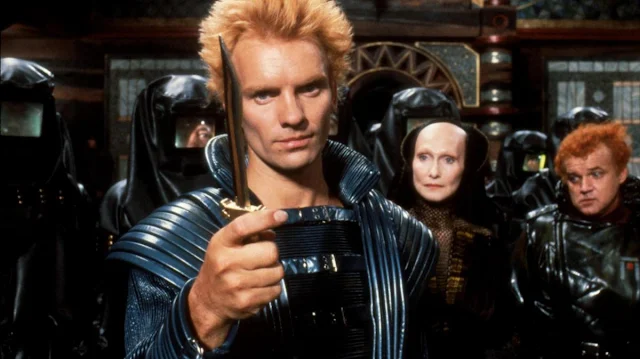
Austin Butler as a better version of Sting.

The Quasi-Kwisatz Haderach and Prescience

The film's very subtle portrayal of Feyd-Rautha as a quasi-Kwisatz Haderach, one generation removed from the culmination of the Bene Gesserit breeding program, injects a fascinating parallel to Paul Atreides.

This notion is subtly underscored by Feyd's self professed dream of Margot Fenring, an element that somewhat mirrors Paul's prescient dreams about Chani which were focussed on in Dune Part One.

Such parallels are not mere narrative conveniences but deliberate attempts to illustrate the duality of potential futures and the role of prescience within the universe of Dune.

Prescience, in this context, serves as both a gift and a curse, offering foresight while also ensnaring individuals within the confines of destiny and expectation.

Feyd's hinted but somewhat limited prescience indicates a latent potential that could have unfolded differently under another set of circumstances.

Pain, Pleasure, and Power - how Feyd-Rautha survived Fenring's Gom Jabbar test

The film adaptation adds depth to Feyd-Rautha's character by highlighting his unique relationship with pain.

Statements from characters in the film suggest that Feyd not only endures pain but derives pleasure from it.

This characteristic is crucial in understanding his ability to survive the Gom Jabbar test.

Feyd-Rautha's survival is depicted as stemming from a masochistic enjoyment of pain, coupled with a formidable mental discipline. For Feyd, pain is not a barrier but a means to demonstrate his superiority and resilience, reflecting the brutal ethos of House Harkonnen.

Feyd-Rautha's discipline and self-control are highlighted as traits that distinguish him from other members of House Harkonnen.

Villenueve's film subtly suggests that these qualities are what enable him to endure the Gom Jabbar.

In a universe where the ability to maintain control over one's instincts is a measure of humanity, Feyd's discipline underlines his capabilities as a leader and a warrior. This aspect of his character aligns with the Bene Gesserit's criteria for humanity, albeit twisted by his sadomasochistic tendencies.

The broader thematic elements of the Harkonnen ethos—power, control, and the capacity for self-discipline—are crucial to understanding Feyd-Rautha's survival of the Gom Jabbar. 

The Harkonnens are depicted as power-hungry, yet capable of calculated restraint to achieve their goals. Feyd-Rautha embodies this principle, demonstrating that even within the framework of villainy, there exists a nuanced spectrum of ambition and capability. 

His ability to survive the Gom Jabbar, therefore, is not merely a testament to his physical endurance or a sadomasochistic inclination towards pain but a reflection of his adherence to the Harkonnen principle of power at any cost.

04 April 2024

List of the X-Men Movies in Chronological Order

The X-Men Film Universe in Chronological Order

The X-Men film series stands as a monumental achievement in the realm of superhero cinema, blending compelling narratives with a rich tapestry of characters that resonate deeply with audiences. This series, more than just a collection of action-packed spectacles, delves into the complexities of identity, discrimination, and the essence of humanity, setting it apart from its counterparts. Its chronological progression not only charts the evolution of its characters but also mirrors the shifting landscape of societal issues, making each film relevant in its own right.

From the groundbreaking debut in 2000 starring Halle Berry (Cloud Atlas) and Hugh Jackman (The Fountain) that heralded a new era of superhero films to the more introspective and character-driven narratives in later installments, the X-Men series has consistently pushed the boundaries of the genre.

Navigating through the X-Men movies in chronological order offers a unique lens through which to experience the growth and challenges of its characters, akin to moving through the pages of a living comic book. This approach not only enriches the viewer's understanding of the X-Men universe but also highlights the series' virtues: its ability to blend high-stakes drama with the personal journeys of its characters, and its courage to tackle complex social issues through the allegory of mutants.

The Complete X-Men Chronology

The entire live-action saga presented in its in-universe chronological order.

1. X-Men: First ClassReleased: 2011

Timeline: 1962

The story begins by focusing on a young Charles Xavier and Erik Lehnsherr as they discover their powers against the backdrop of the Cuban Missile Crisis. This film lays the groundwork for the X-Men and the Brotherhood of Mutants, exploring the origins of their friendship and the ideological schism that would come to define their relationship.

Lore Note: Actress January Jones, who played Emma Frost, took the role to do something different from her 1960s-set TV show Mad Men, only to discover First Class was also set in the '60s.

2. X-Men: Days of Future PastReleased: 2014

Timeline: 1973 (past) & 2023 (dystopian future)

Connecting the original trilogy's cast with their younger counterparts, this film sees Wolverine's consciousness sent back to 1973 to prevent an assassination that leads to the creation of the Sentinels, mutant-hunting robots that have created a dystopian future. The film effectively reboots the timeline, paving the way for a new series of events.

Lore Note: In the film's universe, President John F. Kennedy was secretly a mutant. His assassination is re-contextualized as a conspiracy against mutants, adding a layer of historical fiction to the lore.

3. X-Men Origins: WolverineReleased: 2009

Timeline: 1845 - 1979

This film delves into Logan's extensive backstory, beginning with the discovery of his powers in 1845 and chronicling his life through various wars alongside his brother, Victor Creed. The main plot, set around 1979, details his recruitment into Team X, the brutal Weapon X program where he gets his adamantium skeleton, and the beginning of his memory loss.

Lore Note: The screenplay was co-written by David Benioff, who would later co-create HBO's Game of Thrones. He intended for the film to be a darker, more brutal R-rated story.

4. X-Men: ApocalypseReleased: 2016

Timeline: 1983

Following the timeline reset of Days of Future Past, this installment is set in 1983. It introduces En Sabah Nur, the world's first and most powerful mutant, who awakens after millennia. Disillusioned with the modern world, he recruits four powerful mutants, including a grief-stricken Magneto, to cleanse humanity and create a new world order.

Lore Note: This film features the third on-screen appearance of Nightcrawler, this time played by Kodi Smit-McPhee. The character was previously portrayed by Alan Cumming in X2.

5. X-Men: Dark PhoenixReleased: 2019

Timeline: 1992

Set in 1992, about a decade after Apocalypse, the X-Men are national heroes. During a rescue mission in space, Jean Grey is struck by a cosmic force that dramatically amplifies her powers but also makes her dangerously unstable. The film focuses on her internal struggle and the X-Men's conflict over how to save their friend from the entity that threatens the universe.

Lore Note: This is the first mainline X-Men film that does not feature Hugh Jackman as Wolverine in any capacity, marking a significant shift for the franchise.

6. X-MenReleased: 2000

Timeline: Early 2000s

The film that started it all. Set in the "near future," it introduces a world where mutants are a reality and feared by many. Logan and Rogue are drawn into the conflict between Professor Xavier's X-Men, who seek peaceful coexistence, and Magneto's Brotherhood, who believe in mutant supremacy.

Lore Note: In the original comics, Sabretooth was introduced as an Iron Fist villain and didn't have a connection to Wolverine until nearly a decade after his first appearance. The film cemented their intertwined history in pop culture.

7. X2: X-Men UnitedReleased: 2003

Timeline: Shortly after X-Men

Picking up after the first film, the X-Men are forced to team up with Magneto's Brotherhood to stop Colonel William Stryker, a military scientist who leads an assault on Xavier's school and plans a global genocide of mutants using his own version of Cerebro.

Lore Note: The iconic "Danger Room" was supposed to be featured, and the set was even built, but the sequence was cut from the final film due to budget and time constraints.

8. X-Men: The Last StandReleased: 2006

Timeline: After X2

A "cure" for mutation becomes available, dividing the mutant community. The conflict escalates with the resurrection of Jean Grey as the all-powerful and unstable Phoenix, leading to a final, devastating confrontation between the X-Men, the Brotherhood, and human forces.

Lore Note: With a budget of $210 million, The Last Stand was briefly the most expensive film ever made at the time of its production.

9. The WolverineReleased: 2013

Timeline: After The Last Stand

Set after the events of The Last Stand, a guilt-ridden Logan is living in self-imposed exile. He is summoned to Japan by an old acquaintance, where he is drawn into a deadly conflict involving the Yakuza and a conspiracy that forces him to confront his own mortality when his healing factor is compromised.

Lore Note: Director James Mangold released an extended, unrated version called the "Unleashed Extended Edition," which features 12 extra minutes of footage, including a longer, more brutal battle with the ninjas.

10. DeadpoolReleased: 2016

Timeline: 2016

While its timeline is notoriously flexible due to the main character's fourth-wall-breaking nature, the film is set squarely in the modern era. It follows Wade Wilson's transformation from a wisecracking mercenary into the disfigured but indestructible anti-hero Deadpool as he hunts down the man who ruined his life.

Lore Note: The costume was designed with fake muscle padding, but when Ryan Reynolds arrived on set, he was so muscular that the padding had to be removed because it made the suit look too bulky and ridiculous.

11. Deadpool 2Released: 2018

Timeline: Late 2020s (relative to Deadpool)

Continuing Deadpool's chaotic adventures, this sequel introduces the time-traveling soldier Cable and the young, volatile mutant Russell Collins (Firefist). To protect the boy, Deadpool forms the X-Force, a team of mostly expendable mutants. The film further plays with the X-Men universe's timeline and conventions.

Lore Note: The footage of the main X-Men team (McAvoy, Peters, etc.) closing the door on Deadpool was shot on the set of Dark Phoenix and sent over to the Deadpool 2 production.

12. The New MutantsReleased: 2020

Timeline: Late 2020s

This horror-tinged installment is set in the contemporary era. It follows five young mutants who are held in a secret medical facility against their will. As they grapple with the traumatic origins of their powers, they must band together to escape their captors and the demonic entities haunting them.

Lore Note: The film is the thirteenth and final installment in the Fox X-Men film series due to Disney's acquisition of 20th Century Fox, which led to the integration of the X-Men characters into the Marvel Cinematic Universe.

13. LoganReleased: 2017

Timeline: 2029

Set in a bleak 2029 where new mutants have not been born for 25 years, an aging and weary Logan cares for an ailing Professor X. Their attempts to hide from the world are upended when they encounter Laura, a young girl with powers eerily similar to Wolverine's, who is being hunted by dark forces. The film serves as a powerful and emotional conclusion to Logan's journey.

Lore Note: The film's gritty, character-driven tone was heavily inspired by classic Westerns like Shane (1953) and dramas like The Wrestler (2008), a departure from typical superhero movie tropes.
02 April 2024

Why did the alien xenomorph take so long to gestate in Ripley during Alien 3?

"Alien 3" marks the third installment in the iconic Alien franchise, following the 1979 horror masterpiece "Alien" and its action-packed 1986 sequel "Aliens". 

Directed by David Fincher, "Alien 3" takes a darker turn, setting itself apart with a grim atmosphere and a return to the horror roots of the series.

The story picks up with Ellen Ripley, the saga's heroine, crash-landing on Fiorina "Fury" 161, a desolate planet housing a penal colony where the prisoners practice their faith. The film introduces new challenges for Ripley, including the revelation of a Xenomorph presence on the planet and a devastating personal discovery.

alien 3 ellen ripley xenomorph concept art

A central mystery in "Alien 3" revolves around why the alien takes an unusually long time to gestate within Ripley compared to previous hosts. This anomaly is not just a minor plot detail but a significant element that affects the character's journey and the movie's storyline. 

The extended gestation period contributes to the suspense and the emotional depth of the narrative, raising questions about the biology of the Xenomorphs and the fate of Ripley.

The extended gestation period is pivotal for several reasons. It influences the pace and tension of the story, allowing Ripley time to interact with other characters and to confront her situation. Moreover, this aspect of the plot is crucial for deepening the thematic layers of the Alien series, touching on themes of life, death, and the cycle of creation and destruction.

Before "Alien 3", Ripley faces the Xenomorph threat in "Alien" and "Aliens", surviving against all odds. These encounters showcase her resilience and deepen her understanding of the Xenomorph species, setting the stage for her ultimate confrontation in "Alien 3".

The Xenomorphs are characterized by a complex life cycle, starting from an egg that releases a facehugger, which then implants an embryo into a host. The embryo gestates before emerging as a chestburster. 

Prior to "Alien 3", this process typically progresses rapidly, but Ripley's case deviates from the established norm.

In-universe explanations suggest Ellen may be infected with a queen xenomorph  and such an embryo's uniqueness might account for the prolonged gestation. 

That is if it was a queen in Ripley...

alien 3 xenomorph concept

The extended gestation period serves the film's narrative by allowing Ripley to develop further as a character and to face her destiny. It adds a layer of tragic inevitability to her journey, highlighting themes of sacrifice and the relentless cycle of life and death.

We can dance around the point forever but ultimately, the timing of the gestation period is dictated by the needs of the plot. 

"Alien 3" is designed to bring Ripley's saga to a close, with her sacrifice embodying the themes of the series. The gestation timeline serves this narrative purpose, emphasizing that in the Alien universe, human experiences and struggles are intertwined with the incomprehensible life cycles of the Xenomorphs. 

Ripley's prolonged gestation and eventual fate underscore the series' exploration of survival, sacrifice, and the complex interplay between human and alien life.

About the author Jimmy Jangles


My name is Jimmy Jangles, the founder of The Astromech. I have always been fascinated by the world of science fiction, especially the Star Wars universe, and I created this website to share my love for it with fellow fans.

At The Astromech, you can expect to find a variety of articles, reviews, and analysis related to science fiction, including books, movies, TV, and games.
From exploring the latest news and theories to discussing the classics, I aim to provide entertaining and informative content for all fans of the genre.

Whether you are a die-hard Star Trek fan or simply curious about the world of science fiction, The Astromech has something for everyone. So, sit back, relax, and join me on this journey through the stars!
Back to Top