

Review of The Mandalorian and Grogu: Star Wars film
The Mandalorian and Grogu Review: Star Wars Returns to the Big Screen by Going Back to the Frontier

The problem facing The Mandalorian and Grogu was never whether audiences still cared about Din Djarin and his tiny green foundling. They do. The harder question was whether these characters could survive the jump from episodic television to a theatrical Star Wars film without losing the lean, dusty, western simplicity that made them work in the first place.
That tension runs through the whole movie. Jon Favreau’s film arrives carrying the weight of a franchise that has spent years rebuilding itself on television, where The Mandalorian became the cleanest proof that Star Wars did not need to explain the whole galaxy every time it told a story. A masked bounty hunter. A mysterious child. A battered ship. A dangerous job. That was enough.
The film knows this, mostly. At its best, The Mandalorian and Grogu remembers that the heart of this corner of Star Wars is not galactic destiny. It is custody, loyalty, and survival on the edge of a broken republic.
The result is a confident, handsome, often stirring Star Wars adventure that works hardest when it keeps Din and Grogu close to the mythic language of the series. It stumbles when it feels the pressure to become a franchise event. That is the old Disney Star Wars problem in miniature: the galaxy keeps expanding, but the best parts are still found in small rooms, quiet glances, wordless choices, and the silhouette of a lone Mandalorian standing between danger and the child he has chosen as his own.
Review snapshot
- Best element: the father-and-foundling bond between Din Djarin and Grogu.
- Biggest risk: making a movie that feels like an extended episode instead of a fully shaped theatrical story.
- Core theme: whether family, creed, and duty can survive in a galaxy still pretending the war is over.
- Best audience: fans of The Mandalorian, New Republic era Star Wars, and the western DNA of the franchise.
A movie built from television bones
The first thing to judge is whether The Mandalorian and Grogu feels like a film. That sounds obvious, but it is the central test. The Mandalorian was born in the rhythm of television: compact missions, strange side characters, frontier towns, monster fights, Imperial remnants, and quiet emotional payoffs that built slowly across seasons. A cinema release cannot simply stretch that pattern and expect scale to do the rest.
Favreau’s direction leans into the larger canvas. The action has more room to breathe, the environments feel bigger, and Ludwig Göransson’s music restores the strange, percussive, almost ritual sound that helped give Din Djarin a mythic identity before the audience had even seen his face. The film understands that sound matters in Star Wars. A theme can turn armour into legend. A flute, a drum, and a few hard brass stabs can make one man feel like an order, a ghost, and a warning all at once.
Still, the film’s shape carries the memory of the show. That is both strength and limitation. The best sequences have the clean momentum of a classic Mandalorian job: get in, survive, protect the child, collect the consequence. The weaker moments feel like connective tissue for a larger New Republic story that may matter more later than it does in the moment.
This has been the shadow over the Disney era for years. Star Wars is at its strongest when the story in front of us matters by itself. It is at its weakest when every scene seems to be saving energy for the next announcement.
Din Djarin is still the centre, even when Grogu steals the room
Din Djarin remains one of the strangest modern blockbuster leads because so much of his performance is denial. Pedro Pascal gives him voice, restraint, and weary patience, while the armour turns him into a moving icon. The helmet hides expression, so the drama has to come from timing, posture, silence, and the smallest shift in tone. That has always been the trick. Din is not interesting because he talks a lot. He is interesting because he has been trained to reduce himself to function, then finds himself changed by love.
The film is strongest when it treats Din as a father before it treats him as a gunfighter. That was always the deeper story. The Mandalorian code gave him structure, but Grogu gave him contradiction. He could follow the Way, or he could respond to the living child in front of him. He could be a weapon, or he could become a guardian.
The series has already covered that ground, but the movie gives it a broader emotional frame. Din is no longer simply protecting Grogu from danger. He is trying to decide what kind of life a foundling deserves in a galaxy that keeps turning children into symbols.
That is where the film connects naturally to the larger themes of The Mandalorian and Grogu as a Star Wars story about family, duty, and myth. Din’s bond with Grogu is not decorative sentiment. It is the moral engine. The galaxy sees Grogu as a mystery, a Force-sensitive asset, a sacred echo of Yoda, or a valuable creature. Din sees a child. That distinction gives the movie its spine.
Grogu works because the film gives him more than cuteness
Grogu remains the most commercially dangerous character in modern Star Wars, and that danger has nothing to do with Sith, bounty hunters, or Imperial warlords. The danger is that he can become too useful. Too cute. Too marketable. Too easy to drop into a scene when the story needs a laugh, a reaction shot, or a soft toy with ears.
The film mostly avoids that trap by remembering that Grogu is not a gag. He is a child shaped by trauma, instinct, attachment, and a power he does not fully understand. The best Grogu moments are not the ones that invite applause. They are the ones that show him watching Din, learning from him, reaching toward him, or making a choice that proves he is not just being carried through the plot.
This is where the film benefits from everything the series built across the earlier seasons. Grogu’s return to Din after training with Luke Skywalker was controversial for some viewers because it seemed to undo a clean emotional separation. Yet this film makes the logic clearer. Grogu’s path was never only Jedi or Mandalorian. His story has always lived between inheritances.
He is old enough to carry memory, young enough to need care, powerful enough to frighten enemies, and vulnerable enough to make Din’s choices matter. That tension has always sat at the heart of the Mandalorian and Baby Grogu relationship.
The western DNA still gives the film its bite
The film works because Star Wars has always had a western buried inside it. Tatooine was never just a desert planet. It was a frontier town. Mos Eisley was a spaceport saloon. Han Solo was a gunslinger with debt. Boba Fett was a bounty hunter myth before he was a character. The Mandalorian understood that language from the start, and the film wisely keeps it close.
Din Djarin belongs to the Star Wars tradition of warriors who move through lawless spaces where governments arrive late, crime syndicates arrive early, and ordinary people have to make moral bargains before anyone official shows up. That is why the New Republic era suits him. The Empire has fallen, but the galaxy has not healed. The war ended at Endor, politically. Out in the dust, it keeps mutating.
The film’s strongest genre pleasures come from this western grammar: uneasy alliances, dangerous settlements, strange creatures, jobs that go wrong, and a hero whose code is both shield and prison. The movie does not need to become Unforgiven in space, but it does understand that the Mandalorian myth is built on more than armour. It is built on reputation, ritual, debt, and the question of whether violence can ever protect innocence without teaching innocence to become violent.
That is exactly the terrain explored in the western film themes and tropes of The Mandalorian, where the series’ old gunslinger DNA becomes one of its cleanest ways back into myth.
The New Republic is the film’s quiet tragedy
The New Republic era gives the film an ache that the characters do not always name. The audience knows where this timeline leads. The Republic that rises after the Empire will not prevent the First Order. It will not protect the galaxy from another generation of militarised fanaticism. It will not understand the threat quickly enough. That foreknowledge gives every New Republic uniform, briefing room, and patrol mission a strange dramatic irony.
The Mandalorian and Grogu uses that instability well when it keeps the politics practical. The galaxy does not collapse because one villain presses one button. It rots through distance, bureaucracy, exhaustion, and denial. The Outer Rim has heard promises before. Imperial remnants do not need to control everything at once. They only need enough forgotten corridors, hidden bases, loyal officers, and frightened systems to survive until history becomes useful again.
That is where Din and Grogu fit. They are not senators. They are not Jedi diplomats. They are not generals in a grand rebellion. They move through the places policy does not reach. The film’s most interesting political idea is that the New Republic may need people like Din while also being unable to fully understand them. He is useful because he can go where institutions cannot. He is dangerous for the same reason.
Sigourney Weaver gives the film weight without swallowing it
Sigourney Weaver’s presence matters because she brings genre history with her. Casting her in Star Wars is not neutral. She carries the memory of science fiction cinema as lived danger, not just spectacle. Her role gives the film an adult centre of gravity, especially when the story shifts from frontier movement into New Republic authority.
The film uses that authority carefully. Weaver does not need to overplay command. She has the screen presence to make a line feel like policy, pressure, or warning. Her character’s function is also useful because she gives Din a point of contrast. He does not belong inside the official machinery of the Republic, but he is not simply outside civilisation either. He is what the galaxy keeps producing when institutions fail: a private code walking through public ruin.
Jeremy Allen White’s presence as Rotta the Hutt also points the story back toward the grimy underworld material that has always suited this era. The Hutts represent appetite, inherited power, and criminal continuity. Empires rise and fall. The Hutts endure. That kind of villainy is useful for The Mandalorian because it keeps the story from becoming only another Empire-versus-Republic diagram. The galaxy is messier than that.
The film knows Grogu is funny, but does not always trust silence enough
There are moments where the film cannot resist the easy Grogu beat. A look. A tiny movement. A comic pause. Most of these work because Grogu’s design remains almost absurdly effective. His face is built for reaction, and the contrast between his innocence and the violence around him is still funny.
But the best Grogu material is quieter. Star Wars has often misunderstood its own silence. The Force is not more powerful when everyone explains it. Grogu is not more moving when the film underlines every reaction. Some of the strongest moments in The Mandalorian and Grogu come when the movie simply lets him observe. The child watches the father. The father adjusts because he knows the child is watching. That is character work. That is parenting. That is also Star Wars at its most elemental.
The action has scale, but the smaller fights land harder
The film delivers the expected spectacle: aerial movement, Mandalorian combat, blaster fire, creature danger, and the satisfying metallic rhythm of beskar under stress. On a technical level, it looks expensive in the right ways. The compositions are broader than television, the lighting has more depth, and the sound mix gives the armour, engines, weapons, and score room to hit.
Yet the smaller action beats land harder than the biggest ones. This has always been true of The Mandalorian. A corridor fight can matter more than a fleet. A single choice to shield Grogu can carry more emotional force than a whole battlefield. The movie is at its best when the danger is legible and personal. Din does not need to save the galaxy to be heroic. He needs to stand between Grogu and the thing coming through the door.
The film’s place in Star Wars lore
The Mandalorian and Grogu sits in a difficult but fascinating stretch of the timeline. It follows the fall of the Empire, the rise of the New Republic, the restoration of Mandalorian identity after generations of fracture, and the slow formation of threats that will eventually poison the sequel-era galaxy. That gives the film plenty of lore to draw from, but also plenty of traps.
Too much lore would smother the directness of the story. Too little would make the movie feel strangely weightless. Favreau and Filoni’s challenge is to let the wider galaxy press against the edges without turning the film into homework. The movie mostly threads that needle. Mandalore matters. The Imperial remnant matters. The New Republic matters. But Din and Grogu remain the emotional measure. If a piece of lore does not affect them, it does not need to dominate the film.
That restraint is crucial because The Mandalorian became popular by making Star Wars feel tactile again. A helmet. A pram. A signet. A forge. A creed. A ship. A bowl of soup. These details gave the galaxy texture. They made the myth feel handled, worn, and lived in. The film remembers that texture often enough to avoid becoming pure franchise machinery.
The quotes still matter because the creed still matters
The Mandalorian corner of Star Wars has always been unusually quote-driven. “This is the Way” became more than a catchphrase because it carried religious, cultural, and emotional pressure. It could mean obedience. It could mean belonging. It could mean avoidance. It could mean courage. The phrase changed depending on who said it, when they said it, and what they were trying not to feel.
The film continues that tradition by treating language as part of identity. Mandalorian speech is sparse, formal, and coded. Din’s words matter because he does not waste many. Grogu’s silence matters because his presence changes the meaning of every vow around him. A creed built for warriors becomes more complicated when a child is listening.
That is why the film’s best lines are not simply trailer quotes. They are pressure points. They reveal how Din understands duty, how Grogu understands safety, and how the galaxy keeps asking both of them to become symbols when they are, at heart, a family. The larger quote tradition around the film fits neatly beside the key quotes from The Mandalorian and Grogu, because this story has always carried its philosophy in short, almost ritual phrases.
Where the film falls short
The film’s biggest weakness is not lack of craft. It is over-responsibility. At times, The Mandalorian and Grogu feels like it has been asked to do too much for the franchise. It has to continue the show. It has to welcome casual viewers. It has to justify a theatrical release. It has to gesture toward future New Republic stories. It has to sell Grogu without cheapening him. It has to prove Star Wars can still feel like an event.
That burden shows in a few structural places. Some scenes feel more like positioning than drama. Some supporting material gestures toward bigger conflicts without fully cashing them in. The film’s emotional core is simple, but the franchise scaffolding around it is not always as elegant. The story works best when it trusts Din and Grogu. It wobbles when it seems worried that their bond is too small for a cinema screen.
That worry is misplaced. Their bond is the reason the movie exists.
The verdict
The Mandalorian and Grogu is a strong, sometimes uneven, often deeply satisfying return to big-screen Star Wars. It works because it understands the emotional contract of the series: Din Djarin is not simply a bounty hunter, and Grogu is not simply a cute alien child. They are two survivors who found family in a galaxy that keeps confusing power with destiny.
As a theatrical film, it does not completely escape its television origins. You can feel the episodic bones beneath the armour. But those bones are also part of its charm. The Mandalorian was never built like the Skywalker saga. It was built like a campfire story told on the edge of known space, where every stranger might be an enemy, every job might become a moral test, and every creed has to answer to the child standing beside you.
The film does not reinvent Star Wars. That is not its job. Its better achievement is that it reminds the franchise where some of its oldest power still lives: in western silhouettes, strange creatures, dangerous roads, broken governments, reluctant tenderness, and the sight of a warrior learning that the Way is not only something you inherit. It is something you choose, again and again, when someone smaller is watching.
The Mandalorian and Grogu Review: Star Wars Returns to the Big Screen by Going Back to the Frontier Din Djarin and Gro...
Read Article →
Themes of The Mandalorian and Grogu - Star Wars film - 2025
The Themes of The Mandalorian and Grogu: Family, Creed, Hope, and the Star Wars Frontier
The Star Wars franchise has always worked best when its spectacle is tied to a clean emotional question. Who are you when the war is over? What does loyalty cost? Can a broken galaxy still produce mercy? From the Skywalker saga to the darker sacrifice and rebellion of Rogue One, Star Wars has never been only about lasers, ships, and masked villains. It is about the moral pressure placed on ordinary people, reluctant heroes, failed institutions, and children who inherit the consequences of adult violence.
Jon Favreau's The Mandalorian and Grogu brings that tradition back to the cinema through two characters who were born on television but have firmly cemented themselves into the modern Star Wars myth. Striking a deliberately self-contained narrative pace rather than relying on endless cinematic universe setup, the feature film shifts Din Djarin from a lone, masked bounty hunter moving through the lawless edges of space into an official operator tied directly to the fledgling New Republic defense network.
The film’s core strength lies in how simple its central bond remains, even on the massive scale of a theatrical release. Din Djarin protects Grogu; Grogu balances Din Djarin. Around that bond, the broader canvas of the galaxy presses in tighter than ever. Rather than leaning on over-explicated lore, the story places their intimate partnership against the immediate friction of structural shifts: a fragile New Republic, desperate Imperial remnants, and the criminal underworld. It successfully answers whether the smallest emotional unit in modern Star Wars—a guardian and a child—can carry the structural weight of a standalone big-screen adventure.
Core themes explored in The Mandalorian and Grogu
- Found family and the weight of official adoption
- Mandalorian creed balanced against institutional duty
- Grogu as active hope and a survivor of historical trauma
- The Western frontier colliding with a structured galactic military
- The localized failure and systemic fragility of the New Republic
- The moral complications of political contracts over personal agency
- A self-contained cinematic legacy independent of the Skywalker lineage
Found family is still the story’s emotional engine
The most important theme in The Mandalorian and Grogu remains found family, an aspect that deepens rather than dilutes as they transition to cinema. Star Wars has traditionally been obsessed with generational inheritance: preordained bloodlines, ancient dynasties, secret lineage, and cosmic prophecies. Din and Grogu actively challenge that pattern because their connection is entirely built on choice, not biology.
Din Djarin does not defend Grogu due to a galactic mandate or a blood destiny. He protects him because the child is his foundling, an dynamic that was formally ratified at the close of the television series and serves as the emotional foundation of the film. This shift is what anchors the relationship between the Mandalorian and Baby Grogu as something uniquely moving. Grogu is no longer just an asset or a traveling companion; he is the definitive pressure point that exposes Din's vulnerability, forcing his armor to serve less as a cold warrior shell and more as a shield for a father protecting his son.
The Mandalorian creed becomes more complicated when a child is watching
The Mandalorian creed has always carried a dual meaning. It grants Din purpose, discipline, and community, but it also creates an unyielding wall between him and the living world. The iconic mantra, "This is the Way," functions as both a noble vow and an emotional defense mechanism. The film heightens this inherent tension by forcing Din to look at his code through the lens of mentorship.
Because Grogu is now his official apprentice, Din is forced to realize that his choices are no longer just about personal honor—they are an education. When Din negotiates an alliance with the New Republic to secure a stable life for his foundling, the narrative directly interrogates the concept of family, duty, and myth in The Mandalorian and Grogu. The creed can no longer merely be about survival through isolation or rigid ritual; it must evolve to include diplomacy, structured responsibility, and the preservation of innocence over the perpetuation of endless war.
Grogu represents hope, but not in a simple way
While Grogu provides the lighter, more endearing moments of the film, his thematic purpose is remarkably complex. He represents innocence carried through trauma. As a survivor of the original Jedi Temple purge, his silence acts as a profound narrative canvas, compelling every major player in the film to project their own desires onto his small frame.
The film succeeds precisely because it treats Grogu as an active character rather than a mere franchise mascot. He is faced with real choices, observing the creeping violence of the outer rim and making deliberate uses of the Force that showcase genuine agency. He is not a substitute for Yoda, nor is he a tool for political consolidation. He is a living bridge between a broken past and an uncertain future, demonstrating that hope in the Star Wars universe is most compelling when it remains personal, intimate, and fragile.
The western frontier gives the story its shape
The cinematic roots of Star Wars have always been deeply intertwined with classical Westerns—a legacy of lawless desert outputs, gray moral codes, and lone gunslingers. The Mandalorian and Grogu embraces this lineage wholeheartedly, grounding its high-stakes action in tactile, frontier storytelling before expanding into military operational scale.
The narrative framework borrows directly from classic frontier tropes: a specialized operator taking on a tracking contract, a localized community facing an asymmetric threat, and an uneasy alliance forged in a remote territory. This stylistic framework is essential to the western film themes and tropes of The Mandalorian. The film balances this aesthetic by contrasting the dusty, lawless frontier with the industrial, clean lines of New Republic military strongholds like Adelphi Base, showing a universe caught awkwardly between old-world lawlessness and new-world order.
The New Republic era adds quiet tragedy
Sitting in the chronological space between the original victories of the Rebellion and the eventual collapse seen in the sequel trilogy, the film operates under a shadow of structural irony. The audience understands that the political peace being fought for is inherently temporary, giving the film a grounded, melancholic edge.
This fragility is personified through the New Republic's military apparatus. Stationed at outpost locations like Adelphi Base, commanders like Colonel Ward (Sigourney Weaver) are forced to rely on independent contractors and local sector assets because the centralized government is either too bureaucratic or too thin on resources to truly secure the Outer Rim. The film exposes the vast chasm between an official declaration of peace and the lived reality of a frontier where safety must still be bought, bargained for, or defended by force.
The Imperial shadow has not gone away
The film makes it explicitly clear that the fall of the Empire was an administrative event, not a complete systemic eradication. Imperial warlords remain scattered across the stars like localized cancers, functioning as ruthless rogue cartels rather than a singular unified front. They continue to treat life as raw material, exploiting fractured star systems and seeking out anomalies like Grogu to fulfill desperate experiments of power.
This scattered tyranny makes the threat in the film feel incredibly volatile. The antagonists are no longer uniform bureaucrats executing a grand grand strategy; they are desperate, heavily armed regional dictators who will strike deals with the criminal underworld—including syndicates tied to figures like Rotta the Hutt—to maintain their grip. Din’s mission therefore evolves from a simple security contract into a direct defense of autonomy against a lingering fascism that refuses to die.
Leadership is shown through care, not speeches
In sharp contrast to the soaring rhetoric of galactic politicians or historic military generals, leadership in this film is defined entirely by localized accountability and immediate action. Din Djarin is fundamentally a character of few words; his authority is entirely derived from his willingness to step into the line of fire first.
This practical leadership stands out in a franchise often dominated by legendary figures of grand design. When Din coordinates with New Republic forces, he does not do so out of grand ideological fervor, but to construct a localized ecosystem of safety. By choosing to transition from a detached "hired gun" to an intentional protector working alongside the "good guys," he redefines what a hero looks like in a messy, post-war galaxy—proving that the highest form of leadership is simply ensuring that those in your charge survive.
Identity is no longer fixed inside the helmet
The literal and symbolic boundaries of Mandalorian armor undergo significant thematic evaluation in the feature film. While the helmet remains an iconic signifier of Din's heritage and a vital practical defense, his understanding of what makes him a Mandalorian has fundamentally expanded past tribal isolationism.
Din's identity is no longer entirely dictated by the fear of breaking dogma; it is defined by what his community is capable of contributing to a fracturing galaxy. By stepping out of the shadows to work as a semi-official vanguard for Adelphi Base, his armor transforms from a tool of a reclusive sect into a symbol of active defense. The film shows that Mandalorian culture cannot survive purely as a museum of past grievances and rigid rules—it must be living, adaptable, and willing to engage with the galaxy to protect its future.
The quotes matter because the language is ritual
The linguistic economy of this pocket of the Star Wars universe remains intact, utilizing highly deliberate, spare dialogue to carry immense emotional and philosophical weight. Phrases are handled with the same reverence as physical armor—inherited, repeated, and heavily tested under systemic pressure.
The script highlights this formal cadence through the dry, calculated interactions between Din and the military brass, as well as the underlying, unspoken understanding between Din and his silent foundling. The ongoing dialogue tradition, explored further in analyses of key quotes from The Mandalorian and Grogu, illustrates that language here acts as a moral baseline. In a galaxy where loyalties change for a handful of credits, keeping one's word becomes the ultimate act of defiance.
Hope in dark times is more powerful when it stays small
While traditional Star Wars entries position hope as an all-or-nothing stakes game involving massive fleets and planet-killing weapons, this film purposefully keeps its focus narrow. Hope is not represented by a sweeping ideological victory, but by the preservation of a singular, vulnerable life amidst chaos.
Grogu embodies this smaller scale of hope, and Din's daily commitment to him gives it a physical reality. The film argues that systemic salvation is an illusion if the galaxy cannot even protect its most vulnerable individuals. By subverting the traditional Skywalker-centric cosmic stakes, the story reminds us that the moral fabric of the universe is ultimately decided by ordinary, everyday choices to protect innocence from being commodified by the powerful.
The price of conflict is written on everyone
There is a refreshing absence of sanitized heroism in the film's depiction of space combat. The battles are heavy, industrial, and carry visible consequences, reflecting a galaxy that has spent decades trapped inside a state of perpetual emergency. The scars of the Galactic Civil War are visible on every environment, from the retrofitted military infrastructure to the faces of veterans like Colonel Ward.
Din and Grogu are both distinct products of this structural trauma, and the film refuses to let the audience forget it. Every kinetic engagement or tactical dogfight is contextualized by what it costs the characters emotionally and physically. The action matters because the stakes are inherently human; it is a vivid reminder that survival is a grueling, exhausting process, and that the true victory lies in finding a way to live after the blasters go silent.
Legacy without leaning on the Skywalkers
Crucially, the film demonstrates that a Star Wars feature can achieve a genuinely mythic scale without leaning on the narrative crutch of the Skywalker bloodline. It honors the broader history of the franchise by weaving in established elements—such as the lingering presence of Hutt syndicates and the looming specter of Imperial remnants—but it charts its own thematic path.
By keeping the focus trained on a foundling and an adoptive father operating within the structural gaps of the New Republic, the film expands the emotional parameters of the universe. It proves that the franchise's enduring magic does not belong exclusively to chosen lineages or ancient monastic orders, but can be found among ordinary outsiders who choose to build a family against the backdrop of an unforgiving galaxy.

The Themes of The Mandalorian and Grogu: Family, Creed, Hope, and the Star Wars Frontier The Star Wars franchise has always wor...
Read Article →
The History of Mandalore in Star Wars: A Timeline of Warriors, Civil War, Purge, and Rebirth
Mandalore is not just another planet in the Star Wars galaxy. It is a wound with armour around it. A ruined world of clans, creeds, exiles, heirs, warriors, pacifists, extremists, foundlings, and survivors who keep arguing over what their culture is supposed to mean. Every age of Mandalorian history turns on the same brutal question: is Mandalore a people, a planet, a weapon, a creed, or a memory?
That is why Mandalore has become one of the richest corners of modern Star Wars. Its story stretches from ancient wars with the Jedi to the fall of Duchess Satine Kryze, from Darth Maul’s occupation to the Siege of Mandalore, from the Imperial Great Purge to the return of Bo-Katan Kryze and Din Djarin. It is a space opera inside the larger space opera: royal houses, lost swords, civil war, genocide, prophecy, exile, and one battered people trying to decide whether survival is enough.
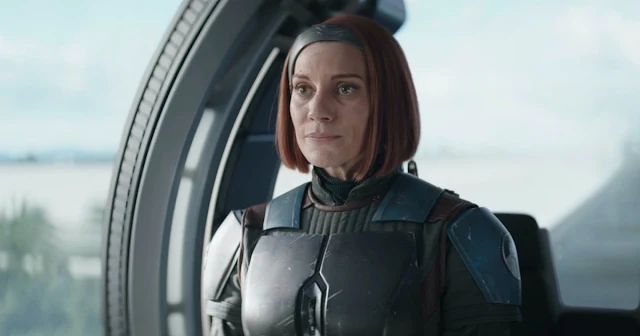
How to read this Mandalore timeline
This timeline uses BBY and ABY dating. BBY means “Before the Battle of Yavin,” the destruction of the first Death Star in A New Hope. ABY means “After the Battle of Yavin.” Some very ancient Mandalorian material exists mainly in Legends continuity, so this article separates that mythic deep history from the cleaner modern canon timeline.
The important canon thread is simple: Mandalore was a warrior world, the Jedi and Mandalorians once fought devastating wars, Tarre Vizsla created the Darksaber, the clans fractured, Duchess Satine tried to make Mandalore peaceful, Death Watch and Maul dragged it back into blood, the Empire nearly erased it, and the New Republic era saw Mandalorians attempt the impossible: return home.
Ancient Mandalore and the Legends shadow
Canon warning: the Taung and Revan-era dates are Legends material
Older Star Wars timelines often begin Mandalorian history with the Taung, Mandalore the First, Mandalore the Indomitable, Revan, and the Mandalorian Wars thousands of years before the Skywalker saga. That material comes from Legends continuity, especially the older expanded universe and Knights of the Old Republic-era storytelling. It remains useful as mythic background, but it should not be presented as firm modern screen canon.
The Taung, Mandalore the First, and the birth of a warrior identity
Legends context Mythic originsIn Legends, Mandalorian culture begins with the Taung, a fierce species associated with the earliest warrior traditions of Mandalore. Their leader, remembered as Mandalore the First, becomes the mythic root of the title “Mandalore,” later used by rulers and warlords who claim authority over the clans.
Even if this material sits outside strict modern canon, it shaped the way fans understand Mandalore: not merely as a planet, but as a title, an inheritance, and a martial identity that can be adopted by many species. That idea still echoes in canon. Mandalorians are not defined only by blood. Foundlings matter. Creed matters. Armour matters. The name is cultural before it is biological.
That is the first great Mandalorian paradox: a culture obsessed with lineage also makes room for adoption. A child can be rescued, raised, armed, and made Mandalorian. Din Djarin’s entire story grows from that ancient idea.
The Mandalorian Wars and the Revan legend
Legends context Old Republic warIn Legends, the Mandalorian Wars become one of the great galactic conflicts of the Old Republic age. Mandalorian Neo-Crusaders push deep into Republic space, and the Jedi Knight Revan defies Jedi caution to fight them. The conflict ends with Mandalorian defeat, but the legend of Mandalore as a civilization capable of challenging the Republic and Jedi becomes permanent.
This older material is still valuable because it explains the mythic scale that surrounds Mandalorian culture. The Mandalorians were never written as simple soldiers. They were built as a rival warrior civilization, a people who could stand opposite the Jedi and make the galaxy tremble. Modern canon keeps the feeling, even when the exact ancient dates remain less defined.
For an article aimed at clean canon, keep this as background mythology rather than the main spine. The canon story of Mandalore now flows most clearly through the Darksaber, Clan Vizsla, Clan Kryze, Death Watch, the Empire, and Din Djarin.
The Darksaber and the canon foundation
Tarre Vizsla becomes the first Mandalorian Jedi
Canon House Vizsla Jedi and MandaloreThe cleanest canon beginning for Mandalorian lore is Tarre Vizsla, the first Mandalorian inducted into the Jedi Order. His existence alone tells you how strange Mandalore’s place in Star Wars really is. The Jedi and Mandalorians are often framed as philosophical opposites: discipline versus passion, peacekeeping versus warrior honour, luminous serenity versus beskar violence. Tarre Vizsla stands at the intersection of those worlds.
His legacy is the Darksaber, a unique black-bladed lightsaber that becomes one of the most important symbols in Mandalorian history. It is not just a weapon. It is a political relic, a cultural wound, and a test of legitimacy. Whoever carries it is never simply armed. They are judged.
The Darksaber matters because it merges Jedi craft with Mandalorian identity. It is the perfect Star Wars object: half sacred relic, half battlefield claim, always asking whether power can truly create unity.
House Vizsla recovers the Darksaber from the Jedi Temple
Canon Darksaber Clan legacyAfter Tarre Vizsla’s death, the Jedi keep the Darksaber in their Temple. Members of House Vizsla later recover it, turning the blade into a Mandalorian symbol of rule. From that point on, the weapon becomes tangled with claims of leadership, clan rivalry, and the dream of a united Mandalore.
The blade’s power is symbolic before it is practical. A lightsaber can cut through enemies. The Darksaber can cut through history. It reminds every Mandalorian that their people once produced a Jedi, then turned his weapon into a crown made of black light.
This is why the Darksaber never behaves like a simple prize. It carries the burden of Mandalorian contradiction: honour and violence, unity and division, tradition and performance.
Mandalore becomes a battlefield of ideology
Canon background Jedi conflictCanon repeatedly points to ancient wars between Mandalorians and Jedi. Those conflicts scar Mandalorian culture and help explain why beskar armour, anti-Jedi tactics, jetpacks, wrist weapons, flamethrowers, cables, and layered combat traditions become so central to Mandalorian identity. They are a people who built themselves to fight impossible enemies.
The clash is also philosophical. The Jedi seek peace through restraint. Mandalorians often seek meaning through struggle. The tragedy is that both traditions understand discipline, sacrifice, and belonging, yet they keep meeting each other across battle lines.
That ancient Jedi-Mandalorian tension gives later moments extra force, especially Grogu’s adoption by Din Djarin. Grogu is a Jedi-trained child raised inside Mandalorian protection. He is a living bridge between cultures that once shattered each other.
The fall of old Mandalore and the pacifist dream
Civil war devastates Mandalore
Canon background Civil warBefore the Clone Wars, Mandalore is already a damaged world. Years of internal conflict leave its surface scarred and its society divided between old warrior factions and the New Mandalorians, a pacifist movement led by Duchess Satine Kryze. That division is not cosmetic. It is the central Mandalorian argument in political form.
Satine’s Mandalore tries to break the cycle. She wants neutrality, diplomacy, and reconstruction. To her enemies, that dream looks like weakness. To her supporters, it is the only way the planet can stop consuming itself. Mandalore is not merely deciding who should rule. It is deciding whether its warrior past is heritage or curse.
Satine’s tragedy is that she is not naive about violence. She understands it too well. Her pacifism is not softness. It is a refusal to let Mandalore keep calling self-destruction honour.
The Clone Wars begin, and Mandalore tries to remain neutral
Clone Wars Neutral systemsWhen the Clone Wars erupt between the Republic and the Separatists, Duchess Satine attempts to keep Mandalore neutral. That neutrality is not cowardice. It is survival policy. Mandalore has already been burned by war. Satine knows that choosing a side may drag her people back into the old furnace.
The problem is that Star Wars rarely lets neutrality remain untouched. The Clone Wars are engineered by Darth Sidious to destabilise the galaxy from every direction. Worlds that try to stay apart are still manipulated, pressured, infiltrated, and exploited. Mandalore becomes one of the clearest examples of how war reaches beyond the battlefield.
This is where Mandalore’s story becomes pure space opera: a pacifist duchess, a warrior sister, a secret extremist faction, a Republic war, Separatist intrigue, Jedi politics, and Sith manipulation all colliding over one wounded planet.
Death Watch rises against Satine
Death Watch Pre Vizsla ExtremismDeath Watch emerges as the militant answer to Satine’s pacifist government. Led by Pre Vizsla, the group wants Mandalore to return to its warrior identity. They see Satine’s New Mandalorians as an insult to history, an attempt to bury the old ways under diplomacy and soft language.
Death Watch is dangerous because it has a point buried inside its fanaticism. Mandalore’s warrior heritage cannot simply be erased. But their solution is rot dressed as tradition. They confuse cultural memory with domination. They want the armour without the moral discipline, the glory without the grief, the old songs without the bodies beneath them.
Bo-Katan Kryze’s early association with Death Watch makes her later arc more interesting. She is not a clean hero from the beginning. She is part of the violence that helps destabilise Mandalore, then spends years trying to reclaim something from the wreckage.
Maul, Satine, and the breaking of Mandalore
Maul builds the Shadow Collective
Darth Maul Shadow Collective Crime syndicatesAfter surviving his defeat on Naboo, Darth Maul returns to galactic history as something more dangerous than a Sith assassin. He becomes a criminal warlord. Through the Shadow Collective, Maul binds crime syndicates, mercenaries, and Death Watch into a political weapon.
Mandalore becomes the perfect prize. It is prestigious, divided, proud, and unstable. Maul understands that conquering a world is not only about troops. It is about humiliation, spectacle, and symbols. If he can take Mandalore, he can hurt Obi-Wan Kenobi, provoke Darth Sidious, and turn a warrior culture into a throne for his revenge.
Maul’s genius is theatrical cruelty. He does not simply kill. He stages pain so it echoes through everyone connected to the victim.
Maul defeats Pre Vizsla and claims the Darksaber
Darksaber Trial by combat Mandalore occupiedMaul’s duel with Pre Vizsla is one of the defining Mandalorian turning points in The Clone Wars. Vizsla believes he can use Maul, then discard him. Maul understands Mandalorian rules well enough to weaponise them. He defeats Vizsla in combat, takes the Darksaber, and claims leadership through the very tradition Death Watch reveres.
Bo-Katan refuses to accept him. That refusal matters. Maul wins according to the brutal logic of combat, but Bo-Katan sees what the blade cannot solve. A non-Mandalorian Sith-trained crime lord can hold the Darksaber, but that does not make him the soul of Mandalore. The weapon can prove strength. It cannot automatically create legitimacy.
This is one of the Darksaber’s central lessons: Mandalorians say the blade can unite them, but the blade repeatedly exposes how divided they are.
Duchess Satine Kryze is murdered
Satine Kryze Obi-Wan Kenobi Mandalorian tragedySatine’s death is one of the most painful moments in Mandalorian history. Maul kills her in front of Obi-Wan Kenobi, turning Mandalore’s political collapse into a personal wound. Satine had tried to save Mandalore from its warrior past. Instead, she dies because old violence, Sith vengeance, and Mandalorian factionalism converge in one room.
The moment matters because Satine represents the path Mandalore almost took. Her death does not prove pacifism failed. It proves Mandalore was trapped between people who needed peace and people who profited from rage. She loses the throne, but her moral argument never fully disappears.
Satine’s legacy haunts Bo-Katan. The sisters represent two failed answers to Mandalore’s crisis: peace without enough force to defend itself, and warrior identity without enough unity to survive itself.
The Siege of Mandalore and the end of the Clone Wars
Bo-Katan asks Ahsoka Tano for help
Ahsoka Tano Bo-Katan Kryze Republic interventionAs Maul’s grip over Mandalore deepens, Bo-Katan turns to Ahsoka Tano. That alliance is loaded with history. Ahsoka is no longer formally a Jedi, but she still carries Jedi discipline, moral clarity, and the loyalty of clone troopers who paint their helmets in her colours. Bo-Katan is a Mandalorian warrior trying to free a world she helped destabilise.
The Siege of Mandalore is therefore not just a battle. It is a convergence. Ahsoka, Bo-Katan, Rex, the 332nd Division, Maul, Mandalorian loyalists, and the collapsing Republic all meet at the edge of Order 66. The old galaxy is dying, but nobody on Mandalore can see the full shape of the death yet.
The tragedy of the Siege is that Mandalore is liberated at almost the exact moment the Republic becomes the Empire. Victory arrives wearing the shadow of a much larger defeat.
Ahsoka duels Maul
Siege of Mandalore Maul Clone Wars finaleThe duel between Ahsoka and Maul is one of the great late-Clone Wars confrontations. Maul is not simply trying to hold a planet. He has sensed the shape of Sidious’s plan. He knows the galaxy is about to turn, and he wants to drag others into his panic. Ahsoka fights him without fully understanding that he is telling the truth through madness.
Maul is captured, and Mandalore is technically won. But the emotional victory is poisoned. Order 66 erupts. The clones turn. The Republic dies. Ahsoka and Rex barely survive. Mandalore’s liberation becomes a footnote in the birth of Imperial tyranny.
The Siege of Mandalore is one of Star Wars’ most operatic tragedies because the heroes win the local battle while history loses the galactic war.
The Empire rises, and Mandalore enters occupation
Imperial era Occupation Clan resistanceAfter the Republic becomes the Galactic Empire, Mandalore’s future darkens. The Empire does not tolerate proud, armed, decentralised warrior cultures unless they can be controlled. Mandalore’s clans, armour, beskar, and warrior traditions make them both useful and dangerous to Imperial power.
Imperial occupation turns Mandalorian identity into a threat. The Empire can use collaborators, divide houses, exploit resources, and punish resistance. Mandalore’s tragedy becomes imperial in the classic Star Wars sense: not only conquest from outside, but corruption from within.
The Empire’s fear of Mandalore makes sense. A united Mandalore would be a nightmare: mobile warriors in beskar, clan loyalty, old grudges, hidden arsenals, and a culture already trained to fight impossible enemies.
Sabine Wren, Rebels, and the Darksaber’s return
Sabine Wren becomes a rebel Mandalorian
Star Wars Rebels Clan Wren RebellionSabine Wren brings Mandalorian history into Star Wars Rebels with a different energy: art, explosives, guilt, rebellion, and clan politics. She is not simply another warrior in armour. She is a Mandalorian artist who has seen her own talents twisted by Imperial power.
Her story expands Mandalore beyond the older images of stern warriors and rigid creeds. Sabine’s armour is colour, defiance, and identity. She proves that Mandalorian culture can be expressive as well as martial. The helmet does not erase the self. In Sabine’s case, it becomes a painted declaration that the Empire does not get to define her.
Sabine is crucial because she turns Mandalorian resistance into visual rebellion. Her armour says what the Empire hates most: identity survived.
Sabine recovers the Darksaber
Darksaber Sabine Wren Legacy weaponWhen Sabine comes into possession of the Darksaber, the weapon’s burden returns. Training with it forces her to confront family shame, Imperial complicity, and the pain she has tried to outrun. The blade does not merely test her skill. It pulls truth out of her.
That is what the Darksaber keeps doing across Star Wars. It exposes the gap between the story Mandalorians tell about themselves and the wounds they refuse to face. For Sabine, wielding the blade means admitting what the Empire made of her gifts, then choosing what she will become instead.
Sabine’s Darksaber arc is one of the best examples of Star Wars using a weapon as emotional architecture. The fight is internal before it is political.
Sabine gives the Darksaber to Bo-Katan Kryze
Bo-Katan Kryze Clan unity RebelsSabine ultimately passes the Darksaber to Bo-Katan Kryze, who accepts it as a symbol around which Mandalorian clans might unite against Imperial rule. The moment is hopeful, but later events make it more complicated. Bo-Katan receives the blade rather than winning it in combat, and that detail becomes part of the later mythology around her failure.
This is where Mandalorian symbolism becomes merciless. A practical alliance may make sense in the moment, but cultures built around ritual do not always forgive shortcuts. The Darksaber can gather clans, but if belief in the blade falters, unity becomes fragile.
Bo-Katan’s acceptance of the Darksaber in Rebels becomes the ghost behind her later crisis in The Mandalorian. She had the symbol, but symbol alone could not save Mandalore.
The Great Purge and the Night of a Thousand Tears
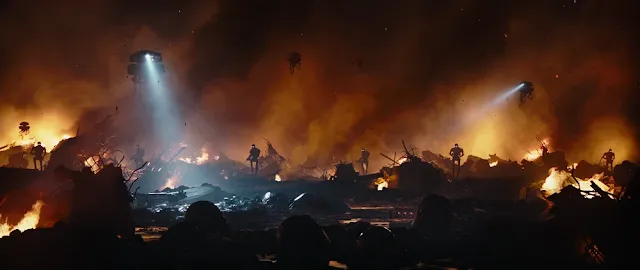
The Empire launches the Great Purge of Mandalore
Great Purge Night of a Thousand Tears Imperial genocideThe Great Purge is the catastrophe that defines modern Mandalorian history. The Empire devastates Mandalore, bombs its cities, seizes beskar, and scatters the survivors. The Night of a Thousand Tears becomes the phrase that carries the horror of it: a civilization reduced to ash, memory, and hiding.
The Purge is more than military defeat. It is cultural attempted murder. The Empire understands that Mandalore’s strength is not only its armies. It is its identity. Armour can be stolen. Cities can be glassed. But creeds, songs, clan names, foundling traditions, and stubborn memory are harder to kill.
This event explains the secrecy of Din Djarin’s covert, the scarcity of beskar, the bitterness of Bo-Katan, the myth of a cursed Mandalore, and the desperation behind the dream of return.
Mandalorian survivors scatter into exile
Exile Coverts The WayAfter the Purge, Mandalorians survive in fragments. Some live in hidden coverts. Some become mercenaries. Some remain loyal to clan traditions. Some abandon hope. Some, like the Children of the Watch, cling to stricter interpretations of Mandalorian identity, including the rule that the helmet must not be removed before others.
Exile changes culture. What may have once been one tradition among many becomes, for some survivors, the only thing standing between them and extinction. This is why Din Djarin’s creed has such emotional force. It is not merely religious rigidity. It is survival ritual.
The helmet rule is more interesting when read through trauma. After genocide, secrecy becomes sacred. The face disappears so the people can endure.
Din Djarin, Grogu, and the New Republic era
Din Djarin is rescued and raised as a foundling
Din Djarin Foundling Children of the WatchDin Djarin’s origin is central to modern Mandalorian lore. He is not born on Mandalore. He is rescued as a child and raised as a foundling by Mandalorians. That single fact cuts through simplistic ideas of Mandalorian bloodline. Din is Mandalorian because he is taken in, trained, armoured, and bound to the Way.
This makes him one of the best expressions of Mandalorian culture. He is both outsider and insider. He carries Mandalore as creed rather than geography. When he later adopts Grogu, he repeats the act that saved him. Mandalorian identity survives through rescue.
Din’s story proves that Mandalore is not only a homeworld. It is a promise made to the abandoned: you are not alone now.
Din Djarin finds Grogu
The Mandalorian Grogu New Republic eraIn the early New Republic era, Din accepts a bounty that leads him to Grogu, a Force-sensitive child pursued by Imperial interests. The job should be simple. Capture the asset. Deliver the quarry. Take the beskar. Instead, Din breaks the transaction and begins the relationship that changes modern Star Wars.
Grogu’s importance goes beyond cuteness or species mystery. He is a survivor of Jedi destruction protected by a survivor of Mandalorian destruction. A child of the fallen Jedi finds safety with a child of Mandalorian rescue. Their bond quietly heals an ancient wound between two traditions that once warred with each other.
This is why the Mandalorian and Baby Grogu relationship is not side-story sentiment. It is Star Wars mythology in its simplest form: a warrior chooses mercy, and the galaxy shifts.
Din and Grogu are the New Republic era’s most elegant symbolic pairing: beskar and the Force, creed and innocence, trauma and adoption, Mandalore and Jedi memory.
Din wins the Darksaber from Moff Gideon
Moff Gideon Darksaber Imperial remnantDin’s battle with Moff Gideon ends with Din holding the Darksaber, almost by accident. That is perfect Star Wars irony. The man least interested in ruling Mandalore suddenly carries the one weapon that might make others see him as a claimant.
For Bo-Katan, the moment is devastating. She cannot simply take the weapon from Din without undermining the ritual significance attached to it. For Din, the blade is awkward, heavy, and unwanted. For Mandalore, it is another sign that leadership cannot be solved by mythology alone.
The Darksaber repeatedly falls into the hands of people who reveal its limits. It can mark leadership, but it cannot create wisdom. It can rally clans, but it cannot heal distrust by itself.
Grogu chooses Din over the Jedi path
Grogu Luke Skywalker AttachmentGrogu’s choice to return to Din after training with Luke Skywalker is one of the most important character decisions in the New Republic era. It does not mean the Jedi path is meaningless. It means Grogu’s identity cannot be reduced to inherited Force tradition. He has already survived one institutional collapse. He chooses the person who became home.
This choice reframes the old Jedi anxiety around attachment. Grogu’s attachment to Din is not possessive corruption. It is safety, trust, and belonging. Star Wars has spent decades asking whether love leads to fear. Grogu’s story asks whether love can also repair fear.
Grogu’s future may be neither purely Jedi nor purely Mandalorian. That is the point. He is a new synthesis, a foundling of two ruined traditions.
The return to Mandalore
Din enters the Living Waters beneath Mandalore
Mandalore Living Waters RedemptionDin’s journey to the Living Waters beneath Mandalore begins as a quest for redemption. He has removed his helmet before others and seeks restoration according to the creed of his people. What he finds is larger than personal absolution. Mandalore is not poisoned beyond return. Its ruins are dangerous, but alive. Its myths are not dead.
The Living Waters matter because they turn Mandalore from a tomb into a baptismal space. Din goes below the surface of a ruined planet and discovers that culture can survive beneath catastrophe. Mandalore is broken, but not empty.
The descent into the mines is mythic structure: the warrior enters the underworld, faces the truth beneath the ruin, and returns with knowledge that can change the people above.
Bo-Katan sees the Mythosaur
Mythosaur Bo-Katan Kryze Ancient symbolBo-Katan’s vision of the Mythosaur beneath Mandalore is one of the most important symbolic moments in the planet’s modern story. The Mythosaur is not just a creature. It is the old emblem of Mandalorian power, a symbol that belongs to their deepest past. Seeing it alive beneath the ruins suggests that Mandalore’s ancient strength has not vanished.
For Bo-Katan, the moment is spiritual before it is political. She has spent years carrying failure: Satine’s death, Maul’s occupation, Imperial devastation, the loss of the Darksaber, the scattering of her people. The Mythosaur does not erase that history. It tells her the story is not over.
The Mythosaur is Mandalore’s buried heartbeat. Its survival means the planet is not merely a battlefield to reclaim. It is a living myth waiting to rise.
Bo-Katan regains the Darksaber’s meaning
Darksaber Clan unity LeadershipBo-Katan’s return to leadership is not a simple coronation. It is a reckoning. She has already held the Darksaber before. She has already failed. This time, her claim must be rooted in more than possession. It must come through trust, action, and the recognition of Mandalorians who have every reason to doubt old leaders.
Din’s role is crucial because he does not seek power. That makes his support meaningful. He sees Bo-Katan not merely as a noble claimant, but as someone capable of uniting scattered people. The Darksaber’s symbolism shifts from ego to service.
This is one of the strongest leadership ideas in The Mandalorian: the person worthy of power may be the one who has already been broken by wanting it for the wrong reasons.
Moff Gideon returns to Mandalore
Moff Gideon Imperial remnant Beskar commandosMoff Gideon’s return to Mandalore reveals the Empire’s deeper obsession with Mandalorian power. Gideon does not simply want to defeat Mandalorians. He wants to appropriate them. Beskar armour, cloning ambition, Imperial discipline, and Mandalorian aesthetics all merge in his project. It is cultural theft disguised as military innovation.
That makes Gideon the perfect enemy for this stage of the timeline. The Empire tried to erase Mandalore, then tried to wear its skin. This is how authoritarian power works in Star Wars: destroy what resists you, then steal whatever made it strong.
Gideon’s Mandalorian-styled Imperial forces are a nightmare image: Mandalore without soul, armour without creed, strength without kinship.
The Darksaber is destroyed
Darksaber destroyed Symbolism End of an eraWhen the Darksaber is destroyed, Mandalorian history reaches a stunning symbolic break. The blade that once promised unity is gone. For a culture so tied to relics, lineage, and ritual legitimacy, that destruction could feel like catastrophe. Instead, it may be liberation.
The destruction of the Darksaber forces Mandalorians to answer a harder question: can they unite without a weapon telling them who to follow? If the blade was meant to symbolise Mandalore, then its loss means Mandalore must become something larger than an object.
This is the most radical thing modern Star Wars has done with Mandalorian lore. It breaks the crown and asks whether the people can finally become the kingdom.
Mandalore is reclaimed
Retaking Mandalore Bo-Katan Kryze Din Djarin GroguThe retaking of Mandalore is not merely a military victory. It is a cultural resurrection. Bo-Katan, Din Djarin, Grogu, the Armorer, the Children of the Watch, Nite Owls, and scattered survivors become part of the same fragile future. People who once distrusted each other stand on the same ruined ground and choose return.
Grogu’s role is easy to overlook because he is small, silent, and often framed through innocence. But his protection of Din and Bo-Katan during the battle matters deeply. A Jedi-trained foundling helps preserve Mandalorian leadership on the reclaimed homeworld. The ancient wound between Jedi and Mandalorians is not solved through treaty. It is healed, briefly, by a child raising a shield.
That image is pure Star Wars: the future of Mandalore protected not by the Darksaber, but by Grogu’s open hands.
After the return: Mandalore’s future
Din formally adopts Grogu
Din Grogu Foundling tradition FamilyDin formally adopting Grogu gives the foundling tradition its most important modern expression. Grogu becomes Din Grogu, not because bureaucracy says so, but because the relationship that has driven the series finally receives cultural recognition. The child is not cargo. He is not a bounty. He is not a Jedi asset. He is family.
This moment loops Din’s life back to its origin. He was rescued and made Mandalorian. Now he rescues and raises another. Mandalorian culture survives not only through battle, but through adoption. That is the emotional core that makes the whole timeline matter.
The future of Mandalore may depend less on who holds a blade and more on who protects the next foundling.
Bo-Katan faces the harder task: rebuilding
Reconstruction Clan politics Mandalorian futureWinning Mandalore back is only the first step. Rebuilding it may be harder. The surviving clans carry different traditions, resentments, rituals, and memories. Some followed the Watch. Some followed Bo-Katan. Some survived in exile. Some may not want to return to old hierarchies. A reclaimed planet does not instantly create a unified people.
Bo-Katan’s next challenge is not proving she can fight. That has never been in doubt. Her challenge is proving Mandalore can become more than a cycle of charismatic warriors, broken relics, civil wars, and revenge. She must build a future that honours the armour without worshipping the wound.
This is the great unanswered Mandalore question: can a warrior culture learn to live without needing war to remember who it is?
Din and Grogu carry Mandalorian lore back to the big screen
The Mandalorian and Grogu Star Wars film era New RepublicThe Mandalorian and Grogu carries this entire history into the theatrical Star Wars future. The film does not need to retell every Mandalorian war to inherit their weight. Every piece of Din’s armour carries that history. Every choice he makes with Grogu tests whether Mandalorian identity can become something more than survival after massacre.
The power of the film era lies in that intimacy. Star Wars can be operatic without always centring dynasties and emperors. Mandalore gives the galaxy another kind of epic: a people scattered by genocide, a lost homeworld waiting under glassed ruins, a warrior who becomes a father, and a child who may unite histories that once seemed impossible to reconcile.
That is why the themes of The Mandalorian and Grogu matter beyond one adventure. They are the latest movement in a much older song: creed, exile, return, and the stubborn hope that a broken people can still choose what they become.
Mandalore’s story has always been bigger than one ruler. It is a saga of people trying to turn armour back into home.
Key Mandalorian timeline at a glance
| Era / Date | Event | Why it matters |
|---|---|---|
| Ancient era | Tarre Vizsla becomes the first Mandalorian Jedi | Creates the Jedi-Mandalorian bridge that leads to the Darksaber. |
| Ancient era | The Darksaber becomes a Mandalorian symbol of rule | Turns one weapon into a political and cultural test of leadership. |
| Before 22 BBY | Mandalorian civil wars scar the planet | Sets up Satine’s pacifist government and Death Watch’s backlash. |
| 22 BBY | The Clone Wars begin | Mandalore tries to remain neutral while the galaxy collapses into war. |
| Around 20 BBY | Maul takes control of Mandalore | Turns Mandalore into the centre of Sith revenge, criminal power, and clan fracture. |
| 19 BBY | The Siege of Mandalore | Ahsoka and Bo-Katan defeat Maul as the Republic falls into the Empire. |
| Imperial era | Sabine Wren recovers and later gives away the Darksaber | Hands Bo-Katan a symbol of unity that later becomes tied to failure and exile. |
| Before 9 ABY | The Great Purge devastates Mandalore | Scatters the clans, makes beskar scarce, and turns Mandalore into a haunted ruin. |
| 9 ABY | Din Djarin finds Grogu | A Mandalorian foundling protects a Jedi survivor, healing ancient symbolic wounds. |
| Around 11 ABY | Mandalore is reclaimed | Bo-Katan, Din, Grogu, and the clans begin the long work of return. |
What Mandalore means in Star Wars
Mandalore matters because it gives Star Wars a culture that can stand beside the Jedi, Sith, Republic, Empire, and Rebellion without being swallowed by any of them. Mandalorians are not purely heroes. They are not purely villains. They are a people with glory in their songs and blood on their hands, capable of rescue and cruelty, loyalty and civil war, tenderness and fanaticism.
Their history is epic because it refuses to stay clean. Tarre Vizsla turns a Jedi weapon into a Mandalorian crown. Satine tries to make peace out of a warrior world and dies for it. Maul takes Mandalore by understanding its rules too well. Ahsoka wins a siege while the Republic dies behind her. Sabine paints rebellion onto armour. Bo-Katan loses a planet, loses a symbol, and still returns. Din Djarin, who was not born Mandalorian, becomes one of the culture’s purest expressions by adopting Grogu as he was once adopted.
That is the space opera grandeur of Mandalore. It is not only a planet. It is a saga of creed and contradiction, a world where history keeps asking whether armour is a prison, a promise, or the last thing holding a broken people together.
The history of Mandalore is one of Star Wars’ great secondary epics: ancient Jedi wars, the Darksaber, Duchess Satine’s doomed peace, Maul’s conquest, the Siege of Mandalore, the Great Purge, Din Djarin’s foundling creed, Grogu’s adoption, and Bo-Katan’s return. It is the story of a people who lose their planet, their sword, their unity, and nearly their future, then still gather in the ruins and call it home.
Mandalore is not just another planet in the Star Wars galaxy . It is a wound with armour around it. A ruined world of clans, creeds,...
Read Article →
Good shot, baby! The Mandalorian and Grogu trailer - Easter Eggs and Breakdown

Alright, let's break down this Mandalorian and Grogu trailer properly.
The whole vibe feels like a movie-length episode, and honestly, that's probably the best way to handle it. Just give us one big, self-contained bounty hunt with a movie-level budget. We don't need this to set up five other things; we just want a solid story that lets these characters shine on the big screen. It lets them focus on giving us a tight plot, awesome action, and good character moments without the pressure of connecting everything to a bigger saga. It's the show's winning formula, just blown up for theaters.

And you can't miss those Solo movie vibes. It’s got that gritty, underworld feel, like we're really diving into the Outer Rim and dealing with all the scoundrels, scum, and Hutts that make the galaxy interesting. That's Mando's world - the space-western aesthetic that fits him perfectly (check out those classic western vibesin the above poster). It feels less like a Jedi epic and more like a classic gunslinger tale, which is exactly where Din Djarin belongs.
Here are the fun details and callbacks we spotted in the trailer:
Characters and Species
- Zeb Orrelios: The tough-guy muscle from the animated show Star Wars Rebels shows up! Seeing him in a gritty cantina reinforces that classic underworld vibe and shows Mando has some heavy-hitting friends in low places.
- Rotta the Hutt: Jabba the Hutt's son is back! (refer The Clone Wars animated film) But instead of a crime boss, he's a gladiator. This perfectly sets up the chaotic, dog-eat-dog underworld Mando is navigating, where even the powerful can fall.
- The Hutt Twins: First seen in The Book of Boba Fett, their return shows the criminal underworld is still a major force. This is exactly the kind of gangster trouble a bounty hunter like Mando would get mixed up in.
- Anzellans: Fan-favorite Babu Frik and his crew are back! These tiny, genius mechanics add a dose of fun and chaos, proving that in Mando's world, you find the best help in the weirdest places.
- Amanin Headhunter: This creature, straight out of Jabba's Palace in Return of the Jedi, is a great nod to the classic "scum and villainy" feel of the original trilogy. It makes the world feel dangerous and authentically Star Wars.
- Mantellian Savrip: They brought a holochess piece to life! Seeing one of these monsters in a gladiator pit is pure, awesome fan service that cranks up the action and the feeling of a lawless Outer Rim where anything goes.
Ships, Vehicles, and Equipment
- New Razor Crest: Mando's got a new ride! The Razor Crest is his home, and getting a new one signals a fresh start for his adventures with Grogu. It's a classic gunship, perfect for a lone gunslinger flying under the radar.
- TIE Interceptors: These aren't your basic TIE Fighters. The Interceptors are fast, deadly, and mean business. Seeing them promises some high-octane dogfights and shows the bad guys have some serious firepower for Mando to deal with.
- AT-AT Walker: A massive Imperial walker promises a huge ground battle, perfectly fitting for a big-screen adventure. Its unique design is also a cool visual callback for fans of the animated shows.
- U-Wing: The appearance of this New Republic ship shows that the "good guys" are around, but they might just complicate things for a guy like Mando who's used to playing by his own rules. It sets up a potential clash between the law and our favorite gunslinger.
Locations and Lore
- Nar Shaddaa: The legendary "Smuggler's Moon" might finally be coming to live-action! It's the ultimate hive of scum and villainy - a perfect, dangerous playground for Mando and Grogu's adventure.
- Halcyon Star Cruiser Ad: This fun little in-universe advertisement for a luxury star cruiser adds a great touch of world-building. It shows that while Mando is off fighting monsters, the rest of the galaxy is just trying to go on vacation.
Alright, let's break down this Mandalorian and Grogu trailer properly. The first thing that hits you is that this just looks fun . ...
Read Article →
_poster.jpg)


