03 March 2024

Darwi Odrade: Bene Gesserit Leader of Dune's Heretics and Chapterhouse

ᑐ ᑌ ᑎ ᕮ's Darwi Odrade

Darwi Odrade emerges as one of the most nuanced and transformative characters in Frank Herbert's Dune series, taking center stage in Heretics of Dune and Chapterhouse: Dune. As Mother Superior of the Bene Gesserit order during the fraught post-Scattering era, Odrade embodies a rare fusion of strategic brilliance, emotional depth, and philosophical inquiry. 

Her leadership is defined by her ability to navigate the Sisterhood through existential threats, including the encroachment of the Honored Matres and the political upheavals of the universe. Yet, beyond her tactical genius, Odrade is a deeply introspective figure, grappling with the ethical implications of power, the burden of leadership, and the fragile balance between tradition and evolution within the Bene Gesserit.


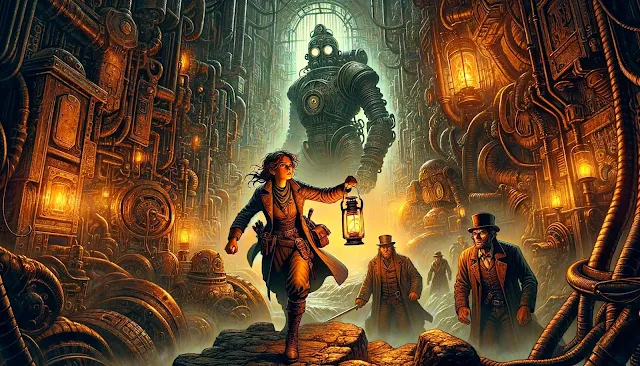
Darwi Odrade dune concept design

A complex character, with a mix of intelligence, strength, and compassion, she is highly analytical and strategic, always thinking several steps ahead. She is a skilled diplomat and negotiator, able to navigate complex political situations with ease. 

She is also deeply empathetic, with a strong sense of compassion for others. She often feels a deep sense of responsibility for those around her, and is willing to make personal sacrifices for the greater good.

Darwi Odrade's background is deeply intertwined with the Bene Gesserit sisterhood, an ancient and secretive order with formidable mental and physical training. Raised within the ranks of the sisterhood, Darwi developed a keen intellect and mentat abilities, granting her a unique perspective on strategic planning and analysis. 

In "Chapterhouse: Dune," the final book of the original series, Darwi's mentat skills are showcased as she navigates complex political intrigues and predicts potential outcomes of her decisions.

However, it was not just her mental prowess that defined her character but also her emotional resilience and capacity for empathy, qualities that set her apart from other leaders. Throughout the series, Darwi Odrade demonstrates her empathy and understanding of others, most notably in her interactions with the Honored Matres, a rival group to the Bene Gesserit. She seeks to find common ground and understand the motivations behind their actions rather than immediately resorting to conflict.

In the Dune saga, Darwi Odrade plays a pivotal role in various key events. As a high-ranking member of the Bene Gesserit, she becomes involved in their intricate schemes and plots, seeking to manipulate political and social structures for the sisterhood's benefit. For instance, in "Heretics of Dune," Darwi takes a central role in the Bene Gesserit's plan to use the ghola of the long-dead Duncan Idaho to their advantage.

She guides him and observes his interactions, making sure he fulfills his purpose in their broader design. Her relationships with other central characters, such as Duncan Idaho, Miles Teg, and Sheeana, further enrich her narrative arc, revealing the depth of her connections and the complexity of her alliances. 

The bond between Darwi Odrade and Duncan Idaho, in particular, is highlighted in "Chapterhouse: Dune," where their evolving relationship serves as a central emotional thread throughout the book.

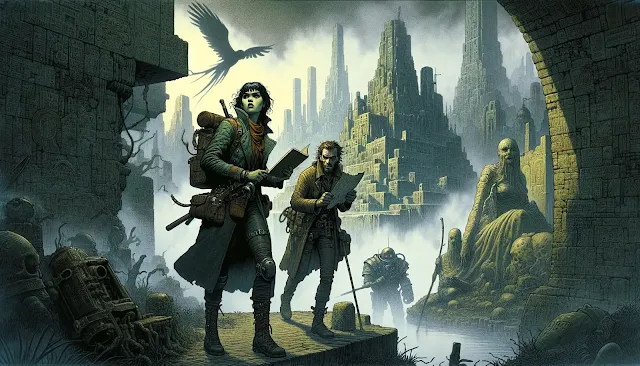
darwi odrade dune novels gesserit concept artwork


As a leader, Darwi Odrade faces numerous challenges. Balancing the needs of the Bene Gesserit sisterhood with her personal convictions presents an ongoing internal struggle. For instance, in "Chapterhouse: Dune," Darwi grapples with decisions that could risk the survival of the sisterhood but align with her personal values and principles. The weight of responsibility and the toll of leadership take a toll on her character, forcing her to confront ethical dilemmas and make tough moral choices. 

It is through these challenges that Darwi's true mettle as a leader is tested.

In "Chapterhouse: Dune," Darwi faces the tough decision of whether to use a destructive weapon in their defense, knowing it could potentially annihilate entire worlds. Her internal struggle is evident, showcasing the burden of leadership and the far-reaching consequences of her choices.

Darwi Odrade's legacy and influence on the Dune universe are profound. Her contributions lead to the survival and evolution of the Bene Gesserit sisterhood, ensuring its continued presence in the political landscape of the saga. Moreover, her actions reverberate beyond the sisterhood, significantly impacting the broader events of the Dune series. 

In "Chapterhouse: Dune," the reader witnesses the lasting impact of Darwi's decisions, which shape the fate of the sisterhood and the future of humanity itself. The choices she makes have far-reaching consequences that resonate throughout the final chapters of the saga.

darwi odrade character concept art dune

In the larger context of the Dune universe, Darwi Odrade's character resonates with readers due to her multifaceted nature. Her intelligence, empathy, and inner struggles make her a relatable and compelling figure, drawing readers deeper into the story. As a result, she remains an enduring and beloved character in the Dune series.

Throughout the books, readers witness Darwi's growth and development, her complexities making her an authentic and believable character. This authenticity allows readers to form strong connections with her and emotionally invest in her journey.

Comparing Darwi Odrade with other characters in the Dune universe highlights her uniqueness as a leader. Unlike many power-hungry figures in the series, Darwi's motivations are driven by a desire to safeguard the sisterhood's future and to chart a path that benefits the greater good. While other leaders may seek personal gain or dominion, Darwi's leadership is rooted in her commitment to the sisterhood's principles and the welfare of humanity.
 
Darwi Odrade: Bene Gesserit Leader of DuneDarwi Odrade: Bene Gesserit Leader of Dune

This contrast showcases the moral depth of her character and her genuine dedication to the sisterhood's long-term objectives.

Why were Tim Blake Nelson's scenes cut from Dune 2 film?

No actor wants to land on the cutting room floor.

It's where bad takes and scenes go to die.

And in some cases whole parts.

Enter Mickey Rourke in The Thin Red Line.

Tim Roth, Once Upon a Time In Hollywood.

Kevin Costner, The Big Chill.

Something something, Eric Stolz.

And now Buster Scruggs himself, Tim Blake Nelson has accepted the same fate of his role in the juggernaut of a film that is Dune 2.

tim blake nelson cut from dune 2

The exclusion of Tim Blake Nelson's scenes from "Dune: Part Two" is emblematic of the intricate balance required in film adaptation, particularly of dense, multifaceted source material like Frank Herbert's "Dune."

Denis Villeneuve's decision to omit certain characters and narratives, including Nelson's, in favor of emphasizing the Bene Gesserit sisterhood, represents a deliberate creative choice aimed at streamlining the narrative and enhancing thematic coherence. 

This approach underscores the challenges inherent in adapting a richly layered narrative for cinema, where runtime constraints and the need for narrative focus necessitate tough decisions about which elements to foreground and which to trim or exclude entirely.

Nelson said:

I don't think I'm at liberty to say what the scene was. I'd leave that to Denis [Villeneuve] if he wants to talk about it. I had a great time over there shooting it. And then he had to cut it because he thought the movie was too long. And I am heartbroken over that, but there's no hard feelings. I loved it, and I can't wait to do something else with him and we certainly plan to do that.

Which is quite big of him. 

It is suspected that he may have played a turn as Count Hasimir Fenring.

It is also worth noting that the character of Thufir Hawat was also filmed but cut. Hawat was played by Stephen McKinley Henderson.

Both actors now joining the unwanted club of having scenes cut from films that were big hits. 
arrival

The time travel paradox of Arrival (2016)

Arrival, directed by Denis Villeneuve (Dune, Rendezvous with Rama), stands as a cerebral and emotionally resonant sci-fi film that dares to redefine how we think about language, perception, and time itself.

While most science fiction sticks to time as a rigid, linear march forward, Arrival bends that structure—then quietly erases it. The Heptapods, the alien species at the center of the story, don’t just speak a different language. They perceive time differently. Their written language isn’t chronological. 

It’s circular. 

Complete and outside of cause and effect.

This storytelling choice is rooted in the Sapir-Whorf hypothesis, which suggests that the structure of a language affects the speaker’s cognition. As linguist Louise Banks (Amy Adams) deciphers their written symbols, she doesn’t just translate—she rewires her brain. She begins to think like a Heptapod. And with that shift, her perception of time becomes unbound.

The Time Travel Paradox of "Arrival"

The Time Travel Paradox of "Arrival"

The central paradox arrives quietly, but it’s seismic. Louise, now able to see the future, uses information she hasn’t yet received in order to alter the present. In a pivotal moment, she calls Chinese General Shang and recites his dying wife's last words—words she will only learn in the future.

That impossibility doesn’t break the film’s logic—it is the logic. Like the best sci-fi paradoxes (Predestination, 12 Monkeys, Interstellar), Arrival builds a self-contained loop of events that rewrite how cause and effect operate. It’s not time travel in the traditional sense. It’s time comprehension. The future doesn’t change the past—it was always going to.

It’s the Novikov self-consistency principle in narrative form: anything that can happen, must be internally consistent with history. There are no alternate timelines. No do-overs. Just one continuous thread—viewed all at once.

Philosophical and Theoretical Foundations

The implications run deep. Arrival quietly dismantles our assumptions about free will. If the future is already written, are we just fulfilling it? Or does knowing it give us agency to meet it with intention?

The film doesn’t land squarely on one side. It lives in the contradiction. Louise sees her future: her daughter’s life and early death. She sees the heartbreak. She sees the joy. And she chooses to live it anyway.

That choice echoes classic existential questions in science fiction—from HAL’s programmed loyalty in 2001: A Space Odyssey to Deckard’s memories in Blade Runner. How much control do we have, really, when we’re shaped by forces beyond our comprehension?

Implications for Human Agency and Communication

Louise’s transformation isn’t powered by technology or time machines—it’s powered by communication. By learning a new language, she gains access to an alien worldview. This reinforces one of the film’s most radical ideas: that language doesn’t just describe reality—it constructs it.

This isn’t just theory. 

It plays out emotionally. 

Louise’s foreknowledge of her daughter’s life—birth, growth, death—doesn’t paralyze her. It deepens her experience. Time becomes not a barrier but a vessel, full of meaning precisely because it can’t be changed.

"Arrival" isn't just about decoding alien symbols. It’s about decoding how we live. Its emotional architecture is built from memory, grief, and love—experienced in a non-linear flow. The result is a narrative where future memories affect present choices, and where mourning and celebration happen simultaneously.

This narrative structure, much like Donnie Darko or The Fountain, blurs the line between science fiction and spiritual inquiry. Time isn’t a ticking clock—it’s a state of being.

Through the lens of its central paradox, Arrival offers one of modern cinema’s most profound meditations on the human condition. It’s not a story of saving the world. It’s a story about accepting it. The film suggests that how we perceive time—and how we choose to communicate—shapes not only our understanding of the universe, but our ability to live within it.

By transcending linear storytelling and temporal logic, Arrival joins the rare class of science fiction that doesn't just imagine other worlds—it teaches us how to reimagine our own.
28 February 2024

Why Alia Atredies Was An Embryo In Dune 2 rather than being born?

The adaptation of literary works into films often involves significant changes to characters, plotlines, and themes, primarily due to the differences in the mediums and the practicalities of storytelling within the constraints of a movie's runtime. 

The character of Alia Atreides in "Dune 2," based on Frank Herbert's seminal science fiction series, serves as a fascinating case study of such adaptation challenges and creative decisions. 

In the novels, Alia is a complex character known for being "pre-born," a unique status that gives her access to her ancestors' memories and consciousness from within the womb. 

However, in the film adaptation, this aspect of Alia's character undergoes a significant transformation, with her being depicted as an embryo rather than being actively born or having a presence outside the womb. 

Why Alia Atredies Was An Embryo In Dune 2 rather than being born


This choice, while a departure from the source material, was motivated by several key considerations, including the difficulties associated with portraying such a character on screen, the desire to streamline the plot, and the impact on other characters' roles within the story.

Adapting Alia's pre-born consciousness and her role from the novel to film presented unique challenges. In Herbert's work, Alia's condition as pre-born allows her a depth of knowledge and wisdom that is unparalleled for her age, as she can access the memories and experiences of her ancestors. This aspect of her character is rich with philosophical and psychological implications, exploring themes of identity, power, and the burdens of legacy. 

However, translating such an internal, cerebral experience into a visual and narrative format that resonates with film audiences is inherently difficult. 

The subtleties of Alia's internal struggles and the concept of a consciousness that is both ancient and infantile might not easily convey through the visual medium without extensive exposition or innovative visual storytelling techniques.

Another reason for the change involves the practicalities of narrative pacing and plot complexity in movies. "Dune" is renowned for its intricate plot, dense world-building, and large cast of characters, each with their own detailed backstories and motivations. 

Alia Atredies concept art
Alia Atredies Concept design

The decision to keep Alia as an embryo effectively simplifies the narrative, focusing the plot on a smaller set of characters and dynamics. 

This streamlining is often necessary in film adaptations to maintain a coherent and engaging storyline that fits within a standard movie length, ensuring that audiences who may not be familiar with the source material can still follow and enjoy the movie.

With Alia's role being minimized, other characters, notably Lady Jessica, assume parts of her narrative functions. This shift alters the dynamics of the story, focusing more on existing characters and their development. For example, by having Paul Atreides kill Baron Harkonnen instead of Alia, the film adaptation changes a pivotal moment of revenge and liberation in the story. This alteration not only simplifies the plot but also emphasizes Paul's role as the protagonist and hero, potentially making the story more accessible to viewers by centering the narrative more firmly around his journey.


alia atredies concept art design

In a similar note, actor Tim Blake Nelson has his scene cut from Dune 2 as well.


The themes of Fever Crumb by Philip Reeve - the prequel to Mortal Engines

"Fever Crumb" by Philip Reeve is more than a prequel to the Mortal Engines quartet; it is a masterful historical detective story where the mystery is history itself. Set centuries before the age of predator cities, the novel explores a society haunted by its past and terrified of its future. Through its protagonist's journey, it delves into profound themes of identity, the conflict between logic and superstition, and the inescapable, cyclical nature of human conflict.


The themes of Fever Crumb by Philip Reeve - the prequel to Mortal Engines

The Haunted City: History as an Unstable Foundation

The post-apocalyptic London of "Fever Crumb" is a city built precariously atop the bones of its past. The society is fractured into warring ideological factions, each with a different relationship to history. The Order of Engineers, who rule the city, worship a sanitized version of science and logic, rejecting the past as irrational chaos. In direct opposition are the Skinners, a superstitious mob who fear the past and seek to violently purge its remnants. A third group, the Papists, hoard historical knowledge and artifacts for their own power. This landscape establishes the novel's central conflict: a war over the control and interpretation of history itself.


The remnants of previous civilizations are not merely ruins but active, dangerous forces. The discovery of "Old-Tech" artifacts prompts reflection on the causes of societal collapse, suggesting that despite technological shifts, fundamental aspects of human nature, like greed and fear, lead to the same destructive patterns. The story of the Scriven, a genetically engineered race that once ruled and fell, becomes a cautionary tale that illustrates how power, unchecked by ethics, inevitably leads to self-destruction.


The themes of Fever Crumb by Philip Reeve - the prequel to Mortal Engines

The Rational Mind in a World of Ghosts

The theme of identity is explored through the protagonist, Fever Crumb. Raised by the Engineers, she is the perfect product of their philosophy: her head is shaved, her mind is trained in pure logic, and she has been deliberately shielded from emotion and history. She is a creature of pure, forward-looking rationality. Her journey of self-discovery begins when she is sent to work with the archaeologist Kit Solent, forcing her to confront the messy, irrational, and fascinating world outside the Engineers' walls.


This journey becomes a matter of life and death when rumors spread that Fever may be the last surviving Scriven. Suddenly, she is no longer just an Engineer; she becomes a living ghost, a physical embodiment of the history that the city both fears and desires. The violent "Scriven Hunts" carried out by the Skinners transform her identity from a philosophical question into a mortal threat. She is forced to realize that her "logical" upbringing and her potential "Scriven" heritage are just two competing stories about who she is. Her true identity will be forged not by her past, but by the choices she makes in a present that is trying to kill her for it.


The Cyclical Nature of History theme fever crumb

The Birth of the Future

All of the novel's themes detonate in its tragic climax. The riots between the Engineers and the Skinners show history repeating itself, as reason and superstition tear the city apart. This conflict has a devastatingly personal cost. Kit Solent, a good man and loving father, is destroyed by these warring ideologies. His subsequent transformation into the first Stalker, the cyborg who will one day be known as Shrike, is the ultimate consequence of this cycle. He becomes a monster made of technology, driven by a broken memory of the past.


In the end, the only escape from this cycle of violence is to move. The creation of the first moving city head is not just a technological triumph; it is the beginning of the next cycle of history, the very engine that will drive the world toward the age of Municipal Darwinism. The novel suggests that even our attempts to break from the past are doomed to create new, more monstrous versions of it.


Ultimately, "Fever Crumb" is a profound origin story that stands as one of Reeve's most complex works. It argues that the great, world-spanning conflicts of the Mortal Engines saga were all born from the deeply personal struggles over identity, memory, and ideology within the haunted ruins of a single city. It is a thrilling, unsettling, and essential piece of storytelling.


26 February 2024

Themes of Mortal Engines novel by Philip Reeve (2001)

Philip Reeve's "Mortal Engines," published in 2001, is more than a thrilling adventure; it's a profound thought experiment. The novel uses its extraordinary premise—colossal, predatory cities on wheels—as a powerful lens to dissect the cycles of consumption, power, and historical amnesia that define human civilization. Every theme in this vividly imagined world, from environmental ruin to the search for identity, is a direct consequence of its single, brilliantly twisted core concept: Municipal Darwinism.


mortal engines novel themes

Municipal Darwinism: The Engine of Society

At the heart of "Mortal Engines" is the philosophy of Municipal Darwinism, a savage satire of industrial capitalism and colonialism taken to its horrifyingly literal conclusion. This isn't just a world of survival; it's a world where "survival of the fittest" has become a state-sponsored religion. The great predator city of London doesn't just outcompete smaller towns; it hunts them down, drags them into its "Gut," and systematically disassembles them for parts and fuel. Their citizens are either enslaved or forcibly assimilated into the bottom tiers of London's rigid class system.


This ideology physically shapes society. London is a tiered layer cake of inequality. The powerful Historians and Engineers reside at the top, pursuing knowledge and power, blissfully detached from the brutal reality of the city's consumption. Below them, the working classes toil, while at the very bottom, in the smoke and fire of the engine rooms, the city's hunger is sated. This system, Reeve argues, is inherently unsustainable and built on a foundation of exploitation. The stark contrast to this is the Anti-Traction League, a civilization that chooses stasis over motion, sustainability over consumption, creating the book's central ideological war.


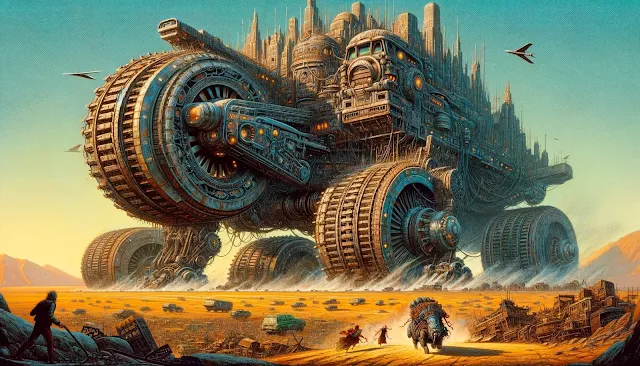
mortal engines traction city concept art

The Ghosts of Technology: History as a Weapon

The entire world of "Mortal Engines" is haunted by the ghosts of its "Ancients." The scarred, barren landscape is a direct result of the Sixty Minute War, a cataclysm caused by a level of technological advancement that outpaced moral wisdom. This makes the theme of environmental degradation a form of historical memory; the Earth itself is a constant reminder of humanity's past sins.


This theme is crystallized in the plot's central artifact: the superweapon MEDUSA. Thaddeus Valentine's obsessive quest to rebuild this piece of "Old-Tech" is the ultimate expression of cyclical history. Rather than learning from the apocalypse, he seeks to harness its power. It shows that humanity is not just doomed to repeat its history but is actively, ambitiously seeking to do so. Technology in "Mortal Engines" is not a neutral tool; it is a cycle of destruction that society is desperate to restart, believing this time, they can control the outcome.


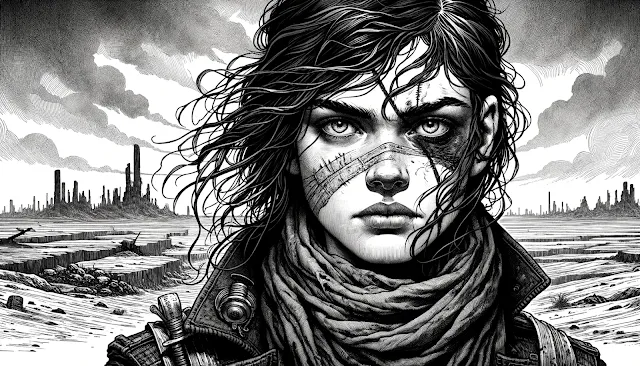
hester shaw mortal engines concept art

Forging an Identity From the Scars of the Past

The characters' journeys are a direct reflection of these larger themes. Tom Natsworthy begins as a Historian who cherishes the past as a collection of curiosities. His harsh awakening in the Out-Country forces him to confront the bloody reality behind his artifacts. He learns that history is not a passive subject but an active force of violence and injustice, and his transformation is about finding his own moral compass within that chaos.


Hester Shaw, conversely, wears the past on her face. Her horrific scar is a literal and metaphorical symbol of history's wounds. In a world where London hides its brutality behind civic pride, her disfigurement is an undeniable mark of truth. Her quest for vengeance against Valentine is a rebellion against his attempt to sanitize and control the historical record. Her arc is about discovering if she can be more than her trauma, if she can build a future that is not solely defined by the scars she carries.


This fusion of history, technology, and identity is perfectly embodied in the Stalker Shrike. He is a piece of Old-Tech, a resurrected soldier from a forgotten war, whose entire existence is driven by a broken memory. He is a literal "Remembering Machine," a ghost in the mortal engine, serving as a constant, terrifying reminder that the past is never truly dead.


A Lasting Legacy

"Mortal Engines" has garnered immense critical acclaim, winning the Nestlé Smarties Book Prize and the Guardian Children's Fiction Prize. Its enduring influence comes from its masterful use of a fantastical premise to hold a mirror to our own world. It is a thrilling adventure that asks profound questions about our society's insatiable consumption, our troubled relationship with history, and our frightening capacity to repeat our most devastating mistakes.


thunder city

Thunder City set to roll into the Mortal Engines universe.

In completely unexpected news, Philip Reeves has announced a new Mortal Engines novel, Thunder City.

It will be set prior to the events of the original novel, making it a 4th prequel novel in the series. 

Here's the synopsis that has been released for Thunder City:

"Tamzin Pook is a fighter in the Amusement Arcade. And what she does best is killing Revenants.

All she knows is survival, having arrived in the Arcade as a small child. She pushes away her memories, her hopes, and her fears, and she emerges into the arena to battle the Revenants--dead brains nestled in armored engine bodies. She doesn't dare to hope or wish for anything more than to survive another day.

Meanwhile, the wheeled city of Motoropolis has been taken over by a rebel faction who killed its leaders and commandeered the city. Its only hope is a teacher named Miss Torpenhow who's determined to find the Mayor's good-for-nothing son and force him to take back what's rightfully his. But to get to him, she'll need to find someone who's skilled at fighting Revenants.

With a daring abduction, Miss Torpenhow and Tamzin Pook's destinies are entwined, and so begin their adventures together...

This stand-alone Mortal Engines novel follows an unlikely crew of fighters-turned friends: Tamzin Pook, Hilly Torpenhow, mayor-to-be Max Angmering, and washed-up mercenary Oddington Doom. Together, they must find a way to outwit the assassins that are determined to drag Tamzin back to the arcade, and try to take back Motoropolis."

Motoropolis - heh, great to Reeve is still doing great puns. 

Here's the book cover, done by Ian McQue who re-did all the covers for the series a few years back:


Reeve has said of his new work:

"The rule I set for myself when I was writing this one was that it shouldn’t feature any of the people or places from previous Mortal Engines books. So Thunder City takes place just over a century before the original book, when the town-eat-town world of Traction Cities is slightly less ruthless than it will become later, and none of the characters from the original quartet has even been born yet. (I suppose Mr Shrike must be bimbling about somewhere, but he’s still just yer basic implacable killing machine at this point so there’s not much point in paying him a visit). So hopefully this new take will be accessible to people who’ve never read Mortal Engines, and hopefully people who have read it will enjoy an adventure set in the same world."

Look for a September release date. Pre-orders are available on Amazon

About the author Jimmy Jangles


My name is Jimmy Jangles, the founder of The Astromech. I have always been fascinated by the world of science fiction, especially the Star Wars universe, and I created this website to share my love for it with fellow fans.

At The Astromech, you can expect to find a variety of articles, reviews, and analysis related to science fiction, including books, movies, TV, and games.
From exploring the latest news and theories to discussing the classics, I aim to provide entertaining and informative content for all fans of the genre.

Whether you are a die-hard Star Trek fan or simply curious about the world of science fiction, The Astromech has something for everyone. So, sit back, relax, and join me on this journey through the stars!
Back to Top