09 August 2023

Johnathan Frake's turn at the Director's Helm made Star Trek great

The Frakes Factor: A Directorial Deep Dive

Jonathan Frakes' impact on the Star Trek universe as both an actor and director is immeasurable. His directorial style, shaped by his extensive experience as Commander William Riker in "Star Trek: The Next Generation," seamlessly combines dynamic visuals, character-driven storytelling, and emotional resonance.

This essay delves into his profound influence on Star Trek films and episodes, highlighting his adept navigation of intricate narratives, thought-provoking themes, and his uncanny ability to capture the very essence of the franchise's spirit.

Directorial Showcase: Key Episodes & Films

"Cause and Effect" - TNG

Frakes' directorial journey found its inception within "The Next Generation," where he helmed several cornerstone episodes. One standout example is "Cause and Effect," an episode that masterfully delves into the complexities of time loops and suspense. Frakes skillfully balanced the tension between repetition and progression, ensuring that the audience remained engaged and intrigued as they pieced together the puzzle alongside the characters.

Director's Log: This episode is famous for its "cold open," where the Enterprise is destroyed before the opening credits even roll. To create the disorienting feeling of the time loop, Frakes used quick cuts and overlapping dialogue from previous loops. The captain of the other starship, the USS Bozeman, was played by Kelsey Grammer in an uncredited cameo, a favor to the show's producer who was a fan of *Cheers*.

"The Offspring" - TNG

"The Offspring" stands as another pinnacle of Frakes' directorial prowess. In this poignant episode, he exhibited a deep understanding of character emotions, particularly in his portrayal of Lieutenant Commander Data's longing for family and identity. The delicate moments between Data and his android daughter, Lal, were meticulously crafted under Frakes' guidance, resonating powerfully with viewers and highlighting his ability to create a genuine connection between characters and audiences.

Director's Log: Jonathan Frakes has stated this is his favorite episode he ever directed. The script, written by René Echevarria, was so strong that it required very few changes. The episode won the 1990 Hugo Award for Best Dramatic Presentation, a testament to its powerful storytelling and direction.

"Past Tense" - DS9

Frakes' excellence extended to other series. "Past Tense" in "Star Trek: Deep Space Nine" showcased his commitment to addressing contemporary societal issues. By exploring themes of poverty and inequality through the lens of science fiction, Frakes adhered to Star Trek's tradition of social commentary, amplifying its relevance to real-world concerns and bridging the gap between speculative fiction and pressing matters of the present.

Director's Log: This two-part episode, set in 2024, depicted "Sanctuary Districts" for the homeless, a concept that writers worried was becoming presciently accurate. Frakes directed Part II, handling the intense action sequences and the dramatic resolution as Sisko must take on the historical role of Gabriel Bell to ensure the timeline is preserved.

Star Trek: First Contact (1996)

"Star Trek: First Contact" emerged as a highly acclaimed film due to its blend of action, philosophical depth, and Frakes' adept directorial choices. He successfully translated the urgency of the Borg threat to the cinematic canvas while maintaining the franchise's focus on ethical exploration. His understanding of Captain Picard's personal issues with the Borg Queen amplified the emotional stakes of the narrative.

Director's Log: Frakes fought hard to keep the film dark and intense, clashing with producer Rick Berman who wanted a more traditional Star Trek feel. The original script involved a time-travel plot to the Renaissance and featured Q. Frakes' focus on the Borg and the action-horror elements is credited with making the film a critical and commercial success, often considered the best of the TNG films.

Star Trek: Insurrection (1998)

"Star Trek: Insurrection," while receiving more mixed reviews, still bears Frakes' directorial influence and dedication to ethical conundrums. The film's exploration of the pursuit of eternal youth and the implications of uprooting a society for personal gain aligned with the core themes of the franchise. Frakes' choices allowed "Insurrection" to remain true to the franchise's ethos.

Director's Log: Frakes has jokingly referred to this film as "the lightest of the TNG movies" and essentially a "big episode of the show." The plot was intended as a deliberate change of pace after the darkness of *First Contact*. The original subtitle was "Stardust," which was the name of the popular song by Hoagy Carmichael that Riker and Troi dance to.

The Legend of Riker's Beard

The concept of "Growing the Beard" refers to a notable shift in the quality and tone of "The Next Generation" that coincided with Jonathan Frakes growing a beard for his character, Commander Riker, at the start of Season 2. This change marked a turning point where the show began to explore deeper, more complex narratives.

Frakes' contributions as both an actor and director were pivotal in this evolution. The term "Growing the Beard" has since entered TV Tropes lexicon as a symbol for a show that has found its footing and hit its creative stride, a positive impact largely attributed to the era Frakes helped define.

Commander Riker's beard from Star Trek TNG

Conclusion

Jonathan Frakes' multifaceted impact on the Star Trek universe is a testament to his exceptional talents. His ability to combine dynamic storytelling, character development, and thematic exploration has left an enduring legacy. From his standout "TNG" episodes to his directorial efforts in Star Trek films, Frakes' creative vision has been a crucial force in shaping the franchise's narrative trajectory.

More recently, Frakes has directed multiple episodes for *Star Trek: Discovery* and *Picard*, and he helmed the critically acclaimed and fan-favorite crossover episode of *Strange New Worlds*, "Those Old Scientists." As the Star Trek saga continues to explore new frontiers, his legacy remains an integral part of its ongoing journey.

Inner Light - one of the great Jean Luc Picard Star Trek episodes

A Life Lived in an Instant: An Analysis of TNG's "The Inner Light"

Star Trek: The Next Generation's __"Inner Light"__ episode is a masterclass in storytelling that takes us on a journey through time and space. This episode is an exceptional blend of science fiction and drama that showcases the creative brilliance of the series, earning writer Morgan Gendel a Hugo Award for his work.

Directed by Peter Lauritson, the episode was inspired by a book called The Martian Chronicles by Ray Bradbury, which explores similar themes of memory, identity, and legacy. The show's creator, Gene Roddenberry, had a vision for a series that would explore the human condition and tackle important social issues, and this episode certainly lives up to that legacy.

Captain Picard playing the Ressikan flute from the Star Trek episode The Inner Light

An Enduring Masterpiece

The Plot: A Lifetime in Minutes

The plot of "The Inner Light" is a shining example of the kind of storytelling that made The Next Generation such a beloved show. The Enterprise crew encounters an alien probe that sends a mental projection into Captain Picard's mind, causing him to experience an _entire lifetime_ on a distant, doomed planet named Kataan.

He raises a family, becomes a respected member of the community, and learns to play the Ressikan flute. The story is both heart-wrenching and life-affirming, and it's a testament to the show's ability to blend science fiction with philosophical and emotional themes.

Patrick Stewart's Iconic Performance

The episode stars Patrick Stewart as Captain Jean-Luc Picard, who becomes the central character in this story. Stewart delivers a stunning performance, perhaps his most iconic effort as Picard. His portrayal of a man who experiences a lifetime's worth of memories in a matter of minutes is nothing short of exceptional.

He initially resists the probe's effects, but as he is drawn deeper into the experience, he begins to accept his new life. He experiences a full range of emotions, from confusion and disorientation to the joy and deep love for his wife and children on Kataan.

Central Themes: Memory and Identity

One of the main themes of "The Inner Light" is the importance of memory and the legacy that we leave behind. The entire purpose of the Kataan probe was to find someone who could become a living memory of their lost civilization, ensuring they would not be forgotten. It's a poignant reminder to cherish our experiences and the people we meet.

Additionally, the episode explores the concept of identity and how it can change over time. Picard, the dedicated Starfleet captain, becomes Kamin, a family man and community member. The experience profoundly affects him, adding layers of depth to his character that resonate throughout the rest of the series.

Director's Log & Trivia

  • The Hugo Award: "The Inner Light" won the 1993 Hugo Award for Best Dramatic Presentation, making it one of only a handful of television episodes to achieve such an honor.
  • The Ressikan Flute: The iconic melody Picard learns was composed by Jay Chattaway. The flute prop itself has become one of Star Trek's most famous artifacts. After the episode, the flute would occasionally appear in Picard's ready room and was featured prominently in a follow-up episode, "Lessons," where Picard shares a duet with a romantic partner.
  • A Lasting Legacy: Picard's experiences as Kamin are referenced several times in later media, including the film *Star Trek: Insurrection* and the series *Star Trek: Picard*, highlighting the profound and lasting impact the event had on his life.

Enduring Legacy and Critical Acclaim

"The Inner Light" is widely regarded as one of the best Star Trek episodes of all time, and for good reason. It paved the way for other science fiction shows to delve deeper into character development and emotional storytelling. Upon its initial airing, it was a hit with both viewers and critics for its emotional depth and poignant narrative.

Despite being over 30 years old, "The Inner Light" remains just as relevant today. Its legacy is seen in its influence on later episodes of Star Trek and its broader cultural impact. It goes toe-to-toe with other classics like "Yesterday's Enterprise" and "The Measure of a Man" as a fan and critical favorite.

"Star Trek: Generations" - Navigating Themes Across Time and Space

"Star Trek: Generations," released in 1994, stands as a pivotal bridge between the iconic original Star Trek series and the beloved continuation, The Next Generation. This cinematic offering not only united two generations of trekkies but also delved into profound thematic explorations that have resonated with audiences for decades. As we embark on this exploration of themes, we'll delve into the film's role in the Star Trek universe, its significance as a cross-generational narrative, and the key themes that shape its narrative tapestry.

The film's arrival marked more than just another installment in the franchise; it served as a torchbearer, transitioning Captain James T. Kirk from the past to Captain Jean-Luc Picard's era in The Next Generation. "Generations" delicately treads the delicate line between honoring the legacy of the original series and propelling the narrative into new frontiers. 

The interplay of legacy, mortality, leadership, friendship, and escapism forms the foundation of the film's thematic richness. In this essay, we will meticulously dissect each of these themes, unraveling the layers of meaning they bring to the film's storyline and their lasting impact on the Star Trek saga as a whole. 
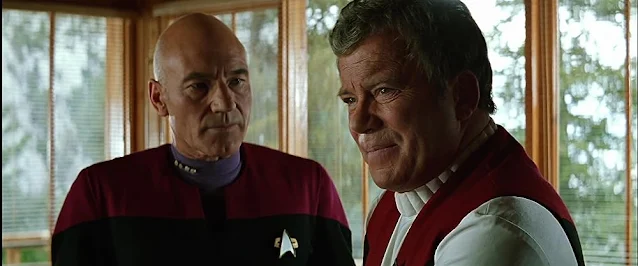
kirk picard generations

Time and Legacy

"Star Trek: Generations" propels us into the realm of time, where past, present, and future intertwine to create a mosaic of experiences that shape characters' lives. The theme of time serves as a central pillar, subtly guiding the narrative's flow and character development. Time, in this film, isn't just a linear progression; it's a tapestry woven with memories, decisions, and the intricate threads of legacy.

At the heart of this temporal exploration lies the enigmatic Nexus, a cosmic phenomenon that tantalizingly promises an existence where personal desires are fulfilled, and time has no boundaries. The Nexus functions as a microcosm of temporal desires, embodying the characters' innermost longings and struggles. As Captain Picard and Soran face the Nexus, they stand at a crossroads between the allure of an idyllic reality and their commitment to their respective legacies.

The Nexus serves as a metaphorical mirror reflecting the characters' desires and unfulfilled aspirations. For Picard, it's a glimpse into a life where his family wasn't tragically lost, offering him a chance to experience the familial happiness he sacrificed for his Starfleet career. Similarly, Captain Kirk is lured by the Nexus, offering him a chance to relive his youth and escape the solitude of retirement.

Captain Kirk and Captain Picard's contrasting experiences within the Nexus are emblematic of their distinct viewpoints on time and legacy. Kirk, initially entranced by the Nexus's promise of reliving moments lost in time, eventually realizes the hollowness of such an existence. He comes to understand that his legacy isn't just a collection of past deeds, but an ongoing influence that extends into Picard's era.

In contrast, Captain Picard's encounter with the Nexus leads him to reject its temptations. As a man of duty and responsibility, he recognizes the ephemeral nature of the Nexus's reality and the importance of facing challenges rather than escaping into an idealized existence. This divergence in their experiences speaks to their distinct personalities and the evolution of Starfleet values across generations.

"Generations" thus masterfully showcases the intricate dance between personal desires and the obligation to uphold one's legacy. Through the Nexus, the film magnifies the eternal struggle between embracing the past and forging a meaningful future. Captain Kirk and Captain Picard emerge as two sides of the same temporal coin, representing the interplay between nostalgia and progress that is central to the human experience.

Mortality and Immortality

"Star Trek: Generations" thrusts us into a realm where mortality and immortality dance on the precipice of human desires. At the heart of this exploration lies the Nexus, a cosmic realm that dangles the promise of eternal happiness before those who dare to step inside. This ethereal allure of escaping the clutches of time raises profound questions about the nature of existence, mortality, and the pursuit of unending bliss.

The film casts its spotlight on Dr. Tolian Soran, a brilliant scientist consumed by his quest for immortality through the Nexus. His obsession paints a grim picture of the lengths to which one might go to escape the inevitability of death. Soran's willingness to destroy entire star systems to alter the path of the Nexus and thereby achieve his own immortality reflects a stark commentary on the human condition. 

It underscores the primal fear of mortality and the potential for that fear to morph into a reckless, destructive obsession.

In the face of Soran's ruthless pursuit of eternal happiness, Captain Picard finds himself confronting his own mortality in a more intimate and introspective manner. As Picard experiences his family's demise in the Nexus, he confronts the inescapable reality of mortality. This experience serves as a catalyst for Picard's realization that the value of life lies not in escaping death but in embracing the fleeting nature of existence. Picard's journey through the Nexus illuminates the paradox that immortality, though seemingly desirable, robs life of its precious essence, its urgency, and its capacity for growth and change.

Ultimately, "Generations" encourages us to ponder the delicate equilibrium between mortality and immortality. Soran's desperate pursuit highlights the dangers of forsaking the present in favor of an unattainable future, while Picard's introspective journey underscores the beauty in experiencing life's ephemeral moments. The Nexus serves as a poignant reminder that true happiness is found not in eternal existence but in embracing the moments that make up the human experience.

The film's exploration of mortality and immortality, encapsulated through the Nexus, invites us to reflect on the value of our own existence and the lessons we can glean from the interplay between life's impermanence and its inherent worth. In "Star Trek: Generations," the Nexus becomes a canvas upon which the human struggle for eternal happiness and the poignant acceptance of mortality are artfully portrayed.

Leadership and Responsibility

"Star Trek: Generations" not only unites Captain Kirk and Captain Picard across time but also presents an intriguing exploration of their distinct leadership styles. Kirk, the swashbuckling trailblazer of the original series, contrasts with Picard, the thoughtful and diplomatic leader of The Next Generation. Their leadership dynamics illuminate how different approaches to leadership can shape the course of events and the character of their crews.

As Kirk and Picard journey through the Nexus, they each confront scenarios where their leadership styles take on new dimensions. Kirk's idyllic existence in the Nexus illustrates his desire for adventure and action, echoing his command style characterized by bold decisions and quick thinking. Picard's Nexus experience, on the other hand, reveals his yearning for a life of familial warmth and intellectual pursuits, mirroring his leadership through diplomacy, ethics, and deep introspection.

The Nexus's influence extends beyond personal desires, shaping the way Kirk and Picard view their roles as leaders. For Kirk, the Nexus exposes the emptiness of a life solely dedicated to adventure, driving him to recognize the importance of his legacy and the mark he leaves on the universe. Picard's encounter helps him reevaluate his choices, reminding him of the value of his role in shaping the future rather than escaping to an idealized past.

Captain Picard faces a profound moral dilemma when he must balance his duty as a Starfleet officer with his personal desire to rescue Captain Kirk from the Nexus and thwart Soran's destructive plan. This dilemma highlights the intricacies of leadership, where ethical decisions often conflict with personal motivations. Picard's internal struggle illustrates his commitment to the greater good while acknowledging his emotional attachment to Kirk.

"Generations" emphasizes that leadership isn't merely about making decisions but about the impact those decisions have on individuals, crews, and the galaxy at large. Kirk's and Picard's contrasting Nexus experiences mirror their distinct leadership styles and choices. Kirk learns to consider the broader ramifications of his actions, while Picard is reminded of the importance of embracing his responsibilities as a leader, even in the face of personal yearnings.

Friendship and Companionship

"Star Trek: Generations" weaves a tapestry of friendship and companionship, uniting the legendary Captain Kirk of the original series with the steadfast Captain Picard of The Next Generation. Their bond represents more than just a connection between characters; it symbolizes the intergenerational thread that unites the franchise's iconic eras, bridging past and future in a poignant display of friendship's enduring power.

As Captain Picard navigates the challenges of the Nexus, he encounters not only Kirk but also his own crew and newfound allies. The relationships between Picard and his crew—Geordi, Data, Worf, and others—illustrate a camaraderie that transcends time and duty. Through interactions laced with humor, trust, and shared experiences, these relationships mirror the strength of bonds formed by the original series characters.

Friendship and companionship play a pivotal role in the characters' growth and their ability to confront challenges. Captain Kirk's camaraderie with Picard demonstrates that the wisdom of the past can guide the present, while Picard's interactions with his crew highlight the importance of collaboration in facing adversity. The relationships nurtured in the film provide emotional support, diverse perspectives, and unwavering loyalty, enabling characters to navigate the complexities of their situations.

Kirk and Picard's partnership embodies the notion that friendships are not only forged in moments of triumph but also endure through trials. Their combined efforts to prevent Soran's catastrophic plan showcase the strength of their bond and their shared commitment to preserving life across the universe. Similarly, the crew's unwavering support for Picard underlines the idea that friendship fosters resilience and empowers individuals to rise above their personal challenges.

"Generations" leaves a legacy of friendship as a beacon that guides characters across generations. The film illuminates that the connections formed between individuals, regardless of the temporal divide, have the power to shape destinies and influence the course of history. As Kirk and Picard's camaraderie intertwines with the support and loyalty exhibited by the crew, the film champions the idea that friendships not only strengthen individuals but contribute to a shared legacy of growth, perseverance, and unity.

In "Star Trek: Generations," the friendships forged and sustained provide a poignant reminder that companionship transcends time and space, shaping characters' journeys, enabling their resilience, and echoing the fundamental human need for connection.

enterpise d star trek generations

Escapism vs. Reality

"Star Trek: Generations" navigates the theme of escapism through the enigmatic Nexus—a realm that seduces characters with the allure of an idealized reality. The Nexus symbolizes the desire to escape life's complexities, offering a utopian existence unburdened by hardship or responsibility. However, this tantalizing mirage is juxtaposed with the intricacies of the real world, spotlighting the contrast between seeking refuge in illusions and embracing the challenges of genuine existence.

The Nexus presents an alluring vision of dreams realized—a world where wishes materialize, and past regrets are erased. Captain Kirk's Nexus experience, where he revisits a moment of youthful adventure, exemplifies the allure of this idealized existence. However, as the film unfolds, it becomes evident that this perfect world is a construct, devoid of the genuine emotions and complexities that define human experience.

Characters in the film are indeed tempted by the Nexus's illusion, drawn to the promise of escape from their struggles and disappointments. Yet, as the narrative unfolds, they find the strength to reject its seductive call. Captain Picard's choice to leave the Nexus, despite the opportunity to reunite with his lost family, underscores the resilience of the human spirit and the understanding that true fulfillment lies in facing life's challenges head-on.

"Generations" conveys a potent message about the significance of confronting life's trials and embracing reality's complexities. The film's juxtaposition of the Nexus's utopia with the grittier, imperfect world mirrors humanity's perennial struggle with the desire for comfort and the innate need for growth. The characters' return to reality emphasizes the intrinsic value of facing adversities, as challenges provide opportunities for learning, growth, and genuine fulfillment.

Through its exploration of escapism and reality, "Star Trek: Generations" ultimately champions the idea that life's difficulties are not to be evaded but embraced. The film underscores that seeking a perfect existence devoid of challenges leads to an empty, one-dimensional existence. Instead, it suggests that the richness of human experience lies in confronting reality, embracing the complexity of emotions, relationships, and trials, and finding purpose in the struggle to overcome adversity.

In the Nexus's ephemeral facade and the characters' ultimate choices, the film emphasizes the profound truth that life's imperfections and challenges are integral to its beauty and significance. "Star Trek: Generations" serves as a reminder that true fulfillment emerges from engaging with the intricacies of existence, even when they are fraught with difficulty.

Gwynyth Walsh klingon generations sexy
Gwynyth Walsh and Malcolm McDowell

Conclusion

"Star Trek: Generations" embarks on a cosmic odyssey of themes that weave together the fabric of human experiences across time and space. Through its exploration of time, legacy, mortality, leadership, friendship, and escapism, the film traverses philosophical landscapes, unifying the past and future of the Star Trek universe in a profound tapestry of storytelling.

The characters' encounters with the Nexus serve as a lens through which these themes are refracted. The Nexus becomes a portal to explore the myriad facets of the human condition, allowing the characters' desires, struggles, and choices to echo the complexities of reality.

"Generations" holds a significant place within the Star Trek universe, bridging the gap between the original series and The Next Generation. It creates a nexus of eras, melding iconic figures like Kirk and Picard while navigating the universal themes that have been central to the franchise's enduring appeal. This film not only celebrates the legacy of the past but also propels the Star Trek saga into uncharted territories, building on the foundation of its predecessors while embracing fresh perspectives.

The characters' journeys within "Generations" exemplify the human experience in all its intricacies. Their choices reflect the eternal struggles and aspirations that define our species—struggles with mortality, the yearning for legacy, the complexities of leadership, the power of friendship, and the tug between escapism and the reality of life's challenges. By delving into these timeless philosophical questions, the film resonates with audiences on a deep and personal level, offering insights that transcend the boundaries of fiction.

Check out the events of the follow up - Star Trek: First Contact

Gwynyth Walsh: Bringing Depth to the Klingon B'Etor in Star Trek

In the realm of science fiction television, few franchises have left as profound a mark as Star Trek. A cultural icon since its inception, the series has introduced audiences to a plethora of memorable characters, each contributing their unique essence to the rich tapestry of the show's universe. One such character, brought to life by the talented actress Gwynyth Walsh, is the Klingon warrior B'Etor. Through her portrayal, Walsh not only elevated the Klingon culture but also added a layer of complexity to the narrative of the Star Trek universe.

Gwynyth Walsh's introduction to the Star Trek universe came in the form of her role as B'Etor, one half of the formidable Klingon sister duo alongside her on-screen sibling, Lursa, portrayed by Barbara March. The sisters made their debut in the Star Trek: The Next Generation episode titled "Redemption," where they instantly captivated the audience with their strong personalities and allegiance to the Klingon Empire. Their continuing presence across various Star Trek series, including "Star Trek: Deep Space Nine" and "Star Trek: Voyager," further solidified their status as iconic Klingon characters.

gwyneth walsh klingon


Walsh's portrayal of B'Etor demonstrated her remarkable acting prowess. The role required her to embody the essence of Klingon culture – fierce loyalty, unyielding honor, and unapologetic assertiveness. Walsh effectively conveyed these traits through her commanding presence, expressive facial expressions, and powerful vocal delivery. Her portrayal was not merely a caricature of Klingon stereotypes but rather a nuanced exploration of a character driven by complex motivations and desires.

What set Gwynyth Walsh's performance apart was her ability to humanize the Klingon character. Beneath the tough exterior, she skillfully conveyed the vulnerability and conflict that B'Etor grappled with. This duality was evident in episodes like "Firstborn" from "Star Trek: The Next Generation," where B'Etor's inner turmoil about her place within Klingon society and her strained relationship with her sister were brought to the forefront. Walsh's portrayal added a layer of depth to B'Etor, making her more than just a one-dimensional antagonist.

Gwynyth Walshs  BEtor star trek generations

Furthermore, Gwynyth Walsh's contributions to the Star Trek franchise extended beyond her on-screen appearances. Her dedication to understanding and internalizing Klingon culture allowed her to bring authenticity to her role. She embraced the challenge of speaking Klingon lines and infused them with the appropriate cadence and intonation. This commitment to authenticity not only enhanced her performance but also resonated with fans who greatly appreciated the attention to detail.

In essence, Gwynyth Walsh's portrayal of B'Etor played a crucial role in enriching the Star Trek universe. Through her performance, she shattered stereotypes and provided viewers with a multifaceted understanding of Klingon characters. Her ability to infuse complexity into her portrayal elevated the narrative, turning the Klingon sisters into more than just antagonists but characters with their own struggles, aspirations, and histories.


08 August 2023

The Character Arc of Astronaut Ryland Grace in "Project Hail Mary" by Andy Weir

"Project Hail Mary," a science fiction novel by Andy Weir, introduces readers to the remarkable character of astronaut Ryland Grace. The novel follows Grace's journey of self-discovery and survival as he navigates the challenges of space exploration, loneliness, and a desperate mission to save humanity. 

Ryland Grace's character arc is central to the novel's exploration of themes like resilience, sacrifice, human ingenuity, and the power of collaboration. This essay will delve into the depth of Ryland Grace's character arc, how it contributes to the overarching themes of the novel, and its pivotal role in shaping the novel's ending.

The Beginnings of Ryland Grace

At the outset of "Project Hail Mary," Ryland Grace is introduced as a brilliant scientist who has lost his memory due to a medical procedure. His initial confusion and disorientation set the stage for his evolution throughout the story. With the gradual recovery of his memories, readers discover that Grace was a junior high school teacher on Earth before being chosen for the mission to save humanity. This backstory not only showcases his versatility but also hints at the transformative journey he is about to undertake.

project hail mary novel cover andy weir
 

Navigating Isolation and Survival

A substantial portion of the novel revolves around Ryland Grace's solitary existence aboard the spaceship Hail Mary, hurtling through the vast expanse of space toward a distant star system. This extended period of isolation serves as a crucible that intricately shapes his character development. Stripped of human companionship and immersed in the stark silence of the cosmos, Grace's psyche is subjected to a relentless test. 

As he grapples with the profound weight of loneliness, his emotional and psychological evolution takes center stage.

In this vacuum of human interaction, Grace's resourcefulness and adaptability come to the fore. Through a captivating narrative, readers witness his gradual bond with the ship's artificial intelligence, Rocky. What begins as a functional partnership—a means of surviving the isolation—morphs into a poignant companionship that defies the boundaries of organic life. Grace's ability to establish a genuine connection with Rocky, an entity devoid of human attributes, speaks to his innate capacity to forge meaningful relationships, even in the harshest and most unconventional conditions.

The dynamic between Grace and Rocky unveils layers of his character that would prove indispensable in the later stages of the narrative. The bond they share evolves beyond mere utility, revealing Grace's profound need for connection and his tenacity in seeking it out, regardless of the medium. This intricate relationship exemplifies his adaptability and willingness to explore uncharted emotional territories, setting the stage for the challenges he would face as the plot unfolds. 

These qualities, cultivated during his solitary confinement aboard the Hail Mary, become pivotal as Grace confronts the daunting obstacles that lie ahead, demonstrating the seamless interplay between character development and the novel's thematic underpinnings.

Rediscovering Purpose and Identity

As the intricacies of the narrative unfurl, Ryland Grace embarks on a gradual journey of intellectual unraveling, piecing together the mosaic of his mission's true purpose. The enigma he confronts involves a race against time to retrieve the elusive substance known as "calyxium," nestled within the heart of a remote star system. The weight of this revelation, layered with its potential to salvage humanity from an impending environmental catastrophe, serves as a fulcrum upon which Grace's personal metamorphosis pivots.

The process of piecing together the puzzle becomes an exploration of self-discovery and redefinition. Grace, once a humble junior high school teacher on Earth, now finds himself cast as an integral component of humanity's survival plan. 

The tapestry of his life, once woven with the threads of pedagogy, is rewoven with threads of exploration, sacrifice, and the sheer magnitude of cosmic responsibility. This juxtaposition is profound, as the novel masterfully underscores the evolution from a modest, earthly vocation to a mission of cosmic proportions.

Grace's journey of rediscovery becomes an intricate dance between past and present, his former identity interlacing with his newfound role as a savior. The narrative invites readers to navigate the contours of his transformation, underpinned by the fusion of memories and aspirations. As he unearths the fragments of his identity, readers witness the emergence of a multidimensional character whose growth resonates beyond the pages.

The motif of juxtaposition reverberates throughout this pivotal phase of the novel. Grace's transition from educator to astronaut-savior mirrors humanity's transition from a passive relationship with its environment to an active role in shaping its fate. The juxtaposition sharpens the novel's thematic focus, reinforcing the idea that growth is often sparked by the dynamic interplay of contrasting roles and responsibilities.

In this weaving of identity, the fabric of Grace's character becomes textured with layers of purpose and duty. His quest for calyxium becomes synonymous with his quest for self-realization, and his transformation stands as a microcosm of humanity's potential to evolve, adapt, and reclaim agency in the face of adversity. 

Through Grace's journey, Andy Weir (The Martian) beckons readers to consider the ways in which we, like his protagonist, can navigate the intricate dance between past and present, self and mission, and ultimately, redemption and transformation.

ryan gosling ryland grace project hail mary
Ryan Gosling, Astronaut of the People of Earth

Collaborative Problem-Solving

At the core of Ryland Grace's character lies an exceptional aptitude for problem-solving, a facet that distinguishes him as a remarkable protagonist. In the tapestry of the narrative, his approach to overcoming challenges takes on a multi-faceted hue, revealing a spectrum of intellectual prowess, creative ingenuity, and a dogged determination to navigate the uncharted terrain of space. 

Armed with analytical thinking, Grace dissects complex conundrums with the precision of a surgeon, leveraging his scientific acumen to unravel the most formidable mysteries that stand between him and his goal.

Throughout the novel's narrative arc, the reader becomes a witness to Grace's scientific experimentation—an alchemical fusion of hypotheses, calculations, and daring experimentation that borders on the avant-garde. This aspect of his character portrayal highlights the meticulous attention to detail that author Andy Weir infuses into the narrative, reinforcing Grace's role as a quintessential scientist-astronaut. Grace's resourceful adaptation to unexpected challenges showcases not only his capacity for nimble thinking but also his willingness to embrace the experimental journey that science often entails.

Yet, what distinguishes Grace as a truly exceptional character is his propensity for collaboration. In a narrative universe where self-reliance is a hallmark of survival, he defies convention by cultivating a symbiotic partnership with an enigmatic alien entity—the "Astrophage." This unlikely alliance becomes a luminous testament to the novel's thematic exploration of collaboration and unity as transformative forces. 

The partnership with Rocky serves as a metaphorical bridge, transcending the boundaries of language, biology, and culture. This alliance, built on a foundation of mutual understanding and shared purpose, resonates with a timeless message: that collaboration between disparate entities can catalyze innovation and surmount challenges that would otherwise appear insurmountable. This thematic undercurrent is exemplified in Grace's character, and his role as an ambassador of interspecies collaboration amplifies the novel's overarching message of hope through unity.

In this masterful narrative tapestry, Grace's character shines as a beacon of analytical prowess and innovative thinking, woven together with the thread of collaboration. His journey navigates the trajectory of human capability, from individual resourcefulness to the boundless potential that emerges when disparate minds harmonize in pursuit of a common goal.

Sacrifice and Redemption


As the narrative crescendos towards its climactic apex, Ryland Grace's character arc reaches an apex of its own, evoking a crescendo of emotional resonance. This culminating moment becomes a canvas upon which his growth, courage, and selflessness paint an indelible portrait. Confronted by a choice that threatens not only his own existence but also the fate of humanity and the enigmatic Astrophage, Grace stands as a testament to the boundless potential of the human spirit.

In this crucible of decision, Grace's transformation unfurls with unparalleled poignancy. The seeds of growth that were sown throughout his journey blossom into an awe-inspiring display of altruism and valor. His resolve to lay down his own life to safeguard the future of humanity and the newfound alliance with the Astrophage illuminates the depth of his metamorphosis. 

The selflessness that compels him to cast aside his own survival for the greater good becomes a testament to the novel's thematic exploration of sacrifice as a catalyst for redemption.

In this pivotal moment, Grace transcends the limits of self-preservation and personal gain, embodying a profound shift from the introspective individual he once was to a selfless guardian of cosmic proportions. 

This act of self-sacrifice reinforces the novel's exploration of heroism as an amalgamation of personal growth, moral courage, and the innate capacity for compassion. Grace's decision echoes the age-old archetype of the hero, transforming him from an ordinary individual into a symbol of humanity's potential to rise above adversity and reshape its destiny.

Through Grace's choice, Andy Weir's narrative paints a portrait of redemption—a concept interwoven with the very fabric of human nature. The act of sacrificing oneself for the greater good becomes a prism through which the novel examines the profound shifts that can occur within the human soul. It is within these transcendent moments of sacrifice and selflessness that the true essence of heroism and the capacity for renewal and transformation reside.


Contribution to Themes and Ending

Ryland Grace's character arc serves as a vehicle for the exploration of several overarching themes in "Project Hail Mary." His resilience in the face of adversity, his adaptability to new challenges, and his commitment to collaboration contribute to themes of human ingenuity, unity, and the indomitable spirit of survival. Furthermore, his journey aligns with the novel's message of hope and the potential for redemption, even in the most dire circumstances.

The culmination of Grace's character arc profoundly impacts the novel's ending. His sacrifice not only saves humanity but also establishes a bridge of understanding and cooperation between two distinct species—the humans and the Astrophage. This ending reinforces the importance of transcending differences for the greater good and sets the stage for a future of cooperation and shared knowledge.

Conclusion

In "Project Hail Mary," Andy Weir crafts an intricate character arc for astronaut Ryland Grace, taking readers on a journey of self-discovery, resilience, sacrifice, and redemption. Grace's transformation serves as a microcosm of the novel's broader themes, and his actions contribute significantly to the novel's impactful ending. Through his collaboration, sacrifice, and unwavering determination, Ryland Grace emerges as a symbol of humanity's capacity for growth and heroism in the face of overwhelming challenges.

Rocky the Alien: A Catalyst of Evolution and Connection in Project Hail Mary

Project Hail Mary, a science fiction novel penned by Andy Weir (The Martian), is a captivating exploration of survival, adaptation, and camaraderie set against the backdrop of an interstellar journey. 

At the heart of the narrative is the enigmatic character Rocky, an alien entity whose presence and evolution play a pivotal role in driving the novel's themes and culminating in its climactic ending.

Rocky's character arc reflects the transformative power of collaboration, adaptation, and empathy, underlining the novel's central themes and influencing the ultimate resolution.

project hail mary book cover rocky

Rocky's Introduction and Initial State

Rocky is introduced as a curious and resilient alien lifeform, initially perplexing the protagonist, Ryland Grace, a biologist and the novel's central figure. Rocky is found aboard the spaceship Hail Mary, where Grace wakes up with amnesia, unaware of his mission to save Earth from a catastrophic solar event. The interactions between Grace and Rocky are characterized by initial confusion due to the language barrier and the disparities in their biological makeup.

Rocky's initial state mirrors the challenges of the journey – alone, adaptable, and brimming with a desire to understand. Its seemingly puzzling biology and manner of communication evoke a sense of mystery and anticipation, driving the reader's curiosity. 

Its unique physiology, which involves photosynthetic capabilities and "slushy" body composition, showcases Weir's imaginative approach to extraterrestrial life.
   

Evolution and Collaborative Learning

Rocky's character arc is marked by a remarkable evolution, both in terms of its physical attributes and its relationship with Grace. Through a series of trials and errors, the duo manages to establish a rudimentary form of communication, bridging the gap between human and alien understanding. This process of collaborative learning and mutual adaptation serves as a microcosm for the broader theme of unity and teamwork in the face of adversity.

The pivotal moment in their relationship occurs when Grace discovers Rocky's ability to manipulate matter at the molecular level. This discovery not only propels the narrative's scientific elements but also deepens the bond between the characters. The shared quest for survival, intertwined with the exchange of knowledge, transforms their partnership into a force capable of overcoming seemingly insurmountable challenges.
 

Empathy and Emotional Growth

Rocky's evolution is not solely limited to its physical attributes; it also encompasses emotional growth and the development of empathy. As Grace and Rocky navigate the trials of space travel, the latter's capacity to understand and share emotions becomes increasingly apparent. This evolution of emotional intelligence is exemplified when Rocky empathizes with Grace's pain and loss, echoing the human need for connection and understanding.

The empathy demonstrated by Rocky serves as a bridge between disparate species, reinforcing the novel's underlying message of the universal nature of emotions and the potential for unity beyond borders. This emotional growth parallels Grace's own journey of rediscovering his humanity and purpose amid the vast emptiness of space.
 

Catalyst for Hope and Resolution

As the novel progresses, Rocky's contributions to scientific breakthroughs become increasingly integral to the mission's success. Its unique abilities enable Grace to devise ingenious solutions to challenges such as manipulating the spaceship's technology and altering planetary conditions. Rocky's biological manipulation skills not only drive the scientific progression but also symbolize the adaptability and innovation necessary for survival.

In the novel's climax, Rocky's connection to the overarching theme of interconnectedness is solidified. Its actions, interwoven with Grace's ingenuity, lead to the resolution of the solar crisis, illustrating the potential of cooperation and understanding across species boundaries. 

Rocky's transformation from an enigmatic entity to a partner in saving humanity reinforces the novel's message that, despite differences, unity can lead to unparalleled achievements.

The Impact on the Ending of Project Hail Mary

Rocky's character arc reaches its zenith in the novel's final moments. Its role in saving Earth from the solar catastrophe becomes a metaphor for the power of collaboration, adaptation, and empathy in overcoming even the most dire circumstances. The closing chapters emphasize the enduring bond between Grace and Rocky, highlighting how their partnership transcends the confines of space and time.

Rocky's legacy is intertwined with the novel's resolution, as it embodies the essence of the journey – growth, connection, and hope. Its evolution from an enigma to a driving force behind humanity's survival adds a layer of profundity to the narrative's conclusion, underscoring the importance of embracing diversity and cooperation in the pursuit of progress.

Conclusion as to the character arc of Rocky in Project Hail Mary

Rocky's character arc in Project Hail Mary encapsulates the essence of the novel's themes – unity, adaptation, empathy, and the limitless potential of collaboration. Through its evolution, Rocky serves as a catalyst for growth and transformation, ultimately contributing to the novel's climactic ending.

Its unique biology, evolving communication skills, and emotional growth mirror humanity's capacity for change and connection, driving home the novel's central message: that in the face of adversity, cooperation and understanding can lead to remarkable achievements.

Andy Weir's imaginative portrayal of Rocky's character adds depth and resonance to a narrative that celebrates the boundless power of hope and unity.

Krysta Now's Complex Character Arc and its Contribution to the Themes of "Southland Tales

"Southland Tales," a visionary dystopian science fiction film directed by Richard Kelly, has garnered acclaim for its labyrinthine narrative, enigmatic characters, and intellectually stimulating themes. 

This cinematic tapestry weaves together a complex web of characters, and within this intricate ensemble, the character Krysta Now, portrayed with captivating complexity by Sarah Michelle Gellar, emerges as a central and transformative figure. 

Through her multifaceted journey and interactions, Krysta infuses profound layers into the film's exploration of identity, the mesmerizing allure of celebrity culture, and the disorienting interplay between reality and the imagined.

As she navigates the labyrinthine twists of her existence, her trajectory becomes a poignant prism through which the audience gains a nuanced understanding of the film's thematic tapestry. 

It's essential to recognize that the viewer's grasp of the film's intricate design reaches its zenith when exposed to the enlightening perspective provided by the Cannes Cut – a version that elegantly elucidates the narrative intricacies.

Krysta Now southland tales

Krysta Now sashays onto the screen as an enigmatic embodiment of desire, transitioning from the realm of pornography to ascend the ranks of reality television stardom. A master of allure, she effortlessly captures the public's fascination, weaving a tapestry of lust and yearning around her persona. 

Her character arc resonates with a profound evolution, transforming from an insatiable seeker of the spotlight into a contemplative soul searching for deeper truths. 

This metamorphosis ignites with an incendiary spark, fueled by her tantalizing visions and tantalizing encounters with the enigmatic fractures in the fabric of space-time that ripple through the film's universe. Amid these hypnotic occurrences and the chaotic symphony of unfolding events, Krysta's very essence becomes a crucible of introspection. 

The tantalizing allure that once defined her existence now surrenders its superficiality to a more profound quest: one that impels her to question not only her own identity but also the very bedrock of reality itself.

Krysta's  Contribution to Themes of Southland Tales

Identity and Celebrity Culture

Krysta's character embodies the theme of identity, especially how it can be constructed, deconstructed, and manipulated in a celebrity-driven society. She initially thrives on the superficiality of fame, using her sexualized image to gain attention. However, as the film progresses, she grapples with the authenticity of her fame and the emptiness it brings. 

Her journey highlights the hollowness of celebrity culture, where appearances and personas often overshadow genuine self-discovery.

Blurring Reality and Fiction

The film delves into the blurring of lines between reality and fiction, a theme exemplified by Krysta's journey. As she experiences visions and confronts existential questions, the boundaries between her perceived reality and her internal experiences become increasingly ambiguous. 

This mirrors the broader narrative of the film, where characters' perceptions of events are distorted by the manipulation of information and technology.

Spirituality and Existentialism

Krysta's transition from a shallow celebrity to a more introspective individual brings forth themes of spirituality and existentialism. Her encounters with the rifts in space-time lead her to question the nature of existence and the role of humanity in the universe. 

This introspection contributes to the film's exploration of humanity's place in a complex and interconnected cosmos.

Contribution to the Ending

Krysta's character arc is integral to the film's climactic ending. Her revelations about the nature of the rifts and her own identity contribute to a greater understanding of the film's convoluted narrative. As the threads of the story come together, her transformation highlights the need for characters and the audience alike to reevaluate their perspectives on the events that have transpired.

Krysta Kapowski southland tales

The Significance of the Cannes Cut

The Cannes Cut of "Southland Tales" provides a more coherent narrative, allowing viewers to better grasp the intricacies of the plot, character relationships, and underlying themes. This version clarifies Krysta's role and the impact of her character arc on the overall storyline. Watching the Cannes Cut enhances the viewer's experience by offering a more rewarding and comprehensive understanding of the film's complexity.

Trivia and Behind-the-Scenes Insights

  • Sarah Michelle Gellar's portrayal of Krysta Now marked a departure from her previous roles, showcasing her versatility as an actress.
  • The character's name, Krysta Kapowski, is an allusion to Kelly Kapowski, a character from the TV series "Saved by the Bell," which reflects the film's pop culture references.
  • Richard Kelly's vision for Krysta's character was to explore the relationship between spirituality, celebrity culture, and the broader themes of the film.
  • The film's initial release faced mixed reviews and confusion due to its complex narrative, prompting Kelly to re-edit the film into the Cannes Cut for better coherence.


Conclusion as to the role of Krysta Kapowski in Southland Tales

Krysta Now's character arc in "Southland Tales" is a multifaceted journey that contributes significantly to the film's themes of identity, celebrity culture, and the blurring of reality and fiction. Her transformation from a shallow celebrity to a more introspective individual mirrors the broader narrative's exploration of humanity's place in a complex world. By watching the Cannes Cut, viewers can gain a deeper appreciation of Krysta's role and the intricate threads that weave together to create a more rewarding cinematic experience.

About the author Jimmy Jangles


My name is Jimmy Jangles, the founder of The Astromech. I have always been fascinated by the world of science fiction, especially the Star Wars universe, and I created this website to share my love for it with fellow fans.

At The Astromech, you can expect to find a variety of articles, reviews, and analysis related to science fiction, including books, movies, TV, and games.
From exploring the latest news and theories to discussing the classics, I aim to provide entertaining and informative content for all fans of the genre.

Whether you are a die-hard Star Trek fan or simply curious about the world of science fiction, The Astromech has something for everyone. So, sit back, relax, and join me on this journey through the stars!
Back to Top