14 July 2023

Star Trek: Strange New Worlds Season 2 Episode 5 Review: Charades

Following on from "Among the Lotus Eaters", "Charades," the fifth episode of Star Trek: Strange New Worlds Season 2, expertly combines humor, emotion, and character development to deliver a standout installment. Written by producer Kathryn Lyn and showrunner Henry Alonso Myers and directed by Jordan Canning, this episode explores the complexities of relationships, personal growth, and the challenges of reconciling emotions. With its seamless blend of romance, humor, and profound storytelling, "Charades" stands out as one of the best episodes of the series.


The episode delves into the unresolved tension between Spock and Christine Chapel, further enhancing their "will they won't they" dynamic. As Nurse Chapel prepares for a fellowship interview, the interactions between her and Spock hint at their lingering feelings for each other. The avoidance and intrigue surrounding their relationship add depth and anticipation. Additionally, Spock's ongoing struggle with his emotions, stemming from his previous experiences, continues to be a central theme.


spock ethan peck strange new worlds

His journey to find balance between his human and Vulcan sides, alongside the pressures of an engagement dinner, provides an introspective exploration of character growth.


"Charades" cleverly infuses elements of teenage sitcom humor throughout the episode. The musical score enhances the sense of intrigue and tension, while the lighthearted moments, such as Vulcan's disdain for human scent, add a playful touch. The comedic timing and versatility of Ethan Peck's performance as Spock are commendable, showcasing his ability to deliver both humorous and emotionally charged scenes. His portrayal of Spock grappling with his intense emotions and learning to embrace his human side adds depth to the narrative.


The episode also delves into the intensity of Vulcan engagement rituals, providing a realistic portrayal of the challenges faced in intercultural relationships. The disapproval of T'Pring's mother towards Spock's human nature adds an authentic layer of conflict and explores the complexities of blending different cultures. The character development for T'Pring allows her to find her own voice and highlights the growth and self-discovery within the relationship dynamics.


"Charades" successfully balances humor and emotion, allowing audiences to connect with the characters on a deeper level. The episode's exploration of complex relationships, personal growth, and Vulcan traditions showcases the series' ability to intertwine different elements of storytelling. As Star Trek: Strange New Worlds continues to evolve, it remains a compelling journey into the human (and Vulcan) spirit, emphasizing universal pursuits such as love, understanding, and self-acceptance.


In conclusion, "Charades" is an emotionally resonant and introspective episode of Star Trek: Strange New Worlds. With its blend of humor, character development, and powerful storytelling, it stands as one of the series' standout installments. The performances, especially Ethan Peck's portrayal of Spock, bring depth and authenticity to the characters' journeys. As the episode explores complex relationships, personal growth, and Vulcan traditions, it reminds us of the universal themes of love, understanding, and self-discovery. Audiences are left eagerly awaiting the next chapter in the captivating "will they won't they" saga of Spock and Nurse Chapel.

12 July 2023

Analyzing the Themes of 'Mother! - Nature, Creation, and Chaos

Darren Aronofsky, known for his thought-provoking and controversial works, crafted "Mother!" as a psychological horror film that garnered critical acclaim for its bold and allegorical storytelling. Released in 2017, the film captivated audiences with its complex themes and layered narrative.

"Mother!" follows the story of a young woman, referred to as Mother (played by Jennifer Lawrence), who lives with her poet husband, Him (played by Javier Bardem), in an isolated house. As unexpected guests arrive and chaos unfolds, the film delves into enigmatic themes and allegories that demand exploration and analysis.

This discussion aims to provide an in-depth examination of the underlying themes in "Mother!" by analyzing specific scenes and examples from the film to elucidate its complexity and depth.

mother! film themes aronofsky

Setting the Stage

Mother and Him reside in a secluded house that serves as a microcosm of the world. The house symbolizes Mother Earth, a sanctuary that embodies nature and its delicate balance. As the film progresses, the house's significance expands to represent the planet as a whole, highlighting the destructive impact of human actions on the environment.

The film's plot structure is designed to gradually escalate tension and intensify the chaos. At the beginning, the tranquil existence of Mother and Him is disrupted when a mysterious couple, Man and Woman (played by Ed Harris and Michelle Pfeiffer), unexpectedly arrives. The house's sanctity deteriorates as more uninvited guests flood in, leading to a crescendo of madness and destruction.

Through this immersive setting, the film establishes a stage for the exploration of its profound themes, urging viewers to contemplate the underlying messages conveyed.

Environmental Allegory

In "Mother!," Mother personifies Mother Earth, representing the fragile ecosystem and the planet's vulnerability. She embodies a caretaker, tirelessly working to maintain the house's harmony and serenity. As guests disregard her pleas for order and respect, the film metaphorically portrays humanity's disregard for the environment.

The film employs powerful symbolism and visuals to convey the environmental allegory. For example, the house progressively suffers from abuse and destruction. Mother's sanctuary, once a pristine and peaceful space, is violated by guests who disrespect nature and exploit its resources. Scenes of environmental devastation, such as the house crumbling, serve as stark reminders of humanity's disregard for nature's delicate balance.

One noteworthy scene illustrating this theme occurs during a chaotic party sequence. The guests' behavior becomes increasingly destructive, symbolizing humanity's exploitative relationship with the environment. They break cherished objects, consume voraciously, and engage in acts of violence, alluding to the disregard for sustainability and the consequences of unchecked consumption.

Creation and Destruction

"Mother!" explores the themes of creation and destruction through the character of Him, a poet who embodies a divine or creative force. Him's creative process mirrors the cyclical nature of artistic inspiration and its consequences.

The film establishes a pattern of creation and destruction, symbolized by recurring motifs throughout the narrative. Him's writing process generates admiration and inspiration, resulting in periods of creation and artistic fulfillment. However, this creative energy ultimately fuels egocentrism, fame, and fanaticism, leading to destructive outcomes.

 A striking scene highlighting this theme is when Him publishes a new work, attracting a swarm of fans who idolize him. The presence of these adoring fans exacerbates tensions in the house, disrupts Mother's peaceful existence, and heralds a descent into chaos. This sequence portrays the destructive power of fame, fanaticism, and the cyclical nature of creation and destruction in artistic endeavors.

Biblical and Religious Symbolism

"Mother!" utilizes biblical references and religious imagery to enrich its allegorical depth. The film draws parallels between characters and events in the story and figures and narratives from biblical texts.

Him represents a divine figure or God, while Mother embodies the divine feminine, reminiscent of Mother Mary or Gaia. The guests symbolize humanity and reflect various destructive tendencies and sins. Their actions, which escalate throughout the film, mirror biblical events, such as the fall of Adam and Eve, Cain's murder of Abel, and the crucifixion and resurrection of Jesus Christ.

The film's climax, with the death and subsequent resurrection of Mother, exemplifies the themes of sacrifice and redemption. This scene can be interpreted as a metaphorical representation of the cyclic nature of existence and the potential for renewal and rebirth. Aronofsky employs religious symbolism to explore universal human themes and the profound impact of faith and spirituality on society.

We're not quite sure where the dead baby fits in but use your imagination!

Fame, Fanaticism, and Exploitation

"Mother!" presents a scathing critique of the cult of celebrity, fame, and the exploitative nature of humanity. The intrusion of guests into the house symbolizes the invasion of fame-seekers and hangers-on into private lives.

The escalating chaos throughout the film reflects the destructive consequences of fanaticism and the insatiable desire for attention. As Mother's private space is infiltrated, her belongings vandalized, and her identity overshadowed, the film raises questions about the ethics of voyeurism and the dehumanizing effects of obsessive fandom.

Notably, the scene where the guests invade Mother's private space, destroying her cherished belongings, exposes the dark side of fame and the erosion of personal boundaries. This moment highlights the exploitation and objectification of individuals in the pursuit of fame, power, and gratification.

Gender Roles and Patriarchy

"Mother!" delves into gender roles and power dynamics through Mother's character, who symbolizes femininity and nurturance. The film critically examines the impact of patriarchy on relationships and society at large.

Mother embodies the archetype of the self-sacrificing woman, expected to fulfill traditional gender roles and cater to the needs of others. Throughout the film, she experiences a gradual loss of agency and voice as her husband's actions and the intrusion of guests diminish her authority and autonomy.

The film's climax, characterized by the brutal mistreatment of Mother, exposes the oppressive nature of patriarchy and the objectification of women. This theme invites critical examination of societal norms, power imbalances, and the pervasive effects of gender inequality.

Conclusion as to the themes of Mother!


"Mother!" is a cinematic masterpiece that demands thorough exploration and analysis of its intricate themes and symbolism.

Through environmental allegory, creation and destruction, biblical and religious symbolism, fame, fanaticism, and exploitation, as well as gender roles and patriarchy, the film engages audiences in a profound contemplation of pressing societal issues.


"Mother!: Love It or Hate It, Aronofsky's Provocative Film Leaves No Viewer Indifferent

Darren Aronofsky's film Mother! is a raw and polarizing piece of art that leaves no viewer indifferent. Unapologetically audacious, this cinematic experience takes us on a dark and chaotic journey, challenging our perceptions of reality and testing the limits of our comfort zones. Love it or hate it, Mother! is undeniably a film that demands to be analyzed and debated.

Reviewer Rating: ★★★★☆

Aronofsky's direction in Mother! is both ambitious and relentless. From the very first frame, he sets a tense and claustrophobic atmosphere that only intensifies as the narrative unfolds. The film's confined setting, a secluded house in the middle of nowhere, becomes a character in itself, effectively amplifying the growing sense of unease and madness. Aronofsky masterfully controls the pace, gradually increasing the tension and suspense, leaving the audience on edge, never knowing what disturbing twist lies around the corner.

mother film review

One cannot discuss Mother! without praising the outstanding performances from its cast. Jennifer Lawrence delivers a tour de force performance as the titular character, embodying vulnerability, innocence, and ultimately, despair. Her portrayal captivates the audience, as we witness her unraveling in the face of escalating chaos. Lawrence's ability to convey a wide range of emotions through subtle nuances is truly remarkable.

Javier Bardem (Dune) is equally compelling, exuding an enigmatic aura as the enigmatic poet. His charismatic and manipulative presence keeps us guessing about his true motives until the very end, adding an extra layer of tension and uncertainty to the narrative.Thematically, Mother! delves into a multitude of complex subjects, including creativity, religion, fame, and the destructive nature of human beings. Aronofsky employs biblical allegories and symbolic imagery to provoke deep introspection and challenge our preconceived notions. As the story unfolds, we are confronted with themes of creation, sacrifice, and the cyclical nature of existence. The film's metaphorical layers invite multiple interpretations, making it ripe for discussion and analysis. Aronofsky skillfully crafts a narrative that not only engages us on an emotional level but also leaves us pondering its deeper meanings long after the credits roll.

However, Mother! is not without its flaws.

Aronofsky's insistence on pushing boundaries and shocking the audience may alienate some viewers. The film's unrelenting brutality and disturbing imagery can be overwhelming and even off-putting, leaving some to question whether the shock value serves a purpose or simply becomes gratuitous.

Additionally, the narrative's descent into chaos and metaphorical abstraction may leave some audience members frustrated and confused. Aronofsky's decision to prioritize symbolism and metaphor over narrative clarity can be divisive, as it demands an active and open-minded viewer who is willing to engage in the interpretive process. It makes The Fountain feel like a child's reader by comparison.

Mother! is an experience that tests the boundaries of what cinema can achieve, both artistically and emotionally. Aronofsky's unflinching vision and commitment to his craft are commendable, and he succeeds in creating a film that elicits strong reactions. Love it or hate it, Mother! demands attention and provokes contemplation long after the credits roll. This is a film that challenges its viewers and rewards those willing to dive into its dark and unsettling depths.

In the end, Mother! is not a film that can be easily dismissed or forgotten. It is a polarizing work of art that leaves an indelible mark on those who dare to engage with it. Whether you embrace its audacity or find yourself repelled by its excesses, there is no denying that Mother! is a haunting and unforgettable cinematic experience that pushes the boundaries of storytelling and challenges the audience to confront their own demons.
11 July 2023

The Deep Range" by Arthur C. Clarke

Arthur C. Clarke's "The Deep Range" takes readers on a captivating journey into a future where humans have extended their reach into the oceanic depths. This science fiction short story not only showcases Clarke's visionary storytelling but also delves into thought-provoking themes surrounding human nature, exploration, and our responsibility towards the natural world.

Set in a future where the Earth's population has grown exponentially, "The Deep Range" introduces us to Walter Franklin, a former astronaut who finds himself assigned to a unique role as a supervisor in the oceanic food industry. 

Franklin's internal struggle as he transitions from the grandeur of space to the vast and mysterious depths of the ocean is skillfully portrayed. His character development is central to the narrative, and readers embark on an emotional journey as Franklin immerses himself in his new profession.

sperm whale


Clarke's meticulous attention to detail creates a vivid and immersive world. The exploration of the oceanic frontier and its marine life is captivating, enhanced by the author's scientific expertise. The reader is transported to a future society where advanced technology is utilized to harness the resources of the ocean and sustain the ever-growing population. The intricate relationships between humans and the creatures of the deep are presented with authenticity, highlighting the interconnectedness of all life forms.

What sets "The Deep Range" apart is its exploration of the human connection with the natural world. As Franklin grows acquainted with the intelligent and majestic whales under his care, a profound transformation takes place within him. Clarke masterfully captures the awe and wonder that arises when one witnesses the beauty and intelligence of these magnificent creatures. Through Franklin's experiences, the story poses important questions about humanity's role as stewards of the Earth and the delicate balance between exploitation and conservation.

The ending of "The Deep Range" brings a poignant conclusion to Franklin's journey. Without giving away too much, it involves a climactic encounter that forces Franklin to confront the consequences of his actions and the choices he has made. The resolution offers a satisfying and thought-provoking culmination of the story's themes, underscoring the importance of empathy, understanding, and responsible stewardship of the natural world. It leaves readers contemplating their own relationship with the environment and the role they play in its preservation.

While "The Deep Range" is undeniably thought-provoking and rich in its exploration of its themes, its short story format occasionally limits its potential. Some aspects, such as the future society and Franklin's personal journey, could have been further developed to provide a deeper understanding of the story's context and characters. However, Clarke's concise writing style ensures a smooth and engaging reading experience, keeping the story focused and impactful.

10 July 2023

Review of 'Silo' Season One - Starring Rebecca Ferguson

Silo, the Apple TV+ drama series based on Hugh Howey's best-selling science fiction novels, takes viewers on a captivating journey through the 144-floor structure that holds the last remnants of human life on Earth. The first season, comprising 10 episodes, establishes a carefully plotted world-building narrative that keeps audiences engaged from the start.

The pilot episode serves as a prologue, introducing Sheriff Holston Becker (David Oyelowo) and his wife Allison (Rashida Jones), setting up the mysterious power dynamics within Silo. The true protagonist, Juliette Nichols (Rebecca Ferguson), only appears towards the end of the episode, after significant time has been spent establishing the unique environment, language, rules, and class system of Silo. This deliberate approach lays a strong foundation for the series.


Throughout the season, many unknowns are emphasized, such as the time period in which Silo takes place, the reasons behind the 10,000 people living underground, and the identity of the structure's builders. 
Silo creator Graham Yost skillfully avoids frustrating viewers by providing answers and information at a steady pace. The series offers a mix of both predictable and surprising twists, keeping the audience on their toes. The finale, in particular, delivers a dramatic climax by revealing that Juliette and her fellow survivors are not alone in the post-apocalyptic world.

The ensemble cast of Silo is a major strength of the series. Tim Robbins and Common play compelling characters involved in a broader conspiracy, while Geraldine James and Will Patton leave a lasting impact with their performances, despite their characters' inevitable demise. The chemistry between Rashida Jones and David Oyelowo effectively portrays the disintegration of a once-happy marriage in a single episode. 

The lived-in dynamic between these characters is memorable, with Jones performing a particularly memorable act of impromptu surgery in a desperate search for answers.

The series excels at distilling complex information through economical storytelling techniques. Annual celebrations and other rituals provide insight into a failed uprising that occurred 140 years prior, avoiding excessive exposition. Flashbacks fill in the gaps, and certain items, like a Pez dispenser and a guidebook called the "Amazing Adventures of Georgia," serve as recurring motifs. Juliette's quest for truth is intertwined with her late boyfriend George (Ferdinand Kingsley), highlighting her limitless curiosity and desire for answers. The introduction of the Georgia guidebook exposes the silo citizens to an unknown world, leaving them suitably bewildered.

The partnership between Juliette and Deputy Paul Billings (Chinaza Uche) is one of the most rewarding dynamics in Silo. Their storyline constantly surprises with unexpected turns. Uche's performance is measured and powerful, particularly in moments of despair, as he portrays a character who uses his knowledge of the silo's regulations as a shield against his own medical condition. The pendulum swings between fear and bravery within the silo community, adding depth to the narrative.

Rebecca Ferguson (Dune, Mission Impossible) shines as Juliette Nichols, demonstrating her versatility as an actress. She delivers a fierce and physically demanding performance, using prickliness as a means of self-protection. Over the course of the season, barriers break down as Juliette interacts with her father, Dr. Pete Nichols (Iain Glen). The emotional range displayed by Ferguson is remarkable, and her teary reaction to a video message from her late boyfriend in the penultimate episode is a standout moment.

The attention to detail in Silo is commendable. Production designer Gavin Bocquet ensures that every aspect of the world feels textured and believable, from the industrial environments to the characters' homes. The performances, production design, and Atli Örvarsson's evocative score work in harmony to create a riveting viewing experience.

Silo transcends the typical dystopian drama by seamlessly blending post-apocalyptic thriller, murder mystery, and conspiracy genres with elements of horror. While some twists may be predictable, the overall execution compensates for it. The first season covers a substantial amount of ground and ends with an enticing and surprising cliffhanger. 

Despite inconsistent accents among the cast, the ensemble elevates every moment, with notable performances from Chinaza Uche, Harriet Walter, Tim Robbins (War of the Worlds), David Oyelowo, and Rashida Jones.

Silo is a claustrophobic world that feels both expansive and immersive. Creator Graham Yost has crafted a compelling series that captivates viewers with its meticulous world-building, intriguing characters, and an enthralling storyline. Rebecca Ferguson's portrayal of Juliette Nichols and the ensemble cast's performances make Silo a must-watch series.

07 July 2023

Darren Aronofsky's Cinematic Masterpieces: From Addiction to Obsession

Darren Aronofsky's early life played a crucial role in shaping his artistic sensibilities and cinematic vision. Born on February 12, 1969, in Brooklyn, New York, Aronofsky was exposed to a rich cultural milieu from an early age. Growing up in a middle-class Jewish family, his upbringing infused him with a strong sense of heritage and tradition. This cultural backdrop, combined with his fascination for visual storytelling, propelled him towards a career in filmmaking.

Aronofsky's education further honed his creative instincts. He attended Harvard University, where he studied film and social anthropology, delving into various forms of artistic expression and exploring the intersection between culture and storytelling. These formative years provided him with a solid foundation in film theory and a deep understanding of the human experience, which would later inform his captivating narratives.

darren aronofsky film director

During his time at Harvard, Aronofsky directed a number of short films that showcased his burgeoning talent and experimental approach to storytelling. These early film-related experiences allowed him to refine his craft and develop a distinctive style characterized by evocative visuals and an unflinching exploration of complex themes. It was during this period that Aronofsky laid the groundwork for his future success, preparing himself to make a profound impact on the world of cinema.

The Life of Pi (c'mon it's too obvious a heading - Ed)

Darren Aronofsky's breakthrough film, "Pi" (1998), captivated audiences with its enigmatic storyline and innovative filmmaking techniques. The film follows the journey of Max Cohen, a brilliant but tormented mathematician who becomes obsessed with deciphering the underlying patterns in the universe through numbers. As Max delves deeper into his pursuit, he finds himself caught in a web of paranoia, conspiracy, and existential crisis.

"Pi" made a significant impact in the independent film scene, establishing Aronofsky as a bold and audacious filmmaker. The film's low-budget aesthetic, shot entirely in stark black and white, added to its gritty atmosphere and emphasized Max's descent into obsession. Aronofsky employed rapid-fire editing, dynamic camera movements, and intense close-ups to immerse the audience in Max's increasingly frantic state of mind.

Upon its release, "Pi" garnered critical acclaim and earned Aronofsky the Directing Award at the Sundance Film Festival. Audiences and critics were drawn to the film's intellectual depth, philosophical musings, and its daring exploration of themes such as obsession, spirituality, and the search for meaning in an unpredictable world. "Pi" demonstrated Aronofsky's ability to craft visually striking narratives that blurred the lines between reality and hallucination, leaving a lasting impression on viewers and setting the stage for his future endeavors.

Ass to Ass...

In "Requiem for a Dream" (2000), Darren Aronofsky delves into the harrowing world of addiction, unraveling the destructive consequences it inflicts upon its characters. The film intertwines the lives of four individuals—Harry, Marion, Tyrone, and Harry's mother Sara—as they succumb to their respective addictions, be it drugs, ambition, or delusions of fame. Aronofsky crafts a visceral and unflinching portrayal of their downward spirals, exposing the dark underbelly of addiction and the desperate pursuit of fleeting dreams.

Aronofsky's collaboration with the actors in "Requiem for a Dream" was instrumental in bringing the raw and haunting performances to life. He pushed his cast to their limits, eliciting emotionally charged portrayals that resonated with audiences. Jared Leto, Jennifer Connelly (Labyrinth), Marlon Wayans, and Ellen Burstyn delivered career-defining performances, immersing themselves in their characters' pain, desperation, and shattered dreams. Burstyn's portrayal of Sara, a lonely widow consumed by addiction, earned her an Academy Award nomination and demonstrated Aronofsky's ability to draw out exceptional performances from his actors.
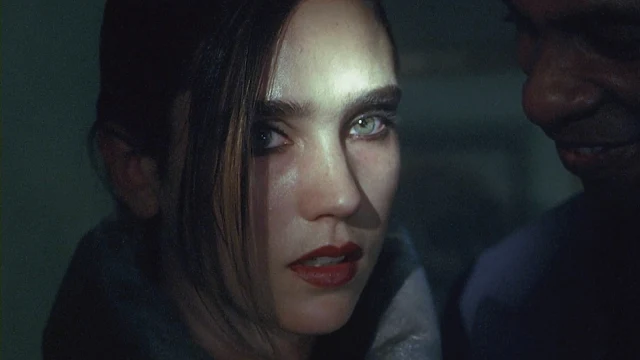
jennifer connolly requiem for a dream

"Requiem for a Dream" was not without controversy. Its unflinching depiction of drug abuse, graphic imagery, and bleak outlook on human desperation divided audiences and sparked debates about the ethics of its portrayal. Yet, the film's impact was undeniable. It garnered critical acclaim for its bold storytelling, inventive editing techniques, and Clint Mansell's haunting score. Aronofsky's uncompromising exploration of addiction struck a chord with viewers, leaving a lasting impression and solidifying his reputation as a filmmaker unafraid to tackle taboo subjects.

Overall, "Requiem for a Dream" showcased Aronofsky's ability to delve deep into the human psyche, confronting uncomfortable truths with unapologetic honesty. Through his collaboration with talented actors and his unrelenting vision, he crafted a cinematic experience that forced audiences to confront the devastating consequences of addiction while pushing the boundaries of storytelling.

But what is grief if not love persevering?

"The Fountain" (2006) marked Darren Aronofsky's foray into experimental filmmaking, presenting a visually stunning and thematically rich exploration of love, mortality, and spirituality. The film weaves together three interwoven narratives, spanning different time periods and featuring the same characters in various incarnations. This complex narrative structure invites viewers on a metaphysical journey as they navigate the boundaries of life, death, and the transcendent power of love.

At its core, "The Fountain" delves into the eternal quest for immortality and the acceptance of mortality.
Aronofsky skillfully intertwines themes of love, loss, and the cycle of life, inviting contemplation on the fragility of existence and the inevitability of death. Through stunning visuals and evocative storytelling, he explores the power of human connections and the transformative nature of love, ultimately inviting viewers to reflect on the profound mysteries of life.

"The Fountain" presented technical challenges for Aronofsky and his team, as they sought to visually represent the film's abstract and metaphysical concepts. Aronofsky employed innovative visual effects and practical techniques to bring his ambitious vision to life. From elaborate production design to intricate costume choices, every element was carefully crafted to enhance the film's themes and immerse the audience in its ethereal universe.

A notable technical achievement in "The Fountain" was the mesmerizing visual effects that depicted cosmic phenomena and the transcendence of time and space. Aronofsky and his team utilized a blend of practical effects, digital manipulation, and artistic cinematography to create breathtaking sequences that transported viewers into realms both familiar and otherworldly.

"The Fountain" demonstrated Aronofsky's willingness to push the boundaries of storytelling and experiment with narrative structures. Through its thematic depth, breathtaking visuals, and technical innovations, the film stands as a testament to Aronofsky's creative fearlessness and his ability to craft cinematic experiences that challenge and provoke audiences.

Welcome to the Jungle

"The Wrestler" (2008) showcases Darren Aronofsky's prowess in character-driven filmmaking, offering a poignant and emotionally charged study of its protagonist. The film revolves around Randy "The Ram" Robinson, a washed-up professional wrestler grappling with the harsh realities of aging, regrets, and the pursuit of redemption. Aronofsky delves deep into Randy's psyche, exploring the complexities of his character with remarkable emotional depth.

In "The Wrestler," Aronofsky collaborates closely with his actors to deliver transformative performances that resonate with audiences. Mickey Rourke, in a career-defining role, imbues Randy with a raw vulnerability and a profound sense of longing. Rourke's physical dedication to the role, combined with his ability to convey the character's inner turmoil, created a truly captivating portrayal that garnered widespread acclaim.

Aronofsky's collaboration extends beyond Rourke's performance, as he draws out exceptional performances from the supporting cast as well. Marisa Tomei delivers a nuanced and empathetic performance as Cassidy, a stripper and Randy's love interest, while Evan Rachel Wood brings a mix of vulnerability and resilience to the role of Randy's estranged daughter. The performances in "The Wrestler" were instrumental in elevating the film's emotional impact, allowing audiences to connect deeply with the characters' struggles and aspirations.

"The Wrestler" received widespread critical acclaim for its authenticity, gripping storytelling, and the performances of its cast. The film earned numerous accolades, including Golden Globe and Academy Award nominations for Mickey Rourke's portrayal of Randy. Aronofsky's deft direction, coupled with the raw and heartfelt performances, propelled "The Wrestler" to become a touchstone in Aronofsky's filmography, resonating with both critics and audiences alike.

The critical acclaim and awards recognition bestowed upon "The Wrestler" underscored Aronofsky's ability to craft character-driven narratives that delve into the human condition. The film stands as a testament to his mastery of storytelling and his skill in guiding actors to deliver deeply affecting performances that leave a lasting impression.

Just Dance

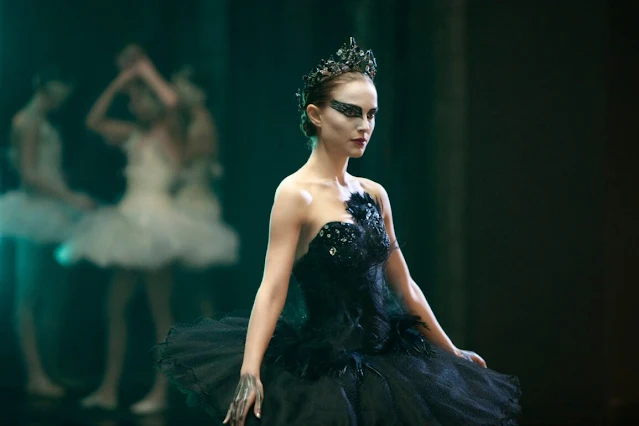
"Black Swan" (2010) showcases Darren Aronofsky's masterful storytelling in the realm of psychological thrillers, delving into the haunting exploration of duality and obsession. The film follows Nina Sayers, a dedicated ballerina vying for the lead role in "Swan Lake." As Nina succumbs to the pressures of perfectionism and the pursuit of artistic excellence, her mental state becomes increasingly fragmented, blurring the boundaries between reality and delusion.

natalie portman black swan

Aronofsky skillfully dissects the themes of duality and obsession in "Black Swan." The film presents a dark and mesmerizing portrayal of Nina's internal struggle between the innocent White Swan and the seductive and dangerous Black Swan. Aronofsky weaves a web of psychological tension, immersing viewers in Nina's psychological breakdown as she grapples with her own desires, fears, and the shadowy forces that threaten to consume her. Through this exploration, Aronofsky challenges the audience to question the nature of identity, artistry, and the sacrifices demanded of pursuing perfection.

Aronofsky's meticulous attention to detail and symbolic imagery greatly enhance the film's impact. From the intricacies of ballet choreography to the intricate production design, every element is meticulously crafted to mirror Nina's state of mind. The use of mirrors, feathers, and visual motifs of transformation and metamorphosis heighten the film's sense of unease and emphasize the underlying themes of duality and transformation. Aronofsky's expertise in creating an immersive and visually rich experience enhances the psychological depth of "Black Swan."

Natalie Portman's performance in "Black Swan" stands as a testament to Aronofsky's ability to bring out exceptional performances from his actors. Portman's portrayal of Nina earned her an Academy Award for Best Actress, showcasing her incredible range as she navigates the complexities of her character's psyche. Portman effortlessly embodies the fragility, intensity, and vulnerability of Nina, capturing the internal struggles and descent into madness with haunting authenticity. Her performance elevates the film and becomes a cornerstone of its success.

"Black Swan" garnered critical acclaim for its psychological depth, artistic vision, and the haunting performances of its cast. Aronofsky's exploration of duality and obsession, his meticulous attention to detail, and Natalie Portman's Oscar-winning performance combine to create a truly mesmerizing and unforgettable cinematic experience.

Let God sort ém out

In "Noah" (2014), Darren Aronofsky takes on the ambitious task of interpreting the biblical story of Noah's Ark through his unique lens. Aronofsky's interpretation goes beyond a simple retelling, delving into themes of environmentalism, human nature, and the consequences of our actions. By exploring the moral complexities of the story, Aronofsky invites audiences to grapple with questions of faith, stewardship, and the balance between justice and mercy.

Aronofsky's "Noah" showcases visual grandeur and employs impressive special effects to bring the biblical epic to life. The film presents stunning imagery, from the awe-inspiring depiction of the Great Flood to the majestic presence of the animals on the ark. Aronofsky's use of visual effects seamlessly blends realism and fantastical elements, creating a vivid and immersive world that captivates viewers. The scale and scope of the film's visuals contribute to its epic storytelling, leaving a lasting visual impact.

"Noah" generated mixed reception from different audiences and sparked controversies. Some viewers appreciated Aronofsky's bold and imaginative interpretation, praising the film's thematic depth and visual spectacle. However, others raised concerns about the creative liberties taken with the source material and questioned the film's fidelity to the biblical narrative. The inclusion of environmental and ethical themes also sparked debates among religious communities and scholars. Nevertheless, the film's ability to spark conversations and provoke thought demonstrates Aronofsky's intent to engage audiences on multiple levels.

While "Noah" may have faced controversies, it is undeniable that Aronofsky's vision and his exploration of complex themes added a layer of depth and relevance to the biblical story. The film's grandiose visuals and special effects, coupled with its thought-provoking narrative, further solidify Aronofsky's reputation as a filmmaker unafraid to tackle ambitious projects and challenge conventional interpretations. "Noah" serves as a testament to his ability to infuse epic storytelling with contemporary resonances, resulting in a film that invites reflection and stimulates dialogue.

Adam and Eve up a tree...

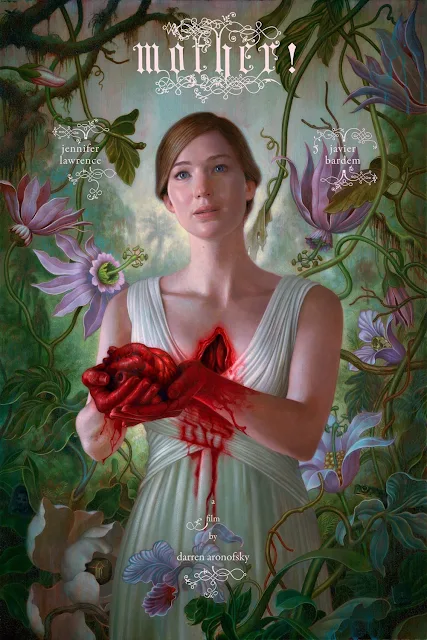
In "Mother!" (2017), Darren Aronofsky ventures into allegorical storytelling, crafting a film that operates on multiple levels of metaphor and social commentary. The narrative unfolds as an intense and increasingly surreal experience, inviting viewers to interpret the film's symbolism and unpack its deeper meanings.

Aronofsky's "Mother!" serves as a potent allegory, exploring themes of creation, artistic inspiration, environmental degradation, and the destructive nature of human greed. The film presents a metaphorical narrative that can be interpreted as a reflection on the cycle of life, the abuse of nature, and the exploitation of the artist. Aronofsky's intention is to provoke thought and engage audiences in conversations about larger societal issues.

jennifer lawrence mother


A crucial aspect of "Mother!" is the collaborative process between Aronofsky and his lead actors, Jennifer Lawrence and Javier Bardem. Lawrence's portrayal of the character named "Mother" (often seen as an embodiment of Eve) is characterized by a raw and vulnerable performance. Aronofsky effectively utilizes her innate sexuality to convey the character's vulnerability and the way she is exploited. The collaboration with Bardem, who plays the enigmatic character of "Him" (often interpreted as a representation of God or the artist), adds layers of complexity to the film's symbolic narrative.

The ending of "Mother!" is intentionally confounding and horrific, leaving viewers in a state of shock and disarray. Aronofsky crafts a climax that combines elements of chaos, violence, and a cyclical nature, resulting in an unsettling and disturbing conclusion. This ending serves as a provocation, challenging viewers to grapple with the film's themes and examine their own interpretations and emotional responses.

It's batshit, bonkers. 

Audience reactions and critical discourse surrounding "Mother!" were divisive and passionate. Some viewers embraced the film's audacity, praising its allegorical storytelling and social commentary. Others found it confusing, disturbing, or even pretentious. The film sparked discussions on its religious symbolism, ecological themes, and its portrayal of femininity and exploitation.

Ultimately, "Mother!" stands as a testament to Aronofsky's commitment to challenging conventional storytelling and engaging audiences with allegorical narratives. Its provocative nature and the intense reactions it elicited further solidify Aronofsky's reputation as a filmmaker who is unafraid to push boundaries, ignite debates, and leave a lasting impact on viewers.

The Whale

"The Whale" is a gripping American psychological drama film directed by Darren Aronofsky and adapted from Samuel D. Hunter's play of the same name. Released in 2022, the film stars Brendan Fraser, Sadie Sink, Hong Chau, Ty Simpkins, and Samantha Morton, and follows the story of a reclusive and morbidly obese English teacher who embarks on a journey to reconnect with his estranged teenage daughter.

Premiering at the 79th Venice International Film Festival on September 4, 2022, "The Whale" received both critical acclaim and polarized responses. The film garnered particular praise for its outstanding performances, notably Brendan Fraser, Hong Chau, and Sadie Sink, who breathed life into their respective characters. Fraser's performance, in particular, earned him numerous accolades, including the Academy Award, Critics' Choice Award, and SAG Award for Best Actor.

brendan fraser the whale

While the film resonated with audiences and critics alike, "The Whale" also faced some criticism regarding its portrayal of obesity-related struggles. Nevertheless, the film's empathetic storytelling and the nuanced performances elevated its impact and sparked meaningful discussions around body image and personal struggles.

Despite the polarized response, "The Whale" achieved notable success at the box office, grossing $54 million against a modest budget of $3 million.

"The Whale" stands as a testament to Aronofsky's ability to tackle profound human struggles with sensitivity and bold storytelling. Through its compelling performances, thought-provoking themes, and Aronofsky's directorial finesse, "The Whale" invites audiences to reflect on the complexities of relationships, empathy, and the resilience of the human spirit.

Mr Aronofsky is a great film maker

In conclusion, Darren Aronofsky has made significant contributions to the film industry through his remarkable career. From his breakthrough film "Pi" to his thought-provoking works like "Requiem for a Dream," "The Wrestler," "Black Swan," and "Mother!," Aronofsky has consistently pushed the boundaries of storytelling and captivated audiences with his unique vision.

Aronofsky's artistic vision is characterized by a fearless exploration of complex themes, an unflinching examination of the human condition, and a penchant for allegorical storytelling. His films are marked by meticulous attention to detail, innovative visual techniques, and the ability to elicit exceptional performances from his actors. Aronofsky's impact on contemporary cinema is undeniable, as he has challenged traditional narratives, provoked conversations, and left a lasting impression on both audiences and fellow filmmakers.

Looking ahead, Darren Aronofsky's future projects, including the highly anticipated film "Adrift" featuring Jared Leto, hold the promise of further artistic exploration and narrative innovation. As a filmmaker who consistently challenges himself and his audience, it is exciting to envision the cinematic experiences he will bring to life in the future.

Darren Aronofsky's legacy in the film industry is one of audacity, creativity, and thought-provoking storytelling. His films have left an indelible mark, inspiring aspiring filmmakers and captivating film enthusiasts around the world. Aronofsky's ability to craft visually stunning narratives and his dedication to delving into the depths of the human psyche ensure that his legacy will continue to influence and shape the landscape of cinema for years to come.

Director Profile: Phil Lord and Christopher Miller

Phil Lord and Christopher Miller are an American filmmaking duo known for their unique and innovative approach to storytelling. They have worked together as directors, writers, and producers on various successful projects, gaining recognition for their distinct comedic style and ability to blend different genres seamlessly.

Phil Lord was born on July 12, 1975, in Miami, Florida, while Christopher Miller was born on September 23, 1975, in Everett, Washington. They both attended Dartmouth College, where they met and became friends while studying together. Their shared passion for filmmaking and creative storytelling formed the foundation of their collaborative partnership.

After completing their studies, Lord and Miller ventured into the entertainment industry, initially working on animated television shows. They served as writers and producers on popular animated series like "How I Met Your Mother" and "Clone High," showcasing their comedic sensibilities and sharp writing skills.

Their breakthrough in the film industry came with the animated feature "Cloudy with a Chance of Meatballs" (2009). Lord and Miller co-directed and co-wrote the film, which earned critical acclaim for its humor, visual style, and heartwarming story. The success of "Cloudy with a Chance of Meatballs" propelled them into the spotlight, establishing them as a promising duo in Hollywood.

In 2012, they co-wrote and co-directed "21 Jump Street," a comedic action film based on the 1980s television series. The film's self-aware humor, clever writing, and chemistry between the lead actors (Jonah Hill and Channing Tatum) resonated with both critics and audiences. Its success led to a sequel, "22 Jump Street" (2014), which further solidified their reputation for delivering successful and entertaining films.

Lord and Miller expanded their creative horizons by taking on the challenge of directing a major franchise film, "The Lego Movie" (2014). The animated adventure comedy, which they also co-wrote, garnered critical acclaim for its clever humor, inventive animation, and underlying themes. It became a box office hit, grossing over $469 million worldwide and spawning a successful franchise.

In 2018, they were initially tapped to direct the "Star Wars" standalone film, "Solo: A Star Wars Story." However, creative differences with Lucasfilm led to their departure from the project during production and Ron Howard took over directing duties. Despite this very public setback, they remained highly sought-after in the industry due to their unique style and ability to inject humor into unexpected places.

Phil Lord and Christopher Miller director profile

Lord and Miller continued their success with the animated film "Spider-Man: Into the Spider-Verse" (2018). Serving as producers and co-writers, they brought their distinct storytelling techniques to the superhero genre, resulting in a critically acclaimed and commercially successful film. "Spider-Man: Into the Spider-Verse" won the Academy Award for Best Animated Feature, further solidifying their status as innovative filmmakers.

Apart from their film work, Lord and Miller have also produced television series like "The Last Man on Earth" and "Unikitty!" while exploring other creative endeavors across different mediums.

Phil Lord and Christopher Miller are known for their unique style, which blends humor, heart, and unexpected genre elements. They have a knack for subverting expectations, often infusing their projects with meta-humor and self-awareness. Their ability to balance comedic moments with genuine emotional depth has resonated with audiences and critics alike.

With their track record of successful projects, Phil Lord and Christopher Miller continue to be highly sought-after in the entertainment industry. Their distinctive approach to storytelling, sharp wit, and ability to connect with audiences have cemented their place as one of the most exciting and innovative filmmaking duos of their generation. Their next directing effort is Project Hail Mary with Ryan Gosling and Artemis.


About the author Jimmy Jangles


My name is Jimmy Jangles, the founder of The Astromech. I have always been fascinated by the world of science fiction, especially the Star Wars universe, and I created this website to share my love for it with fellow fans.

At The Astromech, you can expect to find a variety of articles, reviews, and analysis related to science fiction, including books, movies, TV, and games.
From exploring the latest news and theories to discussing the classics, I aim to provide entertaining and informative content for all fans of the genre.

Whether you are a die-hard Star Trek fan or simply curious about the world of science fiction, The Astromech has something for everyone. So, sit back, relax, and join me on this journey through the stars!