05 July 2023

Review Strange New Worlds Season 2 Episode 4 - Among the Lotus Eaters

AFter the Earth bound drama of last week's Tomorrow, Tomorrow and Tomorrow, "Among the Lotus Eaters," the fourth episode of "Strange New Worlds" Season 2, continues the show's tradition of delivering episodic stories with a wide range of genres, tones, and narrative styles. What sets this episode apart is its ability to bridge the creative gap in the show's own canon while exploring profound themes of human nature and self-discovery.

It also serves as a fantastic hour of Star Trek, seamlessly blending classic science fiction tropes with elements of light horror, and allowing the actors to showcase different facets of their characters.

The episode begins with the Enterprise being sent back to Rigel VII, a mission that Captain Pike still mentions with regret in "The Cage," the pilot episode of the original Star Trek series. In "The Cage," it is revealed that several crew members were killed in an ambush during their previous visit to the Bronze Age society on Rigel VII. 

Pike approaches this second visit to the planet with caution, determined to rectify the past mistakes. The fact that this mission references a canonical event from the original series adds depth and significance to the story.
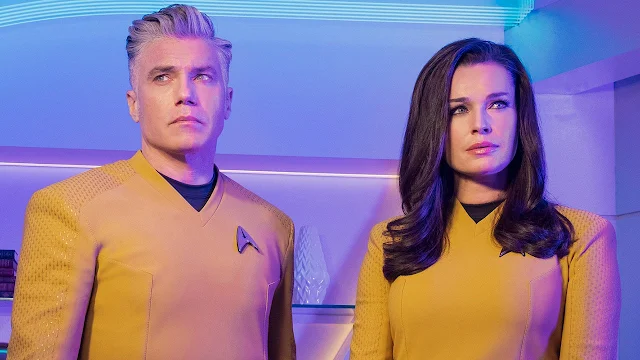
Among the Lotus Eaters review SNW

The plot unfolds as Pike, along with La'an and M'Benga, goes undercover among the Kalar people to uncover the remnants of their previous visit that caused cultural contamination. However, they are swiftly captured, and the shocking revelation that one of the Enterprise's presumed dead former crew members has taken over the planet using Starfleet tech adds an unexpected twist to the story.

This revelation deeply affects Pike, as he grapples with guilt over leaving a man behind and is confronted with the consequences of his past actions.

At its core, "Among the Lotus Eaters" explores profound questions about human identity and values. The effects of the planet's radiation, known as "The Forgetting," gradually spread among the crew, leading to key moments of self-discovery for the show's main characters. Each character is confronted with their true selves, stripped down to their most basic nature. Ortegas embraces her role as the ship's pilot, La'an confronts her aggressive tendencies, and M'Benga realizes that his true calling lies in healing others. These personal journeys provide insights into the characters' core values and motivations.

Captain Pike, already a beloved character in Star Trek lore, remains true to his nature as a compassionate leader who prioritizes others over himself. However, there are hints of a dark streak in Pike's character, which adds complexity and room for future exploration. His relationship with Captain Batel, the captain of the USS Cayuga, is an important aspect of this episode. 

Pike's guilt over potentially hindering Batel's career leads him to pull back, but he is awakened to his true feelings for her when she decides to leave with a poignant farewell of "See you when I see you, captain." This realization prompts Pike to reestablish his connection with his crewmates and promise to prioritize his relationship with Batel.

While the episode hints at the potential for a compelling story arc between Pike and Batel, it falls short in fully developing her character. Batel remains more of an idea than a fully fleshed-out person, and her career trajectory and its connection to Pike's relationship with her are only briefly touched upon. However, the inclusion of Melanie Scrofano, a talented actress known for her role in "Wynona Earp," adds excitement and anticipation for the exploration of this relationship in future episodes.

We wonder if we are being set up for a tragic ending for Batel at some future point.

The reference to "The Cage" in "Among the Lotus Eaters" is a clever nod to the original Star Trek series, emphasizing the continuity and reverence for the show's rich history. It deepens the emotional impact of the episode, as Pike confronts the consequences of his past actions and attempts to rectify them. This connection to the past resonates with long-time Star Trek fans, who appreciate the attention to detail and the opportunity to explore untold stories from the original series.

In conclusion, "Among the Lotus Eaters" is an outstanding episode of "Strange New Worlds" that showcases the show's ability to deliver diverse and compelling stories. It effectively fills in the creative gap in its own canon while exploring themes of human nature and self-discovery. The episode masterfully blends genres, allowing the actors to shine in their performances. While the development of Captain Batel's character falls short, the potential for an engaging story arc with Pike is evident. With its references to the original series and its exceptional storytelling, "Among the Lotus Eaters" is a stronger, character focused installment in the series, leaving viewers eager for more.

"Unraveling The Butterfly Effect film: Exploring Chaos Theory's Impact"

In the film "The Butterfly Effect," starring Ashton Kutcher and Amy Smart, several thought-provoking themes are explored. This gripping narrative delves into the consequences of our actions, the fragile nature of memory, the pursuit of redemption, and the philosophical debate between determinism and free will.

Throughout the movie, the concept of the Butterfly Effect takes center stage, illustrating how even small changes in the past can have far-reaching and unforeseen repercussions on the present and future. By examining the themes and examples from the film, we gain insights into the intricate dynamics of cause and effect, the influence of memory on identity, the yearning for redemption, and the philosophical implications of determinism and free will.

Let us delve into the depths of these themes and explore the complexities unveiled in "The Butterfly Effect." movie.

kutcher smart butterfly effect film

Cause and Effect:


One example of the Butterfly Effect in the film is when Evan alters a childhood memory where he and his friends put a firecracker in a mailbox. In the original memory, the mailbox explosion caused some damage, but no severe consequences. However, when Evan changes this event, it leads to his friend's father being arrested for a crime he didn't commit. This alteration has a ripple effect on his friend, resulting in psychological issues and a tragic fate.


Another instance occurs when Evan goes back in time to save his beloved dog from being burned by his sadistic father. Although he successfully rescues the dog, his father's attention turns towards him, leading to a life of physical and psychological abuse for Evan. This highlights how even well-intentioned changes can have unforeseen and negative consequences.


Memory and Identity:


Throughout the film, Evan grapples with the impact of his altered memories on his own identity. When he changes significant events from his childhood, he experiences different versions of himself in the present. This exploration of memory and identity raises questions about how past experiences shape who we become and the choices we make.


An example of this is when Evan alters the memory of a traumatic event involving his friend Kayleigh. In one version, he saves her from her abusive father, but it leads to her living a life of prostitution and addiction. In another version, he chooses not to intervene, and Kayleigh becomes more stable but still faces her own set of challenges. This showcases the intricate relationship between memory, identity, and the complex consequences of altering the past.


Redemption and Second Chances:


Evan's journey throughout the film is driven by a desire for redemption and a belief that he can fix the mistakes of the past. However, he learns that altering events comes with unintended consequences and that some things cannot be fixed or undone.


An example is Evan's attempt to mend his relationship with his father. In one iteration, he successfully prevents his father from going to prison for alleged child molestation. However, this change results in his father becoming a serial killer. Evan's attempts to redeem his father's reputation ultimately lead to tragic outcomes and further complicate his own sense of guilt and responsibility.


Determinism versus Free Will:


The film raises philosophical questions about determinism versus free will. Initially, Evan believes that he has the power to change the course of events through his time-traveling abilities. However, as he continues to alter the past, he discovers a recurring pattern of tragic events, suggesting that events are predetermined or bound by a complex system beyond his control. For instance, despite his efforts to save Kayleigh from a life of abuse and trauma by altering events, she continues to face different forms of suffering, indicating the limitations of his free will and the presence of a predetermined path.

What impact does the butterfly effect have on the ending of the theatrical release of the movie?

The Butterfly Effect plays a significant role in shaping the ending of the theatrical release of the movie. Throughout the film, Evan, the protagonist, has been using his ability to time travel to alter past events in an attempt to create better futures for himself and his friends. However, he ultimately comes to a realization that these changes only lead to further suffering and negative consequences.

In the final scenes of the film, Evan wakes up in a mental hospital, realizing that his time-traveling endeavors have taken a toll on his mental health. He learns from a doctor that his father had similar abilities but lost the ability to time jump due to losing the photographs that facilitated his travels. This revelation suggests that the repeated alteration of the past can lead to a perception of madness.

Realizing the detrimental effects of his actions, Evan decides to make a final decision that will have a positive impact on the future. He travels back in time to the day he first met Kayleigh, intentionally upsetting her and influencing her and her brother, Tommy, to choose a different living arrangement. This choice ensures that they are not subjected to a destructive upbringing and go on to have happier, successful lives.

When Evan awakens in a college dorm room, he finds Lenny, his friend, as his roommate. He tests the outcome of his decision by asking about Kayleigh, to which Lenny responds with confusion, indicating that she is no longer a part of their lives. Evan, satisfied that his friends' futures are secure and free from the hardships they experienced before, burns his journals and videos, symbolizing his commitment to avoid altering the timeline again.

In a final scene set eight years later in New York City, Evan encounters Kayleigh on the street. Despite a brief exchange of looks, they both continue walking, implying that they have moved on with their separate lives. The ending suggests that Evan's decision to stop altering the past has created a timeline where his friends have better futures, but it comes at the cost of erasing the deep connection he had with Kayleigh.

The Butterfly Effect, showcased at the ending of the film, illustrates the profound impact of Evan's choices and the delicate balance between altering the past and accepting the consequences. The film emphasizes that even with good intentions, meddling with the past can have unintended and negative consequences, leading Evan to understand the importance of accepting the past and allowing people to shape their own futures.

The alternate ending of The Butterfly Effect released on DVD explained

In "The Butterfly Effect" Director's Cut, an alternative ending is presented, diverging from the original theatrical release. This ending introduces a darker twist to Evan's journey and offers a glimpse into a timeline where he takes an extreme measure to prevent the multi-generational curse from continuing.


In this alternative ending, Evan finds himself with severe brain damage and realizes that he will soon be confined to a psychiatric facility, where he will lose access to his time-traveling ability. Desperate to change the timeline, he resorts to drastic action. He watches a family video, witnessing his mother just before she is about to give birth to him. With a profound realization, Evan makes the fateful decision to travel back to that moment and strangle himself in the womb using his own umbilical cord. By sacrificing his own existence, Evan aims to break the cycle of tragedy and prevent the multi-generational curse from affecting anyone else.


The addition of a scene featuring a psychic palm reader telling Evan that he has "no lifeline" and that he does "not belong to this world" foreshadows this unsettling ending. It suggests a belief that Evan's life is destined to be plagued by tragedy and that his ultimate act is an attempt to sever his ties to this world and prevent further suffering.


Following Evan's drastic action, the alternative ending portrays Kayleigh as a child in the new timeline, having chosen to live with her mother instead of her father. This suggests a brighter outcome for her, indicating that the lives of other childhood characters have also become more loving and less tragic. The ending montage offers a glimpse into this new timeline, implying that Evan's sacrifice has had a positive impact on those around him.


By incorporating this alternative ending, the Director's Cut of "The Butterfly Effect" explores the depths of Evan's desperation and his willingness to take extreme measures to break the cycle of tragedy. It delves into darker themes of sacrifice and the consequences of altering one's own existence to protect others from suffering. This alternative ending presents a haunting and thought-provoking conclusion that challenges viewers to contemplate the depths of human agency and the lengths one may go to alter the course of their own life and the lives of those they care about.


What is The Butterfly Effect?

Chaos theory is a branch of mathematics that studies complex systems and their behavior.

It focuses on the sensitivity of these systems to initial conditions and how small changes can have a profound impact on their future state.

Chaos theory has applications in various fields, including physics, biology, economics, and even social sciences.

The Butterfly Effect is a popular term within chaos theory that describes how a small, seemingly insignificant event can have far-reaching consequences.

It suggests that the flap of a butterfly's wings in one part of the world moving air can ultimately cause a hurricane in another.

It highlights the interconnectedness and sensitivity of chaotic systems to tiny perturbations.


what is the butterfly effect


Understanding Chaos Theory

Chaos theory studies nonlinear dynamical systems that are highly sensitive to initial conditions.

It explores how small changes in the starting conditions of a system can lead to dramatically different outcomes over time.

Chaos theory seeks to understand the underlying patterns and behavior within seemingly random or chaotic systems.

Despite their unpredictable and seemingly random behavior, chaotic systems are deterministic.

This means that their future states are entirely determined by their initial conditions and the laws governing their dynamics.

However, due to their extreme sensitivity to initial conditions, even the tiniest variations can result in divergent outcomes.

Examples of chaotic systems in nature and society

  • Weather patterns: Small changes in temperature, humidity, or wind speed can lead to vastly different weather conditions.
  • Population dynamics: Minor fluctuations in birth rates or migration patterns can have significant long-term effects on population growth.
  • Financial markets: Small changes in investor behavior or market conditions can trigger large-scale fluctuations and market crashes.
  • Traffic flow: The behavior of individual drivers and small disturbances can cause traffic congestion or even traffic jams.

Unraveling the Butterfly Effect

The Butterfly Effect refers to the phenomenon in chaotic systems where a small change in initial conditions can result in large-scale and unpredictable consequences.

It signifies the extreme sensitivity to perturbations, where even minor alterations can lead to significant variations in the system's behavior.

The term "Butterfly Effect" was coined by mathematician and meteorologist Edward Lorenz in the 1960s.

Lorenz used the phrase to describe the sensitive dependence on initial conditions in weather forecasting models.

The term became popularized and widely associated with chaos theory, illustrating the broader concept of how small actions can have substantial and unexpected impacts.

Let's consider a hypothetical scenario where a person wakes up a few minutes earlier than usual.

As a result, they catch an earlier bus to work and end up sitting next to someone who offers them a job opportunity.

This small change in their morning routine, waking up a few minutes earlier, had a profound impact on their career trajectory.

This example showcases how a seemingly insignificant action can set off a chain of events leading to significant outcomes.

Exploring the Mechanism


Chaotic systems exhibit sensitive dependence on initial conditions, meaning that tiny differences in the starting state can lead to divergent paths.

Due to the nonlinear dynamics and amplification of effects, even minute changes can propagate and magnify over time, resulting in vastly different outcomes.

In chaotic systems, small perturbations can grow exponentially and cause a cascading effect.

Tiny differences in the initial conditions can trigger a sequence of events where the effects amplify and become increasingly significant as time progresses.

This amplification is a fundamental characteristic of the Butterfly Effect.

One classic example is the weather: A butterfly flapping its wings in one location could contribute to the formation or prevention of a storm thousands of miles away.

In economic systems, a small change in consumer confidence or investor behavior can trigger fluctuations in the stock market, leading to significant economic consequences.

In social dynamics, an individual's action or decision, such as sharing an idea or starting a movement, can inspire others and create substantial societal changes.

By exploring the mechanism behind the Butterfly Effect and presenting relevant examples, we can better appreciate the profound influence that small actions or changes can have on complex systems.

Applications of the Butterfly Effect


Meteorology: The Butterfly Effect highlights the challenges in long-term weather forecasting due to the sensitivity of atmospheric conditions. Small changes in initial measurements can result in drastically different weather patterns.

  • Economics: In economics, the Butterfly Effect manifests in the complex interactions of supply and demand, investor behavior, and policy decisions. Minute changes can lead to market fluctuations, economic booms, or recessions.
  • Psychology: The Butterfly Effect has implications for understanding human behavior and decision-making. Small choices or experiences can shape individual lives, relationships, and societal dynamics.
  • Historical events: The assassination of Archduke Franz Ferdinand in 1914 is often cited as a triggering event for World War I, showcasing how the actions of individuals can have profound and far-reaching consequences.
  • Technology and innovation: The development of a single breakthrough technology or invention can lead to cascading advancements and reshape entire industries.
  • Social movements: Small actions or protests by a few individuals can inspire and mobilize others, leading to significant social and political transformations.

By exploring the applications of the Butterfly Effect across different fields and understanding its implications for decision-making and predicting outcomes, we can gain valuable insights into the complex and interconnected nature of our world. Additionally, examining real-world examples helps us appreciate the impact that seemingly small events or choices can have on larger systems and society as a whole.

Limitations and Criticisms of The Butterfly Effect


One of the key challenges in predicting the Butterfly Effect is the difficulty in accurately measuring and capturing all relevant initial conditions and variables.

The Butterfly Effect also assumes that the system under consideration is entirely deterministic, which may not always hold true in real-world complex systems.

Quantifying the precise magnitude of the effects and predicting specific outcomes can be extremely challenging due to the nonlinear dynamics and amplification of effects.


One criticism is that chaos theory focuses on deterministic systems and does not fully account for the role of random events or external factors in shaping outcomes.

Critics argue that the Butterfly Effect may be overemphasized, suggesting that most small perturbations in complex systems tend to dissipate rather than significantly impact long-term behavior.

Some claim that chaos theory and the Butterfly Effect can be misused or misinterpreted to justify a lack of responsibility or accountability.

Alternative viewpoints suggest that chaos theory is just one lens for understanding complex systems, and other theories, such as complexity theory or network theory, may provide complementary perspectives.

Some theories argue for a blend of determinism and randomness, emphasizing the role of both initial conditions and chance events in shaping outcomes.

It's important to recognize that scientific theories are subject to ongoing debate, refinement, and the emergence of new perspectives.

Ethical and Philosophical Consideration


The Butterfly Effect raises questions about moral responsibility and the unforeseen consequences of our actions.

Ethical considerations arise when small decisions or actions have unintended, significant impacts on individuals, communities, or the environment.

The awareness of the Butterfly Effect can encourage individuals and organizations to be mindful of the potential repercussions of their choices.


Chaos theory and the Butterfly Effect touch on philosophical questions about determinism versus free will, the nature of causality, and the limits of predictability.

Discussions may delve into topics such as the role of randomness in our lives, the concept of agency within complex systems, and the boundaries of human knowledge and understanding.

Ethical and Philosophical Considerations


The Butterfly Effect raises questions about moral responsibility and the unforeseen consequences of our actions.

Ethical considerations arise when small decisions or actions have unintended, significant impacts on individuals, communities, or the environment.

The awareness of the Butterfly Effect can encourage individuals and organizations to be mindful of the potential repercussions of their choices.

Chaos theory and the Butterfly Effect touch on philosophical questions about determinism versus free will, the nature of causality, and the limits of predictability.

Discussions may delve into topics such as the role of randomness in our lives, the concept of agency within complex systems, and the boundaries of human knowledge and understanding.

A film Starring Ashton Kutcher and Amy Smart covered these considerations - simply called The Butterfly Effect, the film explored how choices in life could have very unintended consequences.

Communicating Across Time: An Analysis of the Science Fiction Themes in "Frequency"

"Frequency," directed by Gregory Hoblit and starring Dennis Quaid and Jim Caviezel, is a captivating science fiction thriller that intertwines time travel, alternate timelines, and the power of communication across dimensions. 

Through its skillful blend of science fiction and emotional storytelling, the film presents a thought-provoking exploration of the consequences and possibilities that arise when the past and the present collide. In this discussion, we will delve into the science fiction elements that make "Frequency" an intriguing cinematic experience.


frequency sci fi film themes

Time Travel and Temporal Paradoxes:


In "Frequency," the concept of time travel is introduced through a rare aurora borealis event that occurs in both 1999 and 1969. This event creates a temporary connection between the present and the past. John Sullivan, a firefighter in 1999, discovers that he can communicate with his deceased father, Frank Sullivan, who was a firefighter in 1969, through an old ham radio. This communication across time gives rise to several temporal paradoxes

For example, John receives information from the future that enables Frank to prevent his own death in the past. This raises questions about cause and effect, as the present is directly influenced by actions taken in the past, which creates a self-referential loop.


Altered Timelines and Butterfly Effect:


The film explores the concept of altered timelines and the butterfly effect, where small changes in the past can have significant consequences in the present. As John and Frank communicate, they make decisions in their respective timelines that affect the other's reality. For instance, when John warns Frank about a fire that will claim his life in 1969, Frank survives, leading to changes in the present where Frank is alive, but other events unfold differently. 

The butterfly effect is exemplified when small changes in the past ripple through time and result in substantial alterations in the present, demonstrating the interconnectedness of events across different temporal planes.


Technological Aspects:


"Frequency" incorporates various technological elements to facilitate the time-traveling communication. The film focuses on the use of a vintage ham radio, which becomes the conduit for John and Frank's connection. Specific frequencies and atmospheric conditions play a crucial role in enabling the communication to occur during the aurora borealis event. 

The film's portrayal of technology in facilitating interdimensional communication, although fictionalized, adds a touch of scientific plausibility and highlights the power of human ingenuity in exploring new frontiers.


Father-Son Relationship and Emotional Core:


Beyond its science fiction elements, "Frequency" centers its narrative on the deeply emotional bond between John and his deceased father, Frank. The ability to communicate across time allows them to address unresolved issues, heal emotional wounds, and work together to prevent tragic events. For example, John advises Frank on personal matters in 1969, leading to positive changes in both their lives. 

The film emphasizes the importance of family, love, and sacrifice, grounding the story in relatable human emotions while leveraging the science fiction elements to intensify the emotional impact.


Moral and Ethical Implications:


"Frequency" raises moral and ethical questions surrounding the use of time travel and altering the past. As John realizes the potential consequences of changing the past, he faces difficult choices. For instance, when John prevents a murder in the past, he inadvertently alters the present in unforeseen ways, including the emergence of a serial killer who targets people close to him. This moral dilemma forces John to grapple with the responsibility and risks associated with manipulating time. 

The film challenges the audience to consider the ethical implications of altering events and the potential unintended consequences that may arise from such actions.


Conclusion:


"Frequency" successfully combines science fiction elements with compelling storytelling, resulting in a thought-provoking and emotionally charged film. Through its explorationof time travel, altered timelines, technological aspects, and the powerful father-son relationship, the movie captivates audiences and raises profound questions about the nature of time and the consequences of our actions. 

By merging science fiction with relatable human drama, "Frequency" transcends the genre and creates a unique and memorable cinematic experience. The film's intricate portrayal of time travel and temporal paradoxes, along with its examination of the butterfly effect and the moral dilemmas associated with altering the past, enriches the narrative and invites viewers to contemplate the complex interplay between cause and effect. 

Furthermore, the film's use of technology, specifically the vintage ham radio, adds an element of scientific plausibility to the story while emphasizing the transformative power of communication. Ultimately, "Frequency" stands as a testament to the enduring appeal of science fiction storytelling, provoking both intellectual and emotional engagement from its audience.

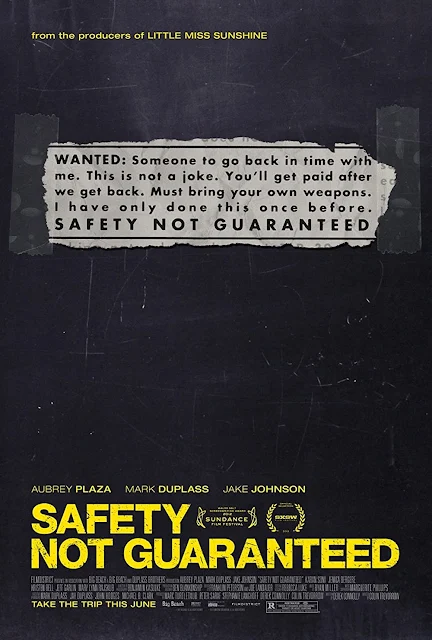
Exploring the charms of "Safety Not Guaranteed" directed by Colin Trevorrow: A Review

"Safety Not Guaranteed," directed by Colin Trevorrow (Jurassic World) and starring Aubrey Miller Plaza, Mark Duplass, and Jake Johnson, is a captivating film that blends elements of comedy, drama, and adventure. Its unique and offbeat nature immediately draws viewers into a world where time travel becomes a possibility, setting the stage for an intriguing and heartfelt narrative.

Set in a small town, the film follows a group of journalists investigating a classified ad seeking a companion for time travel. As they delve into this mysterious quest, the characters' motivations and desires become intertwined with the central theme of time travel. The plot strikes a delicate balance between comedy and drama, utilizing unexpected twists and turns to keep audiences engaged throughout.
safety not guranteed film review

Aubrey Plaza shines in her role as Darius, a skeptical yet curious journalist who becomes emotionally invested in the time travel venture. Plaza's performance showcases her versatility as she effortlessly conveys both wit and vulnerability. The chemistry and dynamics between the cast members, particularly Plaza, Duplass, and Johnson, bring authenticity to their relationships, enhancing the overall believability of the story. 

The characters themselves exhibit depth and development, evolving in ways that resonate with the audience, they just kind of grow on you. 

Colin Trevorrow's direction in "Safety Not Guaranteed" is commendable, capturing the essence of the story with precision and creativity. His storytelling choices effectively build suspense while allowing moments of reflection. The film's visual aesthetic and cinematography contribute to its charm, immersing viewers in the characters' world. The judicious use of music further enhances the film's atmosphere, evoking a sense of whimsy and adventure.

The film's unique blend of comedy and drama creates a captivating and emotionally resonant experience. The humor, often arising from the characters' quirks and interactions, adds levity without detracting from the more poignant moments. The well-executed comedic elements complement the narrative, providing moments of relief while exploring deeper themes and emotions. This delicate balance between light-heartedness and emotional depth is a testament to the film's strength.

"Safety Not Guaranteed" delves into a range of thought-provoking themes. It explores the power of hope, the complexities of human connection, and the choices we make in pursuit of our desires. The film raises philosophical and existential questions, inviting viewers to reflect on the nature of time, belief, and the lengths we go to find purpose. The handling of these themes and the subtlety with which they are conveyed contribute to the film's impact.

The film maintains a steady pace that keeps the audience engaged from start to finish. The unfolding of the narrative, accompanied by the well-timed humor and character development, creates a sense of anticipation and intrigue. "Safety Not Guaranteed" offers an enjoyable and emotionally fulfilling viewing experience, with standout moments and sequences that are both memorable and impactful.

In conclusion, "Safety Not Guaranteed" is a remarkable film that successfully combines heart, adventure, and an offbeat sense of humor. Aubrey Plaza's standout performance, supported by a talented ensemble cast, brings the characters to life with authenticity and depth. Colin Trevorrow's direction and storytelling choices, coupled with the film's visual aesthetic and music, contribute to its overall charm. With its exploration of themes and messages, balanced tone, and engaging plot, "Safety Not Guaranteed" is a must-watch for those seeking a unique and thought-provoking cinematic experience.

Overall, "Safety Not Guaranteed" stands as a testament to the power of independent filmmaking, leaving a lasting impression and offering a heartfelt recommendation to audiences who appreciate unconventional storytelling and a blend of comedy and drama. This quirky journey will captivate viewers with its heartwarming characters, imaginative plot, and thought-provoking themes.

Darth Maul: From Sith Apprentice to Crime Lord - Unveiling the Menace

Darth Maul's background and early life provide insights into his origins and the path that led him to become a formidable Sith Lord.

Born on the planet Dathomir, Darth Maul belonged to the Zabrak species. The Zabrak people, known for their distinctive facial horns, exhibited great physical prowess and resilience. As a Dathomirian Zabrak, Maul grew up in the Nightsisters clan, a group of powerful Force-sensitive witches.

During his childhood, Maul's potential as a warrior and his connection to the Force were recognized. As a result, he was chosen to be trained in the ways of the Sith by Darth Sidious, who was secretly the Sith Lord Emperor Palpatine. Maul embraced the dark side of the Force, forsaking compassion and embracing anger, hatred, and ambition.

darth maul

Under the tutelage of Darth Sidious, Maul honed his combat skills, learning various martial arts and lightsaber techniques. He became an expert in wielding a double-bladed lightsaber, a weapon that reflected his aggressive and unrelenting nature.

Maul's upbringing in the Nightsisters clan and his training as a Sith assassin laid the foundation for his transformation into the fearsome Sith Lord he would become.

After being selected as Darth Sidious' apprentice, Maul's rise as a Sith Lord began, marking a significant turning point in his life.

Darth Sidious recognized Maul's immense potential and chose him to be his Sith apprentice, entrusting him with the Sith teachings and the pursuit of their shared goals. As a testament to his new role, Maul was bestowed with the Sith title "Darth Maul," a name that reflected his intimidating presence and his mastery of the dark side of the Force.

One of Maul's primary objectives as Darth Sidious' apprentice was to eliminate Jedi and assist in the Sith's ascent to power. In the grand scheme of Sidious' plans, Maul played a crucial role in the unfolding events of the galaxy. His mission involved hunting down and executing Jedi Knights, which not only weakened the Jedi Order but also instilled fear and chaos in the galaxy, paving the way for the Sith to seize control.

Darth Maul's rise as a Sith Lord marked the beginning of his ruthless pursuit of power and his dedication to fulfilling the sinister designs of his master, Darth Sidious. With his combat prowess and unwavering loyalty, Maul proved himself to be a formidable apprentice in the service of the Sith.

Darth Maul's survival and subsequent return after his defeat on Naboo are a testament to his resilience and unwavering commitment to the dark side of the Force.

Despite being severed in half, Maul's hatred, fueled by his desire for revenge, kept him alive. Grievously injured but consumed by his anger and will to live, he endured and found a way to survive against all odds.

Maul's survival led him on a path of cybernetic reconstruction. Through unknown means, he received cybernetic enhancements, particularly to his lower body. His legs were replaced with powerful mechanical limbs, granting him enhanced mobility and agility. Additionally, his torso underwent cybernetic modifications, further augmenting his physical capabilities.

With his new cybernetic form, Darth Maul not only regained his mobility but also reaffirmed his allegiance to the dark side of the Force. He embraced his identity as a Sith Lord and resumed his quest for power and revenge.

Maul's survival and transformation into a cyborg Sith Lord exemplify his unyielding determination and his deep connection to the dark side of the Force. His reconstructed form served as a visual reminder of his resilience and the darkness that consumed him, setting the stage for his continued impact on the Star Wars saga.

Maul as Crime Lord


Following his survival and reconstruction, Darth Maul's path led him to embrace a new role as a crime lord and the leader of the Shadow Collective, showcasing his cunning and ambition in the criminal underworld.

Maul, driven by his burning desire for revenge against both the Jedi and his former master, Darth Sidious, orchestrated a plan to disrupt and undermine Sidious's grand designs. Establishing himself as a powerful figure within the criminal underworld, Maul gathered a diverse group of criminal organizations under his command, forming the Shadow Collective.

As the leader of the Shadow Collective, Maul wielded significant influence and utilized his resources to further his own agenda. Through manipulation and strategic maneuvers, he plotted against Darth Sidious, aiming to dismantle his plans and seize power for himself.

Maul's criminal activities and machinations not only brought chaos and unrest to the galaxy but also posed a considerable threat to both the Jedi and the Sith. His actions revealed his insatiable thirst for vengeance and his relentless pursuit of power.

By positioning himself as a crime lord and mastermind, Maul showcased his exceptional intelligence, strategic thinking, and ability to navigate the intricate web of underworld politics. His endeavors in the criminal underworld allowed him to amass resources, loyal followers, and an army that furthered his ambitions and set the stage for significant conflicts to come.

Brothers in Arms

During his time in the criminal underworld, Darth Maul formed a significant alliance with Savage Opress, his biological brother. Together, they became a formidable duo that posed a direct challenge to both the Jedi and the Sith.

Upon discovering Savage Opress, Maul recognized his potential as a powerful Force-sensitive warrior and decided to train him in the ways of the dark side. Under Maul's guidance, Savage underwent intensive training, becoming a fearsome warrior in his own right.

The alliance between Maul and Savage was characterized by their shared goals of vengeance and power. They sought to exact revenge on the Jedi who had defeated Maul in the past and undermine the rule of Darth Sidious. Together, they aimed to establish their dominance over the galaxy and bring about the downfall of their adversaries.

As a duo, Maul and Savage engaged in numerous battles against various adversaries, including Jedi Knights, Sith apprentices, and other powerful opponents. Their combined combat skills and command over the dark side of the Force made them a formidable force to be reckoned with.

One notable rivalry they had was with the Jedi Padawan Ahsoka Tano during the Siege of Mandalore. Maul's vendetta against the Jedi Order clashed with Ahsoka's determination to protect the innocent. Their conflict during the Siege of Mandalore showcased the intensity of their rivalry and the high stakes involved, including possession of the Dark Saber.

The alliance between Darth Maul and Savage Opress demonstrated their shared ambition, formidable power, and willingness to challenge both the Jedi and the Sith. Their combined strength posed a significant threat to the established order, leaving a lasting impact on the events of the Star Wars universe.

The Death of Darth Maul


In a fateful encounter, Darth Maul tracked Obi-Wan Kenobi, his long-standing rival, to the desert planet of Tatooine. Determined to settle their unfinished business, Maul sought a final confrontation with Kenobi.

The duel between Maul and Kenobi on Tatooine was a culmination of their deep-rooted animosity and an opportunity for Maul to exact his revenge. The clash of their lightsabers reverberated through the arid landscape as they fought with intensity and precision.

Ultimately, it was Obi-Wan Kenobi's strategic prowess and unwavering resolve that led to Maul's defeat. Kenobi managed to strike a decisive blow, ending the duel and seemingly bringing an end to Darth Maul's life.

However, in his final moments, Maul experienced a surprising twist of fate. As he lay dying, he found redemption and a sense of closure. He realized the true extent of Darth Sidious' manipulation and the darkness that had consumed him. In his last breaths, Maul found solace and embraced a glimmer of light.

The duel with Obi-Wan Kenobi on Tatooine marked the end of Darth Maul's journey. While he succumbed to his injuries and met his physical demise, his final moments were imbued with a profound sense of redemption and a realization of the destructive path he had walked.

In the broader context of the Star Wars saga, Maul's final events served as a testament to the complexities of good and evil, redemption, and the transformative power of the Force. His story left a lasting impact, reminding audiences that even the darkest of villains can find redemption and meaning in their final moments.

Darth Maul's legacy and influence extend far beyond his physical presence and the events of his life. His character has continued to inspire fear and fascination among Star Wars fans, solidifying his status as one of the franchise's most iconic villains.

Maul's unique appearance, with his striking facial tattoos, menacing horns, and dual-bladed lightsaber, immediately captured the imagination of audiences. His fierce combat skills and unwavering dedication to the dark side of the Force made him a force to be reckoned with, leaving a lasting impression.

Furthermore, Maul's character played a significant role in expanding the Star Wars universe. Through his story arc, the mythology and lore of the Sith were explored in greater depth, shedding light on their motives, methods, and internal dynamics. Maul's presence expanded the narrative beyond the traditional conflict between the Jedi and Sith, revealing the complexities and power struggles within the dark side itself.

Darth Maul's enduring impact is evident in the continued fascination with his character. He has become a symbol of the Sith's malevolence, tenacity, and ambition. His legacy lives on through various forms of media, including books, comics, and animated series, which further delve into his past, adventures, and the mark he left on the galaxy.

In conclusion, Darth Maul's journey from a Sith apprentice to a crime lord has left an indelible mark on the Star Wars universe. His striking appearance, formidable skills, and intriguing story have solidified his status as one of the franchise's most memorable and iconic villains. Through his character, the Star Wars saga has been enriched, offering deeper insights into the complexities of the dark side and leaving a lasting impact on fans worldwide.

The Bootstrap Paradox: Time Loops and Causal Conundrums Explored Through Science Fiction Films

Science fiction loves time travel because it lets a story pick up cause and effect, flip it over, and show you the loose stitching underneath. One paradox, in particular, keeps turning up because it feels clean, logical, and deeply wrong at the same time. The Bootstrap Paradox.

It is the paradox where something exists because of itself. An object, a message, a piece of knowledge, a whole bloodline. It gets passed back through time and becomes its own “source,” which means the usual question, “Who made this?” stops having a satisfying answer.

In this article, we dig into what the Bootstrap Paradox really is, why it messes with our intuitions about creation, and how a handful of films use it to turn time into a locked room mystery.


predestination bootstrap paradox time travel theme
Predestination

Understanding the Bootstrap Paradox

The Bootstrap Paradox is a self-contained causal loop. Something exists in a timeline because it was brought back from the future, and then, in that same future, someone finds it and brings it back again. Cause and effect still happen, but the “first” cause is missing.

That is the key difference between a bootstrap loop and other time-travel headaches:

  • Grandfather-style paradoxes crash the system by creating contradictions, like preventing your own existence.

  • Predestination loops trap characters in events that always happen the same way.

  • Bootstrap loops are about origins, not contradictions. The timeline “works,” but the source of the thing inside it becomes unknowable.

Picture the classic version: someone time-travels and hands a famous painting to an artist. The artist becomes renowned for “creating” it. Later, the time traveler takes the painting from a museum and brings it back again. The painting has a history, a paper trail, a measurable presence in the world, but no true beginning. It is all middle.

And yes, the nasty extra question matters: what if, at some point, a new copy is made and the original is destroyed? Then the physical object has a normal origin, but the information still carries the paradox. The “design” of the painting, the composition, the idea, still came from nowhere inside the loop. In many bootstrap stories, the universe has not created something from literal nothing. Instead, it has created a hole where an origin is meant to live.

This is why bootstrap paradoxes tend to feel philosophical even when the plot is muscular. They poke at authorship. They poke at agency. They ask whether creation is a real act, or just a baton pass across centuries.

Why the paradox feels “scientific,” even when it is fictional

Most films that use bootstrap loops lean on an idea from physics, even if they do not name it. In general relativity, certain extreme spacetime geometries can, on paper, allow closed timelike curves, paths through spacetime that loop back on themselves. If a closed loop is possible, then “self-consistent” histories become the only histories that survive. Nothing contradicts itself, but not everything gets an origin you can point at.

That is the vibe. Not magic. Constraint. The timeline behaves like a sealed container. You can swirl the contents around, but you cannot pour anything in from the outside without changing what the container even is.

Science fiction examples of the Bootstrap Paradox

  1. Predestination (2014)

    In Predestination, the paradox is not a single object or a clever note. It is identity, lineage, and causality fused into one brutal circle. The Temporal Agent’s mission structure nudges you toward the familiar promise of intervention, then snaps shut into a loop where the “family tree” is essentially one person folded into itself. What makes the bootstrap logic bite is the missing outside reference. There is no clean point where the chain begins. The story weaponizes that absence.

  2. Looper (2012)

    Looper is often remembered for its grit and its hitman mechanics, but under the hood it is obsessed with how information becomes destiny. The older self feeds the younger self knowledge, fear, and a blueprint for action. That transfer blurs the line between warning and instruction. If a future life shapes a past decision that becomes the future life, you start circling the same bootstrap drain: where did the defining idea actually originate?

  3. Interstellar (2014)

    Christopher Nolan’s Interstellar treats the paradox like a cosmic relay. Cooper receives guidance that does not feel like guidance, at first. It feels like a miracle squeezed into ordinary life. Then the film reveals the loop, the message is sent by the same man who receives it, across a structure that turns spacetime into a medium for communication. The bootstrap element is the information itself: the signal that saves the mission exists because the mission succeeds. The story does not just say “time is weird.” It builds a whole emotional engine on the idea that the end can reach back and pull the beginning toward it.

  4. Bill & Ted’s Excellent Adventure (1989)

    This one plays the paradox as a joke with a straight face, which is part of why it works. Bill and Ted realize they need keys, then later remember to go back and leave the keys for themselves. There is no “first” key drop. It is a loop built from slapstick logic. The comedy is doing real conceptual work: it shows how small, practical items become unsettling when time travel turns planning into retroactive causality.

    Be excellent.

  5. Harry Potter and the Prisoner of Azkaban (2004)

    For a franchise that spends most of its time on spellcraft and fate, this is the entry that quietly locks itself to a stricter time-travel rule than many louder sci-fi films. The Time-Turner sequence is often misremembered as “changing” events, but the sharper reading is that it fulfills them. The heroes do not rewrite history, they become the missing pieces of the history they already lived. That is exactly how a bootstrap loop stays stable: it closes without snapping. The film’s big trick is letting you watch the cause arrive late. The characters encounter a time-turner, a device that allows them to travel back in time and change events, just when they need it in their most desperate hour! The drama is in the feeling of rescue. The logic is in the reveal that the rescue was always there, because they were always the ones who did it.

  6. Triangle (2009)

    Triangle explores a bootstrap paradox as the characters find themselves trapped in a time loop, reliving events and attempting to alter their outcomes. What makes Triangle vicious is its persistence. The loop is not a clever puzzle that resolves into a clean diagram, it is a punishment that keeps reasserting itself. The bootstrap sensation comes from repetition with memory, the sense that each attempt to “fix” things might be part of the mechanism that ensures the trap remains intact. The story turns the paradox into a moral pressure cooker.

Implications and philosophical pressure points

The Bootstrap Paradox tends to spark the same two fights, every time it shows up.

First, determinism vs. free will. If the loop is self-consistent, are characters choosing anything, or are they just fulfilling the shape of the loop? Many stories split the difference: characters make choices, but the menu of viable choices is narrower than they think. Agency exists, but it is fenced.

Second, causality itself. In everyday life, information has provenance. You can trace a quote back to a speaker, a design back to an inventor, a decision back to a moment. Bootstrap stories deny you that comfort. They suggest time travel can make “origin” a category error. The thing exists because the loop exists.

And that is why the paradox lingers. It feels like a logic puzzle on the surface, but it is really an argument about how reality keeps receipts.

Conclusion

The Bootstrap Paradox is one of science fiction’s cleanest mind-benders because it does not need chaos to be unsettling. It can be perfectly consistent and still feel impossible. Films like Predestination, Looper, Interstellar, Bill & Ted’s Excellent Adventure, Harry Potter and the Prisoner of Azkaban, and Triangle use that consistency in different ways: thriller mechanics, cosmic wonder, comedy timing, nightmare repetition.

They all point at the same eerie punchline. If time can loop, then the universe can keep events coherent while stripping away the one detail we rely on to make sense of everything else. Where it started.

About the author Jimmy Jangles


My name is Jimmy Jangles, the founder of The Astromech. I have always been fascinated by the world of science fiction, especially the Star Wars universe, and I created this website to share my love for it with fellow fans.

At The Astromech, you can expect to find a variety of articles, reviews, and analysis related to science fiction, including books, movies, TV, and games.
From exploring the latest news and theories to discussing the classics, I aim to provide entertaining and informative content for all fans of the genre.

Whether you are a die-hard Star Trek fan or simply curious about the world of science fiction, The Astromech has something for everyone. So, sit back, relax, and join me on this journey through the stars!