26 April 2023

Beyond the Tuxedo: Sean Connery's Adventures in Science Fiction Film

Sean Connery is undoubtedly best known for his iconic role as James Bond, as well as his performances in films like The Untouchables and The Rock. However, he also made his mark in the realm of science fiction films. 


Connery's appearances in films like Zardoz, Outland, and Highlander allowed him to explore a range of complex and thought-provoking themes that are often associated with the sci-fi genre, such as dystopian societies, the nature of reality, and the dangers of unchecked power.


In these films, Connery often played characters who were at odds with the dominant power structures of their worlds, using his charisma and commanding presence to bring a sense of gravitas to these often fantastical tales. While he may be best remembered as the suave and sophisticated James Bond, Sean Connery's contributions to the world of science fiction film cannot be overlooked.

Here's a list of some of the films that Sean Connery has acted in that feature science fiction elements and themes:


zardoz sean connery

1. Zardoz (1974) - In this dystopian science fiction film, Sean Connery plays Zed, a brutal enforcer for a community of immortal humans who have isolated themselves from the rest of humanity. The film explores themes of sexuality, immortality, and the dangers of seeking utopia.


2. Outland (1981) - Outland is a science fiction thriller set on a mining colony on one of Jupiter's moons. Sean Connery plays Marshal William T. O'Niel, a law enforcement officer investigating a series of mysterious deaths. The film features themes of corporate greed, worker exploitation, and the dangers of unchecked power.


3. Highlander (1986) - Although it is primarily a fantasy film, Highlander also includes science fiction elements, including time travel and immortality. Sean Connery plays Juan Sánchez Villa-Lobos Ramírez, a mentor to the film's protagonist, who teaches him how to survive as an immortal.


4. The Time Bandits (1981) - This comedy-adventure film features Sean Connery in a small but memorable role as King Agamemnon, a historical figure who is accidentally transported through time by a group of mischievous time-traveling dwarfs. The film explores themes of free will, the nature of reality, and the dangers of unchecked power.


5. The League of Extraordinary Gentlemen (2003) - This action-adventure film is based on a comic book series of the same name and features Sean Connery as Allan Quatermain, a retired adventurer recruited to lead a team of legendary literary heroes on a mission to save the world. The film features themes of imperialism, technological advancement, and the dangers of hubris.


In all of these films, Sean Connery plays characters who are often at odds with the dominant power structures of their worlds, whether they are brutal enforcers in a dystopian society or retired adventurers brought back into action to save the world. The science fiction elements in these films allow for exploration of themes related to power, control, and the nature of humanity itself.

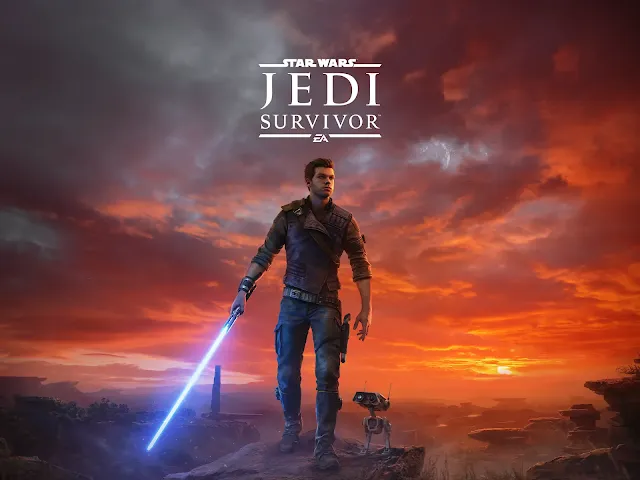
Review: Star Wars Jedi: Survivor

 Star Wars Jedi: Fallen Order was a rare Star Wars game that captured the thrills and adventure of being a Jedi exploring the galaxy. Its sequel, Star Wars Jedi: Survivor, expands on its predecessor, offering a more compelling universe to explore while continuing Cal Kestis' story. Survivor blends a classic galaxy-hopping adventure with the sprawling scope of a AAA adventure game, making it the best of both worlds for classic and modern Star Wars. 


star wars jedi survivor review

Survivor picks up five years after the end of Fallen Order, where Cal Kestis is now a full-fledged rebel and Jedi knight who has become one of the galaxy's most wanted. After a botched mission, Cal escapes to the frontier planet Koboh, where he unearths lost artifacts from the early days of the Jedi Order, builds new alliances, and reunites with old friends while continuing his fight against the Empire.

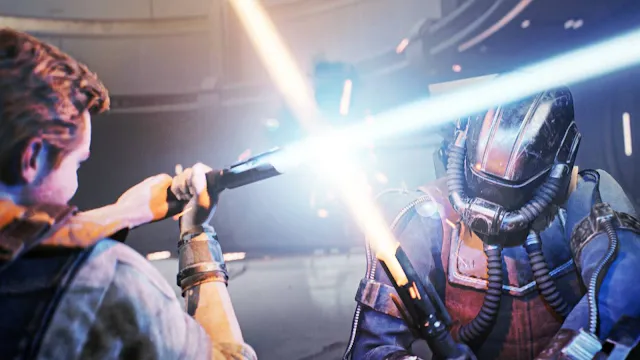
Cal's Force and lightsaber skills are more advanced in this sequel, allowing for more flexibility to take out enemies, explore the environment, and overcome encounters unscathed. Combat still focuses on a blend of offensive and defensive tactics, where you match the opponent's movements and strike when they're caught off guard. The Jedi combat in Survivor conveys a strong sense of raw power and style, and it was thrilling chaining together Force powers with rapid lightsaber strikes to down Imperial droids and troopers.


Star Wars Jedi: Survivor gives many options to tune Cal's abilities and appearance, and the scope of player expression and customization is much more robust in this sequel. Cal also plays well with the supporting cast, such as returning allies Cere, Greez, and the Nightsister Merrin, and the new cast of heroes and anti-heroes are great additions that bring some welcome gravitas to the overall story.


review jedi survivor


Survivor's increased scale and open-ended approach to world design and traversal give the game an immense scope. The game's core world of Koboh is one of six fully explorable worlds in Survivor and is larger than several planets from the original game combined. There's also a plethora of side content, including ancient Jedi tombs to explore for extra rewards, side events, and activities to engage in, making Star Wars Jedi: Survivor a massive game that truly feels like stepping into a Star Wars story.


In terms of graphics and presentation, Star Wars Jedi: Survivor is stunning. The character models are highly detailed, and the environments are vast and immersive, each with its unique atmosphere and design. The game's musical score is also top-notch, with iconic Star Wars themes blended seamlessly with new compositions to create an epic and emotional soundscape.


Overall, Star Wars Jedi: Survivor is an excellent sequel that expands on everything that made the original great while taking it to new heights. The game's vast universe, compelling story, and engaging gameplay make it a must-play for any Star Wars fan or action-adventure game enthusiast.


Extra: How to solve the Crypt of Uhrma puzzle

Review: "A Kind of Magic: How Highlander Changed the Fantasy Genre Forever"

Highlander is a film that has stood the test of time, captivating audiences for over three decades. The story of Connor MacLeod, a Scottish warrior who discovers he is one of a group of immortals who must fight each other to the death until only one remains, is a tale of epic proportions that combines historical elements with fantasy and science fiction. 


This blend of genres creates a unique and thrilling experience for viewers, one that is sure to appeal to anyone who loves an action-packed adventure. 


Highlander is not just a film, it's a journey through history and mythology that will leave you on the edge of your seat.


highlander film poster


The creative team behind Highlander was truly exceptional. Director Russell Mulcahy's artistic eye and skillful use of visual effects and cinematography created a distinctive and immersive atmosphere that transports viewers to different eras and locations throughout the film. 


The film's writer, Gregory Widen, crafted a complex and engaging story that weaves together historical events and supernatural mythology, making for a truly compelling narrative. 


The cast of Highlander is led by the charismatic Christopher Lambert, whose portrayal of Connor MacLeod captures the essence of the character's Scottish roots and immortality. Lambert's acting is complemented by the villainous turn of Clancy Brown as the Kurgen, an immortal who relishes in killing his fellow immortals. The chemistry between the two actors is palpable, adding depth and complexity to the film's central conflict. Additionally, Sean Connery's portrayal of Ramirez, Connor's mentor, adds a layer of mentorship and guidance to the story, as well as a touch of humor.


Highlander's plot is a complex but engaging tale of destiny and the struggle between good and evil. The film is a fascinating exploration of immortality, mortality, and the price of both. The immortals are seemingly predestined to fight each other until only one remains, and as the film progresses, it becomes clear that there is much more at stake than just the survival of the strongest. The film's use of flashbacks to various historical events adds an extra layer of depth to the story, making it a truly immersive experience.


kurgen highlander fight


One of the central themes of Highlander is the idea of fate and destiny. The film explores the idea that the immortals are seemingly predestined to fight each other until only one remains, and that their actions are guided by a greater force. Another theme is the importance of mentorship, as Connor is trained in sword-fighting and immortality by his mentor, Ramirez. 


Ramirez's guidance is not only crucial in helping Connor survive, but also in helping him understand the importance of living a meaningful life. Finally, the film explores the idea of mortality and the price of immortality. Connor grapples with the burden of outliving his loved ones and the price of living forever.


The Kurgen is one of the most memorable villains in film history. Clancy Brown's performance is terrifying and unforgettable, making him a standout among the film's memorable cast of characters. The Kurgen's immortality and love for killing make him a formidable opponent for Connor, and their climactic battle is one of the film's most iconic moments. The Kurgen is a true embodiment of evil, making him the perfect foil to Connor's heroism.


Queen's iconic soundtrack for Highlander is a major part of the film's legacy. The band's contributions to the film include the legendary "Who Wants to Live Forever" and the energetic "Princes of the Universe." The music perfectly complements the film's action and adds an extra layer of excitement and emotion. Queen's music has become so intertwined with the film that it is impossible to separate the two. 


In fact, "Who Wants to Live Forever" has become one of Queen's most beloved songs, and the band continued to perform it in concert even after the film's release. The soundtrack also features other great tracks like "A Kind of Magic" and "One Year of Love" that add to the film's already impressive atmosphere.


Interestingly, Queen was not the first choice to compose the film's music. According to reports, the director Russell Mulcahy initially approached David Bowie and Tangerine Dream to create the score, but they declined. It was only after a chance meeting with Queen's guitarist Brian May that the band became involved in the project. Queen's contribution to the film's soundtrack was so successful that it is often cited as one of the best movie soundtracks of all time.

The success of the film's soundtrack also helped to boost the popularity of the Highlander franchise. The film and its sequels have since inspired spin-offs, TV shows, comic books, and video games. The franchise's enduring popularity is a testament to the enduring legacy of Queen's music and the film's timeless story of immortals battling for supremacy.

Overall, the combination of the film's epic storytelling, iconic characters, and Queen's unforgettable soundtrack has left a lasting legacy in the world of cinema. The film's influence can be seen in countless other movies and TV shows that have explored similar themes of immortality, mythology, and epic battles. Highlander remains a classic film that continues to entertain and inspire new generations of fans.

Trivia about Highlander

  • The film's original script was titled "Shadow Clan" and was set in modern-day New York City.
  • Christopher Lambert, who played the lead role of Connor MacLeod, was actually French and spoke very little English at the time of filming.
  • Sean Connery, who played the role of Ramirez, was only on set for seven days of filming, but his character left a lasting impression on the film.
  • The film's soundtrack was composed by Queen, who were originally supposed to only provide one song but ended up writing and recording the entire soundtrack.
  • The film's signature weapon, the katana sword, was actually a Chinese-style weapon, but was chosen for its distinctive look and popularity in Hollywood at the time.
  • The film was shot in Scotland, England, and New York City.
  • Clancy Brown, who played the villainous Kurgen, had to shave his head and eyebrows for the role.
  • The film's iconic "There can be only one" catchphrase was actually added to the script during post-production.
  • The film's original ending was changed due to poor test screenings. The original ending had Connor throwing the Kurgen out of a window, but audiences found it unsatisfying.
  • The film's fight choreography was done by legendary swordmaster Bob Anderson, who also worked on the Star Wars and Lord of the Rings films.
  • The film's director, Russell Mulcahy, got his start directing music videos for bands like Duran Duran and Spandau Ballet.
  • The film's tagline, "There can be only one," has since become a pop culture catchphrase and has been referenced in numerous films and TV shows.
  •  A reboot of the Highlander franchise has been in development for years, with numerous directors and actors attached at various points, but the project has yet to come to fruition.

25 April 2023

The Legacy of Mandalore: A Timeline of Events in the Star Wars Universe

The planet Mandalore has played a significant role throughout the Star Wars universe. From its early history as a planet of warriors, to its involvement in the Clone Wars and the Great Purge, Mandalore has seen its fair share of conflict and turmoil. 

However, it has also been a source of inspiration and pride for the Mandalorian people, who have long held onto their traditions and culture despite the challenges they have faced. In recent years, the planet has once again come to the forefront of Star Wars media, with new stories and characters emerging to expand on the rich history of Mandalore. 

This timeline explores some of the key moments in the history of Mandalore, from its earliest days to the present day, as depicted in various Star Wars canon media.

bo katan kryze

7,000 BBY: The Taung, the original inhabitants of Mandalore, go to war with the Zhell, a rival species. The Taung emerge victorious, and rename their world "Mandalore" in honor of their leader, Mandalore the First.


The Taung were a warlike species that lived on Mandalore, and they believed that they were destined to conquer the galaxy. They went to war with the Zhell, another species that lived in the galaxy, and emerged victorious. In honor of their leader, they renamed their world "Mandalore". This event marked the beginning of the Mandalorian culture and the Mandalorian people.


4,000 BBY: The Mandalorian Crusaders, led by Mandalore the Indomitable, invade the Galactic Republic. This begins the Mandalorian Wars, which lasts for sixteen years and ends in a Republic victory.


The Mandalorian Crusaders were a group of Mandalorians who believed in spreading their culture and values through military conquest. They invaded the Galactic Republic, starting the Mandalorian Wars. The war lasted for sixteen years and was marked by brutal battles and devastating losses on both sides. In the end, the Republic emerged victorious, and the Mandalorians were forced to retreat to their homeworld.


2,980 BBY: The Jedi Order intervenes in the Mandalorian Civil War, with Revan leading a Republic-supported faction against the Mandalorian Neo-Crusaders.


The Mandalorian Civil War was a conflict between two factions of Mandalorians, the True Mandalorians and the Neo-Crusaders. The Jedi Order intervened in the war, with Revan leading a faction supported by the Republic. The conflict was marked by intense battles and personal rivalries, and it ultimately resulted in the defeat of the Neo-Crusaders.


60 BBY: Jango Fett is born on the planet Concord Dawn, which is affiliated with Mandalore.


Jango Fett was a renowned bounty hunter and mercenary who was born on the planet Concord Dawn, which was affiliated with Mandalore. Fett became known for his skills as a fighter and his proficiency with a wide range of weapons.


32 BBY: Jango Fett is recruited by Darth Tyranus to serve as the template for the Republic's clone army.


Jango Fett was recruited by Darth Tyranus, a Sith Lord, to serve as the template for the Republic's clone army. Fett was selected for his exceptional combat skills and his ability to adapt to new situations quickly. The clones that were created from his genetic material became the backbone of the Republic's military forces during the Clone Wars.

 22 BBY: The Clone Wars begin. Mandalore initially remains neutral, but eventually becomes embroiled in the conflict.


The Clone Wars were a major conflict that erupted between the Galactic Republic and the Confederacy of Independent Systems. Mandalore initially remained neutral in the conflict, but as the war progressed, the planet became embroiled in the fighting. Mandalorian warriors fought on both sides of the conflict, with some supporting the Republic and others supporting the Separatists.


 21 BBY: Duchess Satine Kryze, leader of the New Mandalorian government, is targeted for assassination by the Shadow Collective, a criminal syndicate led by Darth Maul.


Duchess Satine Kryze was the leader of the New Mandalorian government, which sought to move the planet away from its warrior past and towards a more peaceful future. She was targeted for assassination by the Shadow Collective, a criminal syndicate led by Darth Maul. The event marked a turning point in the Clone Wars, as it forced Mandalore to become more involved in the conflict.


20 BBY: Darth Maul takes control of Mandalore with the help of the criminal syndicate Death Watch.


After the assassination attempt on Satine Kryze, the Shadow Collective, led by Darth Maul, took control of Mandalore with the help of the Death Watch, a Mandalorian extremist group. Maul became the de facto ruler of Mandalore, and he began to implement his own agenda on the planet.


19 BBY: The Siege of Mandalore takes place, as Ahsoka Tano and Bo-Katan Kryze team up to liberate the planet from Darth Maul's rule.


The Siege of Mandalore was a major battle that took place towards the end of the Clone Wars. Ahsoka Tano, a former Jedi Padawan, teamed up with Bo-Katan Kryze, Satine's sister, to liberate Mandalore from Darth Maul's rule. The battle was marked by intense fighting and emotional moments, as Ahsoka and Bo-Katan fought to restore Mandalore to its former glory.


purge of mandalore

2 BBY: The Great Purge was a tragic event in Mandalorian history where the Galactic Empire launched a genocidal campaign against the Mandalorian people. The Empire, under the command of Moff Gideon, hunted down and killed many Mandalorians, and destroyed their cities and strongholds. The Mandalorians, known for their warrior culture and their famous armor, were forced to flee and go into hiding.


The Empire's goal was to suppress Mandalorian culture and traditions and erase their presence in the galaxy. They believed that the Mandalorians posed a threat to their power and control over the galaxy, and saw them as a potential source of rebellion and resistance.


The Great Purge had a profound impact on the Mandalorian people, and many of them went into hiding and lived in secrecy, hoping to one day reclaim their place in the galaxy.


9 ABY: In the aftermath of the Great Purge, Din Djarin, a Mandalorian bounty hunter, finds himself tasked with rescuing a young Force-sensitive child, known as "The Child" or "Grogu." Over time, Din develops a strong bond with the child and decides to adopt him as his own. The two embark on a journey across the galaxy, trying to evade the Empire and other dangerous forces who seek to capture or harm the child.


The Child's presence also rekindles Din's connection to his Mandalorian roots and culture, and he becomes more deeply invested in the fate of his people.


10 ABY: In a bid to help the Mandalorian people, Din teams up with Bo-Katan Kryze, a member of the Mandalorian royal family, to help her reclaim the Darksaber and become the new leader of Mandalore. The Darksaber is a powerful and ancient weapon that carries great significance in Mandalorian culture and tradition. Bo-Katan, who had previously been the leader of the Mandalorians, had lost the weapon to Moff Gideon during the Great Purge.


Din helps Bo-Katan and her allies in their quest to reclaim the Darksaber, and in doing so, he helps restore hope to the Mandalorian people and paves the way for their eventual return to the galaxy. The events of these years lay the groundwork for the larger story of the Mandalorian people and their place in the Star Wars universe.

Ahsoka Tano: A Look at Her Best Episodes in The Clone Wars

In the Star Wars universe, Ahsoka Tano has become a beloved character for her strong personality, remarkable fighting skills, and compelling storyline.

As a Padawan, Ahsoka fought alongside Anakin Skywalker during the Clone Wars, and after leaving the Jedi Order, she continued to play an essential role in the galaxy's fate. 

In this article, we will explore the seven best Clone Wars and Rebels episodes that feature Ahsoka Tano and then consider the final season of Clone Wars. 

ashoka best epsiodes


Let's start with The Clone Wars: Season 1, Episode 9 - "Cloak of Darkness." In this episode, Ahsoka and Jedi Master Luminara Unduli try to protect Viceroy Nute Gunray, but their mission goes awry when they encounter Asajj Ventress, the assassin and apprentice to Count Dooku. The episode highlights Ahsoka's sharp instincts and bravery, as she advocates for joining the fight against Ventress, despite her superiors' refusal. Ahsoka's instincts end up saving Unduli from her own arrogance, showing her growth from a temperamental Padawan to a wise Jedi.

Next we have The Clone Wars: Season 2, Episode 11 - "Lightsaber Lost." This episode is a smaller, self-contained story that shows Ahsoka's growth and development. When she loses her lightsaber to a pickpocket in the Coruscant underworld, Ahsoka embarks on a hunt to recover it, leading her to become involved in a criminal plot. With the help of Jedi Master Tera Sinube, Ahsoka recovers her lightsaber, finds the guilty party, and imparts valuable lessons of patience and persistence to a group of young Jedi.

Have a gander at The Clone Wars: Season 3, Episode 22 - "Wookie Hunt." After being captured by Trandoshan hunters, Ahsoka and a group of young Jedi are forced to survive on the run in a dense jungle environment. The episode wastes no time establishing its gravity, as one of the Jedi survivors is killed by a fatal gunshot. Ahsoka steps up as the leader of the group and leads them to safety with the help of Chewbacca and a few other Wookie warriors, highlighting her journey to becoming a competent leader.

ashoka clone wars final

Jumping into Rebels: Season 2, Episodes 21-22 - "Twilight of the Apprentice." In this one-hour special, Ahsoka confronts her former master, now known as Darth Vader, in an emotional and long-awaited rematch. After encountering a group of Inquisitors and the rogue Darth Maul on the planet Malachor, the crew, minus Ahsoka, are forced to escape. Ahsoka decides to remain on Malachor and fight off the newly arrived Vader, resulting in a thrilling confrontation between former master and apprentice.

Finally, we have Rebels: Season 1, Episode 15 - "Fire Across the Galaxy." Although Ahsoka isn't heavily featured in this episode, her presence comes as a resounding victory for the crew of the Ghost, who had just fought to recover their comrades Kanan Jarrus and Ezra Bridger. The crew, operating in secret as a rebel cell after the takeover of the galaxy by Emperor Palpatine, are shocked to realize that their incognito coordinator is none other than Ahsoka Tano. The episode implies that Ahsoka has been working behind the scenes to coordinate disparate cells of rebels and keep their operation hidden from the Empire. 

For fans of The Clone Wars, it was the first time that Ahsoka had been reintroduced to the narrative since that series had ended, and it came as a pleasant surprise that the former Jedi had been doing her part to help.

Let's consider the role of Ashoka in the final Season of The Clone Wars


The final few episodes of the seventh and final season of Star Wars: The Clone Wars were some of the most highly anticipated in the entire series, especially for fans of Ahsoka Tano. The story arc, which spans four episodes, is commonly referred to as the "Siege of Mandalore" and takes place concurrently with the events of Star Wars: Episode III - Revenge of the Sith.

In these episodes, Ahsoka Tano returns to the forefront of the narrative as she teams up with Mandalorian warrior Bo-Katan Kryze to liberate Mandalore from the grip of Darth Maul, who has taken control of the planet. Ahsoka's role in the events that follow is significant, as she is not only instrumental in the liberation of Mandalore but also in the final moments leading up to the execution of Order 66.

ashoka tano clone wars final

Throughout the Siege of Mandalore arc, Ahsoka is portrayed as a wise and capable leader who is deeply committed to the cause of justice and freedom. She uses her experience and knowledge of the Clone Wars to help Bo-Katan and her Mandalorian warriors navigate the complex political landscape of the planet and plan their attacks against Maul and his loyalists.

In the climactic final episode, "Victory and Death," Ahsoka and her ally, Clone Captain Rex, find themselves on the run from their own troops after Order 66 is executed. As they attempt to escape the besieged planet, they are pursued by a squad of Clone Troopers under the command of the newly appointed Darth Vader.

The episode is a stunning showcase of Ahsoka's strength and resilience as she battles her former comrades and attempts to save Rex from his own programming. In the end, she is forced to confront the reality that the Clone Troopers she once fought alongside have been turned into mindless killers, and she is forced to abandon her lightsabers and escape with Rex.

The final few episodes of The Clone Wars, particularly the Siege of Mandalore arc, showcase Ahsoka Tano at her best. She is a competent and fearless warrior, a wise and compassionate leader, and a true friend to those who stand by her. Her role in the events leading up to Order 66 is significant, and her survival gives hope to Star Wars fans that she may one day return to the galaxy far, far away.
24 April 2023

How Ben Burtt Revived the Wilhelm Scream in Star Wars

The Wilhelm scream is a stock sound effect of a man screaming, often used in scenes where a character falls or is thrown from a great height or is attacked by an animal. 

Recorded in 1951 for the movie "Distant Drums," the Wilhelm scream is a stock sound effect that has since appeared in over 400 movies and TV series. 

It is considered one of the most recognizable sound clichés in cinema, along with the Universal Telephone Ring, Castle Thunder, and the cry of the red-tailed hawk. Actor and singer Sheb Wooley is believed to have provided the scream, which was recorded in six takes. The fifth take was used in "Distant Drums" for the scene in which a soldier is eaten by an alligator while his platoon crosses a river.

The Wilhelm scream's resurgence is largely attributed to Star Wars sound designer Ben Burtt, who discovered the original recording while tracking down sound effects for the films. He named it after the character Wilhelm, who emitted the scream in the 1953 film "The Charge at Feather River." after he takes an arrow to his leg. 

ralph brooks wilhelm scream

 Its use in Star Wars became an in-joke among sound designers, particularly at Skywalker Sound, with Take 4 and Take 3 being the most commonly used versions in the franchise.

In 2018, sound editor Matthew Wood announced that Lucasfilm would no longer use the Wilhelm scream following the release of "Star Wars: Episode VII The Force Awakens." Instead, a new stock sound effect would be used.

Here are the times the Wilhelm Scream was used in Star Wars

  • Star Wars: Episode I The Phantom Menace: Naboo soldier shot in the Theed Hangar (Take 3), another Naboo soldier 14 seconds later (Take 4)
  • Star Wars: Episode II Attack of the Clones: Naboo guard falling from the ramp of the exploding J-type diplomatic barge on Coruscant (Take 3)
  • Star Wars: The Clone Wars: Clone trooper who hit a battle droid too hard with his hand on Christophsis (Take 4 slowed down), clone trooper hit when an AT-TE cockpit explodes on Teth (Take 4)
  • Star Wars: Episode III Revenge of the Sith: Knocked-back clone trooper on the Guarlara during the broadside battle with the Invisible Hand (Take 4)
  • Star Wars: Episode IV A New Hope: Stormtrooper shot by Luke Skywalker prior to the chasm swing aboard the Death Star (Takes 3 and 4 in quick succession)
  • Star Wars: Episode V The Empire Strikes Back: Rebel soldier as a turret is destroyed by an All Terrain Armored Transport (Take 1), stormtrooper thrown down by Chewbacca before Han Solo is put into carbonite (Takes 1 and 4)
  • Star Wars: Episode VI Return of the Jedi: Weequay falling into the sarlacc pit (Take 4), another skiff guard falls into the sarlacc one minute later (Take 4), Colonel Dyer knocked off a catwalk by Han Solo in the Endor shield bunker (Ben Burtt portrayed the character and mimicked the Wilhelm scream himself), stormtrooper lifted by crowds on Coruscant (Take 4)
  • Star Wars: Episode VII The Force Awakens: First Order stormtrooper hit by an explosion aboard the Finalizer, as Finn and Poe Dameron attempt to escape in a TIE fighter (Take 4)

Profile: Philip Reeve author of Mortal Engines and Railhead

Philip Reeve is an award-winning British author and illustrator, celebrated for his vast, imaginative worlds and intricate storytelling. While best known for his epic Mortal Engines series, his body of work spans whimsical steampunk space operas, futuristic railway adventures, and charmingly illustrated children's books. He was born on February 28, 1966, in Brighton, England.

Early Life and Illustration Career

Reeve grew up in Devon, England, and honed his artistic talents studying illustration at Camberwell College of Arts. Before becoming a full-time novelist, he had a successful career as an illustrator and cartoonist. Notably, he contributed his skills to the hugely popular Horrible Histories book series, giving his work a foundation in making history accessible and engaging, a skill that would later define his writing.

philip reeve author

The Mortal Engines Saga

Reeve burst onto the literary scene with his debut novel, Mortal Engines, published in 2001. The book introduced the world to the stunningly original concept of Municipal Darwinism, a post-apocalyptic future where entire cities are mounted on wheels and prey upon one another for resources. The Mortal Engines quartet became a global phenomenon, winning numerous awards, including the Nestlé Children's Book Prize and the Guardian Children's Fiction Prize.

The saga was adapted into a feature film in 2018 by filmmaker Peter Jackson. While the movie received mixed reviews, it was widely praised for its stunning visual effects and faithful production design, bringing Reeve's world to a new audience. The universe was further expanded with the excellent Fever Crumb prequel trilogy and the Night Flights companion stories.

Other Worlds and Collaborations

Beyond the world of traction cities, Reeve has crafted several other beloved series. The Larklight trilogy is a whimsical steampunk adventure set in a Victorian-era solar system, blending history with imaginative space fantasy. The Railhead trilogy offers a more futuristic vision, set in a galaxy connected by a vast network of interstellar railways controlled by artificial intelligences.

In recent years, Reeve has also embarked on a highly successful collaboration with author and illustrator Sarah McIntyre. Together, they have created a series of joyful, hilarious, and heavily illustrated books for younger readers, such as Oliver and the Seawigs and The Legend of Kevin, showcasing his versatility and sense of humor.

Themes and Lasting Impact

Reeve's writing has been praised for its imaginative world-building, strong characters, and compelling storytelling. His books often tackle complex themes, such as the long shadow of history, environmental collapse, the dangers of ideology, and class warfare, making them resonate with both young and adult readers. He currently lives in Dartmoor, Devon, with his wife and son. His twitter feed is great!

Philip Reeve Books in Chronological Order

Here is a corrected list of Philip Reeve's major book series, organized by the publication date of the first book in each series.

The Mortal Engines Quartet

  1. Mortal Engines (2001)
  2. Predator's Gold (2003)
  3. Infernal Devices (2005)
  4. A Darkling Plain (2006)

The Larklight Trilogy

  1. Larklight (2006)
  2. Starcross (2007)
  3. Mothstorm (2008)

The Fever Crumb Trilogy (Mortal Engines Prequels)

  1. Fever Crumb (2009)
  2. A Web of Air (2010)
  3. Scrivener's Moon (2011)

The Railhead Trilogy

  1. Railhead (2015)
  2. Black Light Express (2016)
  3. Station Zero (2018)

Other Mortal Engines Universe Books

(Note: This list focuses on his major series. Reeve has also written numerous standalone novels and illustrated books for younger readers.)

About the author Jimmy Jangles


My name is Jimmy Jangles, the founder of The Astromech. I have always been fascinated by the world of science fiction, especially the Star Wars universe, and I created this website to share my love for it with fellow fans.

At The Astromech, you can expect to find a variety of articles, reviews, and analysis related to science fiction, including books, movies, TV, and games.
From exploring the latest news and theories to discussing the classics, I aim to provide entertaining and informative content for all fans of the genre.

Whether you are a die-hard Star Trek fan or simply curious about the world of science fiction, The Astromech has something for everyone. So, sit back, relax, and join me on this journey through the stars!
Back to Top