31 January 2023

Wings of Fire - The plot of all the novels

Wings of Fire, the Full Arc Guide

Wings of Fire began as a focused mission. Five dragonets. One prophecy. A continent at war. The first five books landed, readers showed up in waves, and the story proved bigger than a single ending.

Author Tui T. Sutherland expanded the canvas in stages that made sense inside the world. Arc One closes the war on Pyrrhia and asks what peace actually requires. Arc Two follows a new class at Jade Mountain Academy, where old grudges, new powers, and fragile unity collide. Arc Three sails to Pantala, a second continent with its own tribes, its own tyrannies, and a living enemy that rewrites the rules. Between these arcs, companion stories and winglets deepen backstories, fill in missing motives, and show how choices ripple across tribes and generations. Below, each novel and the featured companion collection gets its own card, with plot, insight, and the themes that carry the series forward.

Book One. The Dragonet Prophecy

Series opener. Prophecy takes flight. Choice begins to matter.
Wings of Fire Book One cover

Clay, Tsunami, Glory, Starflight, and Sunny are raised in secret by the Talons of Peace to end a multi-tribe war. Captivity keeps them safe, it also keeps them in the dark.

Escape brings the larger world into focus, including SkyWing queen Scarlet and a brutal arena that treats dragons like weapons. The prophecy starts to feel more like a cage than a map.

Themes. The crushing weight of a prophecy versus the right to choose your own path. Finding a 'we' in a group of strangers. Realizing you're not a hero, but a tool—and deciding to break free.

Book Two. The Lost Heir

Tsunami returns to the sea. Bloodlines complicate truth.
Wings of Fire Book Two cover

Tsunami learns she is Queen Coral’s lost daughter. The SeaWing palace glitters, then cracks. Heirs vanish. Proof of identity becomes a weapon.

Court politics force Tsunami to choose who she will be, a pawn of tradition or a protector who asks dangerous questions. The dragonets learn that prophecy cannot solve a murder.

Themes. The desperate need to belong, and the terrible price of finding you don't. How 'safety' can be another kind of cage. Learning that true leadership isn't about bloodlines, but about the choices you make when no one else will.

Book Three. The Hidden Kingdom

Glory steps into power. The jungle wakes up.
Wings of Fire Book Three cover

The dragonets travel to the RainWing jungle. Glory has been dismissed as decorative for too long. Missing dragons and a brewing coup pull her to the center.

She remakes a sleepy kingdom into a force, proving that softness is not weakness and that justice can look like care and consequence at once.

Themes. Proving your worth when everyone has written you off. The power of being underestimated. How true strength isn't about being the loudest, but about being the one who sees, cares, and *acts*.

Book Four. The Dark Secret

Starflight among the NightWings. Truth stings.
The Dark Secret cover

Starflight is taken to the NightWing homeland and finds rot under the legends. A proud tribe hides scarcity, fear, and a plan that could burn the continent.

He must decide if loyalty means silence or warning the friends who became his real family. Knowledge alone is not courage. Speaking it is.

Themes. When the heroes you worship are actually monsters. The paralyzing fear of speaking up. The moment you realize that knowing the truth is useless without the courage to act on it.

Book Five. The Brightest Night

Arc One finale. Prophecy meets consequence.
The Brightest Night cover

The dragonets assemble the last pieces of the prophecy. A traitor moves in the shadows. Queen Scarlet returns as a test of mercy and resolve.

The ending offers victory without forgetting the bodies it took to reach it. Peace is earned, then guarded.

Themes. What happens when the grand, 'destined' solution fails? The power of small, kind dragons to fix what empires broke. Redefining victory: not as a perfect ending, but as the hard, messy work of starting over, together.

Book Six. Moon Rising
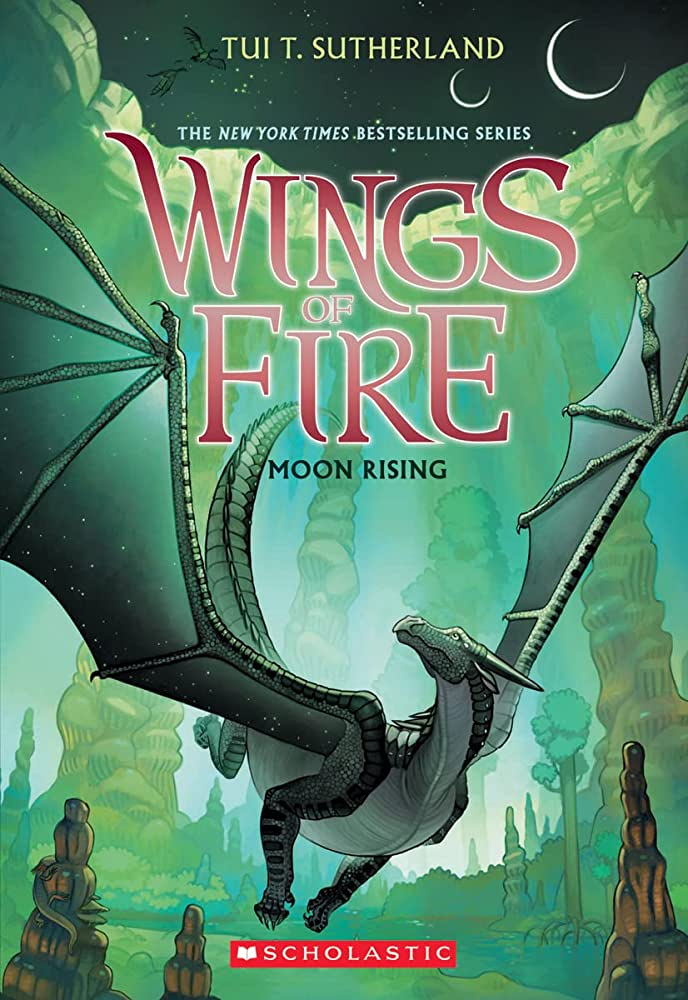
Arc Two opens at Jade Mountain. A new generation learns to listen.
Moon Rising cover

Moonwatcher can read minds and glimpse futures. At the academy, secrets roar louder than classes. An unseen enemy threatens the school and the fragile peace it represents.

Moon learns consent in thought is as vital as consent in action. She chooses honesty and connection over control.

Themes. The burden of knowing too much. Is empathy a gift or a curse? The terrifying line between understanding someone and violating their privacy. Can old enemies ever truly learn to trust each other?

Book Seven. Winter Turning

IceWing pride meets uncomfortable truth.
Winter Turning cover

Winter arrives with orders and old stories about enemies. Friendship challenges his training, then a scandal with scavengers threatens a new war.

He must redefine honor. It is not blind obedience. It is seeing clearly and acting anyway.

Themes. The painful process of realizing your entire worldview is wrong. Unlearning a lifetime of prejudice. Discovering that 'honor' and 'duty' might mean defying your family to do what's right.

Book Eight. Escaping Peril

A living weapon chooses her own rules.
Escaping Peril cover

Peril carries heat that can melt anything. Queen Scarlet treated her like a blade. The dragonets offer another path, but the kingdom still demands fire.

Redemption is not a speech. It is daily work, and it burns.

Themes. Can you be 'good' if you've only ever been used as a weapon? The difference between being forgiven and forgiving yourself. Reclaiming your own identity after escaping a manipulator.

Book Nine. Talons of Power

Hidden magic, visible fear.
Talons of Power cover

Turtle is an animus who hides his power because he knows what it does to souls. The hunt for stability forces him to act anyway.

The question shifts. Not can we, but should we. And if yes, then how, and at what cost.

Themes. The terror of holding too much power. If you *can* fix everything, *should* you? The moral weight of 'helping' when it means taking away someone else's choice. The courage of inaction.

Book Ten. Darkness of Dragons

Arc Two finale. Strategy over spectacle.
Darkness of Dragons cover

Qibli navigates SandWing politics, a dangerous artifact, and the promise of a shortcut that could break more than it fixes.

The finale rewards thinking as much as fighting. The series doubles down on brains, not brute force.

Themes. The temptation to take a magical shortcut to solve all your problems. Choosing to be clever, empathetic, and *enough*, even when you're offered absolute power. The victory of a sharp mind over a magic spell.

Book Eleven. The Lost Continent

Arc Three opens on Pantala. New tribes, new rules.
The Lost Continent cover

Blue, a SilkWing, lives under Queen Wasp’s hive control. Cricket, a HiveWing, refuses to stop asking why. Together they find cracks in a system that fears questions.

Pantala reframes the series. Freedom is not a Pyrrhia problem. It is universal, and always contested.

Themes. Living in a society of total control. The power of a single 'why?' in a culture of conformity. How small, quiet acts of rebellion can crack an empire's foundation.

Book Twelve. The Hive Queen

Curiosity is a revolutionary act.
The Hive Queen cover

Cricket uncovers how control functions in the hive, from story to signal. Answers come with a price, and a larger threat clicks into place.

Knowledge spreads like light, quietly and then all at once.

Themes. When curiosity is a crime. The danger of uncovering a truth that the powerful want to keep buried. Using knowledge not as a weapon, but as a light to expose the rot in the system.

Book Thirteen. The Poison Jungle

Sundew, vengeance, and a living enemy.
The Poison Jungle cover

The othermind spreads through the jungle, turning dragons into extensions of itself. Sundew wants payback. The mission demands more than anger.

Alliances form across old battle lines. Ecology becomes destiny, then choice breaks destiny apart.

Themes. The all-consuming fire of vengeance. What good is saving your people if you become a monster to do it? Learning to channel righteous anger into focused, healing action. The line between justice and pure revenge.

Book Fourteen. The Dangerous Gift

A crown is a mirror. Snowfall must like what she sees.
The Dangerous Gift cover

An illness in the IceWing kingdom and rising pressure from Pantala force Snowfall to lead, not hide. History will not stay buried, and borders are only lines until someone crosses them.

She learns that security without compassion is a fortress that collapses from the inside.

Themes. The crushing anxiety of leadership. How paranoia and isolation can destroy a ruler. The moment a leader must choose between clinging to old, 'safe' traditions and embracing a dangerous, compassionate new truth.

Book Fifteen. Flames of Hope

Arc Three finale. Ending the othermind, beginning something better.
Flames of Hope cover

A new point of view carries the final push to free Pantala from the othermind. Friendship and sacrifice shape the plan, then the future.

Victory is measured by the worlds you make possible, not the enemies you erase.

Themes. Hope not as a feeling, but as a deliberate, difficult choice. The power of collective action over a single hero's journey. How empathy and understanding can defeat an enemy that feeds on control.

Winglets Quartet 4. Rescue

Four companion stories. Side doors into the main arcs.

Rescue follows Fierceteeth on a volcanic mission that doubles as a reckoning with her past. Motive matters as much as outcome.

Fierce Winds tracks Sirocco, a SkyWing, learning to steer power instead of letting power steer him during a storm that tests every instinct.

Journey to the East sends Oyster, a SeaWing, after a missing sister and into contact with beings that push the definition of tribe and kin.

Return to the Ice Kingdom brings Prince Arctic home to face history and family, where apology and accountability share the same language.

Themes. How your past defines your present—and whether you can escape it. The unseen choices and hidden motives that shape the 'big' historical moments. A look at the 'villains' and side characters, asking what choices *they* had.

bene gesserit

What is The Voice in Dune?

The "Voice" is a powerful tool that the Bene Gesserit use to manipulate and control others through their vocal inflection and tone. It is based on the idea that the human voice can have a profound effect on others, and that by using the right combination of sounds and tones, one can influence people to do one's bidding.

In the context of the Dune novels, the Voice is presented as a highly advanced technique that the Bene Gesserit have developed through centuries of training and experimentation. It is a combination of vocal control, body language, and psychological manipulation that can be used to compel others to do what the user wants. 

The Voice is also presented as a natural ability possessed by some individuals, such as Paul Atreides, who are born with a talent for manipulating others with their voice.

the voice dune explaination

The science behind the Voice is not explained in great detail in the novels, but it is suggested that it is based on a deep understanding of the human psyche and the way that the brain processes sound and language. By using the right combination of words and vocal intonation, the user can bypass the listener's conscious mind and tap into their subconscious desires and fears, effectively controlling their actions.

The Voice is used throughout the Dune novels as a tool of power and manipulation, and there are many examples of its effective use. In the first novel, Dune, the Bene Gesserit Reverend Mother Gaius Helen Mohiam uses the Voice to test Paul Atreides' loyalty and obedience. She forces him to obey her commands by using a combination of vocal intonation and pain, demonstrating the power of the Voice to control others.

the voice concept bene gesserit

In Dune Messiah, Paul Atreides uses the Voice to command a group of Sardaukar soldiers, forcing them to abandon their mission to kill him and instead pledge their loyalty to him. This scene highlights the effectiveness of the Voice as a tool of persuasion, even in the face of extreme danger.

In the later Dune novels, the Bene Gesserit continue to use the Voice as a powerful tool of manipulation and control. For example, in Heretics of Dune, Mother Superior Darwi Odrade uses the Voice to force the Honored Matre Murbella to submit to Bene Gesserit control, effectively converting her to their cause.

How the Voice is used in the Dune movie

In the 2022 adaptation of Frank Herbert's seminal science fiction novel "Dune," directed by Denis Villeneuve, the concept of "the Voice" is ingeniously utilized to deepen the narrative's exploration of power, control, and human potential. 

The film conveys the disconcerting effect of the Voice through a combination of sound design and visual cues, immersing the audience in the experience of its compelling power. For instance, when Lady Jessica or Paul uses the Voice, the filmmakers employ a layered audio technique that combines multiple tonalities and resonances, creating an unsettling auditory experience that signifies the unnatural influence they wield. 

This is further amplified by the actors' performances, which convey both the concentration required to use the Voice and the strain it imposes on them, highlighting the mental discipline and strength the Bene Gesserit must cultivate. Villeneuve's "Dune" thus transforms the Voice from a mere plot device into a complex symbol of authority and manipulation, reflecting the broader themes of destiny, governance, and the human condition that are central to the narrative.

the voice concept in dune


Overall, the Voice is a complex and powerful tool that the Bene Gesserit use to exert control over others. It is based on a deep understanding of the human psyche and the power of language, and is presented in the Dune novels as a natural ability that can be developed through training and practice. The use of the Voice is a key aspect of the Bene Gesserit's power and influence in the Dune universe.

A Discussion on Cosplay and Self-Expression - The Psychology Behind Dressing Up as Fictional Characters

Let's delve deeper into the cultural significance of zombies in popular media. 

Zombies have become a cultural phenomenon in modern times. They have been featured in a variety of media forms, including classic films, TV shows, books, and video games. The portrayal of sexy zombies in popular media has evolved over time, but they are typically depicted as undead beings who feed on the flesh of the living. They are often associated with themes of horror, fear, and the unknown.

One reason why zombies have become so popular in popular media is that they can represent a variety of cultural anxieties. 

For example, the fear of the unknown is a common theme in zombie stories, as people are unsure of what is causing the outbreak and what the zombies are capable of. Additionally, zombies can represent the threat of contagion and the breakdown of social order, as survivors must navigate a world where the rules of society no longer apply. 

Zombies are also often used as a metaphor for societal issues, such as consumerism (this was George Romero's specialty theme!), conformity, and the loss of individuality.

In part, it is why The Last of Us show was so popular. 

Moving on to the role of cosplay in promoting body positivity and self-expression, it's important to understand that cosplay is not just about dressing up in costumes and exposing one's well bosumed cleavage. 

It's a form of self-expression that allows individuals to immerse themselves in the worlds of their favorite characters and connect with others who share their interests. Cosplay provides a platform for people to express their creativity, passion, identity - and sexuality.

Like this energetically endowed zombie girl cosplayer:

zombie girl cosplayer large green breasts

This cosplayer has gone all out with her costume - green body paint to indicate skin determination, and bloody nails to suggest her character has attacked other parties. Her dead white eyes imply an unseen evil lurks within and her exquisite dental makeup suggests decay and that her character is well under the spell of whatever made her a Living Dead Girl. 

You would not want this girl kicking on your front door during a Zombie Apocalypse. 

Or ever really. 

Cosplay has become an important platform for promoting body positivity and inclusivity. People of all body types and identities can participate in cosplay and feel empowered. In a world where beauty standards can be restrictive and exclusive, cosplay provides a space where people It doesn't matter if they are large breasted, have a missing knee or bad teeth, they can express themselves in a way that feels authentic and inclusive. 

Cosplay has also become a platform for advocacy, with cosplayers using their platform to promote body positivity and raise awareness about important social issues.

Here's a classic cosplay Star Wars crossover:

stormtrooper zombie

What evil fate befell this Storm Trooper? This looks to be a destiny worse than living through Order 66...

Finally, let's explore the psychology behind why people enjoy dressing up, body painting their breasts, and embodying fictional characters. 

There are several theories. 

One is that it provides a sense of escape from reality. People may use cosplay as a way to temporarily adopt a different identity and experience a different world. Another theory is that it allows for a sense of mastery and control. 

Cosplayers can create and control their own costume and performance, which can provide a sense of empowerment. 

star war cosplayer leia zombie with male pilot
Princess Leia cosplayer and pilot friend with ... a snack.

Finally, cosplay can provide a sense of community and belonging. Cosplayers can connect with others who share their interests and passions, which can help to foster a sense of community and belonging.


Transformers: Rise of the Beasts Trivia

"Transformers: Rise of the Beasts" has finally hit the big screens in June 2023, and it's everything that fans of the franchise have been waiting for. This latest addition to the Transformers series is a thrilling live-action film that offers a fresh take on the beloved Autobots and Decepticons, with new characters and storylines that take the universe in exciting new directions.

Set in the 1990s, "Transformers: Rise of the Beasts" serves as a prequel to the original Transformers series and as a sequel to the Bumblebee film, and features a diverse cast of both humans and robots.

Noah, a sharp young guy from Brooklyn, and Elena, an ambitious, talented artifact researcher, are swept up in the conflict as Optimus Prime and the Autobots face a terrifying new nemesis bent on their destruction named Scourge

 The film introduces new Transformers such as 'Optimus Primal' (Ron Pearlman) and Airazor (Michelle Yeoh) and human characters while also paying tribute to the franchise's history. Fans of the series will be delighted to see some of their favorite characters in action, while newcomers will find it easy to get swept up in the thrilling and action-packed adventure.


Transformers: Rise of the Beasts trivia

One of the highlights of the film is its impressive special effects and production design. The robots look stunningly realistic, and the action scenes are nothing short of breathtaking. The film's creative team has done an incredible job of bringing the Transformers universe to life on the big screen, and it's clear that no expense has been spared in making this movie a visual spectacle.


"Transformers: Rise of the Beasts" is a must-see film for fans of the franchise and action movie lovers alike. With its captivating story, diverse cast, and mind-blowing special effects, this movie is sure to leave audiences on the edge of their seats from beginning to end.

31 December 2022

How the "Chain of Command, Part II" Star Episode is still relevant 30 years later

Star Trek: The Next Generation – Chain of Command, Part II

"Chain of Command, Part II" is the 11th episode of the sixth season of Star Trek: The Next Generation, first broadcast in the United States on December 17, 1992. Among Trekkies, it is revered as one of the defining moments of the series, remembered for its raw intensity, its unflinching look at the psychological abuse of prisoners of war, and its relentless exploration of what happens when truth itself is under siege.

The episode follows Captain Jean-Luc Picard after he is captured by the Cardassians, one of the Federation’s most complex and morally ambiguous adversaries. He is transported to a secret detention facility and subjected to brutal methods intended to break his mind and extract classified intelligence about a covert Starfleet operation. The Cardassians want more than information. They want submission.

Chain of Command Star Trek
Captain Picard facing Gul Madred in the infamous interrogation chamber.

What elevates this episode into Star Trek legend is a single, unyielding exchange. Gul Madred, the architect of Picard’s torment, presents four bright lights and demands that Picard acknowledge five. It’s not about facts. It’s about breaking resistance, one neuron at a time. Madred escalates the pain, confident the Captain will surrender. But Picard refuses.

“There are four lights!”

This moment echoes through Trek history. It’s a direct mirror to the franchise’s DNA: defiance in the face of tyranny. For longtime fans, it recalls Vulcan philosophy on logic and truth, echoes the Prime Directive’s moral weight, and nods to the franchise’s Cold War roots. In-universe, it also foreshadows the Cardassians’ role in later conflicts, including their eventual alliance with the Dominion. This isn’t just torture. It’s a prelude to the storm that will engulf the Alpha Quadrant.

Picard’s Ordeal and Stewart’s Performance

Throughout the episode, Picard endures every conceivable tactic, from sensory deprivation to physical brutality. His refusal to compromise his morality turns him into something more than a Starfleet captain. It transforms him into a symbol. Sir Patrick Stewart has often cited this storyline as one of the most emotionally draining of his career. The performance is stripped to its essence. No diplomacy. No bridge. Just the raw human will to endure.

In interviews, Stewart described the filming process as exhausting, calling it “grueling” and “one of the most personal performances” of his time on the show. What began as a science fiction plot about a prisoner became a study in how far the human mind can bend before it breaks.

Stewart later reflected on how relevant the episode became in real-world political climates, pointing to the erosion of civil liberties and the ethics of interrogation in modern conflicts. The four-lights moment has been referenced in political commentary, military ethics debates, and academic writing for decades.

Political Resonance and Real-World Parallels

“Chain of Command, Part II” resonated far beyond Trek fandom. Journalists and scholars have drawn parallels between Gul Madred’s psychological tactics and real-world methods of interrogation. In 2004, Seymour M. Hersh compared the episode’s depiction of torture to what was later uncovered at Abu Ghraib prison. In 2014, Conor Friedersdorf noted its eerie prescience regarding enhanced interrogation in the post-9/11 era. Star Trek had already imagined the moral fallout of such choices years earlier.

This is part of what makes this episode so unforgettable. Like the best of Trek, it isn’t just entertainment. It’s a mirror held up to power, asking uncomfortable questions about the cost of survival and the fragility of truth when power tries to rewrite it.

The lights in Chain of Command
The infamous "There are four lights" moment remains one of Trek’s most quoted lines.

Behind the Scenes and Trivia

  • The episode was written by Ronald D. Moore, a major force behind several key arcs in Star Trek lore and later creator of *Battlestar Galactica*.
  • The torture sequences drew from real testimonies of Vietnam War POWs. Producers consulted former prisoners to ensure authenticity and sensitivity.
  • Gul Madred was portrayed by David Warner, who also appeared as Chancellor Gorkon in *Star Trek VI: The Undiscovered Country*. His ability to channel quiet menace became legendary among Trek fans.
  • Although widely rumored, Gene Roddenberry did not appear in this episode. This myth has circulated for years but is not supported by production records.
  • The title “Chain of Command” nods both to Starfleet’s structure and the chain of psychological manipulation Madred uses against Picard.
  • The episode won a Primetime Emmy Award for Outstanding Individual Achievement in Sound Editing and received multiple additional nominations.
  • The Cardassians, who feature heavily here, would later play a central role in *Star Trek: Deep Space Nine*, where their political and cultural complexity expanded far beyond their initial portrayal as villains.

Legacy

“Chain of Command, Part II” remains one of the most celebrated episodes of the series. Its exploration of psychological endurance, power, and the resilience of the human spirit is as sharp today as it was in 1992. Among Trek fans, the image of Picard standing broken yet unbroken, whispering “There are four lights,” is etched into collective memory.

This episode is more than a story. It is a Star Trek litmus test. It reveals what happens when authority is unchecked, when reality itself is weaponized, and what it means to resist even when resistance hurts.

For those who study Trek not just as a show but as cultural text, this is required viewing. And for those who love Picard, it’s the moment that defines him.

22 April 2022

Princess Leia's Slave Bikini: Cultural Icon or Objectification?

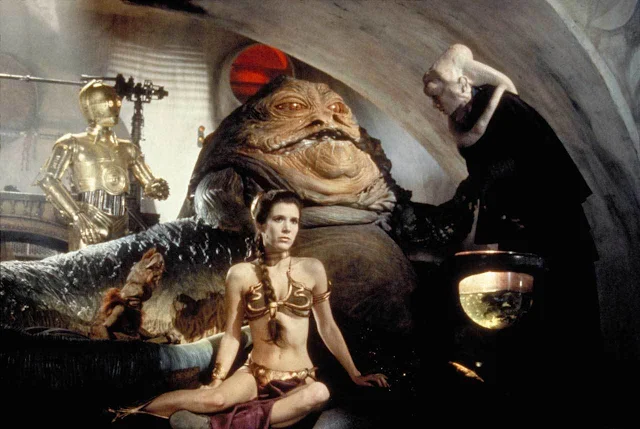
 In the Star Wars franchise, Princess Leia is known as one of the most iconic female characters. However, her character's sexualization in the third installment of the original trilogy, Return of the Jedi, has sparked controversy and criticism.


princess leia salve jabba scene


In Return of the Jedi, Princess Leia is captured by the vile gangster Jabba the Hutt and forced to serve as his slave girl. She is outfitted in a revealing gold bikini and chained up, serving as a decoration for Jabba's throne. This scene is infamous for its overt sexualization of Leia and has been the subject of much debate and criticism.


slave leia beach day


The gold bikini has become a cultural icon in its own right, with countless cosplayers and Halloween costumes featuring the outfit. It has also been referenced in popular media, such as the TV show Friends, where the character Rachel dressed up as "Slave Leia" for Ross's sexual fantasy.


leia bikini


Despite its iconic status, the sexualisation of Princess Leia in Return of the Jedi has been criticized for perpetuating harmful stereotypes and objectifying women. The scene reinforces the idea that women are meant to be objects of male desire, and it has been argued that it detracts from Leia's character development as a strong and independent leader.


slave bikini leia


Carrie Fisher, the actress who portrayed Princess Leia, has spoken publicly about her experiences filming the scene. In her memoir, The Princess Diarist, Fisher wrote about the discomfort she felt wearing the costume and performing the scene. She has described the outfit as "what supermodels will eventually wear in the seventh ring of hell."


prince leia wet in the water fisher bikini


Fisher has also been vocal about the pressures of being a sex symbol in Hollywood. She has spoken out about the double standards faced by women in the industry and the expectation that they should be both sexually attractive and talented. Fisher has been a champion for mental health awareness, and she has been open about her struggles with addiction and bipolar disorder.

While Princess Leia remains a beloved character in the Star Wars franchise, her sexualisation in Return of the Jedi continues to be a topic of discussion and criticism. The scene has sparked important conversations about the representation of women in media and the harmful effects of objectification.


star wars bikini Dejah Thoris comparison


It is worth noting that the infamous slave bikini outfit worn by Princess Leia in Return of the Jedi was not entirely original to the Star Wars franchise. The outfit was, in fact, inspired by a character named Dejah Thoris from the science fiction novel A Princess of Mars, written by Edgar Rice Burroughs in 1912.

Dejah Thoris is the Princess of Helium and a central character in the novel. She is described as wearing a revealing red silk outfit that leaves much of her body exposed. It is said that George Lucas, the creator of the Star Wars franchise, was a fan of the John Carter of Mars series and was inspired by Dejah Thoris' outfit when designing Princess Leia's slave bikini. The influence of science fiction on popular culture is undeniable, and the iconic slave bikini is just one example of how the genre has impacted mainstream media.


male cosplayer star wars bikini slave


Some fans love dressing up as Slave Bikini Leia because it allows them to showcase their fandom for the Star Wars franchise while also embodying a strong and iconic female character. Leia’s role as a rebel leader and her bravery in fighting against the Empire has inspired many fans. 

Additionally, her outfit as Slave Bikini Leia is often seen as a symbol of empowerment for some individuals, as it challenges traditional gender norms and allows them to express themselves in a way that they may not be able to do in their everyday lives. 

By embodying this character, fans are able to connect with their favorite franchise and feel a sense of belonging within the community of Star Wars enthusiasts.


sexy bikini cosplay star wars slave

Furthermore, Slave Bikini Leia has become an iconic and recognizable symbol within pop culture. Many fans enjoy cosplaying as this character as it allows them to pay homage to a classic and memorable moment in the Star Wars franchise. It is also an opportunity for fans to showcase their creativity and skills in creating a costume that accurately represents the character.
 
By donning the iconic gold bikini, fans are able to participate in a shared experience with others who appreciate the Star Wars franchise and its characters. Ultimately, dressing up as Slave Bikini Leia allows fans to express their love and admiration for the Star Wars franchise while also engaging in a fun and creative activity with others who share their passion.

sexy star wars cosplay bikini woman

fat male bikini jabba cosplay


07 April 2022

"Exploring the Symbolism of the Doomsday Clock in Watchmen"

The Doomsday Clock is a symbolic representation of how close humanity is to a global catastrophe, with the clock set to midnight representing the apocalypse. The clock was first introduced in 1947 by the Bulletin of Atomic Scientists, and since then has been updated periodically based on the perceived threat of nuclear war and other existential threats.

In the graphic novel Watchmen, the Doomsday Clock is a recurring motif that serves to highlight the central themes of the story. The story takes place in an alternate history where superheroes exist, and the world is on the brink of nuclear war between the United States and the Soviet Union.

doomsday clock yellow smiley face

The clock is first introduced in chapter two, where it is revealed that the clock has been moved two minutes closer to midnight due to increased tensions between the US and the Soviet Union. This sets the tone for the rest of the story, as the characters (or more so the reader) are constantly aware of the looming threat of nuclear annihilation.

The Doomsday Clock also serves to highlight the moral ambiguity of the characters in Watchmen. While many of the characters are ostensibly superheroes, they are flawed and often engage in violent or immoral behavior. The threat of nuclear war raises the question of whether the ends justify the means, and whether the preservation of humanity is worth sacrificing individual morals and ethics.

This is played out ending of both the novel and film - a catastrophic event is manipulated into effect by Ozymandias as a means to achieve peace and advert nuclear war.

The Yellow Badge as a symbol of the Doomsday Clock


The comedian's yellow badge is one of the iconic symbols in the graphic novel. The badge features a smiley face with a splatter of blood on it. The blood on the badge is arranged as the clock at the star of the story - 5 minutes to midnight.

The badge also plays a significant role in the story's plot, particularly in reference to the "Doomsday Clock," a symbolic representation of the world's proximity to nuclear war. The clock is a recurring motif throughout the story, serving as a visual reminder of the constant threat of global annihilation.

At one point in the story, the comedian's badge is found in his apartment by Rorschach, another character in the story. Upon examining the badge, Rorschach notices that there is a hidden smiley face on the back, which is only visible when the badge is folded in a certain way.

The discovery of the hidden smiley face leads Rorschach to investigate further and ultimately leads him to uncover a conspiracy that threatens to bring about nuclear war and destroy the world. The badge, therefore, serves as a symbol of the interconnectedness of the characters and the larger themes of the story, ultimately leading to its resolution.

About the author Jimmy Jangles


My name is Jimmy Jangles, the founder of The Astromech. I have always been fascinated by the world of science fiction, especially the Star Wars universe, and I created this website to share my love for it with fellow fans.

At The Astromech, you can expect to find a variety of articles, reviews, and analysis related to science fiction, including books, movies, TV, and games.
From exploring the latest news and theories to discussing the classics, I aim to provide entertaining and informative content for all fans of the genre.

Whether you are a die-hard Star Trek fan or simply curious about the world of science fiction, The Astromech has something for everyone. So, sit back, relax, and join me on this journey through the stars!
Back to Top