10 May 2026

What Paul’s Gom Jabbar Test Really Proves in Dune

Paul Atreides’ Gom Jabbar test is not a scene about proving toughness. It is the first hard measurement of what he is becoming: a boy trained to master fear, resist instinct, read danger under pressure, and survive systems that were built to control him.

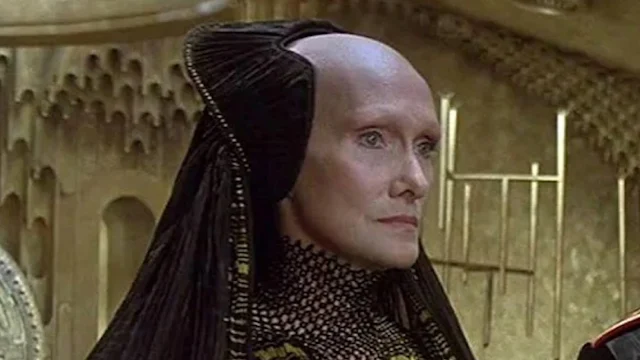
Before Paul becomes Muad’Dib, before the Fremen jihad gathers around his name, before he seizes the imperial future, he is tested in a room on Caladan. Reverend Mother Gaius Helen Mohiam orders him to place his hand inside the pain box. 

She holds the Gom Jabbar, a poisoned needle, at his neck. If he pulls his hand away, he dies.

The scene is simple because Herbert wants the moral machinery exposed. Paul cannot fight. He cannot command. He cannot rely on rank, inheritance, or House Atreides loyalty. He can only master himself.

The wider mechanics of the object are covered in this companion explanation of what the Gom Jabbar is in Dune. Here, the focus is Paul. The test is his first true ordeal, and it foreshadows almost everything that follows.

Paul Atreides and Lady Jessica on Arrakis in Dune character art showing the young heir before his transformation into Muad Dib
Paul’s test begins before Arrakis, but it anticipates the desert, prophecy, and the burden of becoming Muad’Dib.

Why Mohiam tests Paul

Mohiam is not testing Paul out of curiosity. She is measuring a problem.

The Bene Gesserit spent generations arranging bloodlines among the Great Houses. Their aim was the Kwisatz Haderach, a male figure who could access forms of memory and prescient awareness closed to ordinary Reverend Mothers. Paul exists because Lady Jessica broke the plan. She was ordered to give Duke Leto a daughter. She gave him a son.

That makes Paul both a breach and a possibility. He may be a premature result of the Bene Gesserit breeding program, born one generation before the Sisterhood intended. Mohiam tests him because the order needs to know whether Jessica’s son is merely gifted, dangerously trained, or something closer to the thing they were trying to create.

That is the tension in the room. Paul is not only a child under threat. He is evidence that the Bene Gesserit may have succeeded in the wrong way.

What the test measures

The Gom Jabbar test is usually described as a test of humanity. That is true, but only in the Bene Gesserit sense. Mohiam is not asking whether Paul is kind, moral, or noble. She is asking whether he can rule instinct with consciousness.

What the Bene Gesserit test What it means in Paul’s ordeal Why it matters later in the saga
Self-command Paul must master the impulse to remove his hand from the box. His survival on Arrakis depends on disciplined reaction under pressure.
Awareness under pain He must separate the felt pain in the box from the real threat at his neck. Prescience later forces him to separate possible futures from immediate desire.
Delayed reaction He must refuse the fastest bodily response. His political life becomes a long series of delayed reactions to catastrophe.
Fear discipline He uses Bene Gesserit mental conditioning to stay present. The Litany Against Fear becomes the clearest sign of his training.
Dangerous potential Mohiam is testing whether Paul is more than the Sisterhood expected. His survival confirms that the breeding program has produced a result beyond control.

The test is brutal because it turns a natural survival reflex into a death sentence. Pulling away from pain is normal. In this room, it would kill him. Paul survives because he understands that the loudest signal is not the most important one.

Self-command: Paul refuses instinct

The first thing Paul proves is self-command. His body tells him to escape the pain. Mohiam has designed the test so that obedience to the body means death.

This is not simple courage. Paul’s task is not to endure pain for the sake of pride. He must judge the whole situation while pain tries to reduce the world to one command: move.

That skill becomes essential on Arrakis. The desert punishes panic. A careless movement can waste water, attract danger, insult Fremen custom, or turn a survivable moment into a fatal one. Paul’s later survival among the Fremen begins here, with his ability to place discipline above reflex.

The darker point is that this same self-command helps build the myth of Paul. He seems too composed, too watchful, too able to endure. The trait that saves him also makes him easier to turn into a messianic figure.

Awareness under pain: Paul reads the real threat

The pain box tells Paul that his hand is being destroyed. The Gom Jabbar tells him that moving will kill him. The box is louder. The needle is more important.

Paul survives because he separates sensation from reality. He knows pain is happening, but he also knows pain is not the whole truth. That is the deepest intelligence the test reveals.

This anticipates his prescience. Later, Paul sees possible futures that press on him like pain. He sees jihad, betrayal, religious violence, imperial collapse, and the narrowing paths ahead. Prescience does not free him. It overwhelms him with consequence.

The pain box says his hand is burning. Prescience tells him history is burning. In both cases, Paul must decide what the real danger is.

This is why his gift becomes a trap. Seeing more does not mean choosing freely. It can mean being surrounded by visible disasters, each one worse when viewed from the wrong angle. That pressure is central to how prescience removes choice in Dune.

Delayed reaction: Paul learns to wait inside danger

The fastest response is to pull away. The correct response is to wait.

That is Bene Gesserit logic in its cleanest form. Their power is built on delay. They wait through generations. They arrange marriages, plant myths, train daughters, observe courts, and move through history by refusing short-term reaction.

Paul inherits that discipline through Jessica. In the Gom Jabbar test, it keeps him alive. On Arrakis, it helps him read Fremen society before trying to command it. In Dune Messiah, it becomes a curse. Paul sees plots forming around him, but his prescience does not always give him clean escape. The Bene Gesserit, the Guild, the Tleilaxu, and Irulan all move against him. Edric hides the conspiracy from Paul’s sight. Scytale weaponises identity. Hayt, the ghola of Duncan Idaho, attacks Paul through memory, grief, and love.

The boy who had to keep his hand in the box becomes the Emperor who must sit inside a future he hates.

Fear discipline: the Litany is not decoration

The Litany Against Fear is often quoted as if it were general wisdom. In the test, it has a precise function. It gives Paul a way to observe fear without becoming fear.

Paul is not fearless. That would make the scene weaker. He is afraid, but he can watch the fear pass through him. He can keep the mind active while the body is under assault.

This is Bene Gesserit training at work. Breath, muscle, voice, emotion, fertility, observation, and fear are all treated as systems that can be disciplined. Jessica has given Paul more of that training than the Sisterhood wanted a male child to possess.

That makes Jessica central to the scene. She understands the test. She knows what the needle means. She also knows her disobedience put Paul there. Her arc is inseparable from Paul’s, because her love for Leto and her training of Paul create the breach the Sisterhood now fears. That conflict sits at the heart of Lady Jessica’s role in Dune.

The Litany saves Paul. It also confirms Mohiam’s suspicion. Paul has been trained too well.

Dangerous potential: Paul passes, and that alarms Mohiam

Paul passing the test does not comfort Mohiam. It confirms the danger.

If Paul had failed, he would be dead. If he had survived by luck, he might be dismissed as gifted but ordinary. Instead, he shows the exact qualities the Bene Gesserit value: discipline, awareness, delay, fear control, and mental separation from pain.

That means Jessica’s forbidden son may be close to the result the Sisterhood sought. Worse, he has arrived outside their timetable and beyond their control.

This is the Bene Gesserit nightmare. Their long project may have worked, but in a form they cannot manage. Paul is not the opposite of their design. He is the consequence of it. That is why the order’s hidden power matters so much to the scene, and why the Bene Gesserit’s control of the Imperium is never as complete as they believe.

Arrakis turns the test into a life

The Gom Jabbar test happens on Caladan, but Arrakis repeats it on a planetary scale.

The Harkonnen attack destroys House Atreides. Duke Leto dies. Duncan Idaho falls. Dr. Yueh’s betrayal breaks the household from within. Paul and Jessica flee into the desert, where survival depends on restraint, stillsuit discipline, silence, and cultural intelligence.

Again, Paul must master impulse. He cannot simply rage. He cannot simply mourn. He cannot behave like the heir of Caladan and expect the desert to care. He must learn Fremen ways, read Stilgar’s authority, accept Chani’s world, and understand that the Missionaria Protectiva has prepared a religious structure around him.

The pain box was a controlled ordeal. Arrakis is the uncontrolled version.

Even the duel with Jamis echoes the test. Paul is trained, but this is not a practice fight. It is a Fremen death duel. He must adjust to a new reality fast. The lesson is brutal: survival now costs another man’s life.

From self-command to imperial command

By the end of Dune, the qualities proven in the test have scaled up into political force.

Self-command becomes command over the Fremen.

Awareness under pain becomes awareness of history.

Delayed reaction becomes imperial strategy.

Fear discipline becomes religious authority.

Dangerous potential becomes regime change.

Paul defeats the Harkonnens, breaks the Emperor’s position, and seizes control of the spice future. In doing so, he exposes the weakness of the Corrino order: its dependence on fear, Sardaukar violence, Guild complicity, Harkonnen brutality, and Bene Gesserit manipulation. That wider collapse is part of how Paul exposes the rotten core of the Corrino Empire.

Yet Herbert does not treat Paul’s victory as clean liberation. The old order falls, but the new one arrives carrying jihad. The boy who survived the needle becomes the man whose name kills across worlds.

Paul Atreides as Muad Dib with Chani and Fremen followers on Arrakis showing the messianic burden that begins with the Gom Jabbar test
The discipline that lets Paul survive the Gom Jabbar later helps turn him into Muad’Dib, a figure too powerful for any one system to control.

Dune Messiah: the throne becomes the pain box

Dune Messiah reveals the cost of Paul passing the test.

In the first novel, self-command saves him. In the second, self-command traps him. He is Emperor, prophet, religious symbol, and prisoner of his own future. The jihad has already killed on a scale that dwarfs the violence of House Atreides’ fall. The Qizarate hardens around his worship. His private disgust cannot undo the public religion built in his name.

The Gom Jabbar asked Paul to endure pain without panic. Dune Messiah asks whether he can endure power without surrendering completely to godhood.

That question is what makes Paul so difficult to classify. He is not simply hero or villain. He is a victim of systems, and also the ruler produced by them. He resists the myth, but uses it. He sees catastrophe, but cannot cleanly prevent it. That tension sits behind the question of whether Paul Atreides becomes a villain in Dune Messiah.

The Stone Burner pushes the Gom Jabbar logic even further. Paul loses his physical sight, yet continues to see through prescience. Once again, body and reality separate. In the test, his hand felt destroyed but was not. In Dune Messiah, his eyes are destroyed, but sight remains in another form.

By the end, Paul walks into the desert as a blind man after Chani’s death and the birth of his children. It is not triumph. It is refusal. He rejects the throne, the god-role, and the locked path of his own legend. The boy was tested to see whether he could remain human under pain. The man leaves power behind to recover what humanity he can.

Mohiam’s mistake

Mohiam’s mistake is believing the test can classify Paul.

The Bene Gesserit love categories: human and animal, sister and outsider, breeding success and breeding failure, useful myth and dangerous superstition. Paul breaks those categories. He is male, but Bene Gesserit-trained. He is Atreides, but carries hidden Harkonnen ancestry. He is noble-born, but becomes Fremen. He is a ruler, but also a religious symbol. He is prescient, but not free.

The test proves Paul is not ruled by instinct. It does not reveal what kind of historical force he will become.

That is the deeper failure. The Sisterhood can measure reaction, manipulate bloodlines, plant myths, and read bodies with frightening skill. What it cannot fully control is what happens when love, grief, spice, religion, desert culture, imperial corruption, and inherited violence converge inside one person.

Paul is not a break from the Bene Gesserit project. He is its uncontrolled result.

Read Article →
09 May 2026

What Is the Gom Jabbar in Dune?

The Bene Gesserit Test That Changed Paul Atreides Forever

The Gom Jabbar is one of the smallest objects in Dune, yet it carries the weight of the entire saga. It is a poisoned needle, a death sentence, a psychological instrument, and the first clear sign that Paul Atreides has been born into a universe where power is measured through pain, breeding, fear, and control.

The Gom Jabbar appears early in Frank Herbert’s original Dune, before the desert of Arrakis swallows House Atreides, before Paul becomes Muad’Dib, before the Fremen jihad begins to gather in the future like a storm he can see but cannot fully escape. The scene is quiet, enclosed, and terrifyingly simple. Reverend Mother Gaius Helen Mohiam orders Paul to place his hand inside a box. She holds a poisoned needle at his neck. If he removes his hand, he dies.

That is the entire setup. A boy, a box, a needle, an old woman, and a mother forced to stand nearby while her son is measured by the Sisterhood that made her.

Yet this scene opens the deepest machinery of Dune. It introduces the Bene Gesserit as the hidden Sisterhood shaping imperial politics. It reveals that Paul is no ordinary ducal heir. It shows that Lady Jessica’s decision to bear a son has disrupted a political and genetic design that has been moving for generations. 

Most importantly, it asks the question Herbert places beneath the whole saga: what makes a human being more than a creature reacting to fear?

Reverend Mother Gaius Helen Mohiam as a Bene Gesserit figure in Dune holding the authority behind the Gom Jabbar test
Reverend Mother Gaius Helen Mohiam embodies the Bene Gesserit logic of discipline, cruelty, and long-range control.

What Is the Gom Jabbar?

The Gom Jabbar is a poisoned needle used by the Bene Gesserit during a test of human awareness. In Herbert’s glossary, the phrase carries the sense of a “high-handed enemy,” which suits the object perfectly. It is intimate, arrogant, and absolute. A battlefield weapon gives the victim a chance to fight. The Gom Jabbar leaves only one contest: the mind against panic.

The needle itself is tipped with poison. In Paul’s test, it is held against his neck by Reverend Mother Mohiam while his hand is trapped inside the pain box. The box creates the sensation of unbearable injury. The needle supplies the real danger. Paul must understand the difference while his nervous system is screaming at him to pull away.

That distinction is the heart of the test. The pain in the box feels real. The death at his neck is real. If Paul responds only to pain, he dies. If he can observe pain, master fear, and keep the larger situation in view, he survives.

How Paul Atreides Is Tested in the Original Dune

The Gom Jabbar is introduced on Caladan, the ancestral world of House Atreides. Paul has not yet travelled to Arrakis. He is still the son of Duke Leto and Lady Jessica, still living within the formal protections of noble rank, family name, and political privilege. Reverend Mother Mohiam cuts through all of that.

She arrives with the authority of the Bene Gesserit and the Emperor’s court. She is the Emperor’s Truthsayer, trained to detect falsehood through the smallest signs in breath, pulse, tone, posture, and fear. She is also part of the same Sisterhood that trained Jessica. To understand why this order carries so much power without sitting openly on the throne, it helps to first understand who the Bene Gesserit are and how they operate.

Jessica understands the danger immediately. Her fear gives the scene its emotional charge. She is no helpless outsider. She knows the Sisterhood, the test, the discipline, and the needle. She also knows that her love for Duke Leto has placed Paul in this position. The Bene Gesserit ordered Jessica to bear a daughter. She gave Leto a son. That private act of defiance sits at the centre of Lady Jessica’s character arc, because her love becomes one of the great disruptions in the history of the Imperium.

Mohiam commands Paul to place his hand in the box. Then she presses the Gom Jabbar to his neck. Paul feels heat, burning, and the sensation of physical destruction. The test escalates until every instinct tells him to withdraw. He does not. He recites the Litany Against Fear internally and holds himself inside the moment.

He survives because he understands the structure of the trap. Pain is information. Fear is pressure. The needle is the true boundary.

Lady Jessica of House Atreides as a Bene Gesserit mother whose defiance leads Paul to the Gom Jabbar test
Lady Jessica is the emotional wound inside the Gom Jabbar scene, a Bene Gesserit mother watching the Sisterhood test the son she was never meant to bear.

What Is the Test Trying to Ascertain?

The Gom Jabbar test is often described as a test of humanity, but that phrase needs care. The Bene Gesserit are not asking whether Paul is kind, moral, compassionate, or noble. They are asking whether he can govern instinct through conscious control.

To the Sisterhood, an animal reacts. A human observes, delays, interprets, and chooses. That is the brutal logic of the test. If pain alone rules Paul, he pulls his hand from the box and dies. If awareness remains above reflex, he endures.

The test is trying to measure several things at once:

What the Bene Gesserit test What it means in Paul’s ordeal Why it matters later in the saga
Self-command Paul must master the impulse to remove his hand from the box. His later survival on Arrakis depends on disciplined reaction under pressure.
Awareness under pain He must separate the felt pain in the box from the real threat at his neck. Prescience later forces Paul to separate possible futures from immediate desire.
Delayed reaction He must refuse the fastest bodily response. His political life becomes a long series of delayed reactions to catastrophe.
Fear discipline He uses Bene Gesserit mental conditioning to stay present. The Litany Against Fear becomes a key to understanding Paul’s training.
Dangerous potential Mohiam is testing whether Paul is more than the Sisterhood expected. Paul’s existence confirms the breeding program has produced a result beyond Bene Gesserit control.

This is why the test is larger than physical toughness. A soldier can be brave. A fanatic can tolerate pain. A proud noble can refuse to scream. The Bene Gesserit are searching for something stranger and colder: command of the entire self when the body has become an enemy.

The Bene Gesserit Context: Breeding, Control, and Fear

The Gom Jabbar belongs to a much larger Bene Gesserit system. The Sisterhood does not operate through open rule. It survives through placement, breeding, religious manipulation, training, and patience. Its women stand beside emperors, dukes, heirs, warlords, and prophets. They rarely appear to rule, which is one reason they endure.

Their long project is the Kwisatz Haderach, a male figure who can survive the psychic and genetic thresholds that Reverend Mothers cannot cross. Paul’s existence sits inside the Bene Gesserit breeding program, a generational design that treats noble bloodlines as material, marriage as strategy, and human love as a risk to be managed.

Paul is the program arriving too soon. Jessica was supposed to produce a daughter by Duke Leto. That daughter would later be joined with the Harkonnen line, creating the intended Kwisatz Haderach under Sisterhood control. Jessica’s choice gives the universe Paul instead. The Sisterhood receives its possible miracle one generation early, shaped by maternal defiance rather than institutional timing.

The Gom Jabbar test is Mohiam’s attempt to measure that mistake.

She is asking: is Paul merely a gifted boy? Is he a genetic accident? Is he a threat? Is he the thing the Bene Gesserit have spent centuries preparing for, but in a form they can no longer command?

Bene Gesserit Sisterhood imagery from Dune showing the secretive order behind the Gom Jabbar test and Kwisatz Haderach breeding program
The Bene Gesserit test individuals because their larger project depends on classifying, shaping, and controlling human possibility.

The Gom Jabbar and the Kwisatz Haderach

The Gom Jabbar matters because Paul may be the Kwisatz Haderach. The Bene Gesserit want a male Reverend Mother, a mind capable of accessing both female and male ancestral memory, seeing patterns hidden from ordinary humanity, and ideally serving as a tool of Sisterhood design. That concept becomes much clearer when placed beside the broader question of what the Kwisatz Haderach actually is.

Paul’s survival of the Gom Jabbar does not prove that he is the Kwisatz Haderach by itself. It proves that he has the kind of interior command the Sisterhood associates with rare human potential.

That is enough to frighten Mohiam.

A normal candidate can fail and be discarded. Paul passes, and his passing creates a worse problem. The Sisterhood has gained evidence that Jessica’s forbidden son may be the thing they sought. He is also beyond the timetable, outside their intended marriage design, trained in ways he should not have been trained, and soon to be exposed to the spice saturation of Arrakis.

The test finds what it is designed to find. That is the horror.

The Litany Against Fear: Why Paul Survives the Box

The Litany Against Fear is often remembered as the great mantra of Dune. Inside the Gom Jabbar scene, it has a precise function. Paul uses it as a mental framework. The point is not denial of fear. The point is observation of fear.

That is pure Bene Gesserit psychology. Fear is treated as a bodily event, something that rises, passes, distorts perception, and can be survived if the mind refuses to become it. Paul’s hand feels destroyed. His life is threatened. His mother cannot intervene. His title has no force in this room. The litany gives him a way to remain present while pain tries to become the whole universe.

This is the first major sign that Paul’s training has reached deeper than noble education. He has been given weapons no one can see: breath control, sensory command, fear discipline, observation, and the capacity to turn inward without collapsing. Those same gifts later become part of the terrible bind of prescience and the loss of genuine choice, where Paul’s ability to see through the present becomes the reason he cannot easily escape the future.

The Missionaria Protectiva and the Same Bene Gesserit Logic

The Gom Jabbar is a personal test. The Missionaria Protectiva is that same Bene Gesserit logic applied to whole cultures.

Through the Missionaria Protectiva, the Sisterhood plants myths, messiah legends, prophecies, phrases, and religious expectations among vulnerable populations. The purpose is practical. If a Bene Gesserit sister becomes stranded or endangered, she may activate those planted beliefs and gain protection. The system is one of Herbert’s sharpest attacks on manufactured religion, and it sits at the centre of the true purpose of the Missionaria Protectiva.

The link to the Gom Jabbar is moral as much as tactical. Both systems test whether the Bene Gesserit can turn pressure into obedience. The needle tests the individual body. The Missionaria tests the social body. In one case, the Sisterhood asks whether Paul can resist animal panic. In the other, it builds myths that entire populations may follow when fear, hope, and oppression align.

On Arrakis, Jessica and Paul survive because the Fremen have already been prepared by Bene Gesserit religious engineering. Paul’s personal discipline and the Fremen myth system converge. The boy who survives the Gom Jabbar later steps into a prophecy the Sisterhood seeded long before he arrived.

That is why the scene on Caladan cannot be treated as a small rite of passage. It is the first visible point in a much wider pattern of Bene Gesserit control.

Other Uses and Later Meaning of the Gom Jabbar

The Gom Jabbar’s defining narrative use is Paul’s test in the first Dune. Herbert does not turn it into a repeated action-device across the saga. Its power comes from concentration. One needle. One test. One boy who should not exist. One Sisterhood discovering that its long design may have outrun its control.

Later Dune material preserves the Gom Jabbar as part of the Bene Gesserit tradition of testing dangerous human potential. The exact scene with Paul remains the essential reference point because it gives the object its symbolic charge. Whenever the Gom Jabbar is invoked, it carries the memory of that first question: can consciousness govern fear when death is touching the skin?

The later Bene Gesserit continue to face the consequences of that question. They survive Paul. They survive Leto II. They survive the scattering of humanity into futures they cannot fully read. Their institutional strength is not that they control every outcome. It is that they keep adapting after their own schemes produce disasters, a pattern that helps explain how the Bene Gesserit ultimately achieved their goal across the long arc of the saga.

Lady Jessica Bene Gesserit concept art on Arrakis showing the Sisterhood influence behind Paul Atreides and the Missionaria Protectiva
Jessica carries the Bene Gesserit system into the desert, where private survival, planted prophecy, and Paul’s awakening collide.

The Gom Jabbar as the First Trap in Paul’s Life

The Gom Jabbar foreshadows Paul’s entire arc. In the test chamber, he must keep his hand in the box while pain demands escape. On Arrakis, he must keep moving through a future filled with blood, prophecy, imperial collapse, and religious violence. The scale changes. The structure remains.

The test teaches a basic rule of Dune: the immediate path away from pain may lead straight into death. Paul learns this lesson early. Later, prescience makes the same lesson cosmic. He sees futures and tries to choose among disasters. His victory over House Harkonnen and Emperor Shaddam IV becomes the beginning of a religious war. His control over fear becomes part of the reason others fear him.

This is where the Gom Jabbar connects to the larger question of fate. The saga keeps asking whether Paul is choosing freely or simply selecting among terrible paths already made visible to him. That tension runs through Dune’s treatment of fate and free will, and it reaches a colder political answer in Leto II’s Golden Path, where survival becomes anti-messianic strategy rather than heroic deliverance.

The hand in the box is the first version of Paul inside history. Pain is everywhere. Escape is deadly. Awareness is survival, and survival brings consequences.

From Paul’s Test to Leto II’s Golden Path

The Gom Jabbar test is personal. The Golden Path is historical. Yet the two ideas speak to each other. Paul is tested by pain and fear in one room. Leto II later subjects humanity to millennia of enforced pressure in order to break its dependence on prophets, tyrants, and predictable futures.

That does not make Leto’s rule a simple extension of Bene Gesserit thinking. It becomes something harsher and more cosmic. Still, the same question echoes beneath it: what must humanity endure in order to survive? The answer becomes deeply uncomfortable when read through the Golden Path as anti-messianic politics, because Leto’s solution is to become the monster that prevents humanity from ever again surrendering completely to one saviour.

Seen from that angle, Paul’s Gom Jabbar test becomes the smallest version of the saga’s largest ordeal. The Bene Gesserit test one boy to determine whether he can master fear. Leto II tests the species to determine whether it can survive its own hunger for certainty.

Why the Gom Jabbar Scene Still Defines Dune

The Gom Jabbar scene endures because it introduces Dune without needing to explain the whole universe at once. A reader understands the danger immediately. A child is being tested. A needle can kill him. A box is causing agony. His mother is terrified. The woman administering the test believes she has the right to decide whether he deserves to live.

Underneath that simplicity is the architecture of Herbert’s saga.

The Bene Gesserit believe in control. Jessica proves the limits of control. Paul proves the danger of success. The Kwisatz Haderach project reaches toward human evolution and produces political catastrophe. The Missionaria Protectiva turns survival myths into the fuel of messianic empire. The Litany Against Fear gives Paul command over himself, yet no command over the human hunger for saviours.

The Gom Jabbar is therefore more than a needle. It is Bene Gesserit philosophy made physical. It is the Sisterhood’s cruelty, intelligence, fear, discipline, and arrogance sharpened to a point. It is the first time Paul Atreides is forced to confront the machinery that shaped him before birth. It is also the first sign that the machinery may have produced something it cannot command.

The test begins with a hand in a box. It ends with the universe discovering that Paul Atreides can endure pain, master fear, and survive the judgment of the Sisterhood.

That should comfort no one.

Read Article →

The Sisterhood That Runs the Universe: The Bene Gesserit of Dune Explained

Dune · Lore Deep Dive

A complete guide to the Sisterhood's hierarchy, powers, agenda, and influence across Frank Herbert's six-novel Dune sequence: before Paul, after Paul, and in the long aftermath of everything they built.

There is no more dangerous institution in the Dune universe than one you are never supposed to know exists.

The Bene Gesserit are, on the surface, an order of highly trained women who serve as advisors, concubines, and religious administrators across the Imperium. Scratch that surface and you find something older and more terrifying: a eugenic breeding program running across ninety generations, a manufactured mythology seeded across thousands of planets, and a political intelligence operation that would make the CIA look like a neighbourhood watch. They are, in Frank Herbert's own words, a school for women. But they are also the most sophisticated power structure in science fiction, and the most carefully misunderstood one.

Understanding the Bene Gesserit means understanding Dune at its deepest level. Because everything Paul Atreides does, everything that goes wrong, and everything that keeps going wrong across six novels, flows directly from what the Sisterhood built and what they lost control of.

The Bene Gesserit Explained


The Architecture of Power: How the Bene Gesserit Actually Work

The Bene Gesserit are not a democracy and not a simple hierarchy. They are a layered institution with the Mother Superior (the Reverend Mother Superior) at the apex, whose authority is essentially absolute within the order. Their base of operations is the Mother School on Wallach IX, from which graduates are placed across the Imperium as wives, concubines, advisors, and Truthsayers. Below the Mother Superior, a council of senior Reverend Mothers sets long-range strategy across centuries. Field agents, sisters installed in noble houses, religious positions, and educational roles, report upward and carry out the order's agendas at ground level.

What distinguishes them from any other power structure in the Imperium is the nature of their capability. Reverend Mothers have undergone the Spice Agony: consuming the Water of Life, the bile of a drowned sandworm, a substance lethal to any untrained mind, using advanced prana-bindu psychosomatic control to transform it internally. Prana-bindu training is the foundation of all Bene Gesserit physical discipline: mastery of every nerve and muscle in the body, governing their combat speed, metabolic control, resistance to poison, and survival of the Agony itself. Sisters who survive gain access to Other Memory: the genetic memory of every female ancestor in their line, a literal internal archive of female consciousness stretching back thousands of years, navigable on demand.

"I must not fear. Fear is the mind-killer. Fear is the little-death that brings total obliteration. I will face my fear. I will permit it to pass over me and through me." — The Bene Gesserit Litany Against Fear, Dune

Add to this the Weirding Way, a martial discipline so refined it approaches superhuman speed and precision, and their most feared tool, the Voice: the ability to modulate speech at a frequency that triggers compulsive obedience in an untrained mind. The Voice is not magic. It is applied human behavioural science taken to its logical endpoint. When Reverend Mother Gaius Helen Mohiam weaponises it in Herbert's opening chapters, or when Lady Jessica uses it against Fremen in the desert, we are watching the full application of a technique that took generations to perfect.

Beyond the Voice, the Sisterhood's physiological control is comprehensive: a Bene Gesserit can determine the sex of a child she carries, neutralise poisons in her own bloodstream, and read truth-signals in another person's micro-expressions and vocal patterns. Their Truthsense is why Emperor Shaddam IV keeps Gaius Helen Mohiam as his Truthsayer. She is not his servant. She is the Sisterhood's monitor at the highest table in the Imperium.

The order's ultimate agenda, however, is the Kwisatz Haderach: a male Reverend Mother — a being who can survive the Spice Agony and access both female and male genetic memory simultaneously. The term itself, drawn from Hebrew, means "shortening of the way." By the time Dune opens, the breeding program has been running for ninety-plus generations. The plan called for Lady Jessica to produce a daughter by Duke Leto Atreides; that daughter would then be bred with Feyd-Rautha Harkonnen, the Baron's nephew and a near-Kwisatz Haderach in his own right, the final intended piece of the Atreides-Harkonnen genetic combination. Their male offspring would be the Kwisatz Haderach: controllable, loyal, arriving one generation later than Paul.

Instead, out of love for Leto, Jessica chose to bear a son. That son was Paul. And with that single act of individual will against direct orders, the Bene Gesserit lost control of their most important project.

II.

Who Sets the Agenda: Pre-Paul

In the pre-Paul era, encompassing all of human history up to the opening of Dune, the Bene Gesserit agenda is set by the Mother Superior in consultation with the senior council, always within the constraints of the Kwisatz Haderach project. Every political decision, every placement of a sister in a noble house, every piece of religious mythology seeded on a pre-civilised world: all of it is either advancing the breeding program or protecting the conditions in which it can operate.

The Missionaria Protectiva deserves special attention because it is one of Herbert's most chilling inventions. Thousands of years before Dune opens, the Bene Gesserit began spreading carefully crafted religious myths and prophecies to the most remote and isolated populations in the galaxy. The purpose was cynically practical: if a Bene Gesserit sister was ever stranded among a primitive population, she could activate these pre-planted beliefs to gain immediate protection and authority. The Fremen of Arrakis believe in a messiah — the Mahdi, the Lisan al-Gaib, "the voice from the outer world" — because the Bene Gesserit put that belief there centuries in advance. Jessica weaponises it immediately upon arriving in the desert. Paul follows her lead, then exceeds it entirely.

Key Term

Missionaria Protectiva

The Bene Gesserit's "black arm of superstition": a millennia-long program of seeding manufactured prophecies, religious archetypes, and messiah myths across primitive populations, so that any sister stranded among them can activate local belief systems for protection and leverage. The Lisan al-Gaib prophecy on Arrakis is its most consequential deployment.

Before Paul, the Bene Gesserit operate from quiet supremacy. The Padishah Emperor's Truthsayers are Bene Gesserit sisters. The great houses assume the sisters are loyal servants. They are not. They are long-game operators running their own agenda alongside the Imperium's political theatre. The Litany Against Fear, the order's most famous text, taught to every initiate from their earliest training, is both a genuine psychological discipline and a window into how the Sisterhood thinks about human weakness: something to be understood, named, and turned into a tool.

The central tension in this arrangement is who the Bene Gesserit are actually for. The sisters would say they serve humanity's long-term survival. Herbert is more sceptical. The order has accumulated so much institutional inertia, so many centuries of its own logic, that it has become self-perpetuating. They are not servants of humanity's future. They are servants of the program. These are not the same thing.

III.

The Paul Problem: What the Sisterhood Lost

Paul Atreides is, from the Bene Gesserit's perspective, a catastrophic success. He is what they built. But he arrived one generation early, and he is beyond their control from the moment he survives the gom jabbar test and begins actually seeing potential futures.

Gaius Helen Mohiam administers the gom jabbar to Paul at the novel's opening — a needle carrying poison against a human hand, designed to measure whether a subject can master pain reflex through conscious will. Pure Bene Gesserit discipline as a binary survival gate. Paul passes. Mohiam is disturbed rather than pleased. Her words to Jessica afterward — that the Sisterhood may have created something they cannot manage — are the novel's first acknowledgment that the program has exceeded its own parameters.

Paul's prescience, once it develops under Fremen spice exposure on Arrakis, operates on a scale the Sisterhood never anticipated. He can see the Bene Gesserit's moves before they make them. His male access to the genetic memory includes the male lines, invisible to Reverend Mothers and locked behind what they experience as a place of terror, giving him a complete view of the breeding program's architecture that even the Breeding Mothers lack. He is not their tool. He is their audit.

When Paul defeats Emperor Shaddam IV, marries Princess Irulan as a political settlement (keeping her as consort in name only, with Chani as his true partner and the mother of his children), and seizes control of the spice supply backed by a Fremen army the Sisterhood never accounted for, the order faces a choice. Mohiam's influence is reduced to symbolic access. Their long game has produced a god-emperor they cannot reach.

In Dune Messiah, the Bene Gesserit join a conspiracy with the Spacing Guild, the Bene Tleilax, and palace factions — represented by Scytale (a Tleilaxu Face Dancer capable of assuming any human form), Edric (a Guild Navigator whose own prescience shields the conspirators from Paul's sight), Princess Irulan, and Mohiam herself representing the Sisterhood. The conspiracy is not driven by hatred of Paul but by a colder logic: a prescient ruler is simply incompatible with any other long-term power structure. You cannot run a centuries-long breeding program alongside someone who can read every move you make before you make it. The conspiracy partially succeeds, partially fails. Paul is blinded by a Fremen atomics attack, walks into the desert in the traditional Fremen rite of the blind, and abdicates rather than dying on terms the Sisterhood can control. His sister Alia assumes regency.

IV.

Post-Paul: The Sisterhood Fractures

The Bene Gesserit's relationship with Alia is one of the most psychologically complex threads in the sequence. Alia was pre-born — present in Jessica's womb when Jessica underwent the Spice Agony among the Fremen of Sietch Tabr, receiving access to Other Memory before she was born, before she had the psychological architecture to manage it. The Sisterhood considers pre-borns an abomination: full access to ancestral voices without the prana-bindu discipline to contain them means possession by a dominant ancestor personality is not just possible but likely. Probable.

Alia's trajectory in Children of Dune — from prodigy regent to eventual possession by the Baron Vladimir Harkonnen's persona from within her Other Memory — is the Bene Gesserit's worst nightmare made flesh: their own program's product, corrupted, wielding their techniques without their discipline. Leto II witnesses Alia's disintegration and understands what it means for his own pre-born status. His response is the Golden Path: a 3,500-year program of deliberate tyranny designed to break humanity's dependence on any single prescient leader, executed by merging himself with sandworm larvae and becoming the God Emperor.

By God Emperor of Dune, the Bene Gesserit have survived by subordination. Leto controls all spice production on Arrakis. The Sisterhood continues operating from Wallach IX — training sisters, maintaining its schools, keeping the institutional knowledge alive — but the Kwisatz Haderach project is effectively closed. What they are doing, under the God Emperor's long watch, is waiting.

After Leto's death in Heretics of Dune and the Scattering — humanity's mass dispersal across the galaxy that Leto deliberately engineered to prevent prescient lock-in — the Bene Gesserit face an existential reckoning. The populations they were breeding are distributed across millions of unknown worlds. New threats emerge from the Scattering: the Honored Matres, women who have developed their own sexual conditioning techniques and are returning to the Old Empire, conquering through a form of dominance that mirrors and corrupts everything the Sisterhood stands for.

The Chapterhouse endgame, presided over by Mother Superior Darwi Odrade, forces the Sisterhood to its most radical decision: merging with the Honored Matres under the leadership of Murbella, a captured Honored Matre who has undergone the Spice Agony and become a full Reverend Mother. The merger is an act of institutional survival, not triumph. The Honored Matres are what the Bene Gesserit might have become without philosophical discipline — the order's id, returned from exile to burn the old world down. They are the shadow, demanding integration.

V.

The Themes the Bene Gesserit Carry

Herbert uses the Sisterhood to carry Dune's heaviest thematic cargo. They are not incidental to the novels' ideas — they are the ideas, dramatised.

The designed messiah is a catastrophe

The Bene Gesserit build Paul to serve a purpose. He serves it, and the result is a jihad across the known universe that kills sixty-one billion people. Herbert is not ambiguous about this. The road to Muad'Dib's holy war is paved with Bene Gesserit intentions. The lesson is not that the Sisterhood is evil — it is that deliberately manufacturing a saviour figure is an act of profound irresponsibility regardless of the sophistication of the engineers. The Missionaria Protectiva creates the mythology. Paul simply inhabits it, and the momentum of belief does the rest.

Institutional certainty is the most dangerous force in the universe

The Bene Gesserit believe they are operating in humanity's long-term interest. They have believed this for ten thousand years. Whether it is true is a different question. Herbert consistently positions the order's certainty about its own virtue as more dangerous than its actual power. The Litany Against Fear is a tool for managing individual psychology; there is no Bene Gesserit litany against institutional arrogance. That gap is where the jihad lives.

Feminine power operating through constraint

The Sisterhood exists in a universe structured by patriarchal feudalism. They cannot hold political office, command armies, or assert authority openly. So they work through proxies, through children, through religious infrastructure, through men who believe they are making their own decisions. The Bene Gesserit are powerful because of their marginalisation, and that power comes at the cost of operating permanently in the shadows of someone else's legitimacy. Herbert is doing something complex here that resists simple readings: the Sisterhood is both victim and architect of the system that constrains them.

The limits of the long game

Paul can see the future. The Bene Gesserit have millennia of pattern recognition. Neither is sufficient. Paul's prescience locks him into a fixed path — the jihad — that he cannot deviate from without something worse taking its place. The Sisterhood's long-game thinking consistently fails to account for individual human will at the crucial moment. Jessica chose a son. Paul chose the desert. Leto II chose 3,500 years of tyranny as a deliberate lesson. The universe refuses to be managed, even by the most sophisticated managers who have ever lived.

VI.

What the Sisterhood Tells Us About Herbert's Project

Frank Herbert was not writing a story about a hero. He was writing a story about what happens when you believe in heroes — when institutions are built around the idea of a single superior mind that will solve everything. The Bene Gesserit are the most sophisticated expression of that belief in all of science fiction: thousands of years of accumulated wisdom, a breeding program of almost incomprehensible complexity, a network of agents spanning the known universe — all directed toward producing one being who will transcend human limitations and guide humanity forward.

It does not work. It cannot work. Not because the Sisterhood is corrupt — they are not, particularly — but because the premise is wrong. The Kwisatz Haderach, when he arrives, does not solve the human condition. He amplifies it, including its capacity for destruction on a civilisational scale. The sixty-one billion dead of Paul's jihad are the Bene Gesserit's receipt.

"The target of the Butlerian Jihad was a machine-attitude as much as the machines themselves. Humans had given over their thinking to machines and now they were doing it again." — Frank Herbert, God Emperor of Dune

That is the witch cult's real function in Dune. Not to be villains. Not to be heroes. To be the most compelling argument Herbert could construct for why even the most sophisticated, well-intentioned human institution will ultimately fail to save us from ourselves — and why that failure, in Herbert's cosmology, might be exactly the point. The Bene Gesserit survive every catastrophe they help create. They adapt, merge, endure. They are still there in Chapterhouse, still running programs, still placing sisters, still believing — against all the evidence — that they can manage what cannot be managed.

Which is, when you think about it, the most human thing about them.

Filed under Dune Frank Herbert Lore Deep Dive
Read Article →

Why Jason Momoa’s Duncan Idaho Returns in Dune Part Three After Dying in Dune

Jason Momoa is back as Duncan Idaho in Dune Part Three because Frank Herbert’s Dune Messiah brings Duncan back after death as Hayt, a ghola created by the Bene Tleilaxu and delivered to Paul Atreides as a political, emotional, and psychological trap. Duncan did die in Dune. His return does not undo that death. It makes that death useful to Paul’s enemies.

Spoiler warning

This article discusses major events from Frank Herbert’s Dune Messiah, including Duncan Idaho’s return as Hayt, Paul’s blindness, Chani’s death, the birth of Leto II and Ghanima, and Paul’s final walk into the desert. If Denis Villeneuve’s third film follows the core shape of the novel, these are likely to be central story points.

For film viewers, the confusion is understandable. Duncan Idaho’s death in Denis Villeneuve’s first Dune film was not ambiguous. He died protecting Paul Atreides and Lady Jessica after the fall of House Atreides. He fought the Sardaukar in a last stand that gave Paul and Jessica enough time to survive, escape into the desert, and move toward the Fremen destiny that would eventually turn Paul into Muad’Dib.

That death mattered. It was clean, heroic, and emotionally direct. Duncan was not a background soldier removed from the board. He was Paul’s swordmaster, older-brother figure, loyal Atreides servant, and one of the few people who loved Paul before prophecy, empire, and religious terror began to devour him. That is exactly why Dune Messiah brings him back.

Frank Herbert does not resurrect Duncan Idaho to give the audience a comforting reunion. He brings Duncan back to wound Paul. The man who returns is Hayt, a ghola made by the Bene Tleilaxu, the secretive genetic manipulators whose work sits at the creepiest edge of Dune’s political and biological imagination. For more on how Duncan becomes one of the saga’s great recurring figures, see The Astromech’s deeper character study, Duncan Idaho across the Dune novels.Why Jason Momoa’s Duncan Idaho Returns in Dune Part Three After Dying in Dune

The quick answer: Jason Momoa returns because Duncan becomes Hayt

Why is Jason Momoa in Dune Part Three?

Jason Momoa returns because Dune Part Three is expected to draw from Dune Messiah, where Duncan Idaho returns after death as Hayt, a ghola created by the Bene Tleilaxu. Hayt looks like Duncan and carries the possibility of Duncan’s old identity, but he is also engineered as a weapon against Paul Atreides.

The most important distinction is this: Duncan did not secretly survive. He is not hiding somewhere in the desert. He was not saved off-screen. His return is stranger and more disturbing than that. The Bene Tleilaxu take what remains of Duncan and create a ghola, a living reconstruction of the dead man.

In plain terms, a ghola is a biologically recreated person grown from the dead. It is not a simple clone in the modern pop-culture sense, because Herbert uses the ghola concept to attack deeper questions: 

What makes a person themselves? 

Is it the body? The memory? The loyalty? The soul? 

If the dead can return, who owns that return? 

The person who loved them, or the people who manufactured them?

jason mamoa duncan idaho dune 3 messiah
Jason Mamoa as Duncan 'Hayt'Idaho

That is why Duncan’s return does not cheapen his death. Dune Messiah is not interested in a soft reset. It is interested in the horror of grief being engineered, packaged, and delivered to an emperor as a gift.

What happened to Duncan Idaho in Dune?

In the first Villeneuve film, Duncan Idaho dies during the destruction of House Atreides on Arrakis. After Duke Leto is betrayed and the Harkonnen attack shatters Atreides control of the planet, Duncan helps Paul and Jessica survive the immediate aftermath. He is one of the last pieces of the old Atreides world still standing.

His final fight is brutal because it comes before Paul has fully become Muad’Dib. Duncan dies for the boy Paul still is, not for the god-emperor figure the universe will later fear. He dies for loyalty, family, and duty. He does not die for the jihad. He does not die for the imperial throne. He dies for House Atreides before House Atreides mutates into a religious empire.

Is Duncan Idaho still alive after Dune?

No. Duncan Idaho dies in Dune. His return in Dune Messiah happens through the Bene Tleilaxu’s ghola technology. That difference matters. Herbert is not saying Duncan escaped death. He is saying death itself has become something powerful factions can exploit.

This is also why the character matters so much to Paul. Duncan belongs to Paul’s life before prophecy. Before the Fremen name. Before the throne. Before Paul’s prescience hardened into a trap. If Gurney Halleck represents survival and Stilgar represents religious devotion, Duncan represents the intimate Atreides past Paul can never fully recover.

That background gives the ghola trap its force. Paul is not merely being given a useful servant. He is being confronted with the face of a dead friend.

What is a ghola in Dune?

A ghola is a recreated human grown from the cells or remains of a dead person. In Dune Messiah, the Bene Tleilaxu create a ghola of Duncan Idaho and name him Hayt. He has Duncan’s body and appearance, but he does not initially possess Duncan’s full conscious memory. He is alive, but his identity has been interrupted.

This is the point where casual viewers need the clearest possible wording. A ghola is Dune’s version of resurrection through biotechnology, but with a cruel spiritual catch. The returned person may look like the dead person. They may even carry buried access to the dead person’s memories. But they have also been made by someone else, trained by someone else, and often conditioned for a purpose the original person never chose.

Simple ghola definition

A ghola is a living reconstruction of a dead person, created by the Bene Tleilaxu. Hayt is the ghola of Duncan Idaho. He is not Duncan simply waking up after a nap. He is Duncan returned through biological manipulation, psychological conditioning, and political intent.

That is why the ghola idea lands so well in Dune Messiah. The novel is already a story about Paul trapped inside the consequences of his own victory. His empire is too large. His religion is too violent. His name has become a banner for slaughter. The return of Duncan makes that grand political horror personal. Paul’s enemies have found a way to turn memory into a knife.

Who are the Bene Tleilaxu?

The Bene Tleilaxu are one of the major shadow powers in the Dune universe. They are genetic engineers, religious fanatics, biological manipulators, and political opportunists. Where the Bene Gesserit shape bloodlines and belief over centuries, the Tleilaxu work through bodies, replacements, Face Dancers, gholas, and secret biological production.

Their presence in Dune Messiah changes the texture of the saga. Dune gave audiences desert warfare, noble houses, imperial betrayal, spice politics, sandworms, and prophecy. Dune Messiah turns inward. It becomes colder, stranger, and more conspiratorial. The battlefield is no longer just Arrakis. It is Paul’s grief, Paul’s marriage, Paul’s bloodline, Paul’s vision of the future, and Paul’s terror of what he has become.

The Astromech has a dedicated essay on this faction’s role in the second novel, Reframing the Bene Tleilaxu through Dune Messiah, which is a natural companion piece to Duncan’s return. The Tleilaxu matter because they understand something many of Paul’s worshippers do not: the messiah can still be hurt through love.

Who is Scytale, and why “Skytailer” is wrong

The character’s name is Scytale, not “Skytailer.” In Dune Messiah, Scytale is a Tleilaxu Face Dancer, a shapeshifting infiltrator involved in the conspiracy against Paul Atreides. He is not just a villain lurking at the edge of the plot. He is one of the figures who helps reveal how vulnerable Paul has become inside his own empire.

Face Dancers are Tleilaxu creations able to assume the appearance and manner of other people. Their power is not simply disguise. It is social invasion. They can enter spaces that armies cannot. They can turn identity into a costume. They fit perfectly inside Dune Messiah, a novel obsessed with performance, prophecy, masks, and the question of whether anyone in power still has a stable self.

Scytale’s relationship to the Duncan plot is crucial because Hayt is not merely a sentimental offering. He is part of a test. The Tleilaxu want to know whether a ghola can recover the memories of the dead original. If Hayt can awaken as Duncan, then the Tleilaxu have moved closer to something like manufactured immortality. That discovery has consequences far beyond Paul.

Why do Paul’s enemies give Duncan back to him?

Why is Hayt given to Paul?

Hayt is given to Paul because Duncan Idaho is one of the few dead people Paul cannot treat as a political abstraction. The ghola is designed to disturb Paul, test his emotional control, expose the limits of prescience, and tempt him with the possibility that death itself can be reversed.

The conspiracy against Paul in Dune Messiah is not crude. His enemies know that killing him outright may only strengthen the myth of Muad’Dib. Paul is not just an emperor. He is a religious symbol. He is a prophet to the Fremen. He is the center of an imperial order built on spice, faith, fear, and the violence unleashed in his name.

So the conspirators attack the human being underneath the myth. Duncan is perfect for that purpose. He belonged to Paul’s life before the throne. He was loyal without worship. He knew Paul before the boy became a galactic problem. By sending Hayt to Paul, the Tleilaxu are not simply returning a familiar face. They are forcing Paul to live beside a question he cannot answer cleanly: is this Duncan, or is this a weapon wearing Duncan’s body?

That question cuts into the larger tragedy of Dune Messiah. As The Astromech’s essay on the themes of Dune Messiah as an inversion of the hero’s journey argues, the second novel is not a victory lap. It is the collapse of triumph into consequence. Duncan’s return is one of the sharpest tools in that collapse.

Who is Hayt?

Hayt is the ghola name given to the recreated Duncan Idaho. He looks like Duncan. He carries Duncan’s physical presence. But he has also been trained, conditioned, and altered by the Tleilaxu. He is a Mentat, meaning he has been shaped as a human computer. He is also marked by Zensunni philosophical influence, which gives him a calm, probing, unsettling manner that differs from the original Duncan’s more direct warrior identity.

That combination makes Hayt dangerous in a quieter way. Duncan was a swordmaster. Hayt is a question placed in the room. He is there to observe Paul, unsettle him, and eventually become the instrument of a deeper command. His existence is not neutral. He has been prepared.

How does Duncan Idaho come back alive?

Duncan Idaho comes back as Hayt, a ghola grown by the Bene Tleilaxu from Duncan’s dead body or cells. Hayt is alive, but he begins as a recreated version of Duncan without full access to Duncan’s original memories. Those memories become one of the central tensions of Dune Messiah.

This is where Herbert avoids the easy version of resurrection. A lesser story would treat Duncan’s return as a shock reveal and move on. Dune Messiah lingers on the discomfort. If Hayt loves Paul, is that love Duncan’s old loyalty coming back, or new programming behaving as designed? If he resists the Tleilaxu, is that proof of soul, memory, or something even stranger buried inside human identity?

Hayt is both weapon and person. That is the tragedy. He has been sent to destroy Paul emotionally, but he is not empty. The more Duncan’s old self presses through the conditioning, the more the trap begins to turn against its makers.

Does Duncan Idaho get his memories back?

Yes. In Dune Messiah, Hayt eventually recovers Duncan Idaho’s memories. The breakthrough happens under extreme psychological pressure, when the Tleilaxu conditioning attempts to force him into an act that Duncan’s deepest self resists. The buried identity returns through crisis.

This is one of the most important revelations in the novel. It proves that a ghola can recover the memories of the original person. To Paul, that is emotionally staggering. To the Tleilaxu, it is a scientific and political breakthrough. To the wider Dune saga, it opens a door Herbert will keep walking through for thousands of years of fictional history.

Does Duncan Idaho get revived?

Yes, but “revived” needs careful wording. Duncan returns as a ghola named Hayt. He is biologically recreated, then later recovers Duncan’s memories. That makes him more than a clone, but his return is still shaped by manipulation, conditioning, and political design.

The horror is that Duncan’s recovery does not make the process clean. The Tleilaxu do not bring him back out of love. They bring him back to prove control over death, identity, and memory. Duncan’s humanity survives, but it survives inside a system built to exploit it.

Why Duncan’s return matters to Paul Atreides

Paul Atreides has won everything by the time Dune Messiah begins, which is exactly why the novel feels so grim. He has taken the Imperial throne. He has broken the old order. He has become Muad’Dib. His name has travelled across the universe as a cry of liberation, conquest, terror, and worship.

But Paul’s victory is also a prison. He can see possible futures, but that vision narrows his choices. He can command armies, but he cannot undo what they have done in his name. He can read the currents of history, but he cannot return to the boy he was before Arrakis transformed him. The Astromech’s study of Paul Atreides’ character arc is useful here because Duncan’s return only makes sense when Paul is understood as both conqueror and captive.

Duncan is dangerous because he touches the part of Paul that the empire cannot fully absorb. He remembers Paul before the myth. Even as Hayt, even as an engineered figure, he carries the emotional shape of a life Paul has lost. That makes him more threatening than an assassin. An assassin can be anticipated. A dead friend is harder to defend against.

How Hayt exposes the limits of prescience

Paul’s prescience is often misunderstood as simple future sight. It is more frightening than that. Paul sees possible paths, but seeing them can trap him inside them. The more he sees, the more he is forced to move through the futures available to him, avoiding worse outcomes while still participating in terrible ones.

Hayt presses on that weakness. Paul can understand the political meaning of the gift. He can suspect the trap. He can see enough to know danger is present. But knowledge does not make him emotionally immune. Duncan’s face still matters. Duncan’s voice still matters. The ghola’s presence still enters the palace like a ghost with a pulse.

For a fuller discussion of how Herbert turns future sight into a cage, see The Astromech’s essay How prescience removes choice in Dune. Hayt belongs directly inside that argument. He is not just a character twist. He is an instrument designed to expose the gap between seeing danger and escaping it.

Why Duncan’s return does not cheapen his death

The fear with any resurrection story is that death stops mattering. If a beloved character can simply come back, the original sacrifice can lose its force. Herbert avoids that by making Duncan’s return morally contaminated from the start.

Duncan’s death remains real because Hayt exists only because Duncan died. The ghola is not a reversal of sacrifice. He is the afterlife of sacrifice inside an empire that turns everything into political material. The old Duncan gave his life freely. Hayt is manufactured by others. The contrast is the point.

Duncan’s return also expands the meaning of his death. In Dune, he dies to protect Paul. In Dune Messiah, his recreated body becomes part of an attempt to destroy Paul. The same loyalty that once saved Paul is now being used to reach him. Herbert turns the emotional logic of the first book inside out.

That is why Jason Momoa’s return, if handled through the Hayt storyline, can work so powerfully on screen. The audience remembers Duncan’s death. Paul remembers it too. The story does not ask viewers to forget what happened. It asks them to sit with the discomfort of seeing a beloved dead man returned in a form that may not fully belong to himself.

How Duncan’s return connects to Chani, Paul’s blindness, and the end of Dune Messiah

Hayt’s return is not isolated from the rest of Dune Messiah. It sits inside a larger trap built around Paul’s body, family, grief, and future. Chani’s pregnancy becomes politically important. Princess Irulan’s position inside Paul’s household carries enormous tension. The Bene Gesserit, the Guild, and the Tleilaxu all have reasons to fear or control Paul’s bloodline.

Then comes the deeper cruelty. Once Hayt proves that ghola memory can return, the Tleilaxu can offer Paul the one temptation that might break him: Chani restored after death. Duncan’s return is the proof of concept. Chani is the emotional target.

What happens to Paul at the end of Dune Messiah?

Paul is blinded by a stone burner, but continues to function for a time through prescient vision. Chani dies giving birth to twins, Leto II and Ghanima. Paul refuses the Tleilaxu offer to bring Chani back as a ghola, then follows Fremen custom by walking alone into the desert.

Paul’s blindness is one of Herbert’s sharpest symbolic moves. The prophet who sees the future loses his physical sight. For a time, his prescience compensates, making him seem even more miraculous. But the miracle is also a prison. Paul is trapped in the path his vision has created. The Astromech’s essay The Blind Prophet: why Paul Atreides loses his sight in Dune Messiah explores that collapse in more detail.

Chani’s death then forces the final test. The Tleilaxu offer Paul the possibility of resurrecting her as they resurrected Duncan. He refuses. That refusal matters. Paul has already seen what the return of the dead costs. He has lived beside Hayt. He knows the miracle is also a violation.

So Paul walks into the desert. In Fremen culture, the blind are expected to go into the desert rather than burden the tribe. For Paul, the act is also political theatre, religious surrender, personal escape, and tragic self-erasure. He leaves behind the throne, the myth, and the children who will inherit the consequences of everything he began.

Why Leto II and Ghanima matter to Duncan’s return

At the end of Dune Messiah, Chani gives birth to twins: Leto II and Ghanima. Their arrival changes the future of the saga. Paul’s story does not end the Atreides crisis. It transfers it. His children inherit not only a throne, but a universe already warped by prophecy, jihad, ecological change, and the religious machinery built around Muad’Dib.

Leto II will eventually confront the future Paul saw and refused. That future becomes the Golden Path, the terrifying long game that dominates Children of Dune and God Emperor of Dune. Duncan’s later role in that wider saga becomes even more important because he remains one of the recurring human measures against Atreides godhood.

For that later arc, The Astromech’s essay The Golden Path as anti-messianic politics in Dune provides the larger framework. Duncan’s return in Dune Messiah is the beginning of a much longer meditation on repetition, resistance, loyalty, and the danger of rulers who claim history itself as their territory.

Is Hayt really Duncan Idaho?

The honest answer is complicated, which is why the storyline works. Hayt begins as a ghola of Duncan Idaho, not as Duncan simply restored with no interruption. He has Duncan’s body. He has Duncan’s face. He eventually recovers Duncan’s memories. But he has also been remade, trained, named, and conditioned by the Bene Tleilaxu.

That makes Hayt both Duncan and not Duncan, at least until the old identity breaks through. Herbert uses that tension to ask whether identity is stored in memory, flesh, loyalty, habit, desire, or some deeper pattern of the self. Duncan’s recovery suggests that something survives beneath manipulation, but the story never lets the reader forget the violence of the process.

This is where the ghola concept becomes more than lore mechanics. It becomes one of Herbert’s great identity machines. Duncan is the man who keeps returning, but each return asks what continuity really means. If someone can be remade again and again, does that prove the endurance of the self, or the terrifying power of those who control the remaking?

A quick glossary for film viewers

Term Plain-language meaning
Duncan Idaho The Atreides swordmaster played by Jason Momoa. He dies protecting Paul and Jessica in Dune.
Hayt The ghola version of Duncan Idaho introduced in Dune Messiah.
Ghola A recreated human grown from the dead by the Bene Tleilaxu.
Bene Tleilaxu A secretive faction of genetic manipulators who create gholas and Face Dancers.
Scytale A Tleilaxu Face Dancer involved in the conspiracy against Paul.
Face Dancer A shapeshifting Tleilaxu infiltrator able to imitate other people.
Prescience Paul’s ability to perceive possible futures, which becomes both power and trap.
Leto II and Ghanima The twin children of Paul and Chani, whose birth reshapes the future of the Dune saga.

People Also Ask: Duncan Idaho, Jason Momoa, and Dune Part Three

Why is Jason Momoa in Dune Part Three?

Jason Momoa returns because Dune Part Three is expected to adapt the story territory of Dune Messiah, where Duncan Idaho returns as Hayt, a ghola created by the Bene Tleilaxu.

How does Duncan Idaho come back alive?

Duncan comes back through Tleilaxu ghola technology. His dead body or cells are used to create Hayt, a living reconstruction of Duncan who later recovers Duncan’s memories.

How is Momoa alive in Dune 3?

Momoa’s character is alive again because the story introduces gholas. Duncan did not survive his death in the first film. He returns in a recreated form as Hayt.

Does Jason Momoa come back to life in Dune 3?

In book terms, yes, but not as a simple resurrection. Duncan returns as a ghola, which means he is biologically recreated and initially separated from his full original memory.

Is Jason Momoa’s character in Dune still alive?

Duncan Idaho is dead after Dune. The character who returns in Dune Messiah is Hayt, the ghola of Duncan Idaho.

Does Duncan Idaho get revived?

Yes. Duncan is revived as Hayt, and Hayt eventually recovers Duncan’s memories. But the process is disturbing because his return is engineered as part of a conspiracy against Paul.

Who gives Duncan back to Paul?

The Bene Tleilaxu create Hayt and deliver him to Paul as part of a larger conspiracy. Scytale, a Tleilaxu Face Dancer, is one of the key figures connected to that plot.

Who is Scytale?

Scytale is a Tleilaxu Face Dancer. A Face Dancer is a shapeshifting infiltrator, and Scytale helps drive the conspiracy that uses Duncan’s ghola as a weapon against Paul.

What happens to Paul at the end of Dune Messiah?

Paul is blinded, loses Chani in childbirth, becomes father to Leto II and Ghanima, rejects the Tleilaxu offer to resurrect Chani as a ghola, and walks alone into the desert under Fremen custom.

Duncan Idaho’s return is not a twist. It is the wound Dune Messiah reopens.

Jason Momoa’s return as Duncan Idaho may look, at first glance, like the familiar franchise move of bringing back a popular character. In Herbert’s story, it is much harsher than that. Duncan returns because his death mattered. His loyalty mattered. His place in Paul’s memory mattered. The Bene Tleilaxu understand that value and turn it into a trap.

That is why Hayt is so central to Dune Messiah. He is not there merely to surprise the audience. He is there to expose the emotional ruins inside Paul’s victory. The emperor who conquered the old order can still be shaken by the face of a dead friend. The prophet who sees the future can still be manipulated through grief. The messiah who commands billions can still be brought to silence by love.

Duncan Idaho’s return does not erase his sacrifice in Dune. It proves how powerful that sacrifice was. It proves that even in a universe of prophecy, empire, spice, breeding programs, and engineered bodies, the most dangerous thing anyone can hand Paul Atreides is not a weapon.

It is Duncan Idaho, returned from death, carrying the old loyalty back into a world that has learned how to exploit it.

Read Article →
Back to Top