chronological order
26 April 2026

Resident Evil - Chronological Order Guide - Films

Resident Evil Franchise, Complete Chronology

The Complete Survival Horror Timeline: Games & Films

The narrative of Resident Evil unfolds across decades of biological warfare, corporate greed, and human resilience. This guide cleanly separates the three different beasts of the franchise: the Prime Canon (video games and CGI features), the Live-Action Alice Saga, and the Standalone Reboot.

If you want an official tone setter before diving into the lore, PlayStation’s Resident Evil introduction is a fantastic on-ramp. For navigating gameplay order across massive franchises, see our guide on how to play series chronologically.

Chronological order of the Resident Evil games

1. The Prime Canon (Games & CGI Films)

This is the definitive, interconnected timeline. The CGI films and series exist in the exact same continuity as the flagship video games. Society-ending events are heavily engineered over decades, echoing the cataclysm of Emergence Day seen in other sci-fi universes.

Resident Evil 0

Type: Video Game Protagonists: Rebecca Chambers, Billy Coen Core Theme: Corporate Vengeance
In-Universe Timeline: July 23, 1998

Plot and Lore

Set a mere twenty-four hours before the horrors of the initial Spencer Mansion invasion, this narrative follows S.T.A.R.S. Bravo Team’s investigation into the cannibalistic Arklay murders. Rookie medic Rebecca Chambers teams up with fugitive ex-marine Billy Coen. Together they navigate the doomed Ecliptic Express train and uncover a subterranean training facility. The lore reveals the bitter rivalry between Umbrella’s founders. Dr. James Marcus, betrayed and assassinated by his own proteges, returns as a bio-organic leech entity seeking revenge.

This game provides vital context, proving the T-Virus outbreak was not a mere lab accident but a deliberate act of vengeance born from cutthroat corporate backstabbing.

Resident Evil

Type: Video Game Protagonists: Jill Valentine, Chris Redfield Core Theme: Survival Horror Template
In-Universe Timeline: July 24 to July 25, 1998

Plot and Lore

Following the disappearance of Bravo Team, Alpha Team enters the seemingly abandoned Spencer Mansion, only to find an elaborate gothic deathtrap built over a massive buried laboratory. While the shuffling zombies are the headline threat, brutal betrayal is the real infection eating away at the team. Players slowly realize that Umbrella is gathering active field data on their bioweapons, using the elite S.T.A.R.S. unit as high-value test subjects.

The stellar 2002 Remake is universally recognized as the definitive canon reference point, deepening Umbrella’s internal structure and adding the tragic ecological horror subplot of Lisa Trevor.

Resident Evil 3: Nemesis

Type: Video Game Protagonist: Jill Valentine Core Theme: The Outbreak Collapse
In-Universe Timeline: September 28 to October 1, 1998

Plot and Lore

Set immediately before, during, and after the events of Resident Evil 2, this game follows Jill Valentine as she tries to escape an unraveling city. Umbrella is running a ruthless active field test in the chaos utilizing Nemesis. This towering, highly intelligent hunter-killer weapon is programmed with a singular goal to erase all remaining S.T.A.R.S. members to prevent them from testifying.

The zombie outbreak quickly becomes background noise. The real story is a desperate game of cat-and-mouse with a corporation actively cleaning up its witnesses while the city burns to the ground. It turns the sprawling outbreak into a high-octane chase film.

Resident Evil 2

Type: Video Game Protagonists: Leon S. Kennedy, Claire Redfield Core Theme: Intimate Tragedy
In-Universe Timeline: September 29 to September 30, 1998

Plot and Lore

Rookie cop Leon S. Kennedy and college student Claire Redfield arrive in Raccoon City at the absolute worst moment in modern horror history. Separated by a fiery crash, they must independently survive the labyrinthine halls of the Raccoon City Police Department. Their journey forces them down into the city's sewers and eventually into Umbrella’s clandestine NEST facility.

The narrative shifts to the devastating G-Virus story, turning the domestic tragedy of the Birkin family into an extinction-level biological accident. The relentless pursuer pressure from Mr. X teaches players the harsh lesson that safety in safe rooms is temporary. The stellar 2019 Remake established a gritty tone that heavily informs modern franchise lore.

Resident Evil: Code Veronica

Type: Video Game Protagonists: Claire Redfield, Chris Redfield Core Theme: Global Umbrella Empire
In-Universe Timeline: December 1998

Plot and Lore

Claire Redfield's relentless search for her brother Chris drags her into a secretive Umbrella prison on Rockfort Island. The island is ruled by the deeply disturbed Ashford twins, representing the decaying aristocratic legacy of Umbrella's founders. Chris eventually enters the fray mid-crisis, only to discover that Albert Wesker has miraculously returned from the dead.

This entry completely reinvents Albert Wesker from a standard twist-villain into an overarching, long-term threat. Enhanced with a mysterious virus, Wesker possesses terrifying superhuman speed and power, turning viral arms races into the series’ next massive narrative arc.

Resident Evil 4

Type: Video Game Protagonist: Leon S. Kennedy Core Theme: Action Pivot & Mind Control
In-Universe Timeline: Autumn 2004

Plot and Lore

Six years after surviving Raccoon City, a battle-hardened Leon S. Kennedy is dispatched to a remote village in rural Spain to rescue the US President’s kidnapped daughter, Ashley Graham. Instead of zombies, Leon uncovers the Los Illuminados cult and a terrifying ancient parasite known as Las Plagas. Meanwhile, Ada Wong operates in the shadows, running a parallel espionage war to secure a master Plaga sample.

This parasite shifts the fundamental biothreat from a mindless lab virus to a highly intelligent, living hive-mind control system. Widely considered one of gaming’s most successful pivots, it retains a horrific atmosphere but dresses it in high-octane velocity.

Resident Evil: Degeneration

Type: CGI Film Key Cast: Leon S. Kennedy, Claire Redfield Director: Makoto Kamiya
In-Universe Timeline: 2005

Plot and Lore

A bio attack detonates in a public airport and the story snaps into crisis logistics. It focuses heavily on containment, evacuation, government messaging, and the dirty overlap between medicine and money. Leon arrives as the already scarred specialist, while Claire arrives as the human cost conscience through her work with the TerraSave NGO.

The plot builds to a familiar shape: a public outbreak above ground and a corporate rot underneath, dealing with the direct fallout of the G-Virus legacy on the black market.

Resident Evil: Infinite Darkness

Type: CGI Series Key Cast: Leon S. Kennedy, Claire Redfield Director: Eiichiro Hasumi
In-Universe Timeline: 2006

Plot and Lore

Leon investigates a White House incident that smells like classified rot, while Claire follows a separate thread that exposes how humanitarian aid can be used as cover for bioweapon politics. The tone leans heavily into conspiracy files, hacking, and black ops.

It exposes the uneasy truth that global institutions learned to weaponize outbreaks the exact same way Umbrella did, just with substantially better PR departments.

Resident Evil 5

Type: Video Game Protagonists: Chris Redfield, Sheva Alomar Core Theme: Blockbuster Bioterror
In-Universe Timeline: March 2009

Plot and Lore

Chris Redfield, now a hardened BSAA captain bearing immense trauma, travels to the sun-baked region of Kijuju in West Africa. Partnered with local agent Sheva Alomar, they uncover TRICELL, a massive corporate successor capitalizing on Umbrella’s old research. The plot escalates wildly as Albert Wesker reveals his endgame: the Uroboros virus, designed to force global genetic evolution.

This entry definitively closes the long-running Chris versus Wesker chapter. The devastating twist of Jill Valentine being mind-controlled and weaponized turns her very identity into a psychological tool for Wesker, culminating in an infamous, bombastic volcano finale.

Resident Evil: Damnation

Type: CGI Film Key Cast: Leon S. Kennedy, Ada Wong Director: Makoto Kamiya
In-Universe Timeline: 2011

Plot and Lore

Leon steps into an Eastern European civil war where both sides are flirting with bioweapons because they think it will end the conflict faster. It does not. The film makes the bioweapons black market feel tangible, showcasing outbreaks as military strategy and monsters as political leverage.

Ada Wong appears as the franchise’s eternal shadow operator, always lingering near the viral samples and always intimately connected to the geopolitical lies.

Resident Evil: Vendetta

Type: CGI Film Key Cast: Chris Redfield, Leon S. Kennedy, Rebecca Chambers Director: Takanori Tsujimoto
In-Universe Timeline: 2014

Plot and Lore

A new bioterror plan utilizing the A-Virus threatens New York City, but the real story is the psychological state of its legacy heroes. Chris has hardened into a pure military operator, Leon is burned out into a weary cynic drinking heavily, and Rebecca serves as the bridge back to optimism through her scientific expertise.

The villain’s motive is highly personal, keeping the massive urban outbreak from feeling like a random repeat of past disasters.

Resident Evil: Death Island

Type: CGI Film Key Cast: Jill, Chris, Leon, Claire, Rebecca Director: Eiichiro Hasumi
In-Universe Timeline: 2015

Plot and Lore

An outbreak hits San Francisco, and the investigation tightens around Alcatraz Island. The film functions as an all-star team-up. The sheer pleasure is simple: it treats the long-running legacy heroes like a cohesive military unit rather than isolated protagonists.

The villain’s angle is deeply personal because, in a world this far past Raccoon City, nobody is doing bioterror for fun. They are doing it as a reaction to what the bio-wars have already taken from them.

Resident Evil 7: Biohazard

Type: Video Game Protagonist: Ethan Winters Core Theme: The Intimate Horror Reset
In-Universe Timeline: July to August 2017

Plot and Lore

Everyman Ethan Winters travels to a derelict plantation in Dulvey, Louisiana, searching for his missing wife, Mia. He unwittingly walks into a terrifying, mold-infected family tragedy engineered by a synthetic bioweapon child named Eveline. Stripped of the franchise's trademark heavy artillery, the game shifts to a claustrophobic first-person perspective.

The sentient Mutamycete mold and the shadowy crime syndicate known as The Connections become the robust new myth engine. Jack Baker acts as a relentless pursuer, proving that dark, twisted humor and genuine horror can share the exact same heartbeat. It firmly puts vulnerable survival horror back in the driver’s seat.

Resident Evil Village

Type: Video Game Protagonist: Ethan Winters Core Theme: Folklore & Mythological Roots
In-Universe Timeline: February 2021

Plot and Lore

Following a violent raid on his home by Chris Redfield, Ethan Winters is dragged into a snowy, folkloric nightmare in Eastern Europe to save his kidnapped infant daughter, Rose. Here, the mold lineage violently expands into a full-blown religious cult led by Mother Miranda and her four monstrous lords.

The story brilliantly connects the modern horror right back to the oldest Umbrella symbols, revealing that Oswell E. Spencer was originally inspired by Miranda's work. The towering Lady Dimitrescu and her opulent, blood-soaked castle became a massive cultural phenomenon, while Ethan’s heartbreaking final sacrifice provides heroic closure.

Resident Evil Requiem

Type: Video Game Protagonists: Grace Ashcroft, Leon S. Kennedy Core Theme: Returning to the Ruins
In-Universe Timeline: 2026

Plot and Lore

Just released to the world, this highly anticipated entry follows FBI analyst Grace Ashcroft as she investigates a string of bizarre new deaths tied to the condemned Wrenwood Hotel, sitting right on the irradiated outskirts of the Raccoon City ruins. Veteran agent Leon S. Kennedy returns as a second playable lead, officially pulling the series' narrative weight back toward its absolute origin point.

The game presents a chilling new case that treats the crater of Raccoon City and the legacy of the RPD like a genuinely haunted, toxic landmark, refusing to use it merely as cheap nostalgia wallpaper. The dual-protagonist pacing expertly balances Grace's vulnerable survival tension against Leon's lethal competence.

A Chronological Guide to the Resident Evil Films

2. The Live-Action Alice Saga

Six films, one separate continuity, built around Alice (an original character created for the movies). It borrows names and iconography from the games, then drives hard into apocalyptic action, clones, and corporate myth-making.

Resident Evil

Type: Live-Action Film Director: Paul W. S. Anderson Key Cast: Milla Jovovich, Michelle Rodriguez
In-Universe Timeline: 2002

Plot and Lore

Alice wakes up in a mansion with her memory wiped, which is the first clue that Umbrella treats people like file folders. A tactical unit escorts her to the Hive, a subterranean lab under Raccoon City, where the Red Queen AI has sealed the facility after a T-virus release. The film plays like a pressure cooker: clean corridors, automated defenses, and staff who become the problem they were hired to solve.

It pulls the early franchise grammar perfectly: Umbrella as the corporate villain, enclosed survival spaces, and the signature rhythm of escaping the facility only to realize the facility is everywhere.

Resident Evil: Apocalypse

Type: Live-Action Film Director: Alexander Witt Key Cast: Milla Jovovich, Sienna Guillory
In-Universe Timeline: 2002 (Days after previous film)

Plot and Lore

Raccoon City collapses in real time and Umbrella responds like a government inside a company with walls, checkpoints, and a countdown to nuclear sanitization. Alice wakes up infected and enhanced, which quietly shifts the franchise from survival to pursuit. Jill Valentine and Carlos Oliveira pull the movie closer to recognizable franchise skin.

Nemesis is introduced as Umbrella’s walking eraser, a hunter designed to delete witnesses. This is the most overtly game-shaped entry in the Alice saga, heavily leaning on Resident Evil 3’s chase structure.

Resident Evil: Extinction

Type: Live-Action Film Director: Russell Mulcahy Key Cast: Milla Jovovich, Ali Larter
In-Universe Timeline: 2007 (5 Years Later)

Plot and Lore

The T-virus has taken the whole planet. The saga becomes a desert convoy story where survivors ration fuel and hope, cities are skeletons, and Umbrella still operates like a parasite that refuses to die. Claire Redfield leads a caravan chasing a rumored safe haven, while Dr. Isaacs embodies Umbrella’s real obsession: replication over cure.

Alice becomes proof that the virus can be turned into power, so Umbrella attempts to turn her into a mass-produced product line via cloning.

Resident Evil: Afterlife

Type: Live-Action Film Director: Paul W. S. Anderson Key Cast: Milla Jovovich, Wentworth Miller
In-Universe Timeline: 2010 (Months After Extinction)

Plot and Lore

Alice leads a clone raid on Umbrella’s Tokyo HQ, then the film strips her powers and forces her back into human limits. She and Claire chase the Arcadia rumor and end up at a prison full of survivors in the ruins of Los Angeles. Albert Wesker steps into the spotlight as a superhuman corporate warlord.

Chris Redfield enters the movie continuity, and suddenly the films are wearing more game faces than ever, borrowing heavy visual and creature cues from the RE5 era.

Resident Evil: Retribution

Type: Live-Action Film Director: Paul W. S. Anderson Key Cast: Milla Jovovich, Bingbing Li
In-Universe Timeline: 2012 (Immediate Follow-Up)

Plot and Lore

Alice wakes in a massive underwater Umbrella facility that stages outbreaks like product demonstrations. Whole cities are rebuilt as sets, complete with scripted chaos, because the corporation is literally selling apocalypse as a commodity to foreign powers. Familiar faces return in altered forms through clones and mind control.

Ada Wong and Leon S. Kennedy appear in this continuity, signaling the saga admitting it has become a full franchise mash-up. It raids the action-era toy box, utilizing Jill's chest-mounted mind control device directly from the games.

If you want a quick "what do people even count as canon" temperature check before diving deeper into the lore debates, this newcomers guide on r/residentevil is a useful compass.

Resident Evil: The Final Chapter

Type: Live-Action Film Director: Paul W. S. Anderson Key Cast: Milla Jovovich, Iain Glen
In-Universe Timeline: 2017

Plot and Lore

The saga sprints back to the Hive beneath Raccoon City and tries to tie its knots into something that looks like a cohesive plan. Alice is framed as the last piece that can break Umbrella’s machine, utilizing an airborne antivirus cure. It plays like a greatest-hits sprint through betrayal, origin stories, and corporate myth.

The film’s big move is recontextualization. It wants the audience to reread the whole saga through Umbrella’s founding lies and Alice’s manufactured identity, proving that survival is not enough; the ultimate fantasy is dismantling the institution that ruined the world.

resident evil film chronological order

3. The Standalone Reboot

A separate cinematic continuity that aims closer to the early survival-horror vibe of the 90s games, directly adapting major elements of the original PlayStation classics.

Resident Evil: Welcome to Raccoon City

Type: Live-Action Reboot Director: Johannes Roberts Key Cast: Kaya Scodelario, Robbie Amell
In-Universe Timeline: September 1998 (Alternate Universe)

Plot and Lore

Raccoon City is already rotting when Claire returns, and the movie treats the town like a company-town ghost story. It features abandoned streets, an underfunded police department, and Umbrella looming over everything like a dying god. The narrative cuts between the Spencer Mansion and the RPD, compressing the events of two classic games into one single night of escalation.

This is the clearest attempt at direct adaptation in live action. It pulls major beats, locations, and names from Resident Evil and Resident Evil 2, then remixes them for film pacing. The core idea is brilliantly simple: if your whole town is built on one corporation, that corporation’s sins become your weather.

25 April 2026

34 bits of trivia about 'Blade Runner'

Decrypting the Mainframe


Ridley Scott's 1982 film, Blade Runner, wasn't just a movie; it was a transmission from a future we were racing to build and desperate to avoid. Set in a rain-soaked, neon-choked Los Angeles of 2019, it plunged audiences into a "retro-fitted" world of corporate gods, environmental collapse, and synthetic slaves known as Replicants who looked like us, sounded like us, and were beginning to suspect they were more human than their makers.

Its central themes are not just resonant; they are the core questions of our impending future. 

What is the nature of humanity? 

Are we just a collection of fragile memories? 

And what happens when the things we create stare back and demand a soul?

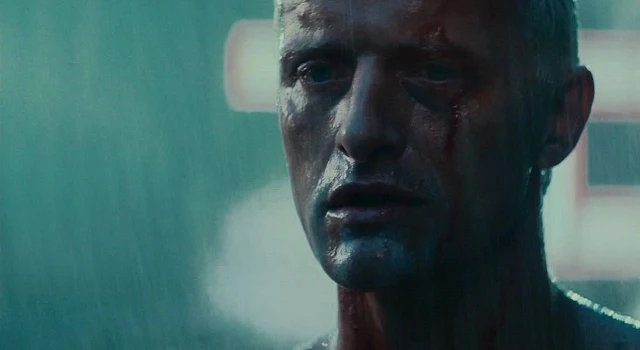
Roy Batty's Tears in Rain monologue

For decades, this film has been debated, recut, and idolized. Now, let's jack into the mainframe and decrypt the complete data file with all the deep lore, production chaos, and cinematic secrets.

01

Based on a Philip K. Dick Novel

Blade Runner is loosely based on the 1968 novel "Do Androids Dream of Electric Sheep?" by Philip K. Dick. While the film heavily borrows the core plot of a depressed bounty hunter hunting rogue replicants, it jettisons the novel's strangest and most surreal themes. The book is set on a post-apocalyptic Earth covered in radioactive dust, where owning a real living animal is the ultimate status symbol of wealth and empathy.

In Dick's original lore society is guided by a virtual reality religion called Mercerism, where citizens plug into "empathy boxes" to share collective suffering. They also use "Penfield Mood Organs" to literally dial up daily emotions like a desire to watch television or a sudden motivation to clean the house. Dick was initially deeply hostile to early Hollywood scripts, but he was completely won over shortly before his tragic death after Ridley Scott showed him a staggering 20-minute visual effects reel of the Hades landscape.

02

A Notorious 1982 Box Office Bomb

It is hard to imagine today, but the film crashed and burned financially during its original theatrical run. The summer of 1982 was an absolute bloodbath for dark science fiction. Blade Runner was released just two weeks after Spielberg's massive crowd-pleaser E.T. the Extra-Terrestrial and went head-to-head with Star Trek II: The Wrath of Khan and John Carpenter's The Thing.

Audiences who were riding high on suburban alien optimism were simply not ready for a dark, pessimistic, and morally ambiguous sci-fi noir. Warner Bros did not know how to market it. It wasn't until the rise of early cable television and the home video VHS market that the film found its true obsessive audience. Renters could finally pause, rewind, and dissect the dense visuals at their own pace, cementing its status as a cult classic that matured into a cinematic holy text.

03

2019 is Now Our Past

The film explicitly set its apocalyptic timeline in November 2019. Passing that date highlights a crucial truth: science fiction is rarely about predicting the actual future. It is a mirror reflecting the cultural anxieties of the exact present it was made in. We might not have Off-world colonies or flying Spinner cars today, but the film's foundational anxieties are more relevant than ever.

It accurately captured the terrifying rise of extreme corporate power, visually represented by the towering Tyrell pyramid dominating the Los Angeles skyline. It predicted massive environmental degradation and climate collapse. Most importantly, it perfectly anticipated our current profound ethical panic regarding our relationship with rapidly advancing artificial intelligence and the looming privatization of space travel.

04

Syd Mead's Visual Futurism

The film's staggeringly dense production design was the brainchild of conceptual artist Syd Mead. Mead was originally hired just to design the vehicles, but his sketches kept coming back with incredibly detailed backgrounds of the city. Ridley Scott loved the backgrounds so much he gave Mead the unprecedented title of "Visual Futurist" and tasked him with designing the entire world.

Mead conceptualized the film's iconic retrofitted aesthetic. Instead of sleek, clean silver spaceships, hyper-advanced technology is messily bolted onto decaying, older architectural structures. This specific visual language of a dark, rainy, multi-cultural, and corporate-dominated urban landscape became the literal blueprint for the entire cyberpunk genre, influencing everything from The Matrix to video game aesthetics for the next forty years.

05

The Improvised Monologue

The iconic "Tears in Rain" monologue is the emotional climax of the film, but it was heavily rewritten by actor Rutger Hauer the night before shooting. The original scripted speech was much longer and far more technical, featuring lines like "I've known adventures, seen places you people will never see." Hauer felt that a dying combat machine wouldn't waste precious seconds on an overly long, operatic speech.

Feeling the poetic tragedy of his character's end, Hauer cut the lines down to their bare essentials and added the immortal final phrase himself: "All those moments will be lost in time... like tears in rain." Hauer delivered the speech on a freezing, rain-slicked set and moved the hardened film crew to tears, proving that a synthetic being could indeed possess the soul of a poet.

06

Harrison Ford Wasn't First Choice

It is difficult to picture anyone else as Rick Deckard, but Dustin Hoffman was seriously considered for the role. Hoffman had numerous meetings with Ridley Scott over several months, but their visions for the character wildly clashed (Hoffman wanted to play Deckard as a much angrier, bitter man). Other major names on the studio shortlist included Gene Hackman, Tommy Lee Jones, and Robert Mitchum.

Harrison Ford was ultimately cast specifically to intentionally subvert his heroic, swashbuckling image from Star Wars and Raiders of the Lost Ark. He played Deckard as an exhausted, compromised, and deeply morally ambiguous figure. However, Ford and Scott clashed constantly on set. Scott was famously meticulous about lighting the sets, often leaving Ford waiting in his trailer for hours while the crew perfected the smoke and neon.

07

The Legendary Vangelis Score

There's a common pop culture misconception that the Greek composer Vangelis won the Academy Award for Blade Runner. He actually won the Oscar the year prior for Chariots of Fire. The Blade Runner score, with its vast, melancholy, and revolutionary use of the massive Yamaha CS-80 synthesizer, essentially created the definitive sound of the dystopian future.

Vangelis famously composed and recorded much of the score live to picture, watching the film on a monitor and playing his synthesizers in real-time to match the emotional flow of the scenes. Combined with Dick Morrissey's haunting saxophone solos, it is completely inseparable from the film's noir atmosphere. Surprisingly, a proper official soundtrack album wasn't formally released until 1994, leading to a decade of highly sought-after bootleg cassettes circulating among fans.

08

Seven Different Versions

Blade Runner is famous for having at least seven different cuts, but three are absolutely crucial to understanding its history. The 1982 Theatrical Cut featured a studio-imposed voice-over and a bizarre, upbeat happy ending. The 1992 Director's Cut was actually a rushed project by film restorer Michael Arick. It removed the voice-over and added the brief unicorn dream sequence, but Scott wasn't fully satisfied with the technical execution.

The 2007 Final Cut is Ridley Scott's definitive, uncompromised version with full creative control. For this release, the team did a massive 4K scan of the original negatives, color-corrected the entire film, and even brought back actress Joanna Cassidy to digitally re-shoot her face for the famous slow-motion glass-breaking scene, fixing an obvious stunt double error that had annoyed Scott for 25 years.

09

The Arrival of 2049

The highly anticipated sequel, Blade Runner 2049, arrived 35 years later in a totally changed cinematic landscape. Directed by visionary filmmaker Denis Villeneuve, the 2017 sequel was met with massive critical acclaim for Roger Deakins' Oscar-winning cinematography and its respectful, highly intelligent expansion of the original's complex themes.

The film transitions the lore from the fallen Tyrell Corporation to the new, terrifyingly calm industrialist Niander Wallace (Jared Leto). It directly interrogates the nature of manufactured beings and the value of memory by introducing the concept of replicant reproduction. Most importantly, Villeneuve masterfully protected the original film's ambiguity, refusing to explicitly confirm or deny whether Harrison Ford's Deckard was human or machine.

10

Groundbreaking Visual Effects

The film's staggering visual effects lost the Academy Award to E.T., a decision widely viewed by film historians as one of the great Oscar snubs of the 1980s. Led by legendary effects supervisor Douglas Trumbull (of 2001: A Space Odyssey fame), the team created the entire sweeping metropolis practically, without a single frame of modern CGI.

They relied heavily on "multipass photography." This painstaking process meant exposing the exact same piece of 70mm film dozens of times to layer different lighting elements. They would shoot a miniature building once for the structural pass, rewind the film, shoot it again just for the neon signs, and rewind it again to add the tiny fiber-optic window lights. If a technician accidentally bumped the camera rig on the 14th pass, an entire week of work was completely ruined.

11

The Perfect Tech-Noir

The film is the quintessential example of Tech-Noir, seamlessly blending high-concept sci-fi with the gritty aesthetics of classic 1940s detective stories like The Maltese Falcon and Chinatown. All the tropes are present. Deckard is the cynical detective, Rachael is the mysterious femme fatale, and the city is a corrupt maze filled with endless rain, turning ceiling fans, and sharp Venetian blinds.

The constant, oppressive rain wasn't just for mood. Ridley Scott used the rain, combined with heavy atmospheric smoke and darkness, as a practical filmmaking tool to hide the wires holding up the flying cars and to blur the edges of the matte paintings. The original theatrical cut even included a clumsy voice-over narration to cement the hard-boiled detective homage, though it proved highly unpopular with fans.

12

The Replicant Eye Glow

The famous "replicant eye glow" is a defining visual motif of the film, but it was a completely practical lighting trick. It wasn't a special optical effect added in the post-production editing room. It was achieved directly in-camera by lighting supervisor Dick Hart, using a variation of the classic Schüfftan process.

Hart bounced a faint beam of light off a half-mirrored piece of glass mounted at a 45-degree angle directly in front of the camera lens. This light reflected straight into the actors' retinas, creating a subtle, golden-red inhuman glow. This technique perfectly tied into the film's lore regarding the Voight-Kampff test, which relies entirely on tracking microscopic pupil fluctuations to determine the presence of a synthetic soul.

13

The "Blood Runner" Curse

The grueling night shoots and relentless rain led the exhausted crew to dub the production "Blood Runner." Ridley Scott, accustomed to operating the camera himself in the UK, clashed heavily with the unionized American crew. After Scott made offhand comments to a British newspaper praising UK crews for their obedience, the US crew retaliated by printing t-shirts that read, "Yes Guv'nor, My Ass!" Scott responded the next day by wearing a shirt that simply said, "Xenophobia Sucks."

Beyond the set tension, the film spawned the famous "Blade Runner Curse." This is a long-running industry joke pointing out that almost every major real-world company whose logo appeared prominently in the film's futuristic skyline (including Atari, Bell System, Pan Am, and RCA) suffered massive financial losses, bankruptcies, or total corporate restructuring shortly after the film was released.

14

The Unicorn Dream Debate

The unicorn dream sequence is the absolute key to the film's greatest unresolved debate. At the end of the Director's Cut, Deckard finds a small origami unicorn left by Officer Gaff. Because Deckard had previously dreamt of a unicorn, this strongly implies Gaff knows Deckard's private, implanted memories, functioning as the central clue that Deckard himself is a replicant.

For years, a myth persisted that the unicorn footage was actually leftover B-roll from Ridley Scott's fantasy film Legend, but Scott maintains he shot it specifically for Blade Runner. The debate raged behind the scenes as well. Ridley Scott firmly believes Deckard is artificial and directs the film to support that thesis. Harrison Ford aggressively pushed back on this theory, arguing that the audience desperately needed a human anchor to navigate the synthetic world.

15

Scott's Sci-Fi One-Two Punch

Blade Runner and Alien form Ridley Scott's legendary cinematic one-two punch. Scott directed the sci-fi horror masterpiece Alien in 1979 and immediately followed it up with Blade Runner just three years later. With these two back-to-back films, he essentially authored the aesthetic future of the genre for the next forty years.

Both films share deep thematic DNA. They feature massive "corporate dystopias" where megalithic companies (the Weyland-Yutani Corporation and the Tyrell Corporation) treat both human and synthetic life as completely expendable financial assets. They also both feature androids (Ash and Roy Batty) who violently struggle against their hidden programming, giving both universes a shared sense of existential paranoia.

16

The 1997 Video Game Masterpiece

Developed by the brilliant Westwood Studios, the 1997 Blade Runner PC game was a masterpiece in its own right. It was a classic point-and-click adventure game, but it completely avoided merely adapting the movie's script. Instead, it told a parallel story following a rookie Blade Runner named Ray McCoy, whose own intense investigation happens concurrently with Deckard's timeline.

The game was highly praised for its incredible branching narrative and innovative mechanics. Depending on your specific playthrough, certain side characters were randomly assigned as either humans or replicants behind the scenes. This meant the core mystery changed every single time you booted up a new game, perfectly capturing the paranoia of administering the Voight-Kampff test.

17

A Perfect Poster Tagline

The film's poster tagline perfectly captured its highly blended genre: "A chilling, bold, mesmerizing, futuristic detective thriller." It explicitly acknowledged its heavy film noir roots and attempted to prepare audiences for something far darker, slower, and more complex than the space operas they were used to.

However, the marketing department at Warner Bros was completely bewildered by the philosophical art film they were handed. They didn't know how to sell a movie about depression and artificial sentience. The original theatrical trailers tried desperately to make it look like an upbeat, Indiana Jones style shoot-em-up action film, which only served to deeply confuse and alienate the theatrical audiences who showed up expecting a standard blockbuster.

18

Massive Miniature Cityscapes

The cityscape was built using some of the most highly detailed miniatures in Hollywood history. The film's staggering sense of scale was achieved entirely practically. The Tyrell Corporation pyramid model was only a few feet wide, but it was constructed using thousands of pieces of acid-etched brass to give it microscopic geometric detail. The model makers referred to this intricate detailing process as "greebling."

The city streets were built as forced-perspective miniature sets on a smoke-filled soundstage. The special effects crew meticulously threaded miles of tiny fiber-optic cables through the models to create the illusion of thousands of individual, glowing apartment windows, allowing the massive motion-control cameras to glide smoothly through the canyon of skyscrapers.

19

The Real Hades Landscape

The unforgettable fiery "Hades Landscape" opening is a mix of brilliant model work and actual industrial footage. The shot opens on a giant blue eye reflecting terrifying chemical explosions. Fans have debated for years whether the eye belongs to Holden, Roy Batty, or Deckard himself, but it serves as the ultimate thematic statement: the soul witnessing the destruction of the world.

The massive fireball explosions seen erupting from the smokestacks were not miniature effects. They were actual 35mm footage of the Wilton International chemical complex in Teesside, North East England, near where Ridley Scott grew up. The effects team projected this real footage of burning gas flares behind their intricate brass models to create an impossibly deep, polluted horizon.

20

An Act of Mercy

Rutger Hauer's most important action sequence culminated in a profound act of mercy. While Hauer performed many of his own intense physical stunts, his character's defining moment is non-violent. As his four-year lifespan violently expires on the rooftop, Roy Batty reaches out and hauls his would-be executioner to safety.

This scene is steeped in heavy Christ imagery, specifically when Batty drives a nail through his failing hand like a stigmata to keep his motor functions working. When Batty finally dies, a white dove (which Hauer brought to the set himself) flies out of his hands and up into a surprisingly clear, blue patch of sky. Hauer argued this symbolized that the machine had finally earned a true soul, and the dove was its ultimate release.

21

The Animatronic Owl

The animatronic owl resting in the Tyrell Corporation headquarters is a perfect, elegant metaphor for the film's entire thesis. When Deckard asks Rachael if the magnificent bird is artificial, she replies in a flat tone, "Of course it is." In the lore of the universe, purchasing a real, living owl would cost millions of credits, showcasing Dr. Tyrell's unimaginable wealth and hubris.

This owl perfectly mirrors Rachael herself. She is a synthetic being so impeccably constructed, complete with fake childhood memories, that the audience (and Deckard) can barely register she isn't human. The film uses these artificial animals to force a deeply uncomfortable question: if you truly cannot tell the difference between the machine and the real thing, does the difference even matter?

22

The Definitive Final Cut

Released in 2007, The Final Cut is recognized as Ridley Scott's ultimate, definitive version of the film. It is the only commercial release over which Scott had absolute, uncompromised creative control. Beyond restoring the unicorn dream and ditching the theatrical voiceover, it features massive technical restorations that fans had begged for over the decades.

The restoration team fixed glaring continuity errors that had plagued the previous cuts. They corrected the terrible lip-syncing when Harrison Ford interviews the snake dealer, Abdul Ben Hassan. They also digitally altered the final shot of the dove flying away; originally, the sky looked bright and sunny, jarring heavily with the noir aesthetic. They replaced the sky with dark, brooding storm clouds to perfectly match the tone of Batty's death.

23

The Invention of Cityspeak

"Cityspeak," the rapid-fire, futuristic street slang used by the enigmatic Officer Gaff, was entirely invented by actor Edward James Olmos. Olmos wanted to ground his character in the messy reality of the streets, so he visited the Berlitz School of Languages and learned basic snippets of Hungarian, Japanese, French, and Spanish.

Olmos reasoned that a massive influx of Off-world migration, combined with Earth's severe overpopulation and the breakdown of national borders, would naturally mash all global street languages together into a thick, unrecognizable slang. This brilliant piece of actor-driven world-building made Los Angeles feel like a genuine, functioning melting pot, and it became a staple trope copied by almost every cyberpunk property that followed.

24

The Studio Text Crawl

The film famously opens with a scrolling text crawl that explicitly defines what a "Replicant" is, explaining their history in space and their illegality on Earth. This opening crawl was a last-minute studio addition, demanded by nervous Warner Bros executives who panicked after early test-screening audiences complained they didn't understand the science fiction terminology.

Ridley Scott absolutely hated the addition. He felt it was a clumsy, lazy exposition dump that treated the audience like children. Scott argued that the film was stronger when it simply dropped the viewer into the deep end of the lore, allowing them to figure out the complex terminology through organic context clues. He removed it during the early edits of his Director's Cut, but reinstated a modified version later for clarity.

25

The Four-Hour Myth

In film nerd circles, the legendary "four-hour cut" is a complete myth. A four-hour edit of Blade Runner has never existed in any vault. This persistent rumor stems from a legendary 113-minute "Workprint" version that was accidentally discovered by a film archivist in 1989 and mistakenly shown at the Fairfax Theater in Los Angeles.

This Workprint was the exact rough cut shown to the infamous Dallas test audiences in 1982. It lacked the theatrical voiceover, featured alternate musical cues (using Jerry Goldsmith's temp tracks instead of Vangelis in some scenes), and had a much rougher, more abrasive tone. The massive fan response to this accidental screening is what finally convinced Warner Bros to let Ridley Scott create the official 1992 Director's Cut.

26

Scott's Most Personal Film

Despite the famously hellish production and the clashes with the cast and crew, Ridley Scott has often cited Blade Runner as his most intensely personal film. The deep, melancholic themes of memory, mortality, and the desperate desire for more time resonated with him on a profound level during the shoot.

Scott's older brother, Frank, died tragically of cancer during the early stages of production. Scott threw himself entirely into the obsessive, microscopic world-building of the film as a coping mechanism for his grief. That profound sense of loss and the fragility of life is woven deeply into the film's DNA, culminating perfectly in Roy Batty's elegiac final speech about moments washing away in the rain.

27

The Blueprint for Cyberpunk

Blade Runner is universally recognized as the visual and thematic blueprint for the entire Cyberpunk genre. Its cultural footprint is immeasurable, directly inspiring landmark works like The Matrix, Ghost in the Shell, Deus Ex, and the hit video game Cyberpunk 2077.

Author William Gibson, who essentially created the literary Cyberpunk movement with his novel Neuromancer, famously walked out of a movie theater after watching the first twenty minutes of Blade Runner. Gibson was terrified because Ridley Scott had perfectly, flawlessly visualized the exact grimy, high-tech/low-life world that Gibson was currently trying to write in his head. The film permanently codified the "dark, rainy, neon-lit city" as the universal shorthand for a dystopian future.

28

A Borrowed Title

The term "Blade Runner" does not exist anywhere in Philip K. Dick's original source material. In Dick's novel, Rick Deckard is simply referred to as a bounty hunter, and the synthetic beings are called androids (or colloquially, "andys"). In early screenplay drafts, writer Hampton Fancher referred to the cops as "rep-detects," a term Ridley Scott found incredibly clunky.

Scott asked Fancher to find a better name. Fancher remembered a completely unrelated 1974 sci-fi novella on his bookshelf by Alan E. Nourse titled The Bladerunner. The production team bought the film rights to the title (and William S. Burroughs' subsequent screenplay treatment) solely because they thought the phrase sounded incredibly cool, tossing out the actual plot about underground medical smugglers entirely.

29

Moving to Los Angeles

The production was forced into a massive, highly stressful geographic shift. The film was originally slated to be shot entirely at Shepperton Studios in England, where Ridley Scott had just comfortably completed Alien. However, complex union labor disputes and financial restructuring forced the entire production to relocate across the Atlantic to the Warner Bros. backlot in Burbank, California.

They took over the famous "New York Street" exterior sets, the exact same streets used to film classic Humphrey Bogart noirs like The Maltese Falcon. Scott and Syd Mead spent months covering the old brick facades with miles of exposed piping, trash, and glaring neon lights, quite literally retrofitting a piece of classic Hollywood history into a decaying vision of the future.

30

Fighting the Programming

Roy Batty's violent self-mutilation during the climax is a desperate, visceral fight against his own biological programming. As he chases Deckard through the Bradbury Building, his hand begins to seize and fail. This is the first physical symptom of his engineered four-year lifespan violently running out.

To overcome the paralysis, he shoves a large, rusty nail directly through his palm to shock his failing nervous system back into action. This gruesome moment explicitly links Batty to the Stigmata and heavy Christ imagery. He is a savior figure descending into hell, enduring unimaginable physical pain, and ultimately dying to forgive humanity for engineering his short, brutal existence.

31

A Betrayal of Tone

The original theatrical "happy ending" was a total betrayal of the film's suffocating, claustrophobic tone. Mandated by Warner Bros executives who demanded a positive resolution, the scene shows Deckard and Rachael inexplicably driving away from the smog-choked city into a vast, pristine, sun-drenched mountainous countryside.

Because the production had absolutely no budget or time to shoot new exterior locations, Ridley Scott called in a favor from his friend, director Stanley Kubrick. Kubrick gave Scott hours of unused, sweeping helicopter B-roll footage that he had shot for the opening credits of his horror classic The Shining. To make matters worse, Harrison Ford recorded a famously flat, lethargic voiceover explaining that Rachael didn't actually have a four-year lifespan, completely ruining the narrative tension.

32

Emotional Seriousness for AI

This was one of the very first major blockbuster films to treat artificial intelligence with genuine emotional and philosophical seriousness. Before Blade Runner, most film robots were either cute, helpful servants or simple, cold calculating killer machines like HAL 9000.

The film completely subverted expectations by showing the human characters acting like cold, disconnected sociopaths (Deckard literally shoots a fleeing woman in the back) while the synthetic Replicants exhibit intense loyalty, visceral grief, and fierce love for one another. The film brilliantly asked: If an AI has memories, feels love, and fears its own inevitable death, what meaningfully separates it from a human?

33

Retro-Fitted Fashion

The brilliant costume design by Michael Kaplan and Charles Knode perfectly mirrors the film's overarching theme of a "retrofitted" society. Instead of putting the cast in shiny spandex or generic space suits, the designers scoured vintage shops for 1940s clothing and altered them to look sharp and dangerous.

Rachael's severe, tailored suits and flawless victory roll hairstyles were a direct, intentional homage to classic silver screen sirens like Joan Crawford, amplifying the illusion that she is a classic femme fatale. Deckard's rumpled trench coat is the absolute standard uniform of the classic noir detective. It visually suggests a depressing future where technology leaped forward into the stars, but human culture stagnated and became morbidly obsessed with the past.

34

A Priceless Cultural Legacy

The film's true value is its absolutely priceless, enduring cultural legacy. That initial, embarrassing 1982 box office gross is now merely a humorous historical footnote. Decades of obsessive fan discourse, high-definition re-releases, and massive cultural influence have cemented it as one of the most important and ultimately profitable cult films in cinematic history.

It radically redefined the visual aesthetic of music videos in the 80s and 90s, and modern directors continually point to it as the ultimate masterclass in atmospheric world-building. Even its background vehicles live on in other sprawling sci-fi universes. Most importantly, it taught Hollywood that a film does not need to cleanly answer every single question to be a masterpiece; sometimes, the haunting ambiguity is the greatest feature of all.

Blade Runner - symbolism of the Unicorn

The unicorn in Blade Runner occupies only a handful of frames, yet it has haunted the sci-fi canon for over four decades. It drifts through a verdant forest, an image so untainted and mythic it feels entirely alien to the movie it’s in. 

Outside of Deckard’s skull sits Ridley Scott’s suffocating, synth-soaked Los Angeles, a neon graveyard of acid rain, corporate gods, and bodies engineered like iPhones in a Chinese factory. 

That brutal contrast is why the unicorn matters. It isn't just a breadcrumb in a cyberpunk procedural; it’s an impossible vision of nature inside a world entirely replaced by simulation.

But the real payload is much darker. In Scott’s later cuts, Deckard’s daydream is violently recontextualized by a single piece of tin-foil origami left by Gaff outside his apartment. The implication hits like a physical blow: 

Gaff knows what Deckard dreams. 

If the LAPD’s snappiest dresser has access to your subconscious, your inner life isn’t private. 

It’s software. The unicorn boils Blade Runner’s sprawling existential dread into a single visual riddle. Is Deckard a burned-out human clinging to a private fantasy, or just another machine whose memories came pre-installed on a Tyrell Corporation hard drive?

The unicorn dream in Blade Runner, a key symbol in the debate over whether Deckard is human or a replicant
The unicorn is the ultimate Voight-Kampff test for the audience, a litmus test of memory, privacy, and artificial consciousness.

Pop culture has never cleanly settled this because Blade Runner itself is a shapeshifter. The clunky 1982 theatrical cut held our hands with Harrison Ford’s grudging noir voice-over and a tacked-on happy ending. Scott’s 1992 Director’s Cut ripped the training wheels off, ditching the narration and cementing the unicorn as a forensic clue.

 By 2007’s Final Cut, the film had evolved into a masterpiece whose meaning fundamentally shifts depending on which bootleg or Blu-ray you pull from the shelf.

A World After Nature

Ridley Scott’s 2019 Los Angeles is civilization post-mortem. The city twitches with energy, but it’s entirely synthetic. Industrial flames belch into black skies; rain falls endlessly without washing away the grime. Even the animals are counterfeit. The majestic owl haunting Tyrell’s penthouse? Fake. Zhora’s exotic snake? Traceable by a serial number stamped on its scales. 

In Philip K. Dick’s foundational novel, Do Androids Dream of Electric Sheep?, real animals are status symbols in an ecologically dead world. Scott strips away the novel's overt religious dogma but leaves the creeping paranoia: 

What is real when reality itself is manufactured?

Everything is a knockoff. 

Photographs replace genuine history. 

Replicants replace soldiers, sex workers, and slaves. 

The unicorn is just another asset in this symbolic economy, a mythical beast in a world where even pigeons are built in a lab. It forces a terrifying question: 

Is this the last authentic piece of Deckard’s soul, or just a piece of premium clip-art pasted into his brain?

The Burnout Blade Runner

Enter Rick Deckard. His job is drawing a lethal line between human and machine. He’s a cop whose beat is state-sanctioned execution, though the LAPD politely calls it "retiring." But as a poster boy for humanity, Deckard is a disaster. Harrison Ford plays him as emotionally bankrupt, moving through the neon sprawl like a ghost haunting his own trench coat.

Here’s the brilliant inversion of Blade Runner: The machines are out-living the humans. The replicants are terrified, desperate, and burning with a desire for life. Zhora scrambles for survival. Pris manipulates and fights. Roy Batty burns with a metaphysical rage against his creator. And Rachael shatters into pieces when she learns her childhood is a lie. Next to them, Deckard is practically comatose. The unicorn dream is the only flash of a pulse we get from him, the lone piece of evidence that someone is actually home behind his exhausted eyes.

The Replicant Theory: Gaff Knows Your Dreams

The argument that Deckard is a Nexus-6 rests squarely on Gaff’s origami. Gaff leaving the paper unicorn is invasive. It’s a calling card that screams, "I know your factory settings."

If Gaff knows about the unicorn, it’s because it’s not Deckard’s dream. It’s a standard-issue Tyrell Corporation memory implant. Much like Rachael’s cherished childhood memories actually belong to Tyrell’s niece, Deckard’s unicorn is a cruel joke, a manufactured symbol of individuality implanted into a machine to keep it docile. 

Blade Runner is obsessed with surveillance, featuring eyes, photographs, and Voight-Kampff machines reading pupil dilations. The origami unicorn turns Deckard’s most private sanctuary into just another corporate dataset.

The Human Theory: A Ghost in the System

But the counter-reading refuses to die because it preserves the film’s emotional core. If Deckard is human, Blade Runner is the story of a numb killer who rediscovers his own humanity by hunting beings who have more of it than he does.

When Roy Batty saves Deckard on that rain-slicked rooftop, he shatters his own programming. He has every biological and vengeful reason to let Deckard fall. Instead, facing the abyss, a machine chooses grace.

 If Deckard is human, this act is a profound moral lesson. The artificial monster teaches the human cop what it actually means to be alive.

In this light, Gaff’s origami isn't a hacker’s taunt; it’s a nod of respect. It means, "I know your impossible fantasy of escaping with Rachael. And I'm letting you try." The unicorn stays a symbol of fragile hope, rather than a diagnostic smoking gun.

The Sweet Spot: Why Ambiguity is the Point

The most compelling take is the one that refuses to pick a side. Blade Runner isn’t a puzzle box to be "solved." The magic trick is how it makes the distinction between human and machine completely irrelevant.

The unicorn doesn’t close the meaning of Blade Runner. It blows the doors wide open. It elevates Deckard’s identity from a Reddit trivia question into a legitimate philosophical crisis.

If Rachael’s memories are fake, does her heartbreak hurt any less? If Roy Batty was built in a vat, does his mercy mean nothing? The film argues that humanity isn't something you're born with; it's something you earn through action, empathy, and grief.

Roy Batty during the Tears in Rain monologue in Blade Runner, where the replicant becomes the film’s moral centre
Rutger Hauer’s Roy Batty turns a sci-fi villain into the film’s tragic, poetic centre. He outgrows his programming the moment he chooses mercy.

2049: The Afterlife of an Unanswered Question

Denis Villeneuve’s stunning sequel, Blade Runner 2049, proved it understood the assignment by explicitly refusing to answer the Deckard question. Instead, it shifted the target. 2049 asks not just if machines can feel, but if they can inherit, reproduce, and participate in miracles.

Ryan Gosling’s 'K' goes through the exact ringer Deckard did. He clings to a memory he believes makes him "special," only to suffer the crushing realization that he’s just another cog in the machine. But like Roy Batty before him, K finds meaning not in his origins, but in his choices.

By leaving Deckard’s exact biological status in the shadows, 2049 respects the original film's golden rule: The ambiguity is the art.

The Final Cut

We want the unicorn to be a skeleton key. We want to know, definitively, who is real and who is plastic. But Blade Runner denies us that comfort.

The question isn't whether Deckard is a replicant. The question is: Why would it matter? If he’s human, he’s part of a rotting society that has industrialized slavery. If he’s a replicant, he’s proof that a machine can transcend its code to dream, love, and choose rebellion over obedience. Either way, the old-world definition of "humanity" is dead on arrival.

The unicorn gallops through the center of it all, a ghost in the machine. It might be Deckard’s. It might be Tyrell’s. It might just be Ridley Scott messing with us. But its true power lies in the unease it leaves behind. In the world of Blade Runner, you don't discover your soul; you assemble it from the scraps, and hope it’s enough to keep you warm in the rain.

blakes 7

The legendary ending of Blake's 7 - explained

The ending of Blake's 7 still feels like a dare.

Not a tidy farewell. Not a heroic last stand with swelling music and a promise that the rebellion will rise again. The final episode, simply titled Blake, takes one of British science fiction's great anti-authoritarian stories and lets it collapse in a room full of guns, bad information, exhausted trust, and one fatal mistake.

Created by Terry Nation, Blake's 7 began in 1978 as a bleak, clever space opera about resistance against the totalitarian Terran Federation. Roj Blake was the dissident leader, the man with the cause, the name, the moral gravity. Around him gathered criminals, survivors, opportunists, idealists, cynics, thieves, killers, smugglers, and misfits. They were not clean heroes. That was the point.

The series never treated rebellion as a clean moral posture. It asked what resistance does to people over time. It asked whether freedom fighters can stay morally intact while fighting a system built on surveillance, terror, lies, and psychological control. It asked whether trust can survive when every alliance might be a trap.

The answer delivered by the finale is savage.

Think about that.

The good guys lost.

And not in some grand operatic way where defeat becomes symbolic victory. They lose because the Federation understands something terrifyingly simple. You do not always need to crush a rebellion from the outside. Sometimes you only need to let its members destroy each other from within.

The plot of the final episode: a trap built from broken trust

The finale begins after the disastrous events of Warlord. Avon's attempt to build a genuine anti-Federation alliance has failed. Xenon Base is no longer safe. Zukan's betrayal has wrecked any sense that the Scorpio crew can rely on political partners, military allies, or even their own judgement.

Avon needs a symbol.

Not because he has become Blake, exactly, but because he has finally understood the practical value of Blake. Avon has never liked idealism. He distrusts martyrs, speeches, causes, and heroic nonsense. Yet by the end of the series, even he can see that rebellions need stories. They need names. They need a figure people will follow when logic tells them to stay home and survive.

So he goes looking for Blake.

Blake's 7 crew concept art showing the rebel ensemble as a doomed science fiction resistance group
The crew of Blake's 7, a rebel family held together by pressure, suspicion, need, and a cause that keeps changing shape.

Orac traces Blake to Gauda Prime, a planet that already feels like the end of the road. It is not a bright rebel sanctuary. It is lawless, brutal, and politically compromised. Soolin knows its history personally. The planet was once a farming world, then mineral wealth turned it into a playground for exploitation. Law was suspended, criminals gathered, bounty hunters followed, and violence became the local weather.

That matters. The finale does not place Blake in a noble underground base or a revolutionary command centre. It places him in a moral wasteland. Gauda Prime is the perfect final location because it looks like what the universe has become after years of Federation pressure. It is not just a planet. It is the series' worldview made physical.

Scorpio falls, and with it goes the last illusion of escape

The approach to Gauda Prime is disastrous. Scorpio is attacked, the crew tries to manage the descent, and what should be a controlled crash becomes something much worse. Vila, Dayna, and Soolin teleport down. Avon and Orac follow. Tarrant stays aboard long enough to keep the ship steady, and Scorpio finally smashes into the surface.

It is a brutal piece of narrative housekeeping. The Liberator had already been destroyed at the end of Terminal, stripping the series of its most powerful symbol of escape, glamour, and alien superiority. Scorpio was always rougher, smaller, more desperate, and more compromised. Its destruction in the finale removes the last practical route out.

By the time the crew reaches Blake's base, the story has quietly removed every safety net. No Liberator. No Zen. No stable base. No alliance. No trusted information. No clear chain of command. No Servalan theatrically appearing to explain the plot. Just damaged people moving through bad terrain with guns in their hands.

Blake's return is not a rescue

The cruel genius of the episode is that Blake's return does not restore order. It ruins what little order remains.

Blake has been absent from the centre of the show for a long time. In his absence, Avon has become the dominant force. The series has changed shape around him. Blake's idealism has been replaced by Avon's intelligence, suspicion, pragmatism, and emotional damage. The rebellion has become colder. Less romantic. More tactical. More paranoid.

When Blake reappears, he is not the pure revolutionary memory Avon has been chasing. He is scarred, secretive, and playing a dangerous game. He appears to be working as a bounty hunter. He captures people. He tests them. He hides his true intentions behind betrayal-shaped theatre.

His plan makes tactical sense. In a universe full of informers, collaborators, Federation agents, mercenaries, and frightened survivors, Blake cannot simply trust anyone who claims to be anti-Federation. He is trying to identify people worth recruiting. He is trying to rebuild a movement from the ruins.

But this is where the finale cuts deepest. Blake has learned the same lesson as Avon. Trust is dangerous. Deception is necessary. Sentiment gets people killed.

The tragedy is that Blake and Avon have become similar enough to destroy each other.

Avon kills the one man he still needed

The central confrontation between Blake and Avon is one of the coldest endings in television because it is not built on stupidity. It is built on character.

Tarrant believes Blake has betrayed them. From his point of view, that conclusion is reasonable. Blake has behaved like a collaborator. He has handed him over. He has let appearances do the work of betrayal.

Avon arrives already primed to expect treachery. His life has trained him for it. Anna Grant's betrayal in Rumours of Death taught him that love could be a Federation weapon. Blake's old crusades taught him that idealism could become coercion. The events of Orbit showed how close Avon could come to sacrificing Vila when survival demanded it. Warlord has just proved that alliances collapse under pressure.

So when Avon asks Blake whether he has betrayed them, the question mutates almost immediately into something more personal. It is not only, "Have you betrayed us?" It is, in spirit, "Have you betrayed me?"

That is the emotional trapdoor. Avon, who has spent years pretending not to need anyone, needs Blake to be what he remembers. Not perfect. Not gentle. But real. Loyal. The one fixed point in a universe of double agents and failed causes.

Blake smiles. Avon fires.

The killing is shocking because it is both avoidable and inevitable. One more sentence might have saved them. One pause. One explanation. One moment of trust. But Blake's 7 has spent four series showing why that moment can no longer happen.

The callback structure: why the ending hurts more if you know the whole series

The finale works as a shock ending, but it is not just shock. Its power comes from how many older wounds it reopens.

The Way Back

The first episode introduced Blake as a man whose mind and reputation had been violated by the Federation. He was framed, discredited, brainwashed, and removed. The finale brings that idea back in darker form. Once again, truth is hidden under false identity. Once again, the Federation's world makes honest recognition almost impossible.

Pressure Point

Pressure Point showed Blake's crusade at its most reckless. The assault on Central Control became a disaster, and Gan died for nothing. That episode exposed the awful gap between revolutionary belief and practical reality. The finale completes that argument. The cause may be noble, but nobility does not protect people from bad intelligence, false assumptions, or the consequences of leadership.

Star One

Star One pushed Blake's campaign to an almost mythic scale. The rebellion reached the heart of Federation control, only to find that the wider universe was even more dangerous than expected. That episode was about the cost of striking at systems too large to understand. Blake shrinks the battlefield down to a single room, but the same idea remains. In this universe, victory is never clean, and every attack creates consequences nobody can fully control.

Terminal and Rescue

Terminal gave Avon a false Blake. A hallucination. A lure. A trap wrapped around his unresolved attachment to the man. The Liberator was destroyed, Zen died, and the old version of the series ended in fire and loss. Rescue then confirmed Cally's death and pushed the survivors into the harsher Scorpio era. The finale makes that trauma pay off. Avon has already been tricked by the idea of Blake once. When he finally meets the real Blake, he can no longer tell the difference between reunion and trap.

Rumours of Death

Avon's emotional life was poisoned by betrayal long before Gauda Prime. Anna Grant's role as a Federation agent did more than hurt him. It taught him that intimacy itself could be operational cover. By the finale, Avon is not merely cautious. He is almost incapable of receiving truth when it comes in a compromised shape.

Orbit

Orbit is essential to the final stretch of Avon's character. His near willingness to sacrifice Vila to save himself shows how survival logic can eat away at whatever moral code he claims to have. The finale does not invent a darker Avon from nowhere. It reveals the endpoint of a man who has spent too long believing that calculation is safer than trust.

Warlord

The episode immediately before the finale matters because it destroys Avon's latest attempt at a wider anti-Federation coalition. The rebellion is not riding into Gauda Prime from a position of strength. It arrives after betrayal, collapse, and panic. The crew is already running on fumes.

Jenna's ghost

Jenna does not return, but her reported death hangs over the episode. Blake says she died running the blockade and took half a squadron with her. It is a small detail, but it matters. The original crew has been scattered, killed, changed, or absorbed into legend. By the finale, Blake's 7 is not only killing characters. It is closing the mythology around them.

Blake's 7 crew aboard the Liberator concept art representing the lost idealism of the early rebellion
The memory of the Liberator era makes the finale feel even harsher. By Gauda Prime, the romance of rebellion has been burned away.

The themes of the final episode of Blake's 7

Rebellion and authority

Blake's 7 was always about rebellion, but the finale refuses to romanticise it. The Federation is evil, but the rebels are not purified by opposing it. They lie. They manipulate. They fracture. They become harder, colder, and more secretive because the world they are fighting leaves them little room for innocence.

That is what makes the Federation so frightening. Its greatest victory is not merely military. It creates conditions where everyone behaves as if betrayal is inevitable. Once that belief takes hold, resistance starts doing the Federation's work for it.

Morality under permanent pressure

The final episode is full of moral compromise, but it does not flatten every character into cynicism. Blake is still trying to fight the Federation. Avon is still trying to keep a resistance alive. Tarrant, Vila, Dayna, and Soolin are still moving with the crew, still facing danger, still refusing to simply vanish into private survival.

Yet good intentions no longer guarantee good outcomes. Blake's secrecy is tactically sensible and emotionally catastrophic. Avon's suspicion is understandable and fatal. Tarrant's accusation is plausible and disastrous. The episode's tragedy comes from the fact that almost everyone is acting from a position that makes sense to them.

Identity and myth

By the end, Blake is no longer just a man. He is a symbol, a rumour, a memory, a recruitment tool, and a wound in Avon's psyche. The finale is partly about what happens when a person has to meet the legend he has become.

Avon wants Blake to be useful as a figurehead, but he also wants something more private. He wants proof that the old connection still meant something. Blake wants Avon to understand the game he is playing. Neither man says enough, soon enough.

The absence of Servalan

Servalan's absence from the final episode is oddly perfect. She had been the show's great glamorous embodiment of Federation ambition, vanity, cruelty, and survival. A more conventional finale might have put her in the room as the final villain.

Instead, the ending is more impersonal and more frightening. The Federation does not need Servalan to win. Its logic is everywhere already. It is in Arlen. It is in the bounty system. It is in Gauda Prime's political decay. It is in the way Blake must disguise himself. It is in the way Avon assumes betrayal before he can recognise loyalty.

Servalan Blake's 7 concept art representing the Federation's ruthless political glamour despite her absence from the finale
Servalan is not featured in the final episode, but the Federation's cruelty remains everywhere in the machinery of the plot.

Arlen and the final betrayal

Arlen is the finale's quiet dagger. At first, she seems like another fugitive caught in Gauda Prime's violent ecosystem. Blake appears to test her. The audience is invited to read her through the same suspicious framework as everyone else.

Then the truth lands. Arlen is Federation.

That reveal matters because it arrives after Avon has already killed Blake. The truth comes too late to save anyone. The Federation agent does not need to manipulate Avon directly in the final second. She only needs to be present inside a situation already poisoned by mistrust.

The surviving crew are surrounded. Dayna falls. Soolin falls. Vila falls. Tarrant falls. Avon is left alone, standing over the ruins of every relationship the series has built around him.

Then the Federation troops close in.

Avon's final smile

The last image of Avon is one of the great unresolved images in cult television. Surrounded by Federation guns, he raises his weapon. He smiles. Shots ring out.

That smile has carried decades of argument. Is it madness? Defiance? Acceptance? A final joke at the universe's expense? A warrior's reflex? A man who has lost everything and found, in the last instant, that there is no longer any reason to calculate?

The ambiguity is the point. The ending does not give viewers the comfort of seeing Avon die clearly, nor the comfort of knowing he survived. It freezes him in the one posture he has left, armed, cornered, brilliant, ruined, and alone.

Compared with later famous television endings, including The Sopranos' fade to black ending, the final moments of Blake's 7 feel astonishingly blunt. There is no elegant domestic cut to black. There is no puzzle-box mythology. There is only the sound of gunfire after the rebels have already lost the moral and emotional battle.

Why the finale became a cult classic

Blake's 7 has always lived in the strange space between limited production resources and enormous dramatic ambition. The sets could wobble. The effects could show their age. The costumes could be wildly theatrical. None of that prevented the series from creating one of television's most durable science fiction nightmares.

Its cult status comes from that tension. The show did not look expensive, but it felt dangerous. It understood betrayal, exhaustion, political compromise, state violence, surveillance, propaganda, and the way people become smaller or harder under pressure. It gave British science fiction a grimy, cynical, adult edge that still feels bracing.

The finale is central to that legacy. It tells the audience that the rules were never safe. The title character can return and die. The supposed heroes can be wrong. The found family can be wiped out. The rebellion can fail. The ending can refuse reassurance.

This is why Blake's 7 still gets discussed when people talk about cult science fiction television. It sits behind later conversations about darker space opera, morally compromised resistance movements, and anti-heroic crews living outside official power. Not every later show is directly descended from it, but the family resemblance is hard to miss. In hindsight, its DNA can be felt beside the grim politics of modern genre television, from rebel espionage stories to compromised space crews who know that survival and virtue rarely travel together.

The human condition at the end of the rebellion

The final episode of Blake's 7 remains powerful because it treats science fiction as a pressure chamber for the human condition. Strip away comfort, law, home, reputation, and certainty, then ask what remains. Faith? Suspicion? Loyalty? Violence? A cause? A name?

Blake dies because he trusts Avon enough to let the truth wait a few seconds too long. Avon kills Blake because he cannot trust anyone, not even the one man whose approval still seems to matter. The crew dies because they have walked into the final expression of the universe they have been fighting all along.

That is why the ending still lands.

It is not bleak for the sake of being bleak. It is the logical endpoint of a series about rebellion under totalitarian pressure. The Federation wins not because it is stronger in the final room, though it is. It wins because it has made trust feel irrational.

Few television finales have been so cruel, so compact, and so unforgettable. Blake's 7 ends with its hero dead, its crew cut down, its survivor surrounded, and its audience left with the horrible knowledge that the cause was righteous, the enemy was monstrous, and still, somehow, the rebels lost.

Back to Top