The unicorn in Blade Runner occupies only a handful of frames, yet it has haunted the sci-fi canon for over four decades. It drifts through a verdant forest, an image so untainted and mythic it feels entirely alien to the movie it’s in.
Outside of Deckard’s skull sits Ridley Scott’s suffocating, synth-soaked Los Angeles, a neon graveyard of acid rain, corporate gods, and bodies engineered like iPhones in a Chinese factory.
That brutal contrast is why the unicorn matters. It isn't just a breadcrumb in a cyberpunk procedural; it’s an impossible vision of nature inside a world entirely replaced by simulation.
But the real payload is much darker. In Scott’s later cuts, Deckard’s daydream is violently recontextualized by a single piece of tin-foil origami left by Gaff outside his apartment. The implication hits like a physical blow:
Gaff knows what Deckard dreams.
If the LAPD’s snappiest dresser has access to your subconscious, your inner life isn’t private.
It’s software. The unicorn boils Blade Runner’s sprawling existential dread into a single visual riddle. Is Deckard a burned-out human clinging to a private fantasy, or just another machine whose memories came pre-installed on a Tyrell Corporation hard drive?
The unicorn is the ultimate Voight-Kampff test for the audience, a litmus test of memory, privacy, and artificial consciousness.
Pop culture has never cleanly settled this because Blade Runner itself is a shapeshifter. The clunky 1982 theatrical cut held our hands with Harrison Ford’s grudging noir voice-over and a tacked-on happy ending. Scott’s 1992 Director’s Cut ripped the training wheels off, ditching the narration and cementing the unicorn as a forensic clue.
By 2007’s Final Cut, the film had evolved into a masterpiece whose meaning fundamentally shifts depending on which bootleg or Blu-ray you pull from the shelf.
To untangle the messy history of the film’s competing edits, hit our primer: Which Version of Blade Runner Did You Watch? The unicorn debate is functionally meaningless without knowing your source material.
A World After Nature
Ridley Scott’s 2019 Los Angeles is civilization post-mortem. The city twitches with energy, but it’s entirely synthetic. Industrial flames belch into black skies; rain falls endlessly without washing away the grime. Even the animals are counterfeit. The majestic owl haunting Tyrell’s penthouse? Fake. Zhora’s exotic snake? Traceable by a serial number stamped on its scales.
In Philip K. Dick’s foundational novel, Do Androids Dream of Electric Sheep?, real animals are status symbols in an ecologically dead world. Scott strips away the novel's overt religious dogma but leaves the creeping paranoia:
What is real when reality itself is manufactured?
Everything is a knockoff.
Photographs replace genuine history.
Replicants replace soldiers, sex workers, and slaves.
The unicorn is just another asset in this symbolic economy, a mythical beast in a world where even pigeons are built in a lab. It forces a terrifying question:
Is this the last authentic piece of Deckard’s soul, or just a piece of premium clip-art pasted into his brain?
The Burnout Blade Runner
Enter Rick Deckard. His job is drawing a lethal line between human and machine. He’s a cop whose beat is state-sanctioned execution, though the LAPD politely calls it "retiring." But as a poster boy for humanity, Deckard is a disaster. Harrison Ford plays him as emotionally bankrupt, moving through the neon sprawl like a ghost haunting his own trench coat.
Here’s the brilliant inversion of Blade Runner: The machines are out-living the humans. The replicants are terrified, desperate, and burning with a desire for life. Zhora scrambles for survival. Pris manipulates and fights. Roy Batty burns with a metaphysical rage against his creator. And Rachael shatters into pieces when she learns her childhood is a lie. Next to them, Deckard is practically comatose. The unicorn dream is the only flash of a pulse we get from him, the lone piece of evidence that someone is actually home behind his exhausted eyes.
The argument that Deckard is a Nexus-6 rests squarely on Gaff’s origami. Gaff leaving the paper unicorn is invasive. It’s a calling card that screams, "I know your factory settings."
If Gaff knows about the unicorn, it’s because it’s not Deckard’s dream. It’s a standard-issue Tyrell Corporation memory implant. Much like Rachael’s cherished childhood memories actually belong to Tyrell’s niece, Deckard’s unicorn is a cruel joke, a manufactured symbol of individuality implanted into a machine to keep it docile.
Blade Runner is obsessed with surveillance, featuring eyes, photographs, and Voight-Kampff machines reading pupil dilations. The origami unicorn turns Deckard’s most private sanctuary into just another corporate dataset.
But the counter-reading refuses to die because it preserves the film’s emotional core. If Deckard is human, Blade Runner is the story of a numb killer who rediscovers his own humanity by hunting beings who have more of it than he does.
When Roy Batty saves Deckard on that rain-slicked rooftop, he shatters his own programming. He has every biological and vengeful reason to let Deckard fall. Instead, facing the abyss, a machine chooses grace.
If Deckard is human, this act is a profound moral lesson. The artificial monster teaches the human cop what it actually means to be alive.
In this light, Gaff’s origami isn't a hacker’s taunt; it’s a nod of respect. It means, "I know your impossible fantasy of escaping with Rachael. And I'm letting you try." The unicorn stays a symbol of fragile hope, rather than a diagnostic smoking gun.
The Sweet Spot: Why Ambiguity is the Point
The most compelling take is the one that refuses to pick a side. Blade Runner isn’t a puzzle box to be "solved." The magic trick is how it makes the distinction between human and machine completely irrelevant.
The unicorn doesn’t close the meaning of Blade Runner. It blows the doors wide open. It elevates Deckard’s identity from a Reddit trivia question into a legitimate philosophical crisis.
If Rachael’s memories are fake, does her heartbreak hurt any less? If Roy Batty was built in a vat, does his mercy mean nothing? The film argues that humanity isn't something you're born with; it's something you earn through action, empathy, and grief.
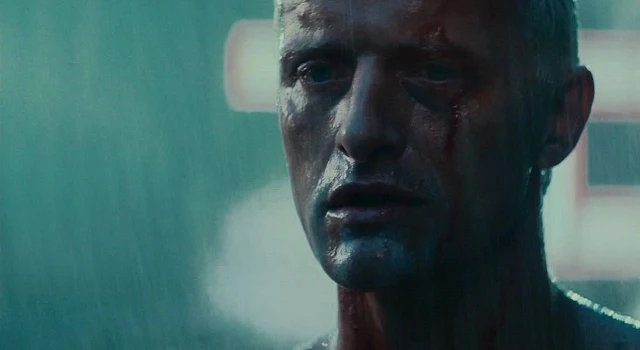
Rutger Hauer’s Roy Batty turns a sci-fi villain into the film’s tragic, poetic centre. He outgrows his programming the moment he chooses mercy.
2049: The Afterlife of an Unanswered Question
Denis Villeneuve’s stunning sequel, Blade Runner 2049, proved it understood the assignment by explicitly refusing to answer the Deckard question. Instead, it shifted the target. 2049 asks not just if machines can feel, but if they can inherit, reproduce, and participate in miracles.
Ryan Gosling’s 'K' goes through the exact ringer Deckard did. He clings to a memory he believes makes him "special," only to suffer the crushing realization that he’s just another cog in the machine. But like Roy Batty before him, K finds meaning not in his origins, but in his choices.
By leaving Deckard’s exact biological status in the shadows, 2049 respects the original film's golden rule: The ambiguity is the art.
We want the unicorn to be a skeleton key. We want to know, definitively, who is real and who is plastic. But Blade Runner denies us that comfort.
The question isn't whether Deckard is a replicant. The question is: Why would it matter? If he’s human, he’s part of a rotting society that has industrialized slavery. If he’s a replicant, he’s proof that a machine can transcend its code to dream, love, and choose rebellion over obedience. Either way, the old-world definition of "humanity" is dead on arrival.
The unicorn gallops through the center of it all, a ghost in the machine. It might be Deckard’s. It might be Tyrell’s. It might just be Ridley Scott messing with us. But its true power lies in the unease it leaves behind. In the world of Blade Runner, you don't discover your soul; you assemble it from the scraps, and hope it’s enough to keep you warm in the rain.
Not a tidy farewell. Not a heroic last stand with swelling music and a promise that the rebellion will rise again. The final episode, simply titled Blake, takes one of British science fiction's great anti-authoritarian stories and lets it collapse in a room full of guns, bad information, exhausted trust, and one fatal mistake.
Created by Terry Nation, Blake's 7 began in 1978 as a bleak, clever space opera about resistance against the totalitarian Terran Federation. Roj Blake was the dissident leader, the man with the cause, the name, the moral gravity. Around him gathered criminals, survivors, opportunists, idealists, cynics, thieves, killers, smugglers, and misfits. They were not clean heroes. That was the point.
The series never treated rebellion as a clean moral posture. It asked what resistance does to people over time. It asked whether freedom fighters can stay morally intact while fighting a system built on surveillance, terror, lies, and psychological control. It asked whether trust can survive when every alliance might be a trap.
The answer delivered by the finale is savage.
Think about that.
The good guys lost.
And not in some grand operatic way where defeat becomes symbolic victory. They lose because the Federation understands something terrifyingly simple. You do not always need to crush a rebellion from the outside. Sometimes you only need to let its members destroy each other from within.
The plot of the final episode: a trap built from broken trust
The finale begins after the disastrous events of Warlord. Avon's attempt to build a genuine anti-Federation alliance has failed. Xenon Base is no longer safe. Zukan's betrayal has wrecked any sense that the Scorpio crew can rely on political partners, military allies, or even their own judgement.
Avon needs a symbol.
Not because he has become Blake, exactly, but because he has finally understood the practical value of Blake. Avon has never liked idealism. He distrusts martyrs, speeches, causes, and heroic nonsense. Yet by the end of the series, even he can see that rebellions need stories. They need names. They need a figure people will follow when logic tells them to stay home and survive.
So he goes looking for Blake.
The crew of Blake's 7, a rebel family held together by pressure, suspicion, need, and a cause that keeps changing shape.
Orac traces Blake to Gauda Prime, a planet that already feels like the end of the road. It is not a bright rebel sanctuary. It is lawless, brutal, and politically compromised. Soolin knows its history personally. The planet was once a farming world, then mineral wealth turned it into a playground for exploitation. Law was suspended, criminals gathered, bounty hunters followed, and violence became the local weather.
That matters. The finale does not place Blake in a noble underground base or a revolutionary command centre. It places him in a moral wasteland. Gauda Prime is the perfect final location because it looks like what the universe has become after years of Federation pressure. It is not just a planet. It is the series' worldview made physical.
Scorpio falls, and with it goes the last illusion of escape
The approach to Gauda Prime is disastrous. Scorpio is attacked, the crew tries to manage the descent, and what should be a controlled crash becomes something much worse. Vila, Dayna, and Soolin teleport down. Avon and Orac follow. Tarrant stays aboard long enough to keep the ship steady, and Scorpio finally smashes into the surface.
It is a brutal piece of narrative housekeeping. The Liberator had already been destroyed at the end of Terminal, stripping the series of its most powerful symbol of escape, glamour, and alien superiority. Scorpio was always rougher, smaller, more desperate, and more compromised. Its destruction in the finale removes the last practical route out.
By the time the crew reaches Blake's base, the story has quietly removed every safety net. No Liberator. No Zen. No stable base. No alliance. No trusted information. No clear chain of command. No Servalan theatrically appearing to explain the plot. Just damaged people moving through bad terrain with guns in their hands.
Blake's return is not a rescue
The cruel genius of the episode is that Blake's return does not restore order. It ruins what little order remains.
Blake has been absent from the centre of the show for a long time. In his absence, Avon has become the dominant force. The series has changed shape around him. Blake's idealism has been replaced by Avon's intelligence, suspicion, pragmatism, and emotional damage. The rebellion has become colder. Less romantic. More tactical. More paranoid.
When Blake reappears, he is not the pure revolutionary memory Avon has been chasing. He is scarred, secretive, and playing a dangerous game. He appears to be working as a bounty hunter. He captures people. He tests them. He hides his true intentions behind betrayal-shaped theatre.
His plan makes tactical sense. In a universe full of informers, collaborators, Federation agents, mercenaries, and frightened survivors, Blake cannot simply trust anyone who claims to be anti-Federation. He is trying to identify people worth recruiting. He is trying to rebuild a movement from the ruins.
But this is where the finale cuts deepest. Blake has learned the same lesson as Avon. Trust is dangerous. Deception is necessary. Sentiment gets people killed.
The tragedy is that Blake and Avon have become similar enough to destroy each other.
Avon kills the one man he still needed
The central confrontation between Blake and Avon is one of the coldest endings in television because it is not built on stupidity. It is built on character.
Tarrant believes Blake has betrayed them. From his point of view, that conclusion is reasonable. Blake has behaved like a collaborator. He has handed him over. He has let appearances do the work of betrayal.
Avon arrives already primed to expect treachery. His life has trained him for it. Anna Grant's betrayal in Rumours of Death taught him that love could be a Federation weapon. Blake's old crusades taught him that idealism could become coercion. The events of Orbit showed how close Avon could come to sacrificing Vila when survival demanded it. Warlord has just proved that alliances collapse under pressure.
So when Avon asks Blake whether he has betrayed them, the question mutates almost immediately into something more personal. It is not only, "Have you betrayed us?" It is, in spirit, "Have you betrayed me?"
That is the emotional trapdoor. Avon, who has spent years pretending not to need anyone, needs Blake to be what he remembers. Not perfect. Not gentle. But real. Loyal. The one fixed point in a universe of double agents and failed causes.
Blake smiles. Avon fires.
The killing is shocking because it is both avoidable and inevitable. One more sentence might have saved them. One pause. One explanation. One moment of trust. But Blake's 7 has spent four series showing why that moment can no longer happen.
The callback structure: why the ending hurts more if you know the whole series
The finale works as a shock ending, but it is not just shock. Its power comes from how many older wounds it reopens.
The Way Back
The first episode introduced Blake as a man whose mind and reputation had been violated by the Federation. He was framed, discredited, brainwashed, and removed. The finale brings that idea back in darker form. Once again, truth is hidden under false identity. Once again, the Federation's world makes honest recognition almost impossible.
Pressure Point
Pressure Point showed Blake's crusade at its most reckless. The assault on Central Control became a disaster, and Gan died for nothing. That episode exposed the awful gap between revolutionary belief and practical reality. The finale completes that argument. The cause may be noble, but nobility does not protect people from bad intelligence, false assumptions, or the consequences of leadership.
Star One
Star One pushed Blake's campaign to an almost mythic scale. The rebellion reached the heart of Federation control, only to find that the wider universe was even more dangerous than expected. That episode was about the cost of striking at systems too large to understand. Blake shrinks the battlefield down to a single room, but the same idea remains. In this universe, victory is never clean, and every attack creates consequences nobody can fully control.
Terminal and Rescue
Terminal gave Avon a false Blake. A hallucination. A lure. A trap wrapped around his unresolved attachment to the man. The Liberator was destroyed, Zen died, and the old version of the series ended in fire and loss. Rescue then confirmed Cally's death and pushed the survivors into the harsher Scorpio era. The finale makes that trauma pay off. Avon has already been tricked by the idea of Blake once. When he finally meets the real Blake, he can no longer tell the difference between reunion and trap.
Rumours of Death
Avon's emotional life was poisoned by betrayal long before Gauda Prime. Anna Grant's role as a Federation agent did more than hurt him. It taught him that intimacy itself could be operational cover. By the finale, Avon is not merely cautious. He is almost incapable of receiving truth when it comes in a compromised shape.
Orbit
Orbit is essential to the final stretch of Avon's character. His near willingness to sacrifice Vila to save himself shows how survival logic can eat away at whatever moral code he claims to have. The finale does not invent a darker Avon from nowhere. It reveals the endpoint of a man who has spent too long believing that calculation is safer than trust.
Warlord
The episode immediately before the finale matters because it destroys Avon's latest attempt at a wider anti-Federation coalition. The rebellion is not riding into Gauda Prime from a position of strength. It arrives after betrayal, collapse, and panic. The crew is already running on fumes.
Jenna's ghost
Jenna does not return, but her reported death hangs over the episode. Blake says she died running the blockade and took half a squadron with her. It is a small detail, but it matters. The original crew has been scattered, killed, changed, or absorbed into legend. By the finale, Blake's 7 is not only killing characters. It is closing the mythology around them.
The memory of the Liberator era makes the finale feel even harsher. By Gauda Prime, the romance of rebellion has been burned away.
The themes of the final episode of Blake's 7
Rebellion and authority
Blake's 7 was always about rebellion, but the finale refuses to romanticise it. The Federation is evil, but the rebels are not purified by opposing it. They lie. They manipulate. They fracture. They become harder, colder, and more secretive because the world they are fighting leaves them little room for innocence.
That is what makes the Federation so frightening. Its greatest victory is not merely military. It creates conditions where everyone behaves as if betrayal is inevitable. Once that belief takes hold, resistance starts doing the Federation's work for it.
Morality under permanent pressure
The final episode is full of moral compromise, but it does not flatten every character into cynicism. Blake is still trying to fight the Federation. Avon is still trying to keep a resistance alive. Tarrant, Vila, Dayna, and Soolin are still moving with the crew, still facing danger, still refusing to simply vanish into private survival.
Yet good intentions no longer guarantee good outcomes. Blake's secrecy is tactically sensible and emotionally catastrophic. Avon's suspicion is understandable and fatal. Tarrant's accusation is plausible and disastrous. The episode's tragedy comes from the fact that almost everyone is acting from a position that makes sense to them.
Identity and myth
By the end, Blake is no longer just a man. He is a symbol, a rumour, a memory, a recruitment tool, and a wound in Avon's psyche. The finale is partly about what happens when a person has to meet the legend he has become.
Avon wants Blake to be useful as a figurehead, but he also wants something more private. He wants proof that the old connection still meant something. Blake wants Avon to understand the game he is playing. Neither man says enough, soon enough.
The absence of Servalan
Servalan's absence from the final episode is oddly perfect. She had been the show's great glamorous embodiment of Federation ambition, vanity, cruelty, and survival. A more conventional finale might have put her in the room as the final villain.
Instead, the ending is more impersonal and more frightening. The Federation does not need Servalan to win. Its logic is everywhere already. It is in Arlen. It is in the bounty system. It is in Gauda Prime's political decay. It is in the way Blake must disguise himself. It is in the way Avon assumes betrayal before he can recognise loyalty.
Servalan is not featured in the final episode, but the Federation's cruelty remains everywhere in the machinery of the plot.
Arlen and the final betrayal
Arlen is the finale's quiet dagger. At first, she seems like another fugitive caught in Gauda Prime's violent ecosystem. Blake appears to test her. The audience is invited to read her through the same suspicious framework as everyone else.
Then the truth lands. Arlen is Federation.
That reveal matters because it arrives after Avon has already killed Blake. The truth comes too late to save anyone. The Federation agent does not need to manipulate Avon directly in the final second. She only needs to be present inside a situation already poisoned by mistrust.
The surviving crew are surrounded. Dayna falls. Soolin falls. Vila falls. Tarrant falls. Avon is left alone, standing over the ruins of every relationship the series has built around him.
Then the Federation troops close in.
Avon's final smile
The last image of Avon is one of the great unresolved images in cult television. Surrounded by Federation guns, he raises his weapon. He smiles. Shots ring out.
That smile has carried decades of argument. Is it madness? Defiance? Acceptance? A final joke at the universe's expense? A warrior's reflex? A man who has lost everything and found, in the last instant, that there is no longer any reason to calculate?
The ambiguity is the point. The ending does not give viewers the comfort of seeing Avon die clearly, nor the comfort of knowing he survived. It freezes him in the one posture he has left, armed, cornered, brilliant, ruined, and alone.
Compared with later famous television endings, including The Sopranos' fade to black ending, the final moments of Blake's 7 feel astonishingly blunt. There is no elegant domestic cut to black. There is no puzzle-box mythology. There is only the sound of gunfire after the rebels have already lost the moral and emotional battle.
Why the finale became a cult classic
Blake's 7 has always lived in the strange space between limited production resources and enormous dramatic ambition. The sets could wobble. The effects could show their age. The costumes could be wildly theatrical. None of that prevented the series from creating one of television's most durable science fiction nightmares.
Its cult status comes from that tension. The show did not look expensive, but it felt dangerous. It understood betrayal, exhaustion, political compromise, state violence, surveillance, propaganda, and the way people become smaller or harder under pressure. It gave British science fiction a grimy, cynical, adult edge that still feels bracing.
The finale is central to that legacy. It tells the audience that the rules were never safe. The title character can return and die. The supposed heroes can be wrong. The found family can be wiped out. The rebellion can fail. The ending can refuse reassurance.
This is why Blake's 7 still gets discussed when people talk about cult science fiction television. It sits behind later conversations about darker space opera, morally compromised resistance movements, and anti-heroic crews living outside official power. Not every later show is directly descended from it, but the family resemblance is hard to miss. In hindsight, its DNA can be felt beside the grim politics of modern genre television, from rebel espionage stories to compromised space crews who know that survival and virtue rarely travel together.
The human condition at the end of the rebellion
The final episode of Blake's 7 remains powerful because it treats science fiction as a pressure chamber for the human condition. Strip away comfort, law, home, reputation, and certainty, then ask what remains. Faith? Suspicion? Loyalty? Violence? A cause? A name?
Blake dies because he trusts Avon enough to let the truth wait a few seconds too long. Avon kills Blake because he cannot trust anyone, not even the one man whose approval still seems to matter. The crew dies because they have walked into the final expression of the universe they have been fighting all along.
That is why the ending still lands.
It is not bleak for the sake of being bleak. It is the logical endpoint of a series about rebellion under totalitarian pressure. The Federation wins not because it is stronger in the final room, though it is. It wins because it has made trust feel irrational.
Few television finales have been so cruel, so compact, and so unforgettable. Blake's 7 ends with its hero dead, its crew cut down, its survivor surrounded, and its audience left with the horrible knowledge that the cause was righteous, the enemy was monstrous, and still, somehow, the rebels lost.
The Final Frontier
A Complete Chronological Timeline of Star Trek
The Star Trek franchise spans centuries of in-universe history, across dozens of television series, films, and alternate timelines. To help navigate this expansive canon, this guide organizes all major entries in strict chronological order 0 based on the events as they occur in the timeline of the universe, not by their real-world release dates.
This journey begins with the foundational days of Starfleet in Enterprise, moves through the golden age of exploration with Kirk and Pike, and wades into the dense, politically charged 24th-century arc shared by The Next Generation, Deep Space Nine, and Voyager. It concludes in the far-flung 32nd century of Discovery. Alternate realities, like the branching Kelvin timeline, are noted exactly where they diverge.
Whether you're plotting a comprehensive rewatch or seeking the historical context for a specific episode, this timeline brings structure to one of science fiction’s most enduring and complex mythologies.
Star Trek: Enterprise
Timeline2151–2161 | FormatTV Series
Captain Jonathan Archer commands Earth's first Warp 5 starship, the NX-01. The series chronicles humanity's initial, clumsy forays into deep space, navigating a hostile Temporal Cold War, preventing the destruction of Earth by the Xindi, and brokering the early alliances that directly result in the Coalition of Planets.
Unlike the polished utopia of later eras, Enterprise explores the messy, dangerous reality of being the "new kids on the galactic block." It relies heavily on themes of real-world post-9/11 paranoia (especially in Season 3) and the ethical growing pains required to ultimately draft the Prime Directive.
The theme song, "Faith of the Heart," was a massive departure from traditional orchestral scores and remains famously controversial. The show’s abrupt cancellation after four seasons marked the end of an uninterrupted 18-year run of Star Trek on television.
Star Trek: Discovery (Seasons 1–2)
Timeline2256–2258 | FormatTV Series
Set a decade before Kirk's five-year mission, Specialist Michael Burnham's mutiny triggers a devastating war with the Klingon Empire. The USS Discovery utilizes a highly classified, experimental "Spore Drive" for instantaneous travel, eventually facing off against a rogue AI threat known as Control.
These early seasons deeply challenge Federation idealism. By thrusting Starfleet into a brutal war, it asks whether utopian values can survive existential threats, heavily exploring trauma, redemption, and the dark underbelly of Starfleet via the covert intelligence agency, Section 31.
As the first Trek show created for streaming, it modernized the franchise's visuals and adopted heavily serialized storytelling. Its introduction of Captain Christopher Pike in Season 2 was so well-received it directly spawned a highly successful spin-off.
Star Trek: Strange New Worlds
Timeline2259–Present | FormatTV Series
Following the defeat of Control, Captain Christopher Pike leads the USS Enterprise on classic missions of deep space exploration. The crew encounters terrifying new threats like the Gorn Hegemony, while Pike secretly wrestles with the foreknowledge of his own tragic, inescapable fate.
A triumphant return to the franchise’s roots, the show emphasizes episodic, "planet-of-the-week" storytelling. It focuses on relentless optimism, the wonder of discovery, and the idea that true leadership requires serving others even when you know it will cost you everything.
Greenlit almost entirely due to fan demand for Anson Mount’s portrayal of Pike, the series is widely praised for perfectly bridging the gap between modern television production values and the vibrant, colorful aesthetic of the 1960s original.
Star Trek: The Original Series
Timeline2265–2269 | FormatTV Series
Captain James T. Kirk, Mr. Spock, and Dr. McCoy lead the USS Enterprise on an iconic five-year mission. They establish the Romulan Neutral Zone, enforce the Organian Peace Treaty with the Klingons, and face down omnipotent beings, rogue computers, and ancient space anomalies.
Conceived as a "Wagon Train to the stars," the show used allegorical sci-fi to tackle contemporary 1960s social issues. It presented a radically progressive vision of the future where racism, sexism, and global conflicts were eradicated, functioning as a beacon of Cold War-era hope.
This serves as the foundation of the entire mythos. It featured network television's first interracial kiss and introduced the world to now-ubiquitous sci-fi tropes like the transporter, warp drive, and the famous Vulcan salute (invented on set by Leonard Nimoy).
Star Trek: The Animated Series
Timeline2269–2270 | FormatAnimated Series
Completing the final year of the five-year mission, the Enterprise crew encounters bizarre, non-humanoid alien life and cosmic phenomena. The animated medium allowed them to explore aquatic worlds and towering aliens (like crewmembers Arex and M'Ress) that live-action budgets couldn't achieve.
Despite being a Saturday morning cartoon, TAS maintained the mature, philosophical tone of the live-action series. It continued to explore themes of non-interference and peaceful diplomacy, expanding the universe without dumbing down the narratives.
Though its official status was fiercely debated by Gene Roddenberry and fans for decades, it introduced massive staples to the lore: the first depiction of a holodeck (the "rec room"), Spock's childhood on Vulcan, and Kirk's middle name, "Tiberius."
Admiral Kirk reassumes command of a newly refitted USS Enterprise to intercept a massive, mysterious energy cloud on a direct course for Earth, absorbing and destroying everything in its path.
Deliberately embracing a slow, awe-inspired tone reminiscent of classic sci-fi cinema, it focuses on the philosophical question of what it means for a machine to seek its creator and achieve true consciousness.
This film began life as a script for a cancelled television series called Star Trek: Phase II, eventually pivoting into a massive theatrical release due to the massive cultural success of competing sci-fi blockbusters.
A vengeful Khan Noonien Singh, a genetically engineered tyrant from Kirk's past, returns to steal a terraforming device capable of creating or destroying entire planets to exact his revenge.
The film acts as a deep exploration of aging, mortality, friendship, and the realization that past actions—even those made with good intentions—carry inescapable, deadly consequences.
Spock's iconic sacrifice and the film's tense submarine-style warfare saved the franchise, establishing the action-heavy "revenge" formula that future installments would attempt to replicate for decades.
Following Spock's death, Admiral Kirk and his crew risk their careers, their freedom, and their lives to steal the USS Enterprise and return to the Genesis Planet to search for their friend's body and soul.
Dealing heavily with themes of loyalty and grief, it asks how far one is willing to go for a loved one, directly continuing the emotional fallout and literal destruction of the previous film.
Leonard Nimoy directed this installment, which gave him significant creative input on his character's resurrection and marked the beginning of his highly successful directing career.
To save Earth from a destructive alien probe seeking to communicate with extinct humpback whales, the crew travels back in time in a stolen Klingon Bird-of-Prey to 1986 San Francisco to retrieve a pair of the mammals.
A significant departure in tone, this film is a lighthearted, comedic adventure with a strong environmental message about conservation and mankind's hubris regarding the natural world.
It became the most financially successful of the original cast films during its run, appealing broadly to general audiences who loved the accessible "fish out of water" comedy over hardcore sci-fi.
Spock's long-lost, emotional half-brother hijacks the newly commissioned Enterprise-A on a messianic quest to the center of the galaxy to find the mythical planet of Sha Ka Ree, believed to be the home of God.
Directed by William Shatner, the film attempts to explore themes of religious zealotry, existential pain, and whether our trauma defines who we are or merely holds us back.
Plagued by a writers' strike, massive budget cuts, and special effects that fell far short of expectations, it was met with a mixed critical and fan reception, nearly ending the film series.
After a catastrophic moon explosion pushes the Klingon Empire toward collapse, Kirk is tasked with escorting their chancellor to peace talks—only to be framed for his assassination by a vast conspiracy.
A tense political thriller heavily mirroring the fall of the Soviet Union and the end of the Cold War. It explores prejudice, racism, and the fear of letting go of lifelong hatreds.
This film serves as a widely beloved final bow for the entire original cast, ending poignantly with their physical signatures appearing gracefully across the screen in the final credits.
Timeline Branch: The Kelvin Timeline (Alternate Reality)
A time-traveling Romulan destroys the USS Kelvin, altering history. In this new reality, an orphaned, rebellious James T. Kirk must rise to the occasion and team up with Spock to save Earth.
This timeline explores the "nature vs. nurture" debate, proving that Kirk and Spock are destined to be friends and leaders regardless of the tragedy that drastically reshaped their lives.
Created by J.J. Abrams to reboot the franchise for a broader, mainstream audience without erasing the original canon. It was a massive financial success that rejuvenated the brand entirely.
When a devastating terrorist attack strikes Starfleet Command, the Enterprise crew is sent on a manhunt that uncovers a covert, militarized conspiracy led by a superhuman from the past.
The film heavily critiques drone warfare, preemptive strikes, and the compromise of utopian values in the name of security, reinterpreting the original story of Khan Noonien Singh.
While visually spectacular and successful at the box office, many hardcore fans debated the necessity of hiding Khan's identity and reversing the famous radiation sacrifice scene from The Wrath of Khan.
Three years into their five-year mission, the Enterprise is ambushed and destroyed by a massive, coordinated swarm fleet, stranding the fractured crew on a hostile, uncharted planet.
Returning to core franchise values, the film argues that the Federation's strength lies in its diversity, unity, and exploration, rather than in isolationism and warfare.
Co-written by Simon Pegg (who plays Scotty), the film celebrated Star Trek's 50th anniversary with numerous homages and a dedication to the late Leonard Nimoy and Anton Yelchin.
Star Trek: The Next Generation
Timeline2364–2370 | FormatTV Series
A century after Kirk, Captain Jean-Luc Picard commands the massive Enterprise-D. The crew establishes peace with the Klingons, navigates border wars with the Cardassians, and faces existential threats from the cybernetic Borg and the omnipotent entity known as Q.
TNG represents Gene Roddenberry's ultimate, uncompromised vision. It relies on diplomacy, science, and philosophical debate over "cowboy diplomacy." The core theme is humanity's limitless potential to evolve past its violent, greedy history into enlightened explorers.
A television juggernaut that surpassed the original series in ratings and global reach. Patrick Stewart’s Picard became a cultural icon of intellectual leadership. The two-part episode "The Best of Both Worlds" is widely considered one of the greatest TV cliffhangers in history.
Star Trek: Deep Space Nine
Timeline2369–2375 | FormatTV Series
Commander Benjamin Sisko commands a stationary outpost near a stable wormhole. What begins as a mission to help Bajor rebuild after a brutal Cardassian occupation erupts into a quadrant-spanning conflict against shape-shifting genetic engineers from the Gamma Quadrant.
DS9 brilliantly deconstructs the Starfleet utopia. It directly asks: "Is it easy to be a saint in paradise?" The series explores war, occupation, terrorism, religious zealotry, and the dark moral compromises good people must make when their survival is on the line.
Decades ahead of its time, DS9 abandoned episodic formats for intense, serialized storytelling. Featuring Star Trek's first Black lead and a deeply complex ensemble of morally grey characters, it is now critically regarded by many as the franchise's creative peak.
Captain Picard and his crew face a madman willing to destroy entire star systems to re-enter a temporal energy ribbon called the Nexus, forcing Picard to seek the help of a legendary predecessor.
Serving as a literal bridge between The Original Series and The Next Generation, the movie explores themes of time, mortality, and what it means to make a lasting difference.
The film is famous for the controversial, permanent death of Captain Kirk and the spectacular crash-landing and total destruction of the iconic USS Enterprise-D.
Star Trek: Voyager
Timeline2371–2378 | FormatTV Series
Thrown 70,000 light-years from home by an alien entity, Captain Kathryn Janeway must merge her Starfleet crew with a band of Maquis rebels. Their 75-year journey back brings them face-to-face with new enemies like the Kazon, Species 8472, and the heart of Borg space.
The core of Voyager is perseverance and found family. Stranded without Federation backup, the show explores how difficult it is to uphold Starfleet ideals when rules like the Prime Directive are actively hindering your chances of getting home alive.
Janeway was the franchise’s first female captain in a lead role, inspiring a generation of women in STEM. The introduction of the liberated Borg drone, Seven of Nine, provided the series with its most compelling character arc regarding the reclamation of humanity.
The Borg travel back in time to stop humanity's first warp flight and prevent the birth of the Federation. Picard and his crew must follow them to 2063 to ensure history unfolds correctly.
Widely considered the best of the TNG films, it is an action-packed exploration of the Borg's terrifying nature and a deep character study of Picard's unresolved PTSD from his assimilation.
The film radically altered franchise lore by introducing the Borg Queen, giving a face and singular voice to the previously faceless, collective cybernetic race.
Captain Picard defies a corrupt Starfleet admiral's orders to protect a peaceful, technologically stagnant race whose homeworld emits regenerative, life-extending radiation.
The film attempts to return to the moral and ethical dilemmas of the television series, questioning the ethics of forced relocation and whether the ends justify the means.
While praised for its character moments, many critics and fans felt its smaller scope and localized stakes made it feel more like an extended, high-budget TV episode than a feature film.
The Enterprise is diverted to Romulus under the guise of peace, where a human clone of Picard named Shinzon has taken brutal control of the Senate and seeks the destruction of Earth.
A dark reflection on identity, the film asks whether we are born good or evil, or if we are shaped entirely by our circumstances, experiences, and choices.
Featuring the tragic sacrifice of Data, the film was a critical and commercial failure that effectively killed the TNG film era and put the entire film franchise on ice for seven years.
Star Trek: Lower Decks
Timeline2380–2381 | FormatAnimated Series
Set just after Nemesis, the series follows the support crew serving on one of Starfleet's least important ships, the USS Cerritos. Ensigns Mariner, Boimler, Tendi, and Rutherford handle the menial tasks while upper management hogs the bridge and the glory.
While fundamentally a comedy, it explores the mundane realities and bureaucratic absurdities of living in a utopia. It ultimately proves that heroism, sacrifice, and genuine Starfleet ideals exist in the lower ranks just as much as they do in the captain's chair.
The first outright comedy in Star Trek history. Despite its humorous tone, it is incredibly rigorous with its canon, bringing back obscure lore and successfully executing a highly praised, mind-bending live-action crossover with Strange New Worlds.
Star Trek: Prodigy
Timeline2383–2384 | FormatAnimated Series
A motley crew of enslaved alien teenagers in the Delta Quadrant discover an abandoned Starfleet vessel, the USS Protostar. Guided by a holographic Janeway, they must learn to work together to escape their captors and navigate their way toward Federation space.
Geared towards a younger audience, Prodigy takes a brilliant approach: the characters know nothing about the Federation. Through their fresh eyes, the audience learns the fundamental values of Starfleet—cooperation, scientific curiosity, and the right to a second chance.
Visually stunning, the 3D-animated series acts as a direct spiritual successor to Voyager. It successfully introduced a new generation of children to the philosophical concepts of Star Trek while maintaining high-stakes storytelling that long-time fans praised.
Star Trek: Picard
Timeline2399–2402 | FormatTV Series
Decades after retiring in protest over Starfleet's refusal to aid Romulan refugees, Jean-Luc Picard is pulled into a conspiracy involving synthetic life. Over three seasons, he traverses the galaxy to save Data's offspring, battles Q, and reunites the old TNG crew.
A melancholic character study, the series wrestles with aging, hubris, and the realization that trusted institutions can fail us. It focuses on finding renewed purpose at the end of one's life, transitioning into a story about parenthood and passing the torch.
Season 3 became a massive cultural event for Trek fans, acting as the true finale that the TNG cast never received in Nemesis. The spectacular rebuild of the Enterprise-D bridge and the promotion of Seven of Nine left a major mark on the modern canon.
Star Trek: Discovery (Seasons 3–5)
Timeline3188–3191 | FormatTV Series
To hide vital data from Control, the USS Discovery jumps 930 years into the future. They arrive to find the Federation shattered by "The Burn," a cataclysm that destroyed most warp capability. Burnham and her crew must solve the mystery and rebuild the alliance.
By moving to a fractured, post-apocalyptic future, the show flips the premise of Star Trek: instead of exploring the unknown to build a utopia, they are trying to rebuild a utopia that was lost. The overarching theme is connection and restoring hope.
The time jump was an unprecedented creative decision that completely freed the show from existing canon constraints. It introduced radical future technologies like programmable matter and detached warp nacelles, pushing the timeline further ahead than any previous media.
The ending of BioShock Infinite doesn't wrap things up.
It blows the floor open.
What started as a rescue story turns out to be a reckoning. The tyrant you've been hunting turns out to be a mirror. The journey you thought was moving forward was circling a river the whole time.
To really get why the ending hits the way it does, you have to stop reading it as a twist and start reading it as the moment when plot, symbol, and theme finally become the same thing. Like the original BioShock's defining obsessions, Infinite is a game about ideology, agency, and the systems that grind people into shape.
But where Rapture was built on the wreckage of objectivist fantasy — and its reckoning with free will and the self — Columbia is something bigger and uglier: religion, nationalism, myth, and the terrifying human need to repeat yourself across eternity.
The ending is where all of that snaps into focus.
The false ending, and why killing Comstock doesn't cut it
On the surface, the climax looks straightforward enough. Booker reaches Comstock. Elizabeth is free. The prophet who built Columbia finally gets what's coming to him — drowned in a baptismal font, killed by the very sacrament he turned into a brand. Simple justice. Story over.
Except Infinite immediately tells you you're wrong.
Elizabeth won't let it end there.
Once Songbird destroys the Siphon, her full awareness comes roaring back, and the game shifts scale so fast it's almost disorienting. Comstock isn't one man at the top of one city. He's a branching possibility. Kill him here, he surfaces somewhere else. The visible villain was never the real problem. The structure that produced him is.
This is Infinite's first hard statement: evil isn't just embodied in rulers. It's embedded in origin points, in choices, in self-mythologies that keep regenerating.
Columbia isn't a regime to be overthrown.
It's a symptom.
Elizabeth, Anna, and the truth that rewrites everything
Here's the revelation that recontextualises the entire game: Elizabeth is Anna DeWitt. Booker's daughter. He sold her as an infant — handed her to Robert Lutece, acting for Comstock, to settle a debt. He tried to take her back. The Tear closed too fast. Anna's finger was severed. That severing left her straddling realities, which is what makes her Elizabeth, a woman who can see through the seams of the universe.
"Bring us the girl and wipe away the debt." Booker wasn't retrieving a stranger. He was being walked back toward the child he'd already abandoned through his own moral failure.
That changes everything. This isn't a mission. It's a reckoning. Booker hasn't been moving toward salvation — he's been orbiting the wound that defines him.
Elizabeth isn't a captive princess or a cosmological MacGuffin. She's the living consequence of his attempt to escape responsibility. His guilt isn't just a feeling he carries. It has a face. It has a history. It's been growing up inside the very world he came to destroy.
And that's what gives their bond its devastating weight. The tenderness is real. But it's built on a buried truth — he protects her without knowing why, she trusts him without knowing who he is. The ending doesn't cancel that. It makes it more heartbreaking.
The Sea of Doors, and the shift from dystopia to metaphysics
When Elizabeth walks Booker through the Sea of Doors and across the infinite field of lighthouses, Infinite finally shows its full hand.
Different worlds.
Different choices.
Same architecture.
There is always a lighthouse.
There is always a man.
There is always a city.
This is where plot becomes philosophy.
Columbia isn't just a regime — it's one iteration of a pattern that runs through all of human history. The game's concern with constants and variables pays off completely here. The details change. The ideology gets a new paint job. The aesthetics shift. But the underlying impulse — to impose total order on moral chaos, to build belief into architecture, to turn one man's pathology into civilisation — that endures.
What's genuinely brilliant about this move is that it folds the franchise's own nature into the text. BioShock worlds repeat because repetition is one of BioShock's deepest subjects. Sequels revisit the same archetypes and dramatic shapes. Infinite doesn't hide from that. It absorbs it. What could've felt like formula becomes cosmological argument.
Booker and Comstock: one man, one choice, two catastrophes
After Wounded Knee, Booker comes to the river. In one branch, he refuses baptism. He stays Booker — guilt-ridden, violent, broke, drinking himself to pieces. In another, he accepts it. He's "reborn" as Comstock. That rebirth doesn't heal him. It gives him a new story to live inside. He takes his guilt and buries it under religious certainty. He builds Columbia as a monument to the man he decided he was.
The twist matters because of what it says, not just how it plays. Comstock isn't some external villain from a parallel dimension. He's Booker's other answer to guilt. Booker refuses false absolution and stays privately shattered. Comstock embraces it and becomes publicly catastrophic. One man becomes misery. The same man, with one different choice at a river, becomes ideology.
The game isn't asking whether Booker was evil all along. It's asking what happens when guilt gets repackaged as prophecy — and what happens when it doesn't. That question connects directly to what BioShock 2's thematic expansion is doing across the trilogy: different forms of absolutism, the self, the collective, the nation, the prophet — same urge to reduce humanity to one governing truth.
Why baptism is the image that holds it all together
Baptism is the ending's load-bearing symbol. Cleansing. Rebirth. Entrance into a new life. Infinite takes all of that seriously enough to turn it into an indictment.
Booker's refusal suggests some acts can't be erased by ritual. Comstock's acceptance reveals the flip side — that a man can construct an entirely new self, severed from everything he's done, if the story he tells himself is convincing enough. The water doesn't clean Comstock. It gives him theological permission to deny himself.
So Booker's death at the river isn't just a narrative endpoint. It's the site where false rebirth has to be refused. The image that once promised cleansing becomes the medium of negation. You can't interrupt the cycle with more violence against its products. You have to remove the origin.
The ending is deeply suspicious of redemption. Reinvention isn't moral repair. A new name, a new city, a new spiritual identity doesn't undo betrayal. Whatever redemption Booker earns arrives not through being washed clean, but through allowing himself to be subtracted.
Booker's final act, and what it costs him
Elizabeth makes the logic airtight. Killing one Comstock is cosmetic. As long as the branching identity survives, others will emerge. The only solution is to go to the source and close it before it hardens.
Booker understands. He lets the Elizabeths drown him.
He can't unsell Anna through regret. He can't kill his way out of complicity. He can't pretend Comstock is separate from him. The only morally meaningful act he has left is to accept that he is the source — and consent to be removed.
This isn't triumphant. He doesn't get a hero's vindication. He gets disappearance. And somehow that's more powerful than any other ending the game could have offered. Booker's final act matters precisely because it costs him everything and glorifies nothing.
He is one of the recurring men in BioShock's cosmology — the human figures through whom ideology calcifies into a world. In another branch, he builds the city. In this one, he enters it. At the end, he's the one who finally sees the mechanism clearly enough to let himself be removed from it.
What the ending finally says
Consequence cannot be escaped by changing names, worlds, or narratives. Booker moves forward the whole game and ends up exactly where he started — one child, one sin, one river. Comstock is the fantasy that guilt can be transfigured into righteousness. Booker is the failure of just carrying guilt and hoping it eventually buries itself. Elizabeth forces the only answer left: not denial, not absolution, but interruption.
There is always a lighthouse. There is always a man. There is always a city.
What BioShock Infinite adds is the terrible possibility that the man at the centre of that city could have chosen, right at the beginning, not to build it — and that recognising this, at enormous personal cost, might be the only form of grace the universe has on offer.
Booker DeWitt enters BioShock Infinite like a man already halfway buried. He is not introduced as a clean heroic lead, or even as a recognizably noble one.
He arrives carrying debt, trauma, fragmented memory, and a private moral rot that the game never tries to hide. The first words attached to his mission, “Bring us the girl and wipe away the debt,” sound like the opening of a hardboiled rescue story. In truth, they are the echo of an older sin.
Booker is not beginning a quest.
He is stumbling back into the wound that created him.
That is what makes Booker one of the most fascinating protagonists in the BioShock series.
Jack in the original BioShock is designed as a vessel through which the player discovers the machinery of control.
Subject Delta in BioShock 2 is a tragic instrument, a protector trying to carve out something human inside a system built to erase humanity. Booker is different. He arrives with a past. He has already made catastrophic choices before the player ever touches the controls.
He is more talkative, more resistant, more compromised, and far more self-authored than the series' earlier leads. That change matters, because Infinite needs a protagonist who can bear the weight of guilt, religion, identity, and metaphysical recursion all at once.
Booker's full arc is the story of a man who spends most of the game trying to act like he is moving forward when he is really circling backward. He tells himself he is rescuing Elizabeth.
He tells himself he is paying off debts. He tells himself he is merely surviving another bad job. But the game steadily strips away each of those defensive stories until only the raw truth remains.
Booker DeWitt is a man trying to outrun consequence.
Father Zachary Hale Comstock is what happens when that same man stops running and instead turns guilt into doctrine. The brilliance of BioShock Infinite is that it makes those two figures not opposites, but branches of the same soul.
The man before Columbia
Before he is a detective, a debtor, or a supposed savior, Booker is a soldier marked by atrocity.
His participation in Wounded Knee is not background flavor. It is the moral crater at the center of his character. Infinite makes that history essential because everything Booker becomes later grows out of the fact that he cannot live comfortably with what he has done. He survives violence, is rewarded for violence, and then discovers that reward offers no absolution. The medal does not cleanse him. The official story does not heal him. The state calls him heroic; his conscience calls him damned.
That damage continues into his years as a Pinkerton agent, where the game deepens rather than softens his ugliness. Booker does not emerge from war purified by suffering. He carries that brutality forward into labor suppression and private enforcement. He becomes useful to systems that need violent men. Then personal loss finishes the job. Annabelle dies giving birth to Anna, and what was already a damaged life collapses into drink, gambling, and debt.
By the time the Luteces re-enter his world, Booker is morally exhausted, financially broken, and primed to make the worst decision of his life.
That decision is the one that hangs over the whole game: he sells Anna. Infinite never lets that act become abstract. It is not framed as a symbolic error or a vague sacrifice. It is a father exchanging his child for relief. He does try to undo it. He does chase after her. He does panic and regret it almost immediately. But that does not erase the transaction. Booker is not ruined because he feels guilty. He is ruined because the guilt is justified.
Why Booker looks like a rescuer but acts like an evader
When Booker reaches Columbia, he looks like the kind of man video games have trained players to follow without much suspicion. He is armed, sardonic, competent, and mission-driven. He appears to be entering a corrupt world in order to retrieve a captive girl from a fanatical regime. On the surface, that is rescue fiction. Beneath the surface, it is evasion fiction. Booker is trying to turn himself into the hero of a story whose central fact is that he was once the villain of Elizabeth's life.
That tension drives his early interactions with Elizabeth. He is protective, but also evasive. Tender in flashes, but emotionally withholding. He lies about Paris. He lies by omission about New York. He keeps pushing forward because motion protects him from recognition.
His rough decency is real, but it is incomplete. Booker can act like a savior long before he is ready to tell the truth. In that sense, his character arc is not about becoming good from a standing start. It is about gradually losing the ability to hide from the evil already inside his history.
This is why Columbia works so well as the setting for his journey. The city is not just another dystopia. It is a public monument to denial. Columbia rewrites slaughter into heroism, bigotry into divine order, and prophecy into political control. Booker walks through a world that has externalized the exact psychological mechanism he has been using privately.
He, too, has spent years trying to reorganize pain into a narrative he can survive.
Columbia is simply that impulse made architectural.
Who Booker actually is, and why Comstock is not a separate monster
One version of him refuses it, convinced that a dunk in the water cannot erase what he has done.
That man remains Booker.
Another version accepts it, enters the water, and emerges “born again” as Comstock.
The genius of the twist is that it does not say one man is sinful and the other pure. It says both are built from the same guilt, and that their divergence lies in how they answer the question of what guilt can mean.
Booker refuses cheap absolution. That sounds morally stronger, and in some ways it is. He does not pretend a ritual can wash away massacre. But his refusal does not produce healing. It produces self-loathing, addiction, violence, and collapse. Comstock takes the opposite route. He embraces the ritual and allows it to rewrite him. He accepts the fantasy that rebirth can sever him from responsibility. That acceptance makes him more dangerous, not less.
Booker is a wrecked sinner who knows he is guilty. Comstock is a sinner who has converted guilt into destiny.
That stark dichotomy is the thematic core of the game. Booker and Comstock represent two failed responses to consequence. Booker internalizes guilt until it curdles into misery. Comstock externalizes guilt until it becomes ideology. One lives as a haunted man. The other becomes a prophet-tyrant. The choice between them is not really a choice between damnation and redemption. It is a choice between private ruin and public catastrophe.
This is why the twist lands with such force. Comstock is not terrifying simply because he is secretly Booker.
He is terrifying because he reveals that the protagonist's ugliest potential was never hypothetical. The monster ruling Columbia is not what Booker might have become in some abstract sense.
He is what Booker did become, in another branch of reality, when offered a theology strong enough to sanctify his worst acts.
Baptism, free will, and the illusion of redemption
Baptism in BioShock Infinite is not a decorative religious motif. It is the axis on which the whole tragedy turns. Traditionally, baptism symbolizes cleansing, rebirth, and entry into a transformed life.
Infinite takes that imagery seriously enough to weaponize it. The river becomes the site of division between two identities, but it also becomes the place where the game exposes the limits of symbolic rebirth when the underlying moral wound remains untreated.
Booker's refusal of baptism says that some acts cannot be magically erased. There is grim honesty in that. Comstock's acceptance says the opposite: that a man can emerge from ritual as someone new, freed from the burden of history. That is the lie at the heart of Columbia. Comstock is not reborn into humility, grace, or moral repair. He is reborn into self-mythology.
He mistakes reinvention for innocence. He mistakes a new name for a cleansed soul.
This is where the game's fascination with free will becomes especially sharp. On paper, the baptism is a branching choice. One man rejects it, one man embraces it. That sounds like freedom. Yet Infinite keeps pushing the player toward a darker possibility: that choice in the BioShock universe is real, but bounded, recursive, and often trapped inside larger structures. Booker chooses, yes. But what he chooses from are only different methods of carrying the same unresolved sin.
Free will exists, yet it does not guarantee liberation.
A choice can still lead deeper into pattern.
That is why redemption in the game is so unstable. Booker wants to “wipe away the debt.” Comstock wants to wash away his history. Columbia itself wants to wash America into myth.
Everywhere in Infinite, language of cleansing and renewal masks continuity. Nothing has actually been healed. Violence has only been renamed. The illusion of redemption is one of the game's great obsessions, and Booker stands at its center because he spends the entire narrative discovering that no private story he tells about himself can nullify the original wound.
Elizabeth, Anna, and the slow destruction of Booker's evasions
Elizabeth is not just the person Booker must save. She is the living return of the truth he sold away. Her very existence is bound to the moment he gave Anna up and then failed to reclaim her before the Tear closed on her finger. She is his daughter, but also the consequence of his bargain, the child of one world raised by the father he became in another.
No amount of detective grit or improvised heroism can change that. Every moment of companionship between Booker and Elizabeth is shadowed by the fact that he is trying to protect the very person he once abandoned.
That is what gives Booker and Elizabeth's relationship its strange emotional power. It is not sentimental in a simple way. It moves uneasily between partnership, paternal instinct, concealment, and dawning recognition. Booker cares for her long before he fully understands her. Elizabeth trusts him long before she understands him. The tragedy is that their bond is real even while it is built on buried truth. The game does not cheapen that bond by making it false. Instead, it makes it unbearable by making it genuine.
Once Elizabeth becomes fully aware, she also becomes the force that strips Booker of every last excuse. S
he is the one character who can finally see the whole pattern. She understands that killing one Comstock is not enough. She understands that the structure generating Comstock has to be confronted at its origin.
In narrative terms, Elizabeth becomes the agent of revelation. In character terms, she becomes the daughter who refuses to let her father keep hiding behind partial truths.
From reluctant savior to willing sacrifice
Booker begins the game as a reluctant operative. He takes the job because he is cornered. He helps Elizabeth at first because the mission demands it. He fights Columbia because survival requires it.
But by the end, something real has changed. He no longer acts merely to escape debt or to improvise his way out of danger.
He acts because he finally understands the full scale of what he has done, and what his other self has done with the same damaged origin. His movement toward sacrifice is not sudden sainthood. It is moral clarity arriving too late to save his past, but not too late to interrupt its repetition.
This is what makes him a reluctant savior in the strongest sense. Booker never becomes pure. He never becomes uncomplicatedly noble. He is not redeemed because his sins were misunderstood.
He is not absolved because he meant well all along. He becomes salvific only in the tragic sense, by agreeing that the cycle cannot be broken while he continues to stand at the point from which Comstock can emerge.
His final act matters because it is not self-exoneration.
It is self-surrender.
Booker's ultimate fate and his end place in the multiverse
Booker's end place in BioShock Infinite is the river.
Not Columbia.
Not New York.
Not even the office where the debt first echoes.
The river is where the man divides, where Comstock is born, and where the loop must be broken. Elizabeth takes Booker back to the moment before the branching fully hardens, and there, surrounded by multiple Elizabeths, he allows himself to be drowned before the baptismal choice can generate Comstock across those relevant timelines.
That act has several meanings at once. On the level of character, it is Booker's acceptance that he cannot simply kill the tyrant and leave the self intact. On the level of symbolism, it is a dark inversion of baptism. Water, which once promised rebirth, now becomes erasure. On the level of metaphysics, it is an attempt to collapse a recurring possibility before it stabilizes into another prophetic monster. Booker does not die as a conquering hero. He dies as a man consenting to the removal of his own future as the price of ending a pattern.
This is where the BioShock multiverse idea becomes more than science-fiction spectacle.
Elizabeth's formulation, that there is always a lighthouse, always a man, always a city, turns Booker into part of the franchise's larger meta-narrative. He is not merely one protagonist among others.
He is one expression of a recurring structural role. The man who enters the city, the man whose choices seem free but are shaped by deeper design, the man around whom ideology hardens into environment, that role keeps returning across realities. Booker occupies it. Ryan occupies a version of it. Comstock occupies it with horrifying literalness.
Booker's temporal erasure therefore means more than the death of one person. It is an assault on the cycle itself, or at least on one of its most toxic recurrences. The game does not claim that all human systems of domination vanish forever, or that the multiverse stops producing constants. It claims something subtler and more unsettling. A variable can be removed.
A branch can be cut. A city can be prevented in one pattern. But the broader architecture, the recurrence of man, lighthouse, city, remains part of the BioShock cosmology.
The loop is interrupted, not annihilated as a universal principle.
That is why the ending feels both final and haunted. If Booker is erased at the source of Comstock's birth, then the Columbia cycle that produced Elizabeth's captivity and apocalypse is undone in the form we have known it. Yet the post-credits sting, with Booker calling out for Anna, leaves open the possibility that in at least one surviving configuration he wakes in 1893 before the sale, before the damage locks in, before the tragedy fully matures.
Conclusion
Booker DeWitt's complete arc in BioShock Infinite is the arc of a man moving from concealment to recognition, from evasive survival to devastating self-knowledge. He begins as a guilt-ridden former Pinkerton and veteran trying to convert motion into escape. He becomes, through Elizabeth and through Columbia's own monstrous mirror logic, the witness to his divided self. The revelation that he is also Comstock does not merely shock the plot into place. It crystallizes the game's central argument that the human craving for rebirth can become a lie when it is used to dodge consequence rather than confront it.
Booker and Comstock are two answers to guilt, and both answers fail. One festers in private ruin. The other scales ruin into state religion. Baptism, which should signify renewal, becomes the emblem of false cleansing. Free will, which should open possibility, becomes entangled with constants and loops. Redemption, which should mean transformation through truth, is repeatedly counterfeited by reinvention, prophecy, and denial.
In the end, Booker reaches the only place in the story where a meaningful moral act remains available to him. He cannot unsell Anna by force. He cannot simply shoot every version of his corruption and call the work done. He can only go to the river and allow the branch that becomes Comstock to be cut off at its source.
That is his final form as savior. Not spotless heroism, not triumphant restoration, but the terrible grace of choosing to end himself where the lie of rebirth once began.