In the Star Wars franchise, Princess Leia is known as one of the most iconic female characters. However, her character's sexualization in the third installment of the original trilogy, Return of the Jedi, has sparked controversy and criticism.
In Return of the Jedi, Princess Leia is captured by the vile gangster Jabba the Hutt and forced to serve as his slave girl. She is outfitted in a revealing gold bikini and chained up, serving as a decoration for Jabba's throne. This scene is infamous for its overt sexualization of Leia and has been the subject of much debate and criticism.
The gold bikini has become a cultural icon in its own right, with countless cosplayers and Halloween costumes featuring the outfit. It has also been referenced in popular media, such as the TV show Friends, where the character Rachel dressed up as "Slave Leia" for Ross's sexual fantasy.
Despite its iconic status, the sexualisation of Princess Leia in Return of the Jedi has been criticized for perpetuating harmful stereotypes and objectifying women. The scene reinforces the idea that women are meant to be objects of male desire, and it has been argued that it detracts from Leia's character development as a strong and independent leader.
Carrie Fisher, the actress who portrayed Princess Leia, has spoken publicly about her experiences filming the scene. In her memoir, The Princess Diarist, Fisher wrote about the discomfort she felt wearing the costume and performing the scene. She has described the outfit as "what supermodels will eventually wear in the seventh ring of hell."
Fisher has also been vocal about the pressures of being a sex symbol in Hollywood. She has spoken out about the double standards faced by women in the industry and the expectation that they should be both sexually attractive and talented. Fisher has been a champion for mental health awareness, and she has been open about her struggles with addiction and bipolar disorder.
While Princess Leia remains a beloved character in the Star Wars franchise, her sexualisation in Return of the Jedi continues to be a topic of discussion and criticism. The scene has sparked important conversations about the representation of women in media and the harmful effects of objectification.
It is worth noting that the infamous slave bikini outfit worn by Princess Leia in Return of the Jedi was not entirely original to the Star Wars franchise. The outfit was, in fact, inspired by a character named Dejah Thoris from the science fiction novel A Princess of Mars, written by Edgar Rice Burroughs in 1912.
Dejah Thoris is the Princess of Helium and a central character in the novel. She is described as wearing a revealing red silk outfit that leaves much of her body exposed. It is said that George Lucas, the creator of the Star Wars franchise, was a fan of the John Carter of Mars series and was inspired by Dejah Thoris' outfit when designing Princess Leia's slave bikini. The influence of science fiction on popular culture is undeniable, and the iconic slave bikini is just one example of how the genre has impacted mainstream media.
Some fans love dressing up as Slave Bikini Leia because it allows them to showcase their fandom for the Star Wars franchise while also embodying a strong and iconic female character. Leia’s role as a rebel leader and her bravery in fighting against the Empire has inspired many fans.
Additionally, her outfit as Slave Bikini Leia is often seen as a symbol of empowerment for some individuals, as it challenges traditional gender norms and allows them to express themselves in a way that they may not be able to do in their everyday lives.
By embodying this character, fans are able to connect with their favorite franchise and feel a sense of belonging within the community of Star Wars enthusiasts.
Furthermore, Slave Bikini Leia has become an iconic and recognizable symbol within pop culture. Many fans enjoy cosplaying as this character as it allows them to pay homage to a classic and memorable moment in the Star Wars franchise. It is also an opportunity for fans to showcase their creativity and skills in creating a costume that accurately represents the character.
By donning the iconic gold bikini, fans are able to participate in a shared experience with others who appreciate the Star Wars franchise and its characters. Ultimately, dressing up as Slave Bikini Leia allows fans to express their love and admiration for the Star Wars franchise while also engaging in a fun and creative activity with others who share their passion.
In the Star Wars franchise, Princess Leia is known as one of the most iconic female characters. However, her character's sexualization ...
The Doomsday Clock is a symbolic representation of how close humanity is to a global catastrophe, with the clock set to midnight representing the apocalypse. The clock was first introduced in 1947 by the Bulletin of Atomic Scientists, and since then has been updated periodically based on the perceived threat of nuclear war and other existential threats.
In the graphic novel Watchmen, the Doomsday Clock is a recurring motif that serves to highlight the central themes of the story. The story takes place in an alternate history where superheroes exist, and the world is on the brink of nuclear war between the United States and the Soviet Union.
The clock is first introduced in chapter two, where it is revealed that the clock has been moved two minutes closer to midnight due to increased tensions between the US and the Soviet Union. This sets the tone for the rest of the story, as the characters (or more so the reader) are constantly aware of the looming threat of nuclear annihilation.
The Doomsday Clock also serves to highlight the moral ambiguity of the characters in Watchmen. While many of the characters are ostensibly superheroes, they are flawed and often engage in violent or immoral behavior. The threat of nuclear war raises the question of whether the ends justify the means, and whether the preservation of humanity is worth sacrificing individual morals and ethics.
This is played out ending of both the novel and film - a catastrophic event is manipulated into effect by Ozymandias as a means to achieve peace and advert nuclear war.
The Yellow Badge as a symbol of the Doomsday Clock
The badge also plays a significant role in the story's plot, particularly in reference to the "Doomsday Clock," a symbolic representation of the world's proximity to nuclear war. The clock is a recurring motif throughout the story, serving as a visual reminder of the constant threat of global annihilation.
At one point in the story, the comedian's badge is found in his apartment by Rorschach, another character in the story. Upon examining the badge, Rorschach notices that there is a hidden smiley face on the back, which is only visible when the badge is folded in a certain way.
The discovery of the hidden smiley face leads Rorschach to investigate further and ultimately leads him to uncover a conspiracy that threatens to bring about nuclear war and destroy the world. The badge, therefore, serves as a symbol of the interconnectedness of the characters and the larger themes of the story, ultimately leading to its resolution.
C-3PO is the Star Wars character who treats every crisis like a breach of etiquette.
Blaster fire, sandcrawlers, asteroid fields, carbon-freezing chambers, Ewok villages, Sith daggers, memory wipes, and entire galactic wars all receive the same basic response from Threepio: alarm, complaint, correction, and wounded dignity.
That is why he works. C-3PO is funny because he is not built for adventure, yet he keeps getting dragged into the most important events in galactic history. He is a protocol droid, fluent in millions of forms of communication, designed for translation, diplomacy, and formal interaction. Instead, he spends his life being captured, disassembled, worshipped, insulted, ignored, and forced into heroism by proximity to R2-D2.
These C-3PO quotes track the golden protocol droid from Anakin Skywalker’s unfinished creation on Tatooine to Leia’s Rebellion, the Ewok village on Endor, and his surprisingly emotional sacrifice in The Rise of Skywalker.
Threepio’s dialogue has a different rhythm from all of them. Vader threatens. Leia commands. Han shrugs. Obi-Wan undercuts. R2 beeps pure defiance. C-3PO catastrophizes, and somehow, he is usually correct.
C-3PO’s early design drew on a sleek, almost art deco idea of mechanical elegance, which makes his constant panic even funnier.
The prequel era: C-3PO before the golden finish
The prequels make C-3PO more than comic relief from the original trilogy. They reveal him as Anakin Skywalker’s creation, a half-finished protocol droid built by a lonely enslaved boy on Tatooine.
1. The unfinished introduction
“I am C-3PO, human-cyborg relations.”
Film: The Phantom MenacePresent: Anakin Skywalker, Padmé AmidalaTheme: Origin
C-3PO introduces himself with formal pride, even though he is unfinished and uncovered. His wiring is visible, his body is incomplete, but his manners are already fully installed.
Lore layer: The line becomes stranger once we know Anakin built him. C-3PO is a protocol droid created in a place with very little protocol. He is an act of hope from a boy trapped in slavery, built to help his mother and to bring order to a life with none.
2. The first R2-D2 encounter
“I am C-3PO, human-cyborg relations. And you are?”
Film: The Phantom MenacePresent: R2-D2Theme: Droid friendship
Threepio’s first meeting with R2-D2 is almost hilariously formal. He treats the astromech like someone at a diplomatic reception, while R2 communicates in impatient chirps and electronic attitude.
Lore layer: This is the beginning of Star Wars’ longest-running double act. R2 is action, nerve, and secrecy. Threepio is explanation, anxiety, and etiquette. Together, they become the saga’s comic Greek chorus.
3. The naked protocol droid
“My parts are showing? Oh, my goodness!”
Film: The Phantom MenacePresent: Anakin Skywalker, Padmé AmidalaTheme: Droid modesty
C-3PO’s horror at his exposed wiring is one of the funniest early signs of his personality. He does not need organs to be embarrassed. He is programmed for dignity, and dignity is hard when your plating has not been installed.
Lore layer: The line works because Threepio treats social presentation as survival. In a galaxy of soldiers, Jedi, smugglers, and crime lords, he is the one character genuinely bothered by appearances, introductions, titles, and manners.
4. The Tatooine reunion
“Oh, my goodness! Master Anakin!”
Film: Attack of the ClonesPresent: Anakin Skywalker, Padmé AmidalaPlace: Lars homestead
C-3PO greets Anakin years later after Shmi has married Cliegg Lars. He now has outer plating, though not yet the polished gold body he will wear in the original trilogy.
Lore layer: This reunion ties Threepio directly to the Skywalker family before the Empire, before Vader, and before Leia ever records her message into R2. He is present at the edge of Anakin’s grief over Shmi, one of the emotional turns that pushes Anakin toward darkness.
5. The factory nightmare
“Die, Jedi dogs! Oh, what did I say?”
Film: Attack of the ClonesPresent: R2-D2, battle droids, JediTheme: Droid-body comedy
Threepio says this after his head is accidentally attached to a battle droid body on Geonosis. The joke is simple but perfect: a pacifist protocol droid suddenly trapped inside the vocabulary and machinery of war.
Lore layer: Attack of the Clones is about the Republic sliding into militarization. C-3PO’s battle droid mix-up turns that theme into slapstick. Even the droid built for diplomacy gets dragged into war machinery.
6. The mechanical identity crisis
“This is such a drag.”
Film: Attack of the ClonesPresent: R2-D2Place: Geonosis arena
Threepio delivers this groaner while his head is dragged across the Geonosian arena. It is a deliberately silly pun, but it fits him. Even in disaster, he complains in complete sentences.
Lore layer: C-3PO’s comedy often comes from physical indignity. He is built for ceremonial rooms and translation tables, yet the galaxy keeps throwing him into sand, oil baths, garbage, battlefields, and repair benches.
7. The memory wipe tragedy
“Have the protocol droid’s mind wiped.”
Film: Revenge of the SithSpeaker: Bail OrganaTheme: Lost memory
This is not a C-3PO line, but it is one of the most important lines about him. Bail Organa orders Threepio’s memory wiped after the birth of Luke and Leia.
Lore layer: The wipe explains why C-3PO does not recognize Tatooine, Obi-Wan, the Lars family, or the Skywalker history in A New Hope. He has been present for the fall of Anakin and the birth of the twins, but that knowledge is taken from him. R2 remembers. Threepio does not.
A New Hope: the anxious witness to rebellion
A New Hope makes C-3PO essential. He is not the hero, but without him and R2-D2, Leia’s message never reaches Obi-Wan, Luke never leaves Tatooine, and the Death Star plans do not reach the Rebellion.
8. The perfect opening panic
“We’re doomed.”
Film: A New HopePresent: R2-D2Place: Tantive IV
C-3PO says this as the Tantive IV is boarded by Darth Vader’s forces. It is one of the first spoken reactions in Star Wars, and it establishes his role immediately. He is not wrong. He is simply early.
Lore layer: Threepio’s pessimism works because the galaxy really is dangerous. He sounds hysterical, but the situation is usually catastrophic. The joke is not that he panics over nothing. The joke is that everyone else keeps acting as if catastrophe is normal.
9. The classic insult
“Don’t you call me a mindless philosopher, you overweight glob of grease!”
Film: A New HopePresent: R2-D2Theme: Droid bickering
C-3PO hurls this at R2-D2 during their first on-screen argument. It is fussy, specific, and absurdly personal for two machines under Imperial attack.
Lore layer: This line defines the droid partnership. R2 cannot speak in Basic, but Threepio always understands enough to be offended. Their relationship is built on loyalty disguised as constant irritation.
10. The moral misery
“We seem to be made to suffer. It’s our lot in life.”
Film: A New HopePresent: R2-D2Place: Tatooine desert
C-3PO says this while trudging through the desert after escaping the Tantive IV. It is melodramatic, but also weirdly profound. Droids in Star Wars are routinely owned, sold, memory-wiped, repaired, abandoned, and ordered into danger.
Lore layer: The line reads as comedy, but it also hints at the droid condition across the saga. C-3PO is property with personality. His suffering is funny because he complains so beautifully, but the complaint has a point.
11. The desolate planet
“What a desolate place this is.”
Film: A New HopePresent: R2-D2Place: Tatooine
Threepio says this after landing on Tatooine. He is right. The desert looks empty, hostile, and useless. But, as usual in Star Wars, the place everyone underestimates is about to change the galaxy.
Lore layer: Tatooine is Anakin’s birthplace, Luke’s childhood prison, Obi-Wan’s hiding place, and the destination of Leia’s message. C-3PO cannot remember his own connection to the planet because of the memory wipe, which makes the line funnier and sadder.
12. The Jawa complaint
“I can’t abide those Jawas. Disgusting creatures.”
Film: A New HopePresent: Luke Skywalker, R2-D2Theme: Droid prejudice
C-3PO says this after being captured and sold by Jawas. It is one of his snobbier lines, and it shows how quickly a protocol droid can develop class disgust after being shoved into a sandcrawler.
Lore layer: The Jawas are scavengers, traders, and opportunists, but their sale of R2 and C-3PO to Owen Lars sets the original trilogy in motion. Threepio’s irritation misses the cosmic importance of the transaction.
13. The formal introduction to Luke
“I am C-3PO, human-cyborg relations.”
Film: A New HopePresent: Luke SkywalkerPlace: Lars homestead
C-3PO introduces himself to Luke with the same formal identity he has carried since Anakin built him. He is polite, anxious, and keen to define his function before anyone asks too much of him.
Lore layer: The line quietly connects Anakin and Luke without either character knowing it. Anakin built the droid. Luke buys the droid. C-3PO becomes an accidental bridge between father and son.
14. The oil bath dream
“Thank the maker! This oil bath is going to feel so good.”
Film: A New HopePresent: Luke SkywalkerTheme: Droid comfort
C-3PO says this when Luke cleans him up at the Lars homestead. The phrase “thank the maker” becomes much stranger once the prequels reveal that his maker was Anakin Skywalker.
Lore layer: In 1977, “the maker” sounds like droid slang or mechanical religion. After The Phantom Menace, it carries Skywalker irony. C-3PO thanks the maker while unknowingly referring to the boy who becomes Darth Vader.
15. The R2 blame cycle
“That malfunctioning little twerp. This is all his fault.”
Film: A New HopePresent: Luke SkywalkerTheme: R2-D2 rivalry
C-3PO says this after R2 runs off to find Obi-Wan. Threepio blames R2 because blaming R2 is one of his emotional survival systems.
Lore layer: R2’s disobedience repeatedly saves the galaxy. Threepio reads it as malfunction. Star Wars keeps rewarding the astromech’s refusal to follow procedure, while C-3PO keeps insisting procedure is all that stands between civilization and disaster.
16. The strange local customs
“I don’t think he likes you at all.”
Film: A New HopePresent: R2-D2, Luke SkywalkerPlace: Mos Eisley
Threepio translates R2’s reaction during the Mos Eisley sequence with his usual unhelpful accuracy. He is at his best when turning beeps into social embarrassment.
Lore layer: C-3PO’s translation function is not glamorous, but it constantly matters. He turns alien sound into usable information, even when that information is insulting, inconvenient, or badly timed.
17. The Dejarik survival lesson
“I suggest a new strategy, R2: let the Wookiee win.”
Film: A New HopePresent: R2-D2, Chewbacca, Han SoloObject: Dejarik table
C-3PO says this after Han explains that Wookiees have been known to pull people’s arms out of their sockets. It is practical advice, not cowardice.
Lore layer: The line works because C-3PO understands etiquette as threat management. In his mind, politeness exists partly to prevent dismemberment, which is fair enough when Chewbacca is upset over a board game.
18. The Death Star confusion
“That’s funny, the damage doesn’t look as bad from out here.”
Film: A New HopePresent: R2-D2Place: Death Star hangar
C-3PO says this after the Falcon is pulled into the Death Star. He is trying to interpret the impossible through ship damage and procedure.
Lore layer: Threepio often reacts to scale by shrinking it into practical details. He cannot process a planet-killing station as mythic terror, so he frames the moment in terms of scratches, compartments, and malfunction.
19. The garbage masher misunderstanding
“Listen to them. They’re dying, R2!”
Film: A New HopePresent: R2-D2, Luke through comlinkPlace: Death Star control room
C-3PO mistakes Luke, Han, and Leia’s relief for screams of death after R2 shuts down the trash compactor. It is one of the great Threepio panic spirals.
Lore layer: The scene shows the droids as real participants in the rescue. R2 saves the heroes technically. C-3PO almost ruins it emotionally. Together, they are indispensable and exhausting.
20. The sacrificial droid offer
“If any of my circuits or gears will help, I’ll gladly donate them.”
Film: A New HopePresent: R2-D2, Rebel techniciansTheme: Droid loyalty
C-3PO says this after R2 is damaged during the Battle of Yavin. It is one of his sweetest lines, and a reminder that under the complaints, he loves R2 deeply.
Lore layer: Threepio and R2 bicker through the whole film, but when R2 is hurt, all the irritation drops away. Their friendship is one of the emotional anchors of the saga because it survives memory wipes, wars, ownership, and constant danger.
The Empire Strikes Back: odds, panic, and disassembly
Empire turns C-3PO into the voice of statistical doom. He gives warnings nobody wants, calculates odds nobody asked for, and gets blasted apart on Cloud City for discovering the Imperial trap too early.
21. The Hoth interruption
“Sir, I don’t know where your ship learned to communicate, but it has the most peculiar dialect.”
Film: The Empire Strikes BackPresent: Han Solo, Millennium FalconTheme: Translation trouble
C-3PO says this while trying to interpret the Falcon’s systems. The ship offends him linguistically, which is exactly what you want from a protocol droid trapped aboard Han Solo’s barely legal freighter.
Lore layer: The Millennium Falcon is fast, beloved, and temperamental. Threepio experiences it as a language problem. That is a very C-3PO way to read the galaxy: if something is chaotic, perhaps it is speaking incorrectly.
22. The asteroid odds
“The possibility of successfully navigating an asteroid field is approximately 3,720 to 1.”
Film: The Empire Strikes BackPresent: Han Solo, Leia, ChewbaccaTheme: Mathematical panic
Threepio gives Han the odds during the asteroid chase. Han’s response, “Never tell me the odds,” is iconic because it rejects C-3PO’s entire worldview.
Lore layer: C-3PO believes information should reduce risk. Han believes risk is where he lives. This exchange is one of the cleanest contrasts between protocol and scoundrel instinct in the saga.
23. The Mynock horror
“Mynocks! Chewing on the power cables!”
Film: The Empire Strikes BackPresent: Han, Leia, ChewbaccaPlace: Space slug cave
C-3PO identifies the creatures attacking the Falcon’s power cables while the heroes hide inside what they think is a cave. He is alarmed, but useful.
Lore layer: Threepio’s knowledge base gives comic scenes real texture. He may panic, but he knows what things are. In Star Wars, that matters. The galaxy is full of creatures, dialects, cultures, and hazards that need a nervous translator.
24. The Cloud City warning that comes too late
“Stormtroopers? Here? We’re in danger!”
Film: The Empire Strikes BackPresent: StormtroopersPlace: Cloud City
C-3PO discovers Imperial troops on Cloud City just before being blasted apart. For once, his panic is not only justified. It is crucial information.
Lore layer: Threepio is disassembled because he sees the trap before the heroes do. Cloud City turns his usual anxiety into tragic accuracy. He knows something is wrong, and the Empire silences him immediately.
25. The backwards complaint
“I’m backwards, you flea-bitten furball!”
Film: The Empire Strikes BackPresent: ChewbaccaTheme: Disassembly comedy
C-3PO says this after Chewbacca tries to repair him from scrap. It is rude, ungrateful, and deeply funny because Chewie is the only reason he is functioning at all.
Lore layer: Threepio’s disassembled body becomes visual comedy, but it also makes him helpless in a way that matters. Chewbacca carrying him through Cloud City gives their relationship a strange tenderness beneath the insults.
26. The unbearable indignity
“I’m terribly sorry about all this.”
Film: The Empire Strikes BackPresent: Chewbacca, Leia, LandoTheme: Politeness under disaster
Even while broken, carried, and partially reassembled, Threepio keeps apologizing. That is his programming and personality meeting in the middle.
Lore layer: C-3PO is funny because his etiquette survives conditions etiquette was never meant to survive. Torture chambers, shootouts, carbon-freezing, and Imperial betrayal all get processed through manners.
Return of the Jedi: C-3PO the reluctant deity
Return of the Jedi gives C-3PO one of his best comic reversals. The protocol droid who usually feels useless becomes the key to communicating with the Ewoks and saving the Endor strike team.
27. Jabba’s translator
“The illustrious Jabba bids you welcome.”
Film: Return of the JediPresent: Jabba the Hutt, R2-D2Place: Jabba’s Palace
C-3PO says this after becoming Jabba’s interpreter. It is absurdly formal, which makes it perfect. He is translating for a gangster court full of threats, chains, monsters, and casual cruelty.
Lore layer: Threepio’s fluency makes him useful in the worst rooms in the galaxy. Jabba does not value him as a person, only as a tool. For the Hutt’s side of the palace power game, see Jabba the Hutt’s best Star Wars quotes.
28. The Sarlacc explanation
“In his belly, you will find a new definition of pain and suffering.”
Film: Return of the JediPresent: Han Solo, Luke, JabbaPlace: Great Pit of Carkoon
C-3PO translates Jabba’s sentence with far too much detail. Han, freshly unfrozen and still half-blind, does not appreciate the extra horror.
Lore layer: This line is peak Threepio because translation becomes a form of bad news delivery. He cannot soften the message. He must report the full awful contents, including the thousand-year digestion schedule.
29. The Ewok god problem
“It’s against my programming to impersonate a deity.”
Film: Return of the JediPresent: Luke, Han, Leia, EwoksPlace: Endor
C-3PO says this after the Ewoks mistake him for a god. Even in a life-or-death situation, his first objection is procedural and theological.
Lore layer: Threepio’s status among the Ewoks becomes crucial. Luke uses the Force to levitate him, convincing the Ewoks to free the Rebels. A droid built for protocol becomes the accidental bridge between the strike team and Endor’s native defenders.
30. The banquet nightmare
“You are to be the main course at a banquet in my honor.”
Film: Return of the JediPresent: Han Solo, Luke, ChewbaccaTheme: Ewok misunderstanding
C-3PO tells Han the Ewoks plan to eat him. His embarrassment makes the line funnier because he is both honored and horrified.
Lore layer: The line turns C-3PO into a diplomatic failure and a religious figure at once. He can understand the Ewoks, but understanding them does not automatically solve the problem. Translation is not the same as control.
31. The story of the rebellion
C-3PO tells the Ewoks the story of the Rebel struggle.
Film: Return of the JediPresent: Ewok tribe, Rebel heroesTheme: Oral history
This is not a single famous line, but it is one of Threepio’s most important scenes. He retells the saga so far to the Ewoks in their own language, complete with sound effects and theatrical flair.
Lore layer: C-3PO becomes the saga’s storyteller inside the saga. He translates history into terms the Ewoks can understand. That act helps create the alliance that brings down the shield generator and makes Lando’s Death Star attack possible.
32. The pre-battle anxiety
“Oh, I told you it was dangerous here.”
Film: Return of the JediPresent: R2-D2, EwoksPlace: Endor
C-3PO’s warning about Endor is correct, though not in the way he thinks. The moon is full of traps, Imperial scouts, speeder bikes, and one extremely important shield generator.
Lore layer: Threepio’s caution is often mocked, but the Endor mission really is dangerous. The Rebellion’s survival depends on a ground team, local allies, and a gamble that almost fails.
The sequel trilogy: red arm, old friends, and memory sacrifice
The sequels make C-3PO older, fussier, and more sentimental. He is still comic relief, but The Rise of Skywalker briefly reminds us that a droid with memories can have something to lose.
33. The red arm entrance
“You probably do not recognize me because of the red arm.”
Film: The Force AwakensPresent: Han Solo, Leia, ResistanceTheme: Droid vanity
C-3PO says this when he reunites with Han, interrupting the emotional moment with a completely unnecessary explanation of his new limb.
Lore layer: The red arm became a tiny sequel-era mystery, later explored in a C-3PO comic. In the film, it works as pure Threepio: the galaxy is at war again, Han and Leia are wounded by history, and Threepio is worried people will not recognize him.
34. The droid reunion
“Oh, my dear friend. How I’ve missed you.”
Film: The Force AwakensPresent: R2-D2Theme: Droid affection
C-3PO says this when R2-D2 reactivates. The line strips away the bickering and lets the old affection show.
Lore layer: R2 and C-3PO have survived the fall of the Republic, the Empire, the Rebellion, and the rise of the First Order. Their reunion is not only comic nostalgia. It is the return of the saga’s oldest witnesses.
35. The Pasaana warning
“They fly now?”
Film: The Rise of SkywalkerPresent: Finn, Poe, ReyTheme: First Order chase
C-3PO joins the group’s disbelief when First Order jet troopers take flight during the Pasaana chase. It is one of the sequel trilogy’s broadest comic beats.
Lore layer: The line works because Threepio has seen so much war that even he can still be annoyed by new tactical developments. The galaxy keeps inventing fresh ways to make him panic.
36. The forbidden translation
“It is forbidden to translate Sith.”
Film: The Rise of SkywalkerPresent: Rey, Poe, FinnObject: Sith dagger
C-3PO can read the Sith inscription, but his programming prevents him from translating it. He knows the answer and cannot say it.
Lore layer: This is a great Threepio problem because it weaponizes protocol against the heroes. His programming, usually a source of comedy, becomes a plot barrier. The protocol droid is trapped by protocol.
37. The memory-wipe choice
“Taking one last look, sir, at my friends.”
Film: The Rise of SkywalkerPresent: Rey, Poe, Finn, Chewbacca, BB-8Theme: Sacrifice
C-3PO says this before Babu Frik wipes his memory so the Sith text can be translated. It is the rare moment where the film asks us to treat Threepio’s memories as a kind of life.
Lore layer: The line hits because C-3PO has already lost memory before. His prequel memories were wiped at the birth of the twins. Here, he knowingly faces another loss. For once, his fear is not comic. It is earned.
38. The reset
“Hello. I am C-3PO, human-cyborg relations.”
Film: The Rise of SkywalkerPresent: Poe, Rey, FinnTheme: Identity reset
After the wipe, C-3PO returns to his base introduction. The line is funny, but it also hurts. We are hearing the shell of the character without the shared history.
Lore layer: Threepio’s identity is partly function and partly memory. The function returns immediately. The emotional continuity is what has been cut away. That is why R2 later restoring his memory matters.
39. The festival confusion
“They win by making you think you’re alone.”
Film: The Rise of SkywalkerSpeaker: Zorii BlissTheme: Not a C-3PO line
This is not C-3PO’s quote, but it belongs near his sequel role because Threepio’s whole story proves the opposite of loneliness. He survives through networks: R2, Leia, Luke, Han, Chewie, Poe, Rey, Finn, and even Babu Frik.
Lore layer: Threepio is rarely powerful alone. His value is relational. He connects people, languages, cultures, and machines. That is why a protocol droid keeps mattering inside wars fought by Jedi, Sith, pilots, and generals.
The essential C-3PO quote
If one C-3PO line captures his comic soul, it is probably:
“We’re doomed.”
That is Threepio in two words: pessimistic, theatrical, and usually more accurate than anyone wants to admit.
His funniest practical line may be:
“Let the Wookiee win.”
That is not cowardice. That is survival etiquette.
But his most revealing line is still:
“We seem to be made to suffer. It’s our lot in life.”
It sounds like a joke from a fussy droid lost in the desert, but it opens a deeper question Star Wars keeps circling. What does it mean to be a feeling machine in a galaxy that treats droids as property? C-3PO is sold, wiped, repaired, disassembled, mocked, worshipped, and used. He complains through all of it, and the complaints are part of why he feels alive.
That is the secret of C-3PO. He is not brave in the usual Star Wars sense. He is not a warrior, smuggler, senator, Sith Lord, or Jedi. He is a protocol droid who wants order in a galaxy addicted to chaos. His panic is funny because it is formal. His loyalty is moving because it survives memory loss. His friendship with R2-D2 is one of the saga’s oldest bonds.
And when the galaxy is exploding around him, Threepio will always be there to say the wrong thing at the right time.
C-3PO Quotes from Star Wars C-3PO is the Star Wars character who treats every crisis like a breach of etiquette. Blaster...
Luke Skywalker’s Best Star Wars Quotes in Chronological Order
Luke Skywalker is the Star Wars character who lets the saga grow up in public.
He begins as a restless farm boy staring past the moisture vaporators of Tatooine. He becomes a Rebel pilot, a wounded student, a son broken by the truth, a Jedi who refuses the dark side, a teacher who fails, and finally a legend who saves the Resistance without striking a blow.
That is why a good Luke Skywalker quotes list should do more than rank the famous lines. The order matters. A New Hope gives us Luke the dreamer. The Empire Strikes Back gives us Luke the student. Return of the Jedi gives us Luke the Jedi. The Mandalorian and The Book of Boba Fett show Luke as the teacher. The Last Jedi and The Rise of Skywalker show Luke as myth, memory, warning, and hope.
Luke’s voice is different from all of them. He is less polished than Leia, less guarded than Han, less theatrical than Vader, and less serene than Obi-Wan. His dialogue carries the mess of becoming. He complains. He panics. He boasts. He doubts. He refuses. Then, when it matters, he chooses compassion over hate.
A New Hope: Luke the farm boy becomes a Rebel
In A New Hope, Luke’s dialogue is full of complaint, curiosity, and sudden bravery. He does not sound like a legend yet. That is the point. Before the Jedi robes and Force ghosts, Luke sounds like a teenager who wants out.
1. The Tatooine put-down
“Well, if there’s a bright center to the universe, you’re on the planet that it’s farthest from.”
Film: A New HopePresent: C-3POPlace: Tatooine
Luke says this to C-3PO after the protocol droid admits he is not even sure which planet he is on. The joke is pure Tatooine frustration. Luke feels buried on the edge of nowhere, far from the Rebel Alliance, the Imperial Senate, the Jedi, and every story worth living.
Lore layer: The irony is that Tatooine is already one of the saga’s great pressure points. Anakin Skywalker was discovered there. Obi-Wan hides there. Luke is raised there. Leia’s message lands there. The place Luke dismisses as galactic dead space keeps producing the people who alter galactic history.
2. The ordinary kindness
“You can call me Luke.”
Film: A New HopePresent: C-3POTheme: Humility
Luke says this when C-3PO keeps addressing him formally. It is a small, human moment before the plot gets heavy. Luke does not see Threepio as just equipment bought from Jawas. He responds to him like a person.
Lore layer: That instinct runs through Luke’s whole arc. He listens to droids, trusts smugglers, befriends princesses, and later sees Anakin where everyone else sees only Vader. Luke’s compassion starts small, then becomes the thing that saves the galaxy.
3. The power converters complaint
“But I was going into Tosche Station to pick up some power converters!”
Film: A New HopePresent: Owen LarsPlace: Lars homestead
Luke says this when Uncle Owen orders him to clean the newly purchased droids. It is funny because the stakes are tiny. Luke wants to see his friends and avoid chores. He does not yet know one of those droids carries the Death Star plans.
Lore layer: Tosche Station was tied to Luke’s life around Anchorhead and his friendship with Biggs Darklighter. The deleted Biggs scenes deepen the line because Biggs has already tasted the wider galaxy. Luke is still stuck at home, watching everyone else leave first.
4. The broken droid that changes history
“This R2 unit has a bad motivator.”
Film: A New HopePresent: Owen Lars, JawasObject: R5-D4
Luke says this when the red astromech bought by Owen blows its top. It plays as quick droid comedy, but it is one of those Star Wars accidents that feels like destiny wearing a tool belt.
Lore layer: If R5-D4 functions, R2-D2 may remain with the Jawas. Leia’s recording might never reach Obi-Wan. Luke might never leave the farm. The Rebel victory at Yavin depends on a bad motivator, which is exactly the kind of absurd mechanical hinge that makes Star Wars feel lived-in.
5. The first mention of Old Ben
“I don’t know any Obi-Wan, but Old Ben lives out beyond the Dune Sea.”
Film: A New HopePresent: C-3POLore: Obi-Wan in exile
Luke only knows Obi-Wan Kenobi as a local hermit. The name means almost nothing to him, even though it means everything to the fallen Republic and the Jedi Order.
Lore layer: This is where the gap between myth and memory opens. To the galaxy, Obi-Wan was a Clone Wars general and Jedi Master. To Luke, he is just Old Ben. That contrast gives extra weight to Obi-Wan’s best lines, because nearly everything he says to Luke is carrying buried history.
6. The stolen droid suspicion
“You know, I think that R2 unit we bought may have been stolen.”
Film: A New HopePresent: Owen LarsTheme: Moral instinct
Luke says this after finding Leia’s recording and hearing R2-D2 claim a connection to Obi-Wan Kenobi. Owen does not want questions. Luke cannot stop asking them.
Lore layer: The line shows Luke’s conscience before his courage. He is not thinking like a Rebel yet. He is thinking like someone who senses that ownership, truth, and obligation do not line up. That instinct later scales up into his refusal to accept that Vader is only a monster.
7. The missing father
“Did he know my father?”
Film: A New HopePresent: Owen LarsLore: Anakin Skywalker
Luke asks Owen whether Obi-Wan knew his father. Owen shuts the question down because the truth is too dangerous and too painful. Luke is pulling at a thread that leads straight to Darth Vader.
Lore layer: The original trilogy is built on concealed family history. Owen’s fear is not random. He knows enough about Anakin to fear Luke’s restlessness. Beru sees Anakin’s spark in Luke. Owen sees the danger of it.
8. The runaway droid
“Boy, am I gonna get it. You know, that little droid’s gonna cause me a lot of trouble.”
Film: A New HopePresent: C-3POObject: R2-D2
Luke says this while chasing R2-D2 into the desert. He is thinking about Owen’s anger. The film is already thinking about destiny.
Lore layer: R2 has already served Padmé, Anakin, Leia, and now Luke. The droid is not simply comic relief. He is an archive on wheels, dragging the Skywalker family back toward its unresolved history.
9. The rescue by Ben
“Ben? Ben Kenobi? Boy, am I glad to see you.”
Film: A New HopePresent: Obi-Wan KenobiPlace: Jundland Wastes
Luke says this after Obi-Wan saves him from Tusken Raiders. In one scene, Old Ben shifts from desert rumor to guardian, mentor, and the last living link to the Jedi past.
Lore layer: Obi-Wan has watched Luke for years from a distance. The Jundland Wastes become the threshold where Luke’s guarded childhood finally intersects with the Clone Wars generation that shaped him before he was born.
10. The first step toward belief
“The Force?”
Film: A New HopePresent: Obi-Wan KenobiTheme: Awakening
Luke says this when Obi-Wan begins explaining Vader, the Jedi, and the dark side. The question is tiny, but the door it opens is enormous.
Lore layer: Luke knows speeders, condensers, droids, farms, and pilots. The Force is the first idea that gives his life a spiritual dimension. It turns the fight against the Empire into something deeper than politics or military rebellion.
11. The father he never knew
“I wish I’d known him.”
Film: A New HopePresent: Obi-Wan KenobiLore: Anakin before Vader
Luke says this after Obi-Wan describes Anakin as a great pilot, cunning warrior, and good friend. He is hearing the heroic version of his father, edited by love and guilt.
Lore layer: The line grows darker after the prequels. Obi-Wan is telling enough truth to inspire Luke, but not enough truth to prepare him. The distance between Anakin and Vader becomes the emotional trap of The Empire Strikes Back.
12. The refusal to get involved
“Look, I can’t get involved. I’ve got work to do.”
Film: A New HopePresent: Obi-Wan KenobiTheme: Isolation
Luke says this after Leia’s plea for help. He hates the Empire, but the struggle still feels too far away. That is Owen’s lesson speaking through him: survive by staying out of history.
Lore layer: The Empire’s murder of Owen and Beru destroys that protective fantasy. Star Wars keeps showing that ordinary people do not always get to choose when history arrives. Sometimes it burns down the homestead.
13. The first Jedi vow
“I want to learn the ways of the Force and become a Jedi like my father.”
Film: A New HopePresent: Obi-Wan KenobiTheme: Destiny
Luke says this after finding Owen and Beru murdered. He has no home to return to, so the future finally becomes larger than Tatooine.
Lore layer: Luke wants to be like the father Obi-Wan described, not the father Vader truly is. That misunderstanding still matters. Luke’s first step toward becoming a Jedi is powered by an incomplete story.
14. The cantina confidence
“I’m ready for anything.”
Film: A New HopePresent: Obi-Wan KenobiPlace: Mos Eisley
Luke says this before entering the Mos Eisley cantina. He is immediately proven wrong. The wider galaxy is rougher, dirtier, stranger, and more violent than the adventure in his head.
Lore layer: Mos Eisley functions as Luke’s first real lesson in galactic society. The cantina is full of criminals, alien cultures, smugglers, fugitives, and casual menace. It is a far cry from the clean heroism Luke imagines.
15. The Force debate with Han
“You don’t believe in the Force, do you?”
Film: A New HopePresent: Han Solo, Obi-WanTheme: Faith versus cynicism
Luke says this after Han dismisses the Force as tricks and nonsense. It is one of the first real contrasts between them. Luke is moving toward faith. Han is clinging to experience, money, and survival.
Lore layer: The friendship works because neither man is complete alone. Luke pushes Han toward sacrifice. Han teaches Luke that ideals need practical nerve. By the Battle of Yavin, Han’s return proves Luke has changed him.
16. The Falcon insult
“What a piece of junk!”
Film: A New HopePresent: Han Solo, Chewbacca, Obi-WanObject: Millennium Falcon
Luke says this when he first sees the Millennium Falcon. Han, naturally, defends his ship immediately. The line lands because the Falcon looks terrible and then spends the rest of Star Wars proving appearances are useless.
Lore layer: This mistake prepares Luke’s later mistake with Yoda. A junk ship can save the Rebellion. A swamp hermit can be the greatest Jedi Master alive. A masked terror can still be Anakin Skywalker. Luke must keep learning how wrong surfaces can be.
17. The blind training complaint
“With the blast shield down, I can’t even see. How am I supposed to fight?”
Film: A New HopePresent: Obi-Wan Kenobi, Han SoloTheme: First training
Luke says this during lightsaber practice aboard the Falcon. Obi-Wan is teaching him to trust perception beyond sight. Han mocks the lesson because he still sees the Force as an old religion and stage trick.
Lore layer: The blast shield exercise sets up the trench run. Luke will later stop relying on the targeting computer and trust the Force at the critical moment. This is the first rehearsal for that impossible shot.
18. The first touch of the Force
“You know, I did feel something. I could almost see the remote.”
Film: A New HopePresent: Obi-Wan KenobiTheme: Awakening
Luke says this after blocking the remote’s bolts with the blast shield down. It is a small breakthrough, but the word “almost” keeps it grounded. He is not suddenly a Jedi. He has only brushed against the larger world.
Lore layer: Obi-Wan’s answer, that Luke has taken his first step into a larger world, is one of the great Jedi teaching lines. Luke’s quote is the student’s side of that moment: uncertain, excited, and barely aware of what just opened.
19. The bad feeling
“I have a very bad feeling about this.”
Film: A New HopePresent: Han Solo, Leia, Obi-WanPlace: Death Star approach
Luke says this as the Falcon approaches what remains of Alderaan’s location and is pulled toward the Death Star. The phrase became a saga tradition, but here it belongs to a boy whose danger sense is catching up with reality.
Lore layer: The Death Star is not simply a military base. It is the Empire’s philosophy in metal form: order through terror. Luke’s bad feeling is a spiritual reaction to a machine built to make planets obedient.
20. The heroic entrance
“I’m Luke Skywalker. I’m here to rescue you.”
Film: A New HopePresent: Princess LeiaPlace: Death Star detention block
Luke says this after bursting into Leia’s cell in stormtrooper armor. He thinks he has arrived as the dashing rescuer. Leia’s reaction immediately punctures that fantasy.
Lore layer: This is the first true Luke and Leia scene, long before they know they are siblings. Leia is command under pressure. Luke is earnest improvisation. Their contrast powers the rescue, and Leia’s own sharp dialogue makes her a natural companion to any Luke quote list.
21. The stormtrooper reveal
“Huh? Oh, the uniform.”
Film: A New HopePresent: Princess LeiaTheme: Awkward heroism
Luke says this after Leia asks whether he is a little short for a stormtrooper. His reply is flustered, very Luke, and perfect. He has bravery, but not yet the smooth hero routine.
Lore layer: Leia’s line became one of the saga’s most famous insults. Luke’s response gives the scene its charm. This is why Star Wars dialogue works best in contrast: Leia cuts, Han deflects, Vader declares, Obi-Wan understates, and Luke blurts.
22. The simple confession
“I care.”
Film: A New HopePresent: Leia, Han SoloTheme: Compassion
Luke says this after Leia questions whether Han cares about anyone. It is short, exposed, and completely sincere. He does not hide behind sarcasm like Han or command language like Leia.
Lore layer: This line is an early version of the moral force that later reaches Vader. Luke’s compassion is not a polished Jedi doctrine yet. It is just who he is before training gives it language.
23. The rescue impulse
“They’re gonna execute her!”
Film: A New HopePresent: Han Solo, ChewbaccaTheme: Moral urgency
Luke says this after discovering Leia is scheduled for execution. Han wants to avoid detention block madness. Luke cannot leave someone to die, even when the plan is close to suicidal.
Lore layer: This is Luke’s heroism before discipline. He does not calculate like a general. He reacts like someone whose conscience moves faster than his fear. Later, that same instinct sends him to Cloud City before he is ready.
24. The trash compactor panic
“Will you shut up and listen to me!”
Film: A New HopePresent: C-3PO, Leia, HanPlace: Death Star trash compactor
Luke snaps at Threepio while the trash compactor walls close in. The scene is frantic, sweaty, and funny because C-3PO thinks they are dying while Luke is desperately trying to explain how to stop it.
Lore layer: This is the non-glamorous side of rebellion. Heroism is not always a clean saber pose. Sometimes it is yelling through a comlink while covered in garbage and seconds from being crushed.
25. The womp rat boast
“It’s not impossible. I used to bullseye womp rats in my T-16 back home.”
Film: A New HopePresent: Rebel pilotsPlace: Yavin 4
Luke says this when Rebel pilots question whether anyone can hit the Death Star’s thermal exhaust port. The line sounds like small-town bragging, but it gives the mission a practical reason to believe in him.
Lore layer: The T-16 skyhopper trained Luke for the trench run without him knowing it. Star Wars loves this kind of conversion: childish skill becomes sacred purpose. The farm boy’s hobby becomes the Empire’s undoing.
26. The call sign
“Red Five standing by.”
Film: A New HopePresent: Rebel pilotsTheme: Rebel identity
Luke says this as the Rebel fighters report in before the Death Star attack. It is military procedure, but the phrase becomes part of Luke’s legend.
Lore layer: Red Five represents Luke before the robes and myths. He is still a new Rebel pilot taking a call sign into a nearly impossible mission. Later Star Wars keeps returning to Red Five because it captures Luke at his cleanest: scared, gifted, and open to the Force.
27. The missing mentor
“I only wish Ben were here.”
Film: A New HopePresent: Rebel pilotsTheme: Loss
Luke says this before the final attack. Obi-Wan has died, and Luke feels the absence of the only teacher he had. The line is lonely, but the film is already shifting Obi-Wan into a new kind of presence.
Lore layer: Obi-Wan’s voice in the trench proves that Jedi death is not simple disappearance. The Force turns mentorship into something larger than physical survival, a theme that later defines Yoda, Luke, Leia, and Anakin.
28. The droid survives
“He’ll be all right.”
Film: A New HopePresent: C-3PO, R2-D2Theme: Aftermath
Luke says this about R2 after the Battle of Yavin. It is a small reassurance after a huge victory. The Death Star is gone, but the battle was not bloodless. Biggs is dead. Obi-Wan is gone. R2 is badly damaged.
Lore layer: The medal ceremony can make victory look clean. Luke’s concern for R2 keeps it emotional and specific. For a saga full of iconic lines, this is one of the quiet reminders that Luke’s loyalty is always personal first.
The Empire Strikes Back: Luke the student faces failure
Hoth places Luke in survival mode before the deeper spiritual trials of Dagobah and Cloud City.
Empire is the film where Luke learns that bravery is not enough. He wants to be ready before he has earned readiness. Yoda sees the danger immediately.
29. The Dagobah summons
“Ben? Dagobah system?”
Film: The Empire Strikes BackPresent: Obi-Wan’s spiritPlace: Hoth
Luke says this after Obi-Wan’s spirit appears in the snow and tells him to seek Yoda. The Rebellion needs pilots, but Luke’s path now bends away from the battlefield and toward Jedi training.
Lore layer: Dagobah was hidden from Imperial attention and soaked in living Force energy. Sending Luke there keeps him away from Vader for a little longer and places him with the last Jedi Master who can teach him what Obi-Wan could not finish.
30. The false courage
“I’m not afraid.”
Film: The Empire Strikes BackPresent: YodaTheme: Fear
Luke says this when Yoda warns him about the hard road ahead. Yoda’s answer, “You will be,” is not a threat. It is diagnosis.
Lore layer: Fear is the first step on the path Yoda described in the prequel era: fear to anger, anger to hate, hate to suffering. Luke thinks fearlessness makes a Jedi. Yoda knows honesty about fear matters more.
31. The wrong idea of greatness
“I’m looking for a great warrior.”
Film: The Empire Strikes BackPresent: Yoda, R2-D2Theme: Misjudgment
Luke says this to Yoda before realizing who Yoda is. He expects a grand warrior, maybe someone like Obi-Wan in his prime. Instead, he gets a small, strange figure rummaging through his food and lamp.
Lore layer: Yoda’s response, “Wars not make one great,” attacks Luke’s assumptions and the audience’s. The Jedi are not meant to be defined by combat, even though the galaxy keeps forcing them into wars.
32. The cave recognition
“There’s something familiar about this place.”
Film: The Empire Strikes BackPresent: YodaPlace: Dagobah cave
Luke says this before entering the dark side cave. He has never been there, but something in the place feels known because it reflects him back to himself.
Lore layer: The cave is a Force mirror. Luke sees Vader, strikes him down, and then sees his own face beneath the mask. It foreshadows both his parentage and his danger: the son can become what he hates.
33. The question before the cave
“What’s in there?”
Film: The Empire Strikes BackPresent: YodaTheme: Inner darkness
Luke asks this before entering the cave. Yoda tells him he will find only what he takes with him. Luke takes weapons, fear, and aggression, then receives a vision shaped by those things.
Lore layer: This scene is one of the saga’s cleanest Force tests. Luke fails before the duel starts because he brings the lightsaber after Yoda tells him he will not need it. The test was never about combat.
34. The promise he cannot keep
“I won’t fail you. I’m not afraid.”
Film: The Empire Strikes BackPresent: YodaTheme: Overconfidence
Luke repeats his claim of fearlessness because he wants to believe it. Yoda hears impatience under the promise. He has seen this pattern before in Anakin Skywalker.
Lore layer: This is where Empire rhymes with the prequels. The Jedi are wary of strong, emotional Skywalkers who want power quickly because they love deeply and fear loss intensely. Luke is not Anakin, but the danger is real.
Yoda’s Dagobah lessons force Luke to rethink power, patience, and what the Force actually asks of him.
35. The impossible lesson
“You want the impossible.”
Film: The Empire Strikes BackPresent: Yoda, R2-D2Object: Luke’s X-wing
Luke says this when Yoda tells him to raise the X-wing from the swamp. Luke believes in the Force for small exercises, but not for the thing that matters.
Lore layer: The X-wing is not only a ship. It is Luke’s escape route, identity as a pilot, and connection to the Rebellion. Raising it demands that he surrender the limits of the life he knows. Yoda does it with no drama because belief is the real lever.
36. The failure of belief
“I don’t believe it.”
Film: The Empire Strikes BackPresent: YodaTheme: Faith
Luke says this after Yoda raises the X-wing. Yoda’s response, “That is why you fail,” turns the whole training sequence into a single verdict.
Lore layer: Luke’s problem is not lack of talent. It is conditional faith. He believes after evidence. Yoda wants him to act from trust before the evidence appears. That is the same leap he makes during the Death Star attack, but he cannot yet sustain it.
37. The dangerous loyalty
“I can’t keep the vision out of my head. They’re my friends. I’ve got to help them.”
Film: The Empire Strikes BackPresent: Yoda, Obi-Wan’s spiritTheme: Attachment
Luke says this after seeing Han and Leia suffer in a Force vision. Yoda and Obi-Wan urge caution. Luke leaves anyway.
Lore layer: This choice is both mistake and virtue. Luke walks into Vader’s trap because he loves his friends. Later, that same refusal to detach becomes the reason he can save Anakin. Star Wars never treats love as simple. It is danger and salvation at once.
38. The Cloud City swagger
“You’ll find I’m full of surprises.”
Film: The Empire Strikes BackPresent: Darth VaderPlace: Cloud City
Luke says this during his duel with Vader. He has improved since the Falcon training remote and the Yavin trench run. He can fight. He cannot yet win.
Lore layer: Vader is testing Luke as much as fighting him. The duel is designed to measure his power, break his certainty, and prepare the reveal. For the other side of this father-son confrontation, the best companion piece is Darth Vader’s saga quotes.
The Cloud City duel does not just wound Luke’s body. It destroys the story he believed about his father.
39. The shattered son
“No. That’s not true. That’s impossible!”
Film: The Empire Strikes BackPresent: Darth VaderLore: Vader’s reveal
Luke says this after Vader tells him the truth. The line is not just shock. It is grief, denial, betrayal, and identity collapse all at once.
Lore layer: Vader’s reveal destroys Obi-Wan’s version of the past. Luke does not merely learn that his father is alive. He learns that the heroic father he has imagined is also the Empire’s most feared enforcer. The Skywalker saga pivots on this wound.
40. The refusal
“I’ll never join you!”
Film: The Empire Strikes BackPresent: Darth VaderTheme: Moral spine
Luke says this after Vader offers him power and a place at his side. He is beaten, disarmed, and emotionally wrecked. He still refuses.
Lore layer: Luke loses the duel but protects the future. His refusal proves he is not Anakin replayed. He does not yet know how to redeem his father, but he already knows he will not become Vader’s apprentice.
41. The question to Ben
“Ben, why didn’t you tell me?”
Film: The Empire Strikes BackPresent: Leia, Lando, ChewbaccaTheme: Betrayal
Luke says this after being rescued from Cloud City. Vader hurt him physically, but Obi-Wan’s silence hurts differently. The people who guided him also withheld the fact that would define him.
Lore layer: This question sets up Luke’s conversation with Obi-Wan in Return of the Jedi. It also deepens one of Star Wars’ central tensions: myths can inspire, but partial truths can wound.
Return of the Jedi: Luke becomes a Jedi by refusing the dark side
Return of the Jedi changes Luke’s voice. He speaks with calm authority, but the film keeps testing whether that calm is real. Jabba underestimates him. Vader doubts him. Palpatine tries to weaponize him.
42. The Jedi introduction
“Allow me to introduce myself. I am Luke Skywalker, Jedi Knight and friend to Captain Solo.”
Film: Return of the JediPresent: Jabba the HuttPlace: Jabba’s Palace
Luke says this in his recorded message to Jabba. The boy who once stammered in Leia’s cell now speaks like someone used to being heard.
Lore layer: Calling himself a Jedi Knight before Yoda confirms it is bold. Jabba’s palace also acts as Luke’s first major test after Cloud City. He must rescue Han without becoming reckless, and he must face a vile crime lord whose swagger belongs in the same quote archive as Jabba the Hutt’s best threats.
43. The mind trick
“You will take me to Jabba now.”
Film: Return of the JediPresent: Bib FortunaTheme: Jedi power
Luke says this to Bib Fortuna at the palace entrance. The delivery is calm, almost too calm. He is using the Jedi mind trick that Obi-Wan once used on stormtroopers in Mos Eisley.
Lore layer: The scene shows Luke’s growth, but his black clothing, Force choke-like gesture toward the Gamorrean guards, and stern control keep the dark side question alive. Return of the Jedi keeps asking whether Luke’s confidence is mastery or danger.
44. The last chance for Jabba
“You should have bargained, Jabba.”
Film: Return of the JediPresent: Jabba, Leia, Han, LandoPlace: Great Pit of Carkoon
Luke says this above the Sarlacc pit. Jabba thinks the execution is underway. Luke knows the rescue plan is about to reveal itself.
Lore layer: R2 carries Luke’s lightsaber. Lando is undercover. Leia has already infiltrated the palace. The line marks the moment Luke’s apparent failure turns into strategy. It is also one of the cleanest examples of Jabba misreading everyone beneath him.
45. The warning before violence
“Jabba, this is your last chance. Free us or die.”
Film: Return of the JediPresent: Jabba the HuttTheme: Mercy before judgment
Luke says this before the fight at the Sarlacc. He gives Jabba a choice before bloodshed starts. That matters because Luke is not looking for domination.
Lore layer: Jabba refuses because crime-lord power has made him blind. Like Palpatine later, he cannot imagine that restraint is strength. Luke’s mercy is not softness. It is the final warning before consequences.
46. The Tatooine goodbye
“I used to live here, you know.”
Film: Return of the JediPresent: Han SoloPlace: Tatooine
Luke says this after escaping Jabba’s sail barge. It is quiet, almost casual, but it completes the farm boy circle. Tatooine was once his whole world. Now it is somewhere he can leave.
Lore layer: In A New Hope, Luke needed tragedy to push him away from home. In Return of the Jedi, he returns under his own power, defeats a local tyrant, rescues his friend, and departs as a Jedi. The desert no longer owns him.
47. The faith in Anakin
“There is still good in him.”
Film: Return of the JediPresent: Obi-Wan’s spiritTheme: Redemption
Luke says this to Obi-Wan after learning more about Vader and Leia. Obi-Wan thinks Vader is more machine than man. Luke refuses that conclusion.
Lore layer: This is where Luke moves beyond his teachers. Obi-Wan and Yoda trained him to confront Vader. Luke decides confrontation does not have to mean execution. His Jedi path is defined by redemption, not victory alone.
48. The Skywalker bloodline
“The Force is strong in my family. My father has it. I have it. My sister has it.”
Film: Return of the JediPresent: Princess LeiaLore: Leia’s Force connection
Luke says this to Leia on Endor while revealing their sibling bond. The line folds Leia into the Skywalker Force legacy without reducing her to it.
Lore layer: Leia is already a leader before she is named as Force-sensitive. That order matters. She is Alderaan’s princess, Bail Organa’s daughter, a Rebel commander, and Anakin’s child. Her later Jedi training in the sequel era grows from this moment.
49. The challenge to Vader
“Then my father is truly dead.”
Film: Return of the JediPresent: Darth VaderPlace: Endor landing platform
Luke says this after Vader insists he must obey his master. It is a devastating line because Luke is mourning a man who is standing in front of him.
Lore layer: Luke is not giving up on Anakin. He is forcing Vader to hear what his surrender means. If Anakin refuses to return, then Vader is only armor, breath, obedience, and death.
50. The Emperor’s flaw
“Your overconfidence is your weakness.”
Film: Return of the JediPresent: Emperor PalpatineTheme: Sith arrogance
Luke says this aboard the second Death Star. Palpatine believes the Rebel fleet, the shield generator, Vader, and Luke himself are all accounted for. The trap looks perfect.
Lore layer: Palpatine understands fear and ambition, but he underestimates compassion. That blind spot links his throne room failure to the deeper pattern of Sith arrogance. His own venomous dialogue is best read alongside Emperor Palpatine’s most sinister quotes.
51. The appeal beneath the mask
“I feel the conflict within you. Let go of your hate.”
Film: Return of the JediPresent: Darth VaderTheme: Compassion
Luke says this to Vader because he senses the inner struggle everyone else has written off. He speaks directly to Anakin, not to the black mask or the Imperial title.
Lore layer: The line reverses the Sith method. Palpatine tries to expose Luke’s anger. Luke tries to expose Vader’s remaining goodness. The duel becomes a contest over which hidden truth is stronger.
52. The refusal of the dark side
“Never. I’ll never turn to the dark side.”
Film: Return of the JediPresent: Palpatine, VaderTheme: Temptation
Luke says this after Palpatine tries to turn him through anger. It is not an empty heroic claim. Luke has already felt the pull when Vader threatens Leia.
Lore layer: Luke’s refusal matters because it comes after temptation, not before it. He knows the dark side is inside him as a possibility. He wins by choosing against it while still loving the father who fell to it.
53. The defining Luke Skywalker line
“I am a Jedi, like my father before me.”
Film: Return of the JediPresent: Emperor Palpatine, Darth VaderTheme: Identity
Luke says this after throwing away his lightsaber. It is the cleanest statement of who he is and who he refuses to become.
Lore layer: Luke claims the Jedi name while reclaiming Anakin from Vader. He does not say he is a Jedi unlike his father. He says he is a Jedi like his father before him. That mercy is the blow Palpatine cannot survive.
54. The son who stays
“I’ll not leave you here. I’ve got to save you.”
Film: Return of the JediPresent: Anakin SkywalkerTheme: Love after redemption
Luke says this after Vader destroys Palpatine and returns to himself as Anakin. The war has turned, but Luke is still focused on his father.
Lore layer: Anakin cannot be saved physically, but Luke has already saved what matters. He gives Anakin the one thing Vader had almost forgotten: a bond stronger than fear, command, or the Emperor’s will.
The Mandalorian and The Book of Boba Fett: Luke as teacher
These lines show Luke during the fragile post-Endor period. The Empire has fallen, but the Jedi have not truly returned. Luke is trying to build something from ruins.
55. The simple answer
“I am.”
Series: The MandalorianPresent: Din Djarin, GroguTheme: Jedi identity
Luke says this when Din asks if he is a Jedi. The answer is almost spare, but it carries the full weight of the original trilogy.
Lore layer: By this point Luke has survived Vader, Palpatine, and the collapse of the old Jedi story handed to him. He is not a Jedi because an institution certified him. He is a Jedi because he proved it in the throne room.
56. The call to Grogu
“Come, little one.”
Series: The MandalorianPresent: Grogu, Din DjarinLore: Order 66 survivor
Luke says this to Grogu after rescuing him from Moff Gideon’s cruiser. The line is gentle after a terrifying display of Jedi power against the dark troopers.
Lore layer: Grogu survived the Jedi Temple purge. Luke is the son of Anakin Skywalker, one of the figures who made that purge possible. Their meeting is quiet, but historically loaded: the child of the fallen Jedi’s destroyer now offers shelter to one of its survivors.
57. The discipline lesson
“He is strong with the Force, but talent without training is nothing.”
Series: The MandalorianPresent: Din Djarin, GroguTheme: Training
Luke says this about Grogu. He recognizes raw Force sensitivity, but he also knows power without discipline can become danger.
Lore layer: This line echoes everything Luke learned the hard way. Talent saved him at Yavin, but lack of training nearly destroyed him at Cloud City. The tragedy is that Luke’s future academy will still fail when Ben Solo falls.
58. The promise to protect
“I will give my life to protect the child.”
Series: The MandalorianPresent: Din DjarinTheme: Responsibility
Luke says this to Din to reassure him that Grogu will not be treated as an object or prize. The promise is deeply personal.
Lore layer: Luke knows what it means to be hunted because of Force potential. He also knows what happens when teachers fail students. The line reads as noble in the moment and painful in hindsight because the sequel era shows how fragile Luke’s rebuilt Jedi dream becomes.
59. The danger of the galaxy
“The galaxy is a dangerous place, Grogu. I will teach you to protect yourself.”
Series: The Book of Boba FettPresent: GroguTheme: Survival
Luke says this while training Grogu. The line is practical, not mystical. Jedi training is not about looking serene. It is about staying alive without surrendering to fear.
Lore layer: Luke’s own life proves the point. Tusken Raiders, stormtroopers, Vader, Palpatine, wampas, bounty hunters, and war itself have shaped him. He teaches Grogu protection because innocence alone will not survive the post-Imperial galaxy.
60. The lesson of resilience
“Get back up. Always get back up.”
Series: The Book of Boba FettPresent: GroguTheme: Failure
Luke says this during Grogu’s training. It is a simple physical instruction, but it doubles as the core of Luke’s life.
Lore layer: Luke gets knocked down constantly. He loses Ben, loses his hand, loses his certainty about his father, loses his first attempt at rebuilding the Jedi, and still returns on Crait. The quote becomes far more than training advice.
61. The Yoda echo
“You’re trying too hard. Don’t try. Do.”
Series: The Book of Boba FettPresent: GroguLore: Yoda’s teaching
Luke says this while echoing Yoda’s famous lesson. He has become the teacher passing forward the words that once frustrated him.
Lore layer: This is Jedi tradition in miniature. Yoda’s teaching survives not as doctrine in a temple archive, but as a phrase remembered by a student and offered to another child of the Force.
62. The problem of time
“A short time for you is a lifetime for someone else.”
Series: The Book of Boba FettPresent: Grogu, Ahsoka TanoTheme: Attachment
Luke says this while discussing Grogu’s bond with Din. Grogu’s species ages slowly, so his emotional timeline is unlike Din’s.
Lore layer: Ahsoka’s presence deepens the scene because she knew Anakin. She understands the cost of attachment, fear, and Jedi rigidity. Luke is trying to avoid old mistakes while still carrying some of the old Jedi assumptions.
The Last Jedi: Luke as failure, exile, and legend
The Last Jedi does not give us the easy heroic Luke many expected. It gives us a man crushed by failure, then forces him to remember what he once taught the galaxy.
63. The missing friend
“Where’s Han?”
Film: The Last JediPresent: Rey, ChewbaccaTheme: Grief
Luke says this after seeing Chewbacca and the Falcon. He does not ask first about strategy, maps, Snoke, or the First Order. He asks about Han.
Lore layer: The line collapses decades of friendship into two words. Luke’s exile has cost him his place in the lives of the people who loved him. Han’s death reaches Ahch-To before any political explanation can.
64. The refusal of the myth
“Go away.”
Film: The Last JediPresent: ReyPlace: Ahch-To
Luke says this after Rey offers him the lightsaber and the chance to become the legend again. He refuses the whole setup.
Lore layer: The line is deliberately anti-heroic. The galaxy wants the triumphant Luke of old quote compilations. The film gives us a man who believes his legend caused harm. The tension is the point.
65. The warning to Rey
“This is not going to go the way you think.”
Film: The Last JediPresent: ReyTheme: Expectations
Luke says this because Rey believes finding him will fix the war. She expects a master, an explanation, and a restored heroic pattern.
Lore layer: Luke has seen the old patterns fail. His temple burned. Ben Solo fell. His shame curdled into doctrine. The line is not just cynicism. It is the voice of a man who no longer trusts the story people tell about him.
66. The best teacher insult
“Amazing. Every word of what you just said was wrong.”
Film: The Last JediPresent: ReyTheme: Force teaching
Luke says this after Rey gives a shallow explanation of the Force. It is funny, sharp, and very much the older Luke’s version of a lesson.
Lore layer: The Force is not owned by the Jedi, Sith, Skywalkers, or bloodlines. Luke’s lesson widens the saga beyond dynastic power. It also links back to Yoda, who always taught that the Force binds living things rather than serving as a private weapon.
67. The anti-superpower lesson
“The Force is not a power you have. It’s not about lifting rocks.”
Film: The Last JediPresent: ReyTheme: The Force
Luke says this during Rey’s first lesson on Ahch-To. He is trying to break her assumption that Force ability is mainly a talent for spectacular feats.
Lore layer: The irony is deliberate. Rey will later lift rocks to save the Resistance, but only after learning that the act is not the point. The power matters because it serves life, not because it impresses anyone.
68. The harsh Jedi critique
“The legacy of the Jedi is failure.”
Film: The Last JediPresent: ReyTheme: Jedi history
Luke says this while explaining why he believes the Jedi should end. He is wrong to surrender, but not wrong that the Jedi have failed before.
Lore layer: The Jedi missed Darth Sidious, mishandled Anakin, became generals in a war designed to destroy them, and later Luke’s own school collapsed. This is the quote that forces Star Wars to look at the Jedi without nostalgia doing all the work.
69. The fear of raw power
“I’ve seen this raw strength only once before. It didn’t scare me enough then. It does now.”
Film: The Last JediPresent: ReyLore: Ben Solo
Luke says this after sensing Rey’s power and willingness to go straight to the dark. The “once before” is Ben Solo.
Lore layer: Luke is not only evaluating Rey. He is reliving his failure with Ben. Power that once would have inspired hope now triggers fear. That fear is part of what made him fail Ben in the first place.
70. The exile thesis
“It’s time for the Jedi to end.”
Film: The Last JediPresent: ReyTheme: Shame
Luke says this as the thesis of his exile. He thinks removing the Jedi removes the cycle of failure.
Lore layer: Yoda later corrects him by reframing failure as teaching. Luke has mistaken shame for wisdom. The Jedi do not need to end because they failed. They need to learn what their failures mean.
71. The Leia comfort
“No one’s ever really gone.”
Film: The Last JediPresent: Leia OrganaTheme: Memory
Luke says this to Leia on Crait. It is comfort, apology, farewell, and quiet hope at once.
Lore layer: The line speaks of Han, Ben Solo, Luke himself, and the Force’s ability to carry love beyond death. Leia has some of Star Wars’ strongest dialogue, and this scene gains force beside Princess Leia’s most memorable Star Wars lines.
72. The return of the legend
“The Rebellion is reborn today. The war is just beginning. And I will not be the last Jedi.”
Film: The Last JediPresent: Kylo RenPlace: Crait
Luke says this while facing Kylo Ren through Force projection. It is his public return, but not in the way Kylo expects.
Lore layer: Luke saves the Resistance without killing anyone. That is the purest version of his Jedi identity since the throne room in Return of the Jedi. He turns legend into shelter, buying time for others to live.
73. The warning to Kylo Ren
“Strike me down in anger and I’ll always be with you. Just like your father.”
Film: The Last JediPresent: Kylo RenTheme: Guilt
Luke says this to Kylo Ren during the Crait confrontation. The line echoes Obi-Wan’s warning to Vader in A New Hope, but twists it through Han Solo’s death.
Lore layer: Kylo wants to kill the past. Luke reminds him that murder does not erase memory. Han is already with Kylo as guilt. Luke refuses to become another corpse Kylo can use to prove his darkness.
74. The final goodbye to Ben Solo
“See you around, kid.”
Film: The Last JediPresent: Kylo RenTheme: Legend
Luke says this before Kylo realizes he has been fighting a projection. It is mischievous, sad, and cutting.
Lore layer: The phrase denies Kylo closure. He cannot kill Luke because Luke is not there. He cannot kill the past because the past now lives inside everyone watching the Resistance escape.
The Rise of Skywalker: Luke as Force ghost and final guide
Luke’s final film lines are corrective. He has learned from exile. Now he guides Rey away from making his mistake.
75. The saber correction
“A Jedi’s weapon deserves more respect.”
Film: The Rise of SkywalkerPresent: ReyObject: Anakin’s lightsaber
Luke says this after catching the lightsaber Rey throws toward the wreckage on Ahch-To. It deliberately answers his own saber toss in The Last Jedi.
Lore layer: Force ghost Luke has moved beyond shame. The lightsaber is not the problem. The problem was what he projected onto it: failure, bloodline trauma, and the collapse of his Jedi school.
76. The fear lesson
“Confronting fear is the destiny of a Jedi.”
Film: The Rise of SkywalkerPresent: ReyTheme: Jedi duty
Luke says this when Rey considers hiding from her lineage and from Palpatine. He knows the mistake because he made his own version of it.
Lore layer: Luke hid from Ben, Leia, and the galaxy. Now he refuses to let Rey turn Ahch-To into another exile. The line reframes Jedi destiny as confrontation with fear, not denial of it.
77. Leia’s lightsaber
“Your sister wanted you to have this.”
Film: The Rise of SkywalkerPresent: ReyLore: Leia’s Jedi training
Luke says this while giving Rey Leia’s lightsaber. The moment brings Leia’s unfinished Jedi path into the final battle.
Lore layer: Leia trained with Luke and chose another path because she sensed danger for her son. Her saber going to Rey means the final stand against Palpatine is guided by both Skywalker twins, not by Luke alone.
78. The inherited fight
“A thousand generations live in you now. But this is your fight.”
Film: The Rise of SkywalkerPresent: ReyTheme: Legacy
Luke says this before Rey leaves Ahch-To. He gives her the Jedi lineage without taking away her agency.
Lore layer: The quote matters because it separates inheritance from replacement. Rey carries the past, but the past cannot fight Palpatine for her. Luke has finally become a guide who points forward rather than pulling the story back toward himself.
79. The final blessing
“The Force will be with you.”
Film: The Rise of SkywalkerPresent: Rey, Leia’s voiceTheme: Continuity
Luke says this as part of Rey’s final send-off. Leia completes the thought with “Always.” It is one of the sequel trilogy’s clearest attempts to place Luke and Leia together as spiritual guardians.
Lore layer: The line returns Luke to the language that once guided him. Obi-Wan and Yoda became voices for Luke. Luke and Leia become voices for Rey. The Jedi survive as teaching, memory, and courage passed onward.
The essential Luke Skywalker quote
If one line has to stand above the rest, it is still this:
“I am a Jedi, like my father before me.”
That line contains the whole Luke Skywalker story. The farm boy is gone. The angry son has mastered himself. The Emperor has failed. Vader is no longer only Vader. The Jedi return because Luke refuses to win on Sith terms.
Luke’s greatest quote also works because it sits inside the wider music of Star Wars dialogue: Vader’s thunder, Obi-Wan’s restraint, Leia’s bite, Jabba’s grotesque threats, and even the prequel-era comic chaos of Jar Jar Binks’ most famous lines. Luke’s voice is different. He does not dominate the room. He chooses. Again and again, he chooses.
That is the heart of Luke Skywalker. He is brave in A New Hope, tested in The Empire Strikes Back, complete in Return of the Jedi, wounded in The Last Jedi, and restored as a final guide in The Rise of Skywalker. His best lesson remains the same: a Jedi’s greatest power is the choice not to become what he hates.
Luke Skywalker’s Best Star Wars Quotes in Chronological Order Luke Skywalker is the Star Wars character who lets the saga gro...


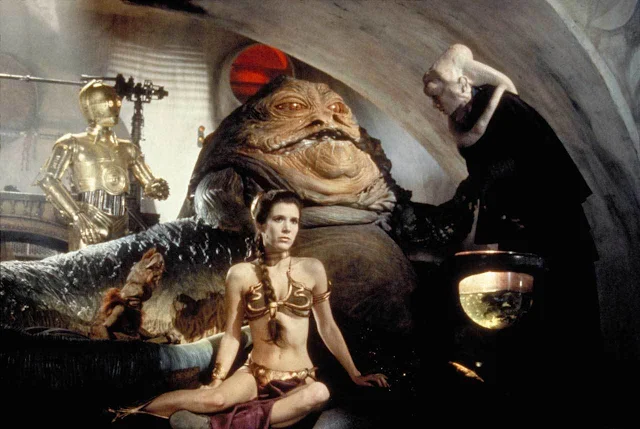


_poster.jpg)


