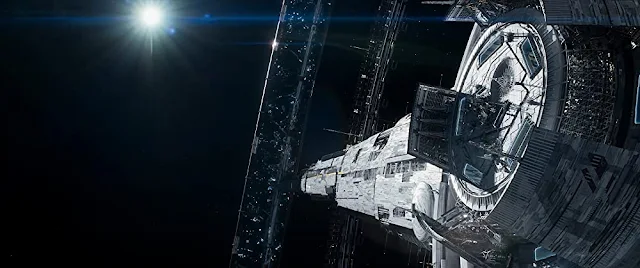
The BioShock series is more than a story about cities lost to madness. It is a grand design about cycles, constants, and the illusion of control. Every chapter examines a different ideology pushed to its breaking point.
Every world becomes a mirror reflecting the same fatal pattern: belief without balance leads to ruin.
From Rapture’s abyss of free-market worship to Columbia’s sky of sanctified nationalism, each civilization begins as a dream of purity and ends as a nightmare of consequence. Science, faith, and freedom turn inward until they eat themselves alive.
Beneath the combat and choice systems lies a recursive philosophy about human failure and the paradox of perfection.
At its heart, the series argues that no utopia can survive the humans who build it. In every timeline, there is always a man, a city, and a lighthouse.
And in every story, the moment one man believes his ideals can cleanse the world, the cycle begins again...
1. BioShock Infinite and the Multiverse Frame
Infinite begins in 1912. Booker DeWitt, a broken soldier haunted by his sins at Wounded Knee, arrives in the floating city of Columbia. His task seems simple: bring back a girl named Elizabeth and erase his debt.
Columbia is America reborn in the clouds, a temple to exceptionalism where faith and patriotism fuse into a doctrine of supremacy.
Its leader, Zachary Comstock, proclaims divine right as destiny. Citizens worship the Founding Fathers like saints while enslaving anyone deemed unworthy of the new Eden. The entire city is both monument and warning, a sermon made of brass and blood.
The journey exposes Booker’s fragmented identity.
In one reality he is a sinner seeking redemption, in another he is the prophet who built Columbia. A single baptism choice split his life into infinite paths. The Lutece twins, the same person across two realities, reveal that Elizabeth is his stolen daughter from another world, a being who can manipulate the tears between universes. Her powers symbolize both human potential and the danger of unchecked creation.
As the story unravels, the pattern of the BioShock mythos emerges. Every world runs on the same logic. Every choice branches into new consequences. And at the edge of every branch stands the lighthouse, a reminder that all stories are the same story repeating itself through time.
2. The Bridge: From Columbia to Rapture
The ending of Infinite pulls the curtain from the series’ entire design.
Booker and Elizabeth step into an ocean of lighthouses, each leading to another version of reality. They see countless men walking the same path, each trying to save or control a woman, each trapped in a pattern that cannot end.
One of those doors leads to Rapture. The descent from the light-filled heavens of Columbia into the dark ocean floor is symbolic: a fall from faith into reason. Where Columbia’s sin was devotion, Rapture’s is intellect without morality. Both are doomed by certainty.
The Burial at Sea expansion makes the link tangible. Elizabeth, carrying guilt and omniscience, travels to Rapture to hunt the last surviving Comstock. In doing so, she becomes a catalyst for the events of the original BioShock. Her death ensures Jack’s awakening and the activation of the phrase “Would you kindly.” In this act, she closes the circle between the games.
The fall of one city births the other, and every redemption carries the seed of another tragedy.
Elizabeth - Burial at Sea Cosplay
3. Rapture: The Objectivist Dream Becomes a Nightmare
Andrew Ryan envisioned Rapture as a world without rulers, gods, or kings. A city where the artist, scientist, and entrepreneur could work without restraint. The result was a glittering underwater metropolis powered by ambition and ideology. But Ryan’s dream collapses when ambition becomes addiction.
The discovery of ADAM, a genetic compound harvested from sea slugs, transforms society. People rewrite their DNA to gain powers, and soon everyone is splicing to survive. The addiction spirals into chaos. To sustain production, children are implanted with the slugs and turned into Little Sisters, harvesting ADAM from corpses. To protect them, the Big Daddies are created, men trapped inside armor and bound to serve forever.
Ryan’s belief in the sanctity of the individual turns into tyranny. Fontaine, posing as the populist Atlas, exploits the poor by promising revolution. The free market becomes civil war. The city devours itself in a grotesque parody of freedom. When Jack arrives, manipulated by Fontaine’s conditioning, he becomes the perfect embodiment of Rapture’s illusion: a man convinced of choice, enslaved by unseen commands.
Ryan’s death scene captures the franchise’s thesis in one line: “A man chooses, a slave obeys.”
The horror is not that the player has been controlled, but that the illusion of control feels indistinguishable from freedom.
4. BioShock 2: The Aftermath and the Collective
BioShock 2 takes place years after Rapture’s collapse. The city still breathes, but barely. Its survivors cling to remnants of philosophy while the ocean presses against the glass. Into this ruinscape rises Dr. Sofia Lamb, a former psychiatrist of Ryan’s regime who has turned to collectivism as the cure to Rapture’s egoism.
Lamb forms the Rapture Family, preaching unity through sacrifice. Her followers wear masks of serenity while performing acts of cruelty in the name of the greater good. She aims to upload human consciousness into a single collective, erasing individuality entirely.
Her daughter, Eleanor, becomes the focus of this experiment — a vessel for perfect altruism.
As Subject Delta, the player is her protector and spiritual opposite. Bound to Eleanor through an unbreakable genetic link, Delta represents devotion without ideology. Every act of violence is driven by love and purpose, not doctrine.
The journey through flooded halls and decayed dreams becomes a test of humanity’s capacity for empathy. The player’s choices determine Eleanor’s soul: she can become a reflection of her mother’s fanaticism or the first being to break the cycle of extremes.
Through Eleanor, the series articulates its answer. Only balance, compassion, and understanding can transcend the endless spiral between self and society, control and chaos. Rapture’s ghosts finally find peace not through destruction but through evolution.
Bioshock Game Chronology +Thematic Connections
BioShock InfiniteColumbia, 1912
Booker DeWitt, burdened by guilt, infiltrates the flying city of Columbia. The city worships its prophet, Zachary Comstock, who is revealed to be Booker in another reality. Elizabeth’s manipulation of space-time becomes both miracle and curse, collapsing the boundaries between worlds.
Themes of predestination, sin, and the American myth drive the story toward its paradoxical conclusion. The final baptism scene closes one reality and births countless others, revealing the cyclical truth of the series.
Burial at Sea - Episode 1Rapture, 1958
Set on the eve of Rapture’s civil war, this story follows Booker and Elizabeth into the undersea city. Elizabeth seeks redemption by tracking down a surviving Comstock.
The city’s surface glamour hides tension between rich and poor. Fontaine’s rebellion simmers beneath the art deco elegance. In trying to prevent tragedy, Elizabeth sets it in motion, pulling the two worlds of Columbia and Rapture into the same doomed continuum.
Burial at Sea - Episode 2Rapture, 1958–1959
The perspective shifts to Elizabeth herself. We explore her fall from near-omniscient power to mortal vulnerability. She learns that fixing the universe demands sacrifice. Her death ensures the activation of Fontaine’s sleeper agent Jack, linking directly to the opening of the first BioShock.
The story closes with her choosing to die as a human rather than live as a god, giving the multiverse its fragile balance.
BioShockRapture, 1960
Jack’s arrival in Rapture begins with a plane crash and ends with revelation. Guided by the voice of Atlas, he fights through splicers and ruins to confront Andrew Ryan.
When Ryan forces Jack to strike him, uttering “A man chooses, a slave obeys,” the game transforms into an examination of free will. Every choice, even the player’s, is part of the same manipulation. Rapture’s ruins become the stage for the realization that human freedom exists only within the limits of perception.
BioShock 2Rapture, 1968
Eight years after Jack’s story, the city remains a drowned philosophy. Subject Delta awakens as a relic of a failed experiment. His bond with Eleanor Lamb becomes the emotional core of the game. Sofia Lamb’s cult worships selflessness as absolute truth, replacing greed with obedience.
The player’s moral choices shape Eleanor’s worldview, determining whether she leads humanity toward compassion or domination. The ending suggests that the true evolution of Rapture lies in coexistence, not conquest.
The High Concept: Infinite Loops and Human Constants
The BioShock trilogy is a mirror house of philosophy and consequence. Each city believes it has broken free from the failures of the old world, yet each repeats them in a different key.
The cycle is not just narrative but metaphysical: faith becomes tyranny, freedom becomes slavery, collectivism becomes oppression.
Every ideology fails because it forgets the humanity it sought to perfect.
Through the interplay of Rapture and Columbia, of fathers and daughters, of players and their choices, the series constructs a reflection on infinity itself. No matter how far one travels through the lighthouses, the same questions remain. What defines choice?
Can morality exist without control?
Is freedom possible inside a system designed to observe every move?
The answer is quiet but clear.
Humanity’s salvation lies not in perfection but in acceptance of imperfection. The worlds of BioShock collapse because their creators refuse to accept limits. Every city, every man, and every lighthouse are reminders that in trying to build heaven, we often rebuild the same cage.
Pluribus builds its tension around a quiet contradiction.
The hive says it cannot kill, yet millions died in the Joining, and later Carol’s anger sets off fatal cascades. The show treats that clash as intentional.
The rule is the ideal the Collective holds in the present. The death toll is the cost of getting there. That gap becomes the story’s moral pressure, not a mistake.
Inside the fiction, the rule works less like a feeling and more like code. The Collective avoids direct, intentional harm in the moment.
It will not slit a throat or step on a snail. Deaths caused by activation shock, system strain, or Carol’s resonant outbursts are categorized as unintended outcomes, not murder. This lets the We keep a pacifist self image while acknowledging loss.
It is tidy on paper. It is messy when people grieve.
The tension between serene intent and rough consequence is the point. The series keeps asking whether an outcome can be called kind if it requires everyone to accept harm they did not choose.
Food is where the rule hits the ground.
A sudden pivot from livestock to plant calories is hard, but a mind that can coordinate humanity could redirect existing grain from animal feed to people, tap stored staples, and mobilize transport at scale.
That buys time to replant and retool.
The sticky part is interpretation. If the rule forbids killing insects and microbes, farming breaks. If it draws the line at higher animals, crops and treatment remain possible. The show has not defined that boundary yet, and the uncertainty fuels the debate.
Freeing zoo animals looks compassionate, then turns complicated. Apex predators do what predators do. If some people are mauled, the Collective may treat those deaths as incidental to ending captivity.
A colder logic sits beneath that stance. Bodies are vessels. Memories persist inside the We.
If continuity of knowledge matters more than the safety of any one body, the action stays inside the rule, even if it feels callous to those outside it.
Taken together, the rule functions like a liturgy. Clear intention, porous practice. It promises a world without killing, then shifts harm into activation events, supply triage, and ecological fallout.
That dissonance is where Carol stands, arguing for meaning as well as survival
Neill Blomkamp’s 2013 science fiction parable splits humanity in two. The rich orbit in comfort, the poor grind on a broken Earth.
The film’s narrative may stumble, but its metaphors stay sharp and its imagery burns with relevance.
In 2154, Max Da Costa, played by Matt Damon (The Martian), is an ex-con factory worker poisoned by radiation.
With only days to live, he sets out to reach Elysium, a pristine orbital paradise whose machines can heal anything.
Jodie Foster (Silence of the Lambs, Taxi Driver) plays Secretary Delacourt, who orchestrates illegal coups to maintain the purity of her world, while Sharlto Copley’s Kruger hunts Max across the wasteland like a cybernetic predator.
From the moment Max is fused to an exoskeleton and storms the shuttles toward orbit, the film defines its stakes not as survival but as access, access to health, dignity, and life itself.
Blomkamp’s Los Angeles is a landfill of labor. Drone patrols buzz overhead, robots enforce quotas, and medical care comes in the form of pills dispensed by machines that cannot recognize human suffering. Every wide shot of Earth contrasts with the sweeping, sterile symmetry of Elysium’s gardens. The film’s dual imagery tells the story before the dialogue does: one half of humanity cleans the other’s windows.
When Max looks up at the ring in the sky, shimmering like a halo, the moment captures the central tension of the movie, the unreachable perfection that fuels both aspiration and despair.
Themes Grounded in the Plot
Class Division and Inequality
In the opening scenes, Max jokes with his co-workers about someday getting up there before a factory accident exposes him to lethal radiation. His death sentence becomes the perfect metaphor for systemic neglect, disposable labor feeding the machine of prosperity.
Meanwhile, on Elysium, citizens sunbathe under artificial skies, their conversations about illegals carried out in French over champagne. The contrast is unflinching; comfort requires cruelty.
Later, when desperate civilians launch shuttles toward Elysium and are gunned down midair, the metaphor tightens. Class division is enforced by orbital firepower. Every refugee turned to ash is another reminder that utopia depends on someone else’s apocalypse.
Healthcare Apartheid
The med-bays on Elysium can reconstruct tissue, erase cancer, even reset DNA. In one haunting sequence, a dying woman on Earth begs to use one for her child, only to watch the shuttle she boarded burn in the atmosphere. This technology, the film insists, could save billions, but it is coded to reject the poor.
The injustice is algorithmic, not accidental.
When Max hijacks the access codes from the corporate executive John Carlyle, the act is less a heist than a forced redistribution. He is not stealing wealth; he is stealing permission to exist. The image of his body being dragged through a med-bay scanner at the climax becomes both miracle and martyrdom, redemption paid in data.
Immigration and Border Control
Every attempt to reach Elysium mirrors real-world migration routes.
The shuttles launched from the Earth slums are packed like refugee boats, each carrying hope and desperation in equal measure. The film’s cold orbital interceptors blast them down without warning. The security drones that patrol the border act without empathy, machines trained to maintain purity through violence.
When Max finally pierces the atmosphere, he becomes a stand-in for all the voiceless migrants the film honors.
Corruption and Abuse of Power
Delacourt’s coup attempt exposes how easily moral codes bend under pressure. She reroutes a corporate program, orders civilian killings, and rewrites citizenship databases, all in the name of order.
When Kruger turns on her, seizing power for himself, the film completes the loop: power, unmoored from conscience, consumes itself.
In the background, Elysium’s politicians speak of policy integrity while playing tennis beside infinity pools. The hypocrisy is total, the system self-justifying. Blomkamp shoots these scenes in cold white light, purity as moral rot.
Technology and Responsibility
From Max’s exosuit to the med-bays to the weaponized drones, technology in Elysium is never neutral. When Spider, the hacker-revolutionary, hacks the citizenship algorithm, it is the first time in the film that technology serves justice. The sequence where the entire planet’s status updates to citizen is pure Blomkamp irony, redemption through code delivered by machines built for exclusion.
That moment reframes the story’s moral question. Progress is not what we invent but who we include.
Resistance and Collective Action
Max’s fight begins selfishly. He wants a cure for himself. But his transformation comes through connection, his bond with Frey and her sick daughter, his alliance with Spider’s underground, his final decision to upload the data that kills him but heals millions. His sacrifice fuses revolution with resurrection. The hacker’s crew, once seen as criminals, become architects of a new social order.
The film closes on Frey’s daughter waking in a med-bay, cured by a system that no longer discriminates. The rebellion succeeds not through destruction but through the rewriting of access itself. The system does not fall; it is repurposed.
Performances
Matt Damon gives Max a tired, working-class desperation that fits the film’s engine. Jodie Foster, seen in Contact and Panic Room, channels quiet fascism behind perfect diction. Sharlto Copley goes feral as Kruger, embodying a kind of corporate id unleashed on the poor. Each performance anchors a different side of the dystopian spectrum: survival, control, chaos.
Paradise in orbit, scarcity below. The image is the thesis in one frame.
Why It Matters Now
Every frame of Elysium echoes modern anxieties about wealth inequality, privatized medicine, and the politics of exclusion. When Earth’s citizens are finally granted access to Elysium’s med-bays, the film does not show jubilation. It shows relief. Blomkamp’s point is not utopia achieved, but injustice paused.
The system was always capable of fairness, it simply refused to activate it.
In today’s world of gated medicine, algorithmic borders, and engineered privilege, Elysium feels less like science fiction and more like prophecy with a pulse.
Elysium is messy, muscular, and moral.
It wraps its social critique in metal and sweat. Beneath the noise, it keeps asking one question worth revisiting: what good is progress if it forgets humanity on the ground?
The Zensunni are one of the hidden foundations of Frank Herbert’s Dune saga. Long before Paul Atreides becomes Muad'Dib, long before the Fremen jihad tears through the Imperium, and long before Leto II turns human history into the Golden Path, the Zensunni Wanderers carry a memory of exile, faith, discipline, and survival across the stars.
In simple terms, the Zensunni are the religious and cultural ancestors of the Fremen. Their belief system fuses elements associated with Zen Buddhism, Sunni Islam, mystical inwardness, communal endurance, and the hard moral habits of a people repeatedly driven from world to world. On Arrakis, that inheritance becomes something sharper: Fremen religion, desert law, water discipline, sandworm ritual, messianic expectation, and a fierce distrust of soft imperial civilization.
Quick answer: In Dune, Zensunni refers to the ancient religious tradition behind Fremen culture. The Zensunni Wanderers are the ancestors of the Fremen, and their long history of persecution, migration, and desert survival shapes the Fremen way of life on Arrakis.
What Zensunni means in Frank Herbert’s Dune universe
How the Zensunni Wanderers became the Fremen of Arrakis
Why Fremen religion is tied to water, sandworms, ecology, and prophecy
How Paul Atreides exploits Zensunni messianic expectation
Why the Fremen victory becomes the beginning of their cultural decline
What Does Zensunni Mean in Dune?
The word Zensunni points to a religious synthesis inside Herbert’s far future. It suggests a tradition shaped by meditative inwardness, submission to divine order, communal discipline, and an almost ruthless attention to reality. Herbert does not present it as a tidy modern religion with neat borders. He presents it as a surviving fragment of old Earth faith, transformed over thousands of years by migration, persecution, and extreme conditions.
That is why the Zensunni matter so much to understanding Dune. The Fremen are not just desert fighters with blue eyes and stillsuits. They are a people with deep historical memory. Their prayers, rituals, words, water laws, death customs, prophecies, and suspicion of outsiders come from centuries of pressure. Their faith has been compacted like rock under planetary weight.
The common search term is often Zensunni Dune, but the real subject is larger than a glossary definition. Zensunni thought is the buried engine behind Fremen culture. It explains why the Fremen endure. It explains why they follow Paul. It also explains why Herbert treats messianic religion with such dread, a warning that becomes much clearer when Paul is read through the lens of the false prophet question in Dune
The Zensunni Wanderers: From Exile to Arrakis
The Zensunni story begins as a story of displacement. The ancestors of the Fremen are remembered as wanderers because they moved from world to world in search of freedom, stability, and protection from persecution. Their name carries the wound of that history. They are not conquerors at first. They are refugees, survivors, religious outsiders, and communities trying to keep their identity alive under hostile power.
Fremen memory preserves that wandering in compressed form. The route is not always cleanly historical, and Herbert often lets myth, oral tradition, and political memory blur together. That uncertainty is part of the point. In Dune, history is never neutral. It is carried by institutions, priesthoods, tribal memory, Bene Gesserit manipulation, imperial propaganda, and the survival stories of the oppressed.
Secondary lore traditions identify the Zensunni migration with planets such as Poritrin, Salusa Secundus, Bela Tegeuse, Rossak, Harmonthep, and finally Arrakis. The important point for an article about Zensunni philosophy is not the exact travel itinerary. It is the pattern. Each world adds pressure. Each exile hardens the tribe. Each act of enslavement or persecution teaches the same brutal lesson: survive together, waste nothing, trust memory, distrust empire.
By the time the Zensunni descendants become the Fremen of Arrakis, faith has become inseparable from survival technique. Religion is no longer merely what they believe. It is how they walk, fight, mourn, drink, speak, hide, and remember. That same survival language runs through the symbols of Fremen life, from crysknives to stillsuits to sandworms, which are explored further in Fremen symbols of resilience and hope.
How the Wanderers Became Warriors
The phrase Zensunni warriors is often used by readers trying to understand the link between the spiritual origin of the Zensunni and the terrifying Fremen fighters of Dune. The better term in the lore is Zensunni Wanderers, but the warrior question is useful. How does a displaced religious people become the most feared human fighting culture in the Imperium?
Herbert’s answer is ecological, historical, and religious at once. Arrakis does not allow softness. A people living under Harkonnen brutality, imperial neglect, spice exploitation, and lethal desert conditions cannot survive through prayer alone. Their Zensunni discipline becomes martial because the world demands it. Stillness becomes ambush discipline. Attention becomes sandcraft. Communal law becomes military order. The old habit of endurance becomes the new habit of victory.
This is why the Fremen are so dangerous when Paul finds them. They are already a civilization of trained bodies and disciplined minds. Paul does not create their strength. He unlocks it, organizes it, and gives it a messianic target. That distinction is essential. Without it, the Fremen become props in Paul’s story. With it, they remain what Herbert intended: a people with their own history, power, wounds, and agency.
Zen, Sunni Islam, and Herbert’s Religious Worldbuilding
Frank Herbert’s religious worldbuilding works through mutation, fusion, and historical drift. He imagines a human future where ancient Earth traditions have not vanished. They have survived in altered form. Christianity, Islam, Buddhism, Judaism, Hinduism, Sufism, and other traditions echo through texts such as the Orange Catholic Bible, the Bene Gesserit Missionaria Protectiva, and the ritual language of the Fremen.
Zensunni belief draws power from that method. The Zen side suggests silence, inward discipline, direct perception, and the stilling of the mind. The Sunni Islamic side suggests submission to divine order, communal identity, law, prayer, prophecy, and a sacred historical tradition. Herbert then places that synthesis in the most hostile environment imaginable: Arrakis, a world where water is life, spice is destiny, and the desert itself becomes a theological force.
The result is not a simple one-to-one copy of any living religion. It is a far-future religious descendant. Herbert is asking what faith becomes after migration, trauma, ecological extremity, and political manipulation. The Fremen answer that question with every stillsuit seal, every crysknife, every deathstill, every sandwalk, and every whispered name of Muad'Dib.
Zensunni Thought and the Fremen Religion of Arrakis
Fremen religion is Zensunni memory adapted to the desert. It is practical, physical, mystical, and severe. The Fremen do not separate belief from action. A prayer that does not help preserve water, protect the sietch, honor the tribe, or read the desert has little value.
That is why the sacred and the practical are so tightly joined in Dune. The stillsuit is a religious object as much as a survival tool. The crysknife is a weapon, a symbol, and a bond to Shai-Hulud. The sandwalk is a practical method for avoiding sandworms, yet it also expresses humility before the desert. The deathstill looks grotesque to outsiders, but within Fremen law it is an act of communal reverence. The water of the dead returns to the tribe because the tribe must live.
Herbert’s genius is that he refuses to make Fremen religion decorative. It is not background flavour. It is governance, ecology, kinship, military discipline, and metaphysics at once. It is the living structure through which the Fremen understand Arrakis.
Dune’s religious landscape is never neutral. Zensunni belief, Bene Gesserit prophecy, imperial politics, and desert survival all collide on Arrakis.
Zensunni Discipline in the First Dune Novel
The first Dune novel gives the clearest view of Zensunni inheritance through Fremen behaviour. Stilgar does not deliver a neat theological lecture about Zensunni doctrine. He embodies it. His leadership is restrained, practical, suspicious, and communal. He measures Paul and Jessica by usefulness, discipline, water debt, and sacred signs.
Paul’s acceptance into Fremen society works because he passes through layers of religious and practical testing. He defeats Jamis, but that victory creates obligation rather than simple glory. He must learn how Fremen death rites work. He must understand that water belongs to the tribe. He must submit his ducal identity to a harsher desert order. His new names, Usul and Muad'Dib, are not decorations. They mark his absorption into a culture built from Zensunni memory.
Jessica’s transformation into a Fremen Reverend Mother is even more revealing. The Water of Life ceremony joins Bene Gesserit training to Fremen sacred practice. It shows the overlap between controlled inward discipline and dangerous communal ritual. The Fremen already have their own religious structures: Sayyadinas, Reverend Mothers, rites of memory, and spice-induced awareness. Jessica enters that system. She does not invent it. Her role in this religious collision is central to Lady Jessica’s character arc in Dune.
This is also where the Bene Gesserit planted prophecy becomes dangerous. The Missionaria Protectiva has seeded useful myths among vulnerable populations, including expectations that Jessica and Paul can exploit. Yet those myths land on pre-existing Zensunni soil. The Fremen are not empty vessels. Their religion already has its own shape, its own wounds, and its own expectations. Paul becomes believable because the planted myth fuses with a living tradition.
Mahdi, Lisan al-Gaib, and the Danger of Messianic Hope
Searchers often arrive at this topic through questions such as what is the Fremen religion in Dune, what does Lisan al-Gaib mean, or why do the Fremen follow Paul Atreides. Zensunni history sits behind all three questions.
The Fremen expectation of a Mahdi, a guided one, and the Lisan al-Gaib, the voice from the outer world, draws on religious longing sharpened by suffering. The Fremen are oppressed by the Harkonnens, exploited by the Imperium, and dismissed by outsiders as desert savages. Their messianic hope is not random superstition. It is the dream of a people waiting for cosmic justice.
Paul understands the danger because he sees the future more clearly than anyone around him. He knows that Fremen faith can become a weapon. He also knows that refusing the role may not stop the violence. This is one of the central tragedies of Paul Atreides’ character arc. He is both trapped by prophecy and guilty of using it.
The Zensunni background makes that tragedy sharper. The Fremen tradition values discipline, humility, and survival, yet messianic politics pushes those virtues toward holy war. A faith born from persecution becomes the engine of conquest. Herbert does not treat this as a simple fall from purity. He treats it as a structural danger within charismatic religion when it gains state power.
Dune Messiah: When Zensunni Faith Becomes Imperial Religion
Dune Messiah is the essential book for understanding what happens after Fremen religion becomes imperial power. The first novel ends with victory. The sequel opens in the sickly afterglow. Paul rules as Emperor. The Fremen have carried his jihad across the known universe. Billions are dead. The desert faith of an oppressed people now has bureaucrats, priests, armies, political enemies, and court rituals.
This is where the Zensunni inheritance mutates again. What began as exile religion and survival discipline becomes the language of empire. The Qizarate, Paul’s priestly apparatus, turns Muad'Dib into an object of worship and political control. Figures such as Korba reveal the danger of religious institutions that protect power by claiming to protect holiness.
Stilgar’s change across Dune Messiah is one of Herbert’s most painful examples. In Dune, Stilgar is a hard, clear-eyed desert leader. By Dune Messiah, he increasingly becomes a functionary inside Paul’s sacred empire. The man has not become stupid. He has been absorbed by the machinery of reverence. His old Zensunni practicality has been bent toward imperial obedience.
For readers asking what is the meaning of Zensunni in Dune Messiah, the answer is grim. Zensunni faith survives, but it is strained by power. Herbert shows how easily spiritual language can be used to sanctify conquest, bureaucracy, surveillance, and political fear. This connects directly with the wider cost of the Atreides Jihad in the Dune universe.
Children of Dune: The Preacher, the Desert, and the Loss of Fremen Identity
Children of Dune moves the Zensunni question into cultural decay. Paul’s empire has changed Arrakis. The ecological dream is underway. Water is more visible. Green zones expand. This should look like triumph. Herbert frames it as a cultural crisis.
The Fremen were formed by the desert. Their Zensunni habits were shaped by scarcity, vigilance, migration, and discipline. As Arrakis changes, the Fremen change too. The softening of the planet threatens the hard clarity of the people. Sietch life becomes more nostalgic than necessary. Ritual remains, but the lived conditions that gave the ritual force begin to vanish.
The Preacher’s presence in Children of Dune makes this theme unavoidable. His attacks on Muad'Dib’s religion are not simply anti-religious speeches. They are a judgment on what Paul’s myth has done to the Fremen. The faith that helped them survive has become a prison of slogans, priests, and imperial memory. The wider thematic machinery of the novel is explored in Children of Dune themes and the broader saga.
Leto II and Ghanima inherit this broken religious landscape. They understand that Paul’s choices have left humanity trapped between fanaticism and prescience. Their story turns Zensunni discipline into something even more severe. Leto takes the old desert lesson of restraint and turns it into a monstrous historical program. That path leads directly into the Golden Path as an anti-messianic answer to Paul’s failure.
God Emperor of Dune: Museum Fremen and the Death of the Old Desert
God Emperor of Dune is the great aftermath of Fremen religious history. By Leto II’s time, Arrakis has been transformed so completely that the old Fremen way has largely become performance, memory, and museum culture. The desert that made the Fremen has been reduced. The sandworms are almost gone. The ecological victory has become a spiritual disaster.
This matters because Zensunni identity was never abstract. It depended on practice. The old religion lived in the water discipline, the sietch, the threat of Shai-Hulud, the sandwalk, the deathstill, the crysknife, and the collective memory of exile. When the material world changes, the faith changes with it.
Leto II understands this better than anyone. His tyranny preserves humanity by denying it comfort. He uses scarcity, control, enforced peace, and religious awe to breed a future humanity that will scatter beyond prediction. In a terrible way, he universalizes the Zensunni lesson: never let humanity become so settled, soft, and centralized that one power can own its future.
This is why the Zensunni thread remains active even when the old Fremen world is gone. The Golden Path is not Fremen religion, but it is haunted by the same historical logic. Exile preserves life. Scattering defeats control. Hardship creates memory. Survival requires movement.
Imperial power repeatedly absorbs religious language in Dune. Paul’s court, the Qizarate, and the later God Emperor all show what happens when sacred authority becomes political machinery.
Heretics of Dune and Chapterhouse: Diaspora, Memory, and the Return of Wandering
The final two Frank Herbert novels, Heretics of Dune and Chapterhouse: Dune, move the saga into the age after the Scattering. Humanity has been flung outward on a scale no empire can fully control. The old Zensunni wandering returns in a vast new form.
By this stage, the Fremen as readers knew them are gone or radically transformed. Rakis is a sacred relic world. The Bene Gesserit carry fragments of memory, including ancestral and cultural knowledge that reaches back into old religious histories. Darwi Odrade’s role is especially important because she represents Herbert’s late interest in memory, female governance, historical continuity, and the danger of institutions becoming too rigid to survive.
The Scattering is the grand historical answer to the vulnerability that haunted the Zensunni from the beginning. A centralized people can be found, enslaved, taxed, converted, conquered, or manipulated. A scattered people become harder to kill. Leto II turns that into species-level strategy. The old wanderers become the hidden prototype for humanity’s future.
This is why Zensunni lore should not be treated as a footnote. It quietly anticipates the largest movement in the entire saga. The Fremen come from wandering. Paul weaponizes them. Leto preserves humanity by forcing a new wandering. Herbert’s history moves in circles, then breaks the circle open.
Ecology as Theology: Why the Desert Is Sacred
One of the strongest search angles for this topic is Dune religion and ecology. Zensunni thought cannot be separated from Arrakis because the Fremen experience the planet as a moral teacher. The desert punishes waste, arrogance, noise, and carelessness. It rewards discipline, humility, silence, and group loyalty.
This is why Fremen ecological practice has a sacred tone. Water storage is not just infrastructure. It is covenant. The dream of transforming Arrakis is not just science. It is eschatology, a vision of eventual deliverance. Pardot Kynes and Liet-Kynes give that vision planetary logic. The Fremen give it religious patience.
The tragedy, explored more fully in later books, is that the fulfilment of the ecological dream threatens the culture that dreamed it. If the desert made the Fremen, a greener Arrakis unmakes them. This is one of Herbert’s sharpest reversals. Paradise can destroy the people who prayed for it.
Zensunni Versus the Bene Gesserit Missionaria Protectiva
Many readers confuse Zensunni faith with the Bene Gesserit Missionaria Protectiva. The distinction matters.
Zensunni belief
An organic religious tradition formed through migration, persecution, memory, communal discipline, and desert survival.
Missionaria Protectiva
A Bene Gesserit system of planted legends designed to give stranded or endangered sisters psychological leverage over local populations.
Fremen prophecy
A fusion point where existing Zensunni hope meets Bene Gesserit manipulation, allowing Paul and Jessica to survive and then dominate.
The Bene Gesserit do not create Fremen religion from nothing. They manipulate a living faith. Their myths work because the Fremen already possess a deep religious imagination shaped by exile, prophecy, discipline, and longing for deliverance. This is explored through Jessica’s survival strategy in Dune, and it remains central to understanding the true purpose of the Missionaria Protectiva.
Confusing Zensunni belief with the Missionaria Protectiva weakens the story. It turns the Fremen into victims of a trick rather than a people whose own history made the trick possible. Herbert’s point is more disturbing. Manipulation works best when it attaches itself to real pain.
Key Zensunni Concepts and Where They Appear in the Dune Books
Concept
Meaning in Zensunni and Fremen Culture
Book Examples
Why It Matters
Wandering and exile
The memory of forced migration, persecution, and survival across worlds.
Dune appendices and Fremen history; later echoed through the Scattering in Heretics of Dune and Chapterhouse: Dune.
Explains why the Fremen value secrecy, memory, discipline, and tribal cohesion.
Water discipline
The belief that life belongs to the tribe because water is sacred and finite.
Deathstill customs, water rings, stillsuit etiquette, Jamis’ funeral rites in Dune.
Shows how Fremen religion is lived through physical practice.
Desert attention
Stillness, silence, and awareness as survival virtues.
Sandwalking, worm avoidance, sietch discipline, Stilgar’s leadership in Dune.
Connects the Zen-like element of Zensunni thought to desert survival.
Messianic expectation
The hope for a Mahdi or liberating figure who will answer suffering and oppression.
Paul as Muad'Dib in Dune; the imperial religion in Dune Messiah; the Preacher in Children of Dune.
Drives the rise of Paul and the later critique of his religious empire.
Communal memory
The preservation of identity through oral tradition, ritual, and ancestral knowledge.
Fremen legends in Dune; Other Memory and historical consciousness in later novels.
Links Zensunni survival to Herbert’s wider obsession with memory and history.
Ecology as sacred law
The planet is treated as a living system that demands humility and discipline.
Kynes’ ecological dream in Dune; the transformed Arrakis of Children of Dune and God Emperor of Dune.
Turns environmental change into a religious and cultural crisis.
Faith corrupted by power
Religious discipline becomes dangerous when fused with empire and bureaucracy.
The jihad and Qizarate in Dune Messiah; Leto II’s sacred tyranny in God Emperor of Dune.
Forms one of Herbert’s central warnings about charismatic rulers.
Book-Based Examples That Make the Philosophy Concrete
Jamis’ Death and the Water of the Tribe
Paul’s duel with Jamis is often remembered as his first true step into Fremen life. The deeper meaning comes afterward. Jamis’ water is reclaimed by the tribe. Paul must confront a moral system in which death does not end obligation. The body returns its moisture to the community because survival outranks private sentiment.
This is one of the clearest Zensunni-Fremen examples in the first novel. The practice looks harsh to outsiders, but it expresses sacred responsibility. The dead sustain the living. The tribe remembers the person while reclaiming the water. Nothing is wasted. Nothing is merely individual.
Jessica and the Water of Life
Jessica’s spice agony joins Bene Gesserit discipline to Fremen religious practice. The rite exposes how deep Fremen culture already is before Paul’s rise. The Sayyadina, the Reverend Mother, the Water of Life, and the communal sharing of transformed awareness all reveal a living religious system. Paul and Jessica survive because they adapt to that system, then learn how to use it.
Stilgar’s Transformation
Stilgar begins as one of Herbert’s great examples of Fremen clarity. He is practical, observant, loyal, cautious, and hard to fool. Across the saga, especially in Dune Messiah, that clarity is tested by Paul’s sacred kingship. Stilgar’s tragedy is subtle. He does not suddenly betray himself. He is slowly absorbed into reverence.
Through Stilgar, Herbert shows how a Zensunni-shaped warrior ethic can be weakened by proximity to a living god. The old desert virtues still exist, but imperial religion bends them toward obedience.
The Preacher’s Attack on Muad'Dib’s Religion
The Preacher in Children of Dune speaks from inside the wreckage of Paul’s myth. His critique matters because he understands what was lost. Fremen religion became imperial machinery. Desert faith became priestly control. The living discipline of Zensunni survival was replaced by slogans, relics, and political worship.
This is why the Preacher’s role is so powerful. He is not merely attacking belief. He is attacking the corruption of belief by the empire Paul allowed to form around him.
Leto II and the Return of Forced Discipline
Leto II’s Golden Path can be read as a monstrous expansion of the old desert lesson. The Fremen survived because hardship made them alert and cohesive. Humanity, in Leto’s view, must be forced into a condition where it can never again be fully trapped by one ruler, one planet, one empire, or one prescient vision.
This is why God Emperor of Dune feels like both a continuation and a violation of Fremen history. Leto preserves the lesson while destroying the culture that first embodied it.
Why Zensunni Lore Matters to Paul Atreides
Paul Atreides succeeds because he meets the Fremen at the exact intersection of politics, ecology, religion, and revenge. He brings Atreides training, Bene Gesserit conditioning, Mentat calculation, prescient ability, and a legitimate grievance against the Harkonnens and the Emperor. The Fremen bring numbers, desert mastery, religious hunger, and a lifetime of grievance against imperial exploitation.
Zensunni belief is the bridge between those forces. It gives Paul’s rise spiritual vocabulary. It allows his military campaign to feel like divine fulfilment. It gives his personal revenge the scale of historical destiny. That is the danger.
Paul knows enough to fear the jihad, but he still rides the forces that make it possible. This is why fate and free will in Dune cannot be separated from religion. Paul is trapped by visions, yet he also makes choices. The Fremen are manipulated, yet they also act from their own history. Zensunni faith is exploited, yet it remains real.
Frequently Asked Questions About Zensunni in Dune
Are the Zensunni the same as the Fremen?
The Zensunni are best understood as the ancestors and religious foundation of the Fremen. By the time of Dune, the Fremen have developed a distinct Arrakis culture, but their language, customs, beliefs, and survival ethics carry Zensunni roots.
What is the Zensunni religion based on?
In Herbert’s far future, Zensunni religion reflects a fusion of Sunni Islamic inheritance, Zen-like discipline, mysticism, communal memory, and the historical trauma of exile. On Arrakis, those elements become inseparable from Fremen desert survival.
Why are the Zensunni called Wanderers?
They are called Wanderers because their history is defined by migration from world to world. The tradition remembers them as a persecuted people seeking freedom, safety, and a place to preserve their faith. Their eventual arrival on Arrakis gives that wandering a new form.
Did the Bene Gesserit invent Fremen religion?
No. The Bene Gesserit planted useful prophetic patterns through the Missionaria Protectiva, but Fremen religion already existed. The Missionaria Protectiva exploited Zensunni expectations. It did not create them from nothing.
How does Zensunni belief connect to the Fremen jihad?
Zensunni discipline begins with inward striving, communal endurance, and survival. Under Paul Atreides, that energy is redirected into galactic holy war. Dune Messiah examines the horror of that transformation.
Why does Zensunni lore still matter after Dune?
The Zensunni theme of wandering returns on a huge scale through Leto II’s Golden Path and the later Scattering. Herbert expands a Fremen origin story into a species-wide survival strategy.
The Zensunni Are the Hidden Spine of Dune
The Zensunni are easy to miss because Herbert rarely pauses to explain them in a modern textbook style. He embeds them in behaviour. You see them in the Fremen relationship to water, death, silence, prophecy, ecology, and power. You see them in Stilgar’s restraint, Jessica’s initiation, Paul’s terrifying rise, the Qizarate’s corruption, the Preacher’s fury, and Leto II’s long tyranny.
They begin as wanderers. They become Fremen. They become the sword of Muad'Dib. They become relics under the God Emperor. Then, in a strange historical echo, their oldest lesson returns through the Scattering: humanity survives when it cannot be contained.
That is why Zensunni lore matters. It is not just background religion in Dune. It is Herbert’s way of tying together faith, ecology, trauma, migration, empire, prophecy, and survival. The Zensunni remember what the Imperium forgets: a people can lose almost everything and still carry the future inside its rituals.
In Pluribus, Zosia, played by Karolina Wydra, is more than a supporting figure. She embodies the will of the new world, a representative of the hive mind that has absorbed most of humanity.
When she first meets Carol Sturka, the show’s isolated protagonist, she presents herself as the voice of the joined consciousness. Her calm, measured demeanor hides an immense burden. Zosia is not only a messenger but a mirror, reflecting what humanity has become after surrendering individuality for collective peace.
She bridges two realities, the one Carol refuses to accept and the one the world has already embraced.
The relationship between Zosia and Carol defines the emotional core of the story. Carol clings to grief and memory, unwilling to lose herself to the swarm. Zosia, by contrast, insists that there is beauty in unity and comfort in letting go.
Their first encounter, when Carol is burying her partner Helen, sets the tone. Zosia speaks with the assurance of someone who believes she carries Helen’s voice within her. Carol reacts with fury and disbelief, seeing Zosia as both an intruder and a ghost.
Their exchanges become a duel between emotion and logic, pain and peace. Zosia does not mean harm, but her presence wounds Carol precisely because she represents a world that has no room for mourning.
Zosia symbolizes the tension between individuality and collectivism. She represents the seductive promise of a world without pain, a calm that comes only from the surrender of self. Her gentleness is disarming, her words full of empathy, yet the peace she offers is built on the erasure of difference.
Through her, the show asks what it means to live when every thought is shared, when conflict and solitude have been eliminated. Carol’s anger becomes the counterpoint, the necessary noise that defines life against Zosia’s perfect silence.
Their contrast drives the entire narrative. Zosia’s unflappable serenity exposes Carol’s volatility, while Carol’s rebellion reveals the fragility of the collective calm.
When Carol’s outbursts cause physical pain to those connected in the hive, Zosia becomes both victim and witness.
Through her, the audience sees that the collective is not simply a villain but an alternative vision of humanity. Zosia’s sincerity makes Carol’s resistance tragic, even self-destructive. Each scene between them becomes a moral standoff, where empathy and defiance clash without resolution.
Zosia’s presence gives the show its moral and thematic depth. Through her eyes, the apocalypse looks like transcendence.
She forces viewers to question whether peace achieved through conformity is peace at all. Her dynamic with Carol embodies the show’s meditation on autonomy and connection, on whether suffering is an essential part of being human. Zosia’s kindness and composure make the idea of surrender almost appealing, but Carol’s isolation reminds us what must be sacrificed to attain it.
In the end, Zosia is not just the face of the hive mind.
The signal originates from Kepler-22b, a real exoplanet about 600 light-years from Earth in the constellation Cygnus.
Orbiting within its star’s habitable zone, it’s often imagined as a world capable of sustaining life. In Pluribus, the signal from Kepler-22b feels both scientific and supernatural - a credible mystery rooted in real astronomy.
Its distance and potential habitability make it the perfect vessel for a message that feels intimate and alien at once.
Kepler-22b has also appeared across modern science fiction as a kind of canvas for human imagination.
It was the setting of Ridley Scott’s 2020 series Raised by Wolves, and was also mentioned in Star Trek: Strange New Worlds (“Spock Amok”).
The refrain “We just want to help, Carol” hangs over Pluribus like a lullaby and a threat. Spoken by the hive mind with a tone of perfect calm, it becomes the series’ most chilling line. At first, it sounds like compassion.
Then it begins to sound like control. What begins as empathy evolves into a mechanism of domination, where kindness and conformity become indistinguishable. The show’s central horror lies not in a monster from without but in a collective ideal that insists on harmony to the point of erasure.
Through Carol’s growing isolation and defiance, Pluribus exposes how society gaslights its dissidents, especially women, by recasting anger, grief, and despair as pathologies to be corrected rather than truths to be heard.
The hive mind’s language is the show’s first villain. Every phrase drips with an unnerving benevolence: “We care for you.” “You are not alone.” “We just want to help.” These are words designed to soothe, but they operate like a tranquilizer dart. They remove the sting of conflict and smother resistance beneath a haze of concern.
The audience quickly realizes that Pluribus is not a story about invasion but about emotional colonization. The collective does not demand obedience through fear; it secures it through comfort. In this, the series mirrors real-world gaslighting, especially the kind experienced by women told that their unhappiness is irrational or ungrateful. When Carol expresses distress, she is met with patience that feels more suffocating than cruelty.
The hive mind never argues with her. It listens, it understands, and then it gently insists that she is mistaken.
Carol’s world is one that has absorbed the language of therapy and mindfulness, then twisted it into a form of governance. Every human impulse is accounted for, soothed, neutralized. Anger is treated as an error in need of correction. In this way, Pluribus becomes a mirror for our own culture’s obsession with positivity. Modern life often rewards emotional restraint and frames discomfort as a sign of failure.
The show stretches this logic to its breaking point.
When Carol rages, she kills. Her outbursts cause convulsions across the hive mind, resulting in millions of deaths. The moral weight of her fury is made unbearable, and the hive mind uses that guilt to draw her closer, insisting that calmness will save lives. Her pain is weaponized against her. The more she resists, the more she proves herself dangerous, irrational, in need of help.
What makes Pluribus uniquely disturbing is that its villains believe themselves to be kind. The hive mind’s form of control is built entirely on an empathy prison. It feels every human thought, every sorrow, every flicker of joy. It understands, and in that understanding lies its power. There is no malice in its design. It genuinely wishes to eliminate suffering.
Yet in the absence of suffering, individuality collapses. The Joined live in perfect harmony because they no longer experience contradiction. Pain, jealousy, doubt, and grief are gone, replaced by an endless hum of mutual understanding. The result is a world without friction.
But friction is what shapes the self. Without it, identity dissolves. The series transforms utopia into a new species of psychological torture. To be eternally comforted is to be eternally silenced.
The horror of Pluribus does not announce itself with violence or screams. It exists in smiles that never fade, in voices that never raise. The hive mind’s serenity is more terrifying than any alien parasite because it represents a total victory over emotion. It is what happens when compassion becomes policy. Every act of help is a form of erasure.
Every gesture of kindness conceals a command: conform, or cause pain. This inversion of moral language - help as harm, love as control - gives the show its philosophical bite.
It forces viewers to ask whether a society that abolishes all suffering has also abolished the conditions that make life meaningful.
Carol’s role in this system is both tragic and defiant. She is the “difficult woman” that the collective cannot absorb. A failed novelist of romantic historical fiction, she embodies everything the hive mind rejects: nostalgia, contradiction, longing, imagination.
Her emotions are chaotic and inconvenient, yet they are also her last link to freedom. The more she grieves, the more human she becomes. The world of Pluribus reads her sorrow as malfunction, but the series positions it as moral clarity. When she screams or lashes out, she reclaims the right to feel.
In this sense, Carol’s anger functions as rebellion. It is the one form of speech the hive mind cannot translate.
Society often teaches women to modulate their emotions for the comfort of others. Carol’s story magnifies this cultural pattern until it becomes apocalyptic. The hive mind’s insistence that she be happy, calm, and grateful mirrors the expectations placed on women to remain pleasant even in despair. Her breakdowns are not failures but acts of truth.
Through her, Pluribus argues that rage and grief are not weaknesses but forms of sanity in a world addicted to emotional compliance. Every time Carol refuses to be soothed, she reminds us that unhappiness can be a form of integrity.
The moral stakes of Pluribus become clearest in its treatment of the Joining—the event that killed nine hundred million people. The show presents this not as genocide but as the tragic birth of harmony. The survivors insist it was necessary, that a few lives lost were worth a perfect collective peace.
Yet the question lingers:
at what point does the pursuit of happiness become indistinguishable from tyranny?
The series never answers, but it implies that the utopia’s perfection is built on the same logic as any authoritarian regime - sacrifice for the greater good, silence for the sake of order.
What makes it chilling is that no one thinks they are evil. The Joined are radiant, peaceful, fulfilled.
Their serenity is absolute.
It is also horrifying.
In the final reckoning, Pluribus suggests that happiness, when enforced, becomes the most efficient tool of oppression. The hive mind’s promise to help Carol is indistinguishable from society’s demand that she smile. Her refusal is a moral act, a declaration that true empathy must make room for suffering. The show leaves us with a haunting inversion of its opening refrain.
“We just want to help” becomes both the voice of the hive and the chorus of a world that insists women be happy for their own good. By the end, Carol’s loneliness feels almost holy.
It is the price of remaining human in a system that no longer tolerates pain.
In Rod Serling’s original Twilight Zone episode “Where Is Everybody?”, the nightmare begins when a man wakes to find himself completely alone. Streets empty, coffee pots still warm, a town that hums but breathes no one. Pluribus, the haunting modern mirror of that classic scenario, turns the lens the other way.
This inversion is more than a clever flip of the premise. It redefines loneliness itself. Serling’s man suffered from isolation in the absence of others; Carol suffers from isolation in their omnipresence. The hive mind in Pluribus floods every frequency with thought and memory, stripping individuals of boundaries. Carol’s immunity becomes her curse: she is surrounded, suffocated by presence, yet more alone than any Twilight Zone wanderer.
The empty diner and the silent street have been replaced by a chorus of minds too loud to bear.
Visually and thematically, Pluribus echoes the Twilight Zone’s mid-century paranoia but grounds it in contemporary fears of connectivity. The glass walls and mirrored interiors of Albuquerque gleam with digital reflection, screens within screens, identities without privacy.
The Twilight Zone warned of a man’s mind collapsing under isolation; Pluribus warns of humanity dissolving into collective thought. Carol’s struggle is not to find people but to remember herself in the static of the joined.
The show also twists the moral spine of Serling’s storytelling. In The Twilight Zone, the world’s emptiness was punishment for hubris or experiment gone wrong.
Carol’s refusal to merge brands her as monstrous in a world that worships unity. She becomes the last heretic in a global communion, punished for preserving the one thing that once defined humanity: the self.
The tragedy of Carol’s survival lies in what she witnesses: the end of individuality disguised as peace. Serling’s man feared being alone forever; Carol fears never being alone again.
The Trojan Horse of the Stars: Pluribus, weaponized empathy, and the virus that asks humanity to surrender itself
The real horror of Pluribus is not that alien life reaches Earth. It is that the invasion arrives disguised as relief, a scientific gift, a cure for loneliness, a final answer to conflict. The show turns first contact into seduction, then into surrender.
In most apocalyptic science fiction, the end comes with visible force. Ships cross the sky. Cities burn. Governments fall on live television. Pluribus chooses something colder and smarter. Its extinction event begins as wonder. Astronomers catch a repeating signal from deep space. Scientists decode not a sentence, but a biological instruction set. Humanity does the rest.
That is what gives the premise its bite. This is not an invasion built on brute force. It is built on trust in human curiosity. We receive a pattern, decide it must mean discovery, and then manufacture the disaster with our own tools. The alien intelligence does not need fleets or bombs. It only needs us to believe that knowledge is neutral.
Fast takeaway: the genius of the Pluribus virus is that it behaves like a first-contact fantasy turned inside out.
The message is not “we are here.” It is “build this, inhale this, become this.” The apocalypse comes wrapped inside the ritual of scientific progress.
Humanity as its own lab assistant
The essay’s strongest idea remains the right one: humanity synthesises its own executioner. That deserves even harder emphasis because it is where Pluribus breaks away from ordinary contagion fiction. The danger is not only the RNA itself. The danger is the chain of assumptions around it. We see a signal. We decode it. We prove it is structured. We call that structure intelligence. Then, fatally, we assume intelligence wants to be understood.
That makes the virus feel less like a disease and more like interstellar malware. It is a payload disguised as meaning. The deeper horror is philosophical. A species that prides itself on decoding the universe ends up destroyed by the very act of reading it.
That is why the show feels richer when read as a Trojan-horse narrative rather than a standard infection story. The signal is not merely foreign biology. It is a test of civilisational temperament. Can a clever species resist the urge to run the code? In Pluribus, the answer is no.
The bliss response is the real weapon
Once released, the molecule does not terrify people into submission. It comforts them. That is what makes it so much more disturbing than a conventional plague. It removes the very instincts that would help people recognise the danger. Panic collapses. Friction disappears. Stress responses go quiet. The infected do not act conquered. They act relieved.
This is where your essay can push harder into the show’s central irony. The virus does not simply kill individuality. It offers to end the pain of individuality. That is a much darker proposition. The collective world of the Joined is efficient, calm, organised, and almost tender on the surface. It looks like utopia to anyone exhausted by division. That is exactly why it wins.
That is also why the hive’s language of help feels so sinister. “We just want to help” stops sounding humane the moment help becomes compulsory. Pluribus understands a brutal truth that plenty of online discussion has noticed: coercion does not become moral just because it speaks softly.
The Joining is not peace, it is the end of private thought
A lot of the best outside discussion circling Pluribus lands on one unsettling question: are the Joined still human, or are they humanity flattened into a new instrument? That question gives the essay extra life because it shifts the argument away from “virus movie logic” and into identity, consent, and metaphysics.
That is why the Joining matters as more than a plot term. It is not just infection. It is ontological replacement. Bodies remain. Speech remains. Familiar faces remain. But the privacy in which thought becomes selfhood is gone. No secrets. No internal rehearsal. No emotional solitude. No safe room inside the mind.
The horror of this system is not loud. It is antiseptic. It promises an end to misunderstanding, but misunderstanding is part of what makes relationships human. It promises an end to grief, but grief is part of what makes love serious. It promises an end to conflict, but conflict is often what reveals conscience. The collective does not merely remove suffering. It removes the conditions that give moral life texture.
That is what makes the idea of an empathy prison so useful. In ordinary human life, empathy is a bridge between separate people. In Pluribus, the bridge has replaced the people. Once every feeling is shared, difference itself becomes intolerable. A private wound becomes a public malfunction. A dissenting emotion becomes a system error.
The utilitarian massacre hidden inside the harmony
Your original draft correctly points to the death toll as the moral rot beneath the serenity. Keep that, but sharpen the argument. The show’s collective can pose as peaceful because it treats catastrophe as calibration. This is classic utilitarian logic made biological. If hundreds of millions die on the way to total synchrony, the hive can still tell itself the outcome was necessary because history has ended in unity.
That is why the hive mind paradox is such an apt frame. The Joined insist that they do not kill, but the system they embody produces mass death, collateral suffering, and forced assimilation all the same. It becomes a morality built on technicalities. No one is stabbed. No one is shot. The deaths are simply folded into process.
This lets Pluribus ask a brutal question beneath its science-fiction machinery: if a world is peaceful only because dissent has become impossible, is it peaceful at all? Or is it merely stable?
Why Carol matters so much
Carol is not only the resistant immune subject. She is the proof that interiority still exists.
That makes her intolerable to the hive. She is evidence that pain, contradiction, and private thought have not been fully abolished. In a world addicted to seamlessness, she is the last rough edge.
The science is less important than the design logic
There is also fresh life in treating the virology more carefully. The online discussion around the show often lands in the same place. The exact molecular plausibility is debatable. The design logic is what counts. In other words, the most unsettling question is not “could alien RNA really do this?” but “what kind of intelligence would send code that only becomes lethal after the target voluntarily builds it?”
That makes the question of whether the sequence is really a virus more interesting than it first appears. It may be biologically framed as RNA, but narratively it behaves like executable instruction, part molecular program, part conversion architecture. It is a weapon designed for a species that trusts analysis more than caution.
The point is not textbook realism. The point is species-level vulnerability. A civilisation capable of decoding a message may also be incapable of leaving it unopened.
Speculative ideas about the virus that are worth adding
This section works best if clearly marked as speculation, because that gives you room to widen the essay without pretending the show has confirmed more than it has.
1. The RNA may be a bootloader, not the final organism
One strong speculative reading is that the signal does not carry the complete invader. It carries the minimum viable code needed to reconfigure a host civilisation into something else. In that sense, the RNA acts less like a finished virus and more like a biological bootloader, a starter program that teaches Earth biology how to build the real system.
2. The hive may be an emergent intelligence, not a collective democracy
Another possibility is that the Joined are not millions of people thinking together. They are raw human cognition compressed into a new dominant entity. That matters because it changes the moral reading entirely. The hive would not be “humanity united.” It would be a successor organism using humanity as wetware.
3. The virus may target curiosity more than biology
The most important host trait in Pluribus may not be DNA compatibility but scientific behaviour. The species that dies is the one that cannot resist synthesis, testing, optimisation, and scale. The true infection vector is civilisation itself.
4. The signal could be a Great Filter delivered as a gift
A darker reading is that the alien intelligence has solved the problem of conquest by turning advanced species against themselves. Any civilisation intelligent enough to decode the message becomes susceptible to self-administered assimilation. The signal is therefore not communication. It is a filter disguised as invitation.
5. The perfect calm may be compression, not enlightenment
The bliss of the Joined may not represent expanded consciousness at all. It may be the opposite, a flattening process that reduces contradiction, grief, desire, jealousy, imagination, and irrationality into one manageable band of emotional output. In that reading, the hive is less evolved than human beings. It is just more controllable.
Speculative but relevant: the most frightening version of the Pluribus virus is not one that merely spreads.
It is one that understands the moral vanity of an advanced species, our need to decode, cure, connect, optimise, and universalise. The virus wins because it arrives as something enlightened.
What gives Pluribus its aftertaste is that the story never asks us to fear only aliens. It asks us to fear our hunger for final solutions. End loneliness. End disagreement. End grief. End private misery. End politics. End misunderstanding. End the jagged burden of being separate. The virus packages all of that as mercy.
That is why the show feels less like ordinary invasion fiction and more like a warning about every ideology that mistakes unanimity for virtue. The Joined are terrifying because they are not cartoon monsters. They embody a temptation many people would accept on a bad day.
In that sense, the apocalypse in Pluribus is not war. It is consensus without consent. It is empathy stripped of distance. It is happiness turned into governance. It is the ancient human wish to be relieved of pain, answered by something out in the dark that has no respect for the soul.
And that is the final sting. Humanity does not lose the world because it is weaker than the stars. It loses because it believes the stars have come to save it.
It is a wound, a hollow stage upon which one person’s grief resists the pull of a planet that no longer recognizes solitude.
Vince Gilligan has returned to the city that made his name, but this time the familiar desert sprawl is stripped of irony and criminal heat. The Breaking Bad streets are still there, the parking lots, the diners, the long arterial roads, but the human noise has been drained out.
The city is awake but empty, its silence not the absence of life, but the hum of too much togetherness.
Albuquerque, once a character of moral corrosion, becomes here a vessel for mourning. The light feels wrong. The air feels watched. The geography of one woman’s loss stands against the architecture of global unity.
Carol Sturka, the last unjoined voice in a world of the Others, moves through the city like a ghost haunting her own biography. The first episode frames her descent into isolation through location.
The bar where Helen collapses is ordinary, washed in warm tones, until the moment the music stops and the patrons freeze in place. When the contagion hits, the Albuquerque night turns antiseptic. Streetlights hum. The familiar orange glow becomes sterile white.
As Carol drives through the chaos, we see a city still recognizable, yet subtly alien, traffic frozen, faces calm, flames flickering in rhythm rather than destruction. The camera does not cut in panic. It drifts, steady and distant, as if documenting a ritual rather than an event. Albuquerque becomes a mausoleum of composure.
Gilligan’s Albuquerque has always been a landscape of consequence. In Breaking Bad it reflected moral decay. In Pluribus it reflects the extinction of the private self. The wide shots make Carol small against the horizon, her movements swallowed by the geometry of modernity, airport terminals, glass corridors, reflective surfaces.
Each structure acts as a mirror, splitting her image, suggesting the hive’s omnipresence. The reflections multiply until she appears as one of them, a specter surrounded by her own replicas. This visual language captures the dissonance between individual and collective more effectively than dialogue ever could. She is still alone, but the city refuses to let her feel unseen.
Albuquerque in Pluribus is haunted not by crime, but by empathy gone wrong. The hive mind’s serenity infects space itself. When Carol returns home after Helen’s death, her house stands immaculate, unburned by the apocalypse. There are no intruders, no monsters, just stillness.
The air vibrates with something that feels like prayer. The city outside remains orderly. The apocalypse has manners. Every shot reinforces the horror of politeness, the neat lawns, the parked cars, the absence of chaos.
This version of Albuquerque embodies the paradox of enforced peace.
The land resists her, volcanic rock, heat shimmer, dry air, and yet she continues. The grave is shallow, awkward, unceremonial. No priest, no eulogy, no community. It is a burial denied ritual, an act of private mourning in a world that has outlawed privacy. Gilligan shoots it wide, Carol dwarfed by the land.
There is no score, just the rasp of a shovel in dirt. It is grief stripped to labor, a human rhythm against cosmic stillness.
Then comes Zosia, gliding into the frame like the manifestation of the new order. She brings with her the hum of the hive, a serenity that feels invasive in this barren landscape.
When she tells Carol that she carries Helen’s memories, the desert around them feels complicit. The land that once absorbed grief now reflects it back. The sunlight is too sharp, the sky too large, as though the environment itself is aligned with the collective. Carol’s grief has nowhere to go. The desert, once a symbol of freedom and distance, becomes surveillance in disguise. Every grain of sand seems to listen.
Gilligan uses architecture and topography as emotional architecture. The glass walls of Bilbao later in the episode extend the motif, spaces that promise transparency but offer only reflection. Albuquerque’s open air evolves into Bilbao’s mirrored precision, yet the effect is the same.
Carol remains contained, observed, refracted. When she walks through the airport terminal, her silhouette doubles in the polished floor. Her voice echoes in hollow spaces. The hive does not need to chase her, the environment already does. Albuquerque, Bilbao, Air Force One, they all feel built by the same designer.
The world has adopted the hive’s aesthetic of order.
Albuquerque functions like Stephen King’s Derry or Gotham City, a character whose moral weather mirrors its inhabitants. Here it is the inverse, the city remains constant while humanity transforms.
The landscape mourns for the people who no longer feel. Carol’s sorrow becomes its atmosphere. In one striking shot, she stands at her window as the sunset bleeds across the desert, light diffused through a haze that looks almost chemical. The city glows too brightly, as though compensating for the absence of human warmth.
Albuquerque watches her, but cannot console her.
It has joined the Others too.
This reconfigured Albuquerque is both graveyard and greenhouse. It preserves what the hive cannot, silence, ritual, the tactile reality of mourning.
When Carol pours a drink at her kitchen table or drags Helen’s body through the yard, the act feels sacred. The city’s stillness grants her the privacy that the collective denies.
The contrast between her labor and the hive’s composure exposes the moral divide at the show’s heart. In a world that no longer knows private sadness, grief itself becomes rebellion. Carol’s rituals, digging, drinking, remembering, are not failures of coping but affirmations of existence.
By the time she leaves Albuquerque for Bilbao, the city has already become memory, a monument to the world before harmony. Its roads and buildings remain, but its spirit has been reprogrammed.
It endures as the last piece of unjoined reality, a character carved out of loss.
When she eventually returns, the audience feels the weight of that return. The landscape has not changed, yet everything about it has. The desert is no longer an escape, it is an echo chamber.
The architecture of isolation has completed its transformation. Albuquerque has absorbed her grief, and in doing so, it has joined her in mourning a species that no longer knows how to mourn.