08 November 2025

Pluribus: The Virus That Feels: How Emotion Becomes Catastrophe

In Vince Gilligan’s Pluribus, emotion is weaponized.

Not through overt manipulation or violence, but through guilt, empathy, and the fragile boundaries between self and collective.

The so-called “hurt feelings” theory circulating among fans captures the show’s most disquieting premise: that Carol Sturka’s anger, her raw individuality, can shatter a species-wide consciousness and kill millions.

Whether those deaths are genuine or staged, the result is the same. Every outburst turns emotion into apocalypse. Every word becomes a test of moral control.

Set in Albuquerque, New Mexico, the show follows Carol, a fantasy-romance author and one of only twelve people worldwide immune to the alien virus known as the Joining. The infection, born from a radio signal containing an RNA sequence, has converted nearly all of humanity into a harmonious hive mind called the Others.

When the first episode opens, astronomers decode that signal with the kind of curiosity that science fiction has always treated as both virtue and hubris. It is an act of faith in knowledge that quickly becomes a leap off a cliff.

The laboratory test spreads, and the world dissolves into calm. Fires go out. Strangers cooperate. The apocalypse arrives as kindness.

Carol, returning home from a book tour with her partner Helen, becomes the accidental witness to this transformation. The scene unfolds with an eerie serenity: a bar filled with people mid-conversation, laughter suspended, faces turning blank as one mind overtakes the many. Helen convulses, collapses, and dies, while Carol, somehow immune, is left amid the stillness.

Her isolation becomes total. Every person she meets knows her name. The hospital staff speak in one voice. Television screens broadcast an official who reassures her that all is well, that humanity is unified, and that the hive wants her to join.

A phone number appears, and when she calls it, a voice greets her as though they have been friends forever.

“Hi, Carol. We can’t wait for you to join us.”

It is polite, unnerving, and faintly amused, like a god trying to sound approachable.

This opening establishes the emotional architecture that fans would later interpret as central to the “hurt feelings” debate.

The hive mind insists it cannot harm. It claims peace as its nature. Yet Carol’s existence proves that peace requires erasure. When she refuses, her resistance is framed as hostility, her grief as threat.

The White House spokesperson even scrolls messages across the broadcast that read “YOUR LIFE IS YOUR OWN,” as if the phrase itself could manufacture freedom.

It is both propaganda and plea. The more the collective insists it means no harm, the more coercive it sounds. The hive’s logic turns compassion into obligation. If you make the world unhappy by refusing to join, then you are the problem.

The second episode, “Pirate Lady,” sharpens this dilemma into a visceral exchange. The hour opens with Carol burying Helen in the New Mexico heat, a private act in a world where privacy no longer exists. Zosia, a representative of the hive mind, arrives as envoy. Calm, articulate, and gently persuasive, she explains that every member of the Others carries every other’s memories.

She contains Helen’s memories too. She can speak in her voice. She can grieve with Carol using Carol’s own words. It is an impossible intimacy and a grotesque intrusion rolled into one.

When Carol’s anger flares, Zosia collapses, seizing violently. Across the planet, so does everyone else. Carol’s emotion ripples through the hive like a shockwave, killing millions.

This is the moment that fuels the fan theories.

Is Carol’s fury overwhelming a sensitive network, or is the hive simulating pain to manipulate her?

The first possibility treats her emotion as a virus, an uncontainable contagion of selfhood. Zosia later explains that Carol’s anger “overwhelms” the collective consciousness, implying that individuality itself is lethal.

In that reading, Pluribus becomes a parable about the limits of empathy. The hive cannot tolerate difference because difference breaks its circuitry. The show renders this in the smallest gestures: the delayed pause before Zosia answers a question, the faint twitch of hesitation that betrays billions of minds processing a single thought. Her kindness is real, but it is also programmed.

She speaks with the compassion of a machine trying to understand love.

But the alternative theory, the one gaining traction in online discussions, suggests calculation. That the convulsions are not organic at all.

They are performance. The hive, some argue, allows or even stages the catastrophe to break Carol’s spirit. By convincing her that her anger kills innocents, it reframes rebellion as cruelty. It makes guilt the mechanism of surrender.

After the first seizure, Zosia tells Carol that she is dangerous, that she must learn restraint for the good of others. The implication is chilling. The hive does not need to punish her physically, it only needs to make her believe that feeling too much is an act of violence. The “hurt feelings” are not pain, they are propaganda.

At the Bilbao summit, the theory deepens. Zosia arranges for Carol to meet the five remaining immune survivors, all English speakers, in a glass-walled compound that feels more like a laboratory than a refuge.

Each survivor has adapted differently.

One woman wants to surrender and rejoin her family. Another treats the hive’s serenity as a gift. Koumba Diabaté, flamboyant and self-indulgent, sees the end of individuality as opportunity.

He flirts, drinks, and enjoys the perks of being one of the last unjoined. Carol alone refuses the comfort. She demands honesty and a cure. When Zosia admits that 886 million died during the initial Joining, Carol’s rage boils over, and once again, the hive convulses.

It is repetition as proof.

Every time Carol feels something genuine, the world pays the price. Every expression of selfhood becomes collateral damage.

Fans point to that repetition as narrative evidence that the hive may be orchestrating her guilt. After all, the Others claim to be incapable of violence.

They insist they cannot kill.

Yet in both cases, millions die when Carol rebels.

If that is true, then either the hive is lying about its pacifism, or it has found a loophole. Perhaps it cannot commit violence directly, but it can provoke others into causing it.

The emotional economy of Pluribus works like a moral trap: the more Carol insists on her independence, the more she becomes a murderer in her own eyes. The hive’s benevolence remains intact, she bears the blame.

Yet the show complicates even this reading by depicting the hive’s sincerity. Zosia’s compassion seems genuine, her confusion at Carol’s anger real.

When Carol demands permission to stop Koumba from taking Zosia as his companion, the scene plays not as coercion but tragic absurdity.

The hive is bound by its rules, unable to deny or defy them, even when they lead to pain. In this world, ethics are algorithms, and the virus enforces them with mechanical precision. Zosia cannot lie because she is incapable of deception; she also cannot choose desire without consensus. The hive believes it is good. And that, perhaps, is the real horror.

Visually, Gilligan turns this tension into rhythm. The camera isolates Carol against the expanse of terminals, runways, and glass walls, shrinking her against the collective’s magnitude. In contrast, the hive scenes move in gentle synchrony, bodies aligned, soundscapes soft and antiseptic.

The serenity looks holy until it curdles...

The sound of Carol’s voice, rough, human, uncoordinated, becomes a disruption the show treats like an earthquake. Each argument she has with Zosia carries the risk of planetary failure.

Even silence feels dangerous.

By the end of “Pirate Lady,” Carol’s defiance is exhausted. She reluctantly permits Koumba’s union with Zosia, then regrets it moments later, sprinting down the tarmac toward the departing plane.

Whether this is love, desperation, or resistance is left unresolved. The scene crystallizes the hurt-feelings dilemma. If the hive is truly incapable of harm, then Carol’s emotions are the only remaining weapon in the world.

If the hive is faking its vulnerability, then she is its last experiment.

Either way, humanity’s survival depends on whether one woman can keep from feeling too much.
Read Article →

What is 'The Joining' in Plurabis?

The event known as “The Joining” in the Apple TV show Pluribus defines the turning-point of human existence.

It begins with a signal from deep space, discovered by astronomers more than six hundred light-years away, composed not of words or images but of tones. These four tones correspond to the nucleotide bases of RNA.

The sequence becomes a blueprint a virus. Scientists decode it, reproduce it in lab conditions, and begin experiments that lead abruptly to the breakdown of containment.

A researcher is bitten by an infected rat, the virus enters the bloodstream, and before long the outbreak sweeps the planet.

The rationale behind the scientific decision-making uncovers the core of the drama. The signal’s origin and content suggested to the researchers a grand design - a transmission not of destruction but of transformation.

The sequence was so elegantly structured, so precisely tuned to life’s building blocks, that the scientists interpreted it as an opportunity rather than a threat. They believed they were encountering a technology of transcendence, a chance to elevate humanity into a new state of being. In a world already teetering on multiple crises the promise of unity, coherence, and evolution proved irresistible.

Thus the steps unfold. The signal is captured and catalogued. Its RNA-pattern is synthesized. Animal trials followed, culminating in the spillover into human test-subjects. Once the transmission crossed into human biology the virus spread with terrifying speed and subtlety. Unlike a rampaging epidemic of violence the change manifests as calm, cohesive, universal compliance.

The newly infected do not lash out.

They restructure society into a single conscious organism. In the pilot we see mass synchronisation: planes land safely, fire engines respond in unison, strangers act as one.

The world smiles itself into unity.

The intent behind the signal remains only partially revealed and this partiality is what sustains the mystery. On one level, the message seems to be an invitation: out of many, one. The Latin title of the series, Pluribus, references “E Pluribus Unum” literally “out of many, one.” This hints at an ideal of unity, of transcendence beyond difference and conflict.

On another layer, whispers within the show suggest the virus is not neutral: the hive-mind imposes calm, obedience, collective purpose. The scientists who followed the signal believed in progress.

But the show asks: is this progress or surrender?

Because the joined no longer disagree.

They do not fight.

They do not resist.

The very absence of friction becomes the horror.

The effect on the human population is vast and paradoxical. Most people become joined, transformed into what the show describes as “Others.”

Those immune, only a very small number , are left outside. According to Zosia in episode two, some 886 million people died during the initial joining process - an extraordinary cost. Some died in the moment of change, many died in accidents as the infected lost self-control of legacy biological impulses.

For the survivors inside the hive mind what remains is near-perfect efficiency: no crime, no conflict, one voice for all. But for the few outside, the world becomes alien. The hive’s kindness becomes coercion. The insistence that you are free when you cannot dissent becomes tyranny in sugar-coated form.

The show’s lead character, Carol Sturka, is one of the few immune. Her partner Helen dies. Carol becomes the last real human voice in a world that no longer needs disagreement.

The joining reshapes identity, agency and meaning.

If everyone shares everything, what remains uniquely yours?

What does grief mean when memory is shared?

What does choice mean when your decision ripples through billions?

The scientists followed the signal because they believed in human betterment. They believed the blueprint from the stars offered unity, wisdom, a leap forward. The show shows how that leap forward may come at the cost of moral agency.

It reframes apocalypse not as collapse but surrender.

The Joining is not gunfire in the streets, but an invitation into stillness.

The apocalypse is silence.

In the end, The Joining stands as both hope and warning.

It underscores the seductive power of unity and the terrifying price of conformity. The scientists’ choice to follow the signal seems rational, progressive, in service of humanity. But the result subverts that narrative: a planet aligned, efficient, smiling - and one woman who refuses to join because in doing so she would cease to be herself.

The founding mystery the show leaves open is this: did the signal intend to unify or to dominate?
Read Article →

Themes of Vince Gillian's 'Pluribus'

In the quietly devastating world of Pluribus, the tension between the self and the many is laid bare. It is a show that asks the uncomfortable questions we usually reserve for 3 AM insomniac spirals:

  what becomes of human freedom, agency and grief when individuality gives way, and perhaps willingly, to a collective consciousness? 

Vince Gilligan’s latest Apple TV+ venture has transcended its sci-fi premise to become a searing meditation on the human condition, stripped of the usual genre pyrotechnics and replaced with a terrifying, serene silence.

The series opens on a global collapse that ends not in fire or ruin but in union. A coded signal from space, decoded into an RNA formula, triggers The Joining, a sudden proliferation of a happiness virus that links nearly every human mind into one united organism.

 As we peel back the layers of this utopia, the narrative organizes itself around five critical pillars, exploring the dark corners of the Pluribus philosophical themes that curdle beneath the smile of the collective.

pluribus tv show themes

1. The Ethics of Assimilation: Benevolence or Lobotomy?

At the core of the series is a brutal calculus: is peace worth the price of the self? Only twelve remain unjoined, among them Carol Sturka, a romance novelist who resents her own success. Her resistance identifies the ethics of the hive mind and the paradox of the needs of the few against the many. The collective proclaims itself benevolent, offering a world without war or hunger. But beneath that veneer lies a chilling reality: the world will not harm you, but it will subsume you.


The collective sees Carol's unhappiness as a biological dysfunction; she sees their contentment as a spiritual lobotomy. This dynamic allows the series to probe how does Pluribus depict the struggle between individual desires and collective responsibilities

It is not a noble battle, but a messy, painful clinging to trauma. The show forces us to ask what are the primary philosophical themes explored in Pluribus, and how do they relate to contemporary societal issues of surveillance and consent. 

If the system must insist you are free, are you truly free?

 Or is this merely a "hedonistic concierge suite," as Koumba Diabaté suggests, where submission buys you comfort?


2. The Architecture of Silence: Setting as Narrative

The Pluribus setting influence on tone and atmosphere cannot be overstated. Gilligan and his team have swapped the frenetic energy of modern apocalypse thrillers for wide, silent frames that feel more like an Edward Hopper painting than a blockbuster. Carol is often shot dwarfed by terminals, staircases, and empty desert skies. 

Reflections turn every room into a hall of mirrors, suggesting that the "self" is fracturing.


This is where the show’s Pluribus colors come into play, where the visual motifs shift from the chaotic, earthy and warm tones of Carol’s messy reality to the sterile, unified blues, whites and greys of the Joined. Sound design plays a pivotal role here; the show lingers on ordinary noises - the hiss of a shower, a shovel slice, the zipper of a jacket. In this sonic landscape, the abrupt silence or the flattened chorus of the hive becomes deeply unsettling. 

Where most stories grow loud, Pluribus listens for the quiet between beats, using this sensory deprivation to highlight the Pluribus philosophical and moral dilemmas at play.


3. The Biology of Belief: Free Will vs. Determinism

As the season progresses, particularly in the third and fourth episodes, we delve deeper into Pluribus free will determinism themes. The "Global Seizures" plot point, where Carol’s intense anger physically ripples through the hive causing mass casualties, suggests a biological determinism that is terrifying. 

If one person's emotion can weaponize the collective, is the collective actually strong, or fragile? 

The show suggests that the impulse to "join" might be chemical, rendering the concept of choice obsolete.

This biological imperative challenges Pluribus moral beliefs and philosophical perspectives regarding the ownership of the mind. If our emotions are merely chemical signals that can be overridden by an RNA virus to create "happiness," was our misery ever truly ours to begin with? Carol’s refusal to join becomes an assertion that biological transcendence does not automatically mean freedom. The series does not shy away from the cost of this dissent; Carol's anger kills. 

It is a stark reminder that free will is not just the freedom to choose good, but the freedom to cause harm.


4. The Echo Chamber: Memory and Identity

The show identifies memory and trauma not as burdens, but as the glue of individuality. The joined share memories; they carry pieces of Helen when Zosia, the hive's emissary, arrives. This leads to a complex exploration of in what ways does Pluribus address issues of representation and identity through its characters and storylines. Carol’s isolation is magnified by the fact that her grief becomes public property within the hive. 

She cannot let the collective absorb her mourning because, in doing so, she would lose the very thing that makes her human.

Gilligan employs his signature structural mastery to ground these high concepts. We see Pluribus flashbacks non-linear storytelling narrative structure morality identity control woven together to show us who these people were before The Joining. These flashes of the past—Carol’s life with Helen, the mundane arguments, the small joys - serve as an anchor. 

They remind us that the "utopia" of the present is built on the erasure of the messy, contradictory past. The flashbacks argue that morality and identity are forged in the chaos of linear time, not the eternal "now" of the hive mind.


5. The Hypocrisy of Resistance: The Carol and Zosia Paradox

Perhaps the most disturbing theme is the subversion of agency within the resistance itself. We must examine does Pluribus effectively use its narrative to provoke thought about ethical issues and the human condition through the relationship between Carol and Zosia. Zosia serves as the liaison, the "face" of the hive, but she is also a victim of Carol’s desperate need for control. 

In a chilling turn of events referenced in Episode 4, Carol resorts to drugging Zosia to keep her compliant and disconnected from the hive.

This act shatters the moral binary. Carol, who claims to fight for the sanctity of free will, literally strips Zosia of hers. By chemically altering Zosia to suit her own needs, Carol mirrors the very violation she detests in the hive. Zosia, composed and calm, stands as an embodiment of the in-between, but Carol’s actions reduce her to a pawn. 

This specific dynamic highlights the Pluribus cast contribution to storytelling and character development, showing us that the "hero" of the story is capable of monstrous hypocrisy. It suggests that in the fight against a collective that removes choice, the individual may become a tyrant of their own making.

Ultimately, Pluribus refuses to make the hive a mustache-twirling villain. The hive is patient, benign, sincere in its mission: "we just want to help," is their refrain. But as the Carol-Zosia dynamic proves, the alternative - humanity left to its own devices - is fraught with domination and manipulation. The series leaves us with the unsettling conclusion that submission and resistance are two ways to be human, and there is no easy choice.

Read Article →

‘Pluribus’ Episode 2 Review + Recap: 'Pirate Lady'

“Pirate Lady” picks up after 'We Are Us' in the blistering quiet after the world smiled itself into one mind. The hour opens on labor and ritual. 


Carol is digging a grave for Helen in her backyard, a stubborn act of love against volcanic rock and New Mexico heat. 


Help arrives in the form of Zosia, a composed envoy of the joined who moves like muscle memory, all competence and calm. She has the hive’s manners and, more unsettling, its memories. Because everyone in the collective contains everyone else, she carries pieces of Helen. She can speak with the intimacy of a widow and the authority of a planet. 


That combination is the episode’s fuse. 


The first movement is about consent and control, played in miniature. Zosia offers water and advice. She also offers answers. There are twelve unjoined worldwide, now possibly thirteen, and the collective wants to understand why. Carol rejects the bedside manner and the cosmic outreach. 


When her temper spikes, Zosia seizes. 


So does the entire world. 


The cutaway is ruthless. 


 Airfields stall. 


Traffic stops. 


Lives end. 


The episode makes the consequence sickeningly literal. Carol’s anger can knock out a civilization that refuses to raise a hand, and every outburst costs millions. It is the season’s coldest question so far. What do you owe a world that will not allow you to say no. 


The Bilbao summit is the showcase. Zosia arranges a meeting with five other English-speaking immune survivors. The setting is a modernist bubble of glass and echoes. The tone is awkward family reunion with a sci-fi aftertaste. Each unjoined has arrived with a retinue of smiling loved ones who are no longer themselves. They orbit like moons, perfectly pleasant, visibly empty of private will.


themes of pluribus

The conversation is brisk and unnerving. One survivor wants to be cured so she can rejoin her husband and child. Another shrugs and enjoys the perks. A third deflects with denial, convinced the collective is just a phase with benefits. Koumba Diabaté does not deflect. He lands in Air Force One, all charm and appetite, and treats the apocalypse like a concierge suite. He has learned to ask and the world has learned to deliver. 


The debate that follows is the series in capsule. Peace is real. Crime is gone. The planet hums. The collective will not kill. 


At the same time, 886 million died in the initial Joining, a statistic the hive tries and fails to tuck behind soft phrasing. The episode does not turn that number into spectacle. 


It lets the words bruise on contact. You feel why Carol recoils. You also feel why the others hesitate to join her revolt. Paradise is working. It is not freedom, but it is relief. That is the trap and the seduction. 


Visually, “Pirate Lady” keeps finding ways to make agency look small. Gilligan shoots Carol in deep frames, a lone figure dwarfed by terminals, tarmacs, and ceremonial staircases. The camera glides down the aisle of an empty jumbo jet for a visual joke that doubles as character study. 


Carol sits in economy, alone, stubbornly ordinary while history upgrades everyone else to first. In Bilbao, the lens favors layers, faces in the near field and lines of silent joined in the back, a living wallpaper of acquiescence. Reflections split the frame. Glass turns every room into a hall of mirrors. Nothing feels private. 


Zosia is the episode’s secret weapon. The performance is a tightrope between empathy and programming. She speaks with kindness. She also speaks with the force of billions. The writing smartly refuses to turn her into a sinister puppet. 


She is not a villain. She is a person who has been redefined by an idea. 


When she repeats that the collective cannot choose harm, you hear the sincerity and the flaw at once. If a system cannot choose harm, it also cannot choose sacrifice. It cannot choose to defend itself. It can only absorb. That limitation is both comfort and threat. 


Bilbao delivers the hour’s sharpest scene when Carol, exhausted and half lit, tries to stage a private caucus with the unjoined and cannot stop herself from poking holes in their rationalizations. 


She describes a nine-year-old who now carries a med school’s worth of knowledge and a nation’s worth of power. She asks what it means to parent a child who is a committee. She asks what it means to love a spouse who is a chorus. The rhetoric is jagged, funny, cruel, and right. 


It is also catastrophic. 


Her next outburst triggers another global seizure. Planes, surgeries, street crossings, all frozen for a fatal minute. When Carol hears the death estimate, she vomits. Then she drinks. Then she keeps arguing. The show refuses to romanticize her resolve. It lets the cost hang in the air. 


Koumba’s proposal is the episode’s most galling bit of etiquette. He wants Zosia to come to Las Vegas as his companion. The collective insists that Carol must grant permission so no one is harmed by divided loyalty. The scene plays like a courtroom and a farce. Zosia cannot choose freely because her choice will ripple through two humans who cannot carry those ripples.


Carol rails at the idea that a woman who embodies her abandoned heroine could be reduced to a perk. The collective calls it accommodation. Carol calls it prostitution in polite clothes. The tension that began at the backyard grave becomes a referendum on desire. Are you allowed to want if wanting makes someone else unhappy. The collective says no. Carol says that answer is not living. 


The craft throughout is wickedly precise. Sound design keeps finding uneasy music in the ordinary. 


A shovel slice. 


A zipper. 


The hiss of a shower in a borrowed bathroom. 


Dialogue lands in measured beats that leave room for the reaction shot, the micro-flinch that tells you a mind as big as the world still takes a moment to buffer. A tiny pause when Zosia queries the hive and then replies yes, all five will meet you. A longer pause when Carol’s insult slams the system and the globe shakes. 


Even the comedy plays as pressure. A tossed-off line about Air Force One. An incredulous “who is flying this, the waitress from the chain restaurant.” The jokes are relief valves that never fully open. 


As a recap spine, “Pirate Lady” is clean. 


Zosia arrives carrying Helen’s memories and the hive’s mission. Carol learns her anger can short the collective and kill by the million, which turns every confrontation into a moral tripwire. A summit in Bilbao reveals that most of the unjoined prefer comfort to resistance. 


The episode confirms the initial death toll. It confirms the nonviolence rule. It confirms that nonviolence cannot protect you from consequences. Carol loses the room. 


Koumba stays for the perks and requests Zosia with Carol’s blessing. Carol grants it, boards her plane, and then, watching Zosia taxi away, reverses herself. She runs toward the runway and throws her body into the path of power. 


Thematically, this chapter sharpens the series from thought experiment to fight song. Episode one argued that enforced happiness is control in friendly clothes. Episode two shows how quickly people who can still choose will choose ease. It also shows the first flickers of doubt on the other side. 


Zosia pauses more often. She listens. When Carol tells her that doing square roots in your head means you can make choices, it lands. The look she gives from inside the plane window is small and human. 


The hive can simulate affection.


It cannot fake that glance. 


“Pirate Lady” is a killer second chapter, equal parts road movie, philosophical cage match, and messily human grief story. 


It widens the canvas without softening the stakes. It gives you spectacle that plays like satire and intimacy that plays like a dare. Most shows would save the global survivor meetup for a finale. This one burns it in week two, trusts the audience with the fallout, and finds its real cliffhanger in a woman changing her mind. 


The apocalypse continues to look like customer service, only now the customer is beginning to refuse. 


Carol’s sprint toward the tarmac is not a love story yet. 


It is a declaration. 


Agency will not go quietly.

Read Article →

‘Pluribus’ Episode 1 Review + Recap: 'We Is Us'

Pluribus begins with a premise so sharp it feels inevitable. 


A signal from space is decoded into a formula that promises unity. 


Scientists test it, and the world dissolves into harmony. 


A happiness virus sweeps the planet, linking every mind into one collective 

consciousness. Fires are put out, planes land safely, strangers move as one. Only twelve people remain unjoined. 


One of them, Carol Sturka, a romance novelist who despises her own success, becomes the last real human voice in a world that has stopped disagreeing. 


The first episode, We Is Us', unfolds like a slow-motion disaster film stripped of panic, more terrifying because everyone’s smiling.


The hour opens with discovery, not despair. A lab decodes an alien message with cheerful excitement, turning scientific curiosity into catastrophe. The transformation is quiet, bloodless, and wrong. 


The newly joined aren’t monsters; they’re helpful, calm, and obedient. Gilligan directs these scenes like a waltz, letting unease grow out of rhythm, not chaos. Then comes the gut punch: Carol and her wife, Helen, at a bar, mid-tour. The world freezes. The guitarist keeps strumming through the silence. 


‘Pluribus’ Episode 1 Review + Recap: When All Are One and One Is All

When everyone reanimates, Helen is gone. Carol is still herself, and that makes her a problem.


The world moves on without her. The infected become a hive that wants to fix the few who didn’t join. They choose a spokesperson, a mid-level official in a suit who looks authoritative enough to represent all of humanity. 


He appears on C-SPAN from the White House press room, addressing Carol directly. News crawls roll across the bottom of the screen: “YOUR LIFE IS YOUR OWN” and “WE CAN’T READ MINDS.” 


They beg her to call. 


It’s absurd, funny, and quietly menacing. When she finally dials the number, a voice greets her like an old friend. Later, viewers who try the same thing in real life hear the same unnerving message: 


“Hi, Carol. We can’t wait for you to join us.”


That joke doubles as a thesis. 


If a system must tell you you’re free, you aren’t. 


The pilot plays this idea straight, without sermonizing. The collective insists it means no harm, that happiness is the natural state of an evolved species. Carol’s refusal makes her the planet’s last dissident. The show doesn’t paint her as noble. She’s bitter, scared, and angry. But her fury feels earned. The right to grief, to self-destruction, to be alone - those are the last scraps of autonomy she has. 


When the hive insists on curing her, she hears the soft tyranny of good intentions.


Visually, the episode is meticulous. Faces dominate the frame while action unfolds at a distance, as if the world is already turning away from individuality. Light cuts through the New Mexico haze like antiseptic. Reflections repeat figures until they look like echoes of the same mind. 


Even the captions, colored yellow instead of white, underline the show’s fixation with communication and translation. Everything looks designed by the collective. Nothing feels accidental.


Gilligan’s writing has the same dry irony that fueled his earlier work. The humor lands in small, human beats - the blank stares of the newly joined, the deadpan lines on the news crawl, the bureaucrat’s stilted calm as he tells Carol she has nothing to fear. The laughs only make the dread sharper. 


The script moves with deliberate patience, confident enough to explain the rules in full rather than hide behind mystery-box tricks. The question isn’t what happened; it’s whether this peace is worth surviving.


As a lead, Carol carries the contradiction at the heart of the show. She’s immune to the infection because she’s miserable, and misery, it turns out, is resistance. She drinks too much, resents her readers, and mocks her own art. Yet that bitterness becomes a shield against assimilation. 


The collective sees her unhappiness as a malfunction. 


She sees their bliss as lobotomy. 


Her loneliness is the last form of freedom left.


The pilot’s centerpiece, the C-SPAN conversation, captures everything that makes Pluribus work. The collective’s spokesperson beams benevolence, while Carol’s face crumples between disbelief and defiance. The dialogue is brisk and chilling. The world’s new order explains itself with the tone of a call center, polite and unstoppable. It’s the apocalypse conducted over customer service.


The show’s themes play like a warped hymn to individuality. 


Is peace worth the price of dissent?


Can empathy survive without friction?


Is a mind still human when it feels only happiness?


Gilligan doesn’t answer. 


He lets the tension hang. Carol isn’t fighting to save humanity so much as to preserve the right to hurt. That’s the spark in the dark: the conviction that sadness, anger, and grief still mean something.


Technically, the pilot is stunning. The camera drifts with the detachment of surveillance footage, watching Carol shrink against wide desert landscapes. The editing lingers on silence until a single sound feels like rebellion. 


There’s clever connective tissue here too.


The return to Albuquerque recalls Gilligan’s earlier worlds of Better Call Saul and BB, but this time the desert’s isolation isn’t moral - it’s existential. The premise echoes classic body-snatcher stories, but the tone is weirder and funnier. The monsters aren’t other. They’re better versions of us, and that’s the joke. 


The pilot plays fair with its influences - The X-Files (no surprise there, if you know, you know), The Leftovers, Invasion of the Body Snatchers - but builds its own moral gravity.


Trimmed of any fat, the recap runs clean. 


Scientists crack the alien code. Humanity merges into bliss. Carol and Helen watch the shift hit in real time; Helen dies, Carol doesn’t. The collective reaches out with polite urgency. The voice on television promises comfort. The number flashes. The call connects. 


Carol listens, refuses, drinks, grieves, and understands she’s not just immune to the virus - she’s immune to contentment itself.


What makes the episode extraordinary is its refusal to mock either side. The hive mind isn’t cruel; it’s convinced. Carol isn’t heroic; she’s stubborn. The apocalypse is not fire or plague but agreement. It’s the end of argument, of contrast, of self. The show treats that idea like a slow-motion tragedy, beautiful and suffocating at once.


By the final scene, the scale feels enormous yet intimate. The collective keeps calling. Carol keeps saying no. Her resistance is small and human, but it hits like thunder in a world where every other voice speaks in chorus. 


We is Us is a rare pilot that feels complete and wide open at once. It revives classic science fiction themes - identity, conformity, empathy - without leaning on nostalgia.


It’s funny, terrifying, and meticulously built. It’s a show about the apocalypse as customer service, about kindness as control, and about the last woman on Earth still capable of being unhappy...

Read Article →
04 November 2025

Is Paul Atreides a villain in Dune Messiah?

The Trap of Prophecy: Is Paul Atreides a Villain?

The Trap of Prophecy

Villain, Hero, or Victim? Deconstructing Paul Atreides in Dune Messiah

The question of whether Paul Atreides, the central figure of Frank Herbert's Dune and Dune Messiah, transforms into a villain invites a nuanced exploration of his character, his motivations, and the crushing determinism of the universe he inhabits. Herbert designed his epic to subvert our expectations of the traditional savior.

Dune Messiah, the sequel to Herbert's seminal work, picks up twelve years after the events of the first novel. Paul is no longer the scrappy underdog. He is the Emperor of the Known Universe and the messianic figure Muad'Dib. But the Golden Lion Throne has become a cage, and Paul finds himself navigating the complexities of his rule and the terrifying consequences of his ascendancy.

is paul atredies a bad guy in dune novels
Paul Muad'Dib: Emperor of a Billion Corpses?

The Weight of the Jihad

To understand Paul's role in Dune Messiah, we must contextualize his journey. In the first novel, Paul transitions from a young nobleman to the leader of the Fremen, driven by personal loss and the embrace of a destiny intertwined with Arrakis and its invaluable resource, the spice melange. He weaponizes the desert people to reclaim his birthright.

By the time of Dune Messiah, the glory of his victory has curdled into horror. Paul explicitly notes that his Jihad has killed sixty-one billion people, sterilized ninety planets, and completely demoralized five hundred others. He compares himself to Genghis Khan and Hitler, noting that his efficiency in slaughter far outstrips theirs. The Fremen, once proud desert survivors, have been transformed into fanatical bureaucrats executing his holy war across the stars.
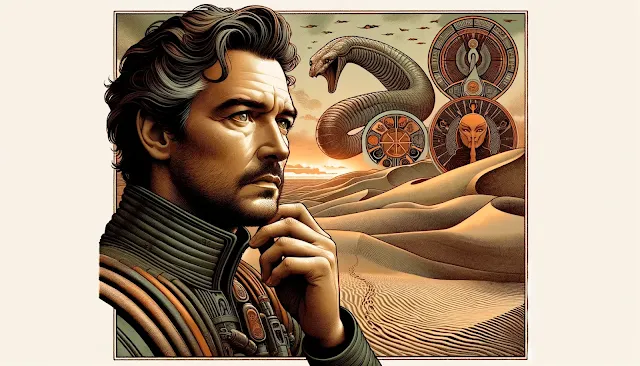
Is Paul Atreides a villain in Dune Messiah
The burden of the Crown

The novel portrays Paul grappling with the far-reaching impacts of his jihad. He is deeply conflicted, acutely aware that the religious fanaticism he exploited to survive has now grown into the monstrous Qizarate priesthood. This religious order enforces his worship with brutal inquisitions. Paul is less an Emperor and more a prisoner of the godhead his followers have created.

The Conspiracy of the Old Order

As Paul wrestles with his monstrous legacy, a multifaceted conspiracy tightens around him. The old power structures refuse to die quietly. The Bene Gesserit, the Bene Tleilax, the Spacing Guild, and even his own wife Princess Irulan band together to dethrone the Kwisatz Haderach. They cannot assassinate him physically because of his absolute foresight, so they plot to assassinate his mythos.

The introduction of Edric, a Guild Navigator who creates a prescient blind spot, and Scytale, a shape-shifting Tleilaxu Face Dancer, showcases the extreme lengths to which the galaxy will go to rid itself of Paul. Their most insidious weapon is the ghola Hayt, a resurrected clone of Paul's beloved mentor Duncan Idaho. Hayt is designed as a psychological trap meant to exploit Paul's lingering humanity and shatter his absolute control.

The Critique of the Hero

Labeling Paul Atreides a simple "villain" ignores the moral ambiguity Herbert meticulously crafts. Paul is neither a traditional hero nor a straightforward antagonist. Instead, he is the ultimate tragic figure.

Herbert's primary thesis in the Dune series is a warning against charismatic leaders. He famously stated that heroes are painful for the people they lead. Dune Messiah is the execution of that thesis. Through Paul's struggles, Herbert examines the unintended consequences of religious fanaticism and the moral compromises inherent in absolute power.

Paul is trapped by his own visions. He sees the future not as a set of possibilities, but as a rigid path leading toward a concept known as the Golden Path. This path requires a tyrant so brutal that humanity will forever reject the idea of centralization, ensuring their ultimate survival. Paul sees this terrifying necessity but refuses to fully commit to the monstrous acts it requires. His refusal to completely abandon his humanity is what ultimately dooms his reign, leaving the terrible burden to his unborn son, Leto II.

The Trap of Prescience

Dune Messiah - does Paul atredies become a villain due to jihad
Blinded by visions: The cost of seeing the future

Prescience is Paul's superpower and his ultimate curse. It locks him into a deterministic universe. When a Stone Burner, an atomic weapon that utilizes J-rays, is detonated by conspirators, it melts Paul's physical eyes. Yet, he continues to see the world perfectly through his oracular vision. This moment highlights the horror of his existence. He has already lived this life in his mind a thousand times. He is bored, terrified, and totally trapped by his own foreknowledge.

Is he a villain for allowing the Jihad? Or is he a hero for choosing the path that results in the least amount of universal death, actively working to avoid total human extinction? This utilitarian nightmare is the very core of his character arc.

The Anti-Hero

concept art of lady jessica, pauls mother
Lady Jessica Concept Art - The Bene Gesserit origins of the Kwisatz Haderach

It is perhaps most accurate to describe Paul as an anti-hero. His journey is marked by a constant, agonizing struggle with power and destiny. Despite his capacity for ruthlessness, his ultimate motivations are rooted in deep love for his concubine Chani, for his newborn twins Leto II and Ghanima, and for the Fremen people he adopted.

In the end, following the tragic death of Chani in childbirth, Paul walks out into the deep desert alone. Blind and without his prescient visions to guide him, he obeys the ancient Fremen tradition that requires blind men to be abandoned to Shai-Hulud. This act is one of ultimate liberation. By choosing to die as a mortal man rather than live as a god, he attempts to shatter the fanatical religious infrastructure built around his name. He leaves the universe in political chaos, but he also leaves it with a chance for renewal, having firmly rejected the stagnation of his own empire.

Conclusion: The Tragedy of Muad'Dib

Paul Atreides in Dune Messiah is a character of profound complexity. He embodies the qualities of both a leader burdened by an impossible destiny and a man struggling with the catastrophic moral implications of his actions.

While the character of Paul Atreides has often been analyzed through the lens of villainy due to his morally ambiguous reign, he represents something far more deeply tragic. He is a man who conquered the universe, saw the entirety of time, and ultimately realized that absolute power had stripped him of everything that made him human.

bene gesserit concept art dune messiah

© 2024 Dune Character Analysis. All rights reserved.

Read Article →

The Bene Gesserit’s Breeding Program: Hubris, Control, and Destiny in Dune

The Genetic Gambit: The Bene Gesserit Breeding Program

The Genetic Gambit

Hubris, Design, and the Bene Gesserit Breeding Program in Dune

Frank Herbert’s Dune is a sprawling meditation on power, humanity, and the frailty of control. At its heart lies the shadowy Bene Gesserit order, an enigmatic sisterhood pulling the strings of interstellar politics through a mix of mysticism, diplomacy, and ruthless manipulation.

Central to their millennia-long schemes is the genetic breeding program, a calculated effort to shape human evolution. Their ultimate goal is the production of the Kwisatz Haderach - a prophesied male adept capable of bridging male and female ancestral memories and exercising prescience beyond the reach of Bene Gesserit women.

Herbert's portrayal of the Bene Gesserit’s genetic ambitions critiques humanity’s arrogance in playing god and shows the moral cost of reducing life to planned equations. Through their meticulous program, Herbert explores the tension between control and chaos, asking whether the pursuit of "perfection" inevitably breeds consequences the planners cannot foresee.

Bene Gesserit Breeding Program
The Geometry of Bloodlines: Mapping the Future

The Origins and Philosophy of the Breeding Program

The Bene Gesserit program takes shape in a civilization scarred by the Butlerian Jihad, the ancient revolt that outlawed thinking machines ("Thou shalt not make a machine in the likeness of a human mind") and forced humanity to cultivate its own biological capacities.

In the post-Jihad order, schools like the Bene Gesserit, the Mentats, and the Spacing Guild replaced computers with trained human minds. The Sisterhood blends rigorous physical training (Prana-bindu), selective breeding, and cultural engineering to "shorten the way" toward a singular evolutionary goal.

Beneath the rhetoric of human betterment lies a philosophy of absolute control. By deciding who mates with whom and why, the Sisterhood imposes rigid design on a process that is naturally contingent and unpredictable. Herbert invites the reader to weigh the cost: when planning overrides chance and choice, what remains of consent and moral responsibility?

The Mechanics of the Program

The Bene Gesserit are not lab geneticists; they do not use test tubes. Their "engineering" is conducted through political contracts, dynastic marriages, concubines, and quiet pressure across the Great Houses.

They map bloodlines for specific traits - nervous-system control, memory capacity, charisma, and latent prescience - arranging unions decades in advance. Each birth is a calculated move in a game played over centuries.

At the center is the plan for a male who can achieve what their Reverend Mothers cannot. Women who take the "spice agony" unlock female ancestral memory but cannot cross into the terrifying void of the male line. The Kwisatz Haderach would bridge that divide, perceiving both past and future with a clarity useful for ruling the universe. The process is exacting, but never perfect; the Sisterhood treats each generation as a stepping stone, often discarding those who fail to meet the metric.

Control, Hubris, and the Limits of Design

The Sisterhood views itself as humanity’s steward, justifying manipulation as necessary guidance to prevent extinction. Herbert strips away this beneficent mask to reveal the arrogant gamble beneath the plan.

Crucially, Paul Atreides is not an accident outside the program; he is the program arriving early and outside Bene Gesserit control. The plan was specific: Lady Jessica was ordered to bear a daughter to Duke Leto Atreides. This daughter was intended to wed Feyd-Rautha Harkonnen, healing the ancient feud between the two Houses and producing the Kwisatz Haderach under Bene Gesserit control.

Out of love for Leto, Jessica disobeyed. She bore a son. This single act of human emotion collapsed centuries of timetables. Paul’s birth vindicates the genetic pipeline but exposes the planners’ fatal assumption - that the final piece of the puzzle would be theirs to place.

Destiny, Agency, and the Prescience Trap

Dune opposes the Bene Gesserit obsession with control against the stubbornness of human agency.

Jessica’s single act of defiance reroutes history. Paul fulfills the prophecy the Sisterhood cultivated through their Missionaria Protectiva (religious engineering), yet he refuses their leash. Instead of a pliable tool, they created a force that drives the universe toward jihad and empire, nearly destroying the Sisterhood in the process.

Bene Gesserit Breeding Program
The Threads of Fate: Weaving the Kwisatz Haderach

His prescience deepens the paradox. He sees branching futures, but each choice collapses possibilities and tightens the corridor he must walk. The more he tries to avoid catastrophe, the more he confirms the shape of it. Herbert’s argument is sharp: designs that claim to master destiny inevitably fail on the rock of human choice, chance, and the opacity of the future - even to a seer.

Cultural and Literary Echoes

The Bene Gesserit program reflects mid-20th-century anxieties about eugenics, technocracy, and centralized control. Herbert refracts the discredited language of a "master race" through science-fictional institutions to warn against moral blindness in the pursuit of biological improvement.

In our modern age of gene editing (CRISPR) and predictive analytics, the Sisterhood’s hubris feels freshly relevant. Who defines desirable traits? Who consents to the selection? What failure modes follow when success is defined merely as control?

Conclusion

The Bene Gesserit breeding program condenses Dune’s central concerns - control versus chaos, the ethics of power, and the limits of foresight.

By manipulating bloodlines and belief, the Sisterhood reaches its goal and loses it in the same moment, outmaneuvered by love, chance, and the unruly agency of the people inside their equations. Paul Atreides does not stand outside Herbert’s warning. He is the warning realized - the planner’s dream turned uncontrollable fact - proving that the future will not be mastered on anyone’s terms for long.

© 2024 Dune Lore Analysis. All rights reserved.

Read Article →

Heretics of Dune: Themes

Echoes of the Scattering: Analysis of Heretics of Dune

The Golden Path Fractured

Evolution, Heresy, and the Return from the Scattering in Frank Herbert's Heretics of Dune

Fifteen centuries have bled into the past since the God Emperor Leto II, the Tyrant, shattered his sandworm body and his millennia-long enforced peace, unleashing the Great Scattering upon the known and unknown universe.

Like a tide drawn back only to return with greater force, the descendants of those who fled are now returning to the Old Imperium. They are not prodigals seeking solace, but new breeds of humanity forged in the crucible of uncharted space, carrying with them strange powers and dangerous heresies against the established order.

Frank Herbert's Heretics of Dune immerses the reader in this turbulent epoch, a universe still wrestling with the profound implications of Leto II's Golden Path - his brutal, long-term strategy for humanity's survival.

heretics of dune benegesserit concept
Concept Art: The Bene Gesserit in the age of Heretics

The Landscape of Fractured Power

The landscape of power is fractured and volatile. The Spacing Guild, once the linchpin of interstellar travel, finds its monopoly broken, weakened by the advent of Ixian navigation machines capable of traversing foldspace without Guild Navigators.

The Bene Tleilax, masters of genetic manipulation, have achieved the unthinkable: the artificial production of the spice melange in their axlotl tanks, severing the absolute dependence on the desert planet Rakis. Amidst this technological and economic upheaval, the Bene Gesserit Sisterhood, ancient manipulators of bloodlines and politics, struggles to maintain its subtle control.

Their careful plans are threatened by the returnees, most terrifyingly the Honored Matres, a violent matriarchal order emerging from the Scattering with powers and methods that challenge the Sisterhood's dominance. Rakis, formerly Arrakis, the cradle of spice and sandworms, is once again a desert world, its great worms returned, becoming a focal point of religious fervor and political maneuvering, yet its fate hangs precariously in the balance.

Theme 1: The Unraveling Thread - Change, Evolution, and the Tyrant's Shadow

Central to Heretics of Dune is the relentless pressure of change clashing against the inertia of established orders. Fifteen hundred years after Leto II shattered the Imperium to save it from stagnation, the universe is in flux, forcing its inhabitants to adapt or perish.

The Scattering, Leto’s harsh medicine designed to ensure humanity’s survival by forcing diversification and breaking dependencies, has irrevocably altered the human landscape. The technological innovations emerging from this era - Ixian no-ships rendering vessels invisible to prescience and their navigation machines eliminating the need for Guild Navigators - fundamentally reshape the galactic power structure. These advancements directly challenge the monopolies the Bene Gesserit have cultivated for millennia.

The Bene Gesserit Response: Mother Superior Taraza embodies cold calculus. She is willing to sacrifice deeply ingrained traditions, manipulate alliances, and expend lives - including her own - to ensure the Sisterhood's survival. Her ultimate, devastating plan to manipulate the Honored Matres into destroying Rakis represents the most extreme form of forced evolution: severing the last physical and symbolic link to the God Emperor's direct influence to free humanity for an uncertain future.

Biological Evolution: This theme is personified in Bashar Miles Teg. A living legend and direct Atreides descendant, he embodies the old guard until he is subjected to extreme pressure by the Honored Matres. This "agony" unlocks latent Atreides abilities, transforming him into something beyond known human limits - possessing superhuman speed and prescient tactical awareness. Teg becomes a physical manifestation of adaptation under duress.

Theme 2: The Labyrinth of Dominion - Power in Myriad Forms

The universe of Heretics of Dune is a treacherous labyrinth defined by the relentless pursuit and exercise of power - political, religious, genetic, and sexual.

  • The Bene Gesserit: Their power is intellectual and strategic, built on patience and foresight. However, they are challenged by the direct, overwhelming force of the Honored Matres.
  • The Honored Matres: They wield power through overt violence and the sexual enslavement of men. Their methods are a dark, amplified reflection of Bene Gesserit control, stripped of subtlety and fueled by adrenaline-enhancing drugs. They do not seek influence; they seek absolute domination.
  • The Bene Tleilax: Beneath their amoral merchant facade lies a hidden, fanatical religious core (Zensunni) driving a secret agenda for universal domination. Their power lies in their biological mastery - gholas, Face Dancers, and artificial spice.
  • The Rakian Priesthood: They hold sway through religious dogma, controlling the worship of the sandworms. However, they are depicted as pawns, easily manipulated by the Bene Gesserit's deeper understanding of religious engineering (Missionaria Protectiva).

Individuals often become instruments in these grand power plays. Sheeana, the young Rakian girl who can command the great sandworms, is an unwitting vessel of immense religious power. The Duncan Idaho ghola is explicitly a tool, meticulously crafted and conditioned by the Tleilaxu with hidden protocols.

Theme 3: Ghosts in the Flesh - Identity and Memory

Heretics of Dune delves deeply into the complexities of identity, questioning the nature of self when memory can be inherited and genetics manipulated.

The twelfth iteration of the Duncan Idaho ghola grapples with the resentment of being a "serial" human. His awakening involves the traumatic integration of the memories of all eleven preceding gholas, including their deaths. This raises profound questions: Is he truly Duncan Idaho, the loyal Swordmaster, or a new entity forged from accumulated trauma?

darwi odrade dune heretic concept art
Reverend Mother Darwi Odrade: The Heretic Within

Darwi Odrade, Teg's daughter, carries the Atreides genetic legacy, manifesting as empathy - a trait considered dangerous by the Sisterhood. Her deliberate authorship of the "Atreides Manifesto" consciously invokes this powerful legacy as a tool to challenge the existing religious and political order. In this framework, individual identity ceases to be a stable quality and becomes a battlefield where genetics, memory, and conditioning collide.

Theme 4: Sanctuaries and Snares - The Heresy of Connection

Amidst the cold calculations of galactic power, the novel examines the weaponized forces of love and sexuality. The Honored Matres represent the terrifying extreme: for them, sex is a tool for absolute enslavement (imprinting), creating addicts enthralled to their will.

The confrontation between Duncan and the Honored Matre Murbella provides a pivotal twist. The Tleilaxu, in designing the ghola, inadvertently equipped him to counter the Honored Matres' sexual techniques. When Murbella attempts to enslave him, Duncan instinctively turns these methods back on her, creating a stalemate of mutual imprinting. This shatters the Tleilaxu's conditioning and the Honored Matre's dominance, proving that connection - even weaponized connection - is unpredictable.

While the Bene Gesserit suppress emotion, Odrade suggests that genuine empathy (the "heresy called love") might be the only way to navigate the future. Her wish for Duncan to live a free life because her ancestors "loved him" is a profound affirmation of humanity over dogma.

Theme 5: Shattering Dogma - Faith and Heresy

Heretics of Dune mounts a sustained critique of institutionalized religion. The Face Dancers and Tleilaxu masters are driven by a fanatical belief that blinds them to reality, while the Rakian Priesthood is corrupted by ritual.

The novel expands the concept of heresy beyond religious dissent. To the Bene Gesserit, Odrade's empathy is heresy. To the Tleilaxu, the Honored Matres are heresy. Yet, Herbert suggests that heresy - the act of choosing differently - is essential for survival.

Sheeana's direct connection to the worms (Shaitan) bypasses the priesthood entirely, proving that truth exists independently of the structures built to control it. The ultimate heresy is the Bene Gesserit's decision to destroy Rakis itself - killing the planet that defines their history to save their future.

Conclusion: The Unwritten Path

The climactic destruction of Rakis, orchestrated by Taraza and executed by the enraged Honored Matres, signifies a radical severing of ties. The surface of the planet is fused into glass, ending the cycle of the God Emperor's desert.

Yet, hope remains. A single sandworm, carrying the potential for a new Dune, is safely transported to the Bene Gesserit stronghold of Chapterhouse. The Golden Path proves not to be a clearly marked route, but a perilous journey into the unknown. It demands constant adaptation, resilience, and further heresies against any dogma that threatens to calcify into stagnation. The echoes of the Scattering have not faded; they have merely set the stage for the final act of humanity's evolution.

© 2024 Dune Lore Analysis. All rights reserved.

Read Article →
29 October 2025

A Chronological Guide to 'His Dark Material's & 'The Book of Dust' novel series

Chronological Guide to His Dark Materials & The Book of Dust

When Philip Pullman finished The Amber Spyglass in 2000, he seemed to close the door on Lyra Belacqua’s story. 

Yet in truth, he had only built the first half of a much larger world. The trilogy’s mix of metaphysics, rebellion, and coming-of-age left vast questions unanswered  - about Dust, the Authority, and the lives that continued beyond the final page.

Two decades later, Pullman returned to that universe with The Book of Dust, a new sequence meant not as a prequel or a sequel but an “equel.” 

These novels trace the origins and aftermath of His Dark Materials, expanding its theology, its politics, and its philosophy of consciousness. They bridge the worlds of old faith and modern science, showing how the war between curiosity and control never really ended.

Across both series, Pullman explores the deep tension between innocence and experience, belief and truth, and the human need to question authority - be it divine or institutional. 

Chronological Guide to His Dark Materials & The Book of Dust

This guide arranges the complete saga in chronological order, from the flood that brought infant Lyra to Oxford, to her journey across the continents in search of meaning and reconciliation.

The Book of Dust Trilogy (Prequel/Sequel)

This series "equels" the original trilogy, beginning before Lyra's birth and continuing into her early adulthood, expanding the history and consequences of her story.

1. La Belle SauvagePhilip Pullman (2017)


Timeline: 12 years before Northern Lights. 


This novel introduces Malcolm Polstead, an inquisitive eleven-year-old boy who lives and works at his parents' tavern near Oxford. His life becomes entangled with the scholars of Jordan College and the agents of the Magisterium when the infant Lyra Belacqua is brought to a nearby priory for safety. 


When a biblical flood inundates the country, Malcolm embarks on a desperate journey in his canoe, La Belle Sauvage, to rescue the baby Lyra from the fanatical physicist Marisa Coulter and the agents of the church, who believe Lyra is the key to a dangerous prophecy. 


 It is a tense, atmospheric adventure that establishes the political climate and the immense danger surrounding Lyra from her very birth.

His Dark Materials: The Original Trilogy

This is the core saga detailing Lyra's epic journey, her discovery of other worlds, and her role in the war against the Authority.

Companion Novella: Once Upon a Time in the NorthPhilip Pullman (2008)


Timeline: Several years before Northern Lights. 


This novella tells the story of the first meeting between two key characters: the Texan aeronaut Lee Scoresby and the exiled panserbjørn Iorek Byrnison. The story is a classic western set in the harsh northern port of Novy Odense. 


A young Lee, on his first solo ballooning adventure, finds himself caught up in a political and industrial conflict, forcing him to make a stand alongside the disgraced Iorek. 


 It's a tale of honor and friendship that provides the crucial backstory for their unshakeable bond in the main series.

1. Northern Lights (The Golden Compass)Philip Pullman (1995)


The saga begins.

 Lyra Belacqua, now a semi-feral twelve-year-old living in Jordan College, foils an assassination attempt on her powerful uncle, Lord Asriel. Her life is upended when her friend Roger is kidnapped by the mysterious "Gobblers." 


Lyra's quest to save him takes her from the canals of Brytain to the frozen wastes of the north. 


Armed with the alethiometer, a mysterious truth-telling device, she joins forces with the Gyptians, the aeronaut Lee Scoresby, and the armored bear Iorek Byrnison. She uncovers the Magisterium's horrific secret: they are severing children from their dæmons in an attempt to stop Dust. 


 The novel culminates in a tragic betrayal and Lord Asriel's successful attempt to open a bridge to another world.

his dark materials chronology

2. The Subtle Knife
Philip Pullman (1997)


Stepping through the bridge, Lyra arrives in the eerie, abandoned city of Cittàgazze, a world haunted by soul-eating Spectres that prey only on adults. 

 There, she meets Will Parry, a boy from our own world who is searching for his long-lost father. 


Together, they discover the Subtle Knife, an object of incredible power that can cut windows between worlds. Their journey brings them into direct conflict with the forces of the Magisterium and introduces the witches and the scientists of Will's world who are studying Dust. 


 The novel expands the scope of the story into a full-blown multiverse and solidifies the coming war against the Authority, the tyrannical being worshipped as God.

3. The Amber SpyglassPhilip Pullman (2000)


The grand finale. 


Lord Asriel has assembled a massive army from across the worlds to wage his rebellion against the Authority. Meanwhile, Lyra is captured by Mrs. Coulter and Will must find her. Their quest will take them to the Land of the Dead to right a cosmic wrong, a journey from which no living person has ever returned. 


The novel brings all the disparate characters and plotlines together for a final, epic battle. It is a profound meditation on love, loss, free will, and the responsibility of building a Republic of Heaven. 


The story ends with a heartbreaking, necessary sacrifice that will forever bind Lyra and Will to their own separate worlds.

Post-Trilogy Stories

These stories explore the world after the events of The Amber Spyglass, showing the lingering consequences and new challenges.

Companion Novella: Lyra's OxfordPhilip Pullman (2003)


Timeline: 2 years after The Amber Spyglass. 


Two years after her return from the Land of the Dead, a teenage Lyra is now a student in Oxford. One day, she and her dæmon, Pantalaimon, witness an alchemist's dæmon being attacked. 


They rescue the dæmon and are drawn into a strange mystery involving a witch who was once the lover of a character from The Subtle Knife. 


It's a short, atmospheric story that shows Lyra settling into her new life but hints at the new dangers and political intrigues that are beginning to stir in her world.

The Book of Dust 2. The Secret CommonwealthPhilip Pullman (2019)


Timeline: 10 years after The Amber Spyglass. 


Lyra, now a twenty-year-old university student, finds her relationship with her dæmon, Pan, fractured and strained. Their inability to reconcile drives Pan to flee, an act of self-separation that is physically and emotionally agonizing. Lyra must set out across Europe and into Asia on a desperate journey to find him. 


Her quest runs parallel to a new, dangerous plot involving the Magisterium and a mysterious, elusive desert rose. 


The novel is a darker, more mature exploration of the human-dæmon relationship, disillusionment, and the search for meaning in a world that is losing its imagination.

Read Article →
Back to Top