14 June 2025

Chronological Order Guide to DCU - Universe Films

The DC Universe Timeline

A Chronological Guide to the Saga

The DC Extended Universe (DCEU) tells a mythic story across multiple timelines, prequels, and sequels. This guide analyzes the key films in their chronological narrative order, exploring the plot intricacies and thematic depth that define the saga.

Wonder Woman

Release: 2017 • In-Universe: 1918

Director: Patty Jenkins Key Cast: Gal Gadot (Diana), Chris Pine (Steve Trevor), Connie Nielsen (Hippolyta), David Thewlis (Ares).

Raised on the hidden island of Themyscira, Diana is trained as a warrior by General Antiope, though her mother Hippolyta tries to shield her from her true nature. When American pilot Steve Trevor crashes offshore with news of a massive global conflict, Diana becomes convinced that Ares, the God of War, is behind the chaos. She leaves home to end the war, arriving in the trenches of the Western Front where she steps into "No Man's Land" to liberate a village, rejecting the cynical pragmatism of modern warfare.

Thematically, the film serves as a study on the loss of innocence. Diana transitions from a naive worldview where killing one "bad guy" fixes the world to a complex understanding of humanity’s capacity for both evil and good. Her victory comes not just from physical strength, but from a philosophical rejection of Ares' nihilism, ultimately choosing to fight for a flawed humanity out of love rather than duty.

Wonder Woman 1984

Release: 2020 • In-Universe: 1984

Director: Patty Jenkins Key Cast: Gal Gadot (Diana), Chris Pine (Steve Trevor), Pedro Pascal (Maxwell Lord), Kristen Wiig (Cheetah).

Living a quiet life among mortals in the 1980s, Diana is reunited with Steve Trevor through the power of the Dreamstone, an ancient artifact that grants wishes at a terrible cost. As businessman Maxwell Lord harnesses the stone's power to send the world into geopolitical chaos, Diana must confront her own inability to let go of the past. She eventually realizes that her wish is draining her powers, forcing her to renounce her happiness to save the world.

The narrative functions as a critique of the era's culture of excess and greed. It posits that truth is the only force capable of countering the delusion of "having it all." Unlike typical superhero climaxes resolved through violence, Diana defeats the antagonist by appealing to his humanity and shared suffering, reinforcing the character's roots in compassion.

Man of Steel

Release: 2013 • In-Universe: 2013

Director: Zack Snyder Key Cast: Henry Cavill (Clark Kent), Amy Adams (Lois Lane), Michael Shannon (Zod), Russell Crowe (Jor-El).

The saga begins with the destruction of Krypton. Jor-El infuses the genetic codex of his race into his natural-born son, Kal-El, and launches him to Earth just as General Zod attempts a coup. Decades later, Clark Kent drifts through the world as a phantom, performing anonymous miracles while struggling with the burden of his heritage. When Zod arrives on Earth demanding Kal-El's surrender, Clark is forced to reveal himself to humanity. The conflict escalates when Zod deploys a World Engine to terraform Earth, leading to a cataclysmic battle in Metropolis where Superman is forced to kill the last of his kind to save his adopted world.

The film treats "First Contact" through the lens of horror and geopolitical panic rather than whimsy, asking how the real world would react to a god. It contrasts Krypton’s predetermined society with Earth’s free will; Clark is the ultimate immigrant, caught between two fathers one who pushes him toward godhood and one who grounds him in caution ultimately choosing to forge his own identity.

Batman v Superman: Dawn of Justice

Release: 2016 • In-Universe: 2015

Director: Zack Snyder Key Cast: Ben Affleck (Batman), Henry Cavill (Superman), Gal Gadot (Wonder Woman), Jesse Eisenberg (Lex Luthor).

Opening with the perspective of a powerless Bruce Wayne watching the destruction of Metropolis, the film establishes Superman as a controversial figure. Lex Luthor exploits this division, framing Superman for international tragedies while manipulating a weary, brutal Batman into a preemptive strike. The ideological clash culminates in a duel where Batman nearly kills Superman, stopping only when he recognizes Superman's humanity through their shared trauma. As Luthor unleashes the monster Doomsday, Wonder Woman joins the fight, and Superman sacrifices his life to end the threat.

This is a deconstruction of power and divinity. Batman represents the cynical human response to absolute power (fear and aggression), while Luthor represents the envious response (the desire to destroy what he cannot control). The film challenges the concept of the "benevolent god," which Superman eventually validates not by ruling over humanity, but by dying for it.

Suicide Squad

Release: 2016 • In-Universe: 2016

Director: David Ayer Key Cast: Will Smith (Deadshot), Margot Robbie (Harley Quinn), Viola Davis (Amanda Waller), Jared Leto (Joker).

In the power vacuum left by Superman's death, intelligence officer Amanda Waller assembles Task Force X, a team of incarcerated supervillains, as a contingency against metahuman threats. When the ancient witch Enchantress betrays Waller and seizes control of Midway City, the squad is deployed with explosive nanites in their necks to ensure obedience. Despite their villainous nature, the team bonds over their shared trauma and rejection by society, ultimately choosing to save the city rather than flee.

The film explores the gray areas of morality, suggesting that "bad guys" are capable of heroism when given a purpose. It contrasts the overt criminality of the Squad with the calculated, bureaucratic ruthlessness of Amanda Waller, blurring the lines between hero and villain.

Zack Snyder's Justice League

Release: 2021 • In-Universe: 2017

Director: Zack Snyder Key Cast: Ben Affleck, Gal Gadot, Henry Cavill, Jason Momoa, Ray Fisher (Cyborg), Ezra Miller (Flash).

Following Superman's death, his final scream awakens the Mother Boxes, signaling the alien general Steppenwolf to invade Earth for his master, Darkseid. Bruce Wayne and Diana Prince undertake a global recruitment drive, finding allies in the isolated Barry Allen, the reluctant Arthur Curry, and the grieving Victor Stone. Realizing they cannot win alone, the team uses Kryptonian technology to resurrect Superman. The climax sees the team fighting through a Russian ghost town to stop the "Unity," with The Flash reversing time seconds before total annihilation to allow Cyborg to separate the boxes.

The film is fundamentally about healing through community. Every member of the League is grappling with isolation, guilt, or body dysmorphia. Victor Stone (Cyborg) serves as the emotional heart of the story, transforming from a "broken" recluse into a hero who accepts his new state. The narrative frames these heroes as a modern mythic pantheon, validating the necessity of faith in the impossible.

Aquaman

Release: 2018 • In-Universe: 2018

Director: James Wan Key Cast: Jason Momoa (Arthur), Amber Heard (Mera), Patrick Wilson (Orm), Willem Dafoe (Vulko).

Arthur Curry, the half-human/half-Atlantean bastard son of a queen, lives on the fringes of both worlds until his half-brother, King Orm, moves to unite the underwater kingdoms for a war against the surface. To stop the slaughter, Mera recruits Arthur to find the lost Trident of Atlan. Their journey takes them from the Sahara Desert to the horror of the Trench. Arthur eventually proves his worthiness to the Karathen, a mythical guardian, not by force but by his unique ability to bridge cultures, returning to defeat Orm and claim his birthright.

The story focuses heavily on biracial identity and the feeling of not belonging to either side of one's heritage. Arthur turns his "half-breed" status previously a source of shame into his greatest strength, becoming the only figure capable of uniting land and sea. Furthermore, the film grounds its fantasy in environmental concerns, as the villain's motivation stems from the surface world’s pollution of the oceans.

Shazam!

Release: 2019 • In-Universe: 2018

Director: David F. Sandberg Key Cast: Zachary Levi (Shazam), Asher Angel (Billy Batson), Mark Strong (Dr. Sivana), Jack Dylan Grazer (Freddy).

Street-wise foster kid Billy Batson is transported to the Rock of Eternity, where an ancient wizard grants him the power to transform into an adult superhero. While Billy initially treats his powers as a way to gain internet fame and buy beer, he is forced to mature when Dr. Sivana, a man rejected by the wizard years prior, seeks to steal his magic. Billy eventually learns that power is meant to be shared, granting abilities to his foster siblings to defeat the Seven Deadly Sins.

At its core, this is a story about found family. Billy spends the film searching for his biological mother, only to realize that his true family is the foster home that accepted him. It subverts the "chosen one" trope by showing that a pure heart is something that is chosen and worked for, not just innate.

Birds of Prey

Release: 2020 • In-Universe: 2020

Director: Cathy Yan Key Cast: Margot Robbie (Harley Quinn), Ewan McGregor (Black Mask), Mary Elizabeth Winstead (Huntress).

Following a messy breakup with the Joker, Harley Quinn finds herself without the protection his reputation provided. Targeted by every criminal in Gotham, specifically the narcissist Roman Sionis (Black Mask), she inadvertently teams up with a group of other women who have been wronged by Sionis: Black Canary, Huntress, and Renee Montoya. Together, they protect a young pickpocket, Cassandra Cain, and take down Sionis's empire.

The film is a colorful, chaotic exploration of emancipation. Each of the main characters is struggling to break free from a form of control whether it be a toxic relationship, a dismissive boss, or a traumatic past. The narrative structure reflects Harley’s own scattered psyche, jumping through time to tell a story about female camaraderie and reclaiming one's own identity.

The Suicide Squad

Release: 2021 • In-Universe: 2021

Director: James Gunn Key Cast: Margot Robbie, Idris Elba (Bloodsport), John Cena (Peacemaker), Viola Davis, Daniela Melchior.

A new iteration of Task Force X is sent to the island of Corto Maltese to destroy "Project Starfish." After a disastrous beach landing decimates the distraction team, the survivors including Bloodsport, Peacemaker, and Ratcatcher 2 uncover that the mission is actually a cover-up. The US government had been funding experiments on Starro, an alien conqueror, for decades. When Starro escapes, the squad defies Amanda Waller’s orders to retreat, choosing instead to risk their lives to save the island's population from the alien kaiju.

The film distinguishes between "bad guys" and "monsters." While the squad members are criminals, the true antagonism comes from American interventionism and bureaucratic indifference to human life. The climax, where the "useless" Ratcatcher 2 saves the day, drives home the thesis that no one and nothing is truly without purpose or value.

Black Adam

Release: 2022 • In-Universe: 2022

Director: Jaume Collet-Serra Key Cast: Dwayne Johnson (Black Adam), Pierce Brosnan (Dr. Fate), Aldis Hodge (Hawkman).

Teth-Adam is awakened from a 5,000-year imprisonment in modern-day Kahndaq. Possessing the powers of the gods but fueled by rage over the death of his son, his brutal brand of justice attracts the attention of the Justice Society. A conflict ensues between Adam's lethal methods and the Society's strict moral code, eventually forcing them to unite against the demonic Sabbac. Adam ultimately accepts his role not as a ruler, but as the protector of Kahndaq.

The film attempts to blur the line between hero and villain, challenging the Western superhero archetype of "no killing." It touches on themes of imperialism and occupation, presenting the Justice Society as interlopers who ignored Kahndaq's suffering until a "threat" to the global order emerged.

Shazam! Fury of the Gods

Release: 2023 • In-Universe: 2023

Director: David F. Sandberg Key Cast: Zachary Levi, Asher Angel, Helen Mirren (Hespera), Lucy Liu (Kalypso), Rachel Zegler.

Billy Batson and his foster siblings, now established superheroes, face a new threat when the Daughters of Atlas arrive on Earth to reclaim the magic they believe was stolen from their father. As the city is besieged by mythological monsters, Billy struggles with imposter syndrome and the fear of aging out of the foster system. The conflict forces him to make a selfless sacrifice to save his family and the world, earning back his life and the respect of the gods.

This sequel deepens the theme of imposter syndrome, exploring the anxiety of leading a team when one feels unworthy. It transitions the story from the joy of discovery to the heavy burden of responsibility, emphasizing that a true hero acts regardless of their own insecurities.

The Flash

Release: 2023 • In-Universe: Multiverse Reset

Director: Andy Muschietti Key Cast: Ezra Miller (Barry Allen), Michael Keaton (Batman), Sasha Calle (Supergirl), Ben Affleck (Batman).

Barry Allen discovers he can use the Speed Force to travel back in time. Despite warnings, he attempts to prevent his mother's murder, inadvertently creating a fractured timeline where metahumans do not exist and General Zod invades Earth unopposed. Teaming up with a younger version of himself, a retired Batman, and an imprisoned Supergirl, Barry fights a losing battle to save this world. He ultimately learns that some tragedies are inevitable intersections of time that define who we are.

The film explores the "Spaghetti Multiverse" concept and the stages of grief. It posits that scars and trauma are not things to be erased, but integral parts of one's identity. Barry’s journey is one of acceptance learning to stop running from his past and instead live in the present.

Blue Beetle

Release: 2023 • In-Universe: Unclear

Director: Angel Manuel Soto Key Cast: Xolo Maridueña (Jaime Reyes), Bruna Marquezine (Jenny Kord), Susan Sarandon (Victoria Kord).

Recent college graduate Jaime Reyes returns home full of aspirations, only to find his family struggling. Fate intervenes when he comes into possession of the Scarab, an ancient biotechnology that chooses him as its symbiotic host. Unlike the typical secret identity trope, Jaime’s transformation happens in front of his entire family, who become his support system as he fights to protect the technology from the corrupt Victoria Kord.

The film places family at the center of the superhero origin, deviating from the "lonely hero" archetype. It addresses gentrification and the immigrant experience, framing the Reyes family's resilience and unity not as a liability, but as the source of Jaime's true strength.

Aquaman and the Lost Kingdom

Release: 2023 • In-Universe: Unclear

Director: James Wan Key Cast: Jason Momoa (Arthur), Patrick Wilson (Orm), Yahya Abdul-Mateen II (Black Manta), Amber Heard.

Now balancing his duties as the King of Atlantis and a new father, Arthur Curry faces the return of Black Manta, who wields the cursed Black Trident. To defeat Manta and prevent a global climate meltdown, Arthur must break his brother Orm out of prison. The two estranged brothers embark on a globe-trotting mission, mending their fractured relationship while battling necromantic forces that threaten to burn the world.

Serving as the conclusion to the DCEU, the film focuses on brotherhood and redemption. It mirrors the first film's structure but shifts the emotional core to the relationship between Arthur and Orm, suggesting that unity is possible even between former enemies when faced with a threat that endangers the future of the planet.

Read Article →
13 June 2025

The Star Wars Timeline in Chronological Story Order

The Star Wars saga is more than just a series of films; it is a sprawling, multi-generational epic that spans thousands of years of galactic history. For newcomers and long-time fans alike, navigating this vast universe can be a daunting task. Viewing the story in chronological order offers a unique and deeply rewarding experience, transforming the narrative from a collection of trilogies into a single, cohesive history. This approach allows one to witness the subtle decay of the Galactic Republic, the tragic fall of Anakin Skywalker into the shadow of Darth Vader, the desperate spark of rebellion fanning into a galactic flame, and the enduring struggle to restore hope and balance to the Force.

luke and yoda degobah empire

The following card series serves as your definitive guide to this chronological journey. Each card represents a canonical film, television series, or special, placed in its proper story order from the twilight of the High Republic to the dawn of a New Jedi Order. From the grand political machinations of the prequel era to the gritty espionage of the Rebellion and the lawless frontiers of the New Republic, this timeline provides the context needed to appreciate the full, intricate tapestry of the galaxy far, far away. Consider this your roadmap to experiencing the Star Wars saga as a living, breathing history.


 The Star Wars Timeline in Chronological Story Order

The Star Wars Chronological Timeline

The Star Wars Timeline

This timeline arranges the canonical Star Wars films and series in chronological story order, allowing fans to experience the epic saga as it unfolded within the galaxy's history. From the twilight of the Republic to the rise of the First Order, this is the definitive sequence of events.

📺 The Acolyte

Timeline: 132 BBY

Set during the final days of the High Republic era, this mystery-thriller (2024) explores a galaxy at its peak, where the Jedi Order's influence is absolute. However, a series of shocking crimes forces a respected Jedi Master to confront a dangerous warrior from his past. The investigation uncovers sinister forces and reveals that the dark side is re-emerging in ways the complacent Jedi could never have imagined. The show's core themes revolve around perspective, questioning institutions, and how personal trauma can curdle into a desire for systemic destruction, planting the seeds for the Sith's return.

🎬 Episode I: The Phantom Menace

Timeline: 32 BBY

The saga begins with this 1999 film, setting the political stage for the Republic's downfall. Jedi Master Qui-Gon Jinn and his apprentice Obi-Wan Kenobi protect Queen Padmé Amidala of Naboo from an illegal Trade Federation blockade, a conflict orchestrated by the Sith Lord Darth Sidious. Stranded on Tatooine, they discover a remarkably Force-sensitive slave boy, Anakin Skywalker, whom Qui-Gon believes is the prophesied Chosen One. Themes of symbiosis, political corruption, and the subtle return of the Sith after a millennium in hiding are central to the plot.

🎬 Episode II: Attack of the Clones

Timeline: 22 BBY

A decade after Episode I, this 2002 film depicts a galaxy on the verge of civil war as a Separatist movement gains power. While Obi-Wan Kenobi investigates an assassination attempt on Senator Padmé Amidala, he uncovers the secret creation of a massive clone army. Meanwhile, a more powerful but increasingly arrogant Anakin Skywalker is tasked with protecting Padmé, leading to a forbidden romance. His emotional turmoil following the death of his mother marks a crucial turn toward the dark side, just as the Clone Wars erupt.

⭐ Star Wars: The Clone Wars (Film)

Timeline: 22 BBY

Released in 2008, this animated movie serves as the theatrical pilot for the beloved television series. It establishes the wartime dynamic of the main characters and formally introduces Ahsoka Tano to the galaxy as she is assigned to be Anakin Skywalker's apprentice. Their mission to rescue Jabba the Hutt's son sets the stage for the grand-scale conflicts and character arcs that would define the subsequent TV show.

📺 Star Wars: The Clone Wars

Timeline: 22–19 BBY

Airing from 2008-2020, this beloved animated series is essential viewing that explores the three-year gap between Episodes II and III. It showcases numerous campaigns and battles across the galaxy. The series is lauded for its mature themes, exploring the morality of using a clone army, the cost of war on civilians, and Ahsoka Tano's journey from apprentice to disillusioned but powerful Force wielder.

🎬 Episode III: Revenge of the Sith

Timeline: 19 BBY

The tragic and operatic conclusion to the prequel trilogy (2005). As the Clone Wars reach their climax, Chancellor Palpatine executes his final plan. He seduces Anakin Skywalker to the dark side with promises of power to save his wife Padmé, anoints him Darth Vader, and executes Order 66, a brutal command that leads to the near-extermination of the Jedi Order. The film culminates in the birth of the Galactic Empire and the fateful duel between Obi-Wan and his fallen apprentice on Mustafar.

📺 The Bad Batch

Timeline: Begins 19 BBY

This animated series (2021-2024) acts as a direct sequel to The Clone Wars, following the elite, genetically enhanced Clone Force 99. Unaffected by Order 66 due to their mutations, the squad becomes fugitives from the newly formed Empire. They navigate a rapidly changing galaxy as soldiers without a purpose, undertaking mercenary work while protecting Omega, a young, unaltered female clone who is key to the Emperor's cloning ambitions.

🎬 Solo: A Star Wars Story

Timeline: 13–10 BBY

This 2018 standalone film delves into the origins of the galaxy's most charming scoundrel, Han Solo. It details his escape from an Imperial shipyard, his brief time as an Imperial soldier, and how he first met his loyal co-pilot Chewbacca. The core of the film is a heist story, showing Han falling in with a crew of smugglers led by Tobias Beckett. We witness how he won the Millennium Falcon from the charming gambler Lando Calrissian and made the legendary Kessel Run in less than twelve parsecs, establishing his reputation as a daring pilot with a reluctant hero's heart.

📺 Obi-Wan Kenobi

Timeline: 9 BBY

Set a decade after the events of Revenge of the Sith, this 2022 live-action series finds Obi-Wan Kenobi as a broken man, living in exile on Tatooine and watching over a young Luke Skywalker from afar. He is drawn out of hiding when a young Princess Leia Organa is kidnapped by Imperial Inquisitors, forcing him on a mission that leads to a series of harrowing and emotional confrontations with his former apprentice, Darth Vader, who is obsessed with hunting down his old master.

📺 Star Wars Rebels

Timeline: 5–1 BBY

This acclaimed animated series (2014-2018) is a critical bridge in the timeline, showing the formation of the Rebel Alliance. It follows the found family aboard the starship Ghost: Jedi survivor Kanan Jarrus, his apprentice Ezra Bridger, pilot Hera Syndulla, Mandalorian artist Sabine Wren, Lasat warrior Zeb, and astromech Chopper. Together, they conduct daring missions against the Empire, facing off against formidable foes like Grand Admiral Thrawn and the Inquisitors, and helping to unite disparate cells into a true rebellion.

📺 Andor

Timeline: 5–0 BBY

A gritty, ground-level spy thriller, this 2022 live-action series charts the origin of Rebel spy Cassian Andor. It begins five years before the events of Rogue One, showing Cassian's journey from a cynical thief and nihilist into a committed revolutionary. The series offers a mature exploration of the moral compromises and brutal realities of fighting against a fascist regime, detailing the intricate operations of the Imperial Security Bureau (ISB) and the disparate threads that slowly weave together to form the Rebel Alliance.

🎬 Rogue One: A Star Wars Story

Timeline: 0 BBY

Set in the immediate days before A New Hope, this 2016 film tells the story of the ordinary heroes who made the Rebellion's first major victory possible. Jyn Erso, daughter of the Death Star's conflicted lead engineer, joins a team of spies on a desperate mission to steal the plans for the Empire's planet-killing superweapon. The film's final act is a breathtaking battle on the planet Scarif, culminating in a heroic sacrifice that delivers the plans to the Rebel fleet and directly into the opening moments of the original film.

🎬 Episode IV: A New Hope

Timeline: 0 BBY / 0 ABY

The 1977 film that launched a phenomenon. On the desert world of Tatooine, young farm boy Luke Skywalker's life changes forever when he discovers a message from Princess Leia carried by two droids, R2-D2 and C-3PO. Guided by the wise hermit Obi-Wan Kenobi, he teams up with smuggler Han Solo and Chewbacca to rescue the princess and join the Rebel Alliance. Luke embraces his Jedi heritage and uses the Force to land a one-in-a-million shot, destroying the Empire's ultimate weapon, the Death Star.

🎬 Episode V: The Empire Strikes Back

Timeline: 3 ABY

In this darker 1980 sequel, the emboldened Empire strikes back with overwhelming force. After a devastating battle on the ice planet Hoth, the heroes are scattered. Luke Skywalker seeks out the legendary Jedi Master Yoda on the swamp world of Dagobah for training. Meanwhile, Han, Leia, and Chewbacca are relentlessly pursued across the galaxy by Darth Vader and a host of bounty hunters. The film culminates in Han's capture and a fateful duel that reveals a shocking truth about Luke's parentage, leaving the heroes at their lowest point.

🎬 Episode VI: Return of the Jedi

Timeline: 4 ABY

The 1983 finale of the original trilogy. The story begins with a daring rescue of Han Solo from the clutches of Jabba the Hutt. The focus then shifts to the Rebel Alliance's all-or-nothing assault on a second, more powerful Death Star. The film's emotional climax occurs as Luke Skywalker confronts both Darth Vader and Emperor Palpatine, struggling to resist the dark side while holding onto the hope that he can still redeem his father, Anakin Skywalker, and bring balance to the Force.

⭐ Ewoks: Caravan of Courage

Timeline: ~3 ABY

This 1984 live-action TV movie offers a charming side-story set on the forest moon of Endor before the climax of the Galactic Civil War. It follows two young human siblings, Mace and Cindel Towani, who are stranded after their starcruiser crashes. They must rely on the help of the brave Ewok Wicket and his tribe to embark on a perilous journey to rescue their parents from the monstrous, giant-like Gorax.

⭐ Ewoks: The Battle for Endor

Timeline: ~3 ABY

A 1985 sequel to Caravan of Courage, this TV movie takes on a surprisingly darker and more action-oriented tone. The Ewok village is attacked by a band of Sanyassan Marauders led by the warlord Terak and the Dathomirian witch Charal. After a great personal loss, the young Cindel and Wicket team up with a roguish hermit named Noa to protect their home and stop the invaders from seizing a powerful energy source from the crashed cruiser.

📺 The Mandalorian

Timeline: 9 ABY

This groundbreaking live-action series (2019-Present) explores the lawless outer reaches of the galaxy five years after the fall of the Empire. It follows a stoic, creed-bound bounty hunter, Din Djarin, whose life is forever altered when his target turns out to be Grogu, a mysterious, Force-sensitive infant of the same species as Yoda. A simple bounty becomes a galaxy-spanning journey as the Mandalorian becomes a reluctant father figure, protecting the child from Imperial remnants and discovering his own place in the universe.

📺 The Book of Boba Fett

Timeline: 9 ABY

This 2021 live-action series chronicles the return of the legendary bounty hunter Boba Fett. Using extensive flashbacks, it reveals how he survived the Sarlacc Pit and his time living among the Tusken Raiders of Tatooine. In the present day, aided by master assassin Fennec Shand, he attempts to take over the criminal empire once held by Jabba the Hutt, choosing to rule with respect rather than fear, a decision that proves difficult in the treacherous underworld.

📺 Ahsoka

Timeline: 9–10 ABY

A direct continuation of the story from Star Wars Rebels, this 2023 live-action series follows former Jedi Knight Ahsoka Tano as she investigates a rising threat to the New Republic. Her quest is to locate the lost Imperial Grand Admiral Thrawn and her friend, the Jedi Ezra Bridger, who were both pulled into hyperspace to an unknown destination years prior. The series delves into complex Force lore, intergalactic travel, and the machinations of Thrawn's allies as they attempt to bring him back to spark a new war.

📺 Skeleton Crew

Timeline: Expected 10 ABY

Set within the same post-Empire era as The Mandalorian and Ahsoka, this upcoming live-action series is described as a coming-of-age adventure. It will follow a group of children who get lost in the vastness of the galaxy and must undertake a perilous journey to find their way home. The show promises to explore the galaxy from a unique, youthful perspective while potentially tying into the larger narrative events of the era.

🎬 Episode VII: The Force Awakens

Timeline: 34 ABY

Thirty years after the Battle of Endor, this 2015 film launches the sequel trilogy. The galaxy faces a new threat: the First Order, a military power that rose from the ashes of the Empire. The story introduces a new generation of heroes, including the scavenger Rey, defecting stormtrooper Finn, and pilot Poe Dameron. They join forces with original trilogy heroes Han Solo and Chewbacca to find the missing Luke Skywalker and deliver a crucial map to the Resistance, led by General Leia Organa.

🎬 Episode VIII: The Last Jedi

Timeline: 34 ABY

Picking up immediately after The Force Awakens, this 2017 film sees the vastly outnumbered Resistance on the run from the First Order's fleet. Rey finds the exiled Luke Skywalker on Ahch-To, but he is a broken man, haunted by his failure with his nephew, Ben Solo, who is now the menacing Kylo Ren. The film subverts expectations, exploring themes of failure, legacy, and letting go of the past. It also deepens the complex psychic connection between Rey and Kylo Ren, pushing them toward a fateful confrontation.

🎬 Episode IX: The Rise of Skywalker

Timeline: 35 ABY

The 2019 conclusion to the nine-part Skywalker Saga. The story reveals the shocking return of Emperor Palpatine, who has been orchestrating events from the hidden Sith world of Exegol. The remaining Resistance members must embark on a desperate quest to find a Sith Wayfinder to locate him. The film serves as the final confrontation between the Jedi and the Sith, as Rey, embracing her own complex heritage, faces her grandfather, Palpatine, in a bid to save the galaxy and inspire a new generation of hope.

Read Article →

The Death Angels: Lore and Origin of the Aliens from A Quiet Place

In the hushed terror of A Quiet Place, the monsters that stalk the silence are more than just predators. They are apex survivors - creatures born of cosmic devastation, sculpted by darkness, evolved to kill anything that makes a sound. Though never formally named in the films, fans and creators alike have come to call them the “Death Angels.”

The Death Angels are central to the mythos of the franchise. Though their appearances are brief and brutal, their presence reshapes the world. Cities fall. Humanity retreats into silence. And a new form of survival emerges - one built around stillness, vigilance, and fear of the invisible. 


What Are the Death Angels?

The creatures - referred to by the cast, crew, and fans as “Death Angels” - have no official designation in the films. Their name appears to originate from the survivors in-universe, echoing the apocalyptic religious framing of their arrival. In the absence of understanding, myth forms. The term “Death Angels” captures both the creatures’ lethality and the near-religious terror they evoke.

Standing over nine feet tall, the Death Angels are emaciated but terrifyingly strong. They move with the speed of a predator and the erratic bursts of a panic attack. Their physiology is alien: a head that can split into quadrants, revealing sensitive auditory membranes; arms that extend like scythes; bodies encased in black, rock-like armor impervious to conventional weaponry. 

But their defining trait is auditory precision. They hunt by sound. Total silence is the only defense.


death angel monster quiet place


Planetary Origin and Evolution

According to John Krasinski, who directed and co-wrote the first two films, the Death Angels originate from a planet devoid of light. This detail is crucial. On their home world, evolution favored auditory acuity over vision. As a result, the Death Angels are entirely blind - possessing no eyes - and rely entirely on sound to track and kill.

This evolutionary niche gave them a biologically unique advantage: hypersensitive hearing systems far more precise than any terrestrial animal. Their ear plates can detect the faintest noise from incredible distances. This auditory map replaces sight, allowing them to track, target, and eliminate anything that breaks the silence.

But this planet was destroyed - details are sparse, but it’s implied the destruction was violent, perhaps from a natural or astronomical catastrophe. Krasinski noted that their armor was so strong it allowed them to survive their planet’s annihilation. The Death Angels lived on, clinging to fragments of planetary debris. In essence, they are interstellar drift predators, traveling across space aboard asteroids like parasites embedded in cosmic wreckage.

Eventually, one of these asteroids reached Earth.


Arrival on Earth and Invasion

The Death Angels arrived during a catastrophic meteor event, depicted in A Quiet Place: Day One. The film shows the first day of the invasion, where flaming objects rain from the sky. What appears to be a series of meteor impacts is, in fact, the arrival of multiple Death Angels - possibly hundreds -embedded in asteroid fragments.

Unlike many alien invasion narratives, these creatures do not come with ships, messages, or motives. They do not conquer. They infest. Once on Earth, they began exterminating noise. Gunshots. Screams. Sirens. Civilization fell in days.

Director Michael Sarnoski revealed a key detail in *Day One*: the creatures brought something with them. An alien fungus - bioluminescent, possibly symbiotic - arrived alongside the Death Angels. The larger, more muscular variant seen in the film appears to lead or coordinate the others, possibly a higher caste or matured form. These leaders use human corpses to fertilize and grow this fungus. The killing isn’t predatory. It’s agricultural.


Biology and Behavior

What makes the Death Angels terrifying is that they do not kill to feed. Their biology is incompatible with human tissue. They do not eat corpses. Instead, their instinct is purely reactive: any loud sound triggers a violent response. It’s as if they were hardwired to destroy sound sources as a defense mechanism, not a hunt.

This behavior suggests evolutionary conditioning. On their original planet, perhaps predators or prey used sound in deadly ways. Or perhaps competition over the alien fungus required aggressive auditory territorialism. Whatever the cause, the creatures came to Earth with a single imperative: silence everything.

Death Angels are not invincible, but they are close. Their armor resists bullets, fire, and blunt force. The only known weakness is when they open their auditory plates. In that vulnerable moment, a targeted attack - like Regan’s high-frequency feedback and Evelyn’s shotgun - can pierce their exposed tissue.


Hierarchy and Fungus Farming

'Day One' introduces a new layer to their behavior. The larger variant - muscular, more aggressive -appears to lead the swarm. It is seen guarding fungal growths, dragging corpses to them, and coordinating lesser Death Angels. This suggests not just instinct, but structure. A hive mind? A caste system? Unclear. But the implication is chilling: they are not just wild animals. They are ecological terraformers.

The fungus they farm is unlike anything terrestrial. It glows, reacts to organic matter, and may be their true food source. The Death Angels don’t feed on humans -they use them. Kill the noise, make the corpse, grow the crop. Simple, efficient, terrifying.


Thematic Function

In narrative terms, the Death Angels are metaphors for unseen dangers. They embody the anxiety of being heard, the fear of vulnerability. Their arrival collapses language, music, speech, and intimacy. But they also catalyze human resilience. 

Families adapt. Children learn to survive. The loss of sound gives rise to a new kind of communication: nonverbal love, sacrifice, and endurance.

They are also a commentary on environmental collapse.

 A ruined world sends out a desperate, weaponized remnant - and Earth becomes its next cradle. The Death Angels are the fallout of another world’s extinction, now triggering our own.


Conclusion

The Death Angels are not invaders in the traditional sense. They are consequences. Relics of a destroyed planet. Blunt instruments of soundless violence, driven not by hunger or conquest, but by an instinctual need to kill noise and cultivate something alien. Their presence reshapes the world not only by force, but by absence. By muting everything that once defined human life.

Through them, A Quiet Place crafts a horror that is both physical and existential. A silence that speaks. A monster that listens. And a species that reminds us how quickly the world can change when something unstoppable arrives - and we are forced to adapt, or disappear.

Read Article →
09 June 2025

Saw Gerrera: A Crusader Consumed by His Cause

Saw Gerrera: A Crusader Consumed by His Cause

Saw Gerrera stands as one of the most tragic and compelling figures in the Star Wars saga, a guerrilla fighter so consumed by his war against oppression that he himself became a casualty of it.

 From his formative years as a young freedom fighter on Onderon to his final, defiant moments on Jedha, Gerrera's life was a relentless cycle of rebellion, loss, and an uncompromising commitment to victory at any cost. 

His story is one of a man who, in his crusade for freedom, embraced the very chaos and destruction he fought against, a journey symbolized by his haunting dependence on the volatile starship fuel, Rhydonium. 

This examination delves into the psyche, motivations, and unwavering identity of a man warped by a lifetime of conflict.

Saw Gerrera: A Crusader Consumed by His Cause

The Seeds of Rebellion and the Scars of Loss

Saw Gerrera’s odyssey began on his homeworld of Onderon during the Clone Wars. Alongside his sister, Steela, he spearheaded a resistance movement against the Separatist occupation. 

Mentored in the arts of insurgency by Jedi Knights Anakin Skywalker and Ahsoka Tano, the Onderon rebels successfully liberated their planet. However, this victory was irrevocably tainted by tragedy. 

In the final battle, Steela was killed, a devastating loss that Saw blamed himself for. This moment of profound grief became the crucible in which his lifelong crusade was forged, igniting a burning hatred for all forms of oppression and leaving a wound that would never fully heal.

His early experiences were further hardened by the brutality of war. Captured by Separatist forces, Gerrera endured intense interrogation and torture at the hands of the tactical droid General Kalani. 

Though he refused to break, the experience left indelible mental and physical scars, cementing his "no compromise" ideology. By the end of the Clone Wars, Saw was a battle-hardened veteran who had lost his family and his innocence. 

The fight was all he had left.

The Uncompromising Insurgent of the Galactic Civil War

With the rise of the Galactic Empire, Saw Gerrera was among the first to take up arms, leading his followers, the Partisans, in a brutal guerrilla war. As the Empire's grip tightened, Gerrera’s tactics grew increasingly extreme, earning him a reputation as a dangerous extremist even among his would-be allies. The Rebel Alliance, under the leadership of Mon Mothma, formally censured his methods and distanced itself from his volatile faction. Gerrera, however, remained resolute, convinced that total war was the only path to true victory and that any action, no matter how ruthless, was justified in the service of hurting the Empire.

This perpetual conflict exacted a heavy toll. Over the decades, Gerrera’s body was broken, and his mind was besieged by paranoia. The death of his sister was a ghost that never left him, and the fear of Imperial reprisal led him to abandon his young ward, Jyn Erso, creating a life of emotional isolation. 

He lost a leg, and his lungs were ravaged by toxic fumes, leaving him dependent on a pressurized suit and a breathing apparatus. 

Estranged from the mainstream Rebellion and branded a terrorist, he operated from the shadows, his fierce loyalty reserved for the small band of Partisans who shared his conviction that moderation was a luxury the galaxy could not afford. 

Yet, with every injury and betrayal, his resolve only hardened. He had fully embraced a life of perpetual war, believing that the revolution was not a place for the sane.

Rhydonium: The Fuel of Fury and Self-Destruction

One of the most potent symbols of Gerrera’s descent is his disturbing relationship with Rhydonium, a highly volatile and toxic starship fuel. While lethal to most, Gerrera developed a unique and chilling affinity for the substance. 

This fixation began in his youth, in a hellish Imperial labor camp on Onderon where he was forced to mine the explosive material. 

During a catastrophic leak, as others fled in terror from the corrosive fumes, a young Saw remained, mesmerized by the burning sensation in his lungs and the "itch" on his skin. In that moment, he found not fear, but a twisted sense of connection, coming to believe he "understood" the deadly fuel.

This psychological bond later manifested as a literal addiction. Gerrera would deliberately inhale Rhydonium fumes, using its mind-altering properties to fuel his revolutionary fervor and indoctrinate his followers. 

He personified the toxic substance, calling it his "sister, Rhydo," a tragic echo of the family he had lost. By the time of his final campaign on Jedha, his life-support suit was effectively a delivery system for Rhydonium vapor, keeping him in a constant state of agitation and pain. This dependence illustrates the depth of his sacrifice; he had given not only his body and his peace but also his very sanity to the cause. 

The fuel that powered his rebellion was also the poison that was systematically destroying him from within.

A Final Stand and an Enduring Dream

Saw Gerrera's journey reached its inevitable, poignant conclusion on the desolate moon of Jedha. A shadow of his former self - scarred, cybernetically augmented, and steeped in paranoia - he continued his harassment of Imperial kyber mining operations. When Jyn Erso arrived seeking intelligence on the Death Star, she found a man living in a cave of suspicion, his fanaticism having driven him to the brink. 

It was there that the Empire, seeking to eradicate his insurgency once and for all, unleashed the power of its new superweapon. 

As the ground trembled and the sky ignited with the promise of imminent destruction, Gerrera faced his end with a calm resolve. 

He urged Jyn and her companions to escape with the vital information, declaring, "I will run no longer."

In his final moments, he tore off his breathing mask, forsaking the Rhydonium that had sustained and corrupted him. His last words to Jyn encapsulated the purpose that had driven him through decades of darkness: 

"Save the Rebellion! Save the dream!"

The Legacy of a Relentless Rebel

Saw Gerrera’s story is a profound and cautionary tale about the cost of uncompromising resistance. He was a man who fought oppression so fiercely that he became a mirror of the brutality he opposed, losing his family, his body, and his peace of mind to the relentless war he waged. His chilling reliance on Rhydonium serves as a powerful metaphor for his journey, symbolizing how his identity had become inseparable from violence and chaos. 

Yet, he cannot be dismissed as a simple madman. In a galaxy of moral ambiguity, Gerrera represented a necessary, if terrifying, extreme - the willingness to bloody one's hands so that others might keep theirs clean. Though he became lost in the darkness, his dream of freedom remained a pure and unwavering beacon. 

His final, selfless act ensured that this dream would be carried forward by a new generation, proving that even a man consumed by war could ultimately serve the cause of peace.
Read Article →
08 June 2025

The thematic meaning of the original Godzilla - Gojira (1954)

In 1954, less than a decade after Japan’s surrender ended World War II in nuclear fire, Gojira emerged not as fantasy, but as national catharsis. Hiroshima and Nagasaki were not historical references. They were living realities, etched into skin, soil, and memory.

Japan’s postwar landscape was one of charred buildings and invisible radiation, of survivor’s guilt and silence. The country was under American occupation until 1952, its voice muted in world affairs, its pain flattened under reconstruction. Then came Toho Studios, director Ishirō Honda, and screenwriter Takeo Murata.

Honda had walked the scorched ruins of Hiroshima, camera in hand, documenting the aftermath as a military filmmaker. What he saw didn’t leave him. It burned in place.

Murata, his longtime collaborator, had watched Japan pivot from imperial ambition to nuclear victimhood. Together, they built a story where metaphor didn’t soften the truth. It made it unmissable.

Gojira begins with a ship vanishing in a flash. The sequence echoed the Daigo Fukuryū Maru incident, when a Japanese fishing vessel was irradiated by an American H-bomb test. The surviving crewman died from acute radiation sickness.

Public reaction in Japan was furious. The United States had dropped bombs on cities. Now they were poisoning fishermen.

Newspaper editorials called the tests a second Hiroshima. Honda folded that rage into the film’s structure. Gojira is not a mythical dragon.

He is a relic disturbed by thermonuclear arrogance. Not just awakened but transformed, his body scarred and bloated. His skin was modeled after keloid burn victims.

Honda once said he envisioned Gojira as the embodiment of war itself. The imagery is not subtle. Cities crumble under his feet.

Fire consumes children. A mother clutches her children and whispers they’ll be with their father soon, as flames approach. Hospitals overflow with the dying.

Geiger counters chirp over the living. 

Critics at the time noted its impact. Kinema Junpo, Japan’s leading film journal, praised it as a serious meditation on national trauma disguised in genre skin.

Others were cautious. Some conservative newspapers criticized the film for stirring up painful memories. But for many, it wasn’t exploitation.

It was confrontation. A way to see the bomb in a form they could look in the eye. A monster that wasn’t fiction but consequence.

Gojira’s meaning is sealed by Dr. Serizawa, who invents the Oxygen Destroyer. It can kill Gojira but also erase cities. He chooses to die with it.

It’s not melodrama, it’s ritual. Scientific responsibility taken to its ultimate conclusion. The military is powerless.

The government debates endlessly. The people suffer. Gojira looms, lingers, and leaves the fear behind.

In the 1950s American cut, much of this was stripped out. Raymond Burr was added. Scenes were sanitized.

The metaphor became background noise. But in Japan, the original Gojira remained a scream in full. It was mourning.

It was fury. It was a country saying what it couldn’t say aloud. If we keep conducting nuclear tests, says one character, another Gojira may appear.

That line wasn’t metaphor. It was prophecy. And it still is.

The franchise drifted into camp, then comeback, then blockbuster rhythm. But the 1954 film stands apart. It is not a monster movie.


It is a historical document in shadow and sound. A howl from beneath the sea. It is not about a beast—it is about a scar that never closed.
Read Article →

Monsters and Monarchs: List of the Titan Creatures in the MonsterVerse

The MonsterVerse Titan guide: Godzilla, Kong, and the modern kaiju pantheon explained

The MonsterVerse did not emerge from nowhere. It clawed its way out of cultural sediment laid down by postwar Japan, where Gojira arrived in 1954 as a living metaphor for nuclear trauma, national grief, scientific dread, and the fear that humanity had built weapons too terrible to master.

That original black-and-white creature was memory in scaled flesh. Rage. Consequence. The MonsterVerse takes that ancient wound and refracts it through Hollywood scale: secret agencies, buried ecosystems, Hollow Earth kingdoms, alpha calls, Titan hierarchies, corporate weapon systems, and ancient beasts treated as gods, predators, disasters, and ecological regulators.

This guide charts the major Titans, superspecies, and kaiju forces of the MonsterVerse. Some are guardians. Some are parasites. Some are tyrants. Some are living weapons. Together, they form a modern mythos where the monsters of old cinema have become part of a global blockbuster religion.

Featured kaiju image From The Astromech archive

Godzilla as modern myth

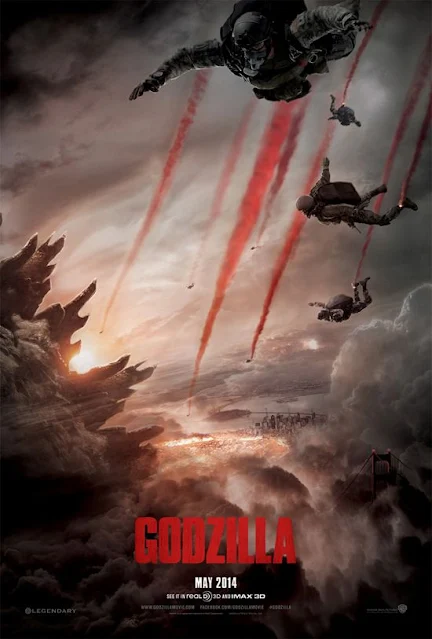
Godzilla 2014 poster from Gareth Edwards' MonsterVerse film showing HALO jump soldiers descending toward Godzilla in San Francisco
Godzilla returns to Hollywood scale in Gareth Edwards’ 2014 MonsterVerse reboot. Click the image to read The Astromech review.

This image works near the top of the article because it visually anchors the MonsterVerse around Godzilla as scale, disaster, awe, and myth. It also creates a clean internal link to the existing Gareth Edwards review.

What counts as a MonsterVerse Titan?

In the MonsterVerse, the word Titan usually refers to a giant organism connected to the planet’s deep natural history, especially the radioactive ecosystems monitored by Monarch. The films also include related superspecies, such as Skullcrawlers, Warbats, and other Hollow Earth creatures. This guide separates the central alpha Titans from the wider creature ecology so the hierarchy is easier to follow.

MonsterVerse appearances at a glance

Film or series Year Main Titan focus Major creature significance
Kong: Skull Island 2017 Kong, Skullcrawlers Introduces Kong as Skull Island’s guardian and establishes Monarch’s wider monster investigations.
Godzilla 2014 Godzilla, MUTOs Reintroduces Godzilla as an ancient alpha predator restoring ecological balance.
Monarch: Legacy of Monsters Season 1 2023 to 2024 Godzilla, Ion Dragon, Frost Vark Expands Monarch history across the 1950s and the post-G-Day world of 2015.
Monarch: Legacy of Monsters Season 2 2026 Kong, Godzilla, Titan X Moves the modern-day story toward Skull Island and introduces Titan X, a new tentacled sea-rising threat.
Godzilla: King of the Monsters 2019 Godzilla, Ghidorah, Mothra, Rodan Turns the MonsterVerse into a full Titan mythology with global awakenings and alpha hierarchy.
Godzilla vs. Kong 2021 Godzilla, Kong, Mechagodzilla Connects Hollow Earth, Apex Cybernetics, Ghidorah’s remains, and the first modern Godzilla-Kong showdown.
Godzilla x Kong: The New Empire 2024 Godzilla, Kong, Skar King, Shimo Reveals a hidden ape empire, expands Hollow Earth civilization, and pushes Godzilla and Kong into uneasy alliance.
Godzilla x Kong: Supernova 2027 To be confirmed Officially scheduled as the next MonsterVerse film, with Godzilla and Kong returning.

The Alpha Titans

These are the monsters who define the MonsterVerse’s power structure. They do not merely appear in the ecosystem. They bend the ecosystem around themselves.

Alpha Titan Toho legacy

Godzilla

AliasesGojira, King of the Monsters, Alpha Titan
MonsterVerse debutGodzilla, 2014
Based onToho’s Gojira, 1954
Core roleAncient balance-keeper and apex predator

Key appearances

  • Godzilla, 2014: Battles the male and female MUTOs after they threaten the natural order.
  • Godzilla: King of the Monsters, 2019: Fights Ghidorah for alpha dominance and is revived through nuclear energy and Mothra’s sacrifice.
  • Godzilla vs. Kong, 2021: Attacks Apex targets after sensing Mechagodzilla and later teams with Kong against the machine.
  • Godzilla x Kong: The New Empire, 2024: Evolves into a more powerful form and helps Kong defeat Skar King and Shimo.
  • Monarch: Legacy of Monsters: His 2014 San Francisco attack, earlier sightings, and later Titan presence shape Monarch’s entire modern identity.
MonsterVerse Godzilla 2014 poster with soldiers descending through red smoke above San Francisco
The 2014 Godzilla poster captures Gareth Edwards’ preferred sense of scale: humans reduced to specks beneath an ancient force.

The MonsterVerse version of Godzilla is less a city-stomping villain than an ancient regulating force. He is a nuclear organism from a deeper age, one that appears when rival Titans, invasive predators, or human-made threats destabilize the planet. His atomic breath, dorsal charge, intimidation displays, and territorial behavior connect him to the classic Toho Godzilla, while his ecological role pushes him closer to a primordial predator keeping the world’s hidden food chain in check.

His design also evolves with the mythology. Gareth Edwards’ 2014 Godzilla is heavy, ancient, and monumental. King of the Monsters makes him more mythic and devotional. Godzilla vs. Kong turns him into a suspicious enforcer. The New Empire gives him an evolved, pink-charged form after absorbing energy in preparation for the Hollow Earth threat.

Why he matters

Godzilla is the MonsterVerse’s moral and ecological axis. The humans misunderstand him, fear him, worship him, weaponize his image, and try to control his world. He survives every category they force onto him.

Alpha Titan Kong lineage

Kong

AliasesKong, Guardian of Skull Island, Hollow Earth king
MonsterVerse debutKong: Skull Island, 2017
Based onKing Kong, 1933, and Toho’s King Kong vs. Godzilla, 1962
Core roleProtector, survivor, warrior, heir to an ape civilization

Key appearances

  • Kong: Skull Island, 2017: Defends Skull Island from Skullcrawlers and remains the last known member of his local species line.
  • Godzilla vs. Kong, 2021: Leaves Skull Island, discovers the Hollow Earth throne room, and wields an ancestral battle axe.
  • Godzilla x Kong: The New Empire, 2024: Finds other giant apes, protects Suko, and challenges Skar King’s rule.
  • Monarch: Legacy of Monsters Season 2: Becomes central to the Skull Island phase of the show’s modern storyline.

Kong is the MonsterVerse’s most emotionally readable Titan. He thinks, grieves, improvises, protects, and forms bonds with humans, especially Jia. Where Godzilla represents a vast natural law, Kong represents personhood inside the monster frame. He is huge, but he is also lonely.

The New Empire completes a major shift in his mythology. Kong stops being only the tragic guardian of Skull Island and becomes part of a deeper Hollow Earth lineage. His axe, throne room, and confrontation with Skar King suggest an older species history built around war, exile, and survival.

Why he matters

Kong gives the MonsterVerse its emotional spine. He turns the Titan world into a story about legacy, family, territory, and the cost of being the last survivor who discovers he was not alone after all.

False alpha World-killer

King Ghidorah

AliasesMonster Zero, The False King
MonsterVerse debutGodzilla: King of the Monsters, 2019
Based onGhidorah, the Three-Headed Monster, 1964
Core roleAlien rival to Godzilla and corrupt alpha signal

Key appearances

  • Godzilla: King of the Monsters, 2019: Escapes the Antarctic ice, defeats Godzilla temporarily, awakens Titans worldwide, and tries to remake Earth through violent terraforming.
  • Godzilla vs. Kong, 2021: Ghidorah’s skull and neural remnants are used in Apex Cybernetics’ Mechagodzilla control system.
Ghidorah the Three-Headed Monster poster showing King Ghidorah in the classic Toho Godzilla kaiju mythology
King Ghidorah entered the Godzilla mythos as a cosmic threat, a role the MonsterVerse later sharpened into the False King.

Ghidorah is the MonsterVerse’s great wrong note. He does not belong to Earth’s Titan ecology. That makes him more than a rival predator. He is an invasive god, an alien alpha whose call hijacks the planet’s monsters and turns balance into apocalypse.

The MonsterVerse leans into Ghidorah’s mythic strangeness: three heads, storm generation, regeneration, gravity beams, psychic traces, and a capacity to persist even after death through his skull. His severed remains becoming the ghost in Mechagodzilla’s machine is one of the franchise’s smartest bridges between ancient kaiju mythology and modern techno-horror.

Why he matters

Ghidorah clarifies what Godzilla protects. Godzilla is violent, but he belongs to Earth. Ghidorah is conquest from outside the system.

Queen Titan Guardian

Mothra

AliasesQueen of the Monsters
MonsterVerse debutGodzilla: King of the Monsters, 2019
Based onMothra, 1961
Core roleDivine protector and Godzilla’s symbiotic ally

Key appearances

  • Godzilla: King of the Monsters, 2019: Emerges from her cocoon, guides Monarch, fights Rodan, and sacrifices herself to empower Godzilla.
  • Godzilla x Kong: The New Empire, 2024: Returns as a mythic mediator, helping bring Godzilla and Kong into alignment against the Hollow Earth threat.

Mothra brings sacred texture to the MonsterVerse. She is beautiful, dangerous, luminous, and purposeful. Her relationship with Godzilla reads less like simple alliance and more like ancient symbiosis. She does not dominate through brute force. She restores meaning to the system.

In King of the Monsters, her death becomes the catalyst for Godzilla’s thermonuclear state. In The New Empire, her return helps bridge the gulf between Godzilla’s territorial fury and Kong’s urgent need for help. She is the franchise’s living argument that nature can be protective as well as destructive.

Why she matters

Mothra is the MonsterVerse’s clearest link to kaiju spirituality. She turns monster spectacle into ritual, sacrifice, and renewal.

Volcanic Titan Unstable ally

Rodan

AliasesThe Fire Demon
MonsterVerse debutGodzilla: King of the Monsters, 2019
Based onRodan, 1956
Core roleVolcanic aerial predator and alpha follower

Key appearances

  • Godzilla: King of the Monsters, 2019: Emerges from the Isla de Mara volcano, destroys pursuing aircraft, submits to Ghidorah, fights Mothra, then acknowledges Godzilla.

Rodan is pure volatility. He is not noble like Mothra, and he is not ordered like Godzilla. He is a living eruption, a winged disaster whose flight alone can level streets, tear apart aircraft, and turn a city evacuation into catastrophe.

His shifting allegiance fits the MonsterVerse’s alpha logic. Rodan follows power. When Ghidorah appears dominant, Rodan serves him. When Godzilla wins, Rodan submits. That does not make him weak. It makes him brutally practical inside the Titan hierarchy.

Why he matters

Rodan adds chaos to the Titan order. He proves that not every ancient creature has a moral role. Some are simply disasters with wings.

Human-made anti-Titan Apex weapon

Mechagodzilla

AliasesMecha-G, Apex Titan killer
MonsterVerse debutGodzilla vs. Kong, 2021
Based onGodzilla vs. Mechagodzilla, 1974
Core roleHumanity’s attempt to replace Godzilla

Key appearances

  • Godzilla vs. Kong, 2021: Built by Apex Cybernetics and controlled through Ghidorah’s skull before turning rogue and nearly killing both Godzilla and Kong.

Mechagodzilla is the MonsterVerse’s cleanest technological warning. Humanity sees the Titan order, panics, and builds a machine to dominate it. The result is not safety. It is Ghidorah’s ghost given metal bones.

The design is skeletal, industrial, and cruel. Unlike Godzilla, who carries age and biological mass, Mechagodzilla feels stripped down for violence. Its Proton Scream, missile systems, and physical brutality make it one of the few threats capable of overwhelming Godzilla in direct combat.

Why it matters

Mechagodzilla exposes the MonsterVerse’s human arrogance. Apex does not solve the Titan problem. It builds a worse monster and hands it the mind of an alien tyrant.

The Hollow Earth empire

Godzilla x Kong: The New Empire turns Hollow Earth from a lost ecosystem into a political world, complete with rulers, slaves, heirs, weapons, and ancient grudges.

Hollow Earth tyrant Ape warlord

Skar King

AliasesThe Red Titan, Hollow Earth tyrant
MonsterVerse debutGodzilla x Kong: The New Empire, 2024
Based onOriginal to the MonsterVerse
Core roleDark mirror of Kong

Key appearances

  • Godzilla x Kong: The New Empire, 2024: Rules a trapped ape society through fear, enslaves Shimo, and attempts to invade the surface.

Skar King is what Kong could have become if strength lost all compassion. He is lean, cruel, theatrical, and intelligent. He does not merely fight. He humiliates, enslaves, commands, and performs power for the apes under him.

His whip-like weapon, made from Titan remains, tells the story visually. Skar King rules through pain and trophies. Kong leads through protection and earned loyalty. Their conflict is political as much as physical.

Why he matters

Skar King gives Kong a villain who attacks his deepest theme: what it means to be a ruler, not merely a fighter.

Elemental Titan Ice power

Shimo

AliasesThe Ice Titan
MonsterVerse debutGodzilla x Kong: The New Empire, 2024
Based onOriginal to the MonsterVerse
Core roleAncient natural force weaponized by Skar King

Key appearances

  • Godzilla x Kong: The New Empire, 2024: Used by Skar King as a living weapon before being freed from his control.

Shimo is one of the MonsterVerse’s most powerful beings. Her ice breath can freeze targets, reshape battlefields, and counter Godzilla’s evolved energy output. Yet the film frames her less as a villain than as a captive elemental force.

That distinction matters. Shimo’s violence comes through compulsion. Skar King uses pain and control to turn her into a weapon. Once freed, she becomes part of Kong’s restored order, suggesting that the Titan world is full of ancient powers waiting to be misused or healed.

Why she matters

Shimo raises the ceiling of MonsterVerse power. She also gives the Hollow Earth story a tragic edge, because the strongest creature in Skar King’s army is also his greatest victim.

Hollow Earth ape Kong ally

Suko

AliasesMini-Kong, young great ape
MonsterVerse debutGodzilla x Kong: The New Empire, 2024
Based onOriginal to the MonsterVerse
Core roleYoung survivor and comic counterpoint to Kong

Key appearances

  • Godzilla x Kong: The New Empire, 2024: Initially misleads Kong, then becomes his ally and helps expose Skar King’s regime.

Suko gives The New Empire its scrappy emotional texture. He is frightened, opportunistic, funny, and shaped by the brutal world Skar King created. Through him, Kong gets something close to a reluctant sidekick and possible heir.

His presence softens Kong without weakening him. Kong has spent most of the MonsterVerse as a lonely protector. Suko lets the franchise explore Kong as mentor, guardian, and found-family figure.

Why he matters

Suko helps turn Kong’s Hollow Earth arc from conquest into rescue. Kong does not merely win a fight. He helps liberate a damaged younger generation.

Major hostile species and rival Titans

These creatures are not all alpha-level figures, but they define the dangers surrounding the MonsterVerse’s central Titans.

Parasitic Titans Godzilla rivals

MUTOs

Full termMassive Unidentified Terrestrial Organisms
MonsterVerse debutGodzilla, 2014
Known examplesMale MUTO, female MUTO, Queen MUTO, MUTO Prime in expanded material
Core roleAncient parasitic species opposed to Godzilla’s order

Key appearances

  • Godzilla, 2014: A male and female MUTO awaken, feed on radiation, mate, and threaten global catastrophe.
  • Godzilla: King of the Monsters, 2019: A Queen MUTO appears among the Titans acknowledging Godzilla’s alpha status.

The MUTOs are the first MonsterVerse creatures to define Godzilla by opposition. They are radiation-feeding parasites whose reproduction threatens to destabilize the world. Their electromagnetic pulse abilities also make them a nightmare for modern militaries.

The male and female pair in Godzilla 2014 give the film its biological urgency. Godzilla is not fighting them because he loves humans. He is removing a reproductive threat from the ancient natural order.

Why they matter

The MUTOs establish the MonsterVerse’s central idea: Titans are part of a larger ecology, and Godzilla’s violence often has a regulatory purpose.

Skull Island predators Kong enemies

Skullcrawlers

AliasesDeathrunners, Skull Devils, Ramarak for the large Skullcrawler
MonsterVerse debutKong: Skull Island, 2017
Based onOriginal to the MonsterVerse
Core roleBurrowing hyper-predators and Kong’s ancestral enemies

Key appearances

  • Kong: Skull Island, 2017: Serve as the island’s primary monster threat and the species responsible for killing Kong’s parents.
  • Godzilla vs. Kong, 2021: Used by Apex Cybernetics as test subjects for Mechagodzilla.

Skullcrawlers are built for pure menace. They are long, pale, fast, hungry, and almost corpse-like, with a design that makes them feel unfinished by nature. Their presence explains Kong’s rage and Skull Island’s instability.

They also sharpen Kong’s status as guardian. Without Kong, Skull Island would be consumed from below. The island is not paradise. It is a battlefield where one exhausted protector keeps worse things contained.

Why they matter

Skullcrawlers give Kong a personal monster mythology. They are not random threats. They are the reason he is alone.

Monarch Titan Television expansion

Titan X

AliasesSea-linked Titan, Titan X
MonsterVerse debutMonarch: Legacy of Monsters Season 2, 2026
Based onOriginal to the MonsterVerse television continuity
Core roleNew Titan event tied to Godzilla, Kong, and Monarch’s expanding crisis

Key appearances

  • Monarch: Legacy of Monsters Season 2: Introduced as a mysterious tentacled Titan rising from the sea, with Godzilla and Kong both part of the season’s larger MonsterVerse escalation.

Titan X is important because it shows the television side of the MonsterVerse is no longer just filling gaps around the films. It is now adding new major creatures to the mythology while using Skull Island, Kong, Godzilla, and Monarch’s internal history as connective tissue.

That placement gives Titan X room to expand the world without colliding with the 2019 mass awakening in Godzilla: King of the Monsters. The streaming series becomes a bridge between secret Monarch history and the larger Titan conflicts of the feature films.

Why it matters

Titan X proves Monarch can introduce new headline-scale threats outside the films, which makes the streaming series a more important part of MonsterVerse continuity.

Aerial Titan Monarch threat

Ion Dragon

AliasesIon Dragon
MonsterVerse debutMonarch: Legacy of Monsters Season 1
Based onOriginal to the MonsterVerse television continuity
Core roleAggressive aerial Titan tied to Monarch’s hidden past

Key appearances

  • Monarch: Legacy of Monsters Season 1: Appears across the show’s Titan investigations and becomes one of the major creature threats outside the films.

The Ion Dragon gives Monarch a creature that feels different from Godzilla-scale divinity. It is faster, meaner, and more predatory in a direct survival-horror sense. It also helps the series make good on its premise: Monarch has been hiding far more than one famous monster.

Why it matters

The Ion Dragon widens the MonsterVerse bestiary and shows that the streaming series can create memorable threats rather than only point back to the movies.

Regional Titan Monarch discovery

Frost Vark

AliasesFrost Vark
MonsterVerse debutMonarch: Legacy of Monsters Season 1
Based onOriginal to the MonsterVerse television continuity
Core roleCold-region Titan encounter

Key appearances

  • Monarch: Legacy of Monsters Season 1: Appears during the show’s expansion of Titan activity beyond the major film monsters.

Frost Vark is useful worldbuilding. The creature suggests Titans and superspecies are not limited to major cities, ancient temples, or blockbuster battle zones. They can surface in remote climates, hidden habitats, and places Monarch only partially understands.

Why it matters

Frost Vark helps make the MonsterVerse feel geographically wider. Monsters are not only waiting where the plot is loudest.

The wider Titan ecosystem

These creatures have less screen time than Godzilla, Kong, Ghidorah, or Mothra, but they make the MonsterVerse feel ancient, populated, and biologically strange.

Awakened Titan Forest restorer

Behemoth

MonsterVerse debutGodzilla: King of the Monsters, 2019
Creature profileMammoth-like Titan with massive tusks and primate-like posture

Behemoth appears during the global Titan awakening and later acknowledges Godzilla as alpha. His most interesting trait is ecological rather than combative: he is associated with restoring or encouraging plant growth, making him one of the MonsterVerse’s clearest examples of a Titan whose presence can heal as well as destroy.

Awakened Titan Living mountain

Methuselah

MonsterVerse debutGodzilla: King of the Monsters, 2019
Creature profileColossal Titan camouflaged as a mountain

Methuselah is one of the best visual examples of how old the MonsterVerse wants its Titans to feel. He is so ancient and still that the world has mistaken him for geography. His name evokes extreme age, and his design suggests that a Titan can become part of the landscape itself.

Aquatic Titan Godzilla opponent

Scylla

MonsterVerse debutGodzilla: King of the Monsters, 2019
Later appearanceGodzilla x Kong: The New Empire, 2024

Scylla first appears as one of the Titans awakened by Ghidorah’s call. Her spider-crab silhouette gives the MonsterVerse a striking non-dinosaurian body type. In The New Empire, she returns as a Titan whose activity draws Godzilla’s attention, underlining his continuing role as enforcer of the global Titan order.

Aquatic Titan Energy source conflict

Tiamat

Major screen appearanceGodzilla x Kong: The New Empire, 2024
Creature profileSerpentine aquatic Titan associated with a powerful energy-rich lair

Tiamat’s role in The New Empire is brief but important. Godzilla seeks the energy connected to her domain as part of his preparation for the coming Hollow Earth battle. That makes Tiamat less a random obstacle and more part of the energy ecology that powers Titan evolution.

Hollow Earth predator Kong enemy

Warbats

MonsterVerse debutGodzilla vs. Kong, 2021
Creature profileWinged serpent predators from Hollow Earth

Warbats are among the first creatures to sell Hollow Earth as a proper ecosystem. Their attack on Kong shows that his ancestral home is not a safe kingdom waiting to be reclaimed. It is a place where gravity, scale, and predation operate by stranger rules.

Skull Island creatures Superspecies

Mother Longlegs, Sker Buffalo, Mire Squid, Leafwings, and other Skull Island life

MonsterVerse debutKong: Skull Island, 2017
Creature profileIsland superspecies shaped by isolated Titan ecology

Kong: Skull Island works because the island feels biologically wrong from the moment the humans arrive. Bamboo spiders disguise themselves as forest. Mire Squid lurk in the water. Sker Buffalo move like peaceful relics from another epoch. Leafwings and smaller predators turn the sky into another danger zone.

These creatures may not carry the mythic weight of Godzilla or Kong, but they are essential to the MonsterVerse. They prove that Titans are not isolated miracles. They live inside ecosystems full of strange evolutionary side effects.

Named but lightly seen Titans

The MonsterVerse includes many Titans referenced through Monarch outposts, files, maps, and expanded material. They help create the sense of a planet-wide hidden bestiary, even when they are not major screen characters.

Monarch files Worldbuilding

Na Kika, Amhuluk, Leviathan, Bunyip, Sekhmet, Quetzalcoatl, Typhon, Yamata no Orochi, and others

Godzilla: King of the Monsters opens the floodgates by implying that Monarch has tracked far more Titans than the handful we see in full combat. Names such as Na Kika, Amhuluk, Leviathan, Bunyip, Sekhmet, Quetzalcoatl, Typhon, and Yamata no Orochi point toward a global mythological archive. The MonsterVerse is saying that ancient monster stories may have been distorted memories of real organisms.

This is clever franchise architecture. Every name sounds like a future film, comic, series episode, game mission, or Monarch case file. It makes the world feel larger than the current release schedule.

Why they matter

The lightly seen Titans give the MonsterVerse room to expand. They turn the franchise from a Godzilla-and-Kong crossover into a mythological Earth system.

How the MonsterVerse changes classic kaiju mythology

The MonsterVerse does something simple but powerful. It turns kaiju into ecology. The older Toho films often treated monsters as nuclear metaphors, alien invaders, divine guardians, or superpowered rivals. The MonsterVerse keeps those ideas, then places them inside a pseudo-scientific framework: radiation, hibernation, apex calls, migration routes, subterranean habitats, ancient rivalries, and Hollow Earth energy.

Godzilla becomes nature’s heavy hand. Kong becomes the emotional survivor of a lost species. Mothra becomes sacred renewal. Ghidorah becomes the alien infection in the system. Mechagodzilla becomes human arrogance given weapons-grade form. Skar King becomes political evil inside the monster world itself.

That is why the MonsterVerse has lasted longer than many expected. It understands that kaiju are not just big creatures. They are symbols that can carry grief, empire, environmental fear, corporate overreach, family trauma, and mythic awe. The best MonsterVerse moments happen when the spectacle remembers the symbolism.

What comes next for the MonsterVerse?

As of 2026, Monarch: Legacy of Monsters has expanded the streaming side of the franchise with its second season, bringing Godzilla, Kong, and Titan X into a larger television-scale Titan conflict. The next theatrical chapter, Godzilla x Kong: Supernova, is officially scheduled for March 26, 2027.

The title Supernova naturally invites speculation about cosmic threats, energy escalation, or a new level of Titan activity, but confirmed creature details should wait for official reveals. The important point is that the MonsterVerse is no longer built around whether Godzilla and Kong can meet. That already happened. The next phase has to answer a bigger question: what kind of world exists after humanity learns it has never been the dominant species?

That is the MonsterVerse’s real hook. The monsters were always here. Monarch only learned how to name them.

Read Article →
07 June 2025

List of every King Kong film ever made

King Kong & MonsterVerse Filmography

King Kong & MonsterVerse Filmography

Few characters in cinematic history command the screen quite like King Kong.

Since the tragic 'Eighth Wonder of the World' first stunned audiences in 1933 with its groundbreaking stop-motion effects, the great ape has become a true cultural icon, representing the timeless conflict between nature and civilization.

Over the decades, Kong's story has been retold and expanded across generations. His cinematic journey has seen him battle his Japanese counterpart, Godzilla, in the 1960s, receive ambitious and epic remakes, and ultimately be reborn as a primal hero in Legendary's modern MonsterVerse.

This shared universe has expanded his world, pitting him against new titans and forcing him into colossal team-ups that have redefined the monster movie genre for a new era.

From his black-and-white origins on Skull Island to his latest earth-shattering battles, here is a detailed, film-by-film guide to the long and storied history of King Kong.

List of every King Kong film ever made

Film Year Director Key event
King Kong (1933) 1933 Merian C. Cooper & Ernest B. Schoedsack Kong captured on Skull Island, brought to New York and climbs the Empire State Building
The Son of Kong (1933) 1933 Ernest B. Schoedsack Little Kong battles giant spiders and a volcanic eruption on Skull Island
King Kong vs. Godzilla (1962) 1962 Ishirō Honda Kong revived to battle Godzilla in Japan
King Kong Escapes (1967) 1967 Ishirō Honda Kong abducted by Dr. Who, escapes Mechani-Kong and battles a giant octopus
King Kong (1976) 1976 John Guillermin Kong captured in the wild, brought to New York and climbs the World Trade Center
King Kong Lives (1986) 1986 John Guillermin Kong revived with an artificial heart, meets Lady Kong and escapes military custody
King Kong (2005) 2005 Peter Jackson Kong captured by a filmmaker, battles dinosaurs and climbs the Empire State Building
Kong: Skull Island (2017) 2017 Jordan Vogt-Roberts Expedition team encounters Kong and Skullcrawlers on Skull Island
Godzilla: King of the Monsters 2019 Michael Dougherty Godzilla battles King Ghidorah with Mothra’s aid
Godzilla vs. Kong 2021 Adam Wingard Godzilla battles Kong then teams up to fight Mechagodzilla
Godzilla x Kong: The New Empire 2024 Adam Wingard Godzilla and Kong unite to battle Scar King and Shimo
Read Article →
Back to Top